Valorization of Organic Food Surpluses and Brewer’s Spent Grains into Organic Insect Protein for Replacing Soybean in Post-Weaning Piglets
by
 , , , , , , , , , ,
Hugo Luttenschlager
1,* ,
,
Joachim Carpentier
1 ,
,
Yves Beckers
2,
José Wavreille
3,
Nicolas Deville
1,
Christophe Blecker
4,
Sabine Danthine
4 ,
,
Giorgia Purcaro
5 ,
,
Philippe Maesen
6,
Sandrine Dufourny
3,
Fréjus Tanguy Ablo Zinsou
7,
Aurore Richel
8, 
Frédéric Francis
1 ,
,
Sébastien Finet
9 and
Rudy Caparros Megido
1,* 
1
Functional and Evolutionary Entomology, Gembloux Agro-Bio Tech, University of Liège, 5030 Gembloux, Belgium
2
Precision Livestock and Nutrition, Gembloux Agro-Bio Tech, University of Liège, 5030 Gembloux, Belgium
3
Walloon Agricultural Research Centre, 5030 Gembloux, Belgium
4
Unit of Food Science and Formulation, Research Unit, Teaching and Research Center (UR TERRA), Gembloux Agro-Bio Tech, University of Liège, 5030 Gembloux, Belgium
5
Analytical Chemistry Laboratory, Gembloux Agro-Bio Tech, University of Liège, 5030 Gembloux, Belgium
6
Gembloux Environmental Engineering and Analysis Office (BEAGx), Gembloux Agro-Bio Tech, University of Liège, 5030 Gembloux, Belgium
7
Département de Production Animale, Faculté des Sciences Agronomiques, Université d’Abomey-Calavi, Cotonou P.O. Box 03-2819, Benin
8
Laboratory of Biomass and Green Technologies, Gembloux Agro-Bio Tech, University of Liège, 5030 Gembloux, Belgium
9
Biowaste Upcycling, 1410 Waterloo, Belgium
*
Authors to whom correspondence should be addressed.
Insects 2026, 17(6), 584; https://doi.org/10.3390/insects17060584
Submission received: 2 May 2026
/
Revised: 29 May 2026
/
Accepted: 31 May 2026
/
Published: 3 June 2026
(This article belongs to the Special Issue Insects as the Nutrition Source in Animal Feed)
Simple Summary
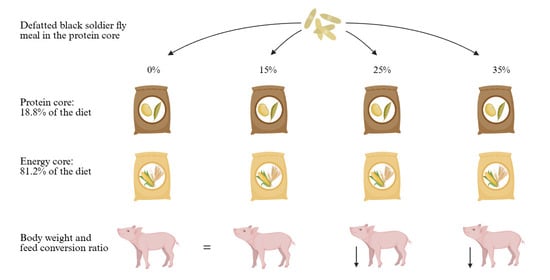
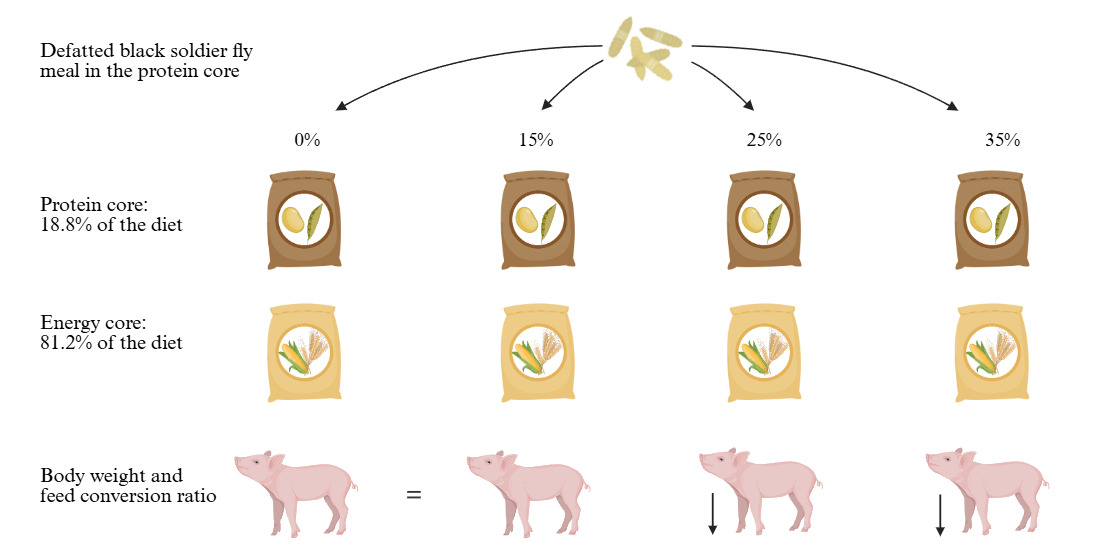
This study explores the use of black soldier fly (BSF; Hermetia illucens) meal produced from agro-industrial co-products and unsold organic plant residues as a protein source in organic diets for post-weaning piglets. Seventy-two piglets were fed diets in which conventional organic protein sources were partially replaced by defatted BSF meal at different inclusion levels. A 15% inclusion of BSF meal can replace traditional protein ingredients without negatively affecting growth performance. However, an economic assessment based on feed efficiency indicates that the cost of BSF meal remains too high to compete with conventional protein sources under current market conditions. These findings highlight the nutritional potential of BSF meal in organic pig production, while underlining the need for improved economic viability.
Abstract
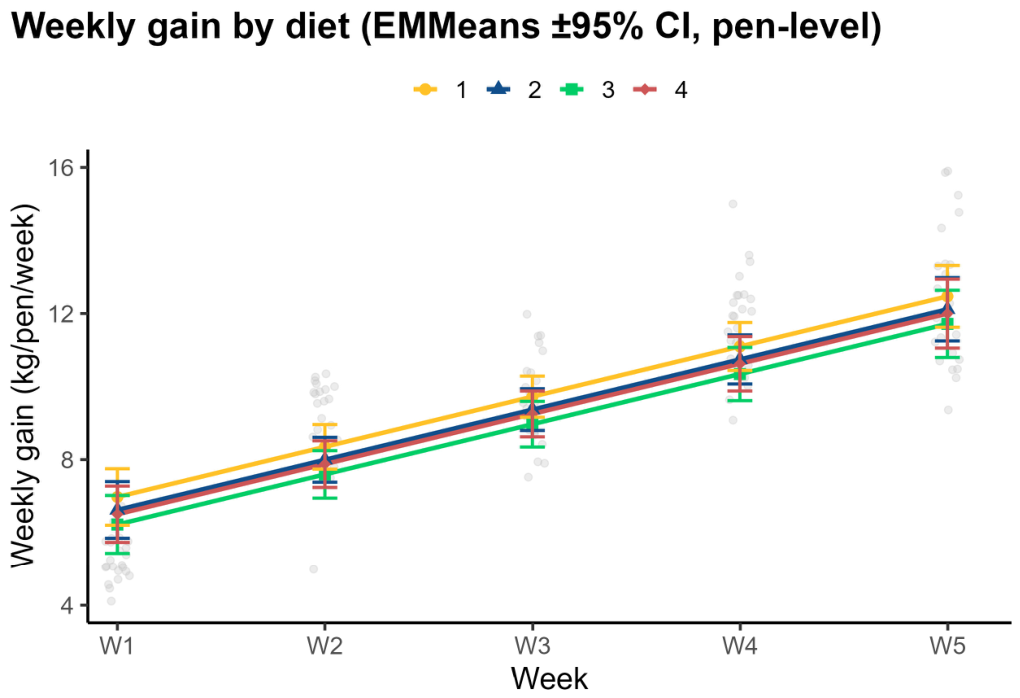
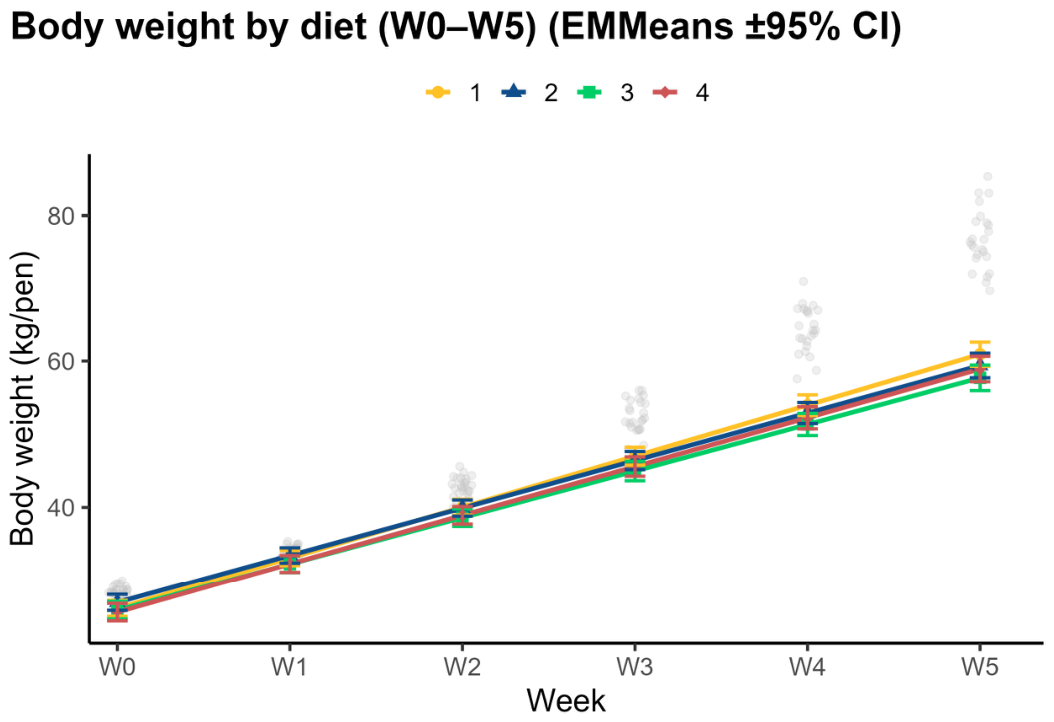
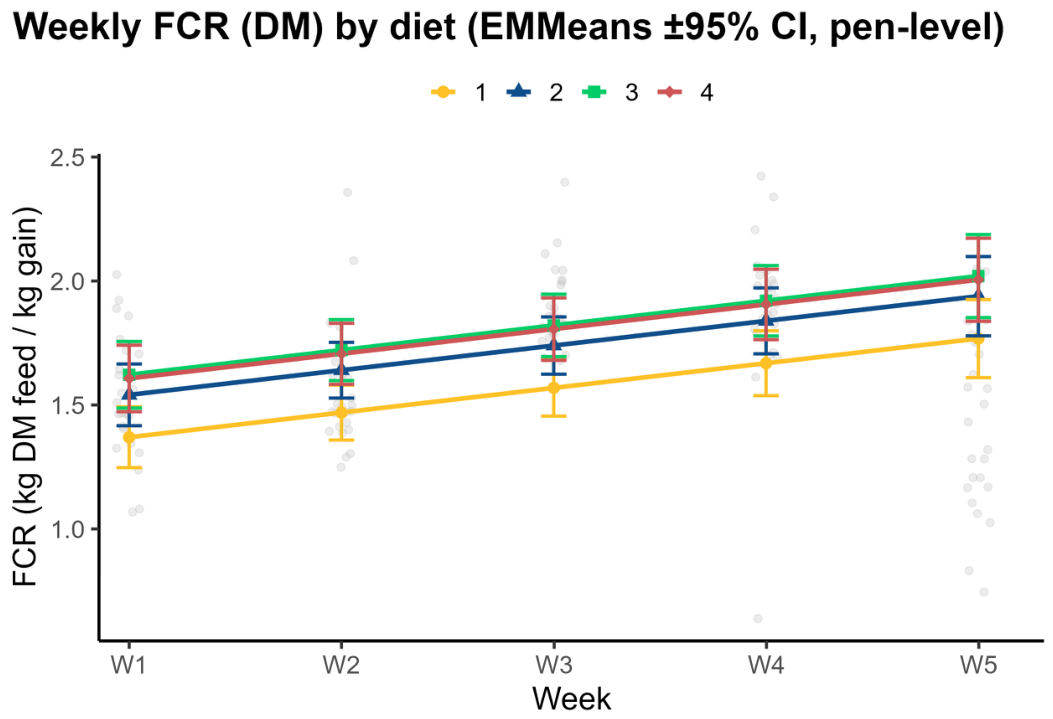
The conversion of agro-industrial co-products and unsold organic plant-based residues into black soldier fly (BSF; Hermetia illucens (L. 1758)) proteins was assessed for use in organic post-weaning piglet diets in Belgium. A total of 72 crossbred female piglets (Landrace × Pietrain) were enrolled in a 5-week feeding trial. Experimental diets consisted of a common energy core (81.2% of the feed) and a protein core (18.8%) composed of organic soybean meal, pea meal, and potato protein, partially replaced by defatted BSF meal at inclusion levels of 15%, 25%, and 35%. All diets were formulated to be isoenergetic and isonitrogenous, with standardized ileal digestibility values for lysine, methionine, threonine, and tryptophan held constant. Incorporating 15% defatted BSF meal can substitute conventional organic protein sources without compromising growth performance in post-weaning piglets. However, economic modelling based on a cumulative feed conversion ratio expressed on a dry matter (DM) basis showed that break-even prices for organic BSF meal remained well below the price of the control protein nucleus (€1039·t−1, excluding VAT), indicating that economic parity could not be achieved at typical market prices under the observed feed efficiency.
Keywords:
Hermetia illucens; amino acids; supercritical CO2; circular economy; feed