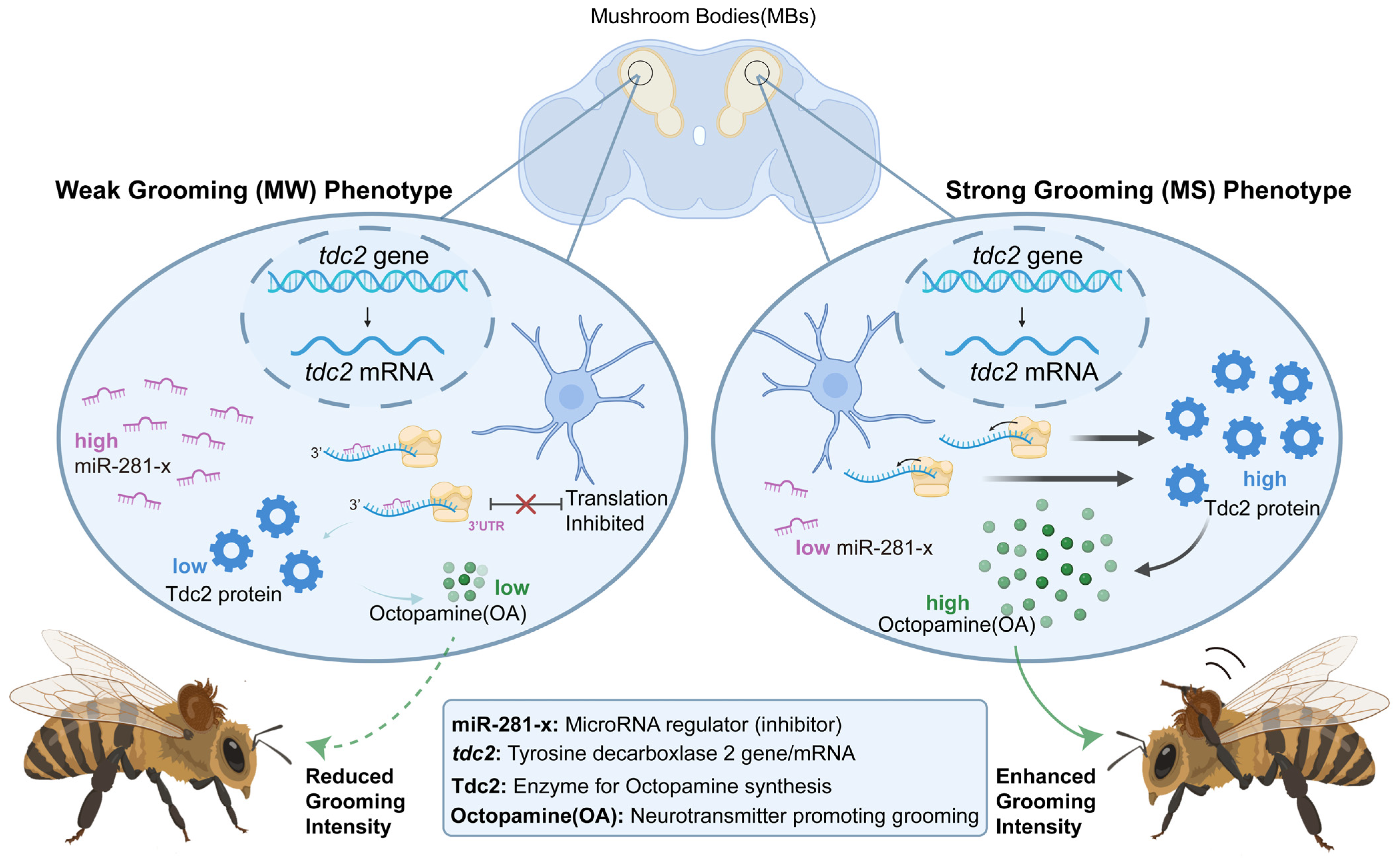
MicroRNA-281-X Modulates Self-Grooming Behavior in Honeybees by Targeting Tyrosine Decarboxylase 2 in the Octopaminergic Pathway


Simple Summary
Abstract
1. Introduction
2. Materials and Methods
2.1. Honeybees and Varroa Mites Collection
2.2. Self-Grooming Behavior Assays
2.3. Small RNA Transcriptome Sequencing
2.4. Measurement of Neurotransmitter Levels in Honeybee Brains
2.5. Pharmacological Treatment of Honeybees
2.6. Assays of Quantitative PCR for miRNA and mRNA
2.7. miRNA Agomir and Antagomir Treatment In Vivo
2.8. Behavioral Rescue Experiments In Vivo
2.9. Protein Preparation and Western Blot Analysis
2.10. Luciferase Report Assay
2.11. RNA Immunoprecipitation Assay (RIP)-qPCR Analysis
2.12. Co-Localization of miRNA and mRNA by Fluorescence In Situ Hybridization (FISH)
2.13. RNA Interference
2.14. Statistical Analysis
3. Results
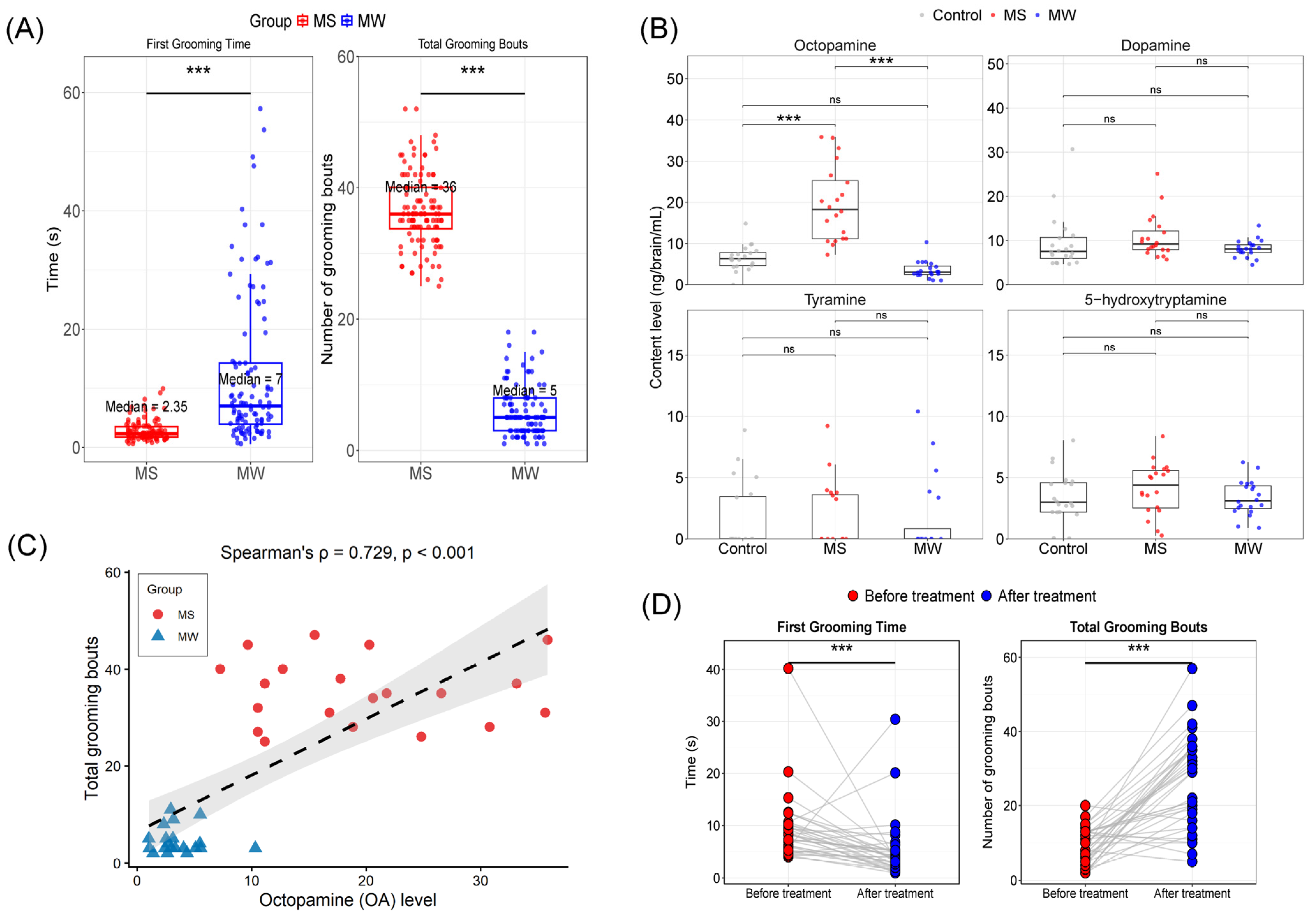
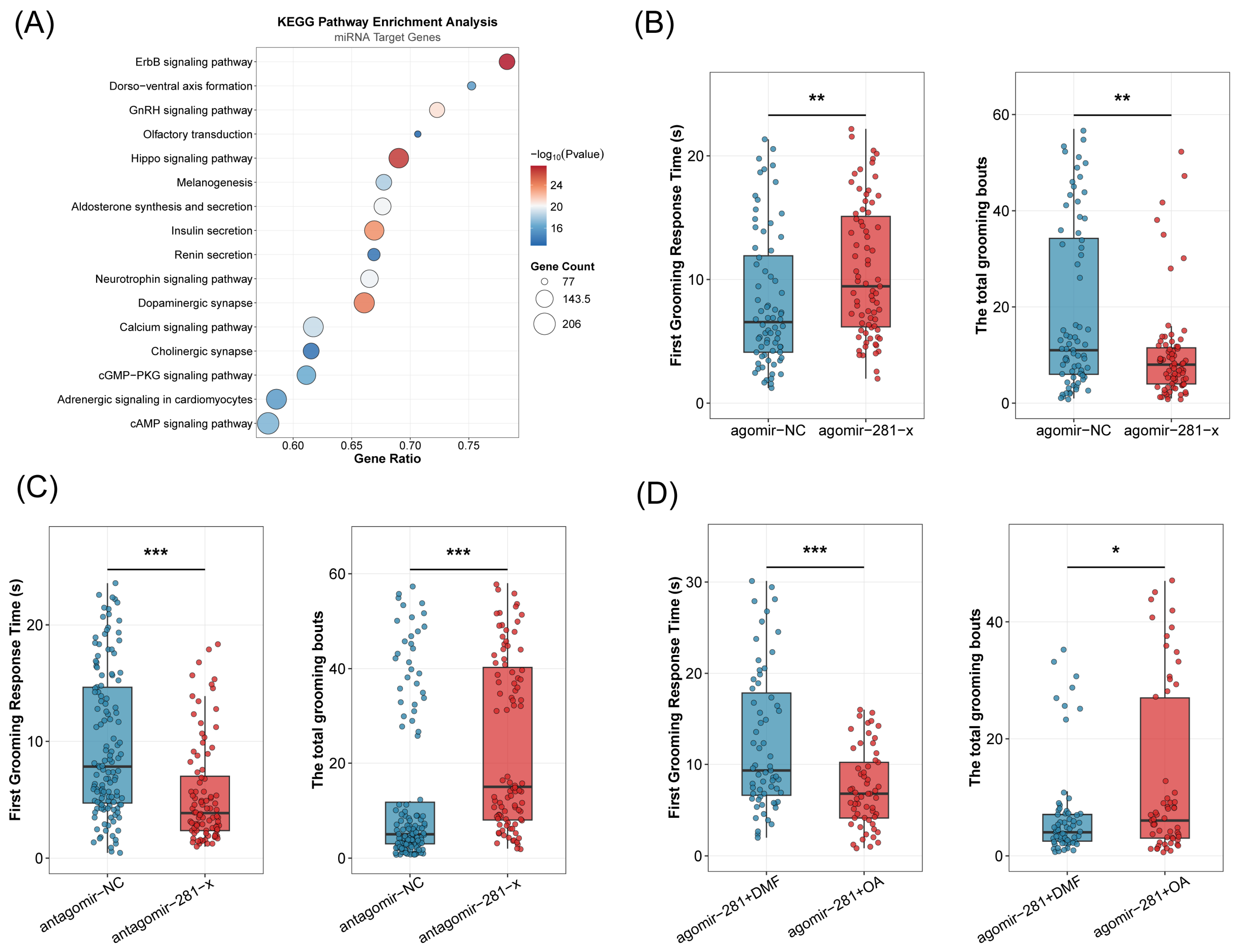
3.1. OA Influences Self-Grooming Behavior in A. mellifera
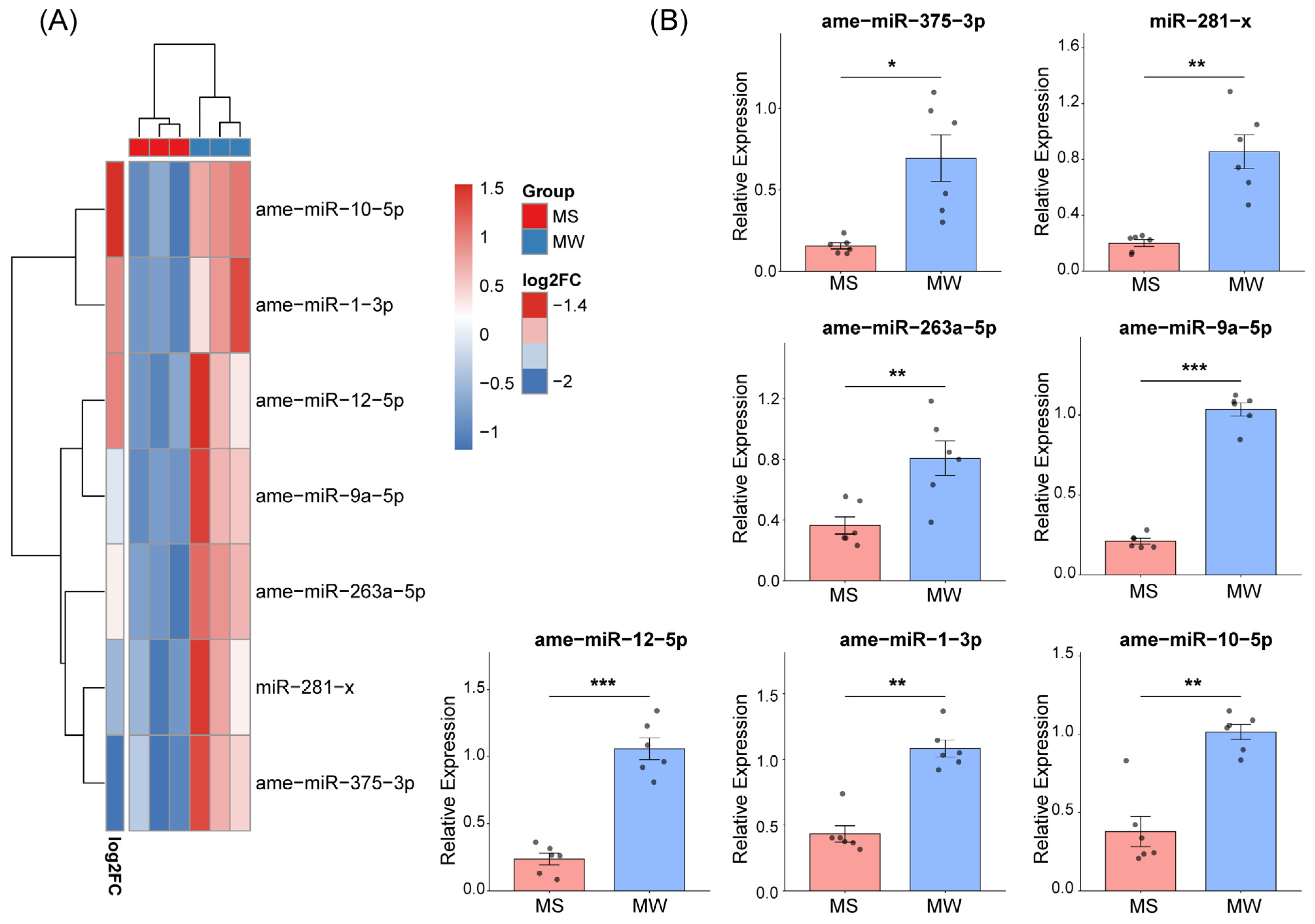
3.2. The Brain miRNAs Profile Associated with Self-Grooming Behavior in A. mellifera
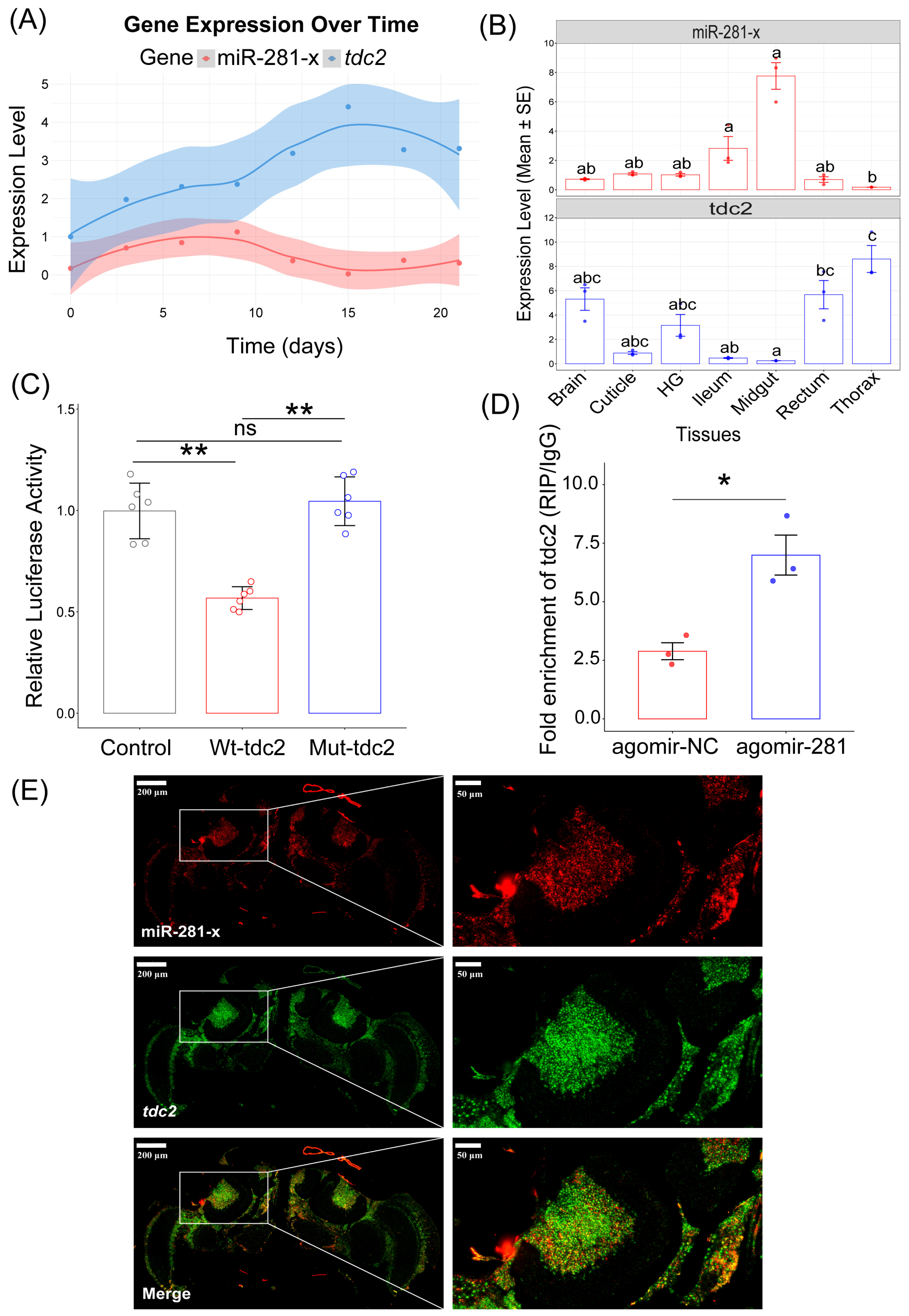
3.3. miR-281-x Is Associated with Self-Grooming Behavior in A. mellifera
3.4. tdc2 Is a Direct Target of miR-281-x
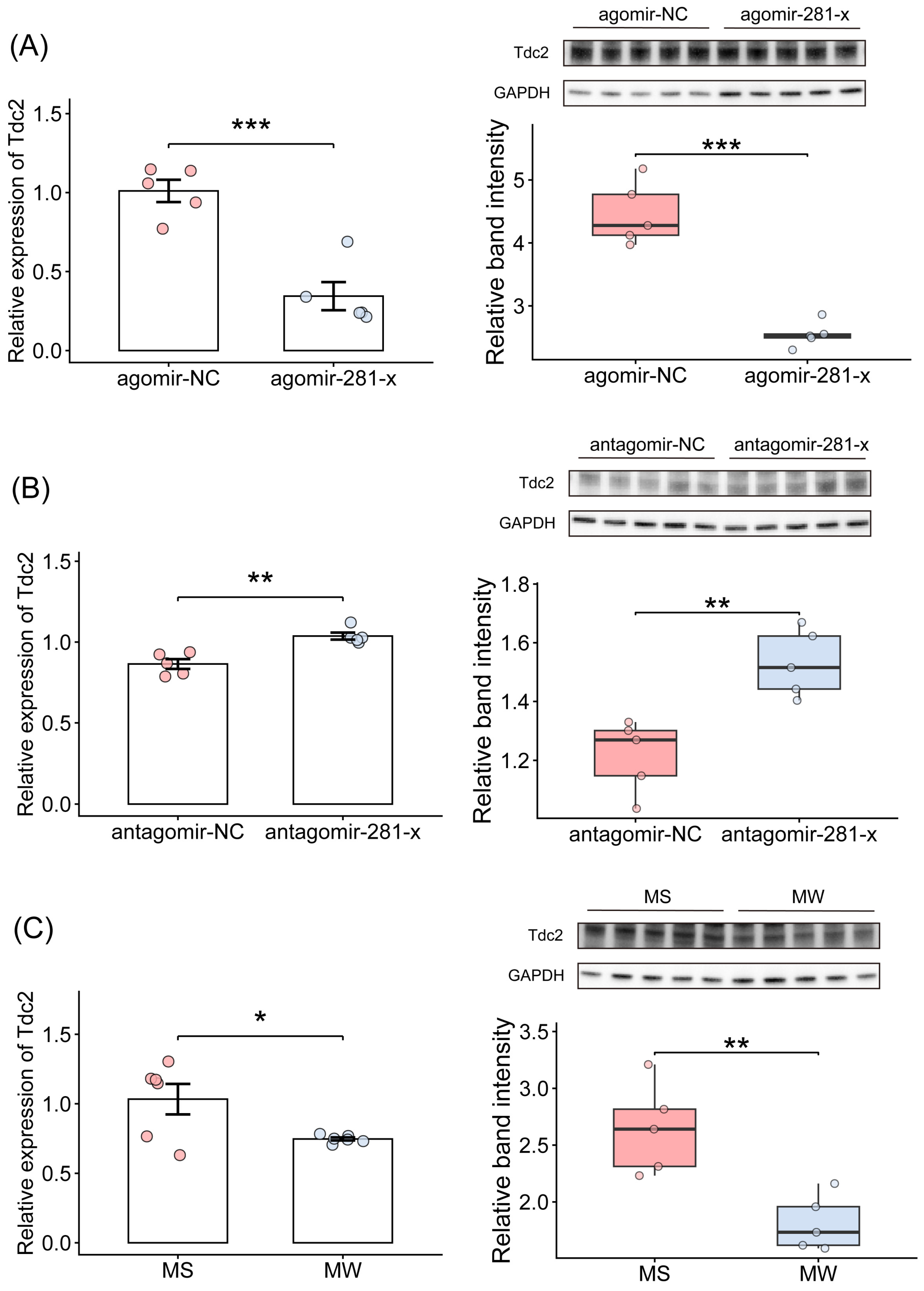
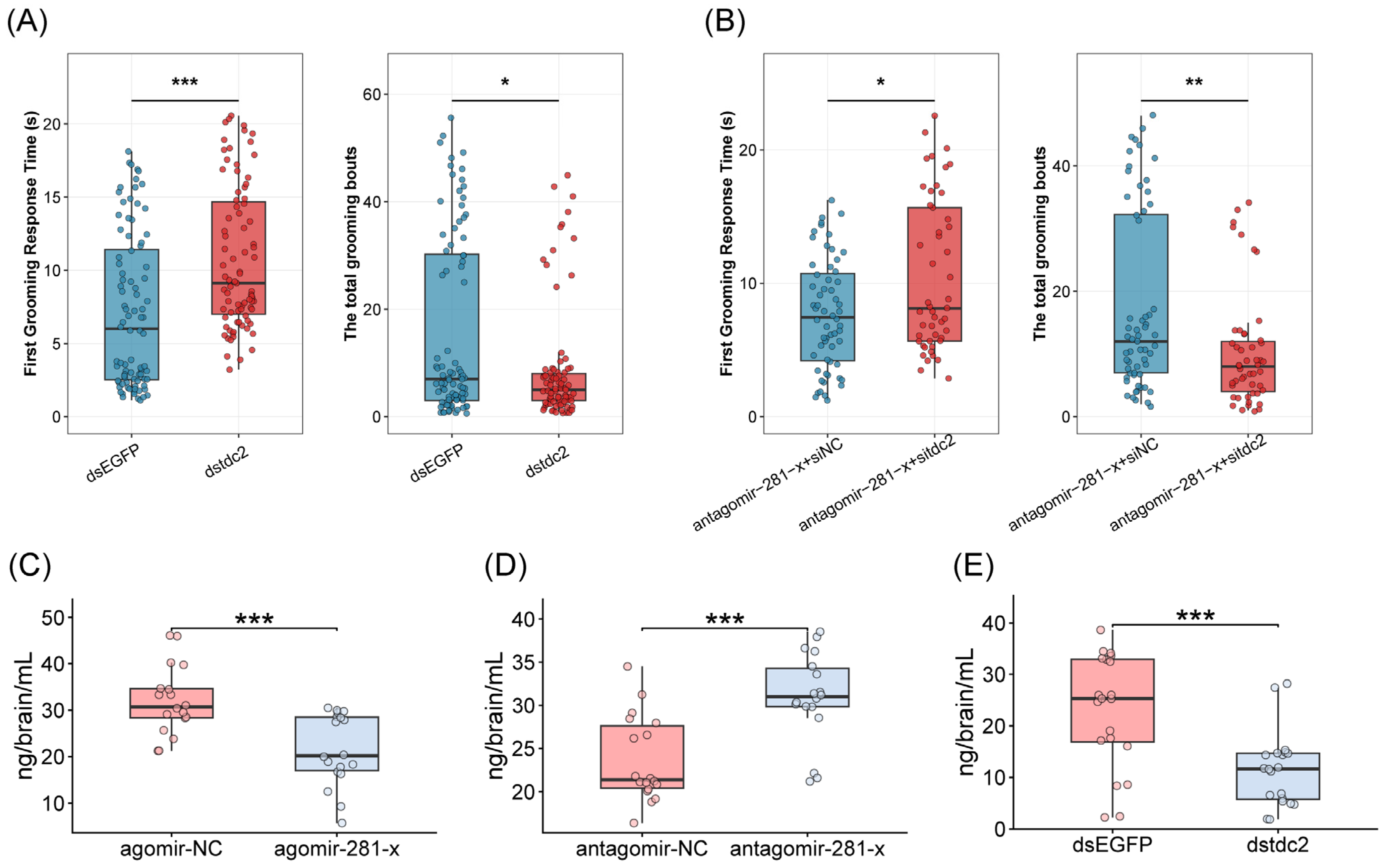
3.5. miR-281-x Influences OA Signaling by Targeting tdc2 and Modulates Self-Grooming Behavior in A. mellifera
4. Discussion
5. Conclusions
Supplementary Materials
Author Contributions
Funding
Data Availability Statement
Acknowledgments
Conflicts of Interest
References
- Xiao, W.; Jiao, Z.L.; Senol, E.; Yao, J.; Zhao, M.; Zhao, Z.D.; Chen, X.; Cao, P.; Fu, Y.; Gao, Z.; et al. Neural circuit control of innate behaviors. Sci. China Life Sci. 2022, 65, 466–499. [Google Scholar] [CrossRef]
- Su, C.Y.; Wang, J.W. Modulation of neural circuits: How stimulus context shapes innate behavior in Drosophila. Curr. Opin. Neurobiol. 2014, 29, 9–16. [Google Scholar] [CrossRef]
- Wei, D.; Talwar, V.; Lin, D. Neural circuits of social behaviors: Innate yet flexible. Neuron 2021, 109, 1600–1620. [Google Scholar] [CrossRef]
- Devineni, A.V.; Scaplen, K.M. Neural Circuits Underlying Behavioral Flexibility: Insights from Drosophila. Front. Behav. Neurosci. 2021, 15, 821680. [Google Scholar] [CrossRef]
- Kalueff, A.V.; Stewart, A.M.; Song, C.; Berridge, K.C.; Graybiel, A.M.; Fentress, J.C. Neurobiology of rodent self-grooming and its value for translational neuroscience. Nat. Rev. Neurosci. 2016, 17, 45–59. [Google Scholar] [CrossRef]
- Mehmood, N.; Hassan, A.; Zhou, W.; Usman, H.M.; Ai, H.; Huang, Q. Behavioural alterations in female Aedes aegypti mosquito in response to entomopathogenic fungal infections. Pest Manag. Sci. 2022, 78, 2065–2073. [Google Scholar] [CrossRef]
- Reber, A.; Purcell, J.; Buechel, S.D.; Buri, P.; Chapuisat, M. The expression and impact of antifungal grooming in ants. J. Evol. Biol. 2011, 24, 954–964. [Google Scholar] [CrossRef] [PubMed]
- Zhukovskaya, M.; Yanagawa, A.; Forschler, B.T. Grooming Behavior as a Mechanism of Insect Disease Defense. Insects 2013, 4, 609–630. [Google Scholar] [CrossRef] [PubMed]
- Le Conte, Y.; Meixner, M.D.; Brandt, A.; Carreck, N.L.; Costa, C.; Mondet, F.; Büchler, R. Geographical Distribution and Selection of European Honey Bees Resistant to Varroa destructor. Insects 2020, 11, 873. [Google Scholar] [CrossRef] [PubMed]
- Arechavaleta-Velasco, M.E.; Alcala-Escamilla, K.; Robles-Rios, C.; Tsuruda, J.M.; Hunt, G.J. Fine-scale linkage mapping reveals a small set of candidate genes influencing honey bee grooming behavior in response to Varroa mites. PLoS ONE 2012, 7, e47269. [Google Scholar] [CrossRef] [PubMed]
- Mustard, J.A.; Pham, P.M.; Smith, B.H. Modulation of motor behavior by dopamine and the D1-like dopamine receptor AmDOP2 in the honey bee. J. Insect. Physiol. 2010, 56, 422–430. [Google Scholar] [CrossRef] [PubMed]
- Blenau, W.; Baumann, A. Chapter 14—Octopaminergic and Tyraminergic Signaling in the Honeybee (Apis mellifera) Brain: Behavioral, Pharmacological, and Molecular Aspects. In Trace Amines and Neurological Disorders; Farooqui, T., Farooqui, A.A., Eds.; Academic Press: San Diego, CA, USA, 2016; pp. 203–219. [Google Scholar]
- Fussnecker, B.L.; Smith, B.H.; Mustard, J.A. Octopamine and tyramine influence the behavioral profile of locomotor activity in the honey bee (Apis mellifera). J. Insect Physiol. 2006, 52, 1083–1092. [Google Scholar] [CrossRef]
- Jones, B.M.; Rao, V.D.; Gernat, T.; Jagla, T.; Cash-Ahmed, A.C.; Rubin, B.E.; Comi, T.J.; Bhogale, S.; Husain, S.S.; Blatti, C.; et al. Individual differences in honey bee behavior enabled by plasticity in brain gene regulatory networks. eLife 2020, 9, e62850. [Google Scholar] [CrossRef] [PubMed]
- Arenas, A.; Ramírez, G.P.; Balbuena, M.S.; Farina, W.M. Behavioral and neural plasticity caused by early social experiences: The case of the honeybee. Front. Physiol. 2013, 4, 41. [Google Scholar] [CrossRef]
- Scheiner, R.; Baumann, A.; Blenau, W. Aminergic control and modulation of honeybee behaviour. Curr. Neuropharmacol. 2006, 4, 259–276. [Google Scholar] [CrossRef] [PubMed]
- Barbero, F.; Casacci, L.P. The effect of biogenic amines in the neuromodulation of insect social behavior. Curr. Opin. Insect Sci. 2025, 71, 101390. [Google Scholar] [CrossRef]
- Farooqui, T. Octopamine-mediated neuromodulation of insect senses. Neurochem. Res. 2007, 32, 1511–1529. [Google Scholar] [CrossRef]
- Akülkü, İ.; Ghanem, S.; Filiztekin, E.; Suwannapong, G.; Mayack, C. Age-Dependent Honey Bee Appetite Regulation Is Mediated by Trehalose and Octopamine Baseline Levels. Insects 2021, 12, 863. [Google Scholar] [CrossRef]
- Schulz, D.J.; Barron, A.B.; Robinson, G.E. A role for octopamine in honey bee division of labor. Brain Behav. Evol. 2002, 60, 350–359. [Google Scholar] [CrossRef]
- Barron, A.B.; Maleszka, R.; Vander Meer, R.K.; Robinson, G.E. Octopamine modulates honey bee dance behavior. Proc. Natl. Acad. Sci. USA 2007, 104, 1703–1707. [Google Scholar] [CrossRef]
- Linn, M.; Glaser, S.M.; Peng, T.; Grüter, C. Octopamine and dopamine mediate waggle dance following and information use in honeybees. Proc. Biol. Sci. 2020, 287, 20201950. [Google Scholar] [CrossRef]
- Yellman, C.; Tao, H.; He, B.; Hirsh, J. Conserved and sexually dimorphic behavioral responses to biogenic amines in decapitated Drosophila. Proc. Natl. Acad. Sci. USA 1997, 94, 4131–4136. [Google Scholar] [CrossRef]
- Maliszewska, J.; Jankowska, M.; Rogalska, J. Octopamine is involved in TRP-induced thermopreference responses in American cockroach. J. Insect Physiol. 2024, 152, 104597. [Google Scholar] [CrossRef]
- Nakagawa, H.; Maehara, S.; Kume, K.; Ohta, H.; Tomita, J. Biological functions of α2-adrenergic-like octopamine receptor in Drosophila melanogaster. Genes Brain Behav. 2022, 21, e12807. [Google Scholar] [CrossRef]
- Ma, Z.; Stork, T.; Bergles, D.E.; Freeman, M.R. Neuromodulators signal through astrocytes to alter neural circuit activity and behaviour. Nature 2016, 539, 428–432. [Google Scholar] [CrossRef] [PubMed]
- Hu, J.; Bi, R.; Luo, Y.; Wu, K.; Jin, S.; Liu, Z.; Jia, Y.; Mao, C.X. The gut microbiome promotes locomotion of Drosophila larvae via octopamine signaling. Insect Sci. 2025, 32, 277–289. [Google Scholar] [CrossRef]
- Portugal, R.; Rodrigues, B.; Leitão, R.A.; Silva, M.; Pinheiro, P.S.; Carvalho, A.L. Shaping the synapse through neuronal activity-regulated miRNAs. Trends Neurosci. 2025, 48, 679–690. [Google Scholar] [CrossRef]
- Bitetti, A.; Mallory, A.C.; Golini, E.; Carrieri, C.; Carreño Gutiérrez, H.; Perlas, E.; Pérez-Rico, Y.A.; Tocchini-Valentini, G.P.; Enright, A.J.; Norton, W.H.J.; et al. MicroRNA degradation by a conserved target RNA regulates animal behavior. Nat. Struct. Mol. Biol. 2018, 25, 244–251. [Google Scholar] [CrossRef] [PubMed]
- Greenberg, J.K.; Xia, J.; Zhou, X.; Thatcher, S.R.; Gu, X.; Ament, S.A.; Newman, T.C.; Green, P.J.; Zhang, W.; Robinson, G.E.; et al. Behavioral plasticity in honey bees is associated with differences in brain microRNA transcriptome. Genes Brain Behav. 2012, 11, 660–670. [Google Scholar] [CrossRef]
- Jouravleva, K.; Zamore, P.D. A guide to the biogenesis and functions of endogenous small non-coding RNAs in animals. Nat. Rev. Mol. Cell Biol. 2025, 26, 347–370. [Google Scholar] [CrossRef] [PubMed]
- Martinetz, S. MicroRNA’s impact on neurotransmitter and neuropeptide systems: Small but mighty mediators of anxiety. Pflug. Arch. 2016, 468, 1061–1069. [Google Scholar] [CrossRef] [PubMed]
- Chen, C.Y.; Wang, Y.F.; Lei, L.; Zhang, Y. MicroRNA-specific targets for neuronal plasticity, neurotransmitters, neurotrophic factors, and gut microbes in the pathogenesis and therapeutics of depression. Prog. Neuropsychopharmacol. Biol. Psychiatry 2025, 136, 111186. [Google Scholar] [CrossRef]
- Sonawane, S.; Všianský, V.; Brázdil, M. MicroRNA-mediated regulation of neurotransmitter receptors in epilepsy: A systematic review. Epilepsy Behav. 2024, 158, 109912. [Google Scholar] [CrossRef] [PubMed]
- Pulcrano, S.; De Gregorio, R.; De Sanctis, C.; Volpicelli, F.; Piscitelli, R.M.; Speranza, L.; Perrone-Capano, C.; di Porzio, U.; Caiazzo, M.; Martini, A.; et al. miR-218 Promotes Dopaminergic Differentiation and Controls Neuron Excitability and Neurotransmitter Release through the Regulation of a Synaptic-Related Genes Network. J. Neurosci. 2023, 43, 8104–8125. [Google Scholar] [CrossRef]
- Donelson, N.C.; Dixit, R.; Pichardo-Casas, I.; Chiu, E.Y.; Ohman, R.T.; Slawson, J.B.; Klein, M.; Fulga, T.A.; Van Vactor, D.; Griffith, L.C. MicroRNAs Regulate Multiple Aspects of Locomotor Behavior in Drosophila. G3 Genes Genomes Genet. 2020, 10, 43–55. [Google Scholar] [CrossRef]
- Issa, A.R.; Picao-Osorio, J.; Rito, N.; Chiappe, M.E.; Alonso, C.R. A Single MicroRNA-Hox Gene Module Controls Equivalent Movements in Biomechanically Distinct Forms of Drosophila. Curr. Biol. 2019, 29, 2665–2675.e4. [Google Scholar] [CrossRef]
- Yang, M.; Du, B.; Xu, L.; Wang, H.; Wang, Y.; Lin, K.; He, G.; Kang, L. Glutamate-GABA imbalance mediated by miR-8-5p and its STTM regulates phase-related behavior of locusts. Proc. Natl. Acad. Sci. USA 2023, 120, e2215660120. [Google Scholar] [CrossRef]
- Yang, M.; Wei, Y.; Jiang, F.; Wang, Y.; Guo, X.; He, J.; Kang, L. MicroRNA-133 inhibits behavioral aggregation by controlling dopamine synthesis in locusts. PLoS Genet. 2014, 10, e1004206. [Google Scholar] [CrossRef]
- Liu, F.; Shi, T.; Yin, W.; Su, X.; Qi, L.; Huang, Z.Y.; Zhang, S.; Yu, L. The microRNA ame-miR-279a regulates sucrose responsiveness of forager honey bees (Apis mellifera). Insect Biochem. Mol. Biol. 2017, 90, 34–42. [Google Scholar] [CrossRef]
- Shi, T.; Zhu, Y.; Liu, P.; Ye, L.; Jiang, X.; Cao, H.; Yu, L. Age and Behavior-Dependent Differential miRNAs Expression in the Hypopharyngeal Glands of Honeybees (Apis mellifera L.). Insects 2021, 12, 764. [Google Scholar] [CrossRef] [PubMed]
- Norain Sajid, Z.; Aziz, M.A.; Bodlah, I.; Rana, R.M.; Ghramh, H.A.; Khan, K.A. Efficacy assessment of soft and hard acaricides against Varroa destructor mite infesting honey bee (Apis mellifera) colonies, through sugar roll method. Saudi J. Biol. Sci. 2020, 27, 53–59. [Google Scholar] [CrossRef]
- Hamiduzzaman, M.M.; Emsen, B.; Hunt, G.J.; Subramanyam, S.; Williams, C.E.; Tsuruda, J.M.; Guzman-Novoa, E. Differential Gene Expression Associated with Honey Bee Grooming Behavior in Response to Varroa Mites. Behav. Genet. 2017, 47, 335–344. [Google Scholar] [CrossRef]
- Robinson, M.D.; McCarthy, D.J.; Smyth, G.K. edgeR: A Bioconductor package for differential expression analysis of digital gene expression data. Bioinformatics 2010, 26, 139–140. [Google Scholar] [CrossRef]
- Huang, J.; Zhang, Z.; Feng, W.; Zhao, Y.; Aldanondo, A.; de Brito Sanchez, M.G.; Paoli, M.; Rolland, A.; Li, Z.; Nie, H.; et al. Food wanting is mediated by transient activation of dopaminergic signaling in the honey bee brain. Science 2022, 376, 508–512. [Google Scholar] [CrossRef] [PubMed]
- Guo, X.; Ma, Z.; Du, B.; Li, T.; Li, W.; Xu, L.; He, J.; Kang, L. Dop1 enhances conspecific olfactory attraction by inhibiting miR-9a maturation in locusts. Nat. Commun. 2018, 9, 1193. [Google Scholar] [CrossRef] [PubMed]
- Yang, M.; Wang, Y.; Jiang, F.; Song, T.; Wang, H.; Liu, Q.; Zhang, J.; Zhang, J.; Kang, L. miR-71 and miR-263 Jointly Regulate Target Genes Chitin synthase and Chitinase to Control Locust Molting. PLoS Genet. 2016, 12, e1006257. [Google Scholar] [CrossRef] [PubMed]
- Raza, M.F.; Li, W. Biogenic amines in honey bee cognition: Neurochemical pathways and stress impacts. Curr. Opin. Insect Sci. 2025, 70, 101376. [Google Scholar] [CrossRef]
- Zhao, W.; Li, Q.; Cui, F. Potential functional pathways of plant RNA virus-derived small RNAs in a vector insect. Methods 2020, 183, 38–42. [Google Scholar] [CrossRef]
- Groh, C.; Rössler, W. Analysis of Synaptic Microcircuits in the Mushroom Bodies of the Honeybee. Insects 2020, 11, 43. [Google Scholar] [CrossRef]
- Caron, S.; Abbott, L.F. Neuroscience: Intelligence in the Honeybee Mushroom Body. Curr. Biol. 2017, 27, R220–R223. [Google Scholar] [CrossRef]
- He, J.; Kang, L. Regulation of insect behavior by non-coding RNAs. Sci. China Life Sci. 2024, 67, 1106–1118. [Google Scholar] [CrossRef]
- Lucas, K.J.; Zhao, B.; Liu, S.; Raikhel, A.S. Regulation of physiological processes by microRNAs in insects. Curr. Opin. Insect Sci. 2015, 11, 1–7. [Google Scholar] [CrossRef]
- Pang, X.D.; Li, Y.S.; Lu, R.H.; Smagghe, G.; Liu, T.X.; Gui, S.H. miR-7977 regulates the locomotor behavior by targeting diuretic hormone and SIFamide receptors in Tribolium castaneum. Int. J. Biol. Macromol. 2025, 307, 141929. [Google Scholar] [CrossRef]
- Dikmen, F.; Dabak, T.; Özgişi, B.D.; Özenirler, Ç.; Kuralay, S.C.; Çay, S.B.; Çınar, Y.U.; Obut, O.; Balcı, M.A.; Akbaba, P.; et al. Transcriptome-wide analysis uncovers regulatory elements of the antennal transcriptome repertoire of bumblebee at different life stages. Insect. Mol. Biol. 2024, 33, 571–588. [Google Scholar] [CrossRef]
- Ma, Y.C.; Zhang, L.; Dai, L.L.; Khan, R.U.; Zou, C.G. mir-67 regulates P. aeruginosa avoidance behavior in C. elegans. Biochem. Biophys. Res. Commun. 2017, 494, 120–125. [Google Scholar] [CrossRef]
- Horie, T.; Nakao, T.; Miyasaka, Y.; Nishino, T.; Matsumura, S.; Nakazeki, F.; Ide, Y.; Kimura, M.; Tsuji, S.; Rodriguez, R.R.; et al. microRNA-33 maintains adaptive thermogenesis via enhanced sympathetic nerve activity. Nat. Commun. 2021, 12, 843. [Google Scholar] [CrossRef]
- Huang, M.; Dong, J.; Guo, H.; Wang, D. Effects of Dinotefuran on Brain miRNA Expression Profiles in Young Adult Honey Bees (Hymenopptera: Apidae). J. Insect Sci. 2021, 21, 3. [Google Scholar] [CrossRef]
- Tianle, C.; Liuxu, Y.; Delong, L.; Yunhan, F.; Yu, H.; Xueqing, S.; Haitao, X.; Guizhi, W. Fluvalinate-Induced Changes in MicroRNA Expression Profile of Apis mellifera ligustica Brain Tissue. Front. Genet. 2022, 13, 855987. [Google Scholar] [CrossRef] [PubMed]
- Depintor, T.S.; Freitas, F.C.P.; Hernandes, N.; Nunes, F.M.F.; Simões, Z.L.P. Interactions of juvenile hormone, 20-hydroxyecdysone, developmental genes, and miRNAs during pupal development in Apis mellifera. Sci. Rep. 2025, 15, 10354. [Google Scholar] [CrossRef] [PubMed]
- Leinwand, S.G.; Scott, K. Juvenile hormone drives the maturation of spontaneous mushroom body neural activity and learned behavior. Neuron 2021, 109, 1836–1847.e5. [Google Scholar] [CrossRef] [PubMed]
- Luo, J.; Yi, G.; Liu, S.; Mei, Y.; Chen, W.; Hou, J.; Zhang, F.; Yang, T.; Li, H.; Li, X. Juvenile Hormone III R Stereoisomer Is Specifically Synthesized by Honeybees (Apis mellifera ligustica) and Shows a Higher Biological Activity in Regulating Their Social Behavior. J. Agric. Food Chem. 2022, 70, 6097–6107. [Google Scholar] [CrossRef]
- Giray, T.; Giovanetti, M.; West-Eberhard, M.J. Juvenile hormone, reproduction, and worker behavior in the neotropical social wasp Polistes canadensis. Proc. Natl. Acad. Sci. USA 2005, 102, 3330–3335. [Google Scholar] [CrossRef] [PubMed]
- Guo, S.; Dong, Y.; Shu, Y.; Wu, X.; Li, C.; Ni, Y.; Zhang, H.; Ma, W. MicroRNA-669g impairs serotonin balance through TPH2 downregulation and induces behavioral deficits. Behav. Brain Res. 2026, 496, 115861. [Google Scholar] [CrossRef] [PubMed]
- Shi, S.; Leites, C.; He, D.; Schwartz, D.; Moy, W.; Shi, J.; Duan, J. MicroRNA-9 and microRNA-326 regulate human dopamine D2 receptor expression, and the microRNA-mediated expression regulation is altered by a genetic variant. J. Biol. Chem. 2014, 289, 13434–13444. [Google Scholar] [CrossRef]
- Roeder, T. Tyramine and octopamine: Ruling behavior and metabolism. Annu. Rev. Entomol. 2005, 50, 447–477. [Google Scholar] [CrossRef]
- Kuo, H.W. Tyramine beta hydroxylase-mediated octopamine synthesis pathway in Litopenaeus vannamei under thermal, salinity, and Vibrio alginolyticus infection stress. Fish Shellfish Immunol. 2023, 142, 109096. [Google Scholar] [CrossRef] [PubMed]
- Xu, L.; Jiang, H.B.; Chen, X.F.; Xiong, Y.; Lu, X.P.; Pei, Y.X.; Smagghe, G.; Wang, J.J. How Tyramine β-Hydroxylase Controls the Production of Octopamine, Modulating the Mobility of Beetles. Int. J. Mol. Sci. 2018, 19, 846. [Google Scholar] [CrossRef]
- Kaku, N.G.; Jankauski, M.A.; Doyle, B.F.; Collins, C.J.; Flenniken, M.L. Inapparent virus infections differentially affect honey bee flight. Sci. Adv. 2025, 11, eadw8382. [Google Scholar] [CrossRef]
- Kaya-Zeeb, S.; Engelmayer, L.; Straßburger, M.; Bayer, J.; Bähre, H.; Seifert, R.; Scherf-Clavel, O.; Thamm, M. Octopamine drives honeybee thermogenesis. eLife 2022, 11, e74334. [Google Scholar] [CrossRef]
- Stolz, T.; Diesner, M.; Neupert, S.; Hess, M.E.; Delgado-Betancourt, E.; Pflüger, H.J.; Schmidt, J. Descending octopaminergic neurons modulate sensory-evoked activity of thoracic motor neurons in stick insects. J. Neurophysiol. 2019, 122, 2388–2413. [Google Scholar] [CrossRef]
- Kreissl, S.; Eichmüller, S.; Bicker, G.; Rapus, J.; Eckert, M. Octopamine-like immunoreactivity in the brain and subesophageal ganglion of the honeybee. J. Comp. Neurol. 1994, 348, 583–595. [Google Scholar] [CrossRef] [PubMed]




Disclaimer/Publisher’s Note: The statements, opinions and data contained in all publications are solely those of the individual author(s) and contributor(s) and not of MDPI and/or the editor(s). MDPI and/or the editor(s) disclaim responsibility for any injury to people or property resulting from any ideas, methods, instructions or products referred to in the content. |
© 2026 by the authors. Licensee MDPI, Basel, Switzerland. This article is an open access article distributed under the terms and conditions of the Creative Commons Attribution (CC BY) license.
Share and Cite
Lü, Y.; Ouyang, W.; Liao, J.; Miao, L.; Li, Z.; Su, S. MicroRNA-281-X Modulates Self-Grooming Behavior in Honeybees by Targeting Tyrosine Decarboxylase 2 in the Octopaminergic Pathway. Insects 2026, 17, 522. https://doi.org/10.3390/insects17050522
Lü Y, Ouyang W, Liao J, Miao L, Li Z, Su S. MicroRNA-281-X Modulates Self-Grooming Behavior in Honeybees by Targeting Tyrosine Decarboxylase 2 in the Octopaminergic Pathway. Insects. 2026; 17(5):522. https://doi.org/10.3390/insects17050522
Chicago/Turabian StyleLü, Yang, Wenyao Ouyang, Jiali Liao, Liuchang Miao, Zhiguo Li, and Songkun Su. 2026. "MicroRNA-281-X Modulates Self-Grooming Behavior in Honeybees by Targeting Tyrosine Decarboxylase 2 in the Octopaminergic Pathway" Insects 17, no. 5: 522. https://doi.org/10.3390/insects17050522
APA StyleLü, Y., Ouyang, W., Liao, J., Miao, L., Li, Z., & Su, S. (2026). MicroRNA-281-X Modulates Self-Grooming Behavior in Honeybees by Targeting Tyrosine Decarboxylase 2 in the Octopaminergic Pathway. Insects, 17(5), 522. https://doi.org/10.3390/insects17050522