Article

Evaluation of Field Variation in Flower Thrips, Frankliniella intonsa Trybom to Spinosoid Insecticide in Inner Mongolia, China

1
College of Forestry, Inner Mongolia Agriculture University, Hohhot 010018, China
2
Agriculture Research and Development Program, Central State University, Wilberforce, OH 45384, USA
*
Authors to whom correspondence should be addressed.
Insects 2026, 17(5), 511; https://doi.org/10.3390/insects17050511
Submission received: 9 February 2026 / Revised: 8 May 2026 / Accepted: 9 May 2026 / Published: 18 May 2026
(This article belongs to the Section Insect Pest and Vector Management)

Simple Summary

This study reports on the field variation in the flower thrips, Frankliniella intonsa, based on spinosoid insecticide use in Inner Mongolia, China. Our results show that the field-collected populations of the species had different values of LC50 and LC99, indicating reduced susceptibility to spinosoid insecticides. However, there was no point mutation in the FIα6 subunit of the nAChRα6 gene. The field variation in flower thrips due to spinosoid insecticide use in Inner Mongolia, China, may be due to the activation of the detoxification enzyme, CYP450s.

Abstract

Flower thrips are a major vegetable and crop pest in Inner Mongolia, China. Due to the frequent application of insecticides for pest control, insecticide resistance in the species has been reported previously. Therefore, we evaluated the field variation in four populations due to the use of spinosoid insecticides, spinosad and spinetoram, by assessing stomach and contact toxicities. The LC50 value of the stomach toxicity for the DLT population for spinosad and spinetoram was 1.22–2.25 and 1.19–1.90-fold higher, respectively, compared with values in the other three populations. The LC99 value of stomach toxicity for the QBM population for spinosad was 9.22–161.57-fold higher compared with the other three populations, whereas the value for spinetoram in the HHG population was 3.28–6.77-fold higher compared with the other three populations. These results clearly showed that the field variation due to spinosoid insecticide use differed across the region. For spinosad, the LC99 values for stomach toxicity were higher than those for contact toxicity in all four populations, with action ratios ranging from 0.031 to 0.448. In contrast, for spinetoram, the LC99 values for stomach toxicity were lower than those for contact toxicity in all populations, with action ratios ranging from 52.64 to 1901.21. Sequence analysis of the FIα6 subunit of the nAChRα6 gene revealed no point mutations in any of the four populations. Therefore, we further investigated the activity of the detoxification enzyme, CYP450s, by analyzing the synergistic effect of piperonyl butoxide (PBO) on the different susceptibilities to spinosad in the populations. The LC99 value of spinosad was reduced 59.64-fold in the PBO-treated DLT population and 2.52-fold in the PBO-treated HLG population compared with the untreated population. These results clearly indicate that the field variation in flower thrips due to spinosoid insecticides in Inner Mongolia, China, may be due to the activation of the detoxification enzyme, CYP450s.

1. Introduction

In China, the flower thrips, Frankliniella intonsa Trybom (Thripidae, Thysanoptera), is a major pest for crops, forages, and flora [1,2,3]. Strawberry, Fragaria ananassa Duch, and alfalfa, Medicago sativa L., are the main hosts for the species [4]. The pest population increases in June each year and causes serious reductions in alfalfa yield from late August to early September [4]. With the increased planting of alfalfa in Inner Mongolia, China, in recent years, serious economic losses have been reported due to pest damage. Similar to other regions in Inner Mongolia, China, insecticide application is the main approach for controlling the pest. However, frequent and intensive insecticide use has led to reduced susceptibility in field populations, as reported by local growers (personal communication). Most recently, susceptibility of field populations of F. intonsa to spinetoram, imidacloprid, and acetamiprid in Xinjiang cotton fields, China [5]. Since 2019, we have evaluated the field variation in F. intonsa based on several insecticide classes, including pyrethroids, neonicotinoids, avermectins, and spinosoids. In this paper, we report on the field variation in the populations based on the spinosoid insecticides, spinosad and spinetoram, assessed through stomach and contact toxicity bioassays.
It is well known that spinosoid insecticides act on the nicotinic acetylcholine receptor (nAChR) on the postsynaptic membrane of the nervous system. Spinosoid insecticides cause changes in the configuration of nAChR, leading to muscle spasms and, finally, the death of the pest due to paralysis [6]. Insects’ nAChRs consist of two α and three β subunits. Previous studies have shown that resistance to spinosoids is closely associated with mutations in the α6 subunit of nAChR. For example, the loss of a partial sequence in the α6 subunit of nAChR after knockout in the fruit fly, Drosophila melanogaster, caused high resistance to spinosad [7]. Spinosad resistance in the oriental fruit fly, Bactrocera dorsalis, and cabbage moth, Plutella xylostella, is due to a point mutation in the α6 subunit of nAChR, which leads to mis-splicing and the production of a new stop codon [8,9]. The mutation of the amino acid at position 275 (G275E) in α6 of the nAChR enzyme in western flower thrips, Frankliniella occidentalia, and melon thrips, Thrips palmi, confers spinosad resistance in these species [10,11,12]. In addition, the mutation of the amino acid at position 275 (G275V) in α6 of the nAChR enzyme in western flower thrips, F. occidentalia, was shown to lead to the reduced susceptibility to spinosad in a laboratory-selected population of the species in Japan [13]. Therefore, we sequenced and analyzed the α6 subunit of the nAChRα6 gene to confirm whether the field variation based on spinosad use in field-collected populations from Inner Mongolia, China, is related to the mutation at position 275 of the enzyme.
In addition to target site mutations, resistance to spinosad in several insect pests—including the beet armyworm, Spodoptera exigua; cotton bollworm, Helicoverpa armigera; cotton leafworm, Spodoptera litura; and melon thrips, T. palmi—has been linked to the elevated detoxification activity of cytochrome P450 monooxygenases (CYP450s) [12,14,15,16]. Therefore, we also examined CYP450 activity in field populations of F. intonsa from Inner Mongolia by assessing the synergistic effects of piperonyl butoxide (PBO), a known P450 inhibitor.

2. Materials and Methods

2.1. Biological Samples

Four populations, namely DLT, HHG, QBM, and HLG, were collected from Medicago sativa from Dalad Banner (E 110°16′47″, N 40°26′31″), Chahar Right Wing Banner (E 112°32′03″, N 41°08′17″), Hohhot city (E 111°48′01″, N 40°43′31″) and Horinger Banner (E 111°30′16″, N 40°23′34″), Inner Mongolia, China, during the summer of 2020. Then, the populations (F0) were transported to the laboratory at Inner Mongolian Agricultural University and reared on faba bean in an environmental chamber at 25 °C, 65 ± 5% RH, with 16L:8D. One- to two-week-old thrips from generations F30–F35 were used in the experiment in 2022.

2.2. Insecticides

Spinosad 3% EW was obtained from Haite Chemical Manufacturing LLC (Tianmen, Hubei, China); spinetoram 60 g/L SC was purchased from Corteva Agriscience, Shanghai, China; and PBO was obtained from Hebei Bailingwei Super Fine Materials LLC (Shijiazhuang, China ). NAiso Plus for the extraction of Total RNA, PrimeScript™ II 1st Strand cDNA Synthesis Kit, Recombinant DNase I, RNase-free, Premix Taq™ (TaKaRa Taq™ Version 2.0 plus dye), and TaKaRa MiniBEST Plasmid Purification Kit Ver.4.0 were purchased from Takara Bio Inc., Beijing, China.

2.3. Bioassay for Stomach Toxicity

The stomach toxicity of spinosoid insecticides to flower thrips was evaluated using the leaf dipping method described by Falmy et al. [17]. Each insecticide was serially diluted with acetone (99.9%) to obtain 5 different concentrations, which provided <5% to 100% mortality of female flower thrips. Faba bean, Vicia faba, leaves (about 3.5 cm × 2 cm in size) were washed with distilled water with 0.1% spreading agent and then dipped in the different concentrations of insecticides for 30 sec. Leaves dipped in the distilled water with 0.1% spreading agent were treated as controls. Treated leaves were air-dried on paper towels at room temperature and then placed in Petri dishes (3.8 cm diameter × 1.0 cm height). A total of 15–30 female adults were introduced into each Petri dish, which were sealed using parafilm. Then, the samples were held in an environmental chamber for 48 h at 25 °C and 65 ± 5% RH, with a 16L:8D photoperiod. Each individual thrip was gently touched with a fine paintbrush to determine whether it moved (alive) or did not move (dead). A bioassay was conducted with at least three replicates. Corrected mortality was calculated using Abbott’s formula [18].

2.4. Bioassay for Contact Toxicity

Five serial concentrations of each insecticide were prepared as described earlier. For each concentration, 70 µL of solution was transferred into a 2 mL scintillation vial (315 mm × 12 mm) and evenly coated on the inner wall by rolling at 75 rpm on a roller (JL GUIII, Shanghai Jinlan Instrument Manufacturing Co., Ltd., Shanghai, China) until the acetone evaporated completely. A total of 15–30 female adults were released into each vial, which was capped with a lid containing an opening covered by a fine mesh. All subsequent procedures were identical to those described for stomach toxicity, except that mortality was recorded after 8 h [19].

2.5. Synergism Test

The synergistic effect of PBO with the insecticides was tested using the leaf dipping method mentioned earlier and described by Fahmy et al. [17]. PBO was diluted with acetone and then combined with the insecticides, which contained 0.1% spreading agent. The final content of acetone in each vial was 0.1%, while the final concentrations of PBO were 0.295 µL L−1 [20]. The treatment of leaves and the following experimental procedures were the same as those described in Section 2.3.

2.6. Total RNA Extraction and RT-PCR

Total RNA from 100 female adults with three replicates from each population was extracted using the NAiso Plus Kit (Takara Bio Inc., Beijing, China 102206). The reverse transcription reaction was conducted using an Oligo dT Primer (Takara) PrimeScript™ II 1st Strand cDNA Synthesis Kit and Recombinant DNase I, with 500 ng total RNA used as the template. Then, 5′-end and 3′-end cDNA were synthesized using 5′-RACE and 3′-RACE kits. The 5′-end cDNA was synthesized using the pair of primers, RC970-C-RT1 (CACCATATTGAGGAACACAGTCAAC)/RC970-C-RT2 (GTGGCAGAGTGAACCCGAGTAG). The full-length cDNA of the nAChRα6 subunit was amplified using Premix Taq™. Primers were designed based on the α6 subunit sequence of occidentalis (GenBank/EMBL/DDBJ accession number: KU557780; Table 1).
The nAChRα6 subunit from the four field-collected populations was connected with the vector, pMD18-T, and cloned into the competent cell, SK2301. Then, the cloned fragments from 5 clones in each population were amplified using the universal primers (M13+(−47): AGGGTTTTCCCAGTCACG and M13−(−48): GAGCGGATAACAATTTCACAC). The PCR temperature program was as follows: denaturation at 95 °C for 3 min; 25 cycles at 94 °C for 15 s, 55 °C for 30 s, and 72 °C for 2 min for denaturation, annealing, and extension, respectively; and a final extension at 72 °C for 7 min.

2.7. Sequencing

After they were purified using a TaKaRa MiniBEST Plasmid Purification Kit Ver. 4.0 (Takara Bio Inc., Beijing, China), the purified plasmid DNAs were sequenced directly at Beijing Genomics Institute (Beijing, China). The primers used for gene amplification are shown in Table 1. Nucleotide and deduced amino acid sequences were analyzed using DNAMAN V9.0. Nucleotide sequences and deduced amino acid sequences from flower thrips were aligned against Western flower thrip and melon thrip populations using Clustal W2 (http://www.genome.jp/tools/clustalw/, accessed on 19 December 2023).

2.8. Data Analysis

The insecticide concentrations that caused 50, 90, and 99 percent mortality of thrips (LC50, LC90, and LC99) were determined for each insecticide for the field-collected populations using probit analysis with goodness-of-fit tests on the data after Abbott’s correction for control mortality [18,21,22].

3. Results

3.1. Field Variation in Flower Thrip Stomach Toxicity Based on Spinosoid Insecticide Use

The susceptibility of F. intonsa to spinosoid insecticides varied between the four field-collected populations. The LC50 values of spinosad for stomach toxicity in the DL, HHG, QBM, and HLG populations were 0.099, 0.045, 0.081, and 0.044 µL L−1, respectively, whereas the LC99 values in the same populations were 24.454, 103.362, 952.765, and 5.897 µL L−1, respectively. The LC50 value of the DLT population was 1.22–2.25-fold higher compared with that in the other three populations, whereas the LC99 value of the QBM population was 9.22–161.57-fold higher compared with that in the other three populations (Table 2).
The LC50 values of spinetoram for stomach toxicity in the DLT, HHG, QBM, and HLG populations were 0.019, 0.01, 0.016, and 0.01 µL L−1, respectively, whereas the LC99 values of spinetoram for stomach toxicity in the DLT, HHG, QBM, and HLG populations were 0.096, 0.528, 0.078, and 0.161 µL L−1, respectively. The LC50 value of the DLT population was 1.19–1.90-fold higher compared with that in the other three populations, whereas the LC99 value of the HHG population was 3.28–6.77-fold higher compared with that in the other three populations (Table 3).
The susceptibility of the flower thrips to spinosoid insecticides based on contact toxicity also varied across the different collection sites. The LC50 values of spinosad for contact toxicity in the DLT, HHG, QBM, and HLG populations were 0.199, 0.347, 0.329, and 0.192 µL L−1, respectively, whereas the LC99 values in the same populations were 4.196, 4.338, 29.233, and 2.642 µL L−1, respectively (Table 2). The LC50 values of spinetoram for contact toxicity in the DLT, HHG, QBM, and HLG populations were 0.238, 0.134, 0.478, and 0.104 µL L−1, respectively, whereas the LC99 values of spinetoram for stomach toxicity in the DLT, HHG, QBM, and HLG populations were 5.053, 83.865, 72.86, and 306.094 µL L−1, respectively. The LC50 value of the QBM population was 2.008–4.596-fold higher compared with that in the other three populations, whereas the LC99 value of the HLG population was 3.650–60.577-fold higher compared with that in the other three populations (Table 3). The action ratios of the LC50 of spinosad in the DLT, HHG, QBM, and HLG populations were 2.010, 7.711, 4.062, and 4.136, respectively, whereas those of LC99 in the same populations were 0.172, 0.042, 0.031, and 0.448, respectively (Table 3). The action ratios of the LC50 of spinetoram in the DLT, HHG, QBM, and HLG populations were 12.526, 13.400, 29.875, and 10.400, respectively, whereas the LC99 values for the same populations were 52.632, 158.835, 934.103, and 1901.205, respectively (Table 3).

3.2. The Gene Sequence of nAChRα6 Subunit

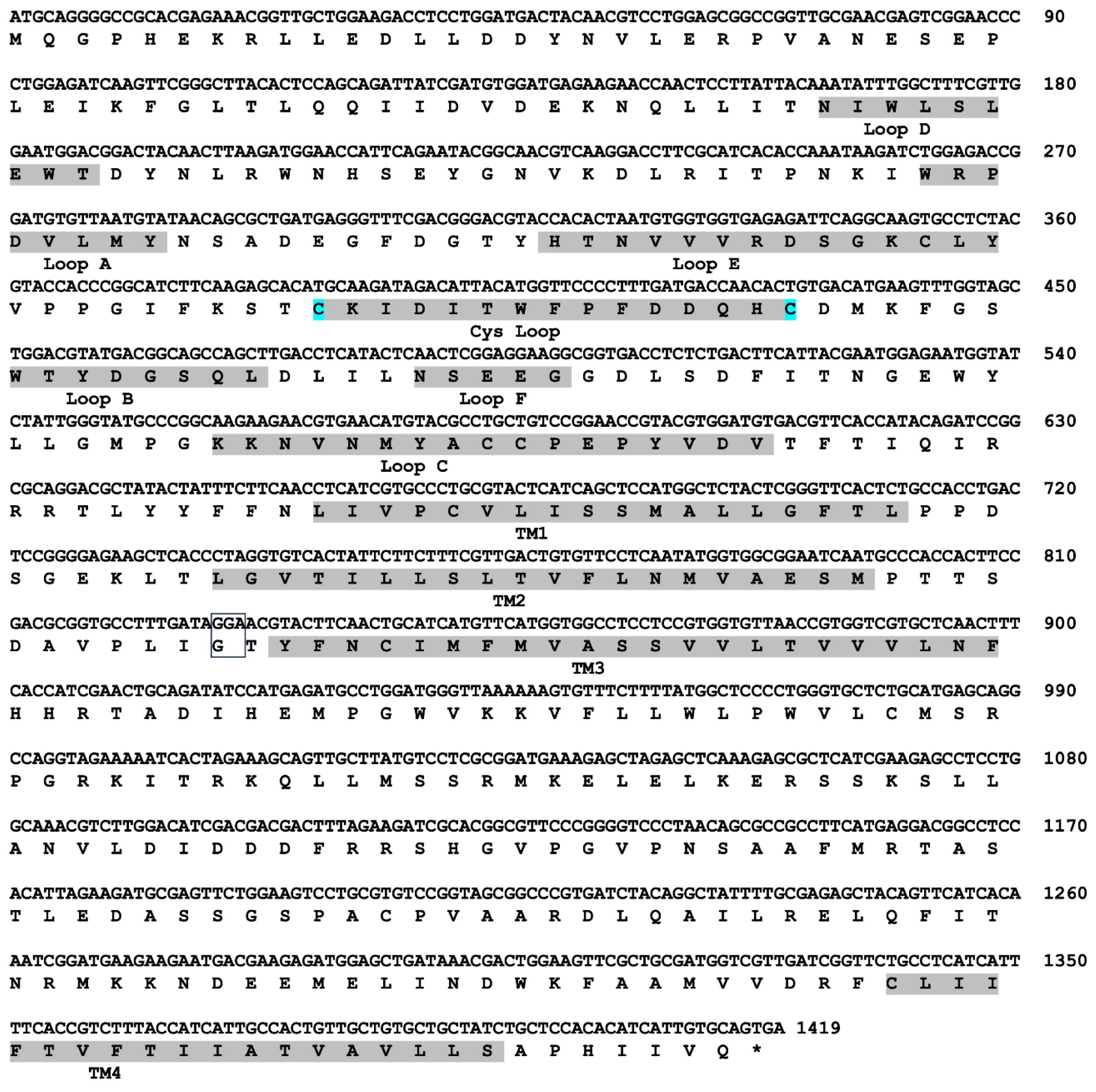
The full-length nucleotide sequence of the nAChRα6 subunit in F. intonsa was 1416 bp, encoding a predicted protein with 472 amino acids (accession no. PZ142668) (Figure 1). The deduced amino acid sequence showed high similarity with those of other thrips species, with 99.79% similarity to F. occidentalis and 96.84% similarity to T. palmi (accession nos. BAN81845 and BAP18687). The whole sequence we obtained belongs to the FIα6 subunit of nAchRα6, in which we identified two selective exons, 8a and 3b, from the selective exons, 8a/8b and 3a/3b, of the nAchRα6 subunit in F. occidentalis and T. palmi.
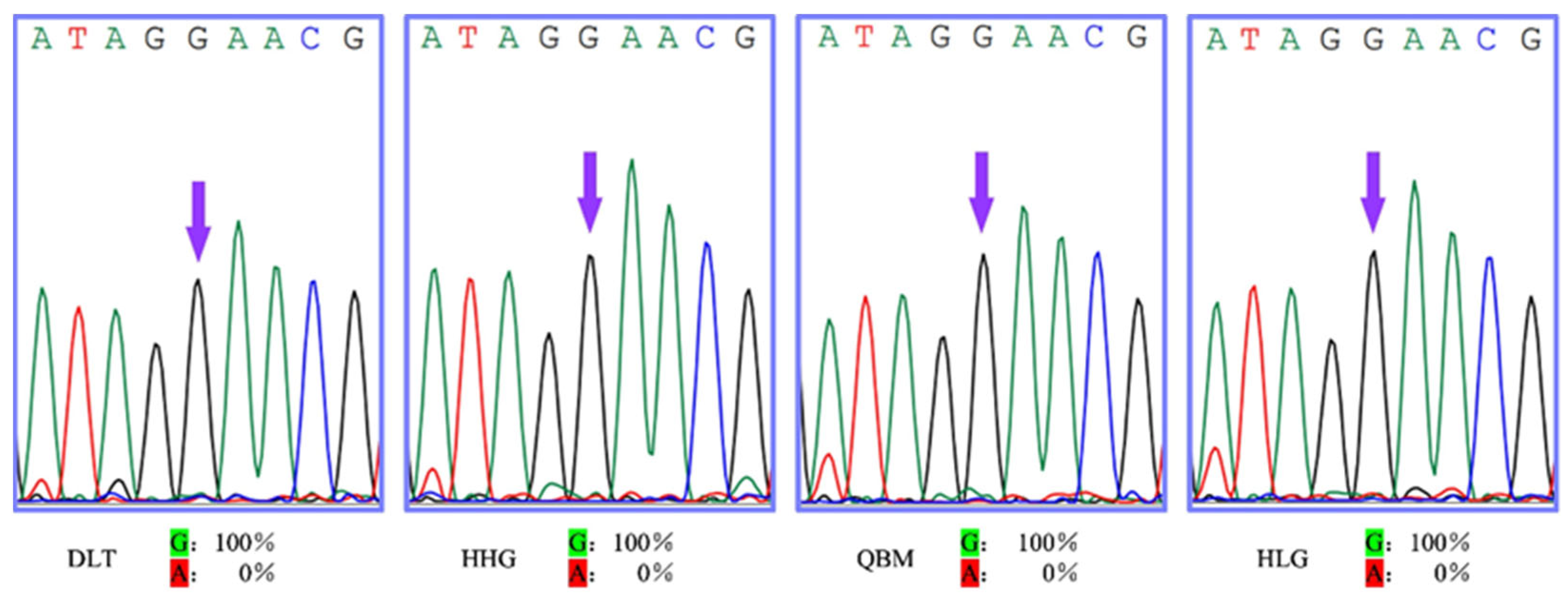
Furthermore, we analyzed the deduced amino acid sequences of the FIα6 subunit of the four populations and found that there were no point mutations like the one amino acid mutation at position 275 in other thrips (Figure 2).

3.3. Synergistic Effect of PBO on Detoxification Enzyme, CYP450

The LC50 and LC99 values of spinosad in the PBO-treated DLT population showed 1.33- and 59.64-fold decreases compared with those in the untreated population. The LC50 value in the PBO-treated HLG population increased 5.21-fold, whereas the LC99 value in the population decreased 2.52-fold compared with that in the untreated population.

4. Discussion

Here, we report on the field variations in four field-collected populations of flower thrips based on spinosoid insecticide use, including spinosad and spinetoram, in Inner Mongolia, China. To the best of our knowledge, this is the first report on this particular topic in the region. Our results showed that the susceptibility of the populations to these insecticides varied in stomach and contact toxicity bioassays.
We found that the LC50 value of the DLT population in the stomach toxicity bioassay was 1.22–2.25-fold higher compared with that in the other three populations, whereas the LC99 value of the QBM population was 9.22–161.57-fold higher compared with that in the other three populations in the spinosad insecticide bioassay (Table 2). Furthermore, we discovered that the LC50 value of spinetoram for stomach toxicity in the DLT population was 1.19–1.90-fold higher compared with that in the other three populations, whereas the LC99 value of spinetoram for stomach toxicity in the HHG population was 3.28–6.77-fold higher compared with that in the other three populations (Table 3). These results clearly indicate that the pest’s response to spinosoid insecticides varied across the field-collected populations collected in Inner Mongolia, China.
We found that the LC50 values for the stomach toxicity of spinosad in the DLT, HHG, QBM, and HLG populations were 50.51–113.64-fold lower than in the susceptible population of F. intonsa Trybom [13]. This indicated that all four populations of the species from Inner Mongolia, China, were susceptible to spinosad insecticide based on our current experimental conditions. However, we found that there was a significant difference in the LC99 values of the insecticides in these populations. For example, the LC99 value was 161.57-fold higher in the QBM population compared with that in the HLG population (Table 2).
We also found that the stomach toxicity of spinosad was higher than its contact toxicity in the populations, whereas that of spinetoram was lower than its contact toxicity when we compared the LC99 value of the insecticide across the populations (Table 2 and Table 3).
The LC50 value for the stomach toxicity of spinetoram in the four field-collected populations was 4.40–5.2-fold higher than that of spinosad, whereas the LC50 value for the contact toxicity of spinetoram was 0.688–2.589-fold higher than that of spinosad. Our results are consistent with the findings of Crouse et al. [23], who described that the toxicity of spinetoram was higher than that of spinosad. Consistent with the finding in the flower thrips, F. intonsa, in the cotton field in Xinjiang, China, by Li et al. [5], field variation to spinetoram as well as spinosad was observed in the pest in Inner Mongolia, China.
Our results clearly show that the response to the insecticides differs across the field-collected populations of the flower thrip, F. intonsa, collected in Inner Mongolia, China. Therefore, we further investigated whether the varying susceptibility to the spinosoid insecticides in the populations was due to a gene mutation in the subunit of the gene, nAChRα6. Previous studies [8,9,24] have shown that spinosad resistance in the oriental fruit fly, B. dorsalis, and the cabbage moth, P. xylostella, was due to a point mutation in the subunit α6 of the nAChR gene, which produced mis-splicing and a new stop codon in the resistant populations. However, based on nAChR gene sequencing across the field-collected populations of the species in the regions, we did not find any mutations (Figure 2). Our results indicate that the varying response to the spinosoid insecticides in these populations was not related to a gene mutation in the subunit of the nAChR gene. Therefore, we further investigated the activity of the detoxification enzyme, CYP450, in the field-collected populations. Researchers have observed spinosad resistance due to increased detoxification by the enzyme CYP450 in F. occidentalis [11], S. exigua [14], H. armigera [15], and S. litura [16]. We treated thrips from the DLT and HLG populations with spinosad insecticide with or without PBO, which is a CYP450 enzyme inhibitor. We discovered that LC50 and LC99 values in the thrips from the DLT population decreased 1.33- and 59.64-fold, respectively, compared with those in the thrips without PBO (Table 4). It was surprising to find that the LC50 value in the HLG population increased 5.21-fold, whereas the LC99 value decreased 2.52-fold compared with those in the thrips without PBO (Table 4). Contrary to the expected result, the LC50 value in the HLG population increased in the PBO-treated group. We will evaluate the CYP450 enzyme activity directly using more populations of the species treated with spinosad and spinetoram insecticides in a future study. Taken together, our results show that the field variation in these populations may be due to the activation of the detoxification enzyme, CYP450s [13]. In conclusion, our results indicate that the response to spinosoid insecticides in these populations of flower thrips differed across the regions. However, due to the lack of a susceptible population for control, the field variation of the insecticides in the pest could be treated as the comparative susceptibility in the species. These differences may be due to the activation of the detoxification enzyme, CYP450s, instead of the gene mutation in the subunit of the nAChR gene. A recent study described that the resistant allele frequency of spinetoram in Drosophila melanogaster in vineyards in New York, USA, increased over time [25]. Therefore, to overcome the limitations in sample size, collection regions, and dose points in the probit analysis, we will collect more samples of the species from additional areas in Inner Mongolia and northern China to investigate and establish a solid susceptible population. We aim to create a clear picture of spinosoid insecticide resistance and investigate other insecticide families as well within the species through future research.

Author Contributions

Conceptualization, W.B., Z.H. and Y.G.; Methodology, W.B., N.W., A., Z.H. and Y.G.; Investigation, W.B., N.W., A., Z.H. and Y.G.; Formal Analysis and Data Curation, W.B., N.W., A., Z.H. and Y.G.; Writing—Original Draft Preparation, W.B. and Z.H.; Writing—Review and Editing, W.B., N.W., A., Z.H. and Y.G.; Supervision, W.B., N.W., A., Z.H. and Y.G.; Project Administration, W.B., N.W., A., Z.H. and Y.G.; Funding Acquisition, W.B., N.W., A., Z.H. and Y.G. All authors have read and agreed to the published version of the manuscript.

Funding

WX Bao was supported by the Chinese National Natural Science Foundation, (#3196034; January 2020–December 2023).

Data Availability Statement

The original data are included in the paper. Further inquiries can be directed to the corresponding authors.

Acknowledgments

We are grateful to the farmers for allowing us to collect thrip samples from their farmlands. We also thank Chunhui Wang, Xuhua Zhu, Tuya Han, and Lirong Li for their technical support on collecting, rearing, and bioassays during the project.

Conflicts of Interest

All authors declare that there are no conflicts of interest in this study.

References

  1. Wang, C.L.; Lin, F.C.; Chiu, Y.C.; Shih, H.T. Species of Frankliniella Trybom (Thysanoptera: Thripidae) from the Asian-Pacific Area. Zool. Stud. 2010, 49, 824–838. [Google Scholar]
  2. Zhu, X.Y.; Zhang, P.J.; Lu, Y.B. Isolation and identification of the aggregation pheromone released by male adults of Frankliniella intonsa (Thysanoptera: Thripidae). J. Insect. 2012, 55, 376–385. [Google Scholar]
  3. Han, Y.; Liu, K.; Wu, J.H.; Tang, L.D. The behavioral response of Frankliniella intonsa (Trybom) to eleven different chemicals. J. Trop. Crops 2015, 36, 1646–1649. [Google Scholar]
  4. Wu, Y.M.; Temuerbuhe; Zhao, X.H. The study on the thrips collected from alfalfa (Medicago sativa L.) in China. Acta Agrestia Sin. 1991, 1, 119–125. [Google Scholar]
  5. Li, X.W.; Wang, L.Q.; Wang, W.; Yao, J.; Ullah, F.; Li, C.M.; Zhang, R.F.; Lu, Y.B. Susceptibility of Field Populations of Frankliniella intonsa to Spinetoram, Imidacloprid, and Acetamiprid in Xinjiang Cotton Fields, China. Insects 2025, 16, 1234. [Google Scholar] [CrossRef] [PubMed]
  6. Salgado, V.L. The mode of action of spinosad and other insect control products. Down Earth 1997, 52, 35–44. [Google Scholar]
  7. Perry, T.; McKenzie, J.A.; Batterham, P. A Da6 knockout strain of Drosophila melanogaster confers a high level of resistance to spinosad. Insect Biochem. Mol. Biol. 2007, 37, 184–188. [Google Scholar] [CrossRef] [PubMed]
  8. Baxter, S.W.; Chen, M.; Dawson, A.; Zhao, J.Z.; Vogel, H.; Shelton, A.M.; Heckel, D.G.; Jiggins, C.D. Mis-Spliced Transcripts of Nicotinic Acetylcholine Receptor a6 Are Associated with Field Evolved Spinosad Resistance in Plutella xylostella (L.). PLoS Genet. 2010, 6, e1000802. [Google Scholar] [CrossRef]
  9. Hsu, J.C.; Feng, H.T.; Wu, W.J.; Geib, S.M.; Mao, C.H.; Vontas, J. Truncated transcripts of nicotinic acetylcholine subunit gene Bda6 are associated with spinosad resistance in Bactrocera dorsalis. Insect Biochem. Mol. Biol. 2012, 42, 806–815. [Google Scholar] [CrossRef]
  10. Bielza, P.; Quinto, V.; Fernandez, E.; Gravalos, C.; Contreras, J. Genetics of spinosad resistance in Frankliniella occidentalis (Thysanoptera: Thripidae). J. Econ. Entomol. 2007, 100, 916–920. [Google Scholar] [CrossRef]
  11. Puinean, A.M.; Lansdell, S.J.; Collins, T.; Bielza, P.; Millar, N.S. A nicotinic acetylcholine receptor transmembrane point mutation (G275E) associated with resistance to spinosad in Frankliniella occidentalis. J. Neurochem. 2013, 124, 590–601. [Google Scholar] [CrossRef]
  12. Bao, W.X.; Narai, Y.; Nakano, A.; Kaneda, T.; Murai, T.; Sonoda, S. Spinosad resistance of melon thrips, Thrips palmi, is conferred by G275E mutation in α6 subunit of nicotinic acetylcholine receptor and cytochrome P450 detoxification. Pestic. Biochem. Physiol. 2014, 112, 51–55. [Google Scholar] [CrossRef]
  13. Hiruta, E.; Aizawa, M.; Nakano, A.; Sonoda, S. Nicotinic acetylcholine receptor alpha 6 subunit mutation (G275V) found in a spinosad-resistant strain of the flower thrips, Frankliniella intonsa (Thysanoptera: Thripidae). J. Pestic. Sci. 2018, 43, 272–276. [Google Scholar] [CrossRef] [PubMed]
  14. Wang, W.; Mo, J.C.; Cheng, J.A.; Zhuang, P.J.; Tang, Z.H. Selection and characterization of spinosad resistance in Spodoptera exigua (Hubner) (Lepidoptera: Noctuidae). Pestic. Biochem. Physiol. 2006, 84, 180–187. [Google Scholar] [CrossRef]
  15. Wang, D.; Qiu, X.H.; Ren, X.X.; Niu, F.; Wang, K.Y. Resistance selection and biochemical characterization of spinosad resistance in Helicoverpa armigera (Hubner) (Lepidoptera: Noctuidae). Pestic. Biochem. Physiol. 2009, 95, 90–94. [Google Scholar] [CrossRef]
  16. Rehan, A.; Freed, S. Selection, mechanism, cross resistance and stability of spinosad resistance in Spodoptera litura (Fabricius) (Lepidoptera: Noctuidae). Crop Prot. 2014, 56, 10–15. [Google Scholar] [CrossRef]
  17. Fahmy, A.R.; Miyata, T. Development and reversion of chlorfluazuron resistance in diamondback moth. In Proceedings of the Diamondback Moth and Other Crucifer Pests: Proceedings of the Second International Workshop, Tainan, Taiwan, 10–14 December 1990; Talekar, N.S., Ed.; AVRDC: Tainan, Taiwan, 1991; pp. 403–410. [Google Scholar]
  18. Abbott, W.S. A method of computing the effectiveness of an insecticide. J. Econ. Entomol. 1925, 18, 265–267. [Google Scholar] [CrossRef]
  19. Kwon, D.H.; Kim, K.; Kang, T.J.; Kim, S.J.; Choi, B.R.; Kim, J.I.; Lee, S.H. Establishment of an insecticide resistance monitoring protocol based on the residual contact vial bioassay for Frankliniella occidentalis. J. Asia-Pac. Entomol. 2015, 18, 311–314. [Google Scholar] [CrossRef]
  20. Zhang, S.Y.; Kono, S.; Murai, T.; Miyata, T. Mechanisms of resistance to Spinosad in the western flower thrips, Frankliniella occidentalis (Pergande) (Thysanoptera: Thripidae). Insect Sci. 2008, 15, 125–132. [Google Scholar] [CrossRef]
  21. Hubhachen, Z.; Pointon, H.; Perkins, J.A.; Van Timmeren, S.; Pittendrigh, B.; Isaacs, R. Resistance to Multiple Insecticide Classes in the Vinegar Fly Drosophila melanogaster (Diptera: Drosophilidae) in Michigan Vineyards. J. Econ. Entomol. 2022, 115, 2020–2028. [Google Scholar] [CrossRef] [PubMed]
  22. SAS Institute Inc. SAS/ACCESS® 9.4 Interface to ADABAS: Reference; SAS Institute Inc.: Cary, NC, USA, 2013. [Google Scholar]
  23. Crouse, G.D.; Sparks, T.C.; Schoonover, J.; Gifford, J.; Dripps, J.; Bruce, T.; Larson, L.L.; Garlich, J.; Hatton, C.; Hill, R.L.; et al. Recent advances in the chemistry of spinosyns. Pest Manag. Sci. 2001, 57, 177–185. [Google Scholar] [CrossRef] [PubMed]
  24. Rinkevich, F.D.; Chen, M.; Shelton, A.M.; Scott, J.G. Transcripts of the nicotinic acetylcholine receptor subunit gene Pxyl alpha 6 with premature stop codons are associated with spinosad resistance in diamondback moth, Plutella xylostella. Invertebr. Neurosci. 2010, 10, 25–33. [Google Scholar] [CrossRef] [PubMed]
  25. Scott, J.G.; Dressel, A.E.; Mertz, R.W.; Hesler, S.; Loeb, G. Monitoring of the nAChRs6 G275A spinetoram resistance allele in Drosophila melanogaster populations from New York vineyards. Pest Manag. Sci. 2024, 80, 5741–5745. [Google Scholar] [CrossRef] [PubMed]
Figure 1. The nucleotide and the deduced amino acid sequences of the FIα6 subunit of the flower thrips, F. intonsa. The membrane-spanning domain FIα6 (TM1, TM2, TM3, TM4), the Cys loop (cysteines at the two ends shown in blue) and the 6 loops (Loops D, A, E, B, F, C), which are located outside the membrane of the N-end of FIα6, are shown in the shaded areas. The position of amino acid #275 and its corresponding nucleotides are shown as a rectangle.
Insects 17 00511 g001
Figure 2. The partial sequences of the subunit (α6) of the nAChR gene from the flower thrip, F. intonsa. The arrow heads show the point mutation site in the gene. No mutation was observed in the 4 field-collected populations of the species from Inner Mongolia, China.
Insects 17 00511 g002
Table 1. Primers used for the amplification of the nAChRα6 subunit in the flower thrips, F. intonsa.
Fragments5′-Primers3′-Primers
Primer NameSequencePrimer NameSequence
5′RACE1st 5′adaptor5′-GCTGTCAACGATACGCTACGTAACG
GCATGACAGTG-3′
RC970-C-R55′-CCTCCGAGTTGAGTATGAGGTCAAG-3′
2nd 5.3′outer5′-GCTGTCAACGATACGCTACGTAAC-3′RC970-C-R65′-CGTCCAGCTACCAAACTTCATGTCA-3′
1FInAchR_alpha6/2-1F5′-GCGGCCATCTTAACGACGAT-3′FInAchR_alpha6/2-1R5′-GGACAGCAGGCGTACATGTT-3′
2FInAchR_alpha6/2-2F5′-GCAGCCAGCTGGACCTCATT-3′FInAchR_alpha6/2-2R5′-TGTGTGGAGCTGATAGCAGC-3′
3′RACE1st RC970-C-F15′-CGTCTTGGACATCGACGACG-3′5.3′outer5′-GCTGTCAACGATACGCTACGTAAC-3′
2nd RC970-C-F25′-TAACAGCGCCGCCTTCATGA-3′5.3′inner5′-GCTACGTAACGGCATGACAGTG-3′
Table 2. The field variation in spinosad in the flower thrips, F. intonsa.
PopulationTreatmentnLC50
(95% CL)
LC90
(95% CL)
LC99
(95% CL)
SlopeY InterceptX2 (df)p-Value
DLTST366
(117, 123, 126)
0.099
(0.012–0.446)
1.378
(0.338–610.535)
24.454
(2.294–9,074,182.950)
1.921.9317.429 (4)0.002
CT357
(115, 122, 120)
0.199
(0.14–0.276)
0.854
(0.563–1.633)
4.196
(2.069–14.092)
3.4682.4354.249 (3)0.236
AR 2.0100.6200.172
HHGST336
(107, 126, 103)
0.045
(0.025–0.077)
1.815
(0.738–8.209)
103.362
(18.391–2192.647)
1.3661.8446.402 (4)0.171
CT401
(138, 144, 119)
0.347
(0.251–0.48)
1.161
(0.793–2.021)
4.338
(2.402–11.215)
4.1891.9260.2 (3)0.978
AR 7.7110.6400.042
QBMST315
(105, 89, 121)
0.081
(0.003–21.919)
7.156
(0.513–4.066 × 10²⁰)
952.765
(8.136–8.129 × 1042)
1.1291.23216.256 (4)0.003
CT517
(192, 160, 165)
0.329
(0.232–0.456)
2.813
(1.811–5.173)
29.233
(13.365–93.396)
2.3591.1383.948 (3)0.267
AR 4.0620.3930.031
HLGST362
(103, 120, 139)
0.044
(0.001–0.246)
0.458
(0.113–11,633.034)
5.897
(0.608–3.782 × 10¹⁰)
2.1612.9321.9 (4)0
CT391
(109, 141, 141)
0.182
(0.034–1.072)
0.654
(0.256–2476.403)
2.642
(0.644–41,915,086.75)
3.9532.92811.024 (3)0.012
AR 4.1361.4280.448
CL: confidence limit; ST: stomach toxicity; CT: contact toxicity; AR (action ratio): LC50 of contact action/LC50 of stomach action. “n” represents the total number of thrips used with 5 concentrations of spinosad and 3 replicates in the experiment.
Table 3. The field variation in spinetoram in the flower thrips, F. intonsa.
PopulationTreatmentnLC50
(95% CL)
LC90
(95% CL)
LC99
(95% CL)
SlopeY InterceptX2 (df)p-Value
DLTST329
(112, 112, 105)
0.019
(0.016–0.022)
0.041
(0.033–0.059)
0.096
(0.066–0.187)
6.52111.2273.148 (5)0.677
CT284
(75, 107, 102)
0.238
(0.164–0.362)
1.026
(0.61–2.538)
5.053
(2.146–25.28)
3.4642.1580.321 (3)0.956
AR 12.52625.02452.635
HHGST418
(131, 147, 140)
0.01
(0.001–0.019)
0.068
(0.036–1.204)
0.528
(0.133–1163.26)
2.75.34413.687 (5)0.018
CT395
(124, 135, 136)
0.134
(0.002–0.521)
2.912
(0.698–8355.035)
83.865
(6.205–2.371 × 10¹⁰)
1.6431.4359.245 (3)0.026
AR 13.40042.824158.835
QBMST324
(113, 108, 103)
0.016
(0.014–0.019)
0.034
(0.028–0.05)
0.078
(0.053–0.16)
12.02612.0263.17 (5)0.674
CT391
(113, 157, 121)
0.478
(0.263–0.738)
5.286
(3.246–10.953)
72.86
(28.025–373.488)
2.1050.6753.802 (3)0.284
AR 29.875155.471934.103
HLGST523
(167, 194, 162)
0.01
(0.004–0.015)
0.039
(0.025–0.18)
0.161
(0.063–6.95)
3.8697.66812.992 (5)0.023
CT448
(178, 138, 132)
0.104
(0.000–0.605)
4.74
(0.017–5.322)
306.094
(14.4–2.068 × 10¹²)
1.3251.30210.512 (3)0.015
AR 10.400121.5381901.205
CL: confidence limit; ST: stomach toxicity; CT: contact toxicity; AR (action ratio): LC50 of contact action/LC50 of stomach action. “n” represents the total number of thrips used with 5 concentrations of spinetoram and 3 replicates in the experiment.
Table 4. The synergistic effect of butoxide piperonyl on the CYP450 enzyme in the spinosad-treated thrips, F. intonsa.
PopulationInsecticidenLC50
(95% CL)
LC90
(95% CL)
LC99
(95% CL)
SlopeY InterceptX2 (df)p-Value
DLTSpinosad366
(117, 123, 126)
0.099
(0.012–0.446)
1.378
(0.338–610.535)
24.454
(2.294–9,074,182.950)
1.921.9317.429(4)0.002
Spinosad + PBO379
(133, 116, 130)
0.073
(0.000–0.099)
0.166
(0.126–2067.139)
0.41
(0.216–1.67 × 10¹⁴)
6.1146.9625.249(4)0.263
HLGSpinosad362
(103, 120, 139)
0.044
(0.001–0.246)
0.458
(0.113–11,633.034)
5.897
(0.608–3.782 × 10¹⁰)
2.1612.9321.9(4)0
Spinosad + PBO501
(189, 162, 150)
0.229
(0.031–0.468)
0.696
(0.363–26.621)
2.338
(0.845–13,871.467)
4.5552.9159.921(4)0.042
PBO: piperonyl butoxide; CL: confidence limit. “n” represents the total number of thrips used with 5 concentrations of spinosad and 3 replicates in the experiment.
Disclaimer/Publisher’s Note: The statements, opinions and data contained in all publications are solely those of the individual author(s) and contributor(s) and not of MDPI and/or the editor(s). MDPI and/or the editor(s) disclaim responsibility for any injury to people or property resulting from any ideas, methods, instructions or products referred to in the content.