
Molecular Composition and Ligand Binding Characteristics of Native Ionotropic GABA Receptors in Rice Stem Borer, Chilo suppressalis


1
Key Laboratory of Integrated Pest Management on Crops in East China, Ministry of Agriculture and Rural Affair, College of Plant Protection, Nanjing Agricultural University, Nanjing 211800, China
2
Plant Protection, Quarantine and Cultivated Land & Fertilizer Management Station, Huzhou Municipal Bureau of Agriculture and Rural Affairs, Huzhou 313000, China
3
State Key Laboratory of Agricultural and Forestry Biosecurity, College of Plant Protection, Nanjing Agricultural University, Nanjing 211800, China
*
Author to whom correspondence should be addressed.
Insects 2026, 17(5), 477; https://doi.org/10.3390/insects17050477
Submission received: 12 March 2026
/
Revised: 23 April 2026
/
Accepted: 28 April 2026
/
Published: 6 May 2026
(This article belongs to the Special Issue Insect Molecular Biology: From Bioinformatics to Pest Management Applications)
Simple Summary
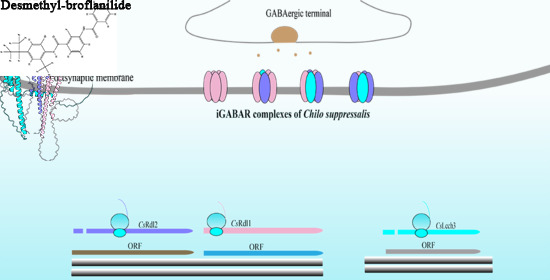
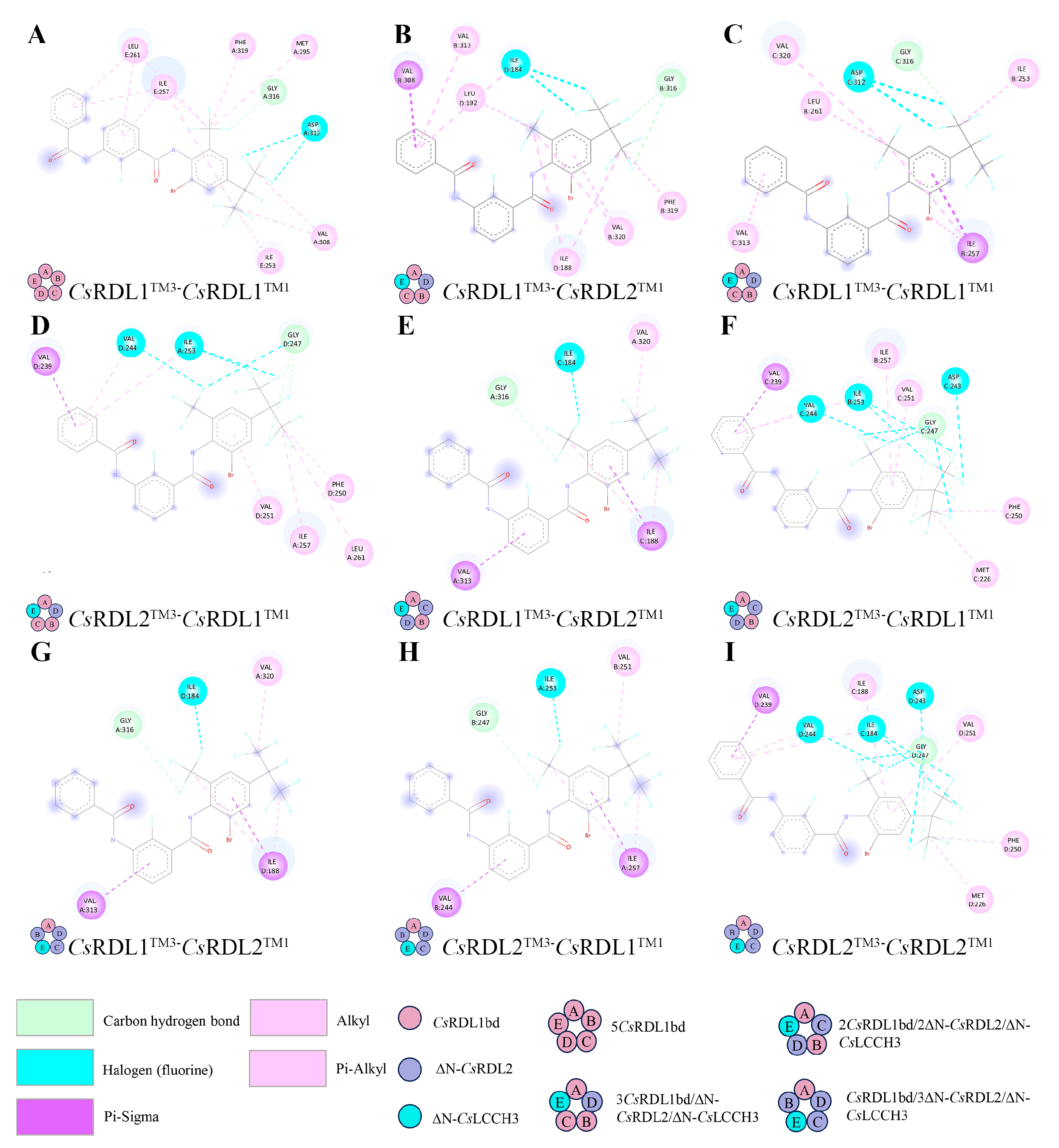
Ionotropic γ-aminobutyric acid receptor (iGABAR) is one of the key molecular targets for developing insecticides. However, the molecular composition and ligand binding characteristics of native iGABARs have not been characterized in insects. In this study, native iGABARs composed of CsRDL1, CsRDL2 or CsLCCH3 were identified from postsynaptic membranes of rice stem borer (RSB). N-terminal-truncated transcripts and proteins of CsRDL2 (∆N-CsRDL2) and CsLCCH3 (∆N-CsLCCH3), as well as CsRDL1ad, CsRDL1bd and post-translationally modified CsRDL1, were detected in native iGABARs. In addition, CsRDL1, CsRDL2 and CsLCCH3 were distributed in the same region in the adult head. Notably, the binding affinities of desmethyl-broflanilide (DMBF) to heteromeric iGABARs assembled by CsRDL1, ∆N-CsRDL2, and ∆N-CsLCCH3 were higher than those of DMBF to homomeric iGABAR assembled by CsRDL1. Overall, our findings indicated that ∆N-CsRDL2 and ∆N-CsLCCH3 could compose native iGABARs with CsRDL1, and they attenuate DMBF binding to iGABARs in the RSB. These results provide new insights into the molecular constituents of postsynaptic ion channels and support the rational design of novel insecticides.
Abstract
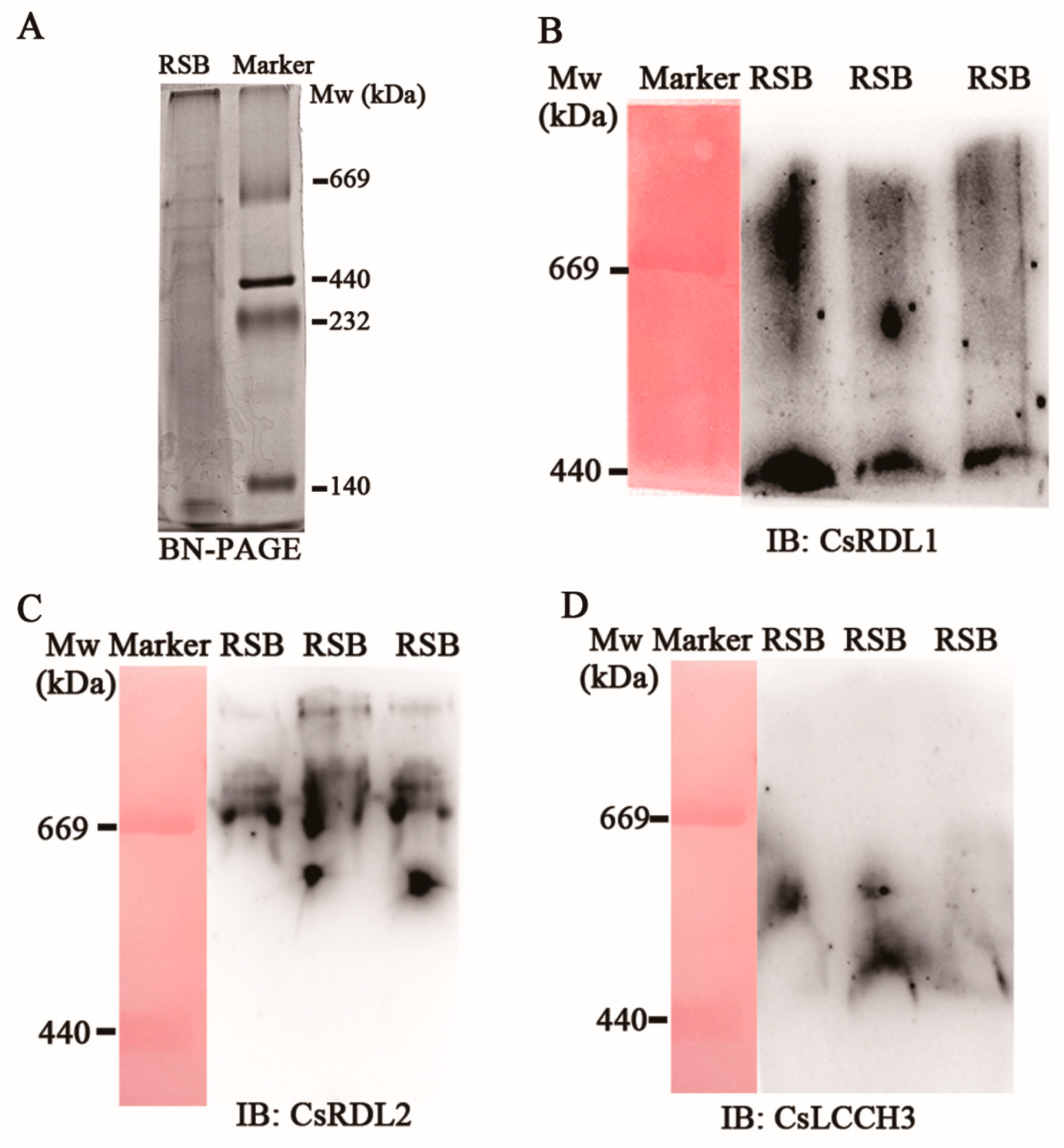
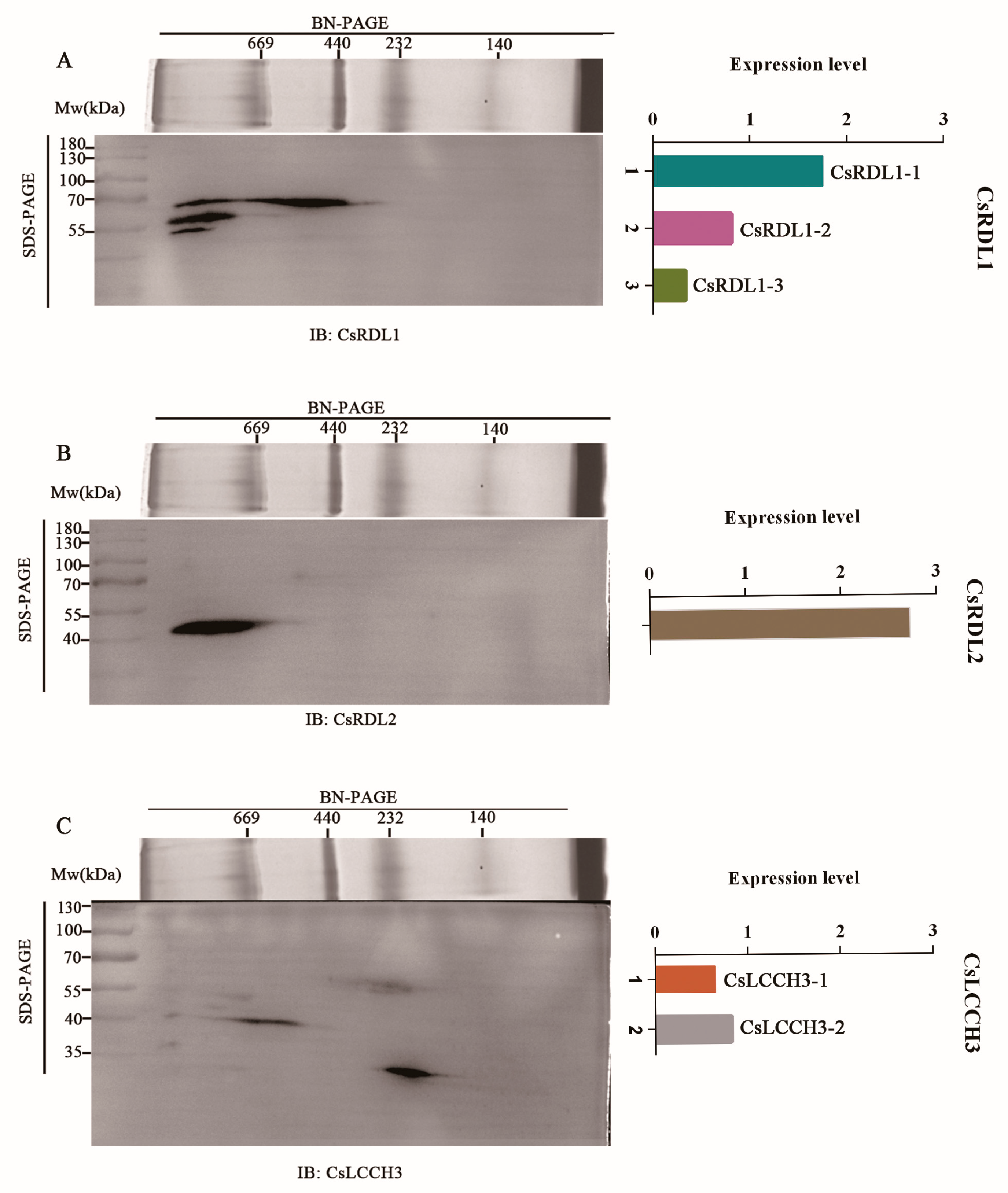
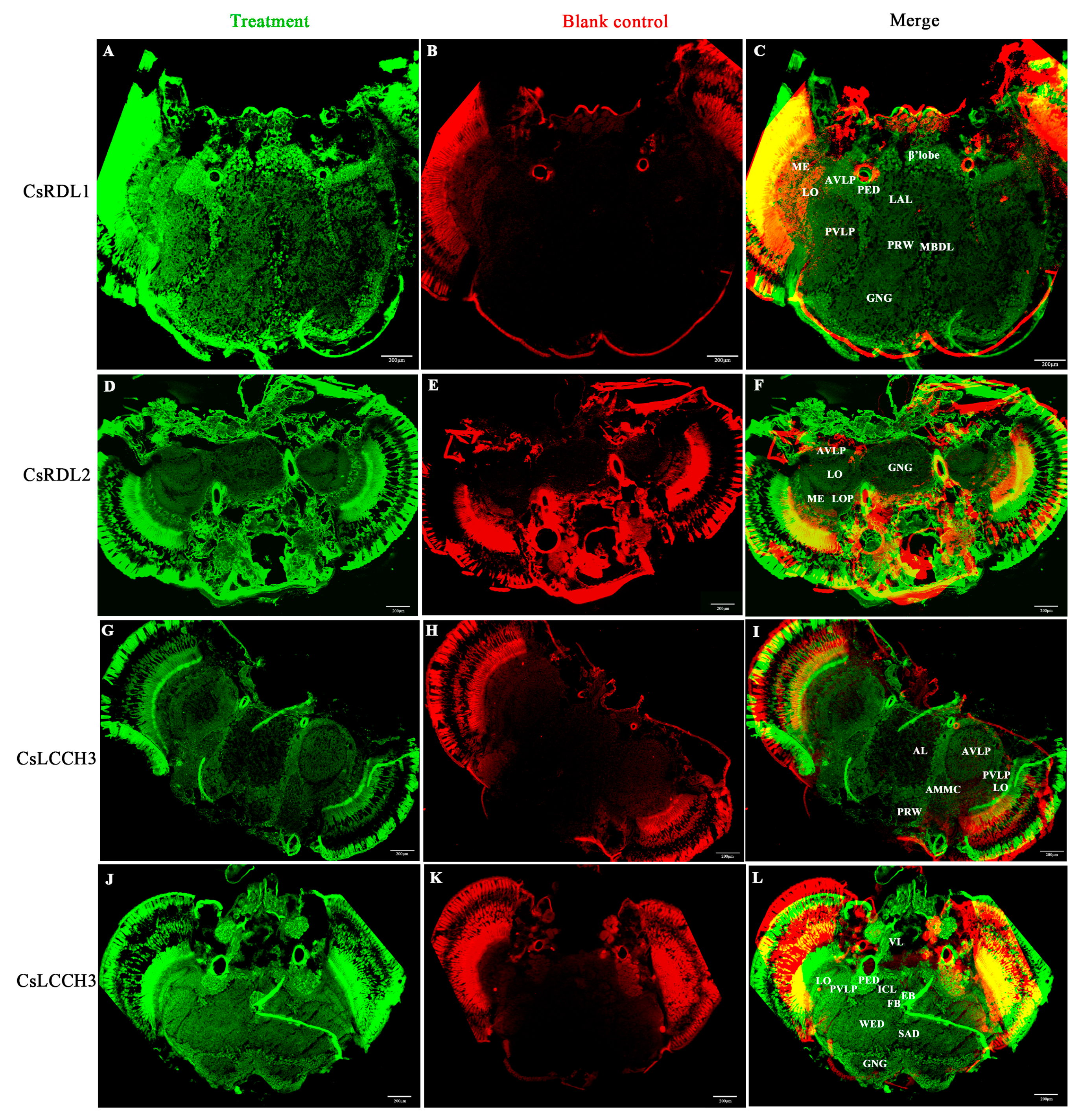
The ionotropic γ-aminobutyric acid receptor (iGABAR) is an important insecticidal molecular target. However, the native iGABARs composition remains unknown in insect. Here, CsRdl1, truncated transcripts of CsRdl2 and CsLcch3 were obtained in the rice stem borer (RSB), Chilo suppressalis Walker. The N-terminal-truncated CsRDL2 (∆N-CsRDL2) and N-terminal-truncated CsLCCH3 (∆N-CsLCCH3) were deduced and studied in vivo, and desmethyl-broflanilide (DMBF) binding characteristics were simulated in silico. Genome and transcriptome analyses revealed truncated transcripts of CsRdl2 and CsLcch3 encoded 48 kDa of ∆N-CsRDL2 and 37 kDa of ∆N-CsLCCH3, respectively. The CsRDL1, CsRDL2 and CsLCCH3 were detected respectively from native iGABARs at molecular weights (Mws) ≥ 440 kDa in BN-PAGE. In BN/SDS-PAGE, three CsRDL1 bands (~54, ~55 and ~70 kDa), one CsRDL2 band (~48 kDa) and one CsLCCH3 band (~37 kDa) were identified in native iGABARs at Mws ≥ 669 kDa, and corresponded to CsRDL1ad, CsRDL1bd, post-translationally modified CsRDL1, ∆N-CsRDL2 and ∆N-CsLCCH3, respectively. Immunofluorescence confirmed these three subunits distributed in the same region of adult heads. Finally, DMBF displayed higher binding affinities for heteromeric iGABARs than for homomeric CsRDL1 iGABAR in silico. These findings confirm that ∆N-CsRDL2 and ∆N-CsLCCH3 in native iGABARs might support the rational design of novel insecticides.