Article

Role of Host Volatiles in Regulating the Rhythmic Host Alternation in the Mulberry Longhorn Beetle, Apriona germari


Co-Innovation Center for the Sustainable Forestry in Southern China, Nanjing Forestry University, Nanjing 210037, China
*
Author to whom correspondence should be addressed.
Insects 2026, 17(5), 448; https://doi.org/10.3390/insects17050448
Submission received: 25 February 2026 / Revised: 30 March 2026 / Accepted: 23 April 2026 / Published: 24 April 2026

Simple Summary

The mulberry longhorn beetle, Apriona germari, is a destructive wood-boring pest that causes significant economic and ecological damage to multiple hardwood species across its extensive distribution range. Adults of this species exhibit a distinct diel rhythm of host alternation, aggregating on feeding hosts (Morus alba) during daytime and dispersing to oviposition hosts (Salix babylonica) at night. However, the regulatory mechanisms underlying this rhythmic behavior remain poorly understood. In this study, we investigated the role of host volatile organic compounds (VOCs) in mediating this behavioral rhythm through cage experiments and two-choice olfactory bioassays. Our results demonstrate that male A. germari are consistently attracted to VOCs from undamaged mulberry throughout both dawn and dusk periods, whereas females exhibit significant attraction exclusively to willow VOCs at dusk, coinciding with their dispersal for oviposition. Notably, VOCs from feeding-damaged mulberry exhibited repellent effects, particularly toward males at dawn. These findings suggest that the rhythmic host alternation in A. germari is partially mediated by differential behavioral responses to host volatiles, with putative male-produced aggregation pheromones potentially contributing to the dawn reassembly on feeding hosts. This research advances our understanding of host alternation mechanisms in Cerambycidae and provides a theoretical foundation for developing semiochemical-based management strategies against this economically important pest.

Abstract

Host alternation is a common behavioral strategy among many herbivorous insects. The mulberry longhorn beetle, Apriona germari is a destructive wood-boring pest. The adults exhibit rhythmic host alternation between feeding and oviposition hosts. However, the temporal rhythm and regulatory mechanisms underlying this behavior remain unclear. In the present study, by observing the dynamics of the numbers of A. germari on mulberry (Morus alba, feeding host) and willow (Salix babylonica, oviposition host) trees in a cage, we first found that both females and males began to aggregate on mulberry trees at dawn. Following 18:00 at dusk, the number of females on mulberry declined sharply, whereas the number of males decreased slightly, with a greater proportion of males staying on mulberry. To investigate the role of host volatiles in regulating the host alternation in A. germari, we then carried out two-choice olfactory assays to test whether the behavioral responses of A. germari to the host volatiles from mulberry and willow twigs differed between 04:00 and 08:00 (dawn, aggregated on mulberry) and 18:00 to 22:00 (dusk, dispersed from mulberry). Males were consistently attracted to the volatiles from healthy mulberry at both dawn and dusk, but not to those from willow. Females showed no attraction to the volatiles from either of two hosts at dawn; however, at dusk, they were significantly attracted to willow volatiles. Furthermore, volatiles from feeding-damaged mulberry trees were repellent to both sexes, particularly to males at dawn. These results indicate that the rhythmic host alternation in A. germari is partly mediated by host volatiles and an unidentified male-produced pheromone may be present in this species. Our findings can deepen the understanding of the host alternation in longhorn beetles, and offer a theoretical foundation for developing semiochemical-based, eco-friendly strategies for controlling this pest.

1. Introduction

Herbivorous insects have evolved diverse strategies to secure the nutrients required for their physiological development and reproduction from host plants [1]. Host alternation represents a key strategy in this context [2]. Butterflies are a typical example: the larvae feed on relatively protein-rich foliage, while adults primarily obtain nutrients from nectar or sap from decaying fruits. To sustain the energy required for growth and reproduction, they are thus compelled to shift between adult-feeding hosts and oviposition hosts across different life stages [3,4,5,6,7]. Longhorn beetles (Coleoptera, Cerambycidae) are a group of xylophagous insects, which also exhibit such host alternation between adult-feeding and ovipostion hosts [8,9]. For instance, the Asian longhorn beetle, Anoplophora glabripennis, oviposit on Fraxinus pennsylvanica, while the adults do not feed on it; the adults feed on Platanus orientalis, but do not lay eggs on this tree [10]. The underlying mechanisms regulating the host alternation in longhorn beetles is not well understood, but this behavior makes difficulties for pest control [10,11].
The mulberry longhorn beetle, Apriona germari (subfamily: Lamiinae) is distributed in China, Japan, North Korea, Vietnam, Laos, Cambodia, Myanmar, Thailand, India, and Bangladesh [12]. In China, A. germari is widely distributed across 25 provinces, municipalities, and autonomous regions with the exception of Heilongjiang, Inner Mongolia, Jilin, Xinjiang, Ningxia, and Tibet [13]. Larval boring within trunks and major branches impairs host height, diameter, and volumetric growth, reduces timber quality and can lead to tree mortality under severe infestation [14]. This species primarily attacks a wide range of hardwood hosts, including Populus spp., Morus alba, Broussonetia papyrifera, Ulmus pumila, Malus pumila, Cerasus pseudocerasus, Pyrus spp., Citrus reticulata, Salix babylonica, etc. [15,16]. In China, A. germari has been listed as a “second level” harmful forest pest, with an infested area exceeding 65,000 km2, threatening ecological stability and economic benefits [17].
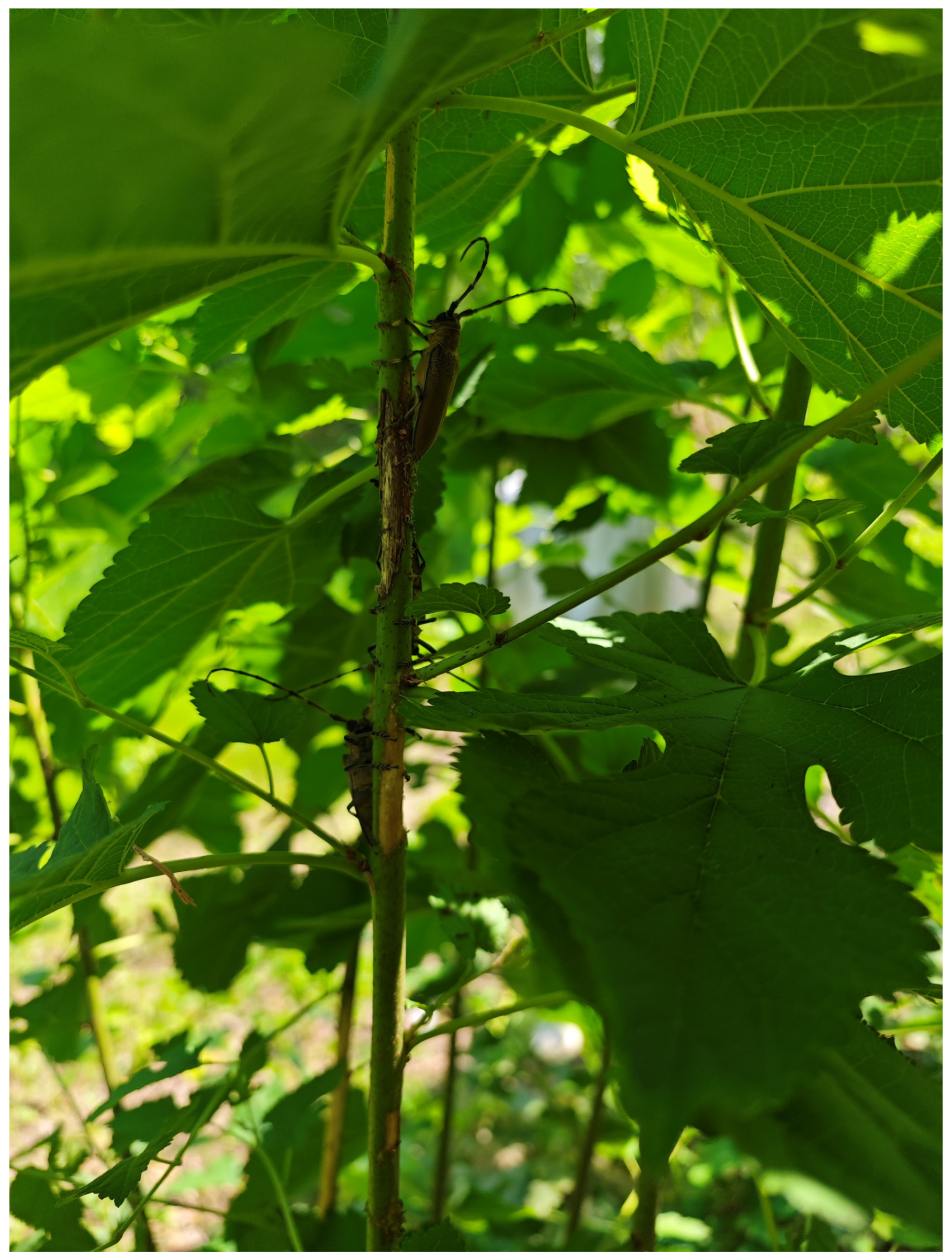
Apriona germari exhibits an extreme example of host alternation in Cerambycidae. Following exclusion, the adults engage in nutrient acquisition by feeding on the twigs of certain host species, including mulberry (M. alba) or paper mulberry (B. papyrifera) trees, for sexual maturation. After mating, the beetles can lay eggs on a wider range of host trees, such as polar (Populus), weeping willow (Salix babylonica), fig tree (Ficus carica), Planetree (Platanus spp.), Black locust (Robinia pseudoacacia) and Peking willow (Salix matsudana), with the exception of mulberry and paper mulberry [18,19,20], demonstrating an obligate host alternation [16,21,22]. This behavioral strategy occurs mainly because feeding on certain hosts is essential for ovarian development and production of mature eggs in females [14]. Moreover, the sexually mature adults also perform host alternation in a diel rhythm pattern. The adults feed on mulberry or paper mulberry in the daytime (Figure 1) and oviposit on different species at night [23]. However, the mechanisms underlying this host alternation remain unclear.
Host volatiles are key signals employed by longhorn beetles for host selection and location [24,25,26]. Thus, we hypothesized that the rhythmic host alternation in A. germari is mediated by differing responses of the beetles to odors from host trees according to the time of day. To test this hypothesis, in the present study, we first carried out a cage experiment to figure out the specific occurrence periods of host alternation between feeding and oviposition hosts (from feeding host to oviposition host, and from oviposition host to feeding host) within a day. We then investigated whether A. germari exhibited different preferences toward the volatiles emitted by feeding and oviposition hosts during the occurrence periods of host alternation.

2. Materials and Methods

2.1. Sources of Insects and Plants

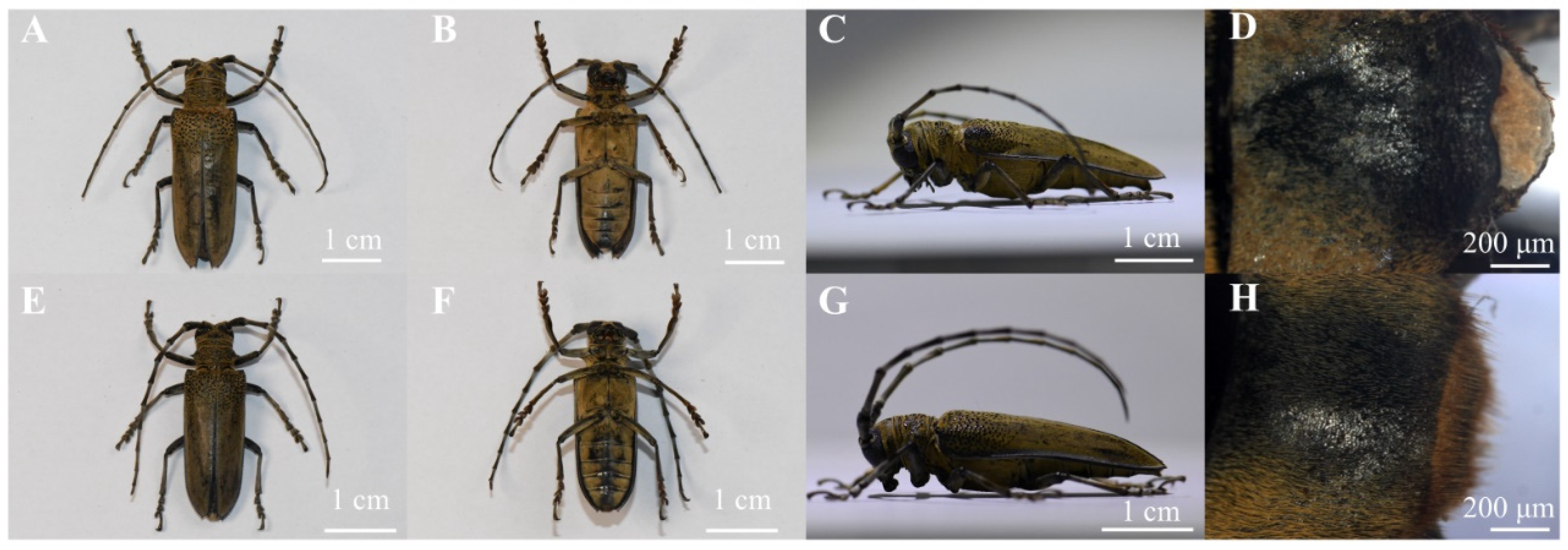
All A. germari adults were collected from M. alba and B. papyrifera in Zhanglou Bridge, Xuzhou, Jiangsu Province, China (117°37′ E, 34°5′ N) in July 2024. The adults are 34–46 mm in length (Figure 2A,E). The integument, including the elytra, is predominantly black, overlain with a dense vestiture of fulvous, short setae, with both sexes possessing small black tubercles at the base part of the elytra (Figure 2A–G) [16]. The differences in the antennal length and body size between sexes are not significant and thus cannot serve as reliable characteristics for sex determination. However, the abdominal tip of the male is covered with fulvous short setae (Figure 2H), whereas that of the female is smooth (Figure 2D). All captured beetles were individually kept in 500 mL plastic cups in the laboratory of Nanjing Forestry University (approximately 25 °C, 40–50% RH, 14 h light and 10 h darkness). Three to four B. papyrifera twigs (about 3–4 cm in length) were supplied as food for each beetle, and refreshed every 2–3 day. Host branches were obtained at the campus of Nanjing Forestry University. Saplings of willow S. babylonica and mulberry M. alba (~1.2 m in height, ~3 cm in trunk diameter) were used in the cage experiment and olfactory assays. The saplings were watered daily.

2.2. Cage Experiment

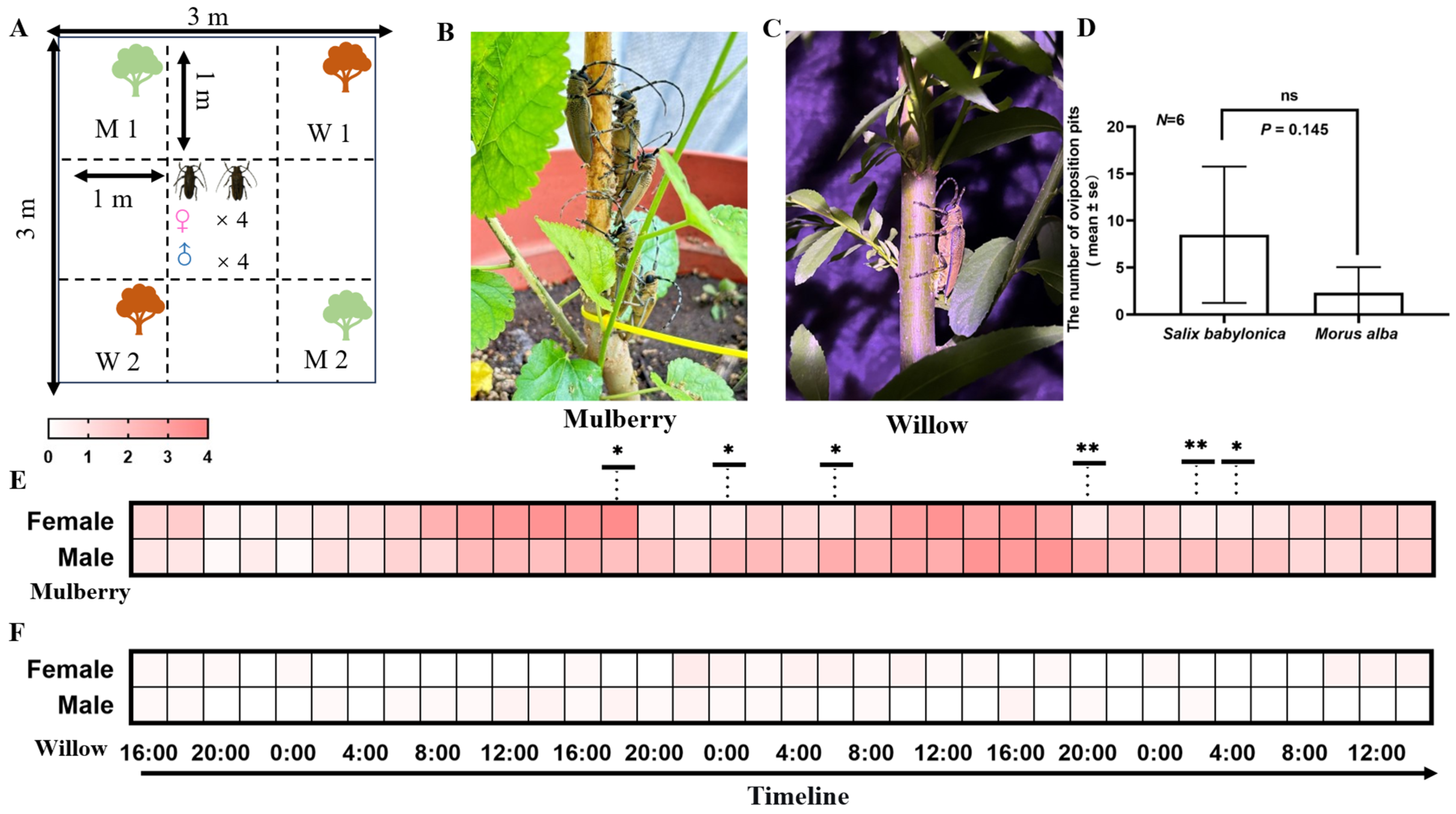
A nylon cage (3 m × 3 m × 3 m) was divided into 9 regions (1 m × 1 m × 3 m each) (Figure 3A). The top of the cage was covered with black sun shade net. Two mulberry saplings (designated as M1, M2) and two willow saplings (designated as W1, W2) were placed respectively at each of the four corner areas (Figure 3B). The experiments were carried out twice on 7 July and 23 July 2024, respectively, in three cages on a vacant land in Xiashu forestry station of Nanjing Forestry University, Zhenjiang, Jangsu Province, China (119°23′ E, 32°12′ N). The beetles (4 females and 4 males, starved for 24 h) were released in the central area of each cage at 14:00 and the experiment lasted for 72 h. Every 2 h the numbers of males and females on each sapling were recorded, with each cage taking approximately 3–5 min to observe. Additionally, the numbers of oviposition pits on each sapling were also counted every 24 h. Each pot was watered following 14:00 observation. The trials initiated on 7 July were conducted under an ambient temperature of 30.4 ± 3.4 °C and a relative humidity of 67.2 ± 9.4%; the trials initiated on 23 July were conducted under an ambient temperature of 30.9 ± 2.3 °C and 76.8 ± 11.6% relative humidity.

2.3. Olfactory Assay

2.3.1. Experiment 1

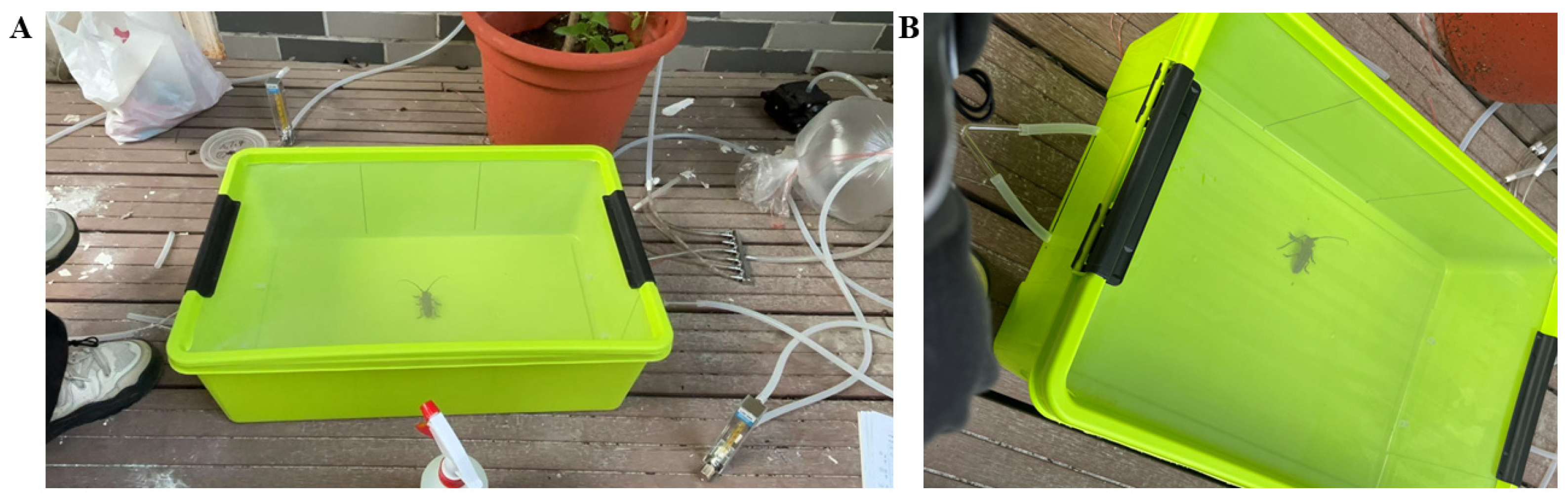
Because the cage experiment revealed that the dawn and dusk were two major periods for host alternation in A.germari within a day, outdoor olfactory assays were then carried out at 04:00–08:00 (dawn) and 18:00–22:00 (dusk). The experimental apparatus was a plastic storage box (Length:60 cm × Width:40 cm × Height:18 cm) (Figure 3). Two small holes were made at each end to allow airflow to enter the setup. The central opening refers to the lid on top of the box, which was cut open and covered with nylon mesh. This design allowed for air exhaust while also facilitating observation. The experimental setup was colored green to mimic the natural foliage environment where A. germari adults typically live, which was intended to reduce stress and promote more natural behavioral responses during the assays. A branch of a sapling, containing approximately four to five leaves, was enclosed with a polyethylene bag. Carbon-filtered air was pumped into the bag by an air pump (QC-1B, Beijing Kean Labor Protection New Technology Co., Beijing, China), which was then directed to one short side of a green-colored plastic container at a constant flow rate of 1 L/min. The other short side of the container was supplied with clean air, which had also been carbon-filtered, at the same flow rate. The plastic container was evenly divided into three sections: left, central, and right. The black lines on the inner wall of the container shown in Figure 3 indicate the artificial demarcation marks. A single beetle (female or male) was subsequently released at the center of the container. The residence time of each beetle on either side of the arena was recorded over a 15 min observation period. The trials were conducted under an ambient temperature of 31.4 ± 0.68 °C and a relative humidity of 56.3 ± 7.9%. Since adult A. germari feed mainly during the daytime but not at night [23], the beetles tested at dawn were starved for 12 h, whereas those tested at dusk were not starved. The container was cleaned with ethanol after testing each beetle. The beetles were tested once per day, but none were re-tested with the same stimuli. The preferences of beetles to the following odors were tested: M. alba vs. air, and S. babylonica vs. air. The streams of plant volatiles and air were physically alternated between two trials to prevent potential position effects. Each treatment was tested with 16 males (N = 16) and 16 females (N = 16).

2.3.2. Experiment 2

Because previous studies have found that the volatiles from feeding-damaged hosts can attract the adults in some cerambycid species [27], we then tested whether the aggregation of A. germari on mulberry could be attributed to the attraction of the volatiles released from the feeding-damaged host. Two pairs of female and male A. germari were allowed to feed on a mulberry sapling continuously for 24 h in a nylon mesh. Then, the preferences of beetles between the odors from feeding-damaged mulberry and air were tested following the same methods described in Experiment 1. All tests were also performed between 04:00 and 08:00 and 18:00–22:00 at 29.8 ± 1.1 °C and 48.3 ± 1.7% relative humidity. A total of 16 males and 16 females were tested at dawn or dusk, respectively (N = 16).

2.4. Statistical Analysis

For the cage experiment, binomial tests were used to detect whether the ratio of female to male on mulberry or willow significantly deviated from 1:1 at different time points. Paired t-test was used to detect the differences in the numbers of oviposition pits on mulberry and willow. Since the data from the olfactory assays failed to follow normal distribution (Shapiro–Wilk test), Wilcoxon signed rank test was used to analyze the differences in the residence time of beetles staying in different areas. All analyses were performed using Microsoft Excel (Microsoft office 365. Released 2017. Redmond, WA, USA) and SPSS 21 (IBM Corp. Released 2012. IBM SPSS Statistics for windows, Version 21.0. Armonk, NY, USA).

3. Results

3.1. Cage Experiment

The diel rhythms of host alternation were generally similar between two sexes in A. germari. The numbers of females and males on mulberry both increased mainly from 04:00 to 08:00. In both sexes, the first peak appeared at 10:00 followed with a relatively stable number until 18:00. During the first 24 h period (16:00–16:00, +1 day), there was no significant difference between the numbers of females and males on mulberry until 18:00 (Binomial test, p = 0.044). The numbers of both sexes on mulberry decreased after 18:00. Compared to that of males, the number of females showed a faster rate of decline in the first two hours after 18:00 (Female: 72%; Male: 10%). During 20:00 (+1 day)–08:00 (+2 day), males were more abundant than females on mulberry, with significant differences detected at 00:00 and 06:00 (Binomial test, 00:00: p= 0.016; 06:00: p = 0.011). At the following time points, the numbers of both sexes on mulberry were consistent with the aforementioned temporal pattern (Figure 4E). On willow, the numbers of both sexes were low at each time point; no significant difference was detected between the numbers of sexes at all time points (Figure 4F).
Oviposition pits were found on both mulberry and willow. The number of oviposition pits on the two willow saplings in a cage (~8.5 in average) was greater than that on the two mulberry saplings (~2.3 in average), but the difference was not statistically significant (Paired t-test, df = 5, p = 0.145) (Figure 4D).

3.2. Olfactory Assays

3.2.1. Experiment 1

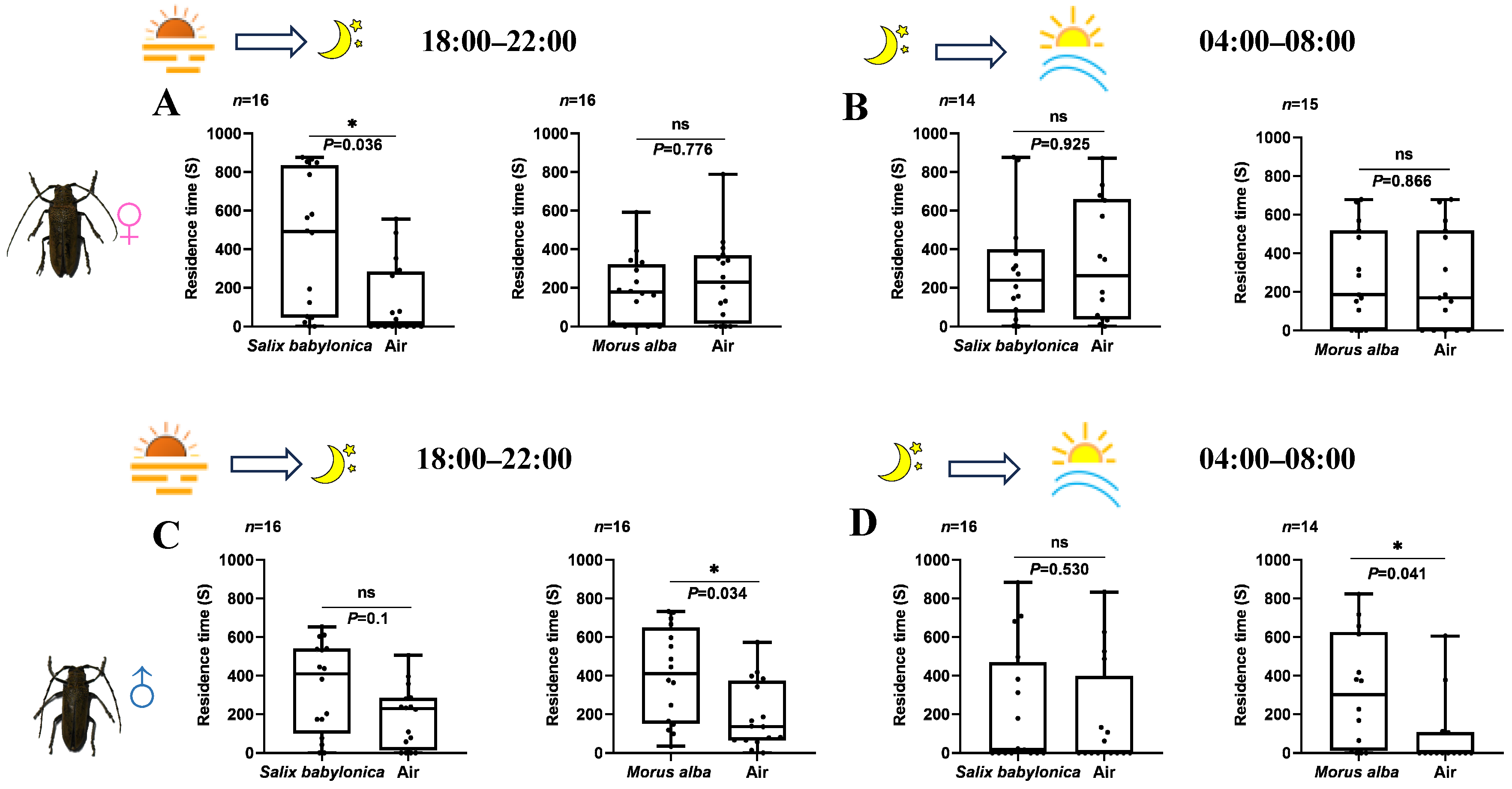
During the dusk (18:00–22:00), females exhibited a significantly longer residence time on the side with S. babylonica volatiles than on the side with clean air (Wilcoxon signed rank test, p = 0.036), whereas the residence time of females on the side with M. alba volatiles almost equaled that of the females on the side with clean air (Wilcoxon signed rank test, p = 0.776; Figure 5A). No significant difference was detected in the odor preference of females during the period from 04:00 to 08:00 (Wilcoxon signed rank test, S. babylonica vs. Air, p = 0.925; M. alba vs. Air, p = 0.866; Figure 5B). The residence time of males on the side with S. babylonica was longer than that on the side with clean air during both dusk and dawn, but the difference was not statistically significant (Wilcoxon signed rank test, dusk, p = 0.1; dawn, p = 0.53; Figure 5C,D). However, the residence time of males on the side with M. alba odors was significantly longer than that on the side with clean air during both dusk and dawn (Wilcoxon signed rank test, dusk, p = 0.034; dawn, p = 0.041); Figure 5C,D). Few beetles did not move during the observation at dawn (S. babylonica vs. Air, 2 females; M. alba vs. Air, 1 females and 2 males).

3.2.2. Experiment 2

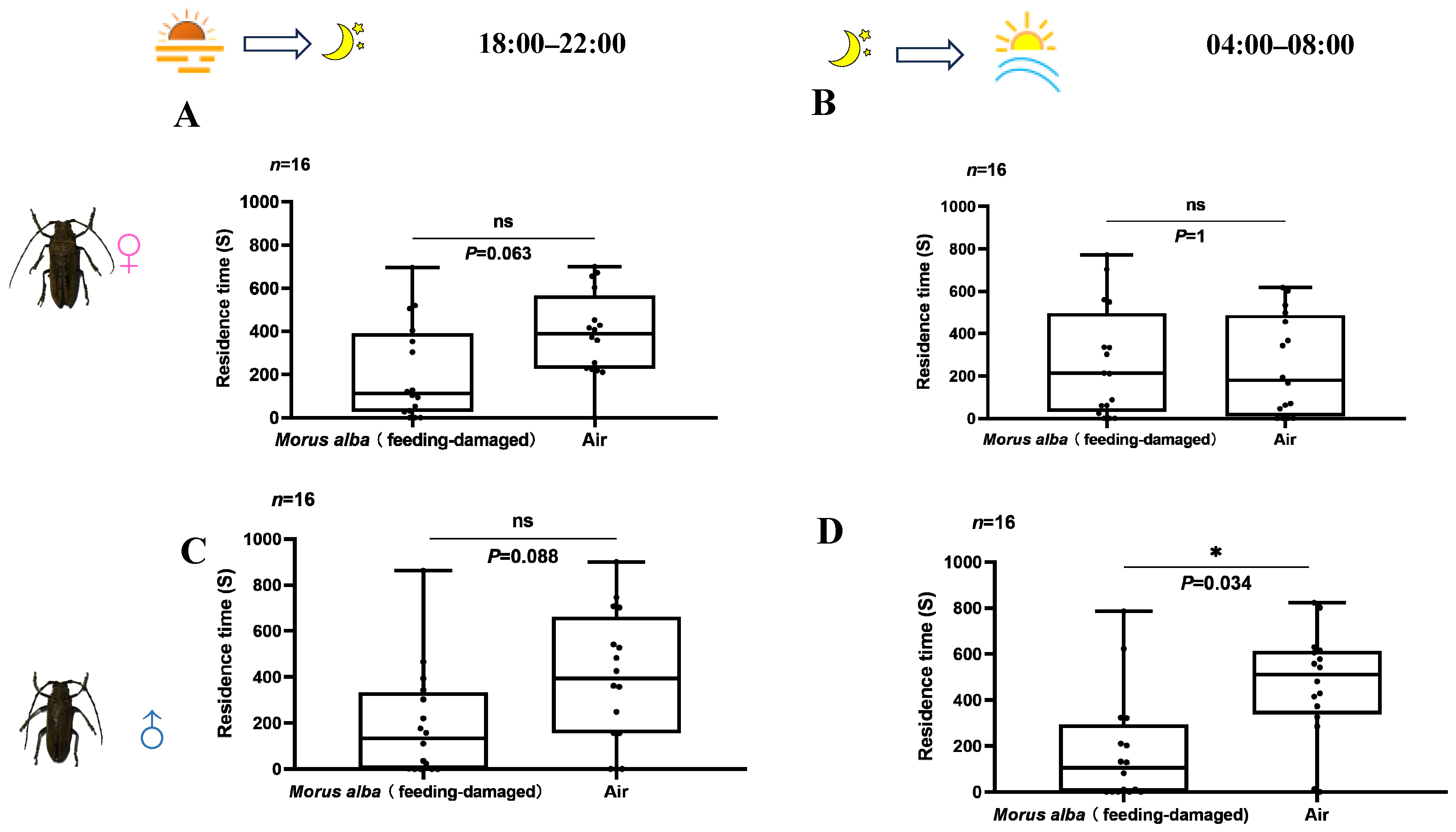
From 18:00 to 22:00, both male and female were more attracted to clean air compared to the volatiles from feeding-damaged mulberry trees, and the differences were marginally significant (Wilcoxon signed rank test, Male, p = 0.088; Female, p = 0.063; Figure 6A,C). From 04:00 to 08:00, the residence time of females on the side with clean air was equal to that on the side with damaged M. alba volatiles (Wilcoxon signed rank test, p = 1; Figure 6B), while the residence time of males on the side with clean air was significantly longer than that on the side with damaged M. alba odors (Wilcoxon signed rank test, p = 0.034; Figure 6D).

4. Discussion

Rhythmic behaviors are widespread in insects, with most species exhibiting distinct patterns in sleep and arousal, courtship and mating, foraging, oviposition, and memory formation, while also sustaining seasonally manifested behaviors like migration and diapause [28,29,30,31]. A. germari exhibits rhythmic patterns in host alternation. In the present study, our results revealed that male and female adults of A. germari regularly aggregated on the feeding host, mulberry, from dawn to dusk, after which the majority of the beetles dispersed and did not return to mulberry until the following morning and no aggregation was observed on either mulberry or the oviposition host, willow, at night. The major periods of host alternation occurred at dawn and dusk. More oviposition pits were made on willow than mulberry but the difference was not significant. The results of olfactory assays suggest a differentiation in the responses of female and male A. germari to the volatiles from different kinds of hosts. Males were significantly attracted to the volatiles from undamaged mulberry, regardless of dawn or dusk, while females were only significantly attracted to the volatiles from willow at dusk. The volatiles from mulberry that had been fed upon by A. germari repelled the beetles, particularly the males at dawn.
While the research on insect behavioral rhythms has predominantly focused on model species, very little has been known among the longhorn beetles [28,32]. In this study, we found that the rhythms of feeding behavior in female and male A. germari showed a similar pattern, observed mainly in the daytime. Both sexes were observed to forage exclusively on mulberry, with no feeding activity found on willow. However, the temporal dynamics of the decline in the numbers on mulberry differed between sexes at dusk. After 18:00, the number of females on mulberry trees declined sharply, while the number of males reduced more gradually. This phenomenon may be attributed to the need for the females to locate oviposition hosts and lay eggs after completing mating and nutrient supplementation, whereas males are free from this reproductive demand. This suggests that females may prefer to select willow for oviposition. The number of oviposition pits on willow and mulberry did not differ significantly, which may be attributed to the relatively small sample size of the experiment. However, the numbers of A. germari, regardless of sexes, on willows were constantly low during the experiment. Previous studies have found that A. germari are very active at night, flying to search for mates and oviposition hosts [33]. Thus, the beetles may not stay on a host tree for a long time as in the daytime. In addition, we counted the numbers of beetles on host trees every 2 h. This time interval is much longer than the duration of making an oviposition pit (15–25 min) and laying an egg (3–5 min) by female A. germari [33].
Host volatiles are key signals mediating host recognition and location in longhorn beetles [34,35], and can also enhance the attraction of pheromones [36]. The results from our olfactory assays indicated that male A. germari were consistently attracted to the volatiles from undamaged mulberry trees during both dawn and dusk. The attraction of the odors from feeding host at dawn can lead to the aggregation of males on mulberry observed in the daytime. Nevertheless, very few males were observed staying on mulberry at night, which may be due to the high movement activity at night and the relatively long observation intervals in the experiment. The females exhibited significant preference to the odors from willow at dusk, which is consistent with the preference of ovipostion host and the oviposition behavior only performed at night.
Unexpectedly, our results suggested that female A. germari were not significantly attracted to the volatiles from undamaged mulberry at either dawn or dusk, even they were observed aggregating on mulberry in the daytime. Previous studies have reported that the volatiles from damaged hosts, including both mechanically and feeding damaged hosts, were attractive to some cerambycid species such as A. glabripennis and Anoplophora chinensis [34,37]. Therefore, we then tested whether the odors from feeding-damaged mulberry can attract the beetles, especially the females at dawn. However, neither male nor female A. germari were attracted to volatiles from feeding-damaged mulberry. On contrary, the volatiles from feeding-damaged mulberry exhibited a repellent effect on the beetles, particularly the males at dawn. Thus, the volatiles released from feeding-damaged mulberry are not the signals orienting female A. germari back to mulberry trees at dawn. The damages of herbivorous insects can induce the hosts to produce specific volatiles or change the composition of volatiles [38], which can repel herbivorous insects as a defensive strategy in plants [39]. For the herbivorous insects, the repellent function of the odors from damaged hosts may be able to help reduce the competition of mates and food sources [40,41].
Combining the results from the cage experiment and olfactory assays, we hypothesize that males of A. germari may produce an aggregation-sex pheromone or sex pheromone. Males are attracted to mulberry volatiles, and the pheromone they emit may mediate the locations of mates/conspecifics and feeding hosts in females or both sexes. In the subfamily Lamiinae, pheromones are typically produced by males and are attractive to both sexes (as aggregation-sex pheromone) [34,42]. Moreover, we suppose that this pheromone may be emitted at dawn, because most of beetles returned back to mulberry during this period. In Lamiinae, some species, such as A. glabripennis, A. chinensis and Monochamus spp., can rhythmically release aggregation pheromones within a day [43], which seems also exist in A. germari. This phenomenon differs from that observed in aphids and some other insects, which is driven by photoperiod and host plant phenology [44]. Instead, the host alternation in A. germari may be co-regulated by the circadian rhythms of adult activity and the timing of pheromone release. Further investigations are strongly recommended to identify the potential pheromone component in A. germari and characterize its temporal release patterns, which, combined with the identification of host volatiles from mulberry or willow, can contribute to developing semiochemical-based eco-friendly pest management tools.

Supplementary Materials

The following supporting information can be downloaded at: https://www.mdpi.com/article/10.3390/insects17050448/s1, Table S1: The numbers of male and female Apriona germari on mulberry trees (mean ± se, N = 6); Table S2: The number of male and female Apriona germari on willow trees (mean ± se, N = 6).

Author Contributions

Conceptualization, T.X.; methodology, T.X.; validation, T.X. and W.W.; investigation, W.W., Y.Y., Y.F. and M.X.; resources, T.X.; data curation, T.X. and W.W.; writing—original draft preparation, W.W.; writing—review and editing, T.X. and W.W.; visualization, T.X. and W.W.; supervision, T.X.; project administration, T.X.; funding acquisition, T.X. All authors have read and agreed to the published version of the manuscript.

Funding

This research was funded by the Natural Science Foundation of Jiangsu Province (BK20251882).

Data Availability Statement

The original contributions presented in this study are included in the article/Supplementary Material. Further inquiries can be directed to the corresponding author.

Acknowledgments

We thank Xinran Wang, Jiayi Zhao and Youyou Zhu (Nanjing Forestry University) for help with the cage experiment.

Conflicts of Interest

The authors declare no conflicts of interest.

Abbreviations

The following abbreviations are used in this manuscript:
VOCsvolatile organic compounds

References

  1. Howe, G.A.; Jander, G. Plant Immunity to Insect Herbivores. Annu. Rev. Plant Biol. 2008, 59, 41–66. [Google Scholar] [CrossRef] [Scilit] [PubMed]
  2. Desurmont, G.A.; Weston, P.A. Switched after Birth: Performance of the Viburnum Leaf Beetle [Pyrrhalta viburni (Paykull)] after Transfer to a Suboptimal Host Plant. Insects 2014, 5, 805–817. [Google Scholar] [CrossRef] [Scilit] [PubMed]
  3. Watt, W.B.; Hoch, P.C.; Mills, S.G. Nectar resource use by Colias butterflies: Chemical and visual aspects. Oecologia 1974, 14, 353–374. [Google Scholar] [CrossRef] [Scilit]
  4. Baker, H.; Baker, I. Studies of Nectar-Constitution and Pollinator-Plant Coevolution. In Coevolution of Animals and Plants: Symposium V, First International Congress of Systematic and Evolutionary Biology; University of Texas Press: Austin, TX, USA, 1975. [Google Scholar]
  5. Baker, H.G.; Baker, I. Floral nectar sugar constituents in relation to pollinator type. In Handbook of Experimental Pollination Biology; Jones, C.E., Little, R.J., Eds.; Scientific and Academic Editions: New York, NY, USA, 1983. [Google Scholar]
  6. O’Brien, D.M.; Boggs, C.L.; Fogel, M.L.J.O. Making eggs from nectar: The role of life history and dietary carbon turnover in butterfly reproductive resource allocation. Oikos 2004, 105, 279–291. [Google Scholar] [CrossRef] [Scilit]
  7. Dennis, R.L.H.; Hodgson, J.G.; Grenyer, R.; Shreeve, T.G.; Roy, D.B. Host plants and butterfly biology. Do host-plant strategies drive butterfly status? Ecol. Entomol. 2004, 29, 12–26. [Google Scholar] [CrossRef] [Scilit]
  8. Dixon, A.F.G. The life-cycle and host preferences of the bird cherry-oat aphid, Rhopalosiphum padi L. and their bearing on the theories of host alternation in aphids. Ann. Appl. Biol. 2010, 68, 135–147. [Google Scholar] [CrossRef] [Scilit]
  9. Haack, R.; Keena, M.; Eyre, D. Life History and Population Dynamics of Cerambycidae. In Cerambycidae of the World; CRC Press: Boca Raton, FL, USA, 2017; pp. 71–103. [Google Scholar]
  10. Meng, P.S.; Hoover, K.; Keena, M.A. Asian Longhorned Beetle (Coleoptera: Cerambycidae), an Introduced Pest of Maple and Other Hardwood Trees in North America and Europe. J. Integr. Pest Manag. 2015, 6, 4–17. [Google Scholar] [CrossRef] [Scilit]
  11. Eyre, D.; Haack, R. Invasive cerambycid pests and biosecurity measures. In Cerambycidae of the World; CRC Press: Boca Raton, FL, USA, 2017; pp. 563–607. [Google Scholar]
  12. Huang, D. Research advances of Apriona germair. J. Hebei For. Coll. 1996, Z1, 290–296. (In Chinese) [Google Scholar]
  13. Huang, D.; Yan, J.; Hu, Y. Geographical distribution of Apreona germari in China. J. Hebei For. Coll. 1996, Z1, 263–269. (In Chinese) [Google Scholar]
  14. Liu, H.; Sun, X.; Wang, X. Advances in the research on Apriona germari Hope. For. Pest Dis. 2002, 5, 30–33, (In Chinese with English abstract). [Google Scholar]
  15. Zhang, J. Taxonomic Study on the Cerambycidae in Jilin Province; Northeast Normal University: Changchun, China, 2011; (In Chinese with English abstract). [Google Scholar]
  16. Tian, L. The Study on Biosynthetic Mechanism of Juvenile Hormone in Apriona germari and Its Regulation on Reproduction; Nanjing Forestry University: Nanjing, China, 2008; (In Chinese with English abstract). [Google Scholar]
  17. Qian, J.-L.; Mang, D.-Z.; Lv, G.-C.; Ye, J.; Li, Z.-Q.; Chu, B.; Sun, L.; Liu, Y.-J.; Zhang, L.-W. Identification and Expression Profile of Olfactory Receptor Genes Based on Apriona germari (Hope) Antennal Transcriptome. Front. Physiol. 2020, 11, 807. [Google Scholar] [CrossRef] [Scilit] [PubMed]
  18. Jin, F. Studies on the Composition, Origin and Function of the Secretion Which Discharged by Female Adults Apriona germari (Hope) During the Stage of Egg Laying; Nanjing Forestry University: Nanjing, China, 2008; (In Chinese with English abstract). [Google Scholar]
  19. Wang, Z.; Huang, D.; Yan, J. On the selection of laying eggs of Apriona germari among tree species and varieties. J. Hebei For. Coll. 1994, 1, 65–69, In Chinese with English abstract. [Google Scholar]
  20. Mu, D.; Chen, Y.; Xiong, N. Behavioral Responses of Adult Apriona germari (Hope) to Plant Volatiles. Anhui Agric. Sci. Bull. 2017, 23, 3. (In Chinese) [Google Scholar]
  21. Wang, Y.; Zhang, J.; Qin, D.; Li, G.; Ge, L.; Zhou, Z. A Preliminary Study on the Relationship Between Nutrient Supplementation and Population Dynamics in Apriona germari. J. Jiangsu For. Sci. Technol. 1986, 1, 32–34. (In Chinese) [Google Scholar]
  22. Ji, B.; Wei, Y.; Huang, Z. Present Situations and Prospects of Researches on Adult’s Behavior of Longicorn Beetles. J. Nanjing For. Univ. (Nat. Sci. Ed.) 2002, 2, 79–83, (In Chinese with English abstract). [Google Scholar]
  23. Gao, R.; Li, G.; Song, H.; Shen, F.; Huang, W.; Liu, J. Further Studies on the Habits of the Adult of Apriona germari (Coleoptera: Cerambycidae). For. Res. 2000, 6, 634–640. [Google Scholar]
  24. Xu, T.; Hansen, L.; Teale, S.A. Mating and adult feeding behaviour influence pheromone production in female Asian longhorn beetle Anoplophora glabripennis (Coleoptera: Cerambycidae). Agric. For. Entomol. 2021, 23, 276–286. [Google Scholar] [CrossRef] [Scilit]
  25. Chen, R.X.; Chen, C.; Zhao, X.; Chen, L.; Xu, T.; Hao, D. Identification and potential application of a putative allomone component in the defensive secretion of a destructive invasive species: The red-necked longhorn beetle, Aromia bungii. J. Pest Sci. 2024, 97, 993–1004. [Google Scholar] [CrossRef] [Scilit]
  26. Molander, M.A.; Larsson, M.C. Identification of the Aggregation-sex Pheromone of the Cerambycid Beetle Phymatodes pusillus ssp. pusillus and Evidence of a Synergistic Effect from a Heterospecific Pheromone Component. J. Chem. Ecol. 2018, 44, 987–998. [Google Scholar] [CrossRef] [Scilit]
  27. Xu, T.; Yasui, H.; Teale, S.A.; Fujiwara-Tsujii, N.; Wickham, J.D.; Fukaya, M.; Hansen, L.; Kiriyama, S.; Hao, D.; Nakano, A.; et al. Identification of a male-produced sex-aggregation pheromone for a highly invasive cerambycid beetle, Aromia bungii. Sci. Rep. 2017, 7, 7330. [Google Scholar] [CrossRef] [Scilit]
  28. Force, E.; Sokolowski, M.B.C.; Suray, C.; Debernard, S.; Chatterjee, A.; Dacher, M. Regulation of feeding dynamics by the circadian clock, light and sex in an adult nocturnal insect. Front. Physilology 2024, 14, 1304626. [Google Scholar] [CrossRef] [Scilit]
  29. Saunders, D.S. Insect Clocks; Elsevier: Amsterdam, The Netherlands, 1980; p. 120. [Google Scholar]
  30. Tomioka, K.; Uryu, O.; Kamae, Y.; Umezaki, Y.; Yoshii, T. Peripheral circadian rhythms and their regulatory mechanism in insects and some other arthropods: A review. J. Comp. Physiol. B-Biochem. Syst. Environ. Physiol. 2012, 182, 729–740. [Google Scholar] [CrossRef] [Scilit]
  31. Brady, D.; Saviane, A.; Cappellozza, S.; Sandrelli, F. The Circadian Clock in Lepidoptera. Front. Physilology 2021, 12, 776826. [Google Scholar]
  32. Bidell, D.; Feige, N.-D.; Triphan, T.; Müller, C.; Pauls, D.; Helfrich-Förster, C.; Selcho, M. Photoreceptors for immediate effects of light on circadian behavior. iScience 2024, 27, 109819. [Google Scholar] [CrossRef] [Scilit] [PubMed]
  33. Li, B.; Ji, B.; Liu, S.; Zhang, K.; Wang, G. Observation of reproduction behavior of Apriona germari (Hope) adults. J. Nanjing For. Univ. (Nat. Sci. Ed.) 2012, 36, 33–36, In Chinese with English abstract. [Google Scholar]
  34. Xu, T.; Teale, S.A. Chemical Ecology of the Asian Longhorn Beetle, Anoplophora glabripennis. J. Chem. Ecol. 2021, 47, 489–503. [Google Scholar] [CrossRef] [Scilit] [PubMed]
  35. Xu, T.; Hansen, L.; Cha, D.H.; Hao, D.; Zhang, L.; Teale, S.A. Identification of a female-produced pheromone in a destructive invasive species: Asian longhorn beetle, Anoplophora glabripennis. J. Pest Sci. 2020, 93, 1321–1332. [Google Scholar] [CrossRef] [Scilit]
  36. Collignon, R.M.; Swift, I.P.; Zou, Y.; McElfresh, J.S.; Hanks, L.M.; Millar, J.G. The Influence of Host Plant Volatiles on the Attraction of Longhorn Beetles to Pheromones. J. Chem. Ecol. 2016, 42, 215–229. [Google Scholar] [CrossRef] [Scilit]
  37. Yasui, H.; Fujiwara-Tsujii, N.; Yasuda, T. Detection of volatile pheromone candidates from the white-spotted longicorn beetle, Anoplophora malasiaca (Coleoptera: Cerambycidae). Appl. Entomol. Zool. 2019, 54, 203–211. [Google Scholar] [CrossRef] [Scilit]
  38. Gaffke, A.M.; Sing, S.E.; Millar, J.G.; Dudley, T.L.; Bean, D.W.; Peterson, R.K.D.; Weaver, D.K. An Herbivore-Induced Plant Volatile From Saltcedar (Tamarix spp.) Is Repellent to Diorhabda carinulata (Coleoptera: Chrysomelidae). Environ. Entomol. 2020, 49, 1063–1070. [Google Scholar]
  39. Gadenne, C.; Barrozo, R.B.; Anton, S. Plasticity in Insect Olfaction: To Smell or Not to Smell? Annu. Rev. Entomol. 2016, 61, 317–333. [Google Scholar] [CrossRef] [Scilit]
  40. Ali, J.; Tona, A.; Islam, T.; Mir, S.; Mukarram, M.; Konôpková, A.S.; Chen, R. Defense strategies and associated phytohormonal regulation in Brassica plants in response to chewing and sap-sucking insects. Front. Plant Sci. 2024, 15, 1376917. [Google Scholar] [CrossRef] [Scilit]
  41. Odermatt, D.M.; Chidawanyika, F.; Mutyambai, D.M.; Schmid, B.; Domeignoz Horta, L.A.; Onjura, C.O.; Tamiru, A.; Schuman, M.C. Desmodium volatiles in ‘push-pull’ cropping systems and protection against the fall armyworm, Spodoptera frugiperda. eLife 2025, 13, RP100981. [Google Scholar] [CrossRef] [Scilit]
  42. Hanks, L.M.; Millar, J.G. Sex and Aggregation-Sex Pheromones of Cerambycid Beetles: Basic Science and Practical Applications. J. Chem. Ecol. 2016, 42, 631–654. [Google Scholar] [CrossRef] [Scilit]
  43. Skabeikis, D.D.; Teale, S.A.; Fierke, M.K. Diel Rhythms in Monochamus (Coleoptera: Cerambycidae): Production of and Response to a Male-Produced Aggregation Pheromone. Environ. Entomol. 2016, 45, 1017–1021. [Google Scholar]
  44. Braendle, C.; Davis, G.K.; Brisson, J.A.; Stern, D.L. Wing dimorphism in aphids. Heredity 2006, 97, 192–199. [Google Scholar] [CrossRef] [Scilit]
Figure 1. Adult A. germari aggregated on the twigs of Broussonetia papyrifera, feeding on the phloem and cambial tissues.
Insects 17 00448 g001
Figure 2. Photographs illustrating the morphological differences between male and female A. germari: dorsal, ventral, lateral views, and terminal abdominal segments (photographed by Wenbo Wang). Dorsal view of female (A) and male (E) A. germari. Ventral view of female (B) and male (F) A. germari. Lateral view of female (C) and male (G) A. germari. The abdominal tip of female (D) and male (H) A. germari.
Insects 17 00448 g002
Figure 3. Photographs of the experimental setup used in olfactory assays. (A) Top view; (B) Side view.
Insects 17 00448 g003
Figure 4. The daily host alternation of adult A. germari between mulberry and willow trees in the cage and the numbers of oviposition pits. (A) Plan view of the experimental setup, subdivided into nine 1 m × 1 m × 1 m sections. Two mulberry and two willow saplings were placed at four corners, denoted by M and W, respectively. Four females and males were released in the central area. (B) In the daytime, multiple A. germari were aggregating on a mulberry sapling for feeding and copulation (Photo credit: Tian Xu). (C) At night, a female A. germari was ovipositing on a willow sapling (Photo credit: Tian Xu). (D) The numbers of oviposition pits on two mulberry and willow saplings in a cage after 72 h. (E) The mean numbers of male and female A. germari on mulberry at different time points during 72 h (the specific values of the mean and standard error in each cell are shown in Table S1). (F) The mean numbers of male and female on willow at different time points during 72 h (the specific values of the mean and standard error in each cell are shown in Table S2). In (D), the date are shown as mean ± se. In (E,F), the data in the heat map are shown as the mean, each cell represents the abundance of beetles on either mulberry or willow at the corresponding time point, with darker shades indicating greater numbers, and lighter shades indicating smaller numbers. In (E), asterisks denote a statistically significant deviation from a 1:1 sex ratio on mulberry (Binomial test: * 0.01 < p < 0.05, ** 0.001 ≤ p ≤ 0.01). ns indicates no significant.
Insects 17 00448 g004
Figure 5. Residence time of female and male A. germari in the areas with plant volatiles at dusk (18:00–22:00) and dawn (04:00–08:00). Residence time of females (M. alba vs. Air, S. babylonica vs. Air) at dusk (A) and dawn (B). Residence time of males (M. alba vs. Air, S. babylonica vs. Air) at dusk (C) and dawn (D). An asterisk indicates significant difference between the residence time of opposite stimuli (p < 0.05). ns indicates no significant difference between the residence time of two stimuli (p ≥ 0.05). All analyses were performed by using Wilcoxon signed rank test.
Insects 17 00448 g005
Figure 6. Residence time of female and male A. germari in the areas with the volatiles from the mulberry trees that had been fed upon by adult A. germari and in the areas with clean air at dusk (18:00–22:00) and dawn (04:00–08:00). Residence time of females at dusk (A) and dawn (B). Residence time of males at dusk (C) and dawn (D). An asterisk indicates significant difference between the residence time of opposite stimuli (p < 0.05). ns indicates no significant difference between the residence time of two stimuli (p ≥ 0.05). All analyses were performed by using Wilcoxon signed rank test.
Insects 17 00448 g006
Disclaimer/Publisher’s Note: The statements, opinions and data contained in all publications are solely those of the individual author(s) and contributor(s) and not of MDPI and/or the editor(s). MDPI and/or the editor(s) disclaim responsibility for any injury to people or property resulting from any ideas, methods, instructions or products referred to in the content.