Integrated Pest Management Strategies for Controlling Phthorimaea (Tuta) absoluta: Advances in Biological, Pheromone, and Cultural Control Methods

Simple Summary
Abstract
1. Introduction
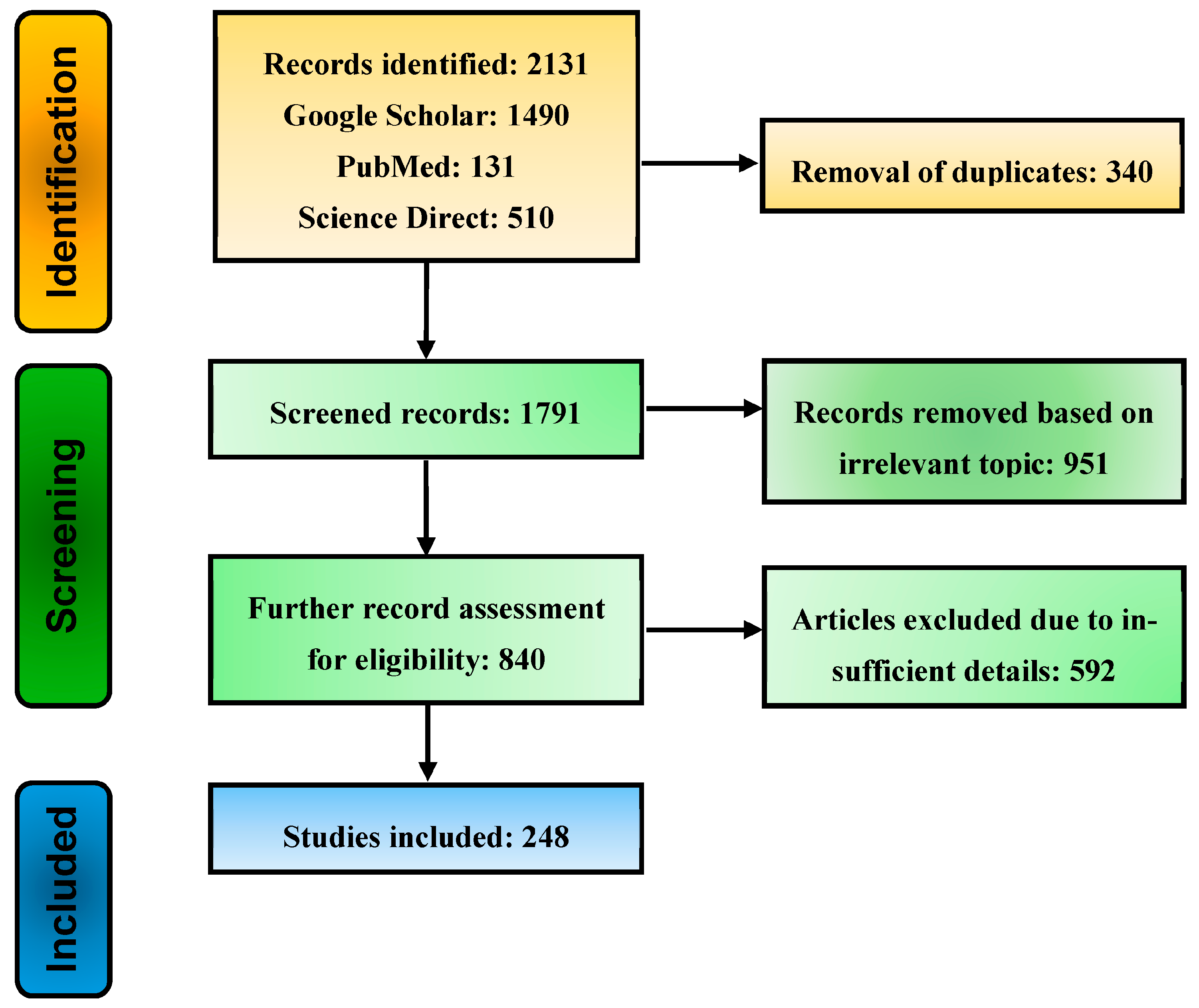
2. Review Methodology
3. Genetic Diversity and Resistance Patterns Across Geographic Populations
3.1. Taxonomy
3.2. Detection of Genetic Variation
3.3. Resistance Patterns Across Geographic Populations
4. Dynamics of Phthorimaea (Tuta) absoluta Spread in Invaded Areas
Factors Influence Phthorimaea (Tuta) absoluta Invasion
5. Ecology
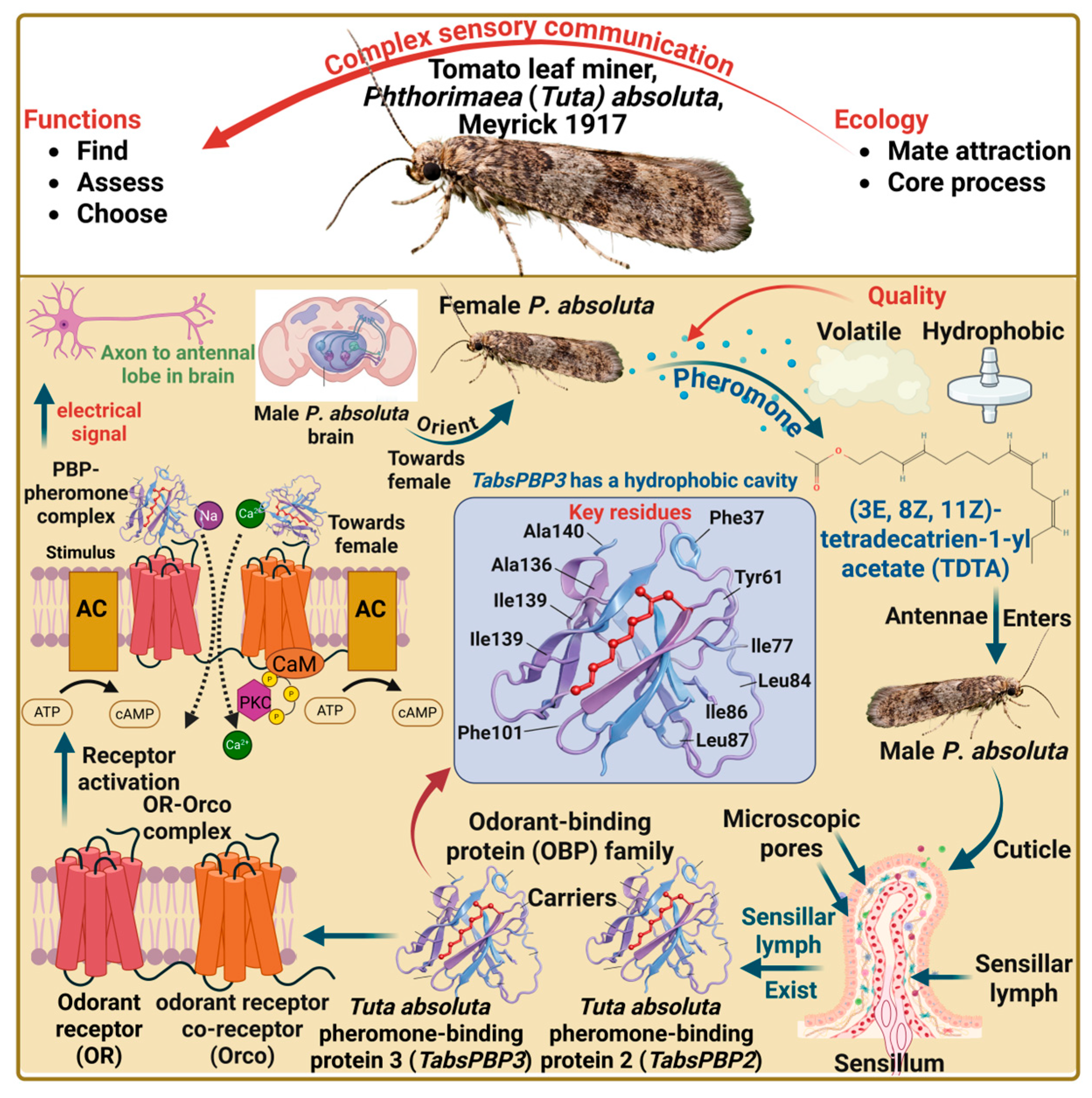
5.1. Mate Attraction
5.2. Host Range
5.3. Multivoltinism
5.4. Life Cycle
5.5. Seasonal Population Dynamics
5.6. Endosymbiont Interactions
6. Factors Influencing the Spread of Phthorimaea (Tuta) absoluta: Climatic and Human-Mediated Factors
7. Insecticide Resistance in Phthorimaea (Tuta) absoluta
8. Other Management Strategies
8.1. Biological Control

| Natural Enemy | Group | Type of Control Agent | Target Stage of P. absoluta | Reported Efficacy/Performance | Study Condition | Region/Country | Key Findings | References |
|---|---|---|---|---|---|---|---|---|
| Trichogramma achaeae | Hymenoptera: Trichogrammatidae | Parasitoid (Egg) | Eggs | Parasitism and emergence unaffected by resistant or susceptible genotypes, but egg size influenced the proportion of female parasitoids. Fewer female parasitoids from resistant plants. | Isolation and tomato leaflets | Spain | Solanum arcanum negatively impacted parasitism and emergence due to high glandular trichomes. | [215] |
| Necremnus tutae | Hymenoptera: Eulophidae | Parasitoid (Larval) | Larvae (Second to third instar) | Fewer parasitoids emerged on S. arcanum compared to other genotypes. | Infested leaflets with larvae | Spain | S. arcanum and Solanum neorickii negatively affected parasitism performance. | |
| Macrolophus pygmaeus | Hemiptera: Miridae | Predator | Eggs and larvae | Predation lower on S. arcanum due to high glandular trichomes. Higher predation on S. neorickii and other genotypes. | Egg and larval predation on tomato genotypes | Spain | S. arcanum hinders predator efficacy, while S. neorickii allowed better predation success. | |
| Black Soldier Fly Oil & Neem Oil | Insect-derived/Plant-derived | Biorational (Ovicidal, Larvicidal, Antifeedant) | Eggs and larvae | Moderate ovicidal suppression (20–55% mortality); higher larval mortality (33.8–92.9%); leaf penetration deterrence and increased larval mortality in treated plants. | Semi-field screenhouse trials | Kenya | Significant egg mortality and larval mortality in both P. absoluta and Spodoptera frugiperda. Insect oil exhibited lower LC50 than neem oil in larvicidal bioassays. | [216] |
| Neochrysocharis formosa (thelytokous (TH) strain) | Hymenoptera: Eulophidae | Parasitoid | 1st instar larvae | High parasitism rates and effective host-stinging on 1st instar larvae. Parasitism and stinging rates are higher compared to AR strain, especially in lower density settings. | Laboratory/controlled conditions | China | TH strain is more effective at controlling P. absoluta in early infestations due to higher preference for 1st instar larvae and efficient parasitism. | [217] |
| Neochrysocharis formosa (arrhenotokous (AR) strain) | Hymenoptera: Eulophidae | Parasitoid | 1st and 2nd instar larvae | Parasitism less effective than TH strain, with host-stinging and feeding behavior being more prominent at higher densities. | Laboratory/controlled conditions | China | AR strain exhibits lower attack rates compared to the TH strain, especially when larvae are more than 1st instar. | |
| Dolichogenidea gelechiidivoris | Hymenoptera: Braconidae | Parasitoid (Larval) | 1st, 2nd, 3rd, and 4th instars | Parasitized and successfully developed in all four host larval instars. Females preferentially oviposited in early instars (1st and 2nd). | Laboratory conditions at 26 ± 4 °C | Kenya | High parasitism in early instars, with significant differences between early (1st and 2nd) vs. late (3rd and 4th) instars in terms of egg deposition and cocoon formation. | [218] |
| Necremnus artynes | Hymenoptera: Eulophidae | Parasitoid (Larval | Larvae (2nd and 3rd instars) | Significant increase in longevity with buckwheat, Fagopyrum esculentum and sugar solution. Host-feeding was not as effective in increasing longevity | Greenhouse, laboratory conditions | Belgium | Longevity was significantly enhanced by F. esculentum and sugar solution. Host-feeding did not significantly increase longevity. | [219] |
| Bracon hebetor | Hymenoptera: Braconidae | Parasitoid | 4th and 5th instars | The highest parasitism rates and fecundity observed on Galleria mellonella larvae. Lower parasitism rates for P. absoluta and Phthorimaea operculella. | Laboratory/greenhouse conditions | Faisalabad/Pakistan | Best performance on G. mellonella, poor performance on P. absoluta. Longevity and egg-laying capacity are affected by diet and host conditions. | [220] |
| Nesidiocoris tenuis | Hemiptera: Miridae | Predator | All stages | Presence significantly reduced P. absoluta population growth. However, exposure to lambda-cyhalothrin affected predation behavior and longevity. | Laboratory/greenhouse conditions | Alenya/France | Effective as a predator against P. absoluta, but its behavior and longevity are negatively impacted by chemical treatments, especially lambda-cyhalothrin. | [221] |
| Dicyphus errans | Hemiptera: Miridae | Predator | Eggs, 1st-instar larvae | Effective in preying on P. absoluta eggs (up to 12.4 eggs/day). Females consumed more eggs and larvae than males. | Laboratory conditions | Italy/Europe | Females consumed significantly more eggs (73.6%) compared to males (57.6%). Preference for 1st-instar larvae. | [222] |
| Dolichogenidea gelechiidivoris | Hymenoptera: Braconidae | Parasitoid (Larval) | All developmental stages | The parasitoid performed well in all regions except for coastal areas under the current climatic scenario and is predicted to improve under future scenarios. | Field conditions, climate modeling | Kenya | The fuzzy model predicted good performance across regions, with significant improvements in the Rift valley and coastal regions under future climate scenarios. | [223] |
| Macrolophus pygmaeus | Hemiptera: Miridae | Predator | Eggs, larvae | Intraguild predation (IGP) occurs when Macrolophus pygmaeus feeds on parasitized eggs, mainly early in the development of parasitoid larvae. | Laboratory/greenhouse conditions | Mediterranean regions | Exhibited preference for parasitized eggs in the early stages (yellow eggs), leading to reduced parasitoid survival rates. | [224] |
| Trichogramma achaeae | Hymenoptera: Trichogrammatidae | Parasitoid (Egg) | Eggs | Significant increase in pest control when combined with M. pygmaeus, despite some negative effects from intraguild predation. | Laboratory/greenhouse conditions | Mediterranean regions | Combining Trichogramma parasitoids with M. pygmaeus improves pest control compared to using either agent alone. | |
| Stenomesius japonicus | Hymenoptera: Eulophidae | Parasitoid (Larval) | 3rd instar larvae | Effective in controlling P. absoluta larvae, with high parasitism rates observed when alone. However, parasitism decreased in the presence of the omnivorous predator. | Laboratory/greenhouse conditions | France | When combined with M. pygmaeus, parasitism rates were negatively affected by intraguild predation but still had significant pest control. | [225] |
| Macrolophus pygmaeus | Hemiptera: Miridae | Predator (Generalist) | Eggs and larvae | Strong immediate effect on P. absoluta eggs and larvae. However, its population was lower when in competition with S. japonicus as it faced intraguild predation | Laboratory/greenhouse conditions | France | M. pygmaeus had a stronger initial impact on pest populations, but its longer-term effectiveness was reduced by competition with S. japonicus. |
8.2. Use of Sex Pheromones
8.3. Cultural Control
9. Conclusions and Future Perspectives
Author Contributions
Funding
Data Availability Statement
Acknowledgments
Conflicts of Interest
References
- Aynalem, B. Empirical Review of Tuta absoluta Meyrick Effect on the Tomato Production and Their Protection Attempts. Adv. Agric. 2022, 2022, 2595470. [Google Scholar] [CrossRef]
- Acharya, R.; Barman, A.K.; Sharma, S.R.; Kafle, L.; Kim, S.-M.; Lee, K.-Y. Biology, distribution, and management of invasive South American tomato leafminer, Tuta absoluta (Meyrick) (Lepidoptera; Gelechiidae), in Asia. Arch. Insect Biochem. Physiol. 2023, 114, e22056. [Google Scholar] [CrossRef]
- Tonnang, H.E.Z.; Mohamed, S.F.; Khamis, F.; Ekesi, S. Identification and Risk Assessment for Worldwide Invasion and Spread of Tuta absoluta with a Focus on Sub-Saharan Africa: Implications for Phytosanitary Measures and Management. PLoS ONE 2015, 10, e0135283. [Google Scholar] [CrossRef]
- Cocco, A.; Deliperi, S.; Lentini, A.; Mannu, R.; Delrio, G. Seasonal phenology of Tuta absoluta (Lepidoptera: Gelechiidae) in protected and open-field crops under Mediterranean climatic conditions. Phytoparasitica 2015, 43, 713–724. [Google Scholar] [CrossRef]
- Balzan, M.V.; Moonen, A.C. Management strategies for the control of Tuta absoluta (Lepidoptera: Gelechiidae) damage in open-field cultivations of processing tomato in Tuscany (Italy). EPPO Bull. 2012, 42, 217–225. [Google Scholar] [CrossRef]
- Gharekhani, G.H.; Salek-Ebrahimi, H. Evaluating the damage of Tuta absoluta (Meyrick) (Lepidoptera: Gelechiidae) on some cultivars of tomato under greenhouse condition. Arch. Phytopathol. Plant Prot. 2014, 47, 429–436. [Google Scholar] [CrossRef]
- Pandey, M.; Bhattarai, N.; Pandey, P.; Chaudhary, P.; Katuwal, D.R.; Khanal, D. A review on biology and possible management strategies of tomato leaf miner, Tuta absoluta (Meyrick), Lepidoptera: Gelechiidae in Nepal. Heliyon 2023, 9, e16474. [Google Scholar] [CrossRef]
- Thrall, P.H.; Oakeshott, J.G.; Fitt, G.; Southerton, S.; Burdon, J.J.; Sheppard, A.; Russell, R.J.; Zalucki, M.; Heino, M.; Denison, R.F. Evolution in agriculture: The application of evolutionary approaches to the management of biotic interactions in agro-ecosystems. Evol. Appl. 2011, 4, 200–215. [Google Scholar] [CrossRef]
- Kim, K.S.; Sappington, T.W. Population genetics strategies to characterize long-distance dispersal of insects. J. Asia-Pac. Entomol. 2013, 16, 87–97. [Google Scholar] [CrossRef]
- Lee, C.E. Evolutionary genetics of invasive species. Trends Ecol. Evol. 2002, 17, 386–391. [Google Scholar] [CrossRef]
- Hauser, M. A historic account of the invasion of Drosophila suzukii (Matsumura) (Diptera: Drosophilidae) in the continental United States, with remarks on their identification. Pest Manag. Sci. 2011, 67, 1352–1357. [Google Scholar] [CrossRef]
- Kardum Hjort, C.; Paris, J.R.; Smith, H.G.; Dudaniec, R.Y. Selection despite low genetic diversity and high gene flow in a rapid island invasion of the bumblebee, Bombus terrestris. Mol. Ecol. 2024, 33, e17212. [Google Scholar] [CrossRef]
- Arnó, J.; Gabarra, R.; Molina, P.; Godfrey, K.E.; Zalom, F.G. Tuta absoluta (Lepidoptera: Gelechiidae) Success on Common Solanaceous Species from California Tomato Production Areas. Environ. Entomol. 2019, 48, 1394–1400. [Google Scholar] [CrossRef]
- Cuthbertson, A.G.; Mathers, J.J.; Blackburn, L.F.; Korycinska, A.; Luo, W.; Jacobson, R.J.; Northing, P. Population Development of Tuta absoluta (Meyrick) (Lepidoptera: Gelechiidae) under Simulated UK Glasshouse Conditions. Insects 2013, 4, 185–197. [Google Scholar] [CrossRef] [PubMed]
- Machekano, H.; Mutamiswa, R.; Nyamukondiwa, C. Evidence of rapid spread and establishment of Tuta absoluta (Meyrick) (Lepidoptera: Gelechiidae) in semi-arid Botswana. Agric. Food Secur. 2018, 7, 48. [Google Scholar] [CrossRef]
- Luo, M.; Huang, L.; Gui, F.; Judit, A.; Han, P.; Wan, F.; Zhang, G.; Huang, C.; Zhang, Y. Rhythmic biosynthesis of sex pheromone modulates the calling and mating behaviors of Tuta absoluta (Lepidoptera: Gelechiidae). New Plant Prot. 2025, 2, e70030. [Google Scholar] [CrossRef]
- Gullino, M.L.; Albajes, R.; Al-Jboory, I.; Angelotti, F.; Chakraborty, S.; Garrett, K.A.; Hurley, B.P.; Juroszek, P.; Lopian, R.; Makkouk, K.; et al. Climate Change and Pathways Used by Pests as Challenges to Plant Health in Agriculture and Forestry. Sustainability 2022, 14, 12421. [Google Scholar] [CrossRef]
- Camargo, R.A.; Barbosa, G.O.; Possignolo, I.P.; Peres, L.E.; Lam, E.; Lima, J.E.; Figueira, A.; Marques-Souza, H. RNA interference as a gene silencing tool to control Tuta absoluta in tomato (Solanum lycopersicum). PeerJ 2016, 4, e2673. [Google Scholar] [CrossRef]
- Zhu, J.; Chen, R.; Liu, J.; Lin, W.; Liang, J.; Nauen, R.; Li, S.; Gao, Y. Presence of Multiple Genetic Mutations Related to Insecticide Resistance in Chinese Field Samples of Two Phthorimaea Pest Species. Insects 2024, 15, 194. [Google Scholar] [CrossRef]
- Karanu, S.W.; Ajene, I.J.; Lelmen, E.K.; Ong’onge, M.A.; Akutse, K.S.; Khamis, F.M. Biochemistry and transcriptomic analyses of Phthorimaea absoluta (Lepidoptera: Gelechiidae) response to insecticides. Sci. Rep. 2024, 14, 7931. [Google Scholar] [CrossRef]
- Page, M.J.; McKenzie, J.E.; Bossuyt, P.M.; Boutron, I.; Hoffmann, T.C.; Mulrow, C.D.; Shamseer, L.; Tetzlaff, J.M.; Akl, E.A.; Brennan, S.E.; et al. The PRISMA 2020 statement: An updated guideline for reporting systematic reviews. BMJ 2021, 372, n71. [Google Scholar] [CrossRef]
- Tosevski, I.; Jovic, J.; Mitrovic, M.; Cvrkovic, T.; Krstic, O.; Krnjajic, S. Tuta absoluta (Meyrick, 1917) (Lepidoptera, Gelechiidae): A new pest of tomato in Serbia. Pestic. I Fitomed. 2011, 26, 197–204. [Google Scholar] [CrossRef]
- Guedes, R.N.C.; Picanço, M.C. The tomato borer Tuta absoluta in South America: Pest status, management and insecticide resistance. EPPO Bull. 2012, 42, 211–216. [Google Scholar] [CrossRef]
- Mm Filho, V.E.F.; Attygalle, A.B.; Meinwald, J.; Svatoš, A.; Jham, G.N. Field trapping of tomato moth, Tuta absoluta with pheromone traps. J. Chem. Ecol. 2000, 26, 875–881. [Google Scholar] [CrossRef]
- Desneux, N.; Wajnberg, E.; Wyckhuys, K.A.G.; Burgio, G.; Arpaia, S.; Narváez-Vasquez, C.A.; González-Cabrera, J.; Catalán Ruescas, D.; Tabone, E.; Frandon, J.; et al. Biological invasion of European tomato crops by Tuta absoluta: Ecology, geographic expansion and prospects for biological control. J. Pest Sci. 2010, 83, 197–215. [Google Scholar] [CrossRef]
- Tumuhaise, V.; Khamis, F.M.; Agona, A.; Sseruwu, G.; Mohamed, S.A. First record of Tuta absoluta (Lepidoptera: Gelechiidae) in Uganda. Int. J. Trop. Insect Sci. 2016, 36, 135–139. [Google Scholar] [CrossRef]
- Zekeya, N.; Ndakidemi, P.A.; Chacha, M.; Mbega, E. Tomato Leafminer, Tuta absoluta (Meyrick 1917), an emerging agricultural pest in Sub-Saharan Africa: Current and prospective management strategies. Afr. J. Agric. Res. 2017, 12, 389–396. [Google Scholar] [CrossRef]
- Zappalà, L.; Biondi, A.; Alma, A.; Al-Jboory, I.J.; Arnò, J.; Bayram, A.; Chailleux, A.; El-Arnaouty, A.; Gerling, D.; Guenaoui, Y.; et al. Natural enemies of the South American moth, Tuta absoluta, in Europe, North Africa and Middle East, and their potential use in pest control strategies. J. Pest Sci. 2013, 86, 635–647. [Google Scholar] [CrossRef]
- Campos, M.R.; Biondi, A.; Adiga, A.; Guedes, R.N.C.; Desneux, N. From the Western Palaearctic region to beyond: Tuta absoluta 10 years after invading Europe. J. Pest Sci. 2017, 90, 787–796. [Google Scholar] [CrossRef]
- Fand, B.B.; Shashank, P.R.; Suroshe, S.S.; Chandrashekar, K.; Meshram, N.M.; Timmanna, H.N. Invasion risk of the South American tomato pinworm Tuta absoluta (Meyrick) (Lepidoptera: Gelechiidae) in India: Predictions based on MaxEnt ecological niche modelling. Int. J. Trop. Insect Sci. 2020, 40, 561–571. [Google Scholar] [CrossRef]
- Guimapi, R.Y.A.; Mohamed, S.A.; Okeyo, G.O.; Ndjomatchoua, F.T.; Ekesi, S.; Tonnang, H.E.Z. Modeling the risk of invasion and spread of Tuta absoluta in Africa. Ecol. Complex. 2016, 28, 77–93. [Google Scholar] [CrossRef]
- Tarusikirwa, V.L.; Machekano, H.; Mutamiswa, R.; Chidawanyika, F.; Nyamukondiwa, C. Tuta absoluta (Meyrick) (Lepidoptera: Gelechiidae) on the “Offensive” in Africa: Prospects for Integrated Management Initiatives. Insects 2020, 11, 764. [Google Scholar] [CrossRef] [PubMed]
- Mansour, R.; Brévault, T.; Chailleux, A.; Cherif, A.; Grissa-Lebdi, K.; Haddi, K.; Mohamed, S.A.; Nofemela, R.S.; Oke, A.; Sylla, S. Occurrence, biology, natural enemies and management of Tuta absoluta in Africa. Entomol. Gen. 2018, 38, 83–112. [Google Scholar] [CrossRef]
- Cherif, A.; Harbaoui, K.; Zappalà, L.; Grissa-Lebdi, K. Efficacy of mass trapping and insecticides to control Tuta absoluta in Tunisia. J. Plant Dis. Prot. 2018, 125, 51–61. [Google Scholar] [CrossRef]
- Adamou, H.; Adamou, B.; Garba, M.; Oumarou, S.; Gougari, B.; Abou, M.; Kimba, A.; Delmas, P. Confirmation of the presence of Tuta absoluta (meyrick)(lepidoptera: Gelechiidae) in Niger (West Africa). Int. J. Sci. Environ. Technol. 2016, 5, 4481–4486. [Google Scholar]
- Pfeiffer, D.G.; Muniappan, R.; Sall, D.; Diatta, P.; Diongue, A.; Dieng, E.O. First record of Tuta absoluta (lepidoptera: Gelechiidae) in Senegal. Fla. Entomol. 2013, 96, 661–662. [Google Scholar] [CrossRef]
- Mahmoud, M.E.E.; Mohammed, E.S.; Mohamed, S.A.; Khamis, F.M.; Ekesi, S. Development and implementation of a sustainable IPM and surveillance program for the invasive tomato leafminer, Tuta Absoluta (Meyrick) in Sudan. Athens J. Sci. 2020, 7, 159–174. [Google Scholar] [CrossRef]
- Retta, A.N.; Berhe, D.H. Tomato leaf miner–Tuta absoluta (Meyrick), a devastating pest of tomatoes in the highlands of Northern Ethiopia: A call for attention and action. Res. J. Agric. Environ. Manag. 2015, 4, 264–269. [Google Scholar]
- Kinyanjui, G.; Khamis, F.M.; Ombura, F.L.O.; Kenya, E.U.; Ekesi, S.; Mohamed, S.A. Distribution, abundance and natural enemies of the invasive tomato leafminer, Tuta absoluta (Meyrick) in Kenya. Bull. Entomol. Res. 2021, 111, 658–673. [Google Scholar] [CrossRef] [PubMed]
- Chidege, M.; Al-zaidi, S.; Hassan, N.; Julie, A.; Kaaya, E.; Mrogoro, S. First record of tomato leaf miner Tuta absoluta (Meyrick) (Lepidoptera: Gelechiidae) in Tanzania. Agric. Food Secur. 2016, 5, 17. [Google Scholar] [CrossRef]
- Abass, M.S.; Msiska, K.K.; Chomba, M.D.; Mudenda, M.; Mukuwa, P.S.C. First Report of Tuta absoluta (Meyrick) in Zambia. Afr. Phytosanitary J. 2019, 1, 26–34. [Google Scholar] [CrossRef]
- Bajracharya, A.S.R.; Mainali, R.P.; Bhat, B.; Bista, S.; Shashank, P.R.; Meshram, N.M. The first record of South American tomato leaf miner, Tuta absoluta (Meyrick 1917) (Lepidoptera: Gelechiidae) in Nepal. J. Entomol. Zool. Stud. 2016, 4, 1359–1363. [Google Scholar]
- Jason, D.S.; Thomas, D.; Raphael, M.; Efrem-Fred, N.; Steven, T.; Ramasamy, S. Host Range of the Invasive Tomato Pest Tuta absoluta Meyrick (Lepidoptera: Gelechiidae) on Solanaceous Crops and Weeds in Tanzania. Fla. Entomol. 2018, 101, 573–579. [Google Scholar] [CrossRef]
- Mahlangu, L.; Sibisi, P.; Nofemela, R.S.; Ngmenzuma, T.; Ntushelo, K. The Differential Effects of Tuta absoluta Infestations on the Physiological Processes and Growth of Tomato, Potato, and Eggplant. Insects 2022, 13, 754. [Google Scholar] [CrossRef]
- Terzidis, A.N.; Wilcockson, S.; Leifert, C. The tomato leaf miner (Tuta absoluta): Conventional pest problem, organic management solutions? Org. Agric. 2014, 4, 43–61. [Google Scholar] [CrossRef]
- Vivekanandhan, P.; Swathy, K.; Sarayut, P.; Patcharin, K. Biology, classification, and entomopathogen-based management and their mode of action on Tuta absoluta (Meyrick) in Asia. Front. Microbiol. 2024, 15, 1429690. [Google Scholar] [CrossRef]
- Mathi, M.C. Insect Pests: Identification, Behaviour and Management. In Field to Plenty: Exploring the World of General Agriculture; Elite Publishing House: Delhi, India, 2024; pp. 84–93. [Google Scholar]
- Corro, P.; Metz, M. Classification of Tuta absoluta (Meyrick, 1917) (Lepidoptera: Gelechiidae: Gelechiinae: Gnorimoschemini) Based on Cladistic Analysis of Morphology. Proc. Entomol. Soc. Wash. 2021, 123, 1429690. [Google Scholar] [CrossRef]
- Bettaibi, A.; Mezghani Khemakhem, M.; Bouktila, D.; Makni, H.; Makni, M. Genetic Variability of the Tomato Leaf Miner (Tuta absoluta Meirick; Lepidoptera: Gelechiidae), in Tunisia, Inferred from RAPD-PCR. Chil. J. Agric. Res. 2012, 72, 212–216. [Google Scholar] [CrossRef]
- Ghedir, A.; Oueslati, N.; Gasmi, L.; Khorramnejad, A.; Said, K.; Ometto, L. Genetic diversity in the tomato leafminer Tuta absoluta (Meyrick) in Tunisia. Phytoparasitica 2024, 52, 88. [Google Scholar] [CrossRef]
- Li, X.-w.; Fu, K.-y.; Guo, W.-c.; Wang, T.-z.; Lu, Y.-b. The complete mitochondrial genome of Tuta absoluta (Lepidoptera: Gelechiidae) and genetic variation in two newly invaded populations in China. J. Asia-Pac. Entomol. 2022, 25, 101988. [Google Scholar] [CrossRef]
- Mehrkhou, F.; Güz, N.; Korkmaz, E.; Çağatay, N.S. Analysis of genetic variation in an important pest, Tuta absoluta, and its microbiota witha new bacterial endosymbiont. Turk. J. Agric. For. 2021, 45, 111–123. [Google Scholar]
- Javal, M.; Ndiaye, A.; Loiseau, A.; Bocar, B.A.; Garba, M.; Brévault, T.; Gauthier, N. Tuta absoluta’s population genetic structure across Africa: Two well-delineated but weakly differentiated groups suggesting few introductions and significant gene flow. Agric. For. Entomol. 2025, 27, 223–240. [Google Scholar] [CrossRef]
- Wang, Y.; Tian, X.; Wang, H.; Castañé, C.; Arnó, J.; Wu, S.; Xian, X.; Desneux, N.; Liu, W.; Zhang, G.; et al. Genetic diversity and genetic differentiation pattern of Tuta absoluta across China. Entomol. Gen. 2023, 43, 1171–1181. [Google Scholar] [CrossRef]
- Zibaee, I.; Mahmood, K.; Esmaeily, M.; Bandani, A.R.; Kristensen, M. Organophosphate and pyrethroid resistances in the tomato leaf miner Tuta absoluta (Lepidoptera: Gelechiidae) from Iran. J. Appl. Entomol. 2018, 142, 181–191. [Google Scholar] [CrossRef]
- Haddi, K.; Berger, M.; Bielza, P.; Cifuentes, D.; Field, L.M.; Gorman, K.; Rapisarda, C.; Williamson, M.S.; Bass, C. Identification of mutations associated with pyrethroid resistance in the voltage-gated sodium channel of the tomato leaf miner (Tuta absoluta). Insect Biochem. Mol. Biol. 2012, 42, 506–513. [Google Scholar] [CrossRef]
- Haddi, K.; Berger, M.; Bielza, P.; Rapisarda, C.; Williamson, M.S.; Moores, G.; Bass, C. Mutation in the ace-1 gene of the tomato leaf miner (Tuta absoluta) associated with organophosphates resistance. J. Appl. Entomol. 2017, 141, 612–619. [Google Scholar] [CrossRef]
- Yalcin, M.; Mermer, S.; Kozaci, L.D.; Turgut, C. Insecticide resistance in two populations of Tuta absoluta (Meyrick, 1917)(Lepidoptera: Gelechiidae) from Turkey. Turk. J. Entomol. 2015, 39, 137–145. [Google Scholar]
- Azizi, M.; Khajehali, J. Evaluation of resistance to abamectin in the populations of Tuta absoluta (Lepidoptera: Gelechiidae), collected from Isfahan Province, Iran. J. Agric. Sci. Technol. 2022, 24, 379–391. [Google Scholar]
- Lewald, K.M.; Tabuloc, C.A.; Godfrey, K.E.; Arnó, J.; Perini, C.R.; Guedes, J.C.; Chiu, J.C. Genome Assembly and Population Sequencing Reveal Three Populations and Signatures of Insecticide Resistance of Tuta absoluta in Latin America. Genome Biol. Evol. 2023, 15, evad060. [Google Scholar] [CrossRef] [PubMed]
- Cesari, M.; Maistrello, L.; Ganzerli, F.; Dioli, P.; Rebecchi, L.; Guidetti, R. A pest alien invasion in progress: Potential pathways of origin of the brown marmorated stink bug Halyomorpha halys populations in Italy. J. Pest Sci. 2014, 88, 1–7. [Google Scholar] [CrossRef]
- Roques, A.; Auger-Rozenberg, M.A.; Blackburn, T.; Garnas, J.; Pyšek, P.; Rabitsch, W.; Richardson, D.; Wingfield, M.; Liebhold, A.; Duncan, R. Temporal and interspecific variation in rates of spread for insect species invading Europe during the last 200 years. Biol. Invasions 2016, 18, 907–920. [Google Scholar] [CrossRef]
- Guillemaud, T.; Blin, A.; Le Goff, I.; Desneux, N.; Reyes, M.; Tabone, E.; Tsagkarakou, A.; Niño, L.; Lombaert, E. The tomato borer, Tuta absoluta, invading the Mediterranean Basin, originates from a single introduction from Central Chile. Sci. Rep. 2015, 5, 8371. [Google Scholar] [CrossRef]
- Vivekanandhan, P.; Swathy, K.; Siripan, T.; Sarayut, P.; Patcharin, K. First report of Solanum indicum as a new host of Tuta absoluta (Lepidoptera: Gelechiidae). J. Integr. Pest Manag. 2024, 16, 8. [Google Scholar] [CrossRef]
- Zhang, G.-f.; Ma, D.-y.; Wang, Y.-s.; Gao, Y.-h.; Liu, W.-x.; Zhang, R.; Fu, W.-j.; Xian, X.-q.; Wang, J.; Kuang, M.; et al. First report of the South American tomato leafminer, Tuta absoluta (Meyrick), in China. J. Integr. Agric. 2020, 19, 1912–1917. [Google Scholar] [CrossRef]
- Gedefaw, Y.; Fekadu, A.; Hinsermu, M. Identification and Management of Major Diseases and Arthropod Pests of Tomato in Ethiopia: A Technical Manual; Ethiopian Institue of Agricultural Research Melkassa Agricultural Research Center: Addis Ababa, Ethiopia, 2024. [Google Scholar]
- Rasheed, V.A.; Rao, S.R.K.; Babu, T.R.; Krishna, M.T.; Reddy, B.V.B.; Naidu, G.M. Biology and morphometrics of tomato pinworm, Tuta absoluta (Meyrick) on tomato. Int. J. Curr. Microbiol. Appl. Sci 2018, 7, 3191–3200. [Google Scholar] [CrossRef]
- Ayalew, G.; Tuke, B.; Asfaw, T. Disposing of Fruit to Manage Tuta absoluta on Tomato; PlantwisePlus Knowledge Bank: Wallingford, UK, 2014. [Google Scholar] [CrossRef]
- Abdel Farag El-Shafie, H. Tuta absoluta (Meyrick) (Lepidoptera: Gelechiidae): An Invasive Insect Pest Threatening the World Tomato Production. In Invasive Species—Introduction Pathways, Economic Impact, and Possible Management Options; Abdel Farag El-Shafie, H., Ed.; IntechOpen: London, UK, 2020. [Google Scholar]
- Guenaoui, Y. Nouveau ravageur de la tomate en Algérie: Première observation de Tuta absoluta, mineuse de la tomate invasive, dans la région de Mostaganem, au printemps 2008: Végétaux du soleil. Phytoma La Défense Des Végétaux 2008, 617, 18–19. [Google Scholar]
- EPPO. EPPO Reporting Service n. 1, 9; EPPO: Luxembourg, 2008; Available online: https://gd.eppo.int/reporting/ (accessed on 25 March 2026).
- EPPO. EPPO Reporting Service n. 1, 2, 3, 6, 8; EPPO: Luxembourg, 2010; Available online: https://gd.eppo.int/reporting/ (accessed on 25 March 2026).
- Seplyarsky, V.; Weiss, M.; Haberman, A. Tuta absoluta Povolny (Lepidoptera: Gelechiidae), a new invasive species in Israel. Phytoparasitica 2010, 38, 445–446. [Google Scholar] [CrossRef]
- Han, P.; Bayram, Y.; Shaltiel-Harpaz, L.; Sohrabi, F.; Saji, A.; Esenali, U.T.; Jalilov, A.; Ali, A.; Shashank, P.R.; Ismoilov, K.; et al. Tuta absoluta continues to disperse in Asia: Damage, ongoing management and future challenges. J. Pest Sci. 2019, 92, 1317–1327. [Google Scholar] [CrossRef]
- Saidov, N.; Ramasamy, S.; Mavlyanova, R.; Qurbonov, Z. First Report of Invasive South American Tomato Leaf Miner Tuta absoluta (Meyrick) (Lepidoptera: Gelechiidae) in Tajikistan. Fla. Entomol. 2018, 101, 147–149. [Google Scholar] [CrossRef]
- Urbaneja, A.; Vercher, R.; Navarro-Llopis, V.; Porcuna Coto, J.L.; García-Marí, F. La polilla del tomate, ‘Tuta absoluta’. Phytoma Esp. La Rev. Prof. De Sanid. Veg. 2007, 194, 16–23. [Google Scholar]
- EPPO. EPPO Reporting Service n. 1, 2, 3, 6, 8, 9, 10, 11; EPPO: Luxembourg, 2009; Available online: https://gd.eppo.int/reporting/ (accessed on 25 March 2026).
- Viggiani, G.; Filella, F.; Delrio, G.; Ramassini, W.; Foxi, C. Tuta absoluta, nuovo lepidottero segnalato in Italia. L’inform. Agrar. 2009, 65, 66–68. [Google Scholar]
- Roditakis, E.; Papachristos, D.; Roditakis, N.E. Current status of the tomato leafminer Tuta absoluta in Greece. EPPO Bull. 2010, 40, 163–166. [Google Scholar] [CrossRef]
- Izhevsky, S.S.; Akhatov, A.K.; Sinyov, S.Y. Tuta absoluta has been detected in Russia. Zashchita I Karantin Rasteniĭ 2011, 3, 40–44. [Google Scholar]
- EPPO. EPPO Reporting Service n. 4, 11; EPPO: Luxembourg, 2011; Available online: https://gd.eppo.int/reporting/ (accessed on 25 March 2026).
- Sadique, M.; Ishtiaq, M.; Naeem-Ullah, U.; Faried, N. Spatio-temporal distribution of Tuta absoluta (Meyrick 1917) (Lepidoptera: Gelechiidae) from Pakistan. Int. J. Trop. Insect Sci. 2022, 42, 3023–3032. [Google Scholar] [CrossRef]
- IPCC. Intergovernmental Panel on Climate Change, Climate change 2014: Impacts, Adaptation, and Vulnerability. Part A: Global and sectoral aspects. Contribution of Working Group II to the Fifth Assessment Report of the Intergovernmental Panel on Climate Change; Cambridge University Press: Cambridge, UK; New York, NY, USA, 2014. [Google Scholar]
- Konan, K.A.J.; Ouali-Ngoran, S.W.M.; Fondio, L.; Ochou, G.O.; Koné, D.; Desneux, N.; Martin, T. Geographical distribution and host range status of Tuta absoluta Meyrick (Lepidoptera: Gelechiidae) in Côte d’Ivoire. Int. J. Trop. Insect Sci. 2022, 42, 365–377. [Google Scholar] [CrossRef]
- Dangles, O.; Carpio, C.; Barragan, A.R.; Zeddam, J.L.; Silvain, J.F. Temperature as a key driver of ecological sorting among invasive pest species in the tropical andes. Ecol. Appl. 2008, 18, 1795–1809. [Google Scholar] [CrossRef]
- Xu, B.; Kong, D.; Zhang, G.; Huang, C.; Zhang, G.; Wan, F. Genome-wide Characterization of Heat Shock Protein (HSP) Genes in Tuta (Phthorimaea) Absoluta: Insights into Thermal Stress Response. Neotrop. Entomol. 2025, 54, 125. [Google Scholar] [CrossRef]
- Zannou, A.J.; Karaca, M.M.; Karut, K. Effect of constant and fluctuating low temperature on the survival of Tuta absoluta pupae. Bull. Entomol. Res. 2024, 114, 1–7. [Google Scholar] [CrossRef]
- Bacci, L.; da Silva, É.M.; Martins, J.C.; Soares, M.A.; Campos, M.R.d.; Picanço, M.C. Seasonal variation in natural mortality factors of Tuta absoluta (Lepidoptera: Gelechiidae) in open-field tomato cultivation. J. Appl. Entomol. 2019, 143, 21–33. [Google Scholar] [CrossRef]
- Johansson, B.G.; Jones, T.M. The role of chemical communication in mate choice. Biol. Rev. 2007, 82, 265–289. [Google Scholar] [CrossRef]
- Römer, H. Insect acoustic communication: The role of transmission channel and the sensory system and brain of receivers. Funct. Ecol. 2020, 34, 310–321. [Google Scholar] [CrossRef]
- Ombuya, A.; Guo, J.; Liu, W. Insect Mating Behaviors: A Review of the Regulatory Role of Neuropeptides. Insects 2025, 16, 506. [Google Scholar] [CrossRef]
- Ou, X.; Li, X.; Xu, B.; Wang, Y.; Zhang, G.; Liu, W.; Wan, F.; Jiang, H.; Haddi, K.; Huang, C.; et al. Expression and sex pheromone-binding characteristics of pheromone-binding protein 3 in Tuta absoluta (Lepidoptera: Gelechiidae). Pestic. Biochem. Physiol. 2025, 210, 106404. [Google Scholar] [CrossRef]
- Rana, A.; Sharma, D.; Choudhary, K.; Kumari, P.; Ruchika, K.; Yangchan, J.; Kumar, S. Insight into insect odorant binding proteins: An alternative approach for pest management. J. Nat. Pestic. Res. 2024, 8, 100069. [Google Scholar] [CrossRef]
- Fan, J.; Francis, F.; Liu, Y.; Chen, J.L.; Cheng, D.F. An overview of odorant-binding protein functions in insect peripheral olfactory reception. Genet. Mol. Res. GMR 2011, 10, 3056–3069. [Google Scholar] [CrossRef] [PubMed]
- Qu, C.; Yan, J.; Yan, Z.; Li, R.; Liu, Y.; Lin, A.; Fu, Y.; Luo, C.; Kang, Z.; Wang, R. TabsPBP2, a Pheromone-Binding Protein Highly Expressed in Male Antennae of Tuta absoluta, Binds Sex Pheromones and Tomato Volatiles. Biomolecules 2025, 15, 1152. [Google Scholar] [CrossRef] [PubMed]
- Deisig, N.; Dupuy, F.; Anton, S.; Renou, M. Responses to Pheromones in a Complex Odor World: Sensory Processing and Behavior. Insects 2014, 5, 399–422. [Google Scholar] [CrossRef]
- Domínguez, A.; López, S.; Bernabé, A.; Guerrero, Á.; Quero, C. Influence of Age, Host Plant and Mating Status in Pheromone Production and New Insights on Perception Plasticity in Tuta Absoluta. Insects 2019, 10, 256. [Google Scholar] [CrossRef]
- Gonçalves, G.A.d.S.; Haddi, K.; Ribas, N.d.S.; Santos, K.C.P.; Tschoeke, L.F.P.; Lima, E. Age, weight, and mating status of the male influence female choice and reproductive success in Tuta absoluta. Entomol. Gen. 2024, 44, 443–450. [Google Scholar] [CrossRef]
- Lee, M.S.; Albajes, R.; Eizaguirre, M. Mating behaviour of female Tuta absoluta (Lepidoptera: Gelechiidae): Polyandry increases reproductive output. J. Pest Sci. 2014, 87, 429–439. [Google Scholar] [CrossRef]
- Lewis, S.; South, A.; Burns, R.; Al-Wathiqui, N. Nuptial gifts. Curr. Biol. 2011, 21, R644–R645. [Google Scholar] [CrossRef]
- Wedell, N.; Tregenza, T.; Simmons, L.W. Nuptial gifts fail to resolve a sexual conflict in an insect. BMC Evol. Biol. 2008, 8, 204. [Google Scholar] [CrossRef]
- South, A.; Lewis, S. Effects of male ejaculate on female reproductive output and longevity in Photinus fireflies. Can. J. Zool. 2012, 90, 677–681. [Google Scholar] [CrossRef]
- Liu, W.; Xu, J.; Zhang, R. The optimal sex pheromone release rate for trapping the codling moth Cydia pomonella (Lepidoptera: Tortricidae) in the field. Sci. Rep. 2016, 6, 21081. [Google Scholar] [CrossRef]
- Chermiti, B.; Abbes, K. Comparison of pheromone lures used in mass trapping to control the tomato leafminer Tuta absoluta (Meyrick, 1917) in industrial tomato crops in Kairouan (Tunisia). EPPO Bull. 2012, 42, 241–248. [Google Scholar] [CrossRef]
- Sadique, M.; Ishtiaq, M.; Qayyum, M.A.; Alkherb, W.A.H.; Abbasi, A.; Arshad, M.; Ullah, U.N.; Faried, N.; Akram, M.I.; Rebouh, N.Y. Comparison of Pheromone Lures and Sticky Pad Color for Capturing Tuta absoluta (Lepidoptera: Gelechiidae). Insects 2025, 16, 94. [Google Scholar] [CrossRef]
- Sabbahi, R.; Azzaoui, K. The effectiveness of pheromone traps in controlling the tomato leafminer, Tuta absoluta, in the United Arab Emirates. J. Plant Dis. Prot. 2022, 129, 367–374. [Google Scholar] [CrossRef]
- Komal, J.; Desai, H.R.; Samal, I.; Mastinu, A.; Patel, R.D.; Kumar, P.V.D.; Majhi, P.K.; Mahanta, D.K.; Bhoi, T.K. Unveiling the Genetic Symphony: Harnessing CRISPR-Cas Genome Editing for Effective Insect Pest Management. Plants 2023, 12, 3961. [Google Scholar] [CrossRef]
- Faber, N.R.; Ashok, K.; Venkatesan, T.; Wertheim, B.; Bulgarella, M. Leveraging advances in RNAi and CRISPR for improved biological pest control. Curr. Opin. Insect Sci. 2026, 73, 101453. [Google Scholar] [CrossRef]
- Hough, J.; Howard, J.D.; Brown, S.; Portwood, D.E.; Kilby, P.M.; Dickman, M.J. Strategies for the production of dsRNA biocontrols as alternatives to chemical pesticides. Front. Bioeng. Biotechnol. 2022, 10, 980592. [Google Scholar] [CrossRef]
- Singh, S.; Rahangdale, S.; Pandita, S.; Saxena, G.; Upadhyay, S.K.; Mishra, G.; Verma, P.C. CRISPR/Cas9 for Insect Pests Management: A Comprehensive Review of Advances and Applications. Agriculture 2022, 12, 1896. [Google Scholar] [CrossRef]
- Zhao, Y.; Li, L.; Wei, L.; Wang, Y.; Han, Z. Advancements and Future Prospects of CRISPR-Cas-Based Population Replacement Strategies in Insect Pest Management. Insects 2024, 15, 653. [Google Scholar] [CrossRef]
- Guerra, F.; De Rouck, S.; Verhulst, E.C. SYNCAS-mediated CRISPR-Cas9 genome editing in the Jewel wasp, Nasonia vitripennis. Insect Mol. Biol. 2026, 35, 48–55. [Google Scholar] [CrossRef]
- Bouyer, J.; Vreysen, M.J.B. Concerns about the feasibility of using “precision guided sterile males” to control insects. Nat. Commun. 2019, 10, 3954. [Google Scholar] [CrossRef] [PubMed]
- Kandul, N.P.; Liu, J.; Sanchez, C.H.M.; Wu, S.L.; Marshall, J.M.; Akbari, O.S. Transforming insect population control with precision guided sterile males with demonstration in flies. Nat. Commun. 2019, 10, 84. [Google Scholar] [CrossRef] [PubMed]
- Aslam, H.B.; Amin, M.R.; Rahman, M.M. CRISPR/CAS9 mediated genome editing in insects: Application in functional genomics and pest management. Discov. Agric. 2026, 4, 69. [Google Scholar] [CrossRef]
- Wang, Y.; Zhang, C.; Li, M.J.; Iqbal, A.; Ahmed, K.S.; Idrees, A.; Habiba; Yang, B.M.; Jiang, L. Exploring the Role of Pheromones and CRISPR/Cas9 in the Behavioral and Olfactory Mechanisms of Spodoptera frugiperda. Insects 2025, 17, 35. [Google Scholar] [CrossRef]
- El-Awaad, E.; Merzendorfer, H. CRISPR/Cas: An emerging molecular technology for biological control of fall armyworm. New Plant Prot. 2025, 2, e26. [Google Scholar] [CrossRef]
- Saini, A.; Sharma, N.; Sharma, N.; Kumari, N.; Sharma, M.; Singh, B.; Thakur, A.K. Precision pest management: Genome editing tools, specifically CRISPR/Cas9 and future prospects. Pestic. Biochem. Physiol. 2026, 218, 106941. [Google Scholar] [CrossRef] [PubMed]
- Guo, C.; Ma, X.; Gao, F.; Guo, Y. Off-target effects in CRISPR/Cas9 gene editing. Front. Bioeng. Biotechnol. 2023, 11, 1143157. [Google Scholar] [CrossRef]
- Movahedi, A.; Aghaei-Dargiri, S.; Li, H.; Zhuge, Q.; Sun, W. CRISPR Variants for Gene Editing in Plants: Biosafety Risks and Future Directions. Int. J. Mol. Sci. 2023, 24, 16241. [Google Scholar] [CrossRef]
- Archives, J.; Blog, G.M.J. Host Plant Suitability of Tuta absoluta Meyrick (Lepidoptera: Gelechiidae) on Four Plant Species. J. Environ. Agric. Sci. (JEAS) Erdogan 2025, 27, 1–9. [Google Scholar]
- Abdullah, A.; Ullah, M.I.; Raza, A.B.M.; Arshad, M.; Afzal, M. Host plant selection affects biological parameters in armyworm, Spodoptera litura (Lepidoptera: Noctuidae). Pak. J. Zool. 2019, 51, 2117. [Google Scholar] [CrossRef]
- Negi, S.; Sharma, P.; Sharma, K.; Verma, S. Effect of host plants on developmental and population parameters of invasive leafminer, Tuta absoluta (Meyrick) (Lepidoptera: Gelechiidae). Phytoparasitica 2018, 46, 213–221. [Google Scholar] [CrossRef]
- Li, X.; Cai, X.; Shang, L.; Wang, Y.; Haq, I.U.; Wang, J.; Hou, Y. Adaptability Analysis of Tuta absoluta to Different Hosts and Related Salivary Genes Identification. J. Agric. Food Chem. 2025, 73, 2814–2829. [Google Scholar] [CrossRef] [PubMed]
- Desneux, N.; Luna, M.G.; Guillemaud, T.; Urbaneja, A. The invasive South American tomato pinworm, Tuta absoluta, continues to spread in Afro-Eurasia and beyond: The new threat to tomato world production. J. Pest Sci. 2011, 84, 403–408. [Google Scholar] [CrossRef]
- Salama, H.S.; Shehata, I.E.-S.; Ebada, I.M.; Fouda, M.; Ismail, I.A.E.-K. Prediction of annual generations of the tomato leaf miner Tuta absoluta on tomato cultivations in Egypt. Bull. Natl. Res. Cent. 2019, 43, 93. [Google Scholar] [CrossRef]
- Saha, A.; Tripathy, S. Metamorphosis in insects—The inherent mechanism of survival. Agric. J. World 2025, 5, 42–47. [Google Scholar]
- Loyani, L.; Bradshaw, K.; Machuve, D. Segmentation of Tuta Absoluta ’s Damage on Tomato Plants: A Computer Vision Approach. Appl. Artif. Intell. 2021, 35, 1107–1127. [Google Scholar] [CrossRef]
- Rakesh, V.; Karthik, R.; Chandana, C.R.; Jayanth, B.V.; Ajith, S. Unravelling the role of simulation modelling techniques (SMTs) in insect pest management. Pest Manag. Sci. 2026, 82, 1213–1227. [Google Scholar] [CrossRef]
- Mengasha, G.G.; Salo, K.S.; Kassaye, A.; Terefe, H.; Fentahun, Z.; Suure, M.T.; Atumo, T.T. Spatiotemporal dynamics and drivers of Phthorimaea absoluta infestation in tomatoes: Inferences for identifying measures to enhance components of integrated pest management strategies. Crop Prot. 2026, 202, 107531. [Google Scholar] [CrossRef]
- Rossini, L.; Severini, M.; Contarini, M.; Speranza, S. A novel modelling approach to describe an insect life cycle vis-à-vis plant protection: Description and application in the case study of Tuta absoluta. Ecol. Model. 2019, 409, 108778. [Google Scholar] [CrossRef]
- Neta, A.; Levi, Y.; Morin, E.; Morin, S. Seasonal forecasting of pest population dynamics based on downscaled SEAS5 forecasts. Ecol. Model. 2023, 480, 110326. [Google Scholar] [CrossRef]
- Bacci, L.; da Silva, É.M.; Martins, J.C.; da Silva, R.S.; Chediak, M.; Milagres, C.C.; Picanço, M.C. The seasonal dynamic of Tuta absoluta in Solanum lycopersicon cultivation: Contributions of climate, plant phenology, and insecticide spraying. Pest Manag. Sci. 2021, 77, 3187–3197. [Google Scholar] [CrossRef]
- Salama, S.S.; Ammar, M.; Gomaa, E.E.L.S.; Ali, S.S.; Abass, A.A.E. Effect of certain environmental factors on population dynamics of Tuta absoluta (Meyrick) in tomato plant (Solanum lycopersicum) at Giza Governorate. Int. J. Theor. Appl. Res. 2023, 2, 209–214. [Google Scholar] [CrossRef]
- Rupawate, P.S.; Roylawar, P.; Khandagale, K.; Gawande, S.; Ade, A.B.; Jaiswal, D.K.; Borgave, S. Role of gut symbionts of insect pests: A novel target for insect-pest control. Front. Microbiol. 2023, 14, 1146390. [Google Scholar] [CrossRef] [PubMed]
- Lv, C.; Huang, Y.-Z.; Luan, J.-B. Insect-microbe symbiosis-based strategies offer a new avenue for the management of insect pests and their transmitted pathogens. Crop Health 2024, 2, 18. [Google Scholar] [CrossRef]
- Liu, X.-D.; Guo, H.-F. Importance of endosymbionts Wolbachia and Rickettsia in insect resistance development. Curr. Opin. Insect Sci. 2019, 33, 84–90. [Google Scholar] [CrossRef]
- Mallika, A.R.; Rajasri, M. Endosymbiont-based strategies in insect pest control: Innovations and applications. Int. J. Adv. Biochem. Res. 2025, 9, 631–638. [Google Scholar] [CrossRef]
- Ratzka, C.; Gross, R.; Feldhaar, H. Endosymbiont Tolerance and Control within Insect Hosts. Insects 2012, 3, 553–572. [Google Scholar] [CrossRef]
- Gao, H.; Yin, X.-J.; Fan, Z.-H.; Gu, X.-H.; Su, Z.-Q.; Luo, B.-R.; Qiu, B.-L.; Zhang, L.-H. Effects of Endosymbionts on the Nutritional Physiology and Biological Characteristics of Whitefly Bemisia tabaci. Insects 2025, 16, 703. [Google Scholar] [CrossRef]
- Panigrahi, C.K.; Paul, M.; Verma, A.; Satapathy, S.N.; Adhikari, B.; Panigrahi, S.; Mohapatra, P.; Devi, B.R.; Choudhary, A.; Gawaria, J.; et al. Endosymbionts in Insects: Functional Roles and Applications in Pest Management. South Asian J. Parasitol. 2025, 8, 225–237. [Google Scholar] [CrossRef]
- Sahani, S.; Saha, T.; Kumari, K.; Ansar, M. Diversity of bacterial communities associated with the gut of the fall armyworm, Spodoptera frugiperda (J.E. Smith) (Lepidoptera: Noctuidae) in Eastern India. Phytoparasitica 2023, 51, 447–460. [Google Scholar] [CrossRef]
- Paniagua Voirol, L.R.; Frago, E.; Kaltenpoth, M.; Hilker, M.; Fatouros, N.E. Bacterial Symbionts in Lepidoptera: Their Diversity, Transmission, and Impact on the Host. Front. Microbiol. 2018, 9, 556. [Google Scholar] [CrossRef]
- Zare Banadkuki, S.; Rahmani, S.; Bandani, A.R. Bacterial communities of two populations of Tuta absoluta (Meyrick) (Lepidoptera: Gelechiidae). J. Asia-Pac. Entomol. 2024, 27, 102295. [Google Scholar] [CrossRef]
- Shang, L.-H.; Cai, X.-Y.; Li, X.-J.; Wang, Y.-Z.; Wang, J.-D.; Hou, Y.-M. Role of Gut Bacteria in Enhancing Host Adaptation of Tuta absoluta to Different Host Plants. Insects 2024, 15, 795. [Google Scholar] [CrossRef]
- Li, J.; Yu, Y.; Zulu, L.; Xu, N.; Pan, Y.; He, W.; Liu, X.; Rao, Q. Gut Symbiont-Driven Adaptive Evolution of Herbivorous Insect–Plant Interactions and Its Ecological Implications. Plants 2026, 15, 14. [Google Scholar] [CrossRef] [PubMed]
- Chamani, M.; Dadpour, M.; Dehghanian, Z.; Panahirad, S.; Chenari Bouket, A.; Oszako, T.; Kumar, S. From Digestion to Detoxification: Exploring Plant Metabolite Impacts on Insect Enzyme Systems for Enhanced Pest Control. Insects 2025, 16, 392. [Google Scholar] [CrossRef]
- Godavari, A.K.; Kumar, H.K.; Bharathi, M.C. Endosymbionts mediated detoxification of insecticides in insects. Int. J. Adv. Biochem. Res. 2024, 8, 625–634. [Google Scholar] [CrossRef]
- Elston, K.M.; Leonard, S.P.; Geng, P.; Bialik, S.B.; Robinson, E.; Barrick, J.E. Engineering insects from the endosymbiont out. Trends Microbiol. 2022, 30, 79–96. [Google Scholar] [CrossRef]
- Azrag, A.G.A.; Obala, F.; Tonnang, H.E.Z.; Hogg, B.N.; Ndlela, S.; Mohamed, S.A. Predicting the impact of climate change on the potential distribution of the invasive tomato pinworm Phthorimaea absoluta (Meyrick) (Lepidoptera: Gelechiidae). Sci. Rep. 2023, 13, 16477. [Google Scholar] [CrossRef]
- Gao, T.; Feng, R.; Liu, Z.; Zhu, Z. Modeling the Potential Climatic Suitability and Expansion Risk of Tuta absoluta (Meyrick, 1917) (Lepidoptera: Gelechiidae) Under Future Climate Scenarios. Insects 2025, 16, 185. [Google Scholar] [CrossRef]
- Zhou, J.; Luo, W.; Song, S.; Wang, Z.; Zhu, X.; Gao, S.; He, W.; Xu, J. The Impact of High-Temperature Stress on the Growth and Development of Tuta absoluta (Meyrick). Insects 2024, 15, 423. [Google Scholar] [CrossRef]
- Guimapi, R.A.; Srinivasan, R.; Tonnang, H.E.; Sotelo-Cardona, P.; Mohamed, S.A. Exploring the Mechanisms of the Spatiotemporal Invasion of Tuta absoluta in Asia. Agriculture 2020, 10, 124. [Google Scholar] [CrossRef]
- Xue, Y.; Huang, C.; Xian, X.; Liu, W.; Wan, F.; Desneux, N.; Zhang, G.; Zhang, Y. Modeling the spread patterns and climatic niche dynamics of the tomato leaf miner Tuta absoluta following its invasion of China. J. Pest Sci. 2025, 98, 2417–2426. [Google Scholar] [CrossRef]
- Saher, R.; Middel, A.; Stephen, H.; Ahmad, S. Assessing the Microclimate Effects and Irrigation Water Requirements of Mesic, Oasis, and Xeric Landscapes. Hydrology 2022, 9, 104. [Google Scholar] [CrossRef]
- Silva, G.A.; Picanço, M.C.; Bacci, L.; Crespo, A.L.B.; Rosado, J.F.; Guedes, R.N.C. Control failure likelihood and spatial dependence of insecticide resistance in the tomato pinworm, Tuta absoluta. Pest Manag. Sci. 2011, 67, 913–920. [Google Scholar] [CrossRef]
- Ong’onge, M.A.; Ajene, I.J.; Runo, S.; Sokame, B.M.; Khamis, F.M. Population dynamics and insecticide resistance in Tuta absoluta (Lepidoptera: Gelechiidae), an invasive pest on tomato in Kenya. Heliyon 2023, 9, e21465. [Google Scholar] [CrossRef]
- Kim, J.I.; Joo, Y.R.; Kwon, M.; Kim, G.H.; Lee, S.H. Mutation in ace1 associated with an insecticide resistant population of Plutella xylostella. J. Asia-Pac. Entomol. 2012, 15, 401–407. [Google Scholar] [CrossRef]
- Ye, X.; Yang, L.; Stanley, D.; Li, F.; Fang, Q. Two Bombyx mori acetylcholinesterase genes influence motor control and development in different ways. Sci. Rep. 2017, 7, 4985. [Google Scholar] [CrossRef]
- Zhang, F.; Mu, M.; Wang, Z.; Zhang, H.; Song, Y.; Xiao, R. The Characteristics and Functions of SSRs and SNPs Based on the Transcriptome of Tuta absoluta Exposed to Different Concentrations of Abamectin and Chlorantraniliprole. Insects 2025, 16, 446. [Google Scholar] [CrossRef]
- Ma, X.; Qu, C.; Yao, J.; Xia, J.; Luo, C.; Guedes, R.N.C.; Wang, R. Resistance monitoring of diamide insecticides and characterization of field-evolved chlorantraniliprole resistance among Chinese populations of the tomato pinworm Phthorimaea (=Tuta) absoluta (Lepidoptera: Gelechiidae). Pestic. Biochem. Physiol. 2024, 205, 106140. [Google Scholar] [CrossRef] [PubMed]
- Zhang, Y.-b.; Li, H.; Han, P.; Tian, X.-c.; Wang, H.; Geng, L.-l.; Zhang, J.; Liu, W.-x.; Wan, F.-h.; Guedes, R.-N.; et al. Monitoring the insecticide susceptibility of a newly introduced invasive species, Tuta absoluta (Meyrick), in China. Crop Prot. 2025, 189, 107041. [Google Scholar] [CrossRef]
- Guedes, R.N.C.; Roditakis, E.; Campos, M.R.; Haddi, K.; Bielza, P.; Siqueira, H.A.A.; Tsagkarakou, A.; Vontas, J.; Nauen, R. Insecticide resistance in the tomato pinworm Tuta absoluta: Patterns, spread, mechanisms, management and outlook. J. Pest Sci. 2019, 92, 1329–1342. [Google Scholar] [CrossRef]
- Roditakis, E.; Steinbach, D.; Moritz, G.; Vasakis, E.; Stavrakaki, M.; Ilias, A.; García-Vidal, L.; Martínez-Aguirre, M.d.R.; Bielza, P.; Morou, E.; et al. Ryanodine receptor point mutations confer diamide insecticide resistance in tomato leafminer, Tuta absoluta (Lepidoptera: Gelechiidae). Insect Biochem. Mol. Biol. 2017, 80, 11–20. [Google Scholar] [CrossRef]
- Silva, W.M.; Berger, M.; Bass, C.; Balbino, V.Q.; Amaral, M.H.; Campos, M.R.; Siqueira, H.A. Status of pyrethroid resistance and mechanisms in Brazilian populations of Tuta absoluta. Pestic. Biochem. Physiol. 2015, 122, 8–14. [Google Scholar] [CrossRef]
- Silva, T.B.M.; Silva, W.M.; Campos, M.R.; Silva, J.E.; Ribeiro, L.M.S.; Siqueira, H.A.A. Susceptibility levels of Tuta absoluta (Meyrick) (Lepidoptera: Gelechiidae) to minor classes of insecticides in Brazil. Crop Prot. 2016, 79, 80–86. [Google Scholar] [CrossRef]
- Silva, W.M.; Berger, M.; Bass, C.; Williamson, M.; Moura, D.M.N.; Ribeiro, L.M.S.; Siqueira, H.A.A. Mutation (G275E) of the nicotinic acetylcholine receptor α6 subunit is associated with high levels of resistance to spinosyns in Tuta absoluta (Meyrick) (Lepidoptera: Gelechiidae). Pestic. Biochem. Physiol. 2016, 131, 1–8. [Google Scholar] [CrossRef]
- Pereira, D.L.; Silva, P.A.F.; Langa, T.P.; de Oliveira, M.; Ribeiro, L.M.S.; Siqueira, H.A.A. Recent assessment and characterization of Tuta absoluta resistance to cartap hydrochloride. Pestic. Biochem. Physiol. 2023, 193, 105420. [Google Scholar] [CrossRef]
- Quintela, V.; Langa, T.P.; Dantas, J.V.C.R.; de Oliveira, M.; Siqueira, H.A.A. Susceptibility of Phthorimaea absoluta (Meyrick) (Lepidoptera: Gelechiidae) to novel and established insecticides in Brazil: Resistance survey, baseline, and implications for management. Pest Manag. Sci. 2026, 1–10. [Google Scholar] [CrossRef]
- Reyes, M.; Rocha, K.; Alarcón, L.; Siegwart, M.; Sauphanor, B. Metabolic mechanisms involved in the resistance of field populations of Tuta absoluta (Meyrick) (Lepidoptera: Gelechiidae) to spinosad. Pestic. Biochem. Physiol. 2012, 102, 45–50. [Google Scholar] [CrossRef]
- Qu, C.; Yao, J.; Huang, J.; Che, W.; Fang, Y.; Luo, C.; Wang, R. Tetraniliprole resistance in field-collected populations of Tuta absoluta (Lepidoptera: Gelechiidae) from China: Baseline susceptibility, cross-resistance, inheritance, and biochemical mechanism. Pestic. Biochem. Physiol. 2024, 203, 106019. [Google Scholar] [CrossRef]
- Xie, J.; Turak, R.; Liu, N.; Zhuang, Z.; Liu, X.; Song, Y. Spinetoram resistance in Tuta absoluta: Selection, inheritance, biochemical mechanism and fitness cost. Pestic. Biochem. Physiol. 2025, 215, 106659. [Google Scholar] [CrossRef]
- Grant, C.; Singh, K.S.; Hayward, A.; Hunt, B.J.; Troczka, B.J.; Pym, A.; Ahn, S.-J.; Zeng, B.; Gao, C.-F.; Leroux, A.; et al. Overexpression of the UDP-glycosyltransferase UGT34A23 confers resistance to the diamide insecticide chlorantraniliprole in the tomato leafminer, Tuta absoluta. Insect Biochem. Mol. Biol. 2023, 159, 103983. [Google Scholar] [CrossRef]
- Aboutalebian-Soureshjani, A.; Rafiee-Dastjerdi, H.; Naseri, B.; Hassanpour, M.; Khajehali, J. Indoxacarb resistance in Iranian populations of Tuta absoluta (Lepidoptera: Gelechiidae): Cross-resistance, biochemical and molecular mechanisms. Pestic. Biochem. Physiol. 2023, 196, 105633. [Google Scholar] [CrossRef]
- van Lenteren, J.C.; Lanzoni, A.; Hemerik, L.; Bueno, V.H.P.; Bajonero Cuervo, J.G.; Biondi, A.; Burgio, G.; Calvo, F.J.; de Jong, P.W.; López, S.N.; et al. The pest kill rate of thirteen natural enemies as aggregate evaluation criterion of their biological control potential of Tuta absoluta. Sci. Rep. 2021, 11, 10756. [Google Scholar] [CrossRef] [PubMed]
- Urbaneja, A.; González-Cabrera, J.; Arnó, J.; Gabarra, R. Prospects for the biological control of Tuta absoluta in tomatoes of the Mediterranean basin. Pest Manag. Sci. 2012, 68, 1215–1222. [Google Scholar] [CrossRef] [PubMed]
- Trdan, S.; Laznik, Ž.; Bohinc, T. Thirty Years of Research and Professional Work in the Field of Biological Control (Predators, Parasitoids, Entomopathogenic and Parasitic Nematodes) in Slovenia: A Review. Appl. Sci. 2020, 10, 7468. [Google Scholar] [CrossRef]
- Rubio, F.A.; Montes, F.C.; Alpízar-Brenes, G.; Parra, J.R.P.; Jamielniak, J.A.; Lombardi Junior, L.P.; Vilches, T.N. A predator-parasitoid mathematical model to describe the biological control of the tomato leafminer Tuta absoluta. Ecol. Complex. 2022, 50, 100995. [Google Scholar] [CrossRef]
- Akat, O.; Bayhan, S. Determination of Predators and Parasitoids of Tuta absoluta (Lepidoptera: Gelechiidae) in Different Tomato Varieties Cultivated in Open Fields in Diyarbakır Province. Res. Agric. Sci. 2024, 55, 36–40. [Google Scholar] [CrossRef]
- Ferracini, C.; Bueno, V.H.P.; Dindo, M.L.; Ingegno, B.L.; Luna, M.G.; Salas Gervassio, N.G.; Sánchez, N.E.; Siscaro, G.; van Lenteren, J.C.; Zappalà, L.; et al. Natural enemies of Tuta absoluta in the Mediterranean basin, Europe and South America. Biocontrol Sci. Technol. 2019, 29, 578–609. [Google Scholar] [CrossRef]
- Arnó, J.; Castañé, C.; Alomar, O.; Riudavets, J.; Agustí, N.; Gabarra, R.; Albajes, R. Forty years of biological control in Mediterranean tomato greenhouses: The story of success. Isr. J. Entomol. 2018, 48, 209–226. [Google Scholar]
- Biondi, A.; Guedes, R.N.C.; Wan, F.H.; Desneux, N. Ecology, Worldwide Spread, and Management of the Invasive South American Tomato Pinworm, Tuta absoluta: Past, Present, and Future. Annu. Rev. Entomol. 2018, 63, 239–258. [Google Scholar] [CrossRef]
- Mansour, R.; Biondi, A. Releasing natural enemies and applying microbial and botanical pesticides for managing Tuta absoluta in the MENA region. Phytoparasitica 2021, 49, 179–194. [Google Scholar] [CrossRef]
- Pérez-Hedo, M.; Gallego, C.; Roda, A.; Kostyk, B.; Triana, M.; Alférez, F.; Stansly, P.A.; Qureshi, J.; Urbaneja, A. Biological traits of the predatory mirid Macrolophus praeclarus, a candidate biocontrol agent for the Neotropical region. Bull. Entomol. Res. 2021, 111, 429–437. [Google Scholar] [CrossRef]
- Pérez-Hedo, M.; Riahi, C.; Urbaneja, A. Use of zoophytophagous mirid bugs in horticultural crops: Current challenges and future perspectives. Pest Manag. Sci. 2021, 77, 33–42. [Google Scholar] [CrossRef]
- Ismoilov, K.; Wang, M.; Jalilov, A.; Zhang, X.; Lu, Z.; Saidov, A.; Sun, X.; Han, P. First Report Using a Native Lacewing Species to Control Tuta absoluta: From Laboratory Trials to Field Assessment. Insects 2020, 11, 286. [Google Scholar] [CrossRef]
- Basit, A.; Ullah, F.; Akhtar, M.R.; Humza, M.; Ghafar, M.A.; Hyder, M.; Haq, I.U.; Hou, Y. Transforming Tuta absoluta Management: A Synergistic Approach Integrating Sustainability, Biological Control, and Biotechnological Innovations. Insects 2025, 16, 1173. [Google Scholar] [CrossRef]
- Salas Gervassio, N.G.; Aquino, D.; Vallina, C.; Biondi, A.; Luna, M.G. A re-examination of Tuta absoluta parasitoids in South America for optimized biological control. J. Pest Sci. 2019, 92, 1343–1357. [Google Scholar] [CrossRef]
- Salas Gervassio, N.G.; Luna, M.G.; Minardi, G.M.; Sánchez, N.E. Assessing inoculative releases of Pseudapanteles dignus (Hymenoptera: Braconidae) for the biological control of Tuta absoluta (Lepidoptera: Gelechiidae). Crop Prot. 2019, 124, 104830. [Google Scholar] [CrossRef]
- Arnó, J.; Molina, P.; Aparicio, Y.; Denis, C.; Gabarra, R.; Riudavets, J. Natural enemies associated with Tuta absoluta and functional biodiversity in vegetable crops. BioControl 2021, 66, 613–623. [Google Scholar] [CrossRef]
- Hogg, B.N.; Bugg, R.L.; Daane, K.M. Attractiveness of common insectary and harvestable floral resources to beneficial insects. Biol. Control 2011, 56, 76–84. [Google Scholar] [CrossRef]
- Laubertie, E.A.; Wratten, S.D.; Hemptinne, J.-L. The contribution of potential beneficial insectary plant species to adult hoverfly (Diptera: Syrphidae) fitness. Biol. Control. 2012, 61, 1–6. [Google Scholar] [CrossRef]
- Gonthier, J.; Arnó, J.; Romeis, J.; Collatz, J. Insight into the host-specificity of a native and a newly introduced parasitoid of Tuta absoluta and prospect for biological control. Biol. Control. 2024, 191, 105464. [Google Scholar] [CrossRef]
- Labaude, S.; Griffin, C.T. Transmission Success of Entomopathogenic Nematodes Used in Pest Control. Insects 2018, 9, 72. [Google Scholar] [CrossRef]
- Koppenhöfer, A.M.; Shapiro-Ilan, D.I.; Hiltpold, I. Entomopathogenic Nematodes in Sustainable Food Production. Front. Sustain. Food Syst. 2020, 4, 125. [Google Scholar] [CrossRef]
- Sajnaga, E.; Kazimierczak, W. Evolution and taxonomy of nematode-associated entomopathogenic bacteria of the genera Xenorhabdus and Photorhabdus: An overview. Symbiosis 2020, 80, 1–13. [Google Scholar] [CrossRef]
- Lu, D.; Macchietto, M.; Chang, D.; Barros, M.M.; Baldwin, J.; Mortazavi, A.; Dillman, A.R. Activated entomopathogenic nematode infective juveniles release lethal venom proteins. PLoS Pathog. 2017, 13, e1006302. [Google Scholar] [CrossRef] [PubMed]
- Kamou, N.; Papafoti, A.; Chatzaki, V.; Kapranas, A. Exploring the effects of entomopathogenic nematode symbiotic bacteria and their cell free filtrates on the tomato leafminer Tuta absoluta and its predator Nesidiocoris tenuis. J. Invertebr. Pathol. 2024, 206, 108181. [Google Scholar] [CrossRef]
- Ben Husin, T.O.; Port, G.R. Efficacy of entomopathogenic nematodes against Tuta absoluta. Biol. Control 2021, 160, 104699. [Google Scholar] [CrossRef]
- Kajuga, J.N.; Waweru, B.W.; Bazagwira, D.; Ishimwe, P.M.; Ndacyayisaba, S.; Mukundiyabo, G.C.; Mutumwinka, M.; Uwimana, J.D.; Toepfer, S. Efficacy of Foliar Applications of Entomopathogenic Nematodes in the Management of the Invasive Tomato Leaf Miner Phthorimaea absoluta Compared to Local Practices Under Open-Field Conditions. Agronomy 2025, 15, 1417. [Google Scholar] [CrossRef]
- Van Damme, V.M.; Beck, B.K.; Berckmoes, E.; Moerkens, R.; Wittemans, L.; De Vis, R.; Nuyttens, D.; Casteels, H.F.; Maes, M.; Tirry, L.; et al. Efficacy of entomopathogenic nematodes against larvae of Tuta absoluta in the laboratory. Pest Manag. Sci. 2016, 72, 1702–1709. [Google Scholar] [CrossRef] [PubMed]
- Samie, F.; Abbasipour, H.; Saeedizadeh, A.J.R.d.l.S.E.A. Efficacy of three local isolates of entomopathogenic nematodes against the tomato leafminer, Tuta absoluta (Meyrick). Rev. De La Soc. Entomológica Argent. 2023, 82, 24–30. [Google Scholar] [CrossRef]
- Li, X.; Liu, X.; Lu, W.; Yin, X.; An, S. Application progress of plant-mediated RNAi in pest control. Front. Bioeng. Biotechnol. 2022, 10, 963026. [Google Scholar] [CrossRef]
- Hashmi, M.H.; Tariq, H.; Saeed, F.; Demirel, U.; Gökçe, A.; Merzendorfer, H.; Aksoy, E.; Bakhsh, A. Harnessing plant-mediated RNAi for effective management of Phthorimaea absoluta by targeting AChE1 and SEC23 genes. Plant Stress 2024, 14, 100569. [Google Scholar] [CrossRef]
- Hoang, B.T.L.; Fletcher, S.J.; Brosnan, C.A.; Ghodke, A.B.; Manzie, N.; Mitter, N. RNAi as a Foliar Spray: Efficiency and Challenges to Field Applications. Int. J. Mol. Sci. 2022, 23, 6639. [Google Scholar] [CrossRef]
- Zhu, K.Y.; Palli, S.R. Mechanisms, Applications, and Challenges of Insect RNA Interference. Annu. Rev. Entomol. 2020, 65, 293–311. [Google Scholar] [CrossRef]
- Cooper, A.M.W.; Silver, K.; Zhang, J.; Park, Y.; Zhu, K.Y. Molecular mechanisms influencing efficiency of RNA interference in insects. Pest Manag. Sci. 2019, 75, 18–28. [Google Scholar] [CrossRef]
- Chen, J.; Peng, Y.; Zhang, H.; Wang, K.; Tang, Y.; Gao, J.; Zhao, C.; Zhu, G.; Palli, S.R.; Han, Z. Transcript level is a key factor affecting RNAi efficiency. Pestic. Biochem. Physiol. 2021, 176, 104872. [Google Scholar] [CrossRef] [PubMed]
- Mendoza-Alatorre, M.; Julian-Chávez, B.; Solano-Ornelas, S.; Siqueiros-Cendón, T.S.; Torres-Castillo, J.A.; Sinagawa-García, S.R.; Abraham-Juárez, M.J.; González-Barriga, C.D.; Rascón-Cruz, Q.; Siañez-Estrada, L.I.; et al. RNAi in Pest Control: Critical Factors Affecting dsRNA Efficacy. Insects 2025, 16, 737. [Google Scholar] [CrossRef]
- Rigano, M.M.; Scotti, N.; Cardi, T. Unsolved problems in plastid transformation. Bioengineered 2012, 3, 329–333. [Google Scholar] [CrossRef]
- Kumar, S. Biosafety and Ethical Issues in Genetic Engineering Research. In Training Manual on Genetic Engineering: Principles and Practices; Division of Biochemistry: New Delhi, India, 2019. [Google Scholar]
- Roberts, A.F.; Devos, Y.; Lemgo, G.N.; Zhou, X. Biosafety research for non-target organism risk assessment of RNAi-based GE plants. Front. Plant Sci. 2015, 6, 958. [Google Scholar] [CrossRef]
- Zhao, J.H.; Liu, Q.Y.; Xie, Z.M.; Guo, H.S. Exploring the challenges of RNAi-based strategies for crop protection. Adv. Biotechnol. 2024, 2, 23. [Google Scholar] [CrossRef]
- Hernández-Soto, A.; Chacón-Cerdas, R. RNAi Crop Protection Advances. Int. J. Mol. Sci. 2021, 22, 12148. [Google Scholar] [CrossRef]
- Zannou, A.J.; Arnó, J.; Romeis, J.; Collatz, J. Compatibility of biocontrol agents with host plant resistance for management of the South American tomato pinworm Phthorimaea absoluta. Biol. Control 2025, 205, 105772. [Google Scholar] [CrossRef]
- Tanga, C.M.; Onyango, L.O.; Malusi, P.; Subramanian, S.; Tenkouano, A.; Beesigamukama, D. Insect oil-based biorationals as novel alternative against the invasive tomato leafminer [Phthorimaea absoluta] and fall armyworm [Spodoptera frugiperda]. J. Agric. Food Res. 2026, 25, 102583. [Google Scholar] [CrossRef]
- Zhang, G.; Wang, H.; Zhang, Y.; Xian, X.; Huang, C.; Liu, W.; Wan, F. Performance and functional responses of the thelytokous and arrhenotokous strains of Neochrysocharis formosa to Tuta absoluta, a globally severe tomato pest. J. Integr. Agric. 2026, 25, 180–191. [Google Scholar] [CrossRef]
- Aigbedion-Atalor, P.O.; Mohamed, S.A.; Hill, M.P.; Zalucki, M.P.; Azrag, A.G.A.; Srinivasan, R.; Ekesi, S. Host stage preference and performance of Dolichogenidea gelechiidivoris (Hymenoptera: Braconidae), a candidate for classical biological control of Tuta absoluta in Africa. Biol. Control 2020, 144, 104215. [Google Scholar] [CrossRef]
- Balzan, M.V.; Wäckers, F.L. Flowers to selectively enhance the fitness of a host-feeding parasitoid: Adult feeding by Tuta absoluta and its parasitoid Necremnus artynes. Biol. Control 2013, 67, 21–31. [Google Scholar] [CrossRef]
- Abou El-Ela, A.S.; Dessoky, E.S.; Masry, S.; Arshad, A.; Munawar, A.; Qamer, S.; Abdelkhalek, A.; Behiry, S.I.; Kordy, A. Plasticity in life features, parasitism and super-parasitism behavior of Bracon hebetor, an important natural enemy of Galleria mellonella and other lepidopteran host species. Saudi J. Biol. Sci. 2021, 28, 3351–3361. [Google Scholar] [CrossRef]
- Soares, M.A.; Campos, M.R.; Passos, L.C.; Carvalho, G.A.; Haro, M.M.; Lavoir, A.-V.; Biondi, A.; Zappalà, L.; Desneux, N. Botanical insecticide and natural enemies: A potential combination for pest management against Tuta absoluta. J. Pest Sci. 2019, 92, 1433–1443. [Google Scholar] [CrossRef]
- Ingegno, B.L.; Ferracini, C.; Gallinotti, D.; Alma, A.; Tavella, L. Evaluation of the effectiveness of Dicyphus errans (Wolff) as predator of Tuta absoluta (Meyrick). Biol. Control 2013, 67, 246–252. [Google Scholar] [CrossRef]
- Agboka, K.M.; Tonnang, H.E.Z.; Abdel-Rahman, E.M.; Odindi, J.; Mutanga, O.; Mohamed, S.A. A Fuzzy-Based Model to Predict the Spatio-Temporal Performance of the Dolichogenidea gelechiidivoris Natural Enemy against Tuta absoluta under Climate Change. Biology 2022, 11, 1280. [Google Scholar] [CrossRef] [PubMed]
- Chailleux, A.; Bearez, P.; Pizzol, J.; Amiens-Desneux, E.; Ramirez-Romero, R.; Desneux, N. Potential for combined use of parasitoids and generalist predators for biological control of the key invasive tomato pest Tuta absoluta. J. Pest Sci. 2013, 86, 533–541. [Google Scholar] [CrossRef]
- Chailleux, A.; Droui, A.; Bearez, P.; Desneux, N. Survival of a specialist natural enemy experiencing resource competition with an omnivorous predator when sharing the invasive prey Tuta absoluta. Ecol. Evol. 2017, 7, 8329–8337. [Google Scholar] [CrossRef]
- Alam, A.; Abbas, S.; Abbas, A.; Abbas, M.; Hafeez, F.; Shakeel, M.; Xiao, F.; Zhao, C.R. Emerging trends in insect sex pheromones and traps for sustainable management of key agricultural pests in Asia: Beyond insecticides—A comprehensive review. Int. J. Trop. Insect Sci. 2023, 43, 1867–1882. [Google Scholar] [CrossRef]
- Yang, S.; Cai, Y.; Miao, Z. An improved and convenient new synthesis of the pheromone components of the tomato leafminer Tuta absoluta. RSC Adv. 2025, 15, 44213–44217. [Google Scholar] [CrossRef]
- Jabamo, T.; Ayalew, G.; Goftishu, M.; Wakgari, M. Integrated effect of insecticide and sex pheromone on the tomato leafminer, Tuta absoluta (Lepidoptera: Gelechiidae). Crop Prot. 2023, 171, 106285. [Google Scholar] [CrossRef]
- Wang, M.; Ismoilov, K.; Li, H.; Zhang, X.; Lu, Z.; Feng, L.-k.; Dai, H.-J.; Ye, Z.-p.; Biondi, A.; Desneux, N.; et al. Polygyny of Tuta absoluta may affect sex pheromone-based control techniques. Entomol. Gen. 2021, 41, 357–367. [Google Scholar] [CrossRef]
- Zhang, G.-F.; Zhang, Y.-B.; Zhao, L.; Wang, Y.-S.; Huang, C.; Lü, Z.-C.; Li, P.; Liu, W.-C.; Xian, X.-Q.; Zhao, J.-N.; et al. Determination of Hourly Distribution of Tuta absoluta (Meyrick) (Lepidoptera: Gelechiidae) Using Sex Pheromone and Ultraviolet Light Traps in Protected Tomato Crops. Horticulturae 2023, 9, 402. [Google Scholar] [CrossRef]
- Shahini, S.; Bërxolli, A.; Kokojka, F. Effectiveness of bio-insecticides and mass trapping based on population fluctuations for controlling Tuta absoluta under greenhouse conditions in Albania. Heliyon 2021, 7, e05753. [Google Scholar] [CrossRef]
- Roda, A.; Brambila, J.; Barria, J.; Euceda, X.; Korytkowski, C. Efficiency of Trapping Systems for Detecting Tuta absoluta (Lepidoptera: Gelechiidae). J. Econ. Entomol. 2015, 108, 2648–2654. [Google Scholar] [CrossRef][Green Version]
- Mangrio, G.Q.; Gilal, A.A.; Rajput, L.B.; Hajano, J.-U.D.; Gabol, A.H. Performance of pheromone and light traps in monitoring and management of tomato leafminer, Tuta absoluta (Lepidoptera: Gelechiidae). J. Saudi Soc. Agric. Sci. 2023, 22, 288–297. [Google Scholar] [CrossRef]
- Kadel, J.; Sah, L.; Devkota, M.; Colavito, L.; Norton, G.; Rajotte, E.; Muniappan, R. Effectiveness of Different Types of Traps For Management of Tuta absoluta in Nepal. J. Plant Prot. Soc. 2018, 5, 166–174. [Google Scholar] [CrossRef]
- Mahmoud, Y.; Ebadah, I.; Abd-Elrazik, A.; Abd-Elwahab, T.; Masry, S. Efficiency of Different Colored Traps Baited with Pheromone in Capturing Tomato Adult Moth, Tuta absoluta (Meyrick) (Lepidoptera: Gelechiidae) during Summer Plantation. World Appl. Sci. J. 2014, 30, 406–412. [Google Scholar] [CrossRef]
- Braham, M. Sex Pheromone Traps for Monitoring the Tomato Leafminer, Tuta absoluta: Effect of Colored Traps and Field Weathering of Lure on Male Captures. Res. J. Agric. Environ. Manag. 2014, 3, 290–298. [Google Scholar]
- Désiré Anicet, K.; Tienebo, E.-O.; Armand, A.; Sory, A.; Yao, A.; Gadji, A.; Brou, Y. Comparative Efficacy of Two Sex Pheromone Trap Types (Deltasan and Tutasan) for Monitoring and Mass Trapping of Tuta absoluta (Lepidoptera: Gelechiidae) in Tomato Crops in Cote d’Ivoire. Int. J. Plant Soil Sci. 2025, 37, 228–239. [Google Scholar] [CrossRef]
- Solaiman, R. Biological and Sex Pheromone Studies on Tomato Leaf Miner, Tuta absoluta, Meyrick (Lepidoptera: Gelechiidae) at Fayoum goveRnorate, Egypt. J. Plant Prot. Pathol. 2016, 7, 771–775. [Google Scholar] [CrossRef]
- Desneux, N.; Han, P.; Mansour, R.; Arnó, J.; Brévault, T.; Campos, M.R.; Chailleux, A.; Guedes, R.N.C.; Karimi, J.; Konan, K.A.J.; et al. Integrated pest management of Tuta absoluta: Practical implementations across different world regions. J. Pest Sci. 2022, 95, 17–39. [Google Scholar] [CrossRef]
- Anugwom, U.D.; Audi, A.H. Potential of pheromone attractants for managing insect pests of arable crops in Sub-Saharan Africa. J. Asia-Pac. Entomol. 2026, 29, 102508. [Google Scholar] [CrossRef]
- He, Y.; Ma, L.; Pu, Q.; Mao, Z.; Wang, S.; Wang, T.; Pu, J.; Ning, J.; Abou El-Ela, A.S.; Zhou, W.; et al. Greenhouse trapping assessment and population dynamics of leaf miner Tuta absoluta (Meyrick) in E-Shan, Southwest China. Int. J. Pest Manag. 2024, 70, 1100–1107. [Google Scholar] [CrossRef]
- Rwomushana, I.; Beale, T.; Chipabika, G.; Day, R.; Gonzalez-Moreno, P.; Lamontagne-Godwin, J.; Makale, F.; Pratt, C.; Tambo, J. Tomato leafminer (Tuta absoluta): Impacts and Coping Strategies for Africa; CABI: Wallingford, UK, 2019. [Google Scholar]
- Mawcha, K.T.; Kinyanjui, G.; Berhe, D.H.; Hategekimana, A.; Joelle, K.; Ndolo, D. An overview of sustainable management strategies for Tuta absoluta. Int. J. Pest Manag. 2025, 1–24. [Google Scholar] [CrossRef]
- Han, P.; Desneux, N.; Becker, C.; Larbat, R.; Le Bot, J.; Adamowicz, S.; Zhang, J.; Lavoir, A.-V. Bottom-up effects of irrigation, fertilization and plant resistance on Tuta absoluta: Implications for Integrated Pest Management. J. Pest Sci. 2019, 92, 1359–1370. [Google Scholar] [CrossRef]
- Queiroz, R.B.; Lopes, M.C.; Costa, T.L.; da Silva, R.S.; Galdino, T.V.S.; Gontijo, P.d.C.; Martinez, H.E.P.; Picanço, M.C. Influence of tomato plants nutritional status on the fitness and damage of Tuta absoluta (Lepidoptera: Gelechiidae). Agric. For. Entomol. 2022, 24, 260–266. [Google Scholar] [CrossRef]
- Dong, Y.-C.; Han, P.; Niu, C.-Y.; Zappalà, L.; Amiens-Desneux, E.; Bearez, P.; Lavoir, A.-V.; Biondi, A.; Desneux, N. Nitrogen and water inputs to tomato plant do not trigger bottom-up effects on a leafminer parasitoid through host and non-host exposures. Pest Manag. Sci. 2018, 74, 516–522. [Google Scholar] [CrossRef] [PubMed]
- Mir, M.S.; Saxena, A.; Kanth, R.H.; Raja, W.; Dar, K.A.; Mahdi, S.S.; Bhat, T.A.; Naikoo, N.B.; Nazir, A.; Amin, Z. Role of intercropping in sustainable insect-pest management: A review. Int. J. Environ. Clim. Change 2022, 12, 3390–3404. [Google Scholar] [CrossRef]
- Zarei, E.; Fathi, S.A.A.; Hassanpour, M.; Golizadeh, A. Assessment of intercropping tomato and sainfoin for the control of Tuta absoluta (Meyrick). Crop Prot. 2019, 120, 125–133. [Google Scholar] [CrossRef]



| Region/Continent | Country/Area | Year of First Report | Probable Route of Spread | Major Host Crops Affected | Current Status | References |
|---|---|---|---|---|---|---|
| Africa | Algeria | 2008 | Trading of tomato fruits | Tomato (S. olanum lycopersicum) | Present | [70] |
| Morocco | 2008 | Trading of tomato fruits | Tomato (S. lycopersicum) | Present | [71] | |
| Asia | Israel | 2009 | Trading of tomato fruits | Tomato (S. lycopersicum) | Present | [72,73] |
| India | 2009 | Trade, agriculture imports | Tomato (S. lycopersicum) | Expanding | [74] | |
| Tajikistan | 2018 | Likely through trade, spread via tomato seedlings | Tomato (S. lycopersicum), Potato (Solanum tuberosum), Sweet pepper (Capsicum annuum) | Established, causing severe damage to tomatoes | [75] | |
| Europe | Spain | 2006 | Trading of tomato fruits | Tomato (S. lycopersicum) | Rapid spread across Mediterranean | [76] |
| France (Including Corsica) | 2008 | Trading of tomato fruits | Tomato (S. lycopersicum), Eggplant (Solanum melongena) | Established populations | [77] | |
| Italy (Including Sicily and Sardinia) | 2008 | Trading of tomato fruits | Tomato (S. lycopersicum), Potato (Solanum tuberosum), Eggplant (S. melongena) | Widely spread | [78] | |
| Albania | 2008 | Trading of tomato fruits | Tomato (S. lycopersicum) | Present | [77] | |
| Bulgaria | 2009 | Trading of tomato fruits | Tomato (S. lycopersicum) | Present | [72] | |
| Greece | 2009 | Trading of tomato fruits | Tomato (S. lycopersicum) | Present | [79] | |
| Russia | 2010 | Trading of tomato fruits | Tomato (S. lycopersicum) | Present | [80] | |
| Middle East | Tunisia | 2009 | Spread via imports | Tomato (S. lycopersicum) | Endemic | [77] |
| Saudi Arabia | 2010 | Trading of tomato fruits | Tomato (S. lycopersicum) | Present | [81] | |
| Iran | 2016 | Likely via trade from Mediterranean regions | Tomato (S. lycopersicum) | Established | [82] | |
| South Asia | Pakistan (Punjab) | 2018 | Likely through trade, spread via tomato seedlings | Tomato (S. lycopersicum) | Established in Charsadda; spreading in Rawalpindi | [82] |
| Pakistan (Khyber Pakhtunkhwa) | 2019 | Likely via trade, urban-to-urban movement | Tomato (S. lycopersicum), Potato (S. tuberosum) | Spread in Charsadda, spreading across Khyber Pakhtunkhwa | [82] | |
| Sub-Saharan Africa | Ghana | 2017 | Likely through imports | Tomato (S. lycopersicum) | Present | [83] |
| West Africa | Côte d’Ivoire (nationwide: North, South, East, West, Center regions) | 2016 | Likely regional spread via trade and/or natural dispersal from neighboring countries (e.g., Senegal, Ghana, Burkina Faso, Mali) | Tomato (S. lycopersicum); eggplant (S. melongena), black nightshade (Solanum nigrum), pepper (Capsicum annuum) | Fully established and widely distributed across all surveyed regions with high infestation levels | [84] |
| Country | Insecticide/Active Ingredient | Class | Population/Strain | Resistance Ratio (RR) | Mechanism Identified | Method/Evidence | Remarks/Management Implication | References |
|---|---|---|---|---|---|---|---|---|
| Brazil | Chlorantraniliprole, Flubendiamide | Diamide insecticides | BR-GML1, BR-PSQ | >3000-fold | G4903E, I4746M mutations | Genotyping, pyrosequencing | High resistance in Brazilian strains, highlighting the importance of early resistance detection and management | [164] |
| Deltamethrin | Pyrethroid | Various Brazilian populations | 1.18 to 5.12 | Target site mutation: L1014F, M918T, T929I | Bioassays, TaqMan diagnostic assay | High frequency of L1014F mutation, suggesting widespread resistance. Control failure in all populations. | [165] | |
| Alpha-Cypermethrin | Pyrethroid | Various Brazilian populations | 1.27 to 11.10 | Target site mutation: L1014F, T929I | Bioassays, TaqMan diagnostic assays | The T929I mutation appears to provide selective advantage in some populations. Widespread resistance. | [165] | |
| Permethrin | Pyrethroid | Various Brazilian populations | 1.26 to 5.27 | Target site mutation: L1014F, M918T, T929I | Bioassays, TaqMan diagnostic assays | Resistance to permethrin similar to other pyrethroids. Confirmed role of metabolic detoxification enzymes. | [165] | |
| Abamectin | Avermectin | 8 populations from Northeast, Midwest, Southeast, and South Brazil | 1.5 to 6.2 times | Detoxification enzymes (cytochrome CYP450s, GSTs) | Bioassays, enzyme activity assays | Resistance levels low, no major control failures observed, monitor long-term effectiveness | [166] | |
| Cartap | Nereistoxin derivative | 8 populations from various Brazilian regions | 1.5 to 6.4 times | Cytochrome CYP450s, GSTs involvement | Bioassays, enzyme activity assays | Populations from certain regions show resistance ratios that may lead to control failures | [166] | |
| Chlorfenapyr | Pyrrole | 8 populations from different regions | 1.4 to 4.6 times | CYP450 monooxygenase and GST activity | Bioassays, enzyme activity assays | Populations show low resistance, no cross-resistance to other insecticides like indoxacarb | [166] | |
| Indoxacarb | Oxadiazine | 8 populations from various Brazilian region | 1.1 to 3.3 times | No cross-resistance with metaflumizone | Bioassays, enzyme activity assays | No significant resistance was found; populations remain susceptible at recommended doses | [166] | |
| Metaflumizone | Semicarbazone | 8 populations from different regions | 2.5 to 21.2 times | Cross-resistance not observed | Bioassays, enzyme activity assays | Low to moderate resistance, some populations resistant at higher doses | [166] | |
| Spinosad | Spinosyn | IRA -Sel, IRA-Unsel, PLT-Sus | IRA-Sel: 48,900-fold, IRA-UnSel: 284-fold, PLT-Sus: 1-fold | Mutation G275E in nAChR α6 subunit | Bioassays, gene sequencing, TaqMan diagnostic assays | Resistance is linked to the G275E mutation in the nAChR α6 subunit. Resistance is autosomal, recessive, and monofactorial in the IRA-Sel strain. | [167] | |
| Cartap Hydrochloride | Nereistoxin derivative | GML2-Res, JDR1-Sus | GML2-Res: 537.1-fold, JDR1-Sus: 2.3-fold | Detoxification (hydrolases, GSTs, CYP450 monooxygenases) | Concentration-mortality bioassays, genetic studies | Cross-resistance with other insecticides (e.g., deltamethrin, methoxyfenozide). Synergism observed with inhibitors. | [168] | |
| Isocycloseram | Isoxazoline | JUA-2024, LGD-Clora, GVT-Aba, | GVT-Aba: 30.19-fold, JUA-2024: 1.06-fold, LGD-Clora: 1.06 | Detoxification (cytochrome CYP450s) | Leaf-dip bioassay, LC50 and LC99 estimates | Early tolerance shifts, suggesting emerging resistance. Monitoring needed. | [169] | |
| Tolfenpyrad | Pyrazole | PTY-2024, PIE-2024, IRE-2023 | PIE-2024: 2.15-fold, PTY-2024: 2.15-fold IRE-2023: 14.13-fold | Detoxification enzymes involved (esterases, GSTs) | Bioassay, diagnostic concentration estimation | Early signs of tolerance observed; need to manage emerging resistance | [169] | |
| Abamectin | Glutamate-gated chloride channel agonist | GVT-Aba, IRE-2024, SUM-2024 | Up to 30-fold resistance | Esterase-based resistance | Synergism bioassays with S,S,S-tributyl phosphorotrithioate, and Piperonyl butoxide | Widespread resistance, linked to metabolic detoxification pathways | [169] | |
| Fipronil | Phenylpyrazole | Various populations | Resistance in multiple populations | GABA receptor antagonism | Diagnostic dose monitoring, synergism assays | Cross-resistance potential with other chloride channel modulators | [169] | |
| Chile | Spinosad | Spinosyn | Azapa 1, Azapa 2, Lluta, Colín, Valdivia, S | Azapa 1: 1.83, Azapa 2: 2.04, Lluta: 2.32, Colín: 1.71, Valdivia: 1.41, S: 1 | Increased MFO, EST, and GST activity | Bioassays with diagnostic concentration (1 mg/L), enzyme activity assays | Enhanced detoxification enzyme activity (MFO, EST) in resistant populations; possible cross-resistance with other insecticides | [170] |
| China | Tetraniliprole | Diamide insecticide | HL and 17 other populations | HL: 36.2-fold, other populations: 1.1–3.0-fold | CYP450 monooxygenase and GST activity | Leaf-dip bioassay, synergist tests (PBO, DEM, TPP), genetic analysis, enzyme activity assays | Tetraniliprole resistance in HL population is moderate; resistance inheritance is autosomal and polygenic | [171] |
| Spinetoram | Spinosyn derivative | SPI-R (20th generation) | 410.86-fold | Increased detoxification enzyme activities (CYP450s, GSTs, CarEs) | Bioassay (leaf dipping), synergist assays (PBO, DEM, TPP) | Resistance inheritance was polygenic, autosomal, incompletely recessive with fitness costs observed (extended larval stages, reduced adult longevity) | [172] | |
| Greece | Chlorantraniliprole | Diamide insecticide | GR-IER-15-2 | 55-fold | G4903E, G4903V mutations | Genotyping, bioassays | G4903E and G4903V mutations linked to resistance; also carries I4746M mutation in low frequency | [164] |
| Spain | Chlorantraniliprole | Diamide insecticide | Ssus, Mur, Sres, Sus strains of P. absoluta | Ssus: 1, Mur: 18.2-fold, Sres: 44,614-fold, Sus: 1.7-fold | Overexpression of UGT34A23 | RNA-seq, gene expression analysis, bioassays with transgenic Drosophila melanogaster | Resistance linked to metabolic detoxification (UGT overexpression), suggesting potential for synergists and molecular assays in management | [173] |
| Chlorantraniliprole | Diamide insecticide | ES-MUR-14 | 8-fold | RyR mutations (low frequency of G4903E) | Bioassays, pyrosequencing | Moderate resistance, further research needed on potential other resistance mechanisms (e.g., detoxification) | [164] | |
| Iran | Indoxacarb | Oxadiazine | Ar, Bu, Ya, Kr, Sh, Mo | Ar: 10.51-fold, Bu: 6.03-fold, Ya: 14.45-fold, Kr: 2.37-fold, Sh: 10.04-fold, Mo: 1.59-fold | Mutations in sodium channel (F1845Y and V1848I), detoxification (CYP450s, CarEs) | Bioassay, synergism assays with PBO, DEM, TPP, enzyme activity assays | Resistance primarily via target site mutations; no significant cross-resistance with other insecticides | [174] |
| Italy | Chlorantraniliprole, Flubendiamide | Diamide insecticides | IT-GELA-SD4, GR-Lab | >1000-fold in IT-GELA-SD4, less than 2-fold in GR-Lab | Ryanodine receptor mutations (G4903E, I4746M, G4903V) | Bioassays (leaf dip), pyrosequencing, radioligand binding studies | Resistance is linked to mutations in the RyR gene, autosomal and incompletely recessive inheritance; urgent resistance management strategies recommended | [164] |
| Formulation | Active Pheromone Component(s) | Trap Type | Purpose | Reported Performance | Duration/Operational Note | Crop System | Country/Region | References |
|---|---|---|---|---|---|---|---|---|
| Delta traps with pheromones | (3E,8Z,11Z)-tetradecatrien-1-yl acetate and (3E,8Z)-tetradecadien-1-yl acetate | Delta trap | Monitoring population | Effective in capturing males to monitor P. absoluta | Replaced every 4 weeks | Greenhouse tomatoes | Albania | [231] |
| Pheromone lures | (3E,8Z,11Z)-tetradecatrien-1-yl acetate, (3E,8Z)-tetradecadien-1-yl acetate | Delta Trap | Monitoring Population | High attraction to P. absoluta moths in tomato and potato fields | Traps monitored daily for moth capture | Tomato & Potato | United States of America/Panama | [232] |
| Synthetic 0.8 mg pheromone | (3E,8Z,11Z)-tetradecatrien-1-yl acetate | Delta trap | Monitoring population | Captured significantly more males; highest capture rate observed in golden light traps | Replace pheromone every 4–6 weeks depending on temperature | Tomato | Pakistan | [233] |
| Tomato leaf miner lure | (Z)-11-hexadecenal and other similar component | Delta, Wota-T, Solar Light trap | Monitoring and mass trapping | Best performance in white-colored delta traps; significant differences observed with color and height placement | Delta traps changed every 5 weeks, Wota-T traps adjusted at 1–4 ft heights | Tomato | Nepal | [234] |
| Qlure-TAU® Pheromone Capsule | (3E,8Z,11Z)-tetradecatrien-1-yl acetate | Plastic Container with Pheromone Capsule | Monitoring and Mass Trapping | White traps attracted the highest number of P. absoluta moths across all tested months | Traps serviced weekly; height fixed at 30 cm; color-specific analysis | Tomato | Egypt/Giza | [235] |
| Tomato leaf miner lure | (3E, 8Z, 11Z)-3,8,11-tetradecatrienyl acetate | Pan Water Traps | Monitoring male P. absoluta | No significant preference by color in most trials; green traps performed best | Pheromone lures replaced every 5–6 weeks, traps serviced every 1–2 weeks | Tomato | Tunisia | [236] |
| Synthetic sex pheromone capsule | (3E, 8Z, 11Z)-3,8,11-tetradecatrienyl acetate | Deltasan, Tutasan | Monitoring and mass trapping | Tutasan trap more effective during fruiting and ripening stages | Pheromone lures replaced weekly | Tomato | Côte d’Ivoire | [237] |
| Tuta Optima® 0.8 mg | Synthetic sex pheromone for T. absoluta | Water pan trap, Palm weevil bucket trap, Sticky delta trap | Monitoring and mass trapping | Water pan trap most effective with 406 males/trap; green traps attracted the most males | Traps checked regularly; water traps used | Tomato | Egypt | [238] |
| Tomato leaf miner lure | (3E, 8Z, 11Z)-tetradecatrien-1-yl acetate, (3E, 8Z)-tetradecadien-1-yl acetate | Delta, Water Pan | Monitoring and Mass Trapping | Delta traps and water-filled bowls with pheromone traps effectively capture P. absoluta | Traps monitored weekly, pheromone replaced as per environmental conditions | Tomato, Solanaceous Crops | Global (Africa, Europe, Middle East, and Asia) | [239] |
| Tomato leaf miner lure | (3E,8Z,11Z)-tetradecatrien-1-yl acetate, (3E,8Z)-tetradecadien-1-yl acetate | Delta, Water Pan, Sticky Trap | Monitoring and Mass Trapping | Sticky traps significantly outperformed delta and water pan traps in capturing P. absoluta males | Traps serviced weekly (replacing pheromones and sticky sheets) | Tomato | United Arab Emirates | [106] |
| P. absoluta synthetic lure | (3E, 8Z, 11Z)-tetradecatrien-1-yl acetate, (3E, 8Z)-tetradecadien-1-yl acetate | Delta, Water pan trap | Monitoring and mass trapping | Effective in monitoring P. absoluta populations, achieving 35–70% reduction in pest density | Traps serviced regularly; lures replaced every 4–6 weeks | Tomato | Nigeria, Kenya, Benin | [240] |
| 2.8 mg of pheromone compound mixture | (3E, 8Z, 11Z)-tetradecatrien-1-yl acetate | Wing Trap | Monitoring and Mass Trapping | The best trapping effect achieved at 0.5m height with ladder suspension method | Traps serviced regularly, lures replaced monthly, sticky boards every 3 days | Tomato | China/E-Shan | [241] |
Disclaimer/Publisher’s Note: The statements, opinions and data contained in all publications are solely those of the individual author(s) and contributor(s) and not of MDPI and/or the editor(s). MDPI and/or the editor(s) disclaim responsibility for any injury to people or property resulting from any ideas, methods, instructions or products referred to in the content. |
© 2026 by the authors. Licensee MDPI, Basel, Switzerland. This article is an open access article distributed under the terms and conditions of the Creative Commons Attribution (CC BY) license.
Share and Cite
Zhang, C.; Wang, Y.-X.; Liu, X.-D.; Iqbal, A.; Wang, Q.; Wang, Y. Integrated Pest Management Strategies for Controlling Phthorimaea (Tuta) absoluta: Advances in Biological, Pheromone, and Cultural Control Methods. Insects 2026, 17, 441. https://doi.org/10.3390/insects17040441
Zhang C, Wang Y-X, Liu X-D, Iqbal A, Wang Q, Wang Y. Integrated Pest Management Strategies for Controlling Phthorimaea (Tuta) absoluta: Advances in Biological, Pheromone, and Cultural Control Methods. Insects. 2026; 17(4):441. https://doi.org/10.3390/insects17040441
Chicago/Turabian StyleZhang, Chen, Yu-Xin Wang, Xu-Dong Liu, Asim Iqbal, Qing Wang, and Yu Wang. 2026. "Integrated Pest Management Strategies for Controlling Phthorimaea (Tuta) absoluta: Advances in Biological, Pheromone, and Cultural Control Methods" Insects 17, no. 4: 441. https://doi.org/10.3390/insects17040441
APA StyleZhang, C., Wang, Y.-X., Liu, X.-D., Iqbal, A., Wang, Q., & Wang, Y. (2026). Integrated Pest Management Strategies for Controlling Phthorimaea (Tuta) absoluta: Advances in Biological, Pheromone, and Cultural Control Methods. Insects, 17(4), 441. https://doi.org/10.3390/insects17040441