Archived Historical Aquatic Macroinvertebrate Specimens Suggest Connections Between Microplastic Abundance Patterns, Trophic Traits, and Land Use
by
 , and
, and
Rachel E. McNeish
1,*,
Marisa D. Macchia
2,
Nicole M. Lee
2,
Austin T. Harrison
2,
Alexandra J. Brown
1,
John K. Jackson
3 and
John R. Wallace
2,* 1
Department of Biology, California State University, Bakersfield, Bakersfield, CA 93311, USA
2
Department of Biology, Millersville University, Millersville, PA 17551, USA
3
Stroud Water Research Center, Avondale, PA 19311, USA
*
Authors to whom correspondence should be addressed.
Insects 2026, 17(4), 386; https://doi.org/10.3390/insects17040386
Submission received: 31 January 2026
/
Revised: 24 March 2026
/
Accepted: 24 March 2026
/
Published: 2 April 2026
(This article belongs to the Section Insect Ecology, Diversity and Conservation)
Simple Summary
Plastics are a global contaminant of concern due to their large accumulation and pervasiveness in the environment worldwide. The global abundance and distribution of plastic pollution have been under scientific investigation since the 1970s; however, the ecological importance of plastics in ecosystems has been understudied. Microplastics (particles < 5 mm) have garnered attention due to their integration into terrestrial and aquatic food webs that also includes contamination of human environments, food, and beverages. In this study, we measured microplastic abundance in aquatic macroinvertebrates from archived insect collections originating from six streams. We predicted that microplastic abundance in aquatic macroinvertebrates would be greater in urban and agriculture dominated watersheds compared to forested watersheds, in macroinvertebrate predators compared to other consumers, and that microplastic abundance would increase in macroinvertebrates through time. Findings from this study suggested that microplastic abundance varied among years and percent land use (i.e., percent urban, agricultural and forest) in the landscape, partially supporting our predictions. Results also demonstrated that microplastics are prevalent among various pollution tolerant and intolerant taxa. Archived historical specimens in this study highlighted the importance of considering feeding strategies and connections to changes across watershed landscapes when studying microplastic pollution in the environment and interactions with aquatic biota.
Abstract
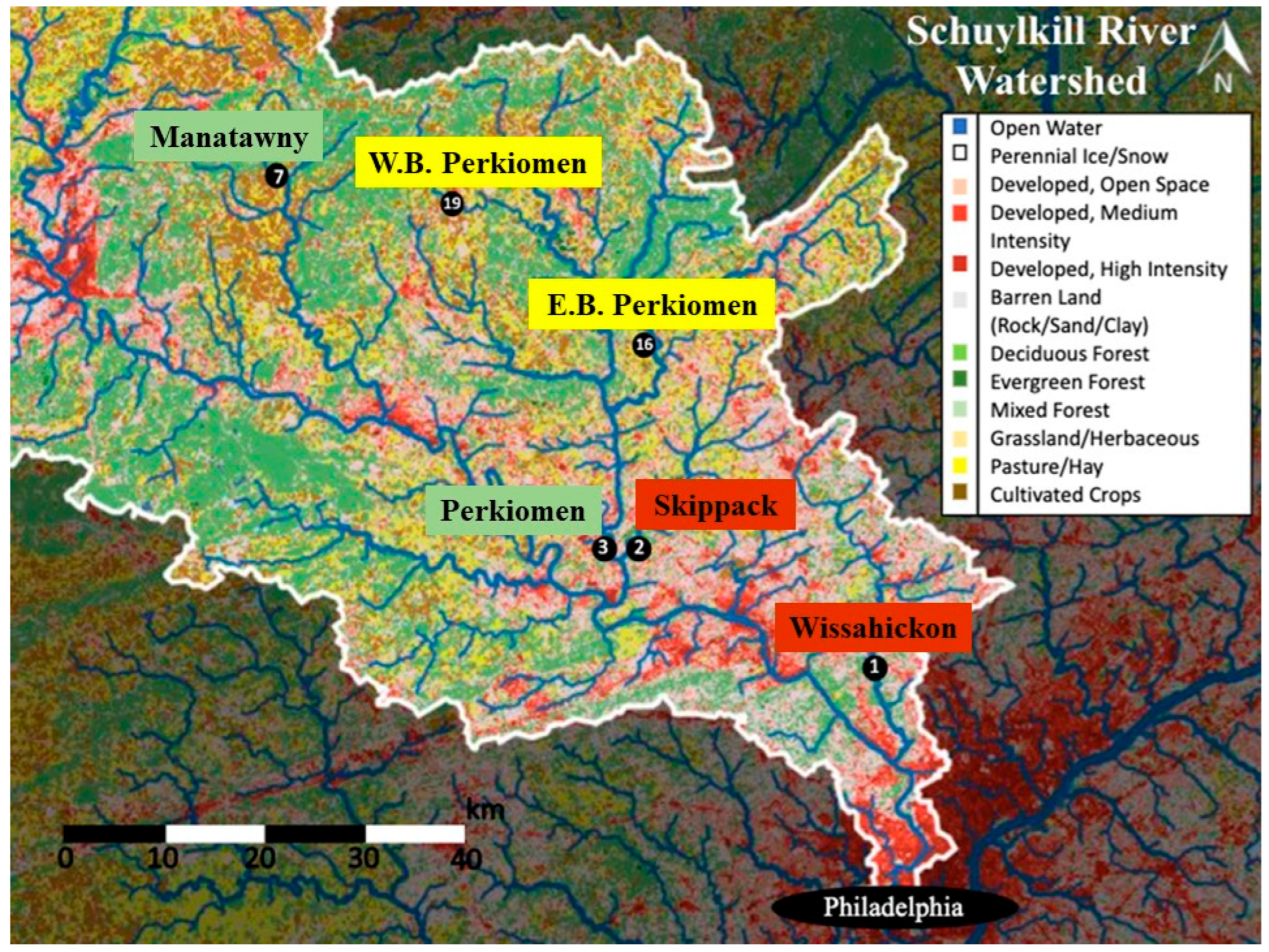
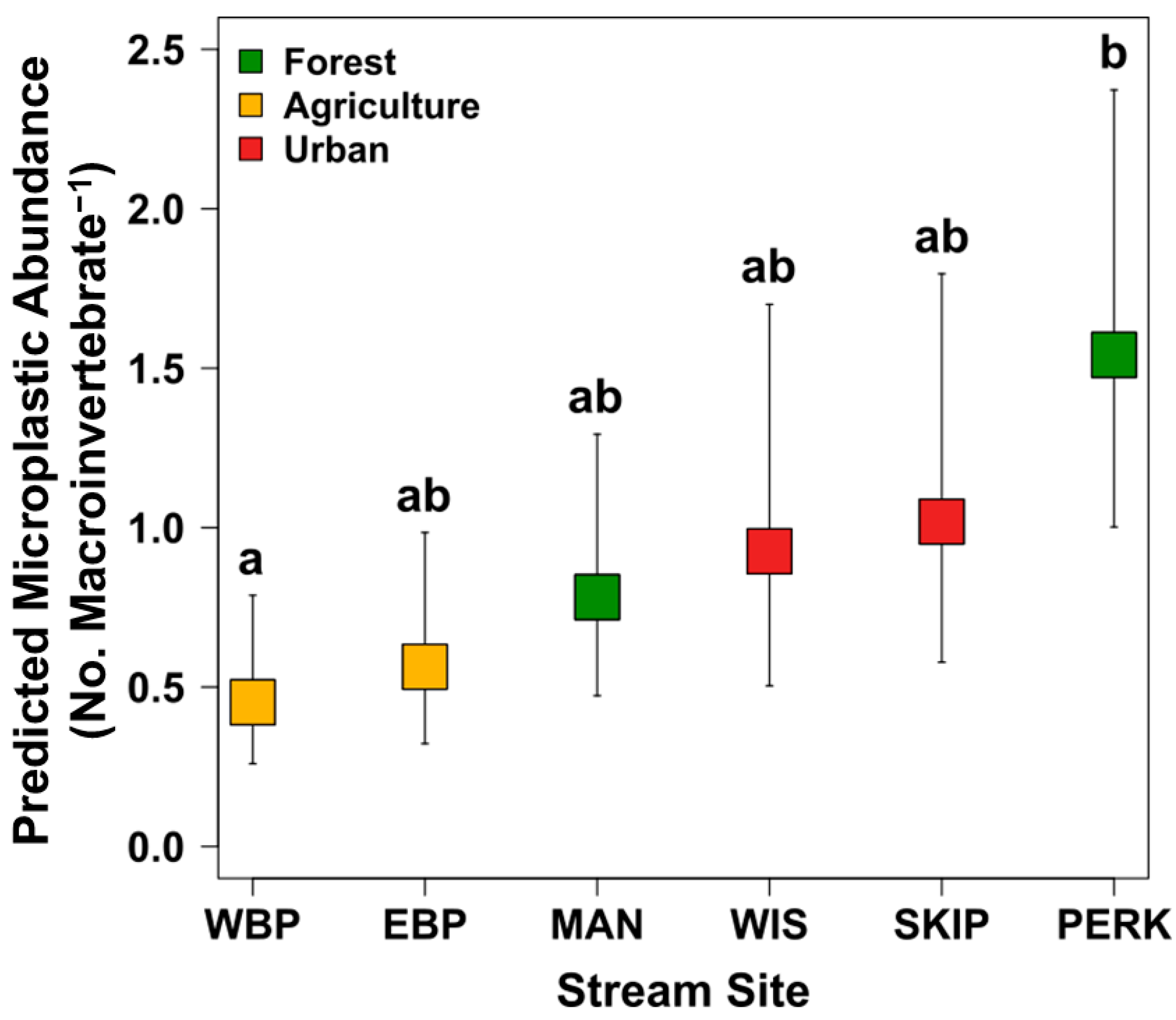
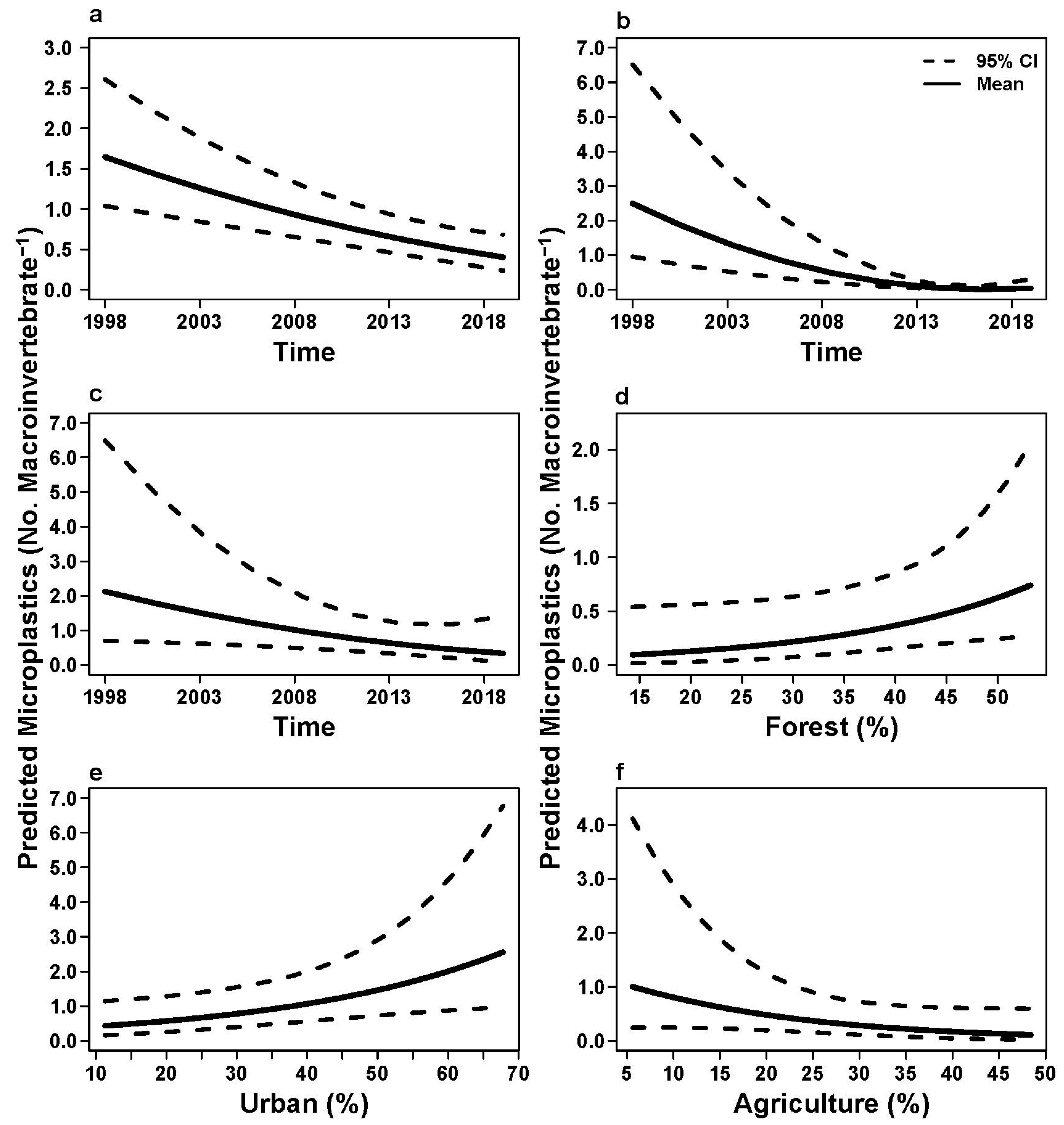
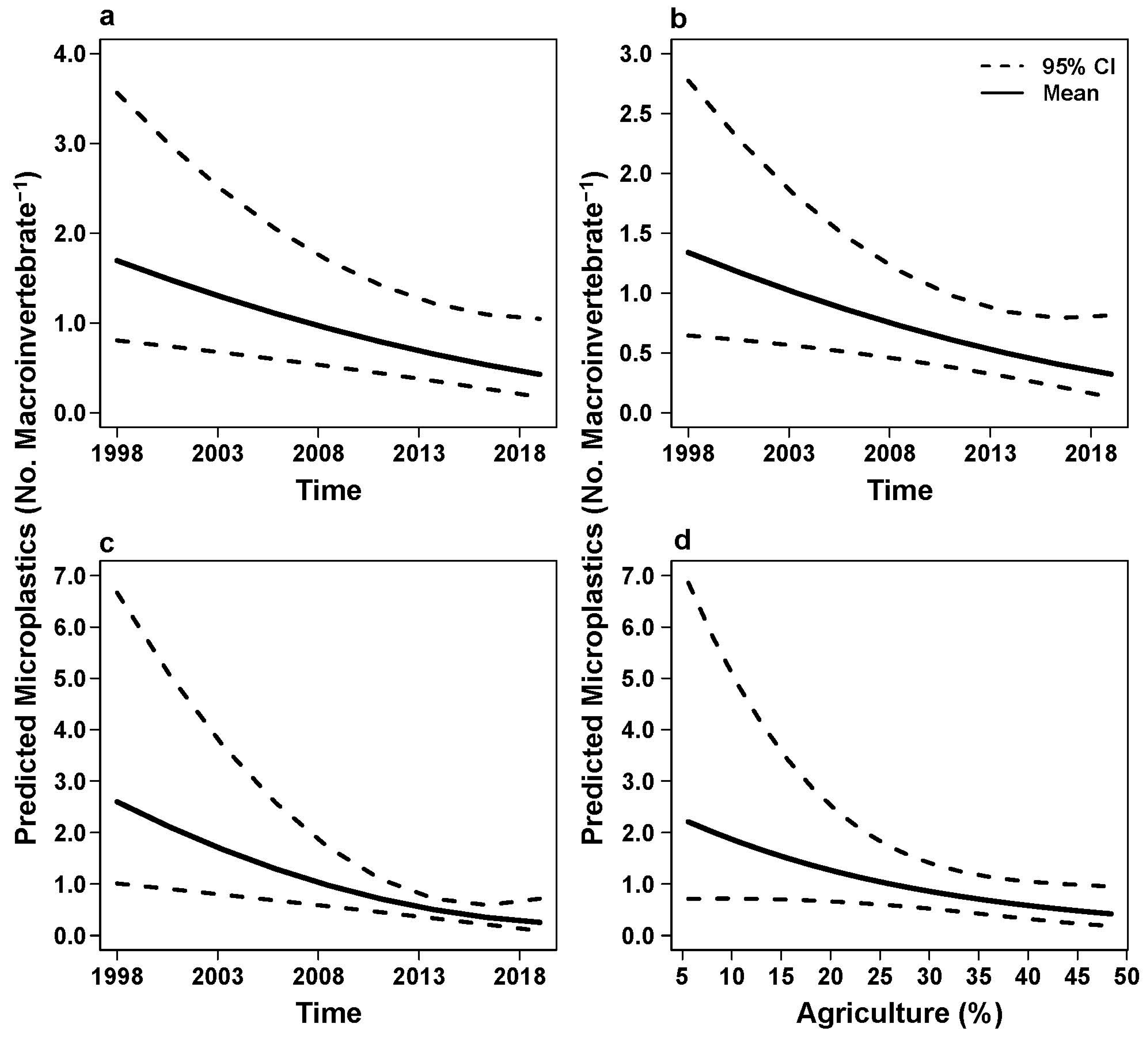
Plastic pollution is ubiquitous in the environment, with microplastics (particles < 5 mm) a worldwide emergent contaminant of concern; however, no studies have explored historical patterns in freshwater macroinvertebrates in connection to species traits and changes in land use. We measured microplastics in macroinvertebrates collected from 1998–2019 at six forest, urban, and agriculture dominated streams in the Schuylkill River watershed (PA, USA). We selected representative macroinvertebrates that underwent peroxide oxidation digestion and were examined for microplastics under a dissecting microscope with Rose Bengal dye to confirm microplastic identification. Microplastics were present in 134 individuals across 24 taxa and all functional feeding groups (FFGs). Abundance of microplastics in macroinvertebrates decreased through time with an increase of agriculture land use, whereas microplastics increased with an increase of urban land use. Collector-gatherer FFG had the greatest microplastic abundance, which may be linked to Elmidae and Psephenidae (Coleoptera), which tended to have the highest abundances of microplastics compared to all other taxa in some years. This relationship may be explained by the feeding mode of these families of macroinvertebrates and that gathering particles in the water column and scraping particles from biofilms may be similarly effective in the acquisition of microplastics. Overall, understanding microplastic temporal patterns and their connections to species traits and variations in land and water use is critical to developing a predictive framework for explaining microplastic abundance in the environment and interactions with aquatic biota.
Keywords:
plastic pollution; watershed; streams; insects; life stage