The Ifakara Ambient Chamber Test (I-ACT) for Evaluation of Indoor Residual Sprays: A Non-Inferiority Test of Sylando® 240SC and SumiShield® 50WG

 , ,
, ,  and
and
Simple Summary
Abstract
1. Introduction
2. Materials and Methods
2.1. Study Design
2.2. Study Area
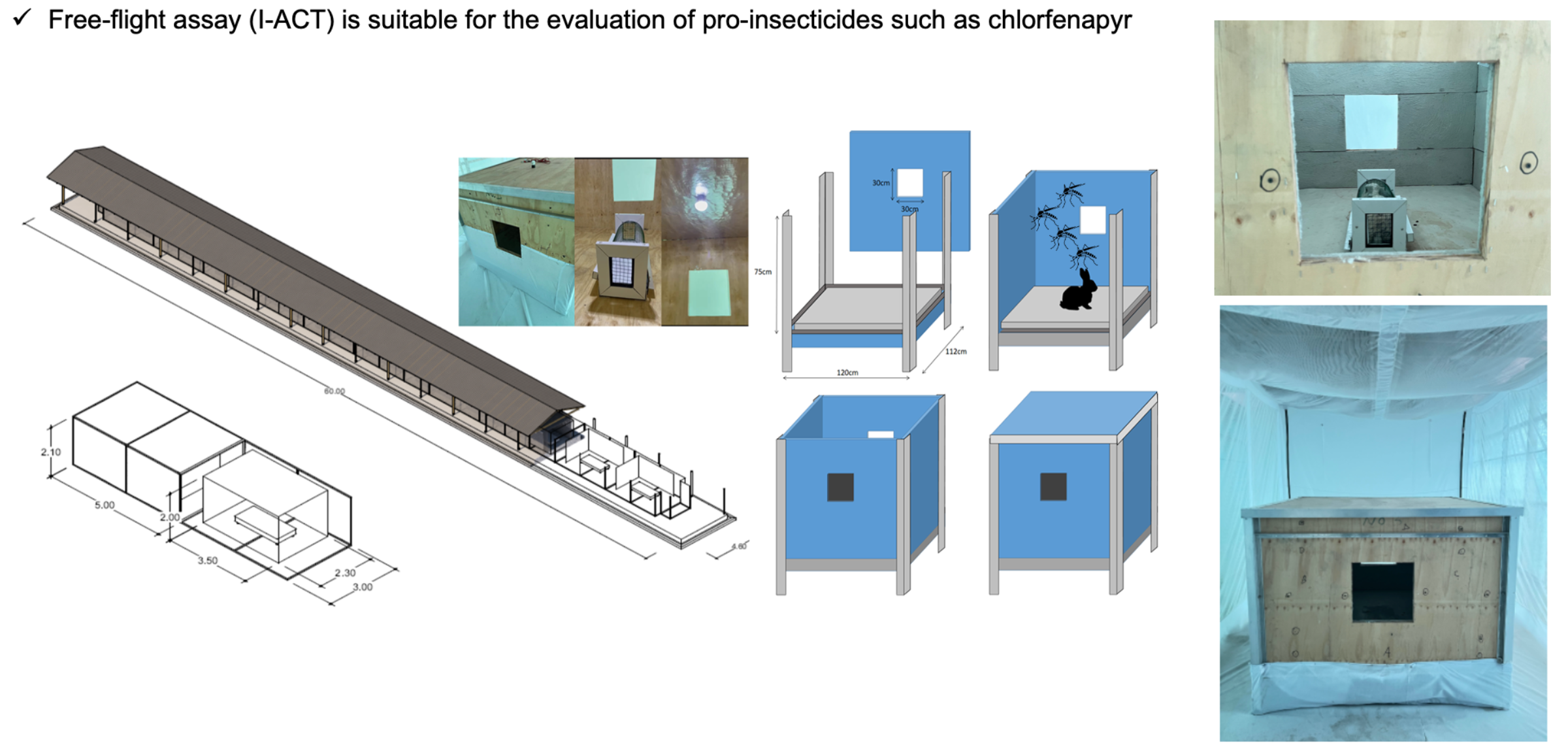
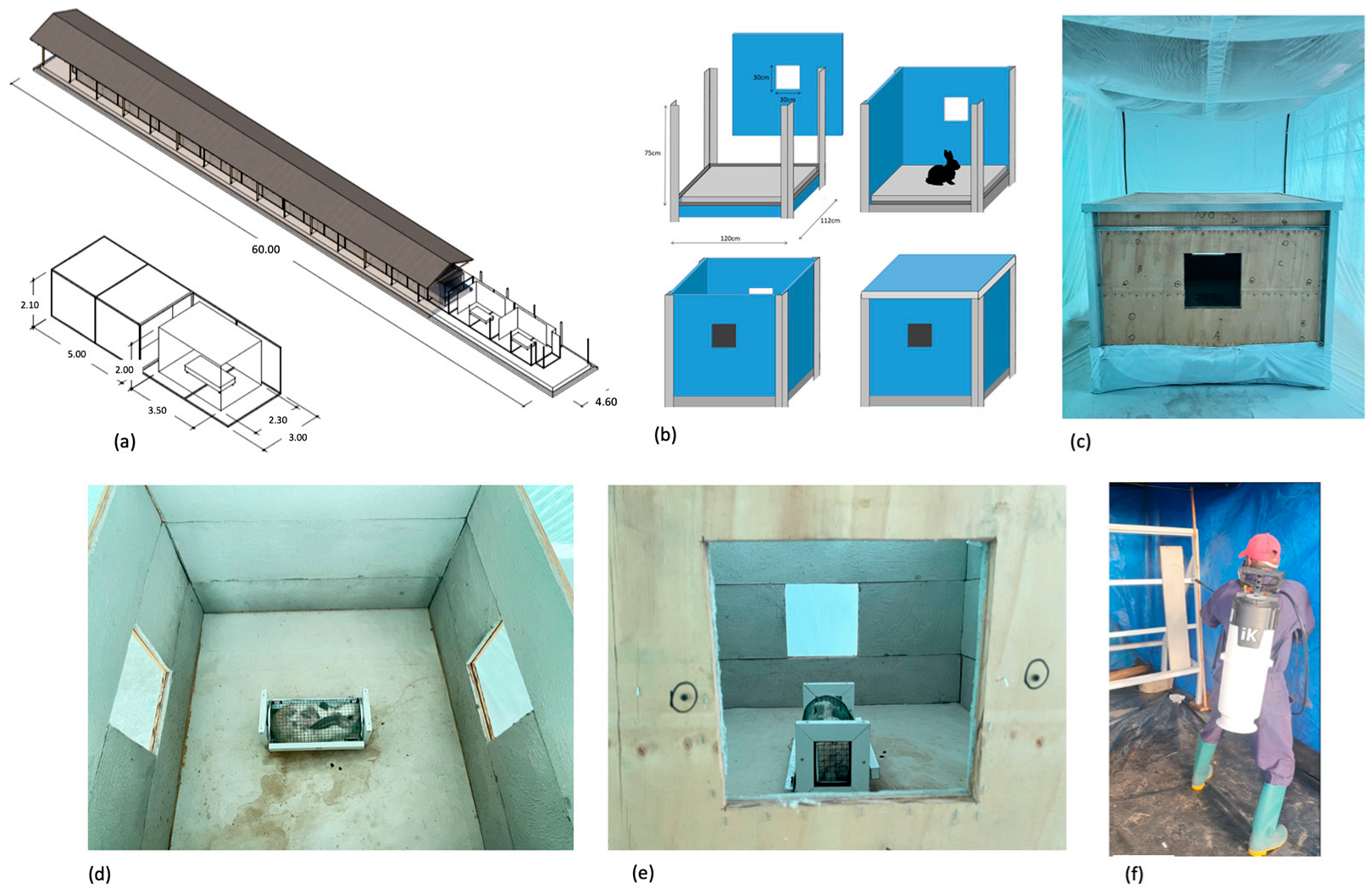
2.3. Ifakara Ambient Chamber Test for IRS Evaluation
2.4. Insecticides and Their Application
2.5. Substrate Preparation and Spraying Procedures
2.6. Mosquitoes
- (1)
- Anopheles arabiensis (Kingani), resistant to pyrethroids with mixed-function oxidases;
- (2)
- An. funestus (Fumoz), resistant to pyrethroids with mixed-function oxidases;
- (3)
- An. gambiae s.s. (Ifakara), fully pyrethroid-susceptible;
- (4)
- Culex quinquefasciatus (Bagamoyo), resistant to pyrethroids with mixed-function oxidases;
- (5)
- Aedes aegypti (Bagamoyo strain), fully pyrethroid-susceptible;
- (6)
- Ae. aegypti (Kinondoni strain), resistant to pyrethroids and organophosphates.
2.7. Assay Conduct
2.8. Measures to Reduce Bias
2.9. Sample Size
2.10. Statistical Analysis
3. Results
3.1. Study Quality Check
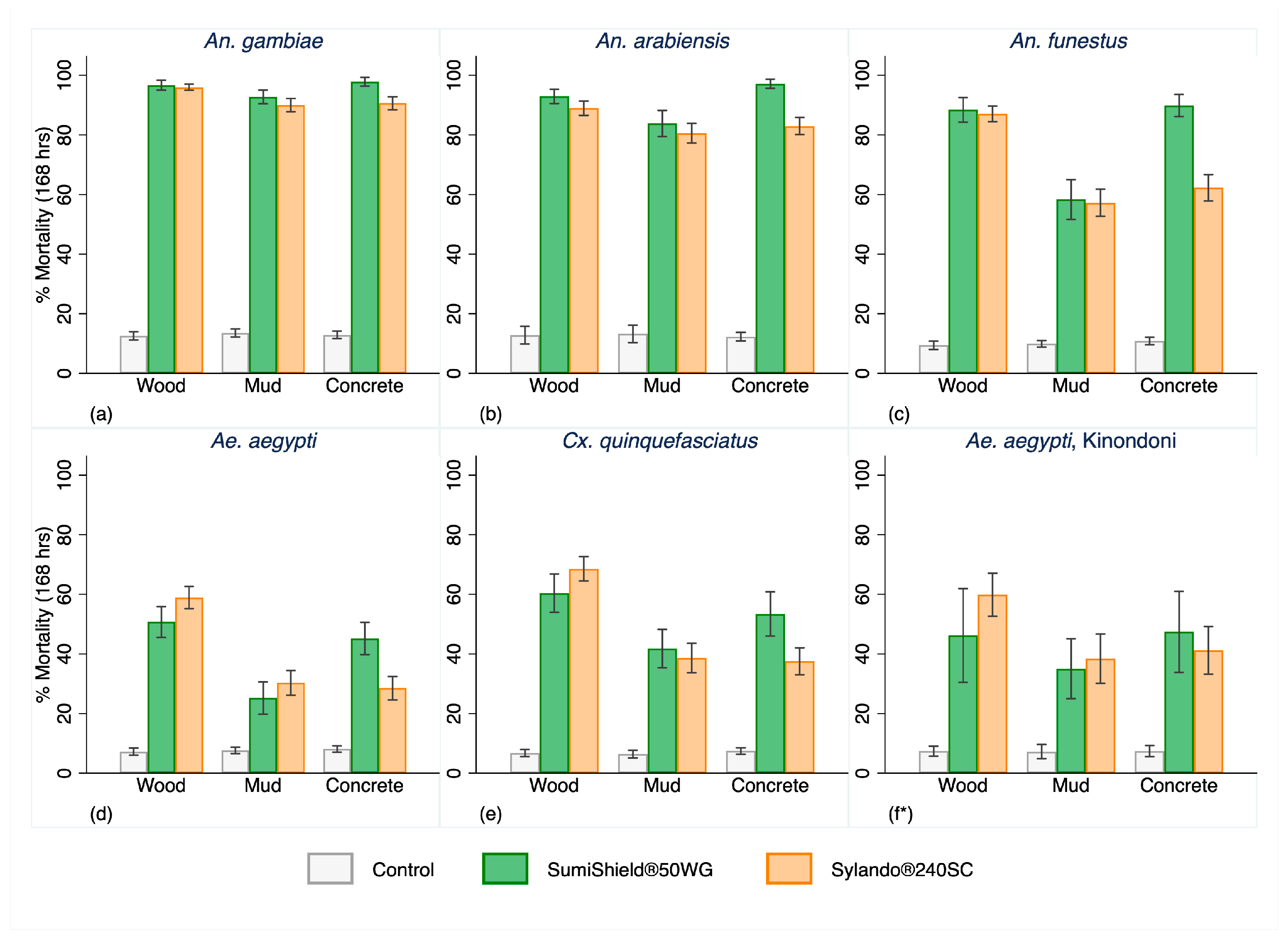
3.2. Overall Mosquitoes’ Mortality
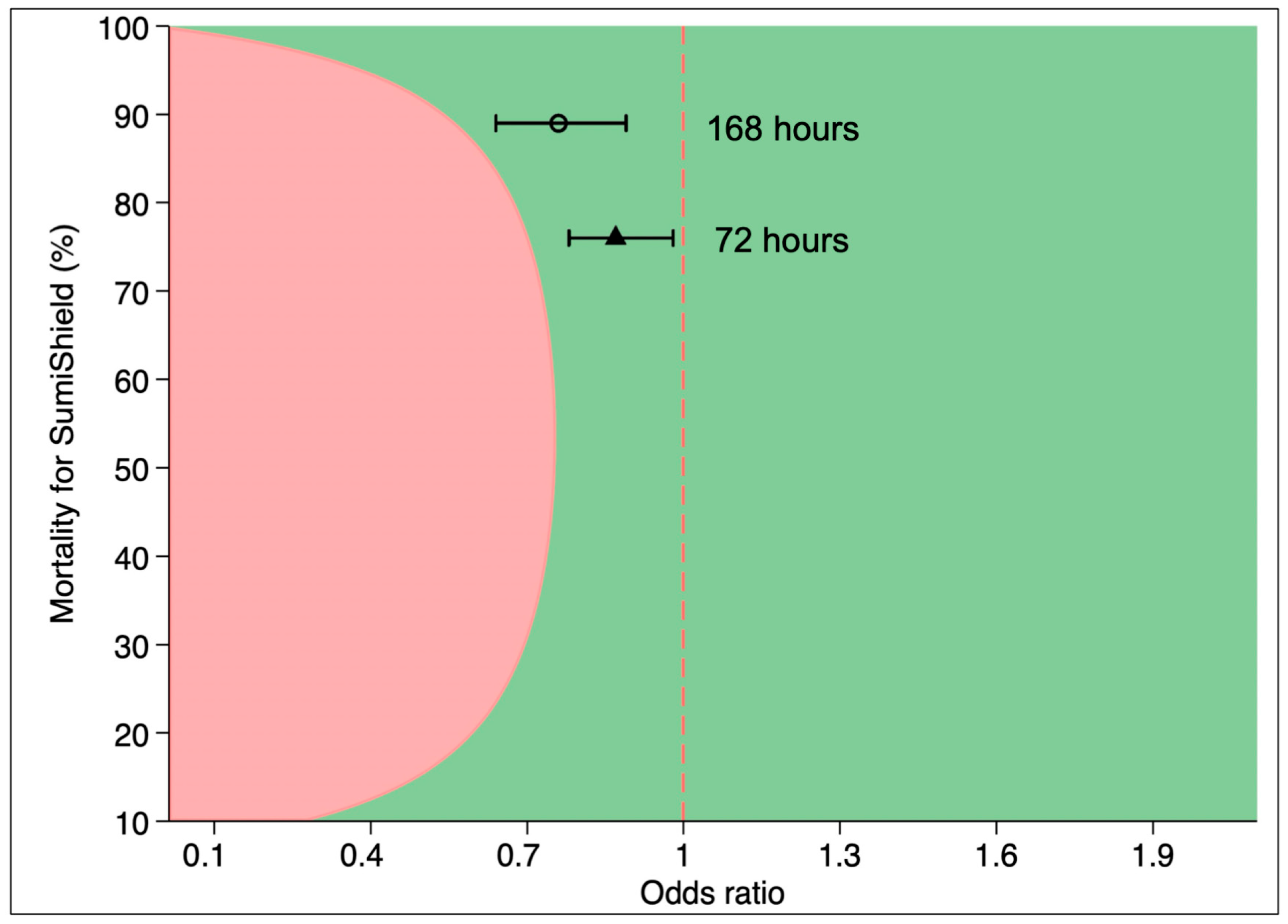
3.3. Non-Inferiority Testing of Sylando® 240SC and SumiShield® 50WG; Afrotropical Vectors Combined
4. Discussion
4.1. Performance of Sylando® 240SC and the Case of Chlorfenapyr
4.2. Variation in Performance Among Mosquito Species
4.3. Monthly Fluctuations in Efficacy
4.4. Substrate Effect on Efficacy
4.5. Comparative Assessment of Bioassay Methods for Chlorfenapyr
4.5.1. WHO Cone and Cylinder Bioassays
4.5.2. WHO Tunnel Bioassays
4.5.3. Experimental Hut Trials
4.5.4. Ifakara Ambient Chamber Test (I-ACT)
4.5.5. Recommendations
5. Conclusions
Supplementary Materials
Author Contributions
Funding
Data Availability Statement
Acknowledgments
Conflicts of Interest
Abbreviations
| ATP | Adenosine Triphosphate |
| CFV | Control Flow Valve |
| DDT | Dichlorodiphenyltrichloroethane |
| IACT | Ifakara Ambient Chamber Test |
| IQR | Interquartile Range |
| IRS | Indoor Residual Spray |
| ITN | Insecticide Treated Nets |
| MEH | Miniature-Experimental Hut |
| NMCP | National Malaria Control Programmes |
| qRT-qPCR | Quantitative Reverse Transcription Polymerase Chain Reaction |
| RT-qPCR | Reverse Transcription Quantitative Polymerase Chain Reaction |
| RH | Relative Humidity |
| WHO | World Health Organization |
| WHO PQT/VCP | World Health Organization Prequalification Team—Vector Control Products |
References
- WHOPES. Guidelines for Testing Mosquito Adulticides for Indoor Residual Spraying and Treatment of Mosquito Nets; WHO/CDS/NTD/WHOPES/GCDPP/2006.3; WHO Pesticide Evaluation Scheme: Geneva, Switzerland, 2006.
- Ngufor, C.; Critchley, J.; Fagbohoun, J.; N’Guessan, R.; Todjinou, D.; Rowland, M. Chlorfenapyr (A Pyrrole Insecticide) Applied Alone or as a Mixture with Alpha-Cypermethrin for Indoor Residual Spraying against Pyrethroid Resistant Anopheles gambiae sl: An Experimental Hut Study in Cove, Benin. PLoS ONE 2016, 11, e0162210. [Google Scholar] [CrossRef] [Scilit]
- Oxborough, R.M.; Kitau, J.; Matowo, J.; Mndeme, R.; Feston, E.; Boko, P.; Odjo, A.; Metonnou, C.G.; Irish, S.; N’Guessan, R.; et al. Evaluation of indoor residual spraying with the pyrrole insecticide chlorfenapyr against pyrethroid-susceptible Anopheles arabiensis and pyrethroid-resistant Culex quinquefasciatus mosquitoes. Trans. R. Soc. Trop. Med. Hyg. 2010, 104, 639–645. [Google Scholar] [CrossRef] [Scilit]
- Raghavendra, K.; Barik, T.K.; Sharma, P.; Bhatt, R.M.; Srivastava, H.C.; Sreehari, U.; Dash, A.P. Chlorfenapyr: A new insecticide with novel mode of action can control pyrethroid resistant malaria vectors. Malar. J. 2011, 10, 16. [Google Scholar] [CrossRef] [Scilit]
- Oxborough, R.M.; N’Guessan, R.; Jones, R.; Kitau, J.; Ngufor, C.; Malone, D.; Mosha, F.W.; Rowland, M.W. The activity of the pyrrole insecticide chlorfenapyr in mosquito bioassay: Towards a more rational testing and screening of non-neurotoxic insecticides for malaria vector control. Malar. J. 2015, 14, 124. [Google Scholar] [CrossRef] [Scilit]
- Black, B.C.; Hollingworth, R.M.; Ahammadsahib, K.I.; Kukel, C.D.; Donovan, S. Insecticidal Action and Mitochondrial Uncoupling Activity of AC-303,630 and Related Halogenated Pyrroles. Pestic. Biochem. Physiol. 1994, 50, 115–128. [Google Scholar] [CrossRef] [Scilit]
- Rund, S.S.; Gentile, J.E.; Duffield, G.E. Extensive circadian and light regulation of the transcriptome in the malaria mosquito Anopheles gambiae. BMC Genom. 2013, 14, 218. [Google Scholar] [CrossRef] [Scilit]
- Balmert, N.J.; Rund, S.S.; Ghazi, J.P.; Zhou, P.; Duffield, G.E. Time-of-day specific changes in metabolic detoxification and insecticide resistance in the malaria mosquito Anopheles gambiae. J. Insect Physiol. 2014, 64, 30–39. [Google Scholar] [CrossRef] [Scilit] [PubMed]
- Das De, T.; Pelletier, J.; Gupta, S.; Kona, M.P.; Singh, O.P.; Dixit, R.; Ignell, R.; Karmodiya, K. Diel modulation of perireceptor activity influences olfactory sensitivity in diurnal and nocturnal mosquitoes. FEBS J. 2025, 292, 2095–2118. [Google Scholar] [CrossRef] [Scilit] [PubMed]
- Suarez, R.K. Energy Metabolism during Insect Flight: Biochemical Design and Physiological Performance. Physiol. Biochem. Zool. 2000, 73, 765–771. [Google Scholar] [CrossRef] [Scilit]
- Kaufmann, C.; Briegel, H. Flight performance of the malaria vectors Anopheles gambiae and Anopheles atroparvus. J. Vector Ecol. 2004, 29, 140–153. [Google Scholar]
- Churcher, T.S.; Stopard, I.J.; Hamlet, A.; Dee, D.P.; Sanou, A.; Rowland, M.; Guelbeogo, M.W.; Emidi, B.; Mosha, J.F.; Challenger, J.D.; et al. The epidemiological benefit of pyrethroid & pyrrole insecticide treated nets against malaria: An individual-based malaria transmission dynamics modelling study. Lancet Glob. Health 2024, 12, e1973–e1983. [Google Scholar] [CrossRef] [Scilit]
- Sherrard-Smith, E.; Ngufor, C.; Sanou, A.; Guelbeogo, M.W.; N’Guessan, R.; Elobolobo, E.; Saute, F.; Varela, K.; Chaccour, C.J.; Zulliger, R.; et al. Inferring the epidemiological benefit of indoor vector control interventions against malaria from mosquito data. Nat. Commun. 2022, 13, 3862. [Google Scholar] [CrossRef] [Scilit]
- Silver, J.B.; Service, M.W. Chapter 16 Experimental Hut Techniques. In Mosquito Ecology: Field Sampling Methods; Springer: Berlin/Heidelberg, Germany, 2008; p. 1494. [Google Scholar]
- Mosha, J.F.; Matowo, N.S.; Kulkarni, M.A.; Messenger, L.A.; Lukole, E.; Mallya, E.; Aziz, T.; Kaaya, R.; Shirima, B.A.; Isaya, G.; et al. Effectiveness of long-lasting insecticidal nets with pyriproxyfen-pyrethroid, chlorfenapyr-pyrethroid, or piperonyl butoxide-pyrethroid versus pyrethroid only against malaria in Tanzania: Final-year results of a four-arm, single-blind, cluster-randomised trial. Lancet Infect. Dis. 2023, 24, 87–97. [Google Scholar] [CrossRef] [Scilit] [PubMed]
- Accrombessi, M.; Cook, J.; Dangbenon, E.; Sovi, A.; Yovogan, B.; Assongba, L.; Adoha, C.J.; Akinro, B.; Affoukou, C.; Padonou, G.G.; et al. Effectiveness of pyriproxyfen-pyrethroid and chlorfenapyr-pyrethroid long-lasting insecticidal nets (LLINs) compared with pyrethroid-only LLINs for malaria control in the third year post-distribution: A secondary analysis of a cluster-randomised controlled trial in Benin. Lancet Infect. Dis. 2024, 24, 619–628. [Google Scholar] [CrossRef] [Scilit] [PubMed]
- Massue, D.J.; Lorenz, L.M.; Moore, J.D.; Ntabaliba, W.S.; Ackerman, S.; Mboma, Z.M.; Kisinza, W.N.; Mbuba, E.; Mmbaga, S.; Bradley, J.; et al. Comparing the new Ifakara Ambient Chamber Test with WHO cone and tunnel tests for bioefficacy and non-inferiority testing of insecticide-treated nets. Malar. J. 2019, 18, 153. [Google Scholar] [CrossRef] [Scilit]
- Kibondo, U.A.; Odufuwa, O.G.; Ngonyani, S.H.; Mpelepele, A.B.; Matanilla, I.; Ngonyani, H.; Makungwa, N.O.; Mseka, A.P.; Swai, K.; Ntabaliba, W.; et al. Influence of testing modality on bioefficacy for the evaluation of Interceptor® G2 mosquito nets to combat malaria mosquitoes in Tanzania. Parasites Vectors 2022, 15, 124. [Google Scholar] [CrossRef] [Scilit] [PubMed]
- WHO. Data Requirements and Protocol for Determining Comparative Efficacy of Vector Control Products; World Health Organisation: Geneva, Switzerland, 2024.
- Gillies, M.T. Studies in house leaving and outside resting of Anopheles gambiae Giles and Anopheles funestus Giles in East Africa. II. The exodus from houses and the house resting population. Bull. Entomol. Res. 1954, 45, 375. [Google Scholar] [CrossRef] [Scilit]
- Hudson, J.E. Trials of Mixtures of Insecticides in Experimental Huts in East Africa. II. The Effects of Mixtures of DDT with Malathion on the Mortality and Behaviour of Anopheles gambiae Giles in Verandah Trap Huts; WHO/VBC/75.575; World Health Organisation: Geneva, Switzerland, 1975; p. 15.
- Ojo, T. An Assessment of Novel Methods for Evaluating Insecticide Based Methods of Vector Control; University of London, London School of Hygiene and Tropical Medicine: London, UK, 2009. [Google Scholar]
- Snetselaar, J.; Lees, R.S.; Foster, G.M.; Walker, K.J.; Manunda, B.J.; Malone, D.J.; Mosha, F.W.; Rowland, M.W.; Kirby, M.J. Enhancing the Quality of Spray Application in IRS: Evaluation of the Micron Track Sprayer. Insects 2022, 13, 523. [Google Scholar] [CrossRef] [Scilit]
- MR4. Methods in Anopheles Research Manual 2015 Edition; National Institutes of Health: Bethesda, MD, USA, 2016.
- WHO. Test Procedures for Insecticide Resistance Monitoring in Malaria Vector Mosquitoes, 2nd ed.; World Health Organisation: Geneva, Switzerland, 2016.
- Bass, C.; Nikou, D.; Donnelly, M.J.; Williamson, M.S.; Ranson, H.; Ball, A.; Vontas, J.; Field, L.M. Detection of knockdown resistance (kdr) mutations in Anopheles gambiae: A comparison of two new high- throughput assays with existing methods. Malar. J. 2007, 6, 111. [Google Scholar] [CrossRef] [Scilit]
- WHO. Technical Consultation to Assess Comparative Efficacy of Vector Control Products: Meeting Report, 5 and 9 June 2023; World Health Organization: Geneva, Switzerland, 2023.
- Piaggio, G.; Elbourne, D.R.; Pocock, S.J.; Evans, S.J.; Altman, D.G. Reporting of noninferiority and equivalence randomized trials: Extension of the CONSORT 2010 statement. JAMA 2012, 308, 2594–2604. [Google Scholar] [CrossRef] [Scilit]
- Che-Mendoza, A.; González-Olvera, G.; Medina-Barreiro, A.; Arisqueta-Chablé, C.; Bibiano-Marin, W.; Correa-Morales, F.; Kirstein, O.D.; Manrique-Saide, P.; Vazquez-Prokopec, G.M. Efficacy of targeted indoor residual spraying with the pyrrole insecticide chlorfenapyr against pyrethroid-resistant Aedes aegypti. PLoS Negl. Trop. Dis. 2021, 15, e0009822. [Google Scholar] [CrossRef] [Scilit] [PubMed]
- Tchouakui, M.; Assatse, T.; Tazokong, H.R.; Oruni, A.; Menze, B.D.; Nguiffo-Nguete, D.; Mugenzi, L.M.J.; Kayondo, J.; Watsenga, F.; Mzilahowa, T.; et al. Detection of a reduced susceptibility to chlorfenapyr in the malaria vector Anopheles gambiae contrasts with full susceptibility in Anopheles funestus across Africa. Sci. Rep. 2023, 13, 2363. [Google Scholar] [CrossRef] [Scilit]
- Oxborough, R.M.; Seyoum, A.; Yihdego, Y.; Chabi, J.; Wat’senga, F.; Agossa, F.R.; Coleman, S.; Musa, S.L.; Faye, O.; Okia, M.; et al. Determination of the discriminating concentration of chlorfenapyr (pyrrole) and Anopheles gambiae sensu lato susceptibility testing in preparation for distribution of Interceptor® G2 insecticide-treated nets. Malar. J. 2021, 20, 316. [Google Scholar] [CrossRef] [Scilit]
- Ngufor, C.; Fongnikin, A.; Hobbs, N.; Gbegbo, M.; Kiki, L.; Odjo, A.; Akogbeto, M.; Rowland, M. Indoor spraying with chlorfenapyr (a pyrrole insecticide) provides residual control of pyrethroid-resistant malaria vectors in southern Benin. Malar. J. 2020, 19, 249. [Google Scholar] [CrossRef] [Scilit]
- David, M.D. The potential of pro-insecticides for resistance management. Pest Manag. Sci. 2021, 77, 3631–3636. [Google Scholar] [CrossRef] [Scilit]
- Tchouakui, M.; Ibrahim, S.S.; Mangoua, M.K.; Thiomela, R.F.; Assatse, T.; Ngongang-Yipmo, S.L.; Muhammad, A.; Mugenzi, L.J.; Menze, B.D.; Mzilahowa, T.; et al. Substrate promiscuity of key resistance P450s confers clothianidin resistance. Cell Rep. 2024, 43, 114566. [Google Scholar] [CrossRef] [Scilit] [PubMed]
- Riveron, J.M.; Watsenga, F.; Irving, H.; Irish, S.R.; Wondji, C.S. High Plasmodium Infection Rate and Reduced Bed Net Efficacy in Multiple Insecticide-Resistant Malaria Vectors in Kinshasa, Democratic Republic of Congo. J. Infect. Dis. 2018, 217, 320–328. [Google Scholar] [CrossRef] [Scilit] [PubMed]
- Mavridis, K.; Wipf, N.; Medves, S.; Erquiaga, I.; Müller, P.; Vontas, J. Rapid multiplex gene expression assays for monitoring metabolic resistance in the major malaria vector Anopheles gambiae. Parasites Vectors 2019, 12, 9. [Google Scholar] [CrossRef] [Scilit]
- Oliver, S.V.; Lyons, C.L.; Brooke, B.D. The effect of blood feeding on insecticide resistance intensity and adult longevity in the major malaria vector Anopheles funestus (Diptera: Culicidae). Sci. Rep. 2022, 12, 3877. [Google Scholar] [CrossRef] [Scilit]
- Oliver, S.V.; Brooke, B.D. The effect of multiple blood-feeding on the longevity and insecticide resistant phenotype in the major malaria vector Anopheles arabiensis (Diptera: Culicidae). Parasites Vectors 2014, 7, 390. [Google Scholar] [CrossRef] [Scilit]
- Takken, W.; Charlwood, D.; Lindsay, S.W. The behaviour of adult Anopheles gambiae, sub-Saharan Africa’s principal malaria vector, and its relevance to malaria control: A review. Malar. J. 2024, 23, 161. [Google Scholar] [CrossRef] [Scilit]
- Charlwood, J.D.; Smith, T.; Kihonda, J.; Heiz, B.; Billingsley, P.F.; Takken, W. Density independent feeding success of malaria vectors (Diptera: Culicidae) in Tanzania. Bull. Entomol. Res. 2009, 85, 29–35. [Google Scholar] [CrossRef] [Scilit]
- Machange, J.J.; Maasayi, M.S.; Mundi, J.; Moore, J.; Muganga, J.B.; Odufuwa, O.G.; Moore, S.J.; Tenywa, F.C. Comparison of the Trapping Efficacy of Locally Modified Gravid Aedes Trap and Autocidal Gravid Ovitrap for the Monitoring and Surveillance of Aedes aegypti Mosquitoes in Tanzania. Insects 2024, 15, 401. [Google Scholar] [CrossRef] [Scilit]
- Tenywa, F.S.C.; Halg, S.; Makame, H.; Moore, J.; Dogan, O.; Mapipi, H.I.; Machange, J.J.; Lilolime, N.S.; Hofer, L.M.; Batao, L.D.; et al. DENV-2 Circulation and Host Preference Among Highly Anthropophilic, Outdoor-Biting Aedes aegypti in Dar es Salaam, Tanzania. Viruses 2025, 17, 818. [Google Scholar] [CrossRef] [Scilit]
- Magaço, A.; Botão, C.; Nhassengo, P.; Saide, M.; Ubisse, A.; Chicumbe, S.; Zulliger, R. Community knowledge and acceptance of indoor residual spraying for malaria prevention in Mozambique: A qualitative study. Malar. J. 2019, 18, 27. [Google Scholar] [CrossRef] [Scilit] [PubMed]
- Sibanda, M.M.; Focke, W.W.; Labuschagne, F.J.W.J.; Moyo, L.; Nhlapo, N.S.; Maity, A.; Muiambo, H.; Massinga, P.; Crowther, N.A.S.; Coetzee, M.; et al. Degradation of insecticides used for indoor spraying in malaria control and possible solutions. Malar. J. 2011, 10, 307. [Google Scholar] [CrossRef] [Scilit]
- Praulins, G.; Murphy-Fegan, A.; Gillespie, J.; Mechan, F.; Gleave, K.; Lees, R. Unpacking WHO and CDC Bottle Bioassay Methods: A Comprehensive Literature Review and Protocol Analysis Revealing Key Outcome Predictors. Gates Open Res. 2024, 8, 56. [Google Scholar] [CrossRef] [Scilit]
- Desalegn, Z.; Wegayehu, T.; Massebo, F. Wall-type and indoor residual spraying application quality affect the residual efficacy of indoor residual spray against wild malaria vector in southwest Ethiopia. Malar. J. 2018, 17, 300. [Google Scholar] [CrossRef] [Scilit]
- Owusu, H.F.; Chitnis, N.; Muller, P. Insecticide susceptibility of Anopheles mosquitoes changes in response to variations in the larval environment. Sci. Rep. 2017, 7, 3667. [Google Scholar] [CrossRef] [Scilit] [PubMed]
- Oxborough, R.M.; Kitau, J.; Jones, R.; Feston, E.; Matowo, J.; Mosha, F.W.; Rowland, M.W. Long-lasting control of Anopheles arabiensis by a single spray application of micro-encapsulated pirimiphos-methyl (Actellic® 300 CS). Malar. J. 2014, 13, 37. [Google Scholar] [CrossRef] [Scilit] [PubMed]
- Food and Agriculture Organization of the United Nations. FAO Specifications and Evaluations for Agricultural Pesticides: Chlorfenapyr; Food and Agriculture Organization of the United Nations: Rome, Italy, 2014.
- Sparangis, P.; Rumbos, C.I.; Tsiropoulos, N.G.; Athanassiou, C.G. Insecticidal and residual effect of chlorfenapyr on different surfaces for the control of Sitophilus oryzae. J. Stored Prod. Res. 2023, 103, 102153. [Google Scholar] [CrossRef] [Scilit]
- Herodotou, S.; Lissenden, N.; Skinley, K.; Nimmo, D.; Snetselaar, J.; Guy, A.; Myers, P.; Ryazanskaya, S. Preliminary Assessment of Bespoke (‘X-tec’) Silica Particles for IRS Applications. Insects 2025, 16, 937. [Google Scholar] [CrossRef] [Scilit]
- WHO. Guidelines for Laboratory and Field Testing of Long-Lasting Insecticidal Mosquito Nets; WHO/CDS/WHOPES/GCDPP/2005.11; World Health Organisation Pesticide Evaluation Scheme (WHOPES): Geneva, Switzerland, 2005.
- Malima, R.C.; Nkya, T.E.; Magesa, S.M.; Mboera, L.E.; Kisinza, W.N. Evaluation of the WHO cone bioassay method for quality control of LLINs. Malar. J. 2017, 16, 48. [Google Scholar]
- N’Guessan, R.; Ngufor, C.; Kudom, A.A.; Boko, P.; Odjo, A.; Malone, D.; Rowland, M. Mosquito Nets Treated with a Mixture of Chlorfenapyr and Alphacypermethrin Control Pyrethroid Resistant Anopheles gambiae and Culex quinquefasciatus Mosquitoes in West Africa. PLoS ONE 2014, 9, e87710. [Google Scholar] [CrossRef] [Scilit]
- N’Guessan, R.; Odjo, A.; Ngufor, C.; Malone, D.; Rowland, M. A Chlorfenapyr Mixture Net Interceptor® G2 Shows High Efficacy and Wash Durability against Resistant Mosquitoes in West Africa. PLoS ONE 2016, 11, e0165925. [Google Scholar] [CrossRef] [Scilit] [PubMed]
- WHO. Manual for Monitoring Insecticide Resistance in Mosquito Vectors and Selecting Appropriate Interventions; World Health Organisation: Geneva, Switzerland, 2022.
- Darriet, F.; Carnevale, P. Evaluation of insecticide-treated nets in the laboratory: Comparison of tunnel and free-flying room tests. Med. Vet. Entomol. 1995, 9, 357–362. [Google Scholar]
- Fatou, M.; Müller, P. 3D video tracking analysis reveals that mosquitoes pass more likely through holes in permethrin-treated than in untreated nets. Sci. Rep. 2024, 14, 13598. [Google Scholar] [CrossRef] [Scilit]
- Yunta, C.; Ooi, J.M.F.; Oladepo, F.; Grafanaki, S.; Pergantis, S.A.; Tsakireli, D.; Ismail, H.M.; Paine, M.J.I. Chlorfenapyr metabolism by mosquito P450s associated with pyrethroid resistance identifies potential activation markers. Sci. Rep. 2023, 13, 14124. [Google Scholar] [CrossRef] [Scilit] [PubMed]
- Oxborough, R.M.; Kitau, J.; Matowo, J.; Feston, E.; Mndeme, R.; Mosha, F.W.; Rowland, M.W. ITN mixtures of chlorfenapyr (Pyrrole) and alphacypermethrin (Pyrethroid) for control of pyrethroid resistant Anopheles arabiensis and Culex quinquefasciatus. PLoS ONE 2013, 8, e55781. [Google Scholar] [CrossRef] [Scilit]



| Test | Target Concentration | Actual Mean Dose Applied (Relative SD) |
|---|---|---|
| Chlorfenapyr content | 250 mg/m2 | 230 mg/m2 (12.2%) |
| Clothianidin content | 300 mg/m2 | 299 mg/m2 (30.5%) |
| Method | Purpose | Design and Conditions | Strengths | Limitations | Suitability for Chlorfenapyr |
|---|---|---|---|---|---|
| WHO Cone Bioassay | Lab-based efficacy testing | Mosquitoes confined to a treated surface for 3 min | Simple, reproducible, globally standardized | Restricts movement; unsuitable for metabolic or repellent insecticides | POOR Underestimates efficacy due to limited exposure and bioactivation |
| WHO Cylinder Bioassay | Resistance monitoring | Mosquitoes exposed to insecticide-treated paper in a cylinder | Standardized for resistance detection; easy to implement | Same confinement issues as cones; surfactant/paper inconsistencies | POOR Physical and chemical limitations affect chlorfenapyr performance |
| CDC Bottle Bioassay | Resistance monitoring | Mosquitoes exposed to insecticide-coated bottle at a discriminating concentration and time | Allows mosquito movement, flexible, standardized for resistance detection | Semi-artificial; limited behavioural realism, time-consuming if more than one mosquito strain is used | MODERATE Better than cones, and useful laboratory assay for IRS |
| WHO Tunnel Test | Semi-controlled behavioural assay | Mosquitoes fly through a tunnel to reach a host; exposure to treated netting | Simulates host-seeking behaviour; multiple endpoints (mortality, deterrence, feeding) | Still semi-artificial; limited exposure time | MODERATE Better than cones, and useful laboratory assay for ITNs, though undeveloped for IRS |
| Ifakara Ambient Chamber Test (I-ACT) | Controlled, semi-field evaluation | Large walk-in chamber mimicking a room; mosquitoes fly freely overnight | High realism, controlled environment, strong statistical power; multiple endpoints (mortality, feeding) | Requires infrastructure; relatively new method; uses laboratory-reared mosquitoes | GOOD Useful for exploring new slow-acting, metabolic non-repellent insecticides like chlorfenapyr |
| Experimental Hut Trials | Field-realistic efficacy testing | Free-flying mosquitoes interact with treated surfaces in a hut | Realistic behaviour with wild mosquitoes; multiple endpoints (mortality, feeding) | Operational variability; requires skilled personnel and equipment | EXCELLENT Captures effects of metabolic non-repellent insecticides like chlorfenapyr using wild mosquitoes that are highly active during host seeking |
Disclaimer/Publisher’s Note: The statements, opinions and data contained in all publications are solely those of the individual author(s) and contributor(s) and not of MDPI and/or the editor(s). MDPI and/or the editor(s) disclaim responsibility for any injury to people or property resulting from any ideas, methods, instructions or products referred to in the content. |
© 2026 by the authors. Licensee MDPI, Basel, Switzerland. This article is an open access article distributed under the terms and conditions of the Creative Commons Attribution (CC BY) license.
Share and Cite
Machange, J.J.; Mpelepele, A.B.; Tenywa, F.S.C.; Pwagu, M.; Kobe, D.; Ngonyani, S.H.; Kamande, D.S.; Matanila, I.; Kibwengo, I.; Moore, J.; et al. The Ifakara Ambient Chamber Test (I-ACT) for Evaluation of Indoor Residual Sprays: A Non-Inferiority Test of Sylando® 240SC and SumiShield® 50WG. Insects 2026, 17, 304. https://doi.org/10.3390/insects17030304
Machange JJ, Mpelepele AB, Tenywa FSC, Pwagu M, Kobe D, Ngonyani SH, Kamande DS, Matanila I, Kibwengo I, Moore J, et al. The Ifakara Ambient Chamber Test (I-ACT) for Evaluation of Indoor Residual Sprays: A Non-Inferiority Test of Sylando® 240SC and SumiShield® 50WG. Insects. 2026; 17(3):304. https://doi.org/10.3390/insects17030304
Chicago/Turabian StyleMachange, Jane Johnson, Ahmadi B. Mpelepele, Frank S. C. Tenywa, Mzee Pwagu, Dickson Kobe, Saphina H. Ngonyani, Dismas S. Kamande, Isaya Matanila, Ibrahim Kibwengo, Jason Moore, and et al. 2026. "The Ifakara Ambient Chamber Test (I-ACT) for Evaluation of Indoor Residual Sprays: A Non-Inferiority Test of Sylando® 240SC and SumiShield® 50WG" Insects 17, no. 3: 304. https://doi.org/10.3390/insects17030304
APA StyleMachange, J. J., Mpelepele, A. B., Tenywa, F. S. C., Pwagu, M., Kobe, D., Ngonyani, S. H., Kamande, D. S., Matanila, I., Kibwengo, I., Moore, J., Muganga, J. B., Kidyalla, R. R., Kweyamba, P. A., Stutz, S., Austin, J. W., Moore, S. J., & Kibondo, U. A. (2026). The Ifakara Ambient Chamber Test (I-ACT) for Evaluation of Indoor Residual Sprays: A Non-Inferiority Test of Sylando® 240SC and SumiShield® 50WG. Insects, 17(3), 304. https://doi.org/10.3390/insects17030304