Article

Feeding Preferences of Agrilus zanthoxylumi (Coleoptera: Buprestidae) in Relation to Host Plant Volatiles


1
Key Laboratory of National Forestry and Grassland Administration on Management of Forest Bio-Disaster, College of Forestry, Northwest A&F University, Yangling 712100, China
2
Landscape Architecture & Arts College, Northwest A&F University, Yangling 712100, China
*
Author to whom correspondence should be addressed.
Insects 2026, 17(1), 88; https://doi.org/10.3390/insects17010088
Submission received: 2 December 2025 / Revised: 26 December 2025 / Accepted: 10 January 2026 / Published: 13 January 2026
(This article belongs to the Section Insect Pest and Vector Management)

Simple Summary

Understanding the feeding preferences of Agrilus zanthoxylumi Li Meng Lou, 1989 (Coleoptera: Buprestidae) adults across different Zanthoxylum bungeanum varieties and their underlying chemical drivers is important for developing sustainable pest management strategies. This study assessed adult feeding preferences on leaves of Z. bungeanum Fugu, Z. bungeanum Dahongpao, and Z. bungeanum Feng varieties and analyzed leaf volatiles to identify key differential compounds. We found that Z. bungeanum Fugu leaves were most preferred by adults. The volatile compositions differed markedly among the three varieties, with Z. bungeanum Fugu containing the most unique compounds. Factor analysis and partial least squares discriminant analysis (PLS-DA) further identified key differentiating compounds, including (E)-4-hexen-1-ol, (−)-limonene, (−)-α-pinene, γ-terpinene, α-terpineol, and linalyl acetate. The study suggested that host selection by A. zanthoxylumi may be driven by key volatiles that exhibit high concentrations and pronounced inter-varietal differences. These results provide a scientific basis for elucidating its chemical location mechanism and developing attractants, repellents, and environmentally friendly pest management strategies.

Abstract

The Chinese pepper buprestid beetle, Agrilus zanthoxylumi Li Meng Lou, 1989 (Coleoptera: Buprestidae), is a major trunk-boring pest affecting the yield and quality of Zanthoxylum bungeanum. Clarifying its feeding preferences among different pepper varieties and their associations with host-derived volatiles is important for understanding and improving effective management strategies. This study conducted feeding tests under no-choice and dual-choice conditions to evaluate the beetle’s feeding preferences among three Z. bungeanum varieties—Fugu, Dahongpao, and Feng. Gas chromatography-mass spectrometry (GC-MS) was employed to analyze leaf volatiles, with factor analysis and partial least squares discriminant analysis (PLS-DA) used to identify key volatiles. Results showed that A. zanthoxylumi exhibited the highest resting frequency and feeding amount on Z. bungeanum Fugu leaves, with the lowest on Z. bungeanum Dahongpao leaves. Significant differences in unique volatiles were observed among the three varieties. Z. bungeanum Fugu contained 17 unique components, including (E)-4-hexen-1-ol, (−)-limonene, and (−)-α-pinene, with significantly higher quantities than Z. bungeanum Dahongpao and bungeanum Feng. Multivariate analyses further revealed distinct distributions in volatiles, with γ-terpinene, α-terpineol, and linalyl acetate emerging as key compounds distinguishing varieties. These results indicate that the feeding preferences of A. zanthoxylumi are closely related to host volatiles, suggesting variety-specific compounds may serve as primary chemical cues driving its preferences.

1. Introduction

The genus Agrilus was established by Curtis in 1825 and represents one of the most species-rich genera within the family Buprestidae. To date, over 3000 species have been described globally, with more than 280 species recorded in China. All Agrilus species are herbivorous, and their extraordinary species diversity is widely considered to be closely associated with the diversity of their host plants [1]. Several Agrilus species have been classified as quarantine pests, and some have exhibited strong invasiveness beyond their native ranges, leading to substantial ecological impacts and economic losses [2]. Agrilus zanthoxylumi Li Meng Lou, 1989 (Coleoptera: Buprestidae) is a destructive trunk-boring pest of Zanthoxylum bungeanum, noted for its cryptic behavior, prolonged damage cycle, and high mortality of infested trees [3,4]. A. zanthoxylumi adults feed on Z. bungeanum leaves to replenish nutrients and oviposit on bark scars or cracks [5,6]. After hatching, larvae bore into the phloem and gradually invade the cambium, forming slender, meandering feeding tunnels [4,7,8]. Severe infestations have been shown to disrupt nutrient transport within the tree, resulting in gummosis, necrosis, desiccation, and fissuring of the bark. In major Z. bungeanum–producing regions, such as Hancheng, Shaanxi Province, infestation rates of A. zanthoxylumi in young trees (≤4–5 years old) have been reported to exceed 70%. In affected plantations, damaged trees have been found to contain an average of 28.8 larval galleries, with up to 72 galleries per tree in severely infested stands. Such extensive larval boring has been associated with disruption of vascular tissues, ultimately leading to tree decline or death and annual yield reductions of 25–35%, resulting in substantial economic losses to the local pepper industry [9,10,11,12]. At present, Z. bungeanum cultivation areas still rely on chemical pesticides to control this pest, but the long-term use of a single pesticide is prone to causing the ‘3R’ problem—resistance, resurgence, and residue [8]. Consequently, developing environmentally friendly and effective control strategies has become an urgent priority in A. zanthoxylumi management.
Through long-term coevolution, herbivorous insects and their host plants have established complex chemical communication systems, in which host-released volatile organic compounds (VOCs) play pivotal roles in mediating insect behavior [13,14,15]. The host selection process for herbivorous insects typically involves searching, identifying, and feeding. Plant volatiles not only attract insects over long distances through olfactory cues and guide their positioning, but also influence their assessment of host quality and feeding behavior once they have landed [16,17]. These VOCs primarily consist of alcohols, aldehydes, ketones, esters, olefins, and terpenoids [18,19,20]. Specific compounds or their combinations may enhance host attractiveness, promote insect feeding or oviposition, whereas others exert deterrent or repellent effects [21,22,23]. For example, host-specific leaf volatiles, including (Z)-3-hexenol, hexyl acetate, (E)-β-ocimene, and linalool, have been shown to play important roles in host plant location in adult Agrilus mali [24].
The composition and relative contents of volatiles differ between plant species and even between varieties of the same plant. This chemical differentiation is a key factor underlying variation in the feeding preferences of herbivorous insects [24,25,26]. Research indicates that the characteristic host volatiles released by different varieties of the same plant serve as chemical cues for insect host selection, directly influencing their feeding preferences and fitness [27]. For example, Agrilus planipennis exhibited clear differences in leaf selection and feeding behavior among different Fraxinus species. Adults preferentially feed on F. pennsylvanica, F. americana, and F. nigra, whereas significantly lower preference was observed for F. mandshurica, F. quadrangulata, and F. excelsior. Comparative analyses indicated that antennally active leaf volatiles differ in both composition and relative abundance among these hosts, and that preferred hosts tend to emit relatively lower total amounts of volatiles [26]. Similarly, Ceuthorrhynchus asper exhibited marked feeding preferences among rapeseed varieties. The preferred varieties CKE58 and Qingza 5 contained higher levels of volatiles such as (Z)-3-hexenyl acetate, hexyl acetate, and trans-3-hexen-1-ol, which might have played a pivotal role in host selection of these insects [20].
Characteristic volatiles released by host plants not only mediate insect host selection and feeding preferences, but also hold great potential for pest trapping, population monitoring, and environmentally sustainable pest control [23,28]. Previous studies by our research group have indicated that A. zanthoxylumi adults exhibit host specialization and cause differential levels of damage among different Z. bungeanum varieties [6]. However, the relationship between the feeding preferences of A. zanthoxylumi and the volatile profiles of its Z. bungeanum hosts remains largely unexplored. Therefore, this study employed Z. bungeanum Fugu, Z. bungeanum Dahongpao, and Z. bungeanum Feng as test plants, integrating feeding preference experiments with volatile analyses to systematically compare the feeding preferences of A. zanthoxylumi adults among different host varieties and to identify key volatile compounds potentially associated with host selection and feeding behavior. Specifically, this study aimed to determine volatiles closely related to the feeding behavior of A. zanthoxylumi, thereby providing scientific evidence for elucidating its host selection mechanisms and for the development of novel, environmentally friendly control methods.

2. Materials and Methods

2.1. Insect Collection

Z. bungeanum branches containing overwintering larvae of A. zanthoxylumi were collected in April 2023 from a pepper orchard in Xi Lijiagou Village, Lantian County, Xi’an City, Shaanxi Province, China (34°15′ N, 109°45′ E). To prevent desiccation, the cut ends of the branches were sealed with plastic film before being transported to the laboratory. The branches were placed in an artificial climate chamber maintained at a temperature of 26 ± 1 °C, relative humidity of 60 ± 5%, and a 16:8 h light–dark photoperiod. Adult eclosion was monitored daily, with newly emerged individuals placed into rearing cages according to their eclosion age. Fresh leaves from all three Z. bungeanum varieties used in the experiments and moistened cotton balls were provided to supplement nutrition and hydration for the adults.

2.2. Plant Collection

The test varieties included Z. bungeanum Fugu, Z. bungeanum Dahongpao, and Z. bungeanum Feng, all collected from the same orchard in Xi Lijiagou Village, Lantian County. For each variety, leaves were collected from three independent and healthy trees, which were treated as biological replicates. From each tree, leaves were randomly sampled from five branches and pooled to form one composite sample per tree for subsequent volatiles extraction.

2.3. Host Selection of A. zanthoxylumi Adults

To assess the host selection behavior of A. zanthoxylumi adults among different Z. bungeanum varieties, choice experiments were conducted in a cylindrical plastic container (40 cm diameter, 25 cm height) lined with approximately 5 cm of moistened sand at the bottom. Fresh branches bearing eight leaves each of Z. bungeanum Fugu, Z. bungeanum Dahongpao, and Z. bungeanum Feng were inserted equidistantly from three directions. Prior to the commencement of the experiments, twelve adult insects within one week of eclosion were released into the box; both males and females were used without sex selection to evaluate the overall host selection response. The box was covered with 120-mesh netting at the top. The experiments were conducted under controlled environmental conditions of 26 ± 1 °C, 60 ± 5% relative humidity, and a 16:8 h light–dark photoperiod. Observations were conducted from 08:00 to 20:00 daily, and the number of adults resting on leaves of each variety was recorded every two hours. At each observation time, only adults that rested and remained on the leaves of each Z. bungeanum variety were counted. Each experiment was replicated six times.

2.4. Feeding Preferences of A. zanthoxylumi on Different Z. bungeanum Varieties

Adult feeding experiments were conducted using the leaf-disc method [24]. The leaf mass (Y) and leaf area (X) of the three varieties were first measured using a leaf area meter (Regent Instruments Inc., Quebec, QC, Canada), and a linear regression model (Y = aX + b) was established to calculate the feeding mass. Subsequently, standard leaf discs were prepared using a 2.5 cm diameter leaf punch and placed in glass Petri dishes lined with moist filter paper to maintain disc moisture. Adults (sex-unselected) within one week after eclosion were starved for 24 h before experiments. One A. zanthoxylumi per dish was allowed to feed for 48 h. After feeding, the remaining leaf area was measured, and the consumed area was converted to feeding mass using the established linear regression model.
Two experimental conditions were tested: (i) No-choice condition—each Petri dish contained leaf discs from only one variety; (ii) Dual-choice condition—three combinations (Z. bungeanum Fugu × Z. bungeanum Dahongpao, Z. bungeanum Fugu × Z. bungeanum Feng, Z. bungeanum Dahongpao × Z. bungeanum Feng) were established, with two discs placed approximately 3 cm apart in each dish. To avoid potential positional bias, the relative positions of the two leaf discs were alternated among replicates. Each experiment was replicated six times under identical laboratory conditions as described in Section 2.3 (26 ± 1 °C, 60 ± 5% relative humidity, and a 16:8 h light–dark photoperiod).

2.5. Extraction and Analyses of Z. bungeanum Volatiles

Approximately 5 g of healthy leaves from each biological replicate of Z. bungeanum were cut into small pieces, ground into a homogenate, and transferred into a 20 mL sample vial, occupying approximately 45% of the sample vial. The sample vial was sealed and equilibrated at 50 °C for 10 min to allow full saturation. Volatiles were extracted using solid-phase microextraction (SPME) with a 50/30 μm divinylbenzene/carboxen/polydimethylsiloxane (DVB/CAR/PDMS) fiber (gray color). This fiber is suitable for the adsorption of a broad range of volatile compounds, particularly green leaf volatiles. The extraction was performed for 30 min, after which the fiber was thermally desorbed in the GC–MS injector at 250 °C for 3 min.
GC–MS was performed using an ISQ single quadrupole GC–MS system (Thermo Fisher Scientific, Waltham, MA, USA) equipped with a DB-5ms capillary column (30 m × 0.25 mm × 0.25 μm). Helium (purity 99.999%) was used as the carrier gas at a constant flow rate of 1.0 mL/min. The injection volume was 10 μL with a split ratio of 10:1, and the injector temperature was maintained at 250 °C. The column temperature program was set as follows: the initial temperature was 60 °C, held for 2.5 min, ramped at 6 °C/min to 190 °C, followed by a 10 °C/min increase to 230 °C, and held for 10 min. Mass spectra were obtained using electron impact ionization (EI, 70 eV) over a scan range of 35–400 amu. Compound identification was performed by comparing mass spectra with those in the NIST2011 library, and relative quantification was achieved based on peak area normalization.

2.6. Data Analyses

Differences in host selection, feeding amount under no-choice conditions, and relative contents of volatiles among varieties were analyzed using one-way analysis of variance (ANOVA). Feeding amount under dual-choice conditions was compared using Mann–Whitney U test. Factor analysis was conducted on the volatiles of the leaves, with principal varieties extracted by Kaiser normalization and rotated using the Varimax method to optimize the factor loading matrix. Factor scores for each variety were calculated based on the rotated factor loading matrix [24]. Subsequently, factor scores were subjected to one-way ANOVA, and multiple comparisons were performed using Tukey’s HSD test at a significance level of α = 0.05. A two-dimensional score plot was generated based on the scores of composite factors 1 and 2, followed by PLS-DA, which was conducted using the MetaboAnalyst platform [20,29]. All statistical analyses and visualizations were performed using SPSS 26.0 and Microsoft Excel 2016.

3. Results

3.1. Host Selection of A. zanthoxylumi Adults Among Z. bungeanum Varieties

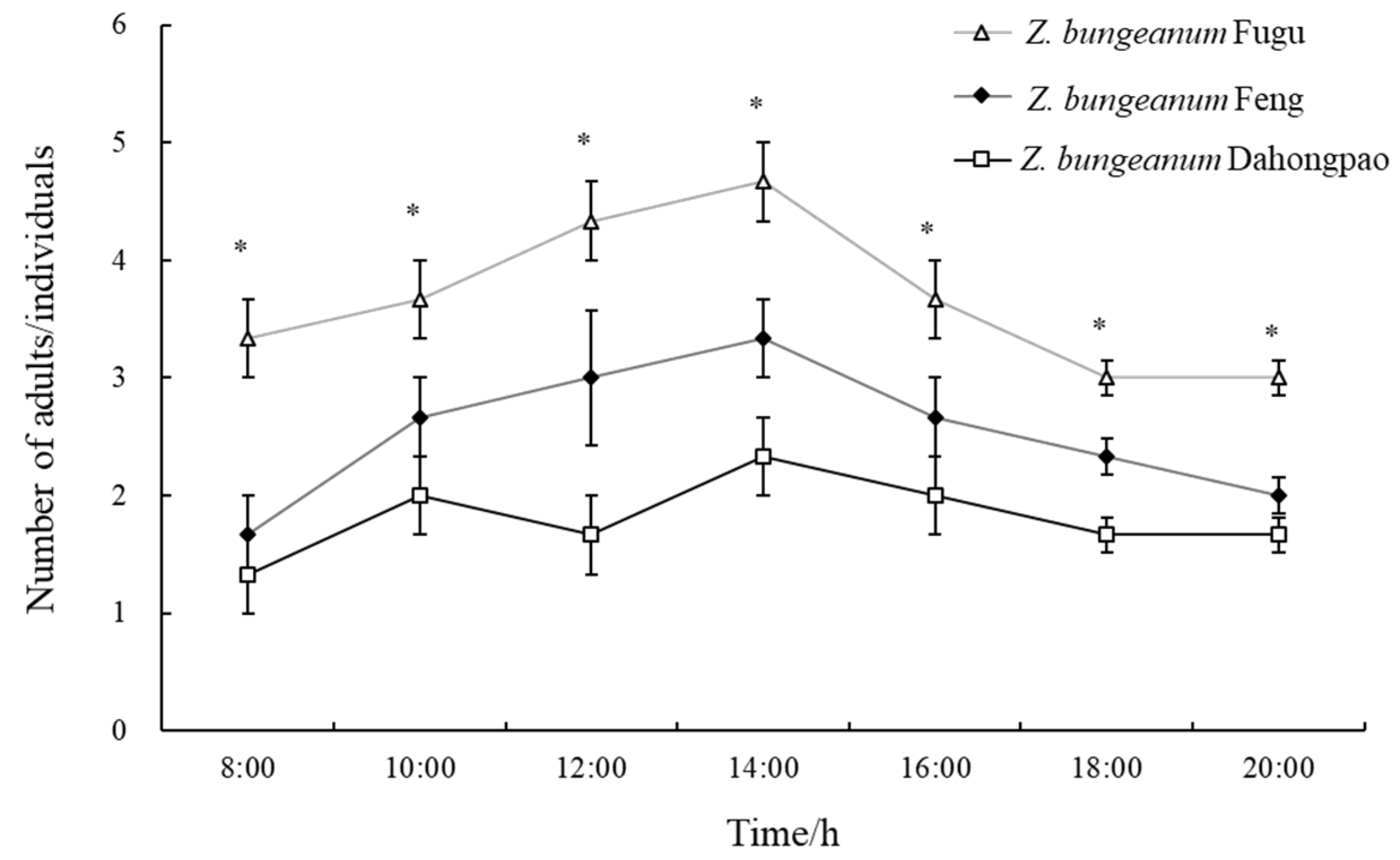
During the observation period from 08:00 to 20:00, the number of A. zanthoxylumi adults resting on leaves differed significantly among the three Z. bungeanum varieties (Figure 1). The number of adults resting on Z. bungeanum Fugu leaves was the highest and was significantly higher than that on Z. bungeanum Feng and Z. bungeanum Dahongpao leaves (p < 0.05), while the fewest adults were observed on Z. bungeanum Dahongpao leaves. Throughout the observation period, the number of adults resting on both Z. bungeanum Fugu and Z. bungeanum Feng leaves exhibited a similar pattern, first increasing and then decreasing, with the highest activity observed at 14:00. These results indicated that A. zanthoxylumi adults showed a clear preference for Z. bungeanum Fugu leaves over the other two varieties.

3.2. Feeding of A. zanthoxylumi on Z. bungeanum Leaves

3.2.1. Relationship Between Leaf Area and Mass

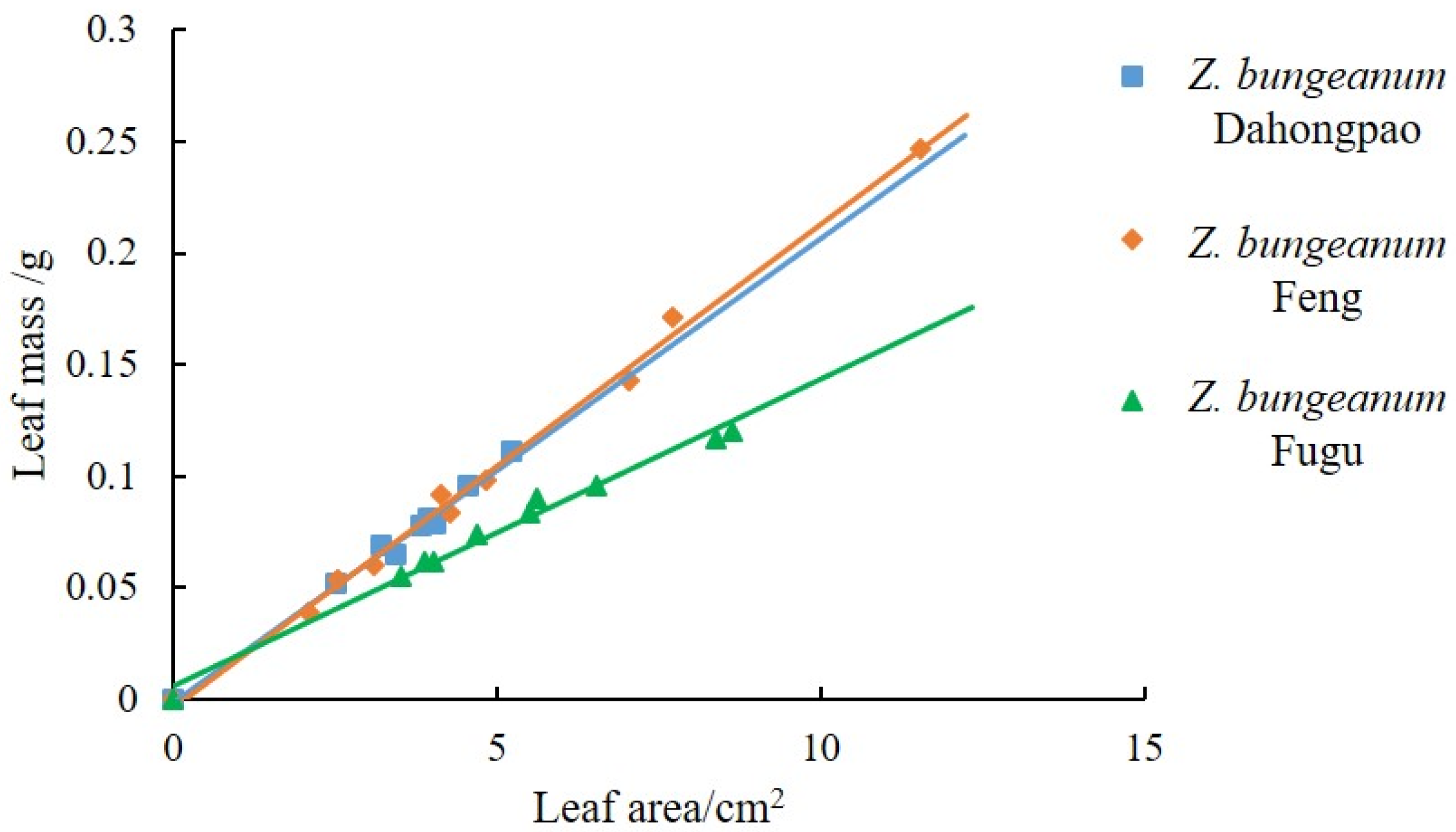
A significant positive linear relationship was observed between leaf area and leaf mass for all three Z. bungeanum varieties (Figure 2). The regression equations were as follows: Z. bungeanum Dahongpao: Y = 0.0208X − 0.0012 (R2 = 0.9895); Z. bungeanum Feng: Y = 0.0217X − 0.0036 (R2 = 0.9956); Z. bungeanum Fugu: Y = 0.0137X + 0.0063 (R2 = 0.9868). These results demonstrated that as leaf area increases, leaf mass also increases steadily. The relationship between leaf area and mass varies among different varieties, with Z. bungeanum Fugu leaves exhibiting the smallest increase in mass.

3.2.2. Feeding Under No-Choice Conditions

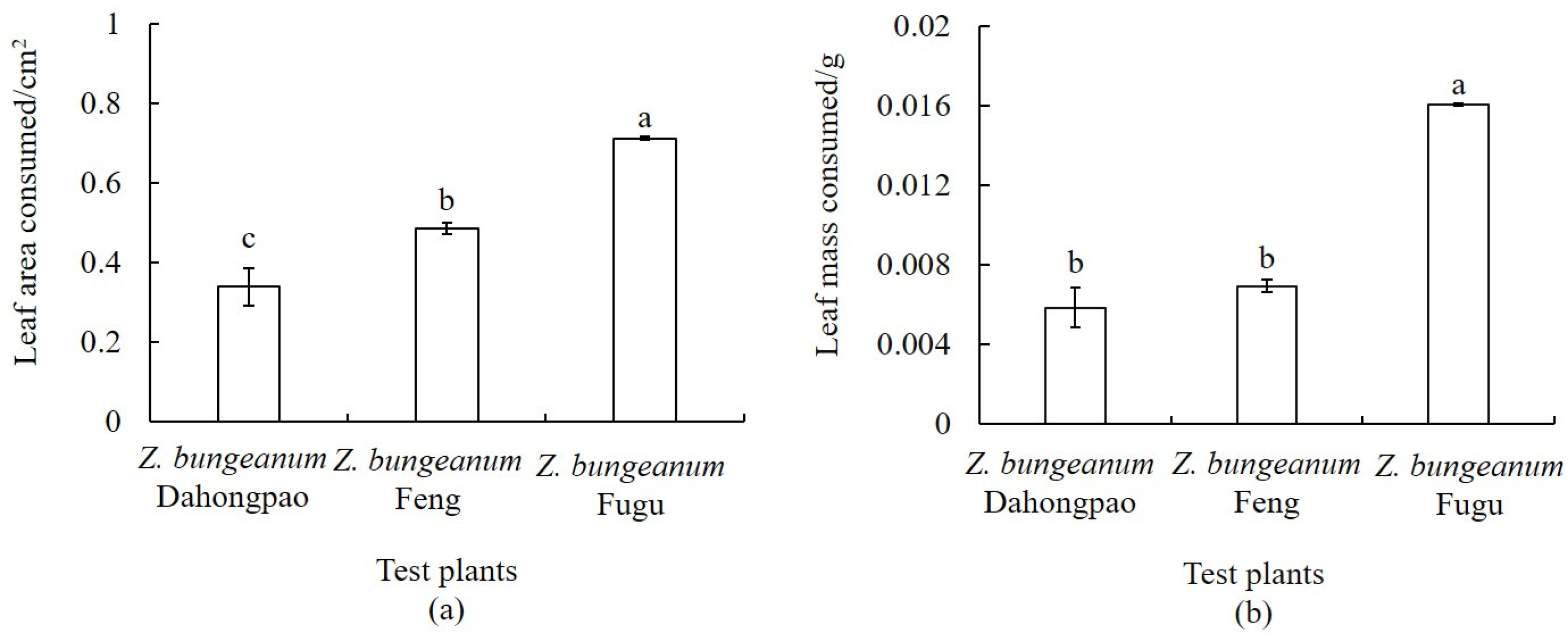
Under no-choice conditions, the feeding area of A. zanthoxylumi adults differed significantly among the three Z. bungeanum varieties—Z. bungeanum Dahongpao, Z. bungeanum Feng, and Z. bungeanum Fugu (Figure 3a, p < 0.05). Adults consumed the largest leaf area of Z. bungeanum Fugu (0.7127 ± 0.0031 cm2), which was significantly higher than that of Z. bungeanum Feng (0.4857 ± 0.0145 cm2) and Z. bungeanum Dahongpao (0.3393 ± 0.0473 cm2). Based on the linear regression relationship between leaf area and leaf mass (Figure 3b), the corresponding feeding mass was calculated. The results showed that Z. bungeanum Fugu leaves also exhibited the highest feeding mass (0.0161 ± 0.0001 g), significantly exceeding that of Z. bungeanum Feng and Z. bungeanum Dahongpao, while no significant difference was observed between Z. bungeanum Feng (0.0069 ± 0.0003 g) and Z. bungeanum Dahongpao (0.0059 ± 0.0010 g) (p > 0.05).

3.2.3. Feeding Under Dual-Choice Conditions

Under dual-choice conditions, significant differences in both feeding area and feeding mass were observed between the two host varieties within each pairwise combination (p < 0.05). As shown in Table 1, in terms of feeding area, adults exhibited a significantly larger feeding area on Z. bungeanum Fugu than on Z. bungeanum Feng and Z. bungeanum Dahongpao, while the feeding area on Z. bungeanum Feng (2.64 ± 0.11 cm2) was also significantly greater than that on Z. bungeanum Dahongpao (1.50 ± 0.22 cm2). Regarding feeding mass, adults showed a consistent pattern of selectivity. The feeding mass on Z. bungeanum Fugu leaves was significantly higher than that on Z. bungeanum Feng (0.037 ± 0.003 g) and Z. bungeanum Dahongpao (0.023 ± 0.003 g). Within the Z. bungeanum Feng × Z. bungeanum Dahongpao combination, adults consumed significantly more leaf mass from Z. bungeanum Feng (0.054 ± 0.002 g) than from Z. bungeanum Dahongpao (0.030 ± 0.005 g).

3.3. Composition and Relative Contents of Volatiles in Z. bungeanum Leaves

A total of 39 major volatile compounds were identified from the leaves of the three Z. bungeanum varieties (Table 2), including alcohols, alkenes, aldehydes, alkanes, esters, ketones, and naphthalenes. Six volatiles were detected in all three varieties, namely linalool, sabinene, myrcene, β-caryophyllene, (−)-β-pinene, and γ-terpinene, and their relative contents differed significantly (p < 0.05). Among them, Z. bungeanum Dahongpao exhibited significantly higher relative contents of linalool (20.11%), sabinene (8.89%), and γ-terpinene (0.65%) than Z. bungeanum Feng and Z. bungeanum Fugu. The relative content of myrcene in Z. bungeanum Feng (6.91%) was significantly greater than that in Z. bungeanum Fugu, whereas β-caryophyllene was most abundant in Z. bungeanum Fugu, significantly exceeding that in Z. bungeanum Dahongpao and Z. bungeanum Feng.
Moreover, distinctive constituents were present in the volatiles of all three Z. bungeanum varieties. The unique compounds detected in Z. bungeanum Dahongpao included linalyl acetate, (+)-α-pinene, trans-3-hexen-1-ol, α-terpineol and bicyclo[3.1.0]hex-2-ene. Z. bungeanum Fugu exhibited seventeen unique compounds, such as (−)-α-pinene, γ-terpinene and (E)-4-hexen-1-ol. Z. bungeanum Feng contained only one unique compound, germacrene D. Although the three varieties shared a certain degree of similarity in the major volatile components, they differed markedly in their relative contents and the presence of variety-specific compounds.

3.4. Factor Analysis of Volatiles in Z. bungeanum Leaves

To characterize the volatile compounds among different Z. bungeanum varieties, factor analysis was performed on the leaf volatile compounds of Z. bungeanum Fugu, Z. bungeanum Dahongpao, and Z. bungeanum Feng. Two factors were extracted, accounting for 94.40% of the total variance (Table 3), indicating that the two factors effectively captured the dominant information in the volatile dataset. Factor 1 explained 66.53% of the total variance, with twenty-eight compounds exhibiting strong contributions (absolute loadings > 0.7). Among these, (−)-limonene, (−)-α-pinene, α-muurolene, (−)-α-cubebene, and (+)-aromadendrene showed the highest loading values, at 0.961, 0.960, 0.960, 0.960, and 0.960, respectively. The lowest loading values were observed for terpinyl acetate, (+)-dipentene, myrcene, (1R)-(+)-α-pinene, and cineole, with values of −0.969, −0.968, −0.965, −0.884, and −0.872, respectively. Factor 2 explained 27.87% of the total variance and included nine major contributing volatiles (absolute loadings > 0.7). Bicyclo[3.1.0]hex-2-ene, linalyl acetate, sabinene, α-terpineol, and (+)-α-pinene exhibited the highest loading values, at 0.968, 0.958, 0.956, 0.955, and 0.953, respectively. In contrast, α-humulene and germacrene D showed the lowest loading values, measured at −0.699 and −0.682, respectively. The volatile components constituting each factor exhibited significant score differences across the three varieties. Specifically, within Factor 1 and Factor 2, the volatile components with the highest contributions originated from Z. bungeanum Fugu and Z. bungeanum Dahongpao, respectively.
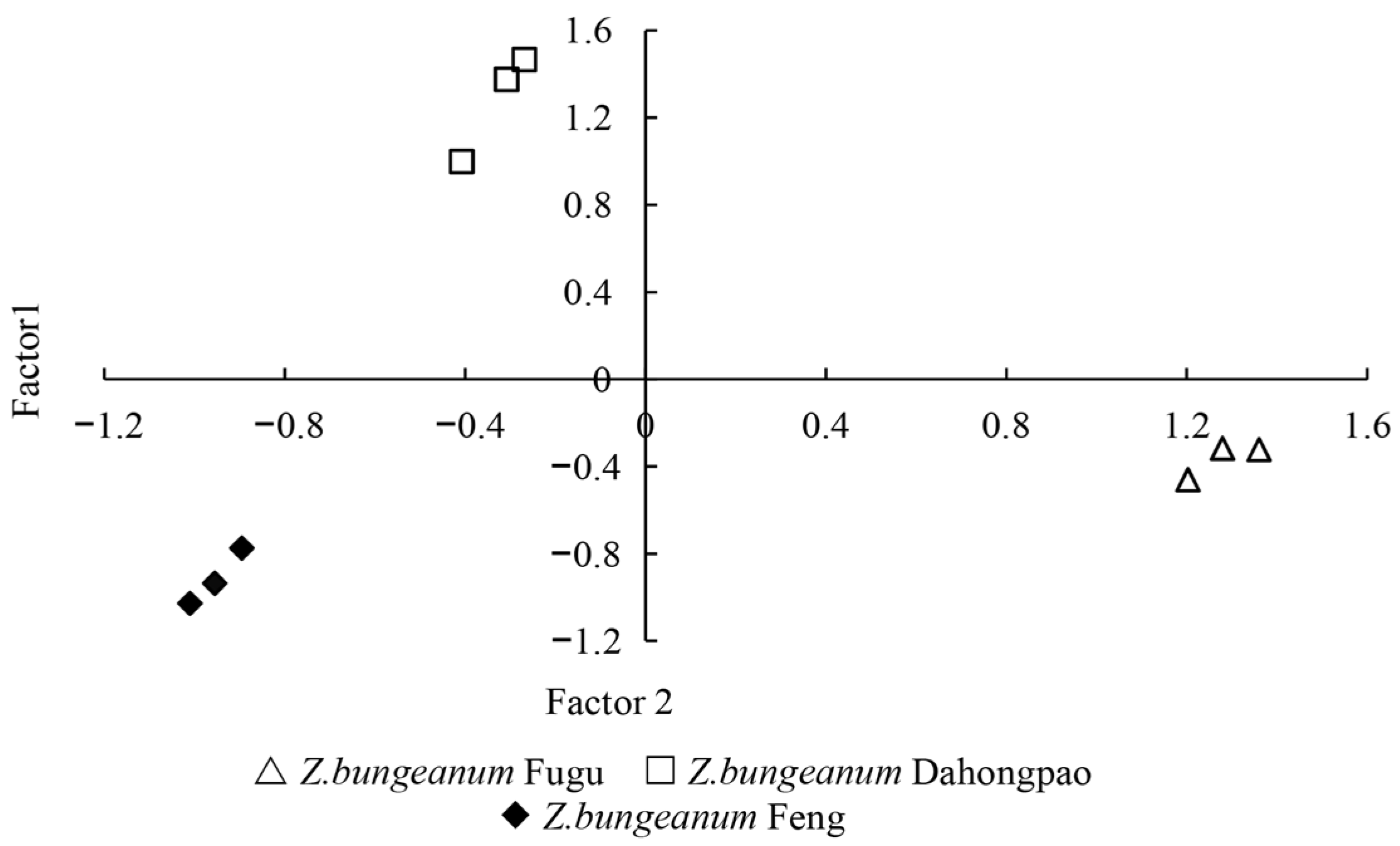
A two-dimensional scatter plot based on the scores of Factor 1 and Factor 2 (Figure 4) revealed a clear differentiation in the volatile compounds among the three Z. bungeanum varieties. Z. bungeanum Fugu clustered in the fourth quadrant and exhibited the highest scores on Factor 1 (1.28 ± 0.08 a), indicating that its characteristic volatiles were predominantly associated with the components represented by this factor. Z. bungeanum Dahongpao was distributed in the second quadrant and showed the highest scores on Factor 2 (1.28 ± 0.25 a). In contrast, Z. bungeanum Feng was positioned in the third quadrant, displaying negative scores on both Factor 1 and Factor 2 (−0.95 ± 0.06 c, −0.91 ± 0.13 b), suggesting relatively weak associations with the volatile components represented by either factor. Overall, the volatile compounds of Z. bungeanum Fugu differed markedly from those of the other two varieties, reflecting its distinct chemical composition.

3.5. PLS-DA of Volatiles in Z. bungeanum Leaves

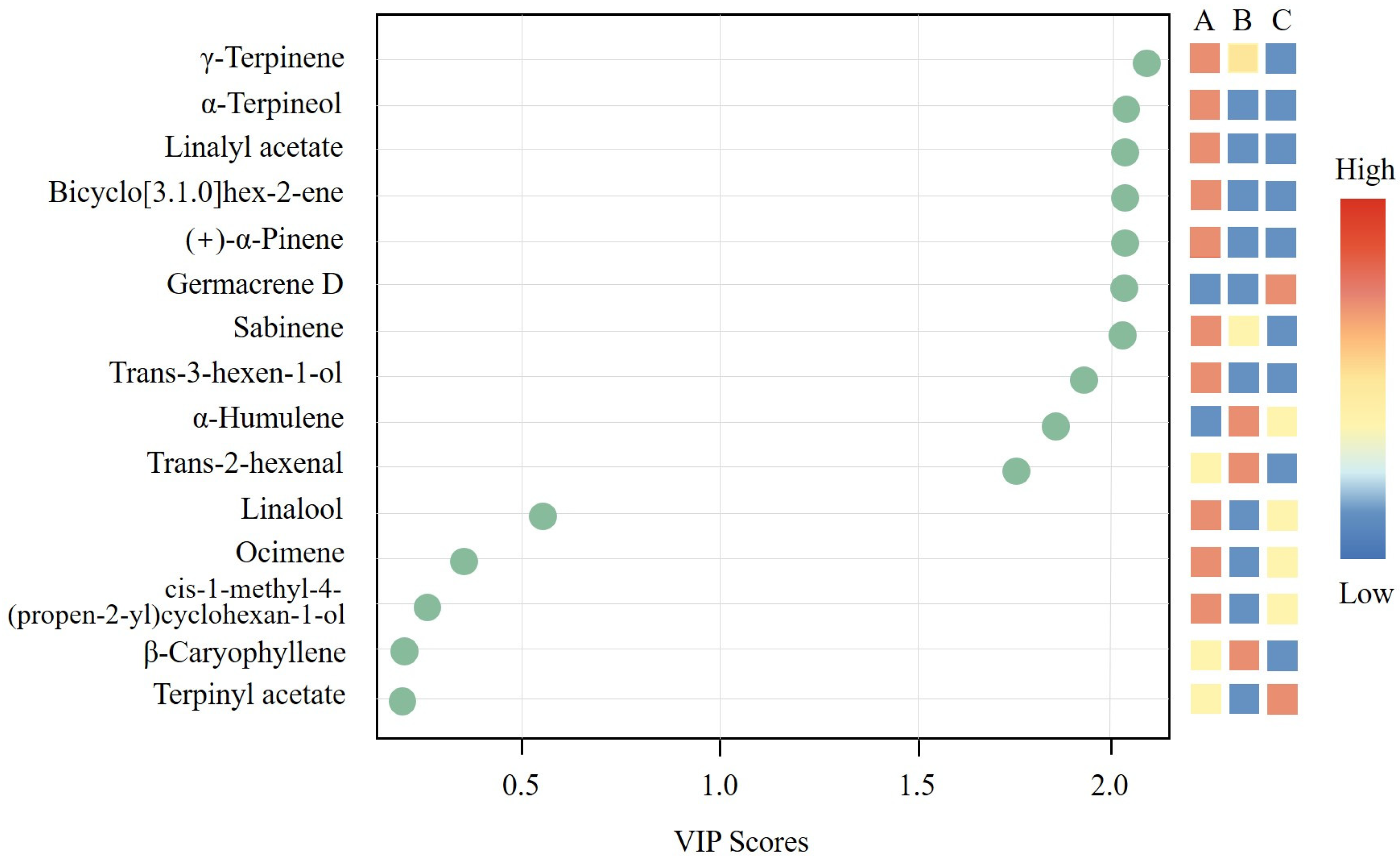
To further verify the differences in volatile organic compounds among the three Z. bungeanum varieties, PLS-DA was conducted (Figure 5). The model clearly separated the three Z. bungeanum varieties, indicating significant differences in the volatile compound composition among the varieties. Based on the variable importance in projection (VIP) scores, ten compounds with VIP values greater than 1.0 were identified as key contributors to varietal discrimination. Among these, γ-terpinene, α-terpineol, linalyl acetate, bicyclo[3.1.0]hex-2-ene, and (+)-α-pinene exhibited the highest VIP values and thus represent the major chemical markers distinguishing the three Z. bungeanum varieties.

4. Discussion

The role of plant VOCs in mediating host selection and feeding preferences of insects has been widely documented in multiple Agrilus species. For instance, adults of A. mali exhibited distinct preferences among four Rosaceae host species, showing the highest frequency of selection and feeding on Malus halliana [24]. Variations in the proportion of host-specific volatiles have been proposed as a key factor driving its selective feeding behavior. Similarly, A. planipennis adults demonstrated pronounced feeding preferences among different Fraxinus varieties, with resistant Fraxinus mandshurica leaves containing higher concentrations of 11 VOCs compared to the susceptible Fraxinus pennsylvanica [26]. Collectively, these results underscore the crucial role of host plant volatiles in governing insect host selection and feeding preferences. Further studies have demonstrated that plant volatiles exert a key regulatory influence on host recognition, orientation, and feeding behaviors across a wide range of phytophagous insects [13,23,27].
Therefore, investigating the relationship between the feeding preferences of A. zanthoxylumi and host-plant VOCs is important for identifying key semiochemicals involved in host discrimination and for developing effective plant-derived attractants. In this study, A. zanthoxylumi adults exhibited a clear feeding preference among the three Z. bungeanum varieties, with significantly higher selection frequency and feeding amount on Z. bungeanum Fugu than on Z. bungeanum Feng or Z. bungeanum Dahongpao. This result is consistent with previous observations and suggests that differences in the volatile compositions among Z. bungeanum varieties may play an important role in shaping host preferences [6].
To identify the volatiles potentially responsible for this differential host selection, leaf VOCs from the three Z. bungeanum varieties were extracted and analyzed under the experimental conditions used in this study. A total of 39 major volatiles were identified, including six compounds shared among all varieties but differing significantly in their relative contents. Each variety also exhibited distinct volatile profiles, with Z. bungeanum Fugu containing 17 unique compounds, such as (−)-α-pinene, (E)-4-hexen-1-ol, and (−)-limonene; Z. bungeanum Dahongpao containing five unique volatiles, including (+)-α-pinene, linalyl acetate, and α-terpineol; and Z. bungeanum Feng producing only one exclusive component, germacrene D. These results indicate pronounced inter-varietal differences in leaf volatile composition and relative abundance. It should be noted that the present study was designed to compare volatile profiles among varieties and did not aim to distinguish between constitutively emitted compounds and those potentially induced by biotic stimuli. Further studies incorporating controlled herbivore-induced or simulated damage treatments would be valuable for clarifying the inducibility and ecological roles of these volatile compounds.
Previous studies have demonstrated that (E)-4-hexen-1-ol significantly enhances the olfactory response of P. xylostella to host plant odors, either alone or in combination with other green-leaf volatiles [30]. Low concentrations of (−)-limonene exerted a strong attractant effect on Nilaparvata lugens, increasing field trap catches by 1.8-fold within 24 h. Furthermore, (−)-α-pinene has been shown to attract several species of bark beetles, whereas the presence of (+)-α-pinene reduces its trapping efficiency [31,32]. Taken together, we hypothesize that the unique volatile components identified in Z. bungeanum Fugu leaves may play a key attractive role in the host selection and feeding processes of A. zanthoxylumi, thereby resulting in the stronger feeding preference observed for this variety.
Factor analysis further confirmed the systematic differences in volatile compositions among the three Z. bungeanum varieties. As a widely used multivariate statistical method, factor analysis can reveal the structural characteristics of complex volatile datasets while retaining the major information, and the construction of composite factors allows for the identification of potential associations among compounds [33,34]. In this study, the two-dimensional scatter plot indicated clear differentiation of the three varieties within the composite factor space, reflecting inherent differences in their overall volatile compounds.
Z. bungeanum Fugu samples clustered in the fourth quadrant and exhibited the highest scores on Factor 1. Factor 1 comprised multiple monoterpenes and sesquiterpenes, which play critical roles in insect host-location and recognition; their overall content and combination patterns often determine the strength of host-plant chemical cues perceived by insects [35,36]. The high loading of Z. bungeanum Fugu on Factor 1 suggests that its volatile composition aligns closely with this principal component, potentially forming a chemical background that is more easily recognized by A. zanthoxylumi, consistent with the stronger feeding preference observed. In contrast, Z. bungeanum Dahongpao exhibited the highest scores on Factor 2, indicating that its volatile composition is more strongly influenced by the chemical dimension represented by this factor. Although Factor 2 explained a smaller proportion of the total variance than Factor 1, it encompassed several volatiles known to play ecological roles in plant–insect interactions [37,38], suggesting that host recognition in Z. bungeanum Dahongpao may depend on a more specific combination of chemical cues.
PLS-DA analysis can identify key chemical constituents responsible for differentiating varieties under conditions of multivariate correlation, thereby effectively screening volatiles that contribute significantly to varietal discrimination [20,29]. In this study, among the key volatiles with VIP scores greater than 1.0, γ-terpinene, α-terpineol, and linalyl acetate played particularly important roles in distinguishing the three Z. bungeanum varieties. Notably, γ-terpinene exhibited the highest VIP value. As a common volatile across all three varieties, γ-terpinene was most abundant in Z. bungeanum Dahongpao, moderately present in Z. bungeanum Fugu, and least abundant in Z. bungeanum Feng. Combined with the feeding experiment results, it is suggested that γ-terpinene may enhance the feeding preferences of A. zanthoxylumi at moderate concentrations, whereas excessively high or low concentrations may reduce its attractiveness. Previous studies have shown that γ-terpinene can elicit significant antennal responses in Dendrothrips minowai and Plutella xylostella during electroantennogram (EAG) recordings; however, it does not necessarily act as an attractant in behavioral experiments, indicating that electrophysiological responses do not always correlate with behavioral outcomes and that its effect may depend on concentration or compound ratios [39,40].
Furthermore, α-terpineol has been reported to act synergistically with other host-plant volatiles, enhancing the orientation response of Optatus palmaris adults [41]. In Bombus terrestris, the response to α-terpineol exhibited a typical concentration-dependent effect, with attraction observed at low to moderate concentrations and repulsion at high concentrations [42]. The activity of linalyl acetate is also influenced by the odor background; it can elicit feeding preference in Antheraea assamensis larvae and has been identified as a key compound associated with orientation behavior in Vespa velutina, with its attractiveness depending on the composition and ratio of background plant volatiles [43,44]. Collectively, these results indicate that these key compounds do not function solely as repellents or attractants, but instead act as modulators of host-recognition cues, with their effects depending on release concentration, component ratios, and the context of co-occurring volatiles [14,15,17,45,46,47].
Overall, the feeding preferences of A. zanthoxylumi for different Z. bungeanum varieties were closely linked to the emission of characteristic leaf volatiles. This study established a clear relationship between host plant chemical cues and the feeding choice of A. zanthoxylumi, providing a theoretical basis for the application of host-derived volatiles in pest monitoring and behavioral regulation. However, the present work focused solely on compositional differences in leaf volatiles and did not experimentally validate the behavioral or electrophysiological activity of individual compounds. Future research should integrate EAG, gas chromatography–electroantennographic detection (GC-EAD), and behavioral experiments to elucidate the functional roles of key VOCs identified in this study, and further combine molecular approaches to validate the involvement of olfactory-related genes in mediating host recognition and feeding preference of A. zanthoxylumi. Furthermore, optimization of compound mixtures and ratios may facilitate the identification of efficient and stable plant-derived attractants or repellents, contributing to the development of environmentally sustainable control strategies for A. zanthoxylumi.

5. Conclusions

Our study demonstrated that A. zanthoxylumi adults exhibited pronounced feeding preferences among the three Z. bungeanum varieties, with both host-selection frequency and feeding amount being highest on Z. bungeanum Fugu. Although six volatile compounds were shared across all varieties, their relative abundances differed significantly, and each variety possessed unique components, among which Z. bungeanum Fugu contained as many as 17 exclusive volatiles. Both factor analysis and PLS-DA revealed clear differentiation in the volatiles of the three varieties. Integrating the behavioral data with the chemical analyses, we inferred that host selection in A. zanthoxylumi may be driven by key volatiles characterized by high abundance and pronounced inter-varietal differences, such as (E)-4-hexen-1-ol, (−)-limonene, (−)-α-pinene, γ-terpinene, α-terpineol, and linalyl acetate. Further research is required to elucidate the specific functions of these host-related volatiles, thereby enabling the development of environmentally friendly control strategies targeting A. zanthoxylumi. This will provide a scientific basis for the sustainable management of Z. bungeanum plantations.

Author Contributions

Conceptualization, Y.Q. and J.M.; methodology, Y.Q. and N.J.; software, Y.Q. and X.L.; validation, Y.Q. and Y.W. (Yuting Wu); formal analysis, Y.Q.; investigation, Y.Q. and Y.B.; resources, Y.Q. and J.Y.; data curation, Y.Q. and Y.W. (Yanan Wang); writing—original draft preparation, Y.Q.; writing—review and editing, Y.Q., Y.Z. and B.L.; visualization, Y.Q.; supervision, Y.Q.; project administration, Y.Q. and S.X.; funding acquisition, Y.Q., J.M. and S.X. All authors have read and agreed to the published version of the manuscript.

Funding

This research was funded by the “Green Pollution Control Technology Based on Chemical Pheromone in Agrilus zanthoxylum”, The National Public Welfare Forestry projects in China (Grant No. 201504324); the Xi’an Innovation Strong Foundation Plan—Agricultural technology research and development projects “Lantian County’s Development and application technology of pheromone lure for Agrilus zanthoxylum” (No. 2022JH JSYF-0261); the 2024 Shaanxi Forestry Science and Technology Innovation Special Project “Green Control Technology for Agrilus zanthoxylum Using Chemical Pheromones” (SXLK2024-0213); and the Shaanxi Provincial Department of Science and Technology will support Yangling in its innovation and development of science and technology projects in 2025, “Green Control and Demonstration of Pine WoodBorer Pests Based on Chemical Semiochemicals” (2025ZY-QYCXYL-07).

Data Availability Statement

The original contributions presented in this study are included in the article. Further inquiries can be directed to the corresponding author.

Conflicts of Interest

The authors declare no conflicts of interest.

References

  1. Huang, X.Y. Molecular Species Identification of the Genus Agrilus (Coleoptera: Buprestidae) in China. Master’s Thesis, China West Normal University, Nanchong, China, 2024. [Google Scholar] [CrossRef]
  2. Jendek, E.; Nakládal, O. Taxonomic, nomenclatural, distributional and biological study of the genus Agrilus (Coleoptera: Buprestidae). J. Insect Biodivers. 2016, 2, 1–57. [Google Scholar] [CrossRef]
  3. Yang, P.; Gong, X.F.; Chen, D.; Guo, L.; Wang, Y.L.; Lv, S.J.; Xie, S.A. cDNA cloning and prokaryotic expression of chemosensory protein AzanCSP3 from Agrilus zanthoxylumi. J. Agric. Biotechnol. 2020, 28, 302–312. [Google Scholar] [CrossRef]
  4. Qi, Y.; Gao, J.X.; Jiang, N.; Guo, L.; Xie, S.A.; Lv, S.J.; Cheng, H.G. Cloning and expression analysis of chemosensory protein AzanCSP4 from Agrilus zanthoxylumi (Coleoptera: Buprestidae). J. Entomol. Sci. 2024, 59, 247–257. [Google Scholar] [CrossRef]
  5. Gao, X.J.; Guo, L.; Chen, D.; Jia, R.H.; Zhang, Z.T.; Xie, S.A.; Lv, S.J. Three-dimensional model prediction and molecular docking with host volatiles of chemosensory protein AzanCSP7 in jewel beetle (Agrilus zanthoxylumi). J. Agric. Biotechnol. 2023, 31, 1238–1251. [Google Scholar] [CrossRef]
  6. Wang, Y.L. Electroantennogram and Behavioral Responses of Agrilus zanthoxylumi to Volatiles in Host Fruits During High-Risk Period. Master’s Thesis, Northwest A&F University, Yangling, China, 2019. [Google Scholar]
  7. Liu, S.Y.; Jiang, N.; Qi, Y.; Zhao, Y.Y.; Bai, Y.Y.; Wang, Y.P.; Xie, S.A. Influencing factors of the phototactic behaviour of pepper buprestid beetle Agrilus zanthoxylumi and the structure of compound eyes. J. Plant Protect. 2025, 52, 418–427. [Google Scholar] [CrossRef]
  8. Ji, B.; Zhang, Y.H.; Yin, H.; Zhang, Y.X.; Sun, X.Y.; Duan, C.J.; Xue, T. A review of biological control of pests and diseases in pepper. Shaanxi Agric. Sci. 2020, 66, 72–75, 104. [Google Scholar] [CrossRef]
  9. Liu, H.R.; Wang, Y.J.; Li, L.F.; Zhou, Y.W.; Ma, Z.Q.; Lei, P. Screening and evaluation of application techniques of biopesticides for controlling Agrilus zanthoxylumi and gummosis of pepper. Chin. J. Biol. Control 2023, 39, 1482–1487. [Google Scholar] [CrossRef]
  10. Guo, L.; Chen, D.; Jia, R.H.; Gao, X.J.; Zhang, Z.T.; Xie, S.A.; Lv, S.J. Cloning and expression of odorant-binding protein AzanOBP5 from Agrilus zanthoxylumi. J. Plant Protect. 2023, 50, 81–90. [Google Scholar] [CrossRef]
  11. Chen, D.; Guo, L.; Xie, S.A.; Gao, X.J.; Jia, R.H.; Zhang, Z.T.; Qi, Y.; Lv, S.J. Cloning and Expression Analysis of Glutathione S-transferase Genes from Agrilus zanthoxylumi (Coleoptera: Buprestidae). J. Entomol. Sci. 2022, 57, 173–181. [Google Scholar] [CrossRef]
  12. Wang, S.J. Damage and control of the pepper buprestid (Agrilus sp.). China Rural. Sci. Technol. 1997, 2, 20–21. [Google Scholar]
  13. Huang, Q.T.; Han, X.Q.; Zhang, G.J.; Zhu, K.Y.; Cheng, W.N. Plant volatiles mediate host selection of Sitodiplosis mosellana (Diptera: Cecidomyiidae) among wheat varieties. J. Agric. Food Chem. 2022, 70, 10466–10475. [Google Scholar] [CrossRef]
  14. Bouwmeester, H.; Schuurink, R.C.; Bleeker, P.M.; Schiestl, F. The role of volatiles in plant communication. Plant J. 2019, 99, 617–628. [Google Scholar] [CrossRef]
  15. Zhou, S.Q.; Jander, G. Molecular ecology of plant volatiles in interactions with insect herbivores. J. Exp. Bot. 2022, 73, 449–462. [Google Scholar] [CrossRef]
  16. Yao, Y.J.; Xue, D.; Yang, C.J. Advances on the relationship between insect behavior and infochemical compounds. J. Huazhong Agric. Univ. 2004, 49, 478–482. [Google Scholar] [CrossRef]
  17. Zakir, A.; Bengtsson, M.; Sadek, M.M.; Hansson, B.S.; Witzgall, P.; Anderson, P. Specific response to herbivore-induced de novo synthesized plant volatiles provides reliable information for host plant selection in a moth. J. Exp. Biol. 2013, 216, 3257–3263. [Google Scholar] [CrossRef]
  18. Ouyang, Y.H.; Liu, Y.F.; Han, Y.M.; Cheng, S.; Wang, X.M.; Li, Y.L. Research progress on the release characteristics of biogenic volatile organic compounds and its influencing factors. For. Ecol. Sci. 2023, 38, 375–384. [Google Scholar] [CrossRef]
  19. Jia, Z.F.; Qiu, Y.X.; Zhao, Y.C.; Yan, X.Y.; Xue, M.; Zhao, H.P. Advances of research on repellency and attraction of plant volatiles to insects. Shandong Agric. Sci. 2022, 54, 164–172. [Google Scholar] [CrossRef]
  20. Zheng, S.; Li, X.H.; Li, Y.H.; Liu, D.G. Preferences of the rape stem weevil Ceuthorrhynchus asper for plant volatiles from different oilseed rape varieties. Chin. J. Appl. Entomol. 2023, 60, 602–612. [Google Scholar] [CrossRef]
  21. Pei, Y.H.; Kong, F.; Han, G.H.; Sun, L.G.; Sun, X.G. The research development on the feeding behavior of insects. J. Shandong For. Sci. Technol. 2007, 37, 97–101. [Google Scholar] [CrossRef]
  22. Abraham, J.; Giacomuzzi, V.; Angeli, S. Root damage to apple plants by cockchafer larvae induces a change in volatile signals below- and above-ground. Entomol. Exp. Appl. 2015, 156, 279–289. [Google Scholar] [CrossRef]
  23. Zhang, H.; Li, H.L.; Wang, D.F.; Wu, G.Y.; Wang, Q.S. Effects of Artemisia argyi volatiles on the behavior of the tea green leafhopper (Empoasca onukii) in tea plantations. Chin. J. Appl. Entomol. 2022, 59, 773–784. [Google Scholar] [CrossRef]
  24. Cui, X.N.; Yin, Z.H.; Wang, M.; Liu, D.G.; Liao, S.J.; Xu, Z. Maturation feeding preference of adult Agrilus mali and related host plant leaf volatiles. Sci. Silvae Sin. 2016, 52, 96–106. [Google Scholar] [CrossRef]
  25. Zheng, Y.N.; Shi, Y.; Li, Y.; Fan, L.C.; Wang, J.; Wang, W.T. Feeding preference of Monochamus saltuarius (Coleoptera: Cerambycidae) adults for four host pine trees. Acta Entomol. Sin. 2021, 64, 1478–1482. [Google Scholar] [CrossRef]
  26. Pureswaran, D.S.; Poland, T.M. Host selection and feeding preference of Agrilus planipennis (Coleoptera: Buprestidae) on ash (Fraxinus spp.). Environ. Entomol. 2009, 38, 757–765. [Google Scholar] [CrossRef] [PubMed]
  27. Coll, A.M.V.; Jacobi, V.G.; Fernandez, P.C.; Luft, A.E.; Virla, E.G.; Hill, J.G.; Catalán, C.A.N. Volatiles mediate host-selection in the corn hoppers Dalbulus maidis (Hemiptera: Cicadellidae) and Peregrinus maidis (Hemiptera: Delphacidae). Bull. Entomol. Res. 2019, 109, 633–642. [Google Scholar] [CrossRef]
  28. Staton, T.; Williams, D.T. A meta-analytic investigation of the potential for plant volatiles and sex pheromones to enhance detection and management of Lepidopteran pests. Bull. Entomol. Res. 2023, 113, 725–734. [Google Scholar] [CrossRef]
  29. Silva, D.B.; Weldegergis, B.T.; Van Loon, J.J.A.; Bueno, V.H.P. Qualitative and quantitative differences in herbivore-induced plant volatile blends from tomato plants infested by either Tuta absoluta or Bemisia tabaci. J. Chem. Ecol. 2017, 43, 53–65. [Google Scholar] [CrossRef] [PubMed]
  30. Jayanthi, K.D.P.; Kempraj, V.; Aurade, R. Computational reverse chemical ecology: Prospecting semiochemicals for pest management using in silico approach in Plutella xylostella Linn. Pest Manag. Hortic. Ecosyst. 2016, 22, 20–27. [Google Scholar]
  31. Qiu, C.L.; Li, W.; Wang, L.N.; Wang, S.C.; Falert, S.; Wang, C.; Yu, S.Y.; Abdelkhalek, S.T.; Lu, J.; Lin, Y.J.; et al. Limonene enhances rice plant resistance to a piercing-sucking herbivore and rice pathogens. Plant Biotechnol. J. 2025, 23, 84–96. [Google Scholar] [CrossRef]
  32. Miller, D.R.; Rabaglia, R.J. Ethanol and (−)-α-pinene: Attractant kairomones for bark and ambrosia beetles in the southeastern US. J. Chem. Ecol. 2009, 35, 435–448. [Google Scholar] [CrossRef]
  33. Chen, Y.G. Analyzing blends of herbivore-induced volatile organic compounds with factor analysis: Revisiting “cotton plant, Gossypium hirsutum L., defense in response to nitrogen fertilization”. J. Econ. Entomol. 2013, 106, 1053–1057. [Google Scholar] [CrossRef]
  34. Vita, F.; Taiti, C.; Pompeiano, A.; Bazihizina, N.; Lucarotti, V.; Mancuso, S.; Alpi, A. Volatile organic compounds in truffle (Tuber magnatum Pico): Comparison of samples from different regions of Italy and from different seasons. Sci. Rep. 2015, 5, 12629. [Google Scholar] [CrossRef] [PubMed]
  35. Boncan, D.A.T.; Tsang, S.S.K.; Li, C.; Lee, I.H.T.; Lam, H.M.; Chan, T.F.; Hui, J.H.L. Terpenes and terpenoids in plants: Interactions with environment and insects. Int. J. Mol. Sci. 2020, 21, 7382. [Google Scholar] [CrossRef]
  36. Chiu, C.C.; Bohlmann, J. Mountain pine beetle epidemic: An interplay of terpenoids in host defense and insect pheromones. Annu. Rev. Plant Biol. 2022, 73, 475–494. [Google Scholar] [CrossRef]
  37. Mauchline, A.; Osborne, J.L.; Martin, A.P.; Poppy, G.M. The effects of essential oil volatiles on the behaviour of the pollen beetle Meligethes aeneus. Entomol. Exp. Appl. 2005, 114, 181–188. [Google Scholar] [CrossRef]
  38. Menacer, K.; Hervé, M.; Lapeyre, B.; Vedrenne, M.; Cortesero, A.M. Plant volatiles play differential roles in pre and post alighting phases in a specialist phytophagous insect. Comptes Rendus Chim. 2023, 26, 177–187. [Google Scholar] [CrossRef]
  39. Xiu, C.; Zhang, F.; Pan, H.; Bian, L.; Luo, Z.; Li, Z.; Fu, N.; Cai, X.; Chen, Z. Evaluation of selected plant volatiles as attractants for the stick tea thrip Dendrothrips minowai in the laboratory and tea plantation. Insects 2022, 13, 509. [Google Scholar] [CrossRef]
  40. Zheng, R.; Zhao, J.; Ma, L.; Qie, X.; Yan, X.; Hao, C. Behavioral, electrophysiological, and toxicological responses of Plutella xylostella to extracts from Angelica pubescens. Insects 2023, 14, 613. [Google Scholar] [CrossRef] [PubMed]
  41. Mitchell, R.F.; Ray, A.M.; Hanks, L.M.; Millar, J.G. The common natural products (S)-α-terpineol and (E)-2-hexenol are important pheromone components of Megacyllene antennata (Coleoptera: Cerambycidae). Environ. Entomol. 2018, 47, 1547–1552. [Google Scholar] [CrossRef] [PubMed]
  42. He, Y.; Zhang, J.; Hu, Z.; Cao, Y.; Mayo, K.H.; Liu, E.M. Behavioral responses of the bumblebee Bombus terrestris to volatile compounds from blueberries. Biology 2025, 14, 1570. [Google Scholar] [CrossRef]
  43. Neog, K.; Unni, B.; Ahmed, G. Studies on the influence of host plants and effect of chemical stimulants on the feeding behavior in the muga silkworm, Antheraea assamensis. J. Insect Sci. 2011, 11, 133. [Google Scholar] [CrossRef]
  44. Rodríguez-Flores, M.S.; Diéguez-Antón, A.; Seijo-Coello, M.C.; Escuredo, O. Flora volatile profiles of plants visited by Vespa velutina: A preliminary assessment in the interaction of plant-insect. J. Plant Res. 2025, 138, 807–823. [Google Scholar] [CrossRef]
  45. Bruce, T.J.A.; Wadhams, L.J.; Woodcock, C.M. Insect host location: A volatile situation. J. Insect Sci. 2005, 10, 269–274. [Google Scholar] [CrossRef] [PubMed]
  46. Cha, D.H.; Linn, C.E., Jr.; Teal, P.E.A.; Zhang, A.; Roelofs, W.L.; Loeb, G.M. Eavesdropping on plant volatiles by a specialist moth: Significance of ratio and concentration. PLoS ONE 2011, 6, e17033. [Google Scholar] [CrossRef] [PubMed]
  47. Dai, H.Q.; Han, S.C.; Du, J.W. Progress in studies on behavioural effect of semiochemicals of host plant to insects. J. Environ. Entomol. 2010, 32, 407–414. [Google Scholar] [CrossRef]
Figure 1. Number of Agrilus zanthoxylumi adults (mean ± SE) observed on three Zanthoxylum bungeanum varieties at different time points. Asterisks (*) indicate significant differences between Z. bungeanum Fugu and the other two varieties (Z. bungeanum Feng and Z. bungeanum Dahongpao) at the same time point (one-way ANOVA, p < 0.05).
Insects 17 00088 g001
Figure 2. Linear relationship between leaf area and leaf mass for three Z. bungeanum varieties. Each point represents an individual leaf measurement, with Z. bungeanum Dahongpao (blue squares), Z. bungeanum Feng (orange diamonds), and Z. bungeanum Fugu (green triangles). Separate linear regression lines are fitted for each variety in the corresponding colors.
Insects 17 00088 g002
Figure 3. Feeding performance by A. zanthoxylumi adults (mean ± SE) on three Z. bungeanum varieties under no-choice conditions. (a) Leaf area consumed by adults on three Z. bungeanum varieties. (b) Leaf mass consumed by adults on three Z. bungeanum varieties. Different lowercase letters indicate significant differences in the insects’ feeding among varieties (one-way ANOVA, p < 0.05).
Insects 17 00088 g003
Figure 4. Factor analysis score plot illustrating the distribution patterns of leaf volatiles among the three Z. bungeanum varieties. Triangles indicate Z. bungeanum Fugu, squares indicate Z. bungeanum Dahongpao, and diamonds indicate Z. bungeanum Feng. Factor 1 and Factor 2 together explain the major variance in volatile compositions.
Insects 17 00088 g004
Figure 5. Comparison of the top 15 volatiles with the highest VIP scores identified by partial least squares discriminant analysis (PLS-DA) among the three Z. bungeanum varieties. A represents Z. bungeanum Dahongpao; B represents Z. bungeanum Fugu; C represents Z. bungeanum Feng. Green circles indicate the VIP scores of individual volatile compounds, with higher values reflecting greater contributions to the discrimination among varieties. The colored blocks on the right represent the relative contents of each compound across the three varieties.
Insects 17 00088 g005
Table 1. Feeding performance of A. zanthoxylumi adults (mean ± SE) on three Z. bungeanum varieties under dual-choice conditions. For each variety pair, asterisks (*) indicate significant differences in feeding area or feeding mass between the two varieties (Mann–Whitney U test, p < 0.05).
Z. bungeanum Variety PairZ. bungeanum VarietyFeeding Area (cm2)Feeding Mass (g)
Fugu × FengFugu3.65 ± 0.23 *0.056 ± 0.003 *
Feng1.89 ± 0.120.037 ± 0.003
Fugu × DahongpaoFugu3.26 ± 0.82 *0.051 ± 0.011 *
Dahongpao1.15 ± 0.120.023 ± 0.003
Feng × DahongpaoFeng2.64 ± 0.11 *0.054 ± 0.002 *
Dahongpao1.50 ± 0.220.030 ± 0.005
Table 2. Comparison of volatiles and relative contents (mean ± SD) in leaves of three varieties in Z. bungeanum. “—” indicates that the compound was detected but its relative content was below 0.5%, while “——” indicates that the compound was not detected. Different lowercase letters in the same row indicate significant differences in the relative content of the same compound among different varieties of Z. bungeanum (one-way ANOVA, p < 0.05).
Compound NameRelative Content %
Z. bungeanum DahongpaoZ. bungeanum FengZ. bungeanum Fugu
Linalool20.11 ± 1.29 a9.76 ± 2.07 b0.96 ± 0.06 c
Sabinene8.89 ± 0.95 a5.10 ± 0.21 b5.22 ± 0.59 b
Myrcene6.19 ± 0.58 a6.91 ± 1.08 a0.53 ± 0.05 b
β-Caryophyllene1.57 ± 0.74 b1.20 ± 0.45 b12.85 ± 0.96 a
(−)-β-Pinene1.12 ± 0.13 a0.59 ± 0.05 b1.23 ± 0.10 a
γ-Terpinene0.65 ± 0.08 a0.41 ± 0.05 b0.50 ± 0.05 b
α-Humulene0.75 ± 0.24 b1.56 ± 0.04 a
Δ-Cadinene4.81 ± 0.23 a
Cineole27.48 ± 1.01 a21.02 ± 1.19 b——
Germacrene D1.62 ± 0.37 a——
Tricyclo[4.4.0.02,7]decane,1-methyl-3-methylene-8-(1-methylethyl)-, (1R,2S,6S,7S,8S)-rel-————15.49 ± 2.14 a
(+)-Dipentene5.25 ± 0.67 b8.97 ± 1.18 a——
(1R)-(+)-α-Pinene4.90 ± 0.76 a3.99 ± 0.51 a——
Terpinyl acetate2.99 ± 0.17 b5.66 ± 0.40 a——
Linalyl acetate7.68 ± 0.77 a————
(−)-α-Pinene——6.40 ± 0.16 a
(Z)-3,7-Dimethyl-1,3,6-octatriene————5.59 ± 0.20 a
(+)-α-Pinene4.90 ± 0.76 a————
γ-Elemene————4.73 ± 0.23 a
Bicyclo[8.1.0]undeca-2,6-diene————3.36 ± 0.31 a
Ocimene2.12 ± 0.21 a0.90 ± 0.19 b——
(E)-4-Hexen-1-ol————2.87 ± 0.70 a
1-Hexanol0.69 ± 0.34 b——1.82 ± 0.69 a
α-Terpineol1.78 ± 0.08 a——
(−)-Terpinen-4-ol1.24 ± 0.08 a0.87 ± 0.09 b——
cis-1-methyl-4-(propen-2-yl)cyclohexan-1-ol0.88 ± 0.04 a0.51 ± 0.07 b——
Naphthalene,1,2,3,4,4a,5-hexahydro-4,7-dimethyl-1-(1-methylethyl)-, (1s,4s,4as)-————1.51 ± 0.76 a
α-Muurolene——1.50 ± 0.04 a
Naphthalene,1,2,3,4-tetrahydro-1,6-dimethyl-4-(1-methylethyl)-, (1r,4r)-rel-————1.33 ± 0.13 a
β-Elemene——0.72 ± 0.23 a
Trans-3-hexen-1-ol1.05 ± 0.75 a————
Trans-2-hexenal————1.03 ± 0.24 a
(−)-α-Cubebene————0.75 ± 0.02 a
(+)-Aromadendrene————0.75 ± 0.02 a
(−)-Limonene————0.74 ± 0.05 a
Bicyclo[3.1.0]hex-2-ene0.53 ± 0.04 a——
Naphthalene,1,2,3,4,4a,5,6,7-octahydro-4-methyl-7-methylene-1-(1-methylethyl)-, (1S,4S,4aR)-————0.70 ± 0.04 a
Naphthalene,1,2,4a,5,6,8a-hexahydro-4,7-dimethyl-1-(1-methylethyl)-, (1S,4aR,8aR)-————0.66 ± 0.06 a
Dicyclohexene[3.1.0]2-methyl————0.51 ± 0.05 a
Table 3. Factor analysis of leaf volatiles in different Z. bungeanum varieties. Factor 1 and Factor 2 explain 66.53% and 27.87% of the total variance, respectively. The multiple comparison data in the table represent mean ± SE. Different lowercase letters within the same column indicate significant differences in factor scores for volatile components among different varieties (one-way ANOVA and Tukey’s HSD test, p < 0.05).
Compound NameFactor 1 (66.53%)Factor 2 (27.87%)
Linalool−0.6610.722
Sabinene−0.2050.956
Myrcene−0.9650.173
β-Caryophyllene0.958−0.256
(−)-β-Pinene0.501−0.075
γ-Terpinene0.1480.924
α-Humulene0.695−0.699
Δ-Cadinene0.958−0.276
Cineole−0.8720.486
Germacrene D−0.703−0.682
Tricyclo[4.4.0.02,7]decane,1-methyl-3-methylene-8-(1-methylethyl)-, (1R,2S,6S,7S,8S)-rel-0.947−0.279
(+)-Dipentene−0.968−0.124
(1R)-(+)-α-Pinene−0.8840.418
Terpinyl acetate−0.969−0.200
Linalyl acetate−0.2440.958
(−)-α-Pinene0.960−0.277
(Z)-3,7-Dimethyl-1,3,6-octatriene0.959−0.277
(+)-α-Pinene−0.2420.953
γ-Elemene0.958−0.277
Bicyclo[8.1.0]undeca-2,6-diene0.954−0.278
Ocimene−0.6220.773
(E)-4-Hexen-1-ol0.941−0.258
1-Hexanol0.9090.121
α-Terpineol−0.2470.955
(−)-Terpinen-4-ol−0.8320.544
cis-1-methyl-4-(propen-2-yl)cyclohexan-1-ol−0.7540.645
Naphthalene,1,2,3,4,4a,5-hexahydro-4,7-dimethyl-1-(1-methylethyl)-, (1s,4s,4as)-0.857−0.256
α-Muurolene0.960−0.275
Naphthalene,1,2,3,4-tetrahydro-1,6-dimethyl-4-(1-methylethyl)-, (1r,4r)-rel-0.959−0.270
β-Elemene0.915−0.271
Trans-3-hexen-1-ol−0.1810.855
Trans-2-hexenal0.943−0.259
(−)-α-Cubebene0.960−0.276
(+)-Aromadendrene0.960−0.276
(−)-Limonene0.961−0.275
Bicyclo[3.1.0]hex-2-ene−0.2420.968
Naphthalene,1,2,3,4,4a,5,6,7-octahydro-4-methyl-7-methylene-1-(1-methylethyl)-, (1S,4S,4aR)-0.959−0.277
Naphthalene,1,2,4a,5,6,8a-hexahydro-4,7-dimethyl-1-(1-methylethyl)-, (1S,4aR,8aR)-0.960−0.272
Dicyclohexene[3.1.0]2-methyl0.960−0.271
F815.85138.81
df2.62.6
p<0.001<0.001
Multiple comparisons
Z. bungeanum Feng−0.95 ± 0.06 c−0.91 ± 0.13 b
Z. bungeanum Dahongpao−0.33 ± 0.07 b1.28 ± 0.25 a
Z. bungeanum Fugu1.28 ± 0.08 a−0.37 ± 0.08 c
Disclaimer/Publisher’s Note: The statements, opinions and data contained in all publications are solely those of the individual author(s) and contributor(s) and not of MDPI and/or the editor(s). MDPI and/or the editor(s) disclaim responsibility for any injury to people or property resulting from any ideas, methods, instructions or products referred to in the content.