Caste-Dependent Interspecific Tolerance Permits Alien Reproductives to Reproduce Within Host Colonies in Reticulitermes Termites Under Laboratory Conditions


1
Ministry of Education Key Laboratory for Ecology of Tropical Islands, Key Laboratory of Tropical Animal and Plant Ecology of Hainan Province, College of Life Sciences, Hainan Normal University, Haikou 571158, China
2
School of Life Science and Technology, Northwestern Polytechnical University, Xi’an 710072, China
3
Laboratory of Experimental and Comparative Ethology, LEEC, UR4443, University Sorbonne Paris Nord, 93430 Villetaneuse, France
4
College of Life Sciences, Zhejiang University, Hangzhou 310058, China
*
Author to whom correspondence should be addressed.
†
These authors contributed equally to this work.
Insects 2026, 17(1), 76; https://doi.org/10.3390/insects17010076
Submission received: 7 December 2025
/
Revised: 25 December 2025
/
Accepted: 6 January 2026
/
Published: 9 January 2026
(This article belongs to the Section Social Insects and Apiculture)
Simple Summary
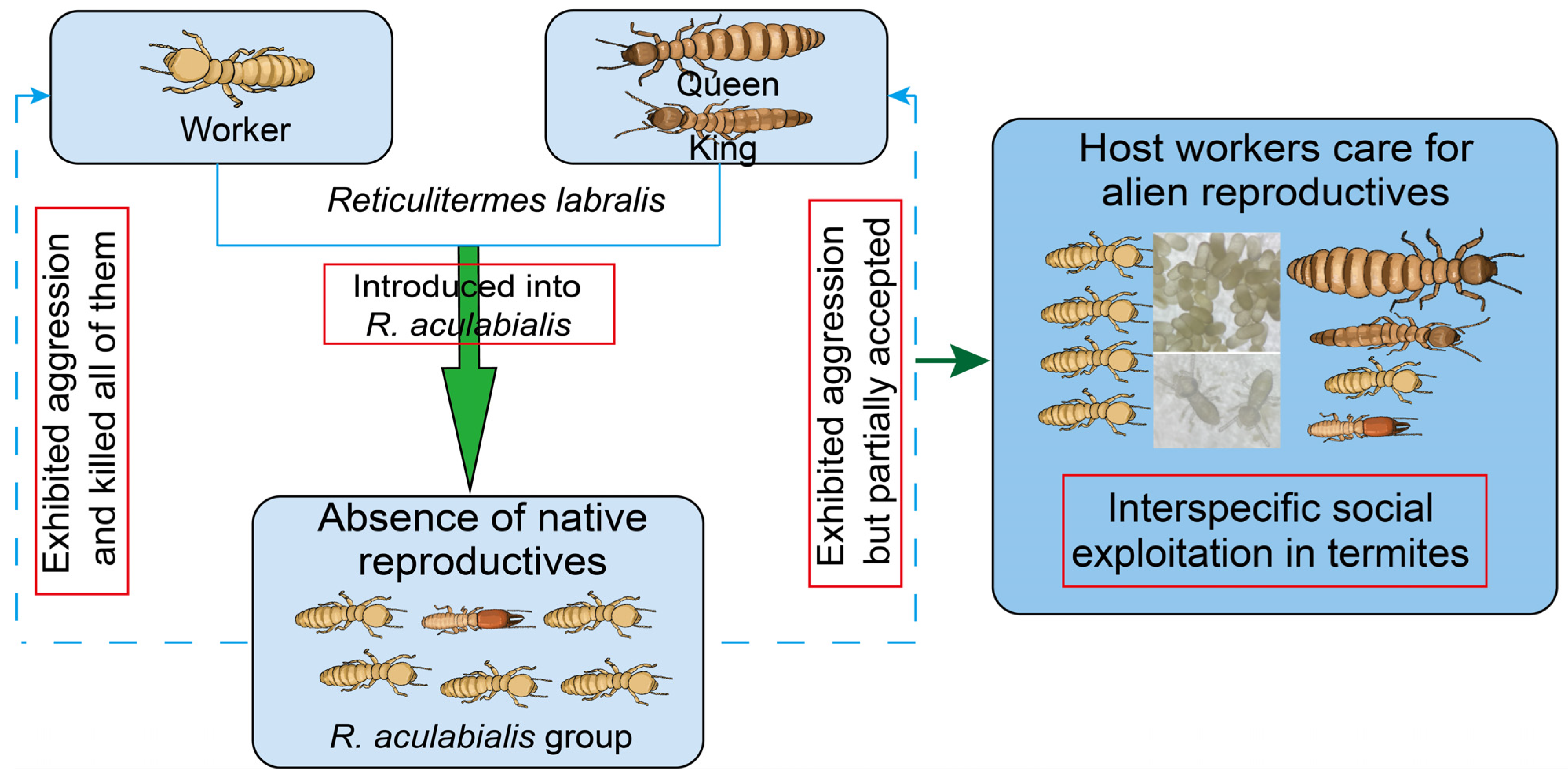
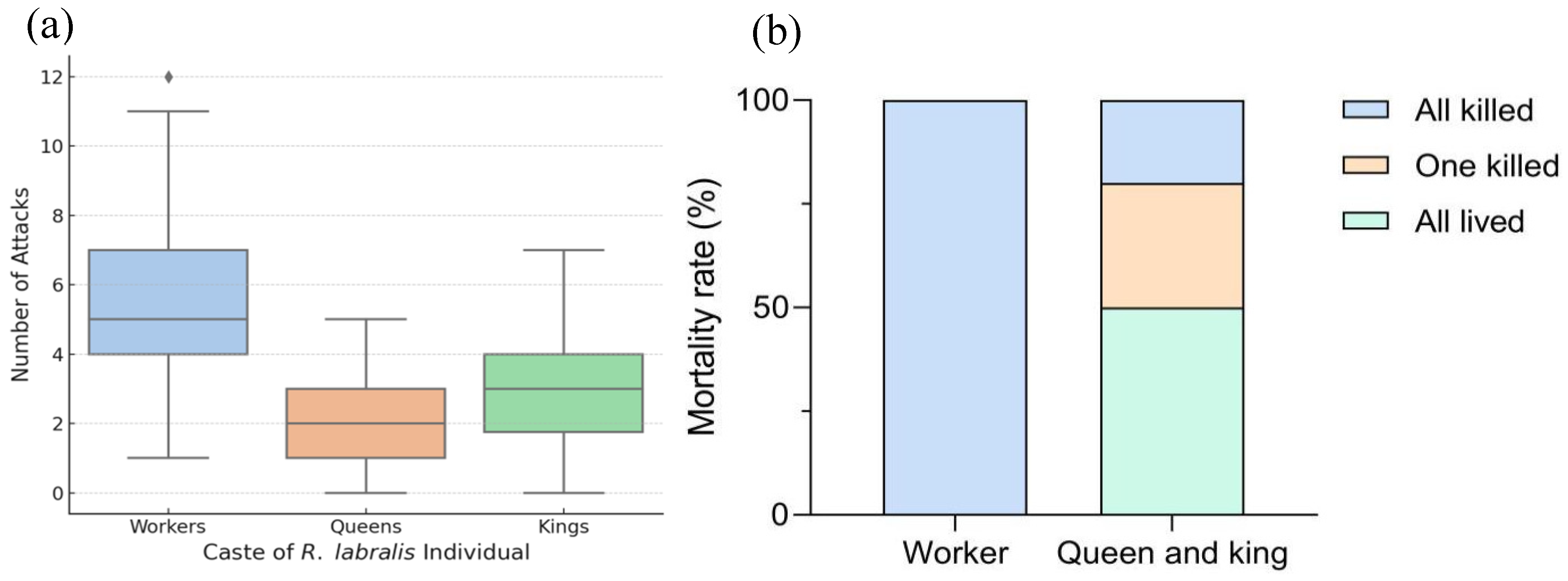
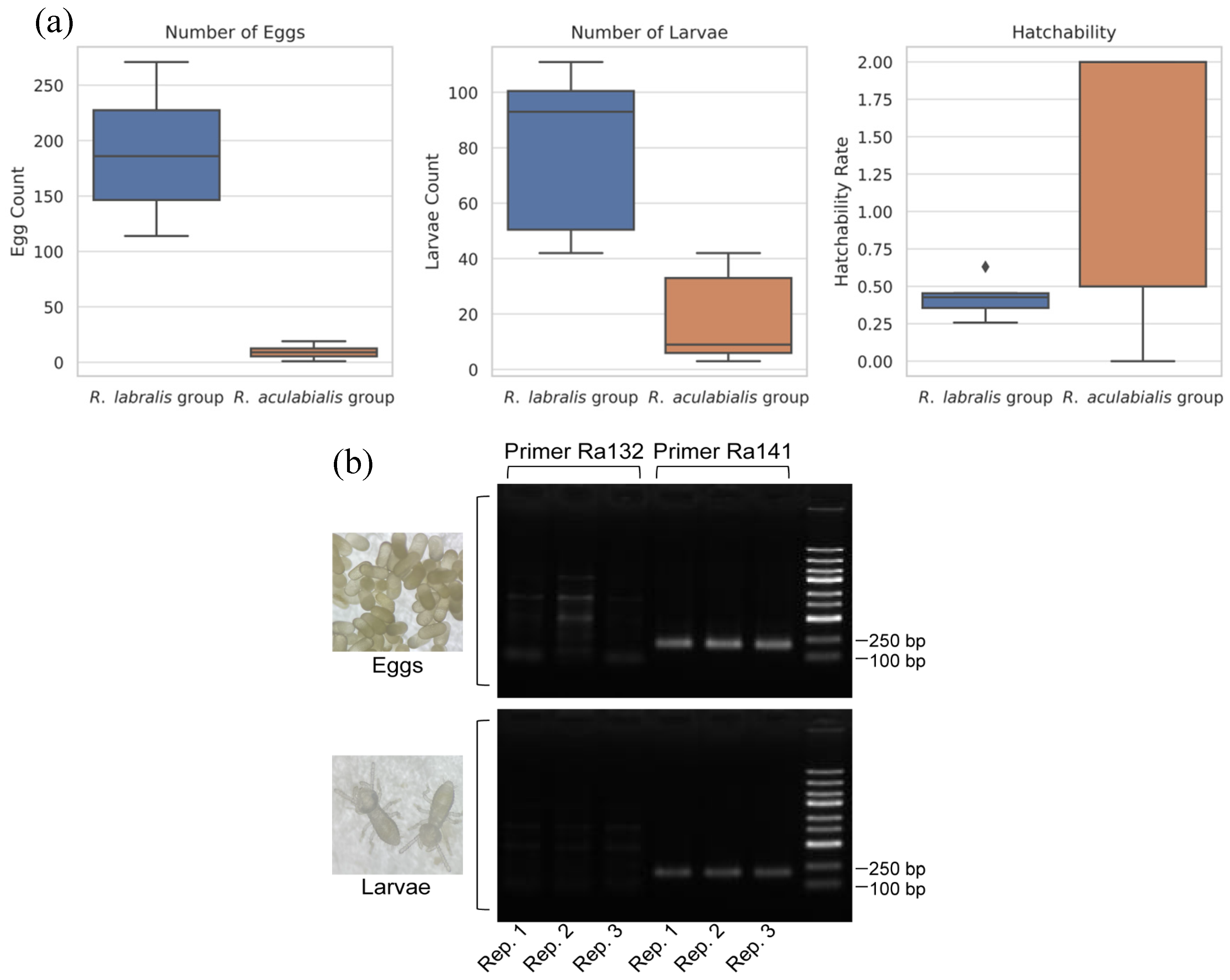
Termite colonies are known as “closed fortresses” that fiercely attack any intruders to protect their nest. However, it is unclear whether this defense is always perfect. In this study, we tested whether termites from one species (Reticulitermes labralis) could successfully infiltrate and live within the colony of a different species (Reticulitermes aculabialis). We introduced workers, queens, and kings of R. labralis into orphaned groups of R. aculabialis in the laboratory. We found that the host termites immediately killed the intruder workers, but surprisingly tolerated the intruder queens and kings. These surviving royal intruders were fed by the host workers and successfully produced their own babies. We used molecular testing to prove that the new babies were indeed the offspring of the intruders. This study shows that termite colony defense has a “loophole”: while they recognize and kill foreign workers, they may be tricked by foreign queens and kings. This finding helps us understand how social cheating (parasitism) might evolve in insects.
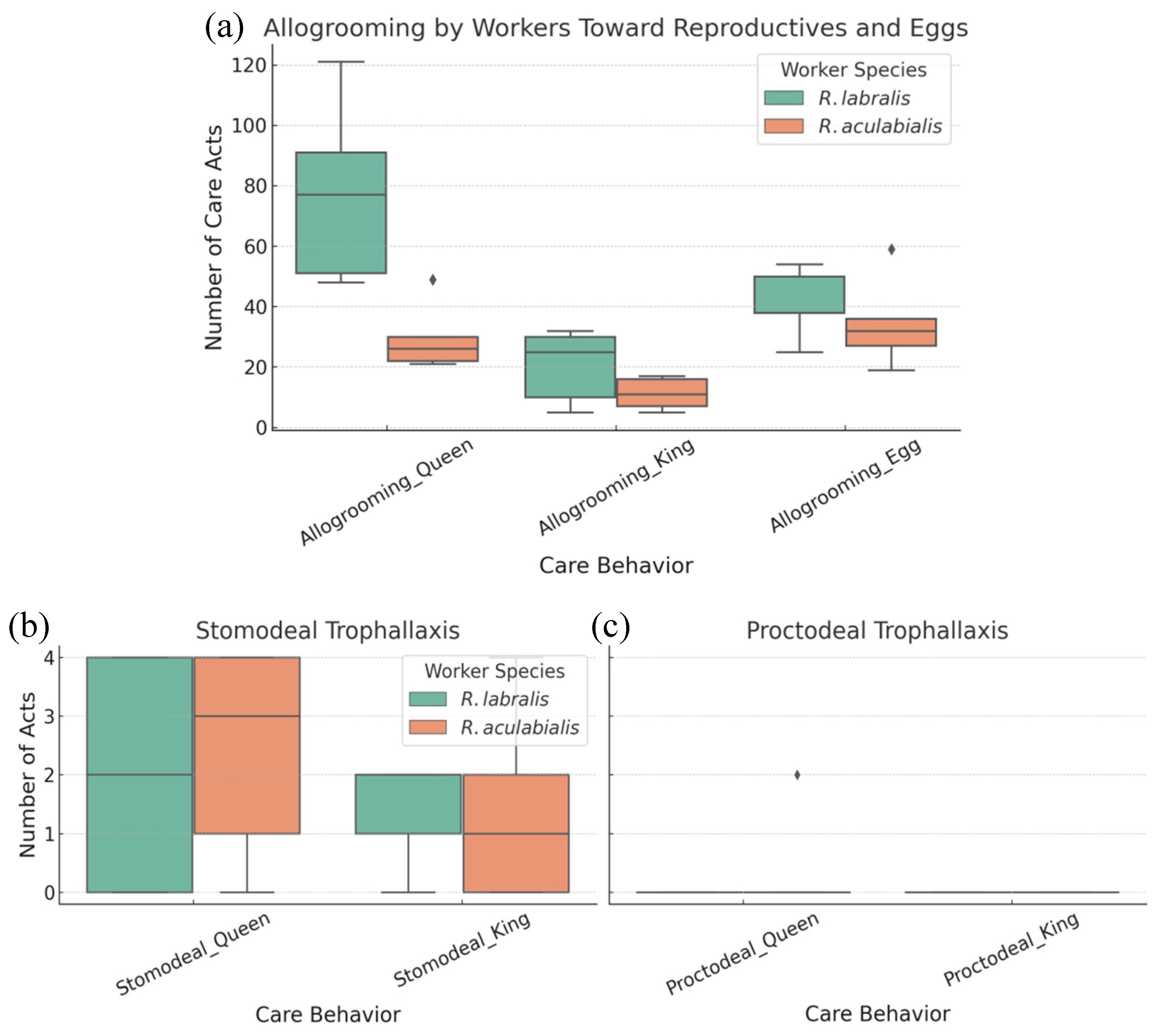
Abstract
Nestmate recognition is the primary defense mechanism maintaining the integrity of eusocial insect colonies. While social parasitism is widespread in Hymenoptera, it is rarely documented in termites, and the behavioral boundaries preventing interspecific infiltration remain poorly understood. Here, we investigated the potential for interspecific integration between two closely related termite species under laboratory conditions. We introduced Reticulitermes labralis workers and reproductives (queens and kings) into orphaned groups of R. aculabialis. We found that host workers exhibited caste-dependent aggression: introduced workers were immediately attacked and eliminated, whereas alien reproductives were partially tolerated. Surviving alien reproductives successfully integrated into host group, receiving allogrooming and trophallactic care from host workers. Crucially, these integrated pairs produced viable eggs and larvae. Molecular analysis confirmed that the brood reared by the host workers were the genetic offspring of the introduced R. labralis pair, demonstrating successful “cuckoo-like” reproduction. These findings reveal that termite colony recognition is sufficiently flexible to permit the acceptance of heterospecific reproductives when native royals are absent. While field evidence remains to be discovered, our results demonstrate that the behavioral and physiological prerequisites for social parasitism exist in termites, supporting the hypothesis that close phylogenetic relatedness (Emery’s rule) facilitates the breach of social barriers.