Aphidius colemani Behavior Changes Depending on Volatile Organic Compounds Emitted by Plants Infected with Viruses with Different Modes of Transmission
by
 ,
,
Gemma Clemente-Orta
1,2,* ,
,
Ángel Cabello
1, 
Elisa Garzo
1, 
Aranzazu Moreno
1 and
Alberto Fereres
1
1
Instituto de Ciencias Agrarias, Consejo Superior de Investigaciones Científicas (ICA-CSIC), C/Serrano 115 dpdo, 28006 Madrid, Spain
2
Departament de Producció Vegetal i Ciència Forestal, AGROTECNIO Center, Universitat de Lleida, Rovira Roure 191, 25198 Lleida, Spain
*
Author to whom correspondence should be addressed.
Insects 2024, 15(2), 92; https://doi.org/10.3390/insects15020092
Submission received: 2 January 2024
/
Revised: 25 January 2024
/
Accepted: 26 January 2024
/
Published: 29 January 2024
(This article belongs to the Special Issue Insects Vectors of Phytopathogenic Agents: Biology, Host-Plant Interactions, and Management)
Simple Summary
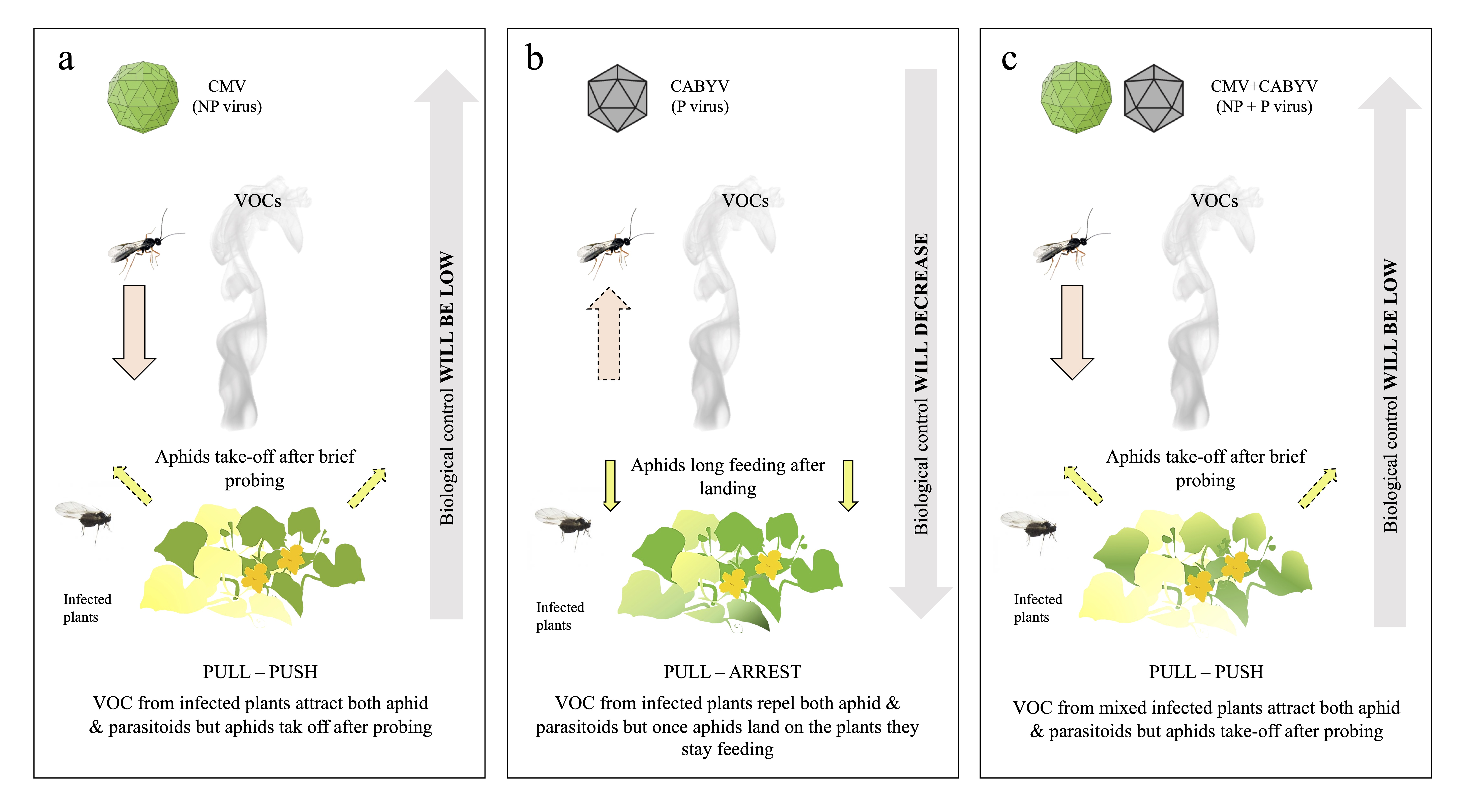
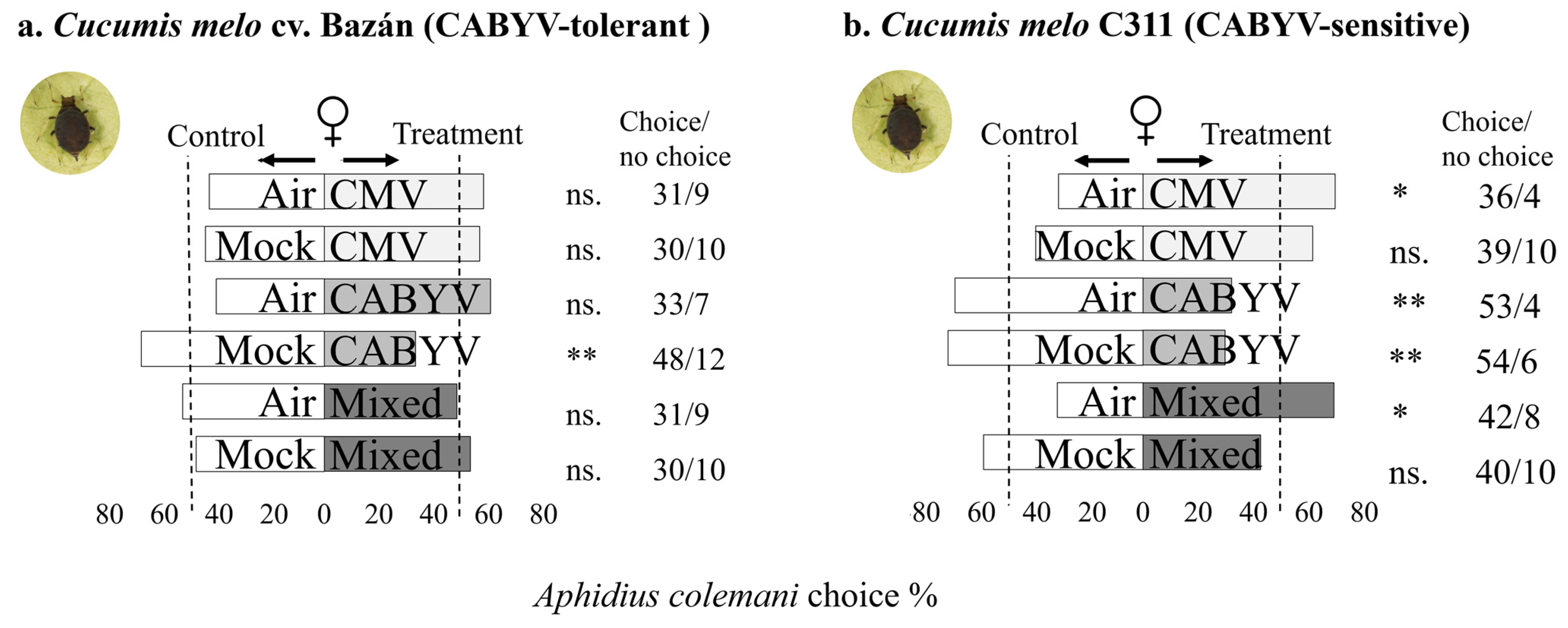
Plant viruses and other pathogens manipulate their hosts to alter the attractiveness and palatability of their insect vectors, thereby enhancing their own spread. For instance, melon plants infected with cucumber mosaic virus (CMV), a non-persistent virus, release specific volatile organic compounds (VOCs) that attract their primary vector, Aphis gossypii. These volatiles, emitted after aphid colonization, often act as a “cry for help” signal, attracting natural enemies. Surprisingly, studies have not delved into how aphid parasitoids respond to VOCs emitted by plants infected with viruses with different modes of transmission: non-persistent, persistent, or a combination of both. In our investigation, we explored how single and mixed infections with CMV (non-persistent virus) or/and cucurbit aphid-borne yellowing virus (CABYV, persistent virus) modify the attractiveness of Aphidius colemani to aphid-free and aphid-infested melon plants. These experiments highlight the need for further investigation into the complexities of parasitoid behavior, providing insights into the long evolutionary processes shaping plant–aphid–parasitoid interactions and their impact on virus transmission dynamics.
Abstract
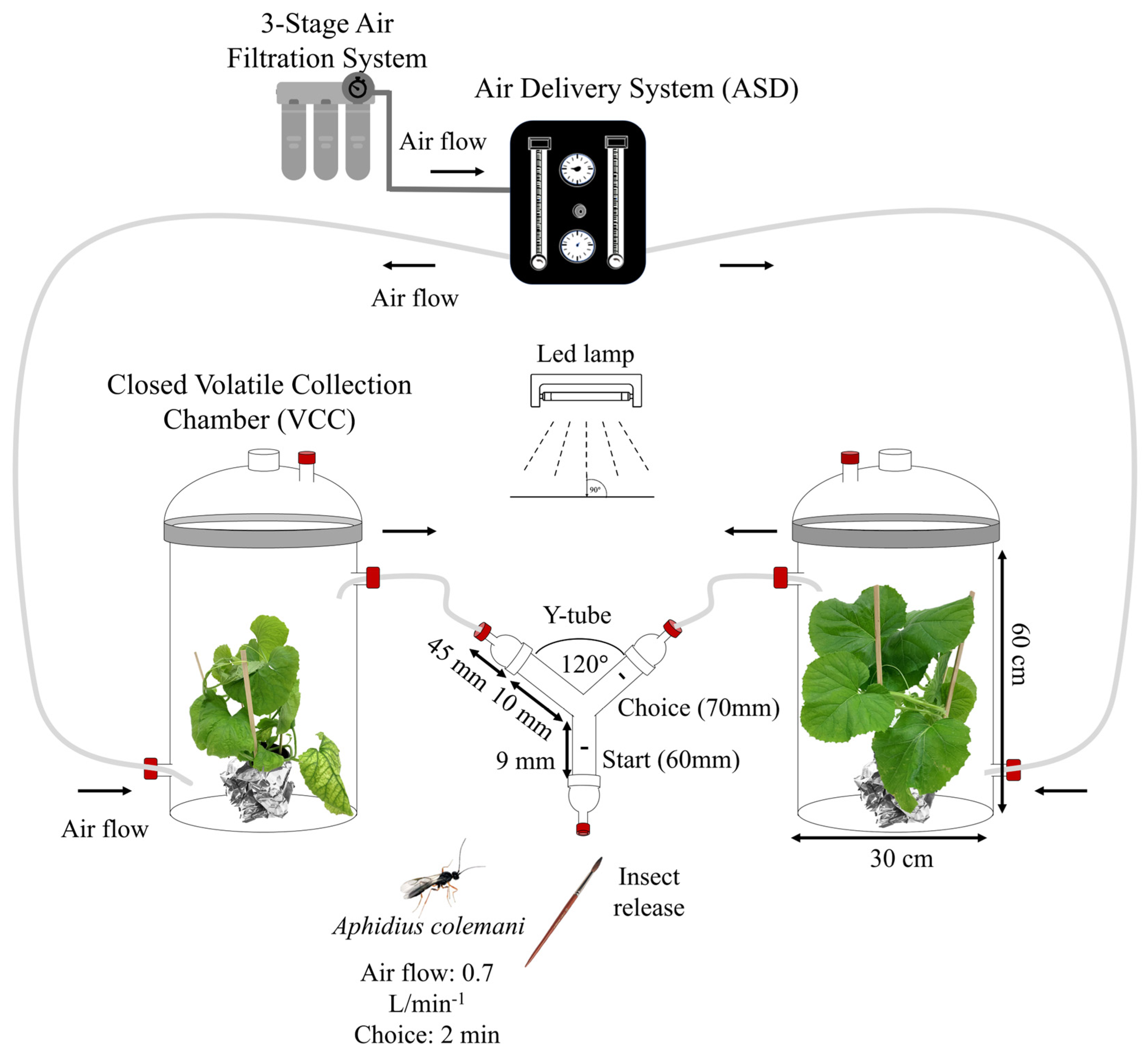
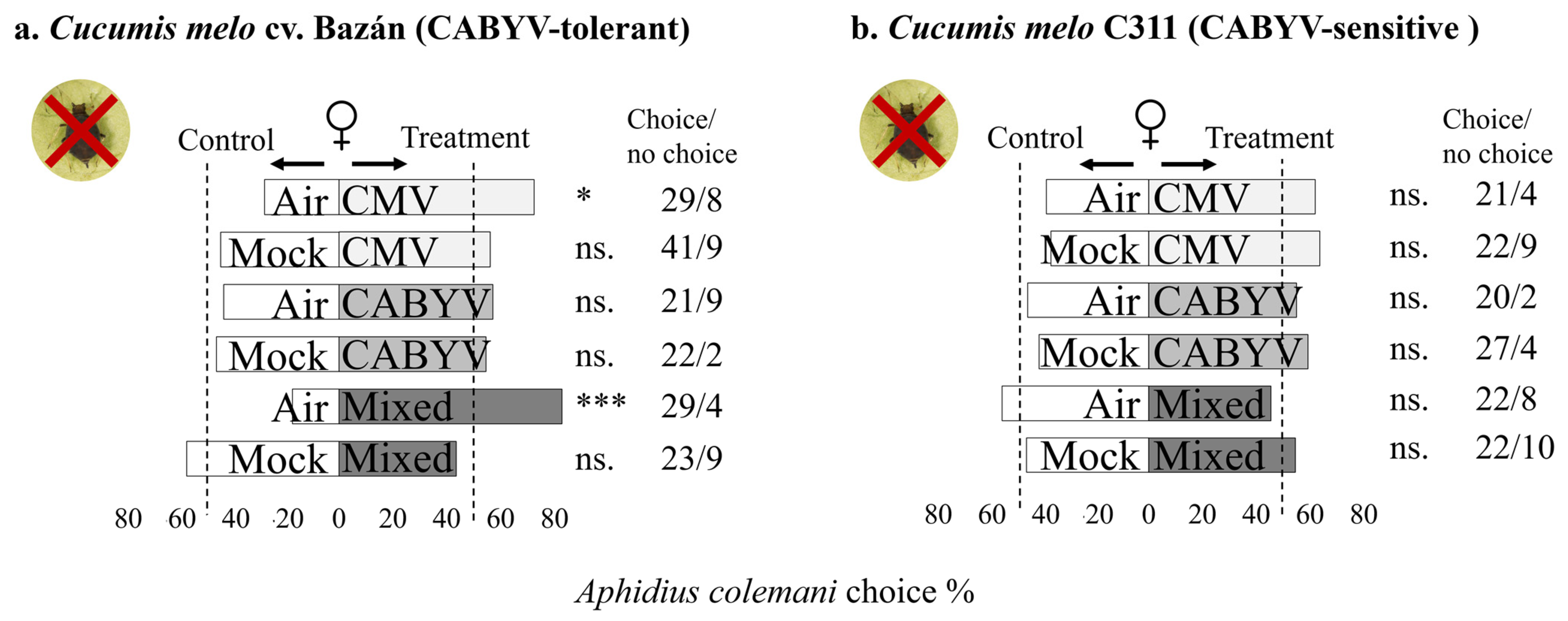
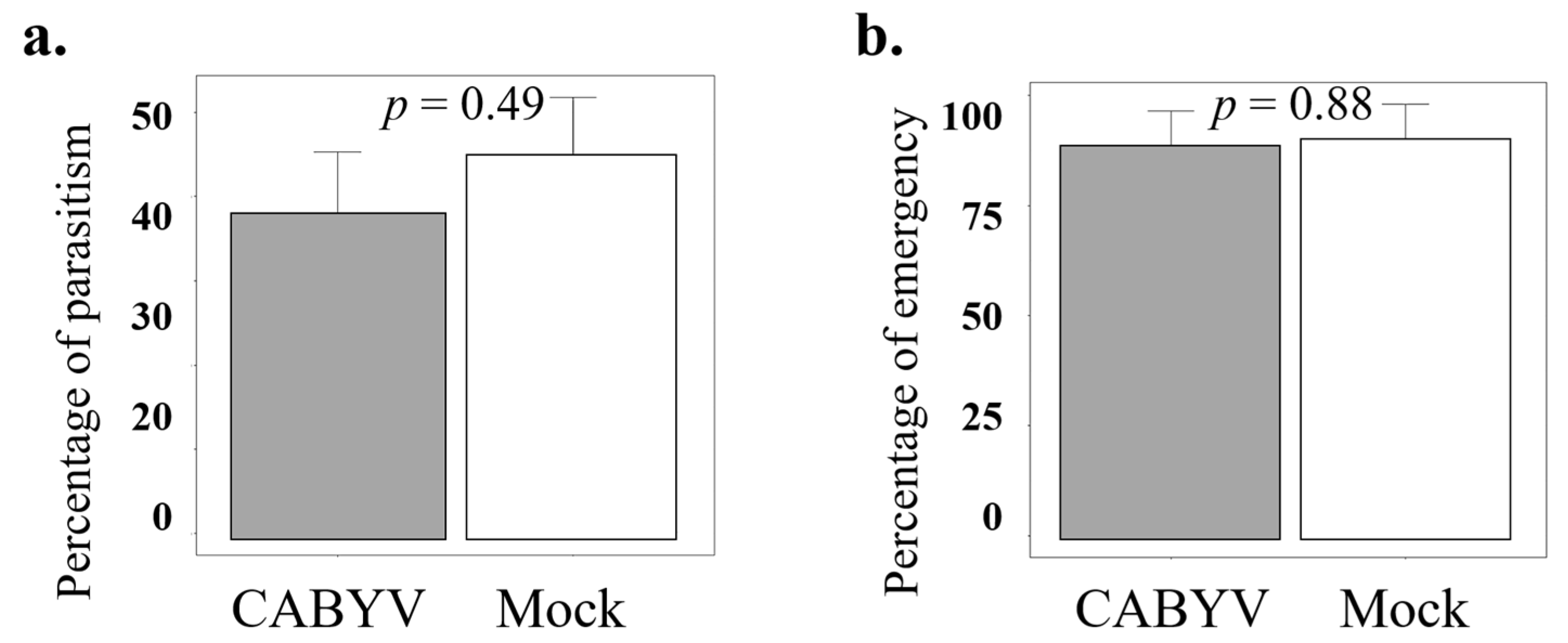
Natural enemies are an additional component that may interact directly with the plant–virus–vector association, affecting viral dispersion. In our study, we conducted olfactometry assays to explore how single and mixed infections with CMV or/and CABYV modify the attractiveness of A. colemani to aphid-free and aphid-infested melon plants using two melon genotypes. Subsequently, we investigated the influence of CABYV-infected plants infested by A. gossypii on the parasitism rate and emergence of A. colemani in a dual-choice assay under greenhouse conditions. Our study demonstrates that males showed no preference for either infected or non-infected plants. Female parasitoids exhibit a preference for volatiles emitted by CMV and mixed-infected melon plants over clean air but not over mock-inoculated plants, suggesting a response influenced by plant genotype. Female parasitoid responses to CABYV and its interactions with aphids revealed a preference for mock-inoculated plants over CABYV-infected plants and a parasitism rate slightly higher (7.12%) on non-infected plants. Our study revealed that (1) parasitoids may reject olfactory cues from CABYV-infected plants, potentially interfering with the plant’s “cry for help” response; (2) in the case of CMV, whether in single or mixed infections, non-infected plants are as attractive as infected ones to parasitoids. Our findings suggest that persistent viruses manipulate aphid parasitoid behavior to their advantage, promoting virus disease in melon crops.