Niche and Range Shifts of the Fall Webworm (Hyphantria cunea Dury) in Europe Imply Its Huge Invasion Potential in the Future
1
Division of Plant Ecology, College of Agriculture and Biological Science, Dali University, Dali 671003, China
2
Research Center for Agroecology in Erhai Lake Watershed, Division of Plant Ecology, Dali University, Dali 671003, China
3
Cangshan Forest Ecosystem Observation and Research Station of Yunnan Province, Division of Plant Ecology, Dali University, Dali 671003, China
*
Authors to whom correspondence should be addressed.
Insects 2023, 14(4), 316; https://doi.org/10.3390/insects14040316
Submission received: 25 February 2023
/
Revised: 24 March 2023
/
Accepted: 24 March 2023
/
Published: 26 March 2023
(This article belongs to the Section Insect Ecology, Diversity and Conservation)
Simple Summary
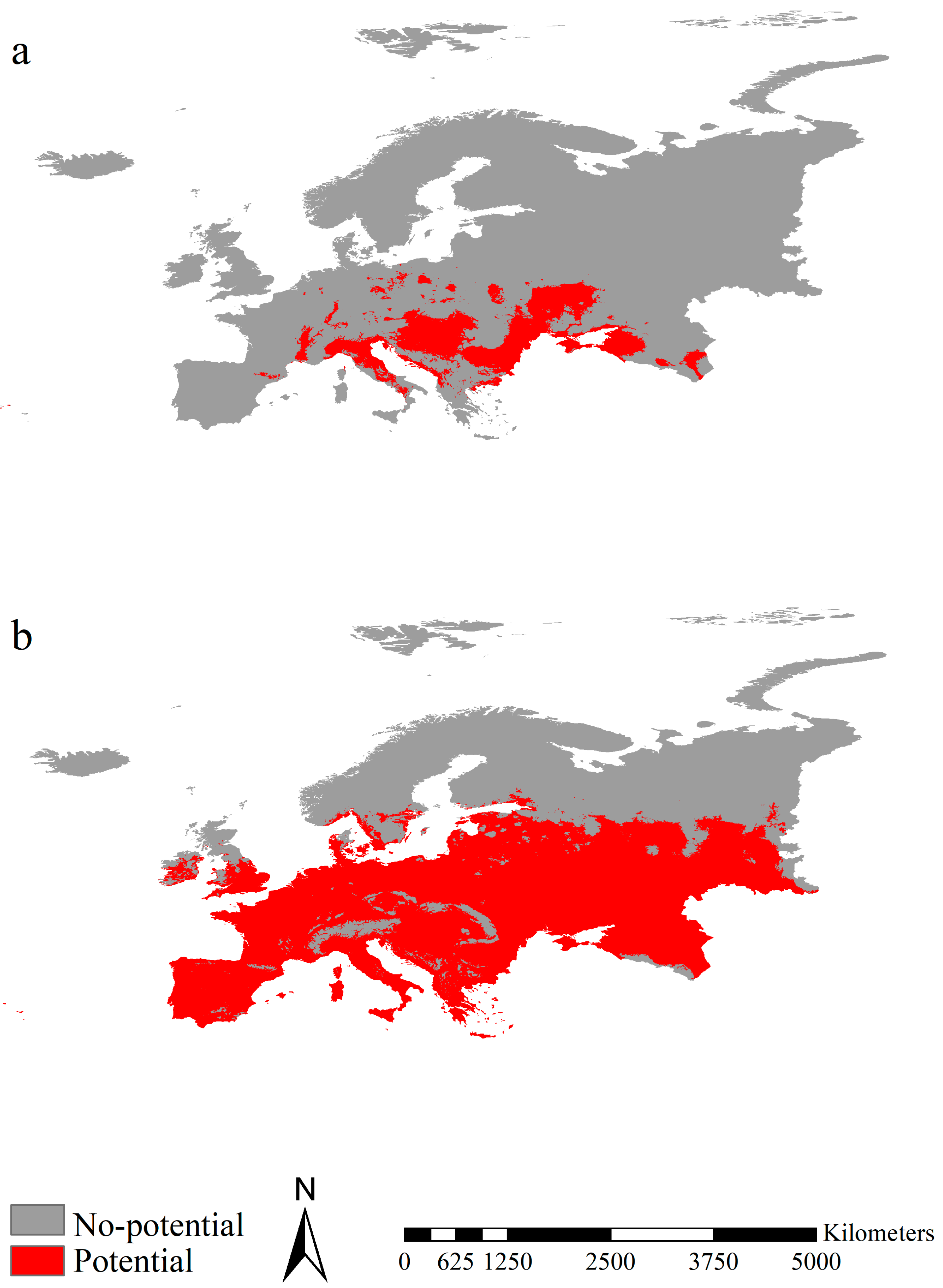
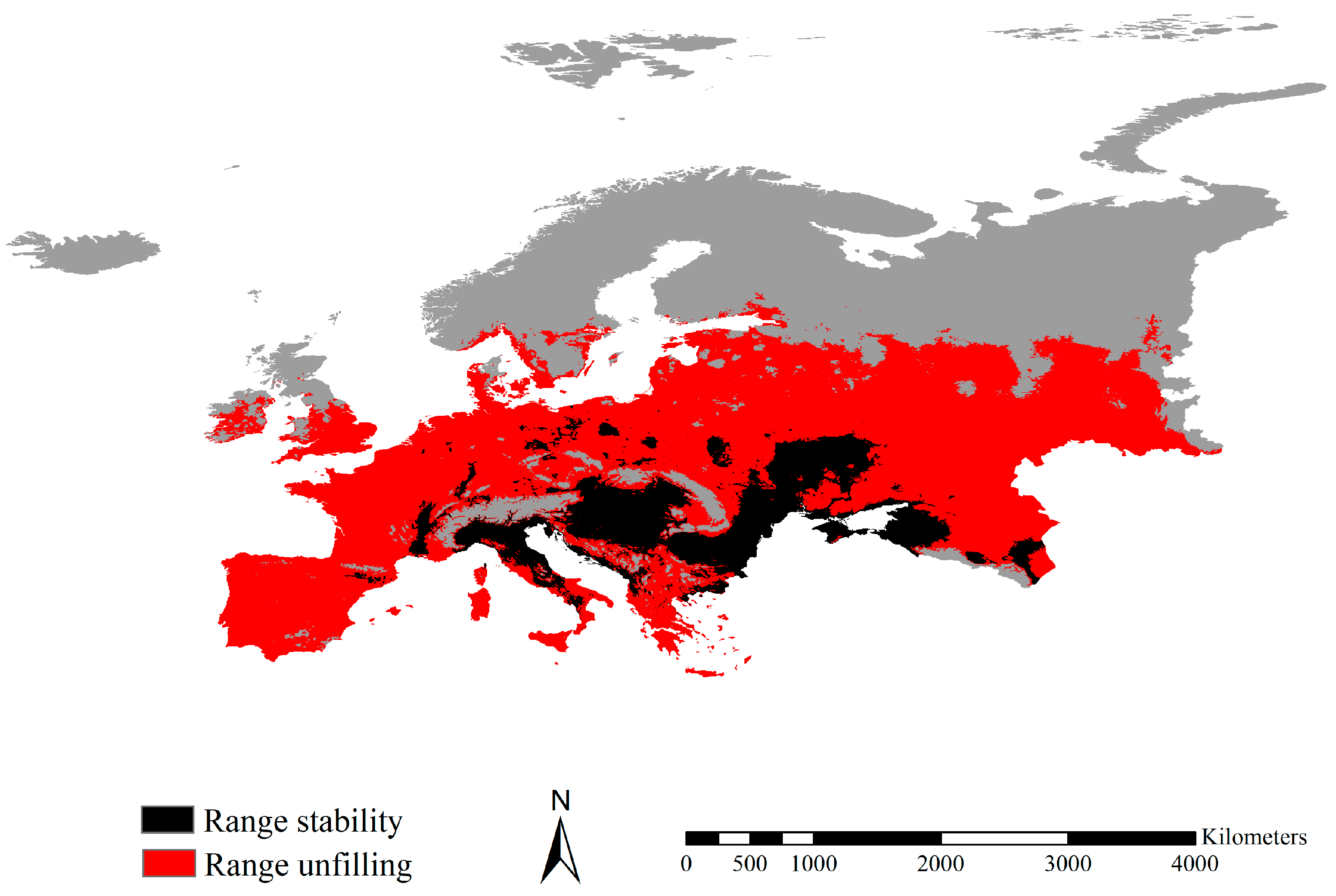
The fall webworm (Hyphantria cunea Dury) has a strong impact on agricultural systems in Europe. However, its invasive potential inherited from its native niche in North America remains unknown. In the present study, we analyzed niche and range shifts of the fall webworm in Europe and compared them with those in native North America. Compared with those in Europe, the fall webworm in North America showed wider niche and larger potential ranges in Europe. Based on the invasive potential of fall webworm in Europe inherited from its native counterpart, its potential range in Europe could be 5.5-fold that of the current one. The fall webworm may prefer vast regions of Europe, excluding Norway, Sweden, Finland, North Russia, Hungary, Croatia, Romania, and Ukraine, which might be the priority regions for future invasions of the fall webworm in Europe.
Abstract
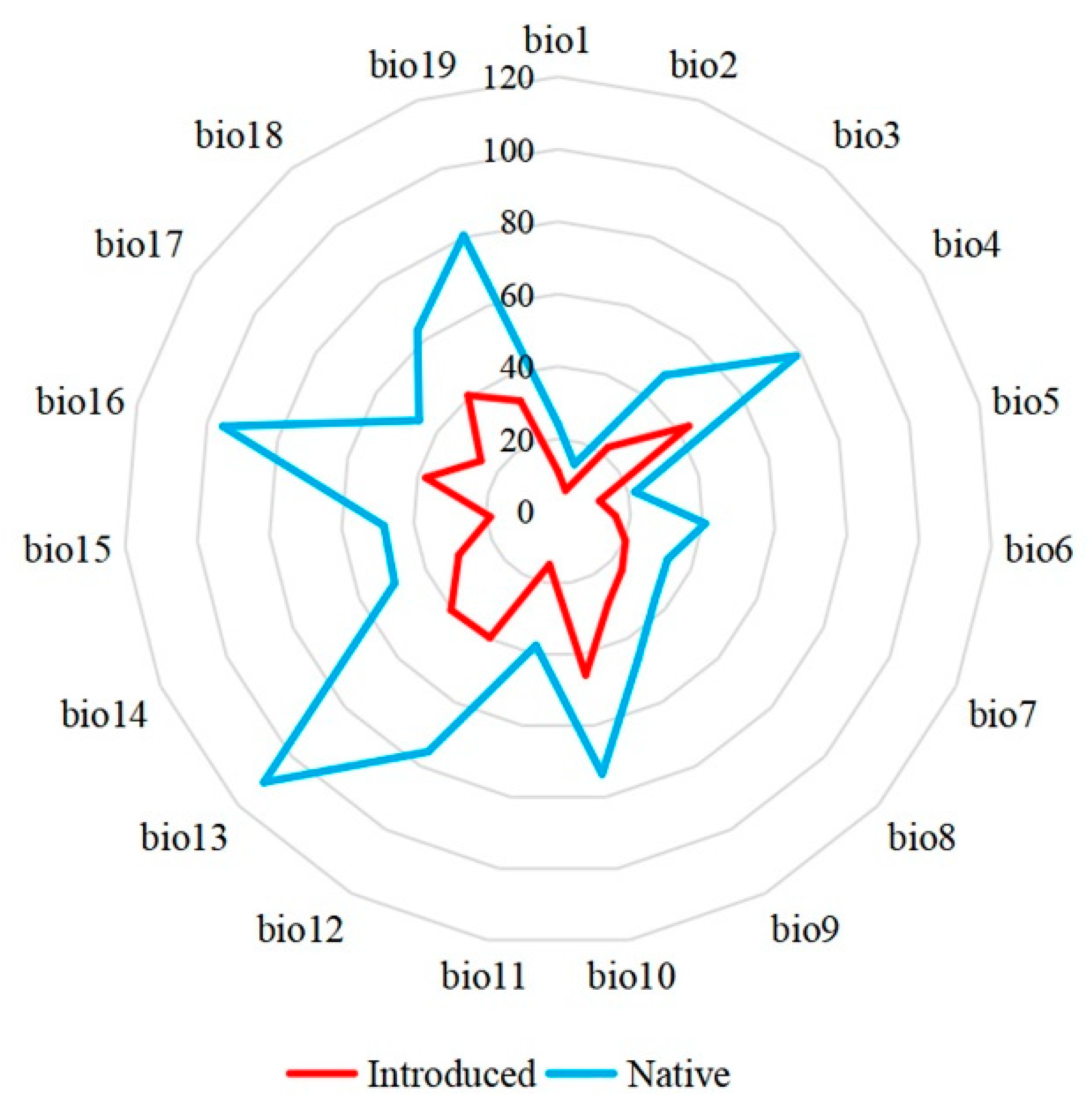
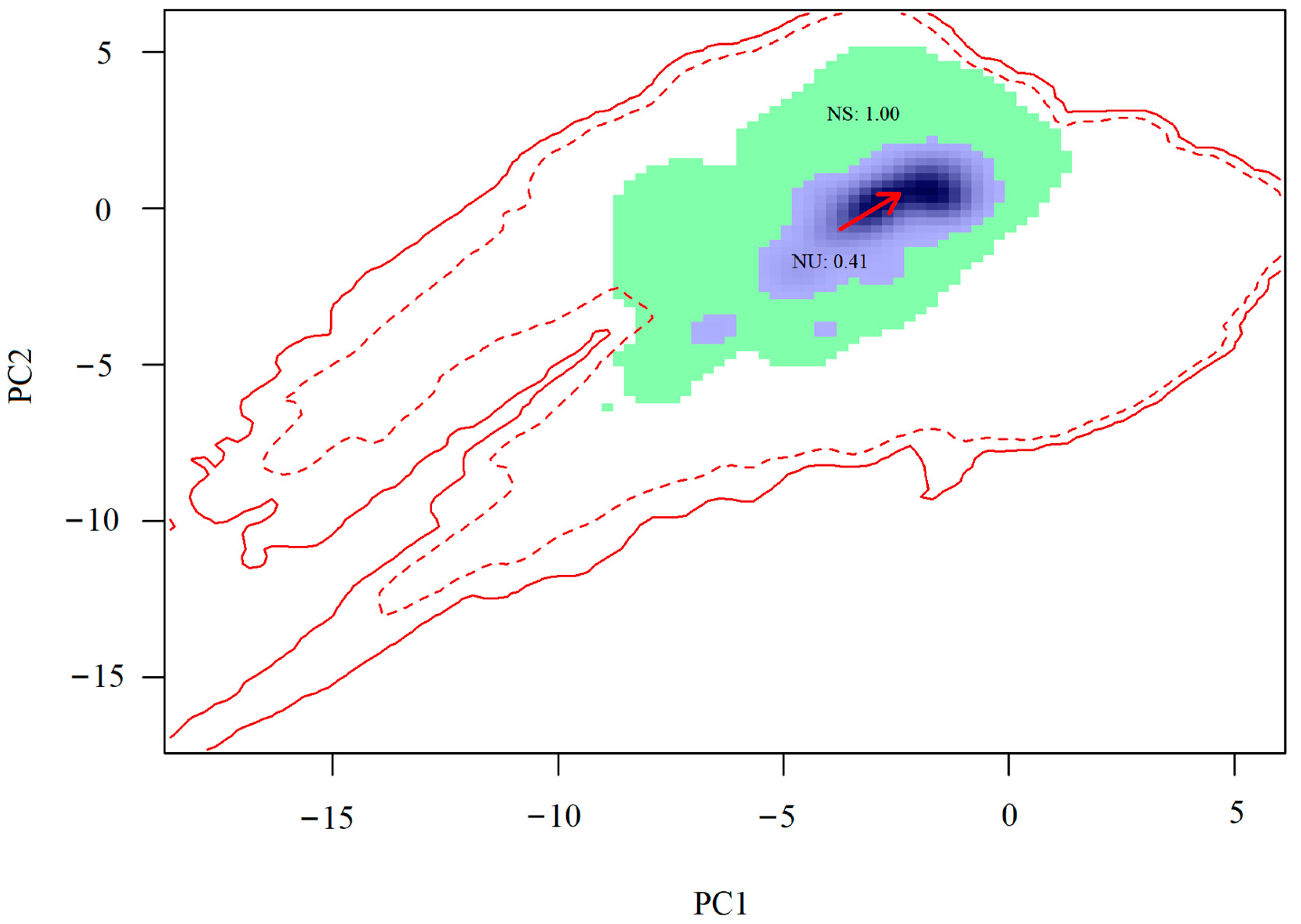
The fall webworm (Hyphantria cunea Dury) has a strong impact on agricultural systems in Europe. However, its invasive potential, which was inherited from its native niche in North America, remains unknown. Here, we investigated the climatic niche and range shifts of the fall webworm in Europe and compared them with those in native North America, then assessed the worms’ invasive potential in Europe. Compared with the fall webworm in Europe, those in North America survived in more diverse climatic conditions, which was closely associated with their broader niche and larger potential ranges in Europe. If the fall webworm in Europe could exploit the native niche inherited from those in North America to adapt to climatic conditions in Europe, their potential ranges in Europe could be 5.5-fold those based on the niche as introduced in Europe. The potentially unfilled ranges of the fall webworm in Europe were mainly detected in vast regions of Europe, excluding Norway, Sweden, Finland, North Russia, Hungary, Croatia, Romania, and Ukraine, suggesting that, without strict control, these vast regions might be preferably invaded by the fall webworm in Europe in the future. Therefore, strict control against its invasion is needed. Given that small niche shifts in this invasive insect could result in large range shifts, the niche shifts represent a more sensitive indicator of invasion risk than range shifts.
Keywords:
Europe; invasion risk; niche shifts; range shifts; the fall webworm