Genomic-Phenomic Reciprocal Illumination: Desyopone hereon gen. et sp. nov., an Exceptional Aneuretine-like Fossil Ant from Ethiopian Amber (Hymenoptera: Formicidae: Ponerinae) †
by
 , , , and
Brendon E. Boudinot
1,* ,
,
Adrian K. Richter
1,
Jörg U. Hammel
2,
Jacek Szwedo
3,
Błażej Bojarski
3 and
Vincent Perrichot
4,*
1
Institut für Zoologie und Evolutionsforschung, Friedrich-Schiller-Universität Jena, Vor dem Neutor 1, 07743 Jena, Germany
2
Institute of Materials Physics, Helmholtz-Zentrum Hereon, Max-Planck-Straße 1, 21502 Geesthacht, Germany
3
Laboratory of Evolutionary Entomology and Museum of Amber Inclusions, Faculty of Biology, University of Gdańsk, 59 Wita Stwosza Street, 80-309 Gdańsk, Poland
4
CNRS, Géosciences Rennes, University Rennes, UMR 6118, 35000 Rennes, France
*
Authors to whom correspondence should be addressed.
†
This published work and the nomenclatural acts it contains have been registered in ZooBank, the online registration system for the ICZN (International Code of Zoological Nomenclature). The LSID (Life ScienceIdentifier) for this publication is: zoobank.org:act:7228E671-DF5E-44D1-ADE6-62FB6DB34220 and zoobank.org:act:9E345965-6AA1-42D8-A468-187BABBB38D2.
Insects 2022, 13(9), 796; https://doi.org/10.3390/insects13090796
Submission received: 18 July 2022
/
Revised: 1 August 2022
/
Accepted: 3 August 2022
/
Published: 1 September 2022
(This article belongs to the Special Issue Fossil Insects: From Carboniferous to Quaternary)
Simple Summary
We describe a new species of extinct ants from Miocene-aged Ethiopian amber, based on males that resemble species of the relictual lineage Aneuretinae, but which effectively belong to the Ponerinae, as revealed by advanced 3D-imaging technology (synchrotron radiation micro-computed tomography, SR-µ-CT). We subsequently propose a revision of ant classification at the subfamily level. We also recognize that the new species belongs to a new genus based on recent phylogenomic results that have clarified the generic boundaries of Ponerini ants. Our work, therefore, represents an example of reciprocal illumination between phenomic and genomic data.
Abstract
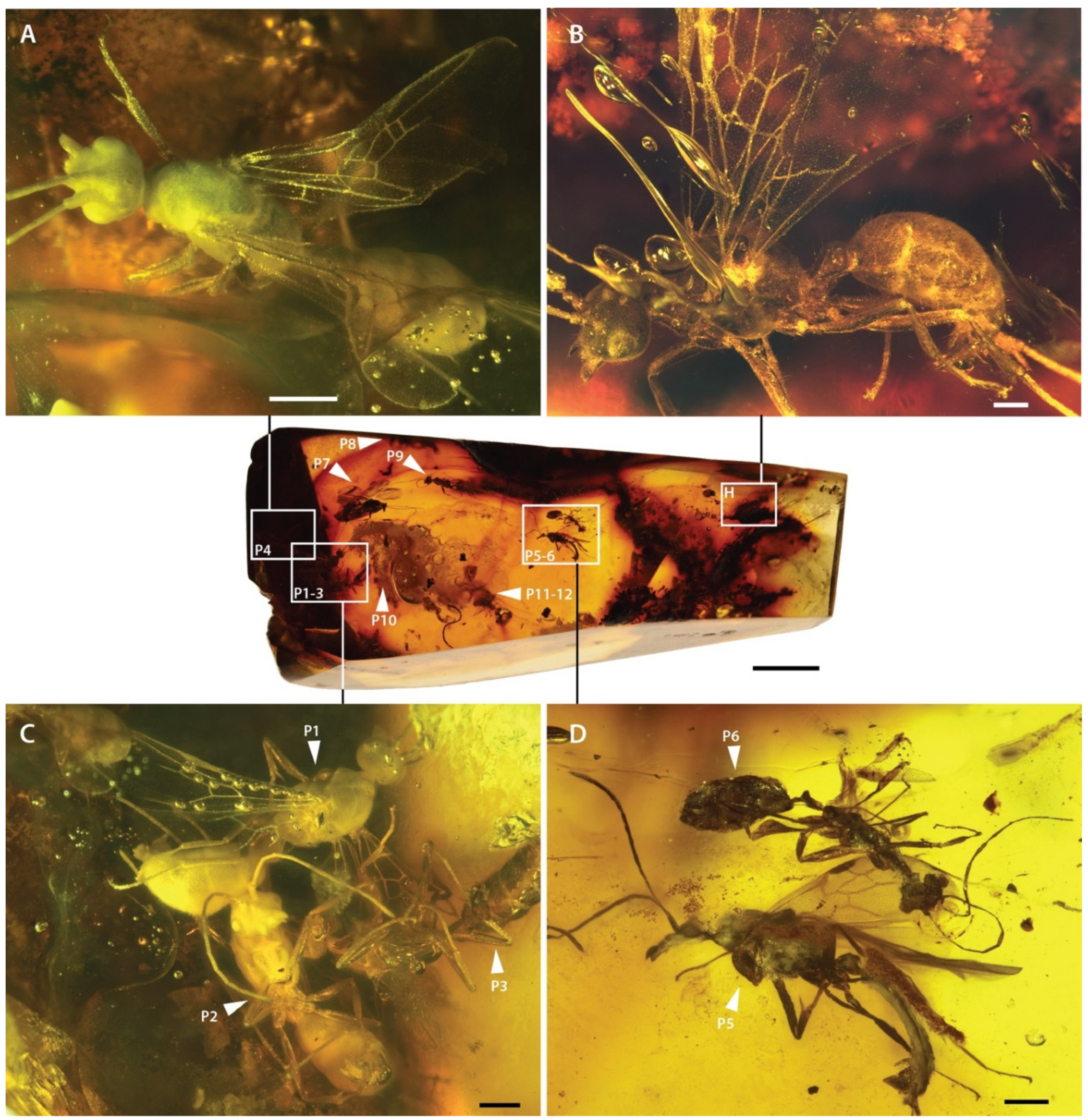
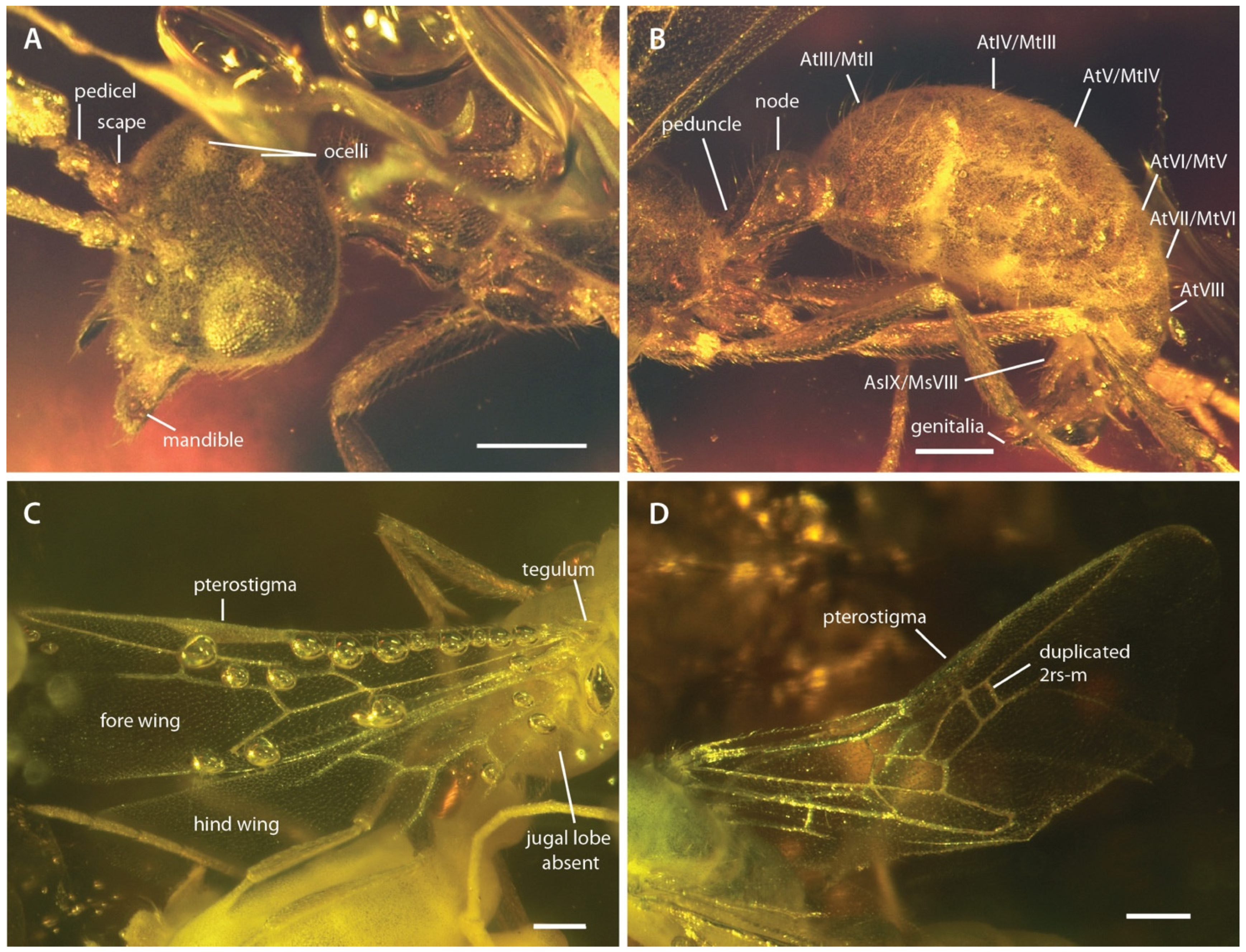
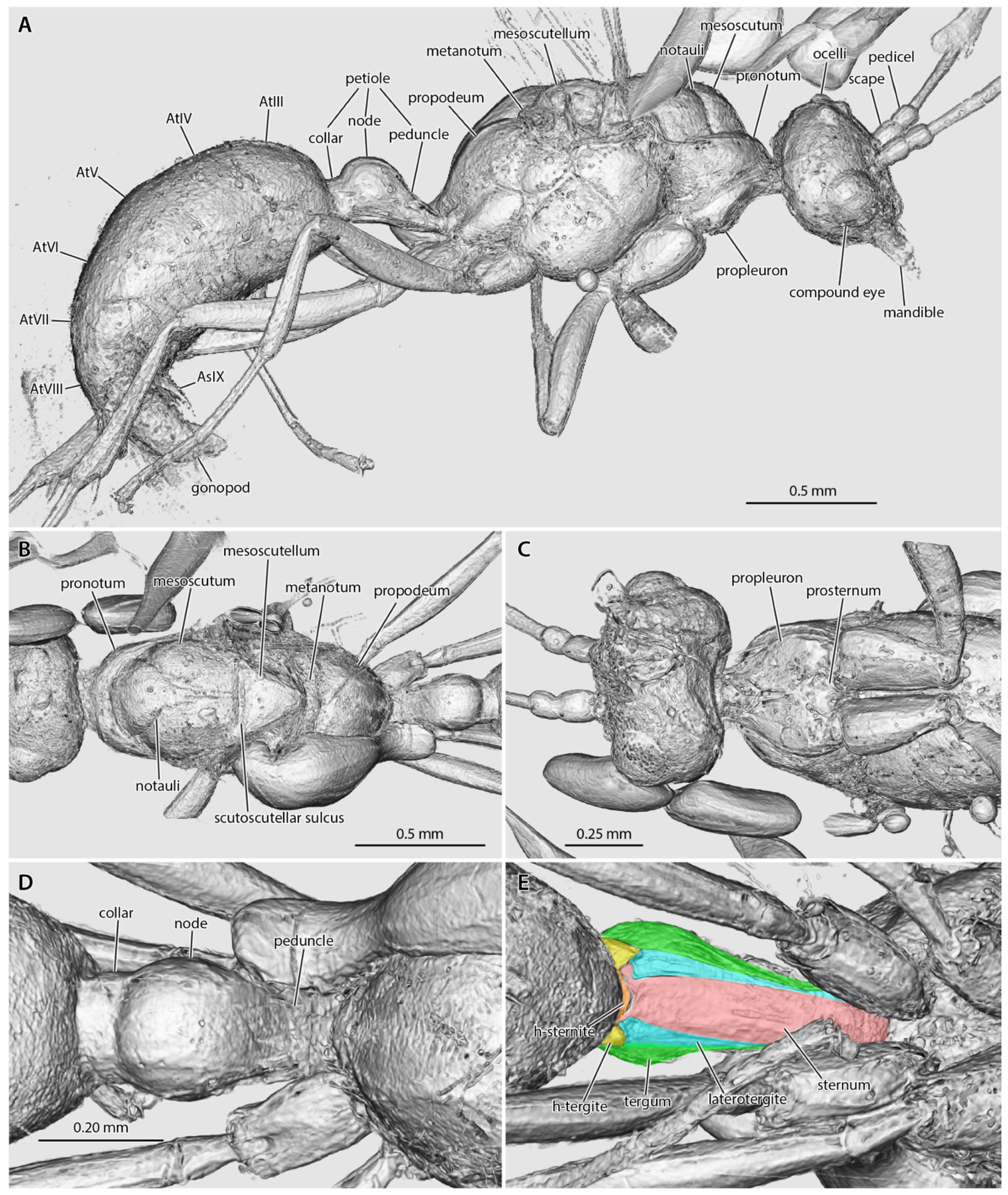
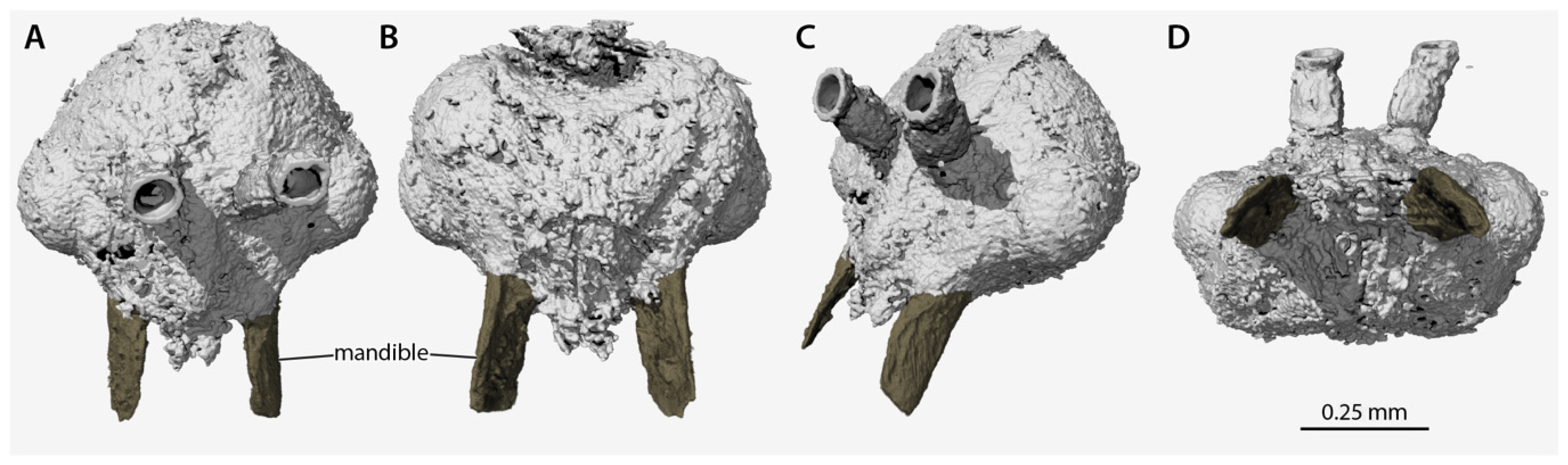
Fossils are critical for understanding the evolutionary diversification, turnover, and morphological disparification of extant lineages. While fossils cannot be sequenced, phenome-scale data may be generated using micro-computed tomography (µ-CT), thus revealing hidden structures and internal anatomy, when preserved. Here, we adduce the male caste of a new fossil ant species from Miocene Ethiopian amber that resembles members of the Aneuretinae, matching the operational definition of the subfamily. Through the use of synchrotron radiation for µ-CT, we critically test the aneuretine-identity hypothesis. Our results indicate that the new fossils do not belong to the Aneuretinae, but rather the Ponerini (Ponerinae). Informed by recent phylogenomic studies, we were able to place the fossils close to the extant genus Cryptopone based on logical character analysis, with the two uniquely sharing absence of the subpetiolar process among all ponerine genera. Consequently, we: (1) revise the male-based key to the global ant subfamilies; (2) revise the definitions of Aneuretinae, Ponerinae, Platythyreini, and Ponerini; (3) discuss the evolution of ant mandibles; and (4) describe the fossils as †Desyopone hereon gen. et sp. nov. Our study highlights the value of males for ant systematics and the tremendous potential of phenomic imaging technologies for the study of ant evolution.
Keywords:
Insecta; ant diversification; poneroid clade; Poneria; Miocene; Ethiopia