Cuticle Modifications and Over-Expression of the Chitin-Synthase Gene in Diflubenzuron-Resistant Phenotype
by
 , , ,
, , ,
Valentina Lucchesi
1,
Lorenzo Grimaldi
1,
Valentina Mastrantonio
1,*,
Daniele Porretta
1, 
Letizia Di Bella
2,
Tania Ruspandini
2,
Martino Luigi Di Salvo
3 ,
,
John Vontas
4,5,
Romeo Bellini
6,
Agata Negri
7,
Sara Epis
7,
Silvia Caccia
7,
Claudio Bandi
7,8 and
Sandra Urbanelli
1 1
Department of Environmental Biology, Sapienza University of Rome, 00185 Rome, Italy
2
Department of Earth Sciences, Sapienza University of Rome, 00185 Rome, Italy
3
Department of Biochemical Sciences “A. Rossi Fanelli”, Sapienza University of Rome, 00185 Rome, Italy
4
Department of Crop Science, Pesticide Science Lab, Agricultural University of Athens, 11855 Athens, Greece
5
Institute of Molecular Biology and Biotechnology, Foundation for Research and Technology Hellas, P.O. Box 1385, GR-711 10 Heraklion, Greece
6
Medical and Veterinary Entomology, Centro Agricoltura Ambiente “G. Nicoli”, 40014 Bologna, Italy
7
Department of Biosciences, University of Milan, 20122 Milan, Italy
8
Pediatric CRC “Romeo ed Enrica Invernizzi”, University of Milan, 20122 Milan, Italy
*
Author to whom correspondence should be addressed.
Insects 2022, 13(12), 1109; https://doi.org/10.3390/insects13121109
Submission received: 24 October 2022
/
Revised: 21 November 2022
/
Accepted: 28 November 2022
/
Published: 30 November 2022
(This article belongs to the Special Issue The Evolution of Pesticide Resistance)
Simple Summary
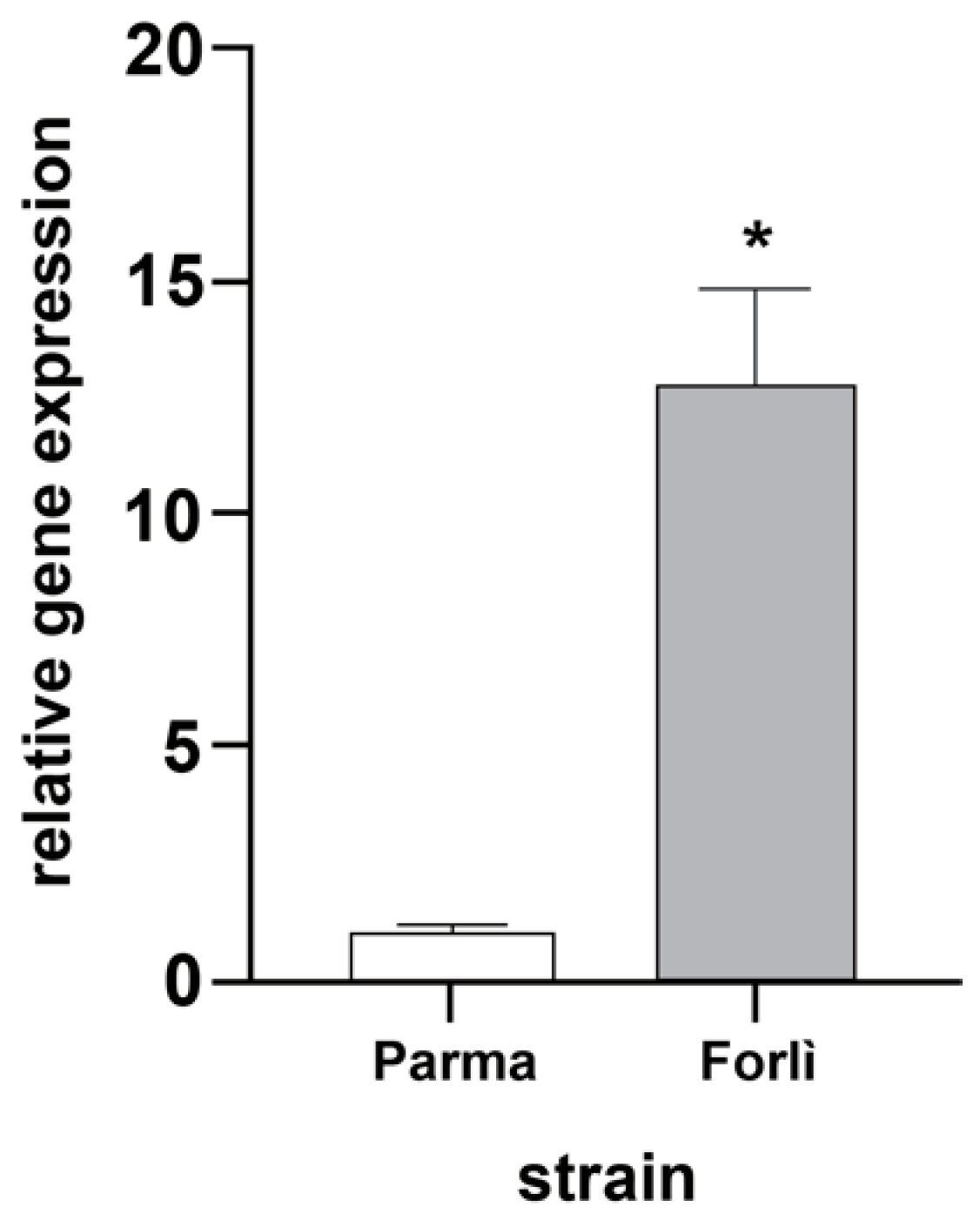
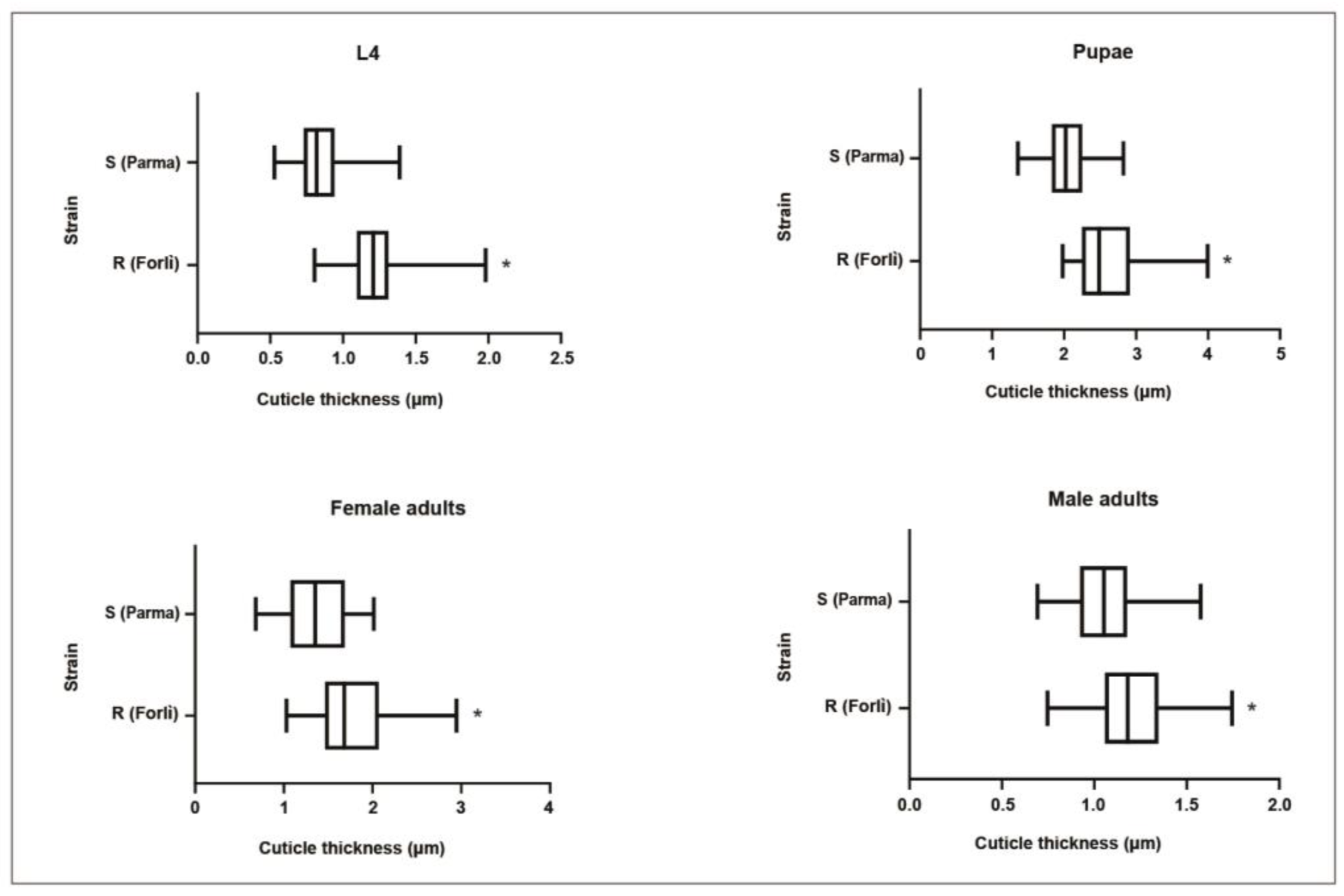
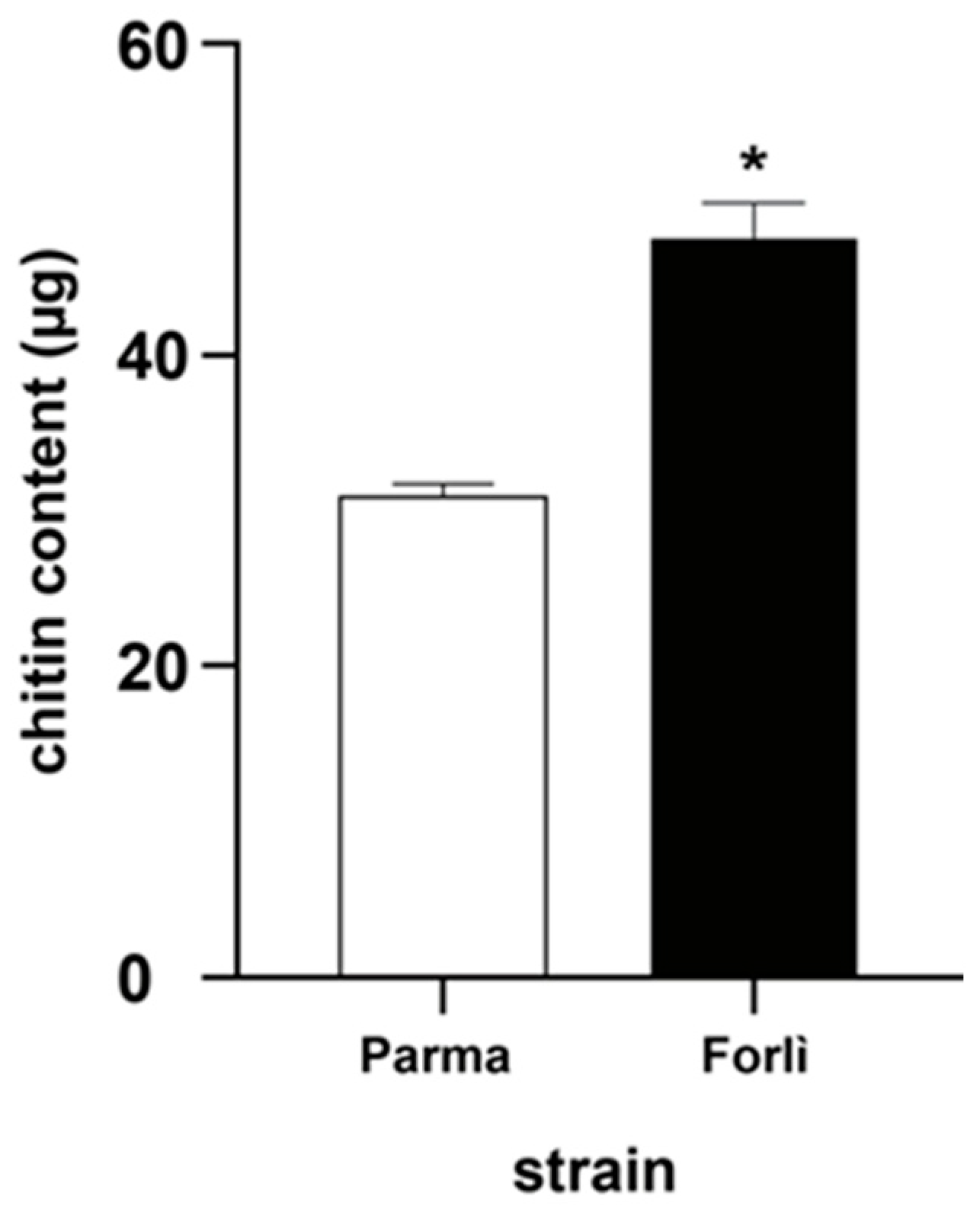
Insect pests are a major problem worldwide and their control represents an urgency for human well-being. Insecticides acting as chitin-synthesis inhibitors (CSIs) are one of the major tools used to control these insects, but resistance is evolving in many species against several chemical classes, such as oxazolines and benzoylureas. Genetic studies showed that resistance is associated with point mutations in position 1043 of the chitin-synthase 1 gene (chs1), which change an isoleucine into phenylalanine, leucine or methionine (i.e., I1043F; I1043L; I1043M, respectively). Here, we studied the molecular and phenotypic characteristics of the homozygous I1043M strain in the mosquito Culex pipiens by comparing susceptible and resistant individuals. Our results showed that resistant mosquitoes have a striking level of resistance when exposed to the CSI diflubenzuron. Furthermore, cuticle modifications and the over-expression of the chs1 gene were detected in resistant Cx. pipiens, which are associated and, thus, likely contribute to resistance, as well as to the intensity of the resistant phenotype. Since mutations on the chs1 gene are conserved among different arthropod pest species, our results could be valuable to understand CSI resistance not only in mosquitoes, but also in a wider perspective.
Abstract
Insecticide resistance is a major threat challenging the control of harmful insect species. The study of resistant phenotypes is, therefore, pivotal to understand molecular mechanisms underpinning insecticide resistance and plan effective control and resistance management strategies. Here, we further analysed the diflubenzuron (DFB)-resistant phenotype due to the point-mutation I1043M in the chitin-synthase 1 gene (chs1) in the mosquito Culex pipiens. By comparing susceptible and resistant strains of Cx. pipiens through DFB bioassays, molecular analyses and scanning electron microscopy, we showed that the I1043M-resistant mosquitoes have: (i) a striking level of DFB resistance (i.e., resistance ratio: 9006); (ii) a constitutive 11-fold over-expression of the chs1 gene; (iii) enhanced cuticle thickness and cuticular chitin content. Culex pipiens is one of the most important vector species in Europe and the rapid spread of DFB resistance can threaten its control. Our results, by adding new data about the DFB-resistant phenotype, provide important information for the control and management of insecticide resistance.