Monitoring Resistance of Euschistus heros (Fabricius) (Hemiptera: Pentatomidae) to Insecticides by Using Encapsulated Artificial Diet Bioassay


1
Department of Entomology and Acarology, Luiz de Queiroz College of Agriculture, University of São Paulo, Piracicaba 13418-900, SP, Brazil
2
CL Empreendimentos Biológicos Ltd., Piracicaba 13424-586, SP, Brazil
*
Author to whom correspondence should be addressed.
Insects 2021, 12(7), 599; https://doi.org/10.3390/insects12070599
Submission received: 30 April 2021
/
Revised: 11 June 2021
/
Accepted: 26 June 2021
/
Published: 1 July 2021
(This article belongs to the Section Insect Pest and Vector Management)
Simple Summary
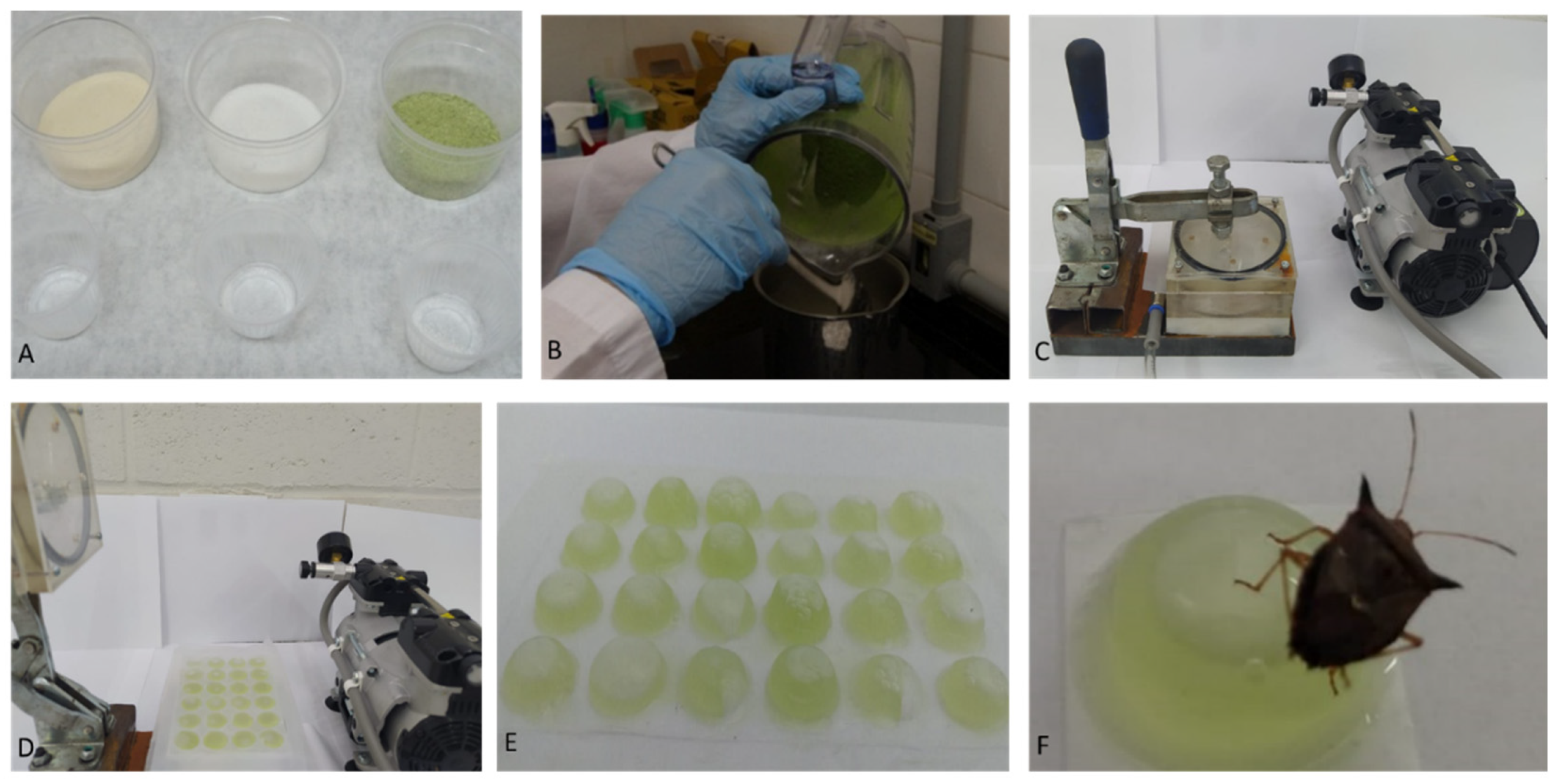
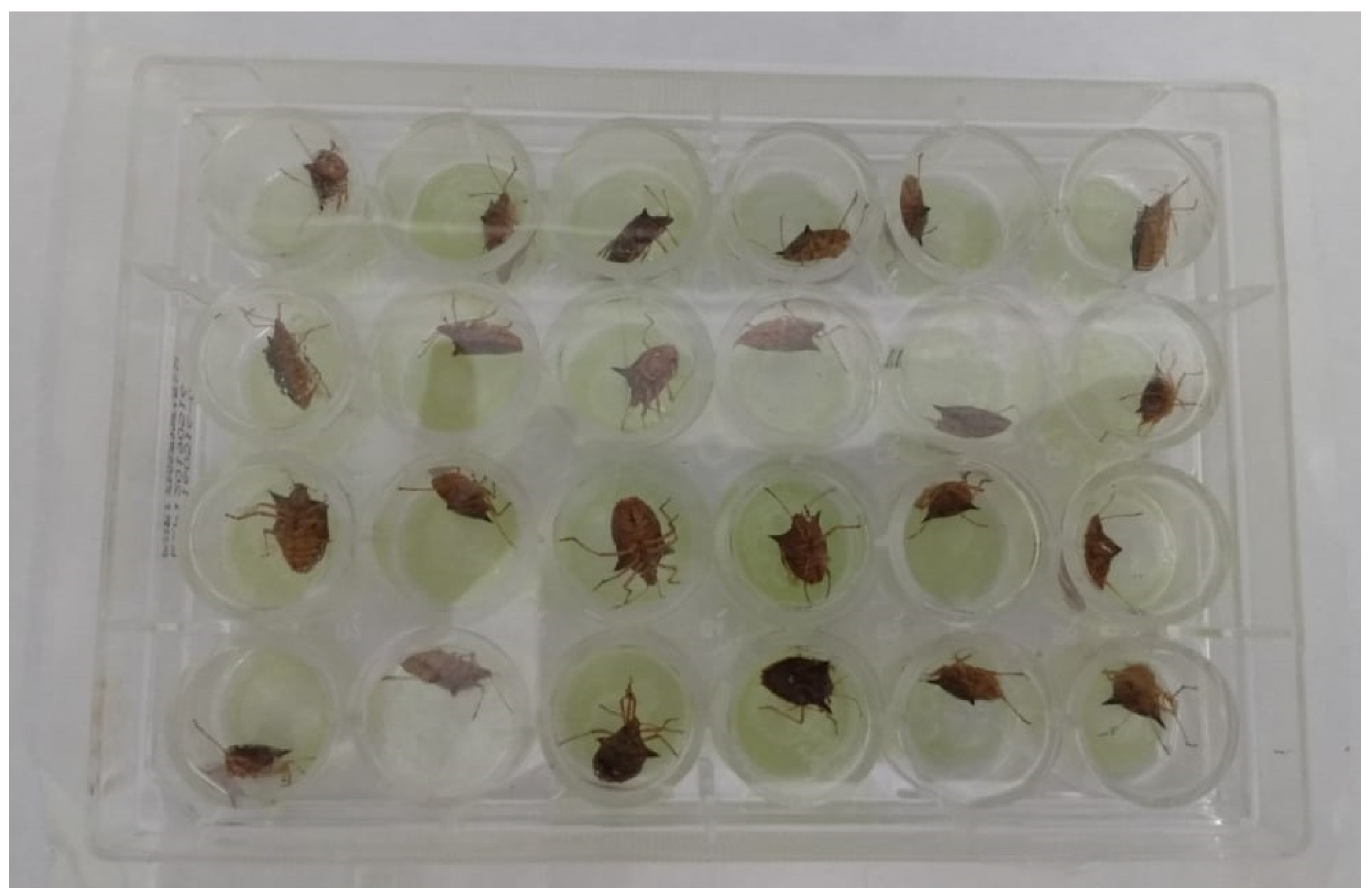
The Neotropical brown stink bug Euschistus heros (Fabricius) (Hemiptera: Pentatomidae) is currently one of the major soybean pests in Brazil, causing considerable and often irreversible damage to the crop. The main control strategy for regulating brown stink bug populations has been the use of insecticides, especially those belonging to the neonicotinoid class; however, the spraying of these insecticides does not achieve the desired control efficiency in some locations. Therefore, to improve the programs for detecting and monitoring E. heros resistance to insecticides, a new ingestion bioassay method by liquid diet encapsulation was evaluated in comparison with traditional bioassay methods. The new bioassay method of ingestion by encapsulation is very promising for detecting and monitoring resistance of E. heros populations to neonicotinoid insecticides.
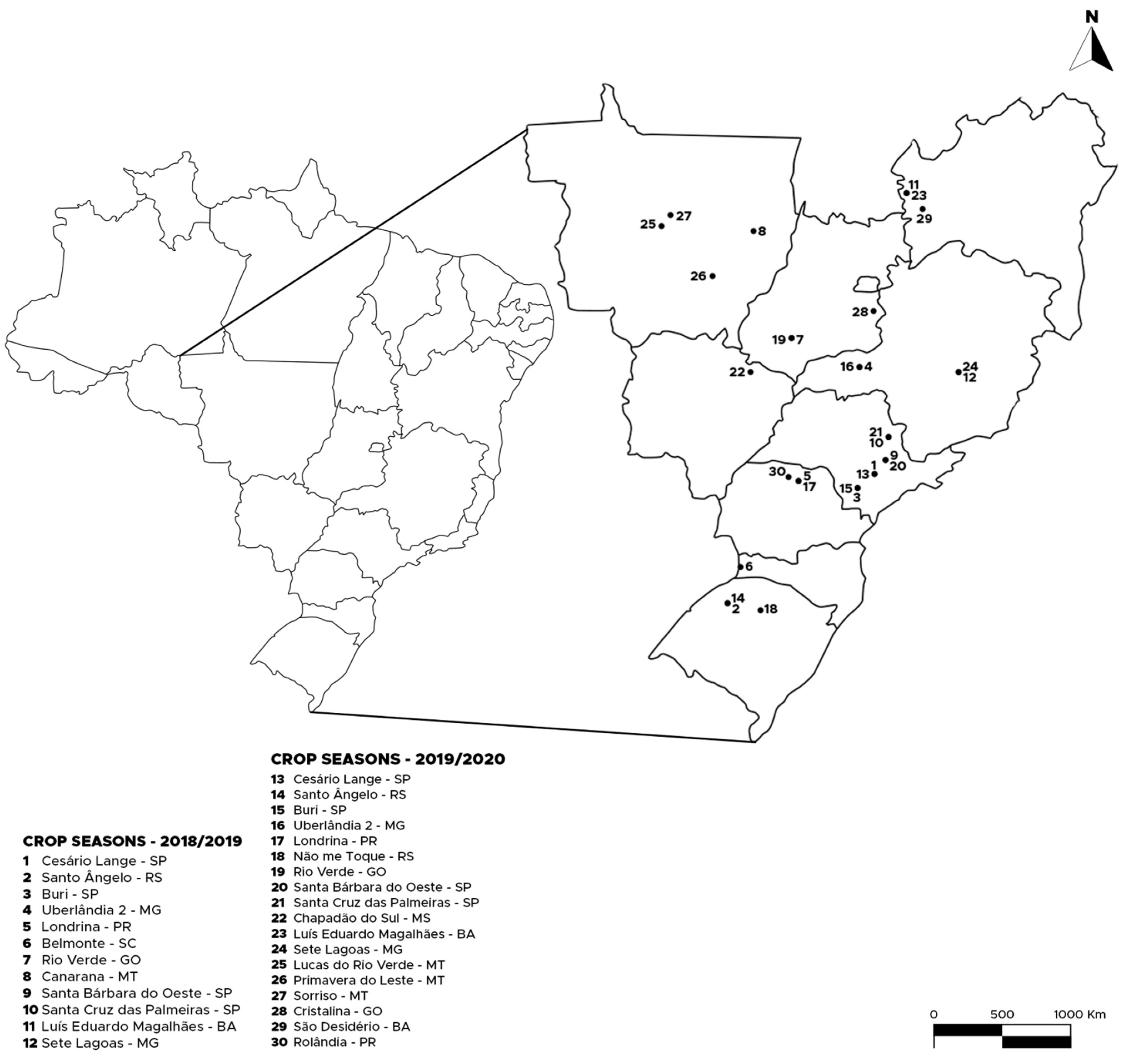
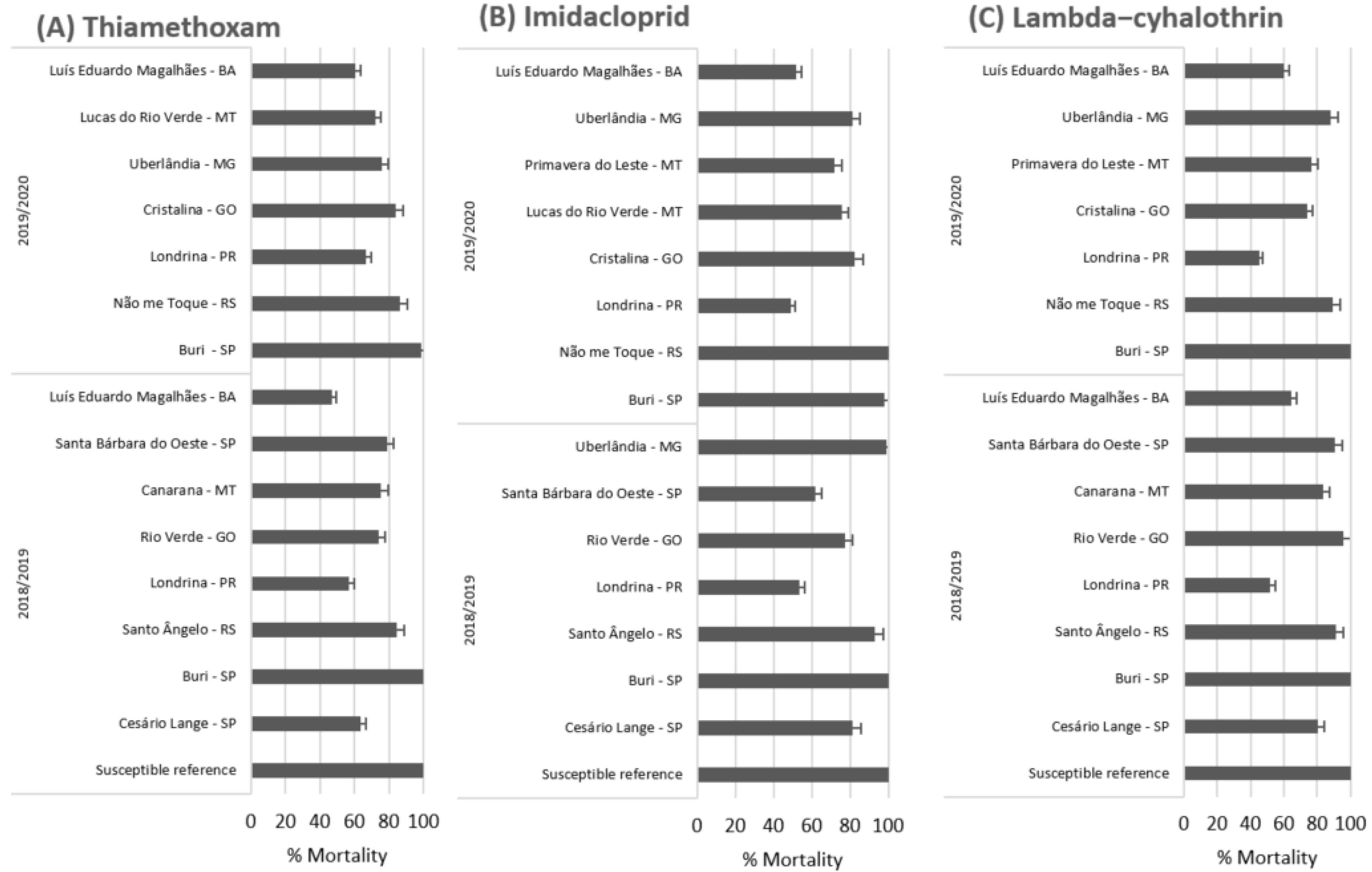
Abstract
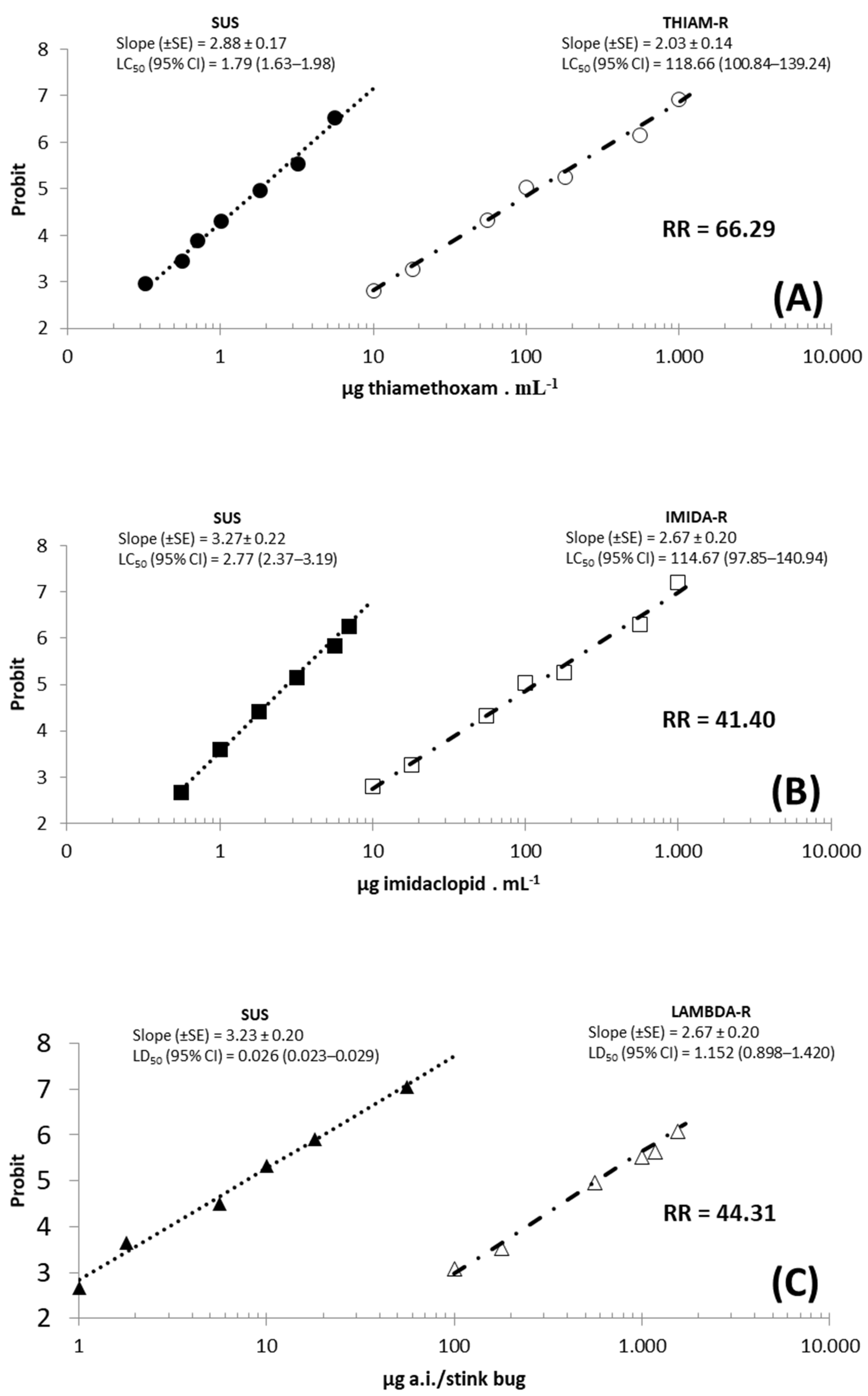
The novel ingestion bioassay method was developed for detecting and monitoring resistance of Euschistus heros by encapsulating an artificial liquid diet using Parafilm®. This methodology was compared with the tarsal contact (vial test) and topical application methods for thiamethoxam, imidacloprid, and lambda-cyhalothrin. The best bioassay method for the neonicotinoid insecticides thiamethoxam and imidacloprid was ingestion. For pyrethroid insecticide lambda-cyhalothrin, the best result was obtained by topical application. Using the best bioassay method for each insecticide, the susceptibility to these insecticides was monitored in 30 populations of E. heros collected from soybean crops in Brazil from 2018 to 2020. High variations in susceptibility to thiamethoxam (resistance ratios, 1.6–22 times), imidacloprid (resistance ratios, 1.6–22 times), and lambda-cyhalothrin (resistance ratios, 5–40 times) were detected among the evaluated E. heros populations. In order to monitor the susceptibility of E. heros to insecticides, diagnostic concentrations were defined based on the LC99 of the susceptible reference population: 5.65 µL of a.i./mL for thiamethoxam, 12.45 µL of a.i./mL for imidacloprid, and 0.20 µg of a.i./insect for lambda-cyhalothrin. Subsequently, we select an E. heros strain resistant to neonicotinoid insecticides and another to lambda-cyhalothrin. The resistance ratios obtained after seven selection cycles were 66, 41 and 44 times for thiamethoxam, imidacloprid and lambda-cyhalothrin, respectively.