Predicting the Distribution of the Invasive Species Leptocybe invasa: Combining MaxEnt and Geodetector Models

Simple Summary
Abstract
1. Introduction
2. Materials and Methods
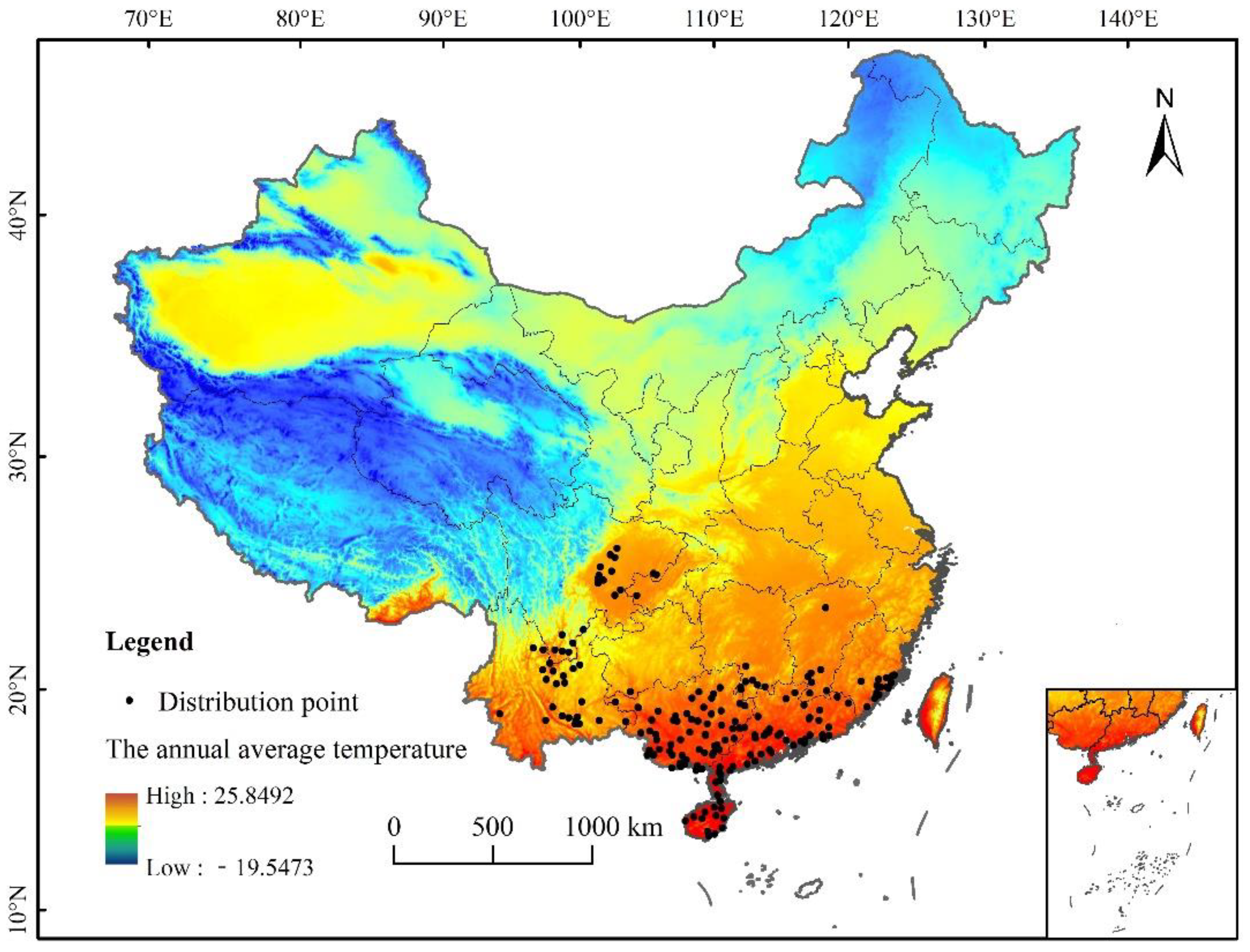
2.1. Distributional Data
2.2. Environmental Variables and Processing
2.2.1. Data Sources
2.2.2. Geodetector Model
2.2.3. Data Processing
2.3. Species Distribution Model Evaluation
2.4. Spatial and Statistical Analysis
2.5. Analysis of Multivariate Environmental Similarity Surface
3. Results
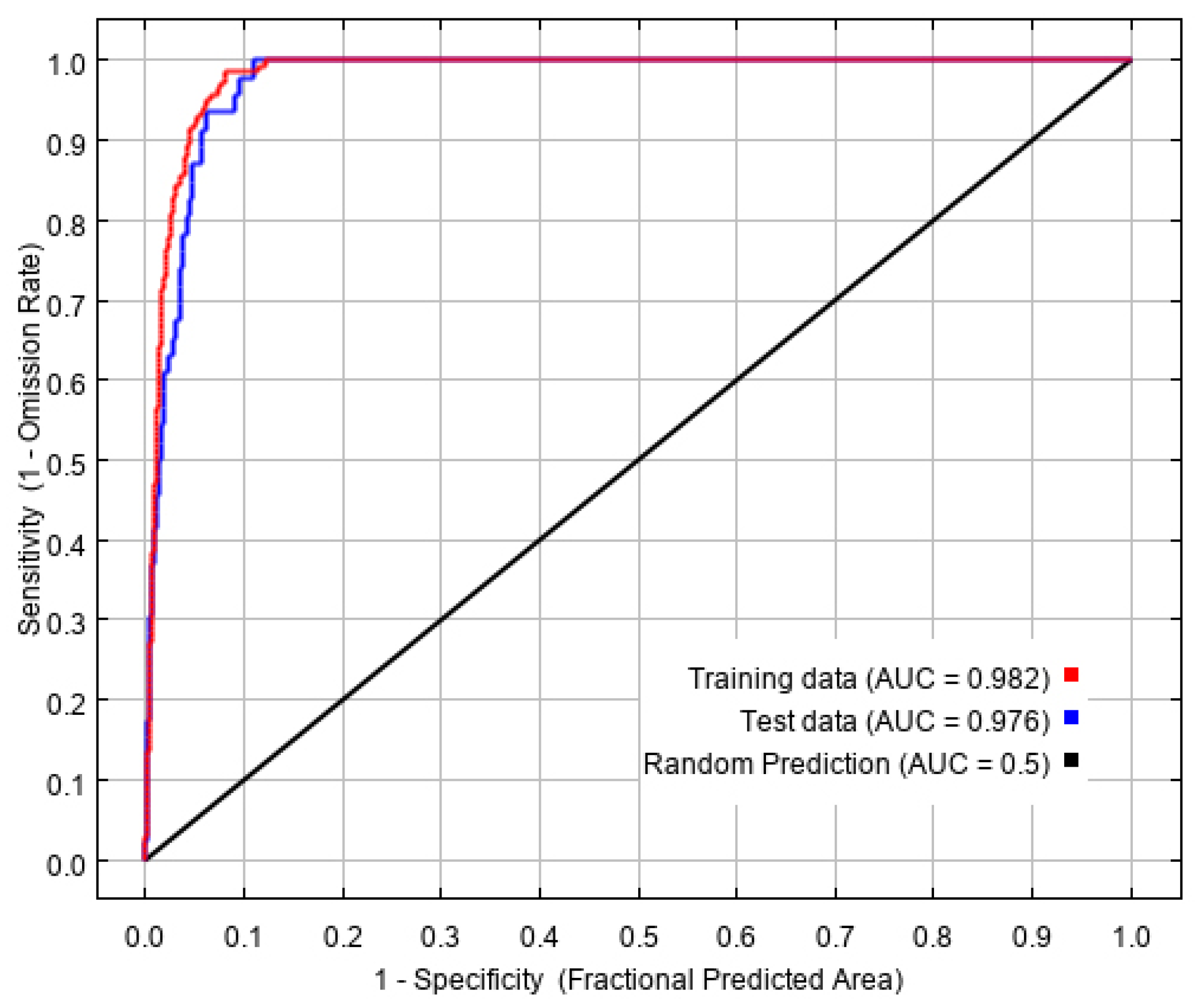
3.1. Evaluation of MaxEnt Model Prediction Accuracy
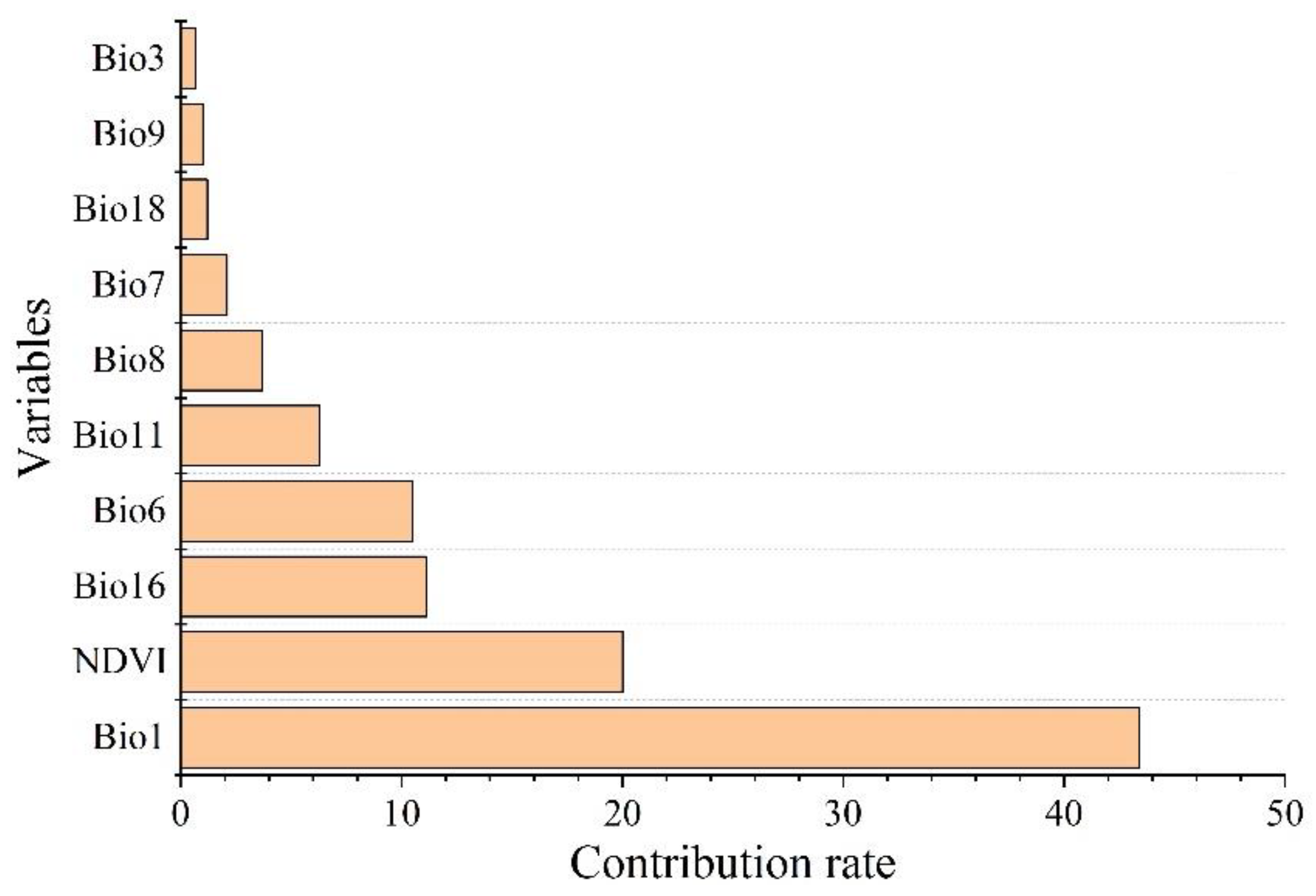
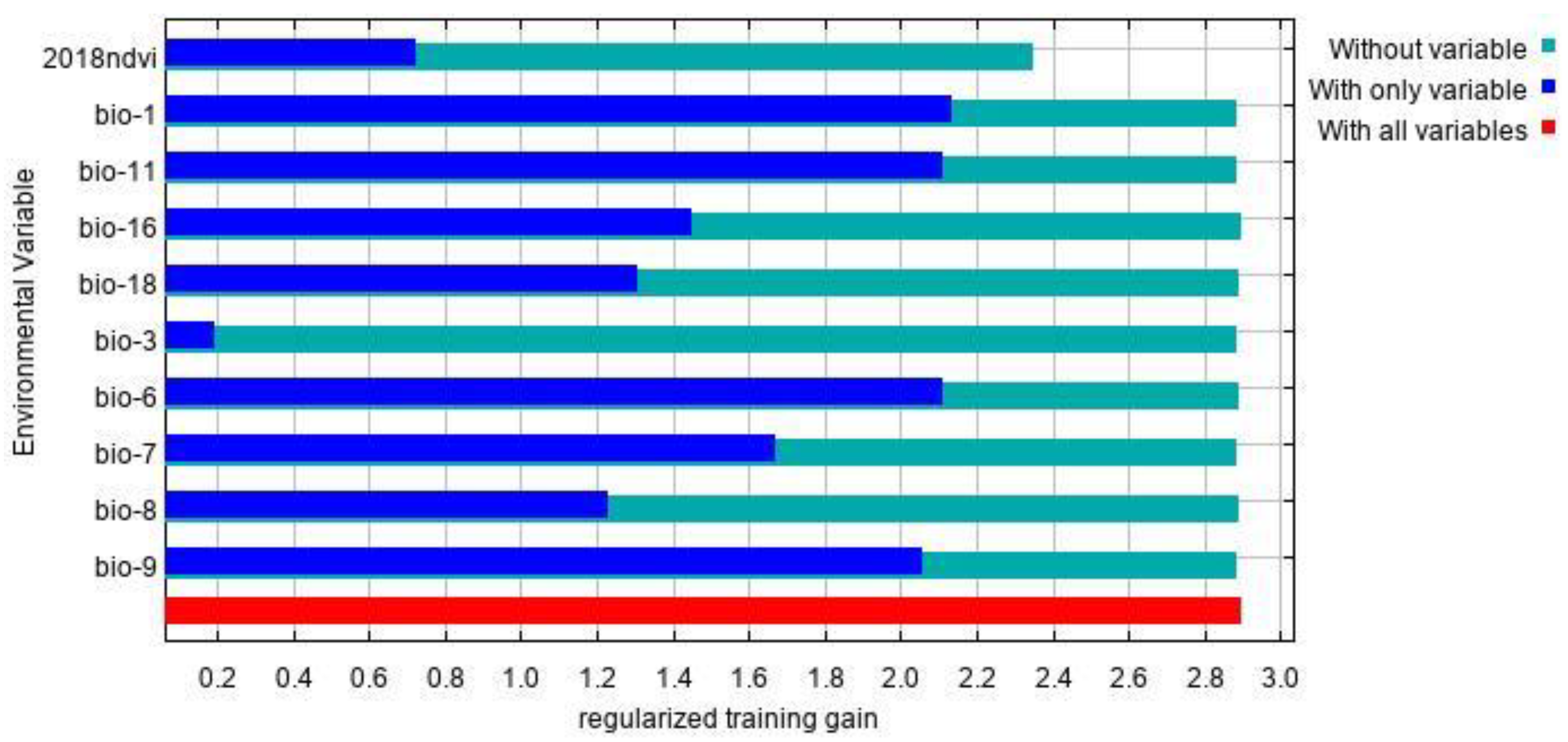
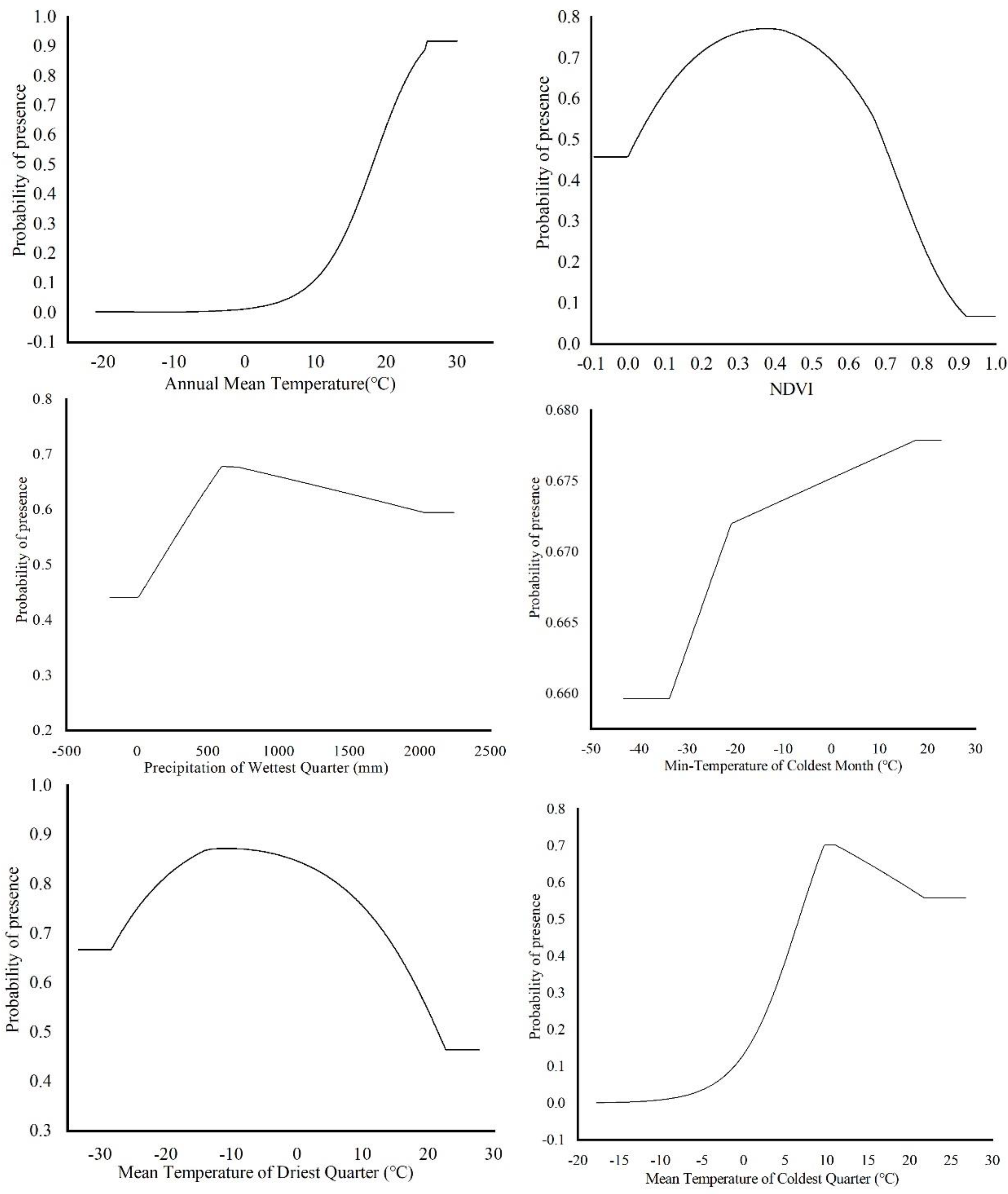
3.2. Main Environmental Factors Affecting the Distribution
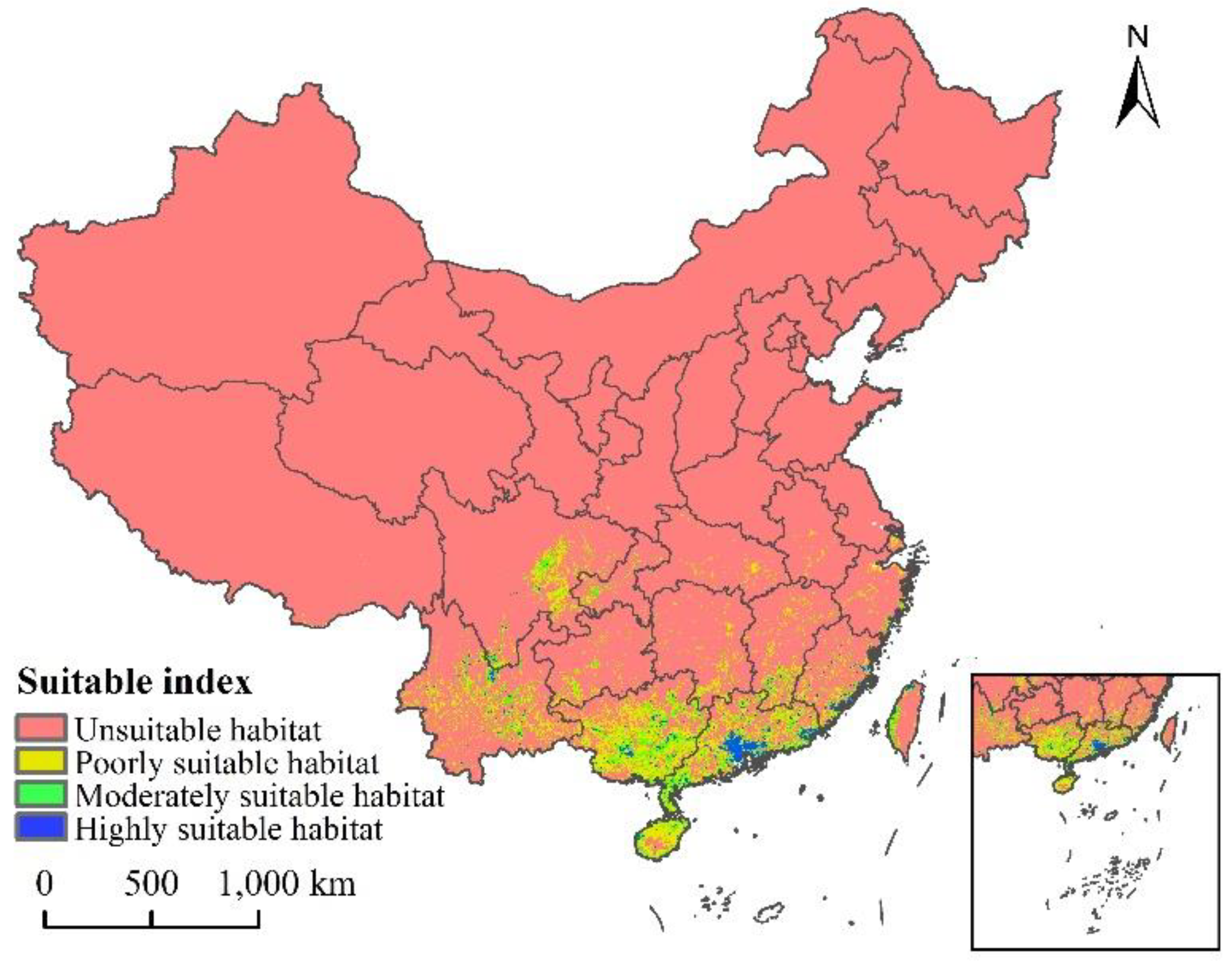
3.3. Current Potential Distribution
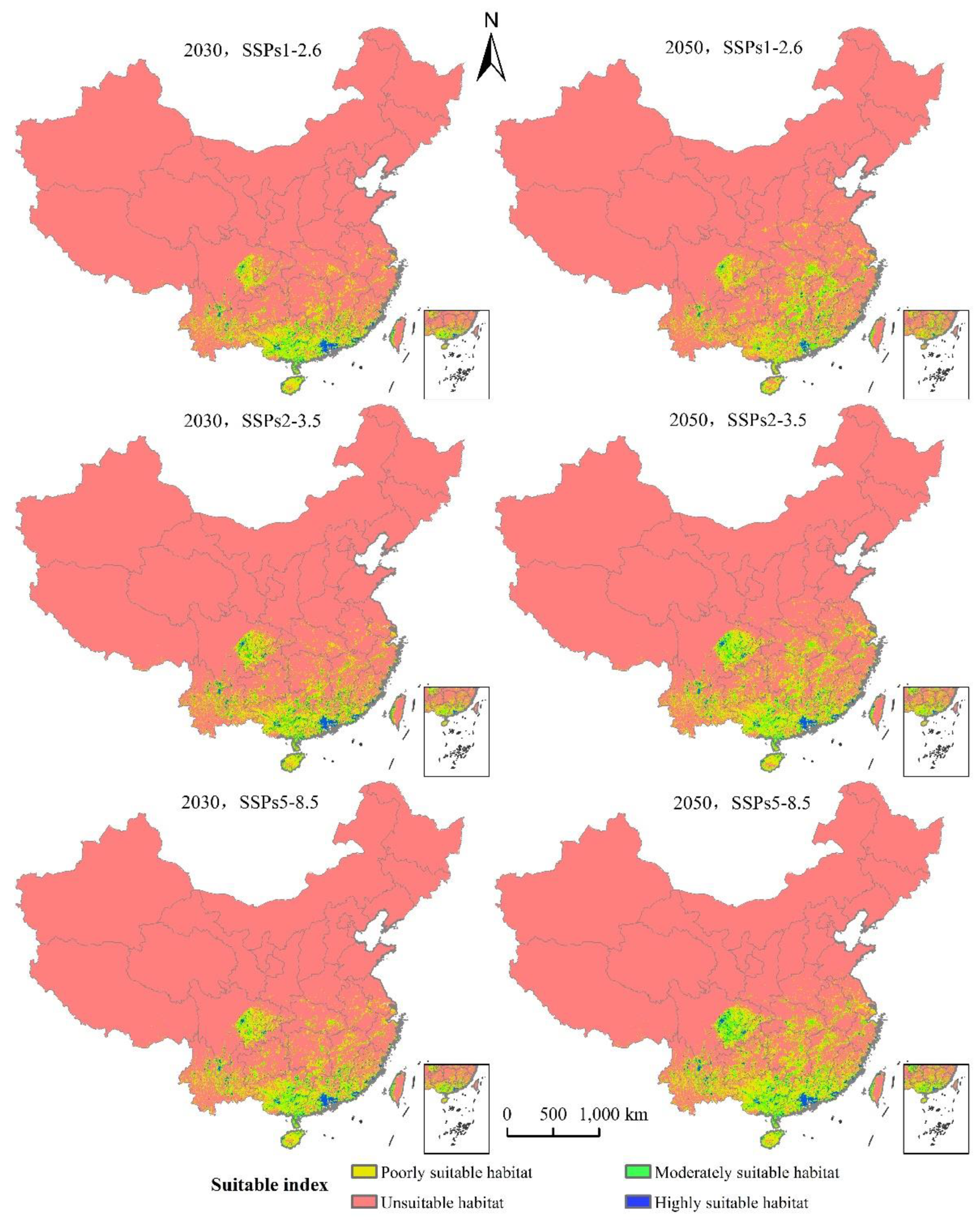
3.4. Potentially Suitable Climatic Distributions in the Future
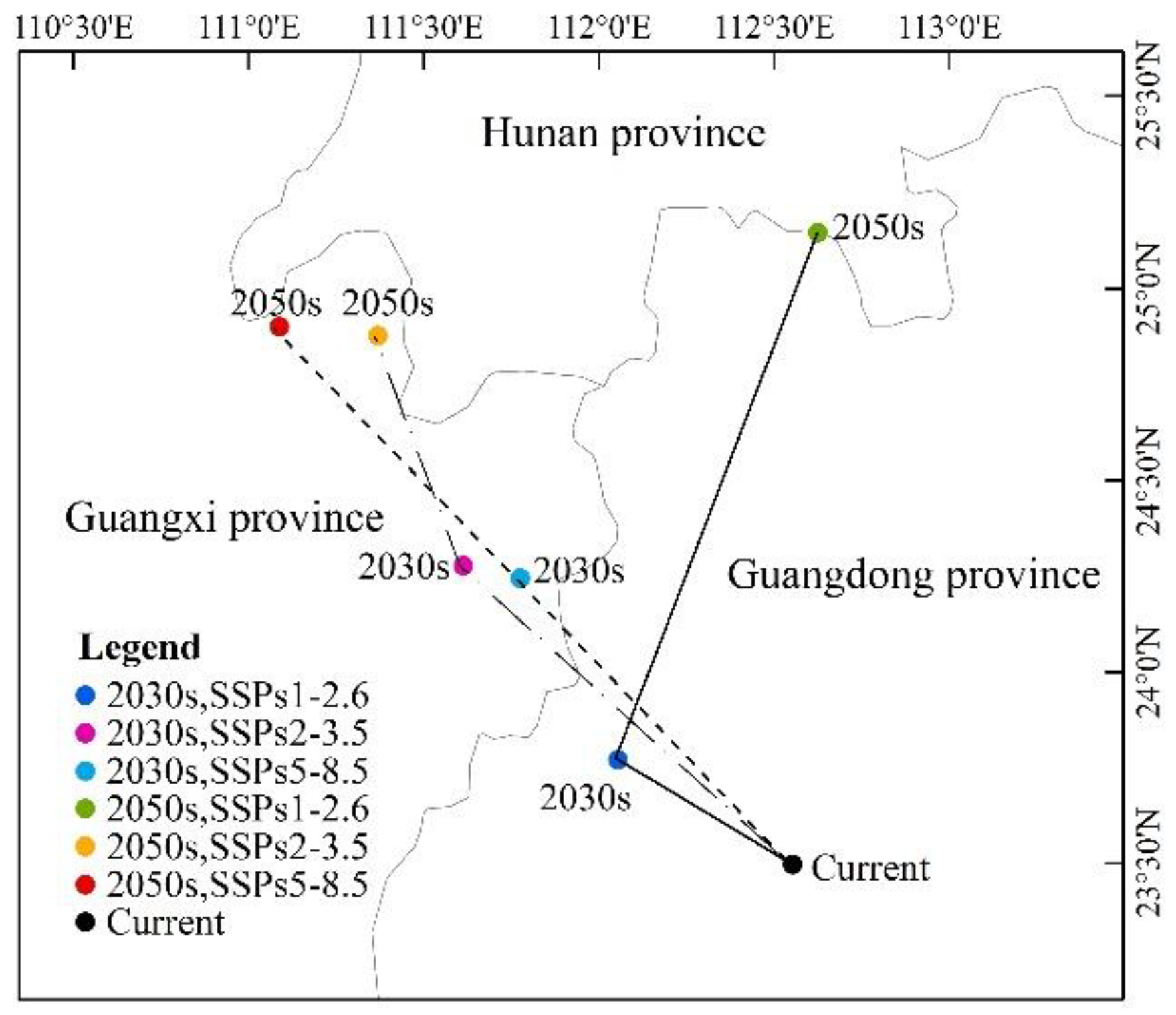
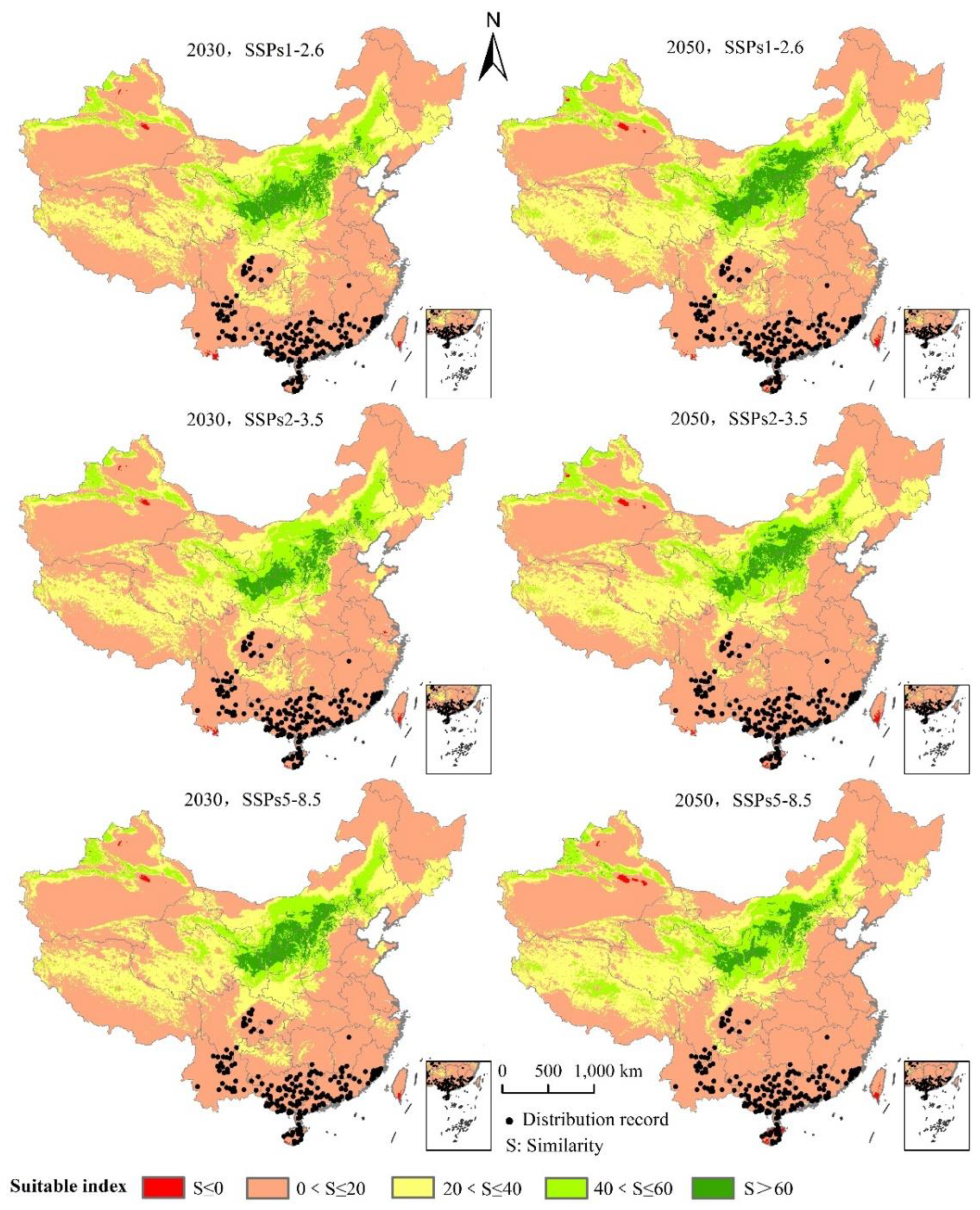
3.5. Analysis of the Multivariate Environmental Similarity Surface (MESS) of L. invasa Potential Areas of Distribution under Future Climate Changes
4. Discussion
5. Conclusions
Author Contributions
Funding
Informed Consent Statement
Data Availability Statement
Conflicts of Interest
References
- Chen, B.X.; Sun, Y.F.; Han, Z.H.; Huang, H.K.; Zhang, H.B.; Li, Y.K.; Zhang, G.L.; Liu, W.X. Challenges in preventing and controlling invasive alien species in China. J. Biosaf. 2020, 29, 157–163. [Google Scholar]
- Liu, T.T.; Zhang, H.J.; Ma, Y.Z. Assessment of economic damage from biological invasion. Ecol. Econ. 2010, 2, 173–175. [Google Scholar]
- O’Connor, B.; Bojinski, S.; Röösli, C.; Schaepman, M.E. Monitoring global changes in biodiversity and climate is more important than ever as ecological crisis intensifies. Ecol. Inform. 2019, 55. [Google Scholar] [CrossRef] [Scilit]
- Change, I.C. The Physical Science basis. In Contribution of Working Group I to the Fifth Assessment Report of the Intergovernmental Panel on Climate Change; Stocker, T.F., Qin, D., Plattner, G.-K., Tignor, M., Allen, S.K., Boschung, J., Nauels, A., Xia, Y., Bex, V., et al., Eds.; Cambridge University Press: Cambridge, UK; New York, NY, USA, 2018; p. 1535. [Google Scholar]
- Li, J.; Chang, H.; Liu, T.; Zhang, C. The potential geographical distribution of haloxylon across Central Asia under climate change in the 21st century. Agric. For. Meteorol. 2019, 275, 243–254. [Google Scholar] [CrossRef] [Scilit]
- Jiang, Z.H.; Zhang, X.; Wang, J. Projection of climate change in China in the 21st century by IPCC-AR4 Models. Geogr. Res. 2008, 27, 787–799. [Google Scholar]
- Wu, M.L. Global climate change and biological invasion. Bull. Biol. 2012, 47, 4–6. [Google Scholar]
- Wiens, J.A.; Stralberg, D.; Jongsomjit, D.; Howell, C.A.; Snyder, M.A. Niches, models, and climate change: Assessing the assumptions and uncertainties. Proc. Natl. Acad. Sci. USA 2009, 106, 19729–19736. [Google Scholar] [CrossRef] [Scilit] [PubMed]
- Phillips, S.J.; Anderson, R.P.; Schapire, R.E. Maximum entropy modeling of species geographic distributions. Ecol. Model. 2006, 190, 231–259. [Google Scholar] [CrossRef] [Scilit]
- Phillips, S.J.; Dudík, M. Modeling of species distributions with Maxent: New extensions and a comprehensive evaluation. Ecography 2008, 31, 161–175. [Google Scholar] [CrossRef] [Scilit]
- Sun, J.J.; Jiang, B.; Zhu, J.R.; Wu, D.T.; Ye, N.N.; Qiu, J.H.; Yuan, W.G.; Wu, C.P.; Huang, Y.J.; Jiao, J.J.; et al. Prediction of potential suitable habitat and dominate environmental factors of sassafras Tzumu in Zhejiang with maxent model. J. Northeast. For. Univ. 2020, 48, 1–6. [Google Scholar]
- Phillips, S.J.; Dudík, M.; Schapire, R.E. A maximum entropy approach to species distribution modeling. In Proceedings of the Twenty-First International Conference on Machine Learning–ICML, Banff, AB, Canada, 4–8 July 2004; p. 83. [Google Scholar]
- Mamun, M.; Kim, S.; An, K.-G. Distribution pattern prediction of an invasive alien species largemouth bass using a maximum entropy model (MaxEnt) in the Korean peninsula. J. Asia Pac. Biodivers. 2018, 11, 516–524. [Google Scholar] [CrossRef] [Scilit]
- Qin, A.; Jin, K.; Batsaikhan, M.-E.; Nyamjav, J.; Li, G.; Li, J.; Xue, Y.; Sun, G.; Wu, L.; Indree, T.; et al. Predicting the current and future suitable habitats of the main dietary plants of the Gobi Bear using MaxEnt modeling. Glob. Ecol. Conserv. 2020, 22, e01032. [Google Scholar] [CrossRef] [Scilit]
- West, A.M.; Kumar, S.; Brown, C.S.; Stohlgren, T.J.; Bromberg, J. Field validation of an invasive species Maxent model. Ecol. Inform. 2016, 36, 126–134. [Google Scholar] [CrossRef] [Scilit]
- Rejmánek, M.; Simberloff, D. Encyclopedia of Biological Invasions, 1st ed.; University of California Press: Berkeley, CA, USA, 2011. [Google Scholar]
- Yang, M.; Xie, Y.; Liu, J. Three Decades of Chinese Eucalyptus; China Forestry Press: Beijing, China, 2011. (In Chinese) [Google Scholar]
- Paine, T.D.; Steinbauer, M.J.; Lawson, S.A. Native and exotic pests of eucalyptus: A worldwide perspective. Annu. Rev. Entomol. 2011, 56, 181–201. [Google Scholar] [CrossRef] [Scilit]
- Pang, Z. Current situation and development in trend of Eucalypts pest in China. J. Guangxi Acad. Sci. 2013, 29, 192–206. [Google Scholar]
- Wu, H.W.; Jia, X.Y.; Huang, H.H.; Huang, Y.H.; Fan, J.X. Studies on the resistance of five Eucalyptus species to Leptocybe invasa Fisher and La Salle. J. Environ. Entomol. 2009, 31, 132–136. [Google Scholar]
- Chang, R.L.; Zhou, X.D. Research status on Leptocybe invasa Fisher and La Salle in foreign countries. For. Pest Dis. 2010, 29, 22–25. [Google Scholar]
- Zheng, X.-L.; Huang, Z.-Y.; Li, J.; Yang, Z.-D.; Yang, X.-H.; Lu, W. Reproductive Biology of Leptocybe invasa Fisher and La Salle (Hymenoptera: Eulophidae). Neotrop. Èntomol. 2017, 47, 19–25. [Google Scholar] [CrossRef] [Scilit]
- Gevers, C.R.; Dittrich-Schrder, G.; Slippers, B.; Hurley, B.P. Interactions between hymenopteran species associated with gall-forming wasps: The Leptocybe invasa community as a case study. Agric. For. Entomol. 2020. [Google Scholar] [CrossRef] [Scilit]
- Zheng, X.; Li, J.; Yang, Z.; Xian, Z.; Wei, J.; Lei, C.; Wang, X.; Lu, W. A Review of invasive biology, prevalence and management of Leptocybe invasa Fisher and La Salle (Hymenoptera: Eulophidae: Tetrastichinae). Afr. Èntomol. 2014, 22, 68–79. [Google Scholar] [CrossRef] [Scilit]
- Nugnes, F.; Gebiola, M.; Monti, M.M.; Gualtieri, L.; Giorgini, M.; Wang, J.; Bernardo, U. Genetic diversity of the invasive gall wasp Leptocybe invasa (Hymenoptera: Eulophidae) and of its rickettsia endosymbiont, and associated sex-ratio differences. PLoS ONE 2015, 10, e0124660. [Google Scholar] [CrossRef] [Scilit] [PubMed]
- Tang, C.; Wan, X.; Wan, F.; Ren, S.; Peng, Z. The blue gum chalcid, Leptocybe invasa, invaded Hainan province. Chin. Bull. Entomol. 2008, 45, 967–971. [Google Scholar]
- Danyang, X.J.R.H.Z.; Chen, L.M.Q.H.Z.Z.; Ruiping, M.H.M.C. Study on the population regularity and spatial distribution pattern of Leptocybe invasa at Eucalyptus. Guangdong For. Sci. Technol. 2008, 24, 50–57. [Google Scholar]
- Dewei, W.Y.J.X.L.; Mingshan, L.J.Z.G.C.; Zhongqi, Y. Leptocybe invasa, a new invasive forest pest making galls on twigs and leaves of eucalyptus trees in China (Hymenoptera: Eulophidae). Sci. Silvae Sin. 2009, 7. [Google Scholar] [CrossRef]
- Zhang, H.; Kang, W.; Chen, S.; Tang, X.; Lin, X. Study on the relationship between eucalyptus clones and the damage degrees caused by Leptocybe invasa Fisher and La Salle. J. Fujian Coll. For. 2012, 32, 345–349. [Google Scholar]
- Chen, Y.; Liao, Z.; Tu, X. Study on resistance of different Eucalyptus varieties to Leptocybe invasa in southern Jiangxi. North. Hortic. 2015, 11, 106–109. [Google Scholar]
- Song, Y.Q. China’s Forestry Pest Survey Results in 2014–2017; Beijing Publishing House: Beijing, China, 2019; pp. 81–83. [Google Scholar]
- Xin, X.G.; Wu, T.W.; Zhang, J.; Zhang, F.; Li, W.P.; Zhang, Y.W.; Lu, Y.X.; Fang, Y.J.; Jie, W.H.; Zhang, L.; et al. Introduction of BCC models and its participation in CMIP6. Clim. Chang. Res. 2019, 15, 533–539. [Google Scholar]
- Wen, Y.W.; Cai, W.J.; Wang, C. The application and future directions of the Shared Socioeconomic Pathways (SSPs). Clim. Chang. Res. 2020, 16, 215–222. [Google Scholar]
- Wang, J.F.; Xu, C.D. Geodetector: Principle and prospective. Acta Geogr. Sin. 2017, 72, 116–134. [Google Scholar]
- Wang, R.; Jiang, C.; Guo, X.; Chen, D.; You, C.; Zhang, Y.; Wang, M.; Li, Q. Potential distribution of Spodoptera frugiperda (J.E. Smith) in China and the major factors influencing distribution. Glob. Ecol. Conserv. 2020, 21, e00865. [Google Scholar] [CrossRef] [Scilit]
- Swets, J.A. Measuring the accuracy of diagnostic systems. Science 1988, 240, 1285–1293. [Google Scholar] [CrossRef] [Scilit] [PubMed]
- Merow, C.; Smith, M.; Silander, J.A. A practical guide to Maxent: What it does, and why inputs and settings matter. Ecography 2013, 36, 1–12. [Google Scholar] [CrossRef] [Scilit]
- Hernandez, P.A.; Graham, C.H.; Master, L.L.; Albert, D.L. The effect of sample size and species characteristics on performance of different species distribution modeling methods. Ecography 2006, 29, 773–785. [Google Scholar] [CrossRef] [Scilit]
- Brown, J.L. SDM toolbox: A python-based GIS toolkit for landscape genetic, biogeographic and species distribution model analyses. Methods Ecol. Evol. 2014, 5, 694–700. [Google Scholar] [CrossRef] [Scilit]
- Elith, J.; Kearney, M.; Phillips, S. The art of modelling range-shifting species. Methods Ecol. Evol. 2010, 1, 330–342. [Google Scholar] [CrossRef] [Scilit]
- Brook, B.W.; Sodhi, N.S.; Bradshaw, C.J. Synergies among extinction drivers under global change. Trends Ecol. Evol. 2008, 23, 453–460. [Google Scholar] [CrossRef] [Scilit]
- Huang, R. The Population Dynamics and Spatial Distribution Pattern of Leptocybe Invasa Fisher and La Salle on Eucalyptus spp. Master’s Thesis, Hainan University, Haikou, China, June 2013. [Google Scholar]
- Chen, Y.S.; Li, X.; Deng, B.P. Growth and Development of Leptocybe invasa as affected by environmental temperature. Fujian J. Agric. Sci. 2020, 35, 545–551. [Google Scholar]
- Zhu, F.L.; Ren, S.X.; Qiu, B.L.; Wu, J.H. Effect of temperature on life table parameters of Leptocybe invasa (Hymenoptera: Eulophidae). Austral Entomol. 2014, 51, 71–78. [Google Scholar]
- Chen, Y.R.; Xie, H.M.; Luo, H.L.; Yang, B.Y.; Xiong, D.J. Impacts of climate change on the distribution and distribution pattern simulation of Cymbidium formosanum. Chin. J. Appl. Ecol. 2019, 30, 3419–3425. [Google Scholar]
- Zhang, X.Q.; Peng, L.L.; Lin, C.H. Progress on the projections of future climate change with variable emis-sion scenarios. Adv. Earth Sci. 2008, 23, 174–185. [Google Scholar]
- Jia, D.; Xu, C.Y.; Liu, Y.H.; Hu, J.; Li, N.; Ma, R.Y. Potential distribution prediction of apple-grass aphid Rhopalosiphum oxyacanthae in China based on MaxEnt model. Acta Phytophylacica Sin. 2020, 47, 528–536. [Google Scholar]
- Jamala, Z.A.; Abou-Shaarab, H.F.; Qamerc, S.; Alotaibid, M.A.; Khane, K.A.; Khanf, M.F.; Bashirg, M.A.; Hannang, A.; AL-Kahtanih, S.N.; Tahai, E.-K.A. Future expansion of small hive beetles, Aethina tumida, towards North Africa and South Europe based on temperature factors using maximum entropy algorithm. J. King Saud Univ. Sci. 2020, 33, 101242. [Google Scholar] [CrossRef] [Scilit]
- Guo, C.; Peng, X.; Zheng, X.; Wang, X.; Wang, R.; Huang, Z.; Yang, Z. Comparison of bacterial diversity and abundance between sexes of Leptocybe invasa Fisher and La Salle (Hymenoptera: Eulophidae) from China. Peerj 2020, 8, e8411. [Google Scholar] [CrossRef] [Scilit] [PubMed]



| Emission | Description |
|---|---|
| SSP1–2.6 | SSP1 (Low forcing scenario) Upgrade to RCP2.6 scenario based on (Radiative forcing reaches 2.6 W/m2 in 2100) |
| SSP2–4.5 | SSP2 (Medium forcing scenario) Upgrade to RCP4.5 scenario based on (Radiative forcing reaches 4.5 W/m2 in 2100) |
| SSP3–7.0 | SSP3 (Medium forcing scenario) New RCP7.0 emission path based on (Radiative forcing will reach 7.0 W/m2 in 2100) |
| SSP5–8.5 | SSP5 (High Forcing Scenario) Upgrade to RCP8.5 scenario based on (SSP5 is the only SSP scenario that can achieve radiative forcing to 8.5 W/m2 in 2100) |
| Code | Description | Whether to Use for Modeling |
|---|---|---|
| Bio1 | Annual Mean Temperature (℃) | Yes |
| Bio2 | Mean Diurnal Range (Mean of monthly (max temp–min temp)) (℃) | No |
| Bio3 | Isothermality (BIO2/BIO7) (×100) | Yes |
| Bio4 | Temperature Seasonality (standard deviation × 100) | No |
| Bio5 | Max Temperature of Warmest Month (℃) | No |
| Bio6 | Min Temperature of Coldest Month (℃) | Yes |
| Bio7 | Temperature Annual Range (BIO5-BIO6) (℃) | Yes |
| Bio8 | Mean Temperature of Wettest Quarter (℃) | Yes |
| Bio9 | Mean Temperature of Driest Quarter (℃) | Yes |
| Bio10 | Mean Temperature of Warmest Quarter (℃) | No |
| Bio11 | Mean Temperature of Coldest Quarter (℃) | Yes |
| Bio12 | Annual precipitation (mm) | No |
| Bio13 | Precipitation of Wettest Month (mm) | No |
| Bio14 | Precipitation of Driest Month (mm) | No |
| Bio15 | Precipitation Seasonality (Coefficient of Variation) | No |
| Bio16 | Precipitation of Wettest Quarter (mm) | Yes |
| Bio17 | Precipitation of Driest Quarter (mm) | No |
| Bio18 | Precipitation of Warmest Quarter (mm) | Yes |
| Bio19 | Precipitation of Coldest Quarter (mm) | NO |
| NDVI | Normalized Vegetation Index | Yes |
| Altitude | Altitude(m) | No |
| Period | Highly Suitable | Moderately Suitable | Poorly Suitable | Total Suitable |
|---|---|---|---|---|
| Current | 3.96 | 10.59 | 29.36 | 43.91 |
| 2030s, SSPs1–2.6 | 5.44 | 14.75 | 43.43 | 63.62 |
| 2030s, SSPs2–4.5 | 5.65 | 15.73 | 47.9 | 69.28 |
| 2030s, SSPs5–8.5 | 5.96 | 16.23 | 48.22 | 70.41 |
| 2050s, SSPs1–2.6 | 3.75 | 16.75 | 51.28 | 71.78 |
| 2050s, SSPs2–4.5 | 6.62 | 21.55 | 60.68 | 88.85 |
| 2050s, SSPs5–8.5 | 7.73 | 24.65 | 64.93 | 97.31 |
| Period | Loss | Gain | Unchanged |
|---|---|---|---|
| 2030s, SSPs1–2.6 | 0.01 | 17.68 | 40.74 |
| 2030s, SSPs2–3.5 | 0.002 | 22.80 | 40.73 |
| 2030s, SSPs5–8.5 | 0.002 | 24.08 | 40.73 |
| 2050s, SSPs1–2.6 | 2.15 | 28.58 | 38.60 |
| 2050s, SSPs2–3.5 | 0.05 | 40.95 | 40.70 |
| 2050s, SSPs5–8.5 | 0.002 | 48.07 | 40.73 |
Publisher’s Note: MDPI stays neutral with regard to jurisdictional claims in published maps and institutional affiliations. |
© 2021 by the authors. Licensee MDPI, Basel, Switzerland. This article is an open access article distributed under the terms and conditions of the Creative Commons Attribution (CC BY) license (http://creativecommons.org/licenses/by/4.0/).
Share and Cite
Zhang, H.; Song, J.; Zhao, H.; Li, M.; Han, W. Predicting the Distribution of the Invasive Species Leptocybe invasa: Combining MaxEnt and Geodetector Models. Insects 2021, 12, 92. https://doi.org/10.3390/insects12020092
Zhang H, Song J, Zhao H, Li M, Han W. Predicting the Distribution of the Invasive Species Leptocybe invasa: Combining MaxEnt and Geodetector Models. Insects. 2021; 12(2):92. https://doi.org/10.3390/insects12020092
Chicago/Turabian StyleZhang, Hua, Jinyue Song, Haoxiang Zhao, Ming Li, and Wuhong Han. 2021. "Predicting the Distribution of the Invasive Species Leptocybe invasa: Combining MaxEnt and Geodetector Models" Insects 12, no. 2: 92. https://doi.org/10.3390/insects12020092
APA StyleZhang, H., Song, J., Zhao, H., Li, M., & Han, W. (2021). Predicting the Distribution of the Invasive Species Leptocybe invasa: Combining MaxEnt and Geodetector Models. Insects, 12(2), 92. https://doi.org/10.3390/insects12020092