Hygienic Behavior of Apis mellifera and Its Relationship with Varroa destructor Infestation and Honey Production in the Central Highlands of Ecuador
by
 , ,
, ,
Diego Masaquiza
1,* ,
,
Junior Vargas
1,
Nelsón Ortíz
1,
Rodrigo Salazar
1,
Lino Curbelo
2,
Anisley Pérez
3 and
Amilcar Arenal
4 1
Sede Orellana, Escuela Superior Politécnica de Chimborazo, El Coca 220150, Ecuador
2
Centro de Estudios para el Desarrollo de la Producción Animal, Universidad de Camagüey “Ignacio Agramonte Loynaz”, Camagüey 74650, Camagüey, Cuba
3
Facultad de Ciencias Agropecuarias, Fructuoso Rodríguez Pérez, Universidad de la Habana, San José de las Lajas 32700, Mayabeque, Cuba
4
Centro de Biología Molecular, Universidad de Camagüey “Ignacio Agramonte Loynaz”, Camagüey 74650, Camagüey, Cuba
*
Author to whom correspondence should be addressed.
Insects 2021, 12(11), 966; https://doi.org/10.3390/insects12110966
Submission received: 30 August 2021
/
Revised: 12 October 2021
/
Accepted: 18 October 2021
/
Published: 25 October 2021
Simple Summary
The honey bee (Apis mellifera) is an insect that has a relevant role in natural and agricultural ecosystems due to its leading role in the pollination of crops that are part of humanity’s food chain. Even in the face of the modernization and the intensification of agriculture, the honey bee has maintained its economic importance due to the value generated by its products. At present, when attempting to improve the characteristics of bees, it is important to evaluate variables such as hygienic behavior, Varroa infestation rates, and honey production as a basis for improvement plans in search of increasing productive yields at altitudes 2600 m above sea level (m.a.s.l.). The strength of bees against parasites, and therefore the better development of their colonies, was determined, resulting in a healthy colony with an increase in honey production. The altitude and the hygienic behavior of bees in the central highlands showed an inverse relationship. There was no relationship between infestation rates and production; it is proposed that environmental factors do not modulate Varroa levels or honey production.
Abstract
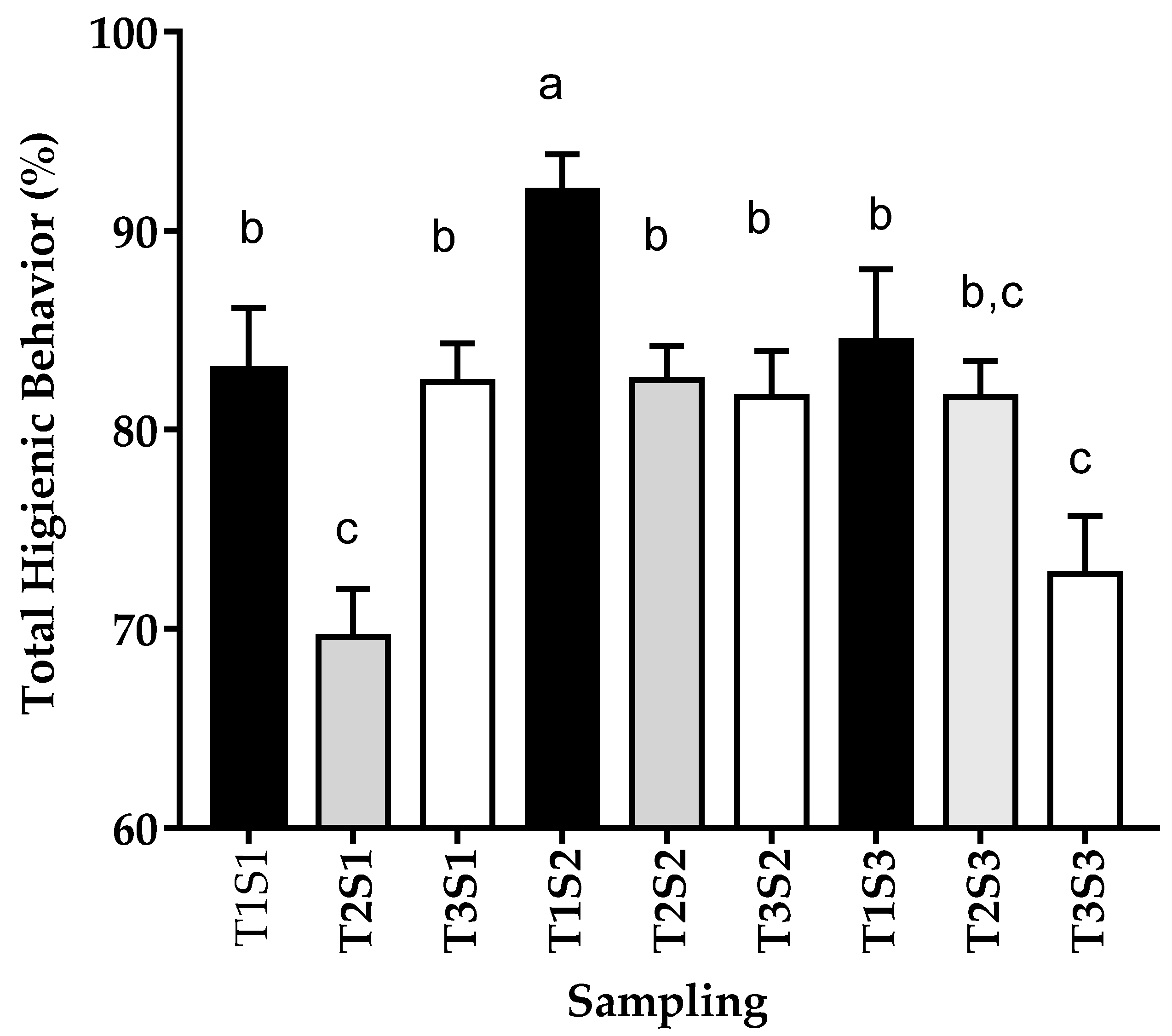
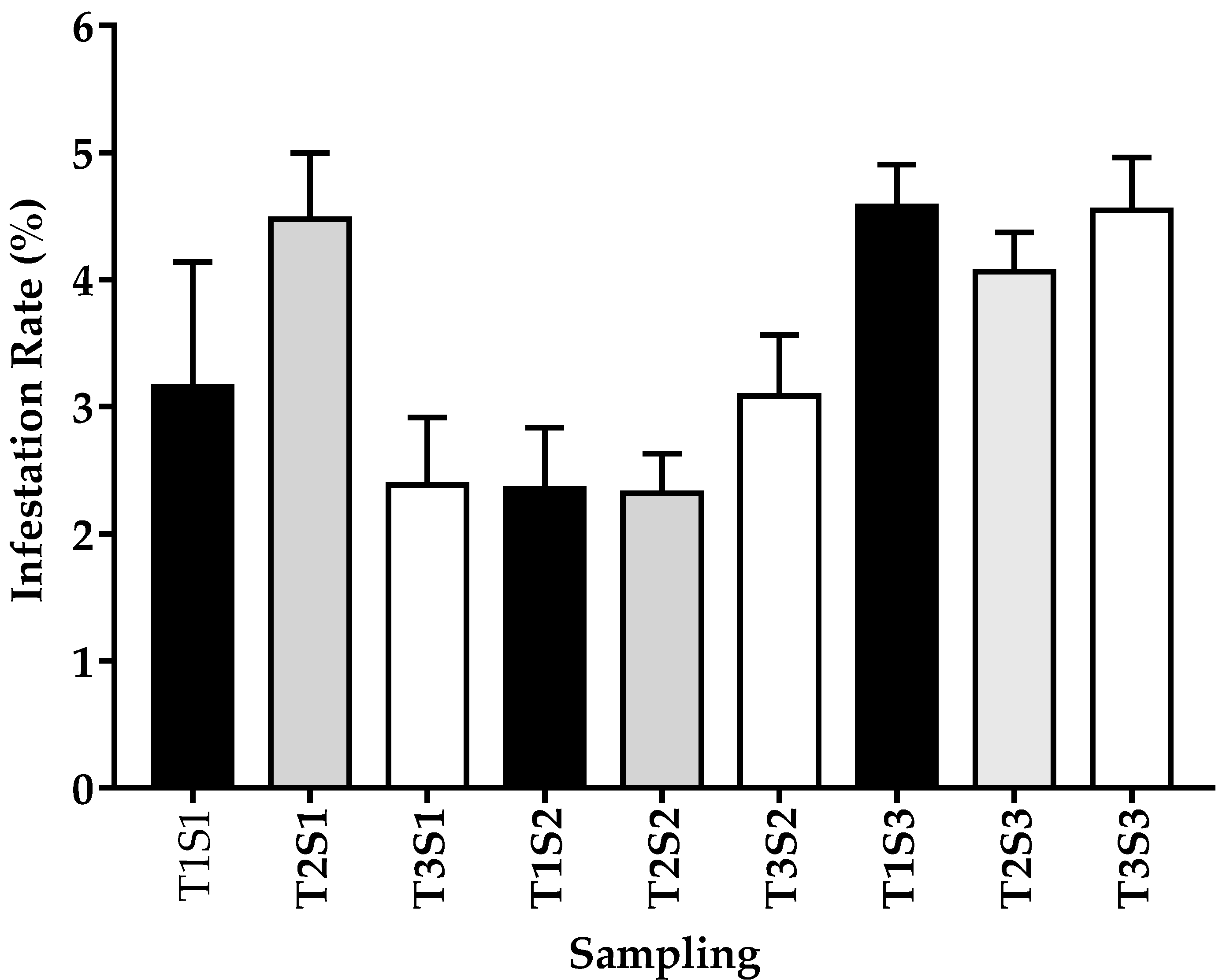
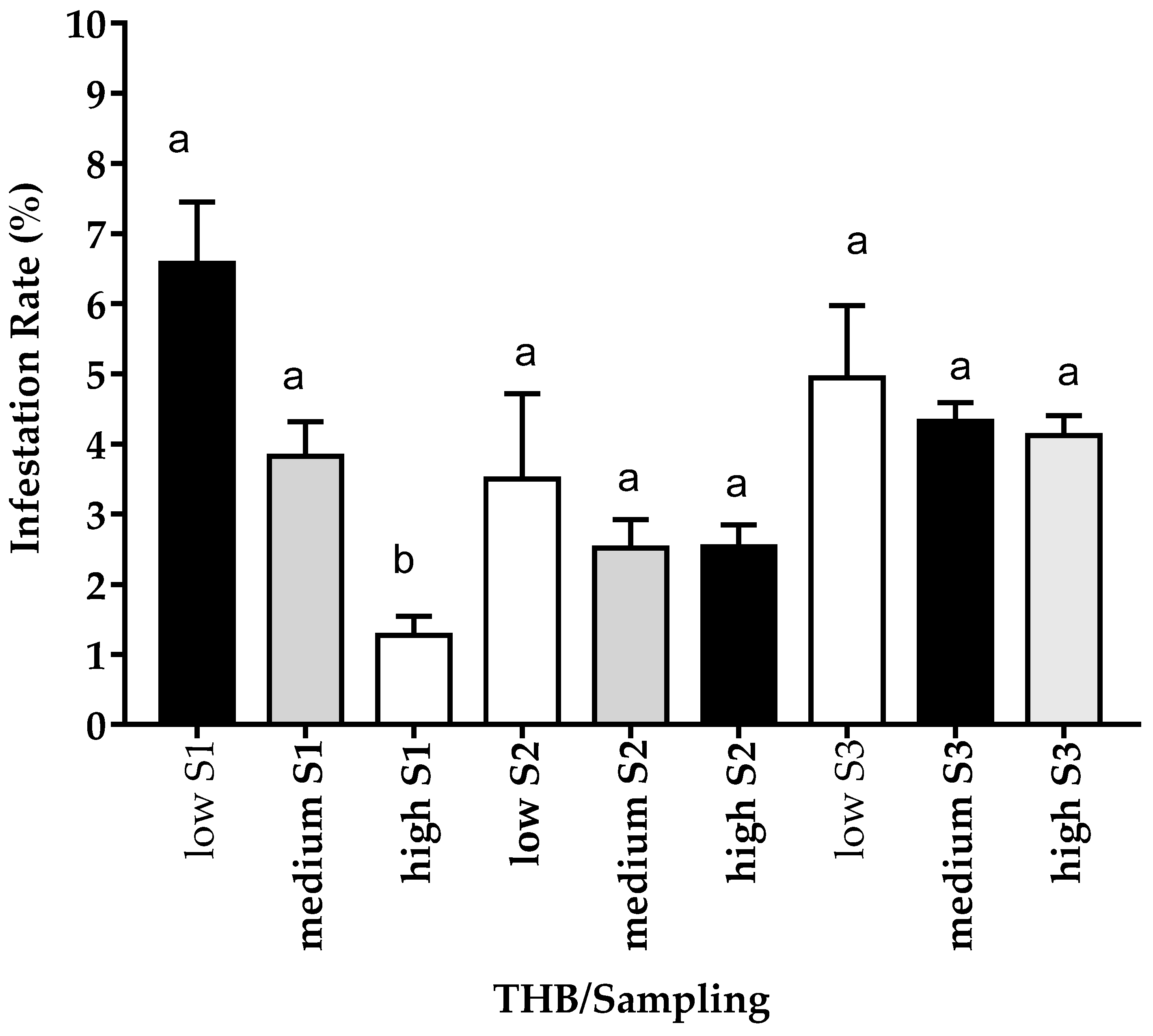
The aim of this research was to analyze the relationship among hygienic behavior (HB), Varroa destructor infestation, and honey production in the central highlands of Ecuador. Overall, 75 honey bee colonies were evaluated before, during, and after production at three altitude levels (2600–2800, 2801–3000, and >3000 m.a.s.l.). The hygienic behavior percentage of the colonies was determined by the pin-killing method, and the colonies were classified into three groups: high HB (>85%), mid HB (60.1–85%), and low HB (≤60%). Varroa infestation was diagnosed as well, and honey production was evaluated only during production. HB was high and heterogeneous, averaging 80% ± 9.7%. Its highest expression was observed at lower altitudes. The infestation degree was low (3.47% ± 1.56%), although the mite was detected in all colonies upon sampling. A negative correlation was observed between HB and Varroa infestation in the first sampling (−0.49 **), suggesting that the high- and mid-altitude HB colonies underwent the lowest infestation rates, regardless of sampling. The correlations between HB and production were significant (0.26 *), indicating a positive effect of HB on production, meaning that colonies with high HB obtained the highest honey production (25.08 ± 4.82 kg/hive). The HB of bees showed an inverse relationship with altitude and it tended to reduce the effect of Varroa infestation, favoring honey production and, thus, suggesting the feasibility of selecting colonies with high HB.
Keywords:
hygienic behavior; Apis mellifera; Varroa destructor; infestation rates; production; honey