Predicting the Invasion Potential of the Lily Leaf Beetle, Lilioceris lilii Scopoli (Coleoptera: Chrysomelidae), in North America

1
Washington State Department of Agriculture, 1111 Washington St. SE, Olympia, WA 98504, USA
2
Department of Entomology, Oregon State University, Hood River, OR 97031, USA
3
A.N. Severtsov Institute of Ecology and Evolution, Russian Academy of Sciences, 33 Leninskii pr., Moscow 119071, Russia
4
Department of Entomology, Washington State University, Pullman, WA 99164, USA
*
Author to whom correspondence should be addressed.
Insects 2020, 11(9), 560; https://doi.org/10.3390/insects11090560
Submission received: 1 August 2020
/
Revised: 19 August 2020
/
Accepted: 21 August 2020
/
Published: 23 August 2020
(This article belongs to the Collection The Borderless "Bug" Characterization of Invasive Insect Species: The First Step for Their Control)
Simple Summary
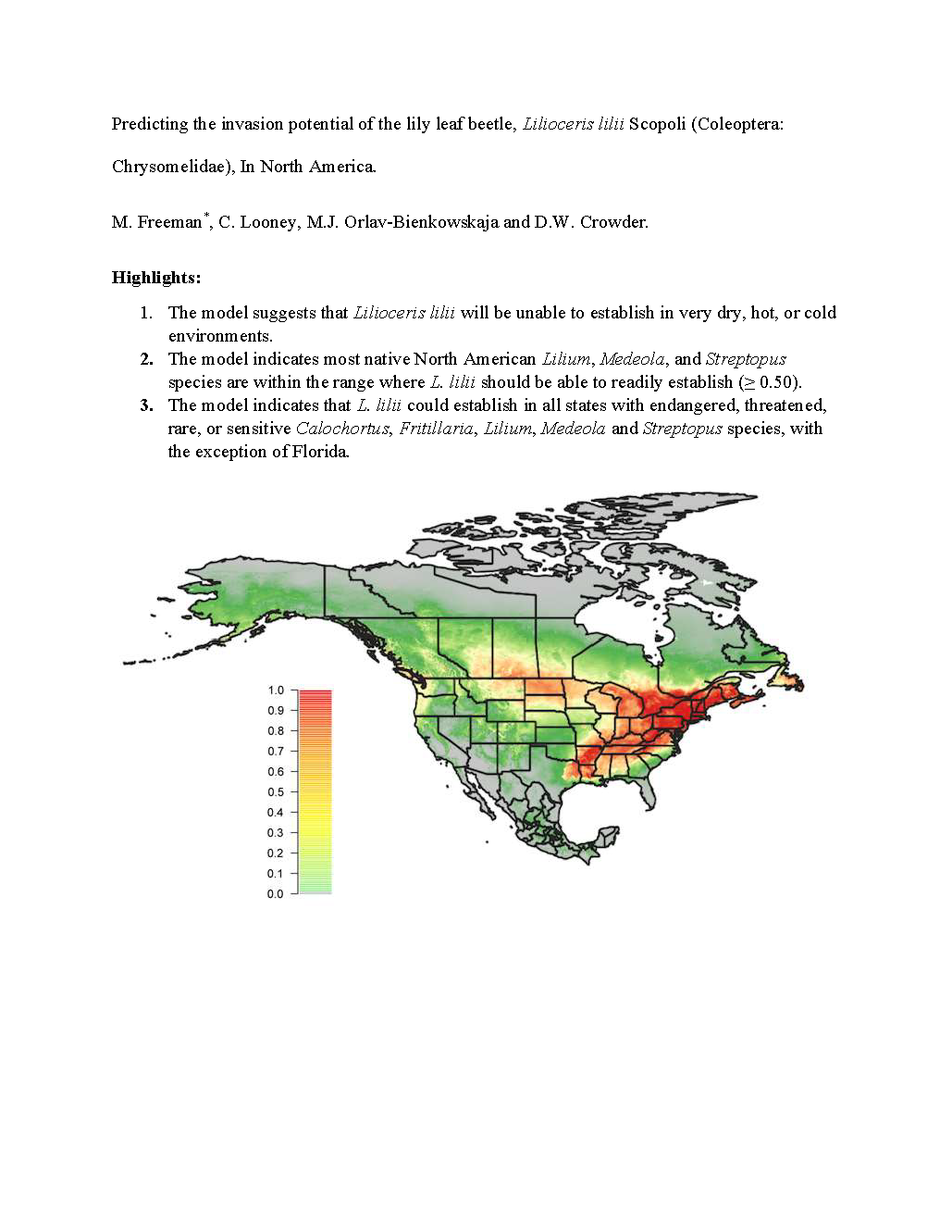
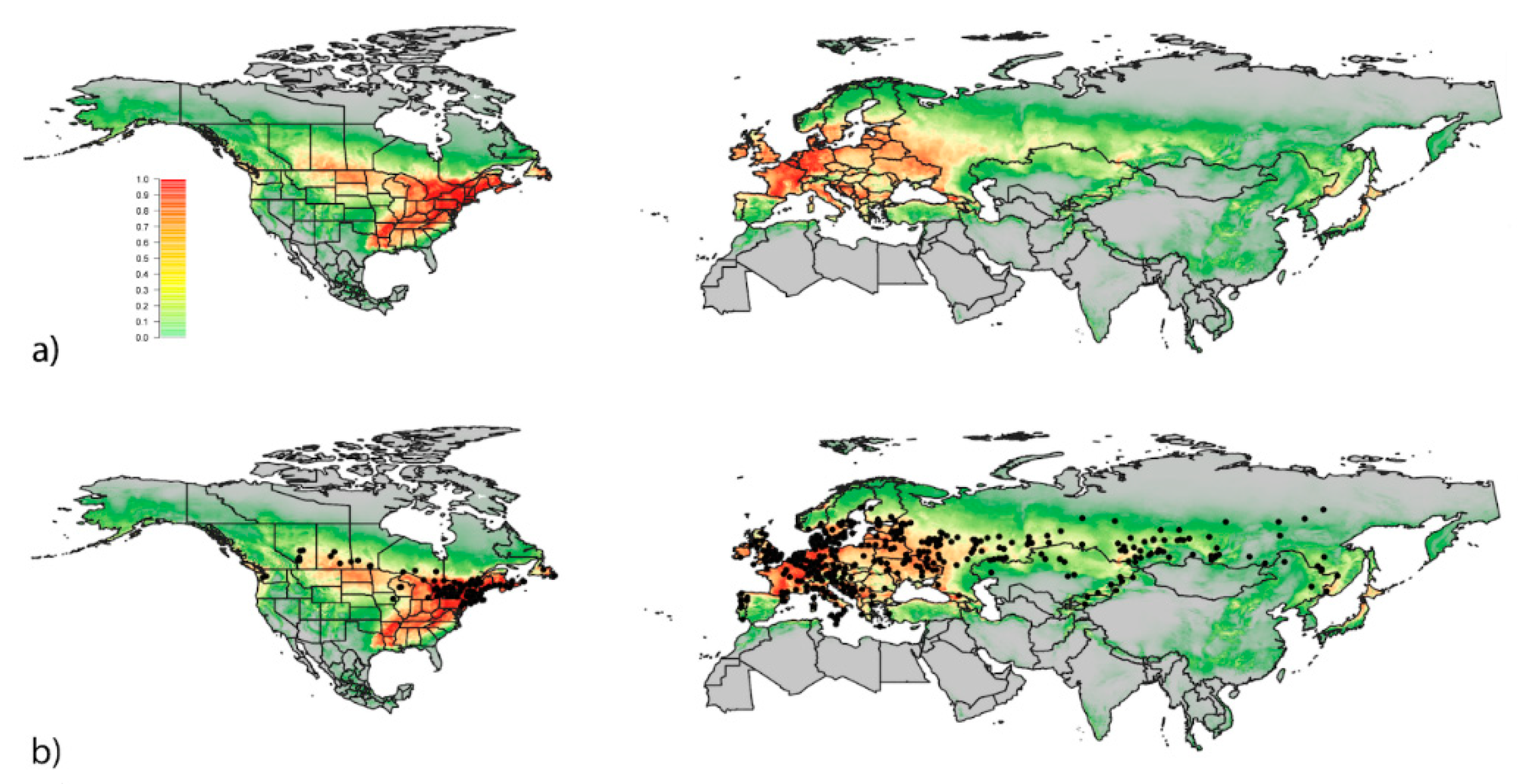
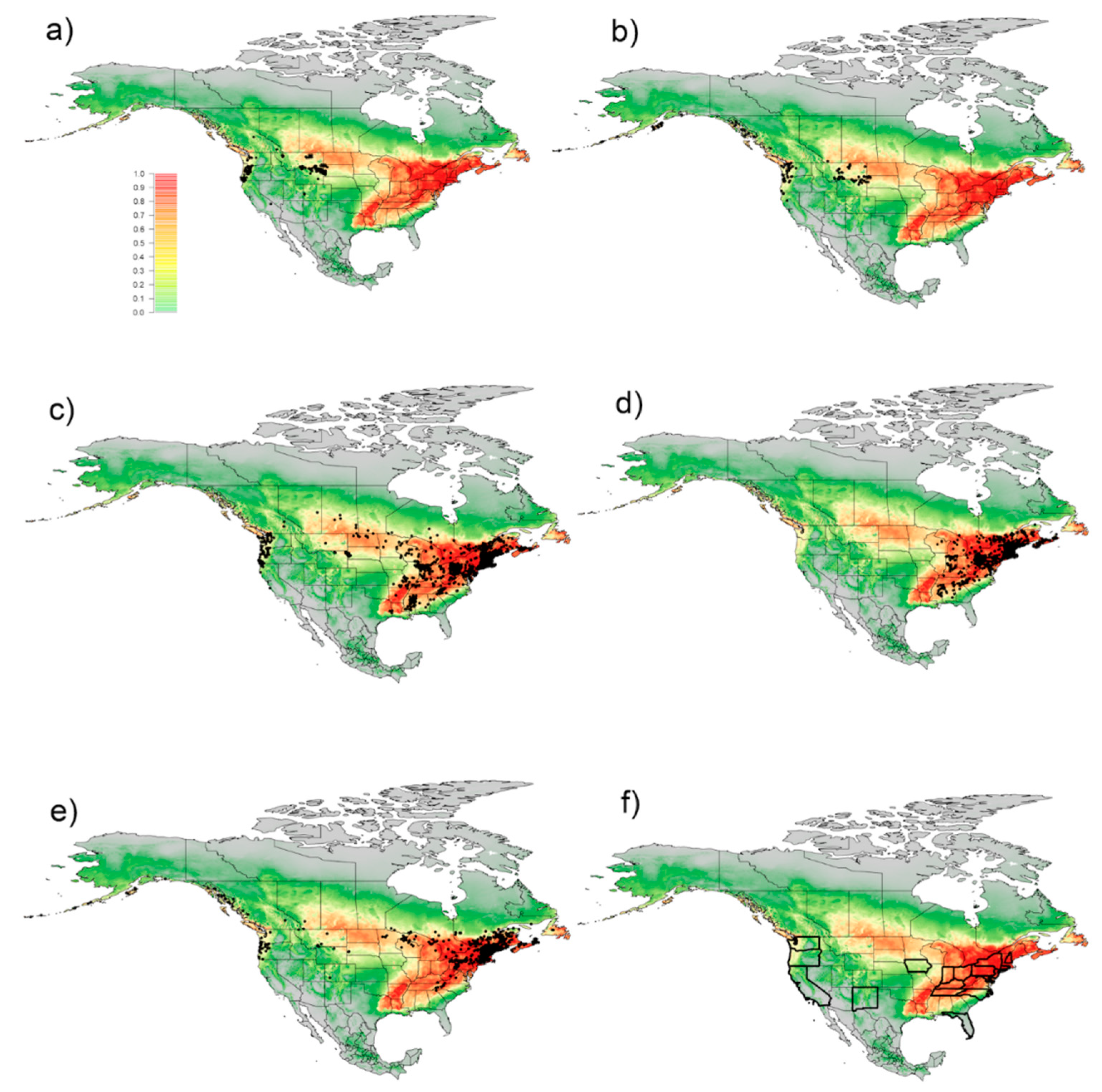
The lily leaf beetle, Lilioceris lilii Scopoli (Coleoptera: Chrysomelidae), is an invasive pest of cultivated and native lilies (Liliaceae). This Eurasian beetle was introduced to North America in 1943, and can now be found in nine provinces and 14 states. The lily leaf beetle has already been found feeding and reproducing on several eastern species of native lilies. To help predict where L. lillii will be able to establish in North America and which native Liliaceae species will be vulnerable to attack, a habitat suitability model was created. This model uses specimen location data along with environmental data to produce habitat suitability estimates between 0 (low suitability) and 1 (high suitability). Model results indicate that the beetle should be able to establish throughout the range of most North American Liliaceae, including species of special conservation concern. With the increased utilization of habitat suitability models in conservation management, this model should be consulted, to help plan preemptive monitoring and control efforts for L. lilii in regions, with Liliaceae species of conservation concern.
Abstract
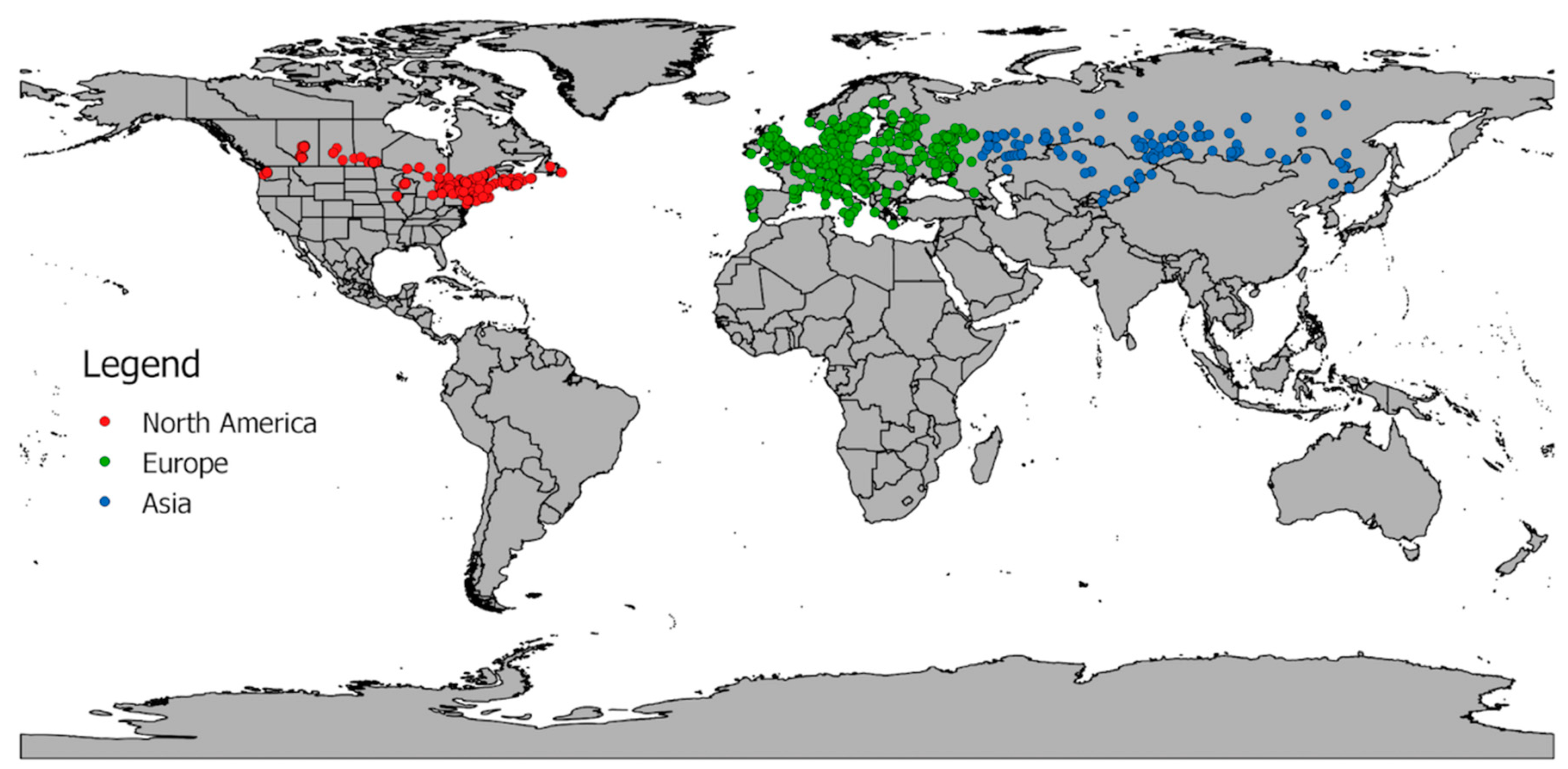
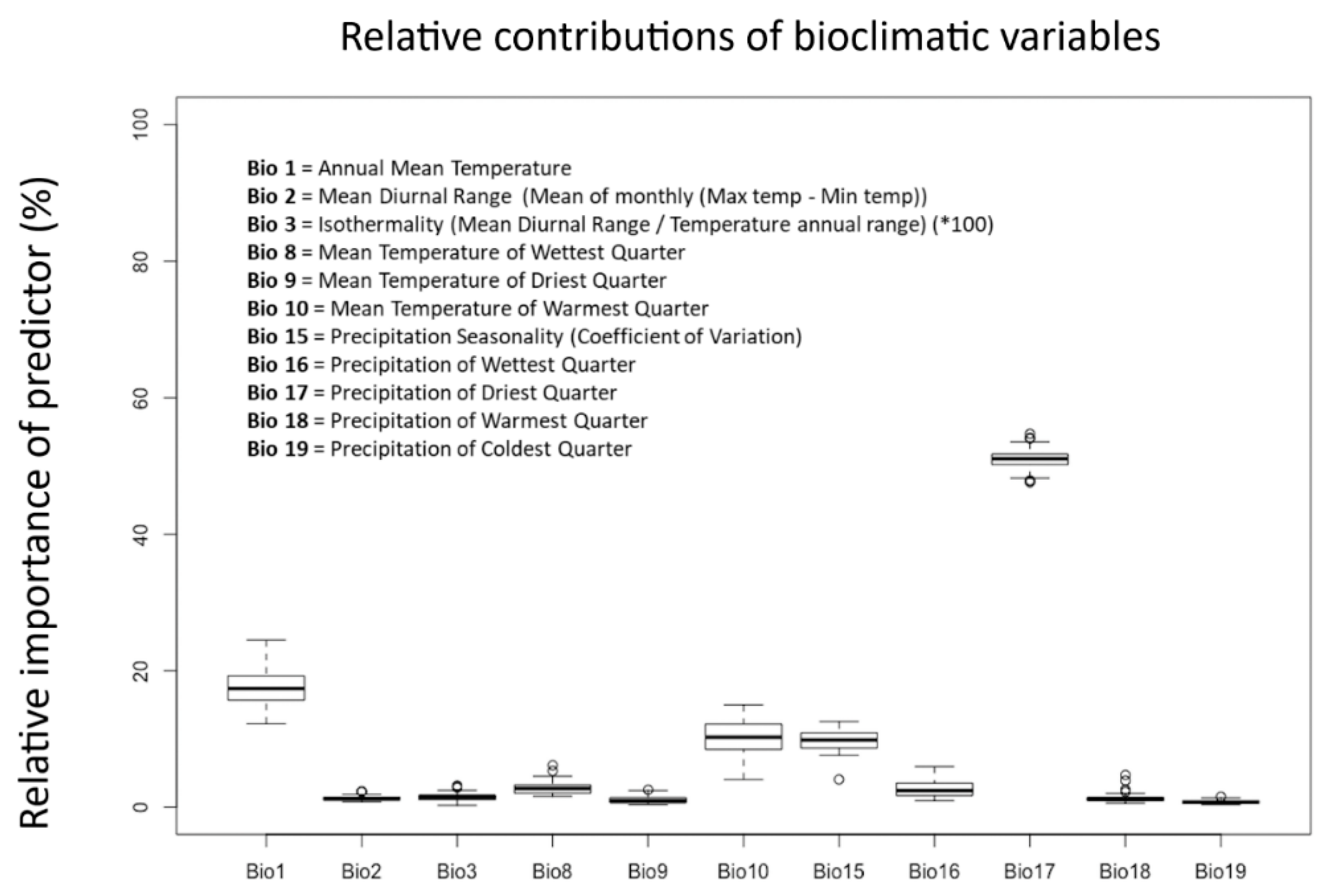
Invasive species are among the leading threats to global ecosystems due to impacts on native flora and fauna through competition and predation. The lily leaf beetle, Lilioceris lilii Scopoli (Coleoptera: Chrysomelidae), is an invasive pest of lilies (Lilium spp.) and other genera of Liliaceae (Liliales). A habitat suitability model was created using Maxent, to help predict if L. lilii will be able to establish in locations were native North American Liliaceae species grow. The model was created using georeferenced occurrence records from the beetle’s native, naturalized, and invasive range. Model results indicate that precipitation in the driest quarter and annual average temperatures are most strongly correlated with L. lilii distribution, and suggest that the species will perform poorly in very dry, hot, or cold environments. The model also indicates that the beetle should be able to establish throughout the range of most North American Liliaceae genera, including species of special conservation concern. This model can be used by natural area managers to identify areas of high habitat suitability that overlap with vulnerable North American Liliaceae species, and prioritize L. lilii monitoring and control activities as the beetle continues to expand its range.
Keywords:
lily leaf beetle; maxent; habitat suitability model; lilies; invasive insect