Foliar Spraying of Tomato Plants with Systemic Insecticides: Effects on Feeding Behavior, Mortality and Oviposition of Bemisia tabaci (Hemiptera: Aleyrodidae) and Inoculation Efficiency of Tomato Chlorosis Virus
by
 , , , and
Nathalie Kristine Prado Maluta
1,* ,
,
João Roberto Spotti Lopes
2 ,
,
Elvira Fiallo-Olivé
3 ,
,
Jesús Navas-Castillo
3 and
and
André Luiz Lourenção
1 
1
Agronomic Institute (IAC), Centro de Fitossanidade, 13020-902 Campinas, SP, Brazil
2
Department of Entomology and Acarology, ESALQ, University of São Paulo, 13418-900 Piracicaba, SP, Brazil
3
Instituto de Hortofruticultura Subtropical y Mediterránea ‘La Mayora’, Universidad de Málaga - Consejo Superior de Investigaciones Científicas (IHSM-UMA-CSIC), 29750 Algarrobo-Costa, Málaga, Spain
*
Author to whom correspondence should be addressed.
Insects 2020, 11(9), 559; https://doi.org/10.3390/insects11090559
Submission received: 29 July 2020
/
Revised: 18 August 2020
/
Accepted: 20 August 2020
/
Published: 22 August 2020
(This article belongs to the Special Issue Insect Vectors of Plant Pathogens)
Simple Summary
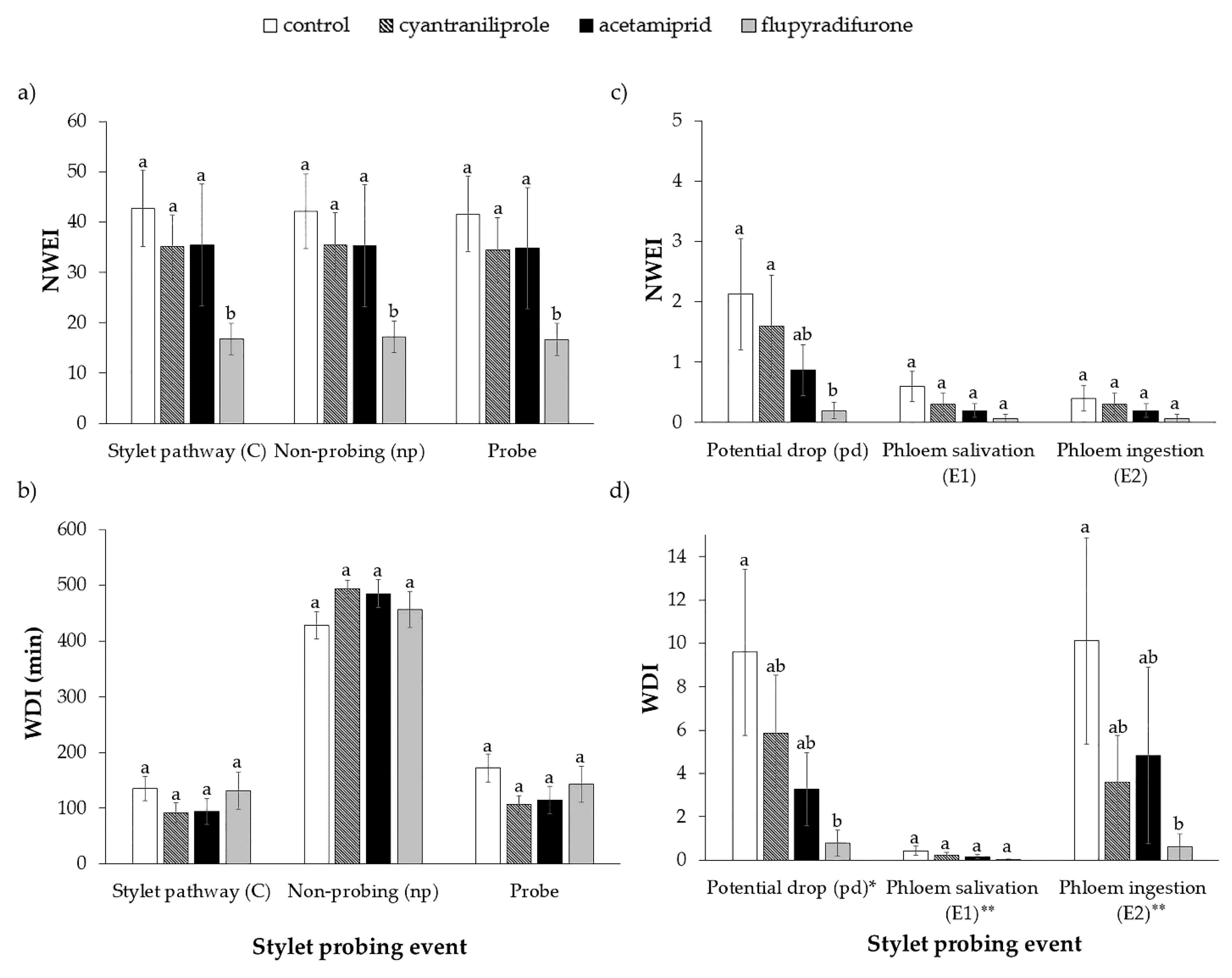
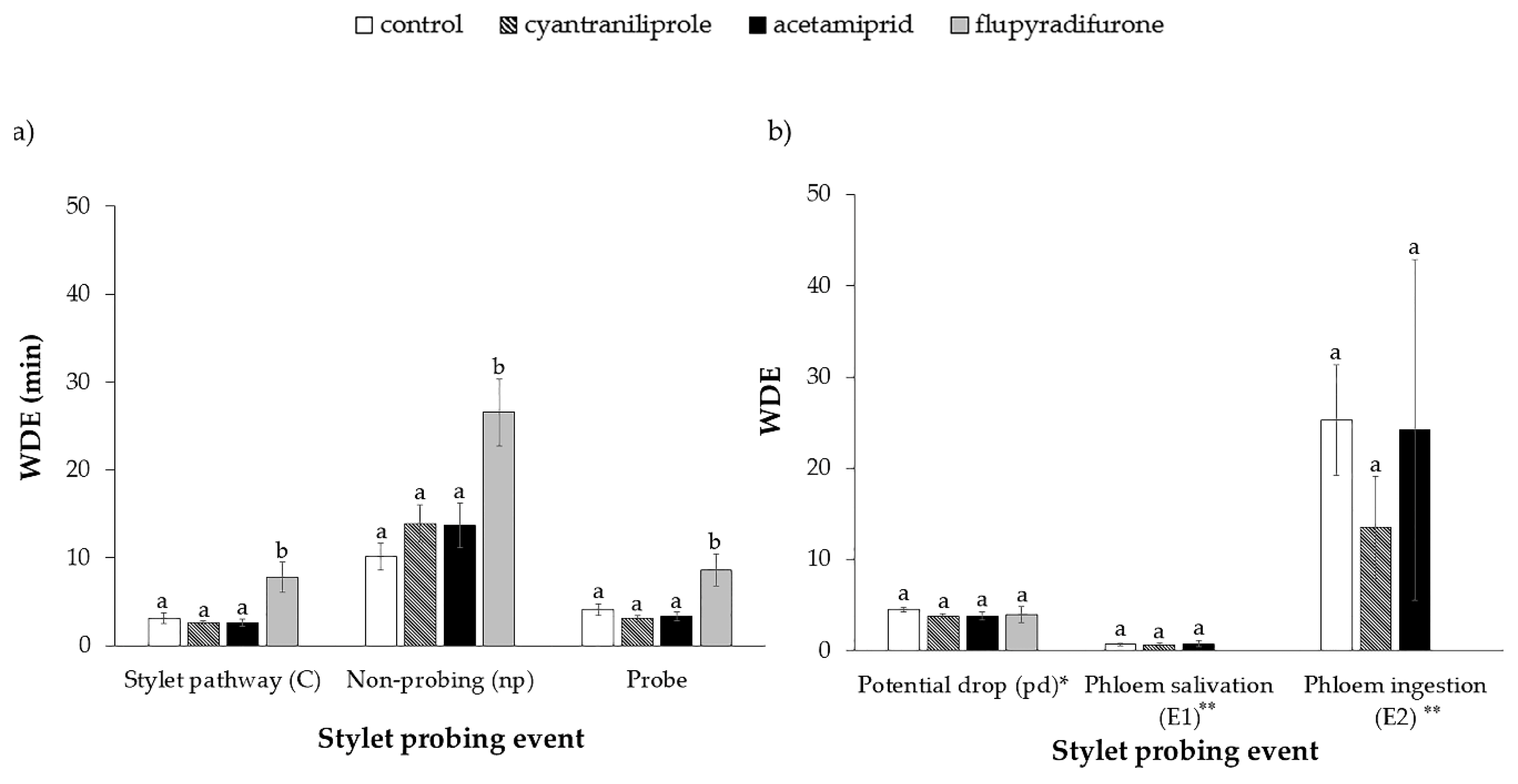
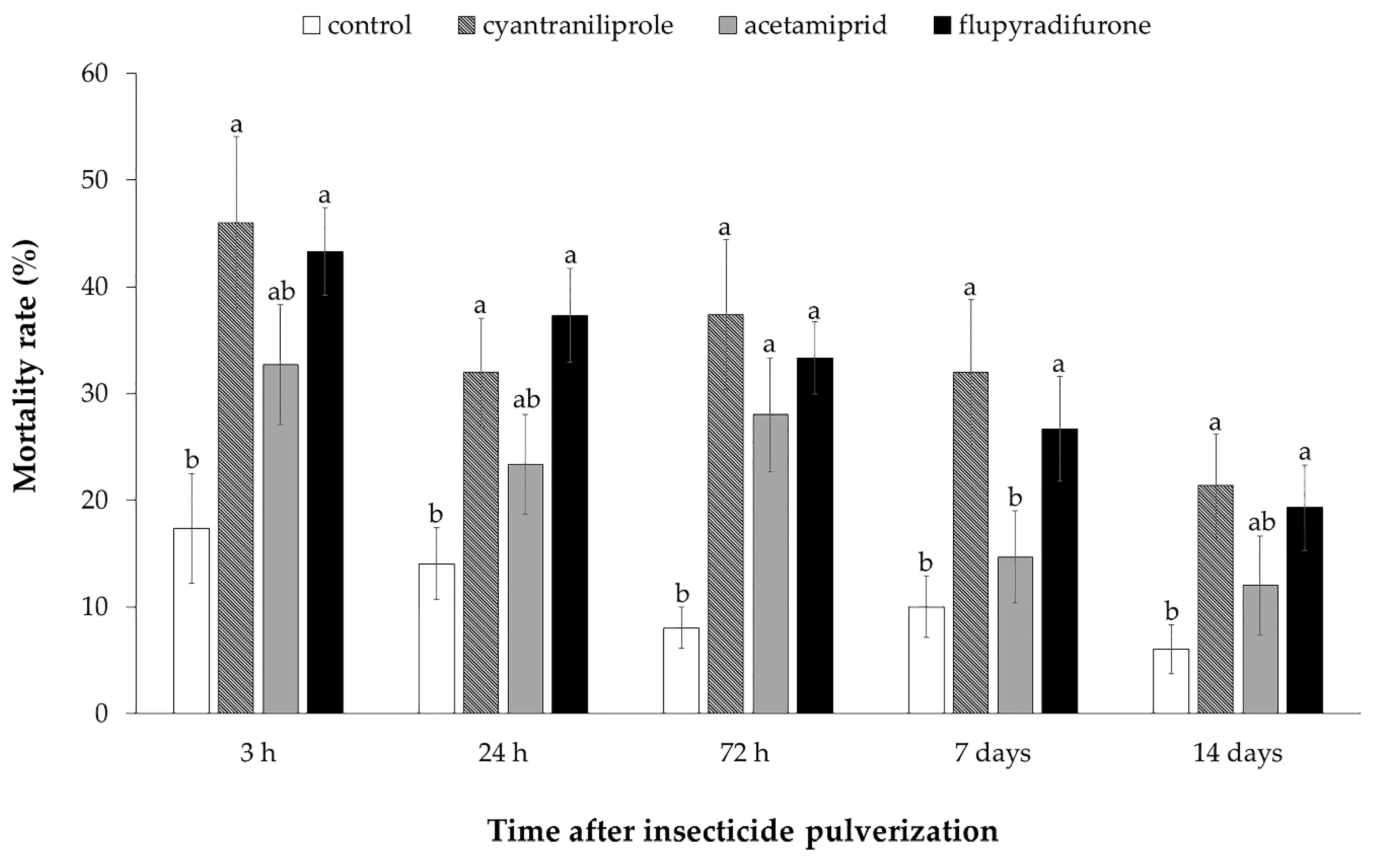
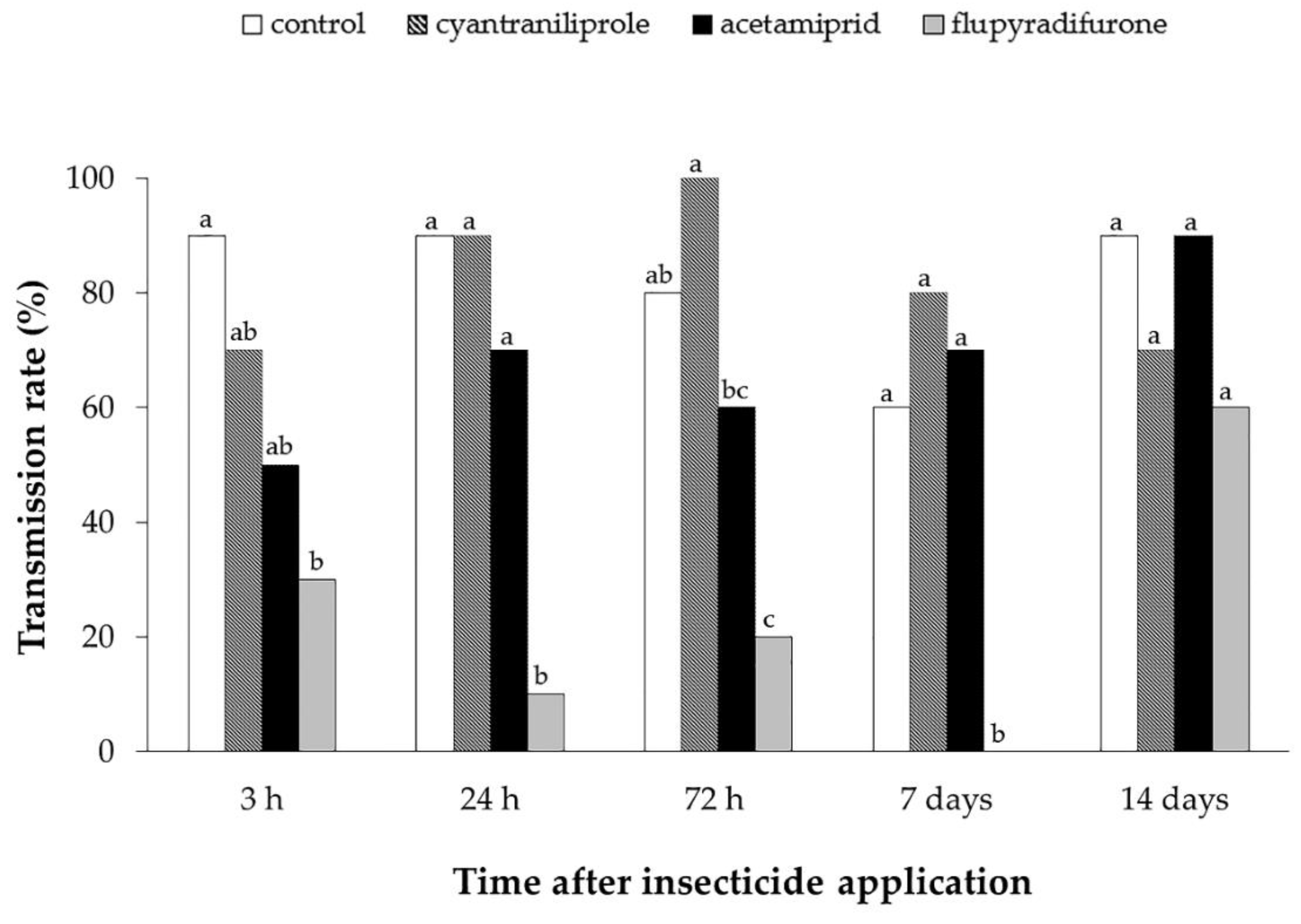
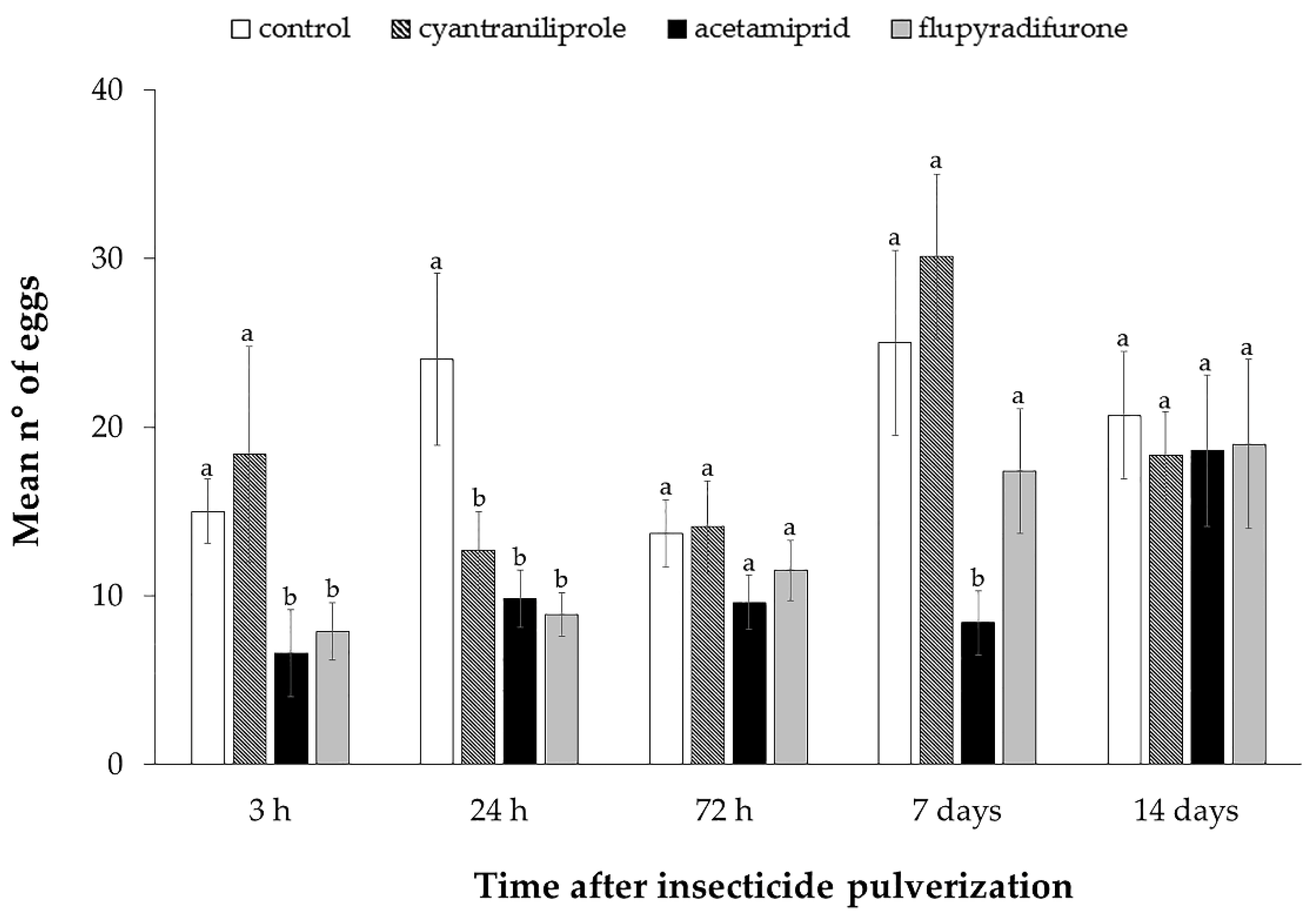
The whitefly Bemisia tabaci (Hemiptera: Aleyrodidae) causes serious losses to vegetable, ornamental and fiber crops, including tomato plants, mainly as a vector of economically important viruses. Among the most important viruses affecting tomato is the tomato chlorosis virus (ToCV) (Closteroviridae: Crinivirus), which is semi-persistently transmitted by whiteflies. Effective management of this pest is crucial to reduce the spread of vector-borne diseases and to reduce crop damage and losses. In this study we evaluated the effect of systemic insecticides (cyantraniliprole, acetamiprid and flupyradifurone) on the feeding behavior, mortality and oviposition of B. tabaci MEAM1 and their ability to interfere with the inoculation of ToCV in tomato plants. Our findings indicate that systemic insecticides cause high mortality when compared to untreated plants. Also, we found that flupyradifurone affects stylet activities of B. tabaci and significantly reduce phloem ingestion, a behavior that is closely linked to the transmission of ToCV. Overall, our findings indicate that flupyradifurone may contribute to management of this pest and ToCV in tomato crops.
Abstract
Tomato chlorosis virus (ToCV) is a phloem-limited crinivirus transmitted by whiteflies and seriously affects tomato crops worldwide. As with most vector-borne viral diseases, no cure is available, and the virus is managed primarily by the control of the vector. This study determined the effects of the foliar spraying with the insecticides, acetamiprid, flupyradifurone and cyantraniliprole, on the feeding behavior, mortality, oviposition and transmission efficiency of ToCV by B. tabaci MEAM1 in tomato plants. To evaluate mortality, oviposition and ToCV transmission in greenhouse conditions, viruliferous whiteflies were released on insecticide-treated plants at different time points (3, 24 and 72 h; 7 and 14 days) after spraying. Insect mortality was higher on plants treated with insecticides; however, only cyantraniliprole and flupyradifurone differed from them in all time points. The electrical penetration graph (DC-EPG) technique was used to monitor stylet activities of viruliferous B. tabaci in tomato plants 72 h after insecticide application. Only flupyradifurone affected the stylet activities of B. tabaci, reducing the number and duration of intracellular punctures (pd) and ingestion of phloem sap (E2), a behavior that possibly resulted in the lower percentage of ToCV transmission in this treatment (0–60%) in relation to the control treatment (60–90%) over the periods evaluated. Our results indicate that flupyradifurone may contribute to management of this pest and ToCV in tomato crops.