Article

Modeling the Contact Mechanics of Hydrogels


1
Department of Materials Science and Engineering, Universität des Saarlandes, 66123 Saarbrücken, Germany
2
INM—Leibniz Institute for New Materials and Physics Department, Saarland University, Campus D2 2, 66123 Saarbrücken, Germany
*
Author to whom correspondence should be addressed.
Lubricants 2019, 7(4), 35; https://doi.org/10.3390/lubricants7040035

Submission received: 18 February 2019 / Revised: 26 March 2019 / Accepted: 3 April 2019 / Published: 11 April 2019
(This article belongs to the Special Issue Adhesion, Friction and Lubrication of Viscoelastic Materials)

Abstract

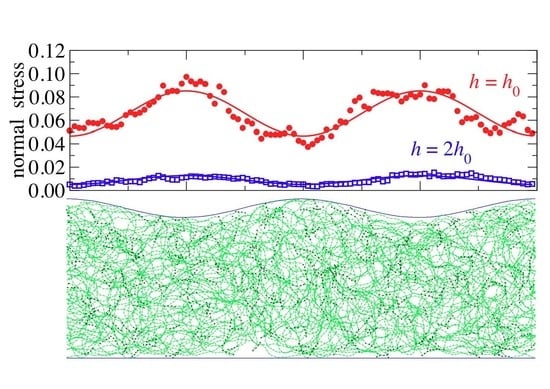
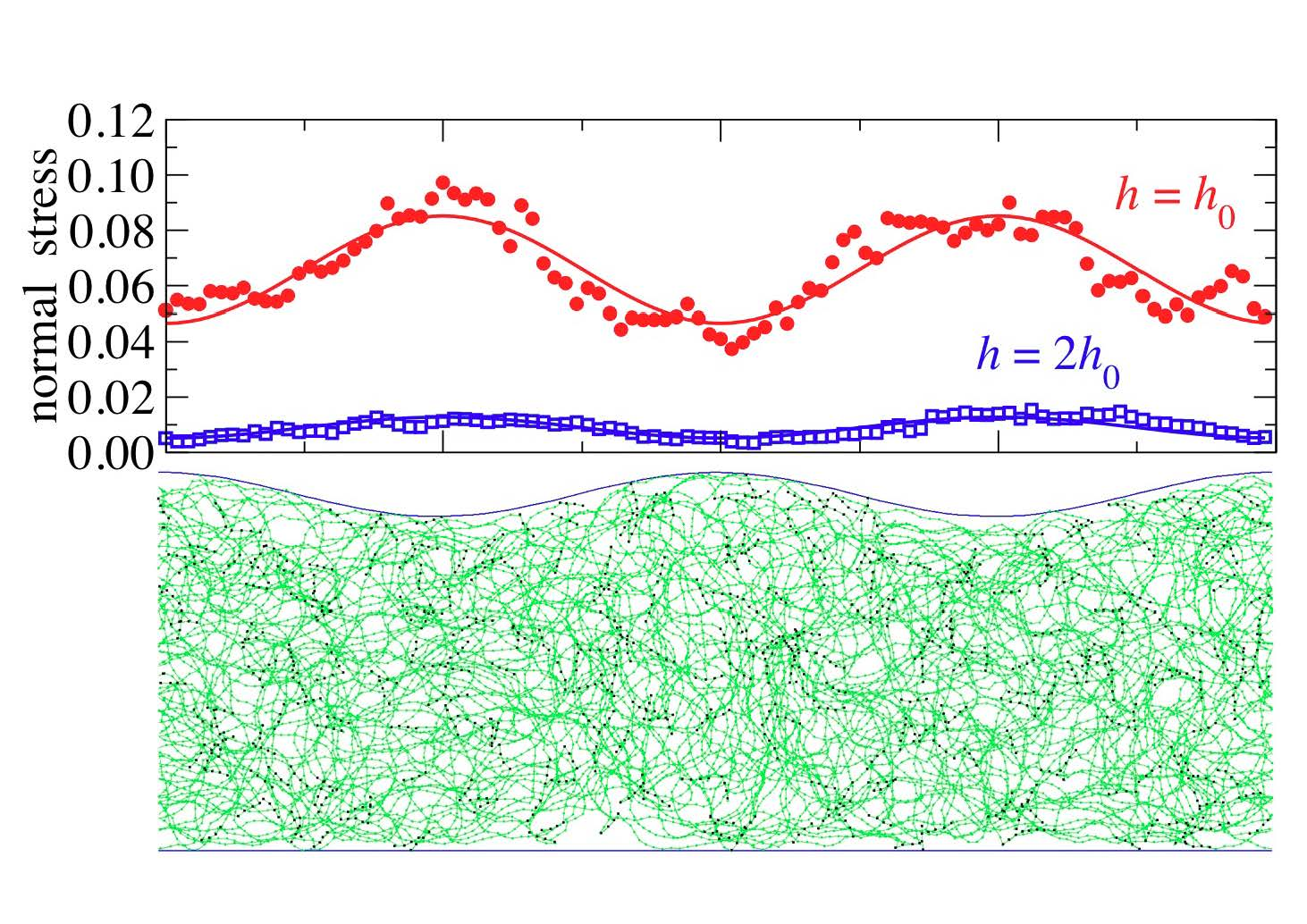
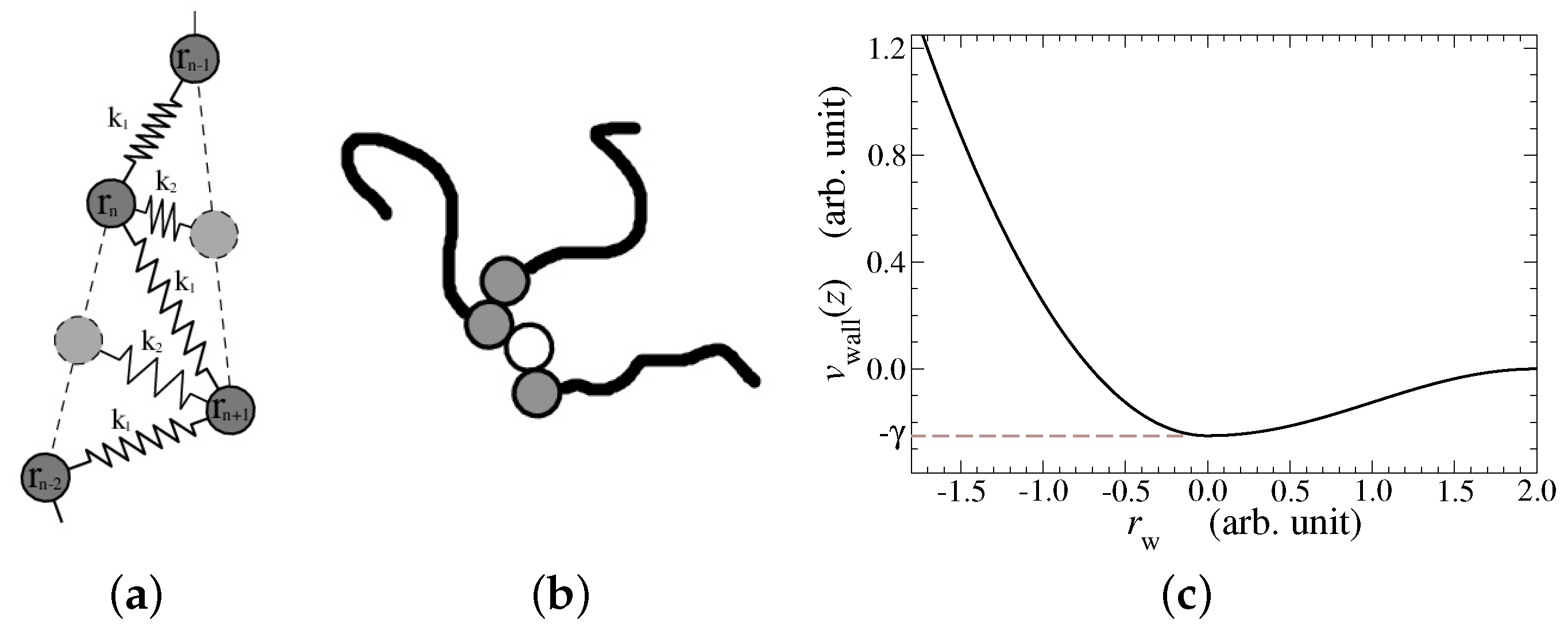
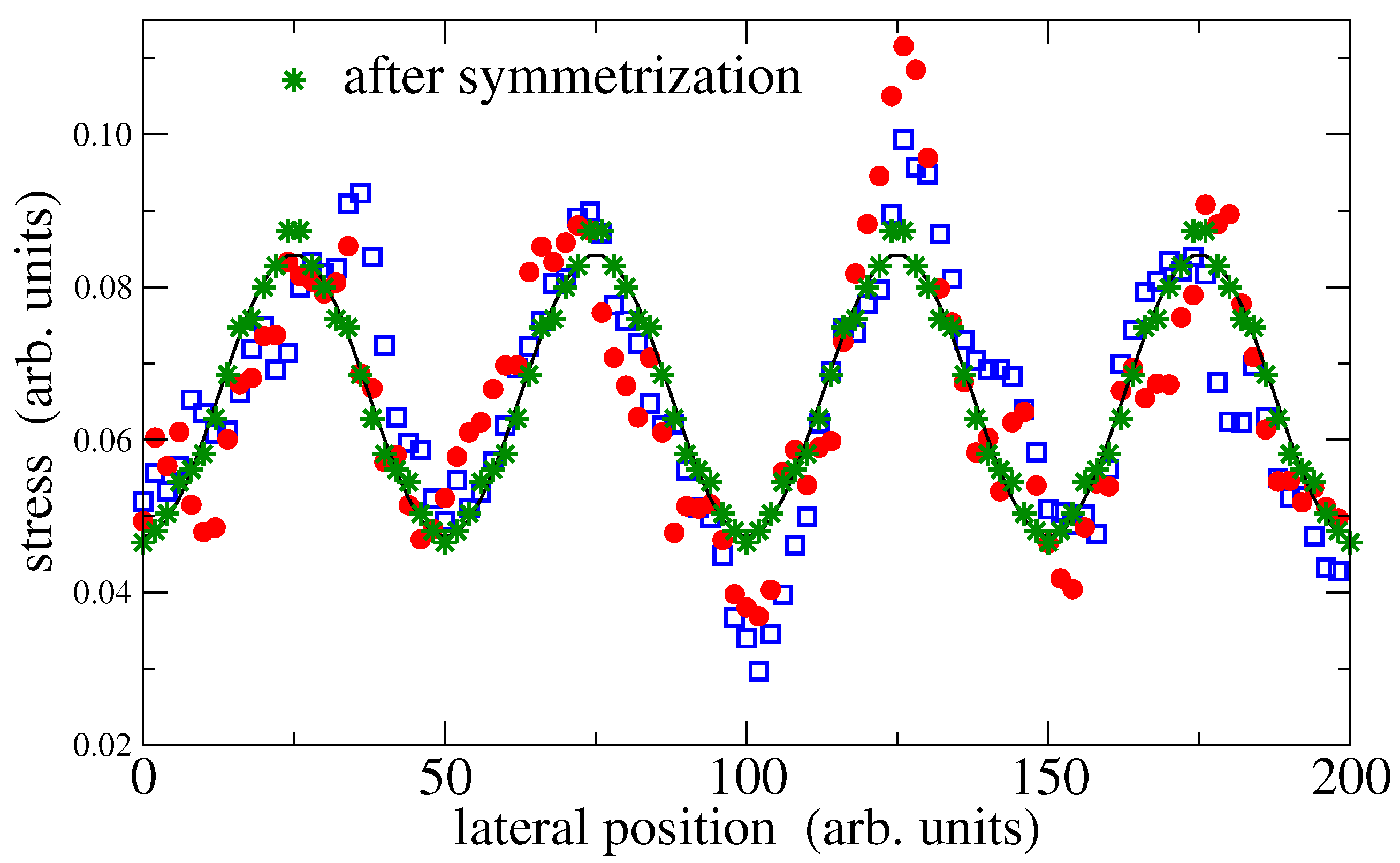
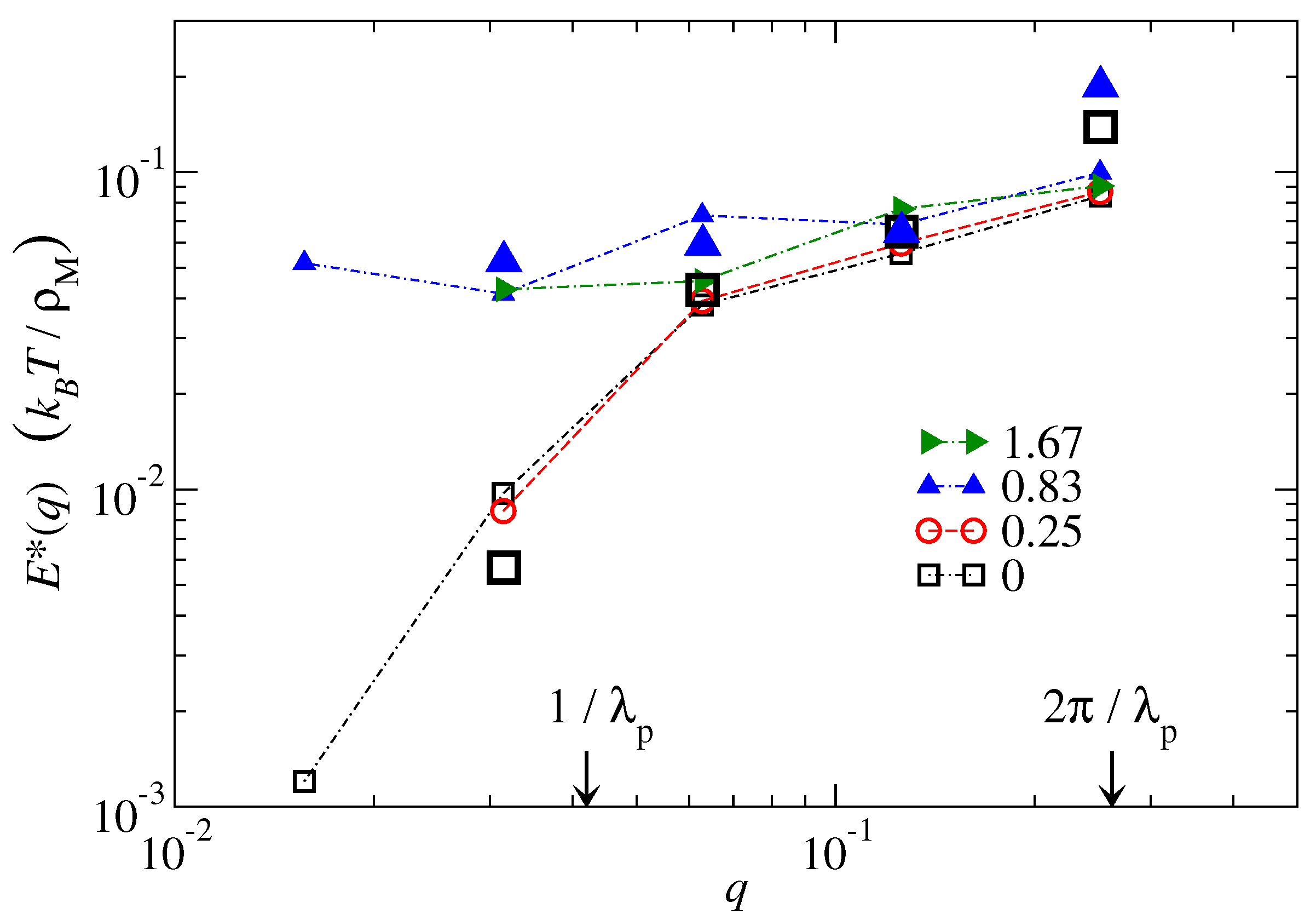
A computationally lean model for the coarse-grained description of contact mechanics of hydrogels is proposed and characterized. It consists of a simple bead-spring model for the interaction within a chain, potentials describing the interaction between monomers and mold or confining walls, and a coarse-grained potential reflecting the solvent-mediated effective repulsion between non-bonded monomers. Moreover, crosslinking only takes place after the polymers have equilibrated in their mold. As such, the model is able to reflect the density, solvent quality, and the mold hydrophobicity that existed during the crosslinking of the polymers. Finally, such produced hydrogels are exposed to sinusoidal indenters. The simulations reveal a wavevector-dependent effective modulus E * ( q ) with the following properties: (i) stiffening under mechanical pressure, and a sensitivity of E * ( q ) on (ii) the degree of crosslinking at large wavelengths, (iii) the solvent quality, and (iv) the hydrophobicity of the mold in which the polymers were crosslinked. Finally, the simulations provide evidence that the elastic heterogeneity inherent to hydrogels can suffice to pin a compressed hydrogel to a microscopically frictionless wall that is undulated at a mesoscopic length scale. Although the model and simulations of this feasibility study are only two-dimensional, its generalization to three dimensions can be achieved in a straightforward fashion.
Keywords: hydrogels; contact mechanics; simulation; elastomers hydrogels; contact mechanics; simulation; elastomers
Graphical Abstract