Theoretical Study on the Rheology-Driven Lubrication Synergy of Gel on Textured High-Entropy Alloy Coatings

Abstract
1. Introduction
2. Theoretical Model
2.1. Rheological Model of Gel Lubricant
2.2. Governing Equation
2.2.1. Lubrication Equation
2.2.2. Interfacial Contact of Gel Lubrication
2.3. Thermo-Mechanical Coupling Constitutive Relation
3. Comparative Analysis
4. Results and Discussion
4.1. Theoretical Prediction of Rheological Properties of Gel Lubricant
4.2. Theoretical Analysis of the Influence of Surface Energy on the Gel Anchoring Effect
4.2.1. Surface-Energy-Regulated Wetting Behavior
4.2.2. Interfacial Bonding Strength
4.2.3. Elemental Segregation Effect
4.3. Theoretical Analysis of Lubrication Characteristics
4.3.1. Effect of the Textured Area Density Ratio
4.3.2. Effect of Depth–Diameter Ratio
4.3.3. Optimal Parameter
5. Conclusions
- (1)
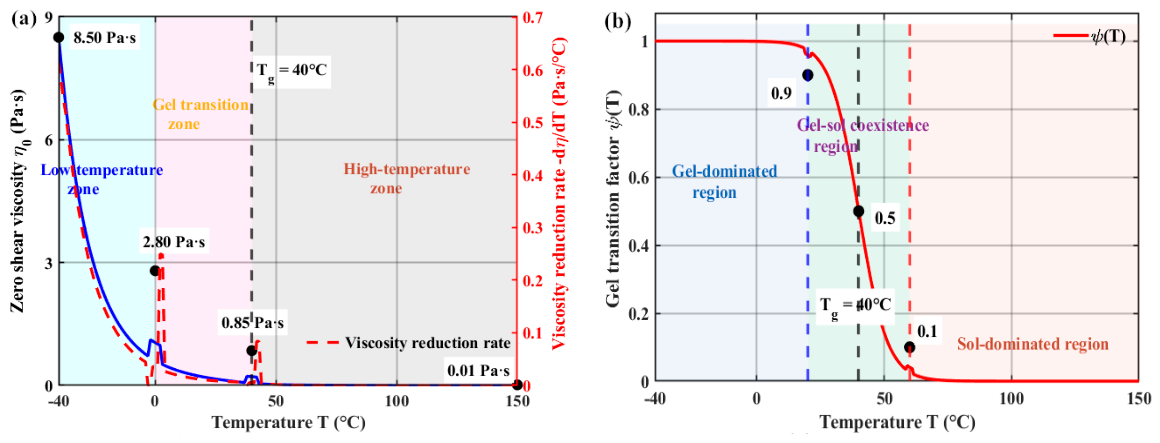
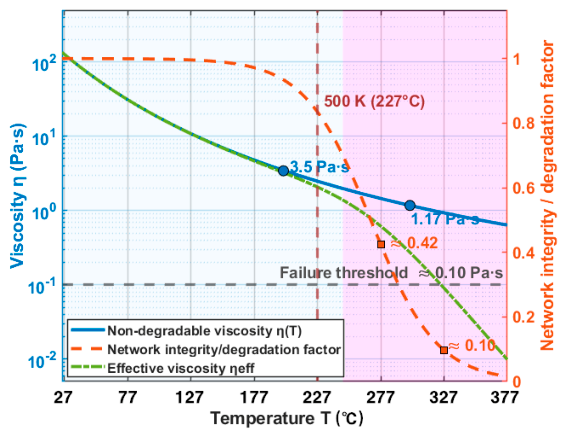
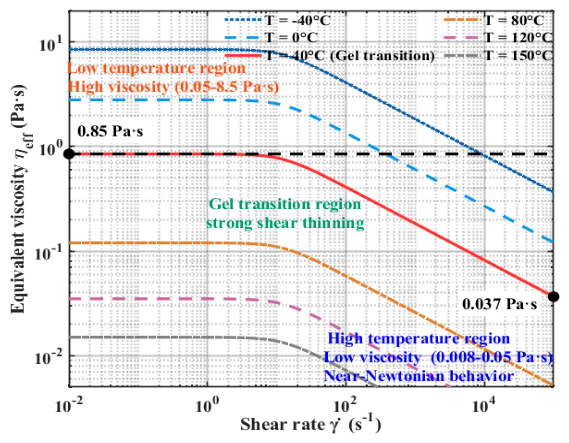
- The gel lubricant exhibits significant shear-thinning behavior within its gel–sol transition temperature range, with a strong temperature-dependent reduction in zero-shear viscosity as the temperature rises. The onset temperature of thermal degradation further defines the upper limit of its applicable temperature on the surface of the THEACs.
- (2)
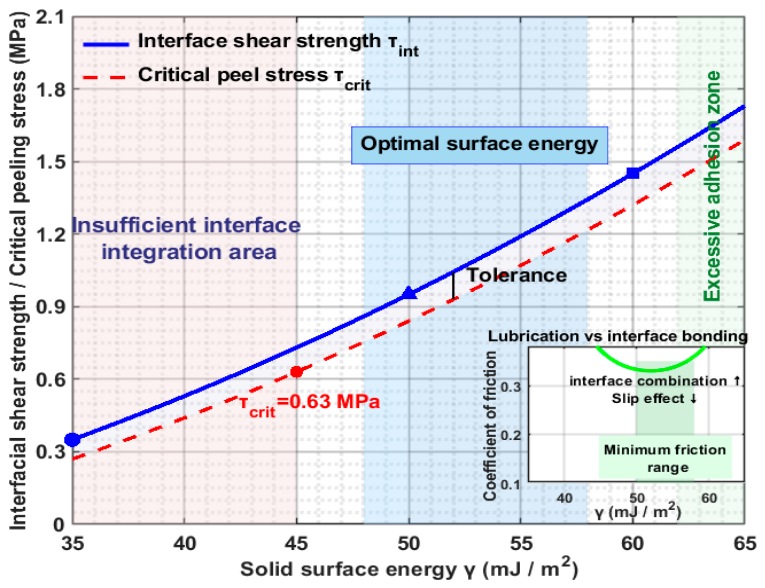
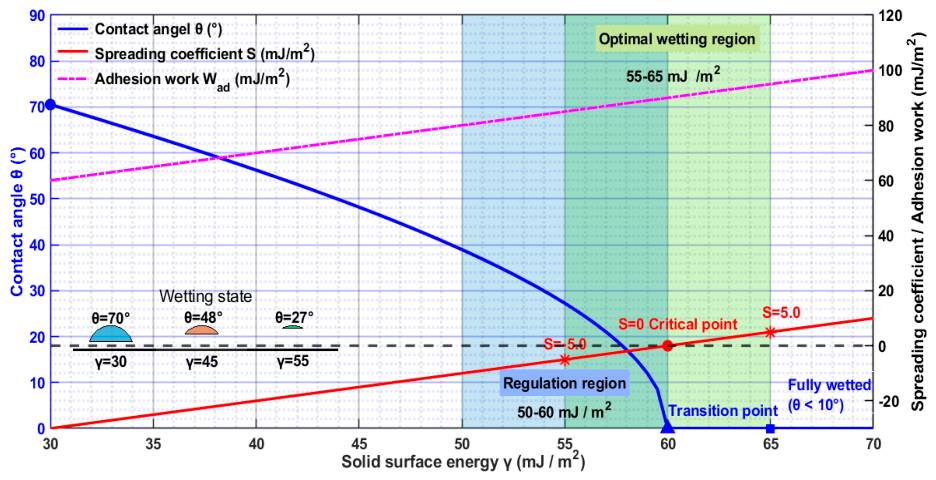
- A positive correlation was found between the solid–liquid interfacial adhesion work and the surface energy of the coatings. Within an optimal surface energy window of the THEACs, favorable gel wettability is achieved, accompanied by a desirable interfacial shear strength. This suitable surface energy range not only promotes sufficient spreading of the gel over the coating surface but also facilitates stable physical anchoring, thereby ensuring effective load-bearing capacity and resistance to lubrication failure of the lubricating film.
- (3)
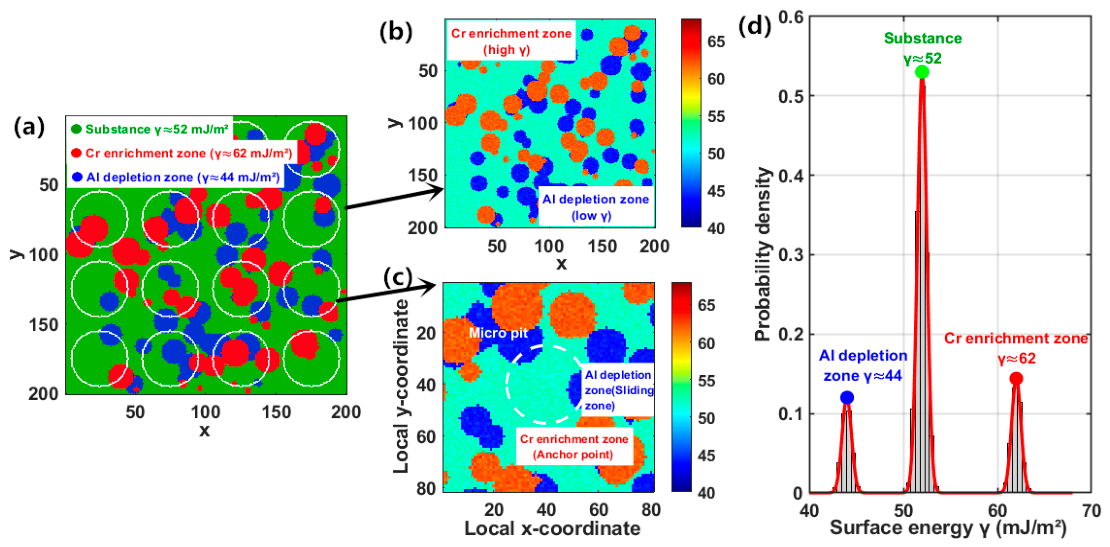
- A heterogeneous distribution of surface energy is exhibited on the THEACs, wherein Cr-enriched regions and Al-depleted regions are randomly distributed on the substrate. The Cr-rich region with high surface energy is used as the preferential adsorption site to enhance the stability of the lubricating film, and the Al-poor region with low surface energy is used as the sliding region to reduce the friction resistance. Therefore, the two work together to achieve overall stability and low friction of the lubricating film.
- (4)
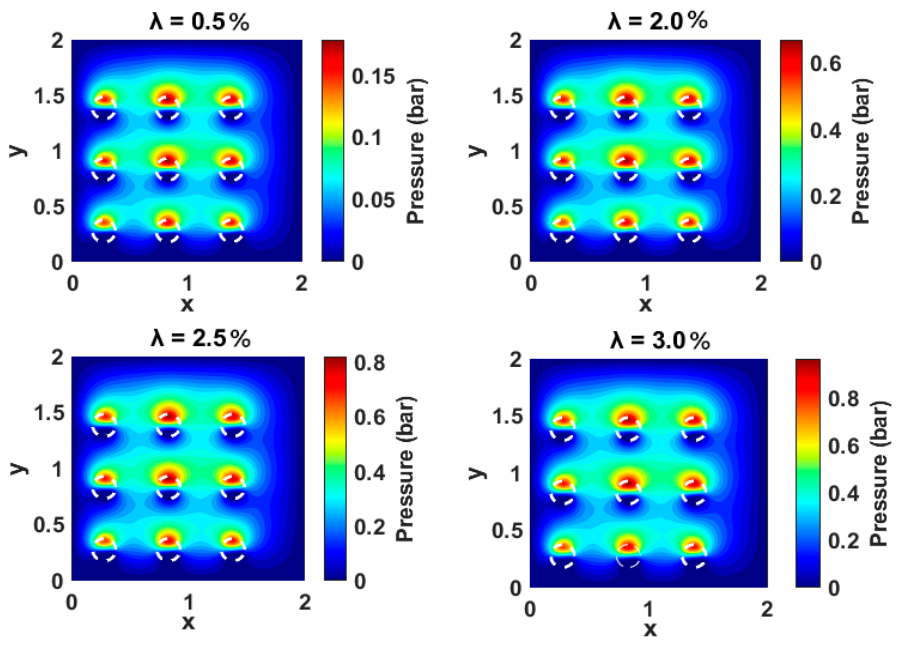
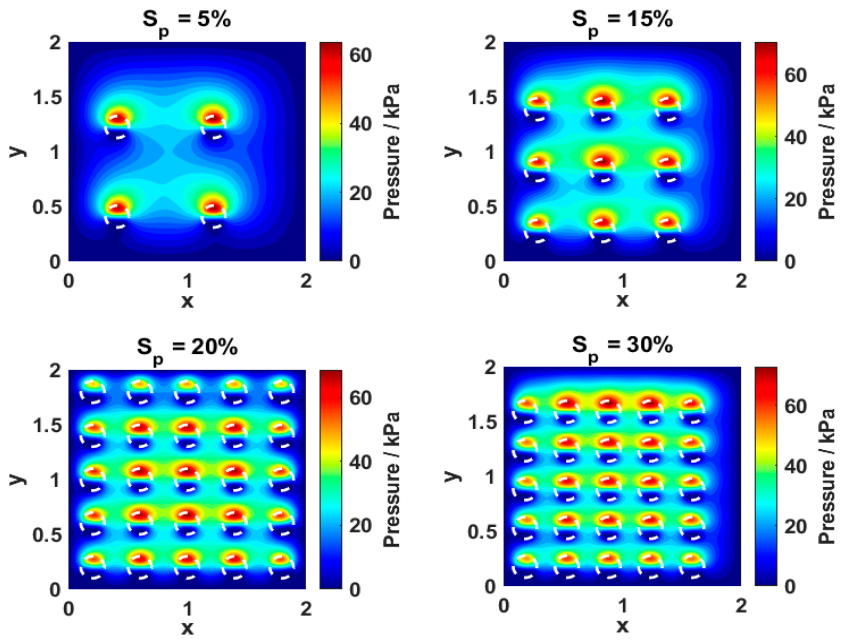
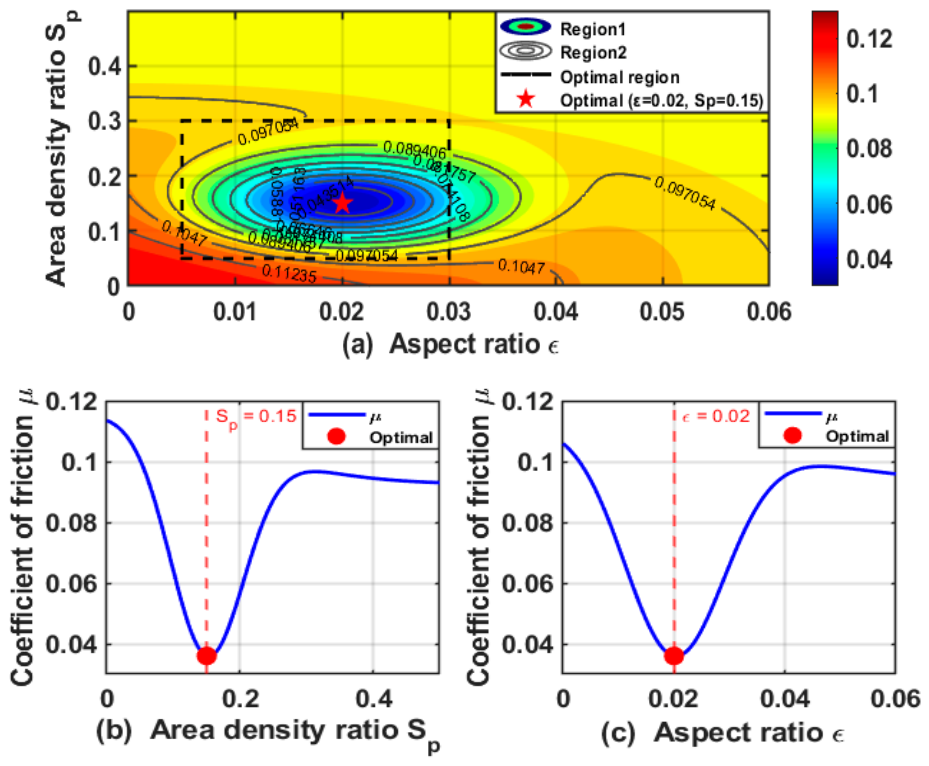
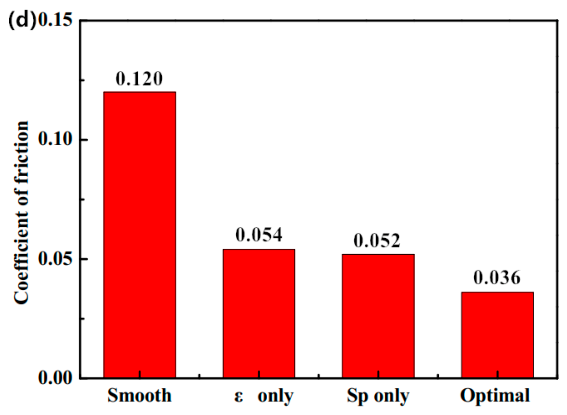
- A non-monotonic effect on lubrication performance was observed for the aspect ratio and area density ratio. The optimal parameters were identified as an aspect ratio of 2% and an area density ratio of 15%, under which the friction coefficient reached as low as 0.036. This value corresponds to a 70% reduction compared with that of the smooth surface, and a further decrease of 10–15% relative to single-parameter optimization, which explains the necessity of dual-parameter synergistic optimization.
- (5)
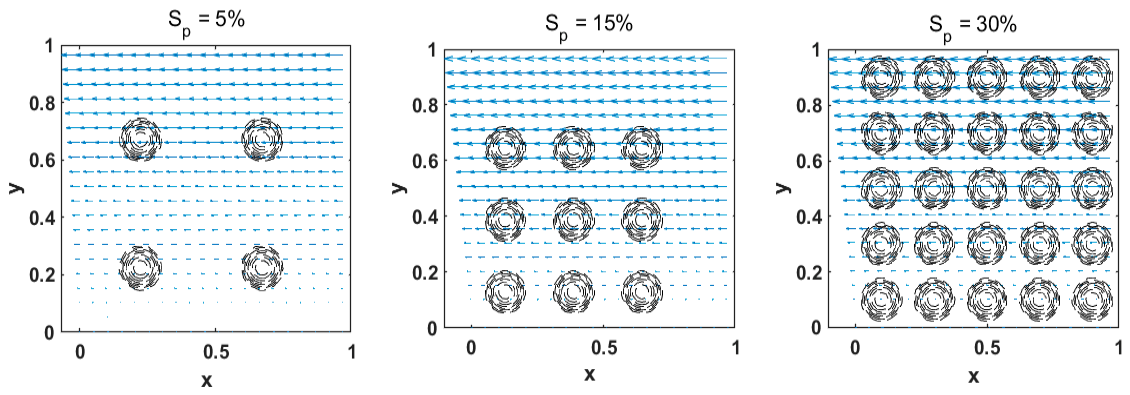
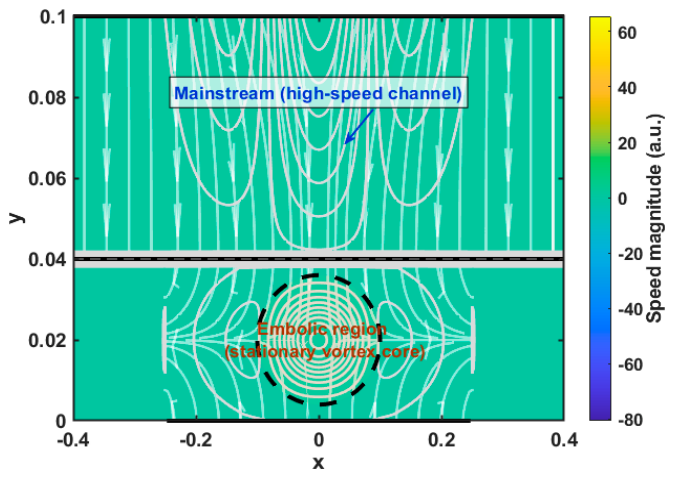
- The existence of the gel plug zone was confirmed by the stable recirculating vortex structure formed within the micro-dimples under the optimally textured parameters. The load is sustained by the almost motionless vortex core with exceptionally low dissipation, and lubrication together with heat removal is provided by the boundary layer flow. The formation of a ‘rolling-bearing-like’ effect is thus observed, which suggests a new paradigm for the underlying low-friction lubrication mechanism.
Author Contributions
Funding
Institutional Review Board Statement
Data Availability Statement
Acknowledgments
Conflicts of Interest
References
- Hong-song, Z.; Xiao-ge, C.; Gang, L.; Xin-Li, W.; Xu-dan, D. Influence of Gd2O3 addition on thermophysical properties of La2Ce2O7 ceramics for thermal barrier coatings. J. Eur. Ceram. Soc. 2012, 32, 3693–3700. [Google Scholar] [CrossRef] [Scilit]
- Zhang, H.; Kun, S.U.N.; Qiang, X.U.; Fuchi, W.A.N.G.; Ling, L.I.U. Thermal conductivity of (Sm1-xLax)2Zr2O7 (x = 0, 0.25, 0.5, 0.75 and 1) oxides for advanced thermal barrier coatings. J. Rare Earths 2009, 27, 222–226. [Google Scholar] [CrossRef] [Scilit]
- Hongsong, Z.; Jianguo, L.; Gang, L.; Zheng, Z.; Xinli, W. Investigation about thermophysical properties of Ln2Ce2O7 (Ln=Sm, Er and Yb) oxides for thermal barrier coatings. Mater. Res. Bull. 2012, 47, 2843–2848. [Google Scholar] [CrossRef] [Scilit]
- Dada, M.; Popoola, P.; Mathe, N.; Pityana, S.; Adeosun, S.; Aramide, O. The comparative study of the microstructural and corrosion behaviour of laser-deposited high entropy alloys. J. Alloys Compd. 2021, 866, 158777. [Google Scholar] [CrossRef] [Scilit]
- Yang, S.; Gao, S.; Xue, W.; Wu, B.; Duan, D. Structural design and high temperature tribological behavior of a new turbine blade tip protective coating. Surf. Coat. Technol. 2023, 457, 29316. [Google Scholar] [CrossRef] [Scilit]
- Zhang, H.; Zhao, L.; Sang, W.; Chen, X.; Tang, A.; Zhang, H. Thermophysical performances of (La1/6Nd1/6Yb16Y1/6Sm1/6Lu1/6)2Ce2O7 high-entropy ceramics for thermal barrier coating applications. Ceram. Int. 2022, 48, 1512–1521. [Google Scholar] [CrossRef] [Scilit]
- Wu, Z.; Gao, L.; Huang, X.; Hua, Z. Simulation study on the surface texturing design of COC hip joints based on elastohydrodynamic lubrication model. Lubricants 2025, 13, 217. [Google Scholar] [CrossRef] [Scilit]
- Li, S.; Ye, W.T.; Shi, Y.R.; Zhou, Q.; Chen, Y.N.; Guo, T.; Liu, Y.X.; Zhang, L.C.; Wang, H.F. Atomistic simulation and experimental verification of tribological behavior of high entropy alloy/graphene composite coatings. Surf. Coat. Technol. 2023, 467, 129683. [Google Scholar] [CrossRef] [Scilit]
- Miao, X.; Wang, Y.; Zhang, K.; Li, Z.; Hou, K.; Wang, J.; Yang, S. A general strategy for developing eco-friendly, harsh condition adaptive, and friction tunable supramolecular gel lubricants via hydrogen bonding interaction. Chem. Eng. J. 2024, 499, 15619. [Google Scholar] [CrossRef] [Scilit]
- Chen, S.; Wu, Z.; Wei, L.; Bai, X.; Yuan, C.; Guo, Z.; Yang, Y. Environmentally responsive hydrogels and composites containing hydrogels as water-based lubricants. Gels 2025, 11, 526. [Google Scholar] [CrossRef] [Scilit] [PubMed]
- Zhao, P.; Klein, J. Lubricating polymer gels/coatings: Syntheses and measurement strategies. Gels 2024, 10, 407. [Google Scholar] [CrossRef] [Scilit] [PubMed]
- Ruochong, Z.; Dongmei, W.; Xinshao, C.; Minghuan, W.; Xiaodong, H.; Qi, D.; Xuefeng, X.; Meirong, C.; Litian, H. Recent development in friction of supramolecular gel lubricant: From mechanisms to applications. Nanotechnology 2025, 36, 182003. [Google Scholar] [CrossRef] [Scilit] [PubMed]
- Xie, A.; Bai, Y.; Xu, H.; Dong, R.; Zhang, J.; Yu, Q.; Lv, W.; Liang, Y.; Wang, X.; Cai, M.; et al. Supramolecular gel Lubricants with excellent lubricity and load-carrying performances act synergistically via two layers of tribofilm. Adv. Mater. Interfaces 2022, 9, 2200683. [Google Scholar] [CrossRef] [Scilit]
- Wang, X.; Wang, T.; Zhang, X.; Liu, S.; Ye, Q.; Zhou, F. Fabrication of nanocomposite supramolecular oleogel lubricant incorporating functionalized Ti3C2Tx MXene for enhanced anti-wear and friction reduction. Colloids Surf. A Physicochem. Eng. Asp. 2025, 725, 137530. [Google Scholar] [CrossRef] [Scilit]
- Wang, Y.; Chen, Q.; Qin, J.; Liu, X.; Guo, P.; Wang, Y.; Cai, M.; Guo, F.; Zhou, F. Novel polymer gel lubricant functionalized with a phosphate anion for friction reduction and film thickness enhancement in multiple lubrication conditions. ACS Appl. Mater. Interfaces 2025, 17, 11164–11175. [Google Scholar] [CrossRef] [Scilit] [PubMed]
- Deng, F.; Liu, H.; Liu, S.; Xu, Z.; Pang, B.; Zhao, G.; Wang, X. Supramolecular eutectogels based on bio-derived betaine with superior lubrication performance and electrical conductivity. Tribol. Int. 2026, 214, 111350. [Google Scholar] [CrossRef] [Scilit]
- Wang, Y.; Chen, Q.; Jin, Z.; Jing, Z.; Fan, L.; Liu, X.; Guo, P.; Wang, Y.; Cai, M.; Guo, F.; et al. Tribological behavior of polymer-based supramolecular gel PUMA-PSMA during lubrication state transitions. Tribology 2026, 46, 258–271. [Google Scholar]
- Xu, Y.; Wang, Y.; An, K.; Ni, C.; Zhang, H.; Ren, Y.; Yang, Z. Advances on hydrogel lubrication modification under diverse design strategies. Lubricants 2025, 13, 373. [Google Scholar] [CrossRef] [Scilit]
- Zhang, J.; Bo, S.; Wang, R.; Fang, J.; Wang, X.G.; Bai, Y.; Ma, Z.; Liang, Y.; Zhang, M.; Yu, Q.; et al. Supramolecular polymer gel lubricant with excellent mechanical stability and tribological performances. ACS Appl. Mater. Interfaces 2022, 14, 45934–45944. [Google Scholar] [CrossRef] [Scilit] [PubMed]
- Yu, Q.; Wang, X.; Zhang, C.; Yang, Z.; Cheng, G.; Yang, Z.; Cai, M.; Zhou, F.; Liu, W. Resistance to space atomic oxygen radiation of MAC-based supramolecular gel lubricant containing POSS. Tribol. Int. 2023, 177, 107838. [Google Scholar] [CrossRef] [Scilit]
- Bai, Y.; Zhang, C.; Yu, Q.; Zhang, J.; Zhang, M.; Cai, M.; Weng, L.; Liang, Y.; Zhou, F.; Liu, W. Supramolecular PFPE gel lubricant with anti-creep capability under irradiation conditions at high vacuum. Chem. Eng. J. 2021, 409, 128120. [Google Scholar] [CrossRef] [Scilit]
- Peng, H.; Meng, Z.; Shangguan, L.; Liu, L.; Yang, C.; Guo, L. Research on the application of nano-additives in gel-like lubricants. Gels 2025, 11, 546. [Google Scholar] [CrossRef] [Scilit] [PubMed]
- Zhang, J.; Bao, L.; Yu, Q.; Ma, Z.; Dong, R.; Zhang, C.; Bai, Y.; Cai, M.; Zhou, F.; Liu, W. Gelation mechanism and tribological performances of two-component cholesterol-based supramolecular gel lubricant. Tribol. Int. 2021, 155, 106777. [Google Scholar] [CrossRef] [Scilit]
- Hu, L.; Yang, Y.; Yu, W.; Xu, L. Hydrogels for lubrication: Synthesis, properties, mechanism, and challenges. Lubricants 2024, 12, 186. [Google Scholar] [CrossRef] [Scilit]
- Zhang, J.; Su, Y.; Wu, J.; Wang, H. Recent advances in ocular lubrication. Friction 2024, 12, 1929–1954. [Google Scholar] [CrossRef] [Scilit]
- Li, R.; Jiang, Q.; Zhang, R. Progress and perspective on high-strength and multifunctional carbon nanotube fibers. Sci. Bull. 2022, 67, 784–787. [Google Scholar] [CrossRef] [Scilit] [PubMed]
- Zhao, J.; Li, Z.; Zhang, H.; Zhu, R. Prediction of contact and lubrication characteristics of micro-textured surface under thermal line contact EHL. Front. Mech. Eng. 2021, 7, 672588. [Google Scholar] [CrossRef] [Scilit]
- Mao, Y.; Li, D.; Li, L.; Zheng, J. Effect of textured parameters on tribological properties of hydrodynamic journal bearing. Ind. Lubr. Tribol. 2023, 76, 102–109. [Google Scholar] [CrossRef] [Scilit]
- Zhou, W.; Guo, X.; Jiang, M. Rheological properties of lithium lubricating grease based on poly-α olefins oil. J. Logist. Eng. Univ. 2014, 30, 34–39. [Google Scholar]
- Leger, L.; Hervet, H.; Marciano, Y.; Deruelle, M.; Massey, G. Role of surface-anchored polymer chains in adhesion and slippage. Isr. J. Chem. 1995, 35, 65–74. [Google Scholar] [CrossRef] [Scilit]
- Hirata, K.; Murashima, M.; Umehara, N.; Tokoroyama, T.; Lee, W.Y.; Hashizume, N.; Sato, T.; Nagata, R.; Hanyuda, K.; Otsuka, A.; et al. Clarification of the effect of surface energy on tribological behavior of two-phase lubricant using reflectance spectroscopy and hydrodynamic analysis. Tribol. Lett. 2024, 72, 32. [Google Scholar] [CrossRef] [Scilit]









Disclaimer/Publisher’s Note: The statements, opinions and data contained in all publications are solely those of the individual author(s) and contributor(s) and not of MDPI and/or the editor(s). MDPI and/or the editor(s) disclaim responsibility for any injury to people or property resulting from any ideas, methods, instructions or products referred to in the content. |
© 2026 by the authors. Licensee MDPI, Basel, Switzerland. This article is an open access article distributed under the terms and conditions of the Creative Commons Attribution (CC BY) license.
Share and Cite
Mao, Y.; Guo, L.; Wang, A.; Ma, R.; Gao, P.; Wang, A. Theoretical Study on the Rheology-Driven Lubrication Synergy of Gel on Textured High-Entropy Alloy Coatings. Lubricants 2026, 14, 341. https://doi.org/10.3390/lubricants14090341
Mao Y, Guo L, Wang A, Ma R, Gao P, Wang A. Theoretical Study on the Rheology-Driven Lubrication Synergy of Gel on Textured High-Entropy Alloy Coatings. Lubricants. 2026; 14(9):341. https://doi.org/10.3390/lubricants14090341
Chicago/Turabian StyleMao, Yazhou, Linlin Guo, Anzixuan Wang, Runyi Ma, Pengfei Gao, and Aoya Wang. 2026. "Theoretical Study on the Rheology-Driven Lubrication Synergy of Gel on Textured High-Entropy Alloy Coatings" Lubricants 14, no. 9: 341. https://doi.org/10.3390/lubricants14090341
APA StyleMao, Y., Guo, L., Wang, A., Ma, R., Gao, P., & Wang, A. (2026). Theoretical Study on the Rheology-Driven Lubrication Synergy of Gel on Textured High-Entropy Alloy Coatings. Lubricants, 14(9), 341. https://doi.org/10.3390/lubricants14090341