1. Introduction
Severe thermal loading in lubricated mechanical systems may progressively destabilize lubricant-film integrity and promote transition toward boundary-dominated tribological interaction [
1]. In internal combustion engines, heavily loaded cam–tappet interfaces are particularly sensitive to such conditions because their operation depends strongly on the ability of the lubricant to maintain stable surface separation under repeated cyclic loading and elevated local contact stresses [
2]. Under prolonged thermal exposure, degradation of lubricant rheological properties, oxidation-related deterioration, and depletion of anti-wear additives may progressively reduce film stability and intensify direct asperity interaction within tribologically active contact regions [
3,
4].
The tribological behavior of camshaft–tappet systems has been investigated extensively in relation to mixed and boundary lubrication regimes, adhesive wear, scuffing, lubricant starvation, and surface-fatigue evolution [
5,
6,
7,
8,
9]. Previous investigations have demonstrated that elevated oil temperature and degradation of lubricant condition may substantially reduce film thickness and increase the severity of localized contact interaction within valvetrain assemblies [
10,
11,
12]. Additional studies have shown that progressive lubricant oxidation and contamination may intensify wear-particle generation and promote secondary abrasive interaction through debris recirculation within the lubrication system [
13,
14].
Under normal operating conditions, lubricant-film formation and tribologically active additive packages provide effective surface separation and limit progressive material removal within cam–tappet contacts [
15]. However, sustained thermal overload may progressively destabilize these protective mechanisms and promote transition toward boundary-dominated interaction characterized by intensified asperity contact, localized adhesive wear, surface-layer disruption, oxidative degradation, and accelerated material removal [
16,
17,
18]. Such conditions are particularly critical in aged high-mileage engines, where prolonged service exposure, accumulated surface damage, and progressive lubricant degradation may further reduce tribological stability under severe thermal loading. Consequently, localized lubrication collapse may evolve into a self-reinforcing degradation process involving frictional heating, oxidation-related surface damage, wear-particle generation, and debris-assisted interaction.
Despite extensive research on tribological phenomena and lubricant degradation mechanisms, experimentally documented real-engine seizure events associated with severe thermal overload remain relatively scarce [
19]. Most available investigations rely on laboratory tribometers or controlled component-level experiments, whereas integrated post-failure analyses of complete engines operating under actual service conditions are considerably less common. Consequently, important aspects related to the interaction between lubricant degradation, surface damage evolution, wear-debris generation, and final lubrication collapse remain insufficiently documented.
In practical engine operation, seizure events are frequently described primarily in thermal or mechanical terms, whereas the intermediate tribological processes governing the transition from overheating to final mechanical blockage often remain insufficiently documented [
20,
21]. In particular, limited real-engine evidence is available demonstrating how sustained thermal overload progressively destabilizes lubricant-film integrity within highly stressed valvetrain contacts and promotes localized lubrication collapse preceding seizure [
22,
23,
24,
25].
The seizure event analyzed in the present study originated from a previously conducted full-scale thermal-loading experiment in which the engine was operated under deliberately impaired cooling conditions. The detailed thermal and emission evolution during the experiment has been reported separately [
26].
Therefore, the objective of the present study was to reconstruct the thermo-tribological degradation sequence leading to lubrication collapse and engine seizure in a high-mileage gasoline engine subjected to prolonged operation under impaired cooling conditions. A comprehensive post-failure investigation was performed by combining teardown inspection, geometrical camshaft assessment, reverse gravimetric analysis, hydraulic tappet surface profiling, XRF surface characterization, laboratory oil analysis, and SEM/EDS examination of wear debris. The integrated approach adopted in the present work provides experimentally documented evidence of lubrication collapse under real-engine thermal runaway conditions and contributes to a better understanding of the coupled mechanisms governing severe thermo-tribological degradation in aged internal combustion engines.
2. Experimental Background
The investigated powertrain was a naturally aspirated 1.6 L (1581 cm3) inline four-cylinder gasoline engine installed in a 1997 Fiat Marea passenger vehicle. At the time of the experiment, the engine had accumulated a total mileage of 356,724 km. The valvetrain employed a double overhead camshaft (DOHC) architecture with four valves per cylinder (16 valves in total). Valve actuation was achieved through hydraulic tappets directly interacting with the camshaft lobes. A substantial portion of the accumulated mileage had been covered under LPG operation, although the thermal-loading experiment itself was conducted using commercially available unleaded gasoline.
Prior to the experiment, the engine was lubricated with FUCHS TITAN GT1 FLEX 3 SAE 5W-40 engine oil conforming to ACEA C3 and API SN specifications. At the time of the thermal-loading experiment, the lubricant had accumulated approximately 26,724 km in service, which substantially exceeded the oil-change intervals typically recommended for comparable gasoline engines. Throughout this period, routine maintenance had been limited to periodic oil level monitoring and no complete oil replacement had been performed. Any oil additions performed during normal operation were considered part of the engine’s regular service history and contributed to the overall aging condition of the lubricant investigated in the present study.
Although a substantial portion of the engine’s accumulated mileage had been associated with LPG operation, the thermal-loading experiment itself was conducted using commercially available unleaded gasoline with a research octane number (RON) of 95. Gasoline operation was selected to ensure stable and reproducible engine functioning and to avoid additional uncertainties associated with LPG-system calibration, fuel metering, and mixture control. Consequently, the thermo-tribological degradation observed in the present study reflects the final thermal event under gasoline operation, whereas the long-term effects of previous LPG use are considered part of the cumulative service history of the engine.
The principal technical and operational characteristics of the investigated engine and experimental boundary conditions are summarized in
Table 1.
The seizure event investigated in the present work originated from a previously conducted thermal-loading experiment performed under deliberately impaired cooling conditions. During the experiment, engine oil temperature was measured using a contact temperature probe integrated into the gas-analyzer system. The probe was installed through the dipstick tube in place of the original oil-level dipstick and was directly immersed in the oil contained in the sump. Consequently, the recorded values represented direct contact measurements of the bulk oil temperature within the crankcase. The maximum recorded oil temperature reached approximately 179 °C. It should be emphasized that this value characterizes the thermal condition of the lubricant in the sump region and should not be interpreted as the local temperature within the cam–tappet contact zone, where even more severe transient thermal conditions may have developed.
The thermal-loading experiment and the associated evolution of exhaust emissions, thermal behavior, and engine operating parameters have been described in detail elsewhere [
25]. Consequently, the present study does not focus on the dynamic development of the thermal event itself. Instead, emphasis is placed on the post-failure reconstruction of the degradation sequence through integrated geometrical assessment, surface characterization, lubricant-condition evaluation, and wear-debris analysis. This approach enables a more comprehensive understanding of the mechanisms responsible for lubrication collapse and the subsequent engine seizure.
3. Post-Failure Examination Methodology
Following completion of the thermal-loading experiment and the subsequent engine seizure, a comprehensive post-failure investigation was performed to reconstruct the thermo-tribological degradation sequence responsible for lubrication collapse. The methodology combined engine teardown inspection, geometrical characterization of the camshaft lobes and hydraulic tappets, reverse gravimetric assessment, portable XRF surface screening, laboratory evaluation of lubricant condition, and SEM/EDS examination of wear debris. The instrumentation and analytical techniques employed in the present study are summarized in
Table 2.
Following engine disassembly, geometrical examination of the camshaft lobes was performed to assess the extent of degradation associated with the seizure event. Linear dimensions were measured using a mechanical external micrometer (INSIZE) with a resolution of 0.01 mm. Measurements included the base-circle diameter and the maximum lobe height required for subsequent determination of the effective cam lift. The geometrical measurements were intended to provide a quantitative basis for evaluating the severity of camshaft degradation. Detailed calculation procedures and the corresponding results are presented in the Results and Discussion Section.
The condition of the hydraulic tappets was further evaluated to characterize the surface degradation associated with the seizure event. Surface profiling measurements were performed using a J. Chadwick 8400 Optical Depth Micrometer. The examination was intended to identify localized surface irregularities and to provide complementary information regarding the extent of damage developed at the cam–tappet interface. The quantitative results obtained from the surface profiling measurements are presented and discussed in the subsequent sections.
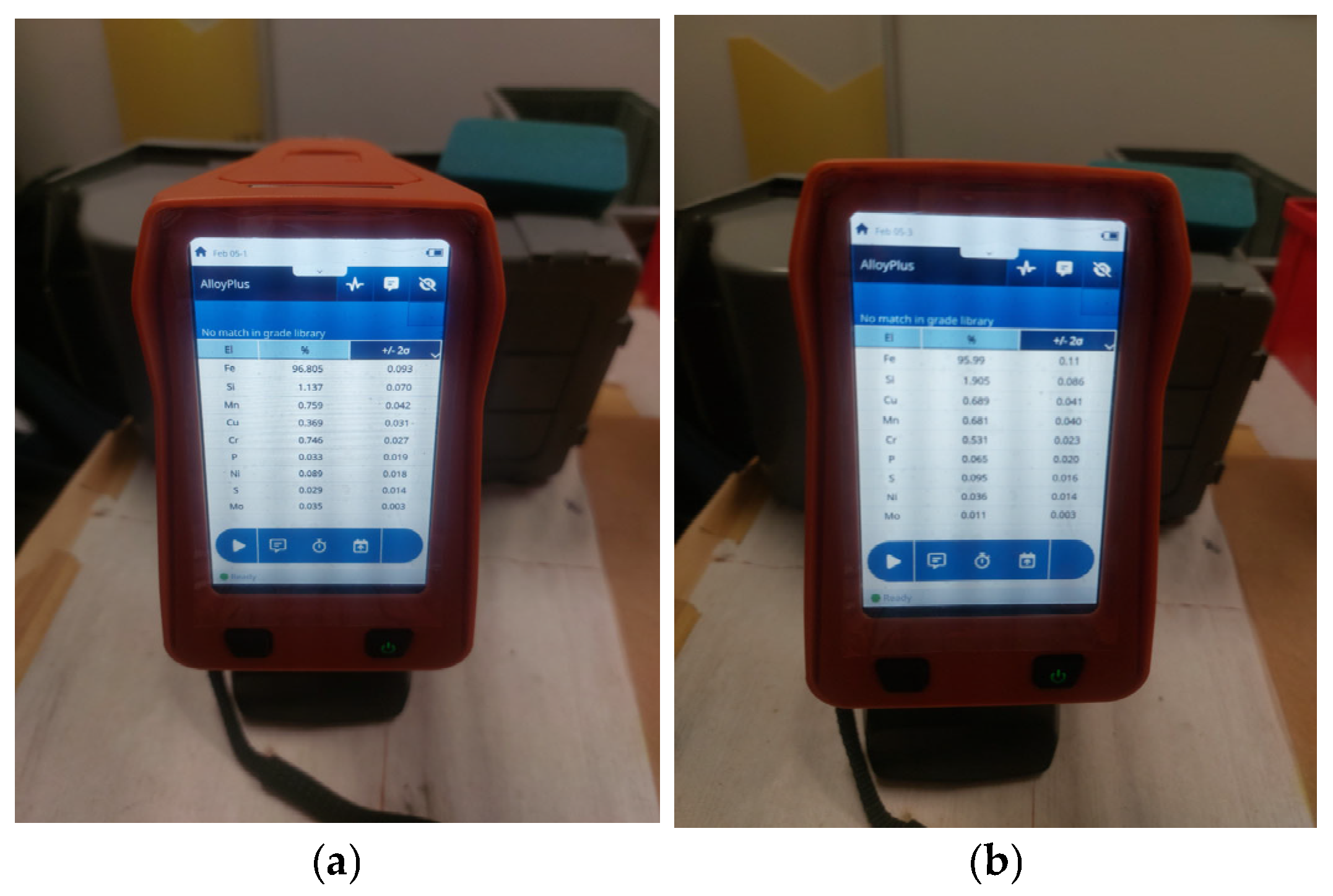
Surface elemental characterization of selected tribologically affected components was performed using portable X-ray fluorescence (XRF) analysis. The measurements were intended to provide complementary information concerning the elemental composition of the examined surfaces and to identify possible indications of material transfer and tribologically induced surface modification. Instrumentation details are summarized in
Table 2. The corresponding XRF results are presented and discussed in the Results and Discussion Section.
The condition of the used lubricant was evaluated by means of laboratory oil analysis performed by the Petroleum Products Testing Laboratory of PRISTA Oil. The investigation included determination of physicochemical properties, infrared spectroscopic characterization, and elemental analysis in accordance with the analytical procedures summarized in
Table 2. The laboratory examination was intended to assess lubricant degradation, contamination, additive depletion, and the presence of wear-related elements. The interpretation of the obtained results and the classification of the oil condition are presented and discussed in the Results and Discussion Section.
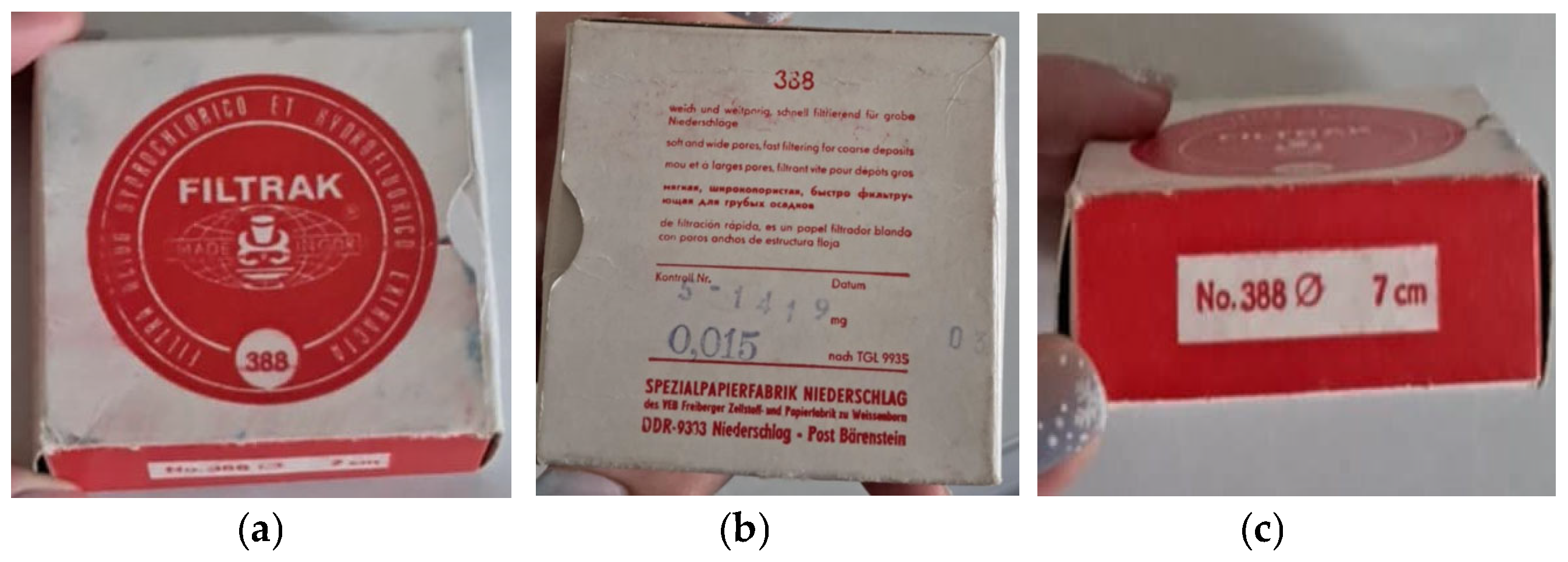
Wear debris retained on the filter paper samples was further examined by scanning electron microscopy (SEM- Carl Zeiss GmbH, Germany) and energy-dispersive X-ray spectroscopy (EDS- Carl Zeiss GmbH, Germany). Morphological characterization and elemental microanalysis were performed to obtain complementary information regarding particle morphology and chemical composition. Instrumentation details and analytical techniques employed in the present investigation are summarized in
Table 2. The corresponding SEM and EDS findings are presented and discussed in the Results and Discussion Section.
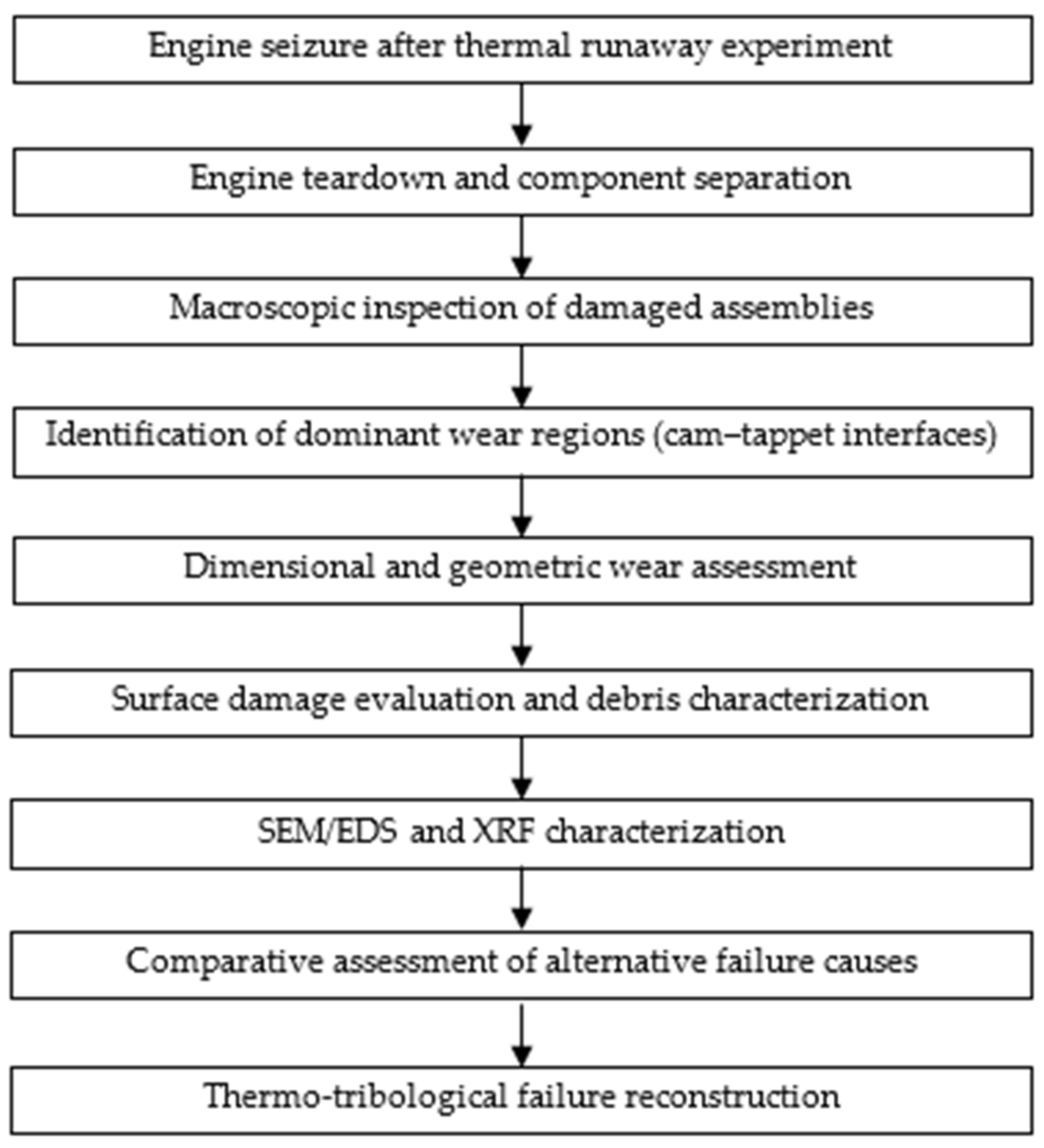
To improve the reliability of the failure reconstruction, the observed damage was evaluated in the context of alternative failure scenarios. Particular attention was paid to the condition of the valvetrain components, cylinder head assembly, and lubrication-related surfaces in order to identify the most probable degradation pathway leading to seizure. The comparative assessment was intended to distinguish thermo-tribological degradation from other possible mechanisms of catastrophic engine failure. The corresponding observations and their interpretation are presented in the Results and Discussion Section.
The methodological sequence used during the post-failure investigation is illustrated in
Figure 1.
The present work does not attempt to establish statistically generalized wear behavior. Instead, the objective is to reconstruct the most probable coupled thermal and tribological failure sequence within the investigated engine using the available post-failure evidence and the previously documented thermal history.
4. Results and Discussion
4.1. General Post-Failure Condition and Localization of Dominant Damage
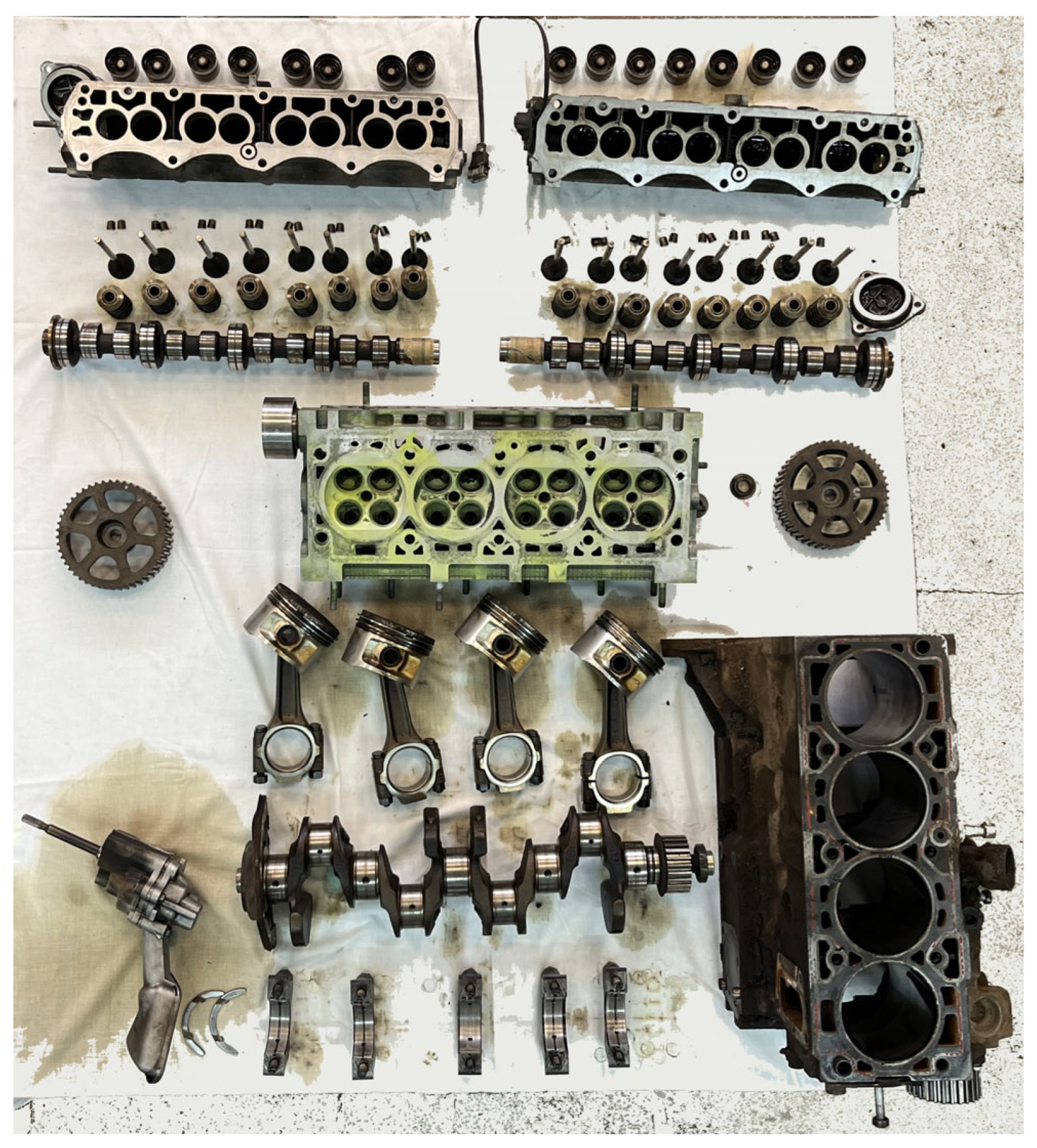
Following engine disassembly, visible thermal and mechanical distress was observed in several assemblies. However, the damage was not uniformly distributed throughout the engine. The most pronounced deterioration was concentrated in the valvetrain system, particularly at the camshaft–tappet contact regions. The general post-failure condition of the investigated engine and the main damaged areas are shown in
Figure 2.
Macroscopic inspection of the valvetrain assembly revealed localized surface deterioration affecting several cam lobes and associated hydraulic tappets. The dominant features included surface roughening, scoring, discoloration, material smearing, and irregular wear morphology. These observations were inconsistent with uniform long-term polishing wear and instead indicated localized tribological instability.
The damage severity differed substantially between neighboring cam–tappet pairs. This non-uniform distribution is significant because cam–tappet interfaces operate under cyclic loading, high local contact stress, and strong dependence on lubricant-film integrity. Under elevated thermal exposure, lubricant viscosity reduction, oxidation-related degradation, and depletion of surface-active additives can reduce stable surface separation and promote transition toward boundary-dominated contact.
Several affected regions also showed darkened tribological traces and deposit-like surface features consistent with repeated metal-to-metal interaction under insufficient lubrication. In some locations, the original surface finish was no longer distinguishable, indicating advanced surface disruption during the final degradation stage.
A used-oil sample was collected shortly after the experiment and stored for laboratory analysis. Kinematic viscosity, TBN, FTIR condition-monitoring indices, and elemental concentrations of wear metals, additives, and contaminants were determined using standardized laboratory procedures. The corresponding oil-analysis results are discussed in
Section 4.6.
4.2. Geometrical Assessment of Camshaft Degradation
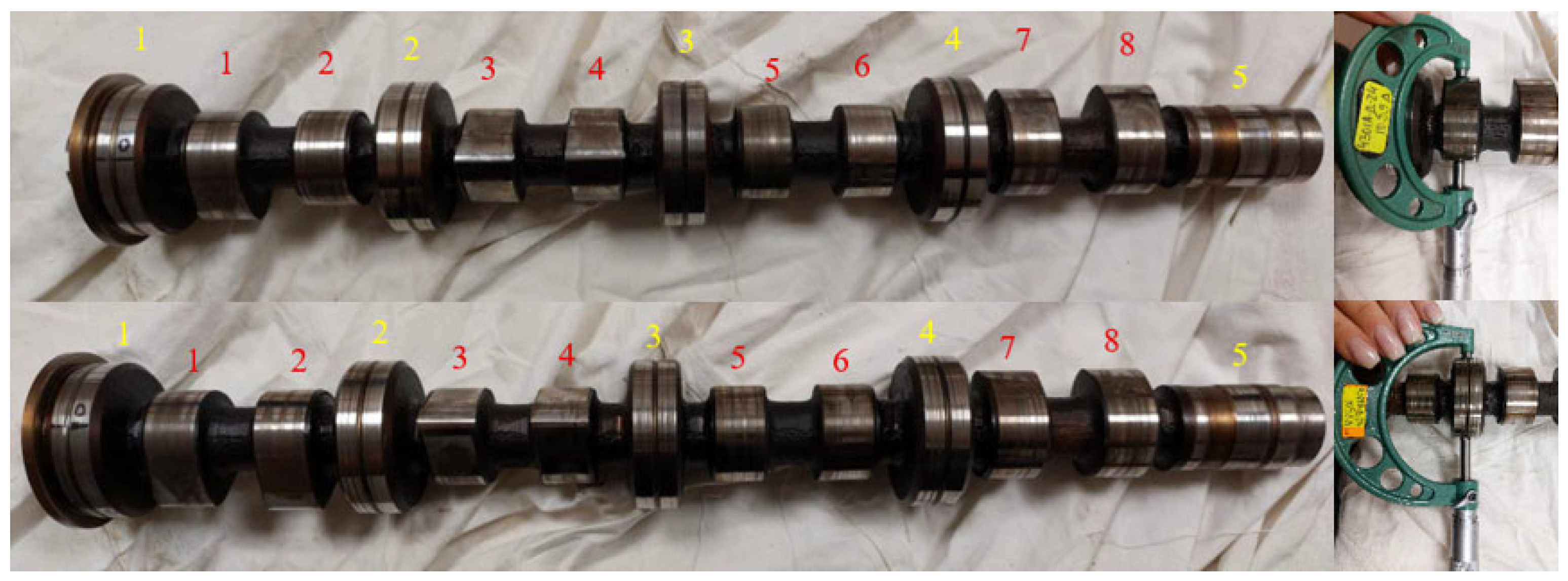
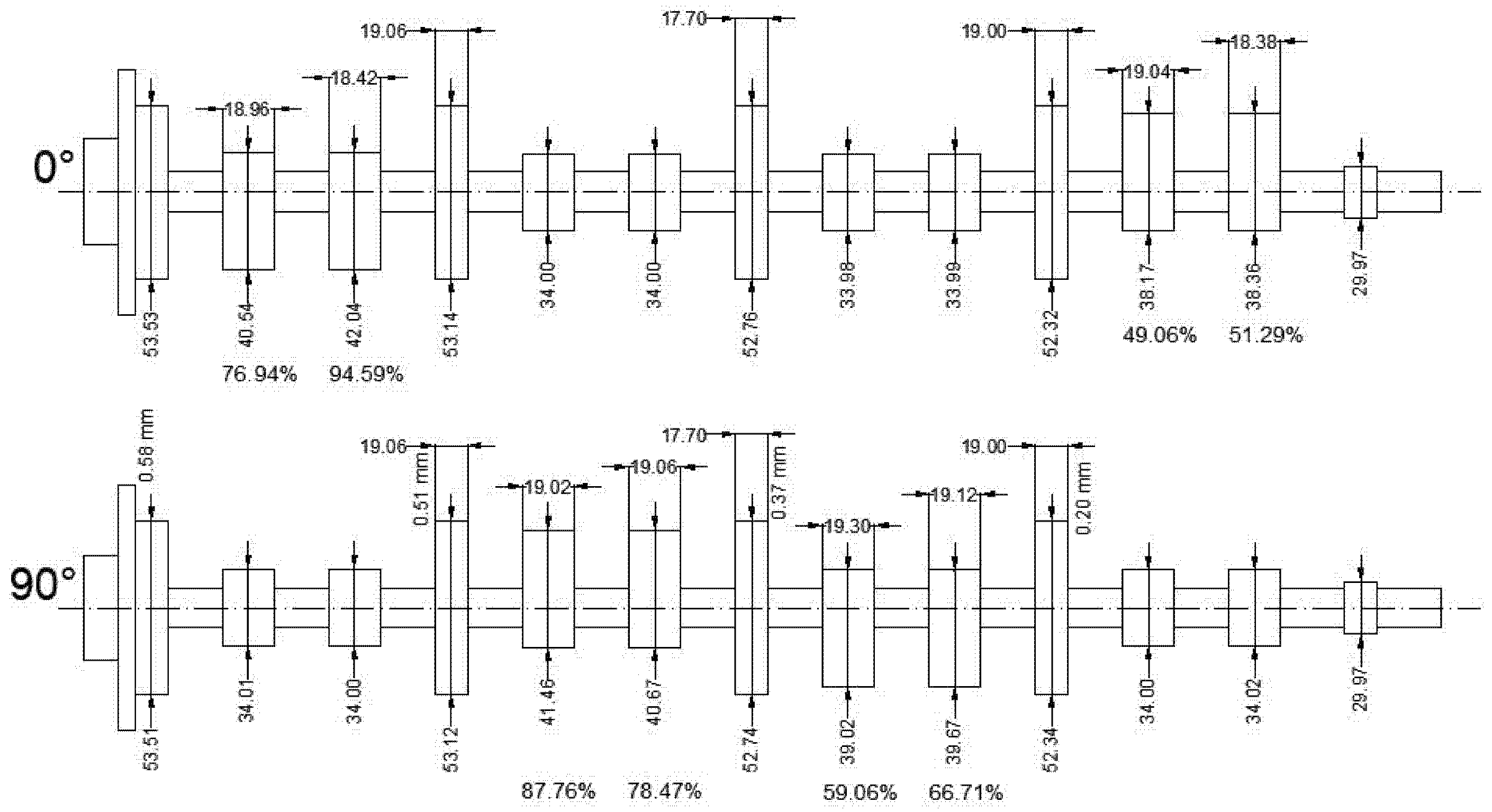
To quantify the severity of the degradation observed during the visual inspection, geometrical measurements were performed on both the intake and exhaust camshafts. Particular attention was paid to the base-circle diameter and the maximum lobe height, which were used for the subsequent determination of the effective cam lift and the evaluation of material loss. The adopted approach enabled a quantitative assessment of the degradation affecting the camshaft lobes and facilitated comparison between the intake and exhaust camshaft assemblies. The geometrical assessment methodology and lobe numbering sequence used for both camshafts are presented in
Figure 3.
For each cam lobe, the base-circle diameter and the maximum lobe height were measured to determine the effective cam lift. The effective lift corresponds to the difference between the maximum lobe height and the base-circle diameter and represents the functional displacement imposed on the valve train. Progressive material removal from the lobe surface reduces the effective lift and provides a quantitative indication of degradation severity. The nominal cam lobe height and the corresponding wear percentages were calculated according to Equations (1) and (2), respectively.
The percentage wear was calculated relative to the theoretical cam lift according to Equation (2):
is the experimentally measured lobe height.
is the theoretical cam lift (8.5 mm).
Accordingly, the calculated wear percentage represents the reduction in cam lobe height relative to the nominal cam lift of 8.5 mm specified by the manufacturer. Therefore, higher values of indicate progressively more severe degradation of the cam profile, whereas values approaching 100% indicate extensive loss of the original cam-lift geometry.
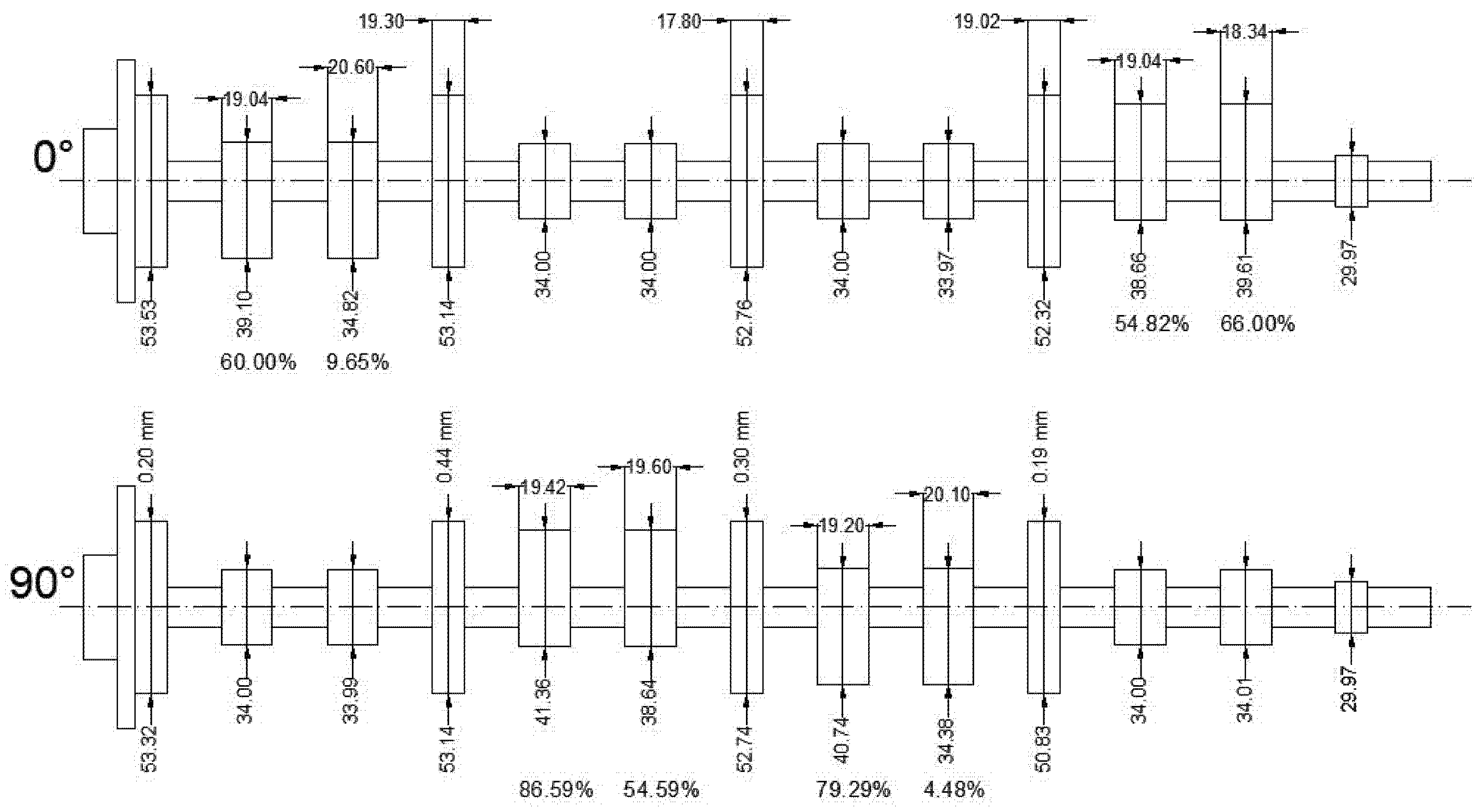
The corresponding numerical results for the intake camshaft measurements are summarized in
Figure 4 and
Table 3.
The intake camshaft exhibited highly localized degradation concentrated primarily at lobes No. 2 and No. 6. The calculated wear reached 95.53% and 90.35%, respectively, indicating near-complete loss of the effective cam-lift geometry in these regions. Several neighboring lobes additionally demonstrated intermediate degradation levels, whereas other regions remained comparatively less affected. The observed distribution is important because it indicates selective tribological destabilization rather than homogeneous long-term wear progression. If the dominant mechanism had been gradual operational aging alone, a substantially more uniform dimensional reduction between neighboring lobes would be expected.
Compared with the intake side, the exhaust camshaft exhibited lower overall degradation severity but still demonstrated clear localization of wear. The corresponding numerical results for the exhaust camshaft measurements are summarized in
Figure 5 and
Table 4.
The maximum calculated wear on the exhaust camshaft reached 50.94%, while the remaining lobes demonstrated lower and less dispersed degradation levels compared with the intake side. Despite the lower severity, the degradation pattern again remained distinctly localized rather than uniformly distributed across the shaft geometry.
From a tribological perspective, the combined geometrical observations indicate progressive instability of lubricant-film conditions within selected cam–tappet interfaces during the final thermal-loading stage. Under elevated thermal exposure, reduction in lubricant viscosity and deterioration of boundary-film stability likely intensified asperity interaction within the most heavily loaded contact regions.
The strong asymmetry in degradation severity between neighboring lobes additionally suggests that the seizure process evolved through localized contact destabilization rather than through globally uniform thermal damage affecting the entire valvetrain assembly simultaneously.
4.3. Reverse Gravimetric Reconstruction of Material Loss
Both camshafts were subjected to repeated precision mass determination under controlled laboratory conditions. Repeated measurements with intermediate repositioning confirmed satisfactory repeatability of the obtained values.
The measured mass of the intake camshaft was 2.9878 kg, whereas the exhaust camshaft exhibited a measured mass of 3.0107 kg, corresponding to a difference of approximately 22.8 g between the two shafts. The lower measured mass of the intake camshaft is consistent with the substantially greater geometrical degradation previously identified on several intake lobes.
To complement the direct geometrical measurements, reverse gravimetric reconstruction was additionally performed in order to estimate the physically plausible range of material removal associated with progressive lobe degradation. Since no pristine pre-failure camshaft masses were available, the reconstruction was not intended to reproduce the exact original component condition. Instead, the objective was to evaluate whether the dominant interpretation of localized tribological deterioration remained consistent under simplified geometrical reconstruction assumptions.
For this purpose, the material-loss volume associated with each lobe was approximated from the previously determined geometrical characteristics. The degraded cross-sectional area was estimated from the measured radial material loss using a simplified geometrical representation of the missing cam-lobe profile. Because the original unworn lobe contour was not available, the calculated removed areas should be interpreted as approximate cross-sectional indicators rather than exact restored geometries. The reconstructed local volume corresponding to the degraded region was calculated according to Equation (3):
where
represents the experimentally measured lobe width and
corresponds to the estimated degraded cross-sectional area.
The corresponding equivalent material loss was estimated according to Equation (4):
where
is the assumed material density. For the mass-based reconstruction, a representative ferrous-material density range of 7.2–7.4 g/cm
3 was used in order to account for the approximate density variability of the camshaft material. Therefore, the reverse gravimetric reconstruction should be interpreted as a complementary consistency check supporting the geometrical measurements, rather than as an exact determination of the original pre-failure component masses.
The reconstructed intake-camshaft material loss corresponded to a cumulative removed volume of approximately 4.43 cm
3, equivalent to approximately 31.9–32.8 g depending on the assumed ferrous-material density range (
Table 5). The highest reconstructed material removal was associated with lobes No. 2 and No. 6, consistent with the severe geometrical degradation previously identified during direct dimensional assessment.
The reconstructed exhaust-camshaft material loss corresponded to a cumulative removed volume of approximately 1.93 cm
3, equivalent to approximately 13.9–14.3 g depending on the assumed ferrous-material density range (
Table 6). Thus, the reconstructed difference in material loss between the intake and exhaust camshafts was approximately 17.6–18.9 g, which is physically consistent with the directly measured mass difference of approximately 22.8 g between the two shafts. This agreement supports the use of the reverse gravimetric reconstruction as a complementary consistency check rather than as an exact reconstruction of the original pre-failure component masses.
Compared with the intake side, the exhaust camshaft demonstrated substantially lower reconstructed material loss and lower dispersion of degradation severity between neighboring lobes. Nevertheless, the degradation pattern remained distinctly localized rather than uniformly distributed throughout the shaft geometry.
The reconstruction results remained fully consistent with the direct geometrical measurements and confirmed that the dominant degradation pattern was governed by selective tribological deterioration concentrated within specific cam–tappet contact regions. The reconstructed material-loss distribution additionally correlated closely with the observed tappet degradation morphology discussed in the following section.
From a thermo-tribological perspective, the combined geometrical and gravimetric evidence supports progressive destabilization of lubricant-film conditions during the final thermal-loading stage. As lubricant viscosity decreased and oxidation-related degradation intensified, repeated cyclic loading within the most heavily stressed cam–tappet contacts likely promoted localized adhesive interaction and accelerated material removal.
Importantly, the observed degradation pattern did not indicate homogeneous long-term operational aging or isolated manufacturing-related irregularities. Instead, the results consistently support localized boundary-lubrication collapse evolving under sustained thermal overload conditions.
4.4. Hydraulic Tappet Degradation and Contact Morphology
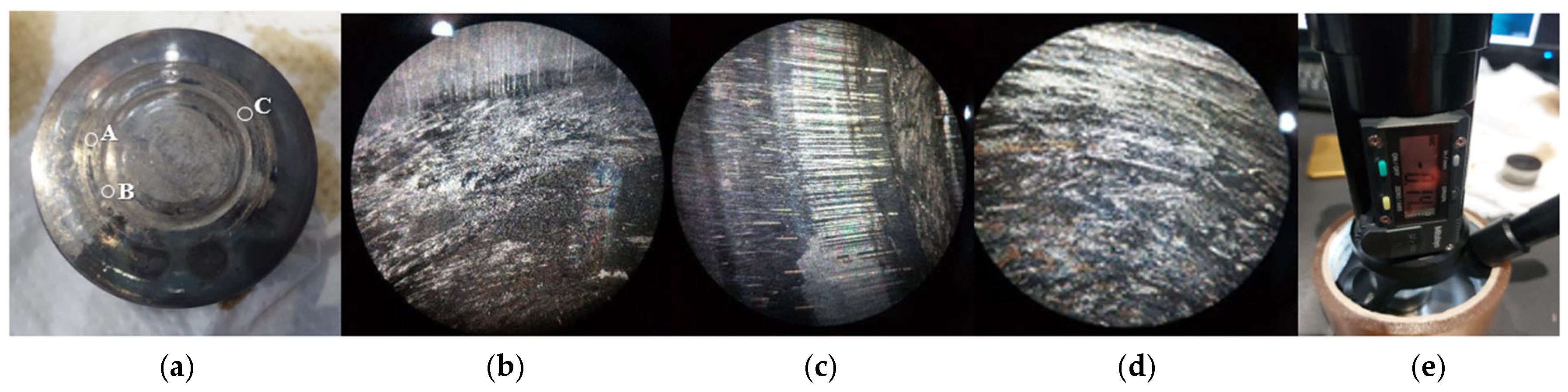
Visual examination of the hydraulic tappets revealed pronounced differences in surface condition between individual contact pairs (
Figure 6). Several tappets exhibited localized depressions, surface irregularities, and evidence of progressive contact deterioration, whereas other components remained comparatively less affected. The non-uniform distribution of the damage indicates that degradation developed preferentially within specific cam–tappet interfaces rather than uniformly throughout the valvetrain assembly.
The most severely affected tappets exhibited extensive surface disruption accompanied by localized material removal, roughened contact morphology, darkened tribological traces, and partial destruction of the original contact surface. In several regions, the initial surface finishing marks were no longer distinguishable because of advanced surface degradation during the final thermal-loading stage.
The observed morphology is consistent with prolonged operation under unstable boundary-lubrication conditions accompanied by repeated metal-to-metal interaction. Compared with gradual polishing wear typically associated with stable long-term operation, the damaged tappets exhibited highly localized deterioration concentrated within the active contact regions.
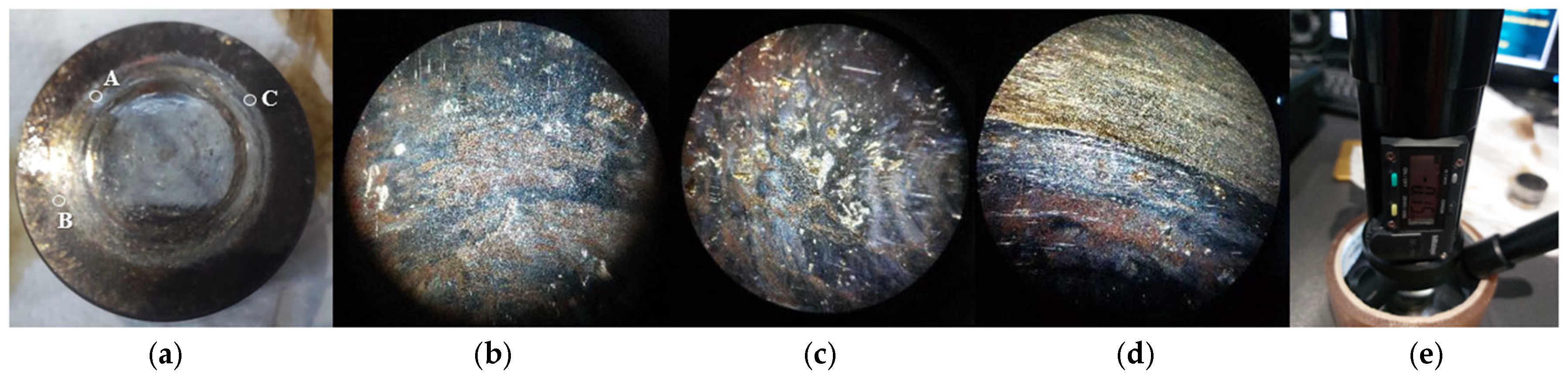
Additional tappets exhibited lower but still clearly detectable degradation severity (
Figure 7).
Compared with the severely degraded tappets, the moderately affected regions retained larger areas of comparatively preserved surface texture, although localized depressions and transitional wear morphology remained clearly visible. The variation in degradation severity between neighboring tappets (
Table 7) additionally supports the interpretation that the tribological instability evolved selectively rather than uniformly throughout the valvetrain assembly.
Quantitative measurements of the contact-surface depressions demonstrated substantial variations among the examined tappets. The largest surface depressions were observed in components corresponding to the most severely degraded cam lobes, indicating a close relationship between camshaft deterioration and the condition of the mating tappet surfaces. Such correspondence supports the interpretation that the degradation process evolved through coupled deterioration of the interacting contact pairs rather than through isolated component damage.
The observed surface morphology and the measured depression depths provide additional evidence that the damage process involved progressive modification of the tribologically active contact regions. These findings complement the geometrical and reverse gravimetric analyses and provide a suitable basis for the subsequent surface-composition assessment performed by XRF analysis.
4.5. XRF Surface Characterization of Cam–Tappet Interfaces
The XRF measurements revealed noticeable differences in surface elemental composition between regions exhibiting different degrees of degradation. Although the method is inherently limited to near-surface elemental characterization and does not provide information regarding microstructural features, the obtained results indicate that the most severely affected contact regions underwent significant surface modification during the degradation process. These findings provide complementary evidence supporting the existence of localized thermo-tribological deterioration within the interacting cam–tappet interfaces.
The XRF measurements performed on the degraded camshaft surfaces revealed noticeable local compositional variability between severely affected and comparatively preserved regions. The most damaged contact zones exhibited evidence of surface-layer disruption and compositional instability consistent with progressive tribological degradation under elevated thermal exposure.
Figure 8 and
Table 8 show the result of characterization of degraded camshaft lobe.
The observed variations are compatible with localized material-transfer phenomena and repeated adhesive interaction between the contacting surfaces. In particular, the regions exhibiting the greatest geometrical degradation also demonstrated the strongest near-surface compositional disturbance.
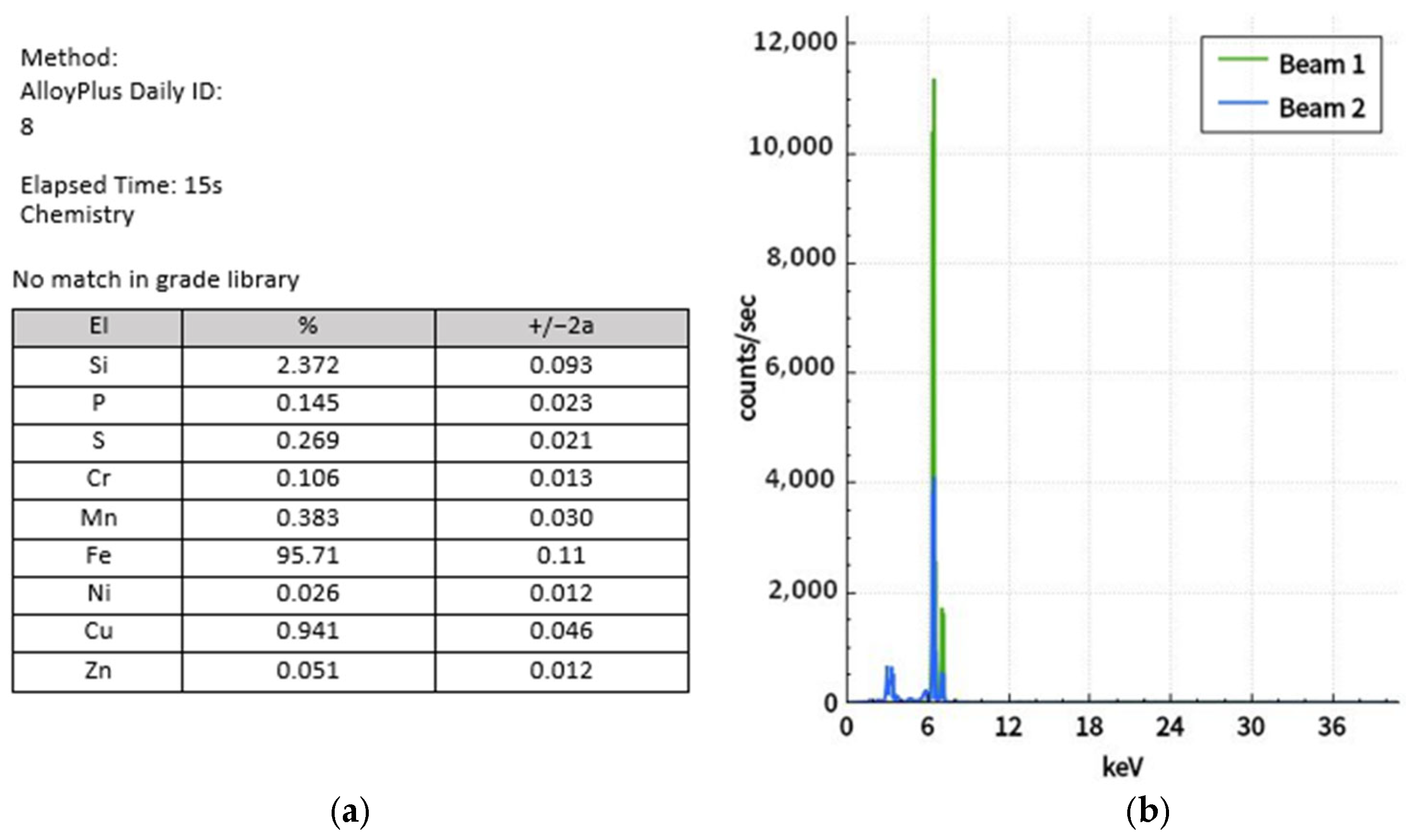
Additional XRF measurements were performed on selected hydraulic tappet contact regions in order to evaluate whether the near-surface compositional variations observed on the camshaft lobes were also reflected on the mating contact surfaces. Representative measurement conditions and a typical spectrum obtained from the camshaft surface are shown in
Figure 9, while the elemental concentrations obtained from two measurement spots per lobe are summarized in
Table 9.
The tappet measurements demonstrated similar near-surface compositional irregularities within the most severely affected contact regions. The observed behavior is consistent with progressive destruction of the original tribologically active surface layers during repeated cyclic interaction under insufficient lubrication conditions.
The tappet measurements demonstrated near-surface compositional irregularities within the affected contact regions. The obtained spectra indicated progressive disruption of the original contact surface accompanied by localized compositional instability associated with repeated cyclic interaction under deteriorating lubrication conditions.
The XRF observations correlated closely with the previously identified geometrical degradation and macroscopic wear distribution. Regions exhibiting stronger dimensional reduction and surface disruption also demonstrated more pronounced compositional instability, indicating coupled mechanical and tribochemical deterioration.
Consequently, the XRF results should be interpreted as supportive evidence rather than as a stand-alone diagnostic tool. The elemental variations identified on the damaged surfaces are consistent with the progressive degradation previously revealed by the geometrical, gravimetric, and contact-morphology analyses and provide a basis for the subsequent SEM/EDS investigation of wear debris and surface deterioration.
4.6. Lubricant Degradation and Wear-Debris Evidence
4.6.1. Laboratory Analysis of the Used Lubricating Oil
The laboratory oil analysis revealed a severely deteriorated lubricant condition characterized by elevated contamination levels and significant degradation of the physicochemical properties. The obtained results (
Table 10) indicate that the lubricant had reached an advanced stage of service deterioration, corresponding to Class D according to the adopted oil-condition assessment methodology.
Such a condition is generally associated with reduced lubricant performance and diminished ability to maintain stable separation between heavily loaded contacting surfaces. Consequently, the oil analysis results provide additional evidence supporting the occurrence of severe thermo-tribological degradation during the final stages preceding seizure.
Reference properties of fresh oil originating from the same service batch were not available. Although a commercially available lubricant of identical grade and specification was analyzed separately, possible formulation changes introduced over time may affect direct comparability. Therefore, the present investigation focuses primarily on the condition of the used lubricant and its relationship to the observed thermo-tribological degradation rather than on a strict fresh-versus-used oil comparison.
The laboratory analysis demonstrated clear evidence of progressive lubricant deterioration accompanied by elevated contamination associated with intensified tribological interaction during the thermal-loading process. Particularly significant was the elevated iron concentration (130 mg/kg), which is consistent with intensified material removal from heavily loaded ferrous contact interfaces within the valvetrain assembly.
Additional degradation indicators further supported the interpretation of severe thermo-oxidative lubricant stressing. The measured Total Base Number (TBN) of 4.7 mgKOH/g indicated substantial depletion of the alkaline reserve, while the elevated SOx and NOx oxidation indices confirmed pronounced oxidation-related deterioration during prolonged high-temperature operation.
The measured viscosity at 100 °C additionally suggested alteration of lubricant rheological behavior following extended thermal exposure. Although no severe water contamination was identified, the detected sodium and silicon concentrations indicated possible secondary contamination contributions associated with coolant additives, environmental particles, or degraded sealing-related material.
The additive-element concentrations, particularly calcium, zinc, and phosphorus, remained consistent with the original detergent–dispersant and anti-wear additive package characteristic of ZDDP-containing engine lubricants. However, the combined oxidation indicators and elevated wear-metal concentrations suggest progressive deterioration of the lubricant’s ability to maintain stable tribological protection under severe thermal-loading conditions.
The oil-analysis results correlated closely with the previously identified camshaft degradation, tappet surface deterioration, and wear-debris accumulation observed during the post-failure examination. In particular, the elevated concentration of metallic contamination supports the interpretation that the seizure process evolved progressively through cumulative wear generation rather than through isolated catastrophic fracture.
Although the lubricant analysis alone cannot identify the exact failure mechanism, the overall deterioration of the oil condition is consistent with the extensive surface damage and material loss previously identified by the geometrical, gravimetric, contact-morphology, and XRF investigations. These findings provide an important link between the macroscopic evidence of degradation and the subsequent microscopic examination performed by SEM/EDS analysis.
4.6.2. Used-Oil Condition and Debris Accumulation
Following the seizure event, the used engine oil and associated filtration elements were examined in order to evaluate the presence of wear-related debris and evidence of progressive lubricant degradation during the thermal runaway process. Particular attention was directed toward identifying ferrous particles and solid contamination associated with severe tribological interaction within the valvetrain assembly. Prior to microscopic examination, the oil-filter (
Figure 10) media were carefully opened and prepared in order to expose retained debris for subsequent analysis.
Visual inspection of the filter material revealed substantial accumulation of dark metallic debris and tribologically generated particulate matter. The retained particles were not uniformly distributed within the filtration medium but instead appeared concentrated in localized regions associated with lubricant-flow pathways.
The observed debris accumulation is consistent with progressive generation and recirculation of wear particles during the final thermal-loading stage. Under deteriorating lubrication conditions, repeated adhesive interaction and localized surface disruption within the cam–tappet interfaces likely promoted continuous release of metallic fragments into the lubrication circuit.
The elevated concentration of ferrous debris additionally supports the interpretation that the seizure process evolved progressively rather than through instantaneous catastrophic fracture. Instead of isolated fragmentation, the observed evidence suggests cumulative tribological deterioration accompanied by repeated generation and transport of wear particles through the lubrication system.
Although the oil itself cannot provide direct information regarding the morphology and composition of individual wear particles, the evidence obtained from the lubricant condition assessment provides an important link between the macroscopic damage observations and the subsequent SEM/EDS investigation of wear debris.
4.6.3. SEM/EDS Characterization of Wear Debris
To further characterize the solid contamination generated during the thermal runaway event, selected debris-containing samples were subjected to SEM/EDS examination. The analysis was performed to investigate the morphology, distribution, and elemental composition of the collected particulate material and to obtain complementary microscopic evidence associated with the observed thermo-tribological degradation. Particular attention was paid to the presence of wear-related particles and their relationship to the damage previously identified during the post-failure examination.
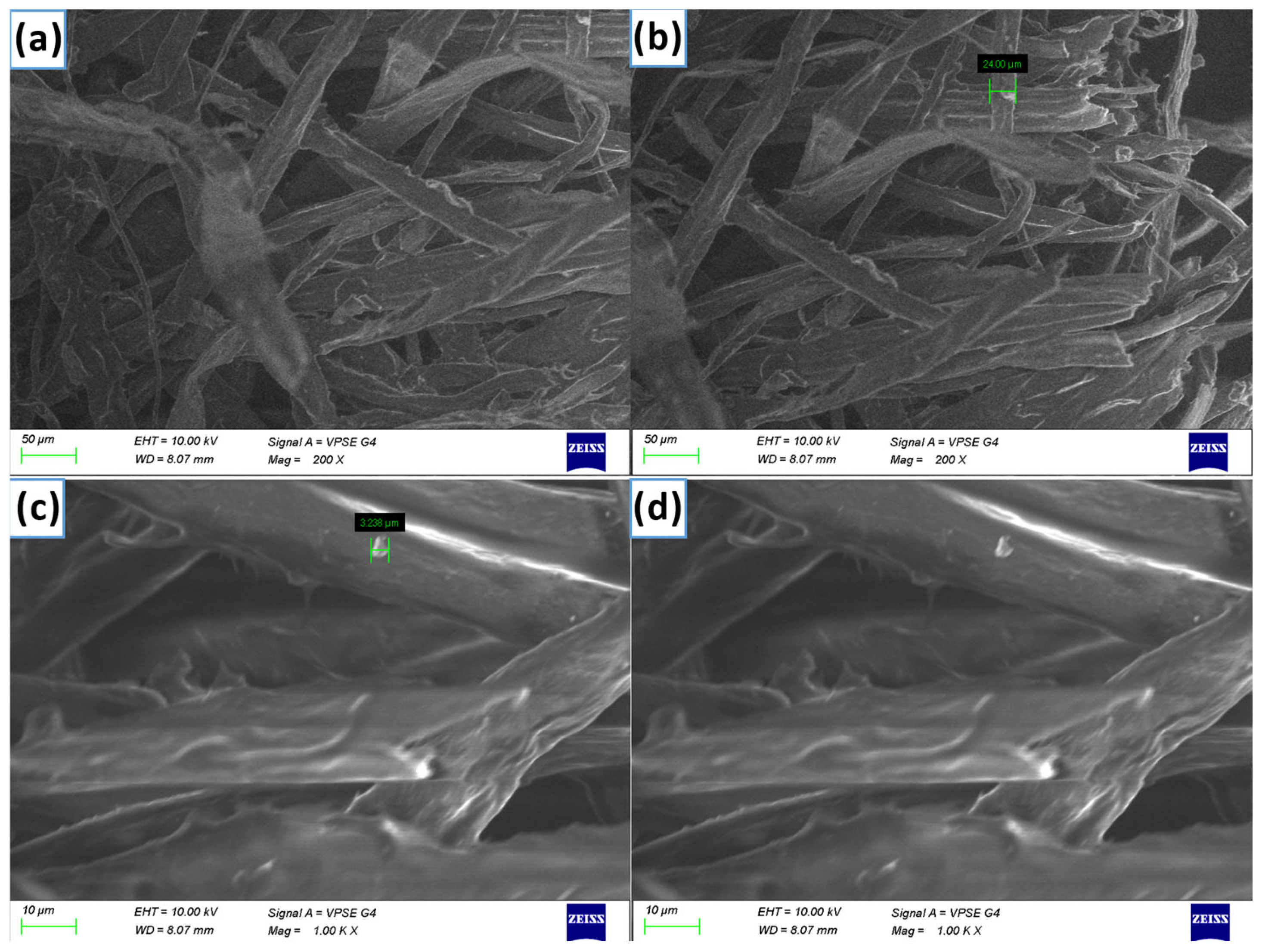
The SEM observations revealed a heterogeneous population of wear-related particles exhibiting substantial variations in morphology and size. As illustrated in
Figure 11, the recovered debris included agglomerated particulate material, irregular metallic fragments, thermally affected oxidized particles, and compacted clusters embedded within the oil-residue matrix. Such morphological diversity indicates that the particulate material originated from multiple stages of the degradation process rather than from a single isolated damage event.
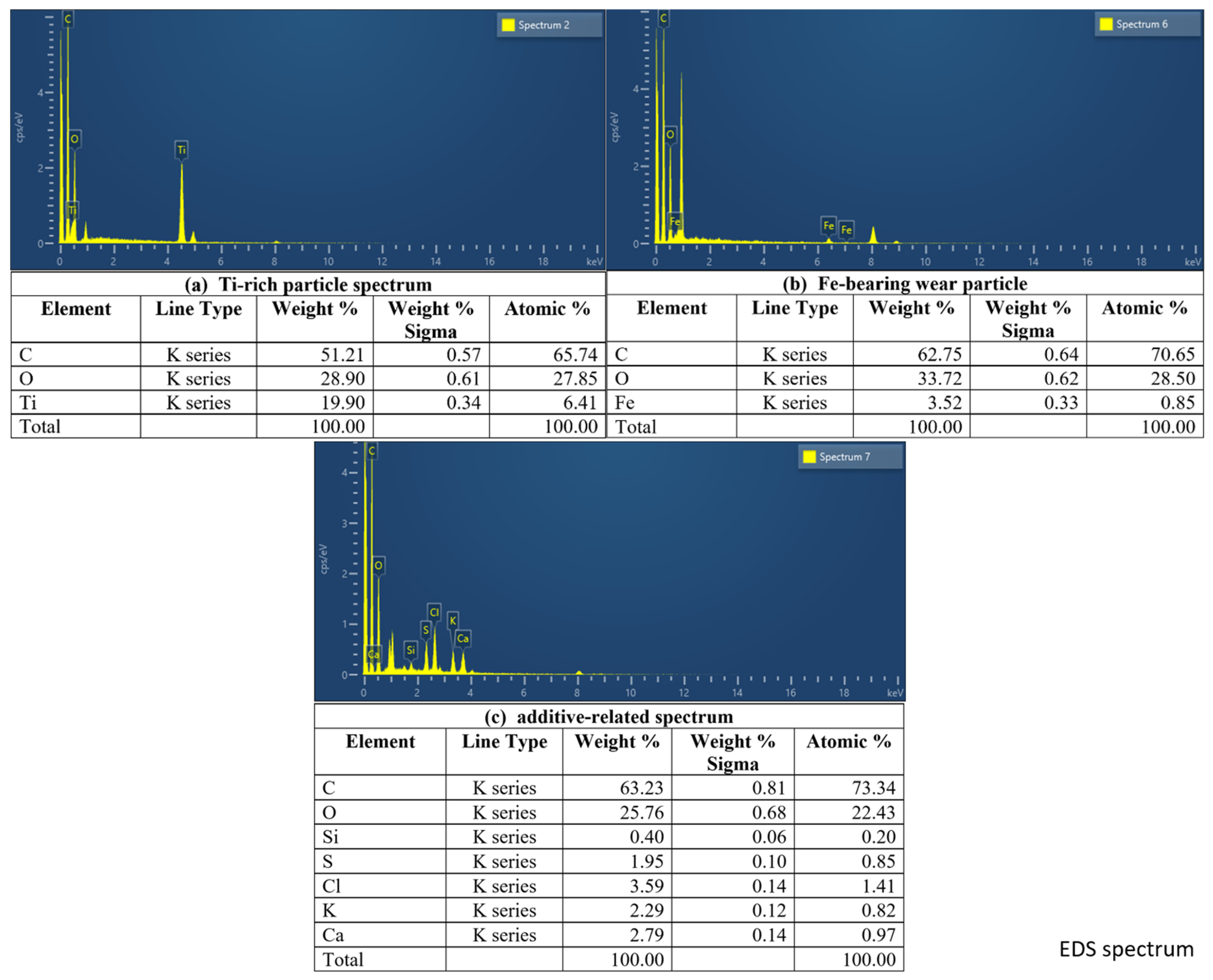
In addition to larger metallic fragments, numerous fine particles and compacted agglomerates were identified within the filter medium. The presence of accumulated debris entrapped within the oil-residue matrix suggests progressive particle recirculation and retention during prolonged operation under deteriorating lubrication conditions. These observations are consistent with the cumulative wear evolution previously indicated by the geometrical, gravimetric, and lubricant-condition analyses. The result are shown in
Figure 12.
Overall, the elemental heterogeneity of the collected debris indicates that the material retained in the oil filter originated from multiple interacting degradation mechanisms rather than from a single wear source. The EDS analyses demonstrated a heterogeneous composition of the particles retained within the oil-filter medium. Carbon and oxygen represented the dominant constituents in most spectra, indicating the presence of oxidized carbonaceous deposits and lubricant-derived residues. In addition, localized enrichment with Fe, Ti, Ca, S, Cl, K, Na, and Si was observed, suggesting contributions from several sources and different stages of the degradation process.
Most analyzed areas were dominated by carbon and oxygen, which is consistent with oxidized lubricant residues and thermally altered carbonaceous deposits accumulated within the filter medium.
Localized iron enrichment was detected in some particles, demonstrating the presence of ferrous wear products generated during the advanced stages of engine deterioration. The coexistence of Fe and oxygen indicates that these particles were at least partially oxidized prior to their capture by the oil filter.
Several isolated particles exhibited elevated titanium concentrations. Because titanium-containing compounds may originate from multiple sources, including additives or specific component materials, their exact origin cannot be established solely from EDS data.
Minor amounts of Na, K, Ca, Si, S, and Cl were also identified (
Table 11). Their low concentrations and sporadic distribution suggest secondary contributions associated with lubricant additives, combustion-derived deposits, environmental contaminants, or interactions between wear products and degraded oil constituents.
Collectively, the SEM and EDS observations support the interpretation that wear-particle generation was a continuous and evolving process rather than the result of a single catastrophic event. The coexistence of oxidized carbonaceous residues, Fe-bearing metallic particles, titanium-containing fragments, and additive-derived compounds indicates simultaneous operation of oxidative degradation, metallic wear generation, and debris-assisted interaction mechanisms. The progressive accumulation and recirculation of these particles within the lubrication system likely contributed to secondary abrasive effects and further destabilization of the already weakened tribological interfaces.
4.7. Assessment of Structural Integrity
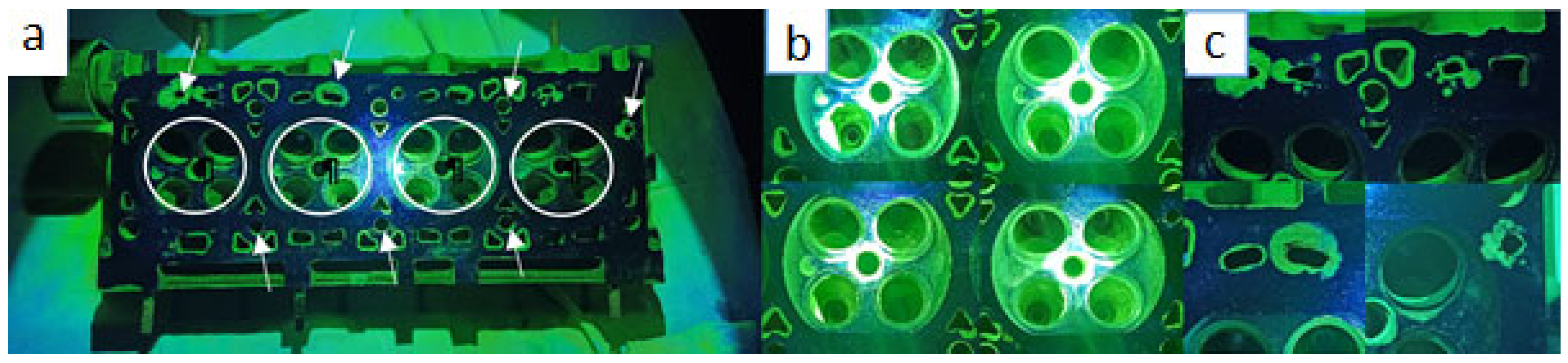
In addition to the tribological investigation of the valvetrain assembly, selected thermally affected structural regions were examined in order to evaluate the possible contribution of fracture-related mechanisms to the final seizure event. Particular attention was directed toward cylinder-head regions typically susceptible to thermally induced cracking during severe overheating conditions(
Figure 13a). Fluorescent penetrant inspection was performed on selected cylinder-head surfaces and adjacent thermally exposed regions (
Figure 13b,c) using standardized liquid-penetrant testing procedures.
Penetrant examination and visual inspection did not reveal evidence of macroscopic cracking or fracture of the investigated components. No indications of catastrophic structural failure were identified in the examined regions.
The absence of crack-related damage suggests that the seizure process was not initiated by sudden structural collapse. Instead, the overall condition of the components was consistent with progressive surface deterioration and cumulative material removal developing during prolonged thermo-tribological loading.
These observations are in agreement with the geometrical measurements, reverse gravimetric reconstruction, hydraulic tappet surface characterization, lubricant analysis, and SEM/EDS results. Collectively, the obtained evidence supports the interpretation that the final seizure event evolved through progressive degradation rather than through isolated brittle fracture or sudden mechanical failure.
4.8. Integrated Thermo-Tribological Reconstruction of the Seizure Mechanism
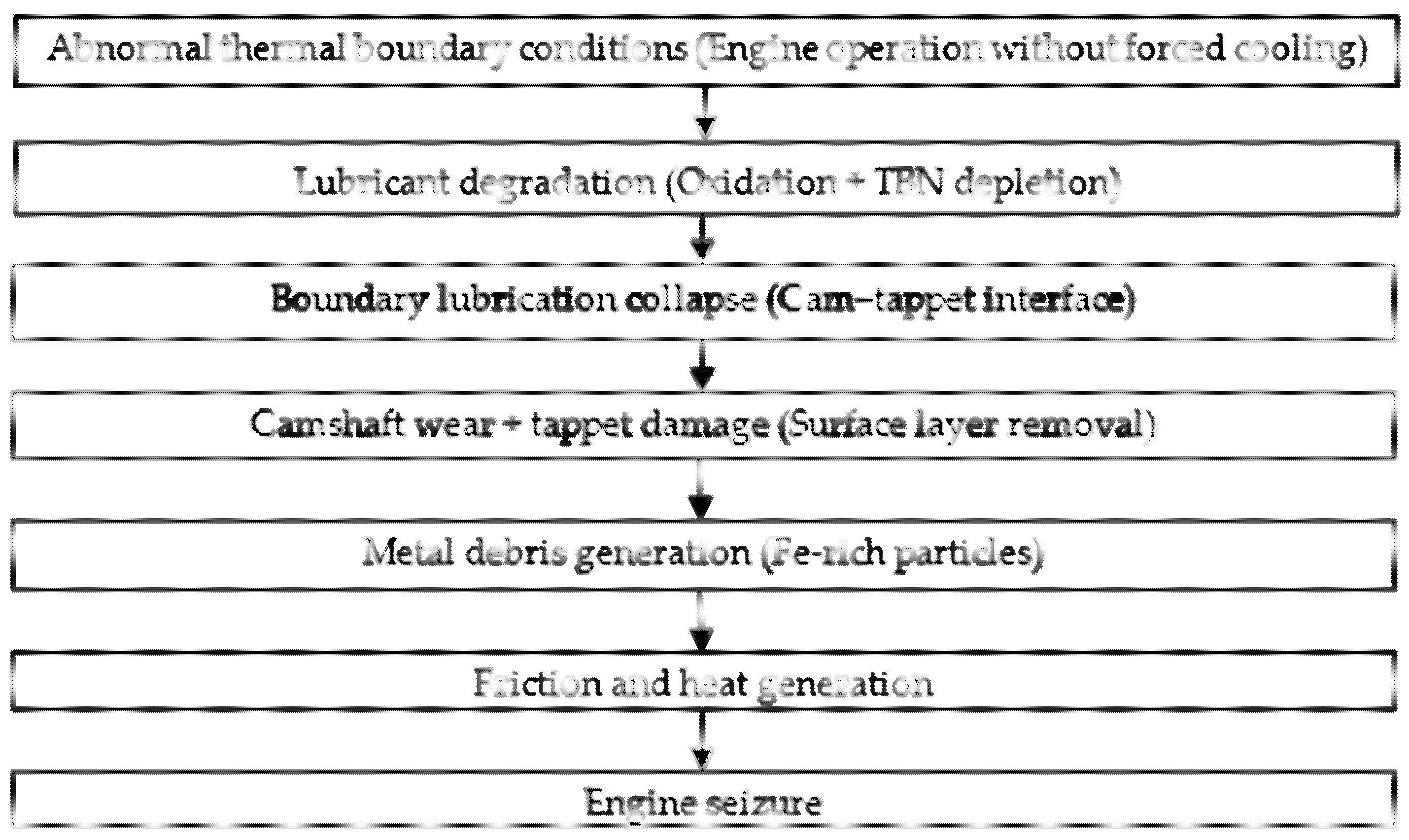
The combined results obtained from the geometrical measurements, reverse gravimetric reconstruction, hydraulic tappet surface characterization, XRF analysis, lubricant-condition assessment, SEM/EDS investigation, and structural integrity evaluation enabled reconstruction of the probable thermo-tribological degradation sequence preceding the seizure event. Collectively, the available evidence indicates that the failure evolved progressively rather than through a single catastrophic mechanical event.
Prolonged operation under impaired cooling conditions promoted sustained thermal loading and progressive deterioration of lubricant properties. Elevated temperature exposure, oxidation-related degradation, and depletion of the lubricant reserve progressively reduced the ability of the oil to maintain stable separation between heavily loaded contact interfaces.
As lubricant performance deteriorated, repeated asperity interaction within the cam–tappet interfaces intensified, resulting in localized material removal and progressive disruption of the tribologically active surface layers. The geometrical measurements and reverse gravimetric reconstruction demonstrated that the degradation was concentrated predominantly within the intake camshaft assembly, while hydraulic tappet surface characterization revealed corresponding contact-surface deterioration.
Simultaneously, the generation and recirculation of wear debris contributed to secondary abrasive interaction within the lubrication system. The elevated iron concentration detected by laboratory oil analysis, together with the heterogeneous particle population identified by SEM/EDS examination, indicates progressive accumulation of wear products originating from multiple interacting degradation processes.
No evidence of macroscopic cracking or catastrophic fracture was identified during the structural integrity assessment. Consequently, the available evidence suggests that the final seizure event was preceded by cumulative thermo-tribological deterioration characterized by progressive wear evolution, surface degradation, and debris-assisted interaction rather than by sudden structural failure.
Therefore, the seizure event investigated in the present study is interpreted as the final stage of a self-reinforcing thermo-tribological degradation process involving lubricant deterioration, destabilization of protective surface interactions, progressive material removal, and continuous generation of wear debris under severe thermal loading conditions.
Within this sequence, lubricant degradation should be regarded not only as a consequence of the thermal event but also as an active contributor to the progression of the failure process.
The integrated thermo-tribological reconstruction proposed on the basis of the combined evidence is summarized schematically in
Figure 14.



 ,
,