Review

Water-Induced Lubrication Challenges in Engine Oils: A Review with H2-ICE as a Proxy for Alternative-Fuel Engines

1
State Key Laboratory of Engine and Powertrain System, Weichai Power Co., Ltd., Weifang 261061, China
2
State Key Laboratory of Solid Lubrication, Lanzhou Institute of Chemical Physics, Chinese Academy of Sciences, Lanzhou 730000, China
3
School of Mechanical and Automotive Engineering, Qingdao University of Technology, Qingdao 266520, China
*
Authors to whom correspondence should be addressed.
Lubricants 2026, 14(6), 230; https://doi.org/10.3390/lubricants14060230 (registering DOI)
Submission received: 1 May 2026 / Revised: 30 May 2026 / Accepted: 2 June 2026 / Published: 5 June 2026

Abstract

Hydrogen-fueled internal combustion engines (H2-ICEs) impose unique challenges on engine lubrication because water is an inevitable combustion product. This review summarizes the current understanding of water-induced degradation mechanisms in engine oils for H2-ICEs, with emphasis on physicochemical property variation, additive depletion, tribofilm evolution, and tribological performance. Water present in dissolved, emulsified, or free states can significantly alter lubricant viscosity, destabilize additive systems, and accelerate oxidative aging. In particular, water promotes the depletion of zinc dialkyldithiophosphate (ZDDP) through tribofilm removal and competitive adsorption at rubbing interfaces, while also inducing additive hydrolysis that transforms long-chain phosphates into shorter-chain species with inferior film-forming capability. These processes inhibit tribofilm growth and reduce the mechanical integrity of protective films, thereby deteriorating anti-wear performance. Although substantial progress has been made in understanding the role of liquid water in lubrication, the tribochemical effects of high-temperature water vapor under realistic H2-ICE operating conditions remain largely unexplored. Future research should therefore focus on water vapor-dominated lubrication environments representative of hydrogen combustion, aiming to elucidate the underlying tribochemical mechanisms and support the development of dedicated lubricants for durable and reliable H2-ICE operation.

1. Introduction

Internal combustion engines (ICEs) fueled by gasoline and diesel have undergone long-term technological development, and their oil formulations as well as additive design strategies have become relatively mature. These systems are able to maintain stable lubrication performance under harsh conditions such as high-temperature anti-oxidation, strong shear, and contamination [1,2,3]. With the increasing severity of the global energy crisis and the continued advancement of low-carbon development strategies, the energy structure is rapidly shifting toward low- and even zero-carbon directions [4,5]. In this context, the ICE industry is actively exploring alternative fuels to replace conventional gasoline and diesel. Fuels such as hydrogen [6,7,8], methanol [9,10], and ammonia [11,12] have attracted considerable attention due to the environmental friendliness of their combustion products. However, the water generated during the combustion of these alternative fuels also introduces new challenges for conventional engine oils and lubrication technologies [13,14,15,16].
Hydrogen internal combustion engines (H2-ICE), benefiting from the clean and efficient combustion characteristics of hydrogen, show strong application potential in heavy-duty commercial vehicles, urban public transportation, and low-altitude aircraft [17,18,19]. However, under long-term operating conditions, H2-ICEs still face many technical issues, including pre-ignition, hydrogen embrittlement, and lubrication reliability [20,21,22]. From the perspective of lubrication reliability, continuous ingress of water from combustion products may lead to lubrication failure and durability problems [23,24]. At present, dedicated lubricants suitable for hydrogen-fueled conditions are still under development, and further progress is required in terms of emulsion stability [23], tribofilm formation under mixed and boundary lubrication conditions [25], and wear performance of key tribo-pairs, e.g., piston ring–cylinder liner and cam-follower [26].
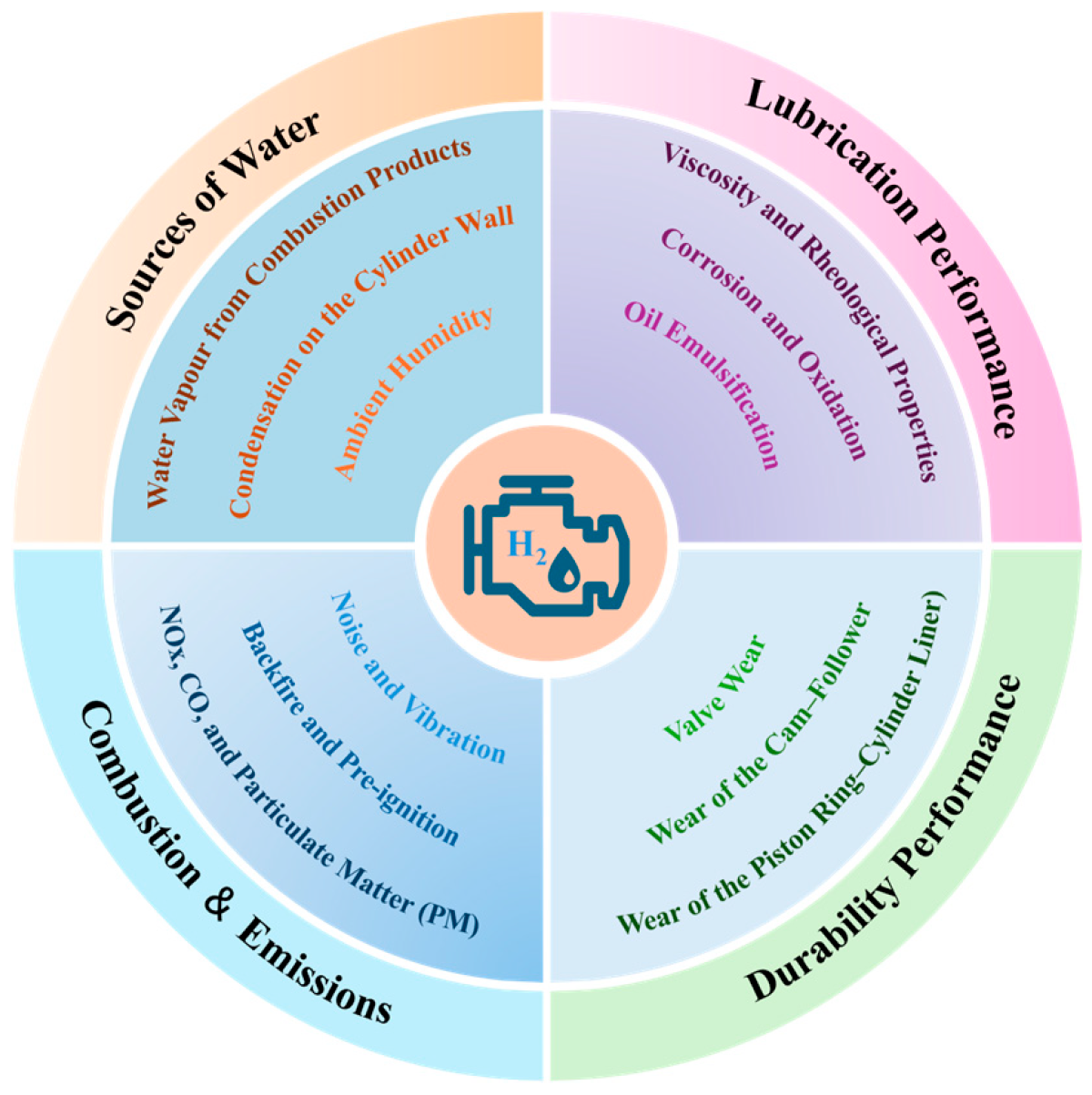
Figure 1 summarizes the influence of water on the lubrication performance of ICE oils. After entering the lubrication system, water not only leads to the deterioration of physicochemical properties (e.g., abnormal viscosity changes) [27] but also causes physical loss and chemical degradation of many additives such as zinc dialkyldithiophosphate (ZDDP) through mechanisms including washing and hydrolysis [28,29]. These changes directly affect the formation of ZDDP-derived tribofilms under mixed or boundary lubrication conditions and alter the chemical structure of phosphate species within the tribofilm [29,30], ultimately resulting in reduced antiwear performance and an increased risk of lubrication failure [31,32,33].
In addition to H2-ICEs or alternative-fuel engines, water contamination issues are also encountered in the engines of hybrid vehicles. In hybrid vehicles, due to frequent engine start–stop operation and relatively low operating temperatures, water in the lubricant is difficult to evaporate, and condensation can readily form within the crankcase [34]. Besides, taking methanol-fueled ICEs as an example, the combustion products themselves contain a relatively high amount of water, which may also enter the lubrication system [35]. It should be noted that, under practical operating conditions, the water content in lubricating oil is not constant. Clarke et al. [36] analyzed used oil samples from two high-mileage hybrid vehicles and several 2012 Toyota Camry hybrid vehicles and found that only about 3% of the samples contained water in the range of 0.1–2%. This indicates that even for the same type of vehicle, water contamination in lubricants can vary significantly under different operating conditions.
Existing studies on the influence of water on lubrication performance have mainly focused on metalworking fluids [37,38], water-based fire-resistant hydraulic fluids [39], aqueous superlubricity systems [40,41,42], and water as a contaminant in industrial oils [43,44,45]. In contrast, systematic reviews specifically addressing the influence of water on lubrication performance in H2-ICEs remain limited. In this work, hydrogen engine oils containing zinc dialkyldithiophosphate (ZDDP) are taken as a representative case. The discussion covers the sources and forms of water in engine lubricants (dissolved water, emulsified water, free water, and water vapor), the effects of water on physicochemical properties (e.g., viscosity and acid value), the failure mechanisms of ZDDP (washing loss, hydrolysis, and competitive adsorption), as well as the structural and composition variations of ZDDP tribofilms (hydrolysis of long-chain polyphosphates into short-chain orthophosphates) and the associated changes in mechanical properties and their relation with friction and wear.

2. Sources and Forms of Water in H2-ICE Engine Oils

The sources of water in the lubricants of H2-ICEs are multiple. During engine operation, high-pressure gases generated by hydrogen combustion (i.e., blow-by gases) can leak through the piston ring–cylinder liner clearance into the crankcase, carrying water vapor and unburned hydrogen [15,46]. In addition to combustion products, environmental conditions also affect the water content in lubricants. Under high-humidity conditions, moisture entrained in the intake air after compression by the turbocharger may enter the lubricating oil through the crankcase ventilation system. Part of this moisture can mix with the lubricant at relatively low-temperature lubrication sites, such as the high-speed journal bearings of the turbocharger, forming oil–water emulsions and affecting bearing lubrication performance and load-carrying capacity [47,48].
In addition, condensation caused by temperature differences within the crankcase is another important pathway for water contamination. Water vapor may condense on low-temperature component surfaces inside the crankcase and then mix with the lubricant to form emulsions [49,50]. In H2-ICEs, water may also continuously enter the lubrication system in the form of high-temperature vapor. Measurements from test benches show that the water content in lubricants is usually not very high, which may be related to evaporation at high temperatures, participation in hydrolysis reactions, and/or removal through the ventilation system [51]. However, continuous ingress of water vapor over long periods may still interact with the ester base oil and additives in the oil and gradually weaken its performance and promote aging [52,53,54].
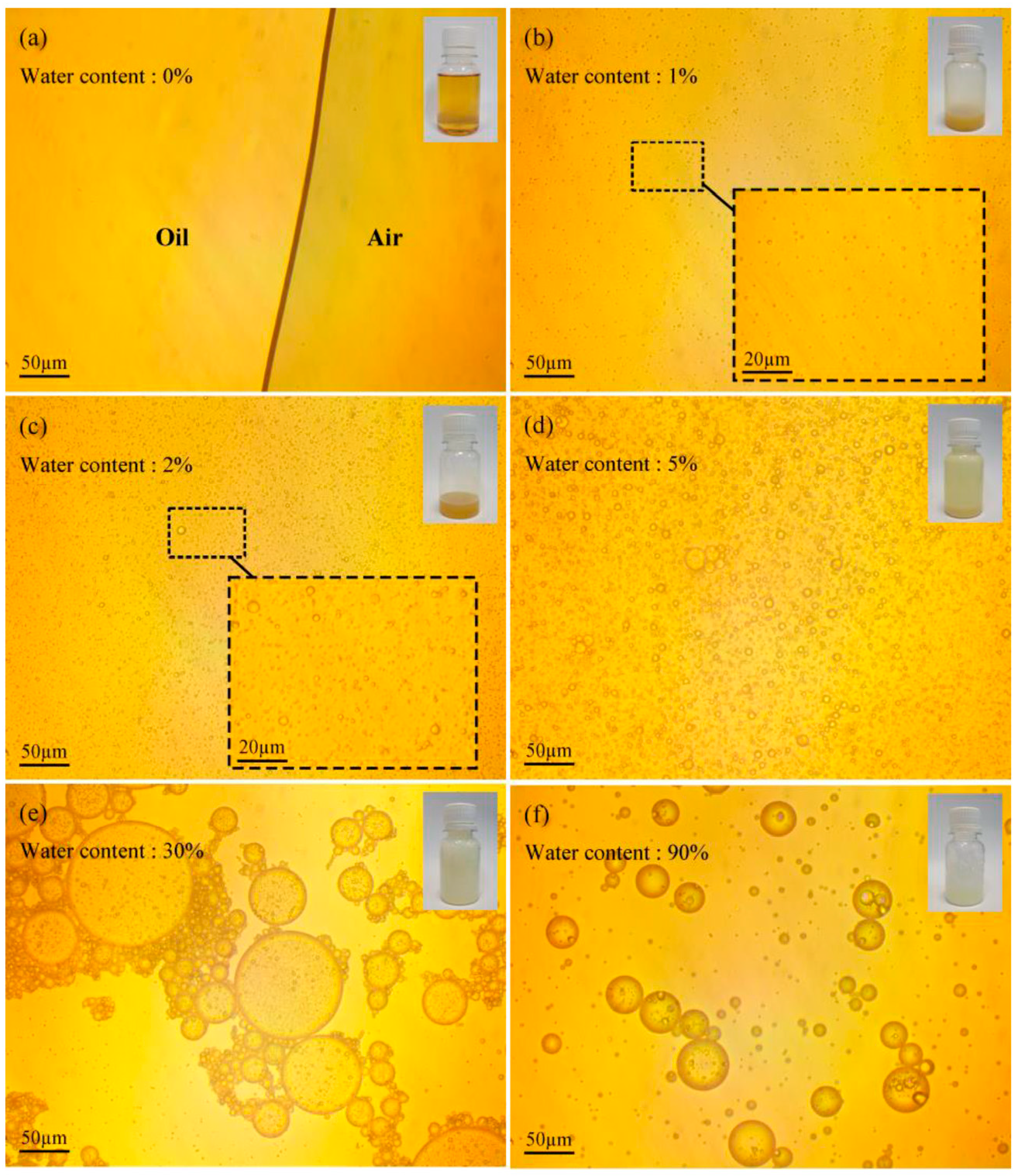
After entering the lubricant, water generally exists in three forms: dissolved water, emulsified water, and free water [29]. Figure 2 shows the micro- and macroscopic characteristics of emulsions at different water contents. Dissolved water is present in the oil phase at the molecular level. Under this condition, the lubricant remains transparent, making it difficult to detect the presence of water by visual observation. It has been reported that, at ambient temperature, base oils or typical lubricants can dissolve approximately 200–600 ppm (0.02–0.06%) of water [55].
When the water content exceeds the solubility limit and the lubricant is subjected to high temperature, strong shear, and continuous agitation, surface-active additives (such as dispersants and detergents) and antiwear additives can promote emulsification, leading to the formation of emulsified water [57,58]. At this stage, the lubricant becomes cloudy, and its transparency decreases significantly, as water is dispersed in the oil phase in the form of micron-sized droplets, forming a water-in-oil emulsion [59].
With further increases in water content, or when the lubricant exhibits strong demulsification capability, water may gradually separate from the oil phase and form free water, which settles at the bottom as a visible water layer [29]. Compared with dissolved and emulsified water, free water is more likely to adversely affect the lubrication system. It can cause abnormal changes in physicochemical properties such as viscosity and significantly interfere with the normal function of lubricant additives. This effect becomes more pronounced under low-temperature conditions [60]. Since water has a higher density than oil and can freeze below 0 °C, ice may accumulate at the bottom of the oil sump or inside pump components, forming ice layers that block oil passages or filters [61]. This can lead to impeller impact, surface pitting, and bearing lubrication failure, and may also be accompanied by severe noise, further accelerating wear of key components [62,63].

3. Influence of Water on the Physicochemical Properties of Engine Oils

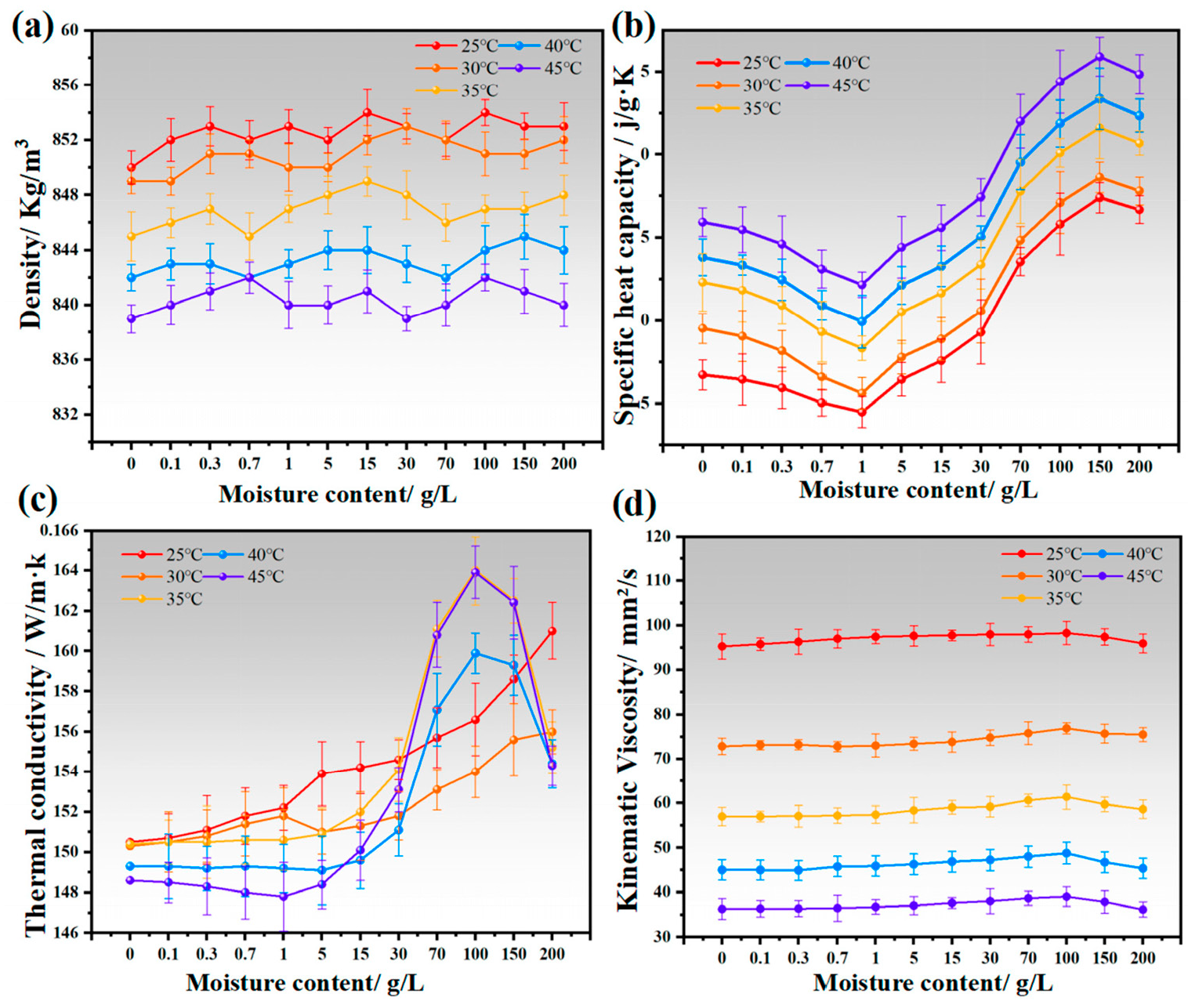
Viscosity is one of the most commonly used and most critical physicochemical parameters for evaluating lubricant performance, and it directly affects the lubrication state of ICE components [64]. Baskov et al. [65] reported that the presence of a small amount of water in lubricating oil may lead to a decrease in viscosity, reducing oil film load-carrying capacity and increasing wear at contacts such as the piston ring–cylinder liner interface. However, the effect of water on viscosity is not always a decrease. Korneev et al. [66] found that in emulsions with water contents ranging from 0.1% to 5%, water may cause an increase in viscosity and also lead to an increase in total acid number. Xue et al. [67] investigated the effects of water content on viscosity, density, specific heat capacity, and thermal conductivity of lubricants, as shown in Figure 3. Within the temperature range of 25–45 °C, temperature is the dominant factor affecting kinematic viscosity, while water content (0–200 g/L) shows a non-monotonic effect. At low water content (<100 g/L), viscosity increases slightly with increasing water content, whereas above 100 g/L, viscosity decreases. Density is only slightly affected by water content, while specific heat capacity first decreases and then increases, and thermal conductivity shows only a slight increase. Although existing studies investigated viscosity behavior under relatively low-temperature conditions (25–45 °C), practical engine oils in ICEs usually operate at significantly higher temperatures, typically around 100–120 °C. Under such conditions, viscosity index and thermal-viscosity stability become increasingly important for maintaining hydrodynamic lubrication performance. However, systematic studies on the influence of water on viscosity index and high-temperature rheological behavior remain limited.
Zhang et al. [68] pointed out that water ingress can influence viscosity in a rather complex manner through the emulsification process in engine oils. Under low-pressure and low-shear-rate conditions, the dilution effect of water may lead to an increase in viscosity. In contrast, at high shear rates, due to phase separation of water, the viscosity of water-contaminated oil gradually approaches that of the base oil. The same study also noted that water ingress not only leads to the deterioration of physicochemical properties—such as viscosity, acid value, and rheological behavior—but may also suppress tribofilm formation and aggravate wear at critical tribological interfaces.
The effect of water on lubricant viscosity cannot be described as a simple dilution or thickening process. Instead, it depends on several factors, including water content, the form in which water exists, base oil type, and additive formulation [69,70]. When water is mainly present at the molecular level or in small, dispersed amounts, viscosity may decrease [70]. However, at higher water contents, where emulsified structures are formed, the apparent viscosity of the lubricant may increase significantly [71]. In addition, shear conditions can further influence the trend of viscosity variation, leading to noticeable differences under different shear stresses [72].

4. Effect of Water on Additive Depletion and Boundary Lubrication Performance of Engine Oils

4.1. Physical Depletion Mechanisms of Additives Induced by Water

During operation, tribopairs in ICEs, such as the piston ring–cylinder liner and cam–tappet contacts, may operate under mixed or boundary lubrication conditions. Under these lubrication regimes, friction reduction and wear protection mainly rely on lubricant additives—such as the antiwear additive ZDDPs, which adsorb onto the contact surfaces and undergo thermal decomposition as well as tribochemical reactions. These processes lead to the formation of a protective, glassy phosphate tribofilm on the rubbing surfaces, thereby reducing direct asperity contact and improving lubrication performance [28,73,74]. In H2-ICEs, water generated during combustion has a more pronounced influence on additive depletion and subsequent tribofilm formation [29,68].
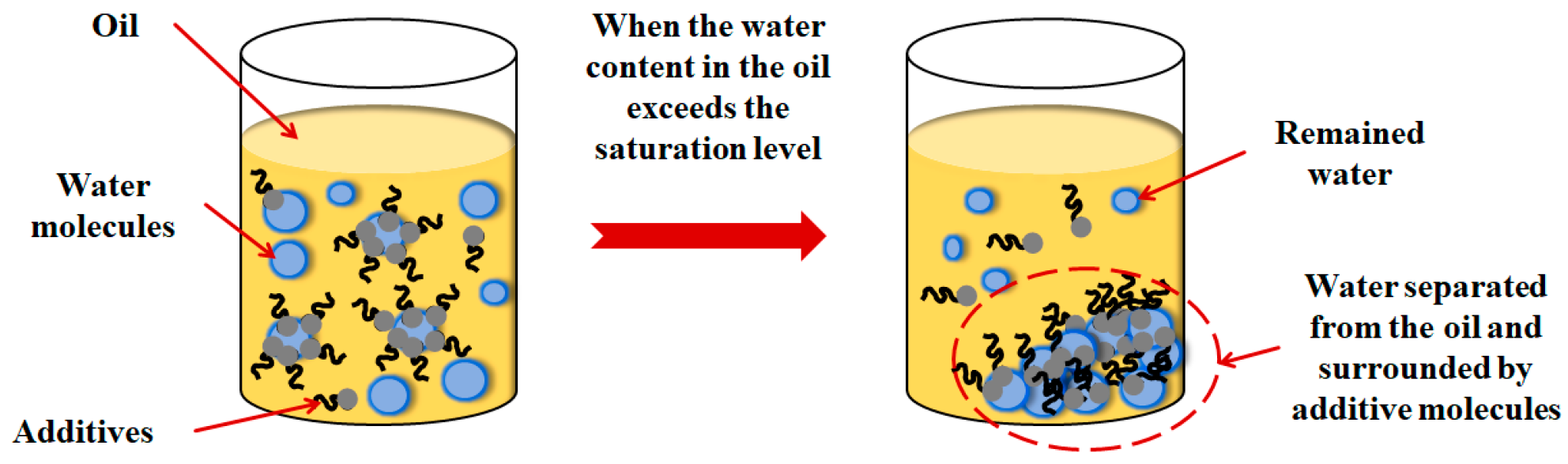
When water enters the lubrication system and its content remains below the saturation solubility of the oil, the polar groups of additives such as ZDDP tend to preferentially associate with water molecules, forming reverse micelle structures. In these structures, water acts as the core, while the polar head groups of the additive orient inward and the nonpolar tails extend outward, allowing water to be stably dispersed in the oil phase [29,75,76]. During this process, water can physically hinder the effective adsorption of ZDDP at the tribological interface [76]. As the water content increases, water droplets may gradually coalesce and separate as free water, carrying part of the ZDDP molecules out of the oil phase. This “washing” effect leads to a reduction in additive concentration, which, in turn, weakens the tribofilm-forming ability of ZDDPs, slows down the film growth rate, and limits the increase in tribofilm thickness [29]. Figure 4 schematically illustrates the mechanism of ZDDP depletion induced by washing under free water conditions.

4.2. Hydrolysis of Additives and Its Influence on ZDDP Tribofilm Formation

In addition to physical depletion, chemical hydrolysis of components such as synthetic ester base oils and ZDDPs is another important factor affecting the lubrication performance of engine oils [77,78]. When ZDDP molecules come into direct contact with water, water can attack the P–S bonds in the molecular structure, triggering hydrolysis reactions and generating derivatives such as phosphoric species. This process suppresses the tribofilm-forming ability of ZDDP. As a result, this significantly weakens the antiwear performance of the lubricant [76,79].
Spedding et al. [73] investigated the hydrolysis behavior of ZDDP using nuclear magnetic resonance (NMR) techniques. Their results showed that water plays a key catalytic role in the hydrolytic decomposition of ZDDP, and that removal of water can markedly inhibit this decomposition process. Subsequently, Fuller et al. [80] analyzed the hydrolysis of ZDDP in water-containing oils and further clarified the chain scission process of long-chain phosphate species adsorbed on tribological surfaces under the action of water, as described in Equations (1) and (2). Kowalczyk et al. [81] also reported that, when water and oxygen are present simultaneously, ZDDP undergoes hydrolysis reactions, which hinder the normal growth of the tribofilm.
7Zn(PO3)2 + 6H2O → Zn7(P5O16)2 (short chain polyphosphate) + 4H3PO4
2Zn(PO3)2 + 3H2O → Zn2P2O7 (short chain polyphosphate) + 2H3PO4
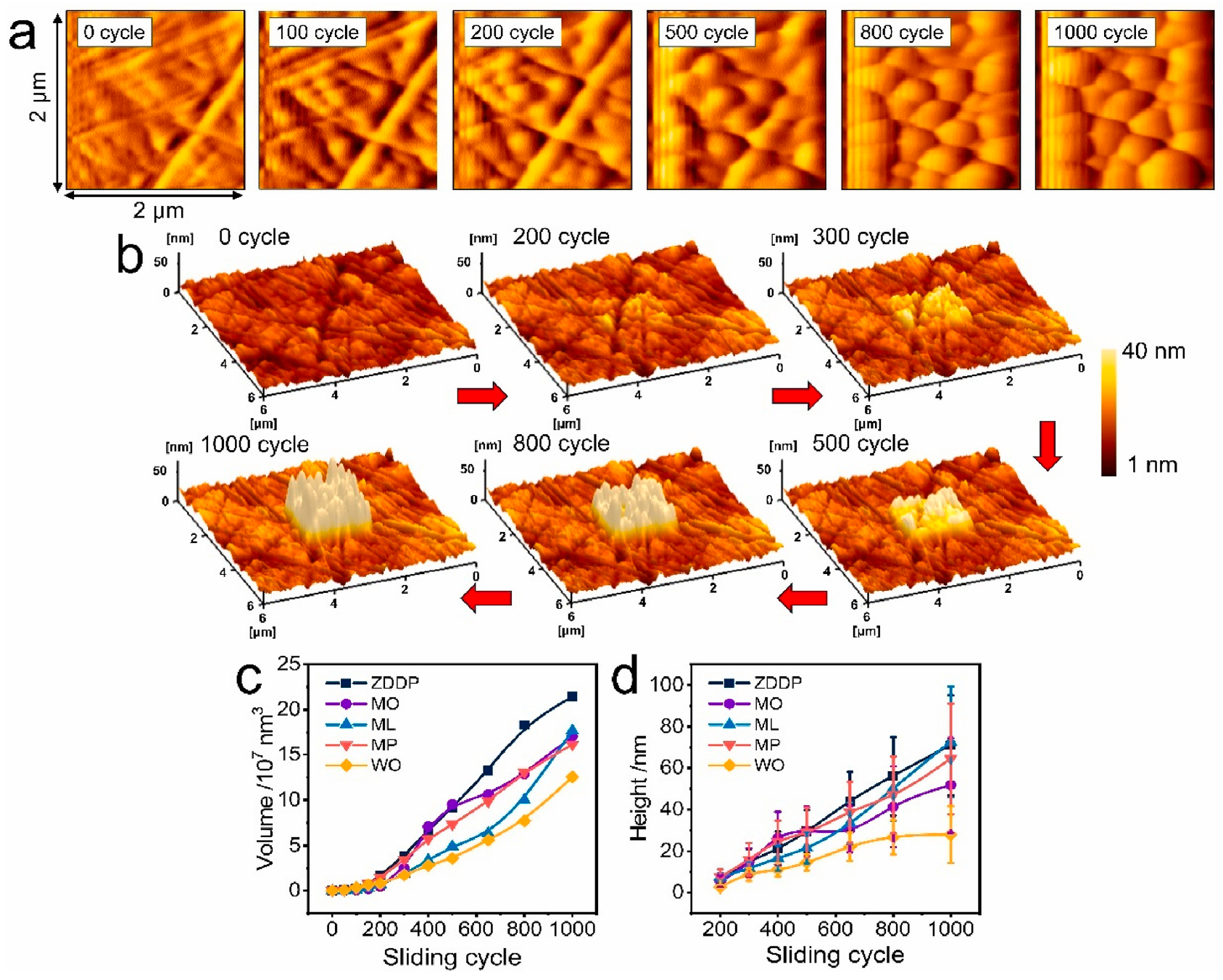
Previous studies have examined the influence of water on the tribological behavior of ZDDP-containing lubricants from different perspectives [82,83]. From the viewpoint of in situ microscopic observation, Jiang et al. [25] employed atomic force microscopy (AFM) to monitor the formation process of ZDDP tribofilms under conditions involving different biodiesels (e.g., methyl oleate, methyl laurate, and methyl palmitate) as well as water dilution. The AFM results show that the presence of water significantly suppresses the growth of ZDDP tribofilms. As illustrated in Figure 5, in water-in-oil emulsions, both the tribofilm thickness and the average growth rate are clearly lower than those observed in water-free oil samples as the number of sliding cycles increases. After 1000 sliding cycles, the average thickness of the tribofilm formed in the water-containing oil is about 28 nm, whereas that formed in pure ZDDP oil reaches approximately 71 nm. This behavior is associated with several factors. In water-in-oil emulsions, water interacts with polar additives to form reverse micelle structures, which reduces the effective concentration of ZDDP. At the same time, dissolved water can induce hydrolysis of polyphosphate species, leading to the formation of shorter-chain polyphosphates, which further hinders the polymerisation and growth of the tribofilm.
Zhang et al. [68] investigated the influence of water on the ZDDP tribofilm formation process of engine oils using spacer layer imaging (SLIM), from the perspectives of macroscopic tribological performance and rheological behavior. The results show that water, through competitive adsorption with additives on metal surfaces, significantly weakens boundary lubrication performance, leading to reduced tribofilm thickness and a smoother surface morphology. This structural change may, to some extent, contribute to a reduction in the coefficient of friction; however, the pronounced decrease in film thickness confirms the inhibiting effect of water on tribofilm growth. When the water content increases to 5%, the formation of ZDDP tribofilms becomes nearly suppressed, accompanied by a marked increase in wear. In addition, under low-shear or low-pressure conditions, the presence of water tends to increase the viscosity of water-contaminated oil. In contrast, under high shear or high contact pressure, the aqueous phase is easily squeezed out of the elastohydrodynamic lubrication (EHL) contact zone, and the presence of water has little effect on the EHL film thickness and only a minor influence on the coefficient of friction.
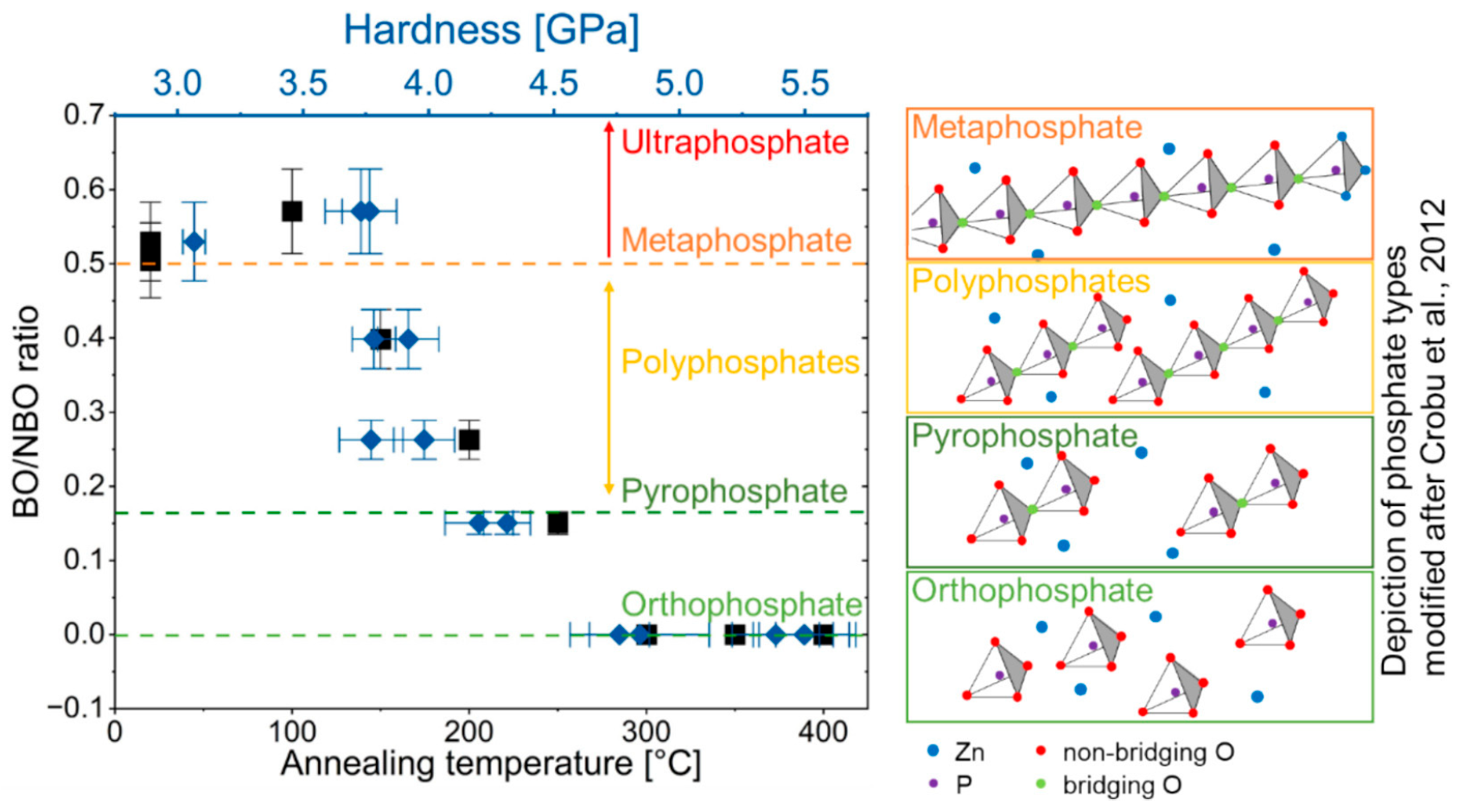
From a mechanistic perspective, the ratio of bridging oxygen to non-bridging oxygen peak areas (BO/NBO) obtained from X-ray photoelectron spectroscopy (XPS) has been widely used as a key indicator to evaluate structural changes in phosphate chains within ZDDP tribofilms and thus to characterize their formation behavior [29,77,81,84,85,86]. Martin et al. [87] first clarified the relation between the BO/NBO ratio and phosphate chain length, providing a basis for analyzing tribofilm structure using XPS. It has been reported [88] that even with the addition of approximately 1% water, the BO/NBO ratio decreases significantly. This reduction corresponds to shorter phosphate chains and a thinner tribofilm. Al Sheikh Omar et al. [29] further indicated that when the BO/NBO ratio is below 0.2, the tribofilm mainly consists of short-chain orthophosphates with relatively small thickness, whereas when the BO/NBO ratio exceeds 0.37, long-chain polyphosphates dominate, resulting in a thicker tribofilm. Dorgham et al. [86], focusing on the initial stage of friction, proposed that water forms a “caging effect” around PO2 groups, restricting further polymerisation of phosphate structures. This interpretation explains, at the molecular scale, the inhibitory effect of water on tribofilm growth. The relationship between the BO/NBO ratio and ZDDP tribofilm structure with different chain lengths and network configurations is shown in Figure 6.
The influence of environmental humidity on the phosphate chain length in ZDDP tribofilms has also attracted considerable attention. Parsaeian et al. [30] used a custom-designed humidity-controlled mini traction machine (MTM) to investigate the interfacial reaction processes of ZDDP tribofilms under humid conditions. By analyzing the BO/NBO ratio from XPS and the variation in the binding energy difference between Zn 3s and P 2p3/2, the evolution of phosphate chain length in the tribofilm was determined. The results show that, with increasing relative humidity, the BO/NBO ratio decreases continuously, while the Zn 3s–P 2p3/2 binding energy difference increases. This indicates that long-chain polyphosphates gradually undergo hydrolysis in the presence of water, transforming into short-chain orthophosphates, with a corresponding reduction in average chain length and a decrease in tribofilm thickness.
Cen et al. [90] investigated the effect of relative humidity on the tribological performance and associated tribochemical processes of ZDDP-containing oils under pure sliding boundary lubrication conditions, using a steel/steel contact pair. The results show that the presence of water significantly weakens the ability of ZDDP to form an effective protective tribofilm on the rubbing surfaces, leading to reduced film stability and diminished antiwear performance. Through physicochemical analysis of both fresh and used oils, as well as the worn surfaces, it was further indicated that although increasing humidity does not significantly alter the basic physical properties of the lubricant, water molecules can inhibit the normal adsorption of ZDDPs and promote hydrolysis of already formed phosphate chains. This results in shortened chain length and, consequently, a thinner tribofilm.
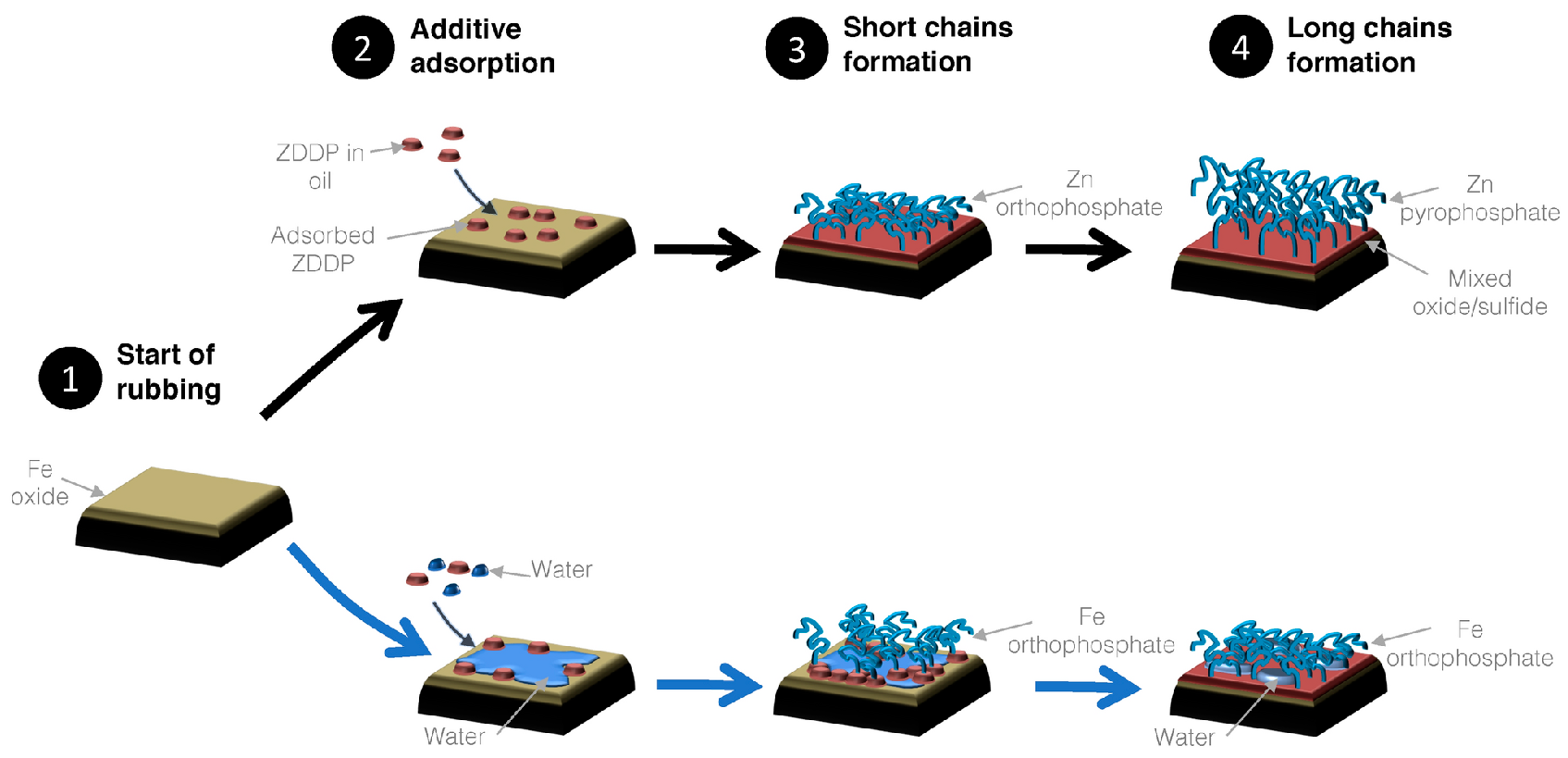
Water can also affect the normal growth of ZDDP tribofilms through competitive adsorption with ZDDP molecules on metal surfaces. Nedelcu et al. [85] reported that water inhibits the normal adsorption and decomposition of ZDDP on tribological surfaces. Dorgham et al. [76] systematically studied the effect of relative humidity on the decomposition behavior of ZDDP additives and the characteristics of tribofilm formation under boundary lubrication conditions. Their results show that, due to their strong polarity, water molecules exhibit higher adsorption affinity on steel surfaces than ZDDP molecules. Under high-humidity conditions, water molecules preferentially occupy active sites on the metal surface, leading to strong competitive adsorption with ZDDP and significantly delaying the adsorption, decomposition, and subsequent tribofilm formation processes. As a result, the thickness of the ZDDP tribofilm decreases from about 140 nm at low humidity (30% RH) to approximately 85 nm at high humidity (90% RH). Meanwhile, the morphology changes from a patchy structure to a more complex dendritic structure, and the chemical composition shifts from long-chain polyphosphates to short-chain orthophosphates. This study indicates that competitive adsorption of water molecules on steel surfaces is a key initial step leading to the degradation of ZDDP tribofilms. Figure 7 illustrates the competitive adsorption process between water and ZDDP molecules.
Parsaeian et al. [78] also investigated the effect of environmental humidity on ZDDP tribofilm formation using a laboratory-built humidity-controlled MTM. The results show that, with increasing relative humidity, water hinders the adsorption and decomposition of ZDDP molecules, resulting in the formation of thinner tribofilms on the friction surface. Similar observations were reported in the studies by Ito et al. [91] and Ueda et al. [92].
From a microscopic perspective, the adsorbed water layer formed on metal surfaces is a key factor limiting the tribofilm-forming ability of ZDDP. In water-contaminated lubricants, water molecules tend to preferentially adsorb onto the metal surface, forming a nanoscale water layer [76,86]. Under practical ICE conditions, this layer can hinder direct contact between polar additives such as ZDDP and the metal surface, thereby delaying their adsorption and subsequent decomposition [93]. In addition, the water layer itself has relatively low shear strength. Under high load, it can rupture easily, leading to rapid changes in the lubrication regime, pronounced fluctuations in the coefficient of friction, and a reduction in lubrication stability [28].
Beyond occupying adsorption sites on steel surfaces and interfering with the normal adsorption, decomposition, and tribofilm formation of ZDDP, water can also induce secondary hydrolysis of phosphate species within already formed ZDDP tribofilms. This process converts long-chain polyphosphates into shorter-chain phosphates [94,95,96]. In this sense, water acts both as a catalyst for the initial hydrolysis of ZDDP and as a driving factor for the continued breakdown of phosphate chains, together influencing the tribological performance and failure mechanisms of ZDDP in lubrication systems.
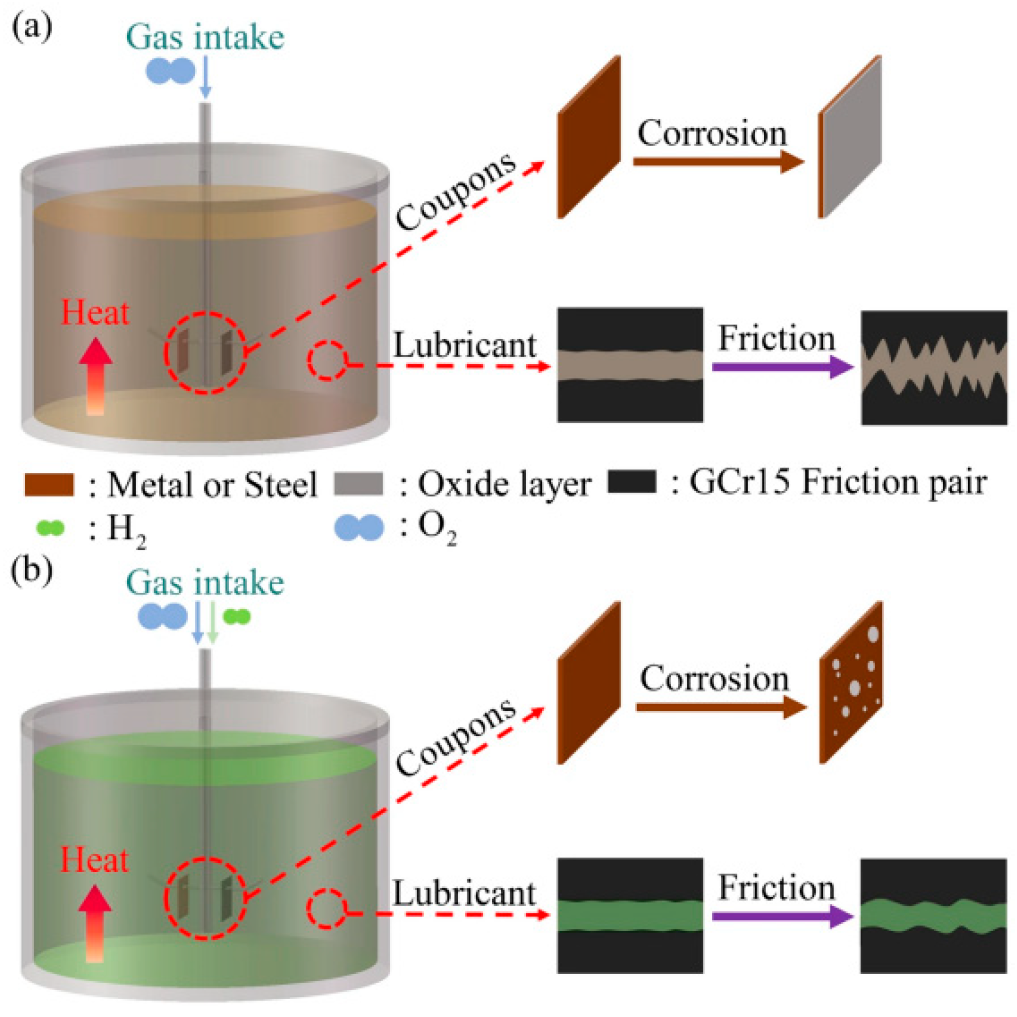
In addition, under conditions of H2-ICEs, possible interactions of both hydrogen and water have attracted attention. Some studies suggest that water does not always exert a purely negative effect on lubrication performance [97]. Wang et al. [98] compared the corrosion and tribological behavior of lubricants before and after the introduction of hydrogen. The results show that, after hydrogen is introduced, the degree of corrosion decreases, while a higher amount of zinc phosphates and sulfides is formed. These species contribute to the formation of effective tribofilms, thereby improving lubrication performance. The corresponding lubrication mechanisms before and after hydrogen introduction are shown in Figure 8. Liu et al. [99] also reported that introducing water into a hydrogen environment can promote the formation of sulfide-based tribofilms.
Similar phenomena have also been observed in methanol-fueled ICEs. Costa et al. [100], using a methanol engine, investigated the synergistic interaction between water and ZDDP additives. Their results indicate that hydroxyl layers formed with the participation of water can reduce the coefficient of friction and suppress wear under high-load conditions. In this process, hydrogen atoms provided by water molecules participate in hydrogenation reactions within the tribofilm, which improves its compactness and enhances wear resistance.

4.3. Influence of Phosphate Chain Length on Interfacial Mechanical Properties and Wear Behavior of ZDDP Tribofilms

The presence of water promotes the hydrolysis of long-chain polyphosphates formed by ZDDPs, leading to their transformation into short-chain orthophosphates. This process is accompanied by a decrease in the BO/NBO ratio, which macroscopically manifests as a reduction in tribofilm thickness. However, changes in phosphate structure and film thickness alone are not sufficient to fully explain the underlying variations in wear behavior. To address this, several studies have correlated phosphate chain length with the mechanical properties of tribofilms, aiming to clarify the intrinsic relation between phosphate speciation, tribofilm mechanical response, and wear performance.
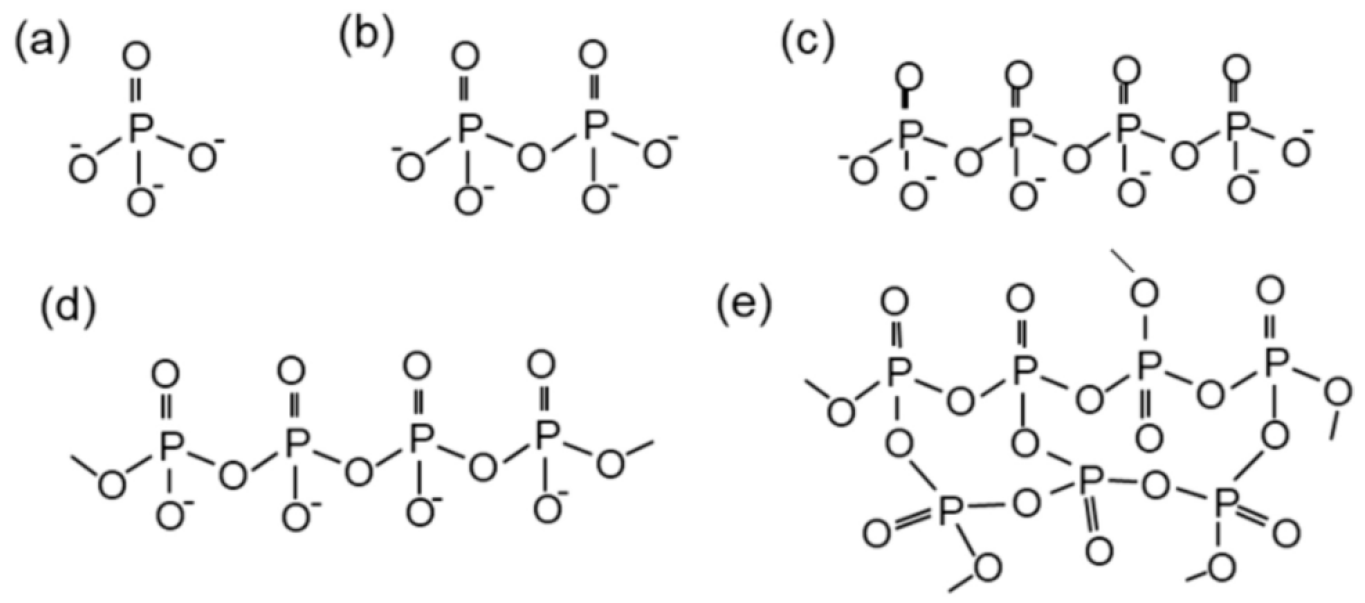
The ZDDP tribofilm is essentially a glass-like phosphate network structure, and its mechanical properties are closely related to the network connectivity [87]. Within phosphate species, PO4 tetrahedra are interconnected through bridging oxygen (BO) bonds to form a three-dimensional network structure (Figure 9). This cross-linked network enables effective dissipation of contact stress, allowing the tribofilm to exhibit a certain elastic modulus and relatively strong shear resistance.
When hydrolysis occurs, however, the bridging oxygen bonds are progressively broken by water, and the network structure gradually evolves toward a short-chain configuration dominated by non-bridging oxygen (NBO) species [101,102].
Figure 9. Phosphate structures: (a) orthophosphate, (b) pyrophosphate, (c) a 4P polyphosphate, (d) metaphosphate, (e) ultraphosphate [103].
Lubricants 14 00230 g009
Changes in the phosphate structure inside a ZDDP tribofilm often bring corresponding changes to its mechanical properties. Ueda et al. [104] showed that as the polyphosphate chains get shorter, the film thickness drops and the wear volume loss goes up. This is a trend that lines up with the mechanical properties getting worse.
First, the elastic modulus decreases. When the network connectivity weakens, the material does not resist elastic deformation as well, so under the same contact pressure, it is more likely to collapse locally [105]. Second, hardness decreases. Short chains do not transfer the load as efficiently or as quickly, which means the tribofilm gets pressed into the contacting surfaces more easily [106]. Under mixed or boundary lubrication, the tribofilm has to keep taking cyclic shear and normal loads. When the elastic modulus and hardness drop, the real contact area gets larger, and the interfacial shear stress goes up [107]. At the same time, a tribofilm made of short-chain orthophosphates is easier to shear off, exposing the bare surfaces and making wear worse [108]. Third, the toughness may drop. Short chains are more prone to plastic deformation, which encourages micro-cracks and eventually makes wear more severe [109,110]. In addition, the adhesion strength between the ZDDP tribofilm and the counterface is changing. Long-chain phosphates form a more continuous and uniform network, so they tend to create a more stable interfacial transition layer with iron sulfide, zinc sulfide, and iron oxide layers [111]. Short-chain structures are more likely to form discrete or uneven interface layers that do not stick as firmly. Under shear, these loosely bound interface layers come off more easily, making the wear even worse [74].

4.4. Friction Mechanisms of Non-ZDDP Additives in Water-Containing Lubricants

Even though ZDDP is still one of the most widely studied and used antiwear additives in engine oils, tighter environmental regulations are pushing the development of low-phosphorus or even phosphorus-free alternatives. In water-containing lubricants, the tribological behavior and lubrication mechanisms of these new additives turn out to be quite different from those with ZDDPs.
Yi et al. [112] investigated how an organic friction modifier (OFM) behaves under boundary lubrication when moisture is present, specifically focusing on its boundary slip and lubrication mechanism. Oxygen and frictional heating cause the surface to form a Si–O–Si network, which helps OFM molecules adsorb and create an adsorbed film that separates the rubbing interfaces. When a thin water film is present, some adsorption sites get taken up by water molecules first. Even so, most OFM molecules could still penetrate the water layer and stay on the surface. This may result in a new slip interface forming between the water film and the OFM film. It damages the OFM adsorbed film, and as a result, friction and wear get worse.
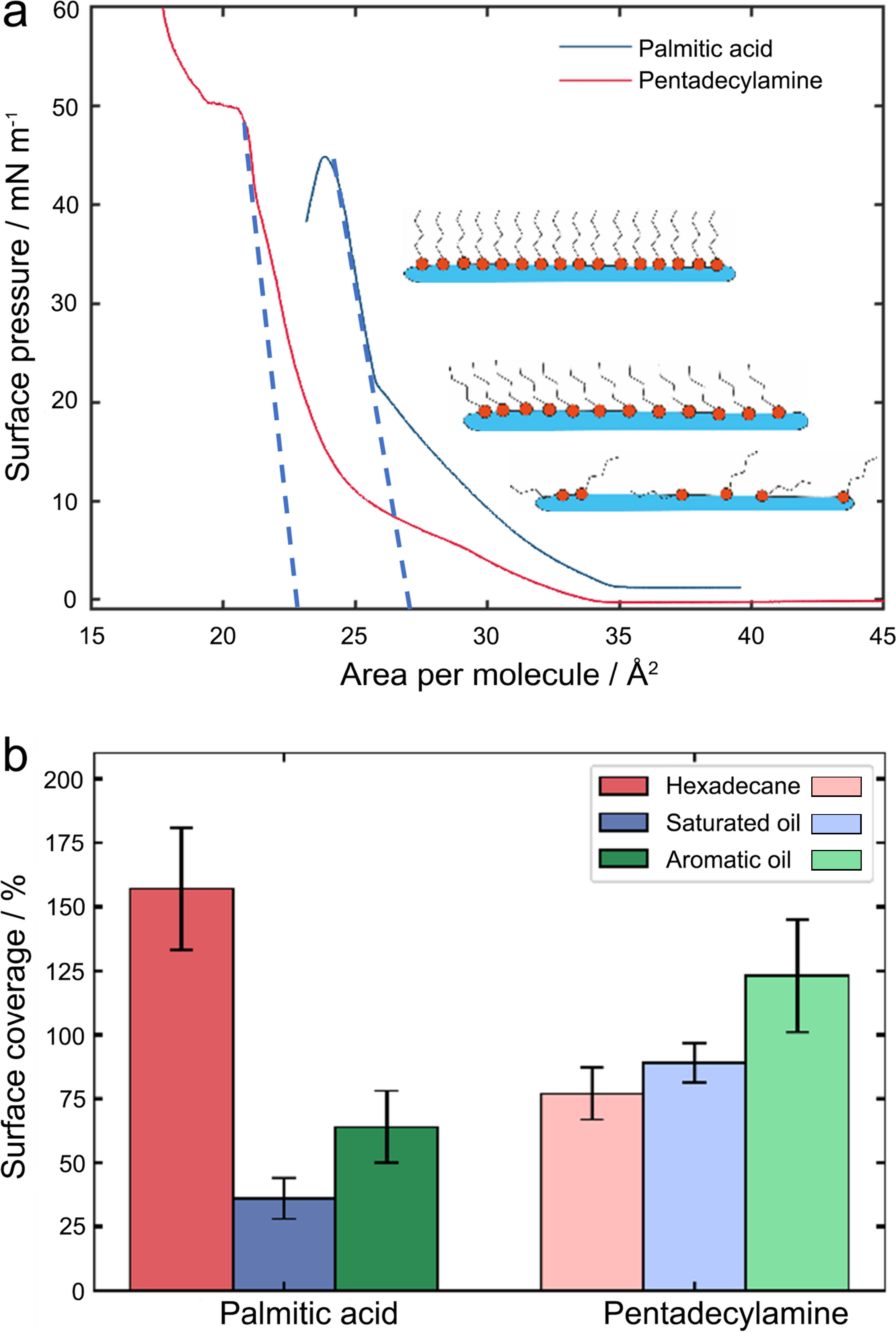
In order to provide a comparative perspective on different OFMs, Figure 10 illustrates how molecular structure, polarity, and surface interactions affect adsorption behavior and tribofilm formation. Burgess [113] conducted a multi-scale interfacial study demonstrating that variations in OFM chemical structure and interfacial environment result in significant differences in tribo-film formation, adsorption strength, and friction performance. Specifically, stronger adsorption and optimal interfacial slip lead to more effective friction reduction, while weaker adsorption or competitive adsorption with water can increase friction. These insights emphasize the importance of selecting appropriate OFMs and considering water effects when formulating lubricants for H2-ICEs, ensuring optimal boundary lubrication performance under varying operational conditions.
Molybdenum-containing additives like MoDTC mainly reduce friction by forming an MoS2 layer. It has been pointed out that in high-humidity environments, MoDTC is more prone to oxidation; therefore, its lubrication stability drops. Ionic liquids have also drawn attention in recent years as a new type of lubricant additive. Minami noted that some phosphorus- or fluorine-containing ionic liquids can still form stable tribofilms on metal surfaces under water-containing conditions—and their antiwear performance can be better than that of conventional additives [114]. Ashless additives usually have pretty good hydrolysis resistance in wet environments. However, they tend to form films more slowly [87].
The way non-ZDDP additives work still relies mostly on interfacial tribochemical reactions, and as a result, water interference is basically unavoidable. That is why surface engineering solutions—particularly diamond-like carbon (DLC) coatings—are getting more attention. In wet environments, their tribological performances and working mechanisms are quite different from those of traditional additives. Some work suggests that under humid conditions, a transfer film rich in sp2 structure can form on DLC surfaces. That layered structure has low shear strength, which helps bring friction down even further [115]. For hydrogenated DLC (a-C:H) coatings, a low-shear interface layer can develop during rubbing, giving a pretty low coefficient of friction [116]. However, once water gets into the lubricant, it can mess with the tribological performance of DLC coatings. Ma et al. [117] studied the tribological performance of DLC films in water-containing emulsified engine oils. The results showed that increasing both temperature and water content jointly accelerated the wear of DLC films. This was attributed to two factors. First, water in the engine oil prevented the formation of tribofilms. Furthermore, water molecules induced hydroxylation of the DLC surface, impairing lubricant adsorption at the tribological interface and causing direct contact between the sliding pairs.
It should also be noted that most current tribological studies on water-induced additive degradation are based on simplified steel/steel contact systems. However, modern ICEs increasingly use antiwear coatings and surface engineering technologies, including DLC coatings, nitrided layers, and multifunctional composite coatings. Under severe lubrication conditions, these surface layers may partially assume the protective role of tribofilms after lubricant film breakdown. The interactions among water, lubricant additives, tribofilms, and coated surfaces under H2-ICE conditions remain poorly understood and require further investigation.

5. Effect of Water on the Aging of Internal Combustion Engine Oils

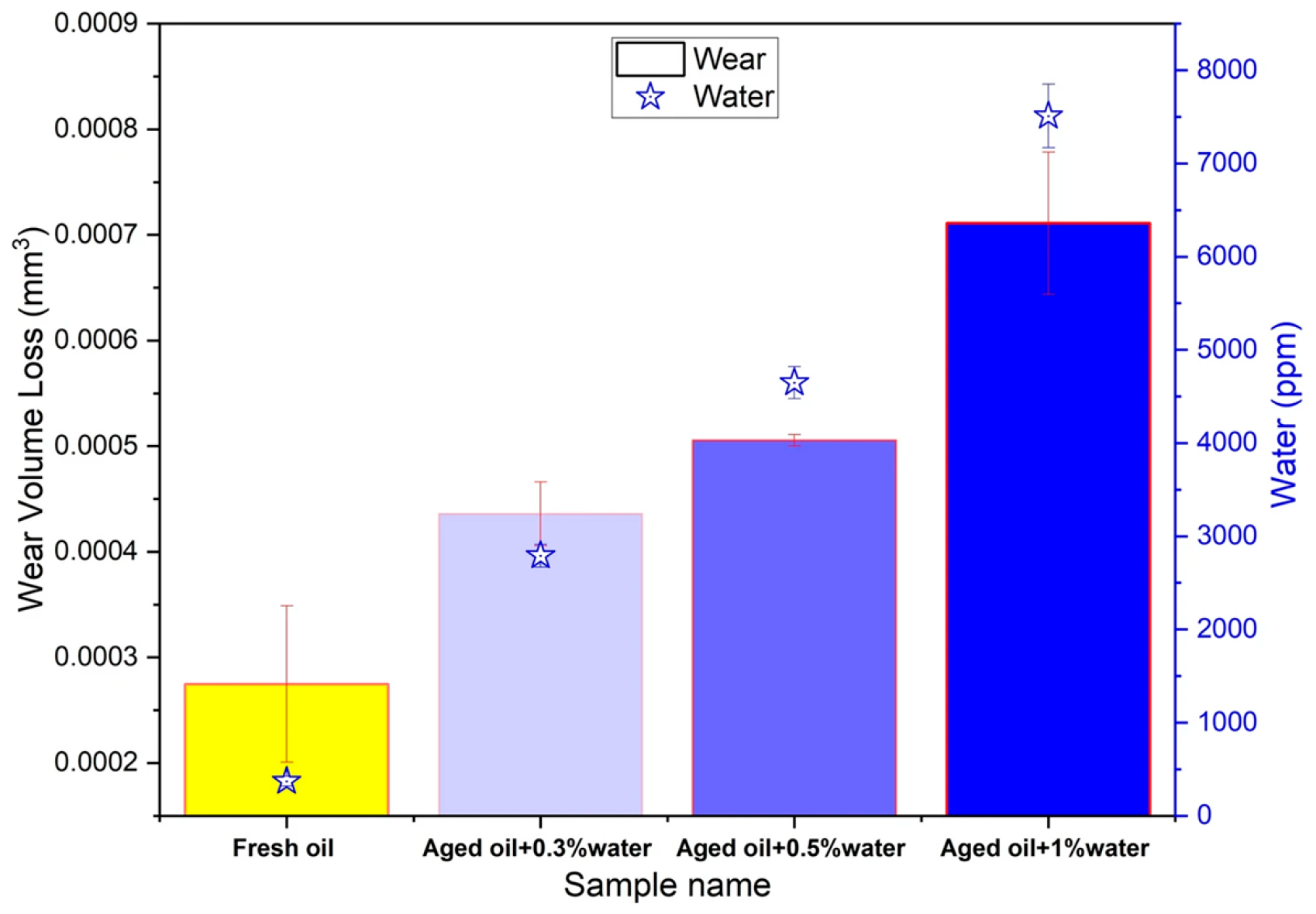
Oil aging is driven mainly by oxidation reactions. The presence of water amplifies this process, and the synergistic catalysis between water and metal particles significantly increases the oxidation rate of the lubricant [118,119]. The oxidation products would attack the surfaces, triggering corrosive wear, thereby compromising the surface integrity and operational stability of the components. The variation in wear volume after aging of engine oils containing different amounts of water is presented in Figure 11.
In the presence of water, the depletion of additives, such as antioxidants, detergents, and dispersants, is markedly accelerated. Antioxidants are particularly susceptible. Upon reacting with water, their effective concentration declines rapidly, thereby diminishing their protective function toward the base oil and rendering oxidation reactions more prone to initiation and sustained propagation [90,120]. When water coexists with metallic wear debris in the lubricant, the ageing process is further exacerbated. Zhou et al. [121] investigated the physicochemical evolution of aged engine oils under varying water contents. The oil samples were prepared with various aging degrees using a thermal oxidation method (175 °C, air flow 330 mL/min, iron acetylacetonate as catalyst, oxidation time 0–24 h). It has been found that organic acids generated during oxidation can undergo further transformation in the presence of water, yielding inorganic acids and other reactive acidic species. These acidic products significantly intensify the corrosive attack on engine components, thereby triggering issues, including lubrication failure and aggravated wear, and ultimately shortening the overall service life of the engine. A typical oxidation reaction path is shown as follows:
CH3 − (CH2)n − CH3 + O2 → CH3(CH2)COCH3 + CH2O
CH3(CH2)nCOCH3 + O2 → CH3(CH2)nCO2H + HCHO
CH3(CH2)n − CHO2H − CH3 → CH3(CH2)n − CH2O − CH3 + O
Compared with purely oxidative ageing, water-induced (electro)chemical corrosion typically occurs concurrently with the tribological process [122]. Under such conditions, material removal is no longer governed solely by mechanical wear but is better described as a synergistic interaction between wear and corrosion [123]. Studies have shown that localized electrochemical reactions are more readily established on metal surfaces in water-contaminated lubricants [124,125]. Water not only acts as an electrolyte participating in corrosion reactions but also promotes the formation of acidic species at the interface, thereby accelerating metal degradation. During sliding, the passivation film that would otherwise form is continuously removed, exposing fresh metal to the corrosive environment. The newly exposed surface is subsequently attacked again, ultimately leading to a pronounced increase in the wear rate [124].
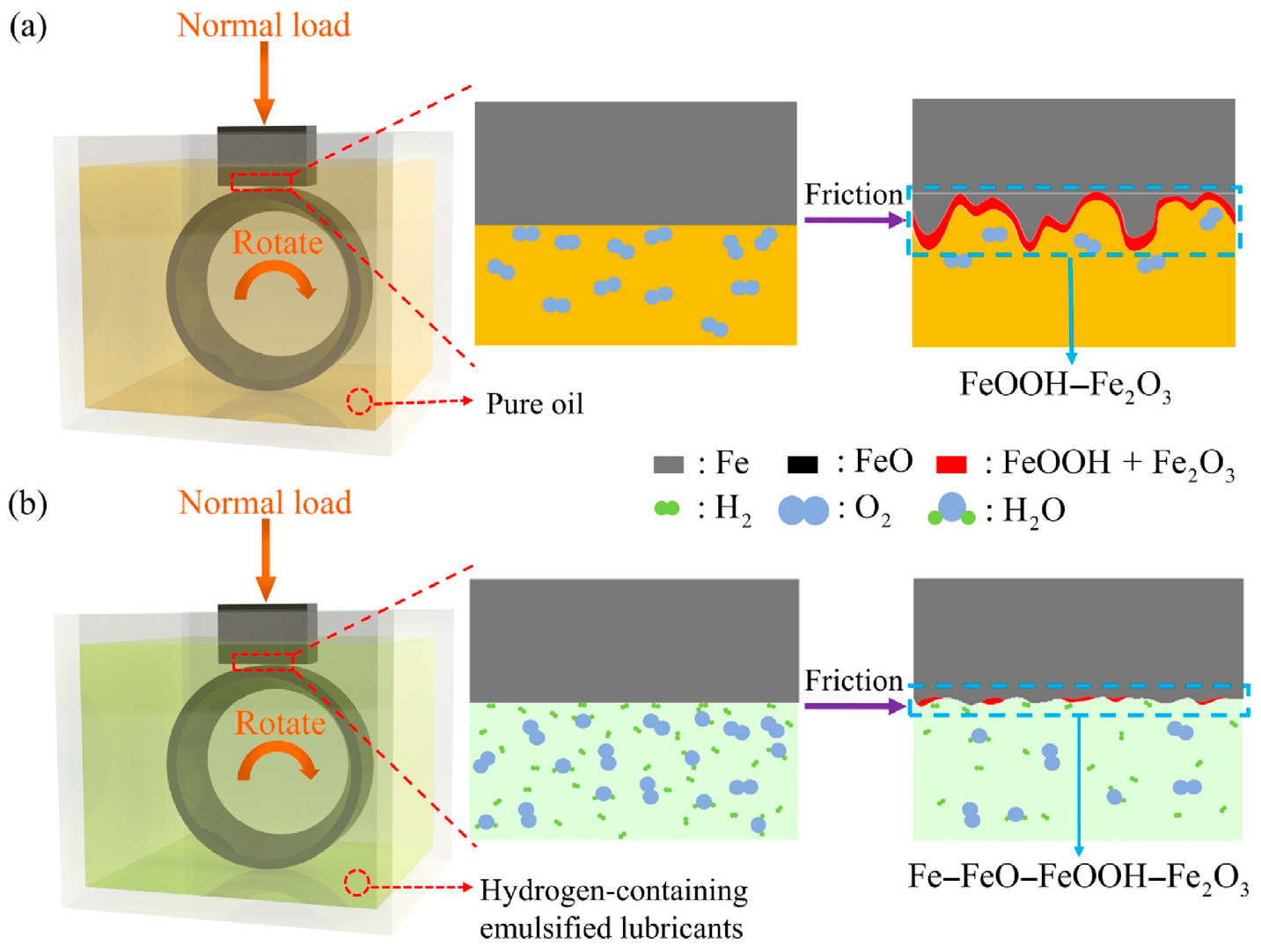
Stack et al. [126] investigated lubricants under boundary lubrication conditions representative of ICEs and found that even a low water content can markedly aggravate corrosive wear. The wear volume attributable to corrosion accounts for more than 30% of the total material loss. Although the tribofilm formed by ZDDP exhibits a certain degree of corrosion resistance, the presence of water compromises its protective performance. Additionally, hydrolysis renders the tribofilm structure more porous and less compact. The corrosion products, e.g., FeOOH and Fe2O3, modify the chemical composition of the tribological interface, thereby altering subsequent tribochemical reaction pathways [125]. Figure 12 illustrates the Fe-FeO-FeOOH-Fe2O3 composite oxide layer formed on the worn surface in water-contaminated oil samples.

6. Effect of Water on the Hydrodynamic Lubrication of Engine Oils

Water not only influences lubricant behavior under mixed and boundary lubrication regimes but also markedly affects (elasto-)hydrodynamic lubrication performance by altering the physical properties and rheological characteristics of the oil, particularly with respect to its film-forming capability [127,128,129,130,131].
In studies on the film formation characteristics of water-in-oil emulsions, Nakahara et al. [132] reported as early as 1988—using optical interferometry—that oil droplets tend to accumulate at the inlet of the contact zone, forming localized oil reservoirs whose size increases with both the oil phase volume fraction and the entrainment speed. In contrast, when water droplets enter the contact region, they tend to induce microcavitation within the EHL zone, thereby disrupting the continuity of the lubricant film. Zhang et al. [133] further conducted an analysis from the perspective of droplet size, highlighting its critical role in film formation. When the droplet size is smaller than or comparable to the central film thickness, fine water droplets can be entrained into the contact. This leads to a slight increase in the effective viscosity in the inlet region and, consequently, a moderate increase in film thickness. However, when the droplet size is significantly larger than the film thickness, the relation between film thickness and either water content or droplet size becomes increasingly scattered (see Table 1).

7. Conclusions and Outlook

This review summarizes the current understanding of water-induced lubrication degradation mechanisms in engine oils, with hydrogen-fueled internal combustion engines (H2-ICEs) serving as a representative case for alternative-fuel engines. Existing studies demonstrate that water generated during combustion can enter the lubrication system in the forms of dissolved water, emulsified water, free water, and water vapor, each influencing lubricant behavior through distinct physicochemical and tribochemical pathways.
Current evidence indicates that the role of water extends beyond simple lubricant contamination. Water can alter key physicochemical properties of engine oils, accelerate oxidative aging, and significantly affect additive chemistry and interfacial tribochemical reactions. In particular, degradation of ZDDP-derived tribofilms has emerged as one of the dominant mechanisms governing lubrication failure in water-containing environments. Water suppresses tribofilm formation through competitive adsorption on metallic surfaces, additive wash-out, and hydrolysis of phosphate species. These processes inhibit the growth of long-chain polyphosphate networks and promote the formation of short-chain orthophosphates with lower structural connectivity and inferior mechanical integrity, ultimately weakening antiwear performance.
The review further shows that the tribological effect of water is strongly dependent on operating conditions, additive formulation, humidity, temperature, and interfacial reaction environments. Although water is generally detrimental to tribofilm stability, several studies suggest that under hydrogen-containing conditions it may also participate in the formation of hydroxylated or sulfide-rich surface species that contribute to friction reduction and wear mitigation. This highlights the complexity of water-mediated tribochemical reactions in alternative-fuel engine lubrication systems.
Despite recent progress, important challenges remain unresolved. Most existing studies are based on liquid-water contamination or humidity-controlled laboratory systems, whereas practical H2-ICE environments are dominated by transient high-temperature water vapor together with severe thermal and mechanical fluctuations. The tribochemical mechanisms governing additive decomposition, tribofilm evolution, and interfacial reactions under such conditions remain insufficiently understood. Future research should therefore focus on in situ investigations of water-mediated tribochemical processes under realistic hydrogen-engine conditions, particularly the interactions among water vapor, additives, metallic surfaces, and hydrogen-containing atmospheres. Such efforts will be essential for developing dedicated lubricants with improved hydrolysis resistance and stable tribofilm-forming capability for durable H2-ICE operation.
In addition, although excessive water contamination is generally detrimental to lubrication reliability, controlled water introduction into combustion systems has previously been explored as an approach for improving thermal efficiency and combustion performance in ICEs under optimized operating conditions.

Author Contributions

Conceptualization, L.M., L.G., H.L., W.L. and Q.W.; methodology, L.M., Y.Z., Z.D. and H.L.; analysis, L.M., Q.W., X.L. and H.L.; investigation, L.M., L.G., Q.W. and H.L.; resources, Z.D. and H.L.; data curation, L.M., Y.Z., Q.W. and H.L.; visualization, Q.W. and W.L.; supervision, W.L. and H.L.; project administration, L.G., H.L. and W.L.; funding acquisition, H.L. and Z.D. writing—original draft preparation, Q.W. and L.M.; writing—review and editing, all authors. All authors have read and agreed to the published version of the manuscript.

Funding

This research was funded by the National Key Research and Development Program of China (2024YFB2505400); National Natural Science Foundation of China (52305227); State Key Laboratory of Engine and Power System (skleps-sq-2023-159); and Joint Fund of the Lanzhou Institute of Chemical Physics of the Chinese Academy of Sciences (LHJJ-20240102).

Data Availability Statement

Available upon enquiry.

Conflicts of Interest

Authors Le Ma, Yunfeng Zang, Zhancheng Dou, Lingyan Guo and Qicheng Wang were employed by the company Weichai Power Co., Ltd. The remaining authors declare that the research was conducted in the absence of any commercial or financial relationships that could be construed as a potential conflict of interest.

Abbreviations

The following abbreviations are used in this manuscript:
ZDDPZinc dialkyldithiophosphate
ICEInternal combustion engine
H2-ICEHydrogen internal combustion engine
SLIMSpacer layer imaging method
BO/NBORatio of bridging oxygen to non-bridging oxygen peak areas
AFMAtomic force microscopy
EHLElastohydrodynamic lubrication
XPSX-ray photoelectron spectroscopy
OFMOrganic friction modifier
MoDTCMolybdenum dialkyldithiocarbamate
DLCDiamond-like carbon
a-C:HHydrogenated diamond-like carbon

References

  1. Morina, A.; Neville, A.; Priest, M.; Green, J. ZDDP and MoDTC interactions in boundary lubrication—The effect of temperature and ZDDP/MoDTC ratio. Tribol. Int. 2006, 39, 1545–1557. [Google Scholar] [CrossRef]
  2. Waqas, M.; Zahid, R.; Bhutta, M.U.; Khan, Z.A.; Saeed, A. A review of friction performance of lubricants with nano additives. Materials 2021, 14, 6310. [Google Scholar] [CrossRef]
  3. Suarez, A.N.; Grahn, M.; Pasaribu, R. The influence of base oil polarity on the tribological performance of zinc dialkyl di-thiophospate additives. Tribol. Int. 2010, 43, 2268–2278. [Google Scholar] [CrossRef]
  4. Wang, L.; Li, X.; Hong, C.; Guo, P.; Guo, S.; Yang, Z. Research and development of hydrogen-fueled internal combustion engines in China. ACS Omega 2023, 8, 48590–48612. [Google Scholar] [CrossRef]
  5. Falfari, S.; Cazzoli, G.; Mariani, V.; Bianchi, G.M. Hydrogen application as a fuel in internal combustion engines. Energies 2023, 16, 2545. [Google Scholar] [CrossRef]
  6. Priyam, A. Hydrogen as an alternative fuel for internal combustion engines: A review. Sustain. Energy Technol. Assess. 2025, 82, 104551. [Google Scholar] [CrossRef]
  7. Skobiej, K. A review of hydrogen combustion and its impact on engine performance and emissions. Combust. Engines 2025, 200, 64–70. [Google Scholar] [CrossRef]
  8. Uchida, N.; Onorati, A.; Novella, R.; Agarwal, A.K.; Abdul-Manan, A.F.; Kulzer, A.C.; Iorio, S.D.; Gordillo, V.; Günthner, M.; Jena, A. E-fuels in IC engines: A key solution for a future decarbonized transport. Int. J. Engine Res. 2025, 26, 1675–1702. [Google Scholar] [CrossRef]
  9. Reddy, V.J.; Hariram, N.; Maity, R.; Ghazali, M.F.; Kumarasamy, S. Sustainable e-fuels: Green hydrogen, methanol and ammonia for carbon-neutral transportation. World Electr. Veh. J. 2023, 14, 349. [Google Scholar] [CrossRef]
  10. Driver, H.; Hutcheon, R.; Lockett, R.; Robertson, G.; Grotheer, H.H.; Kelm, S. Elementary reactions in the methanol oxidation system. Part II: Measurement and modeling of autoignition in a methanol-fuelled otto engine. Ber. Bunsenges. Phys. Chem. 1992, 96, 1376–1387. [Google Scholar] [CrossRef]
  11. Xu, X.; Ge, C.; Zhang, B.; Ma, X.; Guo, R.; Lu, X. The degeneration mechanism of lubricating oil in the ammonia fuel engine. Tribol. Int. 2025, 202, 110333. [Google Scholar] [CrossRef]
  12. Chorowski, M.; Lepszy, M.; Machaj, K.; Malecha, Z.; Porwisiak, D.; Porwisiak, P.; Rogala, Z.; Stanclik, M. Challenges of application of green ammonia as fuel in onshore transportation. Energies 2023, 16, 4898. [Google Scholar] [CrossRef]
  13. Lagana, S.; Fay, M.W.; La Rocca, A.; Cairns, A.; Webb, K.; Hopper, E.R.; Piaszyk, J. Investigating the lubricant effect on hydrogen engine particulate emissions–part II: Influence of oil formulation and operating condition. Int. J. Hydrogen Energy 2026, 222, 154178. [Google Scholar] [CrossRef]
  14. Agocs, A.; Rappo, M.; Obrecht, N.; Schneidhofer, C.; Frauscher, M.; Besser, C. The impact of ammonia fuel on marine engine lubrication: An artificial lubricant ageing approach. Lubricants 2023, 11, 165. [Google Scholar] [CrossRef]
  15. Doncoeur, C.; Giarracca-Mehl, L.; Cologon, P.; Mounaïm-Rousselle, C. Potential impacts of ammonia/hydrogen on engine lubricants: A review. Front. Energy 2025, 19, 884–906. [Google Scholar] [CrossRef]
  16. Stępień, Z.; Urzędowska, W. Tłokowe silniki spalinowe zasilane wodorem–wyzwania. Nafta-Gaz 2021, 77, 830–840. [Google Scholar] [CrossRef]
  17. Grineva, D.E.; Mensharapov, R.M.; Ivanova, N.A.; Spasov, D.D.; Sinyakov, M.V.; Aliyev, A.S.; Fateev, V.N. Hydrogen-supported decarbonization of automotive industry: From ICE through hybrids to FC vehicles. Int. J. Hydrogen Energy 2025, 192, 152238. [Google Scholar] [CrossRef]
  18. Soleymani, M.; Mostafavi, V.; Hebert, M.; Kelouwani, S.; Boulon, L. Hydrogen propulsion systems for aircraft, a review on recent advances and ongoing challenges. Int. J. Hydrogen Energy 2024, 91, 137–171. [Google Scholar] [CrossRef]
  19. Turner, J.W.; Verhelst, S.; Marquez, M.E. The potential of hydrogen internal combustion engines for heavy-duty applications. In The Clean Hydrogen Economy and Saudi Arabia; Braun, J.F., Shabaneh, R., Saxena, S., Roychoudhury, J., Eds.; Routledge: Abingdon, UK, 2024; pp. 606–637. [Google Scholar]
  20. Horváth, K. Noise, vibration, and harshness (NVH) challenges in hydrogen internal combustion engine vehicles. Energy Sci. Eng. 2026, 14, 1067–1080. [Google Scholar] [CrossRef]
  21. Santos, M.; Okazaki, L.; Prümm, F.W. Reliability and wear evaluation of hydrogen engines in long-term operation in vehicles. MTZ Worldw. 2023, 84, 50–55. [Google Scholar] [CrossRef]
  22. Zhao, X.; Zhang, Y.; Shao, C.; Hui, W. Hydrogen embrittlement of intercritically annealed cold-rolled 0.1 C-5Mn steel. Acta Metall. Sin. 2018, 54, 1031–1041. [Google Scholar]
  23. Mohamed Ariffin, N.A.A.; Poy, J.; Wong, K.J.; Ng, J.H.; Chong, W.W.F. Stability and tribological performance of water-emulsified engine oils for hydrogen-fuelled internal combustion engines. Lubricants 2025, 13, 464. [Google Scholar] [CrossRef]
  24. Distaso, E.; Calo, G.; Amirante, R.; De Palma, P.; Mehl, M.; Pelucchi, M.; Stagni, A.; Tamburrano, P. Linking lubricant oil contamination to pre-ignition events in hydrogen engines–The HyLube mechanism. Fuel 2025, 379, 133041. [Google Scholar] [CrossRef]
  25. Jiang, S.; Yamana, T.; Martin, J.M.; Yuan, Y.; Kuriyagawa, K.; Adachi, K.; Murashima, M. Influence of biodiesel and water dilution on ZDDP antiwear performance: An in-situ AFM study combined with macroscopic experiments. Wear 2025, 570, 205940. [Google Scholar] [CrossRef]
  26. Yansong, L.; Anderson, W.; Xinbo, W.; Zhuang, H.; Wang, Y.; Cain, N.; Oleksandr, S.; Hao, Z. Study on the tribological behavior and lubrication mechanism of piston rings and cylinder liners in hydrogen internal combustion engines. Tribol. Int. 2026, 218, 111783. [Google Scholar] [CrossRef]
  27. Wan, J.P.; Ariffin, N.A.A.M.; Chong, W.W.; Ng, J.H. Viscosity behaviour of water-emulsified engine oil for hydrogen internal combustion engine applications. J. Tribol. 2025, 47, 73–86. [Google Scholar]
  28. Cen, H.; Morina, A.; Neville, A.; Pasaribu, R.; Nedelcu, I. Effect of water on ZDDP anti-wear performance and related tribochemistry in lubricated steel/steel pure sliding contacts. Tribol. Int. 2012, 56, 47–57. [Google Scholar] [CrossRef]
  29. Al Sheikh Omar, A.; Salehi, F.M.; Farooq, U.; Morina, A. Additives depletion by water contamination and its influences on engine oil performance. Tribol. Lett. 2024, 72, 74. [Google Scholar] [CrossRef]
  30. Parsaeian, P.; Van Eijk, M.C.; Nedelcu, I.; Neville, A.; Morina, A. Study of the interfacial mechanism of ZDDP tribofilm in humid environment and its effect on tribochemical wear; Part I: Experimental. Tribol. Int. 2017, 107, 135–143. [Google Scholar] [CrossRef]
  31. Qin, H.; Doll, G.L. Effects of water contamination on micropitting and rolling contact fatigue of bearing steels. J. Tribol. 2023, 145, 011501. [Google Scholar] [CrossRef]
  32. Chimeno-Trinchet, C.; Murru, C.; Díaz-García, M.E.; Fernández-González, A.; Badía-Laíño, R. Artificial Intelligence and fourier-transform infrared spectroscopy for evaluating water-mediated degradation of lubricant oils. Talanta 2020, 219, 121312. [Google Scholar] [CrossRef] [PubMed]
  33. Peng, H.; Zhang, H.; Shangguan, L.; Fan, Y. Review of tribological failure analysis and lubrication technology research of wind power bearings. Polymers 2022, 14, 3041. [Google Scholar] [CrossRef]
  34. Growney, D.; Joedicke, A.; Williams, M.; Robin, M.; Mainwaring, R.; Davies, M. Hybrid electric vehicle engine operation and engine oil degradation: A research approach. SAE Int. J. Fuels Lubr. 2023, 17, 3–16. [Google Scholar] [CrossRef]
  35. Shukla, D.; Gondal, A.; Nautiyal, P. Effect of methanol fuel contaminants in crankcase oils on wear. Wear 1992, 157, 371–380. [Google Scholar] [CrossRef]
  36. Clarke, D. Understanding lubricant requirements of hybrid-electric vehicles. In Proceedings of the SAE 2014 World Congress & Exhibition, Detroit, MI, USA, 8 April 2014. [Google Scholar]
  37. Pape, F.; Poll, G.; Ellersiek, L.; Denkena, B.; Liu, H. Tribological effects of metalworking fluids in cutting processes. Lubricants 2023, 11, 224. [Google Scholar] [CrossRef]
  38. Seidel, B.; Meyer, D. Investigation of the influence of aging on the lubricity of metalworking fluids by means of design of experiment. Lubricants 2019, 7, 94. [Google Scholar] [CrossRef]
  39. Zhang, M.; Liu, H.; Zhang, E.; Chen, Y.; Li, W.; Cheng, S. Tribological performance of fatty acid ammonium ionic liquids as anti-wear additives in water-based fluids. Tribol. Int. 2024, 194, 109565. [Google Scholar] [CrossRef]
  40. Sagraloff, N.; Dobler, A.; Tobie, T.; Stahl, K.; Ostrowski, J. Development of an oil free water-based lubricant for gear applications. Lubricants 2019, 7, 33. [Google Scholar] [CrossRef]
  41. Xiao, C.; Li, J.; Chen, L.; Zhang, C.; Zhou, N.; Qing, T.; Qian, L.; Zhang, J.; Luo, J. Water-based superlubricity in vacuum. Friction 2019, 7, 192–198. [Google Scholar] [CrossRef]
  42. Li, J.; Ge, X.; Luo, J. Superlubricity of water-based lubricants. In Superlubricity; Elsevier: Amsterdam, The Netherlands, 2021; pp. 333–357. [Google Scholar]
  43. Gadirova, E. Pollution level of oil industrial water samples. Water Water Purif. Technol. Sci. Tech. News 2022, 34, 57–63. [Google Scholar]
  44. Sun, L.; Ma, R.; Zhao, Q.; Zhao, G.; Wang, X. The impact of water on the tribological behavior of lubricating grease based on calcium carbonate polymorphs. Lubricants 2022, 10, 188. [Google Scholar] [CrossRef]
  45. Jin, X.; Zhou, K.; Li, X.; Bai, Q.; Guo, F.; Bai, X.; Poll, G. Water invasion on film formation and grease degradation under humidity conditions. Tribol. Int. 2025, 215, 111501. [Google Scholar] [CrossRef]
  46. Li, M.; Tian, T. Effect of blowby on the leakage of the three-piece oil control ring and subsequent oil transport in upper ring-pack regions in internal combustion engines. Lubricants 2022, 10, 250. [Google Scholar] [CrossRef]
  47. Pariotis, E.G.; Zannis, T.C.; Rakopoulos, C.D.; Hountalas, D.T. Comparative assessment of the impact of water addition either to the intake air or in diesel emulsion on the performance and emissions of a HDDI diesel engine. J. Energy Eng. 2020, 146, 04020051. [Google Scholar] [CrossRef]
  48. Chun, S.M. Thermohydrodynamic lubrication analysis of turbocharger journal bearing involving the mixture of water within engine oil. Trans. Korean Soc. Automot. Eng. 2012, 20, 131–140. [Google Scholar] [CrossRef][Green Version]
  49. Gupta, R.K.; Dunderdale, G.J.; England, M.W.; Hozumi, A. Oil/water separation techniques: A review of recent progresses and future directions. J. Mater. Chem. A 2017, 5, 16025–16058. [Google Scholar] [CrossRef]
  50. Cash, R.Y.; Lumsdaine, E.; Talekar, A.; AbdulNour, B. An experimental and computational investigation of water condensation inside the tubes of an automotive compact charge air cooler. In Proceedings of the SAE 2016 World Congress & Exhibition, Detroit, MI, USA, 12–14 April 2016. [Google Scholar]
  51. Bansal, D.; Weimar, H.J.; Berlet, P. Developing custom engine test and solutions for handling water in lubricants for hydrogen internal combustion engines. In Proceedings of the SAE Energy and Propulsion Conference, Ypsilanti, MI, USA, 14–16 October 2025. [Google Scholar]
  52. Usman, M.; Saleem, M.W.; Saqib, S.; Umer, J.; Naveed, A.; Hassan, Z.U. SI engine performance, lubricant oil deterioration, and emission: A comparison of liquid and gaseous fuel. Adv. Mech. Eng. 2020, 12, 1687814020930451. [Google Scholar] [CrossRef]
  53. Lorberg, M. The Effects of Oil Viscosity and Water Vapor Temperature on Droplet Condensation in Lubricant-Infused Surfaces. Master’s Thesis, Washington University, St. Louis, MO, USA, 2019. [Google Scholar]
  54. Wang, Q.C.; Dou, Z.C.; Guo, L.Y.; Li, X.M.; Li, W.M.; Liu, H.C. Effect of water on the emulsification and boundary lubrication of oil used in hydrogen internal combustion engines. Tribology 2026, 46, 1–12. [Google Scholar]
  55. Liu, X.; Wang, J.; Huang, L.; Zhang, J.; Xu, C.; Tong, L.; Guo, D. Direct observation of the impact of water droplets on oil replenishment in EHD lubricated contacts. Friction 2022, 10, 388–397. [Google Scholar] [CrossRef]
  56. Su, R.; Cao, W.; Jin, Z.; Wang, Y.; Ding, L.; Maqsood, M.; Wang, D. Deterioration mechanism and status prediction of hydrocarbon lubricants under high temperatures and humid environments. Lubricants 2024, 12, 116. [Google Scholar] [CrossRef]
  57. Angardi, V.; Ettehadi, A.; Yücel, Ö. Critical review of emulsion stability and characterization techniques in oil processing. J. Energy Resour. Technol. 2022, 144, 040801. [Google Scholar] [CrossRef]
  58. Goodarzi, F.; Zendehboudi, S. A comprehensive review on emulsions and emulsion stability in chemical and energy industries. Can. J. Chem. Eng. 2019, 97, 281–309. [Google Scholar] [CrossRef]
  59. Taheri, R.; Kosasih, B.; Zhu, H.; Tieu, A.K. Dispersion stability and lubrication performance correlation of vegetable oil-in-water emulsions with nanoparticle-shielded oil droplets. Lubricants 2018, 6, 55. [Google Scholar] [CrossRef]
  60. Yan, F.; Wang, Z.; Du, Y.; Su, S.; Zheng, Y.; Li, Q. Research on rheological and flow behavior of lubricating grease in extremely cold weather. Ind. Lubr. Tribol. 2017, 69, 1066–1073. [Google Scholar] [CrossRef]
  61. Rigol, S. Monitoring Concept to Detect Engine Oil Condition Degradations to Support a Reliable Drive Operation. Ph.D. Thesis, University of East London, London, UK, 2011. [Google Scholar]
  62. Repetto, S.L.; Costello, J.F.; Costello, B.D.L.; Ratcliffe, N.M.; Lam, J.K.W. The development of novel fuel dehydrating icing inhibitors. SAE Int. J. Fuels Lubr. 2013, 6, 553–563. [Google Scholar] [CrossRef]
  63. Butcher, R.; Bradley, N.; Powell, T. Real time observations of water entering and leaving internal combustion engine oil, over both standard engine, ICE and plug-in hybrid, PHEV dynamic drive-cycles. SAE Int. J. Adv. Curr. Pract. Mobil. 2023, 6, 133–144. [Google Scholar] [CrossRef]
  64. Yan, S.; Kuroda, S. Lubrication with emulsion: II. The viscosity coefficients of emulsions. Wear 1997, 206, 238–243. [Google Scholar] [CrossRef]
  65. Baskov, V.; Ignatov, A.; Polotnyanschikov, V. Assessing the influence of operating factors on the properties of engine oil and the environmental safety of internal combustion engine. Transp. Res. Procedia 2020, 50, 37–43. [Google Scholar] [CrossRef]
  66. Korneev, S.V.; Pashukevich, S.V.; Bakulina, V.D.; Pevnev, N.G. Contamination of engine oils during winter vehicle operation. Russ. Automob. Highw. Ind. J. 2022, 19, 680–691. [Google Scholar] [CrossRef]
  67. Xue, B.; Li, Y.; Zhang, Z.; Ren, Y.; Yang, Z.; Xu, Y.; Zhao, T.; Wang, Y. Investigation into the impact of water contamination and operating parameters on the lubrication performance of thrust bearings. Lubricants 2026, 14, 118. [Google Scholar] [CrossRef]
  68. Zhang, J.; Yu, M.; Joedicke, A.; Reddyhoff, T. Characterising the effects of simultaneous water and gasoline dilution on lubricant performance. Tribol. Int. 2023, 179, 108089. [Google Scholar] [CrossRef]
  69. Maneeintr, K.; Sasaki, K.; Sugai, Y. Investigation of the effects of parameters on viscosities and correlation of heavy oil and stability of its emulsion. J. Jpn. Inst. Energy 2013, 92, 900–904. [Google Scholar] [CrossRef][Green Version]
  70. Liu, C.X.; Chen, C.L.; Zhang, J.P.; Dai, Y.J. Boundary lubrication behavior and mechanism analysis of oil-water emulsion. J. Mech. Eng. 2019, 55, 48–54. [Google Scholar] [CrossRef]
  71. Shafiei, M.; Kazemzadeh, Y.; Martyushev, D.A.; Dai, Z.; Riazi, M. Effect of chemicals on the phase and viscosity behavior of water in oil emulsions. Sci. Rep. 2023, 13, 4100. [Google Scholar] [CrossRef] [PubMed]
  72. Johnsen, E.E.; Rønningsen, H.P. Viscosity of ‘live’ water-in-crude-oil emulsions: Experimental work and validation of correlations. J. Pet. Sci. Eng. 2003, 38, 23–36. [Google Scholar] [CrossRef]
  73. Spedding, H.; Watkins, R. The antiwear mechanism of zddp’s. Part I. Tribol. Int. 1982, 15, 9–12. [Google Scholar] [CrossRef]
  74. Dawczyk, J.; Morgan, N.; Russo, J.; Spikes, H. Film thickness and friction of ZDDP tribofilms. Tribol. Lett. 2019, 67, 34. [Google Scholar] [CrossRef]
  75. Shrestha, L.K.; Shrestha, R.G.; Abe, M.; Ariga, K. Reverse micelle microstructural transformations induced by oil and water. Soft Matter 2011, 7, 10017–10024. [Google Scholar] [CrossRef]
  76. Dorgham, A.; Azam, A.; Parsaeian, P.; Wang, C.; Morina, A.; Neville, A. An assessment of the effect of relative humidity on the decomposition of the ZDDP antiwear additive. Tribol. Lett. 2021, 69, 72. [Google Scholar] [CrossRef]
  77. Crobu, M.; Rossi, A.; Mangolini, F.; Spencer, N.D. Chain-length-identification strategy in zinc polyphosphate glasses by means of XPS and ToF-SIMS. Anal. Bioanal. Chem. 2012, 403, 1415–1432. [Google Scholar] [CrossRef] [PubMed]
  78. Parsaeian, P.; Ghanbarzadeh, A.; Wilson, M.; Van Eijk, M.C.; Nedelcu, I.; Dowson, D.; Neville, A.; Morina, A. An experimental and analytical study of the effect of water and its tribochemistry on the tribocorrosive wear of boundary lubricated systems with ZDDP-containing oil. Wear 2016, 358, 23–31. [Google Scholar] [CrossRef]
  79. Lodhi, A.P.S.; Al Sheikh Omar, A.; Wang, C.; Ahmad, K.; Morina, A. Effect of lubricant contamination with water on friction modifier properties. Proc. Inst. Mech. Eng. Part J J. Eng. Tribol. 2025, 240, 1234–1245. [Google Scholar] [CrossRef]
  80. Fuller, M.L.S.; Kasrai, M.; Bancroft, G.M.; Fyfe, K.; Tan, K.H. Solution decomposition of zinc dialkyl dithiophosphate and its effect on antiwear and thermal film formation studied by X-ray absorption spectroscopy. Tribol. Int. 1998, 31, 627–644. [Google Scholar] [CrossRef]
  81. Kowalczyk, J.; Madej, M.; Dzięgielewski, W.; Kulczycki, A.; Żółty, M.; Ozimina, D. Tribochemical interactions between graphene and ZDDP in friction tests for uncoated and W-DLC-coated HS6-5-2C steel. Materials 2021, 14, 3529. [Google Scholar] [CrossRef] [PubMed]
  82. Soltanahmadi, S.; Morina, A.; van Eijk, M.C.; Nedelcu, I.; Neville, A. Experimental observation of zinc dialkyl dithiophosphate (ZDDP)-induced iron sulphide formation. Appl. Surf. Sci. 2017, 414, 41–51. [Google Scholar] [CrossRef]
  83. Naveira-Suarez, A.; Tomala, A.; Pasaribu, R.; Larsson, R.; Gebeshuber, I.C. Evolution of ZDDP-derived reaction layer morphology with rubbing time. Scanning 2010, 32, 294–303. [Google Scholar] [CrossRef]
  84. Crobu, M.; Rossi, A.; Mangolini, F.; Spencer, N.D. Tribochemistry of bulk zinc metaphosphate glasses. Tribol. Lett. 2010, 39, 121–134. [Google Scholar] [CrossRef]
  85. Nedelcu, I.; Piras, E.; Rossi, A.; Pasaribu, H. XPS analysis on the influence of water on the evolution of zinc dialkyldithiophosphate–derived reaction layer in lubricated rolling contacts. Surf. Interface Anal. 2012, 44, 1219–1224. [Google Scholar] [CrossRef]
  86. Dorgham, A.; Azam, A.; Parsaeian, P.; Khan, T.; Sleiman, M.; Wang, C.; Morina, A.; Neville, A. Understanding the effect of water on the transient decomposition of zinc dialkyldithiophosphate (ZDDP). Tribol. Int. 2021, 157, 106855. [Google Scholar] [CrossRef]
  87. Martin, J.M. Antiwear mechanisms of zinc dithiophosphate: A chemical hardness approach. Tribol. Lett. 1999, 6, 1–8. [Google Scholar] [CrossRef]
  88. Soltanahmadi, S.; Morina, A.; Van Eijk, M.C.; Nedelcu, I.; Neville, A. Tribochemical study of micropitting in tribocorrosive lubricated contacts: The influence of water and relative humidity. Tribol. Int. 2017, 107, 184–198. [Google Scholar] [CrossRef]
  89. Lellig, S.; Balakumar, S.; Schweizer, P.; Mayer, E.B.; Evertz, S.; Hans, M.; Holzapfel, D.M.; Du, Y.; Zhou, Q.; Dienwiebel, M. Designing artificial zinc phosphate tribofilms with tailored mechanical properties by altering the chain length. Surf. Coat. Technol. 2026, 523, 133181. [Google Scholar] [CrossRef]
  90. Cen, H.; Bai, D.; Chao, Y.; Li, Y. Effect of relative humidity on the tribological performance of pure sliding contacts lubricated with phosphorus additive containing lubricants. J. Mater. Eng. Perform. 2020, 29, 4786–4793. [Google Scholar] [CrossRef]
  91. Ito, K.; Martin, J.M.; Minfray, C.; Kato, K. Formation mechanism of a low friction ZDDP tribofilm on iron oxide. Tribol. Trans. 2007, 50, 211–216. [Google Scholar] [CrossRef]
  92. Ueda, M.; Kadiric, A.; Spikes, H. On the crystallinity and durability of ZDDP tribofilm. Tribol. Lett. 2019, 67, 123. [Google Scholar] [CrossRef]
  93. Liu, S.; Tan, G. Lubricating properties of oil-in-water emulsion with low oil concentration: Competitive wetting effect. Sci. China Technol. Sci. 2013, 56, 369–375. [Google Scholar] [CrossRef]
  94. Nicholls, M.A.; Bancroft, G.M.; Norton, P.R.; Kasrai, M.; De Stasio, G.; Frazer, B.H.; Wiese, L.M. Chemomechanical properties of antiwear films using X-ray absorption microscopy and nanoindentation techniques. Tribol. Lett. 2004, 17, 245–259. [Google Scholar] [CrossRef]
  95. Dao, L.K.T. Investigation of Tribological Performance of Layered Double Hydroxide Materials. Ph.D. Thesis, University of Wollongong, Wollongong, NSW, Australia, 2023. [Google Scholar]
  96. Zhang, J.; Ewen, J.P.; Spikes, H.A. Substituent effects on the mechanochemical response of zinc dialkyldithiophosphate. Mol. Syst. Des. Eng. 2022, 7, 1045–1055. [Google Scholar] [CrossRef]
  97. Kurahashi, Y.; Tanaka, H.; Terayama, M.; Sugimura, J. Effects of environmental gas and trace water on the friction of DLC sliding with metals. Micromachines 2017, 8, 217. [Google Scholar] [CrossRef] [PubMed]
  98. Wang, X.; Jin, L.; Zhang, H.; Xu, R.; Liu, Y.; Stelmakh, O.; Sun, B. The corrosion performance and post-corrosion wear mechanisms of fully formulated lubricants introduced varying hydrogen. Tribol. Lett. 2025, 73, 47. [Google Scholar] [CrossRef]
  99. Liu, Y.; Jin, L.; Zhang, H.; Xu, R.; Wang, X.; Stelmakh, O.; Sun, B. A comparative study of the lubricating properties of various types of base oils containing hydrogen emulsions. Int. J. Hydrogen Energy 2024, 86, 564–576. [Google Scholar] [CrossRef]
  100. Costa, H.L.; Cousseau, T.; Souza, R.M. Current knowledge on friction, lubrication, and wear of ethanol-fuelled engines—A review. Lubricants 2023, 11, 292. [Google Scholar] [CrossRef]
  101. Onodera, T.; Kuriaki, T.; Morita, Y.; Suzuki, A.; Koyama, M.; Tsuboi, H.; Hatakeyama, N.; Endou, A.; Takaba, H.; Del Carpio, C.A. Influence of nanometer scale film structure of ZDDP tribofilm on its mechanical properties: A computational chemistry study. Appl. Surf. Sci. 2009, 256, 976–979. [Google Scholar] [CrossRef]
  102. Sharma, V.; Doerr, N.; Aswath, P.B. Chemical–mechanical properties of tribofilms and their relationship to ionic liquid chemistry. RSC Adv. 2016, 6, 22341–22356. [Google Scholar] [CrossRef]
  103. Ueda, M.; Spikes, H. ZDDP tribofilm formation and removal. Tribol. Lett. 2024, 72, 109. [Google Scholar] [CrossRef]
  104. Ueda, M.; Spikes, H.; Kadiric, A. In-situ observations of the effect of the ZDDP tribofilm growth on micropitting. Tribol. Int. 2019, 138, 342–352. [Google Scholar] [CrossRef]
  105. Hashimoto, C.; Okubo, H.; Tadokoro, C.; Sasaki, S. Correlation between nano-mechanical and macro-tribological properties of tribofilms derived from organic phosphoric additives. Tribol. Online 2016, 11, 632–638. [Google Scholar] [CrossRef]
  106. Fuller, M.; Yin, Z.; Kasrai, M.; Bancroft, G.M.; Yamaguchi, E.S.; Ryason, P.R.; Willermet, P.A.; Tan, K.H. Chemical characterization of tribochemical and thermal films generated from neutral and basic ZDDPs using X-ray absorption spectroscopy. Tribol. Int. 1997, 30, 305–315. [Google Scholar] [CrossRef]
  107. Shakhvorostov, D.; Nicholls, M.A.; Norton, P.R.; Müser, M.H. Mechanical properties of zinc and calcium phosphates: Structural insights and relevance to anti-wear functionality. Eur. Phys. J. B 2010, 76, 347–352. [Google Scholar] [CrossRef]
  108. Zhang, Z.; Yamaguchi, E.; Kasrai, M.; Bancroft, G. Tribofilms generated from ZDDP and DDP on steel surfaces: Part 1, growth, wear and morphology. Tribol. Lett. 2005, 19, 211–220. [Google Scholar] [CrossRef]
  109. Zhang, J.; Spikes, H. On the mechanism of ZDDP antiwear film formation. Tribol. Lett. 2016, 63, 24. [Google Scholar] [CrossRef]
  110. Topolovec-Miklozic, K.; Forbus, T.R.; Spikes, H.A. Film thickness and roughness of ZDDP antiwear films. Tribol. Lett. 2007, 26, 161–171. [Google Scholar] [CrossRef]
  111. Neville, A.; Morina, A.; Haque, T.; Voong, M. Compatibility between tribological surfaces and lubricant additives—How friction and wear reduction can be controlled by surface/lube synergies. Tribol. Int. 2007, 40, 1680–1695. [Google Scholar] [CrossRef]
  112. Yi, X.; Xu, H.; Jin, G.; Lu, Y.; Chen, B.; Xu, S.; Shi, J.; Fan, X. Boundary slip and lubrication mechanisms of organic friction modifiers with effect of surface moisture. Friction 2024, 12, 1483–1498. [Google Scholar] [CrossRef]
  113. Burgess, D.; Fryer, P.J.; McRobbie, I.; Reid, J.; Zhang, Z.J. A Multi-scale Interfacial Investigation of Organic Friction Modifiers in Hydrocarbon. Tribol. Lett. 2026, 74, 41. [Google Scholar] [CrossRef] [PubMed]
  114. Minami, I. Ionic liquids in tribology. Molecules 2009, 14, 2286–2305. [Google Scholar] [CrossRef] [PubMed]
  115. Donnet, C. Recent progress on the tribology of doped diamond-like and carbon alloy coatings: A review. Surf. Coat. Technol. 1998, 100, 180–186. [Google Scholar] [CrossRef]
  116. Erdemir, A.; Fontaine, J.; Donnet, C. An overview of superlubricity in diamond-like carbon films. In Tribology of Diamond-Like Carbon Films: Fundamentals and Applications; Springer: London, UK, 2008; pp. 237–262. [Google Scholar]
  117. Ma, Z.; Zhang, G.; Chen, L.; Geng, Z.; Wang, F. Tribological properties of diamond-like carbon films lubricated with water-emulsified engine oil. Diam. Relat. Mater. 2024, 148, 111516. [Google Scholar] [CrossRef]
  118. Grimmig, R.; Lindner, S.; Gillemot, P.; Winkler, M.; Witzleben, S. Analyses of used engine oils via atomic spectroscopy–Influence of sample pre-treatment and machine learning for engine type classification and lifetime assessment. Talanta 2021, 232, 122431. [Google Scholar] [CrossRef]
  119. Khan, M.R. Rheological properties of heavy oils and heavy oil emulsions. Energy Sources 1996, 18, 385–391. [Google Scholar] [CrossRef]
  120. Subramanian, D.; May, N.; Firoozabadi, A. Functional molecules and the stability of water-in-crude oil emulsions. Energy Fuels 2017, 31, 8967–8977. [Google Scholar] [CrossRef]
  121. Zhou, F.; Yang, K.; Wang, L. The effect of water content on engine oil monitoring based on physical and chemical indicators. Sensors 2024, 24, 1289. [Google Scholar] [CrossRef] [PubMed]
  122. Lijesh, K.; Khonsari, M. Thermodynamic framework for characterization of flow-induced corrosion. Tribol. Int. 2026, 214, 111131. [Google Scholar] [CrossRef]
  123. Von der Ohe, C.; Johnsen, R.; Espallargas, N. Modeling the multi-degradation mechanisms of combined tribocorrosion interacting with static and cyclic loaded surfaces of passive metals exposed to seawater. Wear 2010, 269, 607–616. [Google Scholar] [CrossRef]
  124. Landolt, D. Electrochemical and materials aspects of tribocorrosion systems. J. Phys. D Appl. Phys. 2006, 39, 3121–3127. [Google Scholar] [CrossRef]
  125. Wang, X.; Jin, L.; Zhang, H.; Xu, R.; Stelmakh, O.; Jin, Z.; Liu, Y. Wear mechanism of steel materials oxide form conversion at the friction interface conducted by lubricants containing varying hydrogen. Friction 2025, 13, 9440934. [Google Scholar] [CrossRef]
  126. Stack, M.; Abdulrahman, G. Mapping erosion-corrosion of carbon steel in oil exploration conditions: Some new approaches to characterizing mechanisms and synergies. Tribol. Int. 2010, 43, 1268–1277. [Google Scholar] [CrossRef]
  127. Zhou, Z.; Zhou, X.; Huang, Q.; Liu, X.; Wang, L.; Xing, S. Impact of oil-water emulsions on lubrication performance of ship stern bearings. Sci. Rep. 2024, 14, 31478. [Google Scholar] [CrossRef]
  128. Liu, W.; Dong, D.; Kimura, Y.; Okada, K. Elastohydrodynamic lubrication with water-in-oil emulsions. Wear 1994, 179, 17–21. [Google Scholar] [CrossRef]
  129. Harika, E.; Jarny, S.; Monnet, P.; Bouyer, J.; Fillon, M. Effect of water pollution on rheological properties of lubricating oil. Appl. Rheol. 2011, 21, 12613. [Google Scholar]
  130. Cyriac, F.; Lugt, P.; Bosman, R.; Venner, C. Impact of water on EHL film thickness of lubricating greases in rolling point contacts. Tribol. Lett. 2016, 61, 23. [Google Scholar] [CrossRef]
  131. Han, Y.; Sperka, P.; Wang, J.; Krupka, I.; Hartl, M.; Li, W.; Wang, X.; Liu, W. Influence of free water droplets on film formation under point contact grease lubrication. J. Tribol. 2023, 145, 074101. [Google Scholar] [CrossRef]
  132. Nakahara, T.; Makino, T.; Kyogoku, K. Observations of liquid droplet behavior and oil film formation in O/W type emulsion lubrication. J. Tribol. 1988, 110, 348–353. [Google Scholar] [CrossRef]
  133. Zhang, F.; Fillot, N.; Bouscharain, N.; Devaux, N.; Philippon, D.; Matta, C.; Morales-Espejel, G. Water droplets in oil at the inlet of an EHD contact: A dual experimental and numerical investigation. Tribol. Int. 2023, 177, 108015. [Google Scholar] [CrossRef]
  134. Dalmaz, G. Traction and film thickness measurements of a water glycol and a water in oil emulsion in rolling-sliding point contacts. Pascal Fr. Bibliogr. Databases 1981, 14, 231–280. [Google Scholar]
  135. Wan, G.; Kenny, P.; Spikes, H. Elastohydrodynamic properties of water-based fire-resistant hydraulic fluids. Tribol. Int. 1984, 17, 309–315. [Google Scholar] [CrossRef]
  136. Hamaguchi, H.; Spikes, H.; Cameron, A. Elastohydrodynamic properties of water in oil emulsions. Wear 1977, 43, 17–24. [Google Scholar] [CrossRef]
  137. Benner, J.J.; Sadeghi, F.; Hoeprich, M.R.; Frank, M.C. Lubricating properties of water in oil emulsions. J. Tribol. 2006, 128, 296–311. [Google Scholar] [CrossRef]
Figure 1. Effect of water on the lubrication performance of engine oils.
Lubricants 14 00230 g001
Figure 2. Macroscopic and microscopic morphologies of emulsions with different water contents from 0 to 90%, with water content at (a) 0%; (b) 1%; (c) 2%; (d) 5%; (e) 30%; (f) 90% [56].
Lubricants 14 00230 g002
Figure 3. Physicochemical properties of oils as a function of temperature and water content, (a) density; (b) specific heat capacity; (c) thermal conductivity; (d) kinematic viscosity [67].
Lubricants 14 00230 g003
Figure 4. Additive wash-out mechanism [29].
Lubricants 14 00230 g004
Figure 5. AFM characterization of tribofilm evolution in water-containing emulsions, (a) AFM deflection images; (b) 3D morphological evolution of tribofilms during formation in WO emulsion; (c) The volume; (d) average height of tribofilms formed in all tested lubricants during AFM tests [25].
Lubricants 14 00230 g005
Figure 6. BO/NBO ratio of ZDDP tribofilms with different chain lengths and network structures [89].
Lubricants 14 00230 g006
Figure 7. Schematic illustration of the effects of relative humidity on different stages of ZDDP decomposition and the resulting tribofilm formation [76].
Lubricants 14 00230 g007
Figure 8. Corrosion behavior of lubricants under different hydrogen concentrations and the corresponding post-corrosion wear mechanisms, (a) without hydrogen introduction; (b) with hydrogen introduction [98].
Lubricants 14 00230 g008
Figure 10. (a) Pressure-area isotherms of palmitic acid and pentadecylamine on a water sub-phase. (b) Calculated surface coverage of the OFMs on the stainless steel surface in different hydrocarbons [113].
Lubricants 14 00230 g010
Figure 11. Wear volume of aged oils with varying water content [29].
Lubricants 14 00230 g011
Figure 12. Schematic illustration of the evolution of composite oxide layers in emulsions during rubbing, (a) pure oil; (b) hydrogen-containing emulsified lubricants [125].
Lubricants 14 00230 g012
Table 1. Relationship between oil film thickness, water content, and droplet size [133].
(hc, mix)/DdReferenceRolling Velocity
(m/s)
Water Droplet
Diameter (μm)
Lubricant Viscosity (Pa·s)Maximum Hertzian Pressure (Pa)Film Thickness
≈1Dalmaz [134]0.1–30.50.1431.2–1.9 × 10⁸(hc, mix)/(hc, oil) > 1
Wan et al. [135]0.1–20.50.069–0.0925.6 × 108
<1Wan et al. [135]0.1–0.74–50.0925.6 × 108(hc, mix)/(hc, oil) = 1
Hamaguchi et al. [136]0.541.50.657 × 108
Benner et al. [137]1–43.140.0369 × 108(hc, mix)/(hc, oil) < 1
Liu et al. [128]3.14<10.499 × 10⁸
Disclaimer/Publisher’s Note: The statements, opinions and data contained in all publications are solely those of the individual author(s) and contributor(s) and not of MDPI and/or the editor(s). MDPI and/or the editor(s) disclaim responsibility for any injury to people or property resulting from any ideas, methods, instructions or products referred to in the content.