Article

Deep Eutectic Solvent Based on Choline Hydroxide for Advanced Aqueous Lubrication


by
Francisco J. Carrión-Vilches
,
Ana Eva Jiménez
,
Paloma Mostaza
,
María-Dolores Bermúdez
and
María-Dolores Avilés
*
Grupo de Ciencia de Materiales e Ingeniería Metalúrgica, Universidad Politécnica de Cartagena, Calle Doctor Fleming s/n, 30202 Cartagena, Spain
*
Author to whom correspondence should be addressed.
Lubricants 2026, 14(3), 106; https://doi.org/10.3390/lubricants14030106
Submission received: 4 February 2026 / Revised: 19 February 2026 / Accepted: 26 February 2026 / Published: 28 February 2026

Abstract

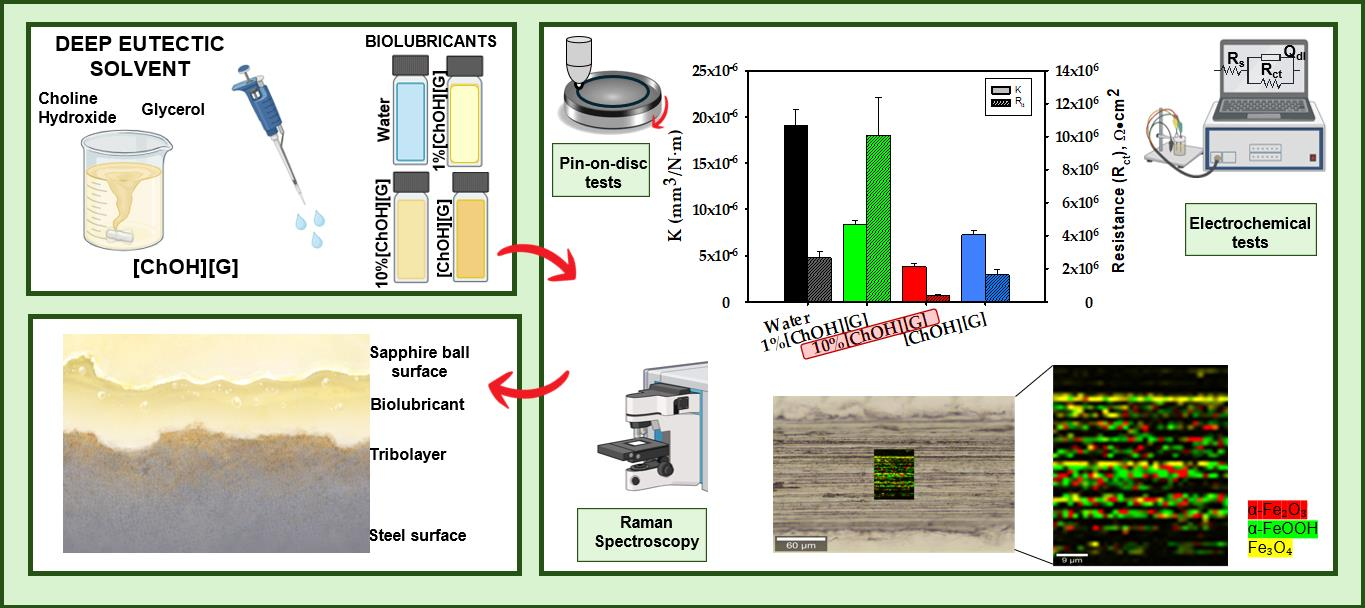
A novel deep eutectic solvent (DES) formulated from choline hydroxide has been investigated as an additive for advanced aqueous lubrication. Comprehensive characterization of the DES enabled the determination of its viscosity, wettability, and key spectroscopic features, providing insight into its physicochemical behavior. The tribological performance of the water-based lubricants was evaluated using a pin-on-disc configuration with a stainless steel–sapphire tribopair. The resulting friction and wear data demonstrate a significant improvement in performance, particularly for the lubricant containing 10 wt.% DES, which exhibited the most favorable reduction in wear rate, achieving an 80% decrease compared to water. Electrochemical measurements, together with surface analysis by Raman microscopy, confirmed the formation of various iron oxide phases on the wear track that influence tribological performance. These oxides contribute to the development of a protective tribolayer that enhances the overall tribological response. Complementary X-ray-based analytical techniques (EDX and XPS) further substantiated the presence, composition, and stability of this tribolayer. Therefore, the study highlights the potential of the choline hydroxide-based DES as an effective component for formulating novel water-based lubricants.

Graphical Abstract

1. Introduction

Conventional lubricants derived from mineral or synthetic sources exhibit low biodegradability and significant biotoxicity [1,2]. Consequently, increased environmental awareness has driven growing interest in the development of environmentally friendly lubricants that also provide high tribological performance. Among those lubricants known as “green lubricants”, deep eutectic solvents (DESs) have attracted attention [3,4].
DESs are mixtures formed through hydrogen bonding—typically between hydrogen bond donors (HBDs), such as urea, ethylene glycol, or glycerol, and hydrogen bond acceptors (HBAs)—or via Lewis or Brønsted acid–base interactions between two or more components. Such mixtures in some cases have such low melting points that they are liquid at room temperature. These are therefore significantly lower than those of their individual constituents [5,6].
In general, DESs share several properties with conventional ionic liquids, including non-flammability and negligible vapor pressure. However, DESs offer additional advantages, such as being easier to synthesize, they are often derived from renewable sources, and their physicochemical properties can be finely tuned by selecting their components [7,8,9].
DESs have been employed in a wide range of applications [10] since their introduction by Abbott et al. in the early 21st century [11], including catalysis [12,13], extraction processes [14], electrochemistry [15], and materials synthesis [16,17]. The first DES used as a lubricant consisted of choline chloride and urea (molar ratio 1:2) applied in a steel–steel contact, and it demonstrated improved anti-friction performance compared to conventional mineral oils [18]. Since then, numerous studies have explored DESs—primarily based on choline chloride—as lubricants on various substrates [19,20,21,22,23,24], confirming their ability to reduce friction coefficients and provide wear protection, which in some cases rivaled the performance of established lubricants. Furthermore, DESs have shown potential for tribological enhancement through the incorporation of nanoparticles, such as graphene [25] or graphene oxide [26], as additives of vegetable oils [27].
Water plays a critical role in the interactions between DES components [28,29,30] due to their hygroscopic nature. Although water was traditionally considered an undesirable impurity that disrupts the eutectic equilibrium, the controlled incorporation of water has been shown to modulate key physicochemical properties—including viscosity, polarity, conductivity, and hydrogen-bonding dynamics—thus enhancing system performance for targeted applications [31,32,33]. In tribological contexts, the possibility of modifying the DES properties is especially beneficial: reducing viscosity and improving film-forming capabilities can lead to enhanced friction reduction under specific operating conditions.
For instance, Ma et al. investigated the use of choline chloride/glycerol DES modified with graphene to improve the lubricity of water-based drilling fluids [34], whereas Zhou et al. reported that a DES composed of choline chloride and 1,3-butanediol effectively reduced friction in drilling operations at temperatures below 180 °C [35]. The presence of water has also been shown to influence the tribological behavior of a non-ionic N-oxide DES derived from phenylacetic acid, resulting in increased lubricity compared to the neat DES under nanoscale friction conditions [36]. Hallett et al. examined the tribological behavior of nanometric films based on choline chloride and glycol in contact with mica. Their results showed that formulations with a water content of approximately 50% achieved a superlubricating regime [37]. Gao et al. investigated DES–water binary systems and observed that water addition reduced friction and improved wear resistance under high load conditions; this was attributed to the formation of adsorbed films and tribochemical surface layers at the interface [38].
In the present work, we investigate the tribological behavior of a novel DES composed of choline hydroxide [ChOH] and glycerol [G], along with its aqueous mixtures with varying water contents. Choline hydroxide [ChOH] was selected, owing to its low toxicity and its nature as a benign quaternary ammonium compound with a markedly reduced ecological footprint relative to conventional inorganic hydroxides. Moreover, its high thermal and chemical stability, together with its intrinsic ionic-liquid-like behavior, enables efficient performance as a potential lubricant. To the best of our knowledge, this is the first report presenting tribological and physicochemical characterization of this DES derived from choline hydroxide and glycerol. The tribological behavior of these environmentally friendly lubricants was evaluated under a stainless steel–sapphire contact using pin-on-disc configuration at room temperature and compared to water. Surface analyses, performed via scanning electron microscopy (SEM), EDX, Raman microscopy, and X-ray photoelectron spectroscopy (XPS), were employed to elucidate the lubrication mechanisms involved.

2. Materials and Methods

2.1. Materials Details

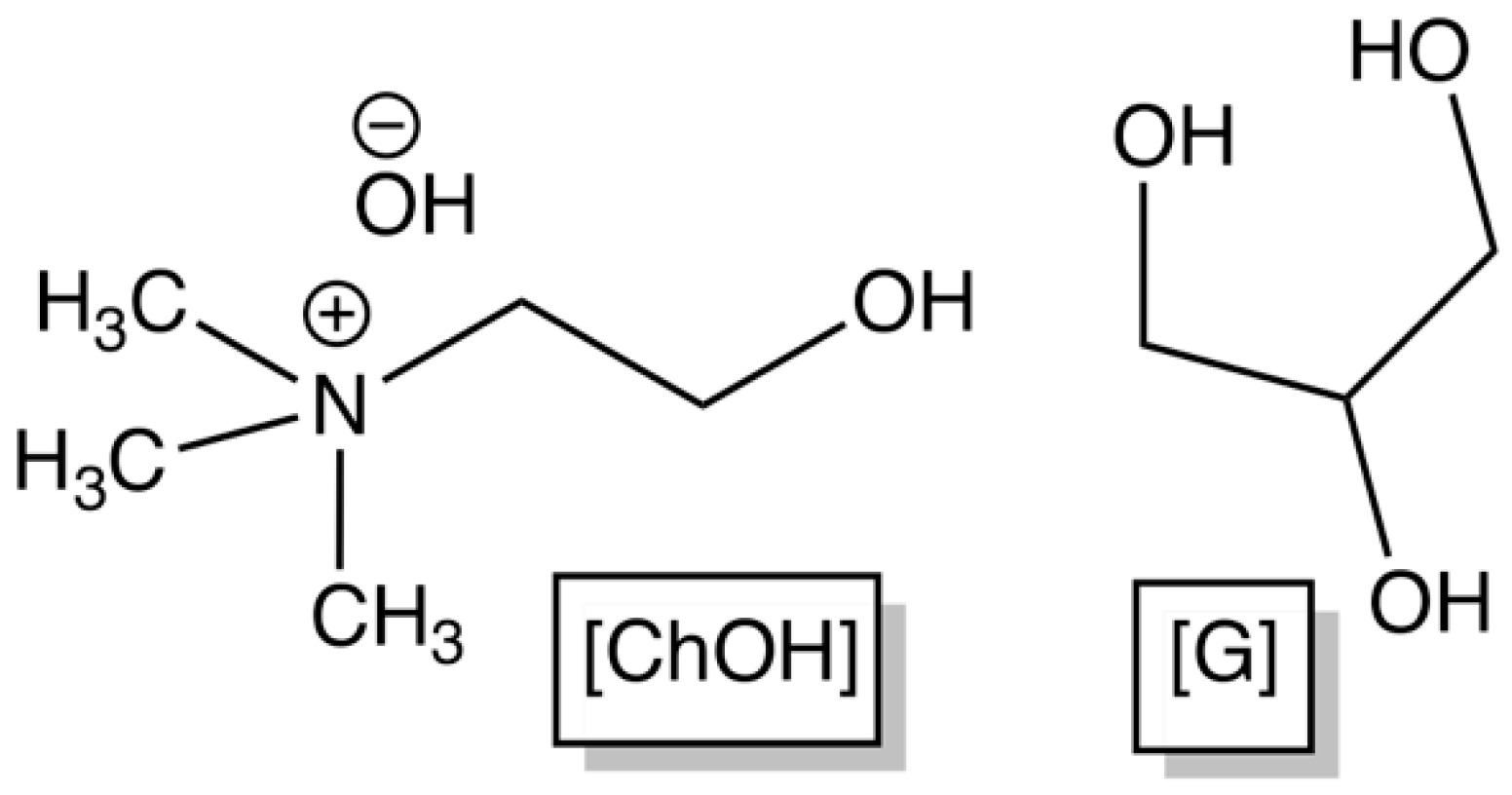
Choline hydroxide (CAS No 123-41-1, 46 wt.% in water) was purchased from Sigma Aldrich (St. Louis, MO, USA), and glycerol (CAS No 56-81-5, 87% purity) was sourced from ITW Reagents. Both reagents were used as received, and their molecular structures are shown in Figure 1.

2.2. Preparation of Choline Hydroxide DES-Based Lubricants

Deep eutectic solvent [ChOH][G] (molar ratio 1:1) was prepared by heating and stir-ring choline hydroxide and glycerol at 60 °C for 1 h until a clear liquid was formed. The water content of [ChOH][G] was determined by Karl Fischer titration (Mettler Toledo V20 KF Compact, Shanghai, China), resulting in a value of 43.16 wt.%.
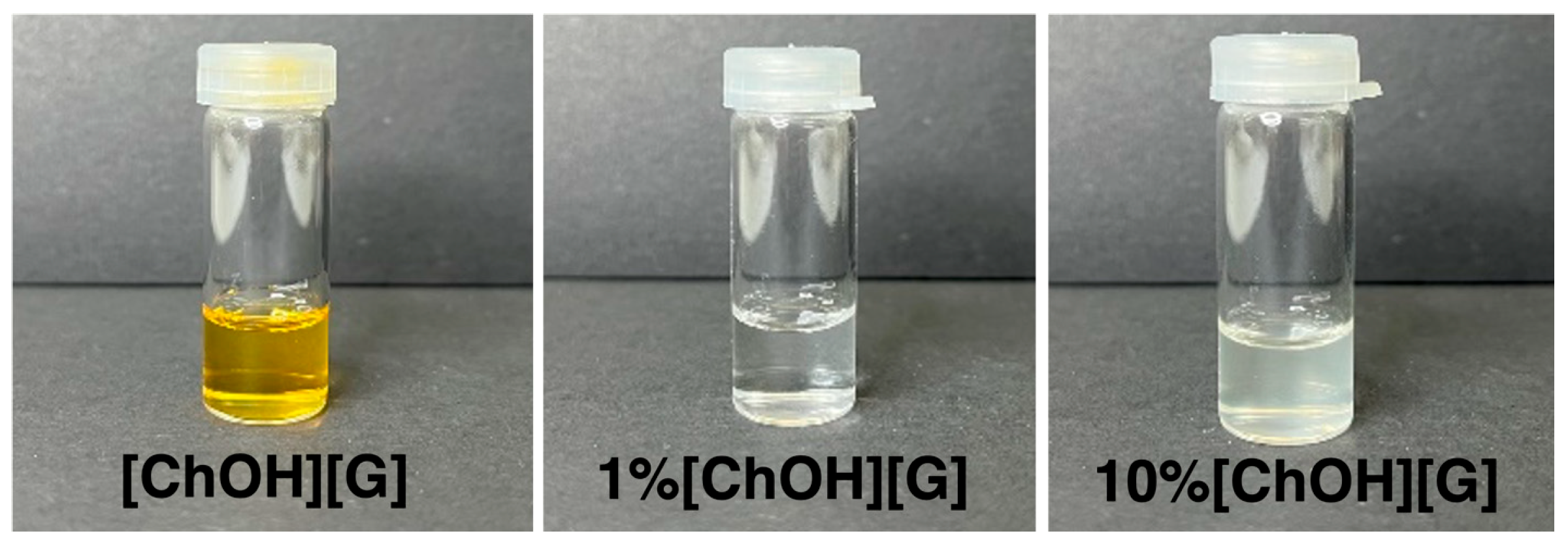
DES-based lubricants were obtained by quantitatively adding type II purity water (Milli-Q® Advantage A10, Shanghai, China) to [ChOH][G], achieving samples containing 1 and 10 wt.% DES. Each lubricant was stirred at room temperature for 15 min. Figure 2 shows the close-up images of the DES and its water solutions. While [ChOH][G] presented a mustard-yellow color, the 1% [ChOH][G] in water dispersion was transparent. Some turbidity can be observed in the case of the 10% [ChOH][G] dispersion. All the water-based lubricants were stable for at least six months.

2.3. Characterization

The thermal behavior of [ChOH][G] was assessed using a differential scanning calo-rimeter DSC 882 (Mettler Toledo, Columbus, OH, USA) under N2 (50 mL/min) flow. Samples were cycled three times from −100 °C to 10 °C with a heating rate of 10 °C/min. Thermogravimetric analysis (TGA) was recorded from 30 °C to 500 °C under a nitrogen atmosphere (50 mL/min) using a 10 °C/min heating rate with a TGA 1HT (Metter Toledo, Columbus, OH, USA).
Rheological behavior was determined at 25 °C by a rotational rheometer AR-G2 (TA Instruments, New Castle, DE, USA) in parallel plate geometry with a diameter of 40 mm.
A WITec UHTS 300 instrument with a green laser at 532 nm wavelength and a grating density of 600 g/mm was employed to collect Raman microscopy spectra (10 accumula-tions, time integration = 2 s). Spectra for 2D Raman mappings (50 × 80 µm size) were acquired at the center of the wear tracks using 10 accumulations and an integration time of 0.5 s. A scan grid of 35 lines × 50 points per line was recorded in each case. Oxide components were identified using a sum filter tool and true component analysis with Project Five 5.3 software. Area percentages were calculated using image histograms of the mappings of each component.
Contact angles of the lubricants on the AISI 316L surface were determined using DSA30B (Krüss, Hamburg, Germany) equipment following the procedure detailed in [39].
The pH values of the lubricants were measured using a digital pH meter HI98180 (Hanna Instruments, Woonsocket, RI, USA). The values reported in Table 1 were obtained at room temperature.

2.4. Electrochemical Tests

Electrochemical impedance spectroscopy (EIS) is a powerful and well-established technique for elucidating interfacial phenomena in electrochemical corrosion systems. Its sensitivity to charge transfer, adsorption processes, and interfacial film formation has made it particularly valuable for studying liquid–metal interfaces, including those involving lubricants and metalworking fluids. In tribological environments, EIS enables the identification of equivalent circuit models that describe the adsorption and desorption of charged species, the evolution of boundary lubrication regimes, and the formation of protective anti-wear films. For water-based lubricants, EIS further provides essential information on the corrosion resistance of metallic substrates [39,40].
In the present work, EIS measurements were conducted using a PTFE three-electrode mini-cell and a SP 300 potentiostat. AISI 316L stainless steel served as the working elec-trode, with platinum as the counter electrode, exposing a surface area of 1.22 cm2. Prior to electrochemical testing, the open circuit potential (OCP) was monitored until stabiliza-tion. EIS spectra were collected from 1 MHz to 10 mHz using a 10 mV perturbation around the OCP and fitted with ZSimpWin 3.21. Complementary polarization curves were obtained between −500 mV and +500 mV at 1 mV/s, enabling determination of Icorr, Ecorr, and Vcorr via Tafel extrapolation.

2.5. Tribological Tests

A pin-on-disc tribometer (TRB3, Anton Paar, Graz, Austria) was used for tribological tests under ambient conditions. AISI 316L stainless-steel (Ra < 0.03 µm, hardness = 218 HV, Young’s modulus (E) = 193 GPa) discs of 25 mm diameter and 2.5 mm thickness were tested against sapphire balls of 1.5 mm diameter (99.9% Al2O3, 1750 HV, E = 445 GPa, Anton Paar, Graz, Austria). The test conditions are detailed in Table 2. Each test was repeated at least three times under consistent experimental conditions. A volume of 0.2 mL of the corresponding lubricant was added prior to testing. Surface preparation involved cleaning with n-hexane and acetone, followed by drying in a stream of hot air.
Cross-sectional profiles, 3D surface topography, roughness and wear measurements for stainless-steel discs were determined with a Talysurf CLI (Taylor Hobson, Leicester, UK) optical profilometer. Wear rates were calculated based on the measured volume loss of material after the tests. Optical and SEM micrographs were obtained using Leica DMRX (Leica Microsystems, Wetzlar, Germany) and ZEISS Crossbeam 350 (Carl Zeiss Microscopy, Oberkochen, Germany), respectively. Elemental analyses were performed with an Ultim Max energy-dispersive X-ray (EDX) detector from Oxford Instruments (High Wycombe, UK).
XPS analysis of the stainless-steel disc after testing with the [ChOH][G] based lubricants was conducted using a SPECS FLEXPS-E spectrometer (SPECS Surface Nano Analysis GmbH, Berlin, Germany) with an Al Kα source (1486.7 eV), a 300 µm spot size, and a 150 eV bias voltage, referenced to the C1s binding energy at 285.0 eV. Spectra were processed with the software Specslab Prodigy ISQAR ver. 4.127.1 (SPECS Surface Nano Analysis GmbH, Berlin, Germany).

3. Results

3.1. Characterization of the Novel DES: Choline Hydroxide–Glycerol

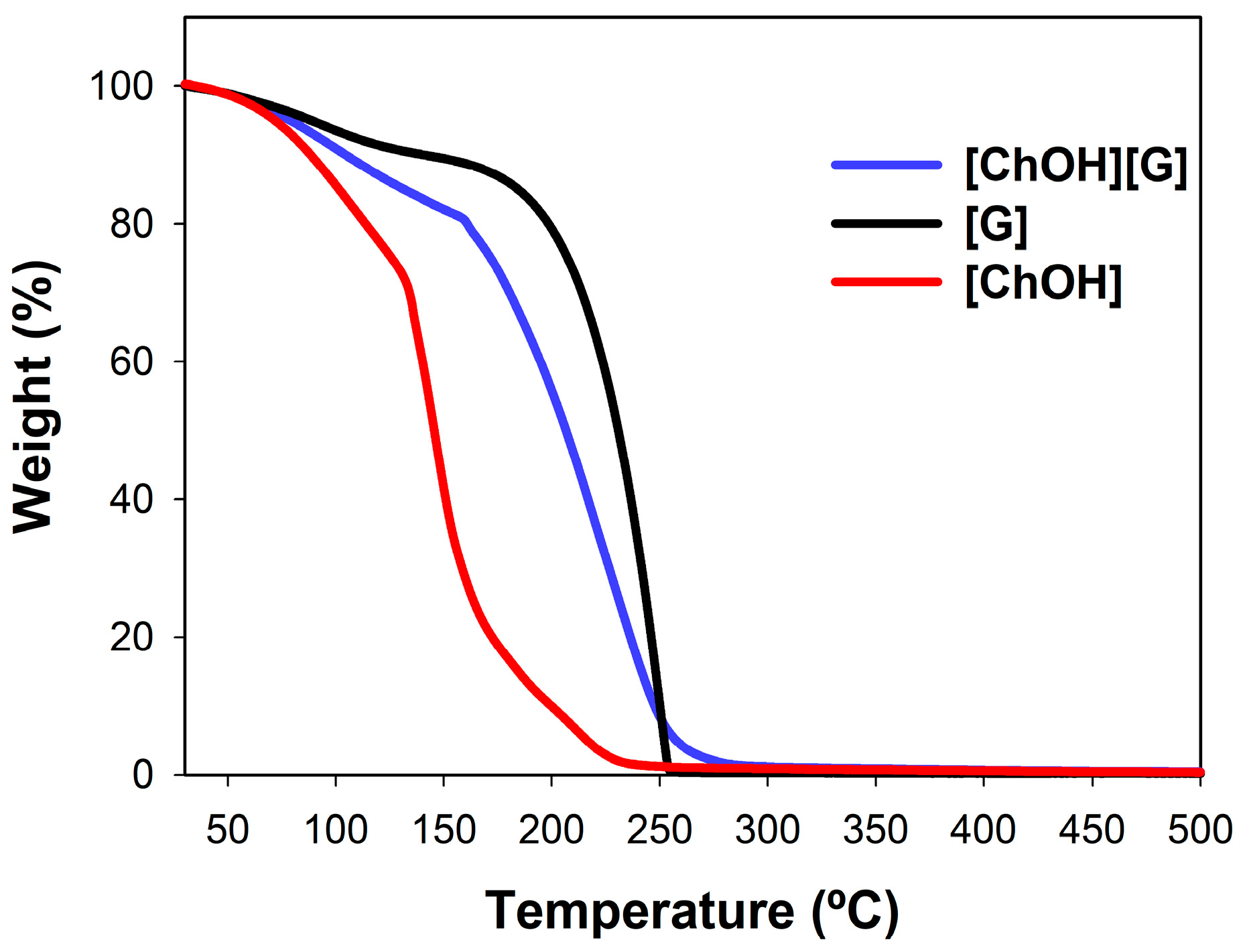
Thermogravimetric analysis curves of [ChOH][G] and its precursors, glycerol [G] and the ionic liquid choline hydroxide [ChOH], are shown in Figure 3. It can be observed that the deep eutectic solvent presented an intermediate behavior with respect to its pure constituents [41], which completely degraded before 300 °C. An onset temperature of 163.72 °C and a 50% weight loss temperature of 190.3 °C were reached for [ChOH][G]. The weight loss below 100 °C can be attributed to evaporation of water in the system.
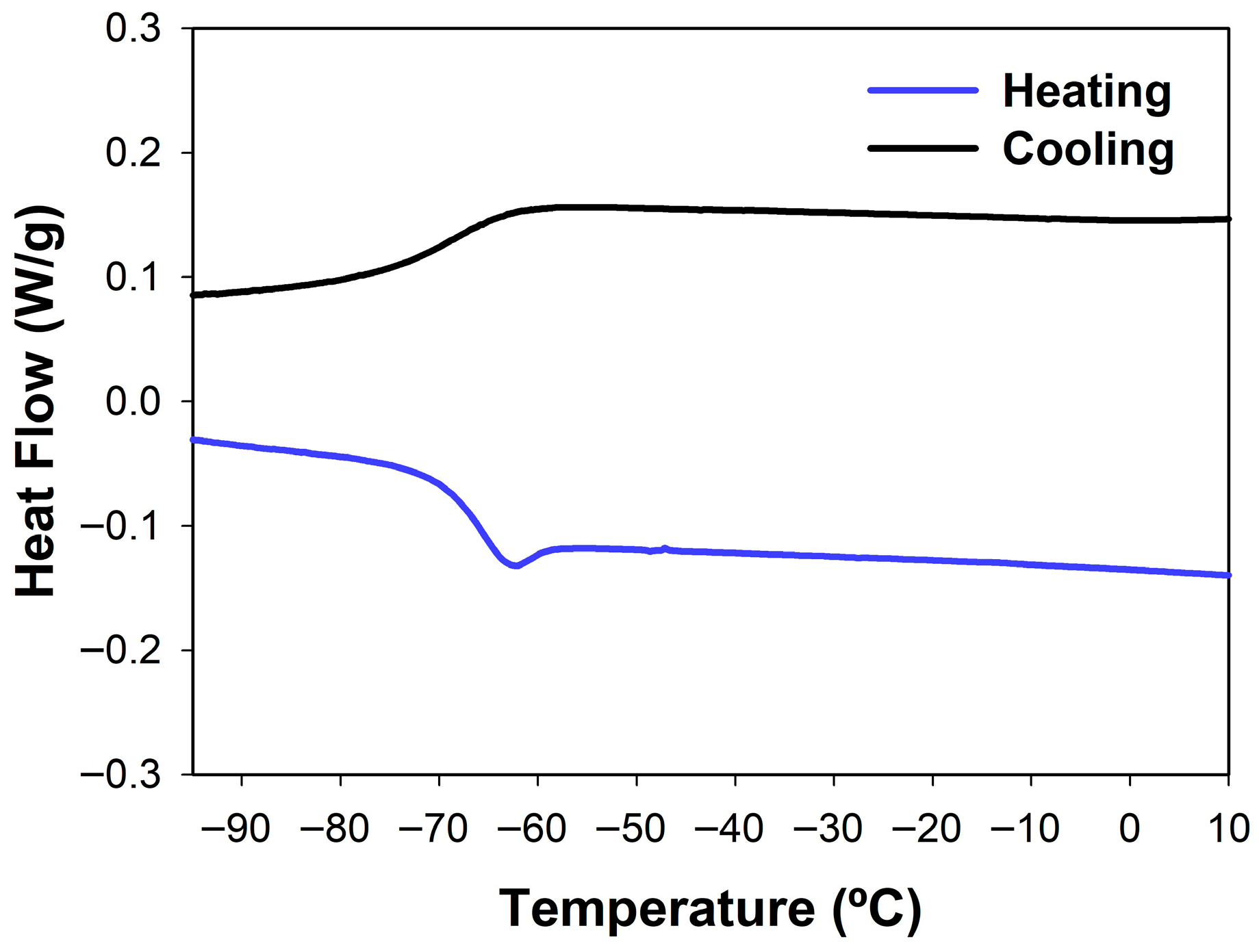
The DSC thermogram in Figure 4 shows that the glass transition of [ChOH][G] can be detected within the range of −62.3 °C to −70.1 °C during both the cooling and heating stages. In this case, no other thermal events, such as melting or recrystallization, were observed, which is consistent with previous studies on other DESs containing glycerol [6].
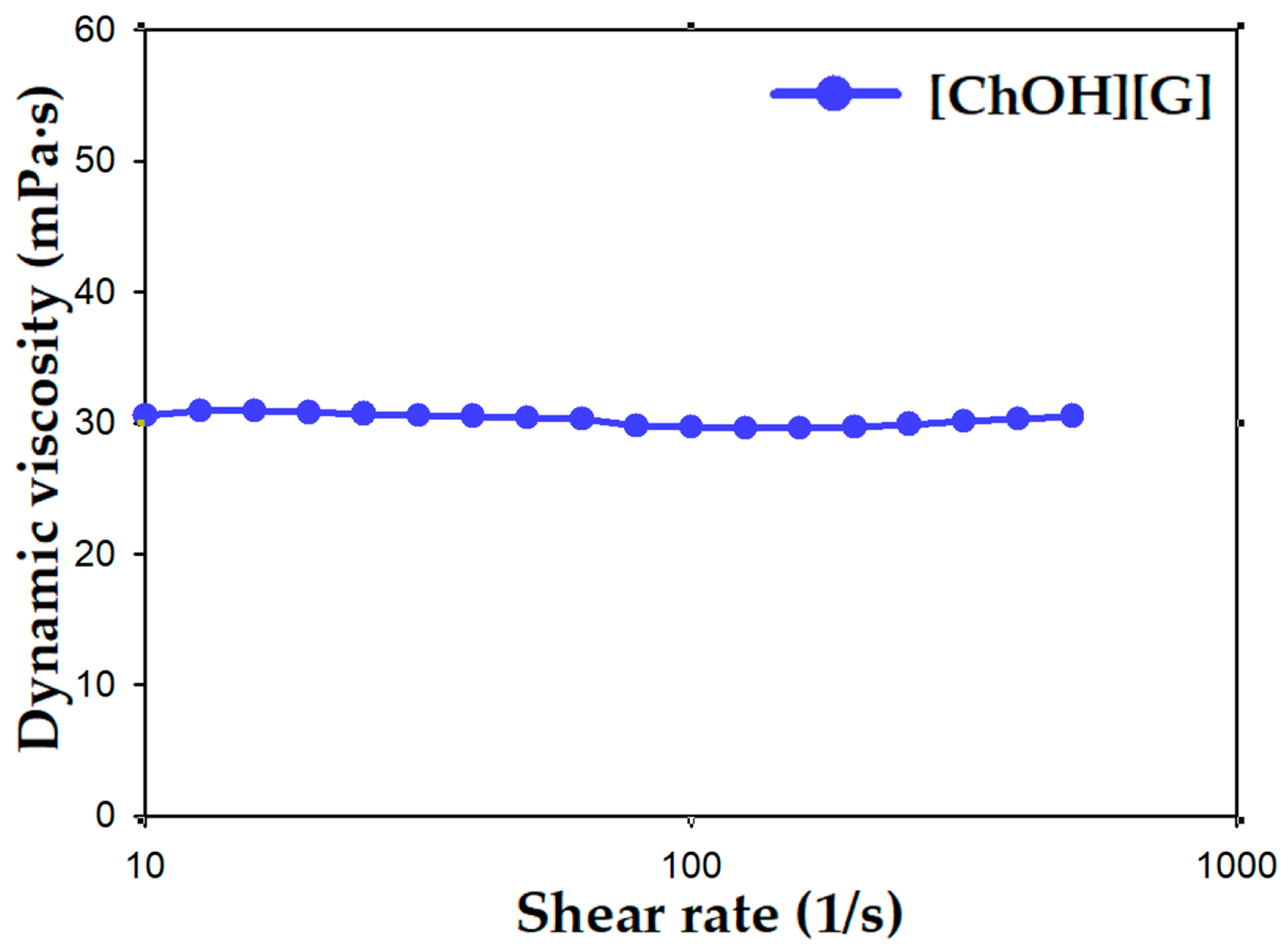
The rheological performance of neat [ChOH][G] is shown in Figure 5. As can be observed, this DES presents Newtonian behavior, with constant viscosity values at room temperature (30 ± 0.5 mPa·s). The data indicate that neat [ChOH][G] has a substantially higher viscosity than the corresponding water-based lubricants, whose values are close to that of pure water (≈1 mPa·s).
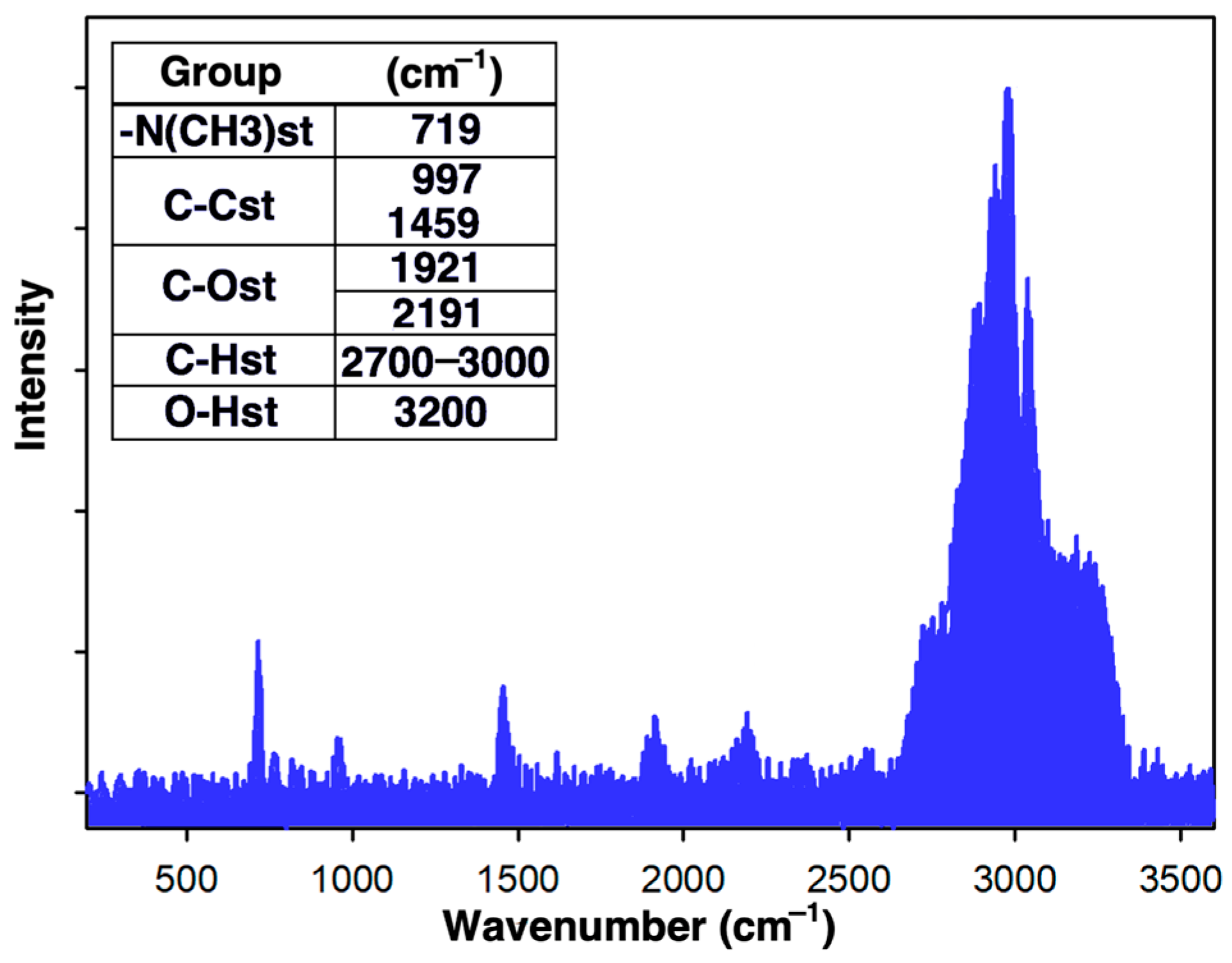
As seen in Figure 6, the Raman spectrum of [ChOH][G] shows a broad band at 3200 cm−1 attributable to the -OH stretching vibration due to the presence of water and glycerol [42]. The intense bands between 2700 and 3000 cm−1 correspond to C-H stretching [42]. The weak peak at 2191 cm−1 and the band at 1921 cm−1 are characteristic of C-O [43] stretching. Weak peaks at 1459 and 967 cm−1 are assignable to C-C stretching [44]. The band at 719 cm−1 could correspond to N(CH)3 or C=O [45].

3.2. Tribological Performance

3.2.1. Wettability

Contact angle data of the lubricants on the AISI 316L stainless-steel surface are shown in Table 3 and compared with that of water [46].
All lubricants presented a hydrophilic nature, with [ChOH][G] exhibiting the highest initial contact angle of 79.1°. The presence of water led to an increase in wettability, particularly for 10% [ChOH][G]. After five minutes, once the interactions between the lubricants and the metallic surface had taken place, the contact angles decreased in all cases. The 10% [ChOH][G] sample showed the greatest reduction, i.e., 47.4%. Moreover, this lubricant displayed the lowest contact angle after five minutes, suggesting a higher tendency to form lubricating films on the surface [47].

3.2.2. Tribological Analysis

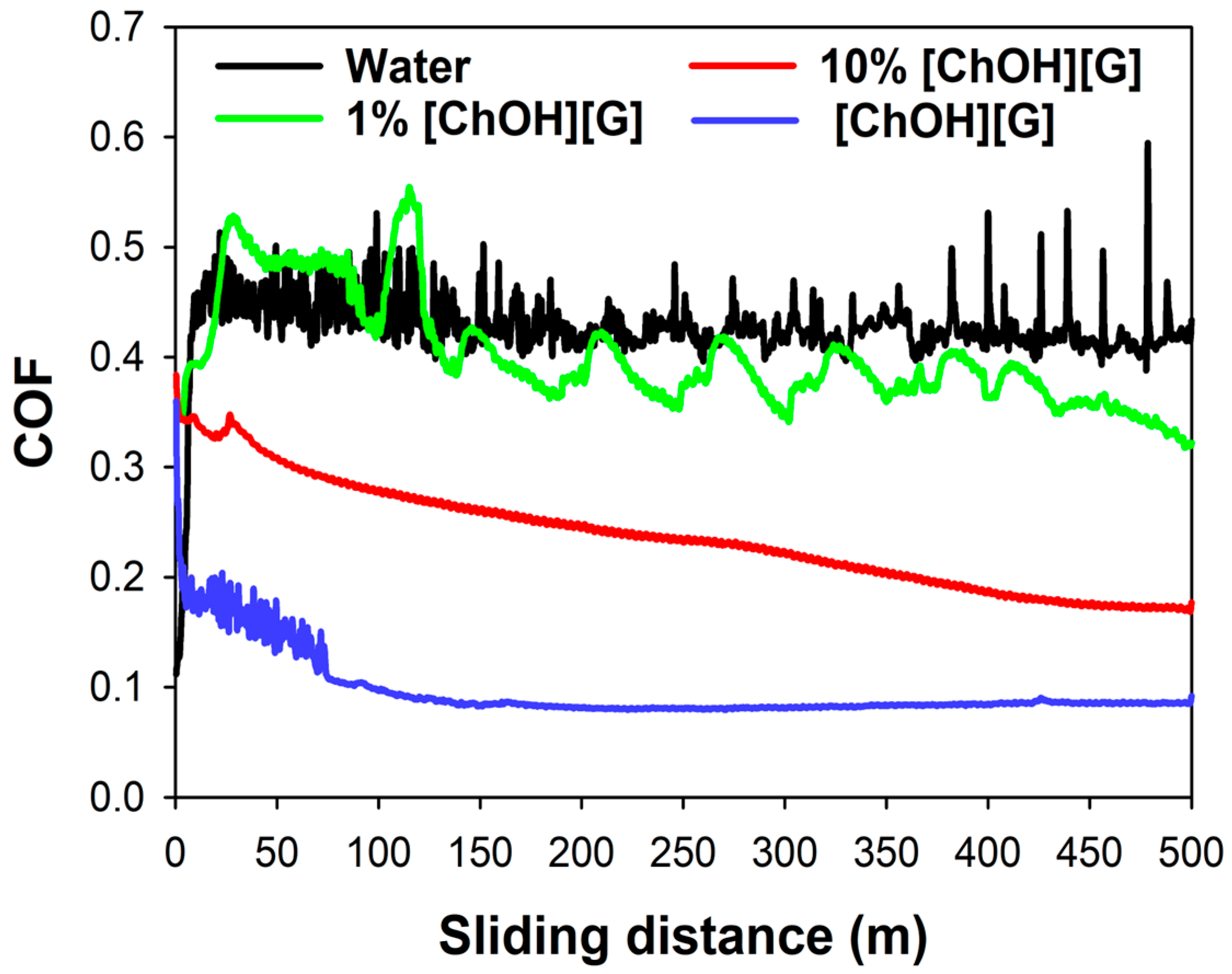
Figure 7 shows the variation of the friction coefficient with sliding distance for all lubricants tested at room temperature. Water exhibited poor lubricating behavior, characterized by high friction coefficients and pronounced stick-slip. The addition of 1% [ChOH][G] did not produce a substantial improvement in the tribological performance of water.
Increasing the concentration of the deep eutectic solvent in the lubricant led to a noticeable enhancement of its antifriction properties. For the lubricant containing 10% [ChOH][G], a progressive decrease in the friction coefficient was observed, in addition to the suppression of the stick–slip behavior seen in the lubricants with a higher water content.
Among all the lubricants tested, the lowest friction coefficient (COF) was found in the neat [ChOH][G]. An initial stage of relatively high friction was observed up to approximately 75 m of sliding distance, after which the coefficient gradually decreased, reaching a final value of 0.086. This corresponded to 78.2% reduction in the COF compared with water. Table 4 summarizes the average COF over the entire test and the wear rates obtained from at least three tests for each lubricant.
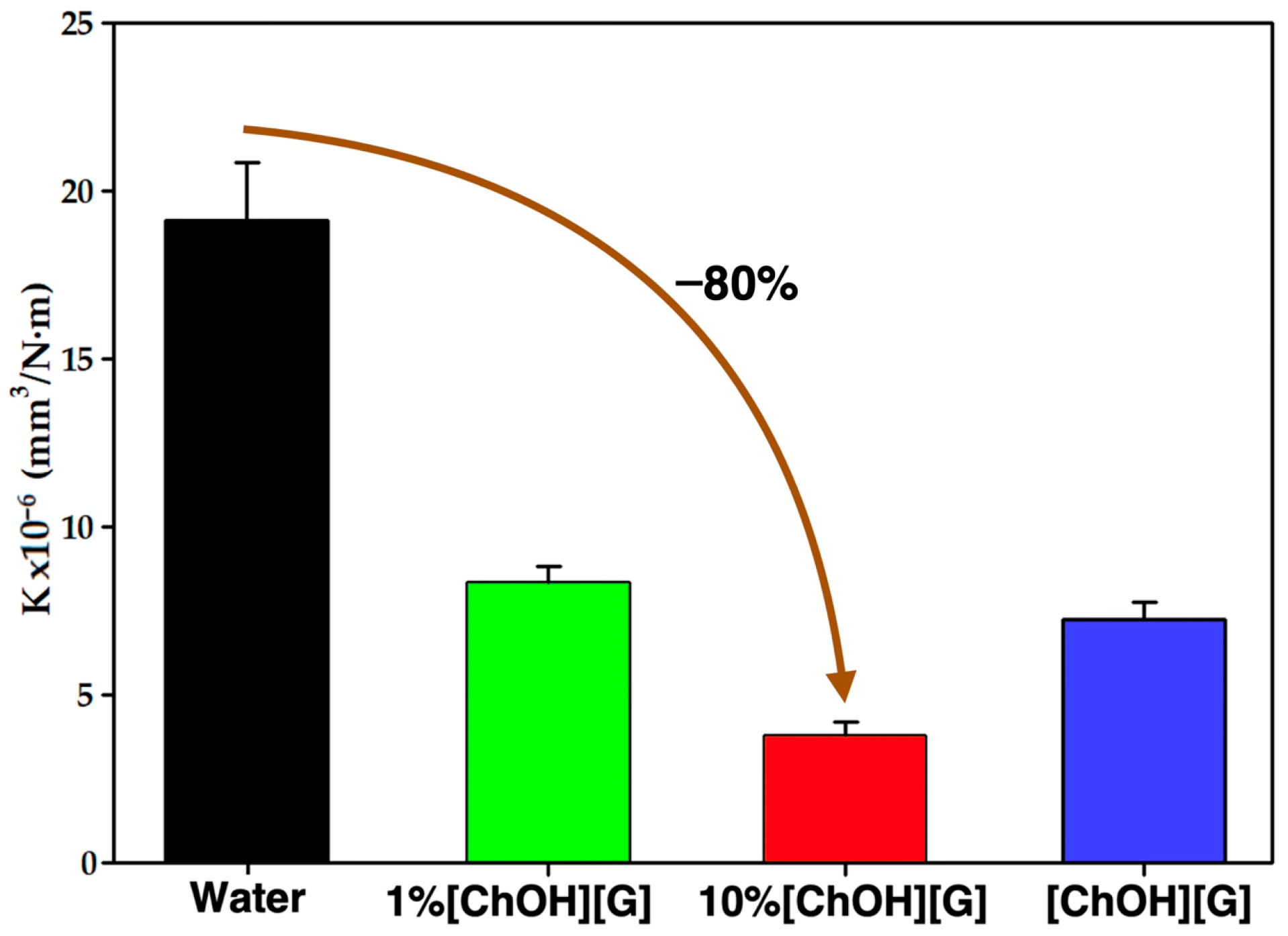
Regarding the evaluation of wear rates, as shown in Table 4 and Figure 8, a different trend was observed compared with the friction coefficient. In this case, the presence of 1% DES produced a more noticeable effect, resulting in a wear rate reduction slightly higher than 50%. Additionally, the lubricant containing 10% [ChOH][G] exhibited the most effective anti-wear performance, achieving 80% reduction relative to water and 47.4% reduction compared with the neat [ChOH][G].
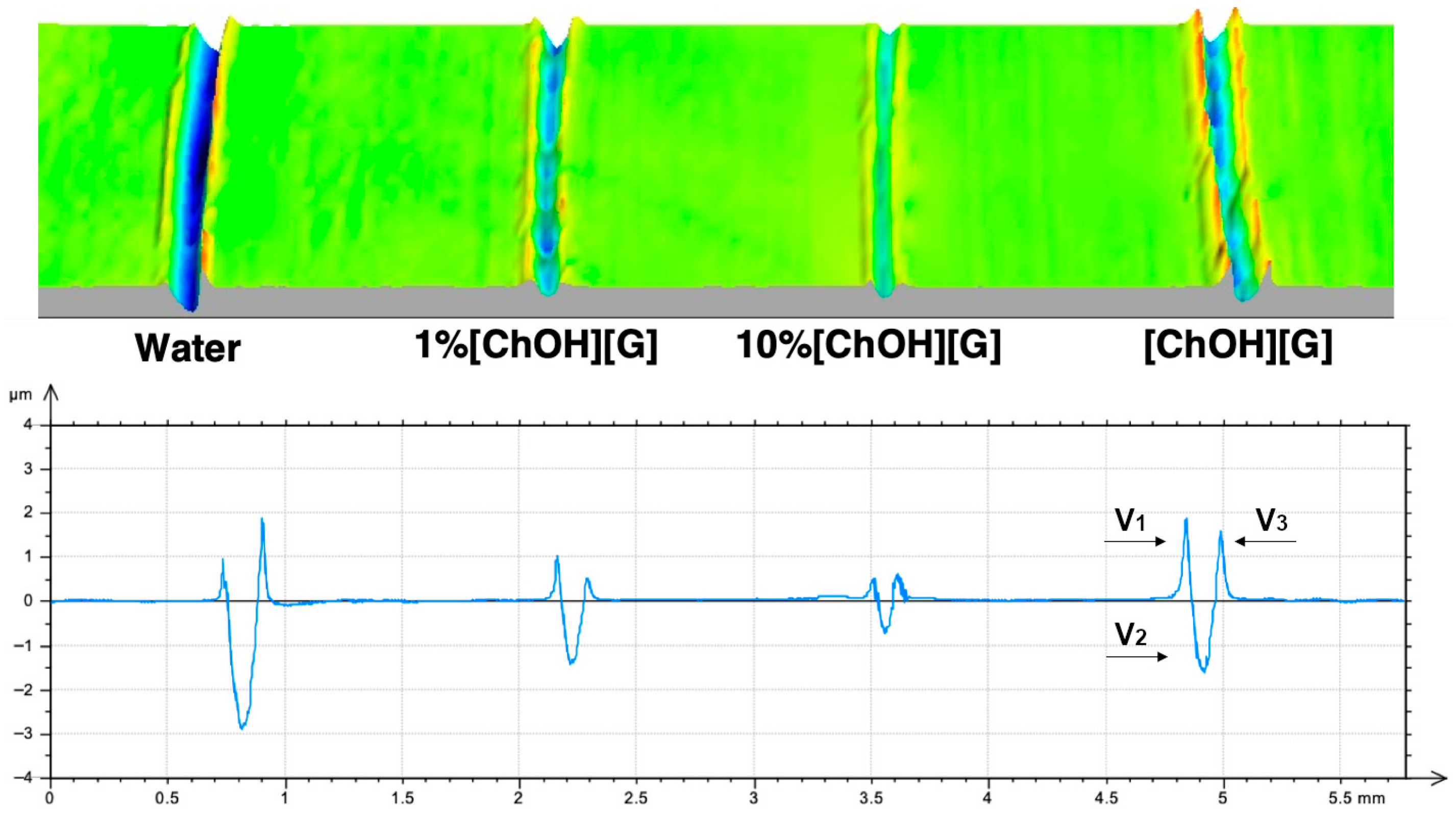
Cross-section profiles and 3D images of the wear tracks on stainless-steel discs after lubrication with water, [ChOH][G], and solutions with 1 wt.% and 10 wt.% in water are shown in Figure 9.
The reduced surface damage observed for the 10% [ChOH][G] sample highlights its effectiveness in providing wear protection. The wear track profile after lubrication with [ChOH][G] revealed a significant accumulation of material along the edges of the track, resulting in a lower wear rate compared with the lubricant containing 1% [ChOH][G]. This behavior can be explained by the method used to calculate the wear rate, which was based on the material volume loss determined from the difference between the material removed below the baseline and the material accumulated at the edges of the wear tracks (V2 − (V1 + V3)) (Figure 9).

3.2.3. Electrochemical Analysis

The results from the electrochemical tests on the system of stainless steel and [ChOH][G] lubricant interfaces at room temperature are summarized in Table 5. For comparison, the corresponding measurements in water have also been included. In all cases, the corrosion currents (Icorr) were extremely low, consistent with the formation of a passive surface layer in an alkaline medium. Consequently, the resulting corrosion rates (Vcorr) remained residual, with values below 2 µm/year.
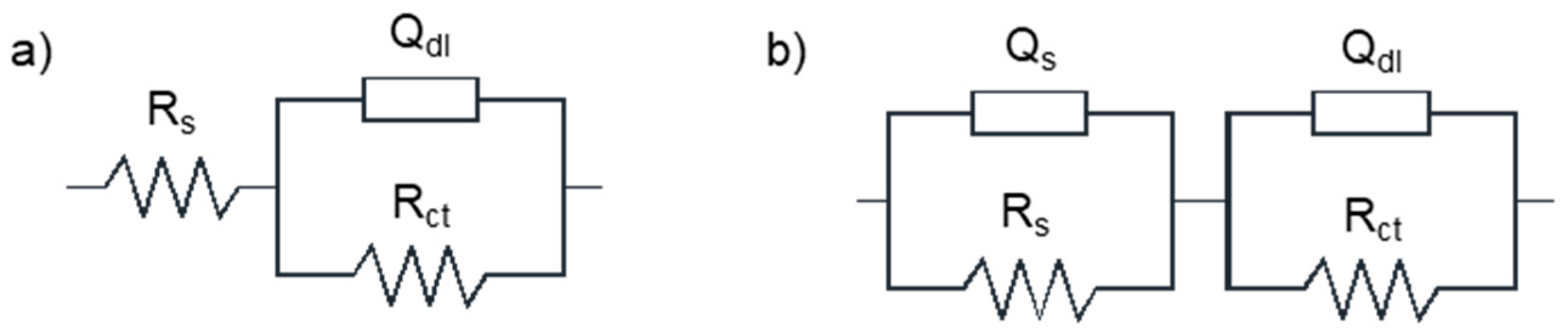
The corrosion potential (Ecorr) for water and the lubricants was close to 0 V except for the 10% [ChOH][G]. In this case, Ecorr reached a more anodic value of −101.069 V, indicating a higher surface activity. When stainless steel is immersed in those lubricants, the Randles equivalent circuit mode (Figure 10a) can be used as the equivalent circuit for data fitting of the EIS measurements to describe the processes at an electrode–electrolyte interface. In the case of water, an additional non-ideal capacitor element (Qs) had to be added to model the system due to the low conductivity of the electrolyte (Figure 10b).
The addition of [ChOH][G] to water significantly increased the conductivity of the medium (Table 5), with a minimum of resistance Rs for 10% [ChOH][G]. All the lubricants showed values of charge transference resistance (Rct) and double-layer capacitor Cdl consistent with the presence of a passive layer. However, for the 10% [ChOH][G] lubricant, a slightly lower value of Rct was measured. This slight decrease in the Rct can be attributed to a higher reaction of ions from the lubricant on the stainless-steel surface that would produce a more effective physically adsorbed tribolayer, potentially responsible for the improved tribological performance on the stainless-steel surfaces [48].

3.2.4. Surface Analysis

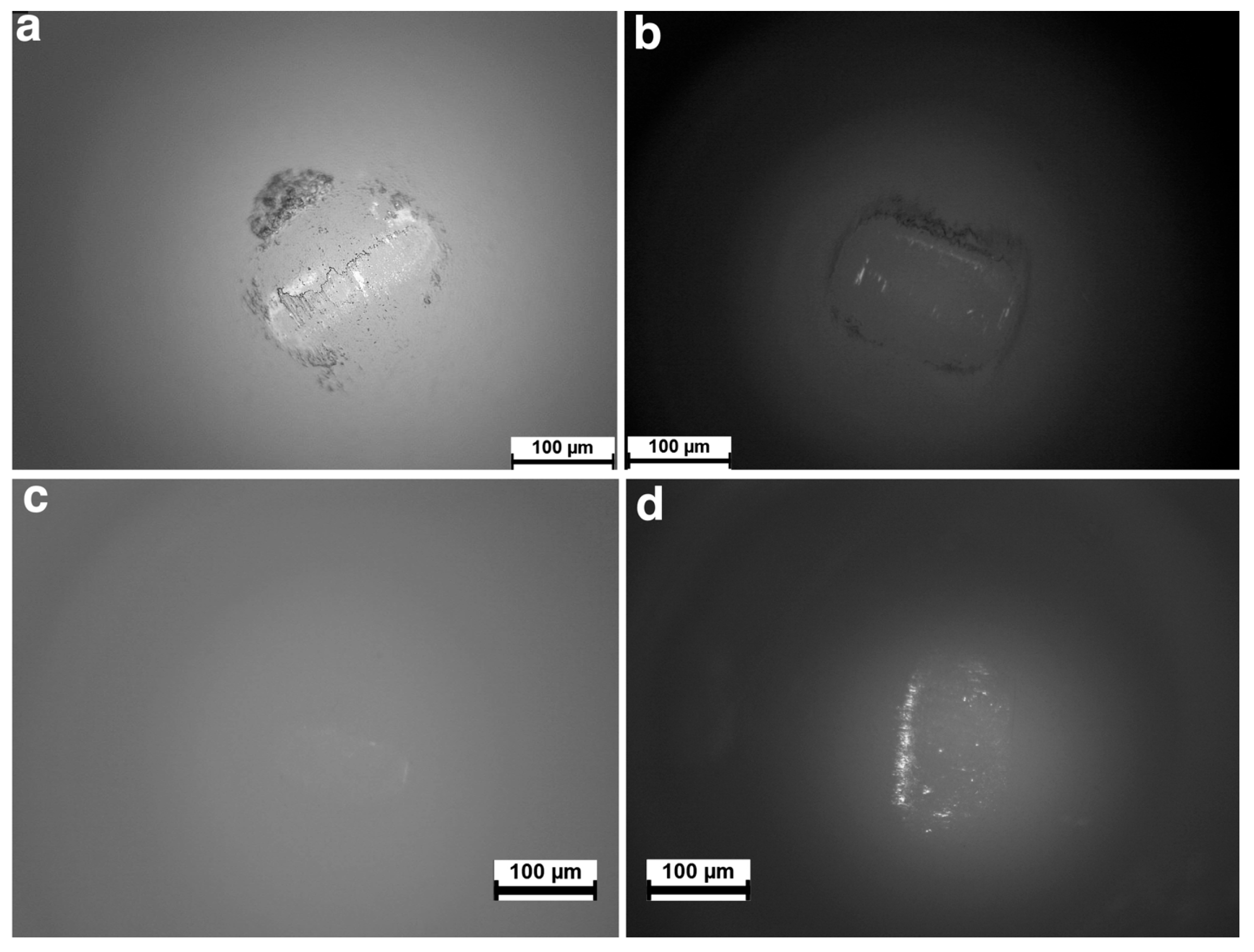
Figure 11 shows the optical micrographs of the sapphire balls after tribological testing. The lubricant 10% [ChOH][G] presented almost negligible damage on that surface.
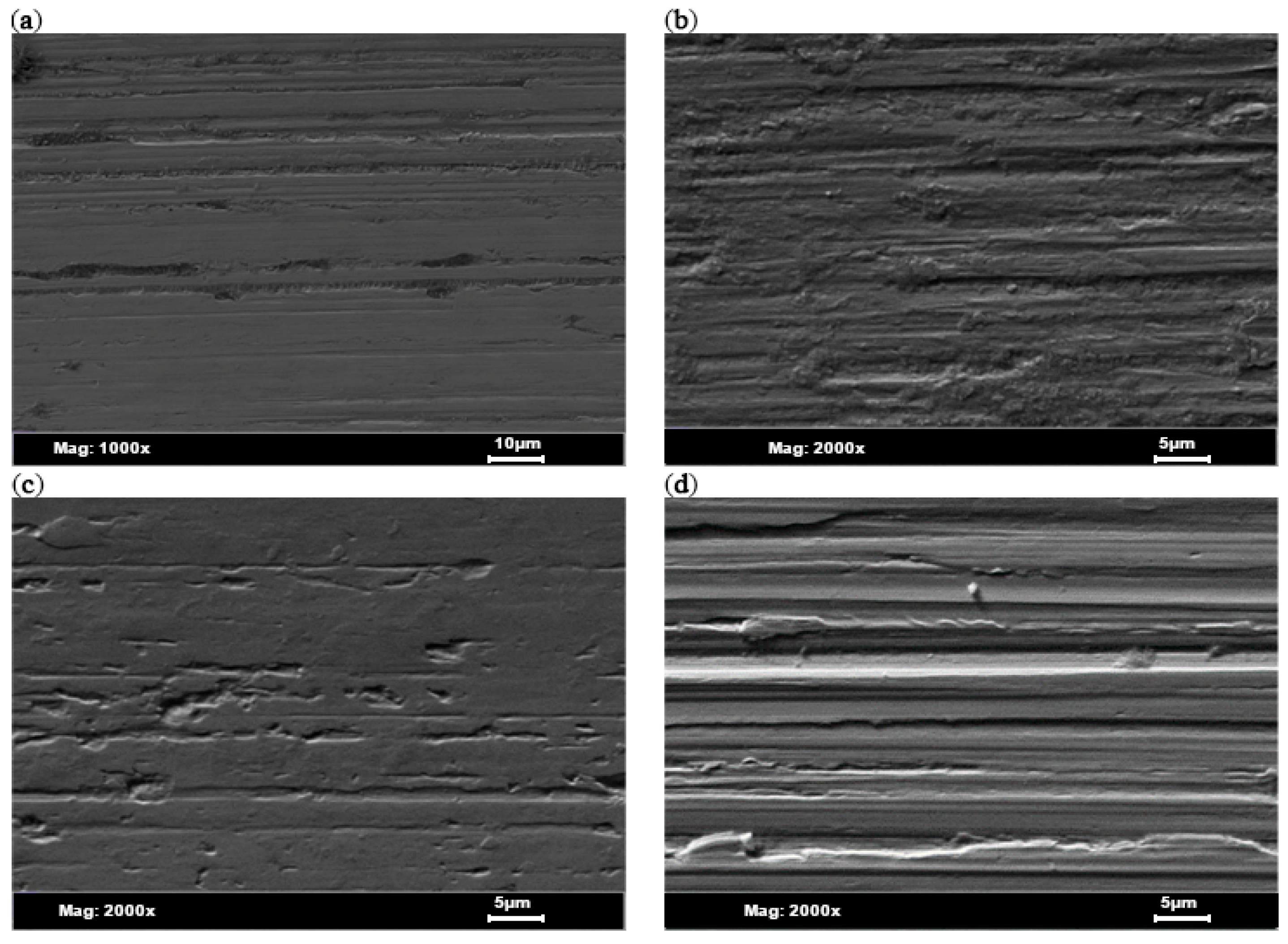
SEM micrographs of the wear tracks on the stainless-steel discs obtained after lubrication testing are shown in Figure 12. Plastic deformation at the edges of the wear tracks was observed in all cases, accompanied by pronounced abrasion marks aligned with the sliding direction. These features were less prominent after lubrication with 10% [ChOH][G]; this correlates with the lower wear rate found for this formulation. Additionally, when using the lubricant with 1% [ChOH][G] in water, a stick-slip phenomenon was detected, characterized by intermittent transitions between static friction and sliding motion during tribological contact (Figure 12b).
The principal elemental constituents corresponding to inside and outside the wear tracks were detected by energy-dispersed X-ray analysis (EDX) are presented in Table 6 and Supplementary Figures S1–S4.
The oxygen concentration increased significantly within the wear track after lubrication with water and with the 1% [ChOH][G] lubricant, indicating an oxidation process. To elucidate the nature of this process, Raman spectroscopy was employed.
Raman spectra were acquired on disc wear tracks after the tribological tests conducted with all the lubricants under study.
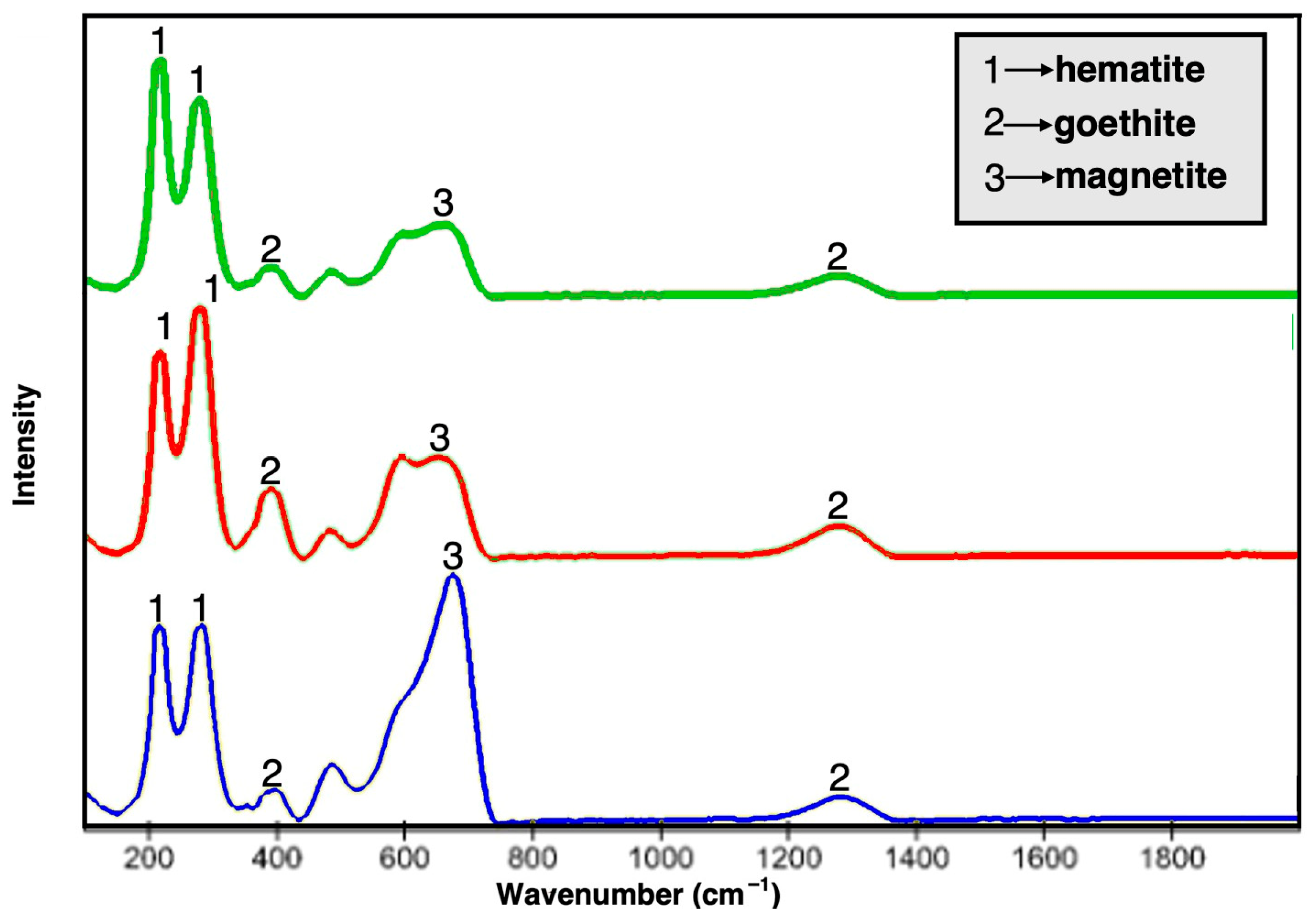
Figure 13 displays the three representative spectra typically found across the wear tracks. As shown, all of them exhibited bands attributable to various iron oxide phases: hematite (α-Fe2O3), goethite (α-FeO(OH)), and magnetite (Fe3O4).
The characteristic spectrum of hematite was identified by the presence of an intense peak at 225 cm−1 and a band at 289 cm−1. For goethite, its representative peaks were observed at 397 and 1280 cm−1, in this case exhibiting a relatively higher intensity compared to the other spectra recorded. The presence of magnetite was confirmed by the appearance of a distinctive peak at 668 cm−1, which was absent in the spectra attributed to hematite and goethite [49,50,51].
Raman imaging enabled the construction of compositional maps, allowing for the determination of the spatial distribution of the different iron oxides within the wear tracks, as well as estimating the relative proportion of each phase present. This was achieved by filtering the spectral signal according to the characteristic bands of each iron oxide phase. The quantification, performed by means of pixel-based color composition analysis (Table 7), revealed a comparable concentration of hematite within the wear tracks after lubrication with the different formulations studied, whereas the presence of goethite and magnetite exhibited higher variability.
Goethite, an iron oxyhydroxide that forms in the presence of water, is softer and more ductile than other iron oxides [52]; this likely accounted for the lower wear rate observed in the 10% [ChOH][G] lubrication, which had the highest proportion of this phase. Furthermore, goethite undergoes thermal transformation into hematite and magnetite [53,54], thus explaining the lower presence of this phase and the corresponding increase in hematite and magnetite after lubrication with water and 1% [ChOH][G], conditions under which higher coefficients of friction were observed. The combined presence of goethite and magnetite on the [ChOH][G] wear surface is consistent with the reduced friction coefficient for this lubricant, as goethite and magnetite help to reduce friction [55] while hematite causes wear due to its higher hardness [56].
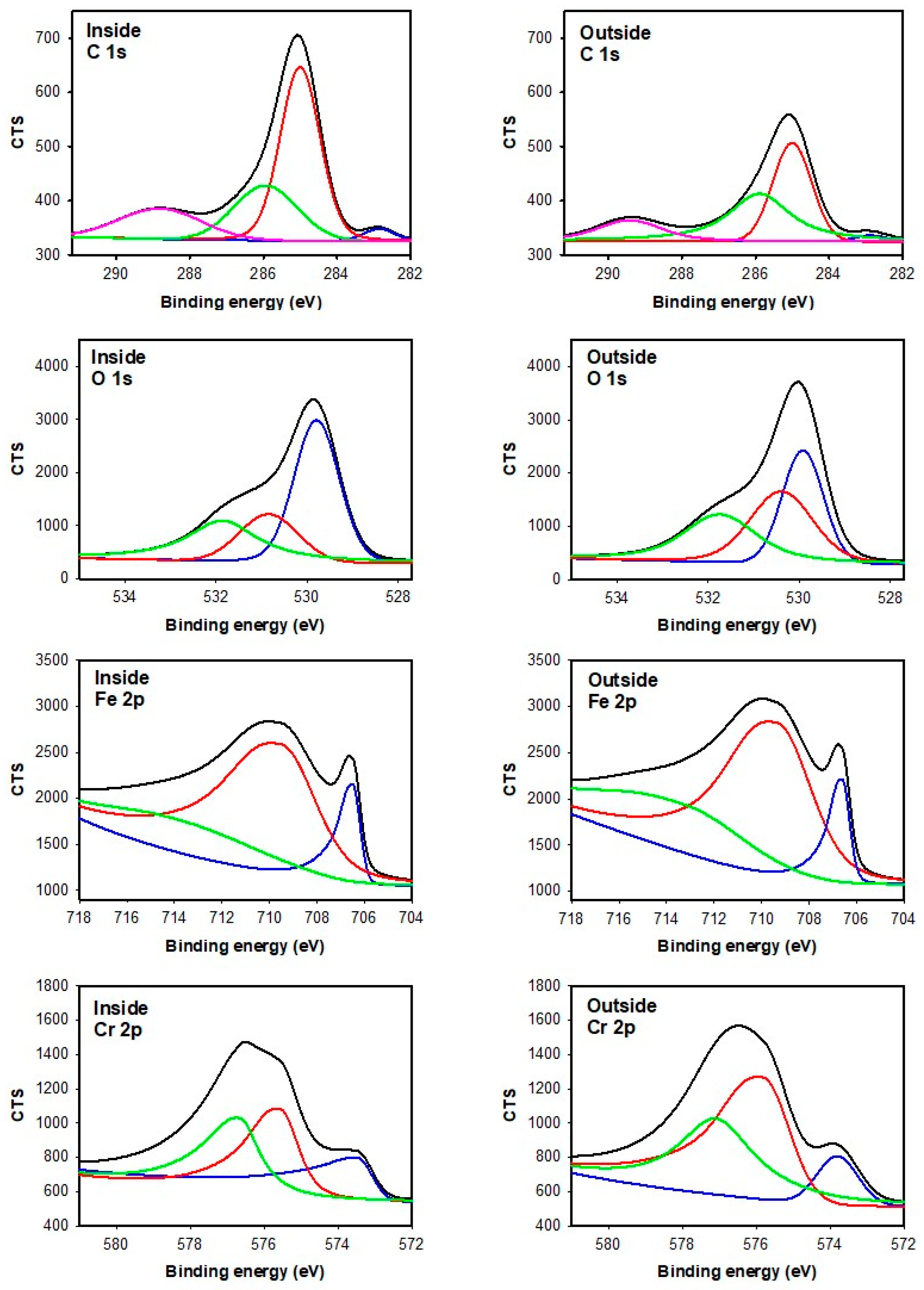
X-ray photoelectron spectroscopy (XPS) was employed to conduct a comparative analysis between the interior and exterior regions of the wear track in order to determine the composition of the surface layer after lubrication with 10% [ChOH][G].
Figure 14 shows the high-resolution spectra, revealing the presence of organic elements from the lubricant as well as those inherent to the stainless-steel substrate.
XPS findings obtained after applying 10% [ChOH][G] as lubricant confirm the increase in the total C1s atomic percentage inside the wear track, showing four C peaks in the range 283–289 eV assigned to the presence of carbides (282.8 eV), aliphatic carbon (285 eV), C-N (285.9 eV), and COOX (289 eV), respectively [57,58].
Regarding the oxygen signal, Figure 14 shows bands assignable to metallic oxides at 529.8 eV and 530.8 eV, as well as to hydroxides (531.8 eV) [57,59].
A reduction in Fe and Cr signals on the worn surface was detected. Three peaks were observed in the case of the Fe 2p spectrum corresponding to Fe(0) at 706 eV, Fe(II) at 709.5 eV, and Fe(III) at 713.9 eV, respectively [57]. For chromium, bands were identified at 573.5, 575.6, and 577 eV, assigned to Cr(0), chromium oxides, and chromium hydroxides [59,60,61].
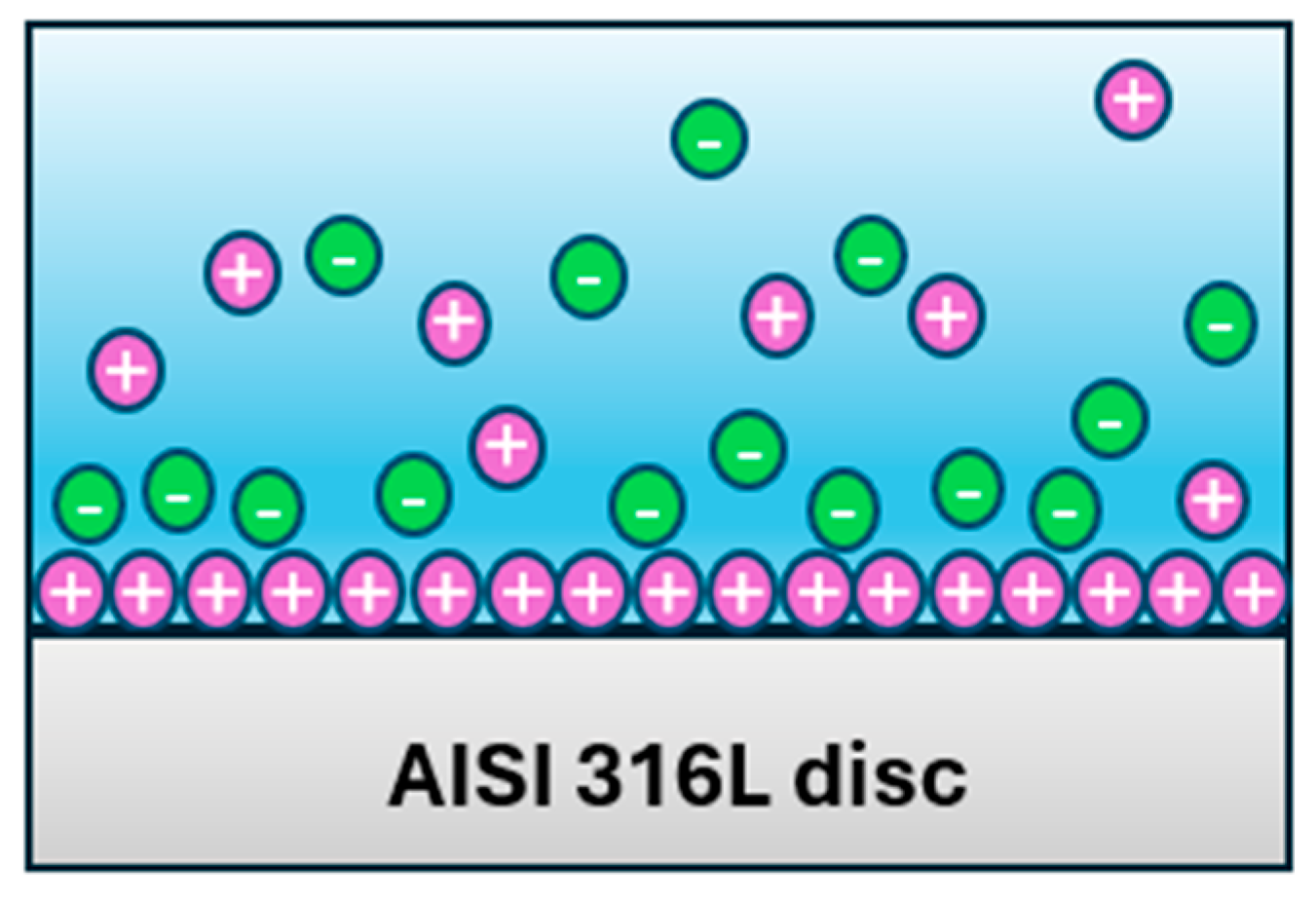
Surface analysis results support the hypothesis that the [ChOH][G] molecules are involved in the formation of an adsorbed layer and in tribochemical reactions promoting the formation of tribofilms under sliding conditions (Figure 15) [22].
The adsorption of [ChOH][G] molecules was more effective in the case of the 10% [ChOH][G] solution, which contributed to reducing wear. In contrast, when the layer was thinner, as observed in the case of lubrication with [ChOH][G], the friction tended to fluctuate, resulting in a higher wear rate. These findings confirm the importance of the water content in DES formulations, as it directly influences surface interactions and wear performance under sliding conditions.

4. Conclusions

Water-based lubricants incorporating the novel DES exhibited stability at room temperature. Wettability tests indicated an enhanced ability to form lubricating films, particularly for the lubricant containing 10 wt.% of [ChOH][G], which showed the lowest contact angle after five minutes.
The EIS electrochemical study of the lubricants on the stainless-steel surface confirmed that the 10% [ChOH][G] lubricant reduced the charge-transfer resistance; this likely arises from enhanced ion adsorption forming a more effective tribolayer on stainless steel, thereby improving its tribological performance under lubrication.
The potential of neat [ChOH][G] as an advanced lubricant was demonstrated by its remarkable friction coefficient, achieving a value of 0.093. In addition, the evaluation of wear rate tests confirmed the excellent tribological performance of the 10% [ChOH][G] lubricant, with reductions of 80% compared to water and causing minimal damage to the surface of the stainless steel.
Surface analyses using EDX and XPS confirmed that an effective layer of adsorbed [ChOH][G] formed on the wear track after lubrication with 10% [ChOH][G]. These results demonstrate effective adsorption of the DES onto the metallic substrate, creating a protective film that limited direct interaction between the sapphire ball and the stainless-steel surface, thereby contributing to reduced contact and improved tribological behavior.
This study opens the possibility of using choline hydroxide as a base for the development of new additives for aqueous lubricants that are sustainable, biodegradable, and low-toxicity.

Supplementary Materials

The following supporting information can be downloaded at: https://www.mdpi.com/article/10.3390/lubricants14030106/s1, Figure S1. EDX spectra on AISI 316L disc after lubrication with water: a.—inside and b.—outside the wear track; Figure S2. EDX spectra on AISI 316L disc after lubrication with 1% [ChOH][G]: a.—inside and b.—outside the wear track; Figure S3. EDX spectra on AISI 316L disc after lubrication with 10% [ChOH][G]: a.—inside and b.—outside the wear track; Figure S4. EDX spectra on AISI 316L disc after lubrication with [ChOH][G]: a.—inside and b.—outside the wear track.

Author Contributions

Conceptualization, M.-D.A., M.-D.B. and F.J.C.-V.; validation, P.M.; formal analysis, M.-D.A. and P.M.; investigation, P.M. and A.E.J.; writing—original draft preparation, M.-D.A. and A.E.J.; writing—review and editing, M.-D.A. and F.J.C.-V.; visualization, F.J.C.-V.; supervision, M.-D.A. and F.J.C.-V.; funding acquisition, M.-D.B. and F.J.C.-V. All authors have read and agreed to the published version of the manuscript.

Funding

This research was funded by the grant PID2021-122169NB-I00 funded by MCIN/AEI/10.13039/501100011033 and by the European Union. P.M. is grateful for the grant PRE2022-102014 funded by MCIN/AEI/10.13039/501100011033 and by European Union Next Generation EU/PRTR.

Data Availability Statement

The original contributions presented in this study are included in the article/Supplementary Material. Further inquiries can be directed to the corresponding author.

Conflicts of Interest

The authors declare no conflicts of interest.

References

  1. Mannekote, J.K.; Kailas, S.V.; Venkatesh, K.; Kathyayini, N. Environmentally Friendly Functional Fluids from Renewable and Sustainable Sources—A Review. Renew. Sustain. Energy Rev. 2018, 81, 1787–1801. [Google Scholar] [CrossRef]
  2. Hörner, D. Recent Trends in Environmentally Friendly Lubricants. J. Synth. Lubr. 2002, 18, 327–347. [Google Scholar] [CrossRef]
  3. Donato, M.T.; Colaço, R.; Branco, L.C.; Saramago, B. A Review on Alternative Lubricants: Ionic Liquids as Additives and Deep Eutectic Solvents. J. Mol. Liq. 2021, 333, 116004. [Google Scholar] [CrossRef]
  4. Sernaglia, M.; Bartolomé, M.; Viesca, J.L.; González, R.; Battez, A.H. Application of Deep Eutectic Solvents in Lubrication: A Review. J. Mol. Liq. 2025, 427, 127464. [Google Scholar] [CrossRef]
  5. Abranches, D.O.; Coutinho, J.A.P. Everything You Wanted to Know about Deep Eutectic Solvents but Were Afraid to Be Told. Annu. Rev. Chem. Biomol. Eng. 2023, 14, 141–163. [Google Scholar] [CrossRef] [PubMed]
  6. Meredith, L.; Elbourne, A.; Greaves, T.L.; Bryant, G.; Bryant, S.J. Physico-Chemical Characterisation of Glycerol- and Ethylene Glycol-Based Deep Eutectic Solvents. J. Mol. Liq. 2024, 394, 123777. [Google Scholar] [CrossRef]
  7. Smith, E.L.; Abbott, A.P.; Ryder, K.S. Deep Eutectic Solvents (DESs) and Their Applications. Chem. Rev. 2014, 114, 11060–11082. [Google Scholar] [CrossRef]
  8. Yeow, A.T.H.; Hayyan, A.; Hayyan, M.; Usman Mohd Junaidi, M.; Saleh, J.; Jefrey Basirun, W.; Roslan Mohd Nor, M.; Al Abdulmonem, W.; Zulhaziman, M.; Mohamed Zuki, F.; et al. A Comprehensive Review on the Physicochemical Properties of Deep Eutectic Solvents. Results Chem. 2024, 7, 101378. [Google Scholar] [CrossRef]
  9. Omar, K.A.; Sadeghi, R. Physicochemical Properties of Deep Eutectic Solvents: A Review. J. Mol. Liq. 2022, 360, 119524. [Google Scholar] [CrossRef]
  10. Zhang, Q.; De Oliveira Vigier, K.; Royer, S.; Jérôme, F. Deep Eutectic Solvents: Syntheses, Properties and Applications. Chem. Soc. Rev. 2012, 41, 7108–7146. [Google Scholar] [CrossRef] [PubMed]
  11. Abbott, A.P.; Capper, G.; Davies, D.L.; Rasheed, R.K.; Tambyrajah, V. Novel Solvent Properties of Choline Chloride/Urea Mixtures. Chem. Commun. 2003, 39, 70–71. [Google Scholar] [CrossRef]
  12. Álvarez, M.S.; Longo, M.A.; Rodríguez, A.; Deive, F.J. The Role of Deep Eutectic Solvents in Catalysis. A Vision on Their Contribution to Homogeneous, Heterogeneous and Electrocatalytic Processes. J. Ind. Eng. Chem. 2024, 132, 36–49. [Google Scholar] [CrossRef]
  13. Guzmán, E. Catalysis With Deep Eutectic Solvents: Challenges and Opportunities. ChemCatChem 2025, 17, e202500522. [Google Scholar] [CrossRef]
  14. Zhong, Y.; Wu, J.; Kang, H.; Liu, R. Choline Hydroxide Based Deep Eutectic Solvent for Dissolving Cellulose. Green Chem. 2022, 24, 2464–2475. [Google Scholar] [CrossRef]
  15. Abbott, A.P. Deep Eutectic Solvents and Their Application in Electrochemistry. Curr. Opin. Green Sustain. Chem. 2022, 36, 100649. [Google Scholar] [CrossRef]
  16. Carriazo, D.; Serrano, M.C.; Gutiérrez, M.C.; Ferrer, M.L.; del Monte, F. Deep-Eutectic Solvents Playing Multiple Roles in the Synthesis of Polymers and Related Materials. Chem. Soc. Rev. 2012, 41, 4996–5014. [Google Scholar] [CrossRef]
  17. Tomé, L.I.N.; Baião, V.; da Silva, W.; Brett, C.M.A. Deep Eutectic Solvents for the Production and Application of New Materials. Appl. Mater. Today 2018, 10, 30–50. [Google Scholar] [CrossRef]
  18. Lawes, S.D.A.; Hainsworth, S.V.; Blake, P.; Ryder, K.S.; Abbott, A.P. Lubrication of Steel/Steel Contacts by Choline Chloride Ionic Liquids. Tribol. Lett. 2010, 37, 103–110. [Google Scholar] [CrossRef]
  19. Kumar Patro, B.D.; Shivakumar; Suvin, P.S.; Dalimba, U.; Kreivaitis, R. Effect of Temperature on Tribological Behavior of L–Proline–Based Green Deep Eutectic Solvents for Ti6Al4V Interfaces: A Study of Novel Potential Lubricant. Tribol. Int. 2025, 208, 110667. [Google Scholar] [CrossRef]
  20. Li, Y.; Li, Y.; Li, H.; Fan, X.; Yan, H.; Cai, M.; Xu, X.; Zhu, M. Insights into the Tribological Behavior of Choline Chloride—Urea and Choline Chloride—Thiourea Deep Eutectic Solvents. Friction 2023, 11, 76–92. [Google Scholar] [CrossRef]
  21. Shi, Y.; Mu, L.; Feng, X.; Lu, X. Friction and Wear Behavior of CF/PTFE Composites Lubricated by Choline Chloride Ionic Liquids. Tribol. Lett. 2013, 49, 413–420. [Google Scholar] [CrossRef]
  22. Wu, C.; Han, Y.; Zhao, H.; Zheng, C.; Li, X.; Ni, J. Effect of Choline Chloride/Multiple Diols Deep Eutectic Solvents on the Friction and Vibration Performance of Si3N4/GCr15 Hybrid Ceramic Ball Bearings. Tribol. Int. 2024, 198, 109845. [Google Scholar] [CrossRef]
  23. Donato, M.T.; Diogo, H.P.; Deuermeier, J.; Colaço, R.; Branco, L.C.; Saramago, B. Hydrophobic Deep Eutectic Solvents with Anti-Wear Properties for MEMS/NEMS. J. Mol. Liq. 2024, 393, 123643. [Google Scholar] [CrossRef]
  24. Antunes, M.; Campinhas, A.-S.; de Sá Freire, M.; Caetano, F.; Diogo, H.P.; Colaço, R.; Branco, L.C.; Saramago, B. Deep Eutectic Solvents (DES) Based on Sulfur as Alternative Lubricants for Silicon Surfaces. J. Mol. Liq. 2019, 295, 111728. [Google Scholar] [CrossRef]
  25. Garcia, I.; Guerra, S.; de Damborenea, J.; Conde, A. Reduction of the Coefficient of Friction of Steel-Steel Tribological Contacts by Novel Graphene-Deep Eutectic Solvents (DESs) Lubricants. Lubricants 2019, 7, 37. [Google Scholar] [CrossRef]
  26. Gao, Q.; Liu, S.; Hou, K.; Miao, X.; Li, Z.; Wang, J. Tribological Properties of MoSx/RGO Nanohybrids as Additives in Deep Eutectic Solvent. Tribol. Int. 2023, 186, 108652. [Google Scholar] [CrossRef]
  27. Liñeira del Río, J.M.; Aourdou, A.; García-Marquínez, G.; Amado, J.M.; Tobar, M.J. Deep Eutectic Solvents as Green and Novel Lubricant Additives for Castor Oil with High Tribological Performance. Lubricants 2025, 13, 456. [Google Scholar] [CrossRef]
  28. Prado, D.M.; Gonzaga, A.N.; Carter, B.; Burda, C. Thermodynamic Water Activity Explains the Unusual Electrochemical Stability of Aqueous Deep Eutectic Solvents. Chem. Eur. J. 2025, 31, e202500717. [Google Scholar] [CrossRef] [PubMed]
  29. El Achkar, T.; Fourmentin, S.; Greige-Gerges, H. Deep Eutectic Solvents: An Overview on Their Interactions with Water and Biochemical Compounds. J. Mol. Liq. 2019, 288, 111028. [Google Scholar] [CrossRef]
  30. Ma, C.; Laaksonen, A.; Liu, C.; Lu, X.; Ji, X. The Peculiar Effect of Water on Ionic Liquids and Deep Eutectic Solvents. Chem. Soc. Rev. 2018, 47, 8685–8720. [Google Scholar] [CrossRef]
  31. Abbott, A.P.; Ahmed, E.I.; Harris, R.C.; Ryder, K.S. Evaluating Water Miscible Deep Eutectic Solvents (DESs) and Ionic Liquids as Potential Lubricants. Green Chem. 2014, 16, 4156–4161. [Google Scholar] [CrossRef]
  32. Florindo, C.; Oliveira, F.S.; Rebelo, L.P.N.; Fernandes, A.M.; Marrucho, I.M. Insights into the Synthesis and Properties of Deep Eutectic Solvents Based on Cholinium Chloride and Carboxylic Acids. ACS Sustain. Chem. Eng. 2014, 2, 2416–2425. [Google Scholar] [CrossRef]
  33. Du, C.; Zhao, B.; Chen, X.B.; Birbilis, N.; Yang, H. Effect of Water Presence on Choline Chloride-2urea Ionic Liquid and Coating Platings from the Hydrated Ionic Liquid. Sci. Rep. 2016, 6, 29225. [Google Scholar] [CrossRef] [PubMed]
  34. Ma, J.; Xu, J.; Pang, S.; Zhou, W.; Xia, B.; An, Y. Novel Environmentally Friendly Lubricants for Drilling Fluids Applied in Shale Formation. Energy Fuels 2021, 35, 8153–8162. [Google Scholar] [CrossRef]
  35. Zhou, X.; Pang, S.; Zhao, L.; An, Y. Performance Evaluation of a Novel Environmentally Friendly Lubricants for Water-Based Drilling Fluids. J. Dispers. Sci. Technol. 2025, 1–10. [Google Scholar] [CrossRef]
  36. Buzolic, J.J.; Tiecco, M.; Atkin, R.; Li, H. Tuning the Nanostructure and Tribological Properties of a Non-Ionic Deep Eutectic Solvent with Water Addition. J. Colloid Interface Sci. 2025, 683, 722–730. [Google Scholar] [CrossRef]
  37. Hallett, J.E.; Hayler, H.J.; Perkin, S. Nanolubrication in Deep Eutectic Solvents. Phys. Chem. Chem. Phys. 2020, 22, 20253–20264. [Google Scholar] [CrossRef]
  38. Gao, Q.; Liu, S.; Hou, K.; Li, Z.; Wang, J.; Yang, S. Peculiar Effect of Water on Tribological Properties of Natural Deep Eutectic Solvent. Langmuir 2024, 40, 26936–26946. [Google Scholar] [CrossRef]
  39. Yu, M.; Zhang, J.; Joedicke, A.; Booth, J.; Reddyhoff, T. Using Electrical Impedance Spectroscopy to Identify Equivalent Circuit Models of Lubricated Contacts with Complex Geometry: In-Situ Application to Mini Traction Machine. Tribol. Int. 2024, 192, 109286. [Google Scholar] [CrossRef]
  40. Lvovich, V.F.; Smiechowski, M.F. Impedance Characterization of Industrial Lubricants. Electrochim. Acta 2006, 51, 1487–1496. [Google Scholar] [CrossRef]
  41. Duque, A.; Sanjuan, A.; Bou-Ali, M.M.; Alonso, R.M.; Campanero, M.A. Physicochemical Characterization of Hydrophobic Type III and Type V Deep Eutectic Solvents Based on Carboxylic Acids. J. Mol. Liq. 2023, 392, 123431. [Google Scholar] [CrossRef]
  42. Mudalige, A.; Pemberton, J.E. Raman Spectroscopy of Glycerol/D2O Solutions. Vib. Spectrosc. 2007, 45, 27–35. [Google Scholar] [CrossRef]
  43. Hadjiivanov, K.I.; Panayotov, D.A.; Mihaylov, M.Y.; Ivanova, E.Z.; Chakarova, K.K.; Andonova, S.M.; Drenchev, N.L. Power of Infrared and Raman Spectroscopies to Characterize Metal-Organic Frameworks and Investigate Their Interaction with Guest Molecules. Chem. Rev. 2021, 121, 1286–1424. [Google Scholar] [CrossRef]
  44. de Souza, Í.F.T.; Ribeiro, M.C.C. A Raman Spectroscopy and Rheology Study of the Phase Transitions of the Ionic Liquid Choline Acetate. J. Mol. Liq. 2021, 322, 114530. [Google Scholar] [CrossRef]
  45. Yuniarto, K.; Purwanto, Y.A.; Purwanto, S.; Welt, B.A.; Purwadaria, H.K.; Sunarti, T.C. Infrared and Raman Studies on Polylactide Acid and Polyethylene Glycol-400 Blend. AIP Conf. Proc. 2016, 1725, 020101. [Google Scholar] [CrossRef]
  46. Mostaza, P.; Avilés, M.D.; Martínez-Rubio, P.M.; Bermúdez, M.D.; Carrión-Vilches, F.J. Novel Water-Based Biolubricants Using Choline Ionic Liquids. Lubricants 2025, 13, 122. [Google Scholar] [CrossRef]
  47. Westerholt, A.; Weschta, M.; Bösmann, A.; Tremmel, S.; Korth, Y.; Wolf, M.; Schlücker, E.; Wehrum, N.; Lennert, A.; Uerdingen, M.; et al. Halide-Free Synthesis and Tribological Performance of Oil-Miscible Ammonium and Phosphonium-Based Ionic Liquids. ACS Sustain. Chem. Eng. 2015, 3, 797–808. [Google Scholar] [CrossRef]
  48. Rahimi, E.; Offoiach, R.; Baert, K.; Terryn, H.; Lekka, M.; Fedrizzi, L. Role of Phosphate, Calcium Species and Hydrogen Peroxide on Albumin Protein Adsorption on Surface Oxide of Ti6Al4V Alloy. Materialia 2021, 15, 100988. [Google Scholar] [CrossRef]
  49. Giray, D.; Şeref Sönmez, M.; Yamanoglu, R.; Ismail Yavuz, H.; Muratal, O. Characterization of Corrosion Products Formed in High-Strength Dual-Phase Steels under an Accelerated Corrosion Test. Eng. Sci. Technol. Int. J. 2024, 57, 101796. [Google Scholar] [CrossRef]
  50. Cui, Y.; Liu, S.; Smith, K.; Yu, K.; Hu, H.; Jiang, W.; Li, Y. Characterization of Corrosion Scale Formed on Stainless Steel Delivery Pipe for Reclaimed Water Treatment. Water Res. 2016, 88, 816–825. [Google Scholar] [CrossRef] [PubMed]
  51. Reinert, L.; Lasserre, F.; Gachot, C.; Grützmacher, P.; Maclucas, T.; Souza, N.; Mücklich, F.; Suarez, S. Long-Lasting Solid Lubrication by CNT-Coated Patterned Surfaces. Sci. Rep. 2017, 7, 42873. [Google Scholar] [CrossRef]
  52. Nins, B.; Penagos, J.J.; Moreira, L.; Münch, D.; Falqueto, P.; Viáfara, C.C.; da Costa, A.R. Abrasiveness of Iron Ores: Analysis of Service-Worn Conveyor Belts and Laboratory Dry Sand/Rubber Wheel Tests. Wear 2022, 506–507, 204439. [Google Scholar] [CrossRef]
  53. Gialanella, S.; Girardi, F.; Ischia, G.; Lonardelli, I.; Mattarelli, M.; Montagna, M. On the Goethite to Hematite Phase Transformation. J. Therm. Anal. Calorim. 2010, 102, 867–873. [Google Scholar] [CrossRef]
  54. Yu, X.; Jiang, Z.; Wei, D.; Zhou, C.; Huang, Q.; Yang, D. Tribological Properties of Magnetite Precipitate from Oxide Scale in Hot-Rolled Microalloyed Steel. Wear 2013, 302, 1286–1294. [Google Scholar] [CrossRef]
  55. Sun, C.; Ding, F.; Li, W.; Yang, Z.; Ma, Z.; Song, C. Effects of Relative Humidity on Iron-Oxide Composition and Wear Mechanism on Steel Friction Interface. Wear 2025, 582–583, 206360. [Google Scholar] [CrossRef]
  56. Vedaei-Sabegh, A.; Morin, J.B.; Champliaud, H.; Jahazi, M. Influence of Thermally Grown Oxides on Interfacial Friction during Hot Deformation of Large-Size Forging Ingots. J. Mater. Res. Technol. 2022, 21, 3412–3424. [Google Scholar] [CrossRef]
  57. Urtis, L.A.; Arcifa, A.; Zhang, P.; Du, J.; Fantauzzi, M.; Rauber, D.; Hempelmann, R.; Kraus, T.; Rossi, A.; Spencer, N.D. Influence of Water on Tribolayer Growth When Lubricating Steel with a Fluorinated Phosphonium Dicyanamide Ionic Liquid. Lubricants 2019, 7, 27. [Google Scholar] [CrossRef]
  58. Jagst, E. Surface Functional Group Characterization Using Chemical Derivatization X-Ray Photoelectron Spectroscopy (CD-XPS). Doctoral Dissertation, Freien Universität Berlin, Berlin, Germany, 2010. [Google Scholar]
  59. Hryniewicz, T.; Rokosz, K. Analysis of XPS Results of AISI 316L SS Electropolished and Magnetoelectropolished at Varying Conditions. Surf. Coat. Technol. 2010, 204, 2583–2592. [Google Scholar] [CrossRef]
  60. Wijanarko, W.; Khanmohammadi, H.; Espallargas, N. Ionic Liquids as Boundary Additives in Water-Based and PAO Lubricants. Friction 2022, 10, 1405–1423. [Google Scholar] [CrossRef]
  61. Erdogan, Y.K.; Ercan, B. Anodized Nanostructured 316L Stainless Steel Enhances Osteoblast Functions and Exhibits Anti-Fouling Properties. ACS Biomater. Sci. Eng. 2023, 9, 693–704. [Google Scholar] [CrossRef]
Figure 1. Structures of choline hydroxide [ChOH] and glycerol [G].
Lubricants 14 00106 g001
Figure 2. Close-up images of the lubricants used in this study.
Lubricants 14 00106 g002
Figure 3. Thermogravimetric analysis of glycerol, choline hydroxide, and the novel DES: [ChOH][G].
Lubricants 14 00106 g003
Figure 4. DSC thermograms of [ChOH][G].
Lubricants 14 00106 g004
Figure 5. Dynamic viscosity of the neat [ChOH][G].
Lubricants 14 00106 g005
Figure 6. Raman spectrum of the neat [ChOH][G].
Lubricants 14 00106 g006
Figure 7. Friction coefficient vs. sliding distance.
Lubricants 14 00106 g007
Figure 8. Wear rates of the lubricants.
Lubricants 14 00106 g008
Figure 9. 3D images and 2D plots of the wear tracks.
Lubricants 14 00106 g009
Figure 10. Equivalent circuits for impedance fitting: (a)—circuit used for DES lubricants; (b)—circuit used for water.
Lubricants 14 00106 g010
Figure 11. Surfaces of the sapphire balls after testing: (a)—water; (b)—1% [ChOH][G]; (c)—10% [ChOH][G]; and (d)—neat [ChOH][G].
Lubricants 14 00106 g011
Figure 12. SEM images of the wear tracks: (a)—water, (b)—1% [ChOH][G], (c)—10% [ChOH][G], and (d)—neat [ChOH][G].
Lubricants 14 00106 g012
Figure 13. Raman spectra inside of the wear tracks.
Lubricants 14 00106 g013
Figure 14. XPS high-resolution spectra for C, O, Fe, and Cr elements, inside and outside the wear track after lubrication with 10% [ChOH][G].
Lubricants 14 00106 g014
Figure 15. Schematic diagram of lubrication mechanism.
Lubricants 14 00106 g015
Table 1. pH data.
Table 1. pH data.
LubricantspH
1% [ChOH][G]12.6 (±0.1)
10% [ChOH][G]12.9 (±0.1)
[ChOH][G]13.4 (±0.1)
Table 2. Conditions of tribological testing.
Test ParameterValueSchematic of the Tribosystem
Sliding distance (m)500Lubricants 14 00106 i001
Applied load (N)1.0
Sliding speed (m/s)0.1
Mean contact pressure (GPa)1.30
Maximum contact pressure (GPa)1.95
Sliding radius (mm)9.0
Lubricant volume (ml)0.2
Temperature (°C)22.2 ± 0.5
Relative Humidity (%)57 ± 4
Table 3. Contact angles on the stainless-steel surface.
LubricantInitialAfter 5 min
WaterLubricants 14 00106 i002
48.2° (±2.1)
Lubricants 14 00106 i003
42.4° (±1.8)
1% [ChOH][G]Lubricants 14 00106 i004
66.4° (±3.6)
Lubricants 14 00106 i005
52.6° (±1.0)
10% [ChOH][G]Lubricants 14 00106 i006
55.5° (±5.3)
Lubricants 14 00106 i007
29.2° (±2.2)
[ChOH][G]Lubricants 14 00106 i008
79.1° (±1.8)
Lubricants 14 00106 i009
46.7° (±3.5)
Table 4. Friction coefficient (COF) and wear rate (K).
LubricantCOFK × 10−6 (mm3/N·m)
Water0.426 (±0.018)19.10 (±1.75)
1% [ChOH][G]0.401 (±0.027)8.96 (±0.46)
10% [ChOH][G]0.234 (±0.013)3.80 (±0.40)
[ChOH][G]0.093 (±0.009)7.23 (±0.53)
Table 5. EIS data for the lubricants.
LubricantEcorr (mV)Icorr (µA)Vcorr (µm/Year)Circuit ModelRs (Ω·cm2)Cdl × 10−5 (F/cm)Rct × 106 (Ω·cm2)
Water0.0050.0320.299(QR)(QR)1.28 × 1043.752.40
1% [ChOH][G]6.2950.0760.712R(QR)82.443.418.63
10% [ChOH][G]−101.070.1050.984R(QR)7.072.350.42
[ChOH][G]1.0730.1711.602R(QR)29.182.281.42
Table 6. Elemental composition using EDX technique inside (in.) and outside (out.) of the wear tracks.
LubricantWear TrackFe (%)C (%)O (%)Cr (%)
Waterin.58.582.464.9214.63
out.64.862.970.2315.83
1% [ChOH][G]in.61.732.638.4114.14
out.68.512.241.3616.21
10% [ChOH][G]in.64.184.122.515.21
out.67.081.680.216.17
[ChOH][G]in.64.763.492.8915.11
out.67.021.980.2516.12
Table 7. Quantification of the iron oxide phases by image analysis.
LubricantHematiteGoethiteMagnetite
Water16.7%43.7%39.6%
1% [ChOH][G]18.8%40.5%40.7%
10% [ChOH][G]18.5%53.8%27.7%
Neat [ChOH][G]18.7%49.5%31.7%
Disclaimer/Publisher’s Note: The statements, opinions and data contained in all publications are solely those of the individual author(s) and contributor(s) and not of MDPI and/or the editor(s). MDPI and/or the editor(s) disclaim responsibility for any injury to people or property resulting from any ideas, methods, instructions or products referred to in the content.