Article

Erosive Wear Behavior of Fiberglass-Reinforced Epoxy Laminate Composites Modified with SiO2 Nanoparticles Fabricated by Resin Infusion


by
Angel Sebastian Alvarez Lozano
1,
Armando Irvin Martínez Pérez
1,*,
Edgar Ernesto Vera Cárdenas
1,
Juan Manuel González Carmona
2 and
Arturo Mendoza Galván
3
1
División de Estudios de Posgrado e Investigación, Tecnológico Nacional de México/Instituto Tecnológico de Pachuca, Pachuca de Soto 42083, Mexico
2
Departamento de Tecnologías Estratégicas y Posgrado, CONAHCYT-Centro de Ingeniería y Desarrollo Industrial (CIDESI), Santiago de Querétaro 76125, Mexico
3
Cinvestav-Querétaro, Libramiento Norponiente 2000, Fracc. Real de Juriquilla, Santiago de Querétaro 76230, Mexico
*
Author to whom correspondence should be addressed.
Lubricants 2026, 14(2), 65; https://doi.org/10.3390/lubricants14020065 (registering DOI)
Submission received: 24 December 2025 / Revised: 23 January 2026 / Accepted: 27 January 2026 / Published: 31 January 2026
(This article belongs to the Special Issue Erosive Wear of Polymer Composites)

Abstract

This work presents a study on the evaluation of the erosive wear behavior of laminated composites, manufactured using the vacuum-assisted resin infusion (VARI) method with a glass fiber-reinforced epoxy matrix modified with SiO2 nanoparticles (0.0, 1.5, and 3.0 wt.%). Results indicate that nanoparticle concentration and dispersion state critically influence the mechanical and tribological performance. The composite FG-1.5-SiO2 with 1.5 wt.% SiO2 exhibited optimal nanoparticle distribution, as confirmed by FTIR, GIXRD, and SEM analyses, with the lowest surface roughness (Ra = 0.215 μm), highest hardness (35.58 HV), and highest elastic modulus (19.66 GPa). These enhancements contributed to a 38% improvement in erosion rate compared to the unmodified laminated composite, with the lowest total mass loss (0.0261 mg) and erosion rate (2.3360 × 10⁻⁵ mg/g). Profilometry and SEM results revealed shallower wear depths and reduced matrix removal, indicating stronger fiber–matrix interface integrity. In contrast, the 3.0 wt.% SiO2 composite (FG-3-SiO2) suffered from nanoparticle agglomeration, which increased surface roughness, diminished mechanical properties, and reduced erosion resistance to levels comparable to the unreinforced material. The results indicate that homogeneous dispersion at an optimal concentration (1.5 wt.%) is crucial for improving erosion resistance, while agglomeration at higher concentrations negates the potential benefits of nanoparticle incorporation. These findings highlight the need to optimize nanoparticle dispersion for the development of fiberglass/epoxy composites with greater durability and erosion resistance in demanding applications.

1. Introduction

Laminated composite materials have gained significant importance in sectors such as aerospace, aeronautics, automotive, energy, and marine in recent years due to their high strength-to-weight ratio, good thermal stability, corrosion resistance, and versatility in structural design [1]. Their use is particularly notable in aerospace structures [2], automotive and electric vehicle components [3], energy systems [4], and marine applications [5]. However, when exposed to impact from solid particles, polymer matrix composites with fiber reinforcement experience surface material loss due to erosion. This phenomenon alters their morphology, generates microcracks, and negatively affects their mechanical properties, which can accelerate component failure and significantly shorten their service life [6,7]. Two intrinsic factors that limit their erosion resistance compared to metallic or ceramic materials are the brittleness of thermoset matrices and the limited strength of the fiber–matrix interface [8].
One alternative to overcome these limitations is the incorporation of nanoparticles (NPs) into the polymer matrix, a strategy that has proven effective in improving the mechanical and tribological performance of these materials [9]. This is because NPs, due to their high surface-to-volume ratio, promote better interfacial interaction with the polymer matrix, improving stress transfer and the degree of crosslinking and providing beneficial microstructural modifications [10,11,12,13]. Various NPs such as SiO2 [14], TiO2 [15], and Al2O3 [16] have been studied as secondary reinforcements in epoxy matrices, along with other ceramic particles like SiC, showing improvements in hardness and wear resistance under erosion conditions [17]. Specifically, silicon dioxide (SiO2) NPs have generated great interest due to their chemical stability, high hardness, low cost, and excellent compatibility with epoxy polymer matrices [18]. In addition, surface protection strategies such as the application of hybrid coatings incorporating nanomaterials have also shown significant potential for mitigating erosive wear on composite substrates [19]. When properly dispersed, SiO2 NPs can form a microbarrier effect that restricts plastic deformation and microcrack propagation during impacts [20]. In addition, their surface hydroxyl groups can chemically interact with the epoxy matrix, improving interfacial adhesion and the overall load-bearing capacity of the composite [21].
To fabricate these laminated composites, the vacuum-assisted resin infusion (VARI) method was selected due to its advantages for achieving high-quality, reproducible components. Compared to traditional methods such as hand lay-up or resin transfer molding (RTM), VARI offers superior control over the fiber-to-resin ratio, minimizes void formation, and ensures uniform impregnation of multidirectional reinforcements under reduced pressure [22,23]. These characteristics are particularly advantageous when incorporating nanoparticles, as the controlled flow of the nano-modified resin during infusion promotes a more homogeneous distribution of SiO2 nanoparticles throughout the thickness of the laminated composite, helping to reduce the sedimentation and agglomeration often encountered in less controlled processes [24,25]. Furthermore, VARI is a scalable technique widely adopted in industries where structural integrity and repeatability are critical.
Despite these advances, a clear gap remains in understanding the specific synergistic interaction between fiber reinforcement and well-dispersed nanoparticles under erosive conditions. While studies exist on bulk polymers reinforced with nanoparticles and on the static mechanical properties of fiber composites with nanoparticles, few have systematically investigated how nanoparticle dispersion influences fundamental erosive wear mechanisms such as fiber–matrix detachment, microcrack propagation, and impact energy dissipation in fiberglass/epoxy systems. This synergy refers to the scenario where optimally dispersed nanoparticles not only reinforce the epoxy matrix but also enhance the fiber–matrix interface region, potentially leading to erosion resistance that surpasses the individual contributions of the fibers or nanoparticles. Therefore, this work investigates how the addition and dispersion of SiO2 NPs affect the erosional wear behavior of glass fiber-reinforced epoxy systems, where both the matrix and the fiber–matrix interface play a fundamental role in energy absorption and material wear.
In this study, fiberglass-reinforced epoxy matrix laminates containing 0.0, 1.5, and 3.0 wt.% SiO2 nanoparticles were fabricated using the resin infusion method. The main objective was to evaluate the effect of SiO2 nanoparticle concentration on the mechanical, microstructural, and erosion resistance properties of the nanocomposites. Dispersal of the NPs was achieved by ultrasonic stirring to minimize agglomeration and promote homogeneous distribution within the matrix.
Experimental results revealed that the laminated composite with 1.5 wt.% SiO2 exhibited the lowest rate of erosive wear, indicating that an optimal concentration of NPs and uniform dispersion can significantly improve the erosion resistance of epoxy/fiberglass laminates. The results of this research provide valuable information for the design of NP-modified polymer composites for structural applications under erosive conditions.

2. Materials and Methods

2.1. Materials

Epolam 2015 epoxy resin (viscosity of 550 mPa∙s at 25 °C), non-porous Skyspring SiO2 NPs (99.5% purity, diameter between 10 and 20 nm), and TBR600 fiberglass fabric (Type E glass, average filament diameter of 15 μm) in a bidirectional woven pattern with 5 mm spacing were used to manufacture the laminated composite.
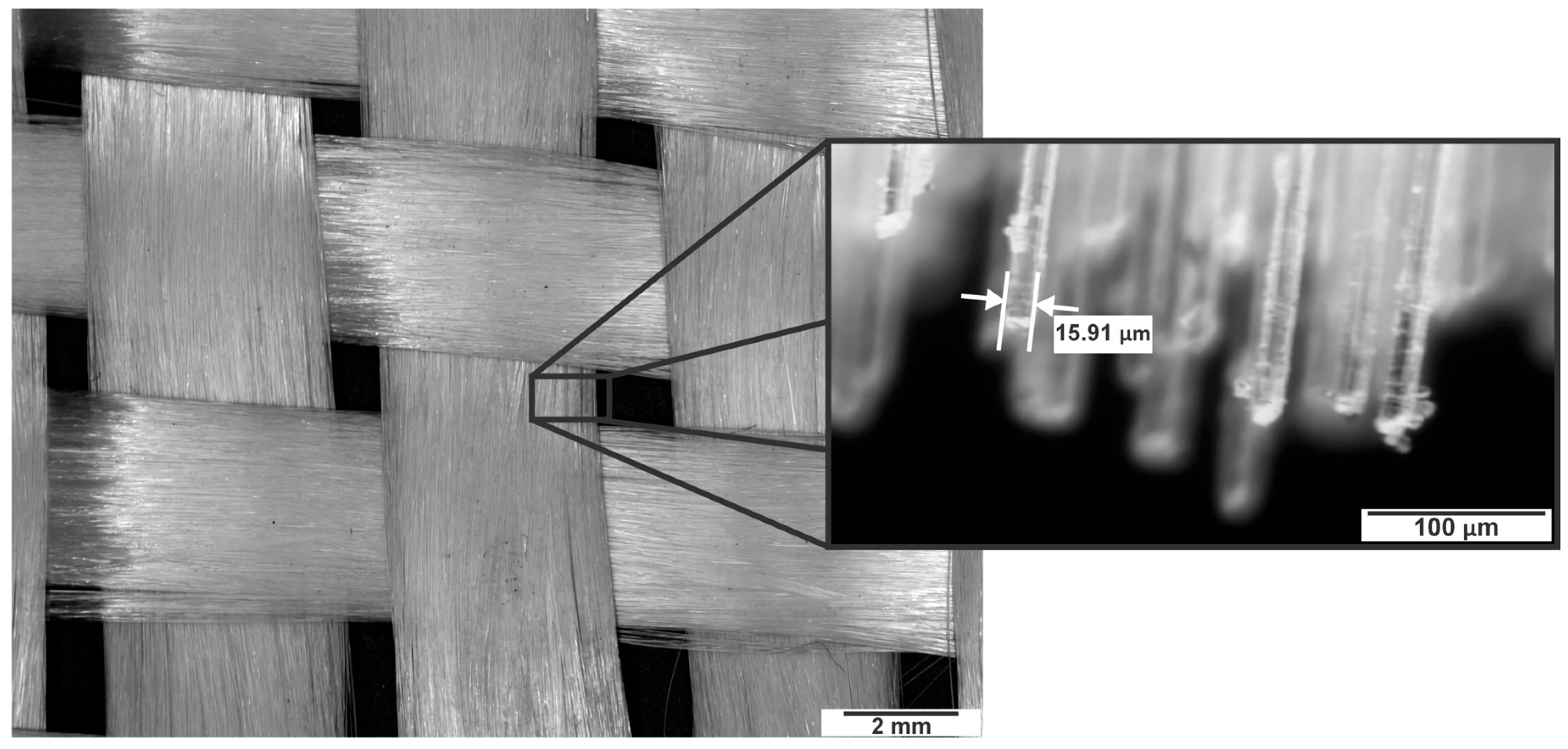
The fabrication parameters were selected according to established practices for the vacuum-assisted resin infusion (VARI) method of epoxy–glass composites [23,26], as well as preliminary trials to ensure full wetting and avoid defects such as voids or incomplete curing [27,28]. The reference laminate composite was fabricated as shown in Figure 1. The matrix was prepared by mixing epoxy resin and hardener in a 100:10 weight ratio. Eight layers (166.4 g per layer) of 150 × 220 mm bidirectional fiberglass fabric (Figure 2) were laid on a metal base, distribution mesh, and vacuum bag, which was then hermetically sealed with polyurethane tape. The resin was injected at a vacuum pressure of 50 kPa and a temperature of 25 °C, with an impregnation time of 25 min. Curing was achieved by heating the metal base to 70 °C for 4 h, resulting in a 150 × 220 mm laminated composite with a thickness of 4 mm.
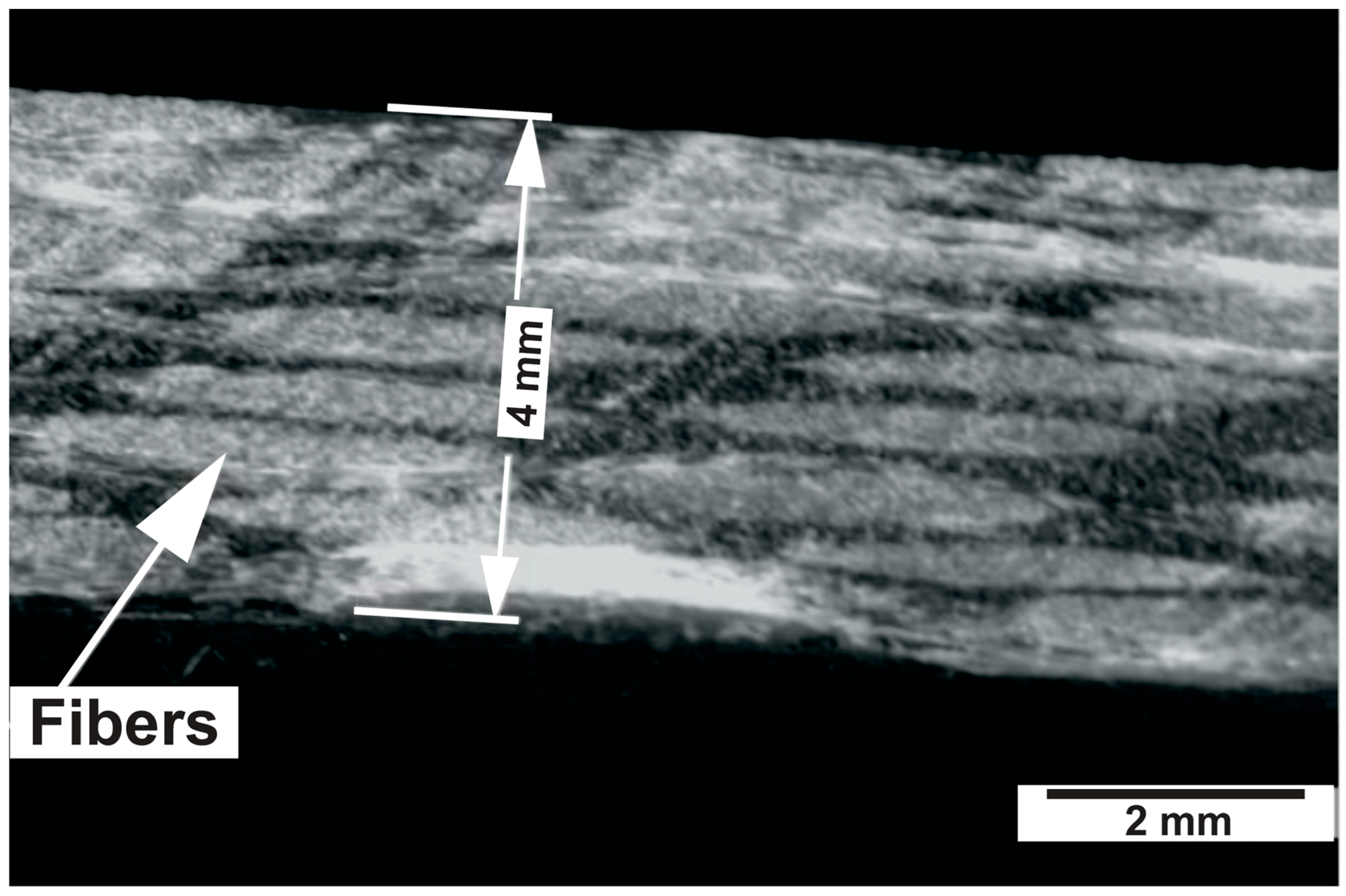
The laminated composites showed a uniform distribution of fibers within the epoxy resin without apparent porosity or voids (Figure 3).

2.2. Incorporation of SiO2 NPs

Preliminary studies were conducted to evaluate the effect of SiO2 nanoparticle concentration on the mechanical and erosive behavior of glass fiber/epoxy laminates. Composites with SiO2 NP concentrations of 0.0, 0.5, 1.0, 1.5, 2.0, 2.5, and 3.0 wt.% relative to the resin were initially fabricated and characterized. Based on these screening tests, three representative concentrations were selected for a detailed analysis: 0.0 wt.%, which serves as the reference laminate composite without nanoparticle reinforcement; 1.5 wt.%, identified as the optimum concentration, showing the best balance of nanoparticle dispersion, mechanical enhancement, and erosion resistance; and 3.0 wt.%, representing a higher concentration, where nanoparticle agglomeration becomes significant, leading to diminished performance and providing a clear contrast to the well-dispersed system.
For the compounds with 1.5 and 3.0 wt.%, the NPs were dispersed in the epoxy resin using a 40 kHz ultrasonic bath for 5 min. The hardener was added, and an additional 7 min of ultrasonication was applied. The mixture was degassed for 7 min to reduce the presence of bubbles using this function of the ultrasonic bath. The same VARI and curing conditions as the reference laminate were applied to obtain the laminated composites with SiO2 NPs in the matrix. Three different fiberglass laminated composites (FG) were produced, based on their NP wt.% concentration, as shown in Table 1.

2.3. Erosive Particle

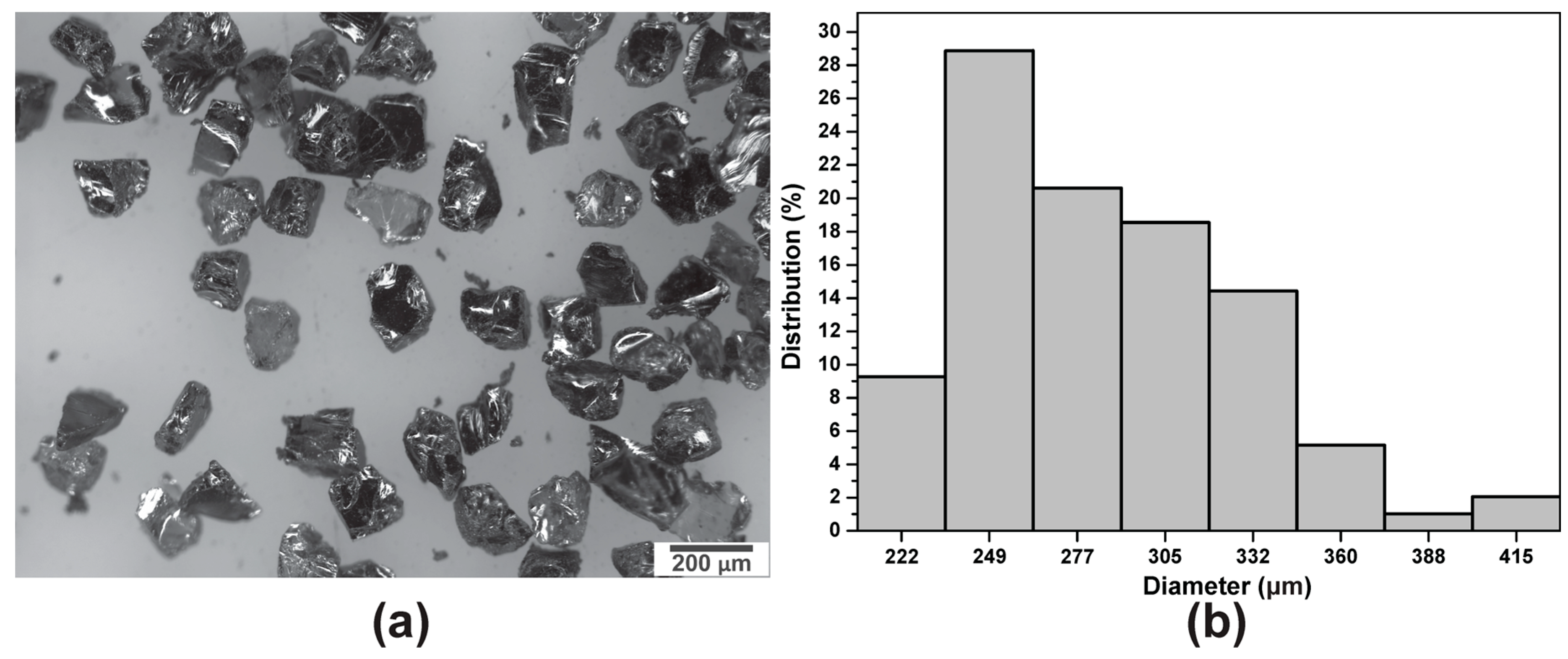
Silicon carbide (SiC) was used as the erosive particle, with a hardness of 3161 HV. Figure 4a shows the SiC particles, which display polyhedral shapes with sharp angles. The selection of this particular abrasive was based on the size distribution and a morphology with few variations, which guarantees reproducibility in erosion tests, minimizing variations due to the morphology or composition. To determine the particle size distribution, static image analysis was used [29,30,31]. A total of 100 particle size measurements were taken from a series of images of the SiC particles captured by a stereoscope; with these data, a particle size distribution graph was made (Figure 4b). Based on the results obtained, the particle size with the highest percentage was 249 μm.

2.4. Characterization

The chemical composition and distribution of the SiO2 NPs were verified by Fourier transform infrared spectroscopy (FTIR) in transmission mode. Grazing incidence X-ray diffraction (GIXRD) was used as a complementary analysis to verify the presence and distribution of the nanoparticles in the resin matrix. XRD scans were performed in a 2θ range of 5° to 80° at a scan rate of 2°/min at room temperature. To determine the hardness and modulus of elasticity, nanoindentation tests were performed at a temperature of 22.0 ± 0.2 °C. All samples were subjected to a load of 50 mN for 10 s. The hardness values reported are Vickers hardness (HV), a standard scale for polymeric composites, while the modulus of elasticity is reported in GPa. The wear track profile and the roughness of the laminated composites were determined using a profilometer. A confocal microscope was used to identify the wear zone. For microstructural analysis of wear mechanisms, the samples were examined using a scanning electron microscope (SEM, JEOL JSM-7200F, Tokio, Japan). To ensure optimal imaging conditions, the samples were sputter-coated with a conductive gold layer prior to SEM observation.

2.5. Erosive Wear Tests

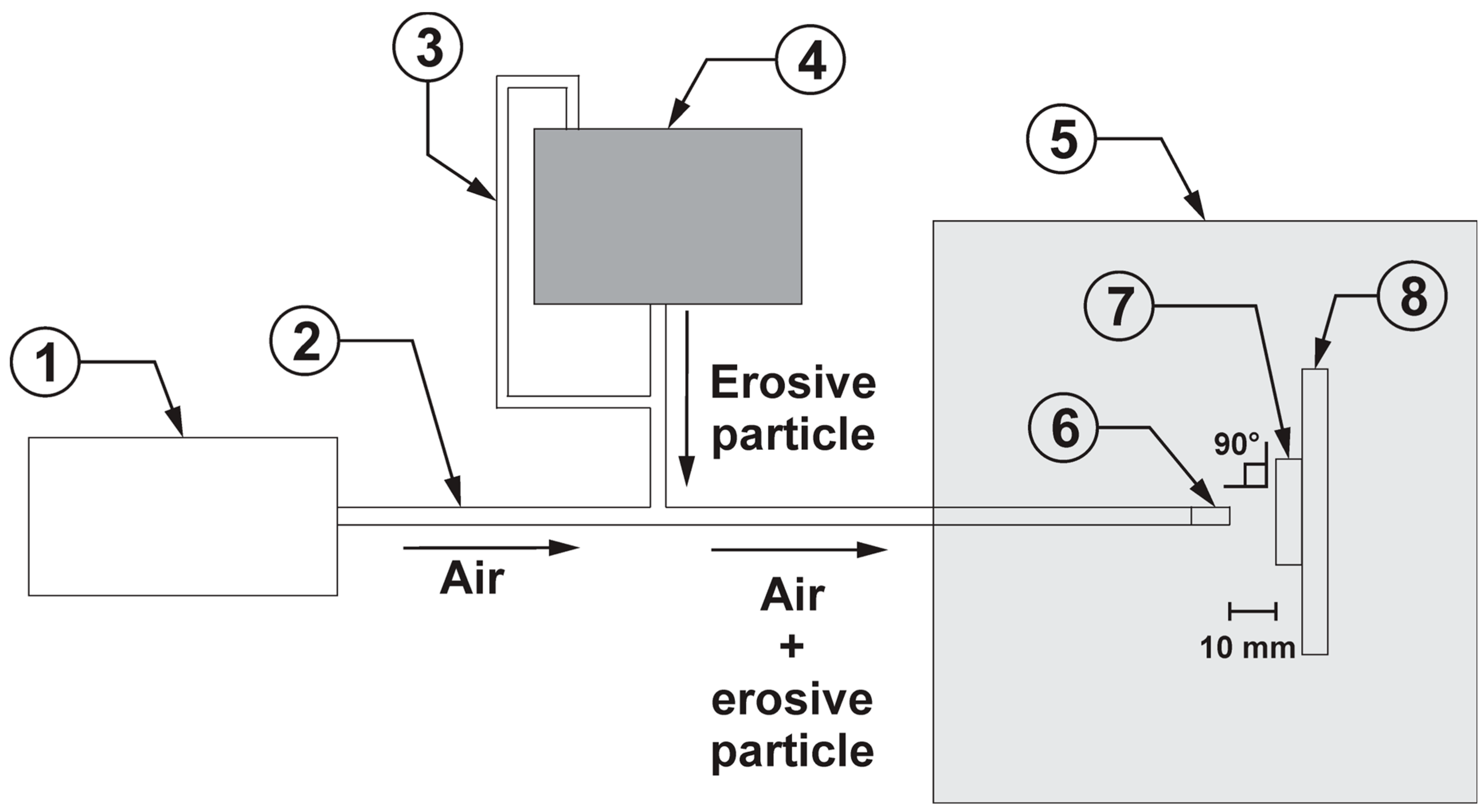
The laminated composites were mechanically cut to dimensions of 20 × 50 mm. They were cleaned in a 40 kHz ultrasonic bath in soapy water for 10 min, followed by air drying. A homemade horizontal erosion test platform based on ASTM G76 [32] was used, and three tests were performed per sample. A simplified schematic diagram is shown in Figure 5. An air pressure of 45 Psi, a SiC erosion particle flow rate of approximately 0.838 kg/min, and an impact velocity of 6 m/s, verified with an anemometer, were established. The nozzle used had an internal diameter of 8 mm and the stand-off distance between the nozzle and sample was 10 mm. An impact angle of 90° was established due to the significant erosional damage that it produces [33,34]. Before the tests, the initial mass of each sample was determined using an analytical balance, then the sample was removed every 20 s to record the mass loss and observe the effect of the SiO2 NPs. This process was repeated for a total of 80 s.
The erosion rate ( E ) was calculated by Equation (1) from the mass lost from the evaluated laminated composite ( w ) and the total mass of the erosive particle used in the test ( e ) [35].
E = w e

3. Results and Discussion

3.1. Roughness, Hardness, and Modulus of Elasticity

Table 2 presents the average roughness (Ra), Vickers hardness (HV), and modulus of elasticity (E) of the laminated composites FG-0-SiO2, FG-1.5-SiO2, and FG-3-SiO2, with their respective standard deviation (SD). The addition of SiO2 NPs reduces the surface roughness compared to FG-0-SiO2, with FG-1.5-SiO2 exhibiting the lowest Ra value. This improvement is attributed to the effective and uniform dispersion of the nanoparticles, as they act as nanofillers for pores, microcracks, and surface defects present in the epoxy resin, generating a more homogeneous surface [36,37]. In contrast, FG-3-SiO2 shows a greater increase in roughness because its nanoparticle concentration promotes the formation of agglomerations [38]. This trend is validated in FG-1.5-SiO2 by its higher HV and E values, indicating effective charge transfer and adequate interaction of the nanoparticles with the matrix [39,40]. In the case of FG-3-SiO2, its properties show even lower values than the reference FG-0-SiO2, confirming the presence of agglomerations that cause structural defects in the laminated composite [41]. These results highlight the direct influence of nanoparticle dispersion on both surface quality and mechanical performance.

3.2. FTIR

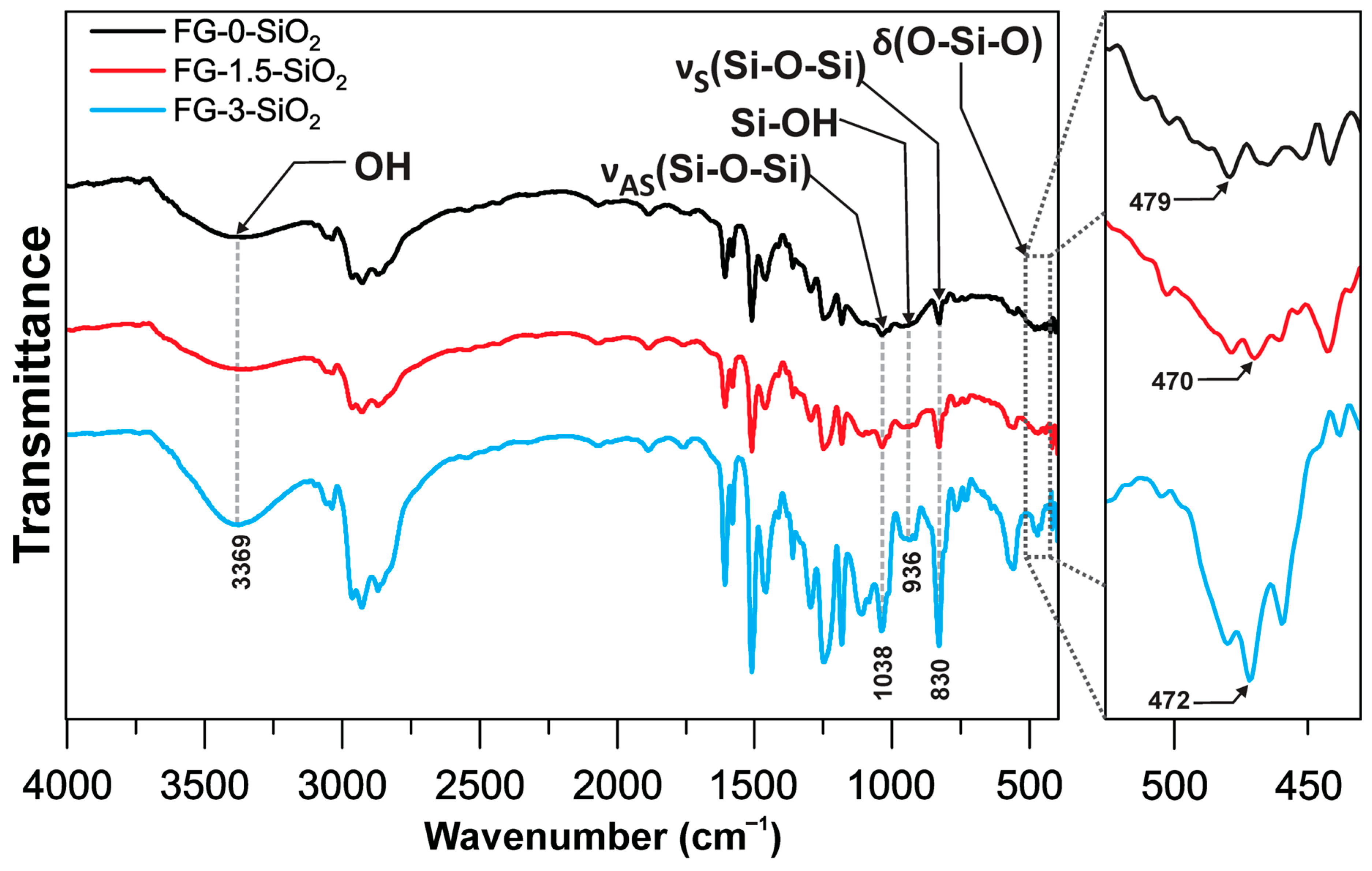
Figure 6 shows the FTIR spectra of the laminated composites FG-0-SiO2, FG-1.5-SiO2, and FG-3-SiO2. Characteristic bands confirming the presence of SiO2-containing groups are identified in all spectra. In FG-0-SiO2, these bands are attributed to the contribution of the glass fiber reinforcement, as this laminated composite does not contain SiO2 NPs. To differentiate the NP contribution from the glass fiber, the O–Si–O bending band (δ), located between 450 and 500 cm−1, is analyzed [42]. As shown in the magnification, in FG-0-SiO2, this band is observed at 479 cm−1 with low intensity, corresponding to the silica in the fiber. In FG-1.5-SiO2, a slight shift to 470 cm−1 is observed, maintaining low intensity. In contrast, in FG-3-SiO2, the band becomes wider and more intense, located at 472 cm−1. These shifts and changes reflect variations in the local chemical environment due to interfacial interactions between the epoxy matrix and the NPs, which intensify with increasing NP concentration [43]. The corresponding bands for symmetric (νS) and asymmetric (νAS) stretching of Si–O–Si, located at 830 cm−1 and 1038 cm−1, respectively [44], show a marked increase in intensity in FG-3-SiO2. This is attributed to the higher concentration of NPs and the possible formation of agglomerates, which, although contributing to the FTIR signal, may limit interfacial interaction [45]. Similarly, the Si-OH band at 936 cm−1 [46] shows an increase in intensity in FG-3-SiO2 compared to the other laminated composites. Although part of this increase is explained by the higher concentration of NPs, the marked intensity suggests the presence of aggregates containing Si-OH groups trapped at internal interfaces, reducing their accessibility and reactivity with the matrix [42]. In the band at 3369 cm−1, assigned to OH groups [47], a higher intensity is again observed in FG-3-SiO2. This is directly attributed to the surface silanol (Si–OH) groups of the NPs, whose signal is amplified by agglomeration and the consequent formation of hydrogen bonds between neighboring silanes [48]. Overall, the FTIR results indicate that FG-3-SiO2 exhibits a marked tendency toward agglomeration, evidenced by the generalized increase in intensity and broadening of SiO2-related bands. In contrast, FG-1.5-SiO2 shows moderate changes, indicating better nanoparticle dispersion and more effective interfacial integration with the epoxy matrix.

3.3. GIXRD

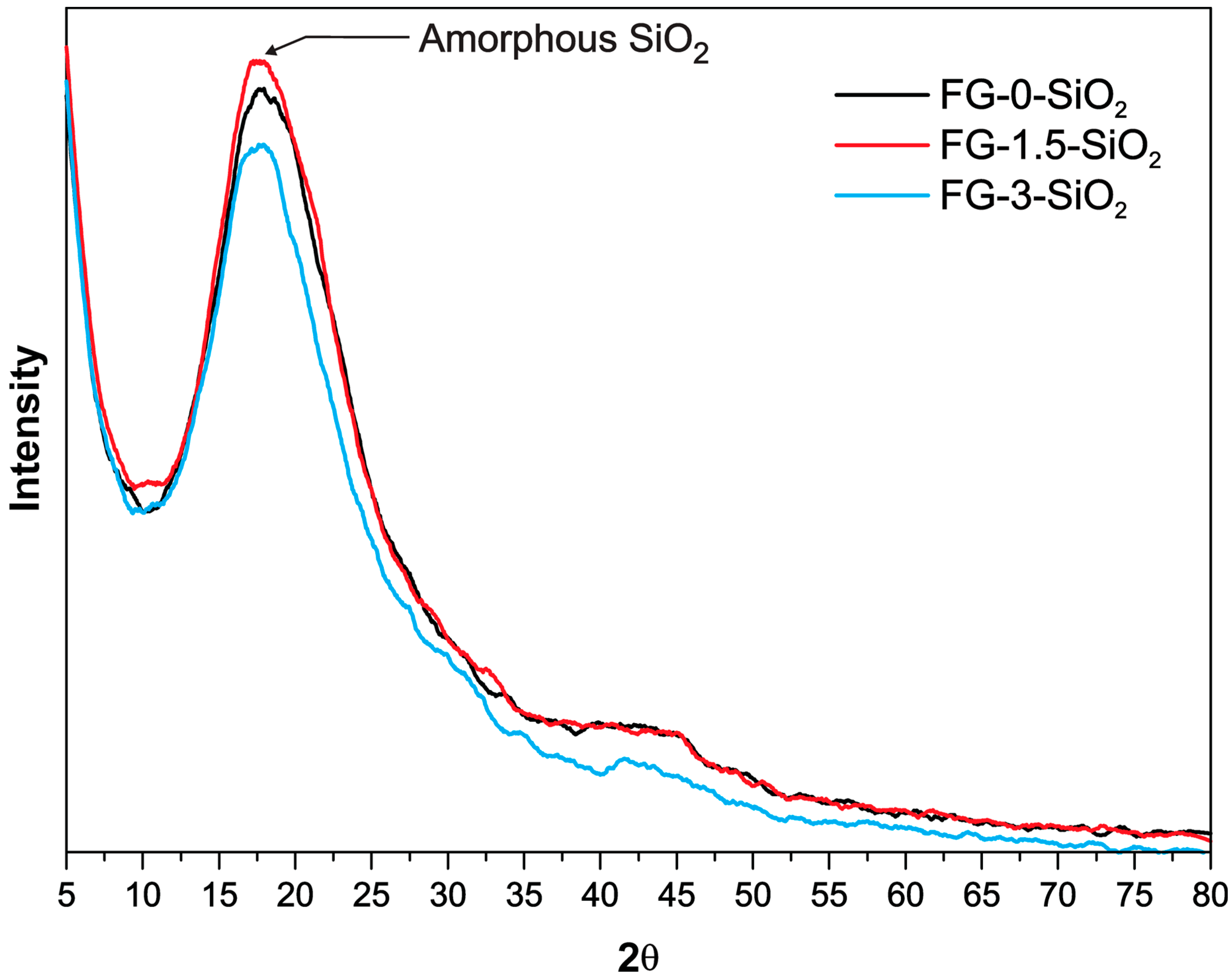
Figure 7 shows the GIXRD patterns obtained for the laminated composites FG-0-SiO2, FG-1.5-SiO2, and FG-3-SiO2. All spectra exhibit a broad amorphous halo in the 10–30° 2θ range, characteristic of amorphous SiO2 [49,50]. In FG-0-SiO2, this halo is attributed to the amorphous silica of the glass fiber. The addition of 1.5 wt.% SiO2 nanoparticles in FG-1.5-SiO2 results in an increase in halo intensity, indicating a homogeneous surface distribution of the NPs, which maximizes their contribution to X-ray scattering [51]. On the other hand, the composite with 3.0 wt.% SiO2 NPs (FG-3-SiO2) shows a decrease in halo intensity, even below that of the laminated composite without NPs. This reduction, despite the higher concentration of NPs, indicates the presence of surface agglomeration. The agglomerates formed may be partially or completely coated by the epoxy matrix, reducing their direct exposure to the incident beam [52]. Additionally, dense nanoparticle agglomerates tend to behave as regions of greater X-ray absorption, which decreases the diffuse signal from the amorphous silica and causes a reduction in the overall intensity of the halo [53,54,55].
Fundamentally, the trends observed in the GIXRD patterns are not isolated findings but are fully consistent with the results obtained using complementary characterization techniques. The increase in the intensity of the amorphous halo in the FG-1.5-SiO2 sample correlates directly with the homogeneous surface morphology observed by SEM and the optimal interaction between the SiO2 nanoparticles and the epoxy matrix, evidenced in the FTIR spectra, as well as with the superior surface mechanical properties, reflected in higher hardness and elastic modulus values. Conversely, the decrease in halo intensity in FG-3-SiO2 is consistent with the presence of nanoparticle agglomerates observed by SEM, the broader and more intensified FTIR signals associated with agglomeration phenomena, and the reduction in mechanical performance. This multi-technique coherence confirms that the GIXRD signal is highly sensitive to the dispersion state of the nanoparticles: effective surface exposure maximizes the intensity of the scattering, while agglomeration and partial encapsulation by the epoxy matrix attenuate the diffracted signal.

3.4. Topographic Analysis

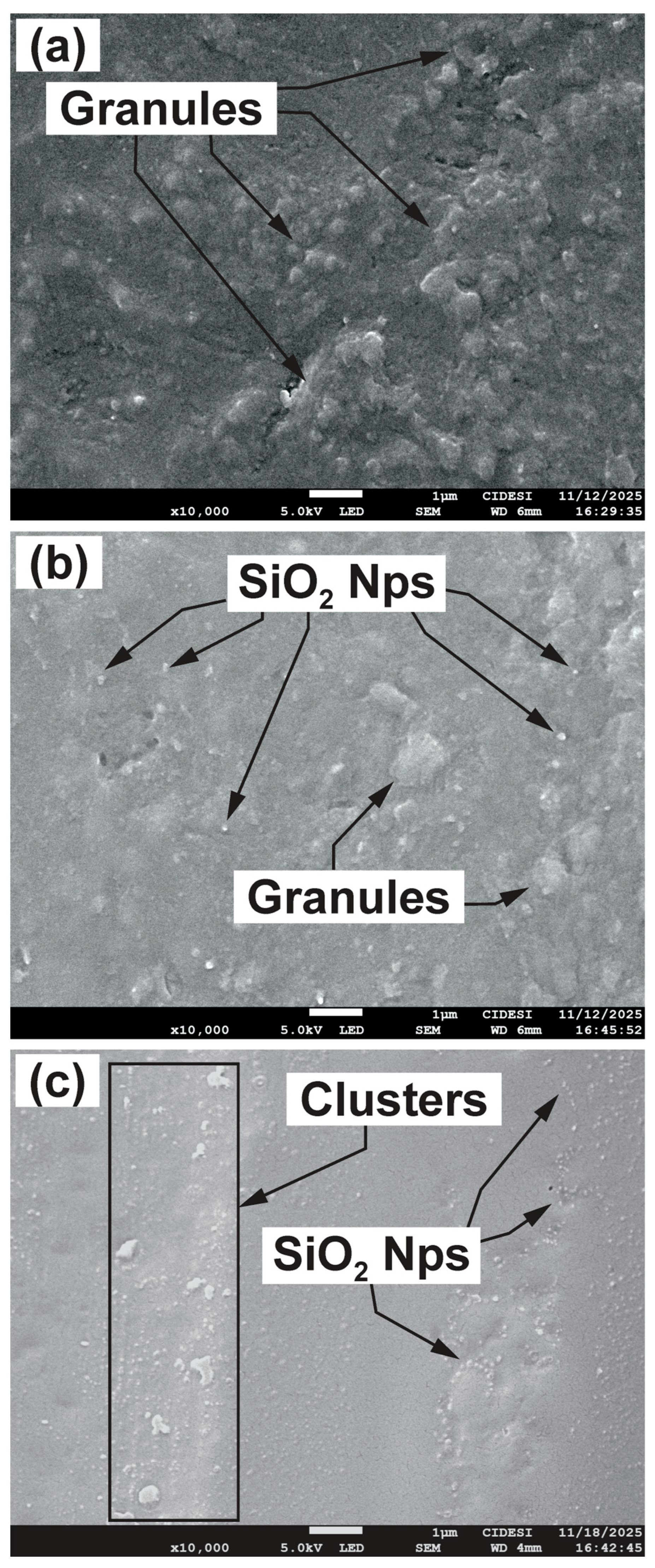
Figure 8 shows scanning electron microscopy (SEM) images of the surfaces of the laminated composites FG-0-SiO2, FG-1.5-SiO2, and FG-3-SiO2. FG-0-SiO2 (Figure 8a) exhibits a surface with a granular appearance and pronounced surface fluctuations, attributable to the presence of micron-scale fillers within the commercial epoxy resin and the intrinsic topography of the woven glass fabric, respectively. In contrast, FG-1.5-SiO2 (Figure 8b) shows a surface morphology with significantly fewer granules and fluctuations, with no evidence of nanoparticle agglomeration. This suggests good dispersion of the SiO2 NPs within the epoxy matrix, which is consistent with the results obtained for roughness, hardness, elastic modulus, FTIR, and GIXRD. On the other hand, in FG-3-SiO2 (Figure 8c), regions with dense and heterogeneous clusters of NPs are observed, indicative of significant agglomeration. This non-homogeneous distribution aligns with the trends observed in FTIR and GIXRD analyses, where agglomeration was shown to compromise interfacial integrity and overall performance of the laminated composite.

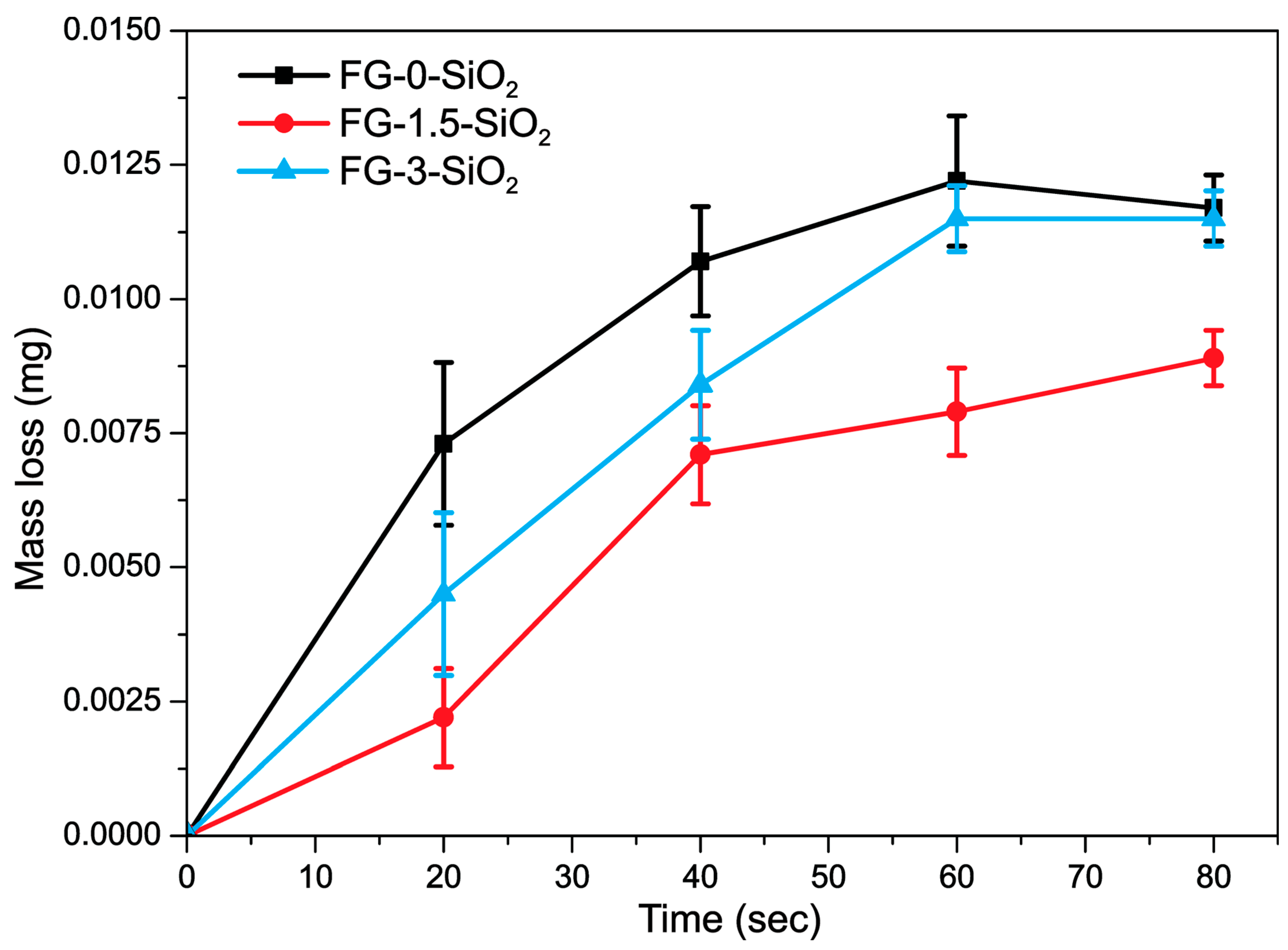
3.5. Mass Loss, Profilometry, and Erosion Rate

Figure 9 shows the erosion test results for FG-0-SiO2, FG-1.5-SiO2, and FG-3-SiO2, expressed as mass loss over time. For FG-0-SiO2, a pronounced mass loss is observed during the first 60 s, primarily attributed to the detachment of the epoxy resin matrix. After this period, mass loss stabilizes as more resistant glass fibers are exposed. FG-3-SiO2 exhibits similar behavior, with a notable mass loss in the initial stage from 0 to 60 s and subsequent stabilization without significant changes. This indicates that the agglomerated nanoparticles at this concentration do not enhance erosion resistance, as agglomerates act as stress concentrators and reduce effective interfacial bonding, thereby facilitating matrix detachment. In contrast, FG-1.5-SiO2 exhibits a behavior in which the greatest mass loss occurs within the first 40 s, followed by progressive and extended mass loss. This behavior is attributed to the optimal dispersion of the SiO2 NPs that reinforce the epoxy matrix, which delays fiber exposure and extends the erosion resistance stage. The homogeneous dispersion of SiO2 nanoparticles enhances interfacial adhesion, acts as a barrier to microcrack propagation, and improves energy dissipation during particle impact, resulting in superior erosion resistance compared to both FG-0-SiO2 and FG-3-SiO2.
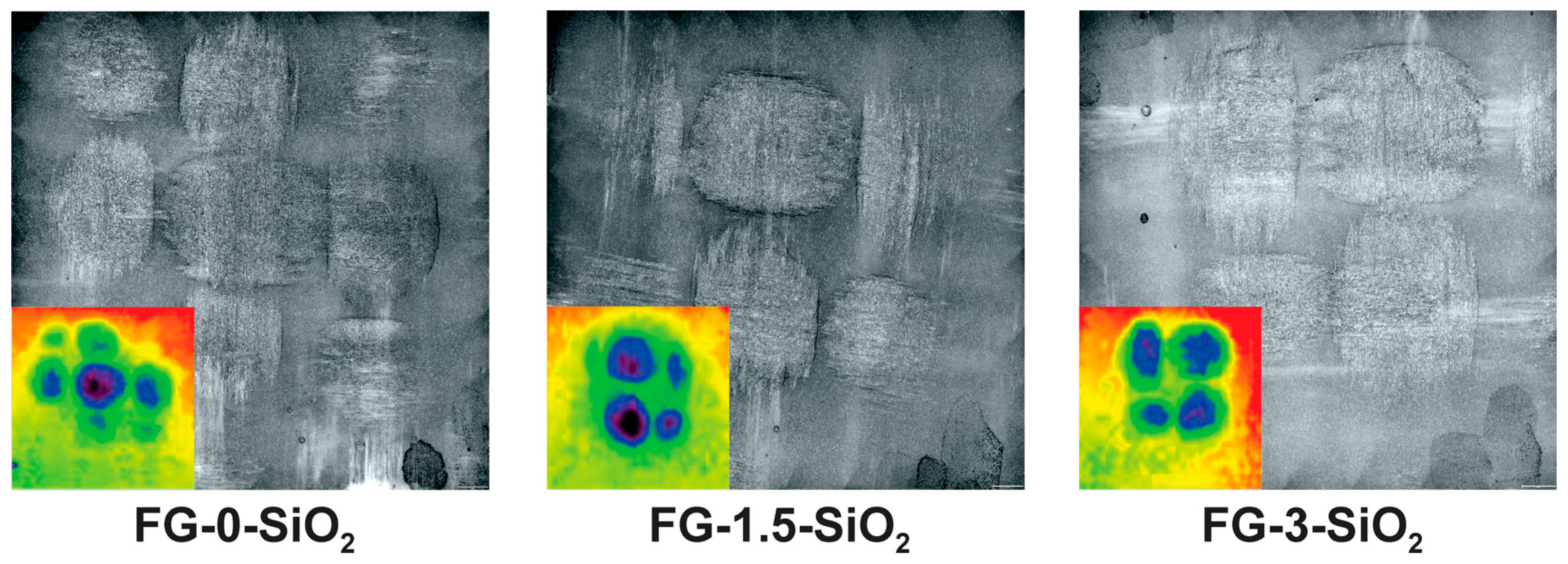
Figure 10 shows the erosional wear zones and corresponding depth contrast images for FG-0-SiO2, FG-1.5-SiO2, and FG-3-SiO2. Differences in the extent and severity of erosional damage can be observed among the samples. FG-1.5-SiO2 exhibits shallower wear depths and a smaller total wear zone compared to FG-0-SiO2 and FG-3-SiO2, indicating improved resistance to erosive penetration and damage propagation. This result is consistent with the lower mass loss and enhanced erosion resistance observed for this composite. On the other hand, FG-0-SiO2 and FG-3-SiO2 exhibit deeper and more extensive wear zones, indicating a lower capacity to resist erosion. In the case of FG-3-SiO2, this behavior can be attributed to the agglomeration of SiO2 NPs, which generates structural heterogeneities and stress concentration sites that accelerate material removal.
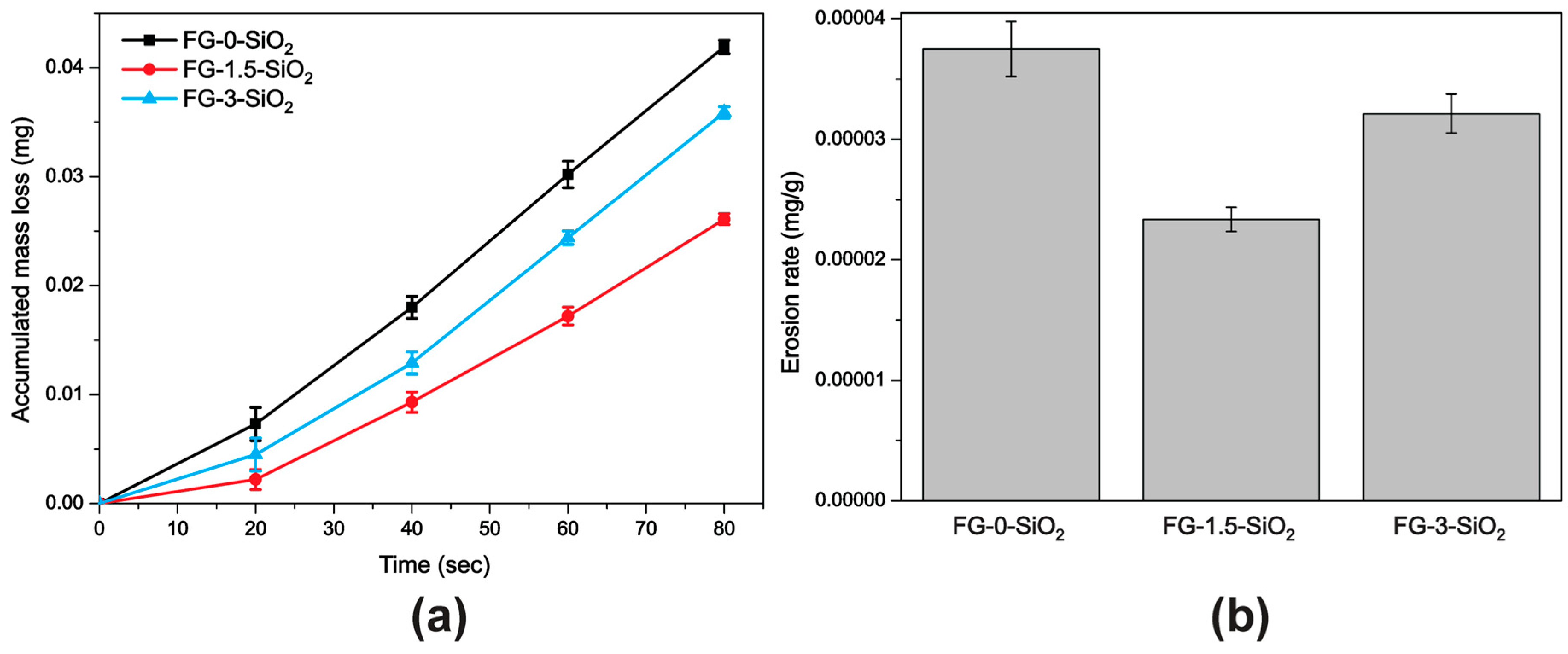
Figure 11 presents the results of total accumulative mass loss over time and the corresponding erosion rate for FG-0-SiO2, FG-1.5-SiO2, and FG-3-SiO2. FG-1.5-SiO2 exhibited the lowest accumulative mass loss (Figure 11a) and the lowest erosion rate (Figure 11b), indicating greater resistance to erosive wear. In contrast, FG-0-SiO2 showed the highest mass loss and erosion rate, while FG-3-SiO2 showed intermediate values closer to those of the laminated composite without NPs. Based on these results, it can be stated that the addition of 1.5 wt.% SiO2 NPs decreased the erosion rate by approximately 38% compared to FG-0-SiO2. This improvement is explained by the homogeneous dispersion of the SiO2 NPs, which reinforce the epoxy matrix through charge transfer, microcrack blocking, and impact energy dissipation, thus reducing material loss during the erosion test. On the other hand, the agglomerated nanoparticles in FG-3-SiO2 provided minimal improvement, highlighting the critical role of dispersion quality in achieving significant performance gains. Table 3 presents the erosion rate and total mass loss values for each laminated composite.
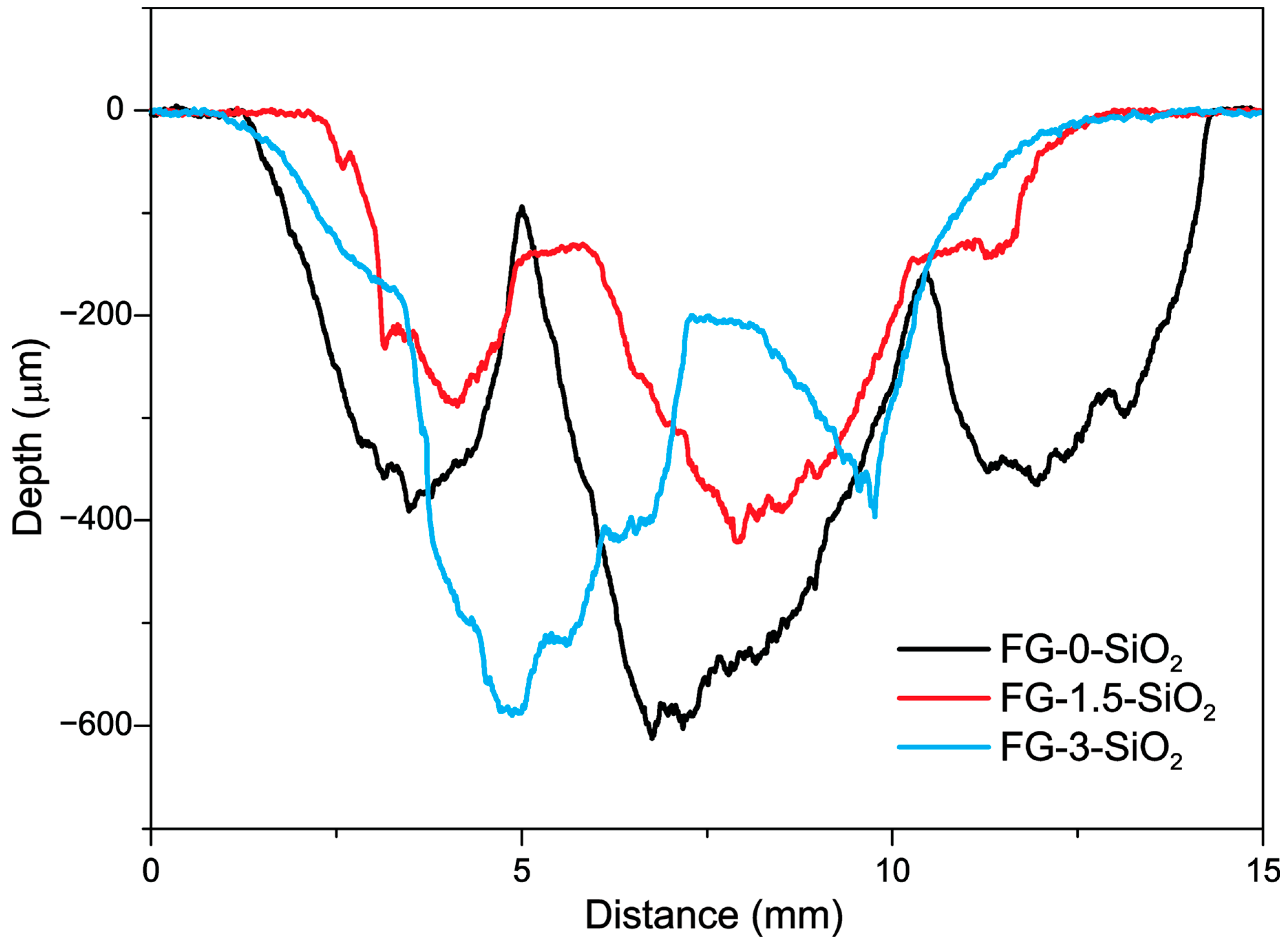
The profilometry performed in the erosional wear zone of FG-0-SiO2, FG-1.5-SiO2, and FG-3-SiO2 is presented in Figure 12. The analysis shows the differences in erosion track depth among the samples. FG-0-SiO2 and FG-3-SiO2 exhibited the greatest wear depths, indicating lower erosion resistance, while FG-1.5-SiO2 showed less pronounced wear depths, demonstrating better erosion resistance and good surface integrity under particle impact conditions. These results are consistent with the reported erosion rate, mass loss over time, and total accumulative mass loss.

3.6. Wear Mechanisms

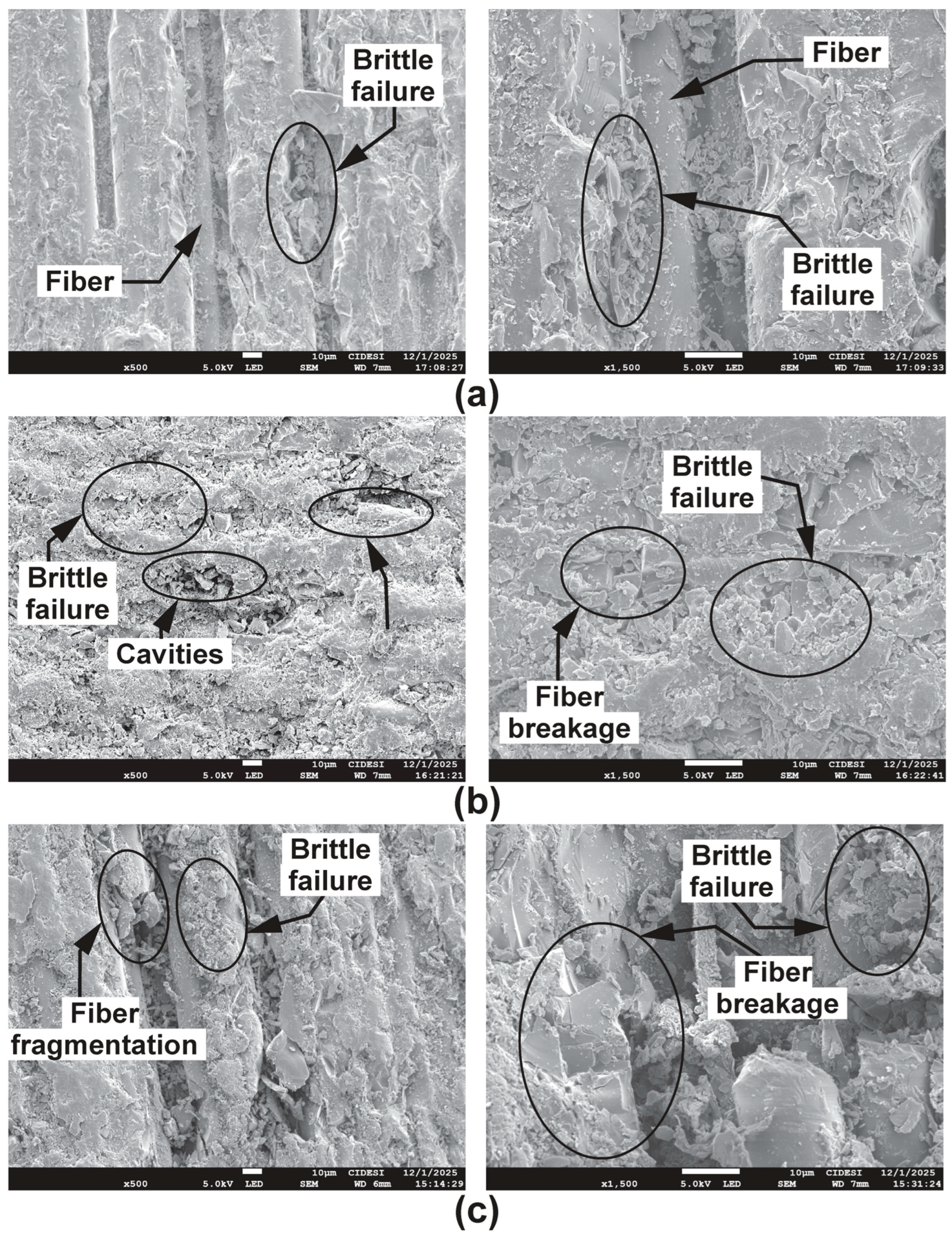
Figure 13 shows SEM images (500× and 1500×) of the erosive wear zone on FG-0-SiO2, FG-1.5-SiO2, and FG-3-SiO2. To maximize surface damage, erosion tests were performed with the normal impact angle (90°) of the erosive agent. Figure 13a–c show that all laminated composites exhibit epoxy matrix detachment and fiber exposure. However, the severity and wear mechanisms vary significantly among them. In FG-0-SiO2 (Figure 13a), extensive regions of matrix removal are identified, exposing the reinforcing fibers and demonstrating a brittle failure mechanism characteristic of epoxy matrix composites. This behavior is attributed to the weak interface between the matrix and the fiber and, therefore, to the low wear resistance of the matrix not reinforced with SiO2 nanoparticles. This aligns with known limitations of thermoset matrices under erosive conditions, where poor interfacial adhesion accelerates wear [8,35]. Conversely, FG-1.5-SiO2 (Figure 13b) exhibits less matrix removal, a stronger interface, and a more controlled failure pattern, with small cavities and limited regions of fiber exposure and breakage. This confirms that the optimal dispersion of 1.5 wt.% SiO2 NPs strengthens the matrix, improves the interface, and mitigates erosive damage, as deduced from the mass loss and profilometry tests. The well-dispersed SiO2 NPs strengthen the matrix and enhance interfacial adhesion, shifting the failure mechanism from brittle fracture to controlled damage progression [14,16]. FG-3-SiO2 (Figure 13c) also shows considerable matrix removal, accompanied by brittle fracture, fragmentation, and fiber breakage. This highlights a critical challenge in the design of polymeric matrices with nanoparticles, because the agglomeration of nanoparticles at higher concentrations counteracts the potential benefits by introducing stress concentrators and defects, as has been reported in similar epoxy-based systems [39]. These observations confirm that optimal nanoparticle dispersion is critical to improving erosion resistance in fiber-reinforced epoxy composites.

3.7. Economic and Industrial Feasibility Considerations

The results obtained demonstrate that incorporating 1.5 wt.% SiO2 nanoparticles significantly improves the erosion resistance of laminated composites, making it pertinent to evaluate the economic feasibility of its implementation on an industrial scale. In this context, it should be considered that the use of high-purity, size-controlled SiO2 nanoparticles implies an increase in the cost of the polymer matrix. However, due to the low concentration required, the impact on the total cost of the laminated composite can be moderate, particularly when compared to the potential increase in the service life of components exposed to highly erosive environments. Additionally, the VARI method is widely adopted industrially to manufacture fiberglass components, which favors the scalability of the proposed formulation. Incorporating nanoparticles using ultrasound dispersion does not introduce significant modifications to the manufacturing process, although it does require the use of specific dispersion equipment. In this regard, previous studies have shown that surface functionalization of the nanoparticles can improve their dispersion and reduce processing times, contributing to greater industrial viability [56,57]. In sectors such as aerospace, energy, and marine, where erosion can lead to premature failures and high maintenance costs, the initial increase in the cost of laminated composite can be offset by reduced corrective interventions, increased durability, and improved structural reliability. Consequently, factors such as nanoparticle dispersion strategy and optimization of curing parameters are crucial for an effective technological transition. Overall, the incorporation of SiO2 at low concentrations, with appropriate dispersion, offers a favorable balance between cost and performance for applications where erosion resistance is a critical requirement.

4. Conclusions

Based on the results obtained in this study on the erosive wear behavior of fiberglass-reinforced epoxy matrix laminated composites modified with SiO2 NPs, the following conclusions are presented:
  • The incorporation of SiO2 NPs into the epoxy matrix of fiberglass-reinforced laminated composites improves the resistance to erosive wear, but this effect depends directly on the concentration and homogeneous dispersion of the NPs.
  • An optimal concentration of 1.5 wt.% of SiO2 NPs, combined with an ultrasonic dispersion and degassing process, allows for a homogeneous distribution of the NPs within the epoxy matrix. This generates a more uniform surface, increases hardness and the elastic modulus, and strengthens the interface between the matrix and the fiber.
  • The improvement in mechanical and tribological properties observed in the FG-1.5-SiO2 composite is attributed to the well-dispersed NPs, which act as barriers to microcrack propagation, improve stress transfer, and dissipate impact energy during the erosion process.
  • An excessive concentration of nanoparticles, such as the 3.0 wt.% concentration found in FG-3-SiO2, causes agglomeration of NPs. This compromises the properties of the laminated composite by creating structural defects, reducing the effective interfacial area, and the NPs act as stress concentration points, resulting in behavior similar to that of the laminated composite without NPs.
  • The results of this study demonstrate that there is an optimal concentration of SiO2 NPs to significantly improve erosion resistance in laminated epoxy matrix and fiberglass composites. This provides valuable information for the design of laminated composites modified with NPs intended for structural applications in environments subject to wear from solid particles, where surface integrity and service life are critical.

Author Contributions

Conceptualization, A.I.M.P.; Methodology, A.S.A.L., A.I.M.P. and E.E.V.C.; Software, A.I.M.P.; Validation, A.I.M.P.; Formal analysis, A.S.A.L., A.I.M.P. and E.E.V.C.; Investigation, A.I.M.P., E.E.V.C., J.M.G.C. and A.M.G.; Resources, A.I.M.P., J.M.G.C. and A.M.G.; Data curation, A.I.M.P.; Writing—original draft, A.S.A.L. and A.I.M.P.; Writing—review & editing, A.I.M.P., E.E.V.C. and J.M.G.C.; Visualization, A.I.M.P.; Supervision, A.I.M.P. All authors have read and agreed to the published version of the manuscript.

Funding

This research was funded by Secretariat of Science, Humanities and Technology and Innovation (before CONAHCyT) project number 319941.

Data Availability Statement

The original contributions presented in this study are included in the article. Further inquiries can be directed to the corresponding author.

Acknowledgments

The authors gratefully acknowledge José de Jesús Ku Herrera and the Center for Research in Applied Chemistry (CIQA) for providing the SiO2 nanoparticles used in this study. Financial support was provided by SECIHTI through a postgraduate scholarship awarded to Angel Sebastián Alvarez Lozano. We give thanks to the Secretariat of Science, Humanities and Technology and Innovation (before CONAHCyT) for financing the research, project number 319941. We also extend our thanks to Reina Araceli Mauricio Sánchez and the Polymer and Biomaterials Laboratory at CINVESTAV Querétaro for their technical and laboratory assistance. Institutional support was provided by the Department of Strategic Technologies and Postgraduate Studies, SECIHTI–Engineering and Industrial Development Center (CIDESI).

Conflicts of Interest

The authors declare no conflict of interest.

References

  1. Georgantzinos, S.K.; Giannopoulos, G.I.; Stamoulis, K.; Markolefas, S. Composites in Aerospace and Mechanical Engineering. Materials 2023, 16, 7230. [Google Scholar] [CrossRef]
  2. Butler, R. Academic research for composite aerostructures—A personal perspective. Compos. Part B Eng. 2024, 273, 111239. [Google Scholar] [CrossRef]
  3. Tomasi, I.; Grandi, S.; Solazzi, L. Implementation of Composite Materials for an Industrial Vehicle Component: A Design Approach. J. Compos. Sci. 2025, 9, 168. [Google Scholar] [CrossRef]
  4. Trzepieciński, T.; Batu, T.; Kibrete, F.; Lemu, H.G. Application of Composite Materials for Energy Generation Devices. J. Compos. Sci. 2023, 7, 55. [Google Scholar] [CrossRef]
  5. Suryanto, S.; Rio Prabowo, A.; Adiputra, R.; Ehlers, S.; Braun, M.; Yaningsih, I.; Istanto, I.; Wijaya, R. A review of composite materials for marine purposes: Historical perspective and current state. Procedia Struct. Integr. 2025, 72, 427–435. [Google Scholar] [CrossRef]
  6. Rajendran, S.; Shanmugam, V.; Palani, G.; Marimuthu, U.; Veerasimman, A.; Korniejenko, K.; Oliinyk, I.; Trilaksana, H.; Sundaram, V. Investigation on Erosion Resistance in Polyester–Jute Composites with Red Mud Particulate: Impact of Fibre Treatment and Particulate Addition. Polymers 2024, 16, 2793. [Google Scholar] [CrossRef]
  7. Wang, S.; Li, J.; Cao, J.; Zhao, Z.; Huang, J.; Xing, J.; Zhang, C. Damage mechanism and residual tensile strength of CFRP laminates subjected to high-velocity sand erosion. Compos. Part B Eng. 2025, 300, 112459. [Google Scholar] [CrossRef]
  8. Patnaik, A.; Satapathy, A.; Chand, N.; Barkoula, N.M.; Biswas, S. Solid particle erosion wear characteristics of fiber and particulate filled polymer composites: A review. Wear 2010, 268, 249–263. [Google Scholar] [CrossRef]
  9. Domun, N.; Hadavinia, H.; Zhang, T.; Sainsbury, T.; Liaghat, G.H.; Vahid, S. Improving the fracture toughness and the strength of epoxy using nanomaterials—A review of the current status. Nanoscale 2015, 7, 10294–10329. [Google Scholar] [CrossRef] [PubMed]
  10. Hiremath, A.; Murthy, A.A.; Thipperudrappa, S. KNB Nanoparticles Filled Polymer Nanocomposites: A Technological Review. Cogent Eng. 2021, 8, 1991229. [Google Scholar] [CrossRef]
  11. Zare, Y.; Fasihi, M.; Rhee, K.Y. Efficiency of stress transfer between polymer matrix and nanoplatelets in clay/polymer nanocomposites. Appl. Clay Sci. 2017, 143, 265–272. [Google Scholar] [CrossRef]
  12. Ali, H.; Ali, S.; Ali, K.; Ullah, S.; Ismail, P.M.; Humayun, M.; Zeng, C. Impact of the nanoparticle incorporation in enhancing mechanical properties of polymers. Results Eng. 2025, 24, 106151. [Google Scholar] [CrossRef]
  13. Rahman, M.M.; Khan, K.H.; Parvez, M.M.H.; Irizarry, N.; Uddin, M.N. Polymer Nanocomposites with Optimized Nanoparticle Dispersion and Enhanced Functionalities for Industrial Applications. Processes 2025, 13, 994. [Google Scholar] [CrossRef]
  14. Alam, M.A.; Samad, U.A.; Anis, A.; Alam, M.; Ubaidullah, M.; Al-Zahrani, S.M. Effects of SiO2 and ZnO Nanoparticles on Epoxy Coatings and Its Performance Investigation Using Thermal and Nanoindentation Technique. Polymers 2021, 13, 1490. [Google Scholar] [CrossRef] [PubMed]
  15. Al-Zubaydi, A.S.J.; Salih, R.M.; Al-Dabbagh, B.M. Effect of nano TiO2 particles on the properties of carbon fiber-epoxy composites. Prog. Rubber Plast. Recycl. Technol. 2021, 37, 216–232. [Google Scholar] [CrossRef]
  16. Bazrgari, D.; Moztarzadeh, F.; Sabbagh-Alvani, A.A.; Rasoulianboroujeni, M.; Tahriri, M.; Tayebi, L. Mechanical properties and tribological performance of epoxy/Al2O3 nanocomposite. Ceram. Int. 2018, 44, 1220–1224. [Google Scholar] [CrossRef]
  17. Nassar, A.; Younis, M.; Ismail, M.; Nassar, E. Improved Wear-Resistant Performance of Epoxy Resin Composites Using Ceramic Particles. Polymers 2022, 14, 333. [Google Scholar] [CrossRef]
  18. Chuanga, W.; Geng-sheng, J.; Lei, P.; Bao-lin, Z.; Ke-zhi, L.; Jun-long, W. Influences of surface modification of nano-silica by silane coupling agents on the thermal and frictional properties of cyanate ester resin. Results Phys. 2018, 9, 886–896. [Google Scholar] [CrossRef]
  19. Govea Paz, L.I.; Martínez Pérez, A.I.; Vera Cárdenas, E.E.; Moreno Ríos, M.; González Carmona, J.M. Study of erosion wear by solid particle of a PMMA/SiO2 hybrid coating with graphene oxide applied on a composite laminate. J. Thermoplast. Compos. Mater. 2024, 38, 2570–2592. [Google Scholar] [CrossRef]
  20. Demirci, M.T. Low velocity impact and fracture characterization of SiO2 nanoparticles filled basalt fiber reinforced composite tubes. J. Compos. Mater. 2020, 54, 3415–3433. [Google Scholar] [CrossRef]
  21. Ragosta, G.; Abbate, M.; Musto, P.; Scarinzi, G.; Mascia, L. Epoxy-silica particulate nanocomposites: Chemical interactions, reinforcement and fracture toughness. Polymer 2005, 46, 10506–10516. [Google Scholar] [CrossRef]
  22. Juan, J.; Silva, A.; Tornero, J.A.; Gámez, J.; Salán, N. Void Content Minimization in Vacuum Infusion (VI) via Effective Degassing. Polymers 2021, 13, 2876. [Google Scholar] [CrossRef]
  23. Shen, R.; Liu, T.; Liu, H.; Zou, X.; Gong, Y.; Guo, H. An Enhanced Vacuum-Assisted Resin Transfer Molding Process and Its Pressure Effect on Resin Infusion Behavior and Composite Material Performance. Polymers 2024, 16, 1386. [Google Scholar] [CrossRef]
  24. Kanny, K.; Mohan, T.P. Resin infusion analysis of nanoclay filled glass fiber laminates. Compos. Part B Eng. 2014, 58, 328–334. [Google Scholar] [CrossRef]
  25. Agwa, M.; Youssef, S.M.; Ali-Eldin, S.S.; Megahed, M. Integrated vacuum assisted resin infusion and resin transfer molding technique for manufacturing of nano-filled glass fiber reinforced epoxy composite. J. Ind. Text. 2020, 51, 5113S–5144S. [Google Scholar] [CrossRef]
  26. van Oosterom, S.; Allen, T.; Battley, M.; Bickerton, S. An objective comparison of common vacuum assisted resin infusion processes. Compos. Part A Appl. Sci. Manuf. 2019, 125, 105528. [Google Scholar] [CrossRef]
  27. Vera Cárdenas, E.E.; Oropeza Pérez, F.I.; Rubio González, C.; Martínez Pérez, A.I. Wear and friction behavior of composite materials reinforced with carbon fiber and Kevlar. J. Compos. Mater. 2025, 60, 289–302. [Google Scholar] [CrossRef]
  28. Eslava Hernández, A.; Vera Cárdenas, E.E.; Martínez Pérez, A.I.; Rodríguez González, J.; Rubio González, C. Impact of the aging process in composite materials under solid particle impact wear. J. Reinf. Plast. Compos. 2025, 0, 1–16. [Google Scholar] [CrossRef]
  29. Tinke, A.P.; Carnicer, A.; Govoreanu, R.; Scheltjens, G.; Lauwerysen, L.; Mertens, N.; Vanhoutte, K.; Brewster, M.E. Particle shape and orientation in laser diffraction and static image analysis size distribution analysis of micrometer sized rectangular particles. Powder Technol. 2008, 186, 154–167. [Google Scholar] [CrossRef]
  30. Houghton, J.E.; Behnsen, J.; Duller, R.A.; Nichols, T.E.; Worden, R.H. Particle size analysis: A comparison of laboratory-based techniques and their application to geoscience. Sediment. Geol. 2024, 464, 106607. [Google Scholar] [CrossRef]
  31. Billones, R.G.; Tackx, M.L.M.; Flachier, A.T.; Zhu, L.; Daro, M.H. Image analysis as a tool for measuring particulate matter concentrations and gut content, body size, and clearance rates of estuarine copepods: Validation and application. J. Mar. Syst. 1999, 22, 179–194. [Google Scholar] [CrossRef]
  32. ASTM Standard G76-95; Standard Test Method for Conducting Erosion Tests by Solid Particle Impingement Using Gas Jets1. Annual Book of ASTM Standards: West Conshohocken, PA, USA, 1995.
  33. Khare, J.M.; Dahiya, S.; Gangil, B.; Ranakoti, L.; Sharma, S.; Huzaifah, M.R.M.; Ilyas, R.A.; Dwivedi, S.P.; Chattopadhyaya, S.; Kilinc, H.C.; et al. Comparative analysis of erosive wear behaviour of epoxy, polyester and vinyl esters based thermosetting polymer composites for human prosthetic applications using Taguchi design. Polymers 2021, 13, 3607. [Google Scholar] [CrossRef]
  34. Harsha, A.P.; Sanjeev, K.J. Erosive wear studies of epoxy-based composites at normal incidence. Wear 2008, 265, 1129–1135. [Google Scholar] [CrossRef]
  35. Lv, G.; Zhang, N.; Huang, M.; Shen, C.; Castro, J.; Tan, K.; Liu, X.; Liu, C. The remarkably enhanced particle erosion resistance and toughness properties of glass fiber/epoxy composites via thermoplastic polyurethane nonwoven fabric. Polym. Test. 2018, 69, 470–477. [Google Scholar] [CrossRef]
  36. Xijing, L.; Yong, C. Effect of SiO2 nanoparticles on the hardness and corrosion resistance of NiW/SiO2 nano composite coating prepared by electrodeposition. Int. J. Electrochem. Sci. 2023, 18, 100138. [Google Scholar] [CrossRef]
  37. Golshokouh, M.A.; Refahati, N.; Saffari, P.R. Effect of Silicon Nanoparticles on Moisture Absorption and Fracture Toughness of Polymethyl Methacrylate Matrix Nanocomposites. J. Compos. Sci. 2024, 8, 69. [Google Scholar] [CrossRef]
  38. Yousry Zaghloul, M.M.; Fuseini, M.; Yousry Zaghloul, M.M. Review of epoxy nano-filled hybrid nanocomposite coatings for tribological applications. FlatChem 2025, 49, 100768. [Google Scholar] [CrossRef]
  39. Kontou, E.; Christopoulos, A.; Koralli, P.; Mouzakis, D.E. The Effect of Silica Particle Size on the Mechanical Enhancement of Polymer Nanocomposites. Nanomaterials 2023, 13, 1095. [Google Scholar] [CrossRef] [PubMed]
  40. Wang, Z.; Lv, Q.; Chen, S.; Li, C.; Sun, S.; Hu, S. Effect of Interfacial Bonding on Interphase Properties in SiO2/Epoxy Nanocomposite: A Molecular Dynamics Simulation Study. ACS Appl. Mater. Interfaces 2016, 8, 7499–7508. [Google Scholar] [CrossRef]
  41. Zare, Y. Study of nanoparticles aggregation/agglomeration in polymer particulate nanocomposites by mechanical properties. Compos. Part A 2016, 84, 158–164. [Google Scholar] [CrossRef]
  42. Ellerbrock, R.; Stein, M.; Schaller, J. Comparing amorphous silica, short-range-ordered silicates and silicic acid species by FTIR. Sci. Rep. 2022, 12, 11708. [Google Scholar] [CrossRef] [PubMed]
  43. Oufakir, A.; Khouchaf, L.; Elaatmani, M.; Zegzouti, A.; Louarn, G.; Ben Fraj, A. Study of structural short order and surface changes of SiO2 compounds. MATEC Web Conf. 2018, 149, 01041. [Google Scholar] [CrossRef]
  44. Nayak, P.; Datta, A. Synthesis of SiO2-Nanoparticles from Rice Husk Ash and its Comparison with Commercial Amorphous Silica through Material Characterization. Silicon 2021, 13, 1209–1214. [Google Scholar] [CrossRef]
  45. Ellerbrock, R.H.; Stein, M.; Schaller, J. Comparing silicon mineral species of different crystallinity using Fourier transform infrared spectroscopy. Front. Environ. Chem. 2024, 5, 1462678. [Google Scholar] [CrossRef]
  46. Praseptiangga, D.; Zahara, H.L.; Widjanarko, P.I.; Joni, I.M.; Panatarani, C. Preparation and FTIR spectroscopic studies of SiO2-ZnO nanoparticles suspension for the development of carrageenan-based bio-nanocomposite film. AIP Conf. Proc. 2020, 2219, 100005. [Google Scholar] [CrossRef]
  47. Dai, F.; Zhuang, Q.; Huang, G.; Deng, H.; Zhang, X. Infrared Spectrum Characteristics and Quantification of OH Groups in Coal. ACS Omega 2023, 8, 17064–17076. [Google Scholar] [CrossRef] [PubMed]
  48. Al Soud, A.; Daradkeh, S.I.; Knápek, A.; Holcman, V.; Sobola, D. Electrical characteristics of different concentration of silica nanoparticles embedded in epoxy resin. Phys. Scr. 2023, 98, 125520. [Google Scholar] [CrossRef]
  49. Farman, A.; Nisar, A.; Madiha, A.; Amir, S.; Shah, S.S.; Bilal, M. Epoxy Polyamide Composites Reinforced with Silica Nanorods: Fabrication, Thermal and Morphological Investigations. J. Inorg. Organomet. Polym. Mater. 2020, 30, 3869–3877. [Google Scholar] [CrossRef]
  50. Ke, X.; Wu, Z.; Lin, J.; Wang, F.; Li, P.; Xu, R.; Yang, M.; Han, L.; Zhang, D. A rapid analytical method for the specific surface area of amorphous SiO2 based on X-Ray diffraction. J. Non-Cryst. Solids 2020, 531, 119841. [Google Scholar] [CrossRef]
  51. Khouchaf, L.; Boulahya, K.; Das, P.P.; Nicolopoulos, S.; Kis, V.K.; Lábár, J.L. Study of the Microstructure of Amorphous Silica Nanostructures Using High-Resolution Electron Microscopy, Electron Energy Loss Spectroscopy, X-ray Powder Diffraction, and Electron Pair Distribution Function. Materials 2020, 13, 4393. [Google Scholar] [CrossRef]
  52. Chandran, S.; Begam, N.; Basu, J.K. Dispersion of polymer grafted nanoparticles in polymer nanocomposite films: Insights from surface x-ray scattering and microscopy. J. Appl. Phys. 2014, 116, 222203. [Google Scholar] [CrossRef]
  53. Raulkar, S.R.; Pawar, N.R. Synthesis of SiO2 Nanoparticles by Using Sol Gel Method. Int. J. Sci. Res. Sci. Technol. 2025, 12, 510–513. [Google Scholar] [CrossRef]
  54. Kumar, D.A.; Shyla, J.M.; Xavier, F.P. Synthesis and characterization of TiO2/SiO2 nano composites for solar cell applications. Appl. Nanosci. 2012, 2, 429–436. [Google Scholar] [CrossRef]
  55. Elizondo Villarreal, N.; Gandara Martínez, E.; García Méndez, M.; Gracia Pinilla, M.; Guzmán Hernández, A.M.; Castaño, V.M.; Gómez Rodríguez, C. Synthesis and Characterization of SiO2 Nanoparticles for Application as Nanoadsorbent to Clean Wastewater. Coatings 2024, 14, 919. [Google Scholar] [CrossRef]
  56. Mitra, A.; Trifkovic, M.; Ponnurangam, S. Surface Functionalization-Induced Effects on Nanoparticle Dispersion and Associated Changes in the Thermophysical Properties of Polymer Nanocomposites. Macromolecules 2021, 54, 3962–3971. [Google Scholar] [CrossRef]
  57. Vázquez-Velázquez, A.R.; Velasco-Soto, M.A.; Pérez-García, S.A.; Licea-Jiménez, L. Functionalization Effect on Polymer Nanocomposite Coatings Based on TiO2–SiO2 Nanoparticles with Superhydrophilic Properties. Nanomaterials 2018, 8, 369. [Google Scholar] [CrossRef]
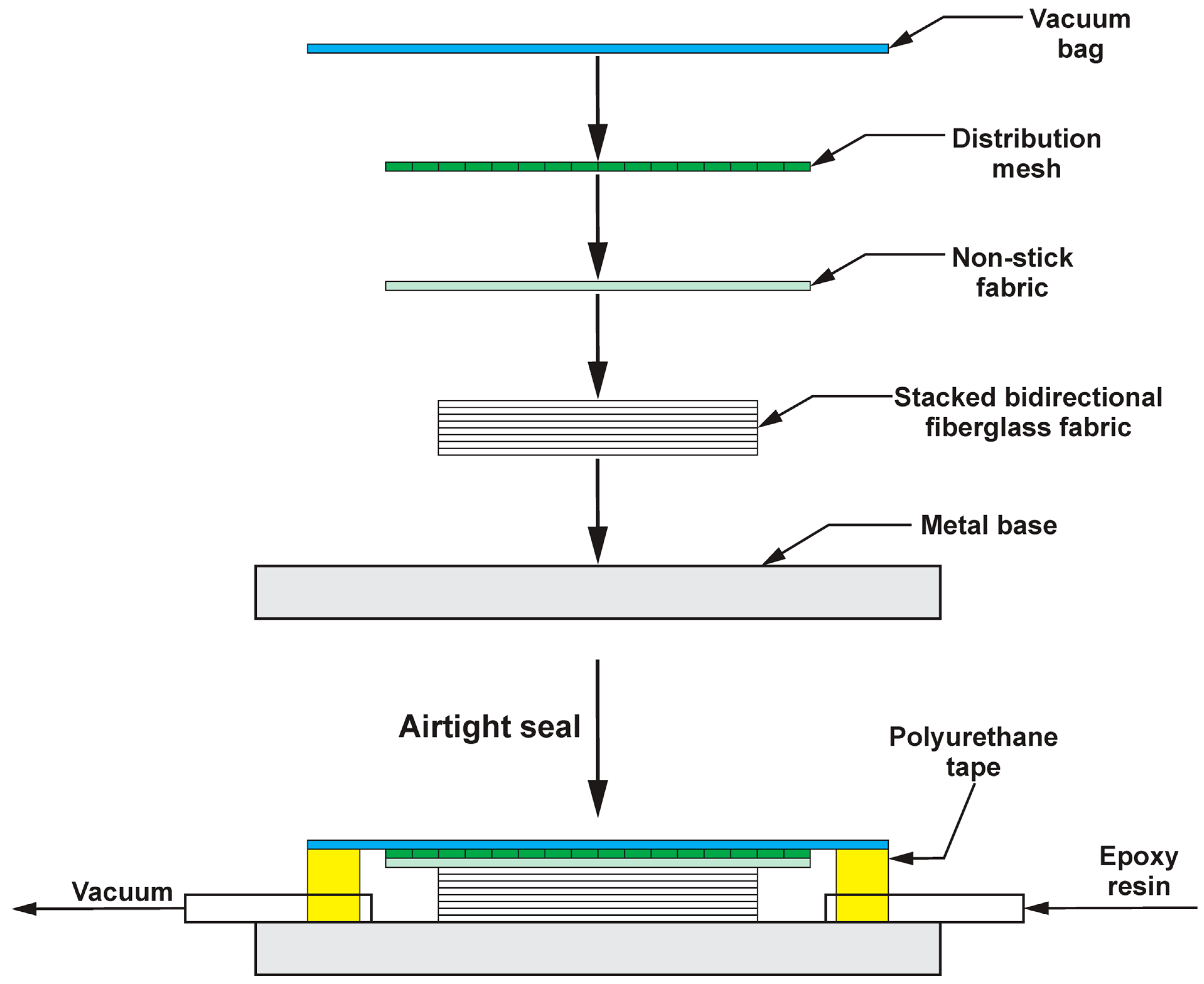
Figure 1. Laminated composite manufactured by the VARI method.
Lubricants 14 00065 g001
Figure 2. Fiberglass fabric.
Lubricants 14 00065 g002
Figure 3. Cross section of the laminated composite.
Lubricants 14 00065 g003
Figure 4. (a) Erosive particle and (b) erosive particle size distribution.
Lubricants 14 00065 g004
Figure 5. Schematic diagram of the horizontal erosion test platform. 1: Air compressor; 2: pipe; 3: feedback pipe; 4: erosive particle container; 5: erosion chamber; 6: nozzle; 7: sample; 8: sample holder.
Lubricants 14 00065 g005
Figure 6. FTIR spectrum and magnification.
Lubricants 14 00065 g006
Figure 7. GIXRD pattern.
Lubricants 14 00065 g007
Figure 8. SEM micrographs of (a) FG-0-SiO2, (b) FG-1.5-SiO2, and (c) FG-3-SiO2.
Lubricants 14 00065 g008
Figure 9. Mass loss over time.
Lubricants 14 00065 g009
Figure 10. Wear zone and contrast images, where darker tones correspond to greater depths.
Lubricants 14 00065 g010
Figure 11. (a) Accumulated mass loss and (b) erosion rate.
Lubricants 14 00065 g011
Figure 12. Profilometry.
Lubricants 14 00065 g012
Figure 13. Wear mechanism at 500 and 1500× of (a) FG-0-SiO2, (b) FG-1.5-SiO2, and (c) FG-3-SiO2.
Lubricants 14 00065 g013
Table 1. Laminated composites with different concentrations of NPs.
Laminated CompositeConcentration of SiO2 NPs (wt.%)
FG-0-SiO20.0
FG-1.5-SiO21.5
FG-3-SiO23.0
Table 2. Summary of Ra, HV, and E.
Laminated CompositeRa (μm)SD (μm)Hardness (HV)SD (HV)E (GPa)SD (GPa)
FG-0-SiO20.6840.18819.840.0599.9120.120
FG-1.5-SiO20.2150.02035.580.49619.662.549
FG-3-SiO20.4750.23013.830.2085.4910.052
Table 3. Erosion rate and total mass loss.
Laminated CompositeErosion Rate (mg/g)SD (mg/g)Total Mass Loss (mg)SD (mg)
FG-0-SiO23.7501 × 10−52.279 × 10−60.04190.0006
FG-1.5-SiO22.3360 × 10−51.007 × 10−60.02610.0005
FG-3-SiO23.2131 × 10−51.621 × 10−60.03590.0005
Disclaimer/Publisher’s Note: The statements, opinions and data contained in all publications are solely those of the individual author(s) and contributor(s) and not of MDPI and/or the editor(s). MDPI and/or the editor(s) disclaim responsibility for any injury to people or property resulting from any ideas, methods, instructions or products referred to in the content.