1. Introduction
Compact structure, exceptional precision, and high transmission ratio have made cycloidal reducers indispensable components of modern mechanical systems. By employing cycloidal gearing in a single transmission stage, Rotary Vector (RV) cycloidal reducers offer significant advantages over traditional gear drives with cylindrical, bevel, worm, and hypoid gears. In recent years, RV cycloidal reducers have been increasingly used in industrial robots, CNC machines, and the satellite industry.
Previous studies in the field of cycloidal reducers have mainly focused on topics such as meshing between the cycloidal discs and the corresponding elements, modifications of cycloidal disc tooth profiles (equidistants of the shortened epitrochoid), load distribution in contacts, and development of new design concepts. However, the analysis of lubrication effects on the fundamental operating characteristics of cycloidal reducers has remained largely neglected and unexplored. For example, Kudrjavcev [
1] and Lehmann [
2] defined mathematical models for determining the contact forces during the meshing of a cycloidal disc with the corresponding rollers. Malhotra and Parameswaran [
3] developed a mathematical model for determining efficiency of cycloidal reducers based on the work of friction forces in dominant contacts. Blanche and Yang [
4] investigated the influence of internal clearances on torque pulsations and gear ratio and defined their dependence on the cycloidal disc rotation. Litvin and Feng [
5] examined various methods for generating and modifying cycloidal disc tooth profiles and also established conditions for avoiding singularities in the generated cycloids. Lixing [
6] investigated cycloidal disc tooth profile modifications with the aim of reducing the intensity of contact forces on the contact surfaces of the meshing elements.
Building on these findings and in response to the increasingly stringent requirements that modern technical systems impose on power transmission units (such as achieving a wider transmission ratio within a limited installation space), several researchers focused on developing new conceptual solutions for cycloidal reducers. This led to the emergence of modern designs such as China Bearing Reducer (CBR) [
7] and Nested [
8] reducers. However, since neither these nor previously proposed designs have thoroughly examined the influence of lubrication on the fundamental operating characteristics, no significant improvements have been achieved in terms of thermal stability or efficiency. The fact that this issue has not yet been effectively addressed across industrial sectors is clearly illustrated by a recent economic study showing that highly industrialized countries—such as the United States of America (USA), Japan, and European Union (EU) member states—still lose between 2% and 8% of their GDP due to mechanical friction and wear in industrial systems, even in this high-technology era [
9]. In this context, recent bibliometric studies highlight the increasing importance of advanced surface engineering and thermal spray coatings for mitigating friction, wear, and thermal degradation under extreme operating conditions [
10].
That is why special attention must be given to selection of lubricants and minimization of overall power losses already in the design stage of a power transmission system. For this purpose, validated mathematical models are most commonly used [
11,
12,
13,
14]. The development of numerical methods such as computational fluid dynamics (CFD) has also led to significant progress not only in understanding the overall processes involved in lubricant flow but also in improving the accuracy of power loss predictions [
15,
16].
In modern engineering practice, mineral oils and greases are most commonly used as lubricants for cycloidal reducers. The use of grease eliminates the need for frequent replenishment, which is particularly important for reducers with limited accessibility, such as those in robotic joints and medical devices. However, grease lubrication is often underestimated in terms of energy efficiency. An additional challenge in analyzing grease lubrication lies in the limited knowledge of the complex tribological processes involved, since most studies have been conducted on various types of oils. This is primarily because oils are more widely used and can be treated as Newtonian lubricants. As a result, mathematical models describing oil lubrication are greatly simplified, as only two key parameters—density and viscosity—are required. In contrast, grease must be treated as a non-Newtonian fluid whose viscosity depends on shear rate. The literature also includes experimentally validated models for grease lubrication in the presence of line contacts, which are characteristic of cycloidal reducers. These models clearly indicate that equations originally developed for predicting oil film thickness in liquid lubricants can also be applied to greases, provided that the parameters related to the base oil are used [
17,
18,
19]. Nevertheless, the accuracy and reliability of this approach are limited to a specific range of operating conditions. Furthermore, recent studies increasingly consider the application of biolubricants as environmentally friendly alternatives to mineral oils, due to their favorable tribological properties and potential to reduce harmful environmental impacts [
20]. However, their use in the field of cycloidal reducers has not yet been investigated.
Other studies on line contacts and grease lubrication in various fields also provide valuable insight into this still insufficiently explored area. For example, Kimura et al. [
21] experimentally demonstrated that grease film thickness at low speeds depends on the type of base oil and thickener used. Wen and Ying [
22] explained why the film thickness in EHL lubrication with grease is equal to or smaller than the one obtained with oil lubrication, despite the fact that grease has a higher viscosity than its base oil. Through investigations involving different lubricant types and operating conditions, Park and Kim [
23] found that the film thickness and the pressure at the center of the contact are the same for both finite and infinite contact lines. Ma et al. [
24] discovered that increasing the grease fill level leads to a greater temperature rise in grease-lubricated bearings.
The available research in the field of cycloidal reducer lubrication is rather limited. Using the Pan–Hamrock formula, Mihailidis et al. [
25] determined the oil film thickness in contacts between the cycloidal disc teeth and the corresponding rollers. The influence of different roller profiles of the eccentric bearing on lubrication performance and service life was investigated by Guan et al. [
26] using a thermos–elasto–hydrodynamic lubrication (TEHL) model. Their analysis accounted for factors such as the resultant velocity of the contacting elements, the geometry of the contact surfaces, the non-Newtonian behavior of the lubricant, and the pressure in the oil film. Furthermore, several studies have employed multi-criteria optimization methods to optimize not only the internal clearances but also the oil film thickness [
27,
28,
29,
30,
31]. This approach is fully justified, as modifications of cycloidal disc tooth profiles have become much easier with the use of CNC technologies compared to conventional machine tools.
Similarly, the thermal behavior of cycloidal reducers has so far been the subject of relatively few studies. Mihailidis investigated a procedure for determining the flash temperature [
32]. Although its duration is extremely short, this temperature is significantly higher than the lubricant temperature and can therefore cause a range of undesirable effects. Zah et al. studied the thermal stability of cycloidal reducers, focusing in particular on determining the operating temperature under thermal equilibrium conditions [
33]. Hu analyzed thermal deformations of the RV cycloidal reducer components and concluded that these deformations are negligible as long as the operating temperature remains below 85° [
34]. Vasić et al. investigated the thermal stability of cycloidal reducers and developed an analytical model for estimating the lubricant stabilization temperature [
35], in accordance with the international standard ISO/TR 14179—2:2001 [
36]. Furthermore, Vasić et al. studied the distribution of temperature fields and quantified the influence of this distribution on contact forces and the stress–strain state of the corresponding elements [
37].
A review of the available literature shows that the influence of lubricant type on the key operational characteristics of cycloidal reducers remains insufficiently explored. Accordingly, the primary objective of this study is to analyze the effects of different types of lubricants (greases and mineral oils) on the thermal stability and efficiency of cycloidal reducers. Furthermore, in order to identify any additional differences that may arise from the use of different lubricants, this study also includes the development of an analytical model for estimating the oil film thickness and lubrication regime under different operating conditions, taking into account the most important load parameters and the geometric characteristics of the contact zone. Due to the complexity and comprehensiveness of the research aimed at a deeper understanding of the mechanisms governing lubricant behavior in the contact area, both analytical and experimental methods were employed.
2. Materials and Methods
2.1. Research Object
A single-stage cycloidal reducer consisting of two cycloidal discs, with a rated power of 370 W (Sumitomo, Düsseldorf, Germany), was used in this study. Each cycloidal disc has 15 teeth (
) and meshes with a ring gear composed of 16 rollers (
). Accordingly, the overall transmission ratio of the investigated cycloidal reducer can be determined using Equation (1):
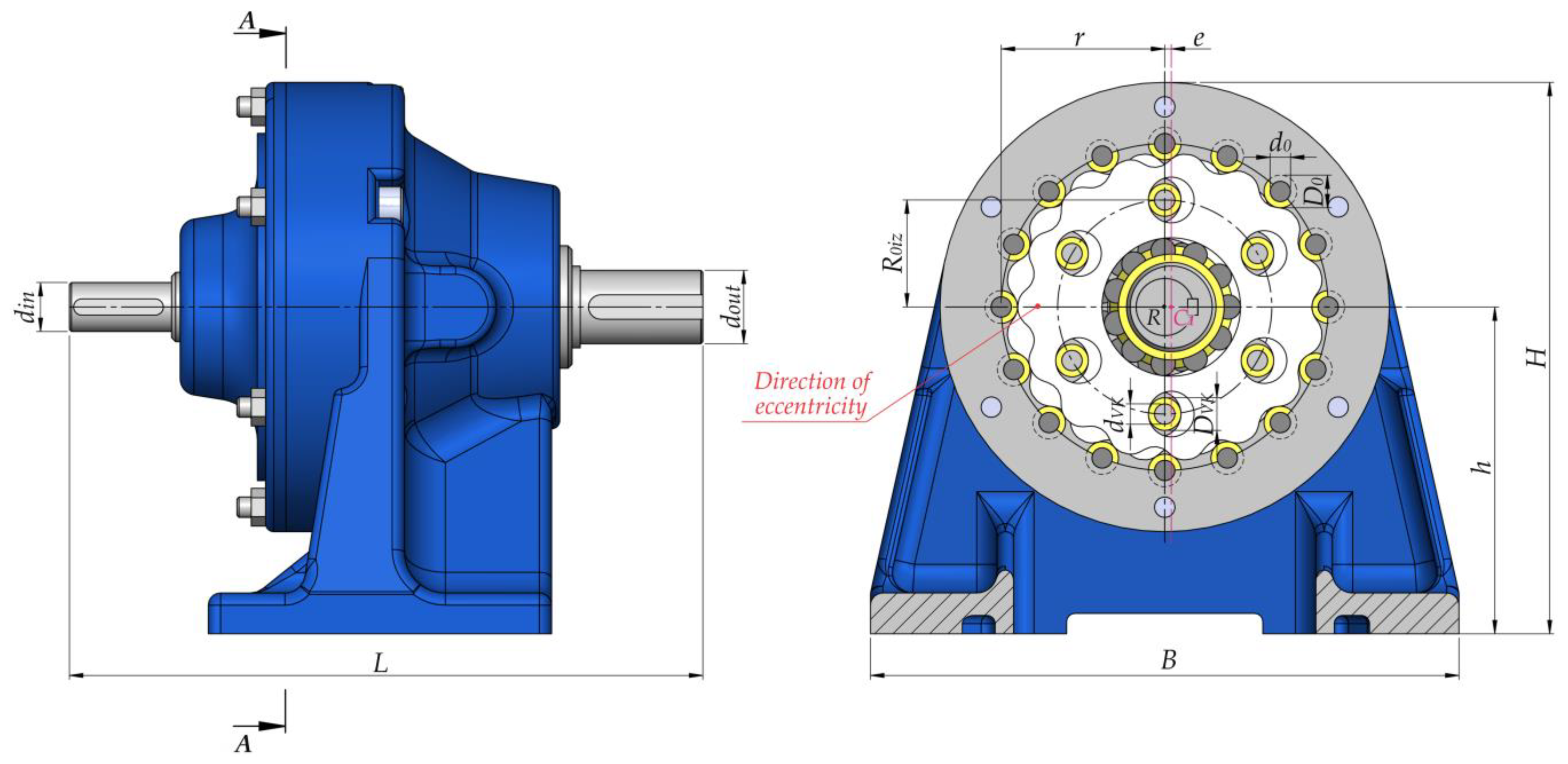
Table 1 presents the key technical characteristics of the investigated cycloidal reducer, such as its rated speed, maximum load, and mass. The basic geometric dimensions of its components, including the housing, shafts, cycloidal discs, and the corresponding rollers (ring gear and output rollers), are shown in
Figure 1, while their values are listed in
Table 2. The volume of the free space within the housing reserved for the lubricant is approximately 0.05 L.
2.2. Lubricant Selection
Cycloidal reducers and their elements are most commonly lubricated by mineral-based liquid lubricants and semi-fluid lubricants, such as greases. Synthetic lubricants, although widely used in various industrial applications, are less prevalent in this particular type of power transmission systems [
38,
39,
40].
To provide a clearer perspective on the advantages and limitations of the lubricants considered,
Table 3 presents a comparative analysis of their key characteristics.
In addition to reducing friction and wear, lubrication serves a number of other important functions, such as cooling the contact surfaces, damping impact and vibrational loads, and protecting against contaminants, corrosion, etc. For these reasons, the lubricant must possess appropriate physicochemical properties—primarily the right viscosity to ensure the formation of a stable oil film between the contact surfaces. The most commonly recommended viscosity grades for liquid lubricants (ISO) and consistency numbers for greases (NLGI) for this type of power transmission systems are presented in
Table 4.
In accordance with the above recommendations, the following lubricants were used:
Unirex N2 grease (ExxonMobil, Houston, TX, USA), a medium-consistency grease based on mineral oil and lithium soap, without extreme pressure (EP) additives and without anticorrosion protection.
Mobilgear 600 XP mineral oil (ExxonMobil, Houston, TX, USA), a high-quality lubricant containing phosphorus- and sulfur-based EP additives. It provides excellent thermal and oxidative stability, as well as outstanding anti-wear properties, which makes it suitable for heavily loaded industrial gear systems.
For the characterization of lubricants and tribological systems, relevant international standards exist, such as ISO 3448 [
41] (classification of industrial oil viscosity), as well as ISO 3104 [
42] and ISO 3675 [
43] (determination of kinematic viscosity). However, these standardized procedures were not experimentally applied within the scope of the present study. This is because the objective of the work is not a detailed tribological and rheological characterization of the lubricants but rather a comparative analysis of the influence of different lubricant types on the global performance of the cycloidal reducer, primarily in terms of thermal stability and efficiency. Accordingly, manufacturer-provided catalog data were used for the analysis, which represents a common and accepted practice in similar studies. A comparative overview of the basic properties of the applied lubricants is presented in
Table 5.
2.3. Test Bench
In order to assess the effects of lubricant type on the thermal stability and efficiency of the cycloidal reducer, calculations based on the mathematical models presented in
Appendix A and
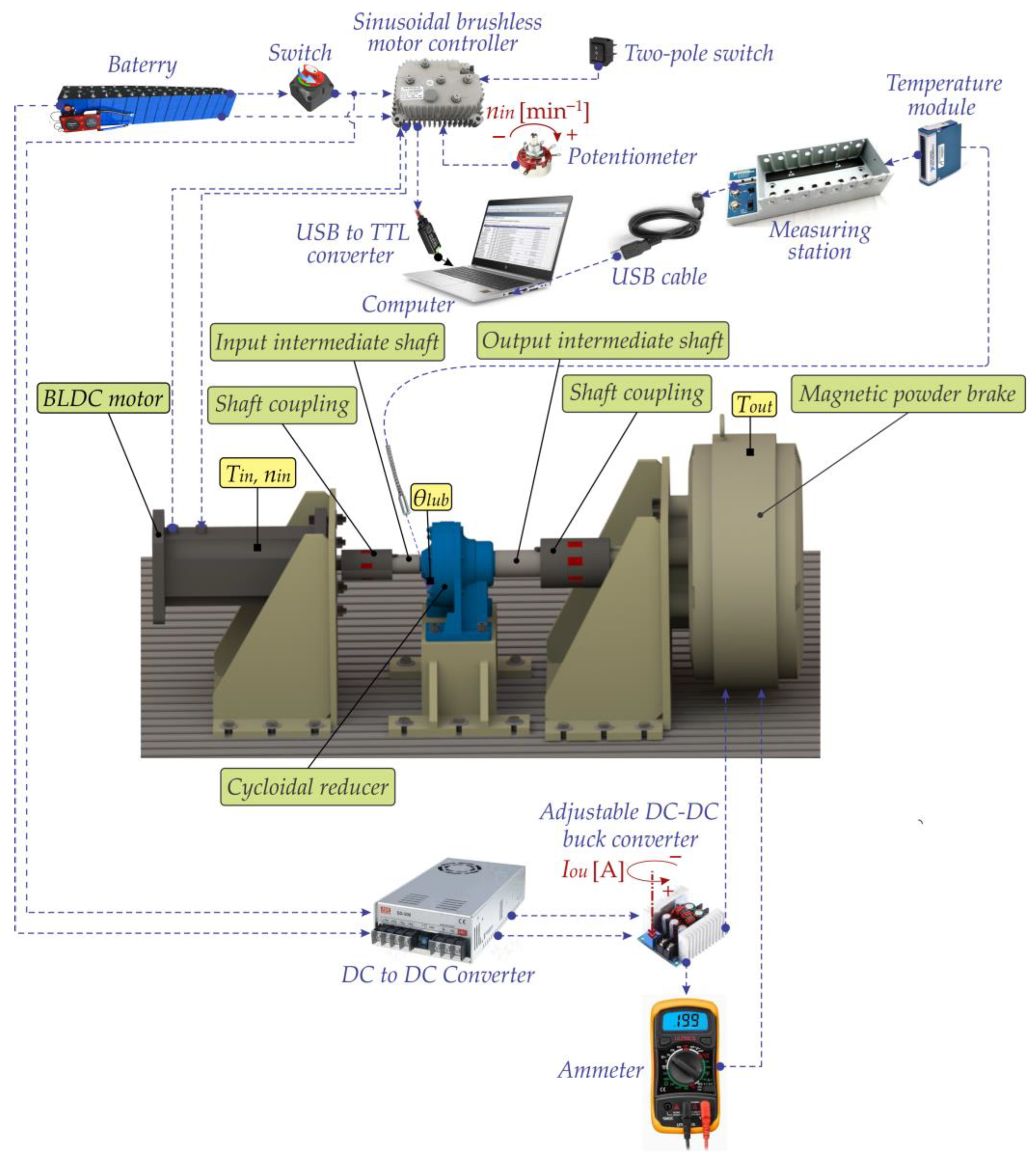
Appendix B were performed along with experimental investigations conducted on the test bench shown in
Figure 2.
The test bench consists of the following components:
A brushless DC (BLDC) drive motor (Ningbo Volcano Electric, Ningbo, China), with a rated power of 2 kW and a speed of 2500 min−1;
A magnetic brake (Chain Tail, Taichung City, Taiwan) that enables a controlled load in the range of 20 to 200 Nm;
The tested cycloidal reducer (Sumitomo, Düsseldorf, Germany), described in detail in
Section 2.1;
Power transmission elements, such as an intermediate shaft and claw couplings;
A potentiometer (Shenzhen Hainayu Electronics Co., Ltd., Shenzhen, China) that enables adjustment of the motor speed in the range from 0 to 1450 min−1;
A sinusoidal controller (Kelly Controls, Irvine, CA, USA), which regulates the motor phases based on Hall sensors;
A TTL converter (Waveshare Electronics, Shenzhen, China), connected to a computer, where the current speed, intensity, voltage, and other relevant parameters of the drive motor are recorded every second via a Python 3.12 script;
A controlled loading system, consisting of a DC/DC converter (Mean Well Enterprises Co., Ltd., New Taipei City, Taiwan), a current regulator (Zifeng Electronics, Guangzhou, China), and an ammeter (Megger Group Limited, Dover, UK) with an accuracy of ±0.5% of the reading. A direct current in the range of 0.53–0.79 A is used to control the braking torque, where each value of the direct current corresponds to a specific braking torque ;
A K-type thermocouple (Sterling Sensors, Oldham, England, UK) is connected to a computer via an NI 9211 module and an NI cDAQ–9178 measurement system (National Instruments, Austin, TX, USA), where the current lubricant temperature is monitored using SignalExpress 2015 software. The thermocouple is installed on the housing cover, rotated by 120°. The main reason for this positioning is to utilize an existing opening for adding lubricant. The accuracy of the thermocouple is ±0.4% of the reading.
Throughout the tests, the values of the following parameters were continuously recorded:
Lubricant temperature, (°C);
Ambient air temperature, (°C);
Drive motor shaft speed, ;
Drive motor direct current, ;
Magnetic brake direct current, .
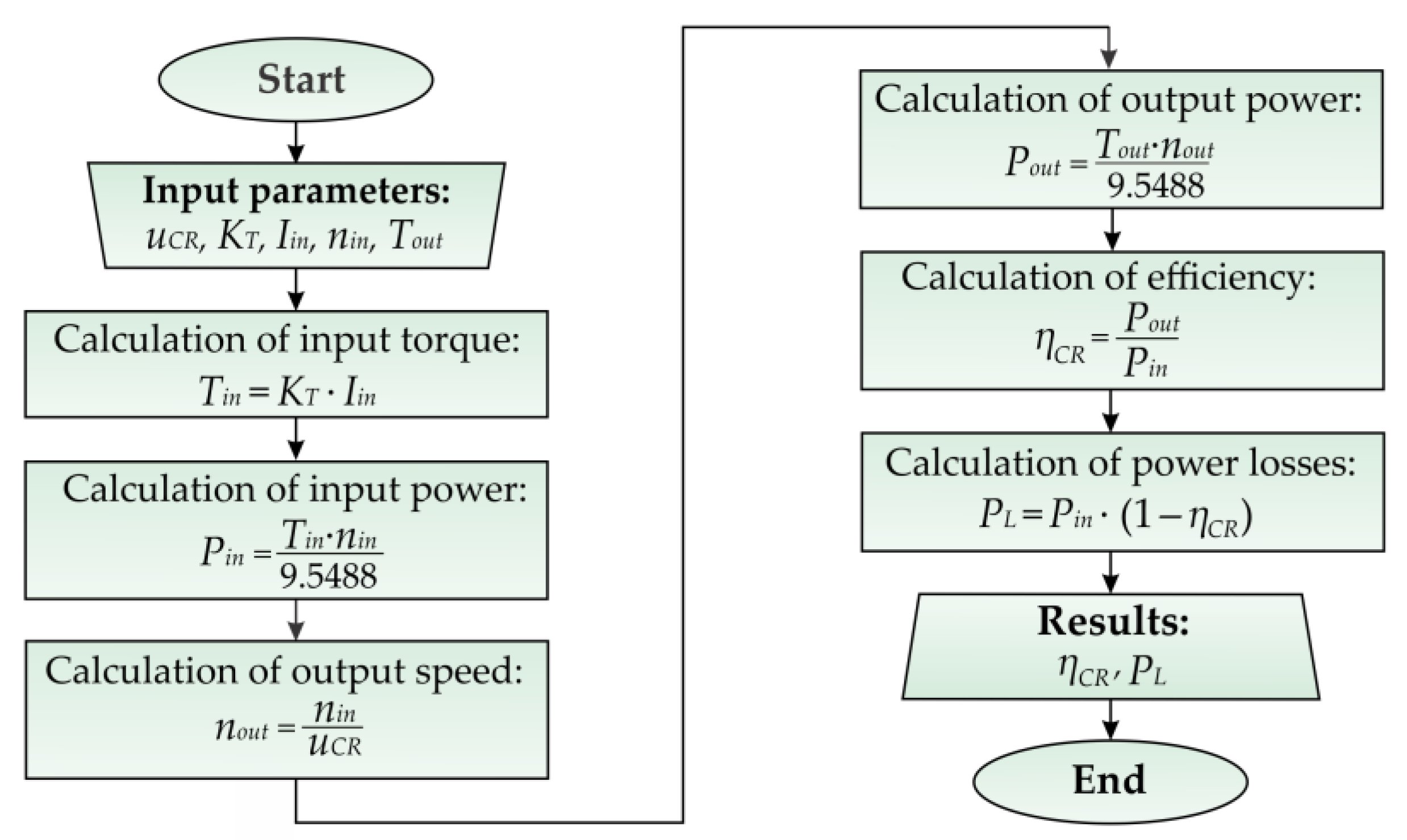
The values of other parameters, such as the efficiency
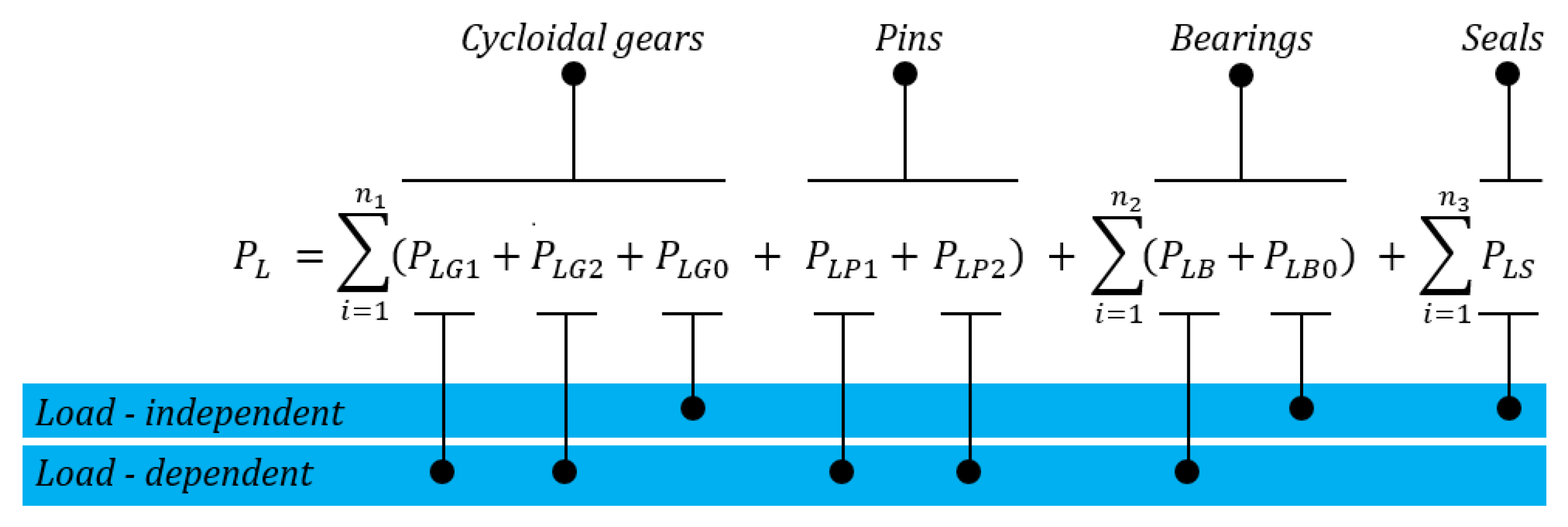
and the total power losses
, were determined based on the mathematical model, presented in the form of an algorithm in
Figure 3.
To assess the repeatability of measurements and the stability of the test setup, preliminary measurements were conducted under identical operating conditions on different days. The results showed that the standard deviation of the lubricant temperature was ±0.18%, while the deviations of the direct current of the drive motor and the magnetic brake were ±0.22% and ±0.25%, respectively. The drive shaft speed exhibited minimal fluctuations, with a standard deviation of ±0.15%, which confirms the good stability of the test bench and the reliability of the obtained experimental results.
It should also be noted that the conducted experimental investigations are subject to certain limitations. In particular, standardized measurements of lubricant viscosity as a function of temperature were not performed, nor was a direct experimental validation of the lubrication regime and the minimum oil film thickness in the contact pairs carried out. These aspects, however, represent a natural and logical direction for future research, aimed at further enhancing the tribological analysis of cycloidal reducer operation and strengthening the experimental basis of the presented conclusions.
2.4. Testing Procedure
The experimental investigations were based on varying individual operating parameters and quantifying their impact on the efficiency and thermal stability of the cycloidal reducer. Accordingly, one set of experiments focused on varying the input shaft speed while maintaining a constant load on the output shaft, whereas the other set examined the effects of changing the output shaft load at a constant input shaft speed.
The cycloidal reducer components were first lubricated with grease during assembly. After the grease had been completely removed and all the components thoroughly cleaned, the tests were repeated using mineral oil under identical operating conditions.
For lubrication with mineral oil, an immersion method was used, as this approach does not require additional pumps or complex installations and ensures uniform delivery of the lubricant to all moving components within the housing.
In order to make the results comparable, the initial conditions were kept identical for all the tests. This primarily refers to the initial temperature of the cycloidal reducer and the ambient air (.
The duration of a single test was determined through preliminary trials and it was 240 min. The test period was slightly extended because the lubricant needed some time to reach thermal stability.
Taking into account all the tests, the total duration of the experimental investigations was approximately 180 h (not including preliminary measurements).
2.5. Model for Evaluating Minimum Oil Film Thickness and Lubrication Regime
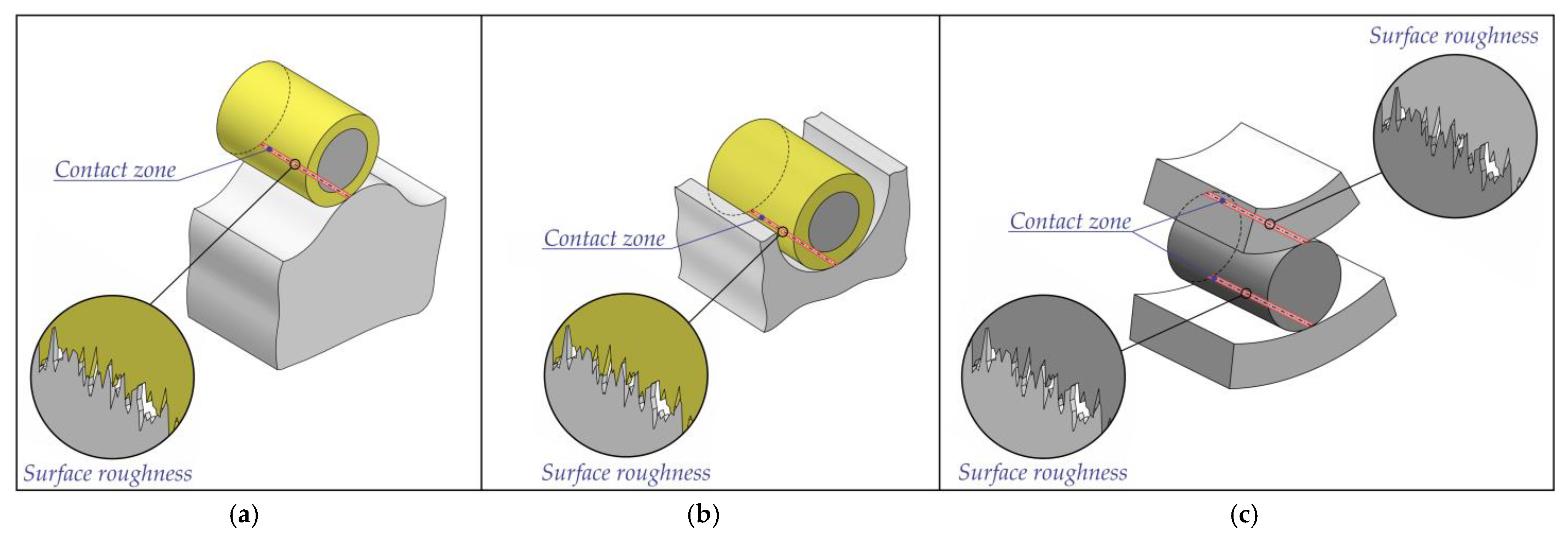
In order to identify any additional differences resulting from the use of different types of lubricant, the following section analyzes their influence on lubrication regimes and oil–film thickness. Special attention is given to the contact pairs that play a dominant role in load transmission (
Figure 4), namely:
Contacts between the ring gear rollers and the cycloidal disc teeth;
Contacts between the output rollers and the holes in the cycloidal disc;
Contacts between the eccentric bearing rollers and their raceways.
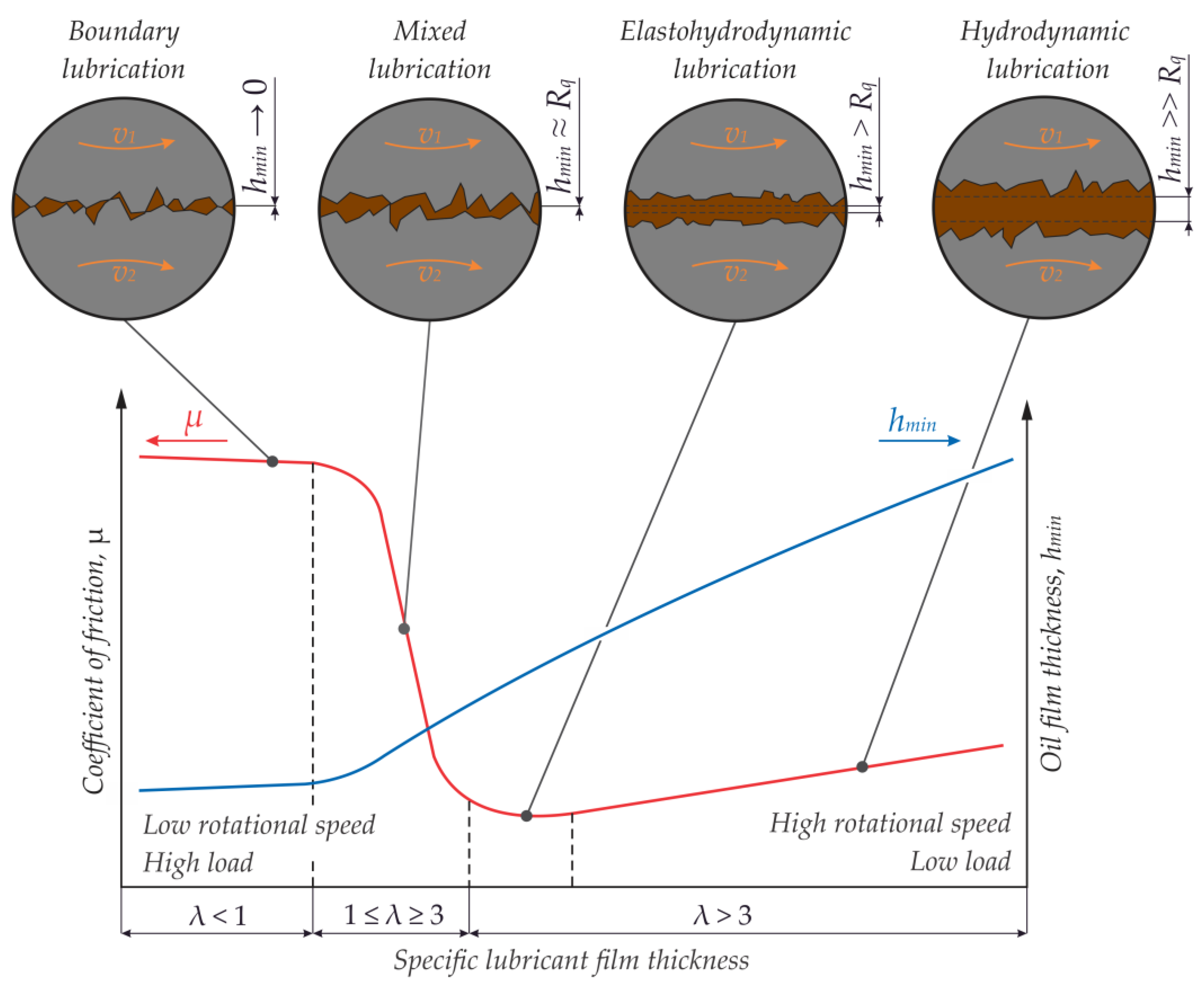
To gain insight into the behavior of these contact pairs under different lubrication regimes, the Stribeck curve was used (
Figure 5). It relates the friction coefficient
to the specific film thickness
. This dimensionless parameter describes the ratio between the actual oil film thickness
and the surface topography of the contacting bodies, represented by the root mean square roughness
. Its value can be estimated using Equation (2).
When the contact surfaces are fully separated by a thin oil film, preventing any direct interaction between the surface asperities, an elastohydrodynamic lubrication (EHD) regime is established. In this regime, the oil film is only a few hundred nanometers thick, yet it is capable of transmitting the load and preventing wear, so the value of the parameter Λ is greater than 3.
However, such ideal lubrication conditions cannot always be ensured in a cycloidal reducer, particularly under high loads and low rolling speeds. Under these circumstances, the system transitions into a mixed lubrication regime, in which the oil film is not thick enough to completely separate the surfaces, so the surface asperities occasionally come into contact. In this regime, the Λ parameter typically ranges from 1 to 3.
Since lubricants with a viscosity index above 100 are recommended for cycloidal reducers, it is very unlikely that boundary lubrication will occur. However, exceptions may arise for certain contact pairs characterized by low resultant velocities. In such cases, the Λ parameter can drop below 1, indicating dominant asperity contact and a significant increase in wear.
2.5.1. Determination of Minimum Oil Film Thickness
Numerical methods based on computational fluid dynamics (CFD) or the Navier–Stokes equation can be used to determine the minimum oil film thickness. However, these approaches require significant computational effort and may encounter numerical stability issues [
44]. Therefore, the behavior of the lubricant between two contact surfaces is generally described using the Reynolds equation, while the elastic deformation of the surfaces is accounted for using elasticity theory—typically through an elastic half-space model or the finite element method (FEM) [
45].
In addition to these complex and time-consuming methods, which enable the analysis of local and time-dependent phenomena, there are several analytically solvable approximate equations that provide sufficiently accurate results for most engineering applications. One such analytical approximation is the Dowson–Hamrock Equation (3) [
46], developed for line contacts under isothermal EHD lubrication conditions:
In this expression,
denotes the equivalent radius of curvature, while
,
and
are dimensionless parameters representing the material elasticity, speed, and load, respectively. These parameters are defined by Equations (4)–(6):
where
is the pressure–viscosity coefficient;
is the reduced Young’s modulus;
is the dynamic viscosity of the base oil at stabilized temperature;
is the lubricant entrainment velocity;
is the normal load; and
is the length of the contact.
Although Equation (3) was originally derived for liquid lubricants, it can also be applied to greases, provided that the parameters related to the base oil (the dynamic viscosity η
0 and the pressure–viscosity coefficient α
ₚ) are used. This is because, under steady operating conditions, the base oil gradually exudes from the grease matrix and becomes the active lubricant [
17,
18,
19]. However, when mixed lubrication occurs, the results obtained from Equation (3) must be regarded as approximate, since the model does not account for partial asperity contacts nor for the influence of thickeners and additives, both of which can significantly affect the oil film thickness under such conditions.
2.5.2. Effects of Temperature on Lubricant Properties
For an accurate determination of the speed parameter it is essential to know the precise rheological properties of the lubricant, namely its dynamic and kinematic viscosities at the corresponding operating temperature. In this study, the analysis was based on the values corresponding to thermal stability conditions, which is characterized by stabilized lubricant temperature and no significant fluctuations during continuous operation.
Since the experimental determination of these parameters requires advanced viscometers and precise control of operating conditions, validated empirical models [
47] were used as an alternative. These models enabled interpolation based on the values obtained at reference temperatures, thereby providing satisfactory accuracy without the need for direct measurement in each individual case.
Accordingly, the kinematic viscosity of the liquid lubricants and the base oil in the grease was determined using the modified Walther relation [
48], which is the basis of ASTM, ISO, and DIN standards. This relation is applied within the temperature range between 0.1 °C and 100 °C, provided that the kinematic viscosities at 40 °C (
) and 100 °C (
) are known. The modified Walther relation and the associated parameters are defined by Equations (7)–(10).
where
In addition to viscosity, lubricant density also influences the rheological and tribological parameters. Although variations in density are significantly smaller compared to changes in viscosity, a lubricant under high pressures in an EHD contact cannot be considered incompressible. For this reason, the dependence of density on temperature is approximated by the empirical Equation (11) [
19]:
where
is the lubricant density at a temperature of 15 °C, and
is a coefficient dependent on the lubricant density, also at 15 °C. For lubricants with densities between 831 and 950 kg/m
3, the value of this coefficient is 0.65, while for lubricants with densities from 951 to 1000 kg/m
3, it is 0.60 [
19].
Based on the thus-obtained density and the previously calculated kinematic viscosity of the lubricant, the dynamic viscosity at the thermally stable temperature was determined using Equation (12):
2.5.3. Lubricant Entrainment Velocity
In addition to the rheological characteristics of the lubricant, the lubricant entrainment velocity also plays an extremely important role in accurate determination of the speed parameter
. It is defined as the mean circumferential velocity of the contacting elements. Its value is estimated using Equation (13):
In this paper, the resultant velocity of the cycloidal disc teeth and the ring gear rollers was estimated using the Atanasopoulos model [
49], which is based on the projection of the velocities arising from different types of motion onto the direction of the common tangent (Equation (14)). The following motions were considered: the rotational motion of the moving axis of the cycloidal disc
around the central axis of the cycloidal reducer
, the rotation of the cycloidal disc around its moving axis
, and the rotation of the instantaneous pole of rotation
around the central axis of the cycloidal reducer
.
where
is the angular velocity of the input shaft,
is the angular velocity of the output shaft,
is the eccentricity,
is the distance between the contact surface of the
i-th ring gear roller and the central axis of the cycloidal disc,
is the distance between the instantaneous pole of rotation
and the center of the
i-th ring gear roller,
is the distance between the instantaneous pole of rotation
and the center of the
i-th ring gear roller,
is the radius of the ring gear roller,
is the angle between the direction of the normal contact force of the
i-th ring gear roller and the direction
,
is the angle between the direction of the normal contact force of the
i-th ring gear roller and the direction
,
is the angle between the direction of the normal contact force of the
i-th ring gear roller and the direction
.
In contrast to the resultant velocity between the cycloidal disc teeth and the ring gear rollers, which varies in direction, sense, and magnitude depending on the rotation angle
, the contact velocity between the output rollers and the holes of the cycloidal disc has a constant value and was estimated using Equation (15) [
1,
25,
50]:
where
is the diameter of the hole in the cycloidal disc and
is the diameter of the output rollers.
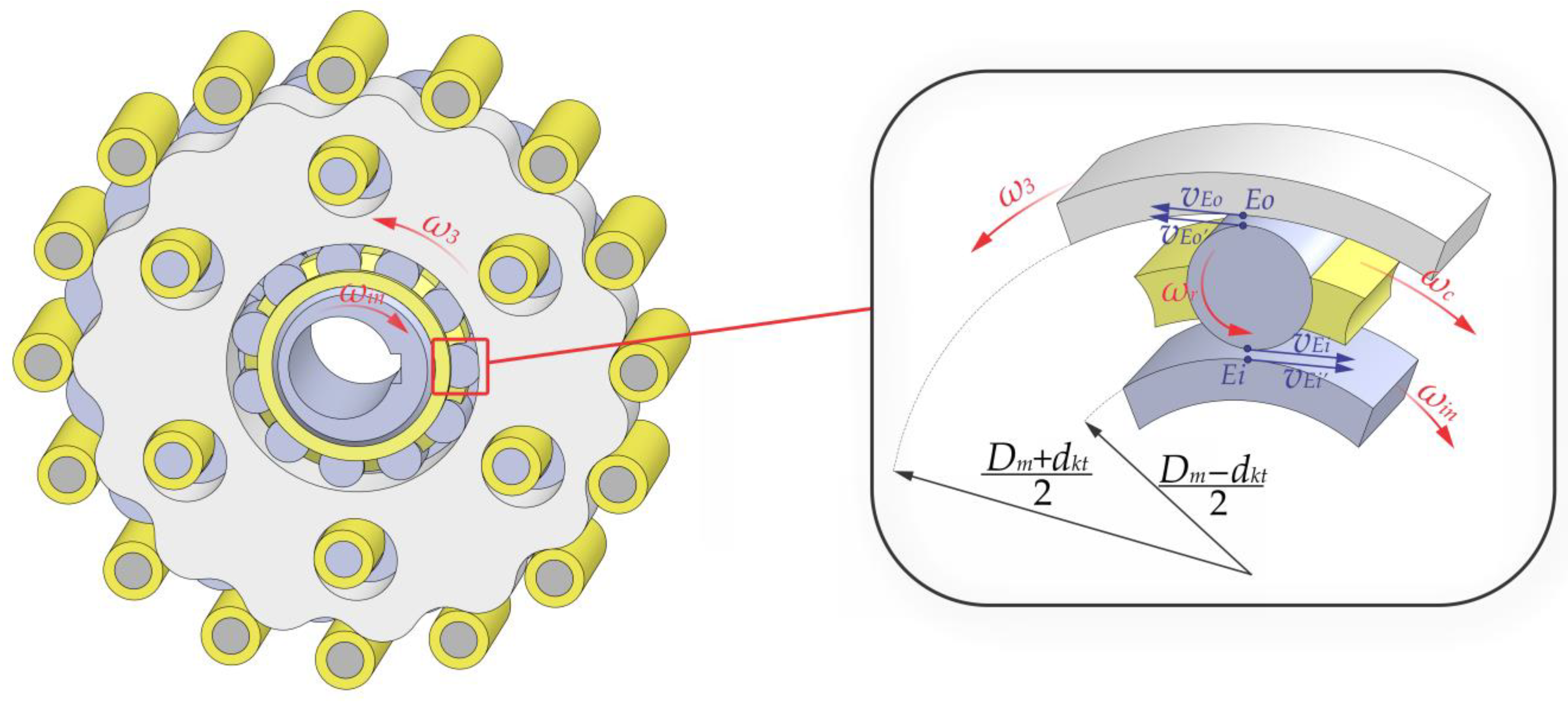
In addition, the resultant velocity at the contact between the eccentric bearing rollers and the central hole in the cycloidal disc and the velocity at the contact between the eccentric bearing rollers and their inner raceways were also analyzed. For this purpose, a mathematical model developed based on the kinematic analysis of the meshing of the eccentric bearing elements was used (
Figure 6). It should be noted that this involves a cylindrical roller bearing in which the rolling paths rotate in opposite directions at different angular velocities.
The velocities at the contact surfaces between the rollers and the inner raceways
, as well as between the rollers and the outer raceways
can be expressed in terms of the angular velocity of the input shaft
, the angular velocity of the cycloidal disc
and the corresponding radii of the contact circles. These velocities are given by Equations (16) and (17):
where
is the mean diameter of the eccentric bearing, defined as
, with
being the outer diameter and
the inner diameter of the eccentric bearing, and where
is the diameter of the eccentric bearing roller.
Similarly, the velocities
and
can also be expressed in terms of the angular velocities of the rollers
and the cage
as well as the corresponding radii of the contact circles. These velocities are given by Equations (18) and (19):
If it is assumed that there is no slipping at the contact points between the raceways and the rollers, the velocities of the points on the roller axes
, and consequently the velocities of the points on the axes of the cage holding the rollers, must be equal to the arithmetic mean of the velocities on the inner and outer raceways, as given by Equation (20):
In contrast, the velocities of the points on the cage axis
can be determined using the angular velocity of the cage
and the radius of the cage
, as given by Equation (21):
Thus, the angular velocity of the cage
can be expressed as given by Equation (22):
The total rolling velocity in the contact zone between the rolling elements of the eccentric bearing and the central hole of the cycloidal disc
, as well as the total rolling velocity in the contact zone between the rolling elements of the eccentric bearing and the inner raceway
, can now be determined as given by Equations (23) and (24):
where the angular velocity of the eccentric bearing rollers
is determined as given by Equation (25):
2.5.4. Contact Forces Distribution
Since multiple contacts occur between the cycloidal disc and the corresponding rollers (ring gear, output, and eccentric bearing rollers), the load distribution is extremely complex and cannot be determined solely from the static equilibrium equations. Therefore, validated mathematical models based on the classical Hertzian contact theory for statically indeterminate systems or numerical methods based on the finite element method (FEM) are used to determine the contact forces [
51,
52].
In this study, the contact forces between the cycloidal disc teeth and the ring gear rollers, as well as between the output rollers and the holes of the cycloidal disc, were determined using Lehmann’s mathematical model. This model treats each contact generated during the rotation of the cycloidal disc around the instantaneous pole of rotation as a spring with variable stiffness which depends on the curvature of the contact surfaces and the corresponding contact deformations. The model is described in detail in reference [
2], while the contact surfaces during one full revolution of the cycloidal disc are analyzed in the following sections.
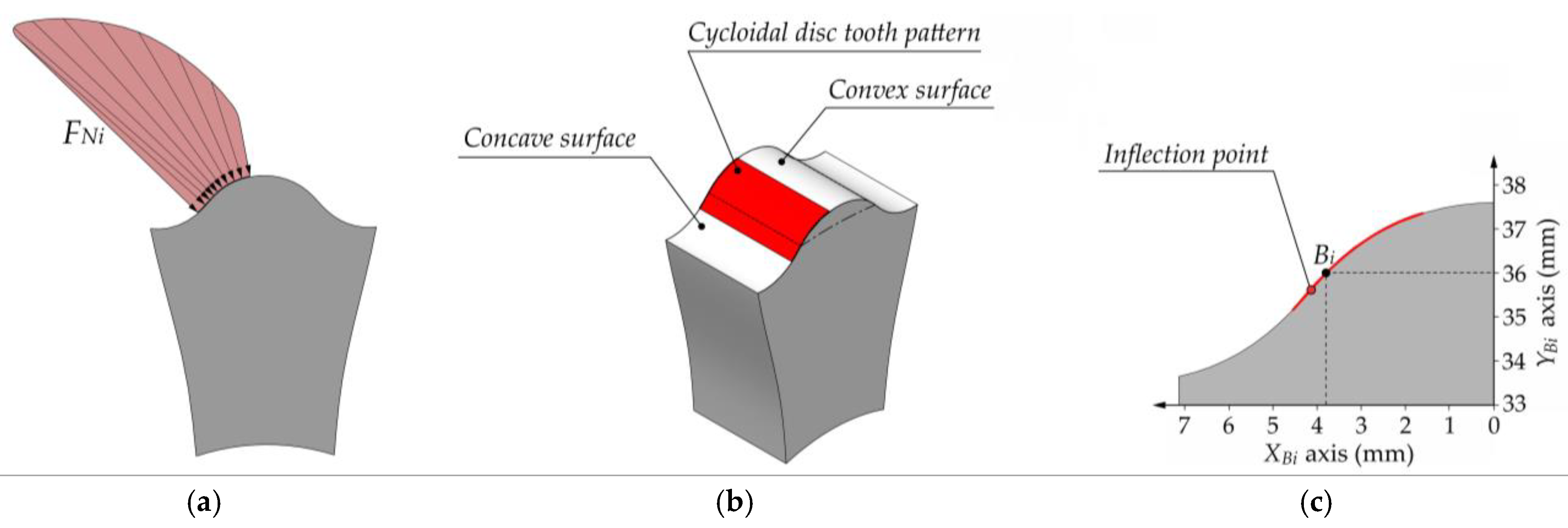
Since the tooth profile of the cycloidal disc is generally designed as an equidistant of a shortened epitrochoid, the tooth profile contains both convex and concave regions. The ring gear rollers, on the other hand, are strictly convex surfaces, so the meshing between the cycloidal disc and the ring gear rollers involves contacts either between two convex surfaces or between a convex and a concave surface.
Figure 7 shows the extent to which these two tooth profile surfaces participate in the meshing process over one full revolution of the cycloidal disc.
As can be observed, at the beginning of the meshing process, the contact is established on the convex surface, whereas towards the end of the meshing process, the contact shifts to the concave surface. If the rotation direction of the driving shaft were reversed, the contact pattern would remain the same, but it would appear on the opposite side of the tooth profile. This distribution is the same for the other teeth, which are not shown in this
Figure 7.
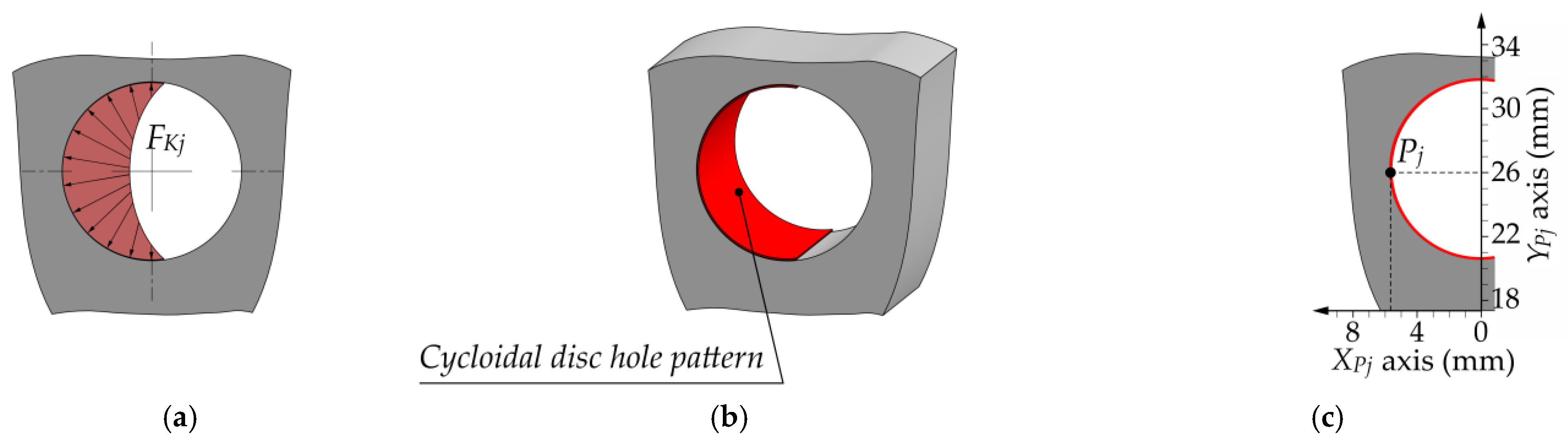
Figure 8a shows the distribution of output forces along the periphery of the cycloidal disc holes during one full revolution. This distribution is identical for the other holes, not shown in
Figure 8, differing only by a phase shift of 60°. The figure also illustrates the contact pattern, as well as the coordinates of the center of the instantaneous contact area between the
j-th output roller and the hole in the cycloidal disc,
, relative to the central axis of the cycloidal disc.
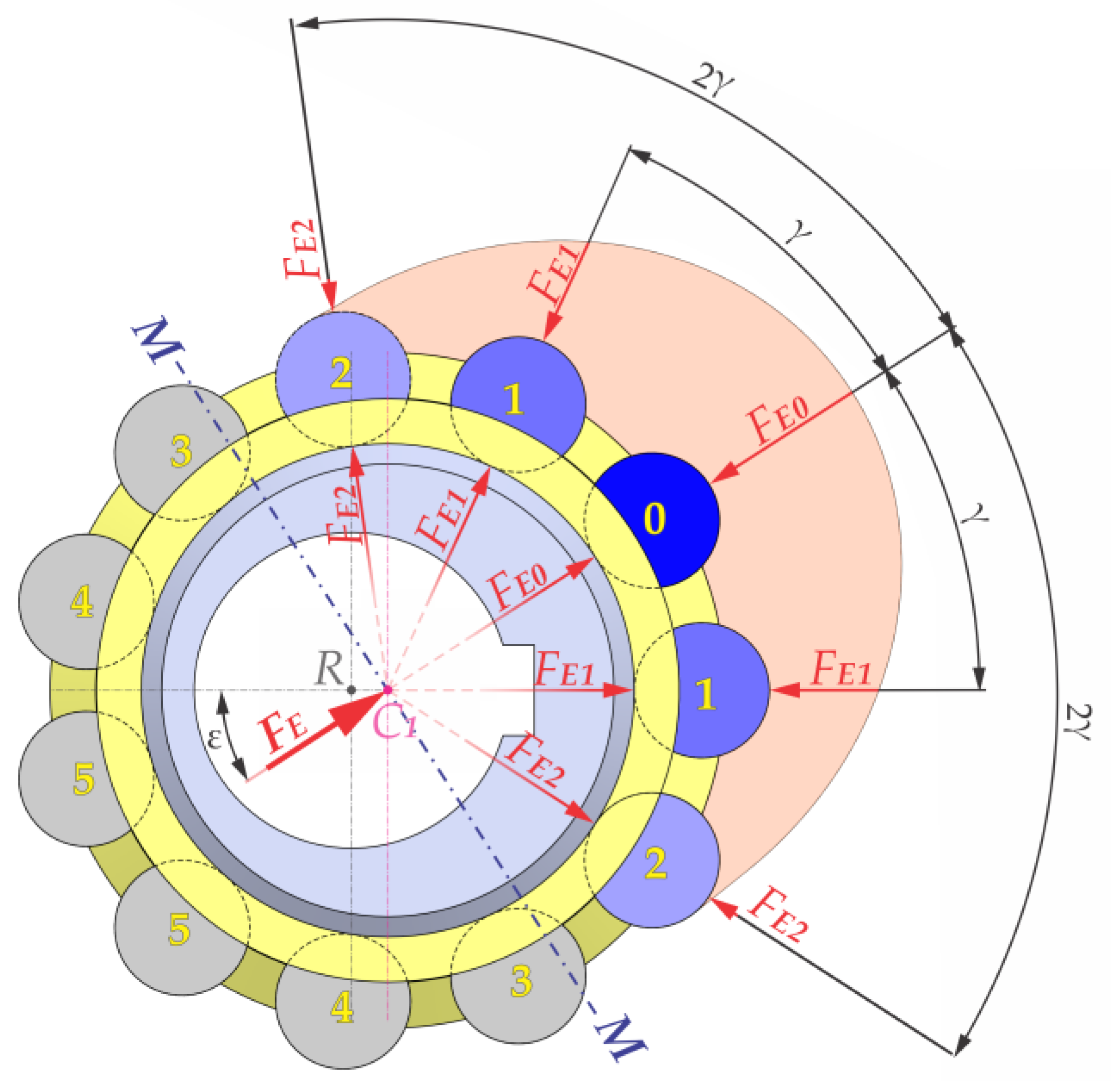
Most contact analyses typically focus on the load distribution between the cycloidal disc teeth and the ring gear rollers and between the output rollers and the holes in the cycloidal disc. However, this study also examines the load distribution between the eccentric bearing rollers and their corresponding raceways. For this purpose, a mathematical model based on the following assumptions was employed:
The rollers of the eccentric bearing are stationary, so centrifugal forces can be neglected.
The spacing between these rollers remains constant.
The direction of the eccentric force
always passes through the axis of a roller (
Figure 9).
Due to the presence of internal radial clearances, the zone of loaded rollers spans 150° and is located below the meridional plane .
The loaded rollers beneath the meridional plane do not participate equally in the load transfer.
The roller is positioned along the line of action of the eccentric force transmits the highest load, while the load on the remaining rollers decreases as the angle between the analyzed roller and the line of action of the eccentric force increases.
The equilibrium Equation (26) for this type of load distribution can be expressed as follows:
where
is the load transmitted by the roller positioned along the line of action of the eccentric force—the most heavily loaded rolling element;
is the load transmitted by the
-th roller;
is the angular pitch of the rollers (
); and
is the total number of rollers in the bearing.
The values of these loads can be estimated using Equations (27) and (28), which are derived based on the classical Hertzian theory for line contacts:
2.5.5. Equivalent Radius of Curvature
The equivalent radius of curvature is an important geometric parameter for the analysis of the instantaneous contact between the cycloidal disc and the corresponding rollers (ring gear, output, and eccentric bearing rollers). Its value at any instant of contact can be determined as follows:
For the contact between the convex surfaces of the ring gear rollers and the cycloidal disc teeth, Equation (29) is used:
where
is the radius of the ring gear roller and
is the curvature radius of the cycloidal disc tooth.
For the contact between a convex and a concave surface of the ring gear rollers and the cycloidal disc teeth, Equation (30) is used:
For the contact between the output rollers and the holes in the cycloidal disc, Equation (31) is used:
where
is the radius of the cycloidal disc hole, and
is the radius of the output roller.
For the contact between the eccentric bearing rollers and the inner raceway, Equation (32) is used:
where
is the radius of the inner raceway of the eccentric bearing, and
is the radius of the eccentric bearing.
For the contact between the eccentric bearing rollers and the outer raceway, Equation (33) is used:
where
is the radius of the outer raceway of the eccentric bearing.
To determine the radius of curvature of the cycloidal disc tooth
, which varies continuously depending on the rotation angle of the cycloidal disc
, the procedure detailed in reference [
53] can be used. The final expressions are given by Equations (34) and (35).
where
is the radius of curvature of the center of the ring gear roller;
is the pitch circle radius along which the ring gear rollers are arranged;
is the tooth profile modification coefficient;
is the number of cycloidal disc teeth; and
is the number of ring gear rollers. The + sign is used for the contact between a convex and a concave surface, while the − sign is used for the contact between two convex surfaces.
2.5.6. Algorithm
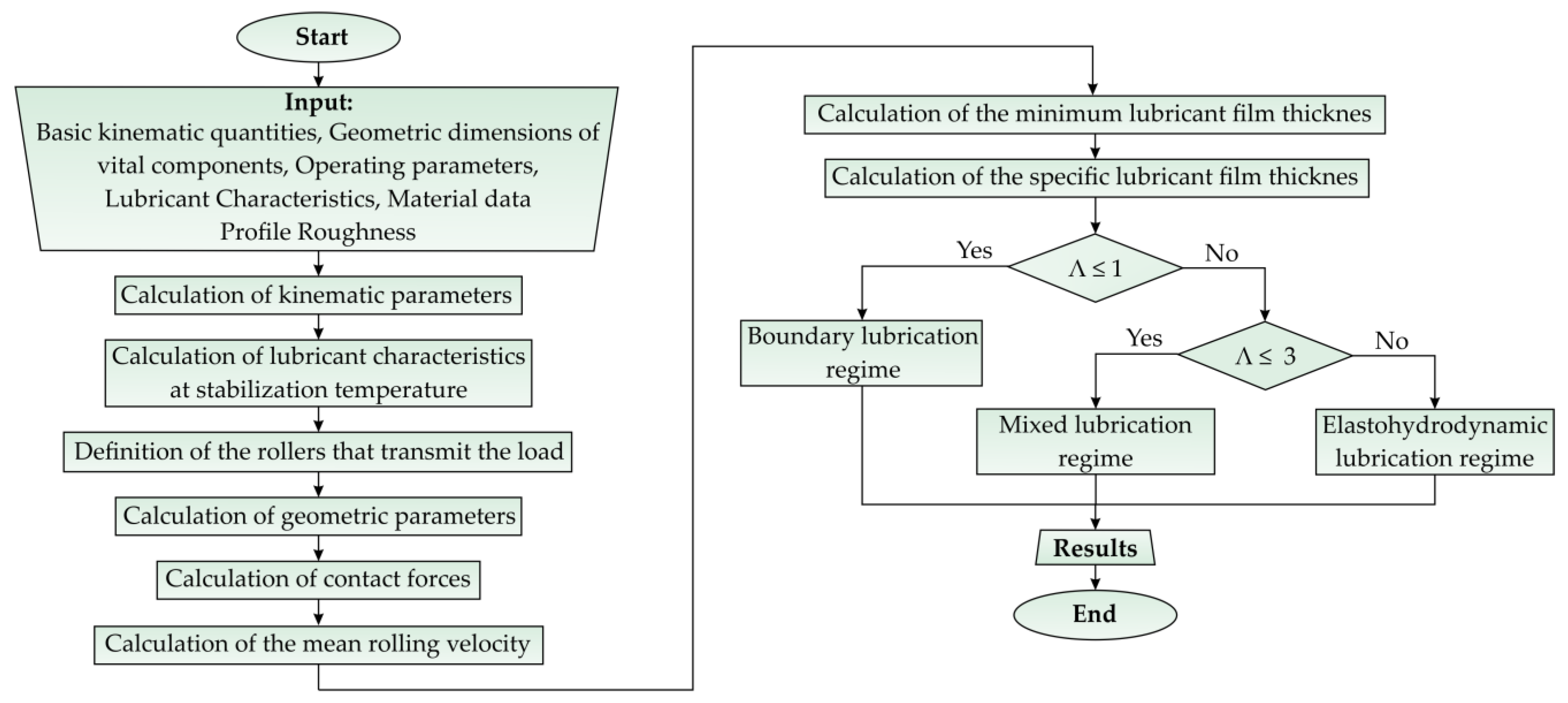
Since there is a large number of contact zones and the lubricant film thickness varies with the cycloidal disc rotation angle, solving the presented mathematical models is practically impossible without extensive use of computer software, especially when the effects of lubricant type, contact forces, and other influencing parameters are taken into account. Therefore, all analytical calculations were performed in the Matlab 2017 environment. The algorithm describing the calculation procedure is shown in
Figure 10.
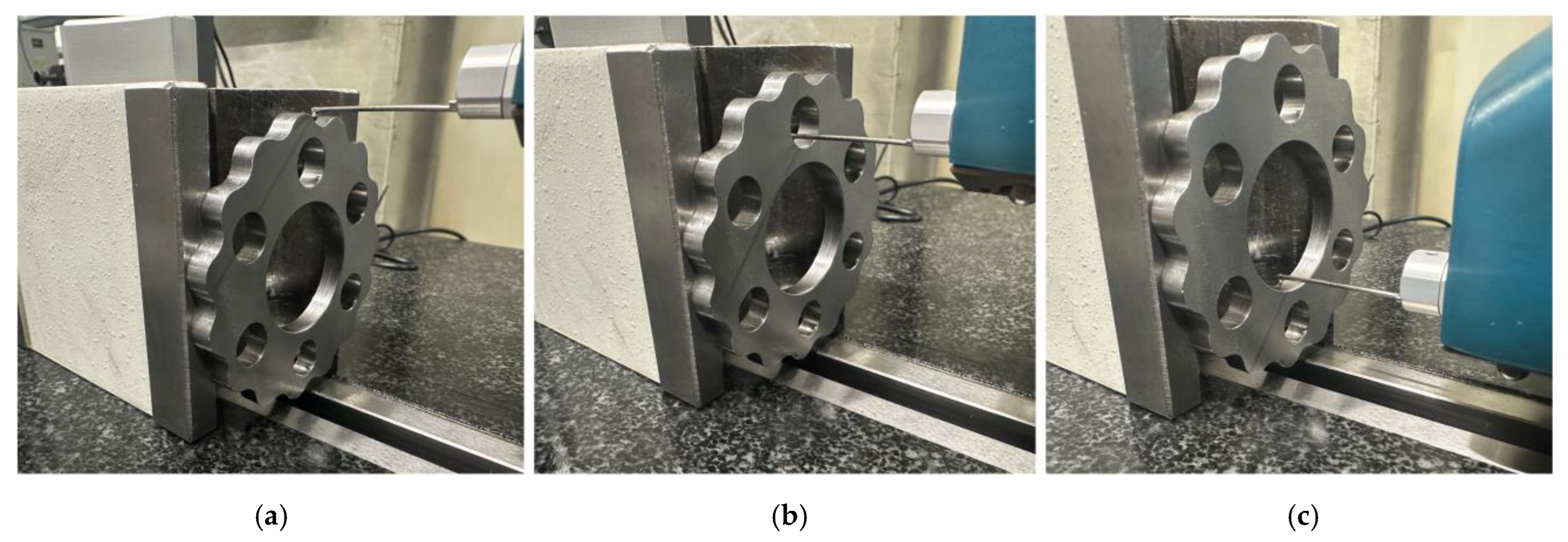
2.6. Roughness Measurement
To evaluate the surface roughness of the contact surfaces of the contact pairs, an optical profilometer JENOPTIK Waveline W20 (JENOPTIK Industrial Metrology Germany GmbH, Villingen—Schwenningen, Germany) was used (
Figure 11). For the definition of roughness parameters and the measurement procedure, recommendations from the international standards ISO 4287 [
54] and ISO 4288 [
55] were applied, which are commonly used for the profile characterization of surface texture in tribological analyses. Based on these standards, the values of the arithmetic mean roughness
, the mean roughness height
, and the maximum roughness height
of the contact surfaces were directly measured under the following conditions: traverse length 4.8 mm, speed 0.50 mm/s, probe type T3. The measurements were taken at three locations per sample. The mean values were considered representative, with the standard deviation not exceeding 0.1% of the calculated mean values.
Unlike the aforementioned parameters, the values of the root mean square roughness of the profile from the mean line
were not measured directly but were estimated by multiplying the mean roughness
by a coefficient of 1.25, as given by Equation (36). This approach is justified if it is assumed that the height profile of the contact surfaces follows a Gaussian distribution [
56].
3. Results and Discussion
3.1. Efficiency and Total Power Losses as a Function of Operating Conditions and Lubricant Type
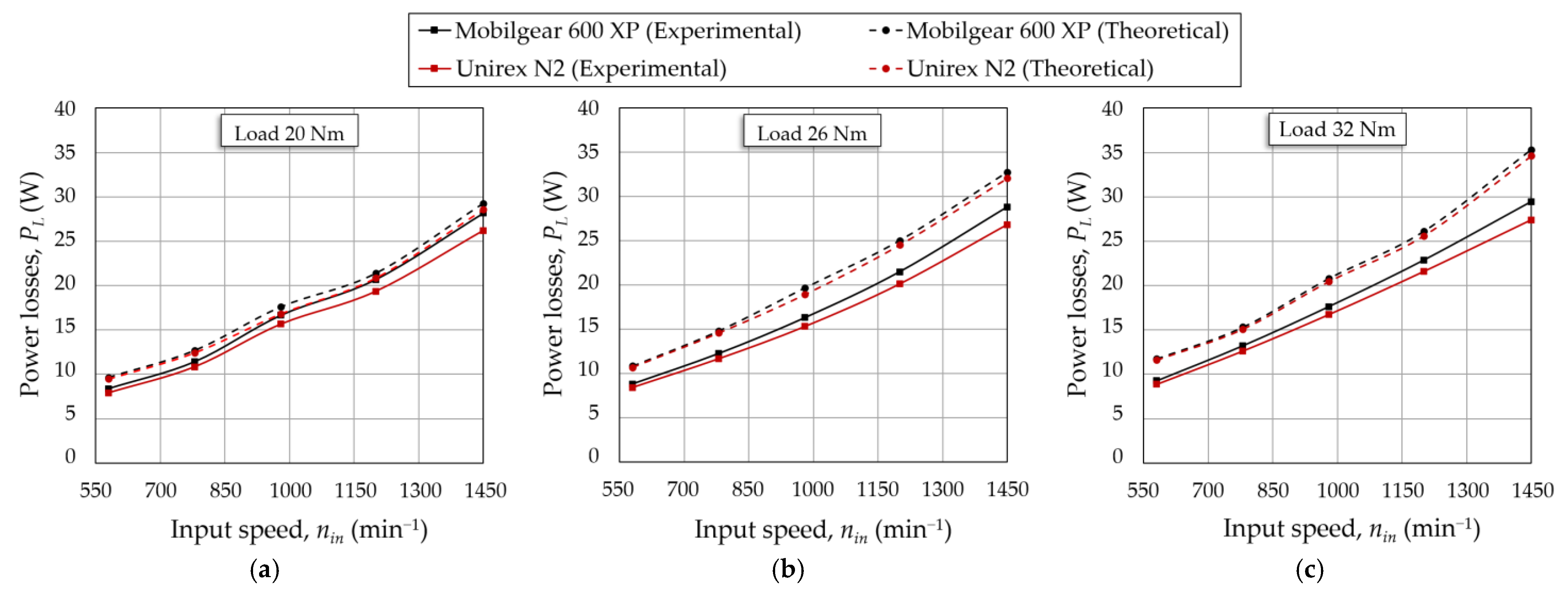
Figure 12 illustrates the dependence of the total power losses on the input speed for different lubricant types and load levels. The tests were carried out for three levels of steady loads
(20; 26; 32)
and five values of the input speed
(580; 780; 980; 1200; 1450)
, thus covering the typical operating range of industrial cycloidal reducers.
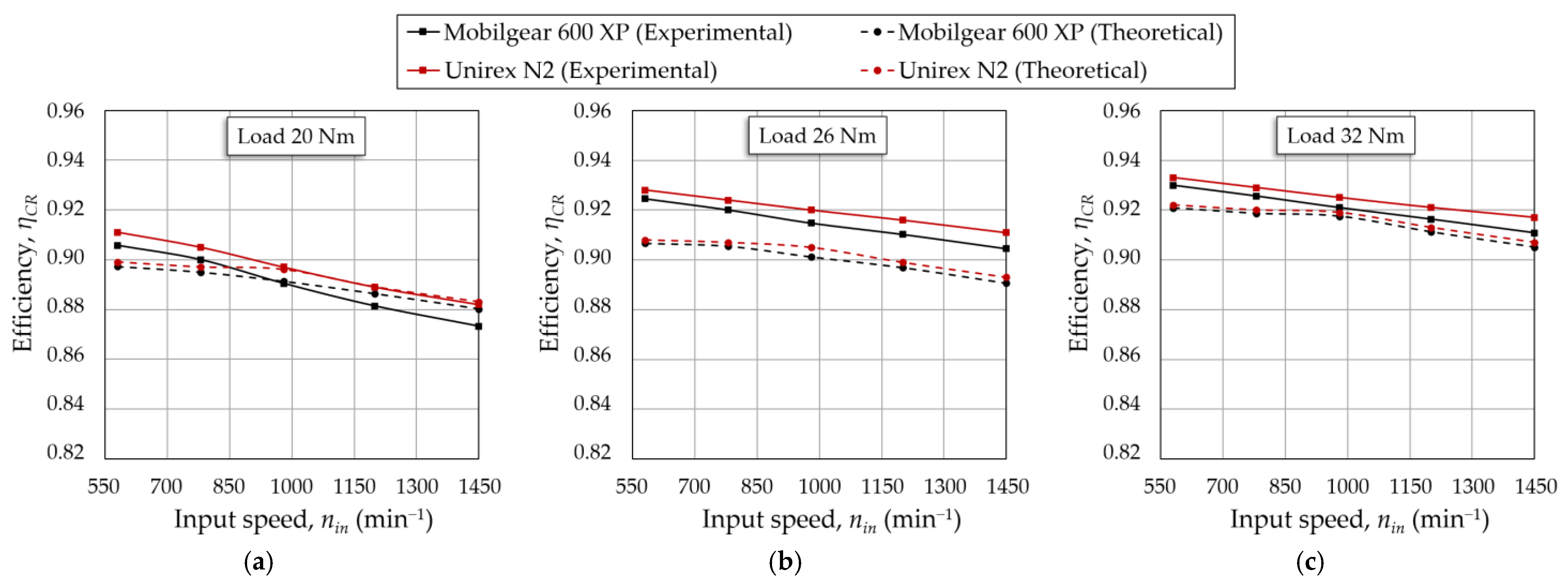
The obtained experimental results clearly show that the gear oil Mobilgear 600 XP (150) generates higher total power losses compared to the grease Unirex N2, on average by 5.71% (max. 6.96%). This is somewhat unexpected, since oils generally exhibit better cooling capability and lower flow resistance. The observed difference is particularly pronounced at higher speeds (≥980 min−1), because increasing the speed, while maintaining the same load, leads to higher total power losses. Increasing the torque from 20 Nm to 32 Nm also results in a moderate rise in power losses. However, the increase in load has a secondary effect on the power losses when compared to the input speed and the type of lubricant.
Therefore, the grease Unirex N2, although often undervalued in terms of energy efficiency, provides higher efficiency
across all tested operating regimes, with an average increase of 1.56% (max. 2.03%), as shown in
Figure 13. This difference is most pronounced at higher torques
(26; 32)
and lower speeds. This could be explained by the specific way the grease is distributed during operation—the excess grease moves out of the active motion zone, forming a lubricating channel and leaving only the necessary amount of grease in the contact area. In contrast, oil, due to its lower viscosity and higher fluidity, continuously circulates within the contact zone, leading to more intensive churning and squeezing, and consequently to higher operating temperatures. It should be noted that the suggested mechanism of grease redistribution is a phenomenological hypothesis, derived from observed trends and literature reports [
57]. Definitive mechanistic conclusions would require direct experimental measurements of grease flow and local film thickness, which were not conducted in the present study.
Taking reasonable deviations into account, the analytical calculations show satisfactory agreement with the experimentally measured values, although the analytical models tend to yield slightly higher values, particularly under grease lubrication. The deviation in power losses is 14.5% (max. 22.35%) on average, while the deviation in efficiency averages 1.31% (max. 2.16%). It is important to note that the experimental results are reported as mean values obtained during the final 60 min of the 4-h testing period, as the cycloidal reducer reaches thermal stability within this interval. The standard deviation estimated from the dataset does not exceed 0.5% of the calculated mean values. Due to this exceptionally low statistical variability, the corresponding error bars would be smaller than the symbol size and therefore are not shown in the graphical representations. This confirms the high repeatability of the measurements and the stable operating conditions during the steady-state regime.
3.2. Lubricant Stabilization Temperature as a Function of Operating Conditions and Lubricant Type
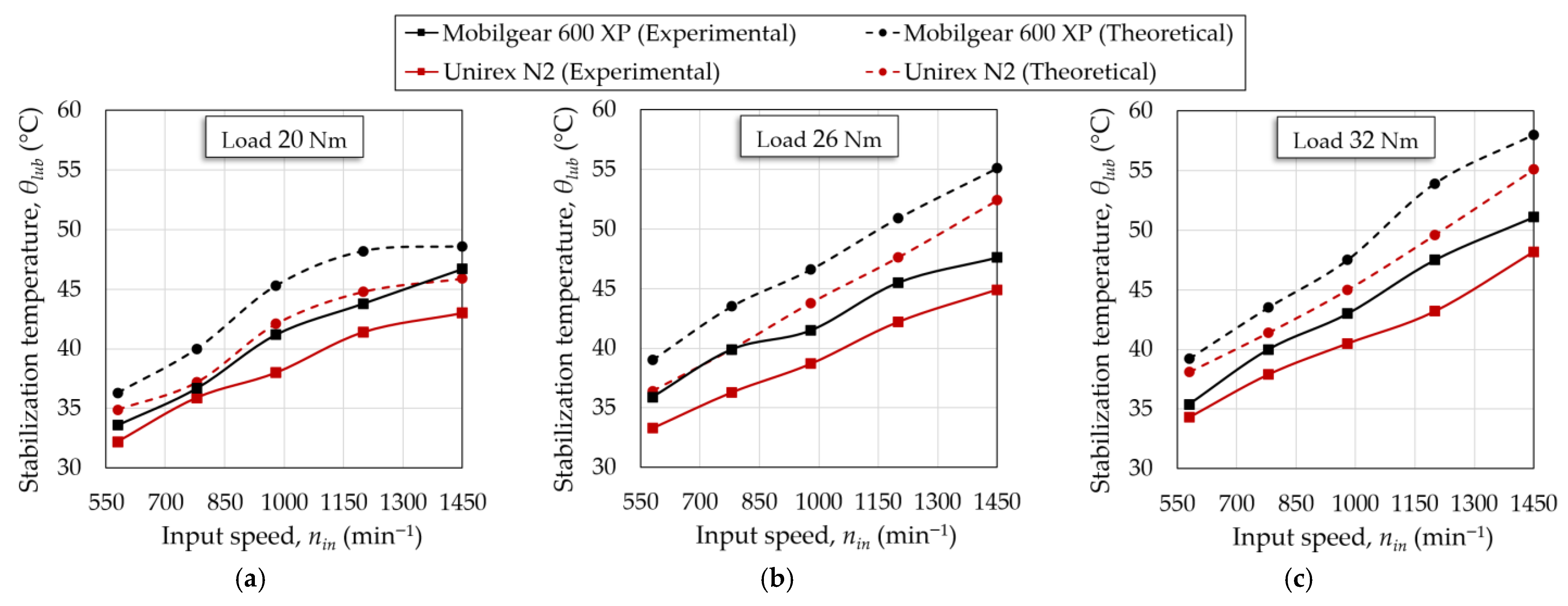
Figure 14 shows the dependence of the lubricant stabilization temperature on the input speed for different lubricant types and load levels. Although the lubricant stabilization temperature was continuously monitored throughout the tests, the average temperature recorded during the last 60 min of the four-hour test was adopted as the reference value, because the system reaches a steady state within this period. The standard deviation estimated for the dataset does not exceed 0.3% of the calculated mean values. Due to the very low statistical variability, the corresponding error bars would be smaller than the symbol size and therefore are not shown in the graphical representations.
The results clearly show that the gear oil Mobilgear 600 XP (150) leads to an increase in the lubricant stabilization temperature under all operating conditions, with an average increase of 6.83% and a maximum of 9.95%. Moreover, this temperature difference tends to increase with increasing input speed. One possible explanation for this phenomenon may be the specific manner in which grease is distributed at higher speeds, an effect not observed under oil lubrication. This explanation is consistent with experimental observations reported in previous studies [
57] and should be considered indicative, as a direct quantitative validation of this mechanism was not performed in the present work.
Taking reasonable deviations into account, the analytical results show good agreement with the experimentally measured values. The deviations in the obtained lubricant stabilization temperatures average 9.6% (max. 13.95%).
3.3. Minimum Lubricant Film Thickness as a Function of Operating Conditions and Lubricant Type
Based on the measured lubricant stabilization temperatures, the subsequent section presents the calculated minimum oil film thickness for the analyzed contact pairs. This calculation was not experimentally verified; rather, it is intended to provide a relative assessment of the minimum film thickness for different lubricant types under identical operating conditions. The tests were performed for two steady load levels (20; 32) , and two input speeds (580; 1450) .
Since the minimum lubricant film thickness is analyzed once the system has reached a steady state, it is assumed that the grease has released a sufficient amount of base oil to form a stable lubricating film that fully separates the contact surfaces. For this reason, lubricant starvation conditions are not considered in the analysis, and the results reported for grease refer to its base oil.
The pressure–viscosity coefficient
was adopted from the AGMA 925–A03 standard [
58], since manufacturers of commercially available lubricants (e.g., Unirex N2 and Mobilgear 600 XP) do not report this parameter in their technical documentation (
Table 6). Experimental determination of this coefficient would involve highly nonlinear rheological models and viscosity measurements under high pressures, which exceeds the scope of this research. Therefore, for the mineral gear oil ISO VG 150 (Mobilgear 600 XP) operating in the range of 30–50 °C, the recommended pressure–viscosity coefficient is
≈ (1.3–2.0) × 10
−8 Pa
−1. For the mineral-based lithium grease (Unirex N2, base oil ≈ 115
), higher values are recommended for the same temperature range, namely
≈ (1.8–2.8) × 10
−8 Pa
−1. Although these values are considered reliable engineering approximations and are widely used in EHD calculations, their accuracy is limited by the fact that
may vary depending on the specific chemical formulation of the lubricant and the actual operating conditions (primarily the contact pressure). Therefore, the obtained results should be regarded as valid only for qualitative and approximate quantitative assessment.
Since the centers of the contact surfaces along the cycloid disc tooth profile constantly change their position during the meshing process, they are described by the radius , defined as the distance between the center of the i-th contact surface and the central axis of the cycloidal disc. The centers of the contact surfaces between the output rollers and the holes in the cycloidal disc are defined in the same manner, using the radius . In contrast, the centers of the contact surfaces on the i-th roller of the eccentric bearing are defined using the angular distance between the center of the i-th eccentric bearing roller and the meridional plane (angle ). It should be noted that the angular position of the most heavily loaded rolling element relative to the meridional plane M–M exhibits a certain degree of variability because it depends on the cycloidal disc driving angle . Analysis of the obtained data shows that this angle varies approximately between 30.7° and 34.5°, which affects the change in the direction of the maximum load due to the rotation of the cycloidal disc. However, to simplify the estimation of the minimum oil film thickness, the mean value of the angle was adopted: ε = 32.47°.
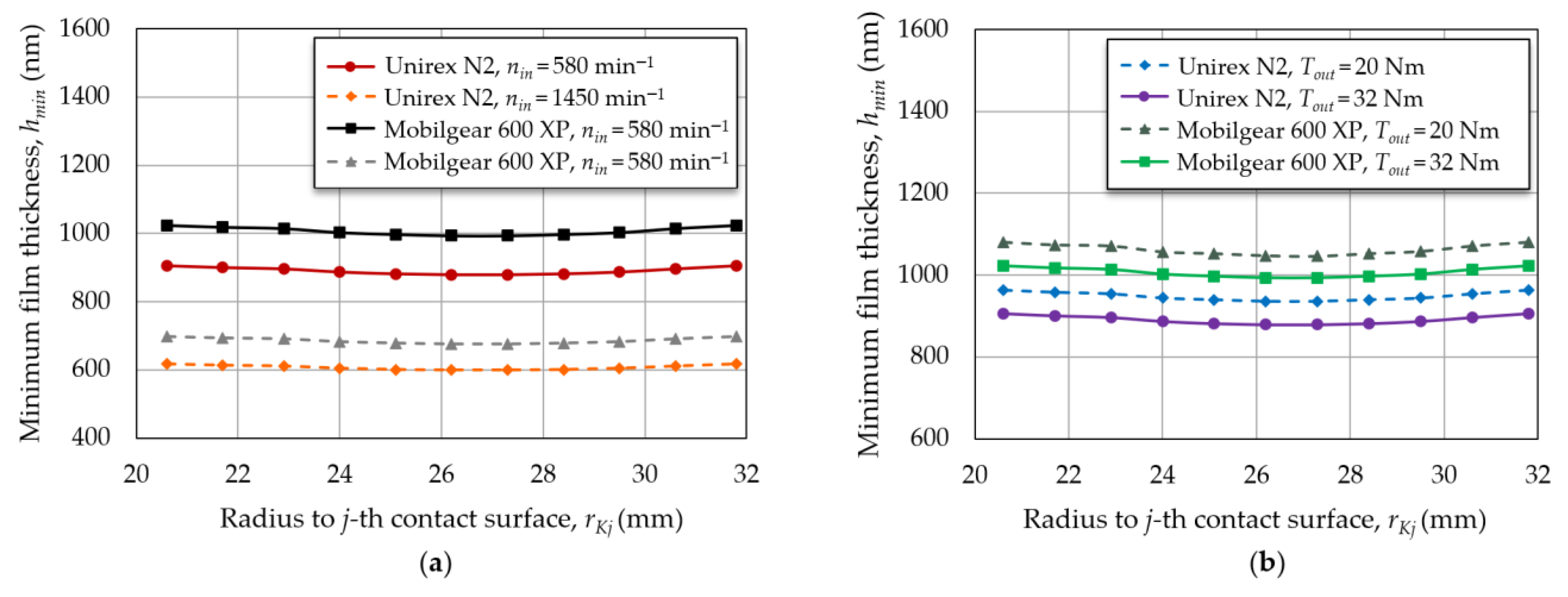
The calculated results show that the minimum lubricant film thickness varies significantly depending on the type of contact, operating conditions, and the type of lubricant used. The highest values of
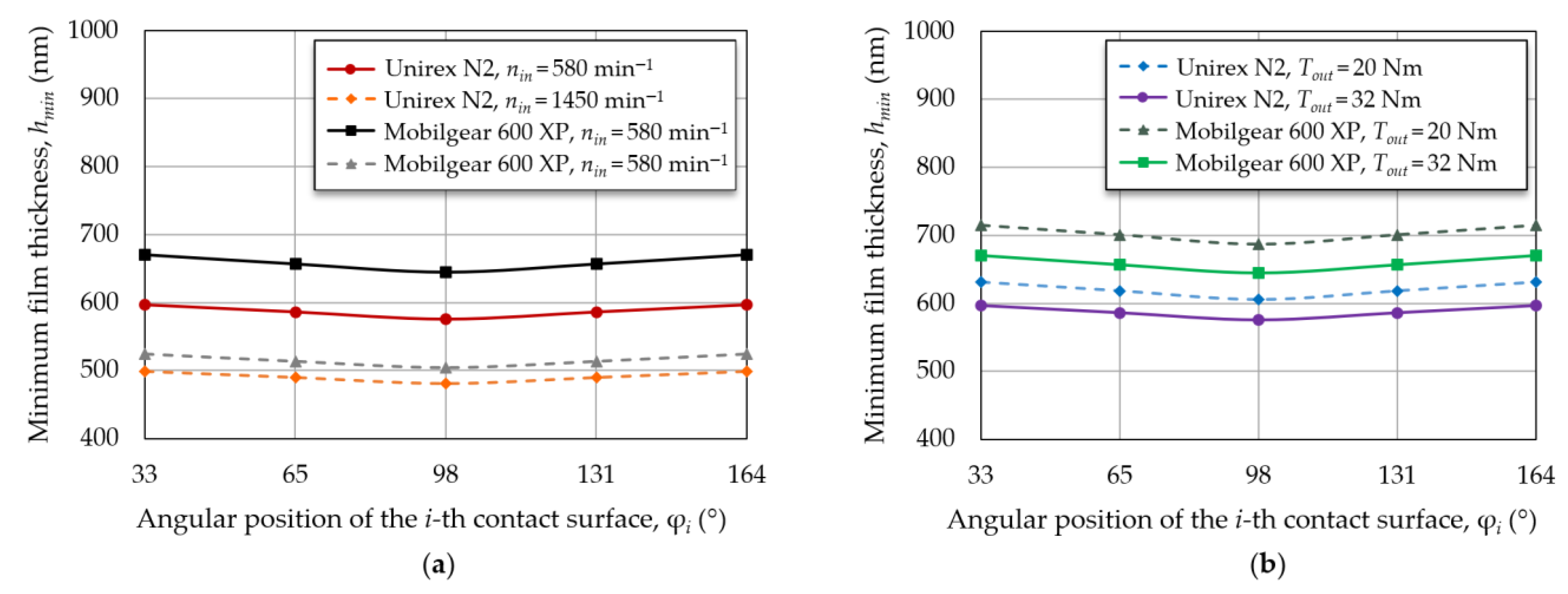
are observed in the contact between the output rollers and the holes in the cycloidal disc, where the oil film thickness typically reaches approximately 600–970 nm when grease is used and 680–1080 nm when mineral oil is applied (
Figure 15). This trend is attributed to the relatively favorable radius of curvature ratio at a constant lubricant entrainment velocity
. The results also indicate that increasing the torque from 20 Nm to 32 Nm does not significantly reduce the minimum oil film thickness. Similarly, when the input speed is increased from 580 min
−1 to 1450 min
−1, only a negligibly higher minimum film thickness is obtained. Consequently, this contact can be regarded as minimally sensitive to changes in operating parameters and, therefore, hydrodynamically stable.
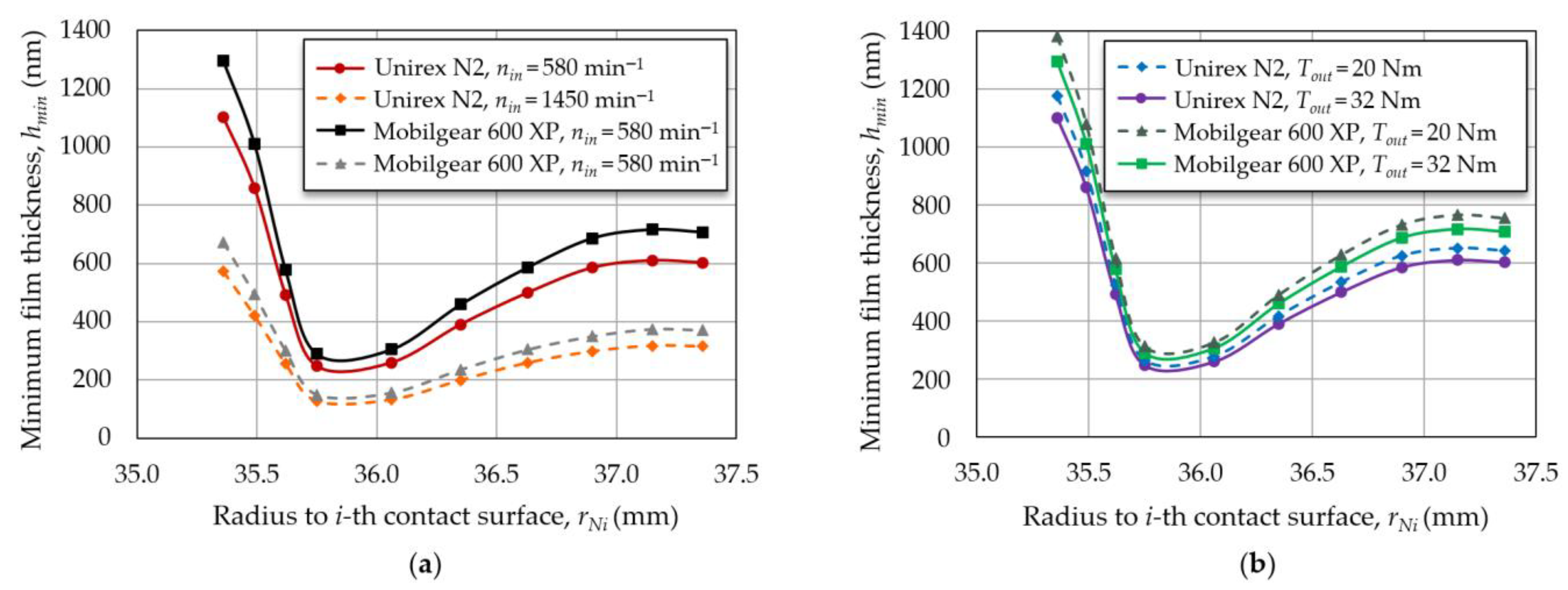
In contrast, the contact between the ring gear rollers and the cycloidal disc teeth is significantly more sensitive to the operating conditions (
Figure 16). In the region of the least favorable radius
(approximately 35.8 mm), the minimum lubricant film thickness decreases to as low as 200 nm for grease and 235 nm for mineral oil at 580 min
−1, because the mean peripheral velocity of the contacting elements (lubricant entrainment velocity) approaches zero at this position. Increasing the input speed to 1450 min
−1 significantly increases the film thickness (typically 190–210 nm for grease and 220–250 nm for oil), bringing the contact closer to a more stable elastohydrodynamic regime. It is evident that this contact is most sensitive to the combination of the local radius of curvature and normal load, with the extreme values of
directly associated with the position of the contact surface on the cycloidal disc.
The lowest
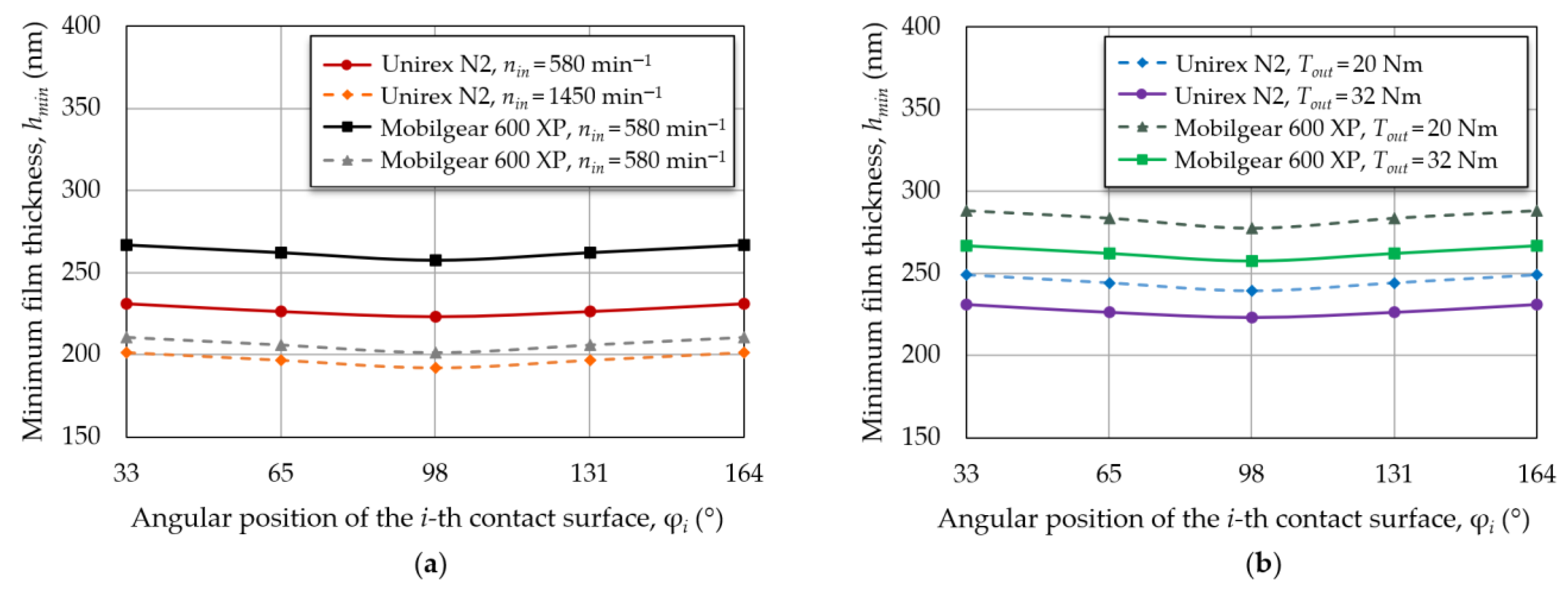
values are observed in the contact between the eccentric bearing rollers and the outer raceway, where the minimum lubricant film thickness reaches only 190–220 nm for grease and 210–260 nm for oil at a load of 32 Nm (
Figure 17). This contact exhibits the highest sensitivity to variations in operating temperatures and lubricant type, which is the result of the small equivalent radius of curvature (
mm) and the lower lubricant entrainment velocity. Increasing the input speed from 580 to 1450 min
−1 results in an increase of
by approximately 25–30%, indicating that the speed has a dominant effect in this contact. Analysis of the minimum film thickness in the inner raceway region shows a somewhat more favorable state, with
values ranging from 490–590 nm for grease and 520–660 nm for oil, representing an increase of approximately 150–200% compared to the outer raceway (
Figure 18). This increase is directly related to the higher lubricant entrainment velocity (
m/s) and the smaller local radius of curvature (
mm), which is in agreement with EHD lubrication theory.
A comparative analysis of all three investigated contact pairs indicates that the most unfavorable lubrication conditions occur in the contact between the eccentric bearing rollers and the outer raceway, where the minimum lubricant film thickness reaches its lowest values. Due to the high local curvature and low lubricant entrainment velocities, this contact is the most critical in terms of power losses and heat generation. In contrast, the contact between the output rollers and the holes in the cycloidal disc exhibits the most favorable lubrication characteristics and the lowest sensitivity to changes in load and input speed. The contact between the ring gear rollers and the cycloidal disc teeth falls between these two extremes but is locally sensitive to the position of the contact surface, with minimum values potentially dropping to the levels that require further analysis of the effects of the surface roughness and the actual contact pressures.
3.4. Lubrication Regime as a Function of Operating Conditions and Lubricant Type
The measured surface roughness parameters of the contact surfaces, used to assess the current lubrication regime under different operating conditions and lubricant types, are presented in
Table 7.
The obtained values of the specific film thickness
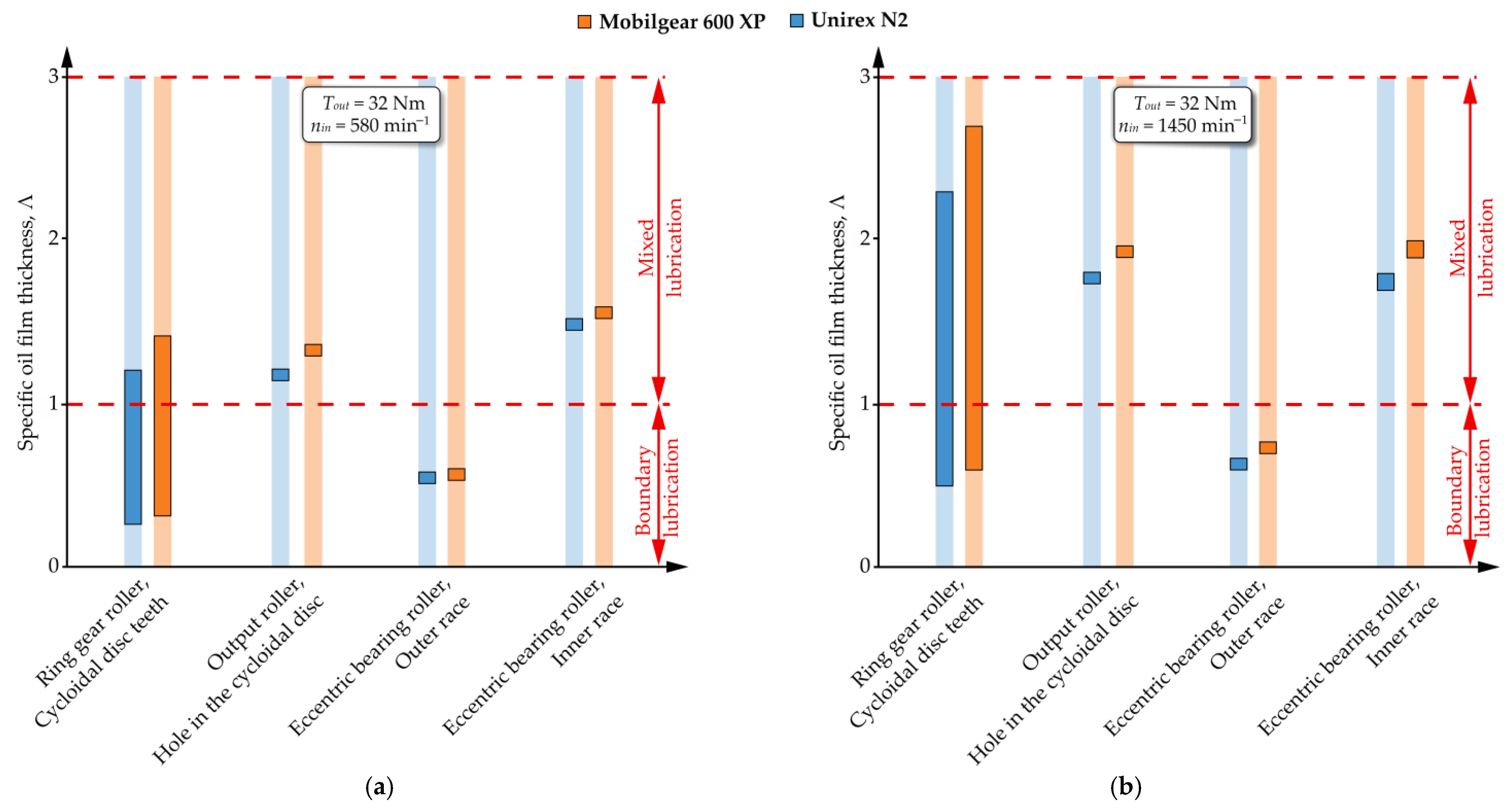
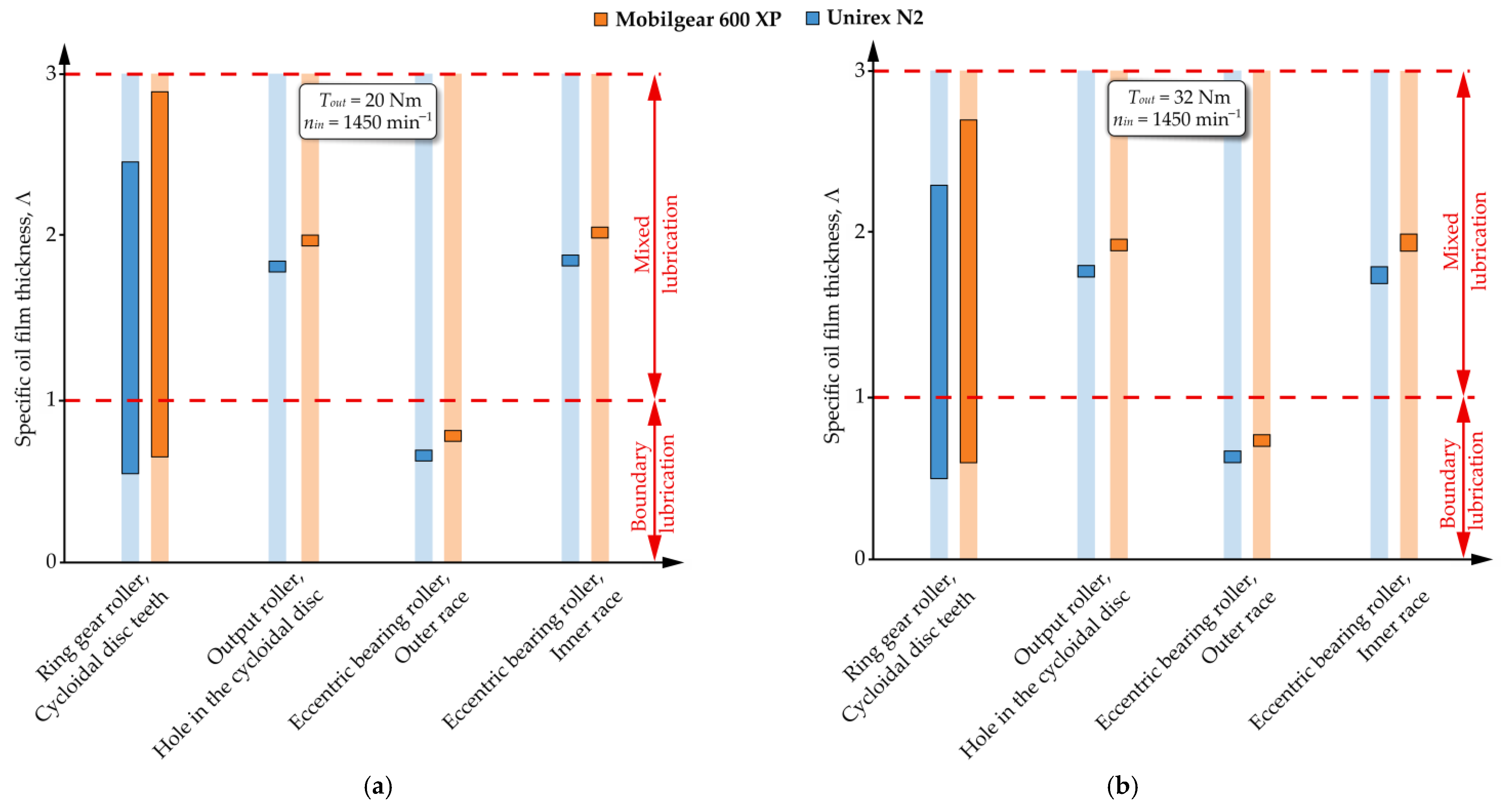
Λ show that the lubrication regimes in all relevant contact pairs vary significantly depending on the operating conditions (input speed and load level), and especially on the lubricant type (
Figure 19 and
Figure 20). It has been noticed that some contacts operate in the mixed regime, while others operate in the boundary regime, whereas a full elastohydrodynamic lubrication regime (
Λ ≥ 3) was not achieved in any of the analyzed cases. This distribution of lubrication regimes in cycloidal reducers is consistent with the available literature [
24,
59]. Mixed and boundary lubrication regimes are quite frequent due to very high local pressures, small equivalent radii of curvature, and low circumferential velocities in contacts.
The most pronounced influence of the lubricant type on the lubrication regime is observed in contacts with higher entrainment velocities, especially in the contact zones between the output roller and the cycloidal disc hole, and between the inner raceway and the eccentric bearing roller. In these contact zones, switching from grease to oil increases Λ by approximately 10–15%, resulting in a more stable mixed lubrication regime (Λ ≈ 1.7–2.1). This trend is attributed to the lower base viscosity of grease at high speeds and its inferior performance under EHL conditions. In contrast, oil, due to its more favorable rheological properties and higher fluidity at operating temperatures, ensures a more stable separation of the contact surfaces.
In the contact between the ring gear roller and the cycloidal disc tooth profile, characterized by high local pressures and moderate relative speeds, both grease and oil yield Λ values in the range of 0.3–2.7, indicating that the lubrication regime varies from boundary to mixed. Oil yields slightly higher Λ values, particularly at higher speeds (1450 min−1), but a stable EHL regime is still not achieved due to the relatively high surface roughness of the cycloidal disc and geometric limitations (small equivalent radius).
In all analyzed cases, the most critical contact is between the outer raceway and the eccentric bearing roller. In this contact, Λ remains within a narrow range of 0.5–0.7, which clearly indicates boundary lubrication. Neither an increase in the entrainment velocity nor a change from grease to oil leads to a significant increase in the minimum film thickness, which confirms that this contact is the main source of friction and wear and the dominant cause of power losses. This is due to the combined effect of a small equivalent radius of curvature, low circumferential speed, and relatively high load, which restricts the development of a thicker EHL film.
Overall, switching from grease to oil consistently increases Λ across all the contacts, but the effect is most pronounced in contact pairs with relatively high speed. In slower contacts, geometric factors (small radii of curvature) and high pressures are dominant, so the type of lubricant has a limited effect on . Consequently, although the use of oil improves lubrication conditions, it does not enable a transition to the full EHL regime in the most critical zones. This indicates that lubricant selection has a significant but not a decisive influence on the tribological behavior of the cycloidal reducer, and that optimizing the geometry and enhancing the surface finish of the contact zones are equally important for achieving more favorable lubrication conditions.
4. Conclusions
This paper presents a comprehensive experimental and analytical investigation of the effects of lubricant type on the thermal stability, efficiency, and tribological behavior of a cycloidal reducer, with special emphasis on the mechanisms of oil film formation and lubrication conditions in the most heavily loaded contact pairs. The results indicate that lubricant selection has a highly complex and multifaceted impact on the operation of the cycloidal reducer, with effects manifested through changes in total power losses, lubricant stabilization temperature, and minimum film thickness.
Considering the scope and complexity of the conducted study, the main conclusions are as follows:
Experimental measurements show that the grease Unirex N2 provides lower total power losses and higher efficiency across the entire analyzed operating range compared to the mineral oil Mobilgear 600 XP (150). Although this result may appear unexpected, it is consistent with the specific behavior of grease at high speeds. Under these conditions, excess grease moves out of the active contact zone, forming a stable lubricating channel, which reduces churning and hydrodynamic losses. In contrast, due to its fluid nature, oil continuously circulates within the contact zone, increasing energy dissipation and leading to higher operating temperatures.
The use of oil results in more intensive heat generation and higher equilibrium lubricant temperatures across all tested operating conditions. The difference in results obtained with grease and oil becomes more pronounced as the input speed increases. Therefore, grease provides a thermally more stable operating regime despite its limited cooling capacity, indicating that the dominant mechanism of heat generation is primarily related to the intensity of lubricant flow and churning rather than solely to its thermophysical properties.
Both grease and oil generate a sufficiently thick film in the contact between the output roller and the cycloidal disc hole. In contrast, in the contact between the ring gear roller and the cycloidal disc tooth, local zones with a lower minimum film thickness appear due to geometric limitations and the position of the contact surface during meshing.
The most heavily loaded contact occurs between the eccentric bearing roller and the outer raceway, where the minimum film thickness remains within the range typical for boundary lubrication (Λ ≈ 0.5–0.7), almost unaffected by the type of lubricant used. This contact represents the main source of friction, wear, and heat generation in the cycloidal reducer, clearly indicating the need for geometric optimization and improved surface finishing of the contact zones.
Switching from grease to oil provides somewhat more favorable lubrication conditions in high-speed contacts (Λ increases by 10–15%). However, this also results in higher total power losses and elevated lubricant temperatures, thereby reducing energy efficiency.
Grease ensures a more thermally stable operating regime and a more favorable energy balance, with the minimum film thicknesses large enough to maintain mixed lubrication in most contact pairs. These results demonstrate that, despite its traditionally limited cooling capability, grease proves to be exceptionally effective under the operating conditions typical of cycloidal reducers.
Overall, the results of this study provide engineers with valuable guidance for selecting lubricants for cycloidal reducers based on the specific operating conditions and performance priorities (efficiency, temperature, wear). Furthermore, the developed analytical model for estimating minimum oil film thickness and lubrication regime serves as a useful tool for further design and optimization of cycloidal reducers. Future research should focus on investigating a broader range of lubricants from both grease and oil categories (e.g., three from each category) to reduce the risk of drawing conclusions based on the specific properties of individual products, the use of biolubricants as environmentally friendly alternatives to mineral oils, the experimental determination of lubricant pressure–viscosity coefficients, CFD analyses of flow phenomena within the cycloidal reducer, and the development of design solutions to improve lubrication in the most critical contacts. The findings of this paper represent an important step towards a deeper understanding of tribological processes in cycloidal reducers and the enhancement of their reliability and efficiency.