Lubrication Characteristics and Thermal Behavior of Non-Orthogonal Face Gear Pairs in Point Contact


Abstract
1. Introduction
2. Mathematical Model
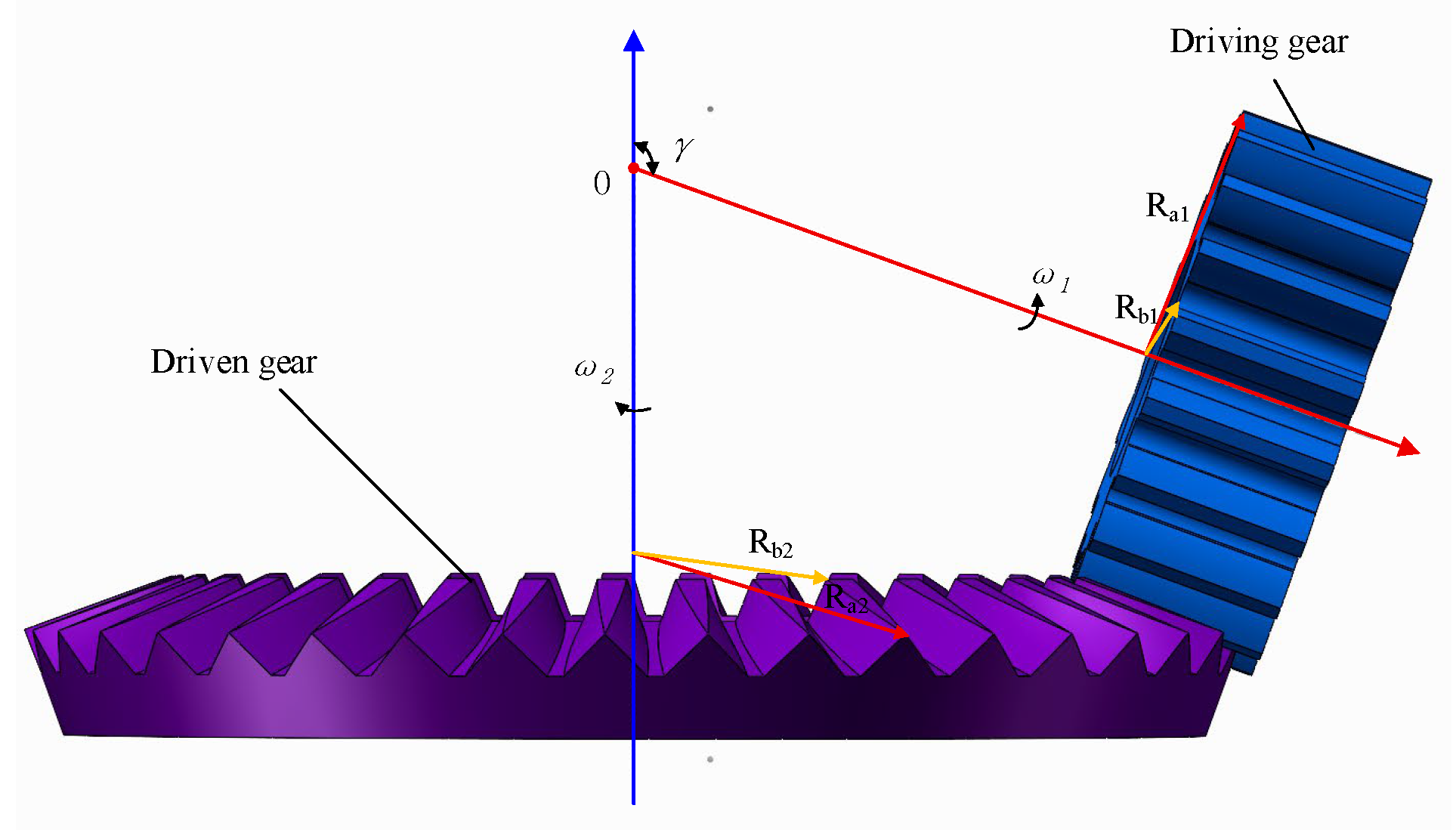
2.1. Contact Equation of Non-Orthogonal Face Gear Pairs
2.2. Loading Analysis of Non-Orthogonal Face Gear
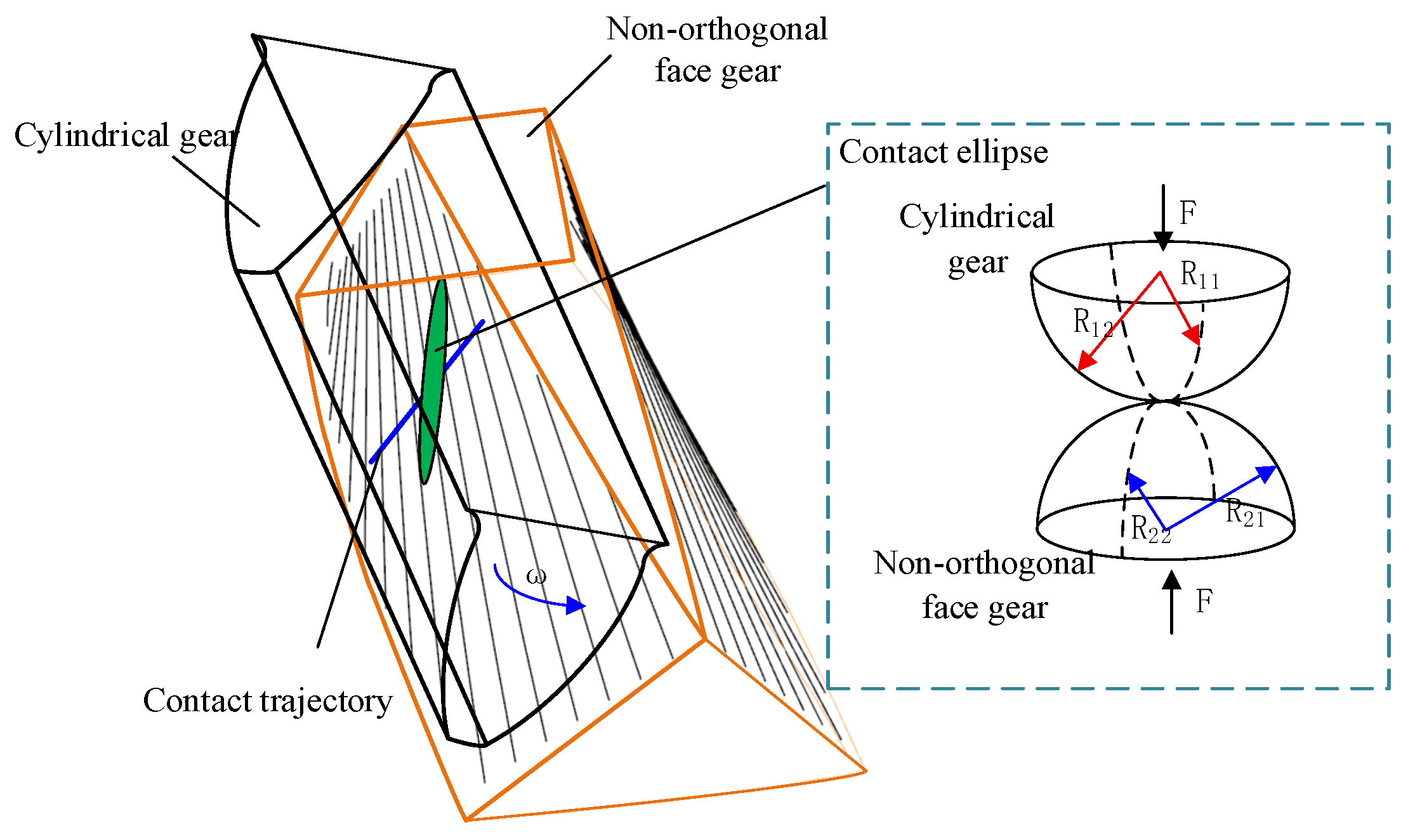
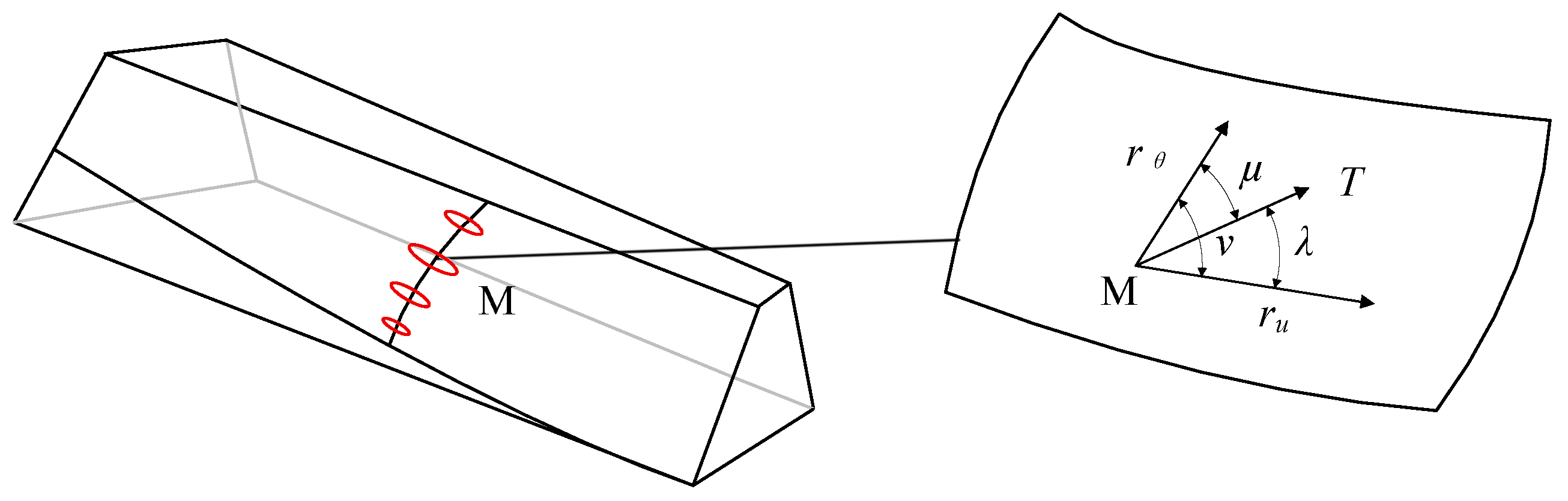
2.2.1. Radius of Curvature at the Meshing Point
2.2.2. Meshing Point Velocity
2.2.3. Meshing Point Load
2.3. Control Equation and Treatment of Point Contact Elastohydrodynamic Lubrication
2.4. Solution Method and Model Verification
3. Results
3.1. Meshing Point Selection and Mesh Independence Verification
3.2. Analysis of Oil Film at Meshing Points
3.3. Friction Coefficient of Tooth Surface
3.4. Friction Heat Power
3.5. Analysis of Heat Transfer in Elastic Oil Films
3.5.1. The Oil Film Absorbs Heat and Generates Heat Through Friction
3.5.2. Comparative Analysis of Results
4. Conclusions
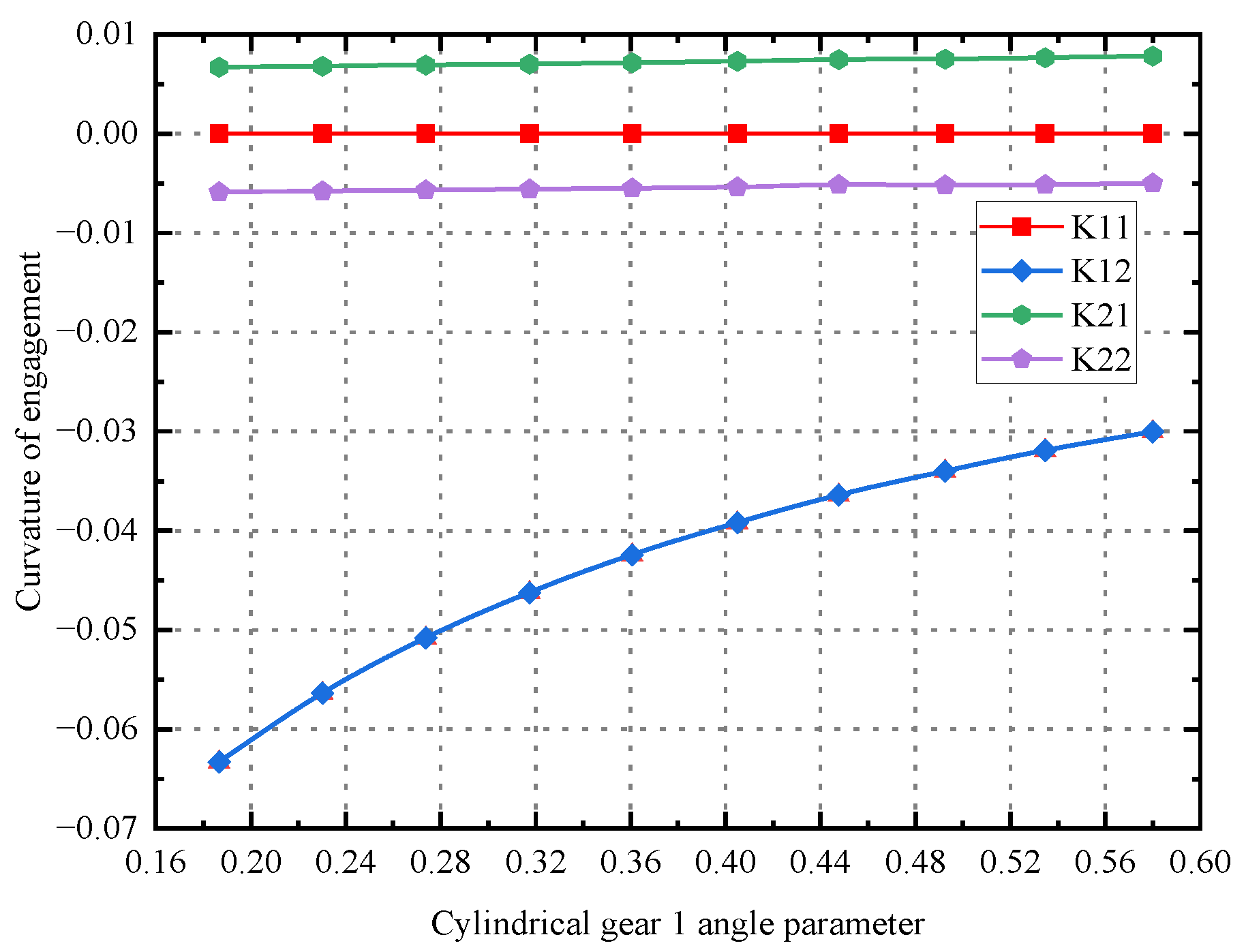
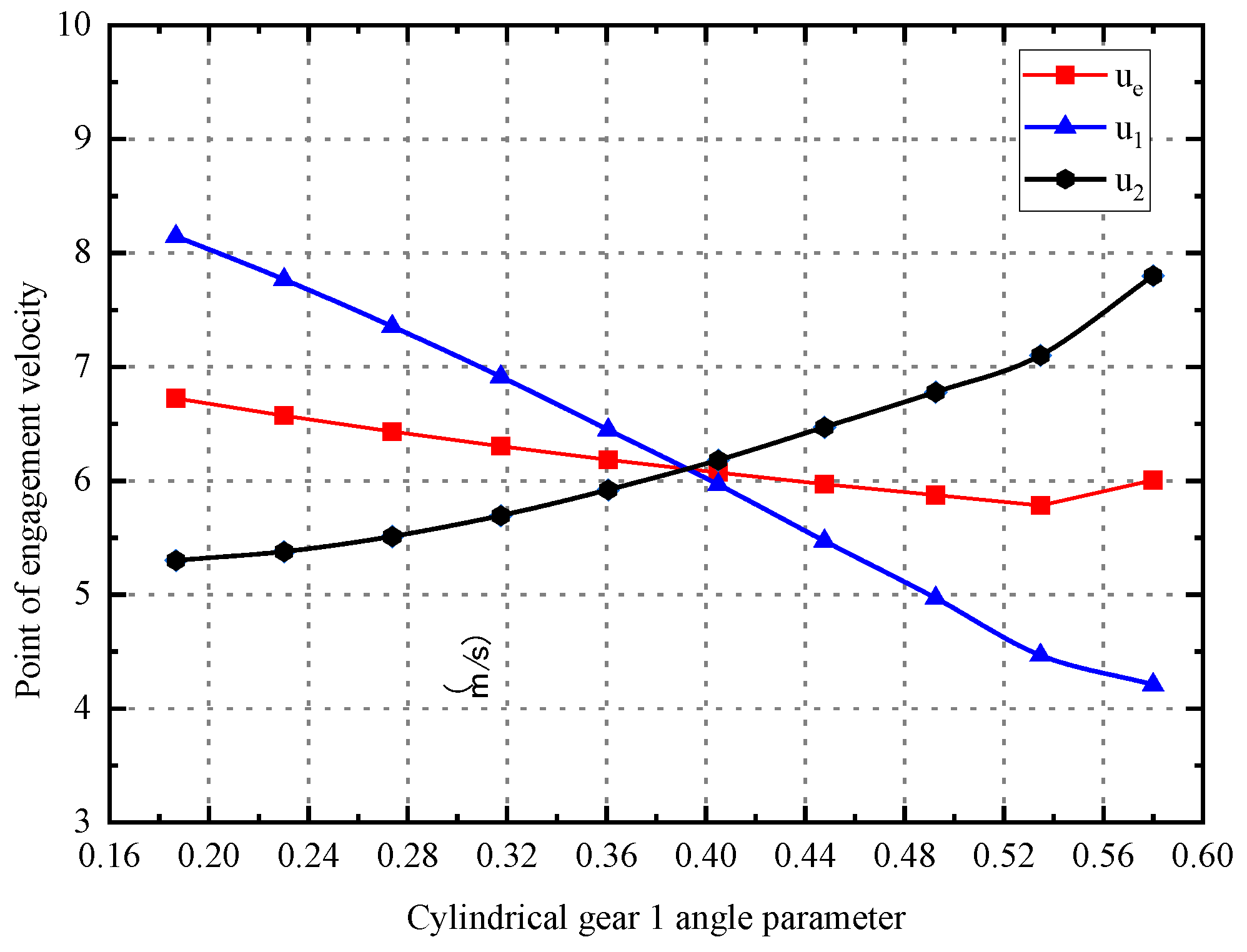
- By establishing the tooth surface contact equation of non-orthogonal face gears, the meshing trajectory and curvature variation law are obtained. During the meshing process, the changes in sliding speed and rolling speed at the contact points significantly affect the lubrication state. The sliding speed near the node (point S3) is the smallest, approaching pure rolling.
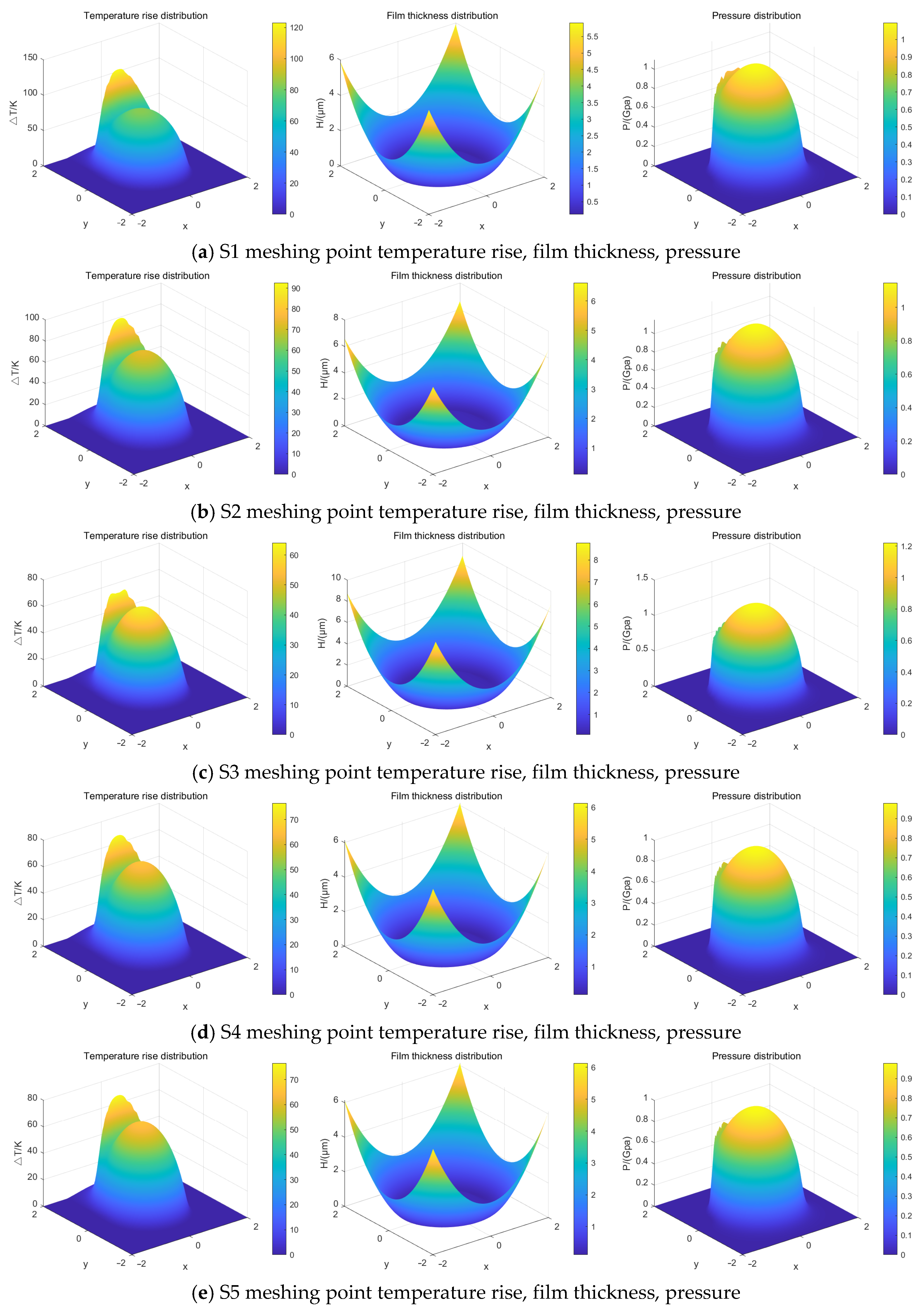
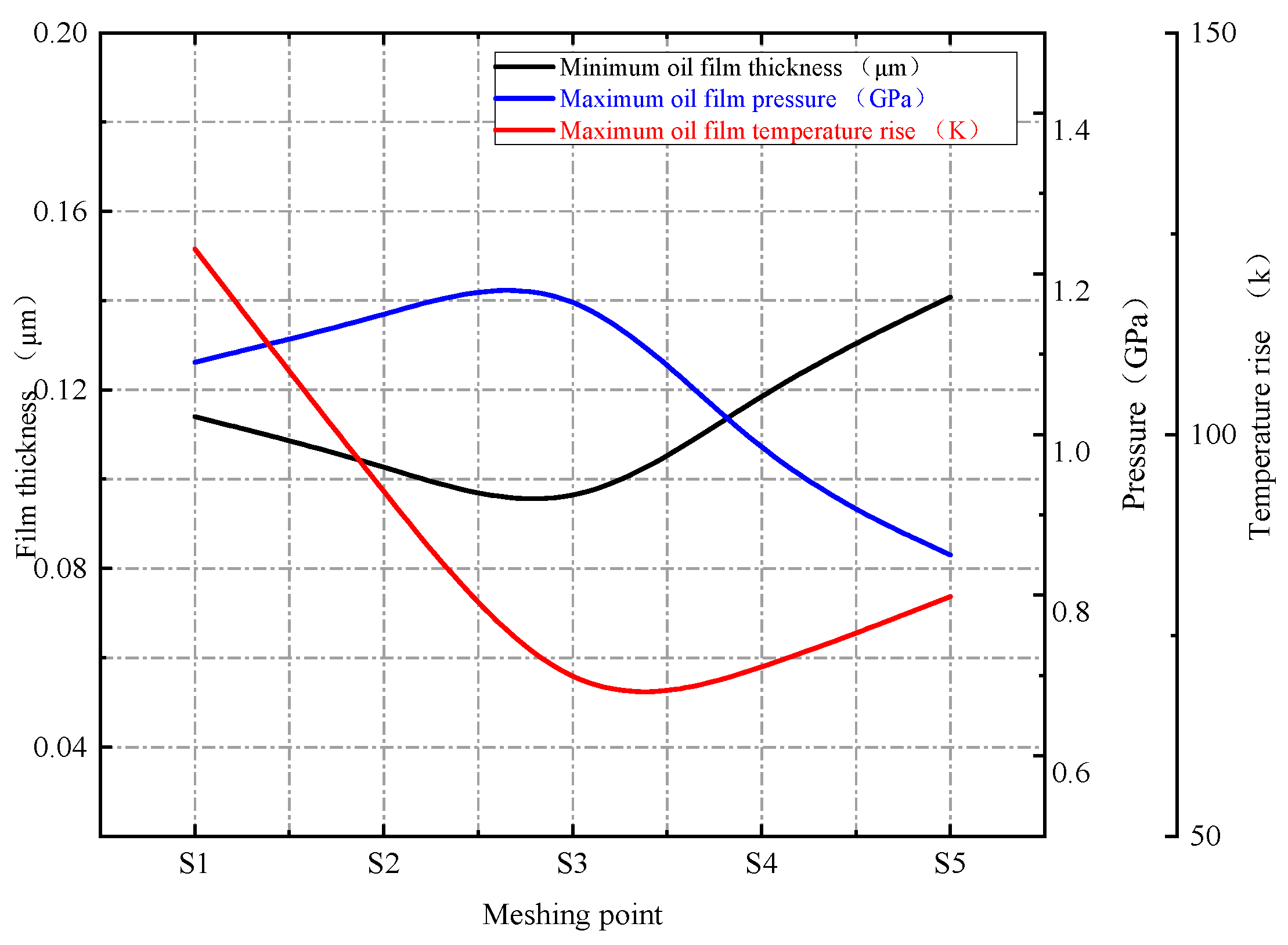
- During the single-tooth meshing cycle, the maximum pressure of the oil film shows a trend of first decreasing and then increasing, while the minimum film thickness first increases and then decreases. The temperature rise is the lowest at the nodes, while at the meshing-in and meshing-out ends, due to the increase in sliding speed, the temperature rise increases significantly.
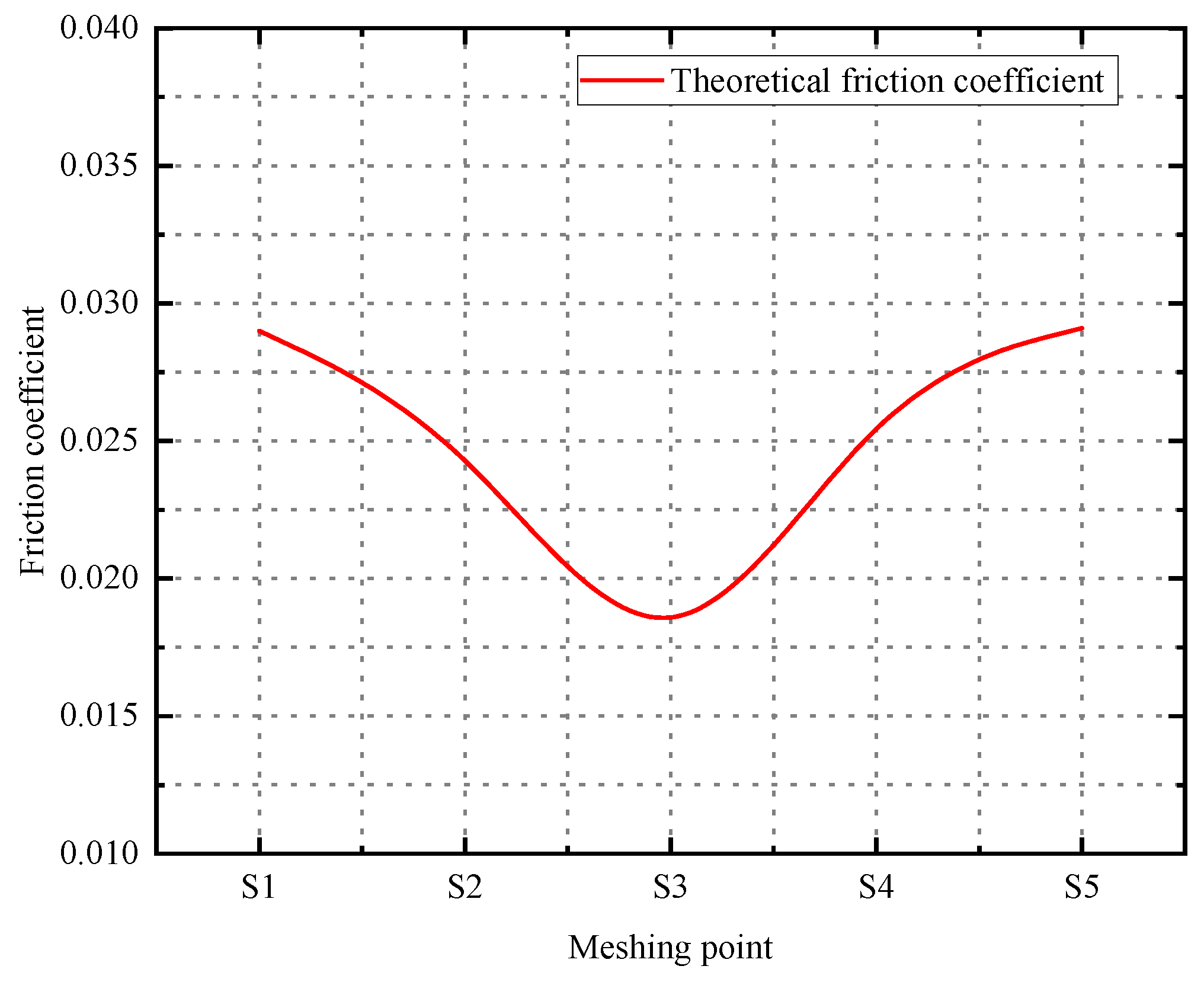
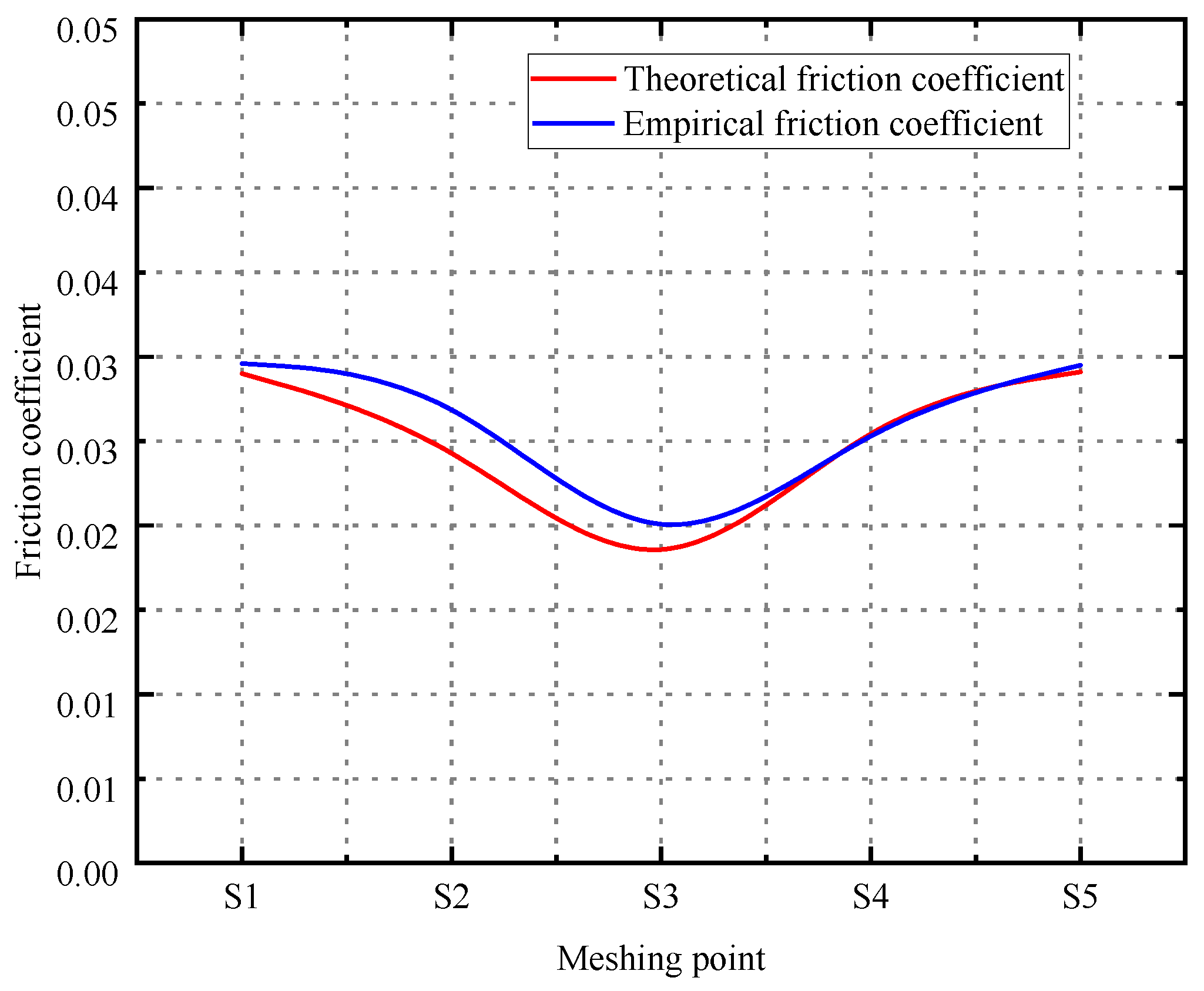
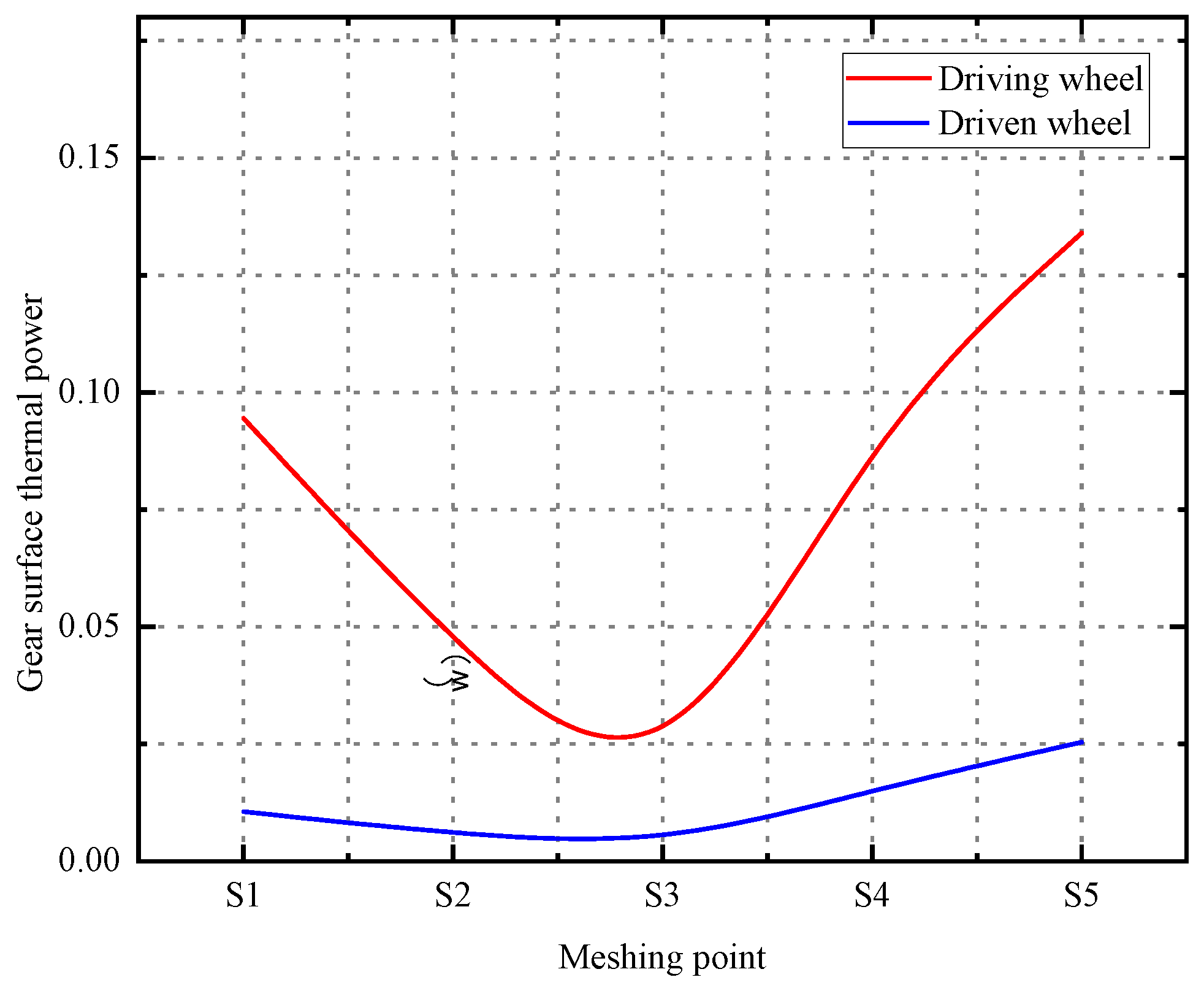
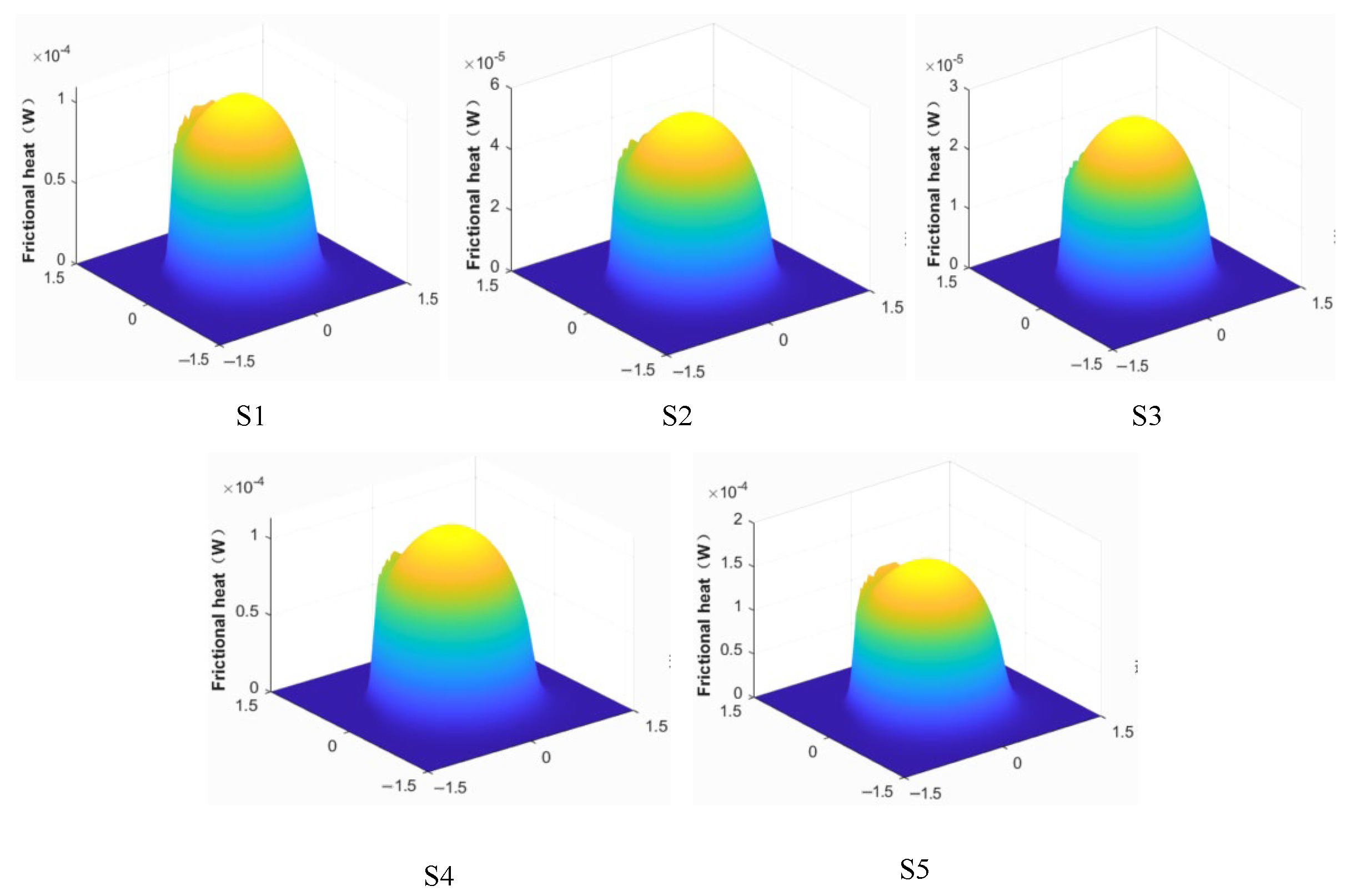
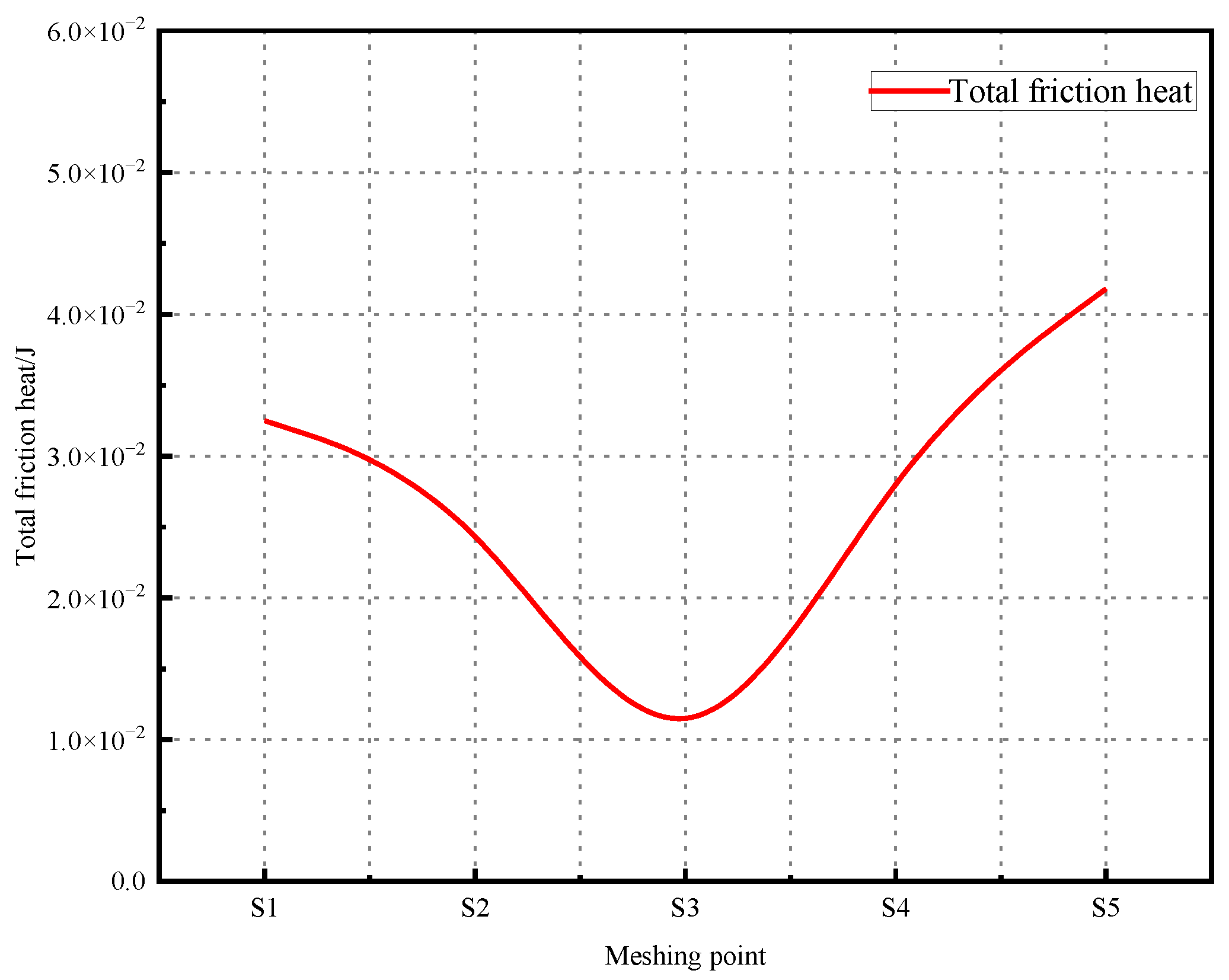
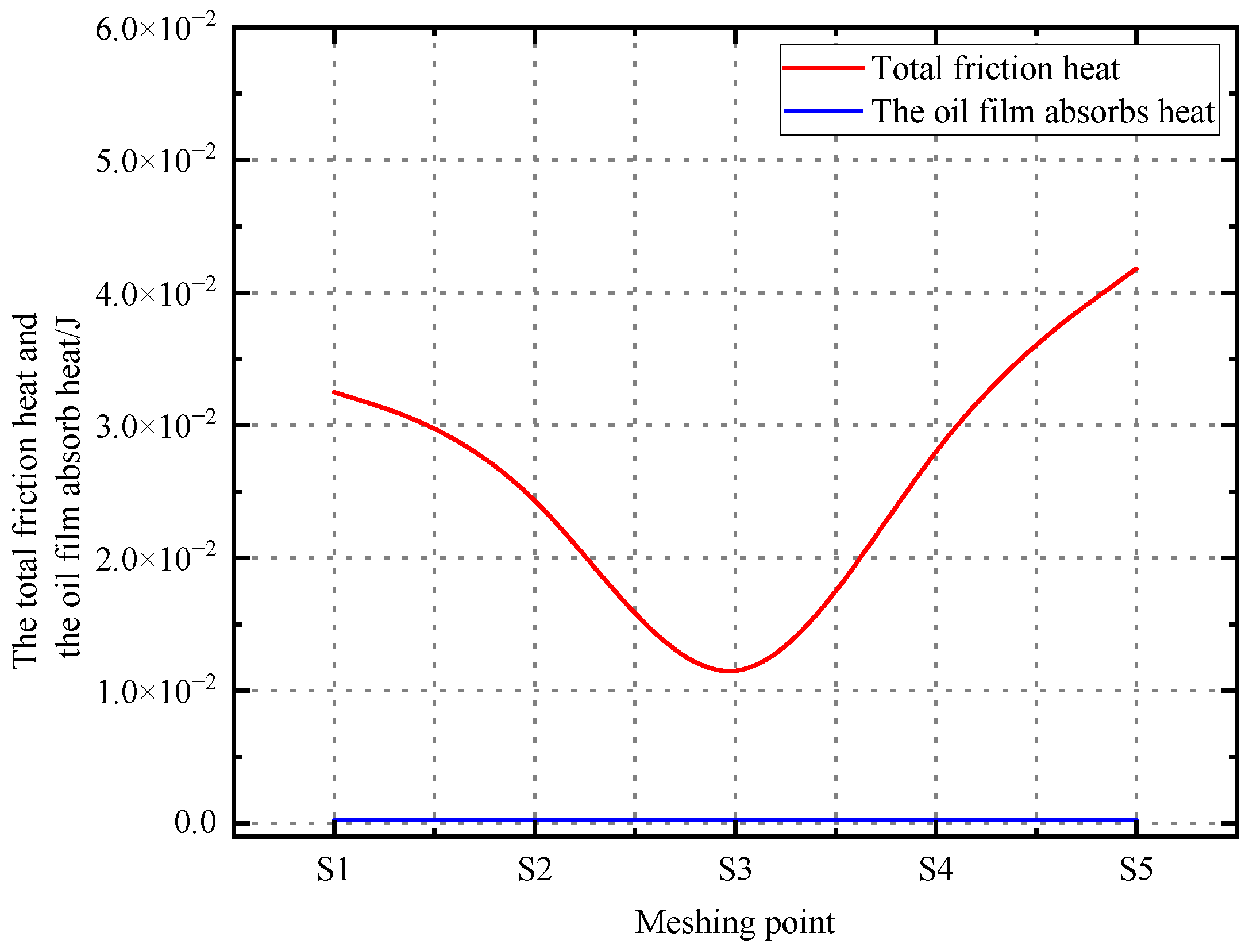
- The tooth surface friction coefficient calculated based on the Ree–Eyring model is close to zero at the nodes, and the friction coefficients at the meshing-in and meshing-out ends are relatively large, presenting a “V”-shaped distribution. The frictional heat power is the smallest at the node and reaches the maximum at the meshing-out end (point S5).
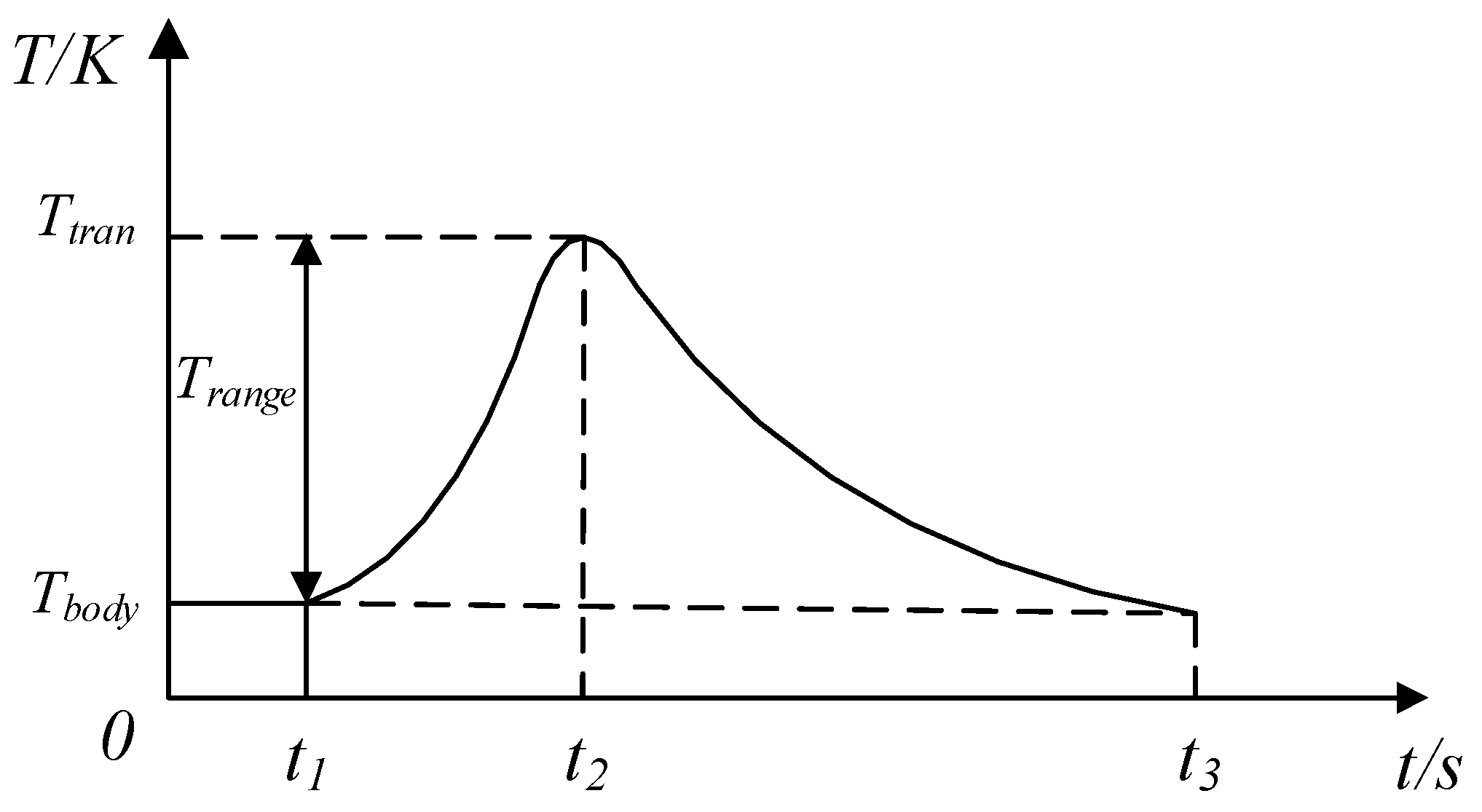
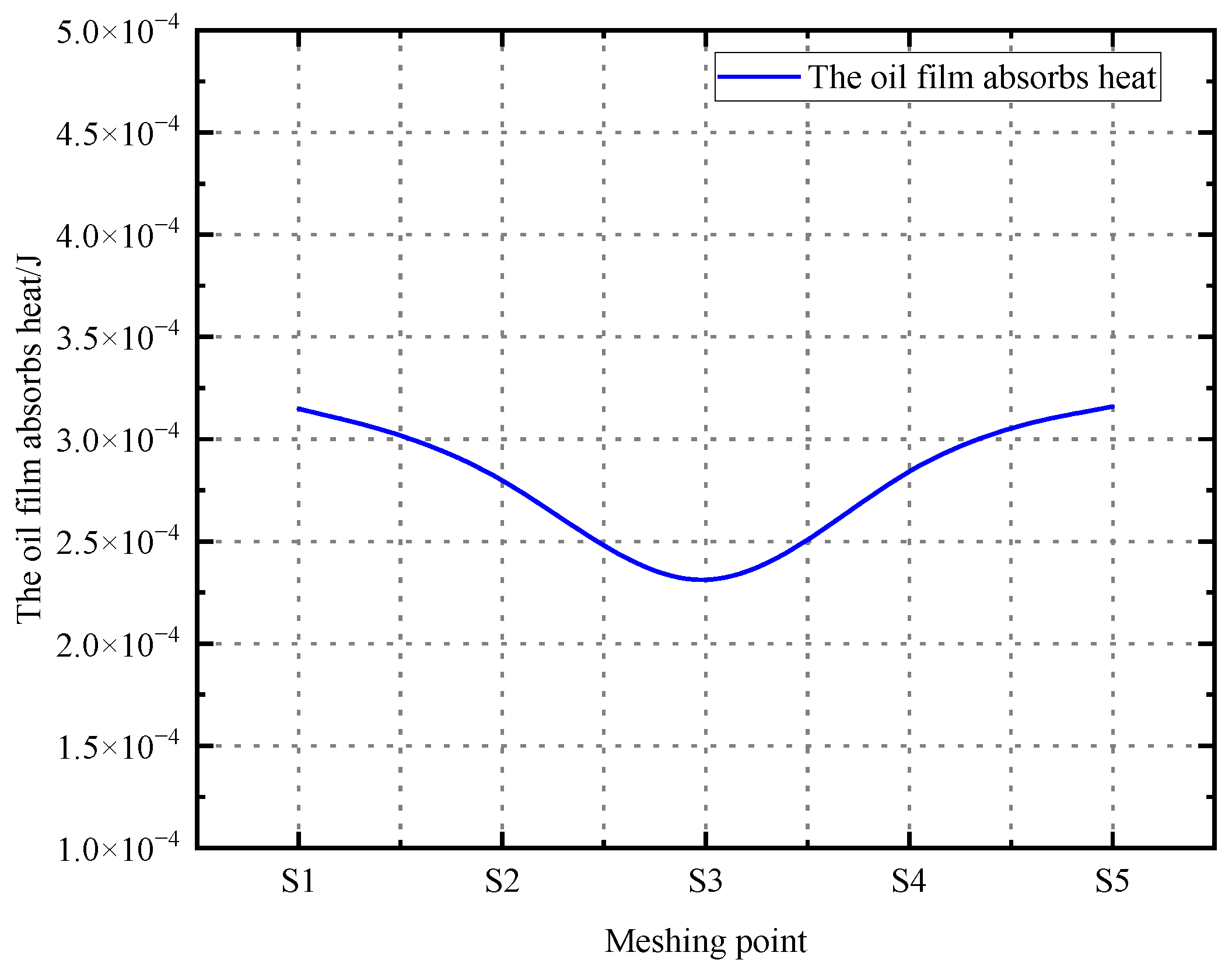
- Microscopic heat flow analysis at the meshing point reveals that at the moment of frictional heat generation with the source (Hertz contact zone), due to the extremely short contact time and extremely thin oil film, the proportion of heat absorbed through forced convection is very low (about 1%). This means that in the initial stage of heat generation, it mainly spreads rapidly into the metal interior through the heat conduction of the gear body. Subsequently, the large amount of heat conducted to the gear body and the small amount of heat entering the oil pool through convection are ultimately carried away by the lubricating oil circulating in the gearbox through convection, thereby achieving the overall thermal balance of the system.
Author Contributions
Funding
Data Availability Statement
Acknowledgments
Conflicts of Interest
Appendix A
References
- Ouyang, B.; Ma, F.; Dai, Y.; Zhang, Y. Numerical analysis on heat-flow-coupled temperature field for orthogonal face gears with oil-jet lubrication. Eng. Appl. Comput. Fluid Mech. 2021, 15, 762–780. [Google Scholar] [CrossRef]
- Pei, J.; Tian, Y.; Hou, H. Lubrication Reliability and Evolution Laws of Gear Transmission Considering Uncertainty Parameters. Lubricants 2025, 13, 392. [Google Scholar] [CrossRef]
- Sukumaran, J.; Ando, M.; Ando, P. Modelling gear contact with twin-disc setup. Tribol. Int. 2012, 49, 1–7. [Google Scholar] [CrossRef]
- Wassim, L.; Fathi, G.; Ali, A. Effects of interval friction coefficients on the differential mechanism dynamics. Proc. Inst. Mech. Eng. Part D J. Automob. Eng. 2022, 236, 3268–3295. [Google Scholar] [CrossRef]
- Hongu, J.; Horita, R. Estimation of Gear Friction Coefficient Using Directional Parameter of Tooth Surface. J. Tribol. 2022, 144, 011603. [Google Scholar] [CrossRef]
- Cao, W.; Tao, H.; Pu, W. Dynamics of lubricated spiral bevel gears under different contact paths. Friction 2022, 10, 247–267. [Google Scholar] [CrossRef]
- He, Z.X.; Wang, X.; Li, Y. Analysis of Gear System Dynamics Based on Thermal Elastohydrodynamic Lubrication Effects. Lubricants 2025, 13, 411. [Google Scholar] [CrossRef]
- Cheng, W.; Mao, K. A calculation method of sliding friction coefficient on tooth surface for helical gear pair based on loaded tooth contact analysis and elastohydrodynamic lubrication theory. J. Eng. Tribol. 2021, 235, 1551–1560. [Google Scholar] [CrossRef]
- Wang, Y.; Yang, W.; Tang, X. Friction coefficient analysis for herringbone gears based on dynamic meshing forces. J. Vib. Shock. 2021, 40, 265–272. [Google Scholar]
- Sheng, W.; Li, Z.; Yu, X.; Xue, A. Study on thermal elastohydrodynamic lubrication of face gear pairs with low sliding ratio. Mech. Based Des. Struct. Mach. 2024, 53, 3803–3822. [Google Scholar] [CrossRef]
- Pei, J.; Han, X.; Tao, Y.; Feng, S. Lubrication reliability analysis of spur gear systems based on random dynamics. Tribol. Int. 2021, 153, 106606. [Google Scholar] [CrossRef]
- Miltenovic, A.; Banic, M.; Vitkovic, N. Investigation of the Influence of Contact Patterns of Worm-Gear Sets on Friction Heat Generation during Meshing. Appl. Sci. 2024, 14, 738. [Google Scholar] [CrossRef]
- Hildebrand, S.; Genuin, T.; Lohner, T. Numerical analysis of the heat transfer of gears under oil dip lubrication. Tribol. Int. 2024, 195, 109652. [Google Scholar] [CrossRef]
- Wang, Y.; Niu, W.; Song, G. Convective heat transfer under different jet impingement conditions—Optimum design to spray parameters. Ind. Lubr. Tribol. 2016, 68, 242–249. [Google Scholar] [CrossRef]
- Wang, Y.; Niu, W.; Song, G.; Chen, Y. Convection heat transfer and temperature analysis of oil jet lubricated spur gears. Ind. Lubr. Tribol. 2016, 68, 624–631. [Google Scholar] [CrossRef]
- Zhou, W.; Zhu, R.; Liu, W.; Wang, J. Modeling and analysis of elastohydrodynamic lubrication of orthogonal face gear with installation errors. J. Eng. Tribol. 2024, 238, 956–970. Available online: https://sage.cnpereading.com/paragraph/article/?doi=10.1177/13506501241240023=0 (accessed on 3 October 2025). [CrossRef]
- Zhou, S.H.; Li, X.; An, C. An Improved Stiffness Model for Spur Gear with Surface Roughness Under Thermal Elastohydrodynamic Lubrication. Mathematics 2025, 13, 3335. [Google Scholar] [CrossRef]
- Liu, M.; Zhang, J. Thermal elastohydrodynamic lubrication analysis of helical gear pair under starved lubrication condition. Lubr. Sci. 2019, 31, 321–334. [Google Scholar] [CrossRef]
- Lu, Y.; Lu, X.; Ye, G.; Chen, Z. Thermal Failure Analysis of Gear Transmission System. J. Fail. Anal. Prev. 2024, 24, 520–537. [Google Scholar] [CrossRef]
- Mo, S.; Luo, B.; Dang, H.; Zhang, Y. Lubrication characteristic of tooth surface on arc tooth cylindrical gears. Lubr. Sci. 2023, 35, 14–28. [Google Scholar] [CrossRef]
- Xu, Q.; Yan, W.; Chen, S. Optimization of splash lubrication in the gearbox considering heat transfer performance. Tribol. Int. 2024, 195, 109592. [Google Scholar] [CrossRef]
- Xu, Q.; Liu, C.; Zhang, S.; Yan, W.; Li, X. Mathematical modeling and numerical simulation of jet torque. Int. J. Mech. Sci. 2024, 277, 109439. [Google Scholar] [CrossRef]
- Xu, Q.; Zhang, S.; Yang, K.; Chen, W. Strategy of directional oil transport for splash lubrication systems. Int. J. Mech. Sci. 2024, 269, 109059. [Google Scholar] [CrossRef]
- Hu, X.; Yuan, Y.; Chen, J. Study on Temperature Field Distribution of a High-Speed Double-Helical Gear Pair with Oil Injection Lubrication. Lubricants 2024, 12, 315. [Google Scholar] [CrossRef]
- Ding, H.; Zhang, W.; Wu, H.; Chen, T. Multi-field coupling lubrication interface heat transfer model for hypoid gear transmission. Int. Commun. Heat. Mass. Transf. 2024, 154, 107451. [Google Scholar] [CrossRef]
- Chu, X.; Liu, Y.; Zeng, H. Study on Heat Transfer Characteristics of High-Speed Herringbone Gear in Meshing Process Under Oil Injection Lubrication. J. Therm. Sci. Eng. Appl. 2024, 16, 041010. [Google Scholar] [CrossRef]
- Sun, Z.; Yao, Q.; Jin, H. A novel in-situ sensor calibration method for building thermal systems based on virtual samples and autoencoder. Energy 2024, 297, 131314. [Google Scholar] [CrossRef]
- Sun, Z.; Yao, Q.; Shi, L. Virtual sample diffusion generation method guided by large language model-generated knowledge for enhancing information completeness and zero-shot fault diagnosis in building thermal systems. J. Zhejiang Univ. Sci. A 2025, 26, 895–916. [Google Scholar] [CrossRef]
- Liu, L.; Wu, S. Generation and contact of modified non-orthogonal offset face gear drives. Int. J. Mech. Sci. 2025, 300, 110314. [Google Scholar] [CrossRef]
- Zhu, R. Research on Meshing Characteristics of Face Gear Drives. Ph.D. Dissertation, Nanjing University of Aeronautics and Astronautics, Nanjing, China, 2000. [Google Scholar]
- Mo, S.; Song, W.; Zhang, Y.; Zhou, Y.; Yao, B. A new iterative method for calculating the time-varying meshing stiffness of orthogonal face gear pairs. Mech. Mach. Theory 2025, 206, 105938. [Google Scholar] [CrossRef]
- Lugt, P.M.; Guillermo, E.M. A Review of Elasto-Hydrodynamic Lubrication Theory. Tribol. Trans. 2011, 54, 470–496. [Google Scholar] [CrossRef]
- Larsson, R. Transient non-Newtonian elastohydrodynamic lubrication analysis of an involute spur gear. Wear 1997, 207, 67–73. [Google Scholar] [CrossRef]
- Blok, H. The flash temperature concept. Wear 1963, 6, 483–494. [Google Scholar] [CrossRef]
- Wang, Y.Q.; Yi, X.J. Non-Newtonian transient thermoelastohydrodynamic lubrication analysis of an involute spur gear. Lubr. Sci. 2010, 22, 465–478. [Google Scholar] [CrossRef]
- Hai, X. Development of a Generalized Mechanical Efficiency Prediction Methodology for Gear Pairs. Ph.D. Dissertation, The Ohio State University, Columbus, OH, USA, 2005. [Google Scholar]
- Spikes, H.A. Sixty years of EHL. Lubr. Sci. 2006, 18, 265–291. [Google Scholar] [CrossRef]
- Jaeger, J.C. Moving sources of heat and the temperature at sliding contacts. J. Proc. R. Soc. New South Wales 1943, 76, 203–224. [Google Scholar] [CrossRef]
- Greenwood, J.A.; Kauzlarich, J.J. Inlet Shear Heating in Elastohydrodynamic Lubrication. J. Lub. Technol. 1973, 95, 417–423. [Google Scholar] [CrossRef]
- Ausherman, V.K.; Nagaraj, H.S. Infrared Temperature Mapping in Elastohydrodynamic Lubrication. J. Lub. Technol. 1976, 98, 236–242. [Google Scholar] [CrossRef]
- Tian, X.; Kennedy, F.E. Maximum and Average Flash Temperatures in Sliding Contacts. J. Tribol. 1994, 116, 167–174. [Google Scholar] [CrossRef]



| Parameter | Symbol | Value | Parameter | Symbol | Value |
|---|---|---|---|---|---|
| Number of cylindrical gears | N1 | 22 | Number of teeth of face gear | N2 | 125 |
| Tool teeth | Ns | 25 | Torque (N·m) | TS | 300 |
| Normal module (mm) | mS | 5 | Tool pressure angle (°) | αs | 20 |
| Cross axis angle (°) | γ | 100 | Driving wheel speed (r/min) | n1 | 3000 |
| Parameter | Value | Parameter | Value |
|---|---|---|---|
| Initial viscosity of the lubricant (Pa·s) | 0.03 | Specific heat capacity of lubricating oil (J/(kg·K) | 2000 |
| Initial density of the lubricant (kg/m3) | 956 | Thermal conductivity of lubricating oil (W/(m·K)) | 0.14 |
| Gear density (kg/m3) | 7860 | Thermal conductivity of gears (W/(m·K)) | 46 |
| Specific heat capacity of gears (J/(kg·K)) | 470 | Initial ambient temperature (K) | 303 |
| Grid Scheme | Number of Grids | Minimum Oil Film Thickness (µm) | Maximum Oil Film Pressure (Gpa) | Maximum Oil Film Temperature Rise (K) |
|---|---|---|---|---|
| Grid 1 | 60 × 60 | 0.1439 | 1.038 | 111 |
| Grid 2 | 80 × 80 | 0.1286 | 1.051 | 118 |
| Grid 3 | 100 × 100 | 0.1151 | 1.063 | 121 |
| Grid 4 | 120 × 120 | 0.1141 | 1.066 | 121.4 |
| Grid 5 | 140 × 140 | 0.1146 | 1.068 | 121.6 |
| Parameter | Assignment | Parameter | Assignment |
|---|---|---|---|
| −8.916465 | 0.752755 | ||
| 1.03303 | −0.390958 | ||
| 1.036077 | 0.620305 | ||
| −0.354068 | 0.6 | ||
| 2.812084 | 2.1 × 10¹¹ | ||
| −0.100601 | 0.039 |
| Meshing Point | S1 | S2 | S3 | S4 | S5 |
|---|---|---|---|---|---|
| Total heat of friction (J) | 2.32 × 10⁻² | 2.27 × 10⁻² | 0.26 × 10⁻² | 3.06 × 10⁻² | 4.18 × 10⁻² |
| Oil film absorbs heat (J) | 3.13 × 10⁻⁴ | 2.91 × 10⁻⁴ | 1.99 × 10⁻⁴ | 2.97 x10⁻⁴ | 3.12 × 10⁻⁴ |
Disclaimer/Publisher’s Note: The statements, opinions and data contained in all publications are solely those of the individual author(s) and contributor(s) and not of MDPI and/or the editor(s). MDPI and/or the editor(s) disclaim responsibility for any injury to people or property resulting from any ideas, methods, instructions or products referred to in the content. |
© 2025 by the authors. Licensee MDPI, Basel, Switzerland. This article is an open access article distributed under the terms and conditions of the Creative Commons Attribution (CC BY) license.
Share and Cite
Chu, X.; Chen, F.; Wang, J. Lubrication Characteristics and Thermal Behavior of Non-Orthogonal Face Gear Pairs in Point Contact. Lubricants 2026, 14, 9. https://doi.org/10.3390/lubricants14010009
Chu X, Chen F, Wang J. Lubrication Characteristics and Thermal Behavior of Non-Orthogonal Face Gear Pairs in Point Contact. Lubricants. 2026; 14(1):9. https://doi.org/10.3390/lubricants14010009
Chicago/Turabian StyleChu, Xiaomeng, Faqiang Chen, and Jiangjun Wang. 2026. "Lubrication Characteristics and Thermal Behavior of Non-Orthogonal Face Gear Pairs in Point Contact" Lubricants 14, no. 1: 9. https://doi.org/10.3390/lubricants14010009
APA StyleChu, X., Chen, F., & Wang, J. (2026). Lubrication Characteristics and Thermal Behavior of Non-Orthogonal Face Gear Pairs in Point Contact. Lubricants, 14(1), 9. https://doi.org/10.3390/lubricants14010009