Article

Investigation on Microstructure, Thermal Fatigue Resistance, and Tribological Behavior of Mo2FeB2-Based Cermet Coating on GCr15 Steel Substrate


1
College of Optoelectronic Manufacturing, Zhejiang Industry & Trade Vocational College, Wenzhou 325003, China
2
School of Engineering + Technology, Western Carolina University, Cullowhee, NC 28723, USA
3
School of Materials Science and Engineering, Lanzhou University of Technology, Lanzhou 730050, China
*
Author to whom correspondence should be addressed.
Lubricants 2026, 14(1), 5; https://doi.org/10.3390/lubricants14010005
Submission received: 19 November 2025 / Revised: 10 December 2025 / Accepted: 22 December 2025 / Published: 23 December 2025

Abstract

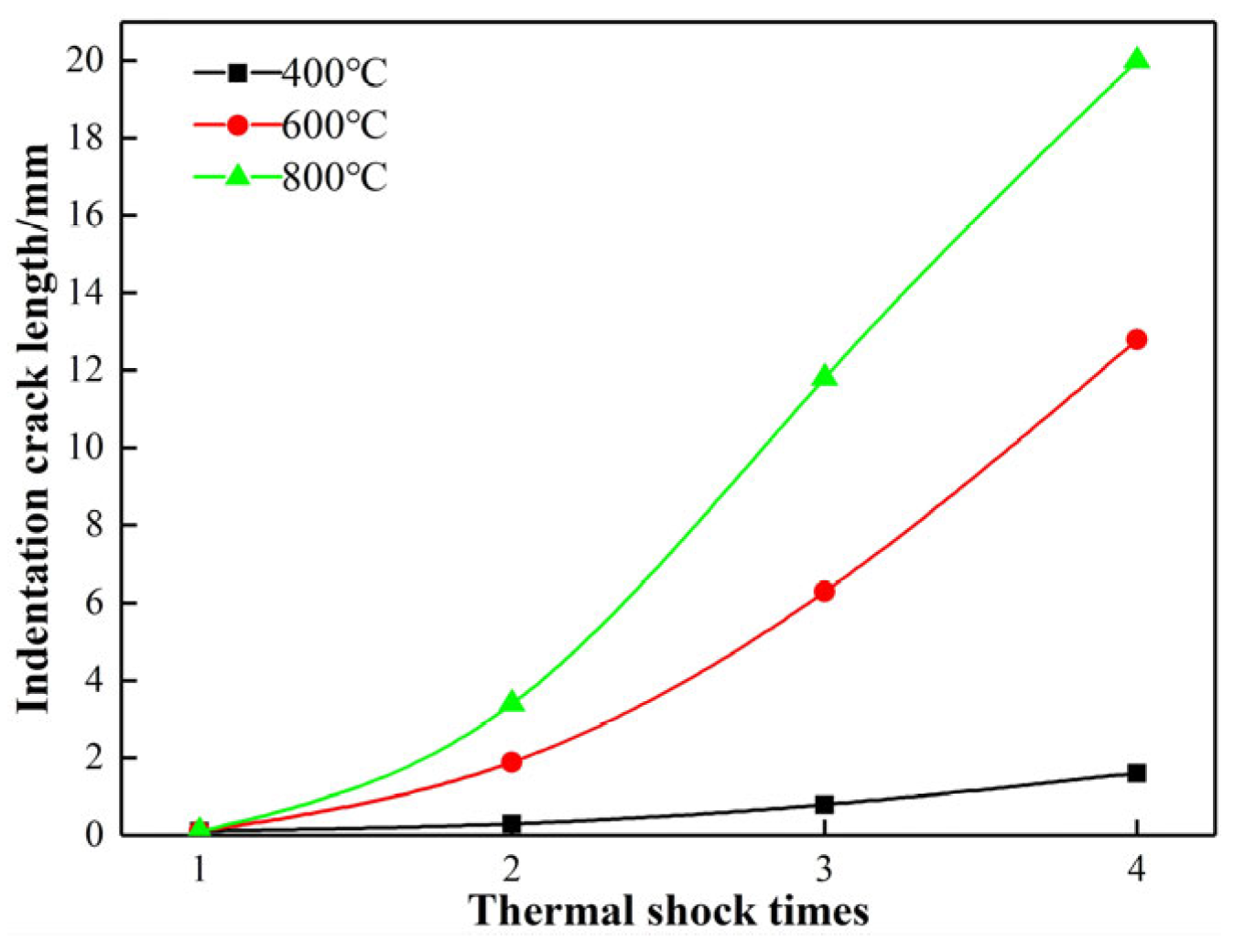
In this study, a boride cladding layer with Mo2FeB2 hard phase was prepared on the GCr15 steel via plasma cladding. The phase composition, microstructure, thermal fatigue resistance, microhardness, and wear resistance of the boride cladding layer were investigated. The results revealed that the hard phases in the boride cladding layer were Mo2FeB2 and (Cr,Fe)23(C,B)6, while the binder phase consisted of α-Fe martensite. When the thermal fatigue times increased, the indentation crack length extended in a quadratic pattern, and the crack propagation rate increased. Crack propagation in the cladding layer occurred via both transgranular and intergranular modes. When the thermal fatigue temperature was below 600 °C, the cladding layer exhibited good thermal stability, and a reliable metallurgical bond was formed between the cladding layer and the GCr15 steel substrate. The microhardness of the cladding layer reached 1022.1 HV0.5, approximately 2.6 times that of the GCr15 steel. The mass loss of the cladding layer increased with the increase in wear load and wear time. The wear of the cladding layer was mainly three-body abrasion wear, resulting from brittle spalling of the hard phase on the worn surface. This study demonstrates the potential of Mo2FeB2-based cladding layers for extending the service life of high-value industrial components.

1. Introduction

As one of the most commonly used high-chromium bearing steels, GCr15 steel (AISI-52100) has been widely used in a variety of mechanical components such as aircraft engines, high-speed train engines, bearing balls, etc. This is due to its low cost, simple heat treatment process, and excellent mechanical properties after heat treatment. Meanwhile, GCr15 steel suffers from limited service life due to wear and fatigue in usage. Thus, it is necessary to improve the hardness and wear resistance, while maintaining favorable mechanical properties and low cost [1,2,3,4,5].
Borides, transition metal borides (TMBs), in particular, have attracted significant research attention because of their excellent properties, such as high melting points, high hardness and strength, and good electrical conductivity [6,7,8,9], including WCoB [10,11], Mo2NiB2 [12,13], and Mo2FeB2 [14,15]. Some types of TMBs have been successfully used in various applications, such as cutting tools, wear-resistance coatings, and permanent magnets [16]. In all TMBs, the Mo2FeB2 ternary boride has a similar thermal expansion coefficient to steels [17,18,19]. The fabricated Mo2FeB2-based cermet coating can be widely applied in the repair and remanufacturing of components subject to severe wear, such as valves, bearings, and engine crankshafts, thereby improving their service life and reliability. Wei et al. [20] studied the microstructural morphology, elementary distribution, phase constitution, microhardness, and wear resistance of the Mo2FeB2-based cermet coating on a high-speed steel substrate by electrospark deposition (ESD) process, and they found that the coating exhibited higher microhardness, lower friction coefficient, and better wear resistance. Ren et al. [21] investigated the effects of extra boron addition on the sintering mechanism, microstructure, and mechanical properties of Mo2FeB2-based cermets using in situ liquid reaction sintering method. The results indicated that the hardness, transverse rupture strength, and abrasion resistance of the Mo2FeB2 cermets were significantly improved by adding suitable boron. Yu et al. [22] analyzed the transverse rupture strength, hardness, and fracture toughness of four series of cermets with Vanadium (V) content as 0 wt.%, 2.5 wt.%, 5 wt.%, and 7.5 wt.%. They found that the cermet with the best properties was obtained by adding 2.5 wt.% V addition. Zhang et al. [23] investigated the effects of chromium (Cr) contents in a range of 0 to 12.5 wt.% with 2.5 wt.% increments by vacuum sintering. They evaluated the transverse rupture strength, hardness, and fracture toughness and discovered that the cermets with 10 wt.% of Cr addition demonstrated the best mechanical properties.
Preparation of wear-resistant and corrosion-resistant coating by deposition techniques on the surface of alloy steel substrate can significantly improve the service life of parts [24]. Among all the deposition techniques, plasma cladding as a surface modification methodology has unique advantages, since it produces a surface layer with low cost and high efficiency, a strong metallurgical bonding between coating and substrate, high heat input, and a fine microstructure. Due to these advantages of plasma cladding, it has become an attractive research topic in the field of surface engineering [25,26,27,28,29].
From the existing studies, it may be concluded that plasma cladding is an effective technology for preparing low-cost and good mechanical properties coatings on the steel substrate. However, few studies have been completed to investigate the Mo2FeB2-based cermets coating by plasma cladding. Hence, in this study, the Mo2FeB2-based cermets coating was prepared on the GCr15 steel by plasma cladding. In order to investigate the properties of Mo2FeB2-based cermet coating on the surface of the GCr15 steel, the study of microstructure, thermal fatigue resistance, and tribological behavior was conducted. The results provide theoretical guidance for the application of the Mo2FeB2-based cermet.

2. Materials and Methods

2.1. Materials

Before plasma cladding, the plasma cladding powder was prepared by gas atomization technology in a dryer box at 100 °C for 1 h. The elemental composition of the powder is shown in Table 1.
The GCr15 steel was selected as the substrate, and its chemical composition is shown in Table 2. Other preparation of GCr15 steel before the experiment includes polishing its surface until the roughness of the surface Ra < 1.0 μm, then soaking the GCr15 steel in alcohol and sonicating for 20 min, and heating the cleaned GCr15 steel in a heat treatment furnace incubate at 300 °C for 10 min.

2.2. Experimental Procedure

In this experiment, plasma cladding was carried out by LU-F400-D300 (Chengdu Jinchuangli Science & Technology Co., Ltd., Chengdu, China). The selected cladding process parameters are shown in Table 3. After plasma cladding, the sample was buried in fine sand to prevent cracks due to rapid cooling. Once cooled to room temperature, the sample was placed in a heat treatment furnace at 300 °C for 3 h to relieve stress and prevent cracking of the cladding layer. The sample then underwent stress relief annealing. Argon (Ar) was used as the plasma gas, while nitrogen (N2) was used as both the shielding gas and the powder-feeding gas.

2.3. Characterization

Sample preparation for characterization includes cutting to size 10 mm × 10 mm × 10 mm, setting, grinding, and polishing. Then, the prepared sample was immersed in the solution (4% nitric acid and alcohol mixture) for 5 s.
The X-ray diffraction (XRD) analysis was conducted using X-Pert Pro MPD systems (PANalytical, Almelo, The Netherlands) equipped with a Cu Kα radiation (λ = 0.15418 nm) at 400 kV and 200 mA. The 2θ range was 10°~90°, the scan step was 0.05°, and the measured time was 10 s per step.
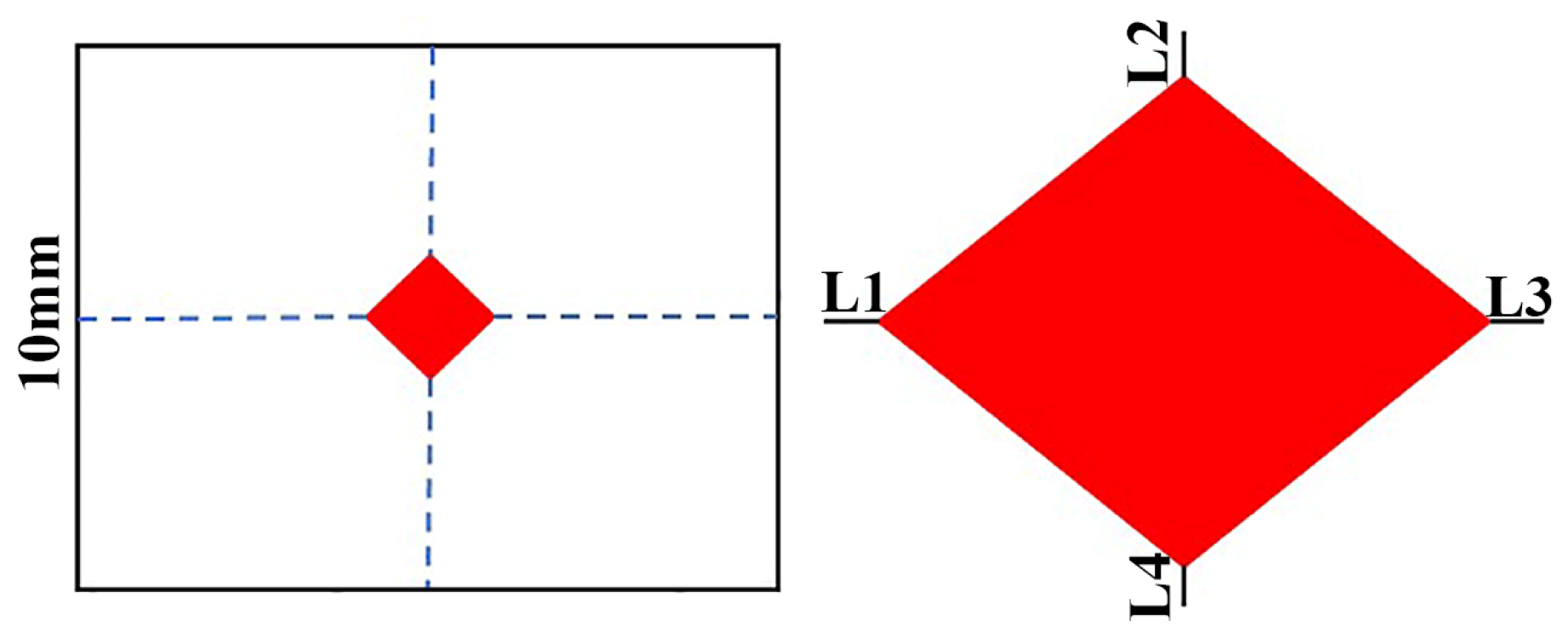
As shown in Figure 1, Vickers (HV30, Laizhou Yutong Test Instrument Co., Ltd., Laizhou, China) was used to make a rhombus indentation in the middle of the cross-section of the cladding layer. The cracks extended to the outside from the four corners of the rhombus were measured as L1, L2, L3, and L4. The fracture toughness of the cladding layer was calculated using Formulas (1) and (2) [30,31].
K I C = 0.15 H V 30 L
L = L 1 + L 2 + L 3 + L 4
where KIC is the fracture toughness (MPa·m1/2), HV is the Vickers hardness (MPa), and ΣL is the sum of crack lengths (mm), denoted as “indentation crack length” in this study. The fracture toughness was conducted on the metallographically prepared surface using a 30 kg load with a 15 s duration.
The wear resistance of the coating was tested by using a UG-10Z tribometer (Jinan Yihua Tribology Testing Technology Co., Ltd., Jinan, China) under dry friction conditions. A YG8 cemented carbide ball with a hardness of 90HRA was used as the friction pair. After the friction and wear test, the wear morphology of the coating was observed by a field emission scanning electron microscope (FE-SEM, FIB Nova 400 Nano, FEI, Hillsboro, OR, USA). The ZEISS Axio Plan2 Optical Microscope (OM) (Zeiss, Oberkochen, Germany) was used to observe the cross-sectional morphology. The average coefficient of friction and the average of wear mass loss for each sample were obtained by three repeated experiments, where the mass loss of the coating was measured by an electronic balance.

3. Results and Discussion

3.1. Cross-Sectional Morphology

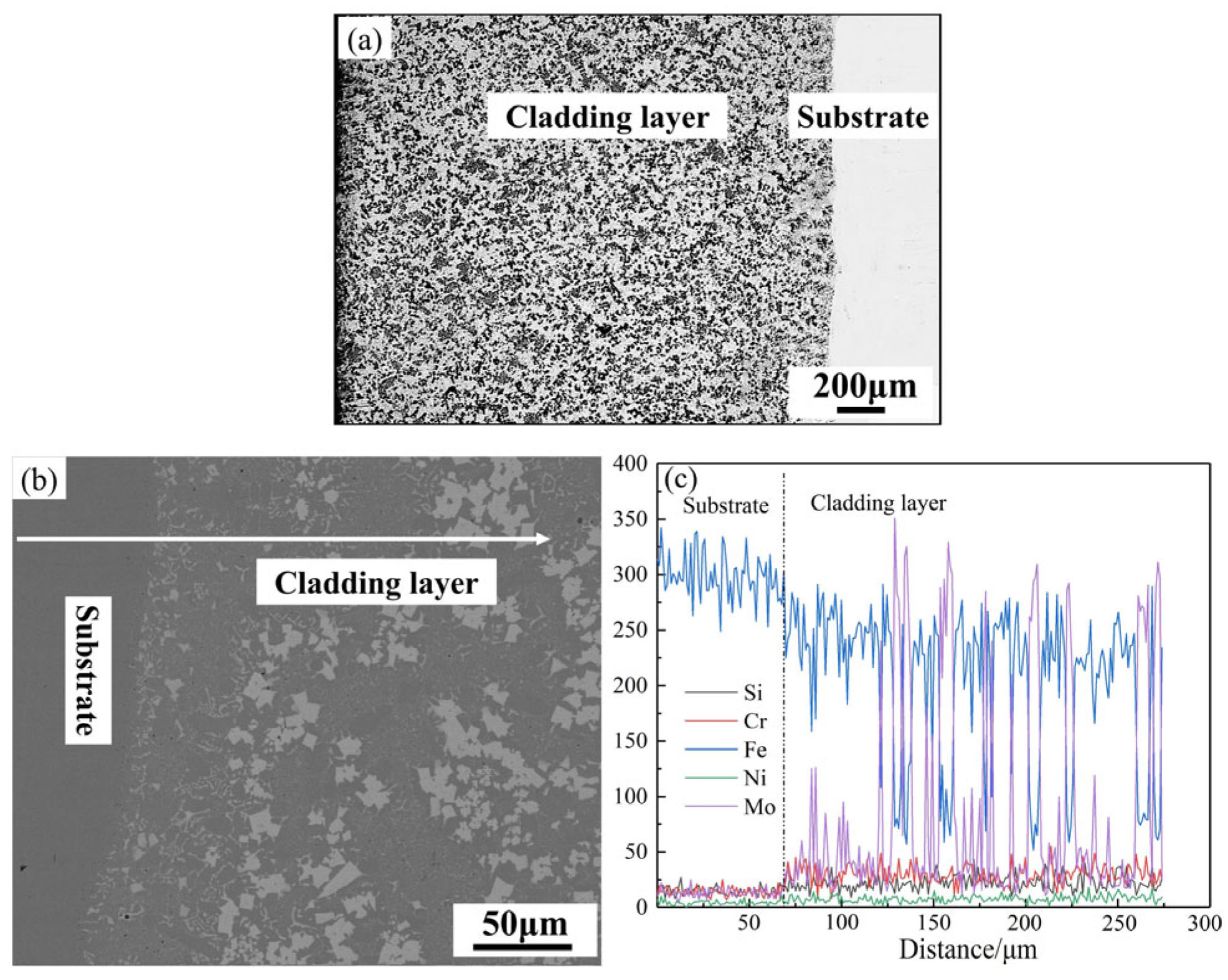
The OM cross-sectional morphology of the cladding layer is shown in Figure 2a, which indicates excellent bonding between the cladding layer and substrate, with no obvious pores or cracks at the interface. Figure 2b shows the SEM of the bonding zone, where the hard phase particles are evenly distributed in the cladding layer. The element distribution results marked in Figure 2b are shown in Figure 2c. The results indicate that different elements show variation at different positions, confirming the formation of a good metallurgical bond between the cladding layer and substrate.

3.2. X-Ray Diffraction

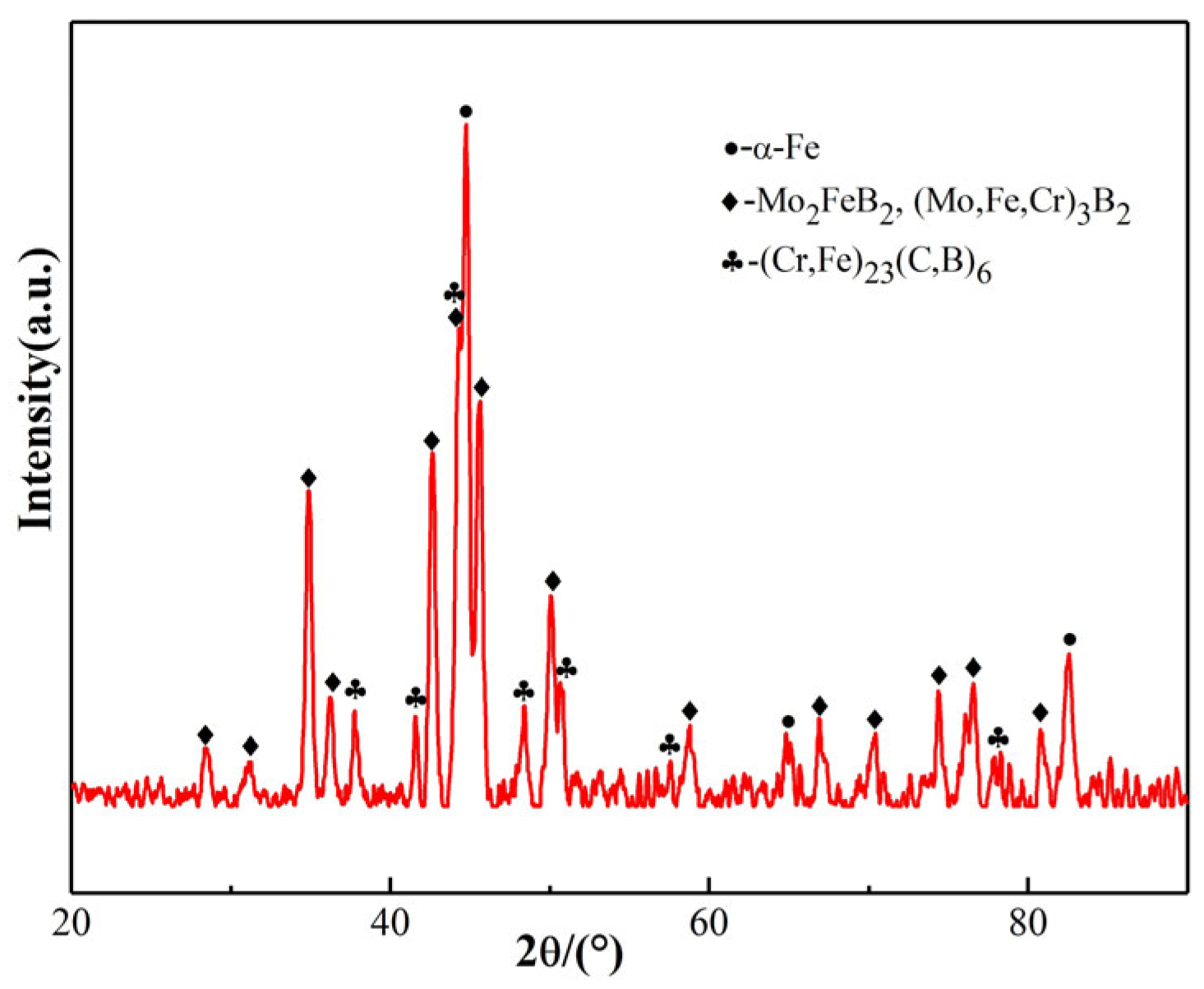
The XRD patterns of the boride coating on the surface of the Gr15 steel are shown in Figure 3. It was noticed that the coating was mainly composed of the hard phase Mo2FeB2, and M23(C,B)6, while the binder phase was α-Fe. Due to the dilution effect of GCr15 steel, the C element content in the cladding layer was increased. In addition, higher concentrations of Fe, Cr, and B elements in the cladding layer resulted in the precipitation of M23(C,B)6.

3.3. Thermal Fatigue Resistance

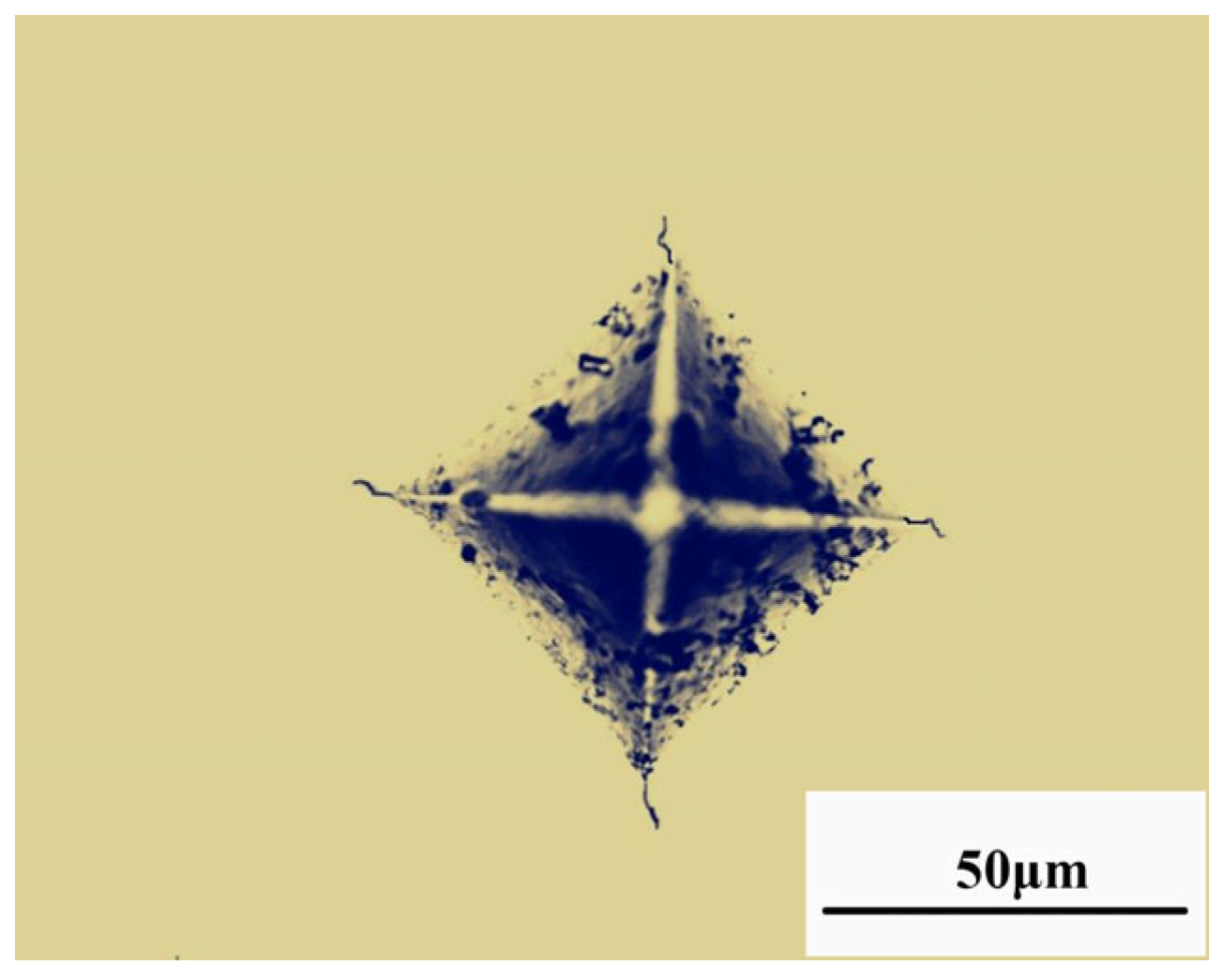
Figure 4 shows the indentation morphology of the cladding layer, which forms a standard rhombus. The fracture toughness (KIC) of the cladding layer was calculated as 14.8 MPa·m1/2 using Formulas (1) and (2), indicating that the boride coating on the surface of the GCr15 steel exhibited excellent fracture toughness.
Multiple indentation crack length curves of the cladding layer at different thermal fatigue temperatures are shown in Figure 5. The indentation crack length after four thermal shock times under 800 °C was 20 mm. In contrast, the indentation cracks length of the cladding layer showed no significant change after four thermal shock times at 400 °C, indicating slow crack propagation and good thermal stability. In addition, the indentation crack length increases following a quadratic pattern, and the crack propagation rate increases with the increase in the thermal shock times
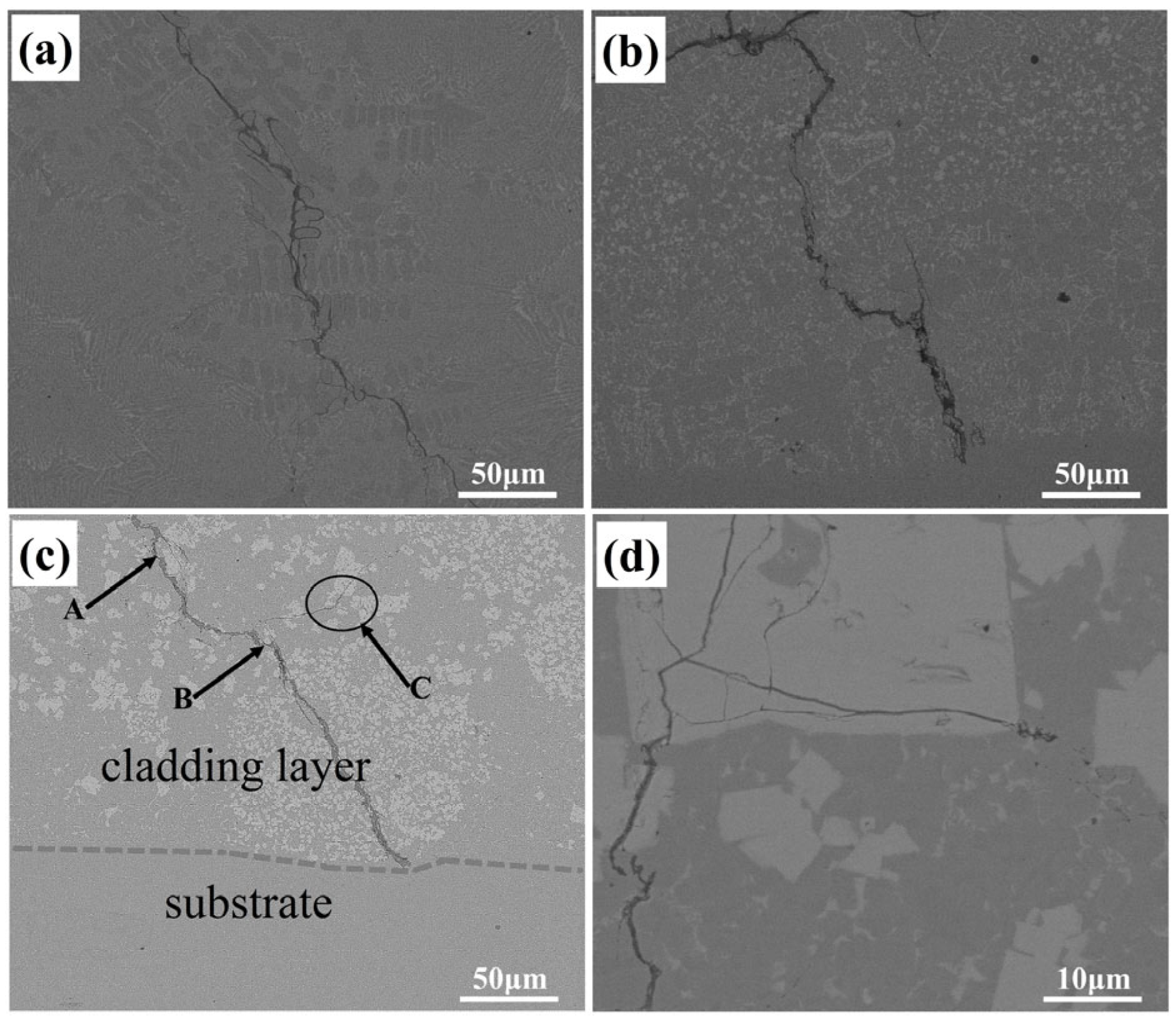
Figure 6 shows the SEM micrograph of the cladding layer cross-section after thermal fatigue at 400, 600, and 800 °C, along with a highly magnified image of the crack in the area C of Figure 6c. The boride coating on the surface of the GCr15 steel substrate did not show any spalling (Figure 6a–c), indicating good bonding between the coating and substrate. The cracks propagated from the cladding layer to the fusion interface, forming a penetrating crack, but stopped expanding after reaching the fusion interface, demonstrating reliable bonding with GCr15 steel substrate. The cracks in the cladding layer followed a curve rather than extending perpendicularly to the substrate. In marked areas A and B, the propagation pattern of the cracks was mainly intergranular propagation. It was evident that the exiting of the hard phases had a negative effect on the propagation of the cracks.
Small cracks were observed in the large hard phases according to Figure 6d. On the one hand, it was easy to form numerous defects in the coarse hard phase particles, e.g., atomic vacancy, pile-up of dislocations, and low-angle grain boundary. The larger particle size led to a more complex structure, which made it easier to form a crack source. On the other hand, the length of the large hard phases ranged from 10−5 m to 10−4 m. The crystal surface energy of the large grains in the interval played an important role, while the interfacial energy of the grain boundary can be ignored. In other words, the barrier effect of the grain boundary can be ignored when the large grains face the transgranular propagation of the cracks, indicating that the large grains were more prone to form transgranular propagation.
Overall, the cladding layer exhibited both transgranular and intergranular crack propagation. The grain boundary with large interfacial energy, when the cracks propagated to the small hard phases, then the crack propagation patterns of the cladding layer were intergranular propagation. However, the interfacial energy of the grain boundary can be ignored when the cracks propagate into the large hard phases, resulting in the transgranular propagation of the cracks.
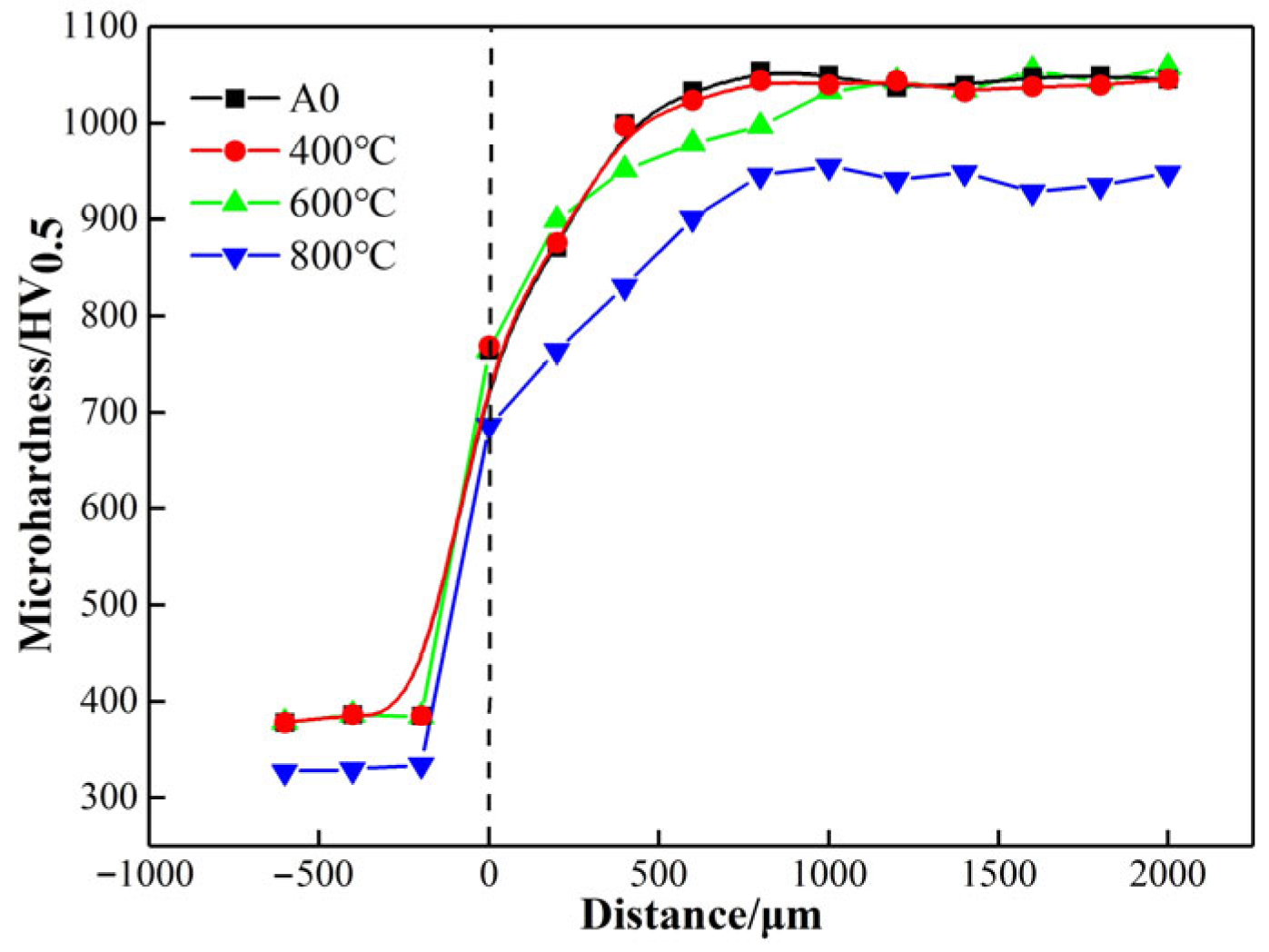
Figure 7 shows the microhardness distribution of the cladding layer with different thermal fatigue temperatures. It can be measured that the average microhardness of the as-prepared (without thermal fatigue) sample (A0) was 1022.1 HV0.5, which was 2.6 times the microhardness of the GCr15 steel substrate. Moreover, the microhardness increases gradually without any abnormal fluctuations, suggesting that the cladding layer and the GCr15 steel substrate had formed a strong metallurgical bonding interface. From the plot, the average microhardness of the cladding layer displayed no obvious change after thermal fatigue under 400 °C and 600 °C compared with sample A0, indicating good thermal stability under these conditions. However, the average microhardness decreased to 925.8 HV0.5 after thermal fatigue at 800 °C, demonstrating that the high temperature (800 °C) introduced unstable factors into the cladding layer with rapid heating and cooling, resulting in a decrease in microhardness of the cladding layer.
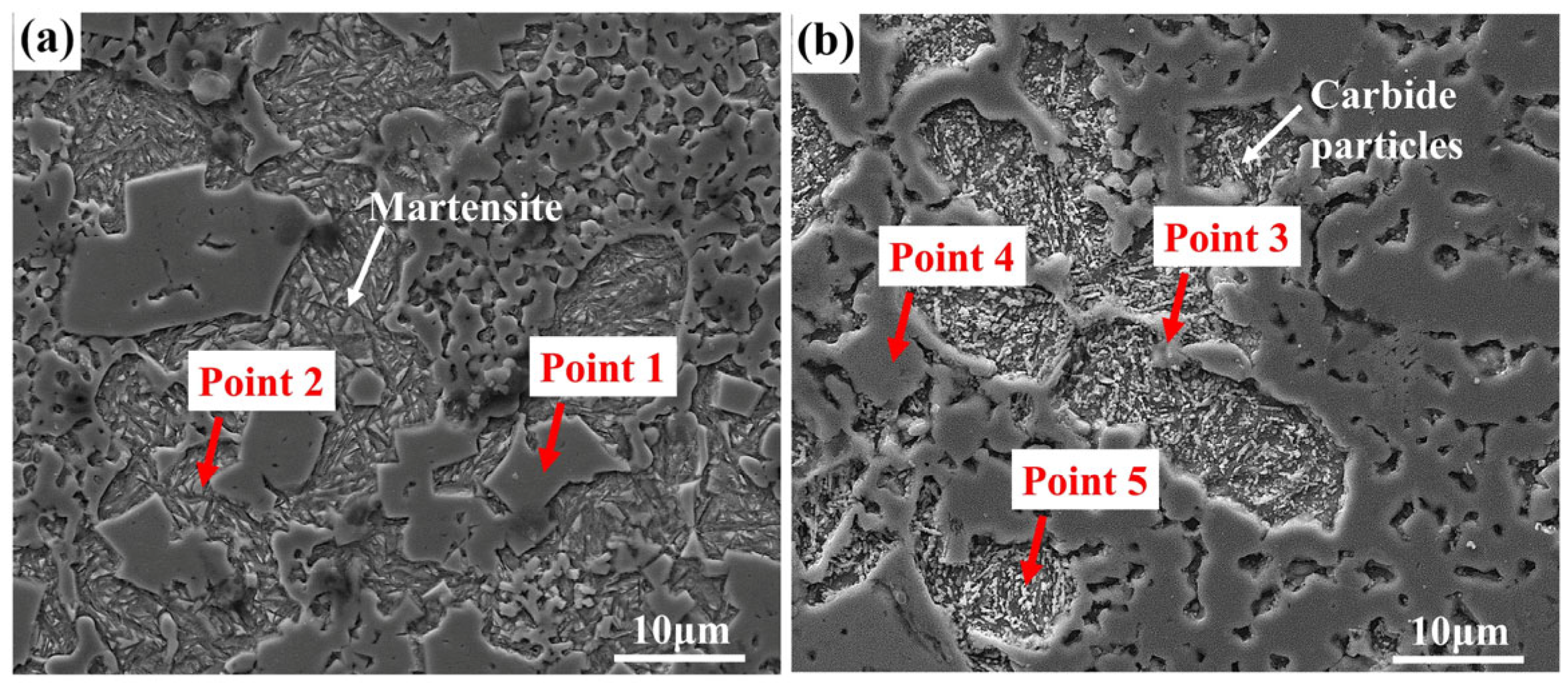
Figure 8 shows the microstructure of the cladding layer with different thermal fatigue conditions. The element composition, as marked in Figure 8, is shown in Table 4. The binder phases of the cladding layer without thermal fatigue in Figure 8a were martensite. The hard phases were composed of Mo2FeB2 particles with different sizes and morphology, M3B2, and borides with short rod shape, bone shape, and reticular shape.
Figure 8b shows the microstructure of the cladding layer with an obvious change after thermal fatigue under 800 °C of rapid heating and cooling, where martensite disappeared, and fine cementite precipitated. At high thermal fatigue temperature (800 °C), part of the martensite had been decomposed into cementite and ferrite with lower hardness during the transformation process, meanwhile, precipitating more carbide particles. After the thermal fatigue cycles, a large number of dispersed carbides accumulated and grew, resulting in a decrease in microhardness of the cladding layer.

3.4. Wear Resistance

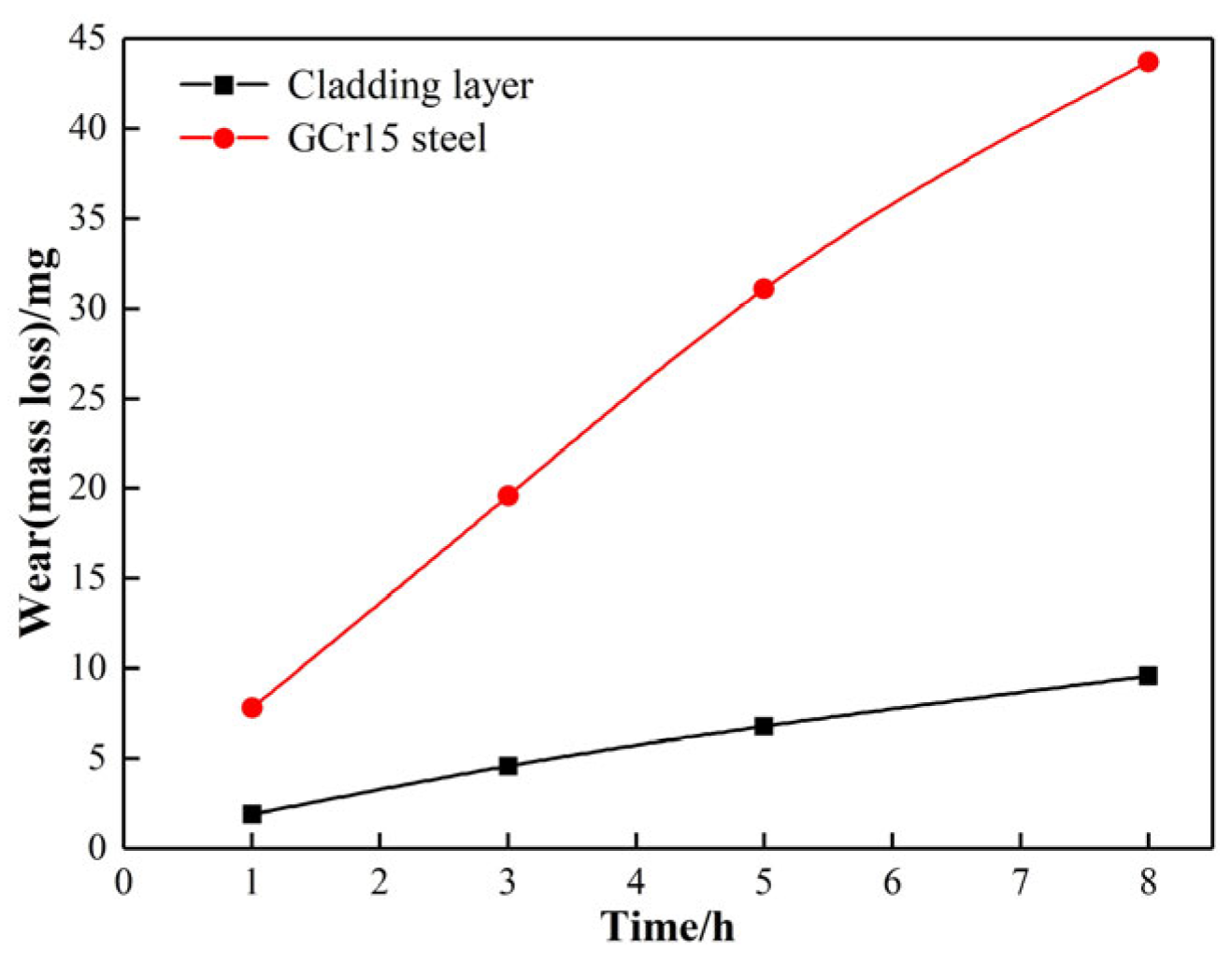
In the wear test setting, rotation speed was set to 100 r/min, and load was set to 100 N. The wear testing durations were 1 h, 3 h, 5 h, and 8 h. The mass loss of the cladding layer and GCr15 steel after the wear test is shown in Table 5.
Figure 9 shows the mass loss curve of different cladding layers and substrates at different wear times. It can be observed that the mass loss of GCr15 steel and the cladding layer after 8 h of continuous wear was 43.7 mg and 9.6 mg, respectively. The GCr15 steel substrate’s wear resistance was greatly improved by the cladding layer. The improvement in wear resistance was attributed to the ternary boride (Mo2FeB2) ceramic phase generated in the cladding layer by the reaction under the high-temperature of the plasma cladding process. This phase possesses excellent properties such as high hardness and high wear resistance, and is dispersed in the α-Fe binder phase. Moreover, the Mo2FeB2 particles were fine and uniformly distributed, forming a dense microstructure and reticular connection, resulting in strong bonding between phases due to high interfacial energy. In addition, the hardness of the boride hard phase was higher than that of the α-Fe binder phase. Therefore, Mo2FeB2 acts as an anti-wear skeleton resisting the intrusion and cutting of abrasive particles, while the α-Fe binder phase provides support and protection.
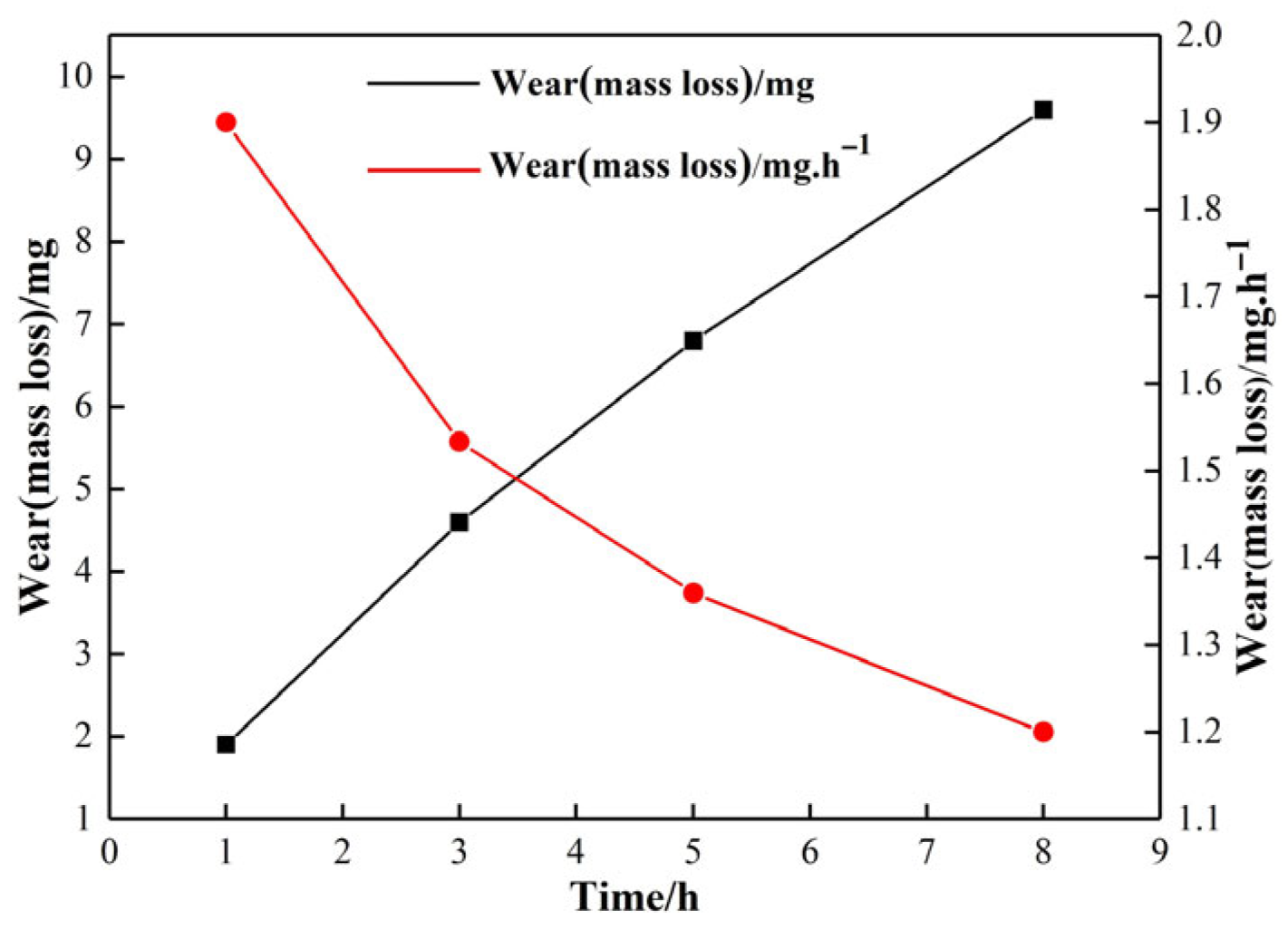
Figure 10 shows the mass loss of the cladding layer during the 8 h wear testing, as well as the corresponding mass loss over duration. During the wear testing, the stress accumulation caused by friction and wear led to an increase in the crack propagation capacity at the spalling pit as the wear time increased. The spalling of the crack propagation gradually changed from a single hard phase to multiple hard phases, and a large number of hard phases spalled off from the cladding layer, forming a larger group of spalling pits. This phenomenon was reflected by the trend of mass loss displayed as an increasing black curve. Nevertheless, the average wear mass loss decreased over time. It showed better the wear resistance performance of the cladding layer under longer wear usage conditions.
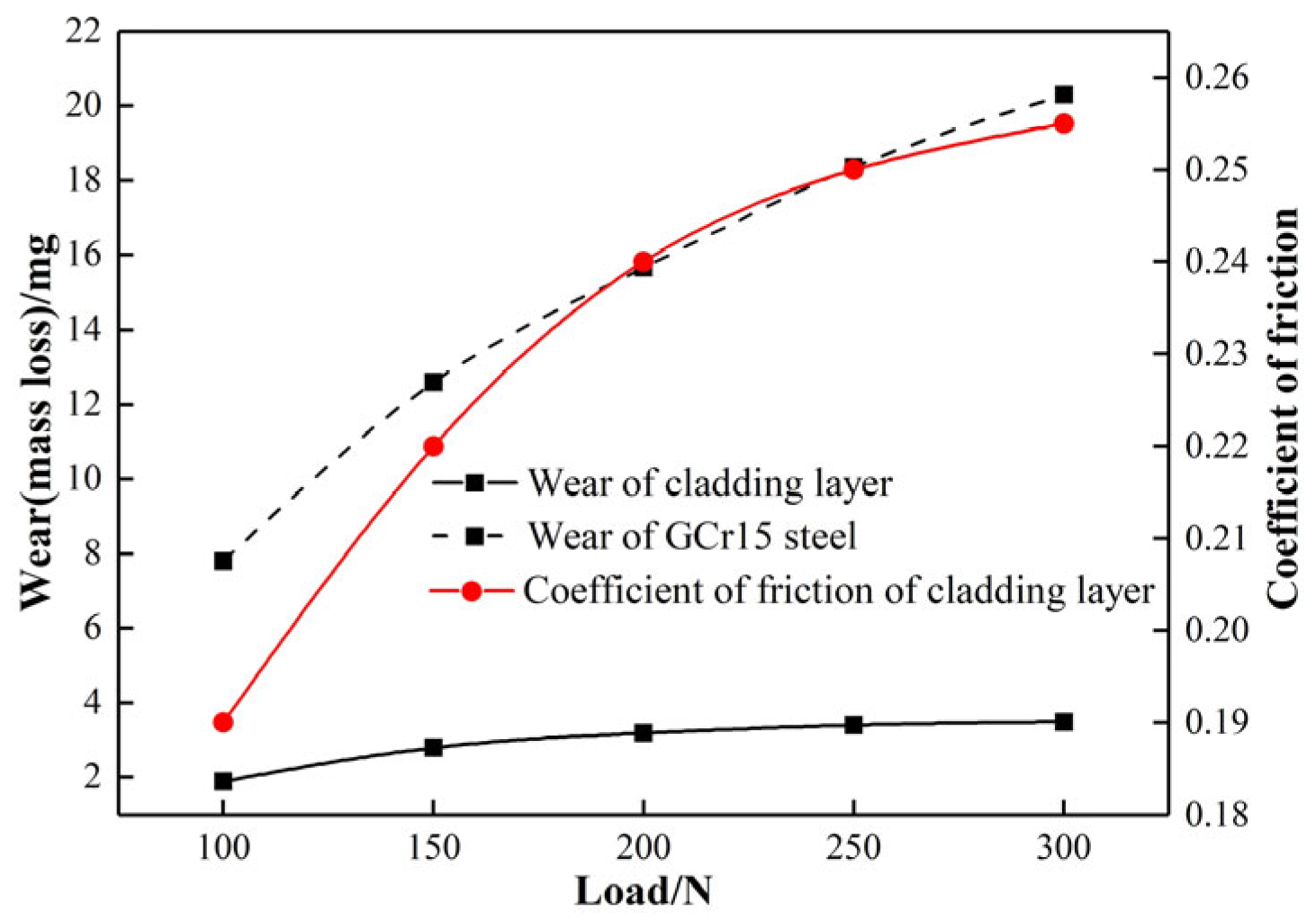
Another series of wear tests was carried out with a 100 r/min rotation speed, 1 h time, and various loads, as shown in Table 6. The wear load was set between 100 N and 300 N in 50 N increments. It was observed that with the increase in wear load, the mass loss on the GCr15 steel was more severe than the cladding layer, where the mass loss ratio between the cladding layer and GCr15 steel was 1.9/7.8 = 1/4.1 when the load was 100 N. But, when the load increased to 300 N, the mass loss ratio was 3.5/20.3 = 1/5.8, which suggested that the cladding layer possessed better wear resistance than GCr15 steel. Meanwhile, the wear resistance of the cladding layer was more prominent with the increase in the load.
Figure 11 shows the mass loss of the cladding layer and GCr15 steel at different loads, along with the friction coefficient of the cladding layer. It was observed that the mass loss of the cladding layer and the GCr15 steel increased to various extents following the increase in load. Moreover, the relative coefficient of friction (COF) of the cladding layer also tends to increase. Under different wear load conditions, due to the strong external force in the initial friction and wear process, the α-Fe binder phase with poor wear resistance was first pressed into by abrasive particles, and generated scratches and cracks during the dry sliding process. With the further increase in the load and the continuation of the wear test, the cracks initiated in the coating continued to propagate along the direction of the binder phase. When the crack propagated into the interface of the hard phase and binder phase, the crack propagated along the direction of the interface, and, finally, led to the spalling of the hard phase particles with higher hardness. The spalled-off hard phase particles continued to act as abrasive particles during the dry friction process, resulting in more serious wear and mass loss. Because the hardness of the cladding layer is lower than that of the YG8 cemented carbide friction pair, the protruding hard phase abrasive particles during the wear process increased the mass loss. Consequently, the mass loss increased following the increase in load and resulted in an increase in the COF of the cladding layer. In addition, the increased wear load changed the contact condition between the cladding layer and the YG8 cemented carbide friction pair, thereby increasing the contact area, friction resistance, and COF.
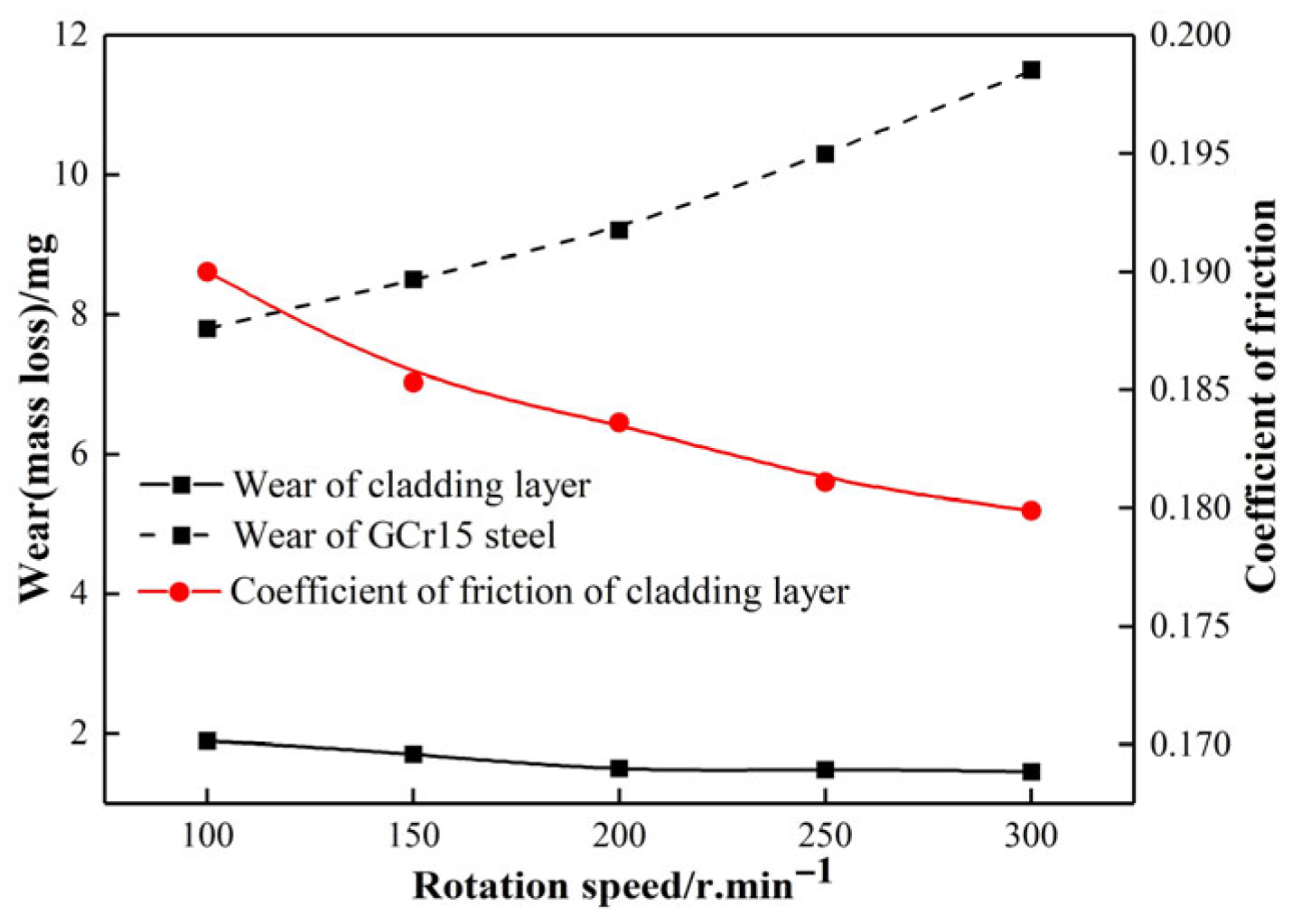
The mass loss of the cladding layer and GCr15 steel with different rotation speeds (ranging from 100 r/min to 300 r/min) is shown in Table 7. The wear test of load and time was set at 100 N and 1 h, where the wear mass loss ratio of the cladding layer to GCr15 steel was 1/4.1. However, when the rotation speed increased to 300 r/min, the wear mass loss ratio of the cladding layer to GCr15 steel was 1/8.8, which demonstrated that the cladding layer exhibited better wear resistance than GCr15 steel. Meanwhile, the wear resistance of the cladding layer became more pronounced with the increase in the rotation speed.
The mass loss of the cladding layer and GCr15 steel at different rotation speeds, and the coefficient of friction of the cladding layer are shown in Figure 12. It can be observed that the mass loss of the cladding layer decreased slightly as the rotation speed increased, while the mass loss of the GCr15 steel increased sharply. In addition, the COF of the cladding layer displayed a trend of decrease. From the plot, it is suggested that the effect of rotation speed on the wear resistance of the cladding layer was not as significant as that of GCr15 steel, indicating that the wear resistance of the cladding layer was better than that of GCr15 steel.
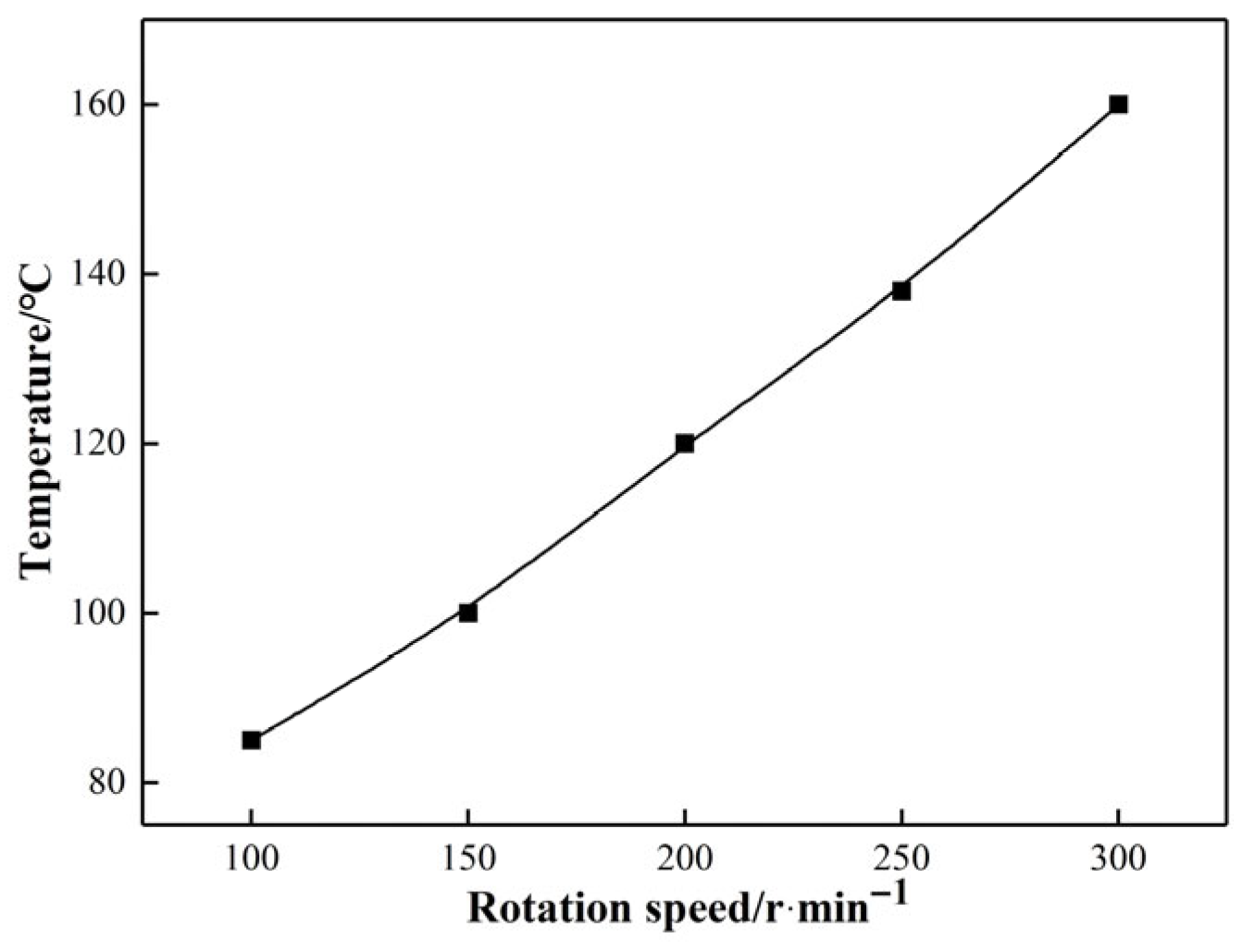
According to the temperature of the wear contact surface at different rotation speeds (Figure 13), it can be found that the temperature of wear contact surface reached about 85 °C with the rotation speed was 100 r/min, while the temperature reached about 160 °C with the rotation speed was 300 r/min, indicating that the temperature of wear contact surface increased with increasing rotation speed. Owing to the good thermal stability of the cladding layer, the hardness of the cladding layer did not show a significant change when the temperature of the wear contact surface increased. The mass loss of the cladding layer stayed nearly stable with slightly decrease. This resulted from the fact that the wear contact surface increased with rotation speed, but the hardness of both the cladding layer surface and the friction pair did not change significantly. While the wear mass loss of the GCr15 steel was increased sharply under the same conditions, different forms of oxides on the surface of the cladding layer were formed with different rotation speeds. When the rotation speed was relatively low, the friction temperature of the cladding layer surface slowly formed the oxidation film. After the oxide film was destroyed in the friction, the new oxidation film was not able to regenerate in time, which created a stepped oxidation morphology. Thus, the roughness and the COF of the wear surface increased. While the rotation speed was relatively high, the oxide film was able to regenerate after the previous oxide film was destroyed in the abrasion, which formed a new flat wear surface on the cladding layer, resulting in a lower COF due to the smoother surface.

3.5. Wear Mechanism

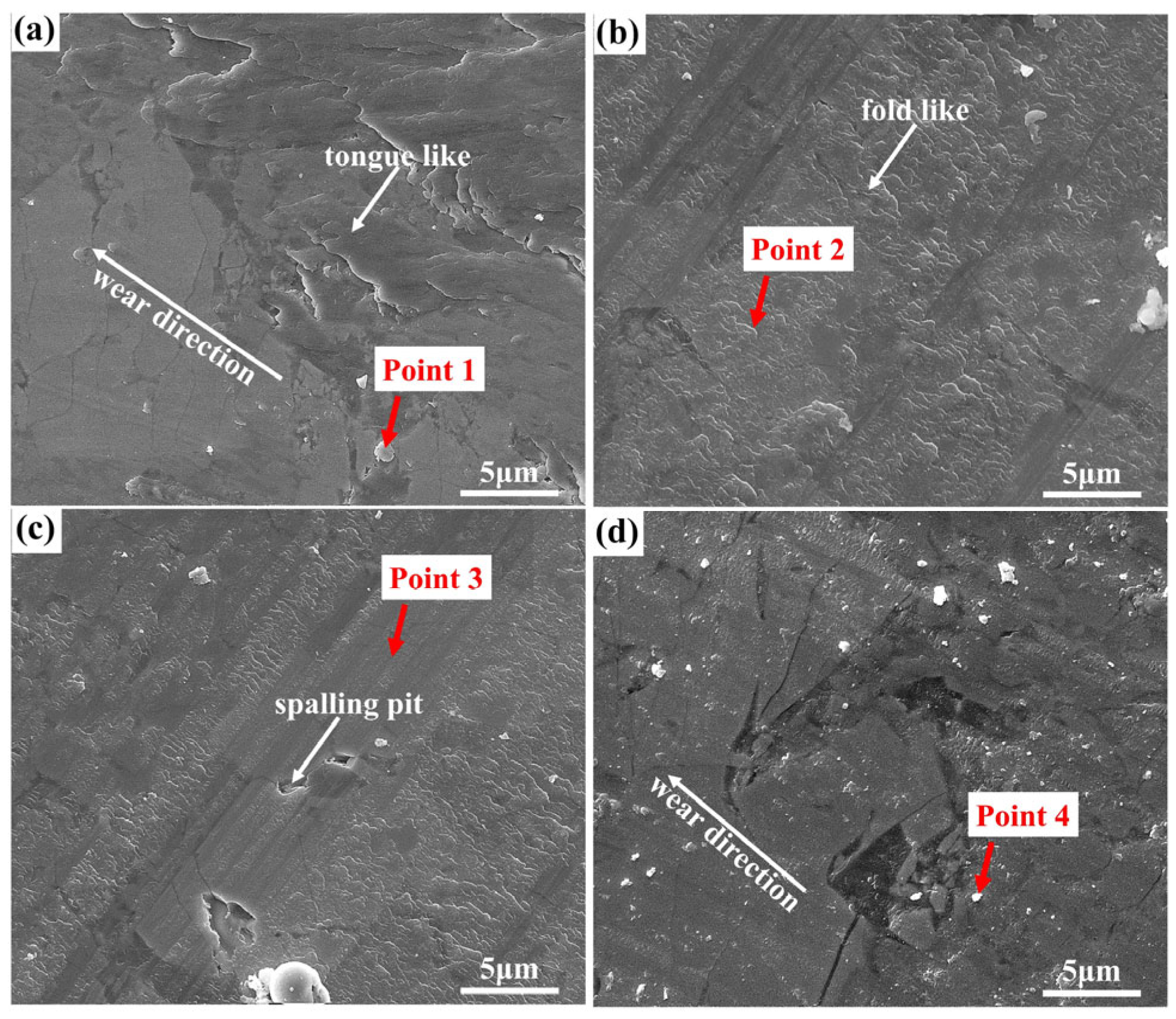
Figure 14 shows the worn surface morphologies at different wear times. The element composition of the marked area in Figure 14 is shown in Table 8. It can be observed that the surface of the binder phase forms traces of tongue-like plastic flow, as shown in Figure 14a. The oxide film was formed at the binder phase with low hardness during the friction process. Because of the shear forces, adhesive wear was generated along the direction of friction following the oxide-induced plastic flow. However, the hard phase possessed high hardness and good stability, and remained largely unchanged. Figure 14b shows that the tongue-like oxide was damaged to form fold-like distributions over the worn surface with shallow plowings. It can be seen in Figure 14c that the fold-like oxide was abraded significantly. The boride hard phases were peeled off from the surface and formed cracks, which participated in the abrasive process to form three-body abrasion wear. When the wear time increased to 8 h, the worn surface no longer displayed fold-like oxide or plowing, as shown in Figure 14d. The spalling pits on the worn surface were observed, indicating that the surface oxide was destroyed.
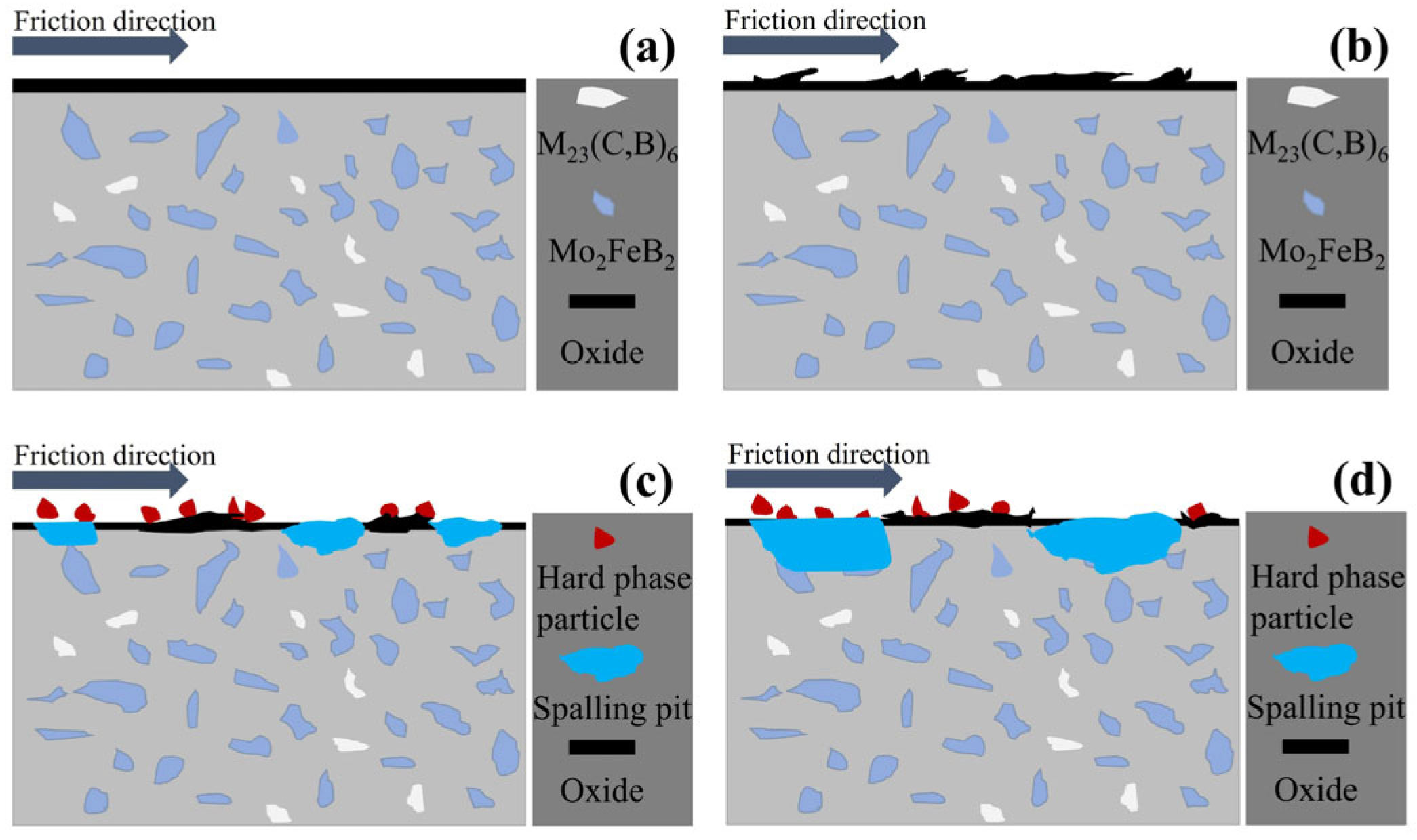
Figure 15 shows the schematic diagram of the wear mechanism of the cladding layer. As shown in Figure 15a, a thin oxide layer formed on the cladding surface due to frictional heat in the initial wear stage. This oxide adhered to the worn surface and served as protection and lubrication [32]. As abrasion continued, the surface temperature increased, softening the binder phase. Due to the shear force, the tongue-like oxide shifted along the friction direction, causing micro-adhesive wear, as shown in Figure 15b. Figure 15c exhibited the condition of further abrasion, where the adhesive wear became apparent, and the tongue-like oxide was destroyed and transitioned to be fold-like. Hence, a large amount of wear debris was inserted into the surface of the oxide to form plowings. Meanwhile, the hard phases with Mo2FeB2 and M23(C,B)6 produced micro-cracks and peeled off under the compressive stress and shear forces, which resulted in the coating generating brittle flaking pits, and the hard phase particles that flaked off mixed on the friction surface to form three-body abrasion wear. Further extending the wear time to 8 h, the hard phase particles staying on the worn surface accelerated the wear of the cladding layer, as shown in Figure 15d. The oxide protective layer on the surface was destroyed, and the plowing expanded, which resulted in the surface tending to become flat eventually. In addition, due to the lack of oxide to protect the hard phase particles from bulging, more hard phase particles peeled off brittlely and formed large spalling pits. It can be seen that the wear of the cladding layer was mainly three-body abrasion wear caused by the brittle spalling of hard phases, while the oxide film formed on the binder phase acted as a self-lubricating layer, enhancing wear resistance.

4. Conclusions

This study used plasma cladding to prepare the boride cladding layer with the Mo2FeB2 phase on the GCr15 steel and investigated the microstructure, thermal fatigue resistance, microhardness, and wear resistance.
It was found that the binder phase and hard phase of the boride cladding layer were α-Fe Martensite, Mo2FeB2, and (Cr,Fe)23(C,B)6, respectively. Reliable metallurgical bonding was formed between the cladding layer and the GCr15 steel without any defects, such as cracks or holes. The average microhardness of the cladding layer reached 1022.1 HV0.5, indicating a significant improvement in surface hardness compared with the GCr15 substrate.
According to the results of the thermal fatigue resistance, the mode of the crack in the cladding layer was transgranular and intergranular. The microhardness of the cladding layer remained nearly unchanged, demonstrating good thermal stability under 600 °C, while the microhardness decreased to 925.8 HV0.5 when the thermal fatigue temperature was set at 800 °C.
The wear resistance was significantly improved by depositing the cladding layer under the conditions of increasing the wear load, wear time, and rotation speed. The wear on the cladding layer was mainly caused by brittle spalling of the hard phase, and the oxide film formed by the binder phase acted as a self-lubricating effect to increase the wear resistance of the cladding layer.

Author Contributions

H.Z.: Conceptualization, Methodology, Investigation, Formal Analysis, Writing—Original Draft, and Funding Acquisition. Y.Z. (Yang Zhang): Conceptualization, Formal Analysis, Writing—Original Draft, and Writing—Review and Editing. L.J.: Investigation and Formal Analysis. B.Z.: Investigation and Formal Analysis. Y.Z. (Yu Zhang): Investigation and Formal Analysis. All authors have read and agreed to the published version of the manuscript.

Funding

This research was funded by PhD research startup foundation of Zhejiang Industry & Trade Vocational College (No. YJRC202304).

Data Availability Statement

The original contributions presented in the study are included in the article, further inquiries can be directed to the corresponding author.

Conflicts of Interest

The authors declare no conflict of interest.

References

  1. Cui, X.; Qin, Y.; Han, X.; Chen, H.; Ruan, X.; Zhang, H.; Jiao, C.; Mao, R.; Hao, J.; Zhao, S.; et al. Comparing the tribological behavior of polycrystalline diamonds against steel GCr15 and ceramic Si3N4: Friction and wear. Diam. Relat. Mater. 2024, 141, 110550. [Google Scholar] [CrossRef]
  2. Li, Y.; Chen, C.; Fan, Z.; Jiang, D.; Shuai, S.; Tu, T.; Ren, Z. Effects of cooling rate on isothermal spheroidizing annealing of hot-rolled GCr15 bearing steel. J. Mater. Res. Technol. 2024, 31, 329–337. [Google Scholar] [CrossRef]
  3. Wang, Z.; Chen, N.; Ma, Z.; Wei, S.; Li, J. Effect of magnesium on primary carbides in GCr15 bearing steel. Mater. Today Commun. 2024, 41, 110651. [Google Scholar] [CrossRef]
  4. Xiao, J.; Xie, X.; Liu, X.; Li, D.; Zhou, Y. Fabrication of gradient structure for enhancing wear resistance of GCr15 bearing steel friction shim. Wear 2024, 552–553, 205449. [Google Scholar] [CrossRef]
  5. Zhang, W.; Li, W.; Liu, H.; He, T.; Deng, S.; Tian, H.; Cao, W. Microstructure effects on improving rolling contact fatigue by a double-quenching heat treatment process for GCr15 steel. Tribol. Int. 2024, 194, 109519. [Google Scholar] [CrossRef]
  6. Zhang, Y.; Zhang, H. Influence of laser remelting on the microstructure and properties of Mo2FeB2 ternary boride coatings prepared by laser cladding. Mater. Today Commun. 2024, 41, 110548. [Google Scholar] [CrossRef]
  7. Huang, Q.; Lin, Q.; Xu, Y.; Cao, Y. Predicting potential hard materials in NbB ternary boride: First-principles calculations. Int. J. Refract. Met. Hard Mater. 2025, 126, 106927. [Google Scholar] [CrossRef]
  8. Gupta, S.; Zhang, J.; Ngige, G.; Dey, M.; Malusky, M.; Samanta, B.; Çakır, D.; Barua, R. Synthesis and characterization of a remarkable ternary boride: Mo2NiB2. Open Ceram. 2024, 18, 100556. [Google Scholar] [CrossRef]
  9. Xu, Y.; Hu, C.; Zhou, S.; Wei, Y.; Han, Z.; Cao, Y. Theoretical insights on structural, mechanical and thermodynamic properties of MCoB (M=Nb, Mo, and W) ternary borides under high pressure. Solid State Sci. 2022, 130, 106931. [Google Scholar] [CrossRef]
  10. Feng, K.; Yan, X.; Liu, Y.; Du, Y.; Chang, K. The self-lubrication of WCoB synthesized by in-situ reaction enhancing the wear resistance of the WC-Co system. Ceram. Int. 2024, 50, 35474–35483. [Google Scholar] [CrossRef]
  11. Zhu, X.; Pan, Y.; Zhang, H.; Ke, D. Effect of Ni content on the microstructure and properties of WCoB-TiC cermets. Int. J. Refract. Met. Hard Mater. 2023, 117, 106381. [Google Scholar] [CrossRef]
  12. Yang, Z.; Liang, H.; Zhang, H.; Zhang, L.; Yu, F.; Li, W.; Zhang, X. A novel wear-resistant and corrosion-resistant Mo2NiB2–Ni cermet coating prepared using fast hot pressing sintering. Mater. Chem. Phys. 2024, 318, 129242. [Google Scholar] [CrossRef]
  13. Zhang, L.; Gao, Y.; Huang, Z.; Ma, H.; Liu, Y.; Jie, W.; Zhou, L. Effect of Ni content on the corrosion behavior of Mo2NiB2–Ni cermet in H2SO4 solution. Ceram. Int. 2023, 49, 36289–36298. [Google Scholar] [CrossRef]
  14. Zhang, H.; Zhang, Y. In-situ synthesized WC reinforcement phase on microstructural evolution, toughness and tribological properties of Mo2FeB2-based composite coatings fabricated by laser cladding. J. Mater. Res. Technol. 2025, 34, 677–690. [Google Scholar] [CrossRef]
  15. Zhang, H.; Pan, Y.; Zhang, Y.; Lian, G.; Cao, Q.; Que, L. A comparative study on microstructure and tribological characteristics of Mo2FeB2/WC self-lubricating composite coatings with addition of WS2, MoS2, and h-BN. Mater. Des. 2023, 225, 111581. [Google Scholar] [CrossRef]
  16. Dhand, V.; Lim, J.; Bharadwaj, S.; Kim, S.; Rhee, K. Sol–gel combustion derived novel ternary transition metal boride-anisotropic magnetic powders and their magnetic property. J. Mater. Res. Technol. 2023, 24, 7219–7228. [Google Scholar] [CrossRef]
  17. Cao, Z.; Jian, Y.; Zhao, Z.; Xiao, P.; Xu, L.; Huang, Z. Effect of V doping on the microstructure and mechanical properties of Mo2FeB2-based cermets and investigation on the enhancement mechanism. J. Alloys Compd. 2023, 931, 167545. [Google Scholar] [CrossRef]
  18. Lang, X.-Y.; Zhang, G.-H. Microstructure and mechanical properties of Mo2FeB2-316SS cermets prepared by vacuum sintering. J. Alloys Compd. 2025, 1027, 180626. [Google Scholar]
  19. Li, B.; Zheng, Y.; Yang, M.; Wu, H.; Jiang, Z.; Xu, X.; Yang, M. Effect of W addition on microstructure and mechanical properties of Mo2FeB2-based cermets and first-principles study. Ceram. Int. 2025, 51, 24999–25007. [Google Scholar] [CrossRef]
  20. Wei, X.; Chen, Z.; Zhong, J.; Xiang, Y. Feasibility of preparing Mo2FeB2-based cermet coating by electrospark deposition on high speed steel. Surf. Coat. Technol. 2016, 296, 58–64. [Google Scholar] [CrossRef]
  21. Ren, X.; Yu, L.; Liu, Y.; Li, H.; Wu, J.; Liu, Z. Effects of extra boron addition on the liquid-state sintering process and properties of hard Mo2FeB2-based cermets. Int. J. Refract. Met. Hard Mater. 2016, 61, 207–214. [Google Scholar] [CrossRef]
  22. Yu, H.; Zheng, Y.; Liu, W.; Zheng, J.; Xiong, W. Effect of V content on the microstructure and mechanical properties of Mo2FeB2 based cermets. Mater. Des. (1980–2015) 2010, 31, 2680–2683. [Google Scholar] [CrossRef]
  23. Zhang, J.; Zheng, Y.; Zhou, W.; Zhang, G.; Ke, Z.; Dong, Z.; Feng, P. Effects of Cr content on the microstructure and mechanical properties of Mo2FeB2-based cermets prepared via vacuum sintering. Vacuum 2018, 155, 509–513. [Google Scholar] [CrossRef]
  24. Li, Y.; Cui, X.; Jin, G.; Cai, Z.; Tan, N.; Lu, B.; Gao, Z. Interfacial bonding properties between cobalt-based plasma cladding layer and substrate under tensile conditions. Mater. Des. 2017, 123, 54–63. [Google Scholar] [CrossRef]
  25. Yu, H.; Li, D.; Ma, M.; Zheng, B.; Zuo, X.; You, J.; Zhang, N. Improving microstructure and frictional wear behavior of plasma cladding FeCoCrNiMo high-entropy alloy layers by annealing treatment. Mater. Today Commun. 2024, 41, 110737. [Google Scholar] [CrossRef]
  26. Xie, Y.; Jiang, W.; Tang, J.; Wen, X.; Deng, R.; Yan, J.; Huang, B.; Zhuang, J. Microstructure and performance of AlCoCrFeNiCu(CeO2)X high-entropy alloy coatings by plasma cladding. J. Alloys Compd. 2024, 1003, 175623. [Google Scholar] [CrossRef]
  27. Xie, Y.; Wen, X.; Yan, J.; Huang, B.; Zhuang, J. Microstructure and wear resistance of AlCoCrFeNiCuSnX high-entropy alloy coatings by plasma cladding. Vacuum 2023, 214, 112176. [Google Scholar] [CrossRef]
  28. Wu, W.; Ye, S.; Wang, R.; Zhang, C.; Zhang, Y.; Lu, X. Microstructure and wear behavior of plasma cladded Ni-based alloy coating on copper under different preheating temperature. J. Mater. Res. Technol. 2023, 23, 1609–1617. [Google Scholar] [CrossRef]
  29. Xie, Y.; Wen, X.; Huang, B.; Zhuang, J. Microstructure, hardness and corrosion properties of AlCoCrFeNi2.1YHf high-entropy alloy coating prepared by plasma cladding. Mater. Lett. 2023, 330, 133356. [Google Scholar] [CrossRef]
  30. Huang, S.G.; Liu, R.L.; Li, L.; Van der Biest, O.; Vleugels, J. NbC as grain growth inhibitor and carbide in WC–Co hardmetals. Int. J. Refract. Met. Hard Mater. 2008, 26, 389–395. [Google Scholar] [CrossRef]
  31. Chang, S.-H.; Chen, S.-L. Characterization and properties of sintered WC–Co and WC–Ni–Fe hard metal alloys. J. Alloys Compd. 2014, 585, 407–413. [Google Scholar] [CrossRef]
  32. Tiwari, A.; Seman, S.; Singh, G.; Jayaganthan, R. Nanocrystalline cermet coatings for erosion–corrosion protection. Coatings 2019, 9, 400. [Google Scholar] [CrossRef]
Figure 1. Schematic diagram of Vickers indentation of the cladding layer cross-section.
Lubricants 14 00005 g001
Figure 2. Morphology of coating: (a) optical microscopy cross-sectional image, (b) SEM image of bonding zone, and (c) element distribution of (b).
Lubricants 14 00005 g002
Figure 3. XRD patterns of boride coating on the surface of the GCr15 steel.
Lubricants 14 00005 g003
Figure 4. Vickers indentation morphology of the cladding layer after thermal fatigue at 400 °C.
Lubricants 14 00005 g004
Figure 5. Sum of the length of the indentation cracks of the cladding layer after thermal fatigue at different temperatures.
Lubricants 14 00005 g005
Figure 6. SEM micrograph of the cracks of the cladding layer after thermal fatigue with (a) 400 °C, (b) 600 °C, (c) 800 °C, and (d) highly magnified image of the crack in the area C of figure (c).
Lubricants 14 00005 g006
Figure 7. Microhardness distribution of the cladding layer with different thermal fatigue temperatures.
Lubricants 14 00005 g007
Figure 8. Microstructure of the cladding layer (a) without thermal fatigue and (b) thermal fatigue under 800 °C.
Lubricants 14 00005 g008
Figure 9. Relationship between wear time and mass loss of the cladding layer and GCr15 steel.
Lubricants 14 00005 g009
Figure 10. Average mass loss of the cladding layer at different wear times.
Lubricants 14 00005 g010
Figure 11. Mass loss of the cladding layer and GCr15 steel at the different loads, and the coefficient of friction of the cladding layer.
Lubricants 14 00005 g011
Figure 12. Mass loss of the cladding layer and GCr15 steel at the different rotation speeds, and the coefficient of friction of the cladding layer.
Lubricants 14 00005 g012
Figure 13. Temperature of the wear contact surface at different rotation speeds.
Lubricants 14 00005 g013
Figure 14. Worn surface morphologies at different wear times: (a) 1 h, (b) 3 h, (c) 5 h, (d) 8 h.
Lubricants 14 00005 g014
Figure 15. Schematic diagram of the wear mechanism of the cladding layer: (a) 1 h, (b) 3 h, (c) 5 h, (d) 8 h.
Lubricants 14 00005 g015
Table 1. Elemental composition (wt.%) of plasma cladding powder.
ElementMoBSiCrCNiFe
wt.%35.04.01.010.00.52.0Rest
Table 2. Elemental composition (wt.%) of GCr15 steel substrate.
CSiMnSPCrMoNiFe
0.95~1.050.15~0.350.20~0.40≤0.02≤0.0271.30~1.65≤0.10≤0.30Rest
Table 3. Process parameters of plasma cladding used for Mo2FeB2-based cermet coating.
Nozzle Height (mm)Voltage (V)Current (A)Plasma Gas Flow (L/min)Powder Gas Flow (L/min)Powder Feeding
(g/min)
Cladding Speed (mm/min)
10301001.5410100
Table 4. EDS results at different points marked in Figure 8 (Atomic%).
PointCSiVCrFeMo
127.560.221.748.8325.3236.34
217.832.680.668.8063.706.34
323.780.891.4610.3035.9027.67
427.041.051.589.2534.9226.17
538.351.740.936.7945.636.56
Table 5. Mass loss of the cladding layer and GCr15 steel with different wear times.
Mass Loss
(mg)
Wear Time (h)
1358
Cladding layer1.94.66.89.6
GCr15 steel7.819.631.143.7
Table 6. Mass loss of the cladding layer and GCr15 steel at different loads.
Mass Loss
(mg)
Load (N)
100150200250300
Cladding layer1.92.83.23.43.5
GCr15 steel7.812.615.718.320.3
Table 7. Mass loss of the cladding layer and GCr15 steel at different rotation speeds.
Mass Loss
(mg)
Rotation Speed (rpm)
100150200250300
Cladding layer1.91.71.51.41.3
GCr15 steel7.88.59.210.311.5
Table 8. EDS results at different points marked in Figure 14 (Atomic%).
PointCOCrFeMo
115.3819.3714.0638.4412.76
211.4635.0814.3734.724.38
310.864.7316.1063.594.72
48.7335.5319.4135.920.41
Disclaimer/Publisher’s Note: The statements, opinions and data contained in all publications are solely those of the individual author(s) and contributor(s) and not of MDPI and/or the editor(s). MDPI and/or the editor(s) disclaim responsibility for any injury to people or property resulting from any ideas, methods, instructions or products referred to in the content.