Article

Structure–Performance Relationship Study of PMA Viscosity Index Improver in New Energy Vehicle Transmission Fluid

Beijing Research Institute Sinopec Lubricant Co., Ltd., Beijing 100085, China
*
Author to whom correspondence should be addressed.
Lubricants 2026, 14(1), 4; https://doi.org/10.3390/lubricants14010004 (registering DOI)
Submission received: 22 October 2025 / Revised: 8 December 2025 / Accepted: 10 December 2025 / Published: 23 December 2025
(This article belongs to the Special Issue Novel Lubricant Additives in 2025)

Abstract

This study systematically investigates the structure–performance relationship of PMA (PolyMethacrylate) viscosity index improvers in new energy vehicle (NEV) transmission fluids. We developed an integrated analytical framework combining spectroscopic and chromatographic techniques to simultaneously characterize its side chain length distribution, molecular weight polydispersity, and branching architecture. Key findings reveal that the kinematic viscosity of formulated oils positively correlates with PMA molecular weight, low-temperature performance is governed by side-chain length (≥C14 fatty alcohols), shear stability is predominantly determined by molecular weight, and nitrogen-modified PMA enhances oxidation resistance by mitigating kinematic viscosity increase. These insights provide actionable guidance for the molecular design of viscosity index improvers and the formulation optimization of advanced lubricants to meet the stringent demands of electric vehicle transmission systems.

1. Introduction

Viscosity index improvers (VIIs) are crucial components in lubricating oils, significantly enhancing their viscosity-temperature performance [1,2]. PMA functions as a VII by utilizing its molecular configuration changes at high and low temperatures. At high temperatures, the alkyl side chains extend and interact with wax molecules in the oil, thereby increasing viscosity [3,4].
In recent years, China’s new energy vehicle (NEV) sector has experienced rapid growth. According to the statistics from the Ministry of Public Security (China), NEV ownership in China had surpassed 30 million by 2024, a fivefold increase since 2020. The high rotational speeds (up to 25,000 rpm), elevated system integration, and high power density of NEV motor and transmission systems necessitate enhanced lubricant performance.
Oil cooling technology, renowned for its superior heat dissipation efficiency, has emerged as the dominant solution for enabling high-speed and high-efficiency motor designs, thereby becoming a mainstream trend in electric drive systems. However, lubricants employed in oil-cooled e-axles or integrated transmission systems confront multifaceted challenges, including elevated rotational speeds, intricate material compatibility requirements, and specialized electric drive environmental conditions. To address these demands, such lubricants must exhibit a balanced load-bearing capacity, excellent compatibility with insulating materials, effective high-speed foam suppression, oxidation and shear resistance, and robust thermal management capabilities [5,6,7].
Under extreme operating conditions, the operating temperature of NEV powertrain systems exceeds 140 °C. Although low-viscosity formulations enhance heat dissipation efficiency, the reduced sump volume (e.g., from 5 L in conventional gearboxes to 1 L) exacerbates the fluid’s susceptibility to high-temperature degradation. Consequently, stringent requirements are imposed on the lubricant’s viscosity-temperature characteristics and thermal-oxidative stability [8].
PMA is a key component for regulating the viscosity-temperature properties of lubricants. Due to its superior viscosity-temperature characteristic, oxidation stability, and low-temperature performance, PMA has been widely adopted in advanced automotive lubricating oil [9,10,11].
The structure of PMA facilitates structural modification, making it a subject of significant research interest. Common strategies include introducing polar group modifications [12,13,14], complex chain structure [15,16,17], and forming composites with surfactants, nanomaterials, or other substances [18,19,20]. These design modifications to the PMA structure will affect its key performance characteristics when used in lubricating oils, including dispersion, oxidation resistance, shear resistance, and friction resistance, and even environmental protection performance [21,22,23].
Despite the widespread application of PMA viscosity index improvers in advanced lubricants, their molecular-level structural characterization remains a critical challenge. This limitation stems from the complex nature of PMA side chains, which feature alkyl groups with heterogeneous length distributions. Such structural heterogeneity not only dictates the molecular weight polydispersity but also fundamentally governs the material’s performance attributes. The absence of comprehensive analytical methodologies capable of simultaneously resolving the qualitative and quantitative aspects of PMA composition and architecture has significantly impeded both fundamental research and industrial optimization efforts.
In industrial practice, PMA performance evaluation still relies on empirical testing of formulated lubricants, which fails to establish direct structure–property relationships due to the lack of molecular insights. This approach is particularly inadequate for emerging applications like electric vehicle transmission fluids, where precise performance control is essential.
To address these challenges, we developed an integrated analytical framework combining advanced spectroscopic and chromatographic techniques. This method enables simultaneous characterization of side chain length distribution, molecular weight polydispersity, and branching architecture.
By applying this framework to PMA samples from multiple sources, we systematically investigated the structure–performance relationships in next-generation transmission fluids, focusing on: Viscosity-temperature behavior (including low-temperature performance); Shear stability under extreme conditions; Oxidation resistance during thermal aging. This comprehensive investigation not only establishes a new paradigm for polymer characterization but also provides actionable insights for molecular design optimization, directly addressing the performance requirements of electric vehicle transmission systems.

2. Materials and Methods

2.1. Selection of PMA Viscosity Index Improvers

For the application scenes of new energy vehicle transmission fluids, various PMA viscosity index improvers were collected. Relevant information regarding these improvers is presented in Table 1.
The densities and colors of the five PMAs are quite similar, but there are significant differences in their kinematic viscosity and shear stability. On the one hand, this affects their usage in lubricant formulations, influencing the performance of the formulated oils; on the other hand, this is also likely to be related to their structure and composition.

2.2. Formulation Design for NEV Transmission Fluids

In transmission fluids for NEV, the five PMA viscosity index improvers were incorporated into formulations while maintaining the consistent composition of other components unchanged. The oil’s kinematic viscosity at 100 °C was set around 5 mm2/s to evaluate the impact of PMA on various oil properties and investigate the correlation between performance changes and molecular structure. The formulation compositions are shown in Table 2.
Lubricants are prepared by mechanical stirring. According to the formulation, weigh the raw materials using a scale with an accuracy of 0.01 g. Add them to the glass beaker one by one. Stir mechanically at 300~900 rpm under conditions of 50~70 °C for 2~4 h. Once the process is complete, stop heating and stirring. Leave the oil product to cool to room temperature, then pour it into a sample bottle for storage.

2.3. Lubricant Performance Testing Methods

The physical and chemical properties and simulation performance testing methods of lubricants all adopt international standard test methods listed below.
  • ASTM D1500 Standard Test Method for ASTM Color of Petroleum Products (ASTM Color Scale)
  • ASTM D2270 [29] Standard Practice for Calculating Viscosity Index from Kinematic Viscosity at 40 °C and 100 °C
  • ASTM D2983 [30] Standard Test Method for Low-Temperature Viscosity of Automatic Transmission Fluids, Hydraulic Fluids, and Lubricants using a Rotational Viscometer
  • ASTM D4052 Standard Test Method for Density, Relative Density, and API Gravity of Liquids by Digital Density Meter
  • ASTM D445 Standard Test Method for Kinematic Viscosity of Transparent and Opaque Liquids (and Calculation of Dynamic Viscosity)
  • ASTM D664 [31] Standard Test Method for Acid Number of Petroleum Products by Potentiometric Titration
  • ASTM D92 Standard Test Method for Flash and Fire Points by Cleveland Open Cup Tester
  • ASTM D97 [32] Standard Test Method for Pour Point of Petroleum Products
  • CEC L-45 Viscosity Shear Stability of Transmission Lubricants (Taper Roller Bearing Rig) The results can be presented in terms of kinematic viscosity (ASTM D445) and its rate of change, the change of acid number (ASTM D664), and glassware aspect, etc.
  • CEC L-48 [33] Oxidation Stability of Lubricating Oils used in Automotive Transmissions by Artificial Ageing (Laboratory Test) The results can be presented in terms of kinematic viscosity (ASTM D445) and its rate of change, etc.

2.4. PMA Structural Analysis Methods

In recent years, pyrolysis gas chromatography-mass spectrometry (pyGC-MS) has emerged as an effective technique for analyzing monocase structures in the field of polymer materials. Under high-temperature conditions, pyGC-MS enables the cleavage of ester bonds in PMA, thereby facilitating the analysis of fatty alcohol structures within the molecular chains [34,35].
In the lubricant field, nuclear magnetic resonance (NMR) is also a commonly used characterization method, with applications in the structural analysis of base oils and viscosity index improvers [36,37]. By identifying relevant signal peaks in NMR spectra, the degree of branching in fatty alcohol carbon chains can be assessed.
Gel permeation chromatography (GPC) provides molecular weight and molecular weight distribution information for polymers, enabling evaluation of the polymerization degree of polymers [38]. Organic elemental analysis(OEA) can be employed to infer potential modified structural information within PMA. Integrating the aforementioned analytical characterization methods, the structural analysis plan for PMA is detailed in Table 3.
GPC tests were performed on an Agilent 1260 Infinity II (Agilent Technologies, Waldbronn, Germany), using a RID detector. The columns were Waters Styragel HR 5E and Waters Styragel HR 2. The flow rate was 0.7 mL/min, and the tandem temperature was 35 °C. Polystyrene reference materials were used to plot calibration curves. The sample was dissolved in tetrahydrofuran (0.05 g in 10 mL THF) overnight, then filtered through two 0.22 μm hydrophobic membranes before testing.
GC-MS tests were performed on Agilent 7890B-5977B (Agilent Technologies, Germany), the column was Thermo Fisher T-G5 (Thermo Fisher, Monza, Italy). The split ratio was 35:1. The injection port temperature was 300 °C.
OEA tests were conducted on Thermo Fisher FlashSmart CHNS/O (Thermo Fisher, Italy).
NMR tests were performed on a Bruker AVANCE III 400 MHz NMR spectrometer (Bruker, Fällanden, Switzerland). The sample was dissolved in deuterated chloroform. The recycle delay was set to 6 s. Spectra were calibrated by TMS. The quantifications were determined by the integrals of their 1H and 13C signals.
TGA/DSC tests were conducted on SDT Q500 (TA Instruments, New Castle, DE, USA). The samples were heated from room temperature to 800 °C at a rate of 20 °C/min under N2 flow.
pyGC-MS tests were conducted on Shimadzu GCMS-QP2020 NX GCMS and Frontier GA/PY-3030D (Shimadzu, Tokyo, Japan). The pyrolysis temperature was set according to the TGA-DSC results, and in pre-experiment, different pyrolysis temperatures were tested to ensure complete pyrolysis of the samples (see the Supplementary Materials). Based on the findings of this study, the recommended pyrolysis temperature for PMA is 550 °C. The sample was dried in a vacuum oven at 150 °C under vacuum for a whole day before the test.

3. Results

3.1. Structural Study of PMA

PMA-2 is a dispersive viscosity index improver with poor shear stability and is claimed to have a modified structure. Taking into account representativeness and typicality, this paper uses PMA-2 as an example to detail the structural research process of PMA.
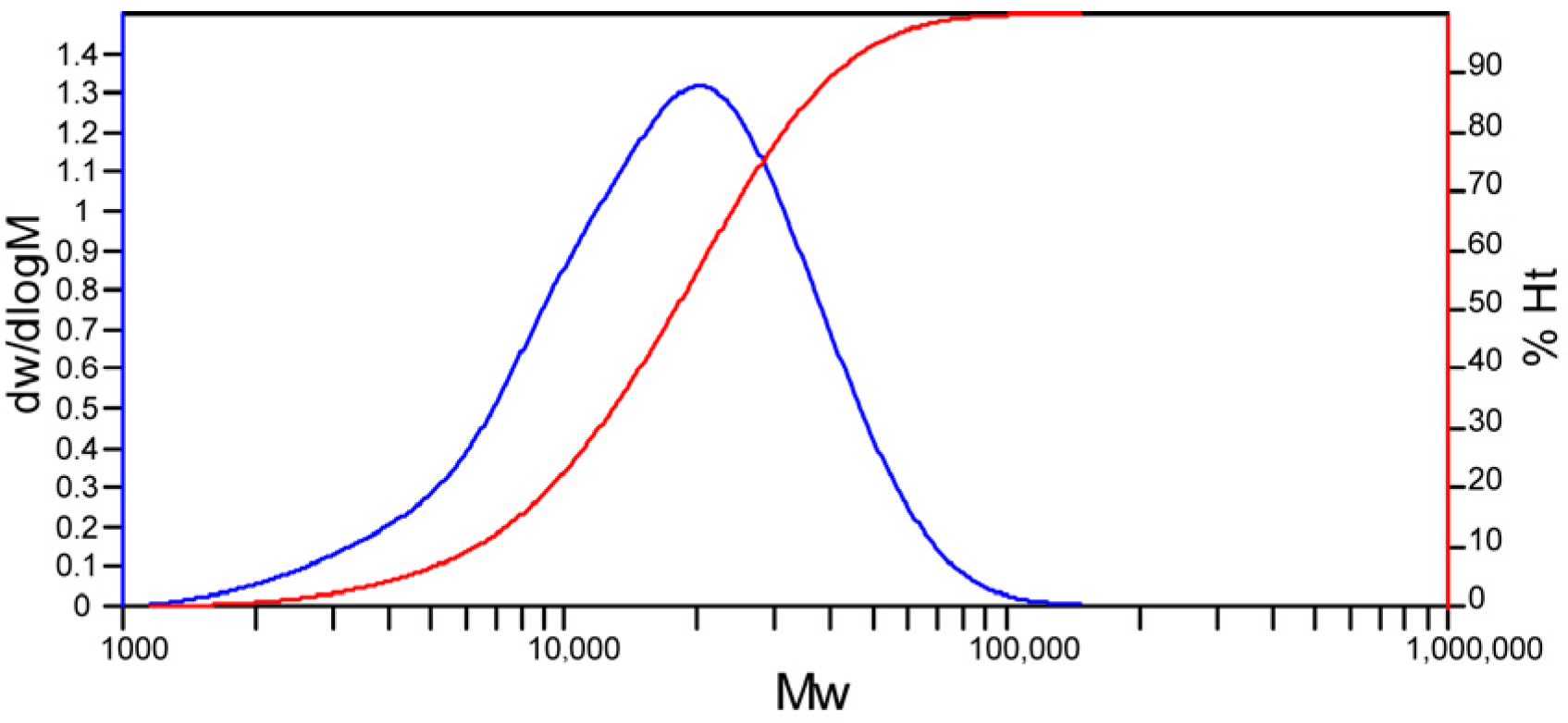
Firstly, GPC characterization was employed to determine the molecular weight and molecular weight distribution of PMA. In addition to the PMA component, solvent oil information was also observed. The distribution plot of PMA-2 main component is shown in Figure 1. The specific results for PMA-2 are shown in Table 4. The original GPC report is contained in Supplementary Materials.
In Table 4, PDI = Mw/Mn. The ideal monodisperse system has a PDI of 1, but the actual synthetic products all have a PDI greater than 1. The closer the PDI value is to 1, the narrower the molecular weight distribution of the polymer, meaning the molecular weights are relatively uniform; a PDI value greater than 1 indicates a wider molecular weight distribution, meaning there are molecules of different molecular weights within the polymer.
Based on molecular weight and monomer composition data, the average molecular weight of monomers and the degree of polymerization (DP) of each PMA can be further calculated by the following formulas.
M i ¯ = ω i M i ω i  
In this formula, M i ¯ is the average molecular weight of the monomers in PMA molecules, M i is the molecular weight of each monomer, ω i is the content of each monomer. And ω i = 1 , so
D P w = M w M i ¯ = M w ω i M i
In this formula, DPw is the weight-average degree of polymerization of each PMA, and Mw is the weight-average molecular weight of each PMA.
Secondly, organic elemental analysis of PMA was conducted, as shown in Table 5.
Table 5 reveals that PMA-2 contains a little nitrogen in addition to minor sulfur (maybe catalyst or initiator residues).
Subsequently, GC-MS analysis was conducted to determine the approximate content of small molecular structures such as unpolymerized monomers and free alcohols in PMA. GC-MS analysis of the PMA-2 sample after chloroform extraction revealed the presence of information on N-methylacrylamide (NMA), dodecyl methacrylate, tetradecyl methacrylate, hexadecyl methacrylate, and octadecyl methacrylate. This aligns with the nitrogen detected in the OEA of PMA-2, indicating its source is NMA. This suggests NMA serves as a modified structure, enhancing the dispersibility of PMA-2. The original GC-MS data is contained in the Supplementary Materials.
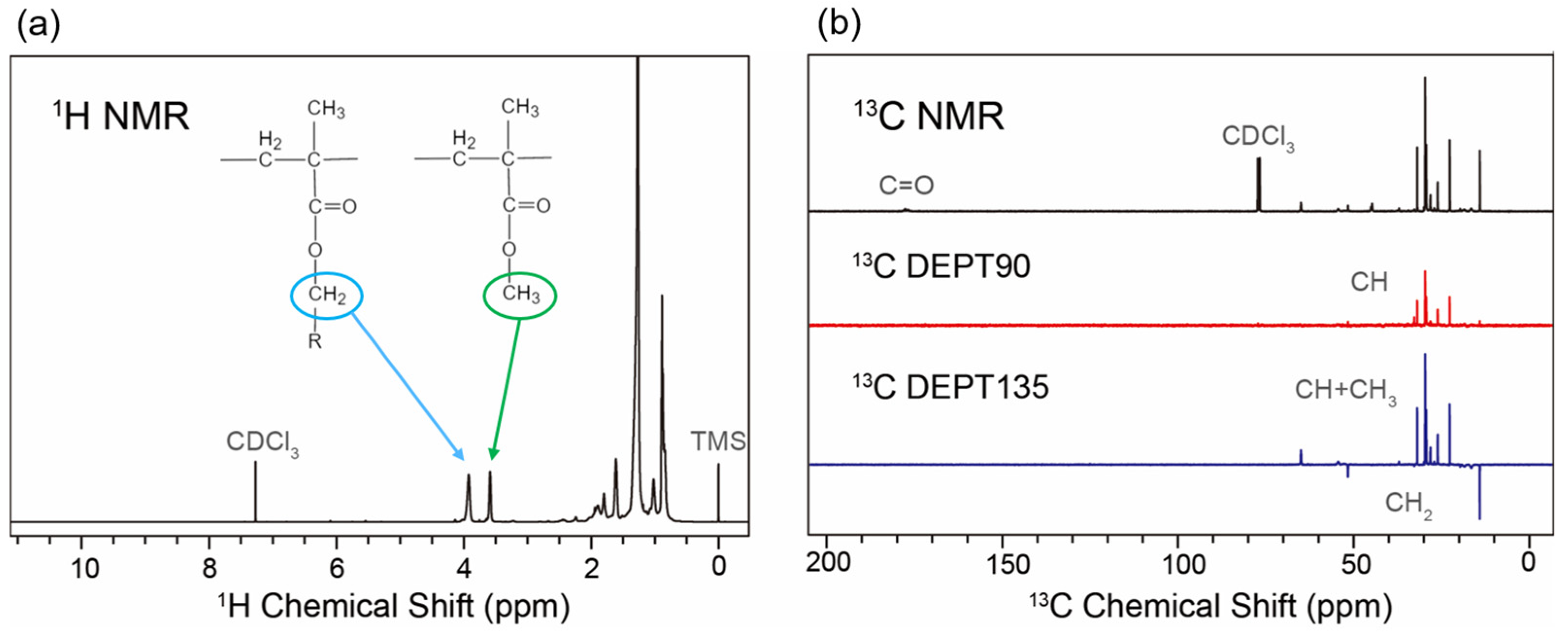
Furthermore, quantitative studies were conducted using NMR and pyrolysis GC-MS methods. PMA-2 was quantitatively characterized via 1H and 13C NMR spectra. The DEPT (Distortionless Enhancement by Polarization Transfer) spectrum enabled the distinction between primary, secondary, tertiary, and quaternary carbons, thereby allowing assessment of the degree of carbon chain branching. Figure 2 presents the 1H and 13C NMR spectra of PMA-2.
In the 1H spectrum of PMA-2, two distinct peaks at approximately 3.6 ppm and 3.9 ppm correspond to methyl methacrylate and longer-chain fatty alcohol methacrylates, respectively. Quantitative analysis of the hydrogen spectrum reveals the quantitative relationships between these two components and between PMA and the solvent oil.
DEPT is an editing technique for 13C NMR spectra [39]. By applying polarization transfer to different carbon signals, it enables the selection, nulling, or inversion of specific carbon signals. The results in distinct patterns in the edited spectrum, aiding in the identification of structures corresponding to carbon signal peaks. Specifically, in a 13C DEPT 90 spectrum, only tertiary carbon (CH) exhibits positive absorption signals, while other carbon types (primary carbon CH3, secondary carbon CH2, and quaternary carbon C) are nearly zero. In a 13C DEPT 135 spectrum, primary carbon (CH3) and tertiary carbon (CH) exhibit positive absorption signals, secondary carbon (CH2) shows negative absorption signals, and quaternary carbon (C) is nearly zero.
Based on this pattern, the structural representation of each signal peak in the 13C NMR spectrum of PMA-2 is identified. Primary carbon (CH3) represents the terminal end of the carbon chain, secondary carbon (CH2) indicates unbranched chain extension, while tertiary carbon (CH) and quaternary carbon (C) denote branching or functionalization of the carbon chain. In the 13C spectrum, only quaternary carbon signals present in the PMA backbone and carbonyl group were observed, with no quaternary carbon signals detected in the side chains. Therefore, it can be concluded that no quaternary carbon exists in the side chains, and the degree of branching in PMA can be measured using the proportion of tertiary carbon. The branching degree of PMA-2 is 0.43%.
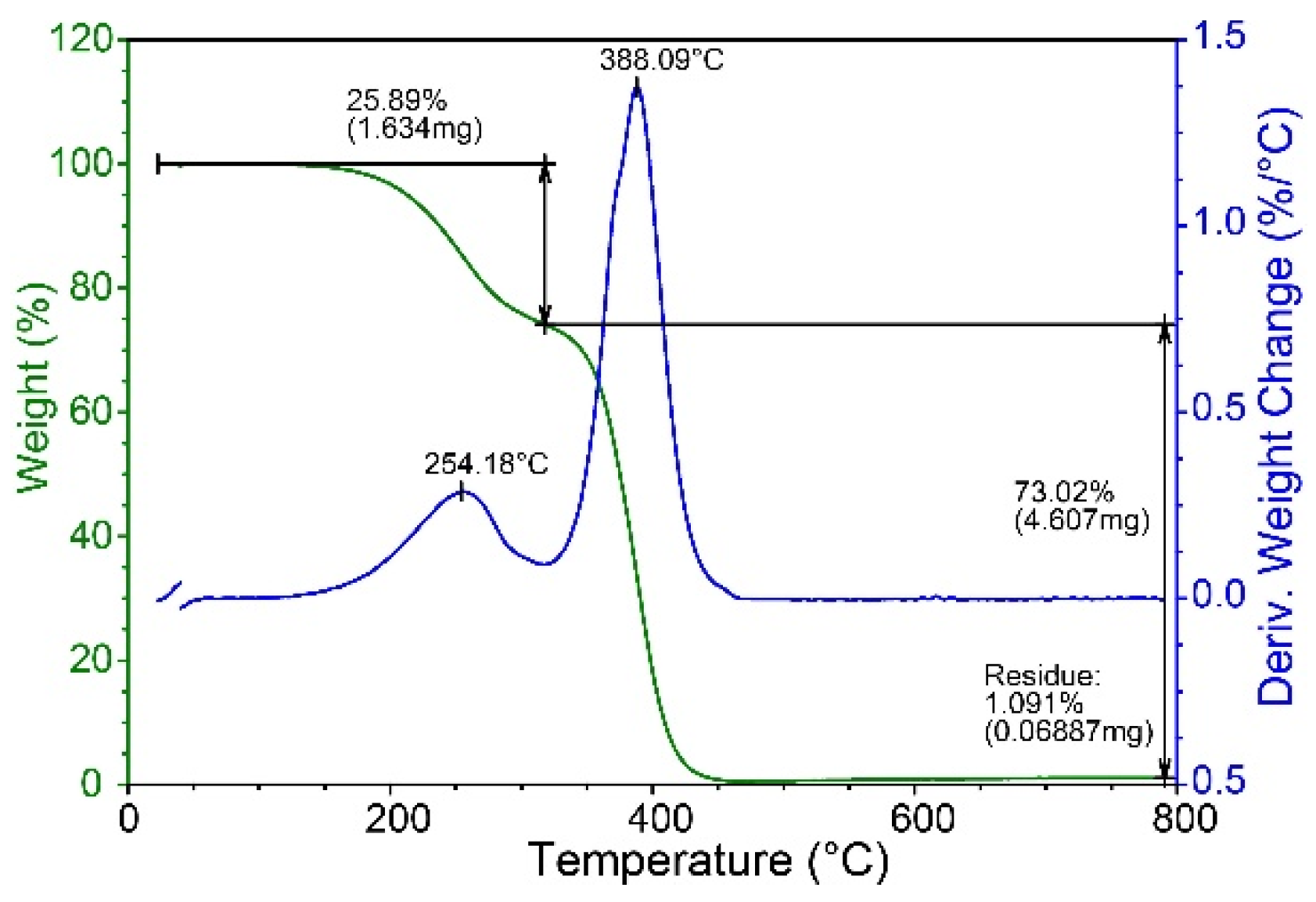
To further confirm the relative proportions of different branches, the branched chains of the PMA must be cleaved and analyzed via pyGC-MS. Thermal decomposition temperatures of PMA, specifically the temperatures at which ester bonds between the poly(methyl methacrylate) backbone and fatty alcohols break, can be measured through TGA-DSC analysis, which provides a reference temperature for setting pyGC-MS conditions. The decomposition products may include methacrylate, the fatty alcohols obtained after the degreasing reaction, and their related products, among which there may also be residual monomers that have not been completely reacted.
As shown in Figure 3, PMA-2 exhibits near-complete weight loss above 450 °C. Therefore, for pyGC-MS, the temperature should be set at 450 °C or higher to ensure thorough pyrolysis of the PMA sample.
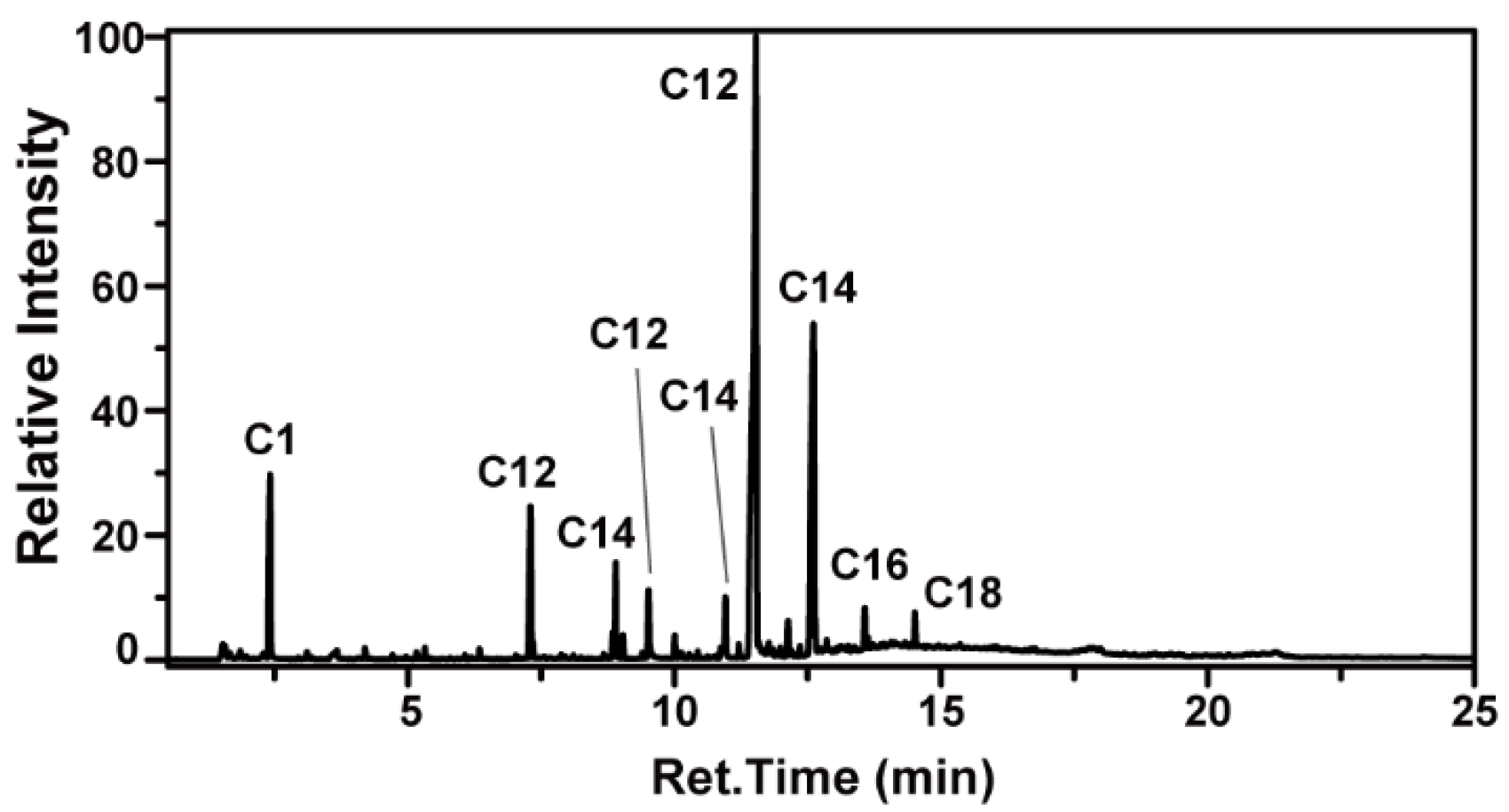
Following this, pyGC-MS was employed to detect fatty alcohol information from the thermally decomposed sample at an appropriate pyrolysis temperature, as illustrated in Figure 4.
Similar to GC-MS analysis, matching the MS spectra of each component peak yields the structure and proportion of each component. The matching results contained information on methyl acrylate, dodecene, tetradecene, dodecanol, tetradecanol, dodecanol methacrylate, tetradecanol methacrylate, hexadecanol methacrylate, and octadecanol methacrylate. Among these, the alkenes correspond to the dehydration products of fatty alcohols, which may originate from the hydrolysis of ester monomers. The methacrylates represent monomer structures. In PMA-2, fatty alcohols predominantly consist of C12 and C14, accounting for up to 78%, while components with other carbon chain lengths are present in smaller quantities.
Comprehensive analysis of the above data reveals the approximate structure of PMA-2. The analytical methods for the remaining four PMAs are similar. For detailed analysis data of all five PMAs, please refer to the Supplementary Materials. The structural analysis of the five PMAs involved in this study is summarized in Table 6.
As shown in Table 6, the actual content of the five PMAs ranges from 59% to 76%, with solvent oil constituting a significant component of PMA products. Four out of the five PMAs exhibit similar weight-average molecular weights, all falling between approximately 17,000 and 22,000. The sole exception is PMA-5, which has a molecular weight of 6255. The fatty alcohol alkyl chain lengths (excluding methanol) of all five PMAs fall between C12 and C18, with similar and insignificant branching degrees. Three PMAs contain nitrogen, which typically indicates the incorporation of amine-modified functional groups within the PMA structure.
It should be noted that the degree of polymerization and molecular weight are highly correlated (correlation coefficient R2 = 0.906 and the variance inflation factor VIF = 10.64). When conducting data analysis, it is sufficient to select either one of them as the independent variable for the structural influencing factor.

3.2. Relationship Between Lubricant Viscosity and PMA Structure

Five types of PMA-blended new energy vehicle transmission oils were formulated according to Table 2. The viscosity data for each formulation are shown in Table 7.
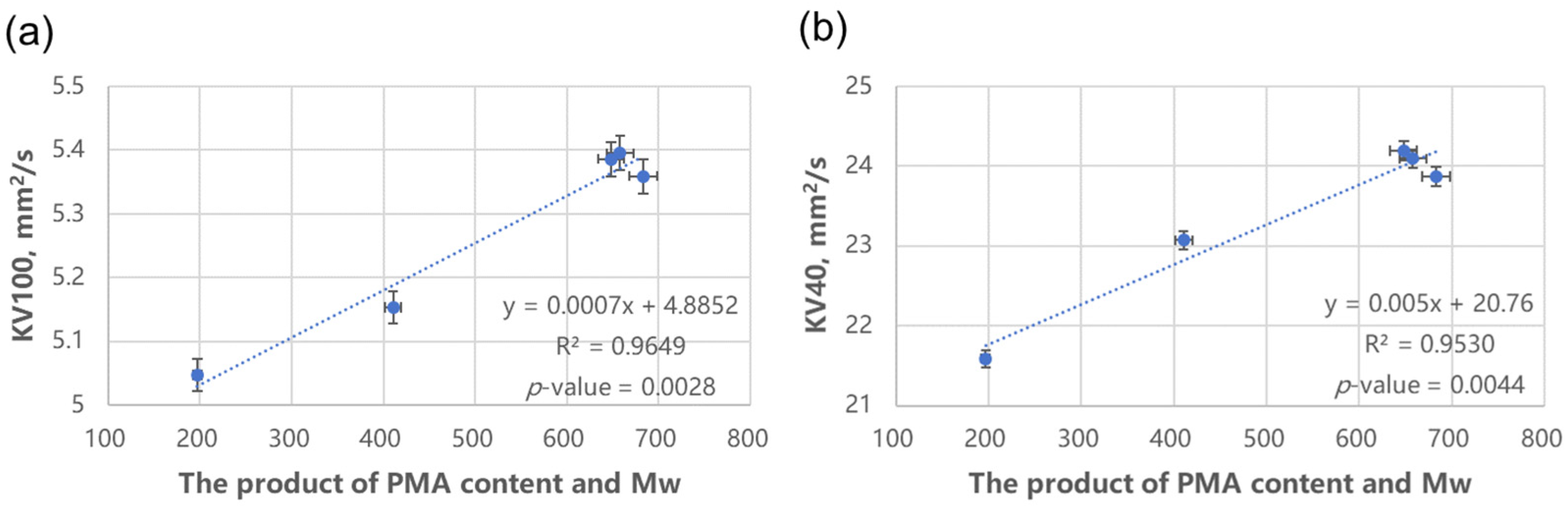
Given that PMA content varies across different viscosity index improvers and their addition levels in final oils differ, assessing PMA’s viscosity-enhancing capability requires first determining the actual pure PMA content in the finished oil—specifically, the product of PMA content and the PMA added quantity in the formulation. The molecular weight of viscosity index improvers often serves as a critical factor influencing their viscosity-enhancing capacity. The fitting curve correlating the viscosity of the formulated oil with the product of PMA content and Mw in each formulation is shown in Figure 5.
Figure 5 demonstrates that the viscosity-increasing capability of PMA viscosity index improvers exhibits a positive correlation with PMA molecular weight, with a correlation coefficient R2 = 0.96 and a p-value (T-test) << 0.05. When evaluating the viscosity-enhancing effect of PMA, consideration must be given not only to the additive dosage of PMA in the lubricant but also to the pure PMA content within the raw materials.
Furthermore, regression analysis was also conducted regarding the viscosity and the ratio of the fatty alcohol composition as well as their degree of branching. All the p-values (T-test) were more than one order of magnitude above the required limit (0.05). This means that these structural parameters have a relatively weak impact on the kinematic viscosity.

3.3. Relationship Between Lubricant Low-Temperature Performance and PMA Structure

The low-temperature performance data for each formulation of NEV transmission oil are shown in Table 8.
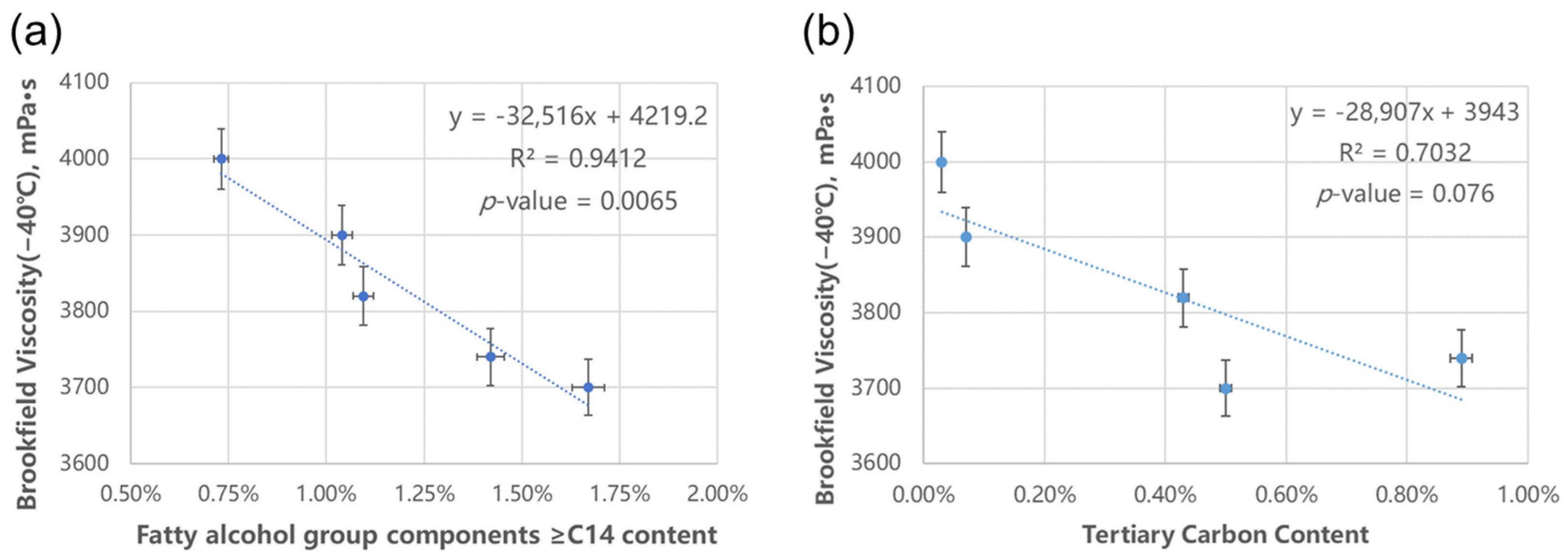
As shown in Table 8, oils No. 1 and No. 5 exhibit outstanding advantages in pour point and low-temperature apparent viscosity. Research indicates that the chain length and branching degree of fatty alcohols in PMA influence the low-temperature performance of oils. When used as a pour point depressant, the carbon number of the fatty alcohols in PMA should be 12 or higher [40,41]. When PMA is used as VII, whether the side chain length also has an impact on the low-temperature performance of the oil has become the focus of attention. By summing up the data of fatty alcohol composition, the content of fatty alcohol group components ≥C12, ≥C14, and ≥C16 can be obtained. Multiply it by the actual content of PMA in the formula, the actual content of the corresponding components in the oil can be calculated. Correlating the actual contents of the corresponding components with the low-temperature performance, we found that the content of the ≥C14 component has the strongest correlation with the Brookfield Viscosity (−40 °C) data, as shown in Figure 6a. Similarly, the relationship between the tertiary carbon content of PMA and apparent viscosity is illustrated in Figure 6b.
It can be observed that the low-temperature apparent viscosity (−40 °C) of the formulated oil exhibits a negative correlation with both the content of side-chain components ≥C14 in the PMA and the degree of branching (tertiary carbon content). The correlation coefficient R2 with the content of ≥C14 components reaches 0.94, and the p-value of T-test is far less than 0.05. That is, the higher the content of ≥C14 components, the more effective the PMA viscosity index improver is in optimizing the low-temperature performance of the final oil.
As for the degree of branching, in the current data regression analysis, the p-value exceeds 0.05 but is relatively close to 0.5, which may be a possibility for more in-depth research. Additionally, the collinearity diagnosis for variables was also conducted. The variance inflation factor (VIF) value was 2.20, which is less than 5. Therefore, it can be determined that there is no significant collinearity between the two independent variables. Similarly, MW data also conducted the regression analysis, and the p-value = 0.789, indicating that the relationship between low-temperature performance and molecular weight is relatively weak.


3.4. Relationship Between Lubricant Shear Stability and PMA Structure

The shear stability of NEV transmission oils was evaluated using the KRL (Kegelrollenlager) test, with results shown in Table 9.
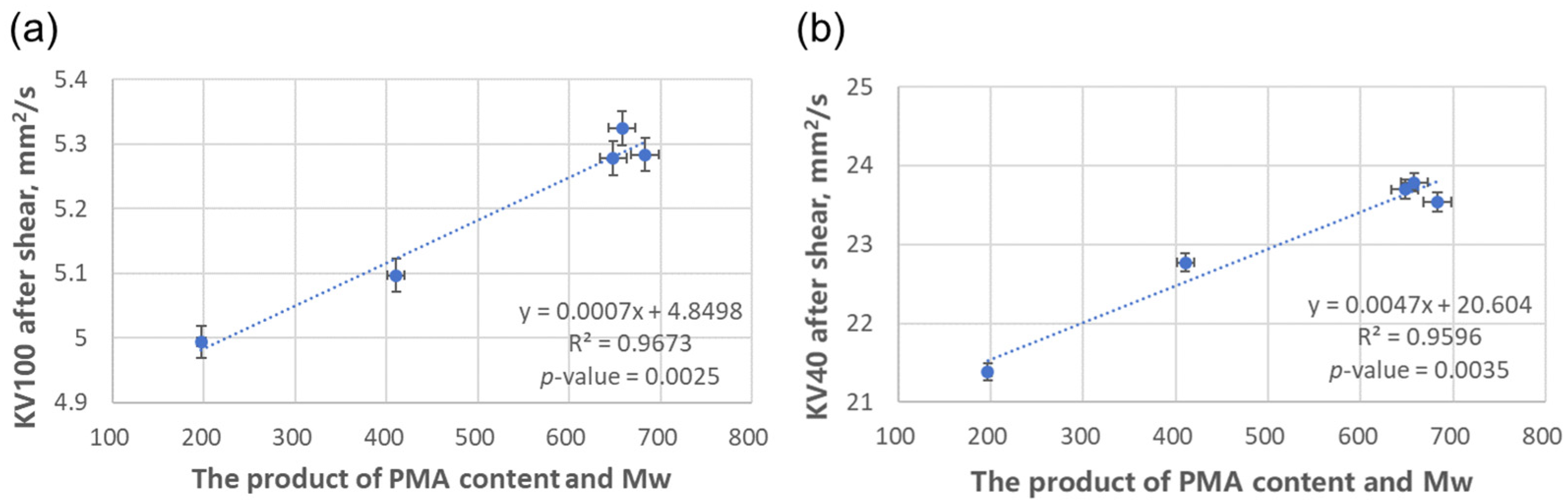
As can be seen, both the kinematic viscosity and viscosity index of the oil decreased after shearing. The PSSI value of PMA in Table 1 reflects the shear resistance ability, which is basically consistent with the degree of viscosity loss in the formulated oil products. PMA-2 has the highest PSSI (27%) and correspondingly shows the largest viscosity drop (∼2%). This indicates that the viscosity modifier is a key factor affecting the shear resistance performance of the oil. The viscosities of the formulated oils after shearing were correlated with the product of the PMA contents and Mw in each formulation, yielding the fitted curve shown in Figure 7.
As shown in Figure 7, the kinematic viscosity of lubricant after KRL shear exhibits a positive correlation with the molecular weight of PMA, with a correlation coefficient R2 = 0.96, and the p-value of T-test is far less than 0.05. Molecular weight corresponds to the chain length of PMA molecules, potentially influencing the ease of molecular chain breakage during shearing.
Same as that in Section 3.2, no significant correlation was found between the viscosity after shear and the degree of branching, as well as fatty alcohol composition.

3.5. Relationship Between Lubricating Oil Oxidation Resistance and PMA Structure

DKA (Durch Künstliche Alterung) thermal oxidation test was employed to characterize the oil’s oxidation resistance, with results presented in Table 10.
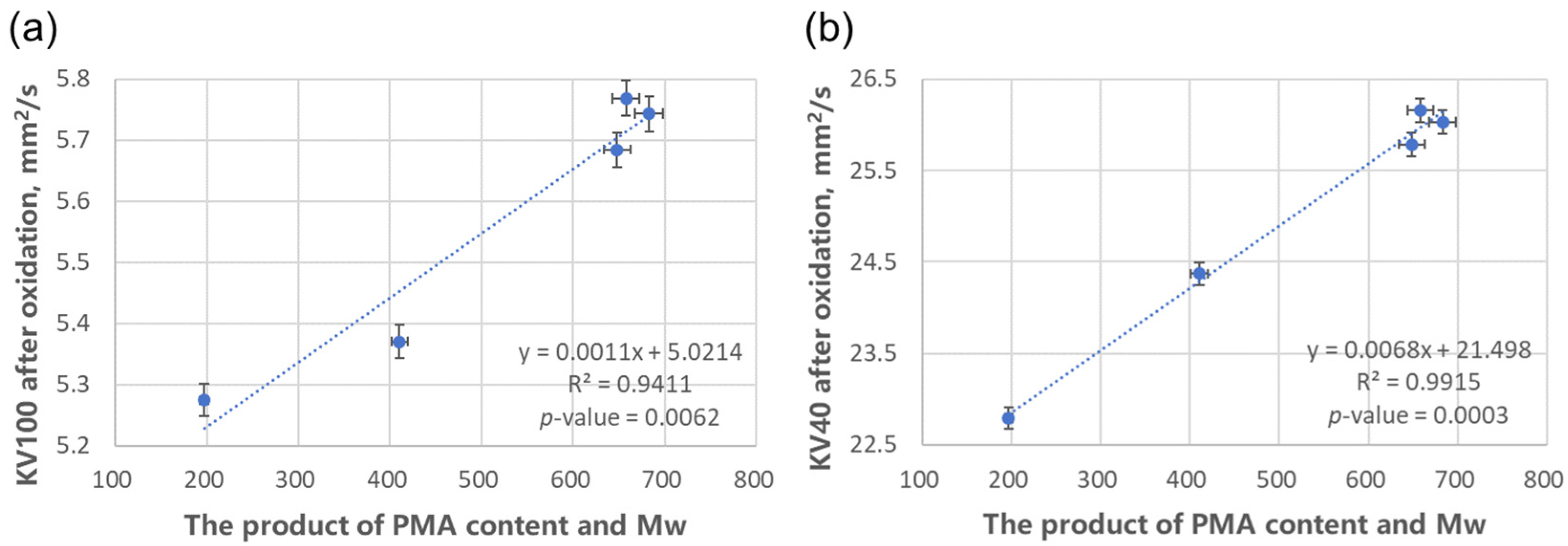
As shown in Table 10, the viscosity of the oxidized oil increased, and the viscosity index and the acid value also increased. The relationship between the viscosity of the oxidized formulated oil and the product of PMA content and Mw in each formulation yielded the fitting curve shown in Figure 8.
Figure 8 demonstrates a positive correlation between the kinematic viscosity of oxidized oil and the molecular weight of PMA; the correlation coefficient R2 can reach 0.99 while the p-value can be as low as 0.0003. The viscosity of both fresh oil and oil subjected to shear or oxidation exhibits a strong correlation with the molecular weight and actual content of PMA in the oil. Same as that in 3.2, no significant correlation was found between the viscosity after shear and the degree of branching as well as fatty alcohol composition.
The viscosity increase rate and acid value change for PMA-2 and PMA-4 are both lower than those of PMA-1 and PMA-3 due to their amine-modified functional groups, indicating that amine-modified structures can significantly enhance the oxidation resistance of lubricating oils. Due to PMA-5’s significantly lower molecular weight compared to other PMAs, it exhibits outstanding advantages in shear stability and oxidation resistance. Correspondingly, PMA-5’s viscosity-increasing capability is weaker than those of other PMAs.
As the primary component influencing oil viscosity, PMA undergoes molecular chain breakage more readily under high-temperature oxidation conditions. The resulting free radicals react with hydrocarbons in the base oil through chain oxidation, forming acidic substances and deposits [42]. This process impairs the viscosity index improver’s thickening capacity and its effectiveness in enhancing viscosity index, while also affecting changes in the oil’s acid value.

4. Discussion

This study focuses on the structure–performance relationship of PMA. Firstly, the precise information on the composition and structure of PMA is obtained. Secondly, in the product of new energy vehicle transmission fluid, the connection between its application performance and the composition and structure information of PMA is identified.
To characterize the PMA structure, a multi-dimensional characterization method was developed using NMR, pyGC-MS, GPC, GC-MS, and OEA. This method can be used to determine the PMA content, molecular weight distribution, and fatty alcohol structure. However, the pyrolysis method causes damage to intact PMA molecules; it is necessary to consider and try to avoid the uncertainty of pyrolysis, and some information may be lost. For example, it is not possible to determine the arrangement of different fatty alcohols using this method, which makes it impossible to identify the spatial structure of PMA block copolymers effectively [43]. This issue can be addressed using advanced techniques such as high-resolution nuclear magnetic resonance and electron microscopy to detect totally dispersed PMA molecules.
Honestly, we acknowledge that our research has limitations. For instance, the sample data size has not reached the desired level. Specifically, the minimal branching degree indicates that the fatty alcohols in these five PMAs predominantly exhibit straight-chain alkyl structures. Therefore, the relationship fitting in Figure 6b is not ideal. Researchers interested in this topic may subsequently employ fatty alcohol raw materials with higher branching degrees to synthesize PMA with targeted structures for in-depth investigation [17].
The formulation also contains functional additives, pour point depressants, and other components. These components and their concentrations are fully consistent in design. Based on the principle of controlling variables, the impact of PMA viscosity index improvers on oil performance can be examined independently. However, attention should be paid to potential interactions between PMA viscosity index improvers and the other components. For instance, the strong chelating ability of PMAs may preferentially bind to metal ions, thereby reducing the active sites of the dispersant; conversely, the dispersant may also interfere with the adsorption of PMAs on the metal surface through the steric hindrance effect. The interactions among the components in the formulation oil and their competitive behaviors on the metal surface can become the focus of the next stage of structure–activity research [44,45].
In terms of application performance fitting in Figure 5, Figure 6, Figure 7 and Figure 8, the R2 correlation coefficients reflect the strong association between structure and performance. As for the resulting fitting equations, the definitions and explanations of the physical meanings of the intercept and slope should start from the physical meaning of viscosity. Viscosity reflects the strength of the internal friction of a fluid, and it is related to the molecular structure and intermolecular interactions of the fluid [46]. To conduct a more in-depth study in this area, the system should be simplified to eliminate the interference from the interactions between various components. It is possible to conduct the research using only the PMA and PAO (Poly-alpha-olefin) in the system.
As the viscosity indexes of the formulated oils change significantly after shear and oxidation, PMA VIIs must play a crucial role in this process. The structural changes that occur in the PMA molecules during the shear and oxidation experiments will help to explain the mechanisms of these two conditions, which could inform future research.
The structure–performance relationship of viscosity index improvers revealed in this study will facilitate the establishment of a correlation system between PMA structure and application performance, thereby enabling more precise and efficient selection of viscosity index improvers in lubricant product development. Furthermore, this research will provide a reference for the structural design of viscosity index improvers tailored to specific applications, offering opportunities and support for translating scientific achievements into practical applications.

5. Conclusions

This study provides a multidimensional characterization of the structure–performance relationship for PMA viscosity index improvers in the application of new energy vehicle transmission fluids. Key findings include:
(1)
The kinematic viscosity of formulated oils demonstrates a positive correlation with PMA molecular weight.
(2)
The low-temperature performance is governed by the length of the PMA side-chain. Oils containing higher proportions of long-chain fatty alcohols (≥C14) exhibit superior low-temperature properties.
(3)
Shear stability is predominantly determined by the molecular weight of the PMA.
(4)
In oxidation tests, nitrogen-modified PMA primarily enhances the oil’s oxidation resistance by mitigating the rate of kinematic viscosity increase.
This study systematically investigates the structural composition of PMA viscosity index improvers, revealing the correlation between their viscosity-enhancing capacity, low-temperature performance, shear stability, and oxidation resistance with structural composition. These findings hold significant implications for viscosity index improver molecular design and optimized lubricant formulation development.

Supplementary Materials

The supporting information can be downloaded at https://www.mdpi.com/article/10.3390/lubricants14010004/s1.

Author Contributions

Conceptualization, X.S. and J.C.; Data curation, J.Y. and J.C.; Formal analysis, J.Y. and Q.Z.; Funding acquisition, L.L. and H.Z.; Investigation, J.Y.; Methodology, J.Y. and Q.Z.; Project administration, X.S., L.L. and J.C.; Resources, L.L. and H.Z.; Supervision, L.L. and H.Z.; Validation, X.S.; Visualization, Q.Z.; Writing—original draft, J.Y.; Writing—review and editing, X.S. All authors have read and agreed to the published version of the manuscript.

Funding

This research received no external funding.

Data Availability Statement

The original contributions presented in this study are included in the article/Supplementary Material. Further inquiries can be directed to the corresponding author.

Conflicts of Interest

Intellectual Property: Materials used in this study include components protected by patents held by the authors’ institution. No external financial interests are associated with these patents. Confidential Supply: Additional materials were procured from a supplier under a non-disclosure agreement (NDA), with the supplier’s identity protected per contractual obligations. No Additional Conflicts: The authors confirm absence of other financial or non-financial competing interests.

References

  1. Gresham, R.M.; Rudnick, L.R. Lubricant Additives: Chemistry and Applications, 3rd ed.; CRC Press: Boca Raton, FL, USA; Taylor & Francis Group: Boca Raton, FL, USA, 2017. [Google Scholar]
  2. Martini, A.; Ramasamy, U.S.; Len, M. Review of Viscosity Modifier Lubricant Additives. Tribol. Lett. 2018, 66, 58. [Google Scholar] [CrossRef]
  3. Rudnick, L.R. Synthetics, Mineral Oils, and Bio-Based Lubricants; CRC Press: Boca Raton, FL, USA; Taylor & Francis Group: Boca Raton, FL, USA, 2013. [Google Scholar]
  4. Horne, W.L.V. Polymethacrylates as Viscosity Index Improvers and Pour Point Depressants. Ind. Eng. Chem. Res. 1949, 41, 952–959. [Google Scholar] [CrossRef]
  5. Monica, B.; Gareth, B.; Michael, G.; Higuchi, T.; Hunt, G.; Huston, M.; Jayne, D.; McFadden, C.; Newcomb, T.; Patterson, S.; et al. Lubricant Concepts for Electrified Vehicle Transmissions and Axles. Tribol. Online 2019, 14, 428–437. [Google Scholar] [CrossRef]
  6. Rodríguez, E.; Rivera, N.; Fernández-González, A.; Pérez, T.; González, R.; Battez, A.H. Electrical compatibility of transmission fluids in electric vehicles. Tribol. Int. 2022, 171, 107544. [Google Scholar] [CrossRef]
  7. Arole, K.; Green, M.J.; Liang, H. Thermal and electrical properties of electric vehicle fluids. Electr. Veh. Tribol. 2024, 2024, 193–206. [Google Scholar] [CrossRef]
  8. Toth, M.; Gangl, D.; Bansal, H.; Leighton, M. Thermal Simulation of High-Speed EV Transmission Bearings for Minimum Lubricant Volume; SAE Technical Paper Series; SAE International: Warrendale, PA, USA, 2022. [Google Scholar] [CrossRef]
  9. Savoji, M.T.; Zhao, D.; Muisener, R.J.; Schimossek, K.; Schoeller, K.; Lodge, T.P.; Hillmyer, M.A. Poly(alkyl methacrylate)-Grafted Polyolefins as Viscosity Modifiers for Engine Oil: A New Mechanism for Improved Performance. Ind. Eng. Chem. Res. 2018, 57, 1840–1850. [Google Scholar] [CrossRef]
  10. Schimossek, K.; Schöller, K.; Savojl, M.T.; Hillyer, M.A.; Lodge, T.P. Graft Copolymers Based on Polyolefin Backbone and Methacrylate Side Chains. Available online: https://pubchem.ncbi.nlm.nih.gov/patent/US-2019233757-A1 (accessed on 9 December 2025).
  11. Huang, C.; Aoki, S. Change in Chemical Structure of ZnDTP-Derived Tribofilm Formed from Low-Viscosity Engine Oil by Addition of PMA-Series Polar Compounds. Tribol. Online 2024, 19, 228–236. [Google Scholar] [CrossRef]
  12. Campbell, K.B.; Erck, R.A.; Swita, M.; Cosimbescu, L. Multifunctional Tunable Polymethacrylates for Enhanced Shear Stability and Wear Prevention. ACS Appl. Polym. Mater. 2020, 2, 2839. [Google Scholar] [CrossRef]
  13. Fan, J.; Müller, M.; Stöhr, T.; Spikes, H.A. Reduction of Friction by Functionalised Viscosity Index Improvers. Tribol. Lett. 2007, 28, 287–298. [Google Scholar] [CrossRef]
  14. Liao, W.; Ju, C.; Zhao, Q.; Lou, W.; Wang, X.; Zhang, S. Synthesis and Properties Study of a Multifunctional Polymethacrylate Viscosity Index Improver. ACS Appl. Eng. Mater. 2025, 3, 108–117. [Google Scholar] [CrossRef]
  15. Ghosh, P.; Das, M.; Upadhyay, M.; Das, T.; Mandal, A. Synthesis and Evaluation of Acrylate Polymers in Lubricating Oil. J. Chem. Eng. Data 2011, 56, 3752–3758. [Google Scholar] [CrossRef]
  16. Lomège, J.; Lapinte, V.; Negrell, C.; Robin, J.; Caillol, S. Epoxidized Oleic Acid-Based Polymethacrylates as Viscosity Index Improvers. J. Am. Oil Chem. Soc. 2019, 96, 467–478. [Google Scholar] [CrossRef]
  17. Ma, Y.; Yang, H.-M.; Chen, Z.-H.; Li, Y.-N.; Li, J.-F.; Sun, X.-L.; Wang, X.-Y.; Tang, Y. Highly branched polymethacrylates prepared efficiently: Brancher-directed topology and application performance. Polym. Chem. 2021, 12, 6606–6615. [Google Scholar] [CrossRef]
  18. Kogej, K.; Dannert, C.; Graf-Vlachy, N.; Dias, R.S.; Reščič, J. Effect of cationic surfactants on titration behavior of isotactic and atactic poly(methacrylic acid). J. Mol. Liq. 2024, 413, 10. [Google Scholar] [CrossRef]
  19. Bapat, A.P.; Erck, R.; Seymour, B.T.; Zhao, B.; Cosimbescu, L. Lipophilic polymethacrylate ionic liquids as lubricant additives. Eur. Polym. J. 2018, 108, 38–47. [Google Scholar] [CrossRef]
  20. Aharonovich, S.; Diesendruck, C.E. Single chain polymer nanoparticles as shear-resilient viscosity modifiers for lubricating oils. React. Funct. Polym. 2018, 131, 237–242. [Google Scholar] [CrossRef]
  21. Bolshakova, E.A.; Kazantsev, O.A.; Arifullin, I.R.; Kamorin, D.M.; Moikin, A.A.; Medzhibovskii, A.S.; Simagin, A.S. Polymers of Higher Alkyl (Meth)acrylates: The Effects of Structure on Dispersion Properties in Petroleum Oil I-20A. Pet. Chem. 2021, 61, 1288–1295. [Google Scholar] [CrossRef]
  22. Lelia, C.; Robinson, J.W.; Page, J.P. Polymer Architecture: Does It Influence Shear Stability? Ind. Eng. Chem. Res. 2018, 57, 11858–11867. [Google Scholar] [CrossRef]
  23. van Ravensteijn, B.G.P.; Zerdan, R.B.; Seo, D.; Cadirov, N.A.; Watanabe, T.; Gerbec, J.A.; Hawker, C.J.; Israelachvili, J.N.; Helgeson, M.E. Triple Function Lubricant Additives Based on Organic–Inorganic Hybrid Star Polymers: Friction Reduction, Wear Protection, and Viscosity Modification. ACS Appl. Mater. Interfaces 2019, 11, 1363–1375. [Google Scholar] [CrossRef] [PubMed]
  24. ASTM D445; Standard Test Method for Kinematic Viscosity of Transparent and Opaque Liquids (and Calculation of Dynamic Viscosity). ASTM International: West Conshohocken, PA, USA, 2024.
  25. ASTM D4052; Standard Test Method for Density, Relative Density, and API Gravity of Liquids by Digital Density Meter. ASTM International: West Conshohocken, PA, USA, 2022.
  26. ASTM D1500; Standard Test Method for ASTM Color of Petroleum Products (ASTM Color Scale). ASTM International: West Conshohocken, PA, USA, 2024.
  27. ASTM D92; Standard Test Method for Flash and Fire Points by Cleveland Open Cup Tester. ASTM International: West Conshohocken, PA, USA, 2024.
  28. CEC L-45; Viscosity Shear Stability of Transmission Lubricants (Taper Roller Bearing Rig). Coordinating European Council: Leicester, UK, 2008.
  29. ASTM D2270; Standard Practice for Calculating Viscosity Index from Kinematic Viscosity at 40 °C and 100 °C. ASTM International: West Conshohocken, PA, USA, 2024.
  30. ASTM D2983; Standard Test Method for Low-Temperature Viscosity of Automatic Transmission Fluids, Hydraulic Fluids, and Lubricants using a Rotational Viscometer. ASTM International: West Conshohocken, PA, USA, 2023.
  31. ASTM D664; Standard Test Method for Acid Number of Petroleum Products by Potentiometric Titration. ASTM International: West Conshohocken, PA, USA, 2024.
  32. ASTM D97; Standard Test Method for Pour Point of Petroleum Products. ASTM International: West Conshohocken, PA, USA, 2022.
  33. CEC L-48; Oxidation Stability of Lubricating Oils Used in Automotive Transmissions by Artificial Ageing (Laboratory Test). Coordinating European Council: Leicester, UK, 2008.
  34. Ren, H.; Hu, H.; Yu, B.; Du, Y.; Wu, T. Identification of polymer building blocks by Py-GC/MS and MALDI-TOF MS. Int. J. Polym. Anal. Charact. 2017, 23, 9–17. [Google Scholar] [CrossRef]
  35. Sellers, K.W.; Towns, C.M.; Mubarak, C.R.; Kloppenburg, L.; Bunz, U.H.; Morgan, S.L. Characterization of high molecular weight poly(p-phenylenethynylene)s by pyrolysis gas chromatography/mass spectrometry with multivariate data analysis. J. Anal. Appl. Pyrolysis 2002, 64, 313–326. [Google Scholar] [CrossRef]
  36. Sarpal, A.S.; Kapur, G.S.; Chopra, A.; Jain, S.K.; Srivastava, S.P.; Bhatnagar, A.K. Hydrocarbon characterization of hydrocracked base stocks by one- and two-dimensional n.m.r. spectroscopy. Fuel 1996, 75, 483–490. [Google Scholar] [CrossRef]
  37. Sarpal, A.S.; Kapur, G.S.; Mukherjee, S.; Jain, S.K. Characterization by 13C n.m.r. spectroscopy of base oils produced by different processes. Fuel 1997, 76, 931–937. [Google Scholar] [CrossRef]
  38. Kissin, Y.V. Molecular weight distributions of linear polymers: Detailed analysis from GPC data. J. Polym. Sci. Part A Polym. Chem. 1995, 33, 227–237. [Google Scholar] [CrossRef]
  39. Newmark, R.A. DEPT NMR Spectra of Copolymers. Appl. Spectrosc. 1985, 39, 507–512. [Google Scholar] [CrossRef]
  40. Pedersen, K.S.; Ronningsen, H.P. Influence of Wax Inhibitors on Wax Appearance Temperature, Pour Point, and Viscosity of Waxy Crude Oils. Energy Fuels 2003, 17, 321–328. [Google Scholar] [CrossRef]
  41. Gavlin, G.; Swire, E.A.; Jones, S.P. Pour Point Depression of Lubricating Oils. Ind. Eng. Chem. 1953, 45, 2327–2335. [Google Scholar] [CrossRef]
  42. Ceretti, D.V.A.; Edeleva, M.; Cardon, L.; D’hooge, D.R. Molecular Pathways for Polymer Degradation during Conventional Processing, Additive Manufacturing, and Mechanical Recycling. Molecules 2023, 28, 2344. [Google Scholar] [CrossRef]
  43. Sthr, T.; Eisenberg, B.; Müller, M. A New Generation of High Performance Viscosity Modifiers Based on Comb Polymers. SAE Int. J. Fuels Lubr. 2008, 1, 1511–1516. [Google Scholar] [CrossRef]
  44. Srivyas, P.D.; Charoo, M.S.; Wani, M.F.; Sehgal, R.; Raina, A.; Haq, M.I.U.; Shekhar, C.; Medhi, T.; Arumugam, S. Impact of surface texturing on the tribological behaviour of aluminium-silicon (Al-Si/Al2O3) advanced composite under dry and lubricating conditions. Surf. Topogr. Metrol. Prop. 2022, 10, 035043. [Google Scholar] [CrossRef]
  45. Kocak, M.; Kumar, S.; Mrlik, M.; Kumar, B.; Shekhar, C.; Sehgal, R.; Wani, M.; Kubik, M.; Sedlacik, M. Tribological characteristics of magnetorheological fluids based on carbonyl iron particles coated with various types of organosilanes. J. Mater. Res. Technol. 2025, 36, 5962–5977. [Google Scholar] [CrossRef]
  46. Tapre, R.W.; Thokal, A.G.; Mandake, M.B.; Jadhav, S.D.; Janugade, S.V. Microscale fluid mechanics: A review of material-dependent flow characteristics and applications. Mater. Today Proc. 2023, in press. [Google Scholar] [CrossRef]
Figure 1. GPC distribution plot of PMA-2.
Lubricants 14 00004 g001
Figure 2. NMR Spectra of PMA-2. (a) 1H spectrum of PMA-2, (b) 13C, 13C DEPT 90, 13C DEPT 135 spectra of PMA-2.
Lubricants 14 00004 g002
Figure 3. TGA-DSC Curve of PMA-2.
Lubricants 14 00004 g003
Figure 4. Total Ion Chromatogram of PMA-2 by pyGC-MS.
Lubricants 14 00004 g004
Figure 5. Correlation Plot of Lubricant Viscosity and PMA Structure. (a) KV100: Kinematic Viscosity at 100 °C, (b) KV40: Kinematic Viscosity at 40 °C.
Lubricants 14 00004 g005
Figure 6. Correlation between Lubricant Low-temperature Performance and PMA Structure. (a) the content of the ≥C14 component; (b) the tertiary carbon content.
Lubricants 14 00004 g006
Figure 7. Correlation Plot of Lubricant Viscosity after Shear and PMA Structure. (a) KV100: Kinematic Viscosity at 100 °C, (b) KV40: Kinematic Viscosity at 40 °C.
Lubricants 14 00004 g007
Figure 8. Correlation Plot of Kinematic Viscosity After Oxidation and PMA Structure. (a) KV100: Kinematic Viscosity at 100 °C, (b) KV40: Kinematic Viscosity at 40 °C.
Lubricants 14 00004 g008
Table 1. Basic physical and chemical information of PMA viscosity index improvers involved in this study.
ItemPMA-1PMA-2PMA-3PMA-4PMA-5Method
KV100 1, mm2/s680.2 ± 3.41533.9 ± 7.7852.4 ± 4.3702.7 ± 3.5498.3 ± 2.5ASTM D445 [24]
KV40 2, mm2/s25,000 ± 125>120,000 ± 60030,000 ± 15031,000 ± 15530,600 ± 153 ASTM D445
Density at 15 °C, g/cm30.96 ± 0.030.96 ± 0.030.95 ± 0.030.95 ± 0.030.93 ± 0.03ASTM D4052 [25]
Color0.5 ± 0.21.0 ± 0.20.5 ± 0.20.5 ± 0.2<0.5 ± 0.2ASTM D1500 [26]
Flash Point, °C119 ± 2126 ± 2190 ± 2190 ± 2112 ± 2ASTM D92 [27]
PSSI 3, %9.2 ± 0.126.9 ± 0.410.3 ± 0.110.9 ± 0.25.1 ± 0.1CEC L-45 [28]
FeaturesExcellent shear stabilityGood dispersibilityExcellent shear stabilityGood dispersibilityExcellent shear stability
1 KV100: Kinematic Viscosity at 100 °C; 2 KV40: Kinematic Viscosity at 40 °C; 3 PSSI: Permanent Shear Stability Index.
Table 2. Formulation Composition for Evaluating PMA Viscosity Index Improvers in NEV Transmission Fluids.
Composition, wt%Formulation Number
1#2#3#4#5#
Base OilGROUP III86.787.786.787.786.7
Viscosity Index Improver (VII)PMA-15
PMA-2 4
PMA-3 5
PMA-4 4
PMA-5 5
Functional AdditiveComposite Additive88888
Pour Point Depressant (PPD)PMA PPD0.30.30.30.30.3
Table 3. Structural Analysis Plan for PMA.
MethodAnalysis Purpose
GPCProvide molecular weight and molecular weight distribution information.
GC-MSObtain information on small molecules.
OEAFocus on nitrogen, phosphorus, and other elements that may indicate molecular modification.
NMRAnalyze structure; can provide branching information.
TGA/DSCExplore thermal decomposition temperatures; establish experimental conditions for pyGC-MS.
pyGC-MSAnalyze monomer structure; provide information on composition and proportions.
Table 4. GPC Analysis Results of PMA-2.
ItemPMA-2
Number-average molecular weight (Mn)12,312 ± 246
Weight-average molecular weight (Mw)21,318 ± 426
Polydispersity index (PDI)1.73 ± 0.15
Table 5. OEA Results for PMA-2.
ElementProportion, wt%
C75.39 ± 0.01
H12.02 ± 0.01
N0.24 ± 0.01
S0.04 ± 0.01
Table 6. Summary of Structural Analysis Results for PMAs.
No.PMA, wt%MwDPwFatty Alcohol Composition 1, wt %Tertiary Carbon, %Nitrogen, wt%
PMA-166 ± 120,697 ± 41456.10 ± 1.37C1:C12:C13:C14:C15 ≈ 15:20:22:22:210.89 ± 0.01<0.01 ± 0.01
PMA-276 ± 121,318 ± 42658.42 ± 1.43C1:C12:C14:C16:C18 ≈ 15:49:29:4:30.43 ± 0.010.24 ± 0.01
PMA-365 ± 120,238 ± 40556.18 ± 1.38C1:C12:C14:C16:C18 ≈ 13:53:22:3:70.07 ± 0.01<0.01 ± 0.01
PMA-459 ± 117,392 ± 34847.17 ± 1.16C1:C12:C14:C16:C18 ≈ 13:56:22:2:70.03 ± 0.010.25 ± 0.01
PMA-563 ± 16255 ± 12518.01 ± 0.44C1:C12:C14:C16:C18 ≈ 40:7:5:25:230.50 ± 0.010.05 ± 0.01
1 Uncertainty of Fatty Alcohol Composition is ±0.5%, eq. C1 fatty alcohol composition in PMA-1 is (15 ± 0.5) %.
Table 7. Viscosity Data for NEV Transmission Oil Formulations.
Item1#2#3#4#5#Method
KV100 1, mm2/s5.359 ± 0.0275.386 ± 0.0275.395 ± 0.0275.153 ± 0.0265.047 ± 0.025ASTM D445
KV40 2, mm2/s23.87 ± 0.1224.19 ± 0.1224.09 ± 0.1223.07 ± 0.1221.59 ± 0.11ASTM D445
Viscosity Index169 ± 1167 ± 1169 ± 1162 ± 1172 ± 1ASTM D2270
1 KV100: Kinematic Viscosity at 100 °C; 2 KV40: Kinematic Viscosity at 40 °C.
Table 8. Low-Temperature Data for NEV Transmission Oil Formulations.
Item1#2#3#4#5#Method
Brookfield Viscosity (−40 °C), mPa·s3740 ± 373820 ± 383900 ± 394000 ± 403700 ± 37 ASTM D2983
Pour point, °C−57 ± 3−54 ± 3−54 ± 3−54 ± 3−57 ± 3 ASTM D97
Table 9. Shear Stability Data for NEV Transmission Oil Formulations.
Item1#2#3#4#5#Method
KV100 1 after 20 h shear, mm2/s5.284 ± 0.0265.278 ± 0.0265.325 ± 0.0275.097 ± 0.0254.994 ± 0.025CEC L-45-A-99
KV100 1 decrease rate, %1.40 ± 0.012.00 ± 0.011.29 ± 0.011.08 ± 0.011.06 ± 0.01
KV40 2 after 20 h shear, mm2/s23.54 ± 0.1223.70 ± 0.1223.79 ± 0.1222.77 ± 0.1121.38 ± 0.11
KV40 2 decrease rate, %1.40 ± 0.012.02 ± 0.011.26 ± 0.011.28 ± 0.010.98 ± 0.01
Viscosity Index after 20 h shear167 ± 1165 ± 1167 ± 1161 ± 1171 ± 1
1 KV100: Kinematic Viscosity at 100 °C; 2 KV40: Kinematic Viscosity at 40 °C.
Table 10. Antioxidant Performance Data for NEV Transmission Fluid Formulations.
Item1#2#3#4#5#Method
DKA Thermal Oxidation Test (170 °C, 192 h)
KV40 1 after oxidation, mm2/s 26.03 ± 0.13 25.79 ± 0.13 26.16 ± 0.13 24.37 ± 0.12 22.79 ± 0.11 CEC L-48-A-00
KV40 1 increase rate, % 9.05 ± 0.06 6.61 ± 0.05 8.59 ± 0.06 5.64 ± 0.04 5.56 ± 0.04
KV100 2 after oxidation, mm2/s 5.743 ± 0.029 5.684 ± 0.028 5.768 ± 0.029 5.370 ± 0.027 5.274 ± 0.026
KV100 2 increase rate, % 7.17 ± 0.05 5.53 ± 0.04 6.91 ± 0.05 4.21 ± 0.03 4.50 ± 0.03
Acid number change, mgKOH 3.24 ± 0.18 3.02 ± 0.17 3.21 ± 0.18 3.08 ± 0.17 2.77 ± 0.16
Glassware aspect1 ± 0.51 ± 0.51 ± 0.51 ± 0.51 ± 0.5
Viscosity index after oxidation172 ± 1171 ± 1173 ± 1164 ± 1176 ± 1
1 KV40: Kinematic Viscosity at 40 °C; 2 KV100: Kinematic Viscosity at 100 °C.
Disclaimer/Publisher’s Note: The statements, opinions and data contained in all publications are solely those of the individual author(s) and contributor(s) and not of MDPI and/or the editor(s). MDPI and/or the editor(s) disclaim responsibility for any injury to people or property resulting from any ideas, methods, instructions or products referred to in the content.