Article

Improving Tribological Properties of Oil-in-Water Lubricating Fluid Using Hybrid Protic Ionic Liquid and Nanoparticle Additives


1
Agriculture Academy, Vytautas Magnus University, K. Donelaičio Str. 58, 44248 Kaunas, Lithuania
2
University of Applied Engineering Sciences, Tvirtovės Av. 35, 50155 Kaunas, Lithuania
*
Author to whom correspondence should be addressed.
Lubricants 2026, 14(1), 3; https://doi.org/10.3390/lubricants14010003
Submission received: 31 October 2025 / Revised: 18 December 2025 / Accepted: 19 December 2025 / Published: 22 December 2025
(This article belongs to the Special Issue Lubrication Mechanism of Ionic Liquids)

Abstract

Water is attractive as a base fluid due to its availability and environmental friendliness. To enhance its lubricity, environmentally friendly additives must be applied. This study combined protic ionic liquid and several nanoparticles to form hybrid additives for an oil-in-water lubricant. The performance of these additives was evaluated using wettability, tribo-testing, and worn-surface analysis. The tribo-test employed a ball-on-plate reciprocating tribometer that used bearing steel/bearing steel and WC/bearing steel friction pairs. The results were compared with those obtained using two commercial additives. It was found that the investigated additives are promising candidates for water-based lubricants, as they exhibit comparable wettability. Moreover, they outperform the reference samples in terms of lubricity. According to the results, the suggested lubrication mechanism includes enhanced wettability, composite tribo-film formation, surface polishing, and mending.

1. Introduction

Research and development of environmentally friendly lubricants have been a focus of attention for a few decades and are relevant for future mobility and industrial machinery. Originally, lubrication was used to reduce energy losses and extend the lifetime of interacting surfaces. More recently, environmental issues appeared due to the immense volumes of lubricants used, their exposure to the environment, and their toxicity to living spaces [1]. Lubricating fluid’s sustainability is correlated with the nature of their base fluid and additives. Environmentally friendly lubricant formulations must contain a considerable amount of renewable substances, which in turn must possess certain biodegradability and non-toxicity [2,3].
Water is extensively used as a lubricating base fluid due to its low cost, availability, and inherent environmentally friendly nature. Water is usually diluted by organic compounds such as glycerol, glycols or vegetable oil to formulate an environmentally friendly base fluid. Nevertheless, additives must be incorporated into high-performance applications to enhance water lubricity. Protic ionic liquids (PILs) and nanoparticles (NPs) are among the environmentally friendly options with great potential as multifunctional additives [4,5,6,7,8]. Therefore, they are considered the most promising compared to conventional additives [9,10,11,12].
Due to straightforward and inexpensive synthesis, PILs have recently been extensively investigated as neat lubricants and performance-improving additives [12,13,14,15,16,17]. The polar nature of PILs forms a boundary layer that could be physically or chemically bonded to the lubricated surface. For instance, Yang et al. [15] studied several P and S-free PILs as additives in water-propylene glycol base fluid, suggesting lubricity provided by physical and chemical adsorption of carboxylate anion. Sun et al. [18] synthesised two PILs with the same DEHP anion and used them as additives in a water-ethylene glycol base fluid. The improved lubricity and load-carrying capacity were assigned to physical adsorption and chemical reaction tribo-film. In addition to substantially enhanced lubricity, the investigated PILs exhibited improved corrosion-prevention ability. Even more studies report that PILs improve wettability, corrosion resistance, and thermal and electrical conductivity [15,17,18,19]. It is believed that these hetero-atom-free compounds cause less environmental pollution.
There were many types of NPs used as lubricant additives. As the study focuses on water-based lubricating fluids, only NPs used in these fluids will be discussed further. The lubricity-improving mechanisms of NPs are mainly based on (i) the mending effect, (ii) smoothing through a surface’s polishing, and (iii) acting as rolling elements between the sliding surfaces [9,11,20]. Wu et al. [21] studied the tribological behaviour of TiO2 NPs in the water-glycerol base fluid and showed significant wear and friction reduction. They considered mending and rolling effects to be the mechanisms of improvement. Pena-Paras et al. [22] investigated several metal oxide NPs as additives in water-based metalworking fluids. Using a four-ball tribometer, they concluded that surface smoothing and rolling of CuO NPs reduced wear and friction. At the same time, tribosintering of TiO2 increased the pressure loss limit. Bao et al. [23] employed SiO2 NPs to enhance the lubricity of water-based lubricant used for hot rolling operations. Due to micro-rolling, polishing, and self-repairing, the thickness of the oxide layer was decreased, and the grain size on the strip surface was refined. Ibrahim et al. [24] suggested graphene nanoplatelets (GNP) modified water lubricants as an environmentally friendly alternative to conventional metalworking fluids. They demonstrated that interlayer sharing between GNP layers reduced the grinding force on the Ti-6Al-4V alloy and improved the machined surface quality. Liang et al. [25] studied in situ exfoliated graphene as a lubricity-improving additive for water-based fluid. This modification resulted in a marked reduction in wear and friction. The authors concluded that surfactants are essential for establishing a fluid-adhesive layer and a graphene protective film. It must be noted that surfactants are used in most of the studies because they are responsible for dispersion stability, wettability, agglomeration prevention, and transportation of NPs to the surface [20].
Recent studies report that hybrid additives comprising ILs and NPs perform even better than their counterparts alone. Carrion et al. [26] investigated the tribological performance of diprotic palmitate ionic liquid combined with nanodiamonds in water-based lubricating fluid. These hybrid additives significantly reduced wear and friction in the steel/steel friction couple. The measurements of tribo-film thickness revealed its growth when hybrid additives are present, while in the case of an additive-free base fluid, its thickness diminishes. Hao et al. [27] synthesised a nanoscale ionic liquid-like hybrid additive containing graphene oxide and SiO2. The hybrid additive was used to improve the lubricity of the water-glycerol base fluid. The 36.6% wear reduction and 20.7% friction reduction were attributed to a synergistic process in which surface polishing, mending, and rolling occur. In our previous study [28], an oleic acid anion containing PIL was combined with SiO2 and GNP to enhance the lubricity of the water-glycerol base fluid. The combination resulted in a dense composite layer, which reduced friction and wear.
Many studies demonstrate the advantages of hybrid additives [29,30,31,32,33,34,35,36,37,38,39]. However, most published papers address oil-based lubricants, whereas only a few examine the effects of synergy in water-based fluids. Table 1 summarises the synergistic effects of ionic liquids and nanoparticles observed in both water-based and oil-based base fluids.
The present study aims to evaluate the lubricity of hybrid additives containing bis(2-hydroxyethyl)amine oleate PIL and several NPs. TiO2, SiO2 NPs, and GNPs were selected due to their promising tribological performance, environmental compatibility, and commercial availability. The performance of hybrid additives was evaluated in an oil-in-water lubricating fluid.

2. Materials and Methods

2.1. Protic Ionic Liquid

The amine alkylation reaction in an acid-base neutralisation process forms the protolytic ionic liquid (PIL) [42,43,44]. The present study used oleic acid and bis(2-hydroxyethyl)amine at a 1:1 molar ratio. The reagents were analytical grades and were obtained from Sigma-Aldrich. The synthesis was performed in a thermostated three-necked round-bottom flask equipped with a reflux condenser, a thermometer, and a dropping funnel. While the amine was vigorously stirred (400 rpm), the acid was added dropwise (6 drops/min) from the funnel. The synthesis was carried out at 80 °C for 24 h. As a result, a highly viscous yellow lubricity-improving additive was produced. Its principal physical properties and structural formula are presented in Table 2. The successful synthesis of PIL was confirmed by FTIR spectroscopy using a Jasco FT/IR-4X spectrometer (Tokyo, Japan). The scan range was set to 4000–500 cm−1, with a scanning resolution of 4 cm−1 and data accumulation of 50 measurements. The FTIR spectra of PIL are shown in Figure S1. After synthesis, the PIL was stored in the refrigerator, maintained at 4 °C.

2.2. Nanoparticles

Due to their availability and earlier-reported promising lubricity, commercial silicon(IV) oxide (SiO2) nanoparticles, titanium(IV) oxide nanoparticles (TiO2), and graphene nanoplatelets (GNPs) were used in this study as lubricity-improving additives. The nanoparticles were purchased from Sigma-Aldrich and used as received. All nanoparticles were powdery and dispersible in the desired base fluid. Table 3 shows the main specifications provided by the supplier.

2.3. Vegetable Oil

The conventionally refined, bleached, and deodorised low-erucic acid rapeseed oil (VO) was obtained from a local manufacturer and used without additional preparation. Its physicochemical properties are presented in Table 4, while the FTIR spectra are plotted in Figure S2.

2.4. Preparation of Lubricating Samples

Lubricating samples were prepared by combining four components: deionised water, vegetable oil, protic ionic liquid and nanoparticles. Deionised water (3–5 MΩ resistance) was a base fluid. The vegetable oil was used to enhance the fluid’s viscosity. It was observed that the bis(2-hydroxyethyl)amine oleate protic ionic liquid exhibits dispersion properties and can disperse vegetable oil in water. Based on prior experience, the PIL concentration in water was set at 1 wt.% [48]. To find out how much vegetable oil can be dispersed in water using 1 wt.% of bis(2-hydroxyethyl)amine oleate, samples containing different amounts of vegetable oil, namely 5, 10, 15, and 20 wt.%, were prepared. The dispersion was prepared by submerging a 50 mL conical flask containing 20 mL of water, the corresponding amount of vegetable oil, and PIL in the Bandelin SONOREX TM RK514H ultrasonic bath. It takes 30 min to disperse the sample. Every 10 min, the flack was removed from the bath and slightly stirred. The bath temperature was kept at 60 °C. The dispersions had an opaque, pale-white appearance. With increased oil, a yellowish hue appears. Images of the prepared samples are shown in Figure S4. The samples were stored in the laboratory for 20 days, and changes in their appearance were observed. It was found that all the samples obtained a water layer at the bottom of the container. Moreover, some layers at the top of the solution formed as the concentration increased. Although the samples showed considerable stability, tribo-tests were performed on formulations containing 5, 10, and 20% vegetable oil. The tribo-tests were performed using freshly prepared samples. Based on the stability and tribo-test results, the vegetable oil concentration was fixed at 5 wt.% and used throughout the following experiments.
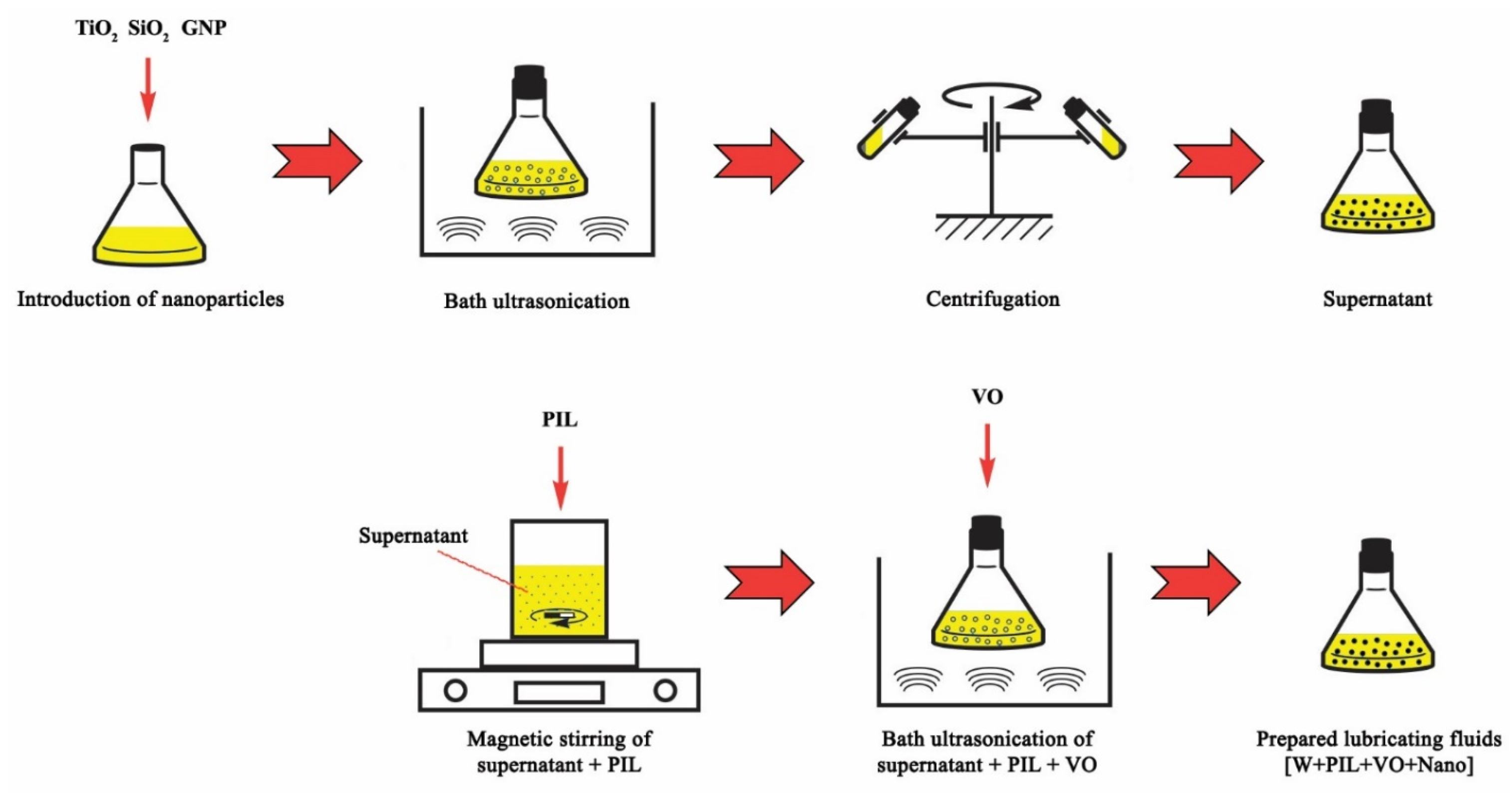
Our previous study explained the dispersion of nanoparticles and the preparation of NPs containing lubrication samples in detail [28]. Figure 1 schematically presents the preparation path. Briefly, 1 wt.% of nanoparticles were dispersed in water using a bath ultrasonication for 5 h. Due to insufficient stability, the dispersions were centrifuged (Thermo ScientificTM Multifuge X3R, Thermo Fisher Scientific Inc., Waltham, MA, USA) as recommended by Hernandez et al. [49] and Liang et al. [25]. The supernatant was used to prepare lubricating samples further. The centrifugation conditions are presented in Table 5. As shown, the centrifugation duration varies among the investigated NPs. The duration was set after a corresponding series of trials and errors to eliminate undispersed agglomerates. The centrifuged dispersions showed no sedimentation over extended time intervals: the titanium oxide-containing supernatant remained clear for two months, the silicon oxide supernatant was stable for a few weeks, and the graphene-containing supernatant remained clear for over a year.
Unfortunately, centrifugation significantly reduced the NP concentration. Conventional drying to constant mass was used to determine the actual concentration. The obtained NP concentration is presented in Table 6. A PerkinElmer LambdaTM 25 UV-V (PerkinElmer, Inc., Waltham, MA, USA) is spectrometer was used to control the obtained supernatant.
Finally, the lubricating samples containing NPs were prepared as follows:
(i)
The supernatant was mixed with the PIL (1 wt.%) using a magnetic stirrer at 500 rpm for 30 min.
(ii)
Vegetable oil (5 wt.%) was added to the above dispersion. The mixture was sonicated for 30 min, when the flask was removed from the bath and slightly stirred every 10 min.
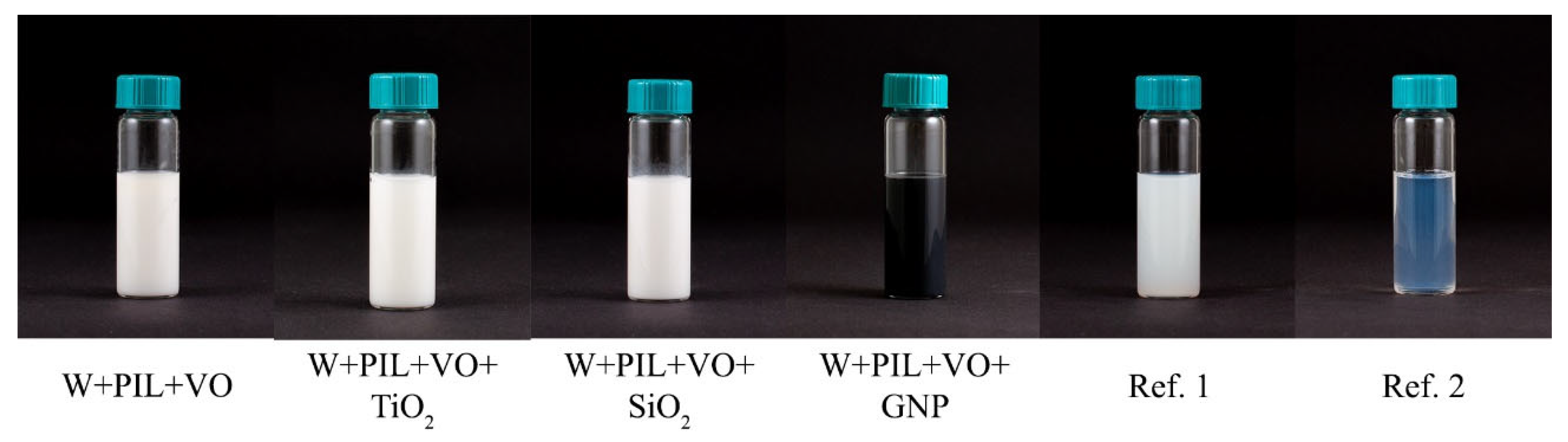
Figure 2 presents the appearance of the prepared lubricating samples used in this study. All the prepared samples were opaque. The titanium and silicon oxide nanoparticles produced a white colour, while the sample containing graphene nanoplatelets was black. FTIR spectroscopy was used to compare the composition of lubricating samples. The obtained spectra, together with the outlined composition, are presented in Figure S3.
Two cutting fluid concentrates, Rhenus TU 410 Ref. 1 [1] and Cimstar 278FF Ref. 2 [2], were used as references. They were dispersed in deionised water at a concentration of 6 wt.% using a magnetic stirrer (Thermo Fisher Scientific, Waltham, MA, USA) (500 rpm for 30 min). The manufacturer recommends this concentration for cutting steel, cast iron, and aluminium, as well as for grinding operations. The appearance of prepared reference lubricating fluids is presented in Figure 2.

2.5. Physicochemical Properties

The Anton Paar Stabinger viscometer SVM 3000 (Anton Paar GmbH, Graz, Austria) was used to determine the kinematic viscosity and density. These measurements were conducted at 30 °C, which is consistent with the temperature used in the tribo-tests. The pH values of the lubricating samples were evaluated using the Thermo Scientific Orion (Thermo Fisher Scientific Inc., Waltham, MA, USA) apparatus. Each sample was measured three times to ensure accuracy.

2.6. Wettability Tests

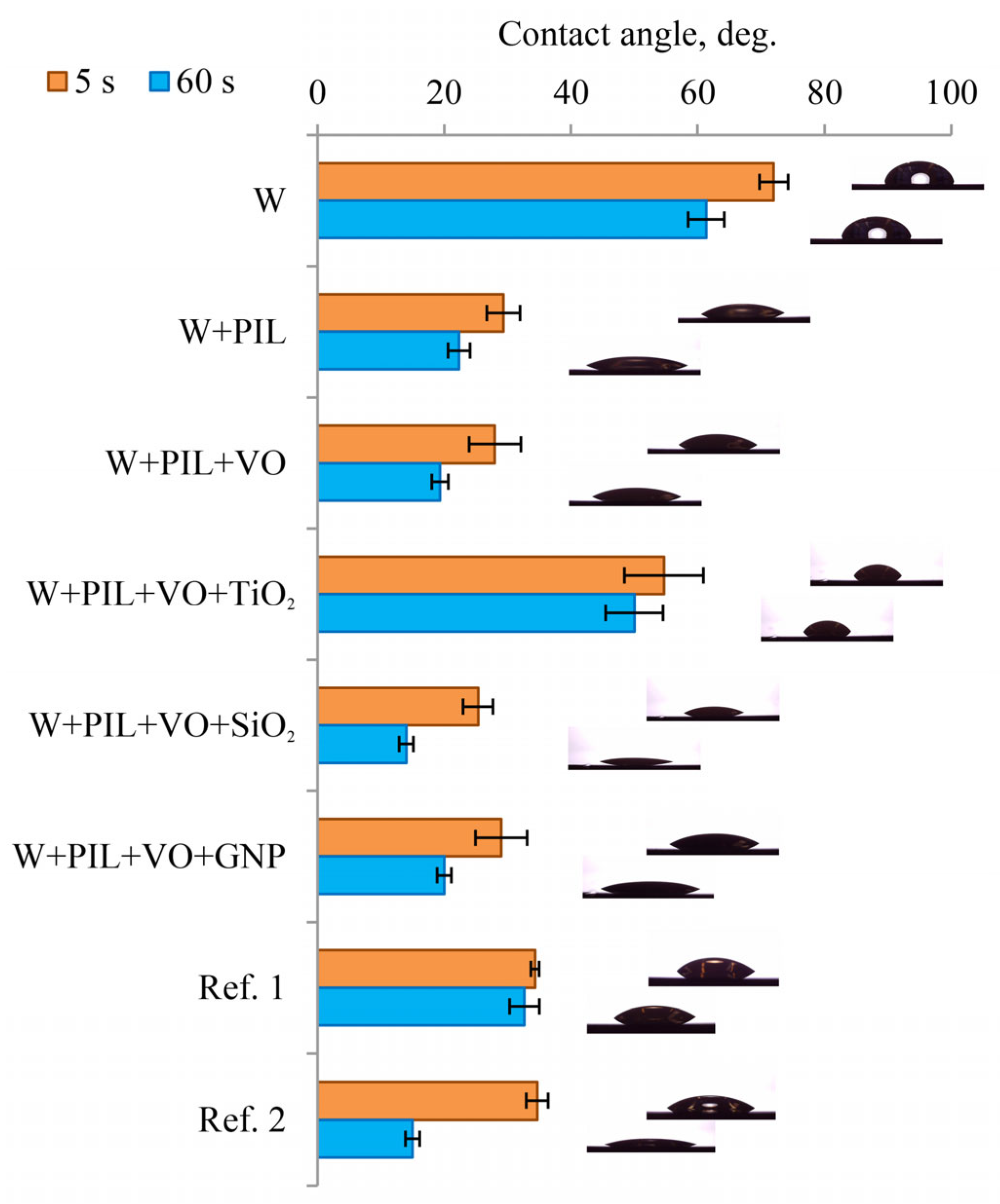
Lubricity is closely related to lubricant wettability. The better the wettability, the faster the lubricants spread on the metal surface, ensuring penetration into small spaces between interacting surfaces [5,52]. In this study, wettability was quantified as the contact angle between the metal surface and the tangent to the lubricant drop. It is expressed in degrees. In the present case, the 10 μL lubricant droplet was placed on the plate surface, and the contact angle was measured after 5 and 60 s. The tests were performed under ambient conditions of 38% RH and 22 °C. The plate surface was identical to that used in the tribo-tests. Its surface was wiped with acetone after each measurement. Three repetitions were performed for each lubricating sample.

2.7. Tribological Tests

The lubricity of the prepared formulations was evaluated using a Ducom TR-282 tribometer in a reciprocating mode with a ball-on-plate configuration. In this test, a φ 6 mm ball was rubbed against the plate ϕ 10 × 3 mm. The plate was made of bearing steel AISI 52100, and two materials were selected for the ball: bearing steel AISI 52100 and tungsten carbide. The properties and composition of these specimens and the tribo-test conditions are listed in Table 7. The tribo-test conditions were chosen to represent a highly loaded friction pair in which reciprocation results in variable sliding speed, with stops at the end of the stroke.
Before testing the lubricating samples, the specimens and all the appropriate parts were washed in an ultrasonic bath in deionised water for 30 min. The variation in the coefficient of friction (COF) with time was continuously recorded. At least two repetitions were made for each lubricating sample. The electrical contact resistance (ECR) was measured for selected lubricating samples to monitor the tribo-film formation.

2.8. Worn Surface Characterisation

Worn surfaces were inspected to evaluate lubricity. They were measured and assessed using a Nikon ECLIPSE MA 100 optical microscope (Nikon Corporation, Tokyo, Japan) and a Hitachi 3400N SEM (Hitachi High-Technologies Corporation, Tokyo, Japan). The wear traces’ cross-section on the plate was measured by employing a stylus profilometer, Mahr GD-25 (Mahr GmbH, Göttingen, Germany). Two measurements were made along the length of the wear trace. The area of the cross-section profile was multiplied by the length of the wear trace to obtain the wear volume. The composition of worn surfaces was measured using Bruker Quad 5040 EDS (Bruker Corporation, Billerica, MA, USA).
Additionally, the plate’s worn surfaces were examined using Raman spectroscopy. Measurements were taken with a Renishaw’ Invia’ Raman microscope (Renishaw plc, Gloucestershire, UK), employing a 532 nm diode laser (Coherent Inc., Santa Clara, CA, USA). The laser was focused onto the sample surface through a 50× objective lens. The laser power applied to the sample was 1.75 mW. Data collection consisted of 10 s acquisitions, repeated ten times in StepScan mode, covering the 100–3000 cm−1 spectral region.

3. Results

3.1. Physico-Chemical Properties

Table 8 presents kinematic viscosity, density, and pH. Considering deionised water’s kinematic viscosity of 0.8007 mm2/s at 30 °C, introducing protic ionic liquid in water increased the viscosity by approximately 28%. Viscosity was further increased by introducing vegetable oil. 5, 10, and 20% of VO and PIL blended in water resulted in 34.3, 73.6, and 89.5% increases in viscosity, respectively. Due to their low concentration, NPs did not affect the kinematic viscosity of the formulated samples. The reference samples had similar viscosities but lower values.
Regarding pH, it was also close to that of the reference samples. It should be noted that formulated lubrication samples containing nanoparticles had slightly lower pH values. Considering the pH of references and that observed in the published literature [6] the investigated lubricating samples are in the preferred range.

3.2. Wettability of Lubricating Samples

Figure 3 shows the measured contact angle, which indicates wettability. The polar molecules of PIL reduce the lubricant’s surface tension, significantly reducing the contact angle. The introduction of vegetable oil does not substantially change the contact angle. The reduction is discernible only after a 60 s exposure. It implies that PIL mainly governs the wettability of these formulations. Among nanoparticles, the best wettability was achieved with SiO2 nanoparticles. GNP had no substantial effect, while TiO2 nanoparticles reduced the positive impact of PIL. The contact angle observed for the TiO2 NP-modified sample was lower than that of pure water but much higher than that of the other samples. Compared to the reference samples, the SiO2- and GNP-containing formulations exhibit wettability similar to that of Ref. 2 [2] and outperform Ref. 1 [1].

3.3. Lubricity of Water/Vegetable Oil/PIL Lubricating Fluids

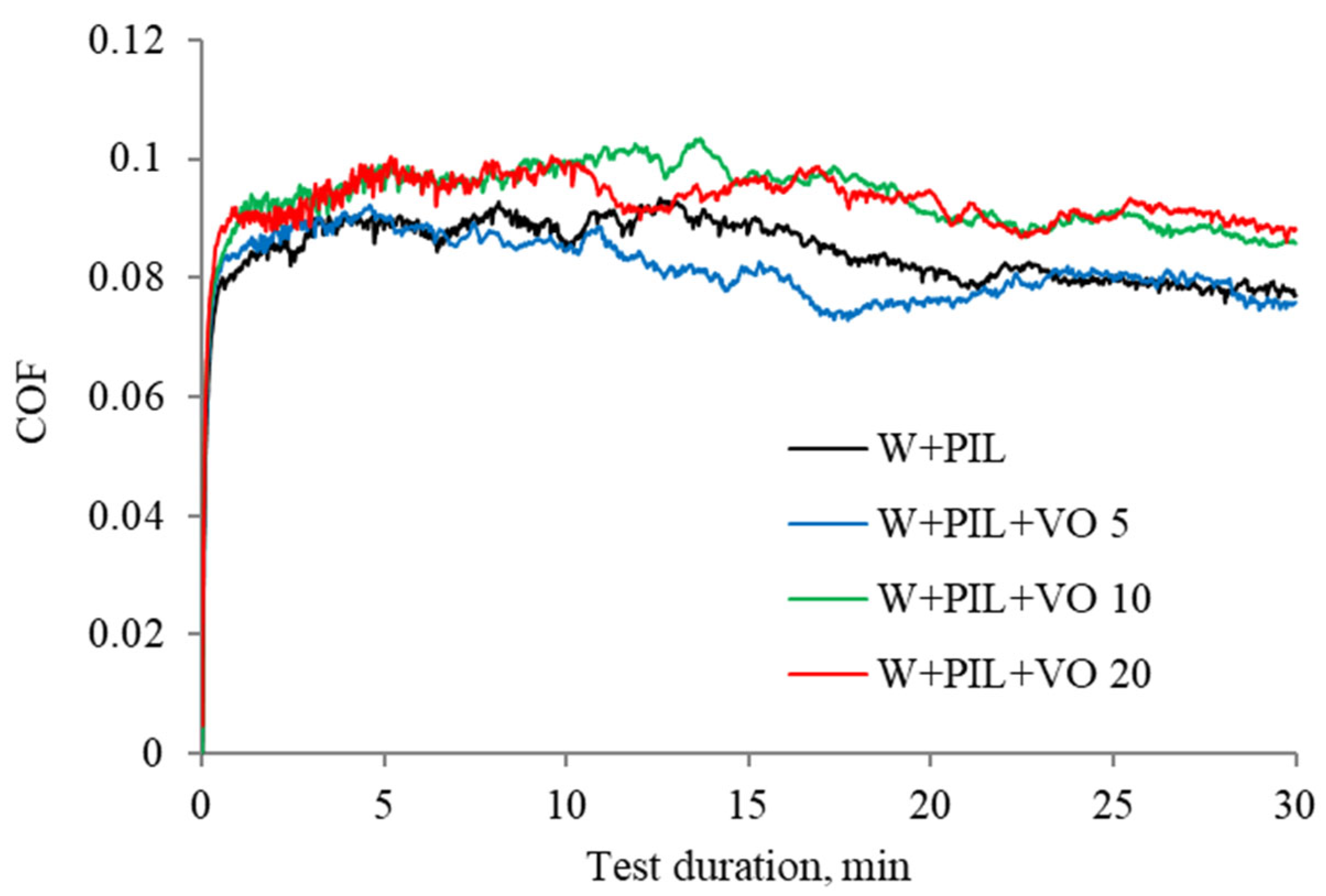
The lubricant’s viscosity undoubtedly plays a significant role in lubrication. The higher viscosity ensures an earlier transition from the BL to the ML regime and helps withstand higher loads. In the case of reciprocation, where the sliding speed drops to zero at the end of each cycle, the transition is critical. On the other hand, the low sliding speed between the end positions prevents the formation of a thin lubricant layer. In the present case, the increase in vegetable oil gradually increased viscosity. One could expect improved tribological performance. The pattern of COF variation observed during these tribo-tests is quite similar (Figure 4). There is a running-in period at the onset of the tribo-test, followed by a more stable regime. Adding vegetable oil changes the character of the COF variation by extending the running-in period. Fortunately, in the steady-state regime, all the samples have similar COF.
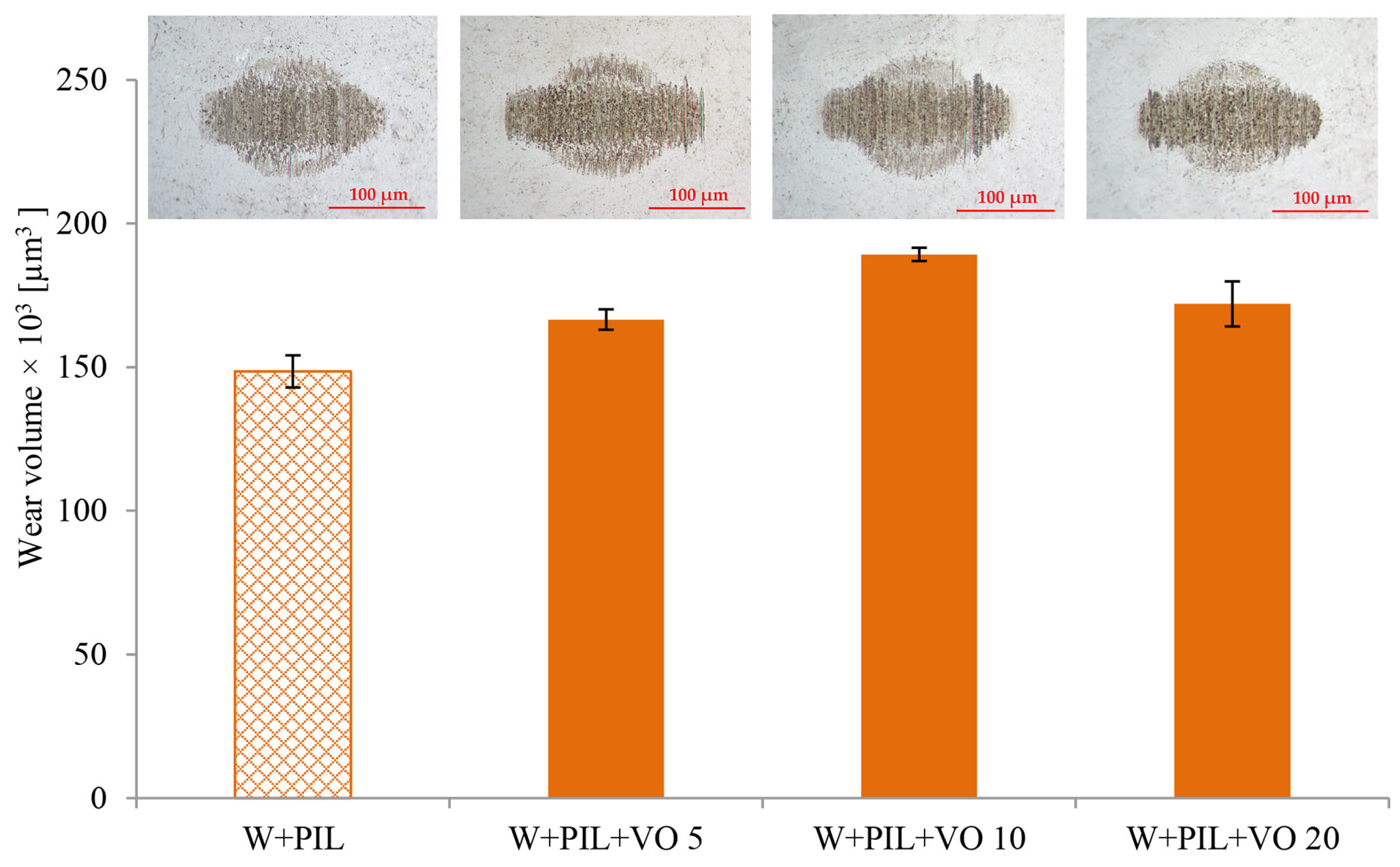
Figure 5 reveals the lubricating samples’ ability to reduce wear. As with COF, the wear increased slightly with the introduction of vegetable oil. On the other hand, the wear scars observed on the balls show no substantial difference in the morphology. All surfaces contain minor scratches and tribo-film residues. According to these results, it was speculated that the presence of PIL plays a significant role in reducing wear and friction. Therefore, the tribo-tests of PIL-loaded deionised water were performed to understand the underlying lubrication mechanism. The lubricating samples were tested at four different test-time intervals and compared.
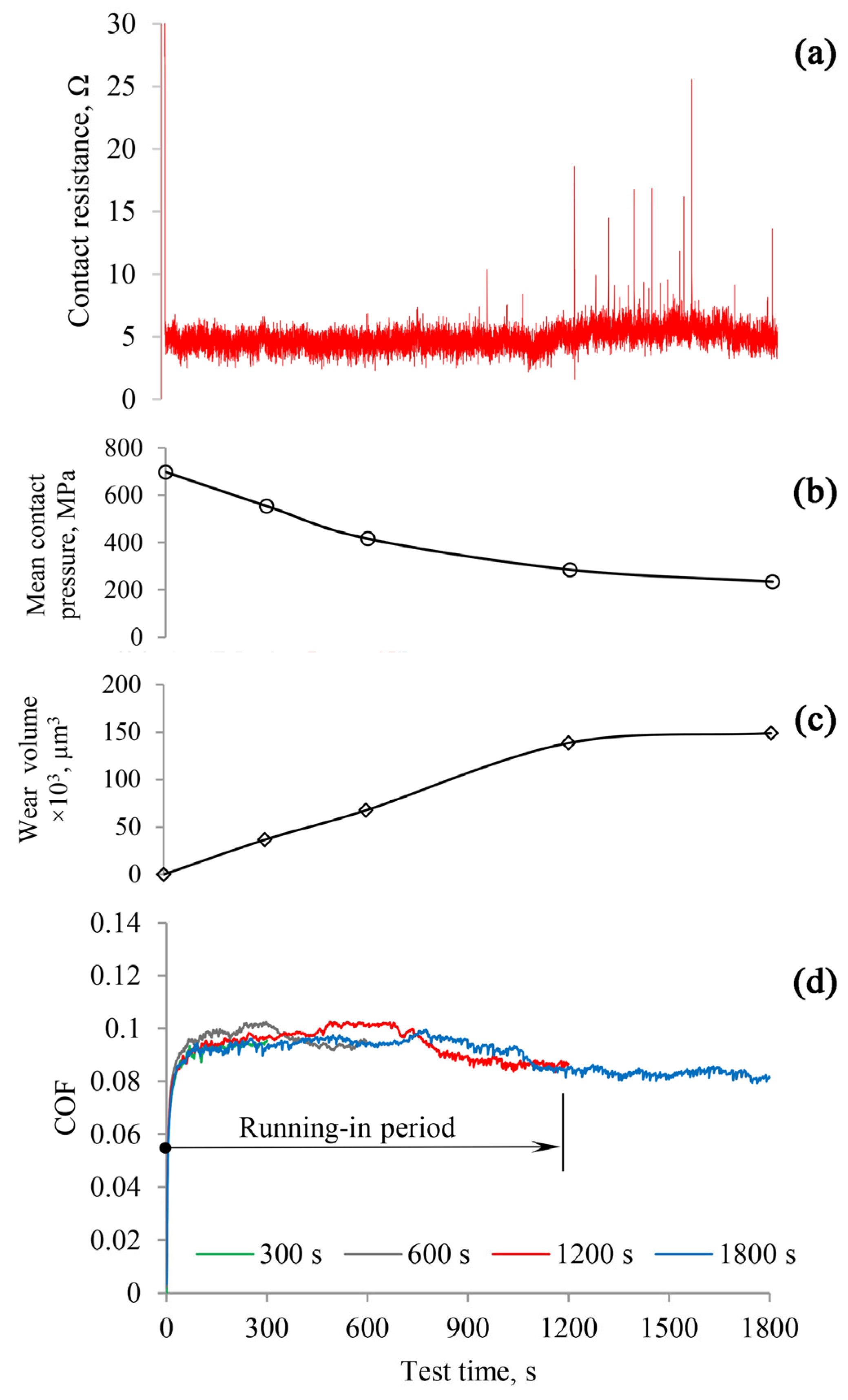
Based on the observed COF variation, the tests exhibit excellent repeatability, following the same pattern (Figure 6). The running-in period is discernible during the initial 1000 test seconds. After the running-in period, the ECR slightly increases and shows spikes that represent the instantaneous separation of interacting surfaces. Most likely, a tribo-film forms, resulting in a lower COF and negligible wear during the final 600 s of the tribo-test.
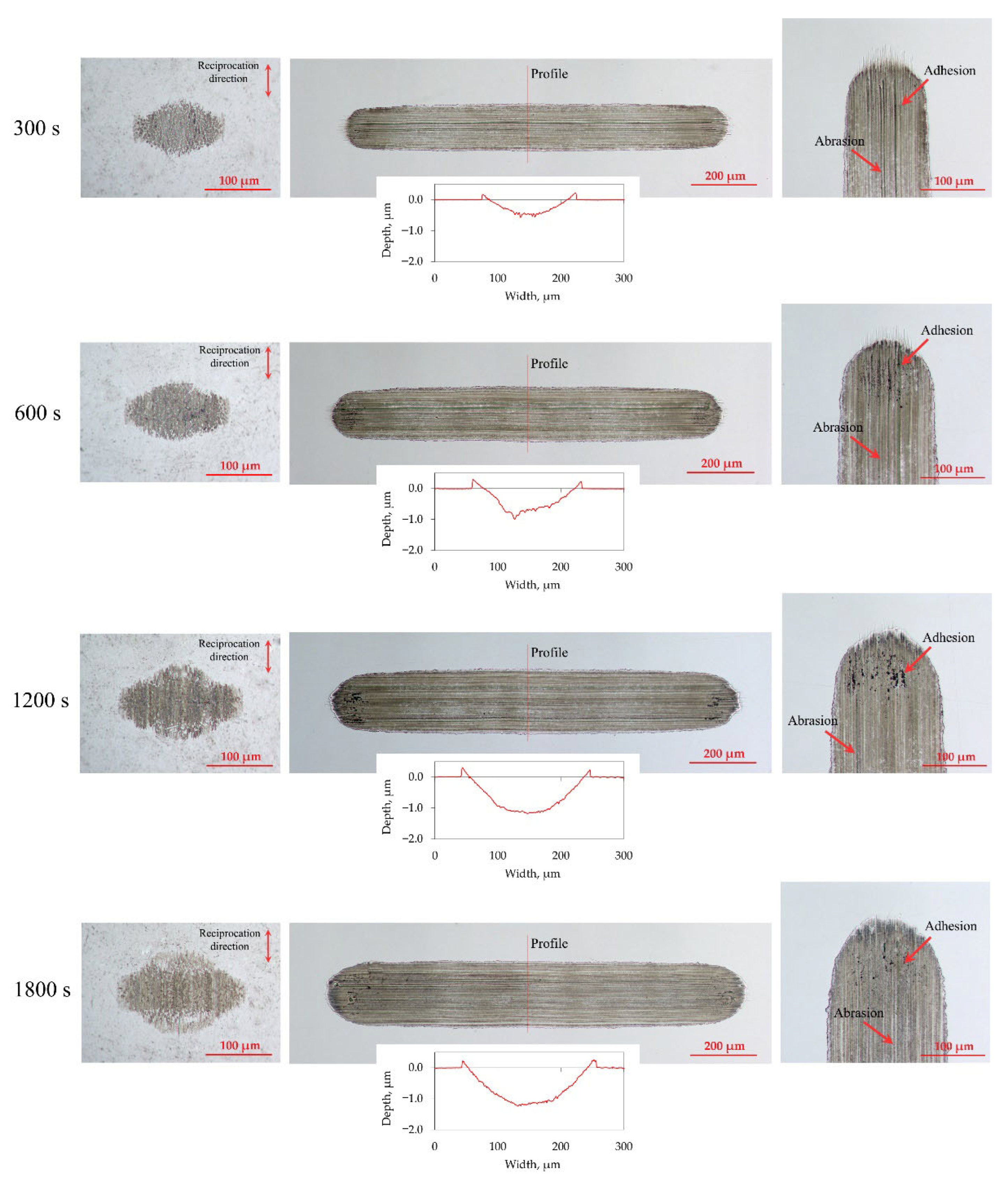
Based on the morphology of worn surfaces, they undergo plastic deformation, adhesion, and polishing (Figure 7 and Figure S5). The extruded material at the edges of the wear trace was observed from the initial test seconds (Figure 7). The adhesion marks at the wear trace’s ends propagated during the tribo-test. Initially, there are only micro pits, which later grow into larger peddles. At the end of the test, exfoliation of worn surfaces was observed (Figure S5). The exfoliated wear debris most likely results in scratches on the worn surfaces, acting as abrasives stuck to the ball and wear debris in three-body wear [53]. Despite the mild abrasion, roughness measurements indicate that the peak-to-valley (Rp/Rv) ratio ranges from 0.73 to 0.78, which is beneficial for lubricated sliding. In all investigated cases, the relatively harder ball surface underwent only slight polishing, and residual tribo-film was observed (Figure 7).
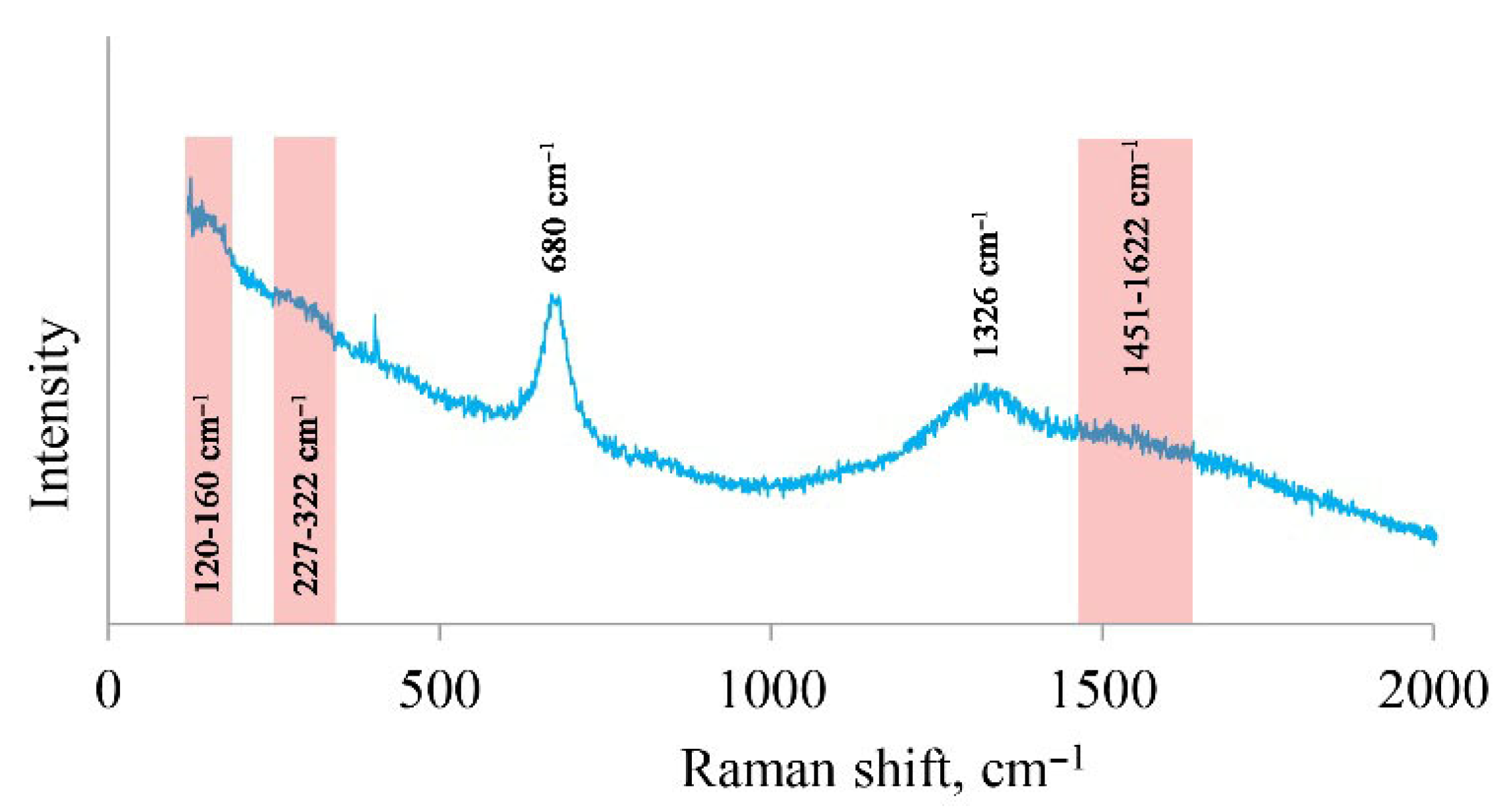
Based on the EDS composition obtained, the worn surfaces contain high levels of carbon and nitrogen from PIL. The surface also contains oxygen, which is a product of surface oxidation. Raman spectroscopy measurements on the worn surface confirmed the presence of a tribo-film composed of iron oxides and PIL residue (Figure 8). Low-intensity peaks at the regions of 120–160 cm−1 and 227–322 cm−1, together with firm peaks at 680 cm−1, define the presence of magnetite (Fe3O4) and hematite (α-Fe2O3) [54]. Magnetite is a typical wear-induced oxidation product of steel. The low-intensity broad peak at 1326 cm−1 could be assigned to a symmetric C-O-C compound from PIL [55]. The low-intensity broad region 1451–1622 cm−1 could be due to COO stretching vibrations dedicated to fatty acid soapy products [56,57]. Based on the observed results, adsorbed PIL molecules reacted with the steel surface, in addition to oxidation, forming an iron oleate soap layer. This combined layer exhibits higher electrical resistance and better lubrication performance than metal oxides. Unfortunately, the thicker layer is brittle, resulting in exfoliation at the ends of the wear trace [58].
In this case, the positive influence of viscosity was not observed, which may be due to a viscosity increment that is too small (Table 7). The deterioration in lubricity could be attributed to competition between PIL molecules and vegetable-oil molecules. The competition of polar molecules for the active surface sites is reported to be harmful to lubrication [16,59,60]. Although vegetable oil does not improve lubricity in the present case, its presence can alter the fluid’s viscosity without sacrificing lubricity. Some mechanical devices that require higher operational viscosity may benefit from this option.

3.4. Lubricity of Water/Vegetable Oil/PIL/Nanoparticles Lubricating Fluids

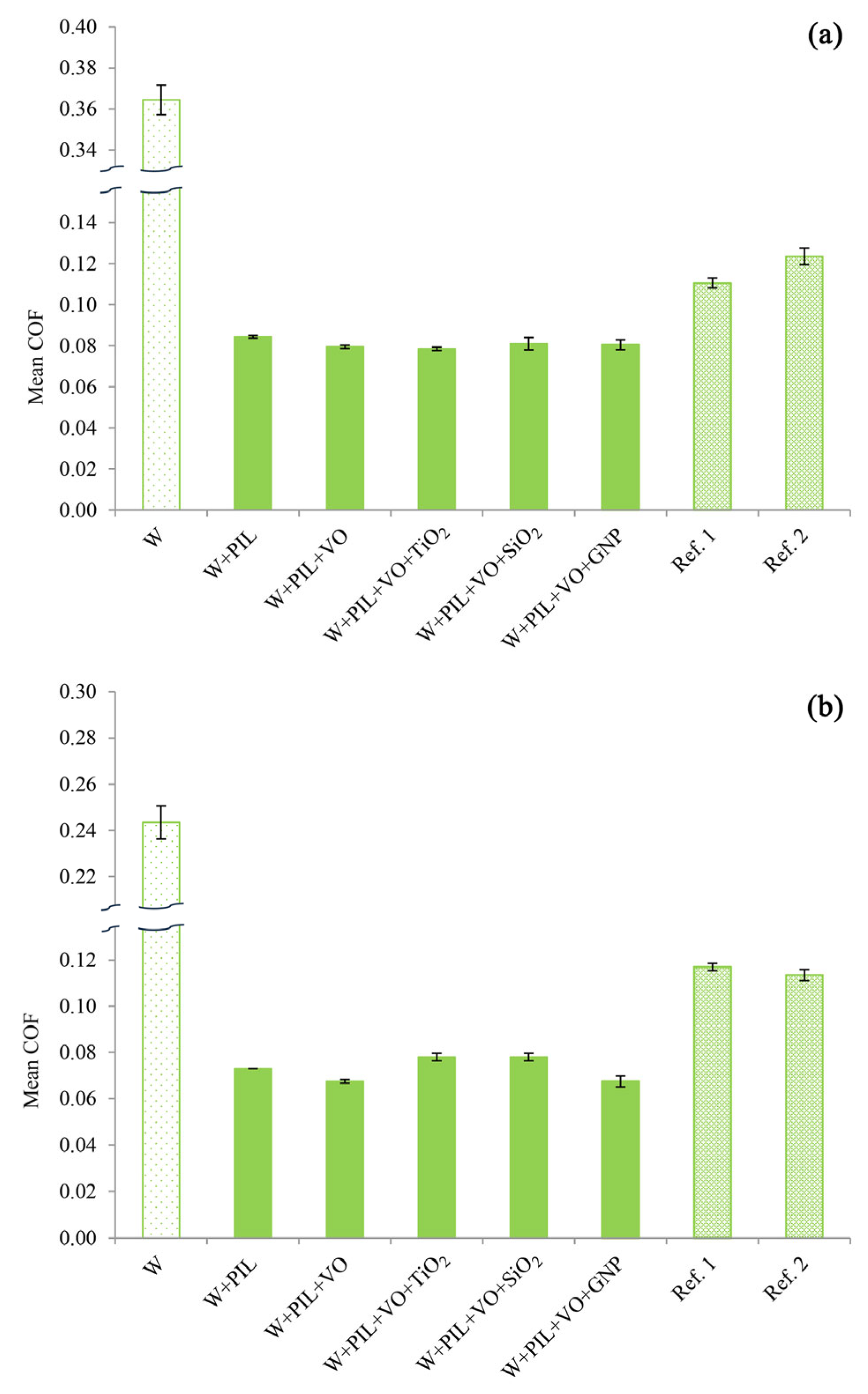
Figure 9 and Figure 10 present the mean coefficient of friction and its variation during the tribo-test. While deionised water is a poor lubricant, its COF was very high. The coefficient of friction was significantly reduced following the introduction of the PIL additive. The introduction of additional additives had no substantial effect. For the BS/BS friction pair, adding vegetable oil or NPs has no significant effect on the mean COF (Figure 9a).
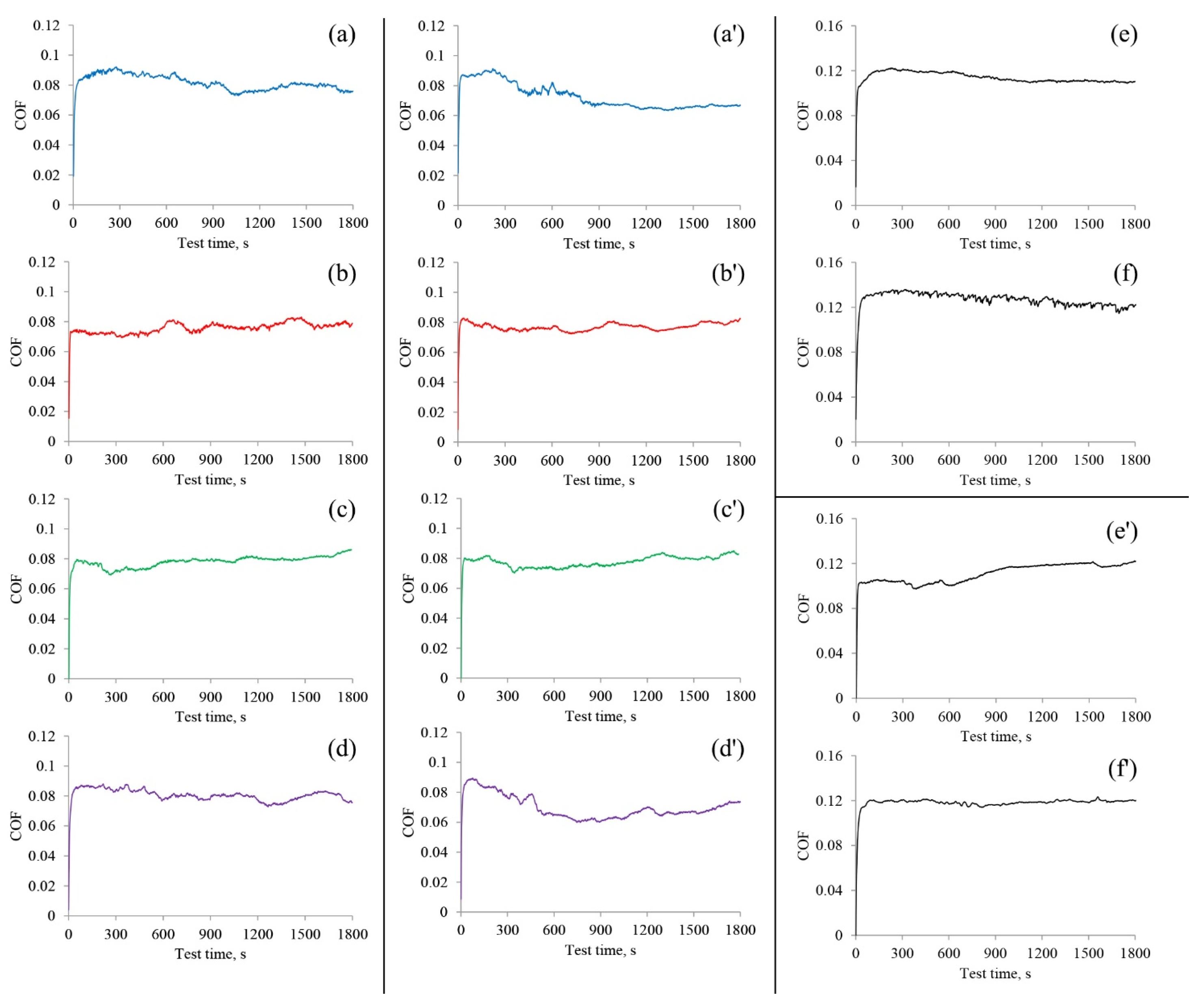
Furthermore, the WC/BS friction pair was more sensitive to the additives tested. Adding titanium and silicon oxide nanoparticles negatively affected the COF (Figure 9b). The investigated reference samples also demonstrated considerably lower COF than additive-free water. However, they have a higher COF than the PIL/VO/NPs additive-loaded samples. Variations in the coefficient of friction reveal the dynamics of the lubrication process. The distinct running-in period, followed by a steady-state period, was characteristic of water/vegetable oil/PIL formulations (Figure 10a,a′). The WC/BS friction pair exhibited a shorter running-in period and a lower steady-state COF, attributable to the nature of the materials in the friction pair. Although the mean COF showed marginal differences, the introduced NPs substantially altered COF variability in both friction couples. An increasing COF was observed for titanium and silicon oxide NPs. In both friction pairs, the running-in period is not so distinct. Lubrication with a GNP-containing sample resulted in the least changed COF variation, similar to that observed in the case of W + PIL + VO.
The reference samples showed relatively stable COF throughout the entire tribo-test. Ref. 2 [2] has more fluctuations during its steady state. The reference samples exhibited different behaviours during the lubrication of the investigated friction couples. Ref. 1 [1] has a stable COF when lubricating the BS/BS friction pair. On the other hand, lubrication of the WC/BS friction pair resulted in a steadily increasing COF, indicating pure lubrication conditions. Ref. 2 [2] showed better performance on the WC/BS friction pair, with a more stable COF.
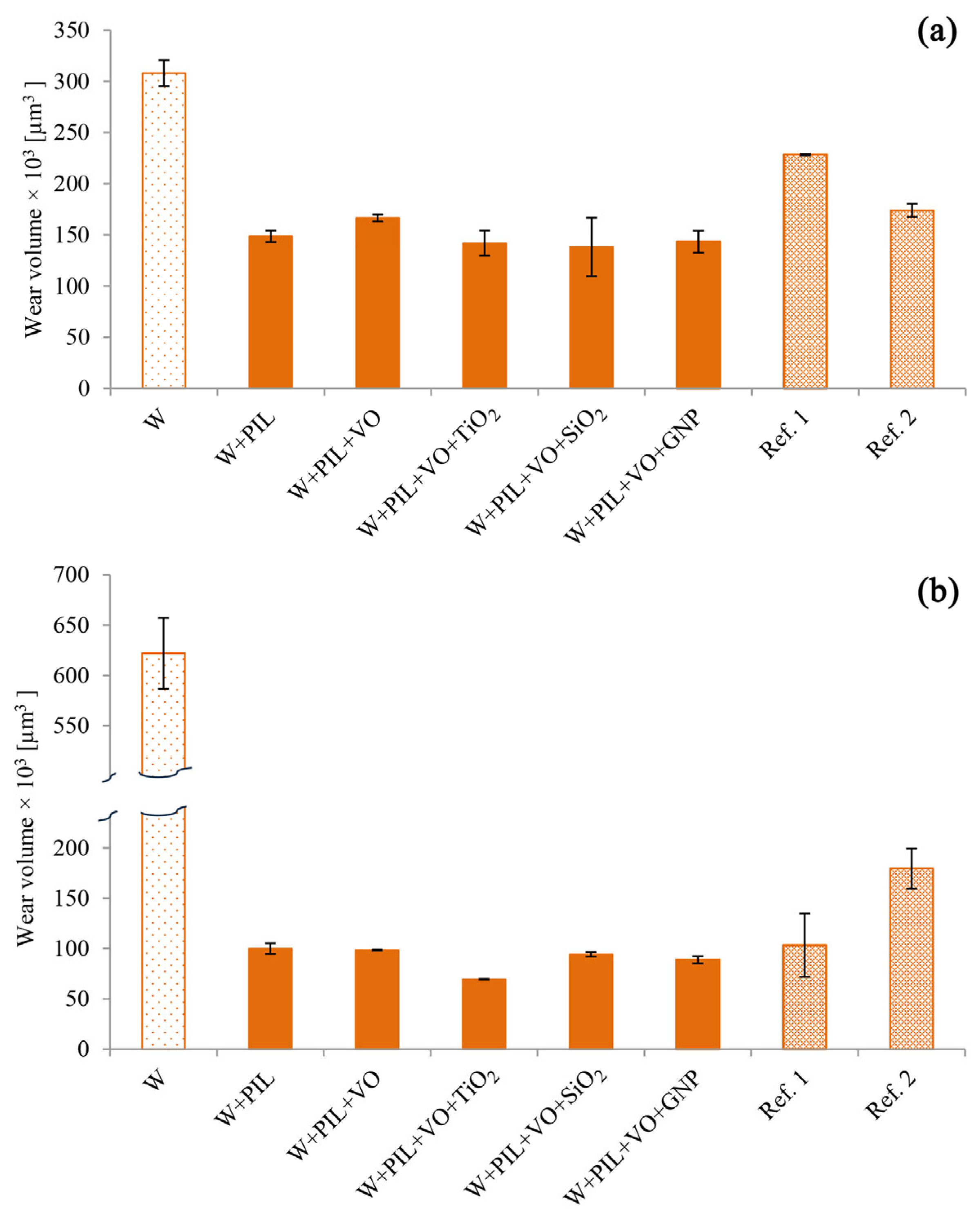
The wear volumes obtained for the investigated lubricating samples are presented in Figure 11. It was expected that water-lubricated surfaces would suffer high wear. In the present case, additive-free water lubricated the BS/BS friction pair and underwent lower wear than WC/BS. Introducing the investigated additives resulted in significantly lower wear in both friction pairs. It must be noted that lubrication of the BS/BS friction pair with additive-loaded samples resulted in higher wear volumes than the WC/BS friction pair, which agrees with the results of the COF. Moreover, the lubricating fluids investigated, including reference samples, exhibited different behaviours across friction pairs. Adding vegetable oil slightly increased wear for the BS/BS friction pair, whereas no effect was observed for the WC/BS friction pair. Introducing nanoparticles resulted in a slight reduction in wear for the BS/BS friction pair. At the same time, in the WC/BS, only the titanium oxide nanoparticle-loaded sample showed a reduction in wear.
The reference lubricating fluids showed worse lubricity in both friction pairs. Interestingly, they also exhibited different behaviours in lubricating different friction pairs. Ref. 1 [1] lubricating sample performed better on WC/BS but failed to lubricate the BS/BS friction pair. It is likely related to the ability of tribo-film to form on different materials. The observed performance of these lubricating fluids can be attributed to concentrations that are too low for the current tribo-test conditions.
The energy applied to the system to move the lubricated surfaces relative to each other is primarily used to overcome friction, generate heat, deform the interacting surfaces, and produce wear. Usually, the wear in the system is proportional to COF, where higher wear comes with higher friction. However, if the energy is consumed for surface deformation, the wear and friction can have a different relationship [61]. In the present case, lubrication with a TiO2 nanoparticle-containing formulation resulted in lower wear of the WC/BS friction pair, whereas COF was even higher than in other samples.
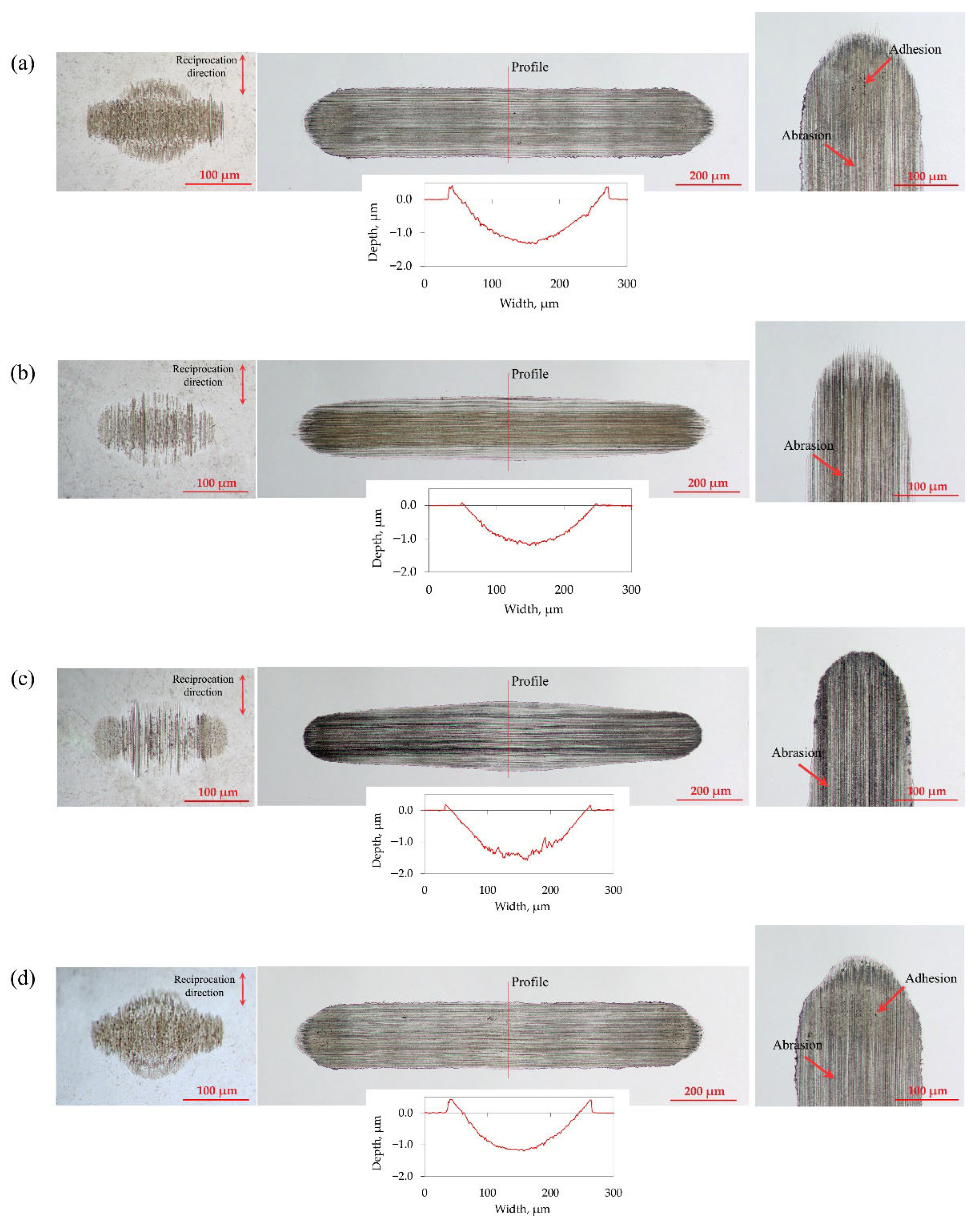
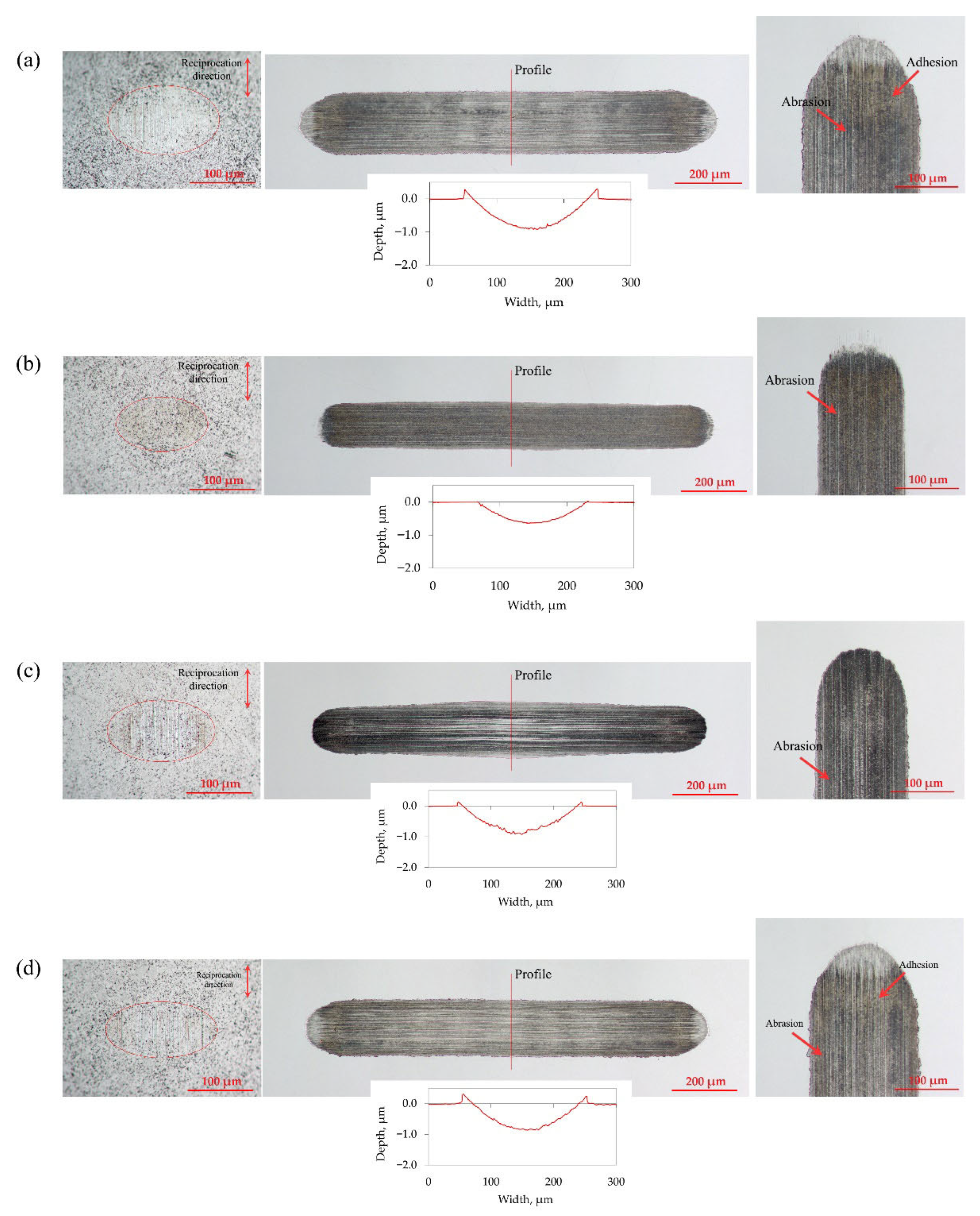
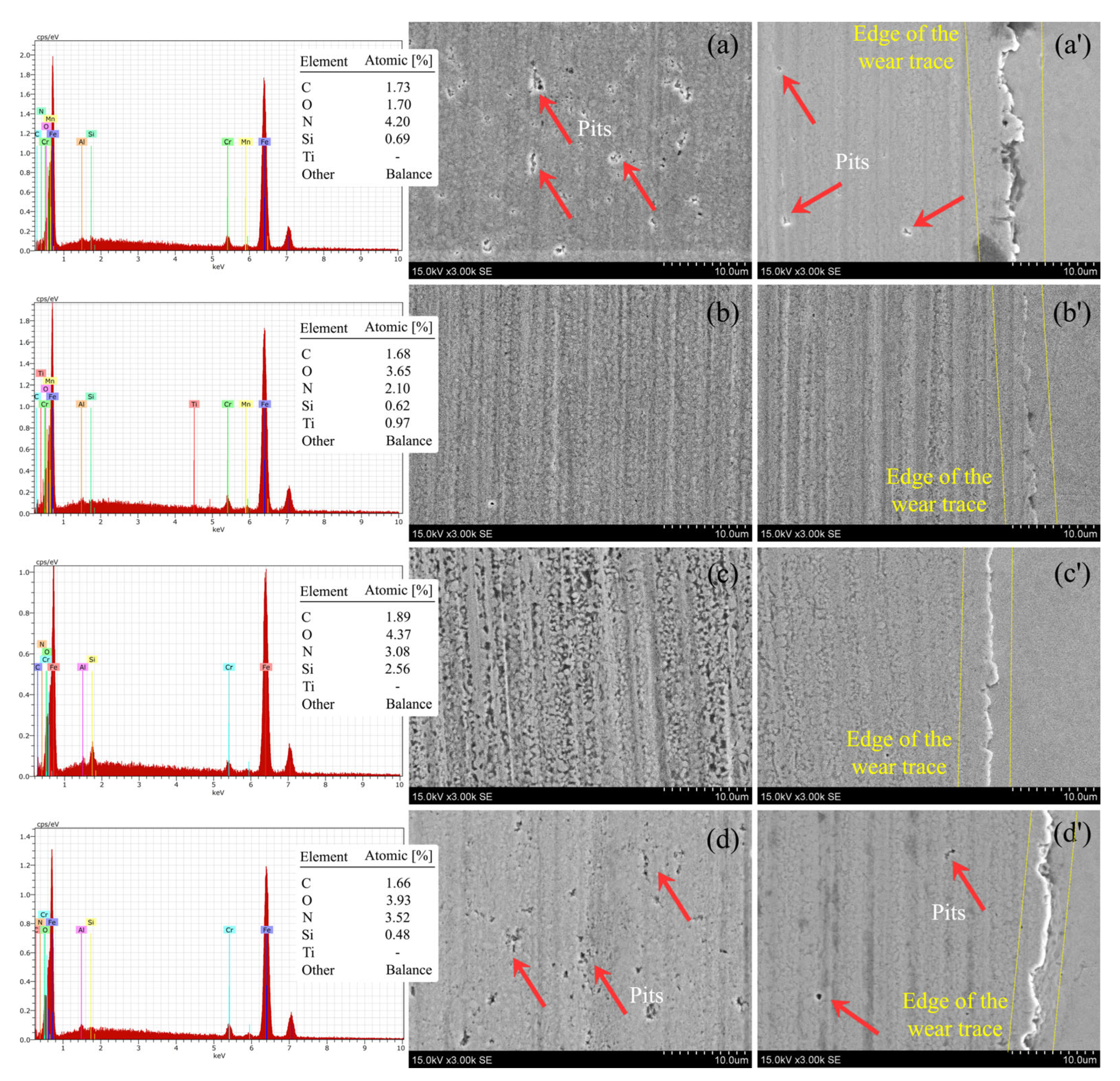
Figure 12, Figure 13, Figure 14 and Figure 15 present the optical and SEM images of worn surfaces obtained in tribo-tests, respectively. The lubrication with W + PIL + VO produced smooth, worn surfaces. The tribo-film residues can be distinguished on the bearing steel ball surface, which underwent only slight polishing (Figure 12a). The wear trace on the plate has abrasion marks oriented along the sliding direction and adhesion micropits. Adhesion is evident at the ends of the wear trace, where the ball changes direction (Figure 14a). A pushed-out material on the edges of the wear trace is the product of plastic deformation.
Observation of worn surfaces revealed that the introduction of NPs altered the wear pattern. In the case of titanium oxide nanoparticles, no micropitting was found, and smoother surfaces were formed (Table 9). Similarly, silicon oxide NPs showed no adhesion; however, more severe abrasion occurred, resulting in surface damage to the ball and plate. Most probably, the silicon oxide NPs formed larger agglomerates that acted as abrasives in three-body wear. Nevertheless, eliminating adhesion means that metal oxide NPs provide better load-carrying capacity at low sliding speeds.
Lubrication with a GNP-containing lubricating sample resulted in minor adhesion at the ends of the wear trace. Plastic deformation at the sides of the wear trace is also evident. Notably, lubrication with this formulation produced a surface that was worn most closely to that observed in the absence of nanoparticles. This may be related to the properties of nanomaterials: harder metal oxide NPs tend to abrade metal surfaces, whereas GNP facilitates easy interlayer shearing.
Interestingly, the WC ball contains no residues of tribo-film, which is the main morphological difference among the investigated friction pairs. The protic ionic liquid most probably does not react with the ceramic material.
The worn surfaces produced during the tribo-test of reference samples are presented in Figures S6–S9 in the Supplementary file. These surfaces underwent wear mechanisms similar to those explained above. Surface polishing and micro-pitting were observed at the ends of the wear traces. As a consequence of higher friction, both interacting surfaces have abrasion marks. Based on the appearance of worn surfaces, Ref. 1 [1] is unsuitable for lubricating WC-containing friction pairs.
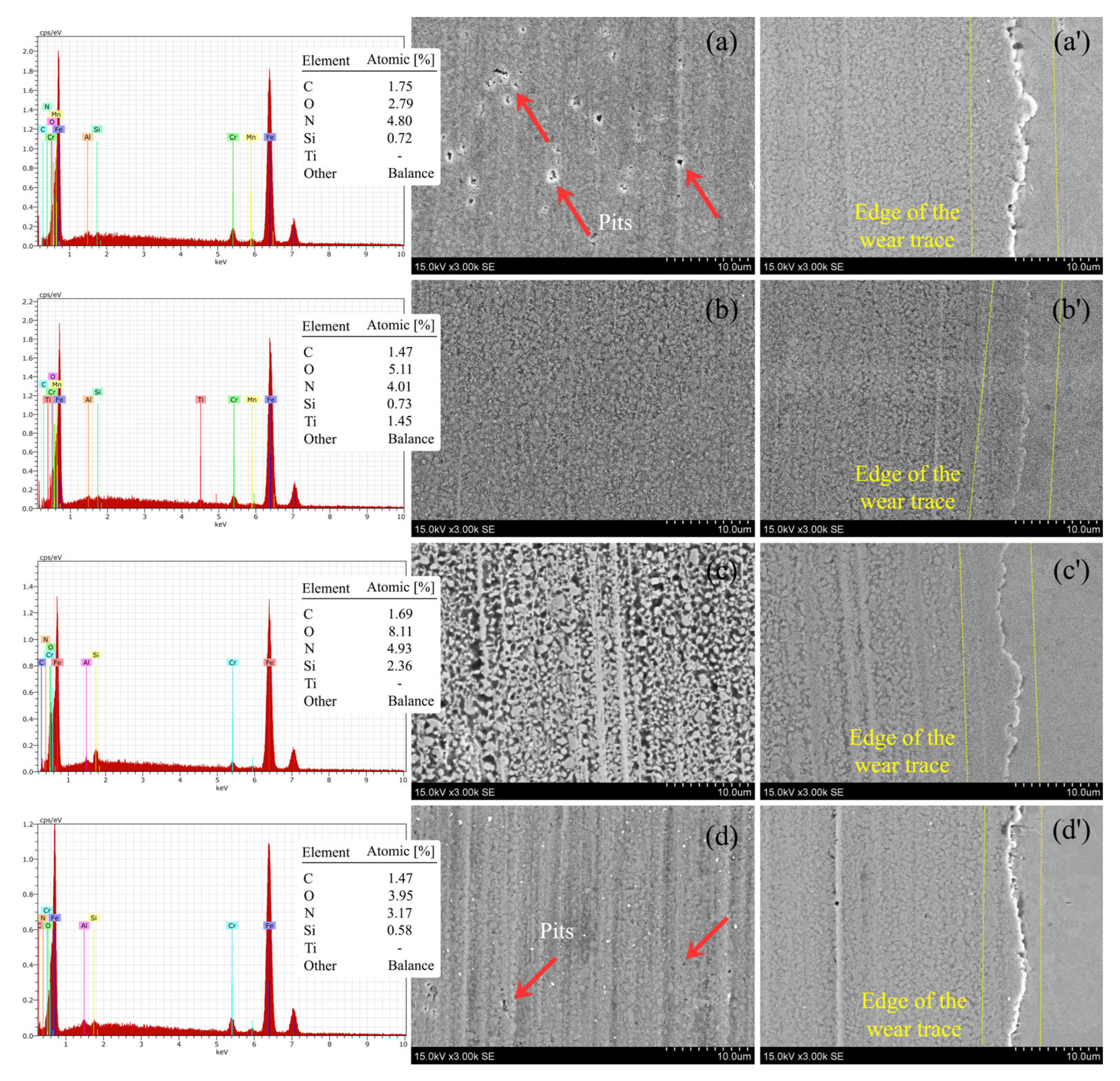
According to the EDS analysis, worn surfaces contain considerable amounts of carbon, oxygen, and nitrogen (Figure 14 and Figure 15). Carbon and nitrogen come from the ionic liquid. The former is also found outside the wear trace as evidence of the adsorption layer. The contact surfaces underwent oxidation, resulting in a high oxygen content. It should be noted that the worn surfaces of the plate that interacted with the WC ball have higher amounts of the elements mentioned above. Surfaces lubricated with titanium- and silicon oxide NP-loaded samples exhibit higher titanium and silicon contents, respectively. This could be attributed to the mending effects and composite layer formation, where the NP-reinforced tribo-film is formed [11,32,40].

3.5. Proposing the Lubrication Mechanism

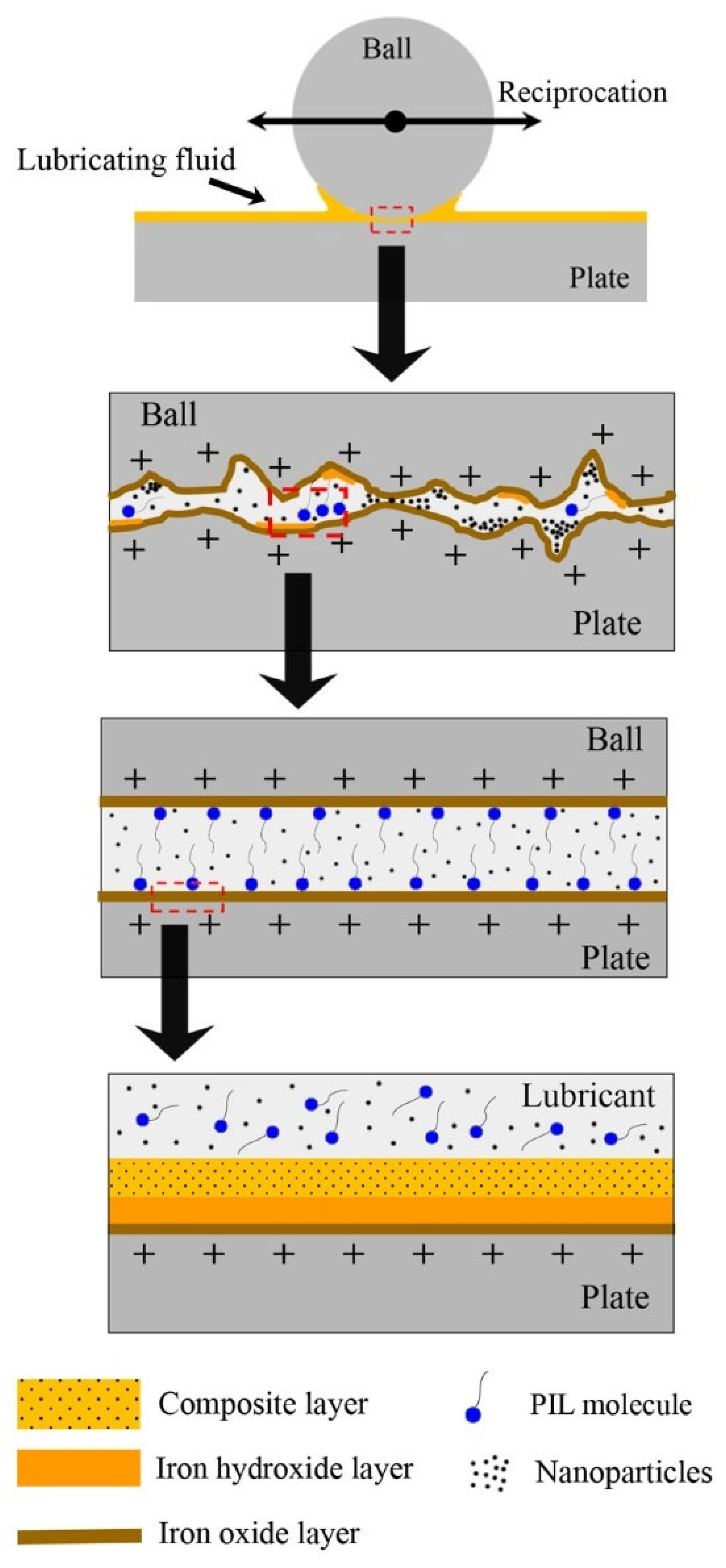
Based on the observed results, the following lubrication mechanism is proposed (Figure 16). The polar molecules of PIL exhibit good wettability and adsorb onto the metal surface, forming an adsorption layer. As evidence, nitrogen from PIL was detected on the entire plate and ball surfaces that contacted the lubricant. Rubbing the steel surface in a water-based fluid results in oxide film formation, which is subsequently hydrated by water. It is generally known that the reaction between iron hydroxide and fatty acids forms soap layers [59]. Therefore, it is speculated that a thin ferrous oleate soap layer forms on the oxide substrate, separating the interacting surfaces by an easily shearable layer. This layer is sufficiently strong to support the applied load and to minimise sliding friction. However, continuous formation and removal of the layer result in wear and the formation of extruded material, as observed along the sides of the wear trace (Figure 12 and Figure 13).
In reciprocating sliding, the film formation is disturbed by severe lubrication conditions at the ends of the wear trace. Adhesion occurred in these regions, resulting in surface micro-pitting, observed in SEM images (Figure 14 and Figure 15). The adhered iron oxide particles move with the ball, rubbing the plate’s surface. Moreover, wear debris from detached particles causes three-body wear. The lubrication conditions are eased in the case of the WC ball, which does not have an affinity to steel and, therefore, is less prone to adhesion. Thus, smaller COF and wear were observed in the WC/BS tribo-pair, and the presence of tribo-film on the ball is less evident.
As evidenced by changes in COF and the appearance of worn surfaces, nanoparticles alter lubrication conditions. Based on the worn-surface appearance and composition, surface polishing and mending occur. Moreover, based on our previous findings and reported cases of other researchers, the composite layer formation is suggested [26,28,32]. Introducing metal oxide nanoparticles enhances load-bearing capacity, thereby eliminating adhesion at the ends of the wear trace. While the EDS shows considerably higher amounts of titanium and silicon in the worn surfaces, the mending effect is suggested.
The synergy-based lubricity-improving effect was less evident than that reported in our previous study [28]. This may be due to the presence of vegetable oil, which disrupts the adsorption of polar molecules.

4. Conclusions

This work investigated the synergistic effect of the bis(2-hydroxyethyl)amine oleate PIL and NP as a lubricity-enhancing hybrid additive for an oil-in-water base fluid. Three types of nanomaterials were investigated: titanium oxide NP, silicon oxide NP, and graphene nanoplatelets. As a result, the following conclusions can be outlined:
i.
Thanks to its polar nature, bis(2-hydroxyethyl)amine oleate PIL enabled the dispersion of vegetable oil in water and enhanced wettability and lubricity.
ii.
Combining NPs with PIL in oil-in-water lubricating fluid resulted in a relatively stable dispersion. The graphene nanoplatelet-containing lubricating sample was the most stable, while the silicon oxide nanoparticle-loaded sample was the least stable.
iii.
The investigated additives significantly improved water’s wear and friction reduction ability. It was found that the protic ionic liquid primarily governs lubricity, whereas the introduction of vegetable oil has no significant effect. Adding nanoparticles only slightly improved lubricity. The most pronounced synergistic effect was observed with titanium oxide NPs, yielding 14% and 29% wear reductions in the BS/BS and WC/BS friction pairs, respectively. The investigated samples also showed better performance than the reference samples.
iv.
Based on the obtained wear and friction results, it was proposed that the tribo-reaction of PIL with the steel surface formed a soapy layer. The nanoparticles were embedded in the layer and reinforced, thereby improving load-carrying capacity.

Supplementary Materials

The following supporting information can be downloaded at: https://www.mdpi.com/article/10.3390/lubricants14010003/s1, Figure S1: FTIR spectra of bis(2-hydroxyethyl)amine oleate protic ionic liquid; Figure S2: FTIR spectra recorded in the vegetable oil; Figure S3: FTIR spectra comparing the composition of the investigated lubricating samples; Figure S4: The visual appearance and stability within 20 storage days of the prepared water/vegetable oil/PIL formulations containing various amounts of vegetable oil. The number on the sample bottle represents the amount of vegetable oil. The last sample is without vegetable oil; Figure S5: SEM images of the worn surfaces at the end region of the wear trace (on the left) and the side edge in the middle of the wear trace (on the right) observed during different tribo-test time intervals using W+PIL as a lubricant; Figure S6: Optical microscope images and wear trace profiles observed in BS-BS tribo-test of Ref. 1 and Ref. 2. From the left to the right: the wear scar on the ball, the wear trace on the plate, and the end of the wear trace; Figure S7: Optical microscope images and wear trace profiles observed in WC-BS tribo-test of Ref. 1 and Ref. 2. From the left to the right: the wear scar on the ball, the wear trace on the plate, and the end of the wear trace; Figure S8: SEM images of wear traces observed after BS/BS tribo-test of Ref. 1 (a), (a′) and Ref. 2 (b), (b′) samples, respectively in the centre and the side of wear trace; Figure S9: SEM images of wear traces observed after WC/BS tribo-test of Ref. 1 (a), (a′) and Ref. 2 (b), (b′) samples, respectively in the centre and the side of wear trace. References [62,63,64,65] are cited in the Supplementary Materials.

Author Contributions

Conceptualisation, R.K.; methodology, R.K. and J.T.; validation, R.K., M.G. and I.G.; formal analysis, R.K. and I.G.; investigation, A.K., M.G., J.T. and I.G.; writing—original draft preparation, R.K.; writing—review and editing, R.K. and M.G.; visualisation, R.K. and M.G.; supervision, R.K.; project administration, R.K. All authors have read and agreed to the published version of the manuscript.

Funding

This research was funded by grant No. S-MIP-21-61 from the Research Council of Lithuania.

Data Availability Statement

The data presented in this study are available on request from the corresponding author.

Conflicts of Interest

The authors declare no conflicts of interest.

References

  1. Najiha, M.S.; Rahman, M.M.; Yusoff, A.R. Environmental Impacts and Hazards Associated with Metal Working Fluids and Recent Advances in the Sustainable Systems: A Review. Renew. Sustain. Energy Rev. 2016, 60, 1008–1031. [Google Scholar] [CrossRef]
  2. Bartz, W.J. Ecotribology: Environmentally Acceptable Tribological Practices. Tribol. Int. 2006, 39, 728–733. [Google Scholar] [CrossRef]
  3. Commission Decision (EU) 2018/1702 of 8 November 2018 Establishing the EU Ecolabel Criteria for Lubricants (Notified under Document C(2018) 7125). 2018. Available online: https://eur-lex.europa.eu/eli/dec/2018/1702/2024-12-20/eng (accessed on 1 August 2022).
  4. Zheng, D.; Zhao, Q.; Ju, C.; Wang, X. The Interaction of Two Anticorrosive Ionic Liquid Additives on the Friction Properties of Water Lubricants. Tribol. Int. 2020, 141, 105948. [Google Scholar] [CrossRef]
  5. Gajrani, K.K.; Suvin, P.S.; Kailas, S.V.; Mamilla, R.S. Thermal, Rheological, Wettability and Hard Machining Performance of MoS2 and CaF2 Based Minimum Quantity Hybrid Nano-Green Cutting Fluids. J. Mater. Process. Technol. 2019, 266, 125–139. [Google Scholar] [CrossRef]
  6. Gajrani, K.K.; Suvin, P.S.; Kailas, S.V.; Sankar, M.R. Hard Machining Performance of Indigenously Developed Green Cutting Fluid Using Flood Cooling and Minimum Quantity Cutting Fluid. J. Clean. Prod. 2019, 206, 108–123. [Google Scholar] [CrossRef]
  7. Nune, M.M.R.; Chaganti, P.K. Development, Characterization, and Evaluation of Novel Eco-Friendly Metal Working Fluid. Measurement 2019, 137, 401–416. [Google Scholar] [CrossRef]
  8. Mousavi, S.B.; Heris, S.Z.; Estellé, P. Experimental Comparison between ZnO and MoS2 Nanoparticles as Additives on Performance of Diesel Oil-Based Nano Lubricant. Sci. Rep. 2020, 10, 5813. [Google Scholar] [CrossRef]
  9. Nyholm, N.; Espallargas, N. Functionalized Carbon Nanostructures as Lubricant Additives—A Review. Carbon 2023, 201, 1200–1228. [Google Scholar] [CrossRef]
  10. Donato, M.T.; Colaço, R.; Branco, L.C.; Saramago, B. A Review on Alternative Lubricants: Ionic Liquids as Additives and Deep Eutectic Solvents. J. Mol. Liq. 2021, 333, 116004. [Google Scholar] [CrossRef]
  11. Wang, B.; Qiu, F.; Barber, G.C.; Zou, Q.; Wang, J.; Guo, S.; Yuan, Y.; Jiang, Q. Role of Nano-Sized Materials as Lubricant Additives in Friction and Wear Reduction: A Review. Wear 2022, 490–491, 204206. [Google Scholar] [CrossRef]
  12. Amiril, S.A.S.; Rahim, E.A.; Syahrullail, S. A Review on Ionic Liquids as Sustainable Lubricants in Manufacturing and Engineering: Recent Research, Performance, and Applications. J. Clean. Prod. 2017, 168, 1571–1589. [Google Scholar] [CrossRef]
  13. Matczak, L.; Johanning, C.; Gil, E.; Guo, H.; Smith, T.W.; Schertzer, M.; Iglesias, P. Effect of Cation Nature on the Lubricating and Physicochemical Properties of Three Ionic Liquids. Tribol. Int. 2018, 124, 23–33. [Google Scholar] [CrossRef]
  14. Hernández Battez, A.; Fernandes, C.M.C.G.; Martins, R.C.; Bartolomé, M.; González, R.; Seabra, J.H.O. Two Phosphonium Cation-Based Ionic Liquids Used as Lubricant Additive: Part I: Film Thickness and Friction Characteristics. Tribol. Int. 2017, 107, 233–239. [Google Scholar] [CrossRef]
  15. Yang, S.; Shi, Y.; Zuo, X.; Zhang, X. Tribological Properties of the P and S-Free Protic Ionic Liquids as Water-Based Lubricants. J. Mol. Liq. 2024, 414, 126101. [Google Scholar] [CrossRef]
  16. Qu, G.; Fang, H.; Liu, L.; Li, Y.; Zhang, S.; Yang, H.; Hu, L. High-Performance Protic Ionic Liquids as Additives in Lubricating Oils with Varying Polarity. Tribol. Int. 2024, 191, 109157. [Google Scholar] [CrossRef]
  17. Zheng, Z.; Chen, H.; Xu, Y.; Liu, X.; Wang, H.; Meng, W.; Feng, D.; Qiao, D. Effective Superlubricity Behavior Triggered by Interfacial Tribochemical Reactions from Simple Protic Ionic Liquids Aqueous. Chem. Eng. J. 2024, 485, 149465. [Google Scholar] [CrossRef]
  18. Sun, X.; Liu, X.; Chen, Q.; Guo, P.; Bai, Y.; Zou, K.; Yi, M.; Yang, S.; Cai, M.; Zhou, F.; et al. Amino Acid-Based Ionic Liquids as Water-Ethylene Glycol Additives towards Superior Lubricity and Corrosion Resistance. J. Mol. Liq. 2024, 401, 124706. [Google Scholar] [CrossRef]
  19. Amirchand, K.D.; Singh, V. Studies on Wetting Behaviour of Pure and Aqueous Protic Ionic Liquids (PIL) Solutions on Different Surfaces: ILphobicity to ILphilicity. J. Mol. Liq. 2024, 409, 125432. [Google Scholar] [CrossRef]
  20. Azman, N.F.; Samion, S. Dispersion Stability and Lubrication Mechanism of Nanolubricants: A Review. Int. J. Precis. Eng. Manuf. —Green Technol. 2019, 6, 393–414. [Google Scholar] [CrossRef]
  21. Wu, H.; Zhao, J.; Xia, W.; Cheng, X.; He, A.; Yun, J.H.; Wang, L.; Huang, H.; Jiao, S.; Huang, L.; et al. A Study of the Tribological Behaviour of TiO2 Nano-Additive Water-Based Lubricants. Tribol. Int. 2017, 109, 398–408. [Google Scholar] [CrossRef]
  22. Peña-Parás, L.; Taha-Tijerina, J.; García, A.; Maldonado, D.; González, J.A.; Molina, D.; Palacios, E.; Cantú, P. Antiwear and Extreme Pressure Properties of Nanofluids for Industrial Applications. Tribol. Trans. 2014, 57, 1072–1076. [Google Scholar] [CrossRef]
  23. Bao, Y.; Sun, J.; Kong, L. Effects of Nano-SiO2 as Water-Based Lubricant Additive on Surface Qualities of Strips after Hot Rolling. Tribol. Int. 2017, 114, 257–263. [Google Scholar] [CrossRef]
  24. Ibrahim, A.M.M.; Li, W.; Zeng, Z.; Bedairi, B.H.; ElSheikh, A. Graphene Nanoplatelets-Water Nanofluids: A Sustainable Approach to Enhancing Ti-6Al-4V Grinding Performance through Minimum Quantity Lubrication. Tribol. Int. 2025, 201, 110145. [Google Scholar] [CrossRef]
  25. Liang, S.; Shen, Z.; Yi, M.; Liu, L.; Zhang, X.; Ma, S. In-Situ Exfoliated Graphene for High-Performance Water-Based Lubricants. Carbon 2016, 96, 1181–1190. [Google Scholar] [CrossRef]
  26. Carrión, F.J.; Avilés, M.D.; Nakano, K.; Tadokoro, C.; Nagamine, T.; Bermúdez, M.D. Diprotic Ammonium Palmitate Ionic Liquid Crystal and Nanodiamonds in Aqueous Lubrication. Film Thickness and Influence of Sliding Speed. Wear 2019, 418–419, 241–252. [Google Scholar] [CrossRef]
  27. Hao, L.; Hao, W.; Li, P.; Liu, G.; Li, H.; Aljabri, A.; Xie, Z. Friction and Wear Properties of a Nanoscale Ionic Liquid-like GO@SiO2 Hybrid as a Water-Based Lubricant Additive. Lubricants 2022, 10, 125. [Google Scholar] [CrossRef]
  28. Kreivaitis, R.; Treinytė, J.; Kupčinskas, A.; Gumbytė, M.; Andriušis, A. Improving Tribological Properties of Water/Glycerol Lubricating Fluid by the Synergy of Nanoparticles and Protic Ionic Liquid. Wear 2023, 534–535, 205133. [Google Scholar] [CrossRef]
  29. He, Z.; Alexandridis, P. Ionic Liquid and Nanoparticle Hybrid Systems: Emerging Applications. Adv. Colloid. Interface Sci. 2017, 244, 54–70. [Google Scholar] [CrossRef]
  30. Liñeira del Río, J.M.; López, E.R.; Fernández, J. Synergy between Boron Nitride or Graphene Nanoplatelets and Tri(Butyl)Ethylphosphonium Diethylphosphate Ionic Liquid as Lubricant Additives of Triisotridecyltrimellitate Oil. J. Mol. Liq. 2020, 301, 112442. [Google Scholar] [CrossRef]
  31. Li, Y.; Zhang, S.; Ding, Q.; Li, H.; Qin, B.; Hu, L. Understanding the Synergistic Lubrication Effect of 2-Mercaptobenzothiazolate Based Ionic Liquids and Mo Nanoparticles as Hybrid Additives. Tribol. Int. 2018, 125, 39–45. [Google Scholar] [CrossRef]
  32. Sanes, J.; Avilés, M.D.; Saurín, N.; Espinosa, T.; Carrión, F.J.; Bermúdez, M.D. Synergy between Graphene and Ionic Liquid Lubricant Additives. Tribol. Int. 2017, 116, 371–382. [Google Scholar] [CrossRef]
  33. Beheshti, A.; Huang, Y.; Ohno, K.; Blakey, I.; Stokes, J.R. Improving Tribological Properties of Oil-Based Lubricants Using Hybrid Colloidal Additives. Tribol. Int. 2020, 144, 106130. [Google Scholar] [CrossRef]
  34. Han, X.; Zhang, Z.; Thrush, S.J.; Barber, G.C.; Qu, H. Ionic Liquid Stabilized Nanoparticle Additive in a Steel-Ceramic Contact for Extreme Pressure Application. Wear 2020, 452–453, 203264. [Google Scholar] [CrossRef]
  35. Avilés, M.D.; Saurín, N.; Sanes, J.; Carrión, F.J.; Bermúdez, M.D. Ionanocarbon Lubricants. The Combination of Ionic Liquids and Carbon Nanophases in Tribology. Lubricants 2017, 5, 14. [Google Scholar] [CrossRef]
  36. Hasnul, M.H.; Zulkifli, N.W.M.; Hassan, M.; Zulkifli, S.A.; Yusoff, M.N.A.M.; Zakaria, M.Z. Synergistic Behavior of Graphene and Ionic Liquid as Bio-Based Lubricant Additive. Lubricants 2021, 9, 46. [Google Scholar] [CrossRef]
  37. Fan, X.; Wang, L. High-Performance Lubricant Additives Based on Modified Graphene Oxide by Ionic Liquids. J. Colloid. Interface Sci. 2015, 452, 98–108. [Google Scholar] [CrossRef]
  38. Nasser, K.I.; Liñeira del Río, J.M.; Mariño, F.; López, E.R.; Fernández, J. Double Hybrid Lubricant Additives Consisting of a Phosphonium Ionic Liquid and Graphene Nanoplatelets/Hexagonal Boron Nitride Nanoparticles. Tribol. Int. 2021, 163, 107189. [Google Scholar] [CrossRef]
  39. Liñeira del Río, J.M.; López, E.R.; García, F.; Fernández, J. Tribological Synergies among Chemical-Modified Graphene Oxide Nanomaterials and a Phosphonium Ionic Liquid as Additives of a Biolubricant. J. Mol. Liq. 2021, 336, 116885. [Google Scholar] [CrossRef]
  40. Chen, B.; Liu, L.; Zhang, C.; Zhang, S.; Zhang, Y.; Zhang, P. Tribological Properties and Lubrication Mechanism of Protic Ionic Liquid-Modified Nanosilica as High-Temperature Antiwear Additive for Pentaerythritol Ester. Tribol. Int. 2022, 176, 107886. [Google Scholar] [CrossRef]
  41. Xue, S.; Zhang, X.; Wang, Y.; Jin, G.; Liu, S.; Ye, Q.; Liu, W. Fabrication of Ionic Liquid-Functionalized Carbon Dots as Lubricant Additive for Friction and Wear Reduction. Tribol. Int. 2025, 201, 110227. [Google Scholar] [CrossRef]
  42. Kreivaitis, R.; Gumbytė, M.; Kupčinskas, A.; Kazancev, K.; Makarevičienė, V. Investigating the Tribological Properties of PILs Derived from Different Ammonium Cations and Long Chain Carboxylic Acid Anion. Tribol. Int. 2020, 141, 105905. [Google Scholar] [CrossRef]
  43. Iglesias, M.; Gonzalez-Olmos, R.; Cota, I.; Medina, F. Brønsted Ionic Liquids: Study of Physico-Chemical Properties and Catalytic Activity in Aldol Condensations. Chem. Eng. J. 2010, 162, 802–808. [Google Scholar] [CrossRef]
  44. Álvarez, V.H.; Mattedi, S.; Martin-Pastor, M.; Aznar, M.; Iglesias, M. Synthesis and Thermophysical Properties of Two New Protic Long-Chain Ionic Liquids with the Oleate Anion. Fluid Phase Equilib. 2010, 299, 42–50. [Google Scholar] [CrossRef]
  45. ASTM D 445; Standard Test Method for Kinematic Viscosity of Transparent and Opaque Liquids (and Calculation of Dynamic Viscosity). ASTM International: West Conshohocken, PA, USA, 2023.
  46. ASTM D 2270; Standard Practice for Calculating Viscosity Index from Kinematic Viscosity at 40 °C and 100 °C. ASTM International: West Conshohocken, PA, USA, 2023.
  47. ASTM D 974; Standard Test Method for Acid and Base Number by Color-Indicator Titration. ASTM International: West Conshohocken, PA, USA, 2023.
  48. Kreivaitis, R.; Gumbytė, M.; Treinytė, J. Investigation of Tribological Properties of Environmentally Friendly Ionic Liquids as a Potential Lubricity Improving Additives for Water-Based Lubricants. Ind. Lubr. Tribol. 2022, 74, 294–301. [Google Scholar] [CrossRef]
  49. Hernandez, Y.; Nicolosi, V.; Lotya, M.; Blighe, F.M.; Sun, Z.; De, S.; McGovern, I.T.; Holland, B.; Byrne, M.; Gun’ko, Y.K.; et al. High-Yield Production of Graphene by Liquid-Phase Exfoliation of Graphite. Nat. Nanotechnol. 2008, 3, 563–568. [Google Scholar] [CrossRef]
  50. Chang, H.; Jwo, C.S.; Fan, P.S.; Pai, S.H. Process Optimization and Material Properties for Nanofluid Manufacturing. Int. J. Adv. Manuf. Technol. 2007, 34, 300–306. [Google Scholar] [CrossRef]
  51. Sharif, M.Z.; Azmi, W.H.; Redhwan, A.A.M.; Mamat, R.; Yusof, T.M. Analyse de La Performance Du Nanolubrifiant SiO2/PAG Dans Un Système de Conditionnement d’air Automobile. Int. J. Refrig. 2017, 75, 204–216. [Google Scholar] [CrossRef]
  52. Edachery, V.; Ravi, S.; Badiuddin, A.F.; Tomy, A.; Kailas, S.V.; Suvin, P.S. Wetting Behaviour of a Green Cutting Fluid (GCF); Influence of Surface Roughness and Surface Energy of AA5052, Ti6Al4V and EN31. Mater. Today Proc. 2022, 62, 7605–7609. [Google Scholar] [CrossRef]
  53. Hanke, S.; Samerski, I.; Schöfer, J.; Fischer, A. The Role of Wear Particles under Multidirectional Sliding Wear. Wear 2009, 267, 1319–1324. [Google Scholar] [CrossRef]
  54. Mariño, F.; López, E.R.; Arnosa, Á.; González Gómez, M.A.; Piñeiro, Y.; Rivas, J.; Alvarez-Lorenzo, C.; Fernández, J. ZnO Nanoparticles Coated with Oleic Acid as Additives for a Polyalphaolefin Lubricant. J. Mol. Liq. 2022, 348, 118401. [Google Scholar] [CrossRef]
  55. Tatsumi, G.; Ratoi, M.; Shitara, Y.; Sakamoto, K.; Mellor, B.G. Effect of Organic Friction Modifiers on Lubrication of PEEK-Steel Contact. Tribol. Int. 2020, 151, 106513. [Google Scholar] [CrossRef]
  56. Czamara, K.; Majzner, K.; Pacia, M.Z.; Kochan, K.; Kaczor, A.; Baranska, M. Raman Spectroscopy of Lipids: A Review. J. Raman Spectrosc. 2015, 46, 4–20. [Google Scholar] [CrossRef]
  57. Otero, V.; Sanches, D.; Montagner, C.; Vilarigues, M.; Carlyle, L.; Lopes, J.A.; Melo, M.J. Characterisation of Metal Carboxylates by Raman and Infrared Spectroscopy in Works of Art. J. Raman Spectrosc. 2014, 45, 1197–1206. [Google Scholar] [CrossRef]
  58. Kreivaitis, R.; Kupčinskas, A.; Gumbytė, M.; Treinytė, J. Tribological Properties of Bis(2-Hydroxyethyl)Ammonium Oleate in Glycerol and Polyethylene Glycol Aqueous Solutions. J. Mol. Liq. 2023, 369, 120933. [Google Scholar] [CrossRef]
  59. Stachowiak, G.W.; Batchelor, A.W. Engineering Tribology, 4th ed.; Butterworth-Heinemann: Oxford, UK, 2013. [Google Scholar]
  60. Fox, N.J.; Tyrer, B.; Stachowiak, G.W. Boundary Lubrication Performance of Free Fatty Acids in Sunflower Oil. Tribol. Lett. 2004, 16, 275–281. [Google Scholar] [CrossRef]
  61. Blau, P.J. Friction Science and Technology from Concepts to Applications, 2nd ed.; CRC Press: Boca Raton, FL, USA, 2019; ISBN 9780367386665. [Google Scholar]
  62. Zhang, S.; Fan, Y.; Dong, X.; Ma, X.; Yang, M.; Xiao, W. Preparation and NH4+ Adsorption Performance of Ultrafine Lignite-Based Porous Materials. Separations 2024, 11, 40. [Google Scholar] [CrossRef]
  63. Wang, X.; Liu, W.; Duan, H.; Liu, W.; Shen, Y.; Gu, X.; Qiu, J.; Jia, C. Potential application of an eco-friendly amine oxide collector in flotation separation of quartz from hematite. Sep. Purif. Technol. 2021, 278, 119668. [Google Scholar] [CrossRef]
  64. Wang, B.; Zhao, P.; Liu, W.; Liu, W.; Guo, Y.; Tong, K.; Chen, X. Novel Hydroxyl-Containing Quaternary Ammonium Salt N-(2-Hydroxyethyl)-N, N-Dimethyl-3-[(1-Oxododecyl)amino]-1-Propanaminium: Its Synthesis and Flotation Performance to Quartz. Minerals 2023, 13, 702. [Google Scholar] [CrossRef]
  65. Sota-Uba, I.; Bamidele, M.; Moulton, J.; Booksh, K.; Lavine, B.K. Authentication of edible oils using Fourier transform infrared spectroscopy and pattern recognition methods. Chemom. Intell. Lab. Syst. 2021, 210, 104251. [Google Scholar] [CrossRef]
Figure 1. Lubrication sample preparation scheme.
Lubricants 14 00003 g001
Figure 2. The appearance of the investigated lubricating fluids.
Lubricants 14 00003 g002
Figure 3. Contact angle of investigated lubricating samples.
Lubricants 14 00003 g003
Figure 4. COF variation recorded during the tribo-tests of water/vegetable oil/PIL lubricating fluids containing different amounts of vegetable oil.
Lubricants 14 00003 g004
Figure 5. The total wear volume and wear scars on the balls observed after the tribo-tests of water/vegetable oil/PIL lubricating samples, including the lubricating sample without vegetable oil.
Lubricants 14 00003 g005
Figure 6. The summarised results, including ERC (a), mean contact pressure (b), wear volume (c), and COF (d), obtained during different tribo-test time intervals using W + PIL as a lubricant.
Lubricants 14 00003 g006
Figure 7. Optical microscope images and wear trace profiles observed in different tribo-test time intervals using W + PIL as a lubricant.
Lubricants 14 00003 g007
Figure 8. Raman spectra of the worn surface on the plate obtained after the tribo-test of W + PIL.
Lubricants 14 00003 g008
Figure 9. Mean COF obtained from tribo-tests while lubricating BS/BS (a) and WC/BS (b) friction pairs.
Lubricants 14 00003 g009
Figure 10. The variation in coefficient of friction obtained from tribo-tests while lubricating BS/BS (af), WC/BS (a′–f′) friction pairs with W + PIL + VO, W + PIL + VO + TiO2, W + PIL + VO + SiO2, W + PIL + VO + GNP, Ref. 1 [1], and Ref. 2 [2], respectively. The COF scale for reference lubricating fluids is larger than for formulated samples.
Lubricants 14 00003 g010
Figure 11. The wear volume observed after the tribo-test of investigated lubricating fluids using BS/BS (a) and WC/BS (b) friction pairs.
Lubricants 14 00003 g011
Figure 12. Optical microscope images and wear trace profiles observed in BS-BS tribo-test of W + PIL + VO (a), W + PIL + VO + TiO2 (b), W + PIL + VO + SiO2 (c), and W + PIL + VO + GNP (d).
Lubricants 14 00003 g012
Figure 13. Optical microscope images and wear trace profiles observed in WC-BS tribo-test of W + PIL + VO (a), W + PIL + VO + TiO2 (b), W + PIL + VO + SiO2 (c), and W + PIL + VO + GNP (d).
Lubricants 14 00003 g013
Figure 14. EDS composition and SEM images observed in BS-BS tribo-test of W + PIL + VO (a,a′), W + PIL + VO + TiO2 (b,b′), W + PIL + VO + SiO2 (c,c′), and W + PIL + VO + GNP (d,d′). From left to right: EDS composition, high-resolution SEM image taken in the wear trace’s end region and the wear trace’s edge.
Lubricants 14 00003 g014
Figure 15. EDS composition and SEM images observed in WC-BS tribo-test of W + PIL + VO (a,a′), W + PIL + VO + TiO2 (b,b′), W + PIL + VO + SiO2 (c,c′), and W + PIL + VO + GNP (d,d′). From left to right: EDS composition, high-resolution SEM image taken in the wear trace’s end region and the wear trace’s edge.
Lubricants 14 00003 g015
Figure 16. The proposed lubricating mechanism depicts stepwise increased magnification of the tribo-film formation region.
Lubricants 14 00003 g016
Table 1. The main action mechanisms of ILs/NPs based hybrid additives.
Key Action MechanismsDescriptionReferences
Enhanced dispersion stabilityIonic liquids act as dispersing agents, improving the stability of nanoparticles in the base oil. This ensures that the nanoparticles are uniformly distributed, which is essential for maintaining tribological performance. Ionic liquids encapsulate nanoparticles, forming micelles and preventing agglomeration via electrostatic shielding.[26,32,33,34,36,39,40,41]
Complementary lubricationIonic liquids form a physisorbed or chemisorbed boundary layer, while nanoparticles form a sacrificial layer and act as solid lubricants, filling surface asperities and smoothing rough surfaces.[26,29,39]
Formation of the composite layerNanoparticles act as reinforcing agents in the tribo-film, mainly formed from the tribo-reaction of the ionic liquid.[26,31,32,40]
Table 2. Physical properties and molecular structure of the synthesised PIL.
PIL AdditiveKinematic Viscosity, mm2/sDensity at 23 °C, kg/m3
40 °C100 °C
bis(2-hydroxyethyl)amine oleate>20,00041.5890
CationAnion
Lubricants 14 00003 i001[bis(2-hydroxyethyl)amine-][-oleate]Lubricants 14 00003 i002
Table 3. Specifications of nanoparticles.
PropertiesNanoparticles
Silicon (IV) Oxide
CAS No. 7631-86-9
[SiO2]
Titanium (IV) Oxide
CAS No. 13463-67-7
[TiO2]
Graphene
CAS No. 7782-42-5
[GNP]
AppearanceNanopowder (spherical, porous) 5–15 nm in sizeNanopowder.
Surface area—50 m2/g
Primary particle size—21 nm
Nanoplatelets.
Surface area—750 m2/g
Particle diameter—<2 µm
Thickness—a few nm
Density at 25 °C, g/cm32.2–2.6 v4.262.0–2.25
Bulk density, g/cm30.011-0.2–0.4
Melting Point, °C>16001850
>350 (lit.)
3652
Trace metal, ppm2111.46.9-
Toxicity to daphnia
(OECD Test Guideline 202)
EC50- > 5000 mg/LEC50- > 1000 mg/LEC50- > 100 mg/L
Table 4. Physicochemical properties of vegetable oil.
PropertiesValueTest Method
Kinematic viscosity, mm2/s40 °C34.4 ± 0.87ASTM D 445 [45]
100 °C8.12 ± 0.24
Viscosity Index210 ± 3.98ASTM D 2270 [46]
Acid number, mg KOH/g0.07 ± 0.002ASTM D 974 [47]
Appearancelight yellow-
Table 5. Conditions of NPs dispersion centrifugation.
NanoparticlesRotation Speed, rpmDuration, minTemperature, °C
TiO247001020
SiO23
GNP120
Table 6. NPs concentrations in the supernatant and lubricating samples.
NanoparticlesConcentration in the SupernatantConcentration in the Lubricating Samples, wt.%UV-Vis Controlled AbsorbanceUV-Vis Wavelength, nm
wt.%mg/mL
TiO20.232.320.2190.825280 [50]
SiO20.272.740.2571.875313 [51]
GNP0.0690.690.0660.957660 [49]
Table 7. Tribo-test conditions in a reciprocating ball-on-plate configuration.
Test Parameters
Load, NTemperature, °CDuration, sReciprocation frequency, HzStroke length, mmAmount of sample, mL
4301800 (300, 600, 1200) 11511
Tribo-test specimens
Dimensions, mmRoughness Ra, µmHardness, HV30MaterialComposition
Ballφ 60.07 Tungsten carbide
(WC)
C = 28.6%; Co = 10.9%; Al = 2.5%; O = 4.1%; W—balance.
0.05750–800Bearing steel AISI 52100 *
(BS)
C = 0.98%; Cr = 1.4%; Mn = 0.34%; Si = 0.24%; P < 0.25%; S < 0.25%; Fe—balance
Plateφ 10 × 30.02190–200
1 Timing was used to elucidate the lubricity mechanism. * The Properties of bearing steel specimens are provided according to the product certificate from the supplier, Pacific Sensor Services, LLC. (Mountlake Terrace, WA, USA). We measured the properties of the WC ball in our laboratory, and EDS was used to determine its composition.
Table 8. Physico-chemical properties of the investigated lubricating samples.
Lubricating SampleKinematic Viscosity at 30 °C, mm2/sDensity, g/cm3 at 30 °CpH
W + PIL1.026 ± 0.0040.995 ± 0.00059.17 ± 0.024
W + PIL + VO (5 wt.%)1.075 ± 0.0020.991 ± 0.00019.20 ± 0.013
W + PIL + VO (10 wt.%)1.390 ± 0.0030.981 ± 0.00079.18 ± 0.017
W + PIL + VO (20 wt.%)1.517 ± 0.0060.979 ± 0.00129.19 ± 0.023
W + PIL + VO + TiO21.080 ± 0.0040.992 ± 0.00038.84 ± 0.009
W + PIL + VO + SiO21.079 ± 0.0010.994 ± 0.00158.14 ± 0.021
W + PIL + VO + GNP1.069 ± 0.0080.990 ± 0.00068.89 ± 0.017
Ref. 1 [1]0.997 ± 0.0010.996 ± 0.00039.38 ± 0.011
Ref. 2 [2]0.864 ± 0.0020.997 ± 0.00029.45 ± 0.013
Nanoparticles containing lubricating samples have 5 wt.% of vegetable oil.
Table 9. The roughness of the wear traces.
Lubricating SampleBS/BSWC/BS
Ra, nmRz, nmRa, nmRz, nm
W + PIL + VO6.2 ± 0.264.4 ± 3.34.4 ± 0.227.3 ± 1.1
W + PIL + VO + TiO24.7 ± 0.324.8 ± 1.92.0 ± 0.411.9 ± 0.6
W + PIL + VO + SiO215.9 ± 0.4881.9 ± 1.86.5 ± 0.333.3 ± 0.9
W + PIL + VO + GNP6.4 ± 0.733.3 ± 5.82.9 ± 0.217.4 ± 1.0
Ref. 1 [1]4.7 ± 0.430.8 ± 1.243 ± 2.6192.1 ± 10.2
Ref. 2 [2]4.9 ± 0.626.6 ± 4.89.9 ± 1.249.3 ± 5.2
Disclaimer/Publisher’s Note: The statements, opinions and data contained in all publications are solely those of the individual author(s) and contributor(s) and not of MDPI and/or the editor(s). MDPI and/or the editor(s) disclaim responsibility for any injury to people or property resulting from any ideas, methods, instructions or products referred to in the content.