Article

Study on Particle Wear Mechanism of Slurry Pumps Based on Computational Fluid Dynamics-Discrete Element Method Coupling


1
School of Mechanical and Electrical Engineering, Henan University of Science and Technology, Luoyang 471003, China
2
Collaborative Innovation Center of Henan Province for High-End Bearing, Luoyang 471003, China
3
School of International Education, Henan University of Science and Technology, Luoyang 471003, China
4
School of Polytechnic School of Modong, Henan University of Science and Technology, Luoyang 471003, China
*
Authors to whom correspondence should be addressed.
Lubricants 2026, 14(1), 38; https://doi.org/10.3390/lubricants14010038
Submission received: 5 December 2025 / Revised: 8 January 2026 / Accepted: 13 January 2026 / Published: 15 January 2026

Abstract

To investigate the influence of particle characteristics on wear in slurry pump flow-through components, this study established a computational fluid dynamics-discrete element method (CFD-DEM) coupled with the Archard wear model for numerical simulation of solid-liquid two-phase flow characteristics and wear mechanisms within the pump. Focusing on the correlation between wear contour distribution and particle collision frequency, the study systematically analyzed the influence mechanisms of particle concentration, size distribution, and shape on wear patterns within the pump. The reliability of the coupled model was validated through external characteristic tests. Results indicate that wear severity on both the impeller and volute increases significantly with rising particle concentration, while wall particle collision frequency exhibits a positive correlation with concentration. Particles of 1.5 mm diameter cause the most severe localized wear on the impeller, whereas the presence of mixed particles partially mitigates the wear effect of larger particles. Both total and localized wear on the volute peak at a particle diameter of 1 mm. Low-sphericity particles intensified overall wear on both the impeller and volute; while high-sphericity particles reduced overall wear, they induced more severe localized wear on the impeller. Volute localized wear was most pronounced at a sphericity of 0.84. This study elucidates the mechanism by which particle characteristics influence wear on slurry pump flow-through components, providing a theoretical basis for optimizing slurry pump design.

1. Introduction

Slurry pumps, as key equipment for conveying solid-liquid two-phase fluids, are widely used in mining, metallurgy, power generation, dredging, and other industrial sectors. Their core function lies in achieving efficient and reliable transportation of slurries containing solid particles [1,2]. However, during operation, the flow-through components continuously endure the impact, cutting, and erosion effects of high-velocity solid particles. This leads to material loss, performance degradation, and even failure, significantly increasing equipment maintenance and replacement costs, thereby causing major economic losses and posing safety production risks [3,4,5].
Slurry pump wear represents a highly complex physical process, with its severity closely tied to multiple factors including fluid characteristics, particle properties, and material attributes. Among these, solid particles—as the direct medium causing wear—exert a decisive influence. Early research on slurry pump wear primarily relied on experimental methods, encompassing field measurements, model pump tests, and wear test bench evaluations [6]. For instance, Peng et al. [7] employed model pump testing to investigate the wear mechanism on the flow-through surfaces of slurry pumps and subsequently optimized the pump design. Chandel et al. [8] conducted systematic experiments using the weight loss method on brass and low-carbon steel specimens. Their findings revealed that wear severity is significantly influenced by solid particle size and rotational speed, exhibiting an approximately linear trend with solid concentration. Hong et al. [9] coated impeller surfaces with paint and observed its peeling over time to deeply explore impeller wear mechanisms. Kang et al. [10] conducted 30-h wear tests on slurry pumps, discovering that the inlet edges of long blades exhibited wavy contours, while the outlet sections were worn through.
Although experimental methods can effectively capture the external characteristics and wear conditions during pump operation, they are costly, time-consuming, and struggle to reveal the internal flow characteristics of slurry pumps [11]. Thanks to the rapid advancement of computer technology, computational fluid dynamics (CFD) has become the most effective tool for studying solid-liquid two-phase flow. The numerical simulation theory for solid-liquid two-phase flow in slurry pumps primarily encompasses two research approaches: Euler-Euler and Euler-Lagrangian. Wang et al. [12] analyzed the effects of particle size and concentration on the performance of high-concentration fine-particle slurry pumps using the Mixture model. Results indicated that increased particle size and concentration significantly reduce pump efficiency, exacerbate solid-phase distribution non-uniformity, and suppress vortex formation within the impeller flow path. Dong et al. [13] employed the Euler-Euler model to investigate the transient flow characteristics of solid-liquid two-phase centrifugal pumps under variable operating conditions. They discovered that solid particles exerted significant effects on pump head, efficiency, and shaft power. However, the Euler-Euler method inadequately accounts for the influence of particle motion on the flow field and particle-particle collision effects, rendering it primarily suitable for numerical simulations involving high-concentration particles. Against this backdrop, numerous researchers have adopted the Eulerian-Lagrangian approach to more precisely investigate how particle characteristics influence wear behavior in slurry pumps. Na et al. [14] analyzed erosion rate density on throat linings using the Discrete Phase Model (DPM) and identified optimal operating parameters for slurry pumps. Guo et al. [15] and Ji et al. [16] similarly employed DPM to investigate the influence of particle trajectories on wear characteristics and the effects of operating velocity and flow conditions on channel wall wear, respectively. The latter study indicated that wear on the pressure side of blades primarily concentrates in the front region. Wang et al. [17] employed a three-dimensional indeterminate value analysis method and DDPM model to predict the overall wear performance of open-impeller centrifugal pumps under high-volume solid-liquid two-phase flow conditions, identifying the mid-pressure surface as the most severely worn region. Peng et al. [18] performed numerical analysis of internal flow in slurry pumps under low-volume flow conditions using CFX software, revealing significant recirculation prone to occur within the pump under such conditions, leading to accelerated localized wear. Wu et al. [19] employed a CFD-DEM coupled approach to investigate the influence of varying head conditions and sediment parameter combinations on the wear characteristics of centrifugal pumps. Li et al. [20] utilized CFD-DEM coupling to numerically simulate solid-liquid two-phase flow within centrifugal pumps, revealing that the instantaneous wear rates of the impeller, volute, and wear plates exhibited periodic variations synchronized with impeller rotation.
Since the DPM and DDPM fail to adequately account for the actual physical collision processes between particles, the CFD-DEM coupling method enables precise tracking of individual particle motions while capturing rotational movements and comprehensively incorporating applied forces. Furthermore, most existing studies focus on spherical particles and single-size particles, with relatively limited research on particle size distribution and particles with varying sphericity affecting wear on slurry pump walls. Therefore, this paper establishes a numerical model for solid-liquid two-phase flow in slurry pumps based on the CFD-DEM coupling method and the Archard wear model. The reliability of the numerical model is validated through external characteristic experiments conducted on a closed wear test rig. Building upon this foundation, the influence mechanisms of particle concentration, size distribution, and shape on impeller and volute wear are analyzed from three aspects: wear contour plots, wear volume, and collision frequency. This study aims to provide theoretical foundations and data support for the wear-resistant hydraulic design and structural optimization of slurry pumps.

2. Mathematical Model

2.1. Fluid Control Equations

The fluid control equations are based on the Navier-Stokes equations. Since the liquid contains solid particles, a momentum source term F p f is added to the momentum equation. The mass conservation equation and momentum conservation equation for the fluid are:
t α f ρ f + α f ρ f u f = 0
t α f ρ f u f + α f ρ f u f 2 = α f p + α f T f + α f ρ f g + F p f
where a f is the fluid volume fraction, ρ f is the fluid density, u f is the fluid phase velocity vector, p is the pressure, T f is the fluid phase viscous stress tensor, g is the gravitational acceleration, and F p f is the momentum source term interacting with the particle phase.
F p f = p = 1 N F f p V c
where F f p is the force exerted by the fluid on a single particle, and V c is the computational unit volume.
Saffman lift and virtual mass forces only need to be considered when particle size exceeds 5 mm, and pressure gradient forces are generally only relevant under conditions of extremely high pressure differentials, while the effects of gravity and drag F D cannot be neglected. F f p can be expressed as follows:
F f p = m g + F D
This paper employs the RNG k-ε model as the turbulence model. Compared to the standard k-ε model, the RNG k-ε model incorporates additional correction terms, enabling it to better handle flows with high strain rates and large curvatures. Its expression is:
t ( ρ f k ) + x i ( ρ f u i k ) = x j α k μ eff k x j + G k + G b ρ f ε + R k
t ( ρ f ε ) + x i ( ρ f u i ε ) = x j α ε μ eff ε x j + C 1 ε ε k ( G k + C 3 ε G b ) C 2 ε ρ f ε 2 k + R ε
μ eff = μ + μ t = μ + ρ C μ k 2 ϵ
where ρ f is the fluid density, μ eff is the equivalent turbulent viscosity coefficient, G k is the turbulent kinetic energy production term generated by the mean velocity gradient, G b is the turbulent kinetic energy production term induced by buoyancy effects, R k and R ε are specific correction terms for the RNG model, C 1 ε and C 2 ε are empirical constants, and C 3 ε is the buoyancy influence coefficient. Based on research by Yakhot and Orszag, the model constants are determined as follows: η 0 = 4.38, β = 0.012, C 1 ε = 1.42, C 2 ε = 1.68, C μ = 0.0845. α k and α ε represent the turbulent Prandtl numbers for turbulent kinetic energy k and turbulent dissipation ε , respectively, with values k = 1 and ε = 1.3.

2.2. Particle Motion Equation

All particles in the DEM model are calculated using Newton’s second law. The equations governing particle translation and rotational motion are as follows:
m d v d t = F c + F f p + m g
I p d ω d t = M c + M f p  
where I p is the moment of inertia of the particle, m is the particle mass, F c is the contact force, used to describe particle-particle and particle-surface interactions, ω is the angular velocity, M c is the net torque inducing particle rotation due to tangential forces, and M f p is the additional torque caused by the velocity gradient in the fluid phase.

2.3. Wear Model

Selecting the appropriate wear model is crucial for investigating the wear mechanism of slurry pumps. Li et al. [21] conducted elbow wear experiments, comparing measured results with predictions from the Archard model, and concluded that this model demonstrates good applicability in predicting wear in solid-liquid two-phase flow. Therefore, this study adopts the Archard wear model [22]. The wear model is as follows:
W = K F S H
where W is the wear volume, K is the dimensionless wear constant, S is the sliding distance, F is the applied load, and H is the material hardness.

3. Numerical Simulation Setup and Model Validation

3.1. Slurry Pump Fluid Domain Modeling

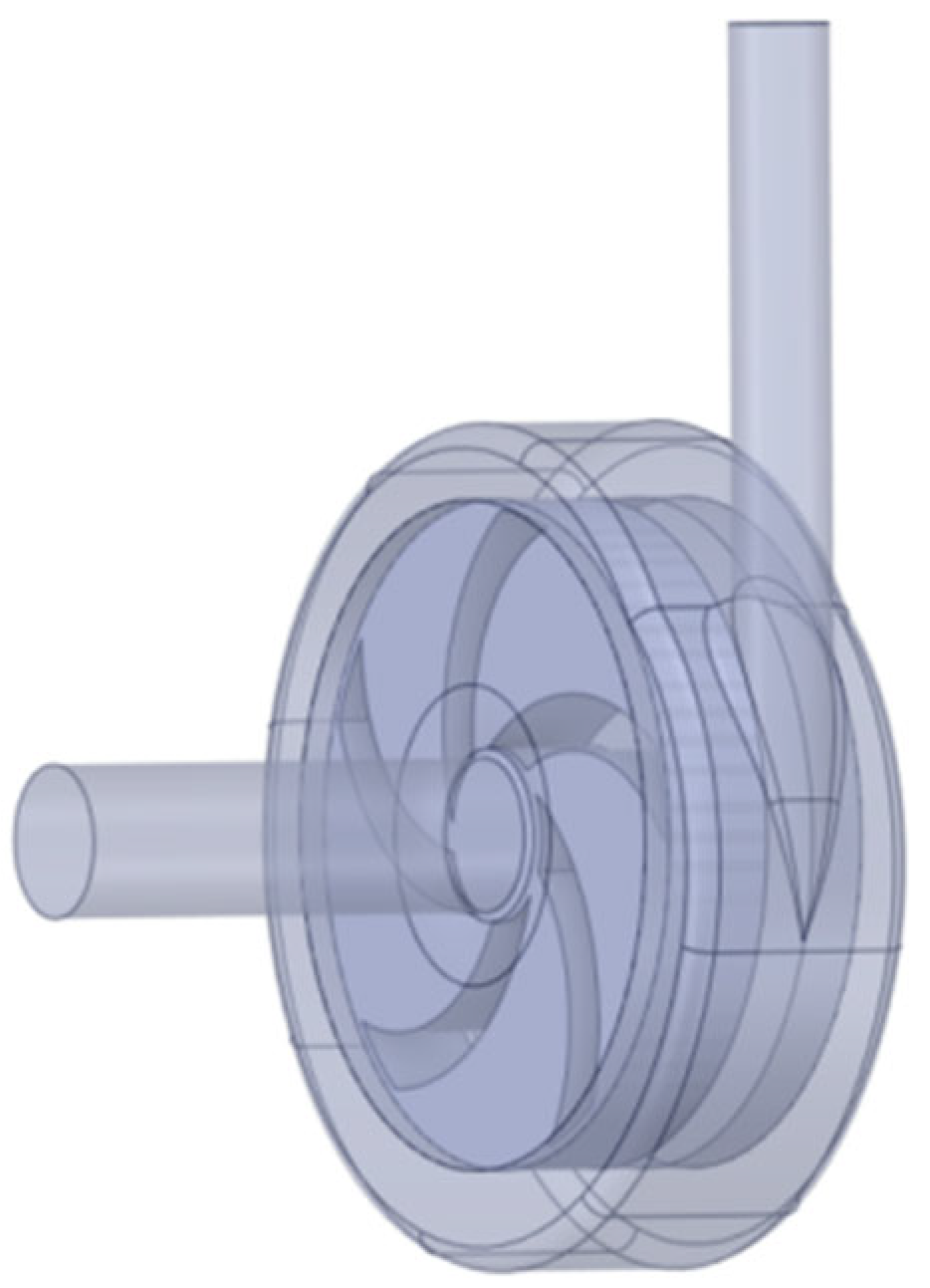
This paper uses a horizontal slurry pump as the experimental subject. The main structural parameters of the slurry pump are shown in Table 1. Based on the geometric parameters of the slurry pump in Table 1, a fluid domain model of the slurry pump was created in SolidWorks 2024 at a 1:1 scale. The modeling primarily consists of two regions: the rotating domain and the stationary domain. The rotating domain encompasses the impeller region, while the stationary domain includes the inlet section, front chamber, rear chamber, volute, and outlet section. To minimize boundary condition interference with the internal flow field, ensure fully developed flow, and enhance the accuracy and stability of the slurry pump’s numerical simulation, the inlet and outlet sections were appropriately extended in this modeling, as shown in Figure 1.

3.2. Mesh Partitioning and Irrelevance Verification

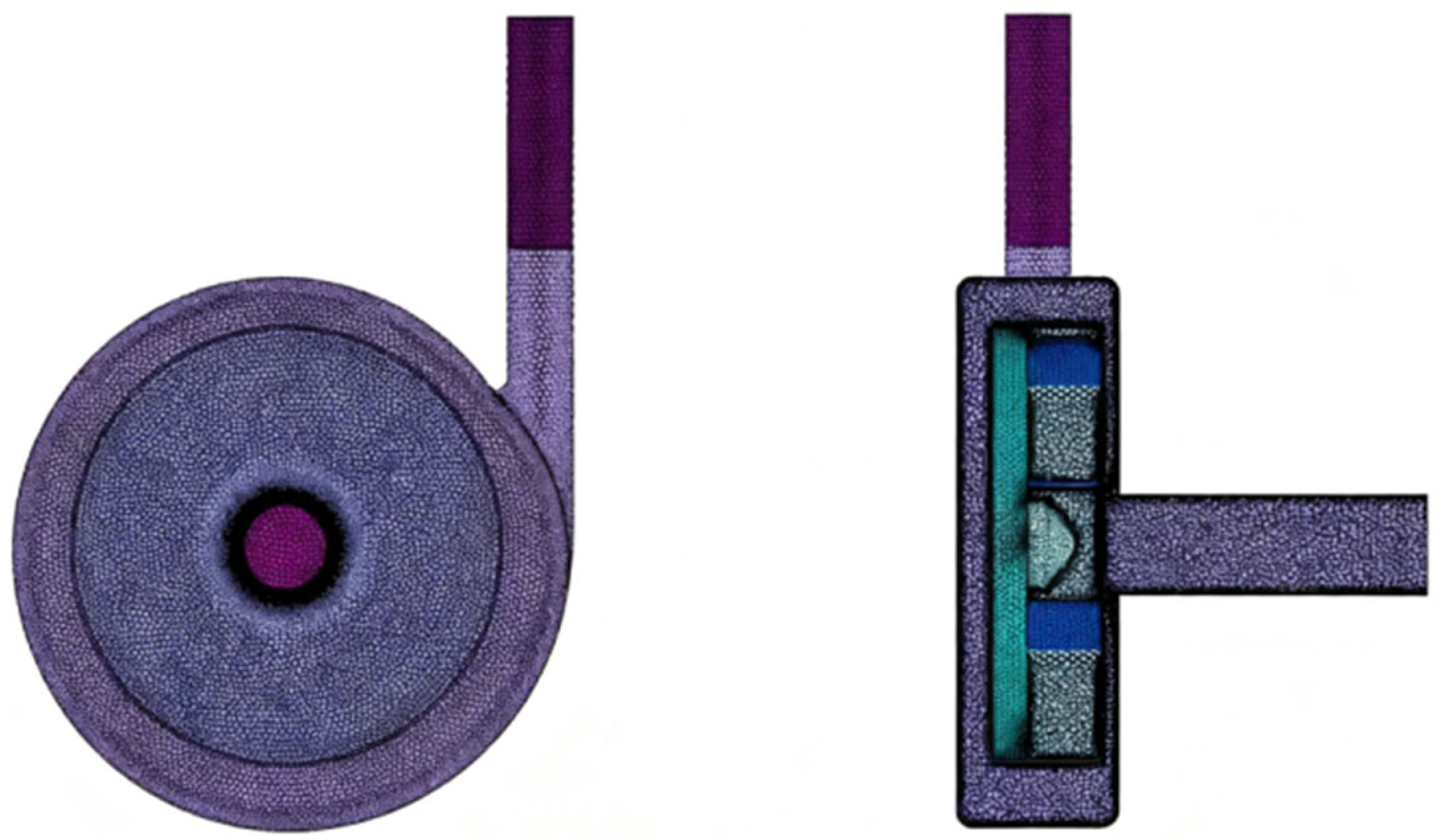
The mesh significantly influences the results of numerical simulations. In this study, the Fluent Meshing software was employed to generate the mesh, with local refinement applied to small geometric regions such as the tongue. Given the complex structure of the slurry pump impeller and volute, a more adaptable polyhedral unstructured mesh was adopted for the fluid domain. The mesh model is shown in Figure 2.
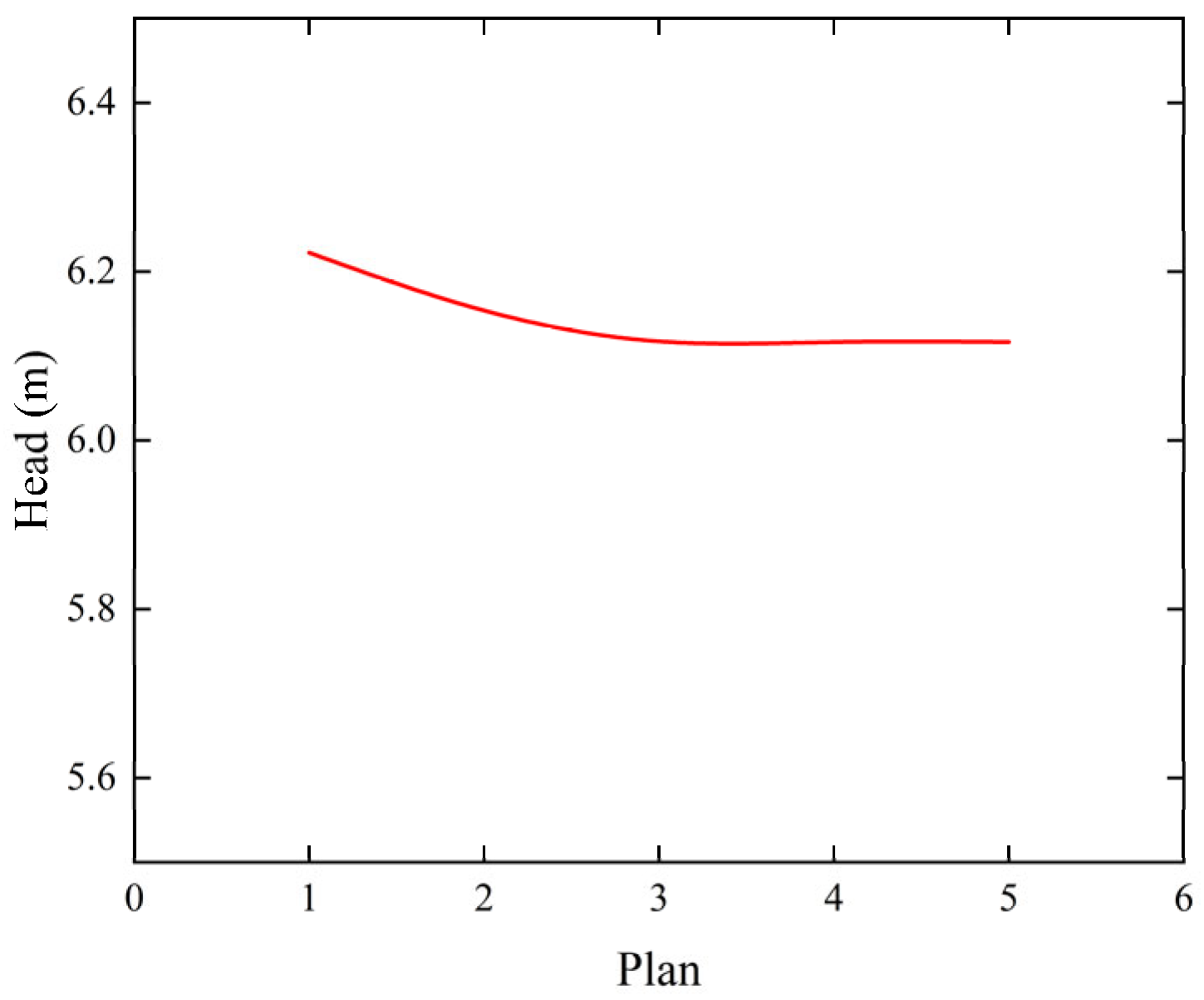
To enhance the accuracy of computational results, this study conducted a mesh independence analysis. Five schemes with progressively increasing total mesh counts were designed, as detailed in Table 2. The sensitivity of head to mesh configuration was evaluated at a flow rate of 8 m3/h and the motor’s rated speed. As shown in Figure 3, the head gradually decreased with increasing mesh count. When the total mesh count reached 576,519, the head fluctuations stabilized. Further increasing the mesh count beyond this point had a negligible effect on the computational results. At this stage, the mesh quality was consistently above 0.3, with the minimum angle being 17°. Considering the need to maintain accuracy while significantly reducing computational cost, the third scheme was ultimately selected for subsequent numerical simulation studies.

3.3. Time-Invariance Verification

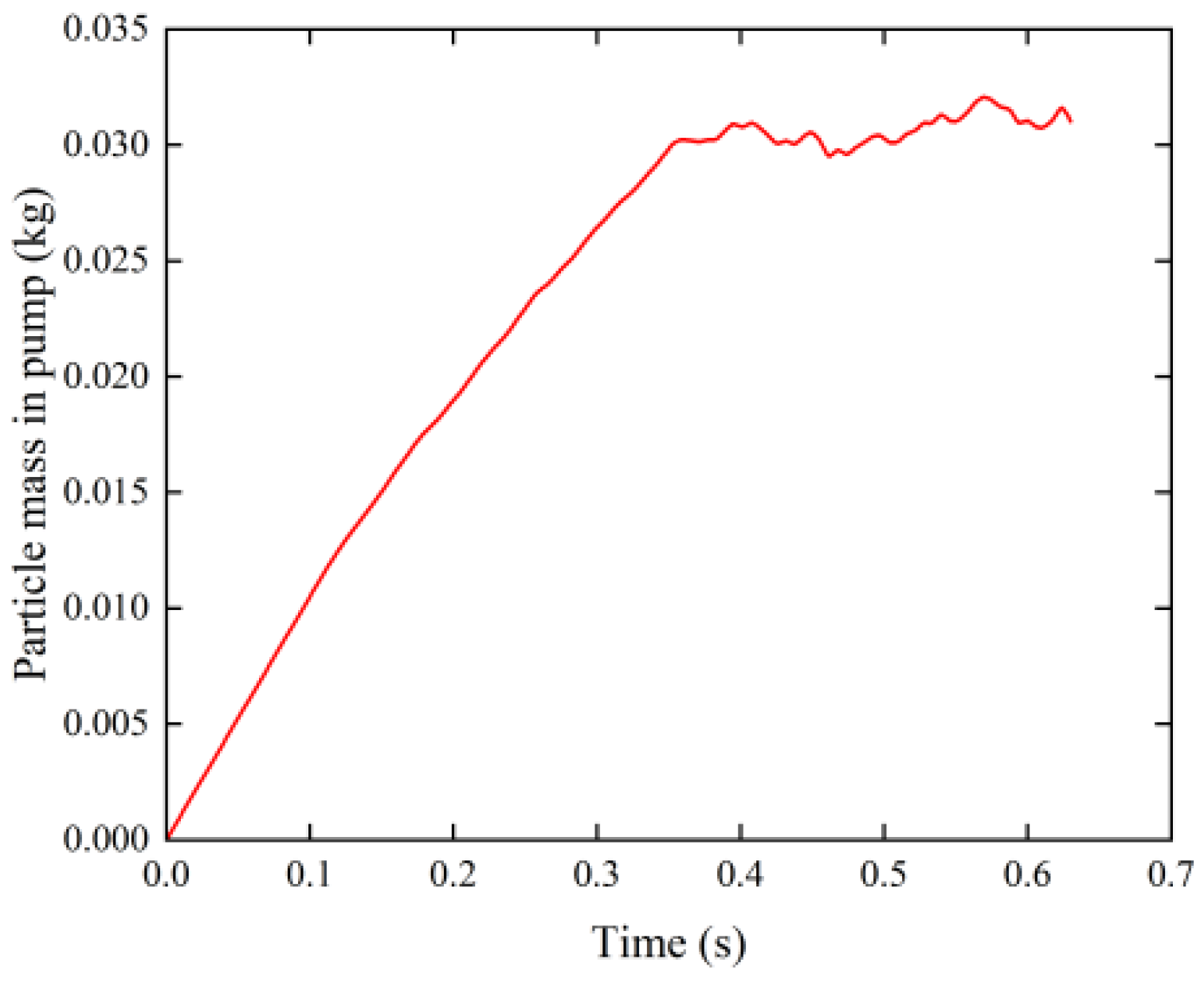
Figure 4 shows the variation curve of particle mass inside the slurry pump over time at a particle size of 1 mm, flow rate of 8 m3/h, and rated speed. The figure indicates that the slurry pump reaches a steady state after 0.35 s. To enhance numerical simulation efficiency while accurately capturing pump wall wear, this study adopts a simulation duration of 0.63 s—equivalent to 15 revolutions of the pump impeller—as the total simulation time for subsequent analysis and discussion of results.

3.4. Numerical Simulation Method

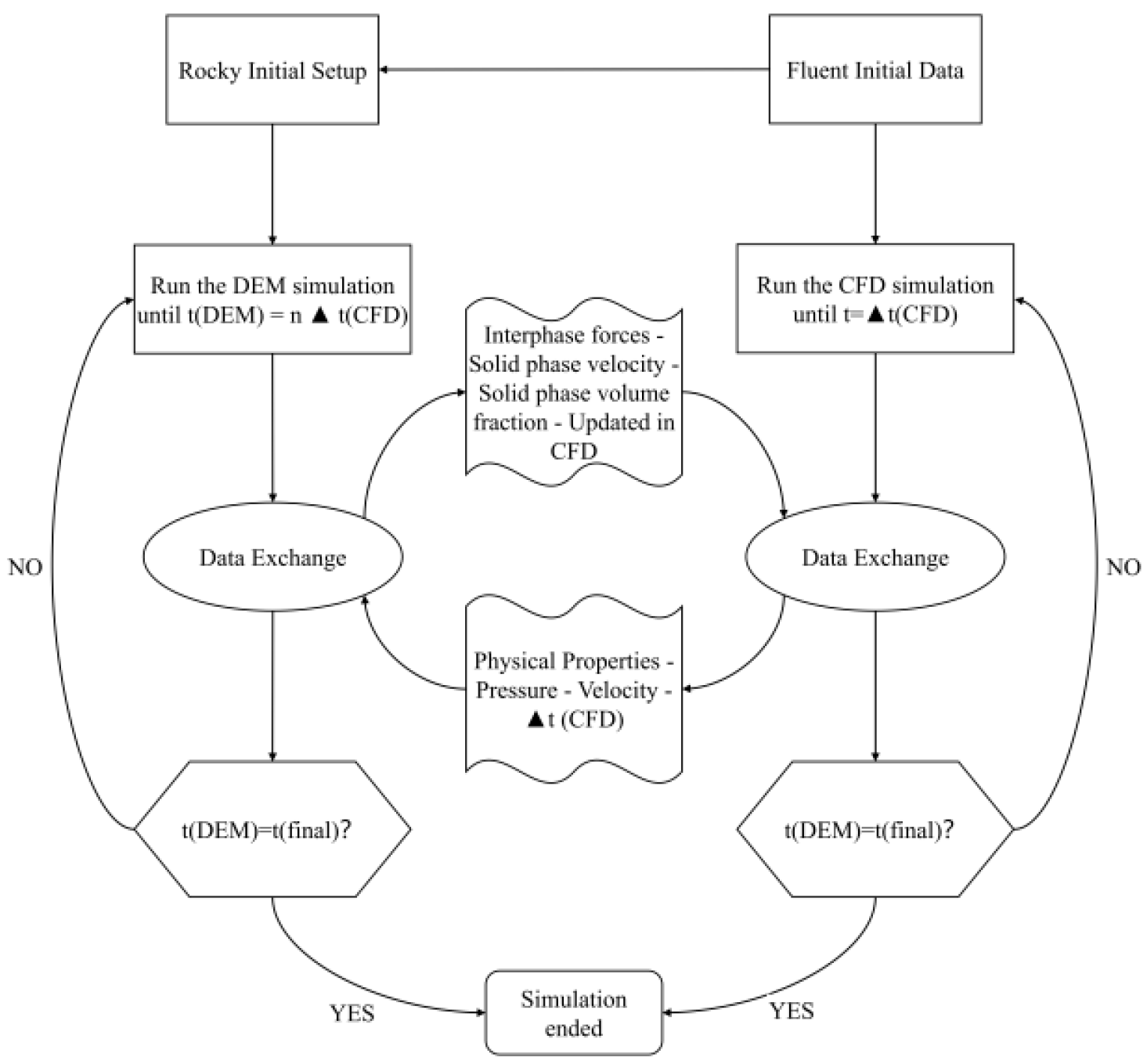
This study employs a CFD-DEM coupled simulation method, which has been widely applied in centrifugal slurry pump research. Ansys Fluent software handles the fluid phase, while Rocky software manages the solid phase. Both software packages offer two coupling modes: unidirectional coupling and bidirectional coupling. Bidirectional coupling accounts for both the influence of the fluid phase on the solid phase and the influence of the solid phase on the fluid phase, resulting in greater accuracy and physical consistency. Furthermore, Cai et al. [23] research indicates that the two-equation k-ε model is particularly sensitive to energy dissipation rates in CFD-DEM simulations. For these reasons, all subsequent numerical simulations in this paper employ the bidirectional coupling method. The bidirectional coupling workflow for Fluent and Rocky is illustrated in Figure 5. First, the DEM solver determines its time step, while the CFD solver calculates the initial flow field and passes it to the DEM solver. Subsequently, the DEM solver calculates the volume fraction of the particle phase and the interphase interaction forces, feeding this data back to the CFD solver. Based on this, the CFD solver adjusts its time step to become an integer multiple of the DEM time step and updates the solid-phase field. The system then initiates parallel computation: while the CFD solver executes one time step, the DEM solver continuously executes multiple time steps. Within each coupling cycle, the DEM solver transmits interaction forces to the CFD solver, which in turn returns updated flow field variables to the DEM solver. This process repeats until the total simulation time is reached.

3.5. Boundary Condition Setup

Fluid phase solutions were computed using Ansys Fluent 2024. The inlet was configured as a velocity inlet, and the outlet as a free-flow outlet. The fluid was defined as liquid water with a density of 998.2 kg/m3 and a viscosity of 0.001006 Pa·s. The region containing the impeller was designated as a rotating domain using a moving mesh model. All other components were set as stationary domains. All walls were defined as no-slip surfaces, with the boundary between moving and stationary domains set as an interface. Gravity was applied at 9.81 m/s2, opposing the flow direction. The turbulence model employed was the RNG k-ε model. Velocity and pressure coupling utilized the SIMPLE algorithm with default face-on format. Second-order face-on matrices were applied for pressure, torque, turbulent kinetic energy, and dissipation rate. The time step is set to 0.0001 s.
Solid-phase solutions were computed using Ansys Rocky 2024. Gravity conditions were identical to those in Fluent. The flow-passing surfaces of the slurry pump studied herein comprised a 316 L stainless steel impeller and a natural rubber liner, with sand particles as the solid phase. The mechanical properties of these three materials are presented in Table 3. Interactions between materials were configured according to Table 4 [24]. When particles move through water, they encounter drag forces that counteract their motion [25]. This study involves both spherical and non-spherical particles, thus employing two drag models: the Huilin-Gidaspow model [26] for spherical particles and the Haider-Levenspiel model [27] for non-spherical particles. Turbulent diffusion was enabled in the Rocky software. The total solution time was set to 0.63 s, with the Archard wear model applied.

3.6. Model Validation

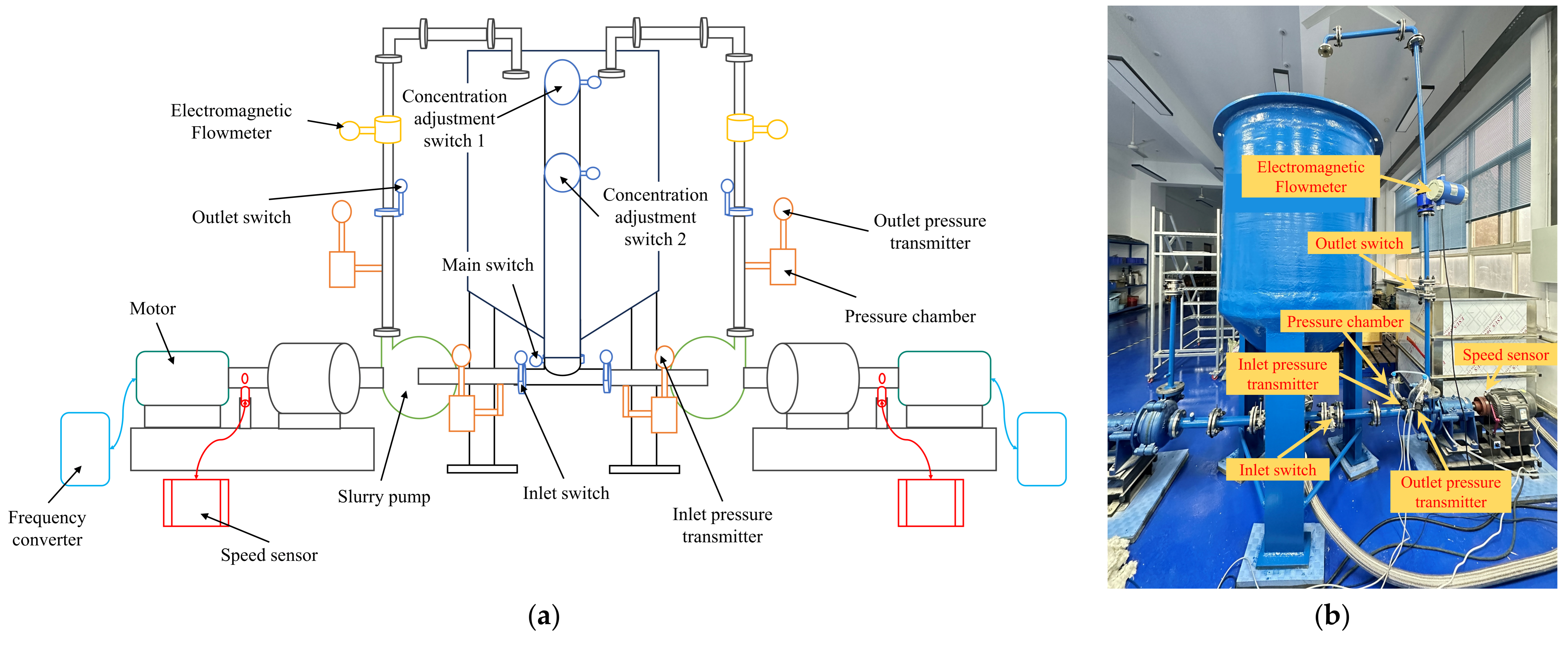
To validate the accuracy of the numerical simulation method, this study designed a closed-loop slurry pump wear test rig, as shown in Figure 6. The test rig primarily consists of a motor, test pump, material cylinder, pressure sensor, speed sensor, flow sensor, frequency converter, and other components.
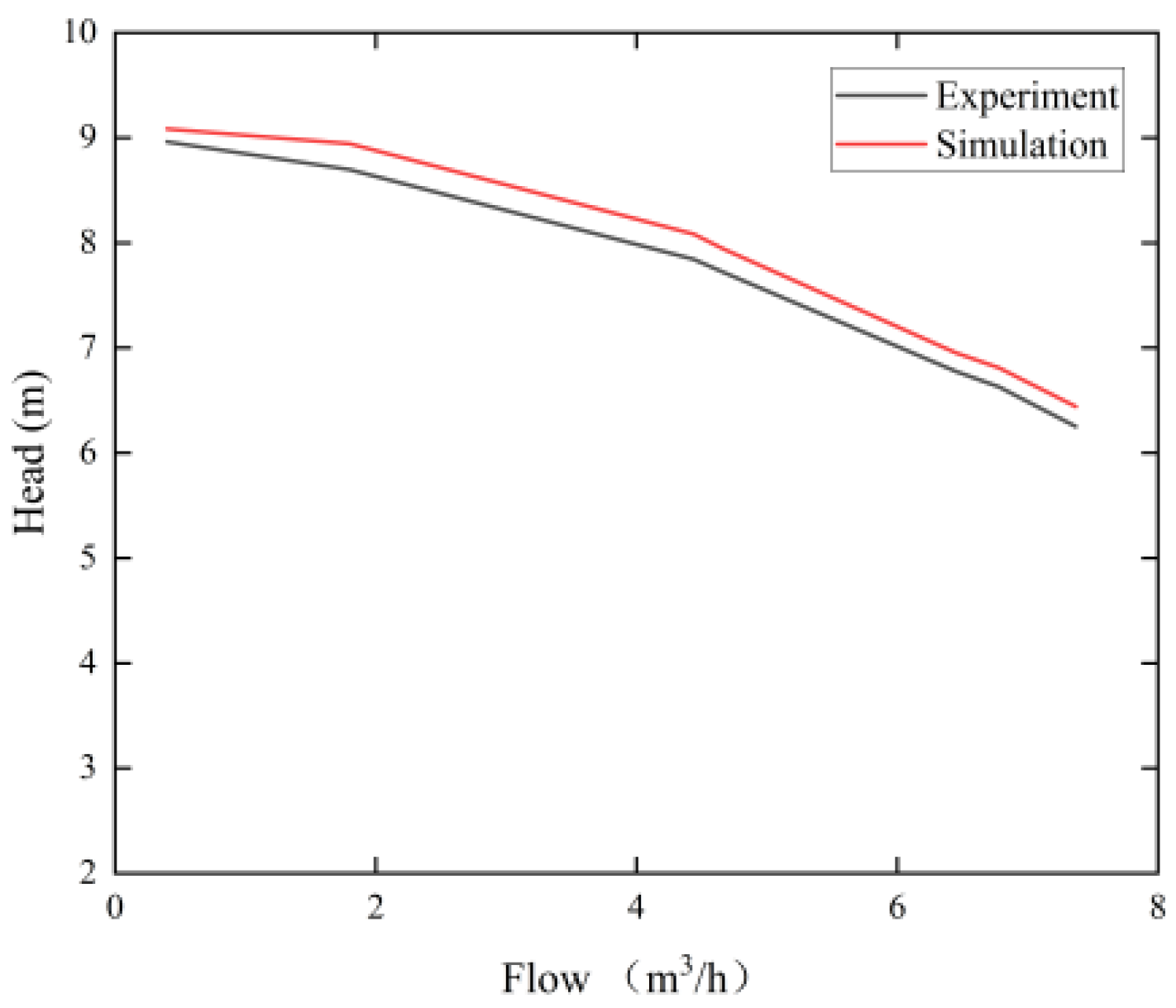
Figure 7 compares experimental and numerical simulation results for the pump head variation with flow rate at 1430 rpm, 1 mm particle size, 0.5% particle concentration, and room temperature. The figure shows that the trends of experimental and simulated results are generally consistent, though the experimentally obtained head values are lower than the simulated values. This discrepancy arises because the numerical simulation does not account for power losses due to volumetric leakage and mechanical friction. Figure 7 indicates that the discrepancy between experimental and numerical simulation results does not exceed 5%, which falls within the acceptable error range.

4. Results Analysis and Discussion

4.1. Effect of Particle Concentration on Wear of Slurry Pump Flow-Through Components

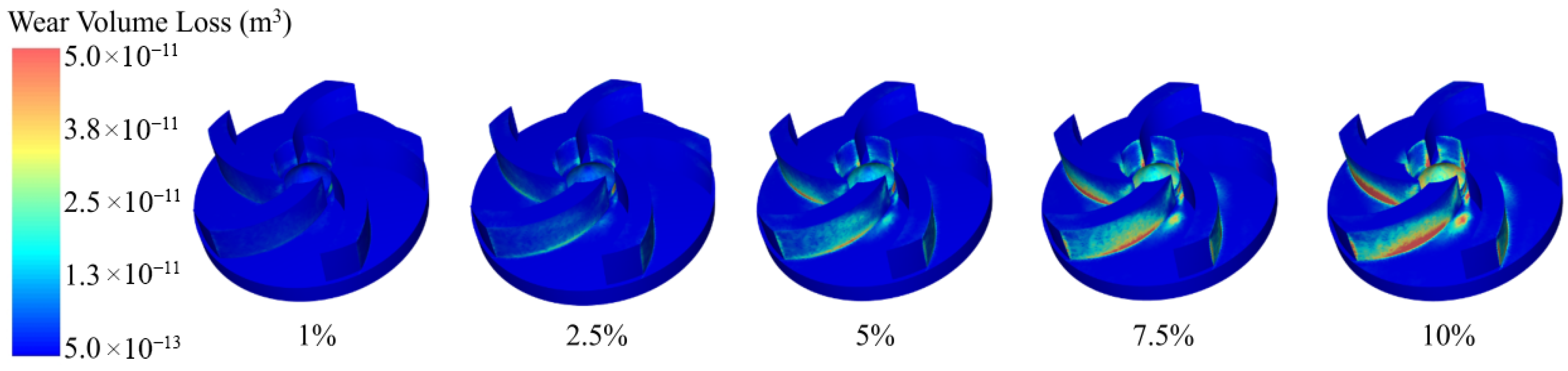
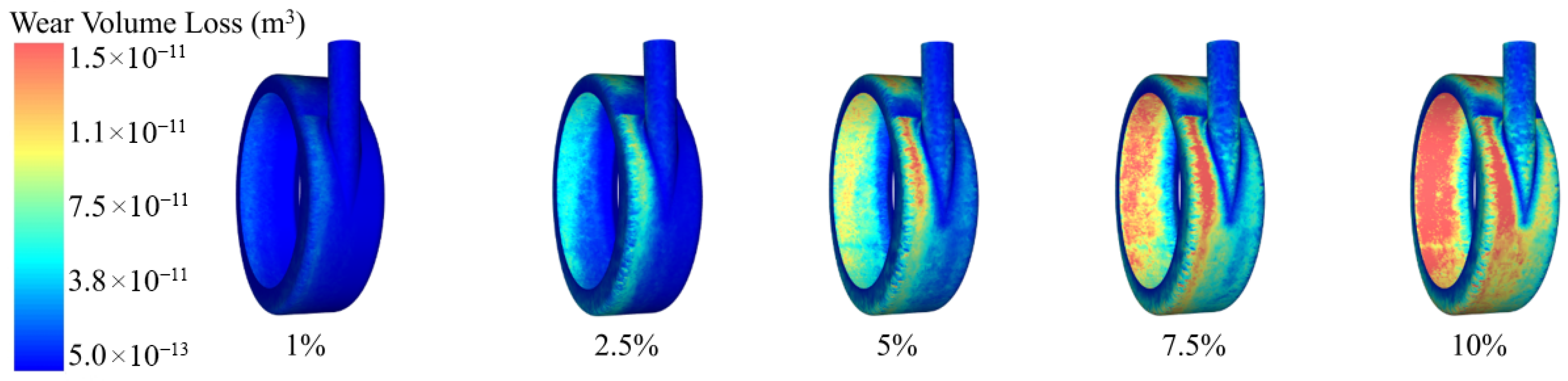
As shown in Figure 8 and Figure 9, spherical particles with a diameter of 1 mm were used at a flow rate of 8 m3/h. Wear on the slurry pump’s flow-through components was compared at five particle mass concentrations—1%, 2.5%, 5%, 7.5%, and 10%—under rated rotational speed. It can be observed that impeller wear progressively intensifies with increasing concentration. Wear locations remain consistent, primarily occurring at the inlet center, the inclined rear section of the blades, the mottled area in the middle of the flow channel inlet, and the banded region on the pressure side. Among these, the most severe wear is observed at the mid-section root of the blades where they connect to the rear cover plate. For the volute, severe wear consistently concentrated on the left wall surface. Wear progressed from mild to severe with increasing concentration. At high concentrations, particle re-entrainment and the uneven transition at Section I caused particle jumping, significantly expanding the wear area at Sections II and III.
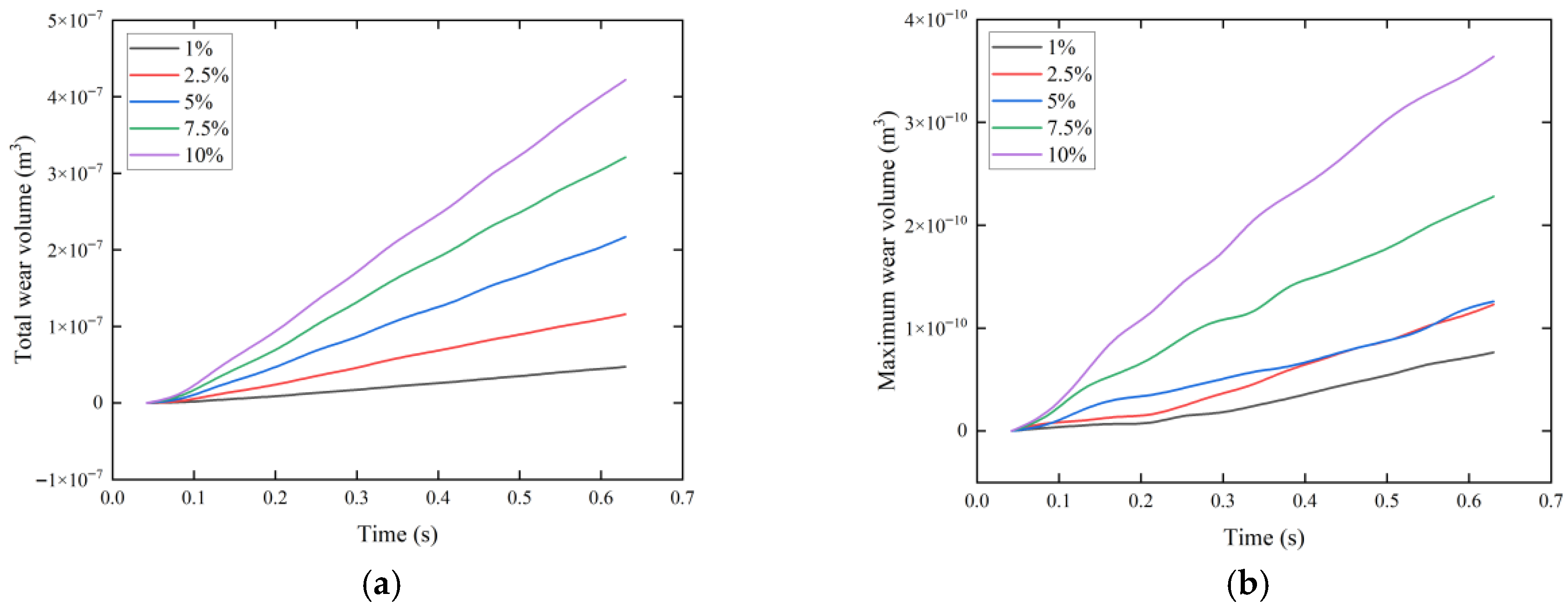
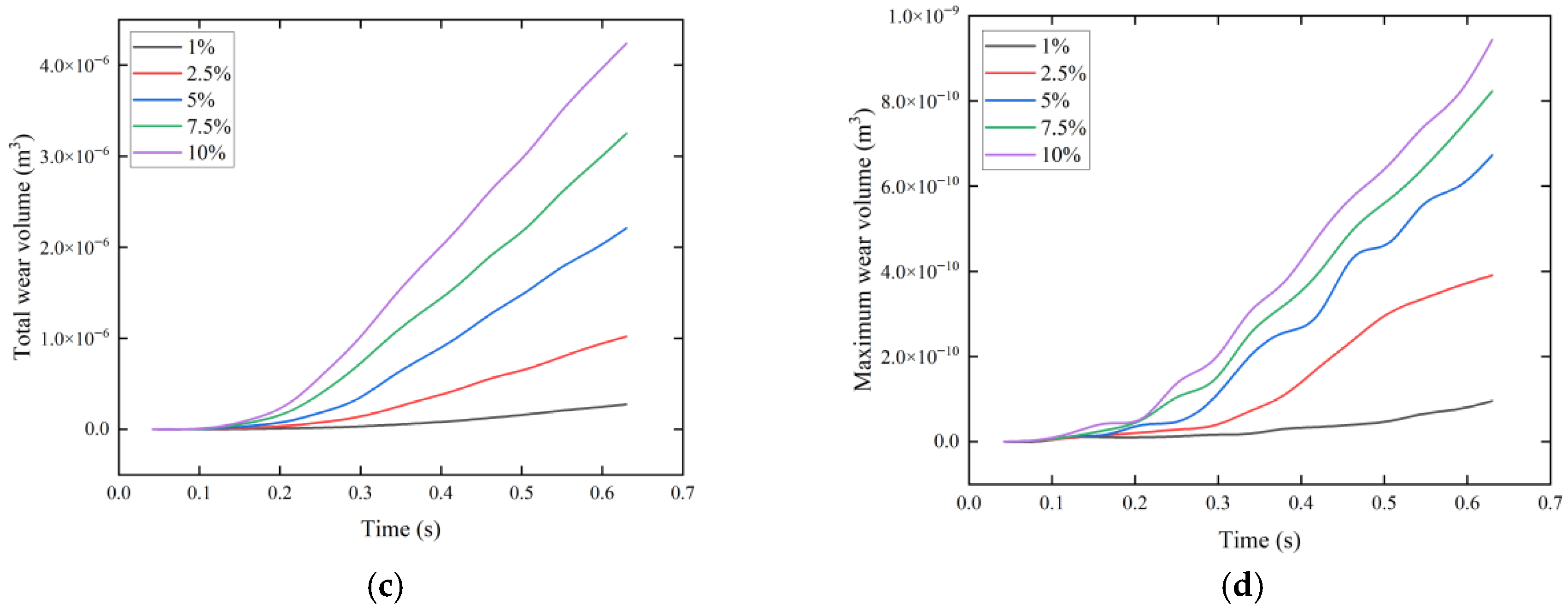
As shown in Figure 10a,b, the total impeller wear steadily increases with concentration, with wear rates remaining relatively consistent across different concentrations. The maximum impeller wear follows the same pattern: within the 1% to 5% concentration range, the maximum wear rate remains low, but begins to rise significantly beyond 5%. By 0.63 s, the maximum wear at 10% concentration is approximately five times that at 1%. As shown in Figure 10c,d, the maximum wear and total wear of the volute also increase with concentration. During the 0–0.3 s phase, the growth of both maximum and total wear is relatively slow. After 0.3 s, the total wear rate stabilizes, while the maximum wear rate exhibits some fluctuation. Collectively, these results indicate that particle concentration significantly influences wear on both the impeller and volute, with high concentrations markedly increasing the risk of wear damage to flow-through components.
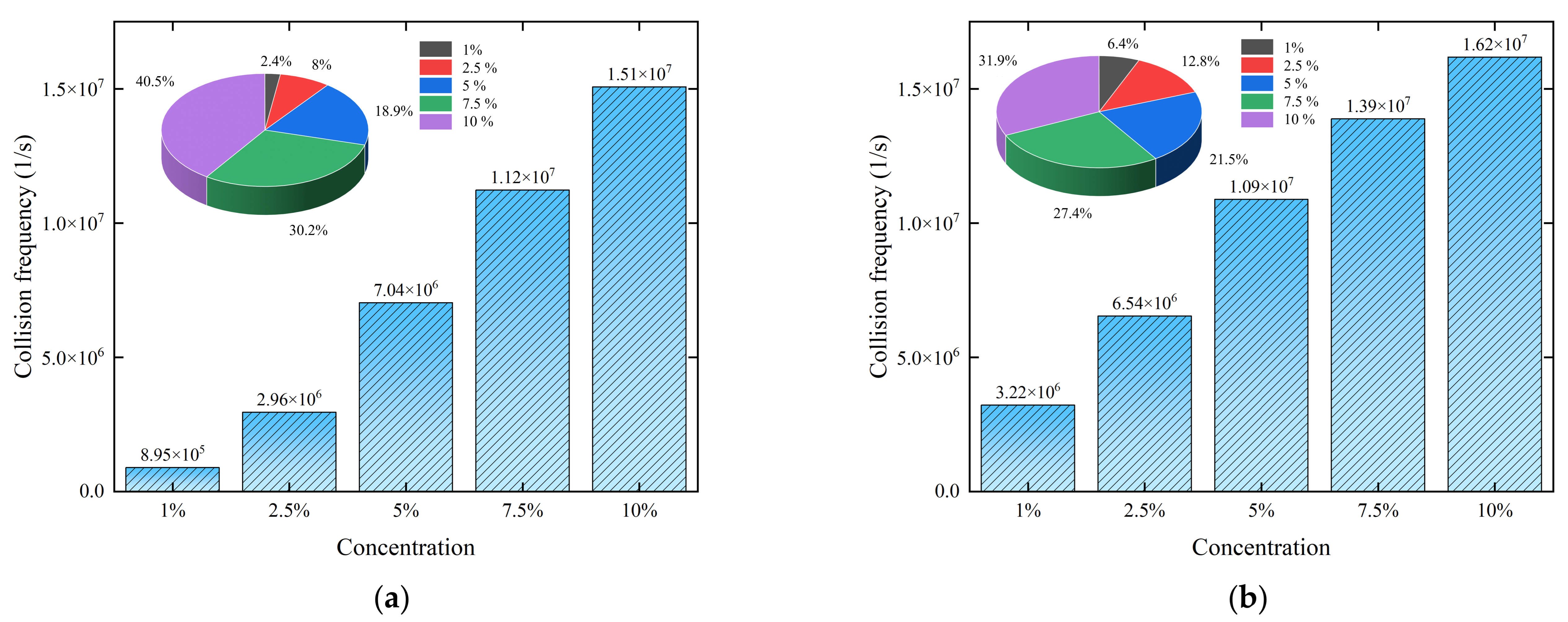
As shown in Figure 11a, as the particle concentration increases from 1% to 10%, the collision frequency of the impeller rises from 8.95 × 10⁵ to 1.51 × 10⁷, representing an approximately 17-fold increase. For every 2.5% increase in concentration, the collision frequency increases by approximately 10%. Figure 11 indicates that both the volute and impeller collision frequencies exhibit an approximately linear increase with concentration. However, the volute collision frequency remains consistently higher than that of the impeller. Under otherwise constant conditions, collision frequency serves as an indirect indicator of particle concentration’s impact on pump wear.

4.2. Effect of Particle Size on Wear of Slurry Pump Flow Components

To investigate the impact of single-size and mixed-size particles on the wear of slurry pump flow-through components, this study selected four single-size particles—0.5 mm, 1 mm, 1.5 mm, and 2 mm—based on the pump’s actual operating conditions. In ROCKY 2024, particle size distribution was randomly distributed within the specified range. Therefore, to characterize the broad particle size distribution of 0.5–2 mm, this study selected two boundary particle sizes and one median particle size within this range (i.e., 0.5 mm, 1.25 mm, and 2 mm) to construct a mixed particle system composed of these three particle sizes at different mass ratios. The specific particle size distribution is shown in Table 5.
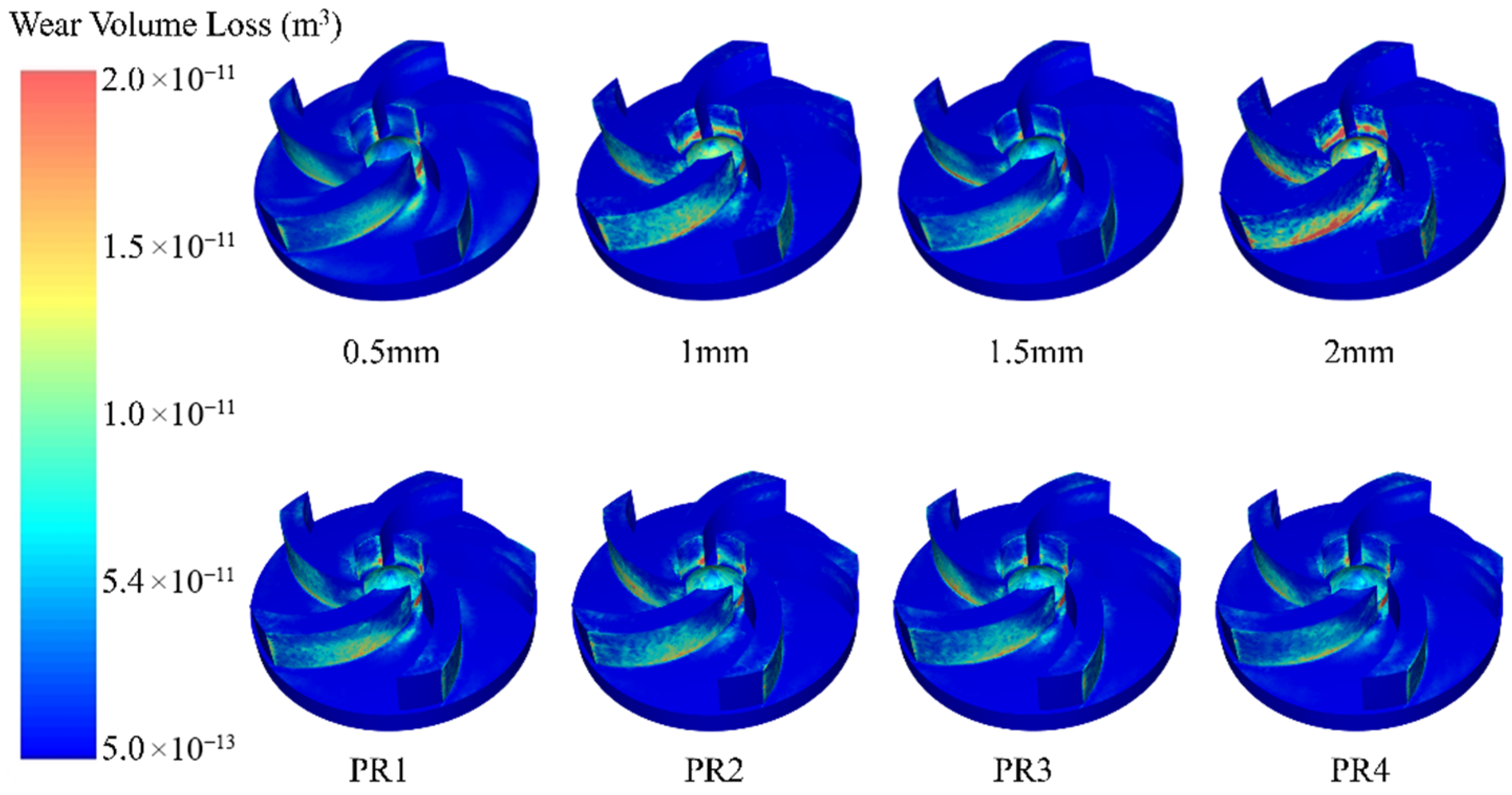
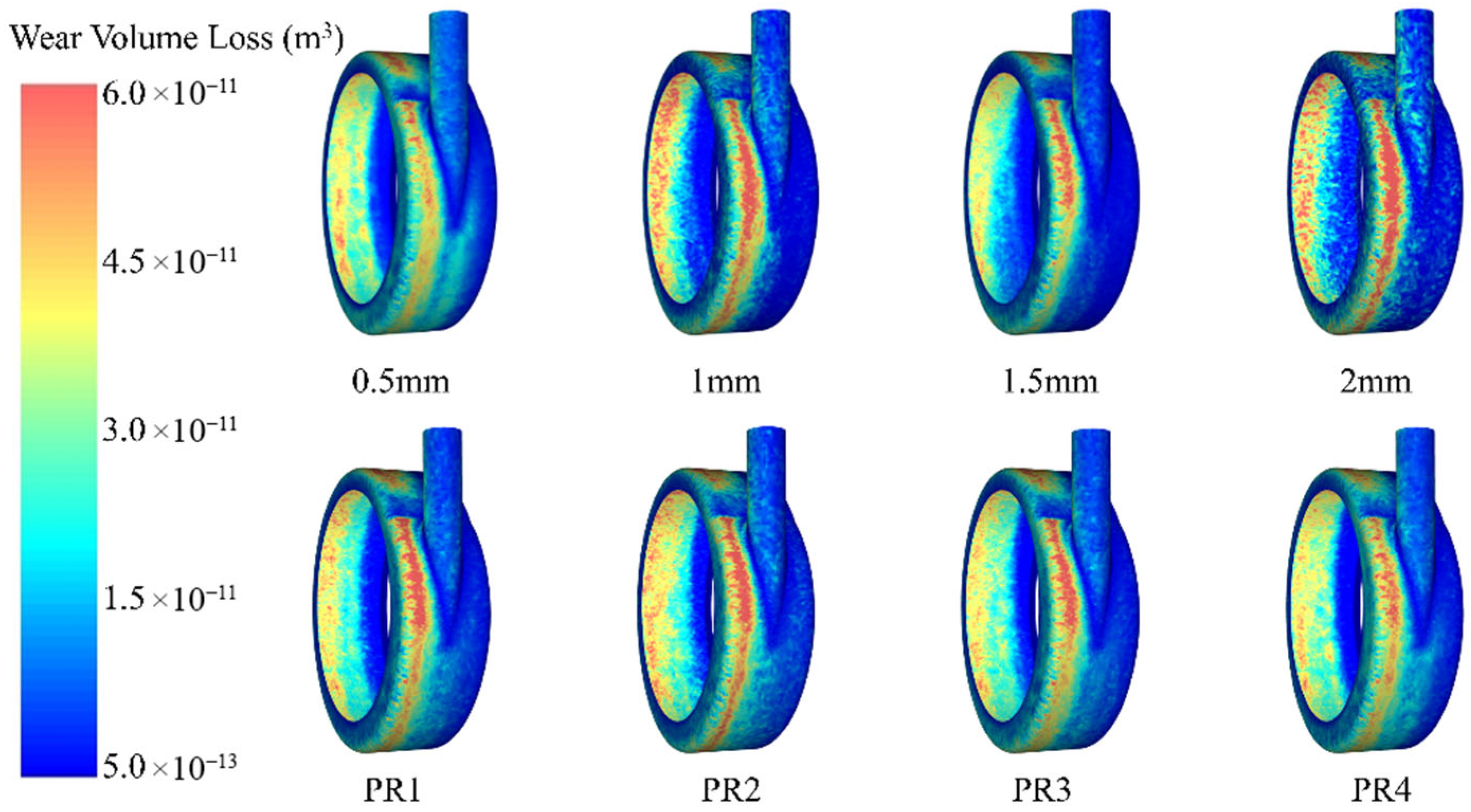
As shown in Figure 12 and Figure 13, under conditions of 2.5% spherical particle concentration, 8 m3/h flow rate, and motor rated speed, the impact of single-size particles versus mixed-size particles on wear of the slurry pump’s flow-through components was compared and analyzed. Results indicate that the wear zones on the impeller and volute remain largely consistent across different particle conditions. Due to the greater inertia and kinetic energy of large particles, coupled with the higher number and greater tendency of small particles to migrate with the fluid flow, the wall surface gradually exhibits a mottled distribution pattern as particle size increases. Under mixed particle conditions, the wear morphology of the impeller showed no significant change. However, for the volute casing, as the proportion of smaller particle size fractions in the mixed particles increased, the wall surface wear distribution became markedly more uniform and smoother.
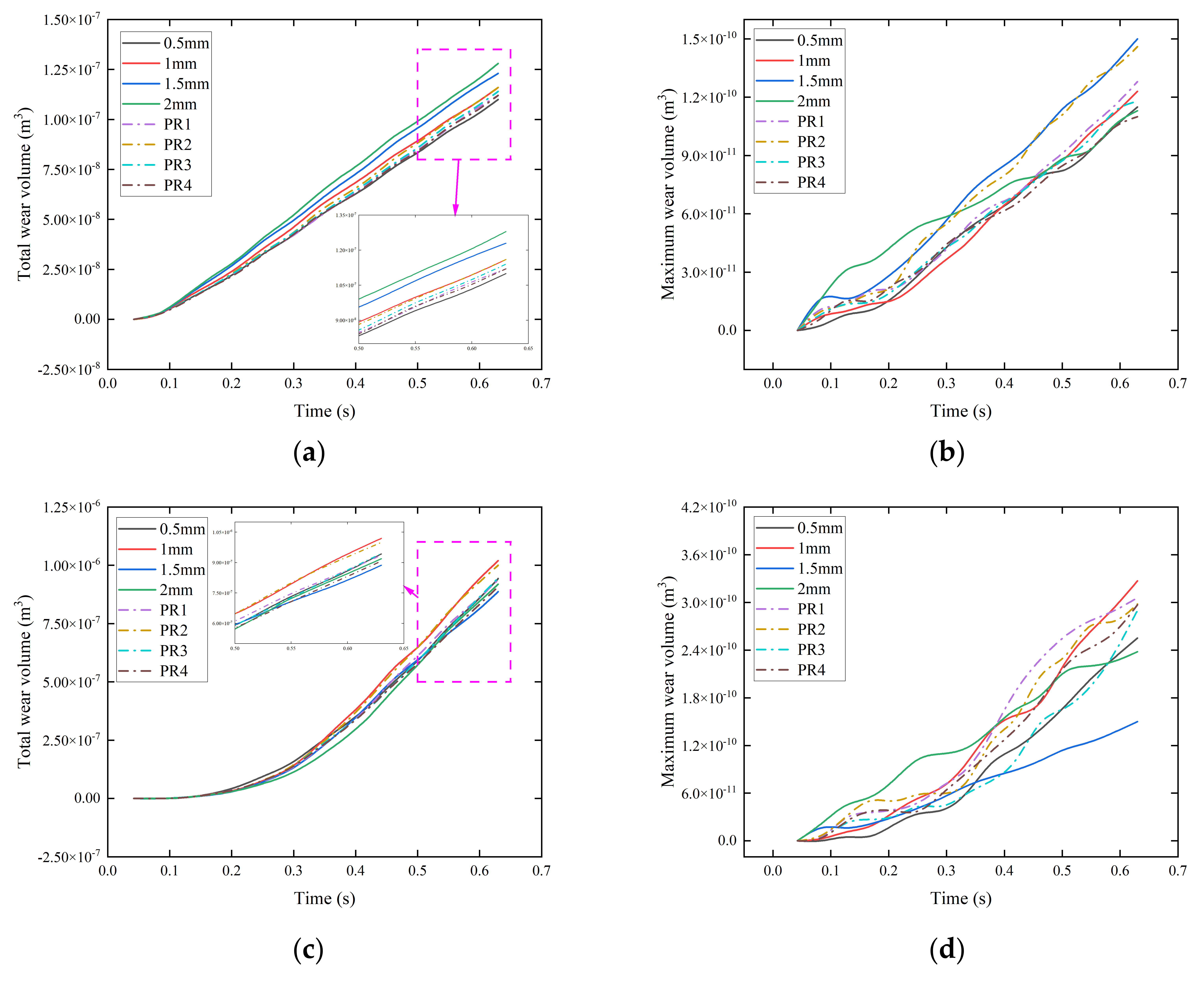
Figure 14 illustrates the variation trends in impeller and volute wear under different particle size conditions. As shown in Figure 14a, despite the numerical dominance of 0.5 mm particles, they cause the lowest total impeller wear. Total impeller wear progressively increases with particle size, while using mixed particles can mitigate the wear impact of larger particles to some extent. Figure 14b indicates that under single-particle-size conditions, 1.5 mm particles cause the most severe localized impeller wear, followed by 1 mm particles. Under mixed-particle-size conditions, PR2 particles induce the most significant localized wear, followed by PR1 particles. Based on Figure 14b, it can be further inferred that particles of medium size (approximately 1.5 mm) exhibit relatively stable trajectories due to the combined effects of fluid drag and inertial forces. These particles continuously impact the same region of the impeller, leading to accelerated localized wear.
As shown in Figure 14c, under single-particle-size conditions, 1 mm particles cause the most severe total wear on the volute, followed by 0.5 mm particles. This is because particles in this size range are more susceptible to flow field disturbances and are present in greater numbers, readily inducing secondary flow in the volute tongue area and thereby exacerbating wear. For mixed particles, total volute wear increases with the proportion of larger particles. This occurs because larger particles possess higher kinetic energy, making their impact on the wall surface dominant. Large particles not only create microscopic grooves and protrusions on the material surface after impact, significantly increasing surface roughness, but also facilitate rolling and cutting of smaller particles within already damaged areas, thereby amplifying overall wear. Figure 14d indicates that under single-particle conditions, the trend of maximum wear aligns closely with total wear. However, under mixed-particle conditions, introducing small-to-medium particles (e.g., 0.5 mm and 1 mm) intensifies localized wear. This occurs because areas initially damaged by larger particles become more susceptible to sustained impact from smaller particles, leading to further deterioration of localized wear.
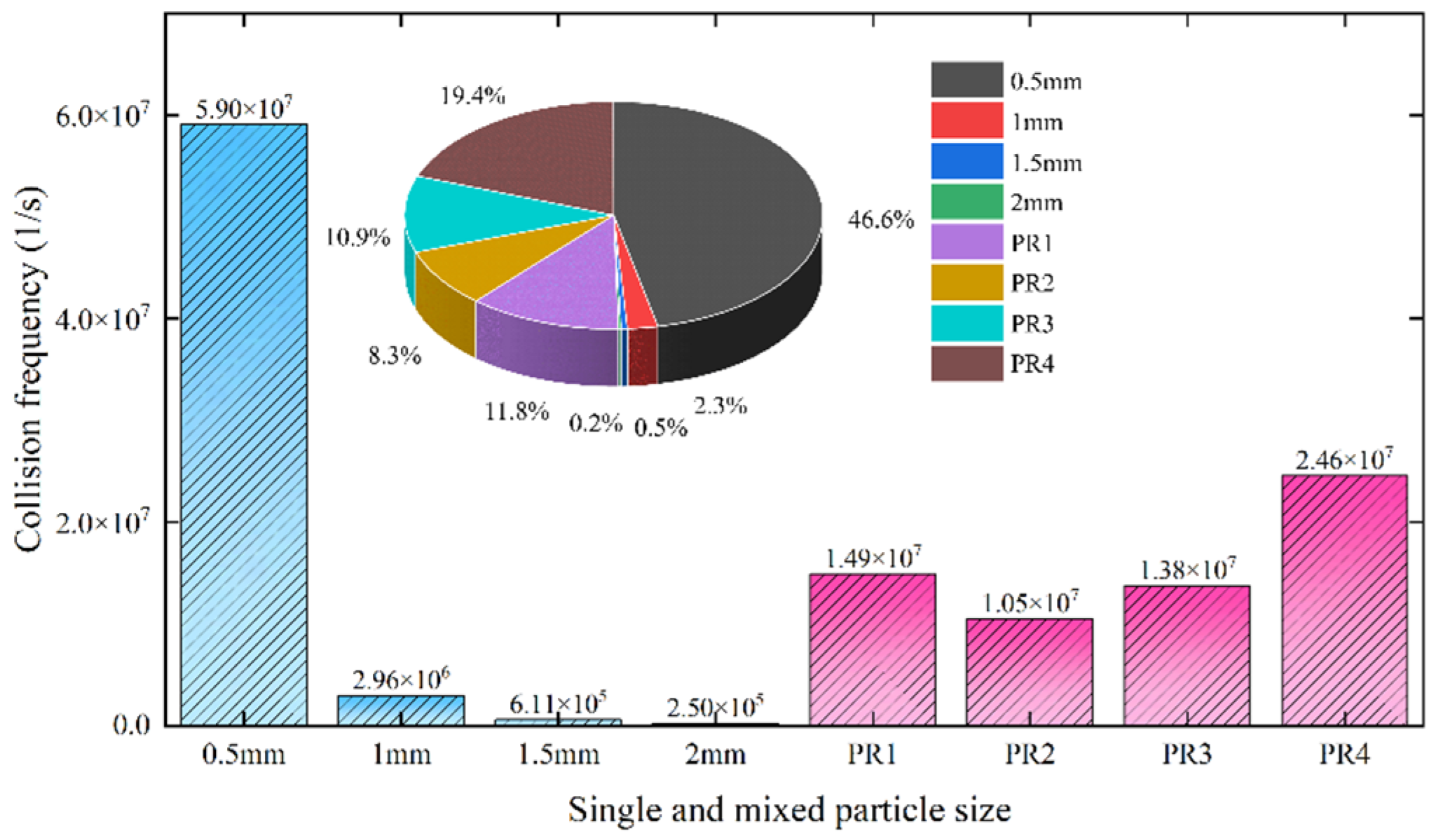
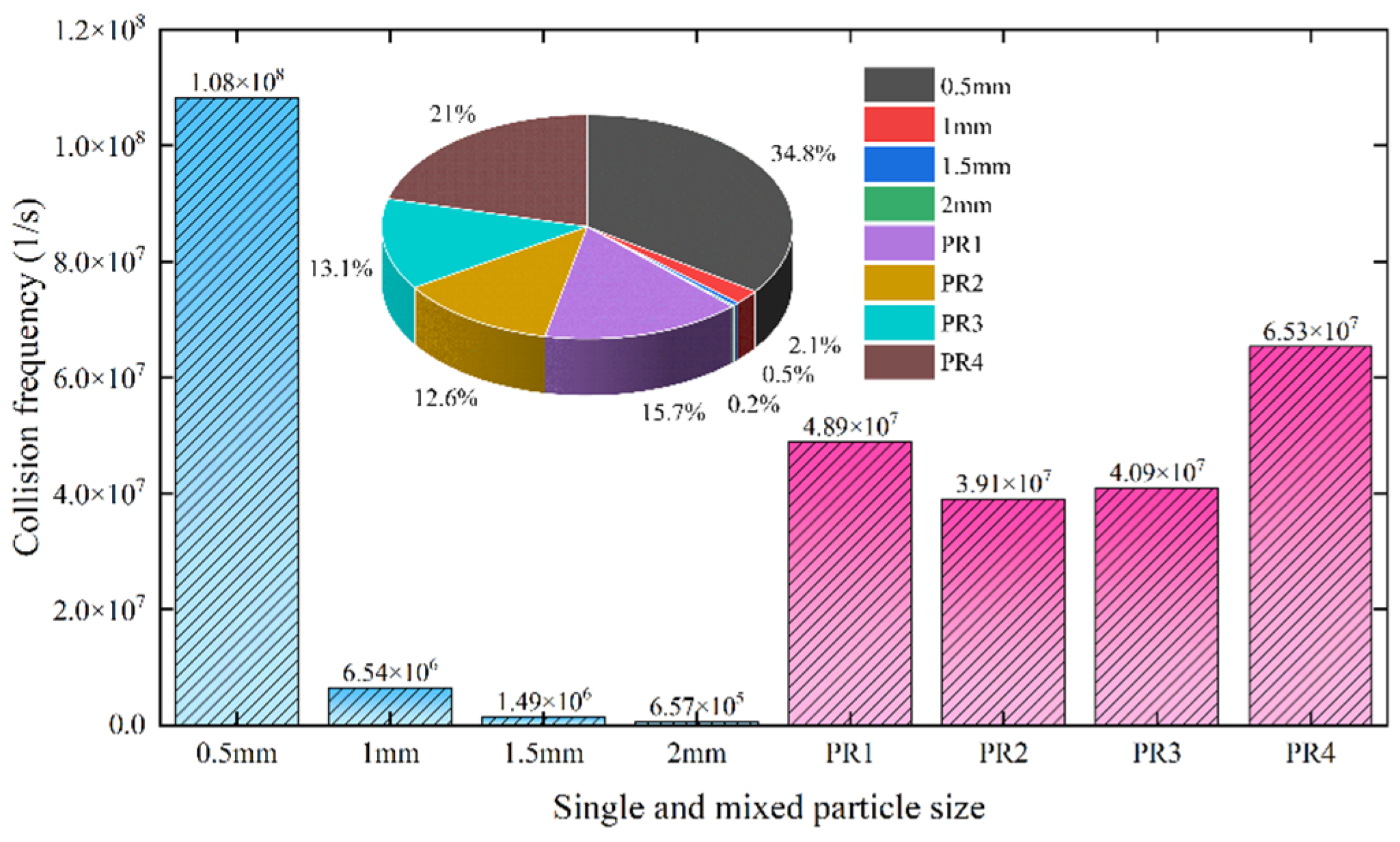
As shown in Figure 15 and Figure 16, the collision patterns of particles with the impeller and volute exhibit consistent trends. Under identical concentration conditions, a higher proportion of smaller particles correlates with increased collision frequency against surfaces. Collisions of 0.5 mm particles with the impeller reached 5.9 × 10⁷, accounting for 46.6% of the total, while 2 mm particles only reached 2.5 × 10⁵, representing 0.2%. The collision frequency distribution pattern with particle size for the volute was consistent with that of the impeller. This significant difference primarily stems from two aspects: First, the disparity in particle numbers—the quantity of 0.5 mm particles reached 380,000, far exceeding other sizes; Second, differences in motion characteristics: smaller particles, with lower mass and better tracking ability, diffuse widely under turbulent effects and collide frequently with surfaces. Larger particles, with greater inertia and stable trajectories, exhibit significantly reduced collision frequencies. The collision frequency of different particle sizes with surfaces also influences the wear morphology of flow-passing components. Although the high-frequency collisions of 0.5 mm particles involve lower individual impact energy, their cumulative effect results in relatively uniform wear distribution. Conversely, larger particles like 1.5 mm and 2 mm, despite lower collision frequency, deliver greater kinetic energy per impact, readily causing localized wear. This ultimately manifests as progressively patchy, non-uniform wear on the wall surface as particle size increases.
In summary, particle size is the key factor influencing both the collision frequency and wear morphology of slurry pump flow-through components. Therefore, in practical engineering applications, the wear-resistant design and material selection of flow-through components should be optimized based on the particle size distribution characteristics of the conveyed medium. Particular attention should be paid to the impact damage caused by large particles to localized areas.

4.3. Effect of Particle Shape on Wear of Slurry Pump Flow Components

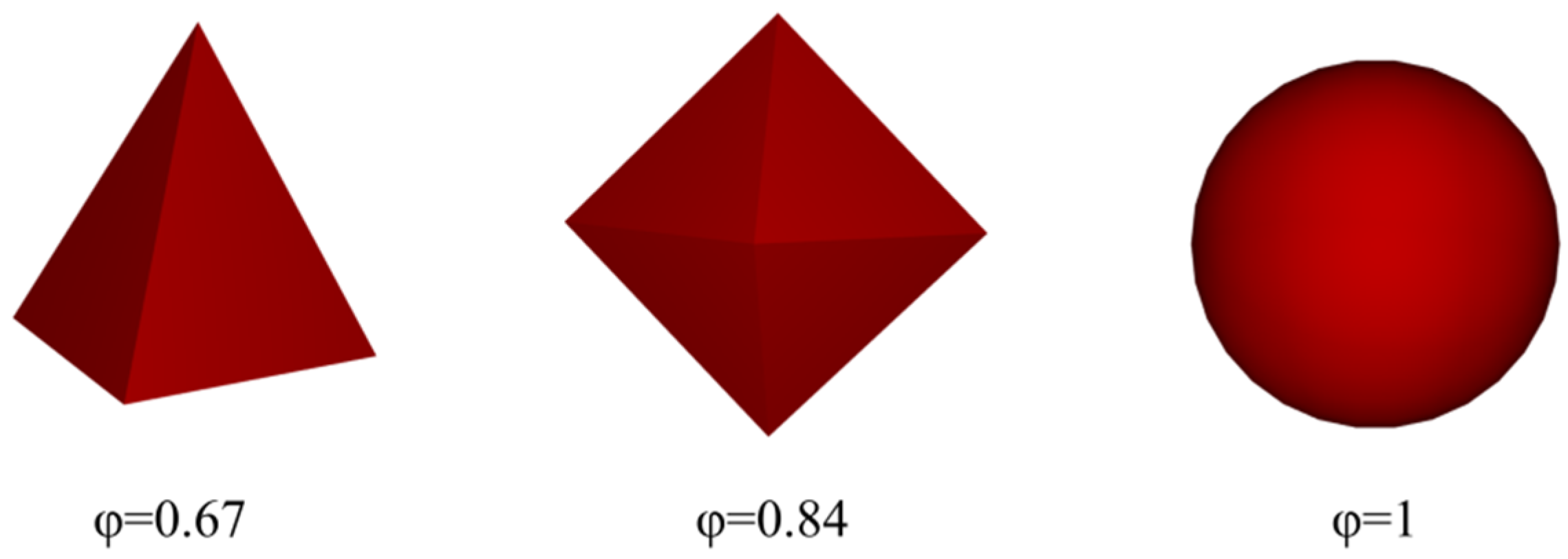
The particles transported by slurry pumps exhibit diverse shapes. To investigate the impact of different particle geometries on pump wall surfaces, this study references Zhou et al. [28] summary of sand and gravel shapes. Based on Equation (1), three particles with distinct sphericity values—0.67, 0.84, and 1—were modeled. Higher sphericity values indicate greater proximity to a spherical shape. The particle geometries are illustrated in Figure 17.
φ = A s p h A p
where A s p h is the surface area of a sphere with the same volume as the particle, and A p is the actual surface area of the particle.
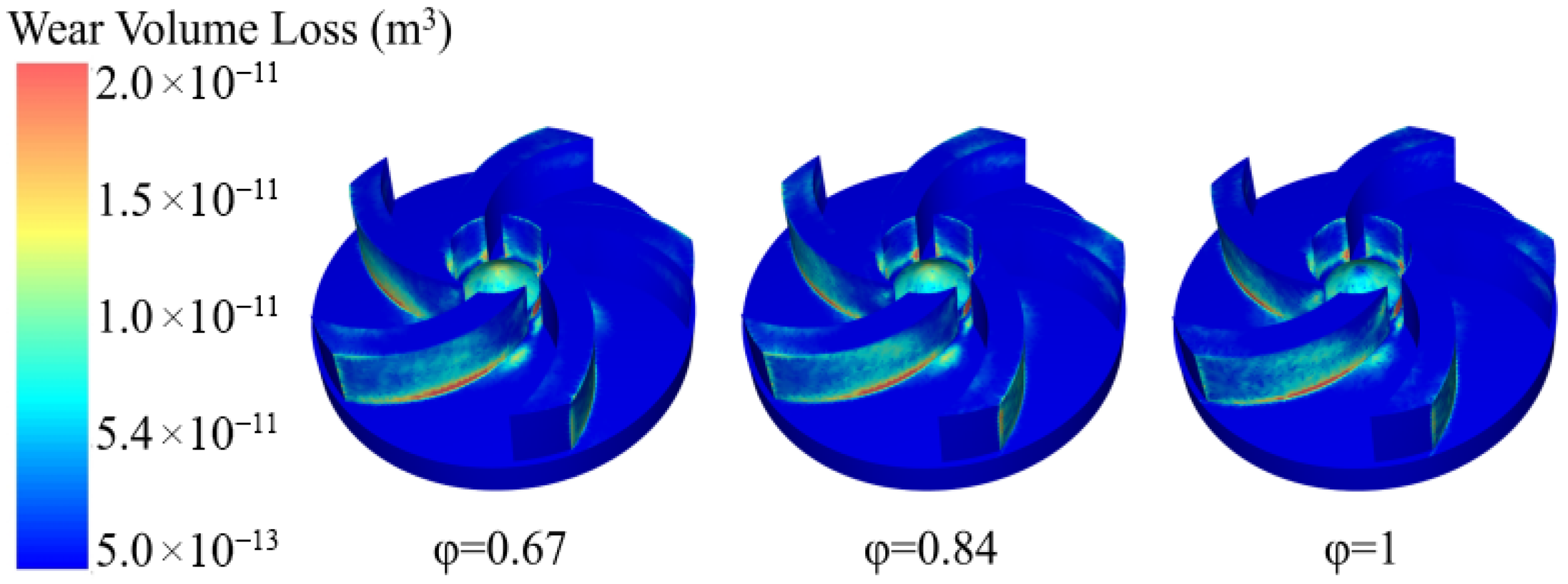
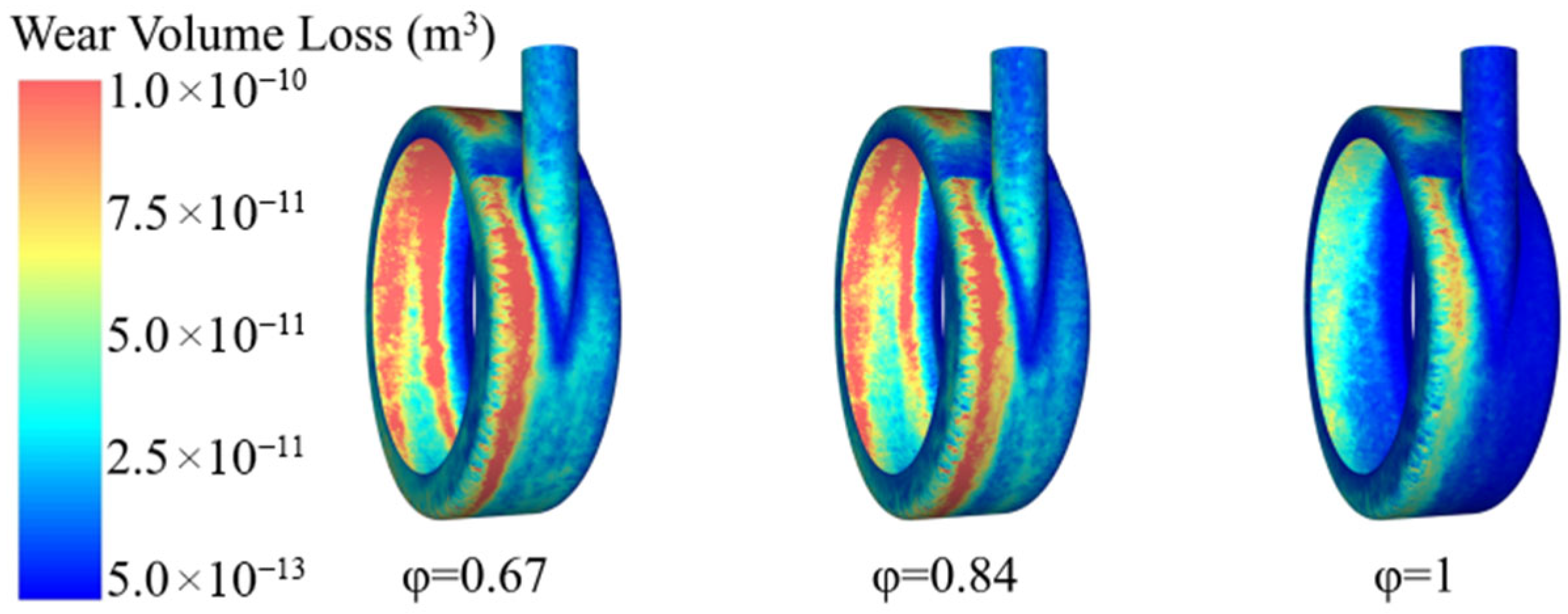
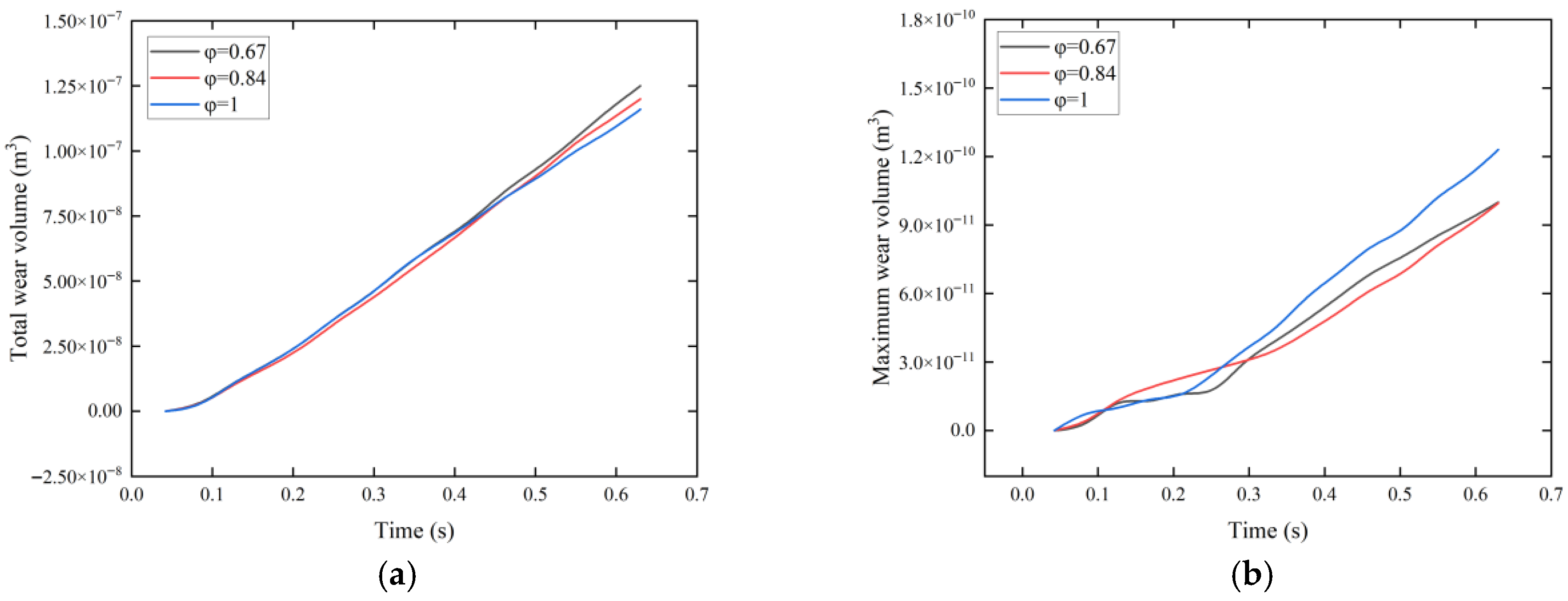
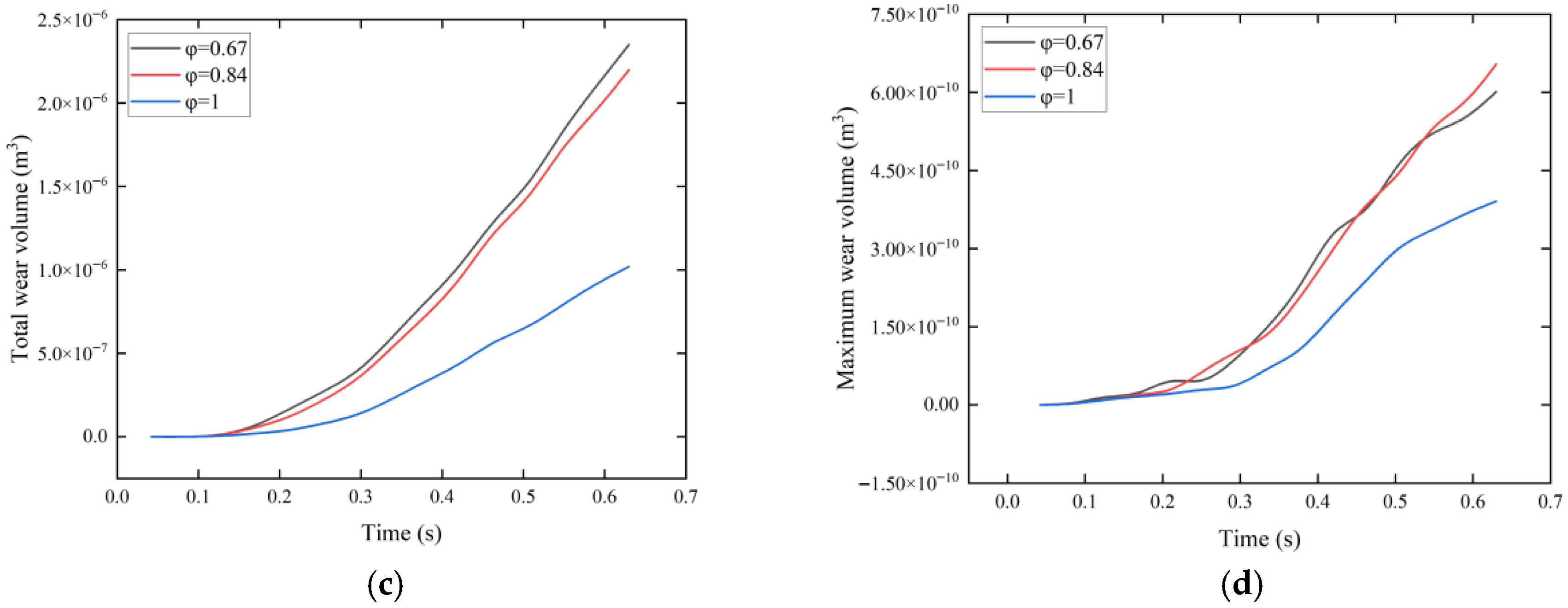
As shown in Figure 18 and Figure 19, the effect of particle shape on wear of the slurry pump’s flow-through components is illustrated under conditions of flow rate 8 m3/h, particle concentration 2.5%, uniform particle volume, and rated rotational speed. It can be observed that impeller wear is concentrated at the inlet center and the middle-rear section of the blades, with particle shape having negligible influence on this distribution. However, volute wear significantly decreased with increased particle sphericity. The most severe wear occurred at σ = 0.67, with patchy wear appearing on the left side and outlet area. Wear intensity reduced at σ = 0.84, with a largely consistent distribution pattern. At σ = 1, wear further diminished, showing only slight traces on the right side. The results indicate that particle shape significantly affects volute wear but has a minor impact on the extent and distribution of impeller wear.
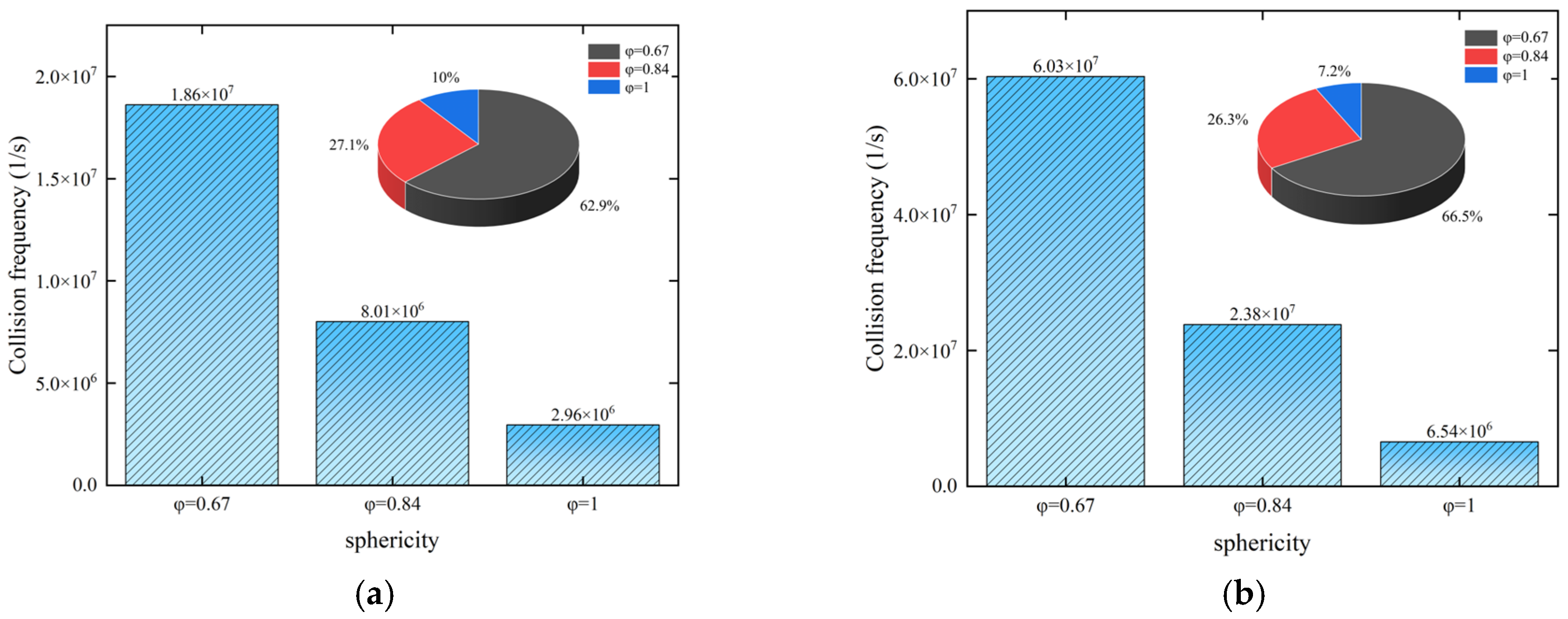
As shown in Figure 20, the impact of particles with different sphericity on impeller wear varies significantly. Figure 20a indicates that total impeller wear decreases with increasing sphericity. This occurs because particles with low sphericity (φ = 0.67) possess sharp edges, generating stronger stress concentration and micro-cutting effects during collisions, resulting in greater material removal. As shown in Figure 20b, particles with φ = 1 cause the most severe wear. The wear rate of φ = 0.84 particles exceeds that of φ = 0.67 particles, indicating that higher sphericity leads to more stable particle trajectories. This stability facilitates repeated impacts on the same region, intensifying localized wear. As shown in Figure 20c, in terms of total wear volume, particles with φ = 0.67 caused the highest total wear on the volute, followed by φ = 0.84, with φ = 1 exhibiting the lowest wear. The wear volume and wear rate in the first two conditions were significantly higher than those of spherical particles. This is because particles with lower sphericity exhibit sharper edges, and their irregular shapes cause them to rotate and change direction more readily within the flow field. This significantly increases their collision frequency with the wall surface, as shown in Figure 21. Consequently, the total wear volume of the volute increases with increasing sphericity. As shown in Figure 20d, particles with sphericity φ = 0.84 cause the most severe localized wear on the volute, primarily concentrated in the left-hand region. Conversely, particles with φ = 1 exhibit the least wear severity and the lowest wear rate. These results indicate that reducing particle sphericity generally exacerbates localized wear. However, the severity of wear does not increase monotonically with decreasing sphericity but depends on the synergistic interaction between particle sharpness and its motion trajectory.
As shown in Figure 21, as the particle sphericity increases from φ = 0.67 to φ = 1, the impeller collision frequency decreases from 1.86 × 10⁷ to 2.96 × 10⁶, while the collision frequency of the volute decreased from 6.03 × 10⁷ to 6.54 × 10⁶. At φ = 0.67, the collision frequencies were 2.3 times (impeller) and 2.5 times (volute) those at φ = 0.84, and 6.3 times (impeller) and 9.2 times (volute) those at φ = 1. Furthermore, under different sphericity conditions, the collision frequency of the volute consistently exceeded that of the impeller. This indicates that higher particle sphericity correlates with lower collision frequency against the wall surface.

5. Conclusions

This paper establishes a numerical model for solid-liquid two-phase flow within a slurry pump based on the CFD-DEM coupling method and the Archard wear model. The model’s accuracy is validated using a closed-loop wear test rig. Building upon this foundation, the study investigates the influence of three parameters—particle concentration, particle size distribution, and particle shape—on the wear patterns of the impeller and volute. Key conclusions are as follows:
(1)
Experimental results from the closed wear test rig demonstrate that the established numerical simulation method accurately replicates the wear behavior of slurry pumps;
(2)
As particle concentration increases, wear on the impeller and volute progressively intensifies. The mid-root region of the blades, the left side of the volute, and Sections II and III exhibit more pronounced effects from particle concentration. The collision frequency between particles and the wall surface shows a linear upward trend;
(3)
Total impeller wear significantly intensifies with increasing particle size, while the presence of mixed particles partially mitigates the wear effect of large particles on the impeller. Particles of 1.5 mm exhibit relatively stable trajectories under the combined effects of fluid drag and inertial forces, causing the most severe localized wear on the impeller. The total and maximum wear on the volute peak at a particle size of 1 mm. The addition of larger particles significantly exacerbates both total and localized wear on the volute;
(4)
Lower particle sphericity correlates with more severe total wear on both impeller and volute. Maximum impeller wear shows a positive correlation with sphericity—higher sphericity leads to more pronounced localized wear. For the volute, localized wear peaks at a sphericity of φ = 0.84.The sphericity model employed in this study does not account for the complex shapes of real particles. Therefore, subsequent work will focus on developing irregular particle models that more closely approximate actual geometries, thereby further elucidating the influence of real particle shapes on wear distribution and mechanisms.

Author Contributions

Conceptualization, J.P. and X.K.; methodology, J.P.; software, M.X.; validation, J.P. and X.K.; formal analysis, M.X.; investigation, M.X. and G.D.; resources, M.X. and G.D.; data curation, M.X.; writing—original draft preparation, M.X.; writing—review and editing, M.X. and G.D.; visualization, M.X.; supervision, J.P.; project administration, J.P. and X.K.; funding acquisition, J.P. All authors have read and agreed to the published version of the manuscript.

Funding

This research was funded by the Key Research Project of Universities of Henan Province (22A460014), the Tribology Science Foundation of the State Key Laboratory of Tribology of Advanced Equipment (skltkf22b12), Key R&D projects in Henan Province (231111222900), the joint fund (industrial sector) of R&D projects in Henan Province (225101610003), and the Training Program for Young Backbone Teachers in Henan University of Science and Technology (2024), NO. 13450021.

Data Availability Statement

The data that support the findings of this study are available upon request from the corresponding author, [J.P.].

Conflicts of Interest

The authors declare that the research was conducted in the absence of any commercial or financial relationships that could be construed as a potential conflict of interest.

References

  1. Wang, Y.; Tao, R.; Han, C.; Li, W.; He, T.; Zhu, Z. Numerical study on flow and wear characteristics of dense fine particle solid–liquid two-phase flow in centrifugal pump. AIP Adv. 2022, 12, 045109. [Google Scholar] [CrossRef]
  2. Jiang, L.; Bai, L.; Xue, P.; Peng, G.; Zhou, L. Two-way coupling simulation of solid-liquid two-phase flow and wear experiments in a slurry pump. J. Mar. Sci. Eng. 2022, 10, 57. [Google Scholar] [CrossRef]
  3. Hong, S.; Peng, G.; Chang, H.; Yu, D.; Ji, G.; Ma, L.; Wang, Z. Numerical study of erosion characteristics in U-shaped elbow and slurry pump. Phys. Fluids 2024, 36, 073343. [Google Scholar] [CrossRef]
  4. Singh, J. A review on mechanisms and testing of wear in slurry pumps, pipeline circuits, and hydraulic turbines. J. Tribol. 2021, 143, 090801. [Google Scholar] [CrossRef]
  5. Tang, C.; You-Chao, Y.; Peng-Zhan, L.; Youn-Jea, K. Prediction of abrasive and impact wear due to multi-shaped particles in a centrifugal pump via CFD-DEM coupling method. Energies 2021, 14, 2391. [Google Scholar] [CrossRef]
  6. Duan, A.; Lin, Z.; Chen, D.; Li, Y. A review on the hydraulic performance and erosion wear characteristic of the centrifugal slurry pump. Particuology 2024, 95, 370–392. [Google Scholar] [CrossRef]
  7. Peng, G.; Fan, F.; Zhou, L.; Huang, X.; Ma, J. Optimal hydraulic design to minimize erosive wear in a centrifugal slurry pump impeller. Eng. Fail. Anal. 2021, 120, 105105. [Google Scholar] [CrossRef]
  8. Chandel, S.; Singh, S.N.; Seshadri, V. Experimental study of erosion wear in a centrifugal slurry pump using coriolis wear test rig. Part. Sci. Technol. 2012, 30, 179–195. [Google Scholar] [CrossRef]
  9. Hong, S.; Hu, X. Optimization of impeller of deep-sea mining pump for erosive wear reduction based on response surface methodology. Mar. Georesources Geotechnol. 2023, 41, 295–311. [Google Scholar] [CrossRef]
  10. Kang, C.; Cao, Q.; Teng, S.; Liu, H.; Ding, K. Wear characteristics of a centrifugal pump transporting solid–liquid mixture: An experimental and numerical study. Ain Shams Eng. J. 2024, 15, 102277. [Google Scholar] [CrossRef]
  11. Tandel, R.R.; Patel, R.N.; Jain, S.V. Correlation development of erosive wear and silt erosion failure mechanisms for pump as turbine. Eng. Fail. Anal. 2023, 153, 107610. [Google Scholar] [CrossRef]
  12. Wang, Y.; Li, W.; He, T.; Han, C.; Zhu, Z.; Lin, Z. The effect of solid particle size and concentrations on internal flow and external characteristics of the dense fine particles solid–liquid two-phase centrifugal pump under low flow condition. AIP Adv. 2021, 11, 085309. [Google Scholar] [CrossRef]
  13. Dong, W.; Li, S.C.; He, F.; Fan, X.G.; Li, P.X. Effect of variable conditions on transient flow in a solid–liquid two-phase centrifugal pump. Phys. Fluids 2024, 36, 073340. [Google Scholar] [CrossRef]
  14. Na, S.J.; Kim, Y.S.; Jeon, E.S. Analysis of erosion minimization for a slurry pump using discrete phase model simulations. Appl. Sci. 2022, 12, 1597. [Google Scholar] [CrossRef]
  15. Guo, X.; Shi, G.; Xiao, Y.; Chai, H.; Lv, W.; Fu, J. Construction of solid-liquid two-phase flow and wear rate prediction model in multiphase pump based on mixture model-discrete phase model combination method. J. Mar. Sci. Eng. 2024, 12, 1773. [Google Scholar] [CrossRef]
  16. Ji, Y.Y.; Yang, Z.Z.; Zhang, Y.L.; Zhang, K.Y. Numerical Prediction of the Influence of Particle Properties on the Hydraulic Performance and Wear of a Self-Priming Pump. Energy Sci. Eng. 2025, 13, 2672–2694. [Google Scholar] [CrossRef]
  17. Wang, Y.; Han, C.; Zhou, Y.; Lin, Z.; Ma, J.; Li, X.; Zhang, W. Wear characteristics of dense fine particles solid-liquid two-phase fluid centrifugal pump with open impellers. Shock. Vib. 2021, 2021, 6635630. [Google Scholar] [CrossRef]
  18. Peng, G.; Huang, X.; Zhou, L.; Zhou, G.; Zhou, H. Solid-liquid two-phase flow and wear analysis in a large-scale centrifugal slurry pump. Eng. Fail. Anal. 2020, 114, 104602. [Google Scholar] [CrossRef]
  19. Wu, G.; Weng, Y.; Zhou, F.; Chen, M.; Fan, H. Investigation of sediment erosion characteristics of large-flow and high-power centrifugal pumps. South-North Water Transf. Water Sci. Technol. 2024, 22, 1–11. [Google Scholar] [CrossRef]
  20. Li, Y.; Zeng, X.; Lv, W.; He, Z. Centrifugal pump wear for solid–liquid two-phase flows based on computational fluid dynamics–discrete element method coupling. Adv. Mech. Eng. 2020, 12, 1687814020937951. [Google Scholar] [CrossRef]
  21. Li, Y.; Zhang, H.; Lin, Z.; He, Z.; Xiang, J.; Su, X. Relationship between wear formation and large-particle motion in a pipe bend. R. Soc. Open Sci. 2019, 6, 181254. [Google Scholar] [CrossRef]
  22. Archard, J. Contact and rubbing of flat surfaces. J. Appl. Phys. 1953, 24, 981–988. [Google Scholar] [CrossRef]
  23. Cai, W.; Xia, X.; Li, X.; Chen, X.; Xu, Z.; Liu, G. Numerical investigation of subcritical and supercritical carbon dioxide fluidized beds using two fluid model and discrete element method. J. Supercrit. Fluids 2023, 199, 105942. [Google Scholar] [CrossRef]
  24. Wang, Y.; He, T.; Ding, Q.; Gao, P.; Tao, R.; Zhu, Z. Analysis of internal flow and wear characteristics of binary mixture particles in centrifugal pump based on CFD-DEM. Processes 2022, 10, 681. [Google Scholar] [CrossRef]
  25. Brazhenko, V.; Mochalin, I. Terminal velocity and drag coefficient of a smooth steel sphere moving in the water-filled vertical and inclined glass pipe (Newton regime). Powder Technol. 2024, 446, 120120. [Google Scholar] [CrossRef]
  26. Huilin, L.; Gidaspow, D. Hydrodynamics of binary fluidization in a riser: CFD simulation using two granular temperatures. Chem. Eng. Sci. 2003, 58, 3777–3792. [Google Scholar] [CrossRef]
  27. Haider, A.; Levenspiel, O. Drag coefficient and terminal velocity of spherical and nonspherical particles. Powder Technol. 1989, 58, 63–70. [Google Scholar] [CrossRef]
  28. Zhou, J.W.; Liu, Y.; Liu, S.Y.; Du, C.L.; Li, J.P. Effects of particle shape and swirling intensity on elbow erosion in dilute-phase pneumatic conveying. Wear 2017, 380, 66–77. [Google Scholar] [CrossRef]
Figure 1. Three-Dimensional flow field model.
Lubricants 14 00038 g001
Figure 2. Mesh model.
Lubricants 14 00038 g002
Figure 3. Mesh-independent verification.
Lubricants 14 00038 g003
Figure 4. Verification of time-independence.
Lubricants 14 00038 g004
Figure 5. CFD-DEM coupling flowchart.
Lubricants 14 00038 g005
Figure 6. Wear test bench: (a) Schematic diagram; (b) Physical diagram.
Lubricants 14 00038 g006
Figure 7. Comparison of experimental and numerical simulation results.
Lubricants 14 00038 g007
Figure 8. Wear contour map of impeller at different particle concentrations.
Lubricants 14 00038 g008
Figure 9. Wear contour map of volute at different particle concentrations.
Lubricants 14 00038 g009
Figure 10. Wear volume of impeller and volute at different particle concentrations: (a) Total wear of impeller; (b) Maximum wear of the impeller; (c) Total wear of the volute; (d) Maximum wear allowance for the volute.
Lubricants 14 00038 g010aLubricants 14 00038 g010b
Figure 11. Impeller and volute collision frequency at different particle concentrations: (a) Impeller collision frequency; (b) Volute collision frequency.
Lubricants 14 00038 g011
Figure 12. Wear Contour map of impeller for different particle sizes.
Lubricants 14 00038 g012
Figure 13. Wear Contour map of volute for different particle sizes.
Lubricants 14 00038 g013
Figure 14. Wear volume of impeller and volute at different particle sizes: (a) Total wear of impeller; (b) Maximum wear of the impeller; (c) Total wear of the volute; (d) Maximum wear allowance for the volute.
Lubricants 14 00038 g014
Figure 15. Impeller collision frequency at different particle sizes.
Lubricants 14 00038 g015
Figure 16. Volute collision frequency at different particle sizes.
Lubricants 14 00038 g016
Figure 17. Particles with different sphericity.
Lubricants 14 00038 g017
Figure 18. Wear Contour map of impeller with different particle shapes.
Lubricants 14 00038 g018
Figure 19. Wear Contour map of volute with different particle shapes.
Lubricants 14 00038 g019
Figure 20. Wear volume of impeller and volute at different particle shapes: (a) Total wear of impeller; (b) Maximum wear of the impeller; (c) Total wear of the volute; (d) Maximum wear allowance for the volute.
Lubricants 14 00038 g020aLubricants 14 00038 g020b
Figure 21. Impeller and volute collision frequency at different particle shapes: (a) Impeller collision frequency; (b) Volute collision frequency.
Lubricants 14 00038 g021
Table 1. Slurry Pump Structural Parameters.
ParametersValueUnit
Pump inlet diameter38mm
Pump outlet diameter25mm
Impeller inlet diameter43mm
Impeller outlet diameter160mm
Volute base circle diameter170mm
Number of blades5 
Table 2. Mesh schemes.
SchemeNumber of Meshs
1329,086
2433,723
3576,519
4693,593
5880,137
Table 3. Material parameters.
MaterialsDensityYoung’s ModulusPoisson’s Ratio
316 L stainless steel7.98 g/cm3193 GPa0.3
Natural rubber0.95 g/cm310 MPa0.49
Sand particles2.65 g/cm380 GPa0.17
Table 4. Materials interactions.
InteractionCoefficient of RestitutionCoefficient of Kinetic FrictionCoefficient of Static Friction
Particles and particles0.50.150.01
Particles and natural rubber0.30.30.01
Particles and 316 L stainless steel0.450.270.01
Table 5. Particle size distribution.
NumberParticle Size Ratio
PR11:1:1
PR21:1:2
PR31:2:1
PR42:1:1
Disclaimer/Publisher’s Note: The statements, opinions and data contained in all publications are solely those of the individual author(s) and contributor(s) and not of MDPI and/or the editor(s). MDPI and/or the editor(s) disclaim responsibility for any injury to people or property resulting from any ideas, methods, instructions or products referred to in the content.