1. Introduction
Coating processes are widely employed in industry to deposit thin liquid or solid layers on moving substrates, with applications ranging from paper and packaging to electronics, optics, and biomedical devices. The primary goal is to achieve uniform films at high operating speeds while minimizing material waste and surface defects. A variety of techniques, such as blade coating [
1], slot-die coating [
2], and dip coating [
3], have been developed, each with its own advantages and limitations. The curtain-deflector coating presents several distinct advantages that enhance its suitability for producing continuous, defect-free coatings:
- •
Curtain coating can operate at very high web speeds (hundreds of m/min), making it suitable for mass production (e.g., photographic films, packaging, paper, and polymer coatings).
- •
Several liquid layers can be coated at once without intermixing, which is valuable for multilayer products (e.g., batteries, OLEDs, barrier films).
- •
The free-falling curtain naturally levels itself, producing a smooth, defect-free film with uniform thickness across large widths.
- •
Almost all of the liquid in the curtain is deposited on the substrate, making the process highly material-efficient.
- •
Since the curtain does not touch the substrate before deposition, it avoids streaks, scratches, or defects caused by doctor blades or rolls.
- •
Coating thickness can be controlled precisely by adjusting the flow rate and web speed.
Among these, curtain coating has received significant interest because it was capable of forming very smooth layers at industrially relevant speeds. In this process, a free-falling liquid curtain strikes the substrate and, in this way, a smooth coverage over a wide range is possible [
4,
5]. To provide a further level of control over the flow, a deflector is introduced in the curtain coating process which directs and stabilizes the curtain prior to landing on the substrate. Experimental visualization of curtain coating flows was reported by Kashiwabara et al. [
6] in 1992, who pointed out the formation and stability of curtain liquid at various operating conditions, which provided important qualitative information on the flow behavior and instabilities. Schweizer [
7] has presented a detailed description of the peculiarities of curtain coating in 2022, discussing its distinctive benefits, working conditions, and comparing it to other pre-metered coating techniques. In more recent times, numerical simulations of curtain formation were performed by Zhan et al. [
8], determining flow regimes with an advanced mechanistic understanding of curtain formation and stability.
The curtain deflector coating does not only ensure uniformity and minimizes instabilities but also forms a corner flow region between the curtain and the moving surface. The study of corner flows has attracted attention because of the inherent complexity of these flows and their application in the coating technology. One of the first systematic models of the flow that exists at a doctor blade in a coating apparatus was given by Strauss [
9], which showed how the blade edge creates strong gradients in stress and velocity which control the quality of the applied film. This initial study was the basis on which subsequent studies on coating flows were performed and formed the incentive to learn about fluid motion in confined geometries. Building upon viscous flow theory, Cox [
10] developed a rigorous analysis of liquid spreading on solid surfaces under creeping-flow conditions, establishing scaling laws and asymptotic behavior that remain central in the theoretical framework of wetting and coating. Bhatnagar et al. [
11] studied Oldroyd-B fluid flow between intersecting planes and established that fluid elasticity does not only change the corner-flow structure, but also suppresses singularities and redistributes stress. Their findings indicated that viscoelastic contributions are important in coating flows when sharp edges or moving surfaces are used. In addition to this, Hills et al. [
12] further generalized the paint-scraper problem of Taylor by introducing the notion of rotary honing, showing that rotating boundaries can generate closed streamline regions whose geometry directly influences coating efficiency.
Further progress was made by Siddiqui et al. [
13], who analyzed the creeping motion of a second-grade fluid in a corner and concluded that non-Newtonian effects significantly modify the velocity field and stress distribution compared with Newtonian fluids, reinforcing the necessity of considering complex fluid behavior in real-world processes. In parallel, Taylor et al. [
14] examined viscoplastic corner eddies, producing fundamentally different corner dynamics than those observed in purely viscous or viscoelastic fluids. These studies established that both elasticity and plasticity strongly influence the local flow topology in intersecting-plate geometries. Rehman et al. [
15] analyzed the Jaffrey–Hamel flow of an Oldroyd-B fluid between intersecting plates, showing that elasticity affects flow stability and symmetry, thereby providing deeper insights into the role of viscoelastic stresses in corner geometries. Finally, Yim et al. [
16] offered a detailed analysis of low-speed blade coating flows, showing that the flow can be decomposed into a flow offered by Taylor, thus linking the theoretical framework of corner flows with the operational parameters of industrial coating. These contributions demonstrated that early studies emphasized the singular structure of Newtonian corner flows, whereas modern investigations reveal that viscoelasticity [
17], viscoplasticity, and moving boundary effects profoundly reshape the flow field and making corner-flow analysis indispensable for advancing coating science and related applications.
The Navier slip boundary condition has theoretical and practical importance in the corner flow problems. Singularities at the sharp edge have been removed by including a slip effect which leads to a more realistic model of the fluid behavior near sharp edges. Bolanos et al. [
18] used the Navier slip condition for viscous flow over a rough surface, which allows fluid to flow on a solid surface with a finite slip proportional to the local shear stress, in contrast to the classical no-slip condition which assumes zero relative motion between the fluid and the wall. One of the first systematic studies of the moving contact line problem was carried out by Dussan [
19], where it was demonstrated that the classical no-slip boundary condition causes a singularity in stress. This paper has shown that the mathematical inconsistency can be eliminated by introducing slip at the solid–liquid interface which provides a physically realistic description of contact-line motion. Subsequently, Thompson et al. [
20] applied molecular dynamics simulations to study how the dynamics of moving contact lines depend on the molecular scale, confirming that slip naturally arises at molecular scales, and it directly influences the velocity of the contact line and dynamics at the contact angle. Their findings formed a solid microscopic foundation of the slip boundary condition, thus connecting continuum fluid mechanics to molecular-level dynamics. The combination of these works underlies the contemporary knowledge on effects of slips in moving contact line problems, inspiring further theoretical and numerical work. Along similar lines, Koplik et al. [
21] studied the corner flows in the sliding plate problem with molecular dynamics simulations, and examined the singularity of the stresses at the corners. They showed that slip at the wall is a natural molecular-scale phenomenon and is essential in the regularization of the stress singularities. He et al. [
22] numerically studied the classical driven cavity problem incorporating the Navier slip boundary condition, and they found out that the existence of the slip significantly alters the flow structure by eliminating corner singularities and smoothing velocity gradient at the walls. Vieru et al. [
23] studied the Stokes flow of a Maxwell fluid generated by the motion of a translating wall, incorporating slip boundary conditions. He examined the fact that the slip at the boundary fundamentally alters the flow behavior of a Maxwell fluid. While no-slip conditions lead to a discontinuity in velocity across a vortex sheet, the presence of slip ensures that the velocity remains continuous at all positions. The analysis further shows that the slip coefficient has a significant influence on both the velocity field and stress at the wall. Dawar et al. [
24] investigated the magneto hydrodynamic flow of a Maxwell fluid past on an exponentially stretching sheet, where the stretching surface is assumed to be slippery through the imposition of a velocity slip boundary condition. Their results highlighted the importance of slip length in controlling vortex strength and overall flow stability. Furthermore, Tauviqirrahman et al. [
25] studied the combined effects of the slip boundary and textured surface in hydrodynamic bearing and observed that slip at the bearing fluid interface plays a crucial role, by altering the wall velocity gradient; slip can reduce shear resistance and promote favorable pressure when combined with an appropriately designed surface texture. These studies underline the fundamental role of slip effects in corner flow problems, showing how they alleviate stress concentrations and alter flow topology.
From the above table, the literature related to Maxwell fluid flow near a corner clearly presents that the authors have considered the Navier slip effects for Newtonian fluid flow and have not observed the tangential and normal stresses that become unstable at the corner, but the novelty of this research is to provide the result validation for Maxwell fluid flow, with stable normal and tangential stresses under the Navier slip condition.
This research provides an analytical solution of the nonlinear mathematical model by the Langlois recursive approach, which provides a systematic way of generating successive approximations of the velocity, pressure, and stress fields. This method is particularly valuable for handling the mathematical complexity of viscoelastic models by reducing higher-order constitutive relations into a recursive sequence of simpler problems. In his first work, Langlois [
26] developed the recursive formulation, while, in the follow-up study [
27], he demonstrated its applicability to three fundamental hydrodynamic problems, Couette, Poiseuille, and generalized Poiseuille flow.
Different fluid models like Newtonian, second grade, Jeffrey, Oldroyd-B, Maxwell, and Carreau fluid are used to investigate the flow between the two intersecting planes, but these model authors [
28,
29,
30] have not found the normal and tangential stresses which become unstable at the sharp corner due to the slip boundary condition. The inconsistency of stresses can be controlled by Navier slip conditions that leave a research gap for scientists. To fill this gap, the present study investigates the creeping flow of a Maxwell fluid in the corner region formed by the interaction between a falling liquid curtain and a moving substrate in a curtain deflector coating configuration using the Navier slip boundary condition. This study suggests that the singularities typically arise near the corner under classical no-slip conditions which can be alleviated through the appearance of slip boundaries. Also, the systematic application of advanced analytical techniques, such as the Langlois recursive approach, combined with inverse methods, remains largely unexplored. Also, stresses for creeping flow of Maxwell fluid in corner-dominated domains are undiscovered. To address this gap, the present research develops a model for the steady, in-compressible flow of a Maxwell fluid incorporating a Navier slip boundary condition at the moving substrate. The resulting nonlinear model is solved by the Langlois recursive technique in conjunction with inverse methods to obtain closed-form expressions for velocity, pressure, and stress fields. Residual error analysis confirms the accuracy and convergence of the proposed solution.
Table 1 illustrates that the addition of slip-induced regularization with viscoelastic effects constitutes a novel contribution, and producing finite and physically consistent stress distributions. The results offer valuable insights into the influence of slip on coating uniformity and provide a theoretical framework for optimizing curtain coating performance.
2. Mathematical Modeling
Consider a curtain deflector with the Maxwell fluid which is the best fluid for coating liquid, compare with other fluids as mentioned in
Table 2. The moving substrate at
translates with constant velocity U, and slip effects are incorporated along the surface to capture realistic inter-facial behavior as mentioned in
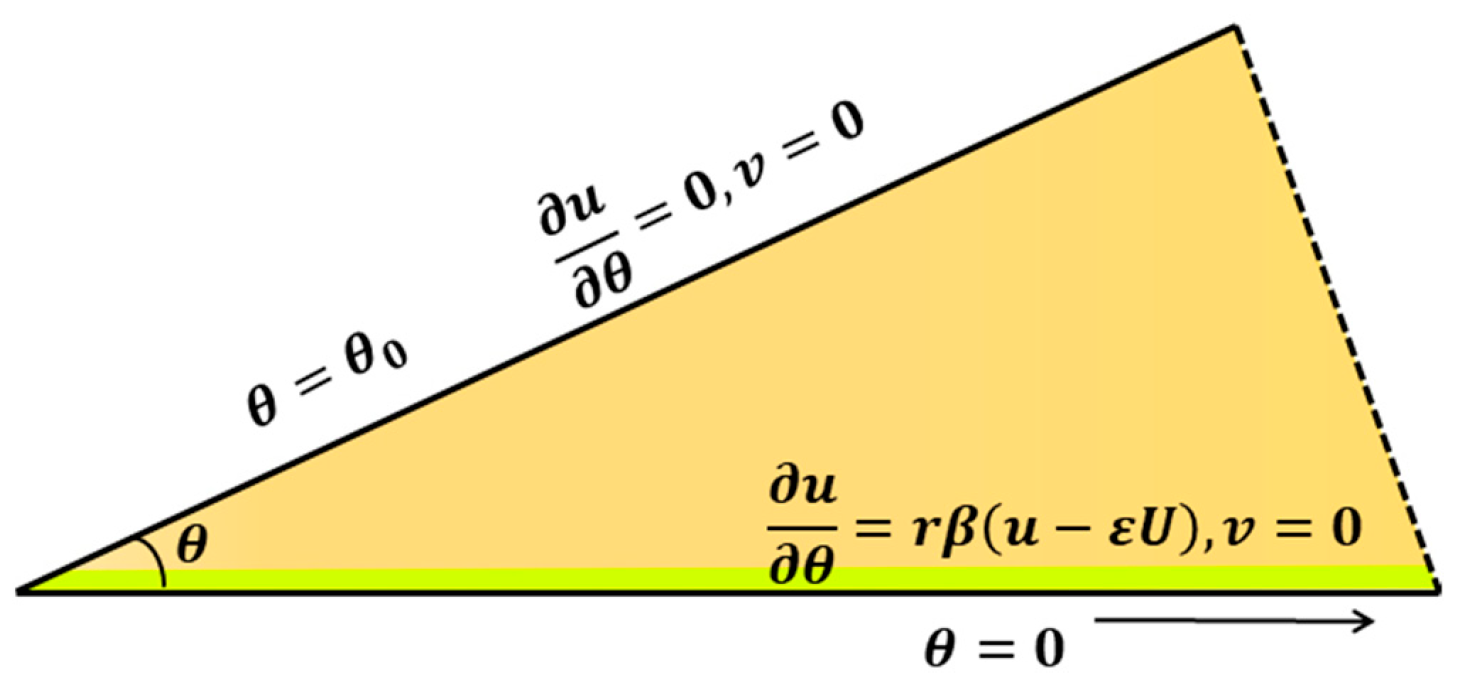
Figure 1. Due to the presence of the deflector, the liquid forms a curtain that impinges on the moving substrate at an angle
, which generates a corner flow configuration.
The following assumptions are also taken into account:
- •
The flow in the curtain coating process is assumed to be steady, laminar, and two-dimensional.
- •
The coating liquid is treated as a Maxwell fluid to capture the viscoelastic and relaxation characteristics typical for polymer-based coating materials.
- •
A polar coordinate system
is adopted to describe the flow field and facilitate analysis in the corner region.
- •
The flow is creeping, implying that inertial effects are negligible compared with viscous and elastic forces.
- •
The flow develops in the corner region formed by a moving substrate and a falling liquid curtain, where the curtain makes an inclination angle θ with the substrate.
- •
The free surface of the falling curtain is assumed to be fixed and traction-free.
- •
A slip boundary condition is imposed along the moving substrate to represent the lubricated interaction between the coating film and the solid surface.
- •
Body forces due to gravity, are neglected in the present analysis.
The velocity field for the problem under consideration is as follows:
where
and
are radial and azimuthal velocity of the fluid, respectively.
The viscous flow around a corner can be studied by the following continuity and momentum equations:
where
stands for constant density,
shows the velocity vector,
is the dynamic pressure, and
S is extra stress tensor of Maxwell fluid [
28] which satisfies the following relation:
where
is the material derivative,
represents the relaxation time,
shows the dynamic viscosity, and
is the first Rivlin–Ericksen tensor [
31].
After using Equation (1) in Equations (2) and (3), one can get the following expressions:
-component of momentum equation:
-component of momentum equation:
where
and
are normal and tangential components of the stress tensor.
The lubricated moving substrate and liquid curtain satisfy the following boundary conditions, as suggested in ref. [
29]:
And
where
denotes the slip coefficient,
is the radial distance corresponding to the substrate length, and
represents the velocity of the moving substrate.
3. Methodology
To solve above problem, the Langlois recursive approach is used, which is designed to handle nonlinear governing equations by generating a hierarchy of linear or simplified problems that can be solved recursively. It is a physically consistent method for analyzing non-Newtonian and viscoelastic fluid flow. In this method, the velocity profile, pressure, and shear stress are expressed in terms of a series and subsequently linearized with the aid of a small dimensionless parameter
, which characterizes the order of non-linearity in the system. Unlike classical perturbation techniques, this method does not require the presence of a small or large parameter, allowing it to remain valid in regimes where perturbation-based methods fail. Compared to the Adomian decomposition method, this method avoids the cumbersome construction of Adomian polynomials and handles nonlinear constitutive relations in a more manageable way. In contrast to the Homotopy perturbation method, it eliminates the need of artificial convergence-control or auxiliary parameters, thereby reducing mathematical complexity and enhancing physical interpret-ability. The Langlois recursive approach is more effective and reliable than other analytical or numerical techniques for complex flow configurations, such as corner flows and intersecting plate geometries, where alternative methods often require restrictive assumptions or provide limited validity.
Assume a series solution of the following form:
The velocity field considered for this problem is of the following form:
The boundary conditions are as follows:
The following dimensionless quantities are considered for this problem:
where
is Weissenberg number and
is reference length.
For analytical tractability, the analysis is restricted up to third order in
, while higher-order contributions are neglected due to the rapidly increasing complexity of the governing equations. Using Equations (12)–(19) for governing Equations (4)–(11), one can get the first-order, second-order, and third-order systems and their solutions.
3.1. First-Order Problem and Its Solution
The continuity and momentum equations for first-order problem are as follows:
The dimensionless form of normal and tangential stress tensor for the first order are expressed as follows:
Substituting Equation (24) into Equations (21)–(23), the following non-dimensional form can be obtained:
where
and the boundary conditions are as follows:
Introducing the stream function
, which helps to reduce the number of dependent variables into a single variable.
Cross-differentiating Equations (26) and (27) to eliminate pressure, then substituting Equation (31) in the resulting equation, one can get the following expression:
with the following boundary conditions:
Assuming the solution of the first-order stream function in the following, as suggested in ref. [
29]
Using Equation (35) in Equations (32)–(34), then solving the resulting differential equation, one can get the same result as mentioned in ref. [
29].
where
, and
are constants and mentioned in the
Appendix A.
Substituting the above result of the stream function into Equation (31), one can get
and
, that are expressed as follows:
And the following expression for the first-order pressure can be obtained after using above velocity in Equations (26) and (27):
where
is constant.
Using Equation (37) in Equation (24), one can get the expression of first-order normal and tangential stress as mentioned below:
3.2. Second-Order Problem and Its Solution
The continuity and momentum equation for the second order takes the following form:
The stress tensor components of the second order are expressed as follows:
After substituting Equations (43) and (44) into Equations (41) and (42), the second-order momentum equation is expressed as follows:
With the following boundary conditions:
where
and
are functions of
and defined in the
Appendix A.
To simplify the system by reducing the dependent variables into a single representation, the second-order stream function
is introduced as follows:
After eliminating the pressure gradient by the cross-differentiation of Equations (45) and (46), then substituting Equation (49), the resulting equation takes the following form:
With the following boundary conditions:
Assuming the solution of the second-order stream function which satisfies the non-homogeneous differential equation in the following form:
After substituting the above Equation (53) into Equations (50)–(52), the partial differential equation reduces into following ordinary differential equation:
With the following boundary conditions:
The solution of the above non-homogeneous BVP given in Equation (54)–(56) is calculated using the software Mathematica 12.0.
The solution of the above BVP is used to find the second-order velocity components,
and
, which are given as follows:
The above solutions of
and
can be used for Equations (45) and (46), to get the following second-order pressure expression:
where
is mentioned in the
Appendix A.
Using Equation (57) in Equations (43) and (44), the resulting expressions for the second-order normal and tangential stresses are represented as follows:
3.3. Third-Order Problem and Its Solution
For the third-order problem, the continuity and momentum equations take the following form:
The non-dimensional form of the third-order stress tensor components is expressed as follows:
where
are functions of
and are defined in the
Appendix A.
After substituting Equations (64) and (65) into Equations (62) and (63), the non-dimensional form of the momentum equations for the third-order problem is given as follows:
With the following boundary conditions:
To simplify the problem, the third order stream function
is introduced as below:
After employing Equation (70) and cross-differentiating Equations (66) and (67), one can get the following:
With the following boundary conditions:
The solution of the third-order stream function is assumed in the following form:
Substituting Equation (74) into Equations (71)–(73) yields the following ordinary differential equation:
Subject to the following boundary conditions:
The above BVPs given in Equations (75)–(77) are solved using software Mathematica 12.0.
After substituting the third-order stream function into Equation (70), the expressions for the velocity components
and
take the following form:
Applying the same procedure as in the second-order case, the pressure and stresses for the third order are given as follows:
where
is mentioned in the
Appendix A.
It is important to note that the singularity arises at the sharp corner
only in the pressure field. The classical singularity that typically appears in the velocity profile near the corner is effectively eliminated through the incorporation of slip effects, which provide a more realistic description of the flow behavior in such geometries.
Summarizing results up to the third order:
The normal stress at the liquid curtain is expressed as follows:
The tangential stress
vanishes at the liquid curtain under slip conditions because the slip boundary allows relative motion between the fluid and the surface. As a result, the shear resistance at the curtain vanishes, leading to zero tangential stress. This condition physically represents a surface where the fluid experiences no frictional drag.
The component
of the total stress perpendicular to the curtain and the component
parallel to the curtain are defined as follows:
3.4. Validation of Results
To validate the present analytical results, it is observed that, as
, the obtained solutions in Equations (82)–(87) reduce to the solution of creeping flow of a Newtonian fluid, which is consistent with the findings of Sprittles et al. [
29]. Furthermore, to examine the accuracy of the present results, a residual error analysis is performed by substituting the derived expressions of velocity, pressure, and stress given in Equations (82)–(87) into the governing Equations (8) and (9). This procedure yields the error functions
and
, which are presented in
Table 3 and
Table 4 for a range of positions within the flow domain. The reported values remain consistently small across the domain, indicating that the analytical results have order
, which is very small error
Table 5 shows that the magnitude of normal stress on the coating fluid decelerates when the liquid curtain moves from the horizontal plane to the angle
and from
to
, but stress becomes unstable when the liquid curtain is parallel to the substrate or deflector. The normal and tangential stresses on the liquid curtain rises when curtain is inclined at an angle between
to
and both stresses decay on the other positions and become unstable when the curtain is at a horizontal position or at a right angle. Therefore, for the reduced stresses, the position of the curtain must be from 0 to
and from
to
.
4. Graphs and Discussion
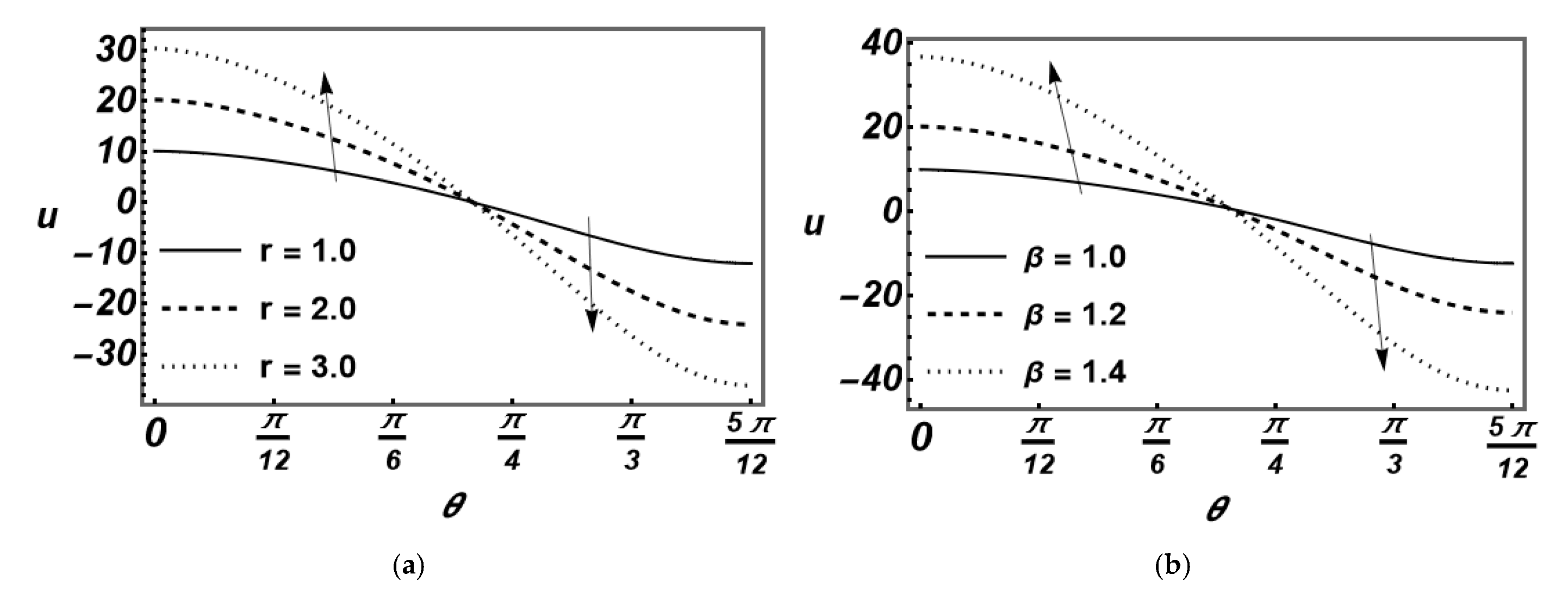
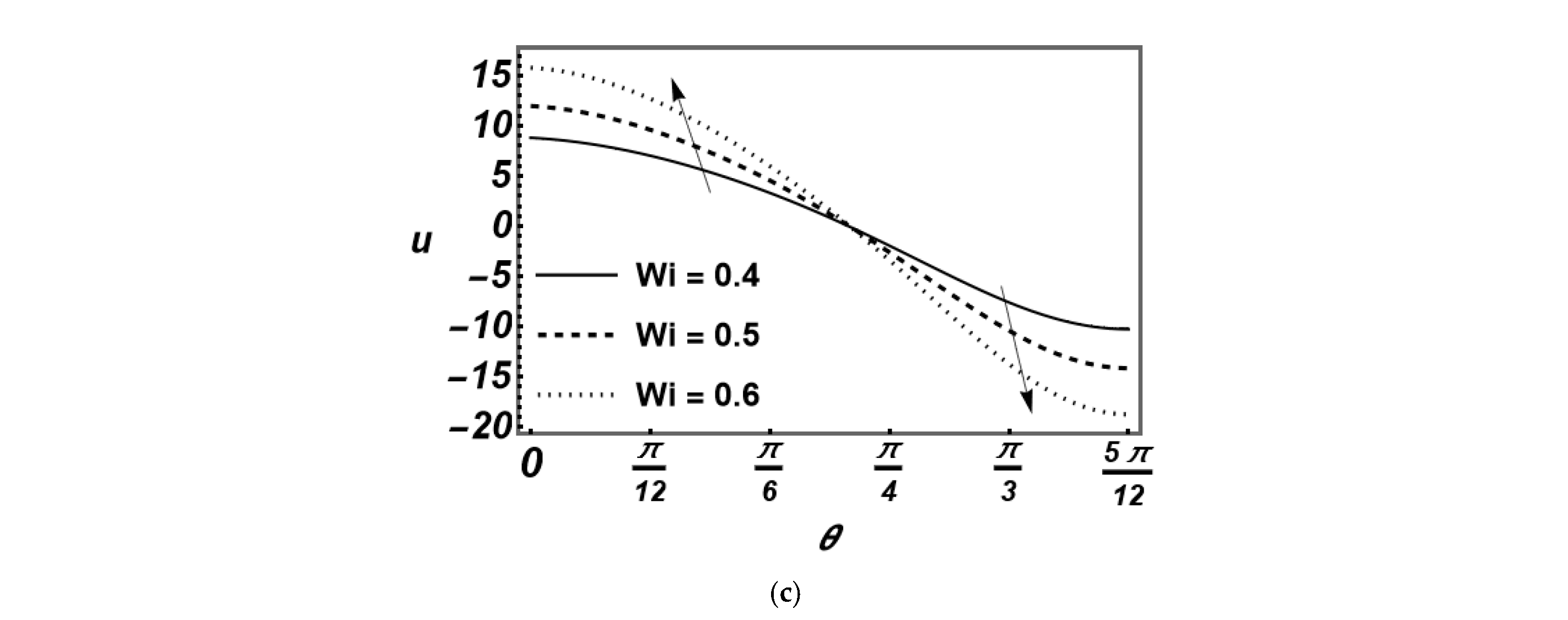
Figure 2 and
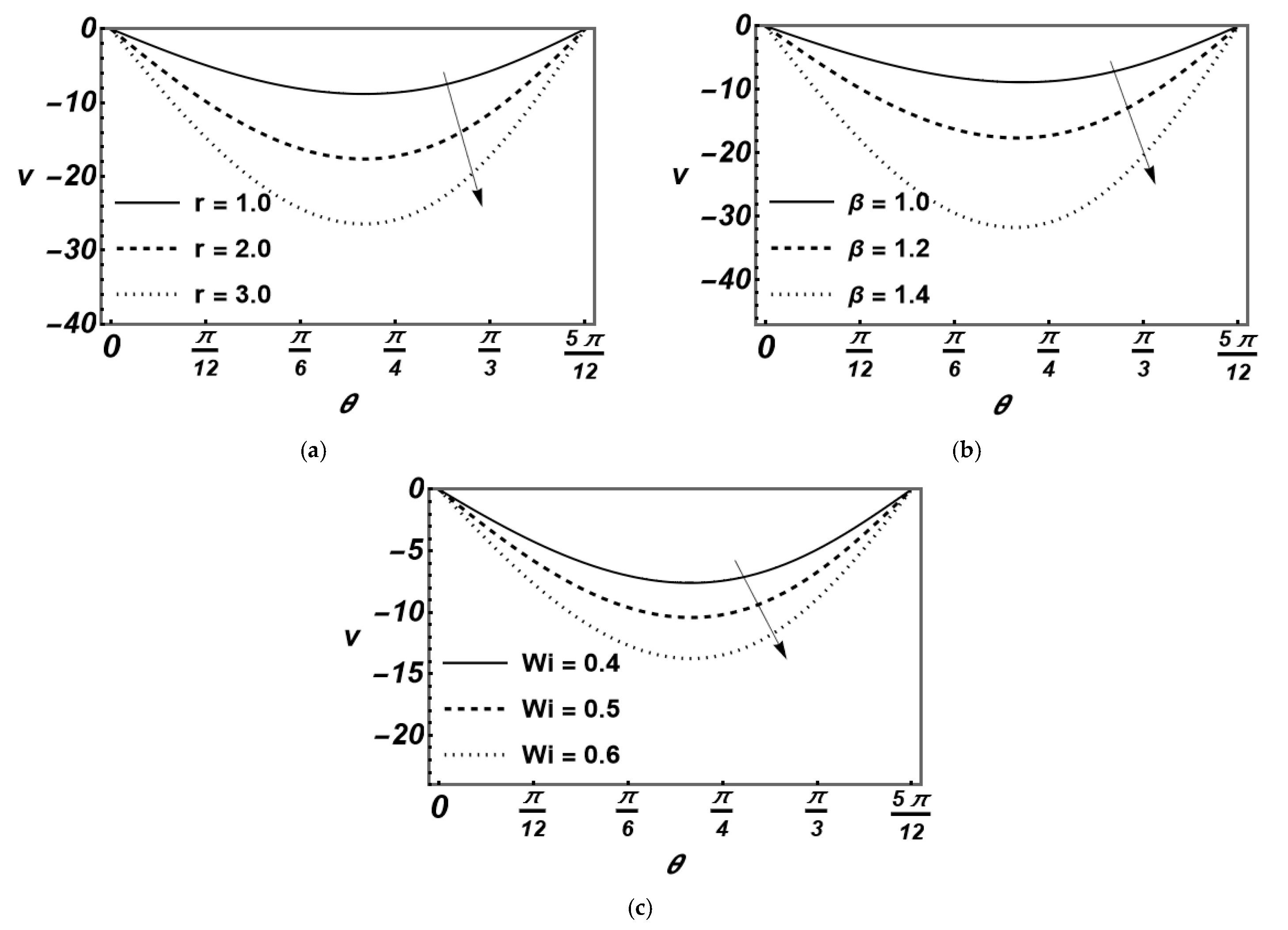
Figure 3 display that the speed of the coating fluid can be controlled by the substrate length
, slip length parameter
on the surface of the substrate, and fluid relaxation time
against different positions of the rotation angle. It is observed from
Figure 2 that the curtain coating-based viscoelastic fluid moves quickly when the substrate length
becomes large because the distance of the curtain coating fluid from the pole loses the frictional forces due to the slip present on the surface of the substrate. The lubricated surface of the substrate, which can be observed by the Navier slip parameter, addresses the friction loss on the substrate and helps to perform the uniform and streak-free coating on a moving substrate through the curtain coating process. The effect of elastic forces in curtain coating is observed by the dimensionless number
, which measures the relaxation time with the help of the ratio between the elastic and the viscous forces in Maxwell fluid (curtain coating fluid). When the viscous forces become dominant over elastic forces in curtain coating, the dominance becomes weak and the free-falling curtain stores more elastic forces that prevents the curtain from breaking, which is very useful in the coating process and accelerating the coating along the substrate. It is also noticed that, when the liquid curtain inclined between
, the substrate is coated with a forward free-falling flow, but, when it is between
, the coating fluid flows in a backward direction along the substrate.
Figure 3 displays that coating in the rotational direction of the substrate following the parabolic path during the curtain coating process. The azimuthal velocity is accelerated by the substrate length, slip length parameter, and relaxation time in the reverse direction due to the movement of the substrate in a positive direction.
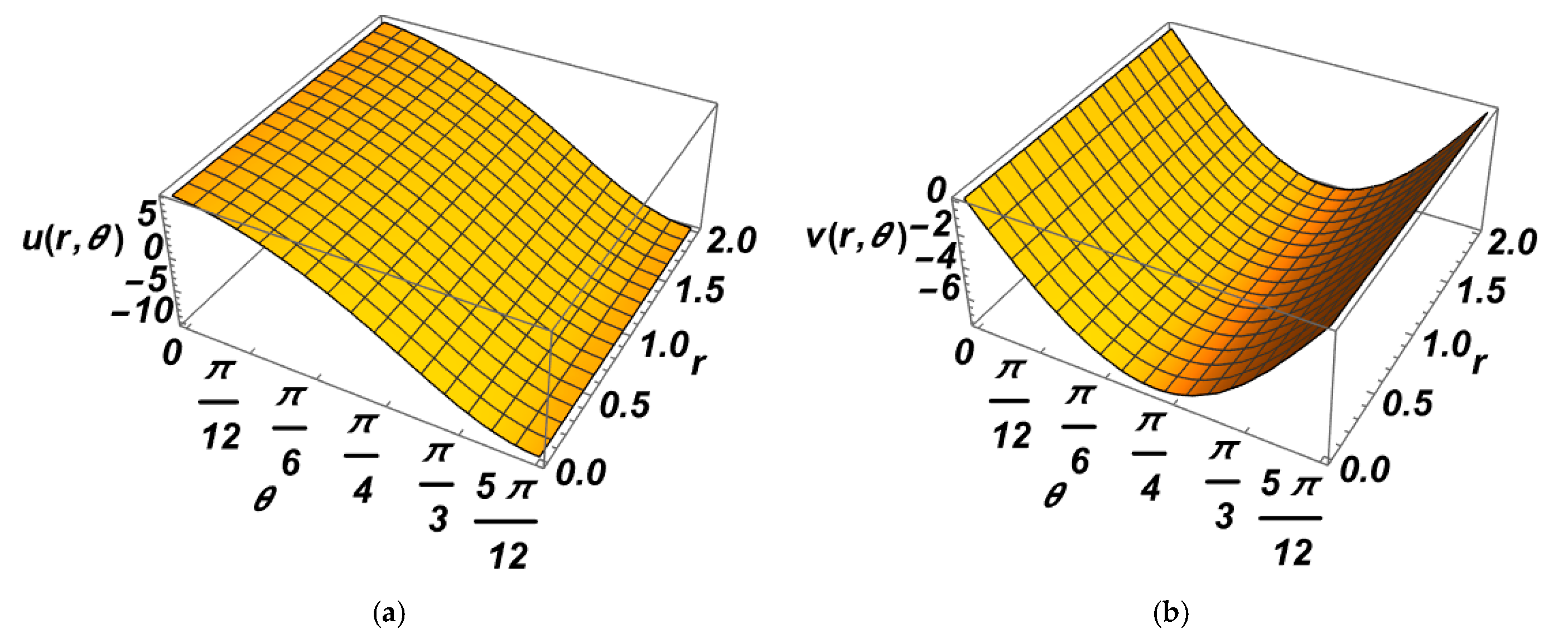
Figure 4 shows the 3D view of radial and azimuthal velocity, which displays that radial flow increases when the liquid curtain is at
as compared with when it is parallel to the substrate but the rotational flow increases in the reverse direction when
, but after that it decays and comes to rest at
.
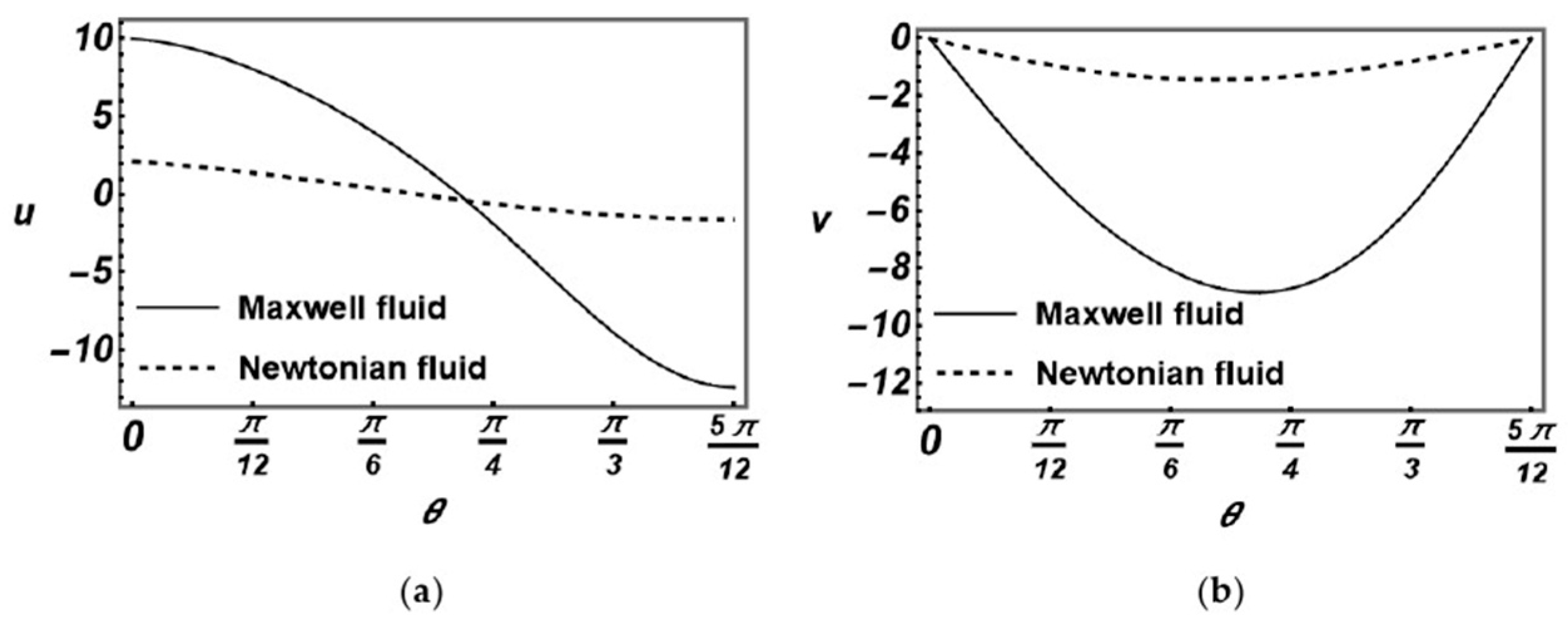
Figure 5 shows the comparison of the radial and azimuthal velocity of the viscoelastic coating fluid and Newtonian coating fluid. The velocity of the coating fluid increases when the viscoelastic fluid is considered as a coating liquid as compared to a Newtonian fluid. This happens due to the presence of elastic forces in the viscoelastic coating fluid, which prevents curtain break and accelerates the fluid along the substrate.
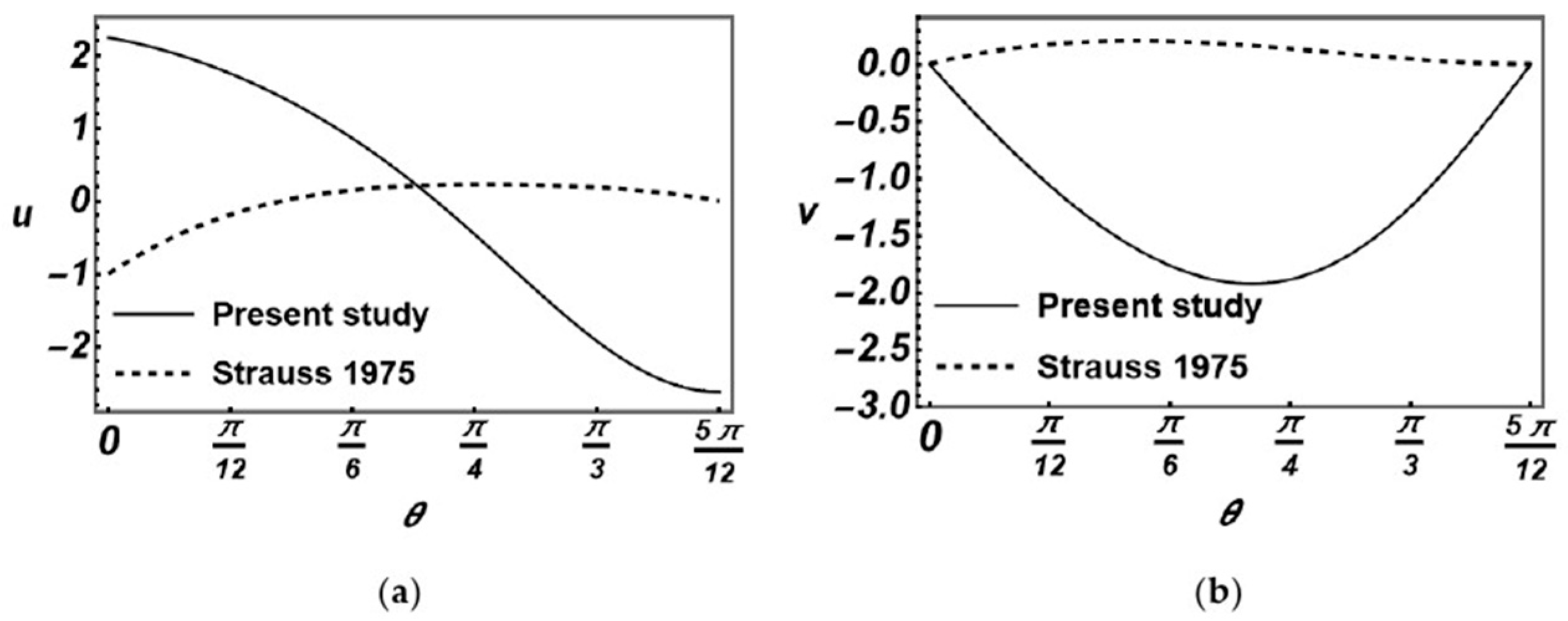
Figure 6 shows the comparison of the present result with Strauss’s [
9] results. This study shows that, due to the incorporation of the slip effect, the coating fluid velocity accelerates because of fewer friction forces on the substrate.
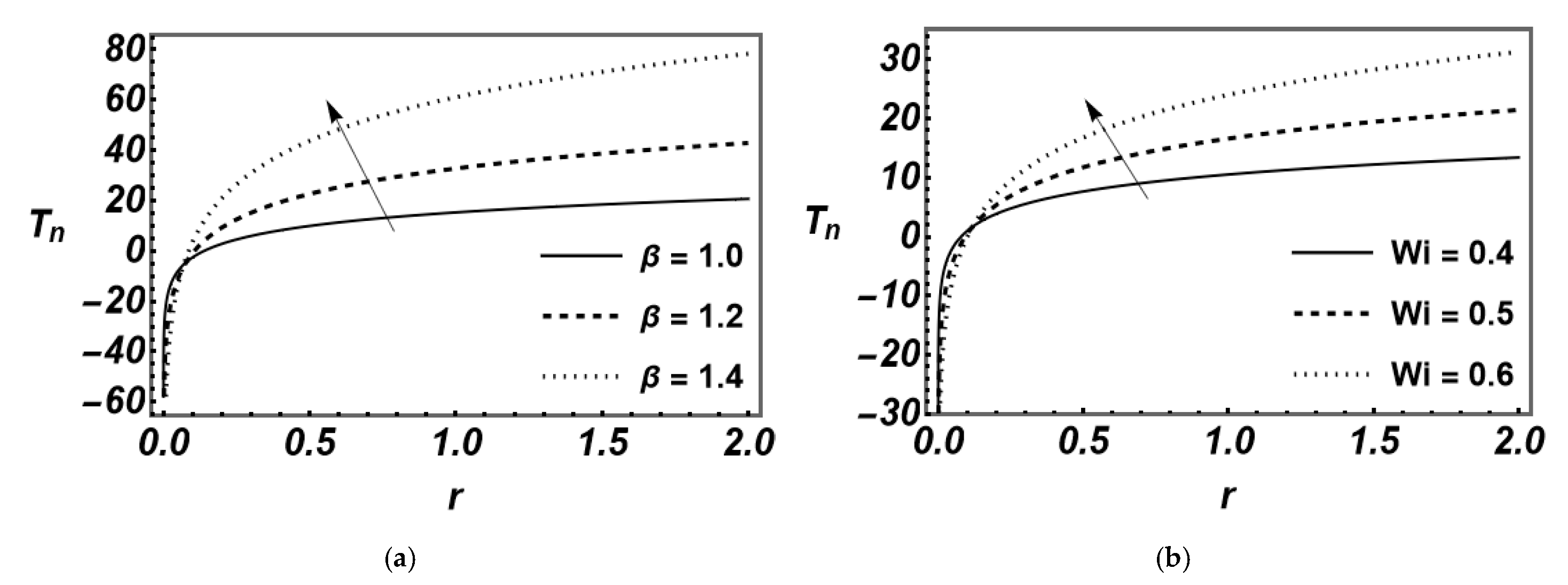
In the coating process, normal stress plays a vital role during fluid dynamics, which is influenced by the application of coating on the lubricated substrate. Especially in viscoelastic fluid flow (Maxwell fluid flow), rheological properties ensure a uniform thickness of fluid used in curtain coating.
Figure 7 displays the fact that normal stress becomes undefined at the corner, but, away from the corner along the radial direction, it is stable. To avoid the coating failure, normal stress should be moderate, as high normal stress causes blistering and buckling. Controlled normal stress is also useful for the durability of the coating fluid; therefore, slip parameter length and the relaxation time of the fluid will decide how the dominance of viscous over elastic forces can be considered and what should the range of the slip length parameter be, to provide the lubrication on the surface so that normal stress will remain moderate. The value of slip length must be within the range
as the
normal stress grows and causes blistering that is not suitable for the coating process; similarly, the dominance of viscous over elastic forces must be within the range
. As
, the normal stress becomes high and causes failure in coating.
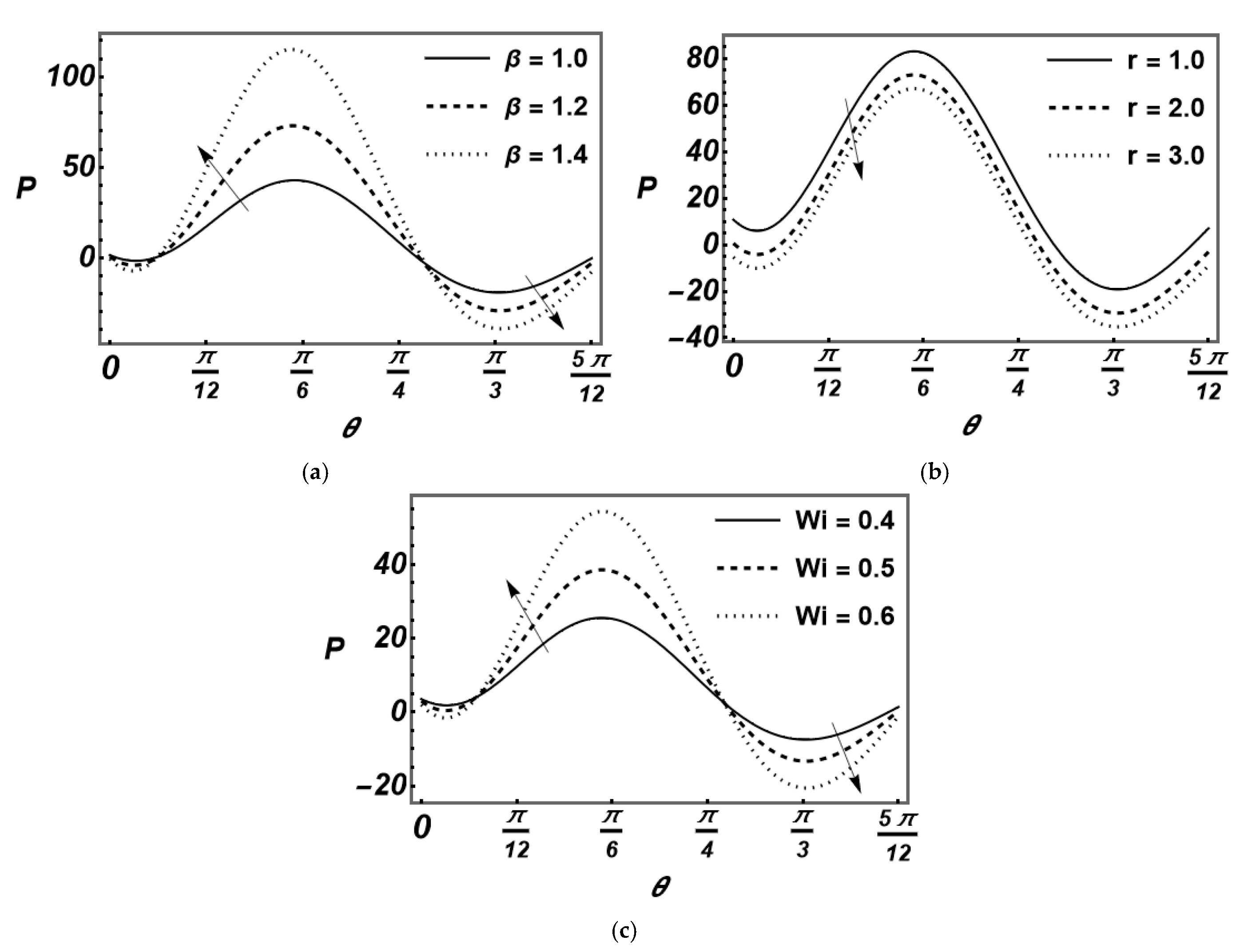
Figure 8 displays that internal pressure building in the fluid during the coating process varies due to the substrate length
, slip length parameter
, and relaxation time
of the viscoelastic fluid along the angle. The compression in fluid is outward when the liquid curtain is fixed at the angle
, but pressure will be inward when
. An increase in the Navier slip parameter
reduces viscous resistance at the fluid–substrate interface. The coating liquid experiences less drag as it moves along the moving substrate. As a result, the liquid film accelerates more easily in the coating direction, which can promote smoother flow. However, to conserve mass and sustain the curtain flow, a moderate normal pressure is required to drive the fluid consistently along the coated surface. In practice, this corresponds to local pressure buildup in the coating bead, ensuring the curtain remains attached to the substrate and does not break away.
Figure 8 shows how the substrate length
affects the pressure distribution. A longer substrate allows the fluid to develop and redistribute velocity and stress more gradually.
Figure 8c also illustrates the effect of the Weissenberg number
, which quantifies the ratio of elastic to viscous forces in the flow. As
increases, the viscoelastic Maxwell fluid exhibits stronger elastic behavior due to a longer relaxation time. The elastic memory increases the compression within the fluid and resists flow deformation. To maintain a stable curtain and consistent flow rate, a moderate pressure is necessary. Also, from
Figure 8c, it is depicted that high values of
cause elastic stresses, which leads to surface irregularities or curtain flutter, emphasizing the need to control the viscoelastic properties of the coating fluid for smooth and defect-free film formation.
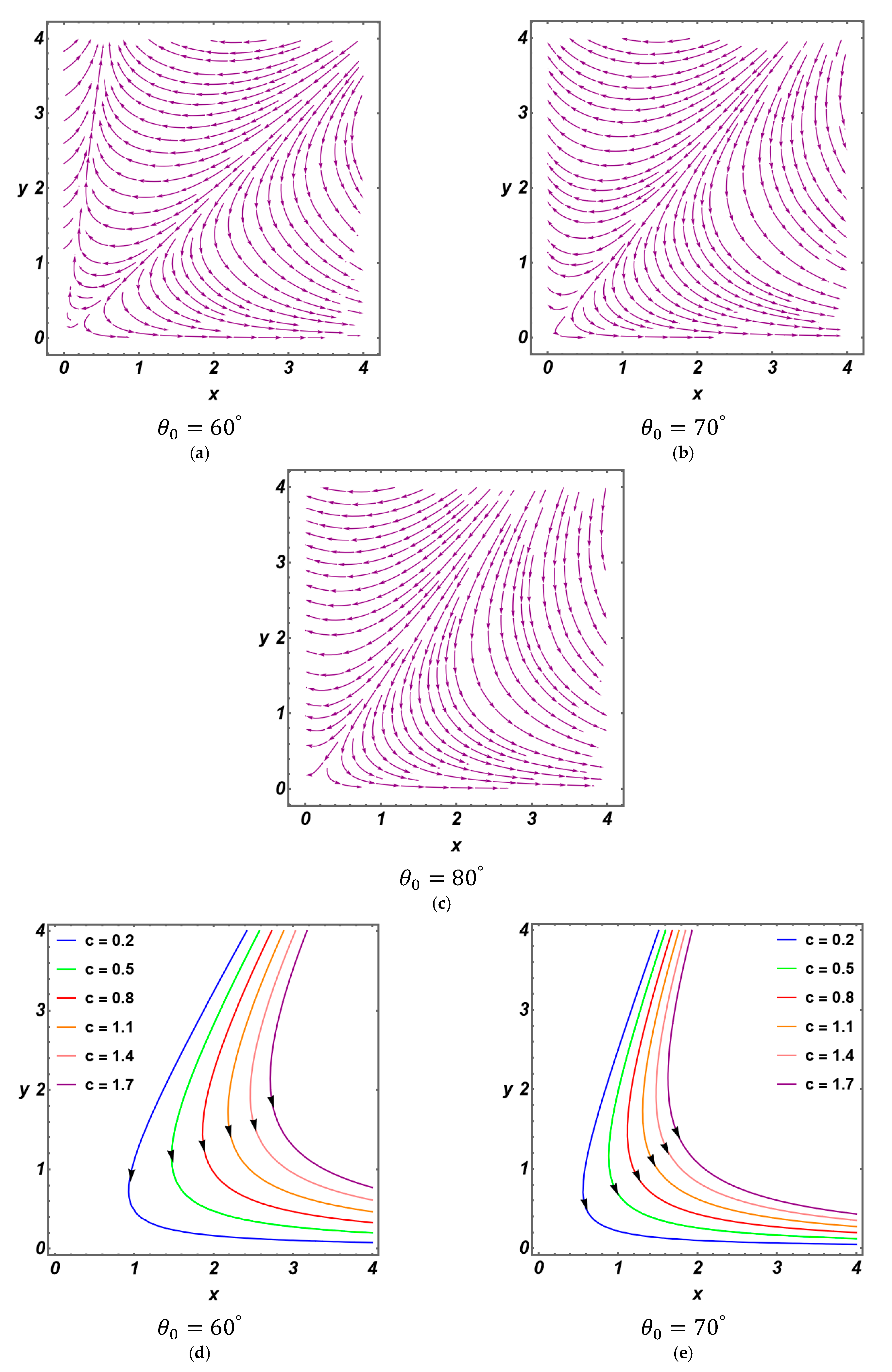
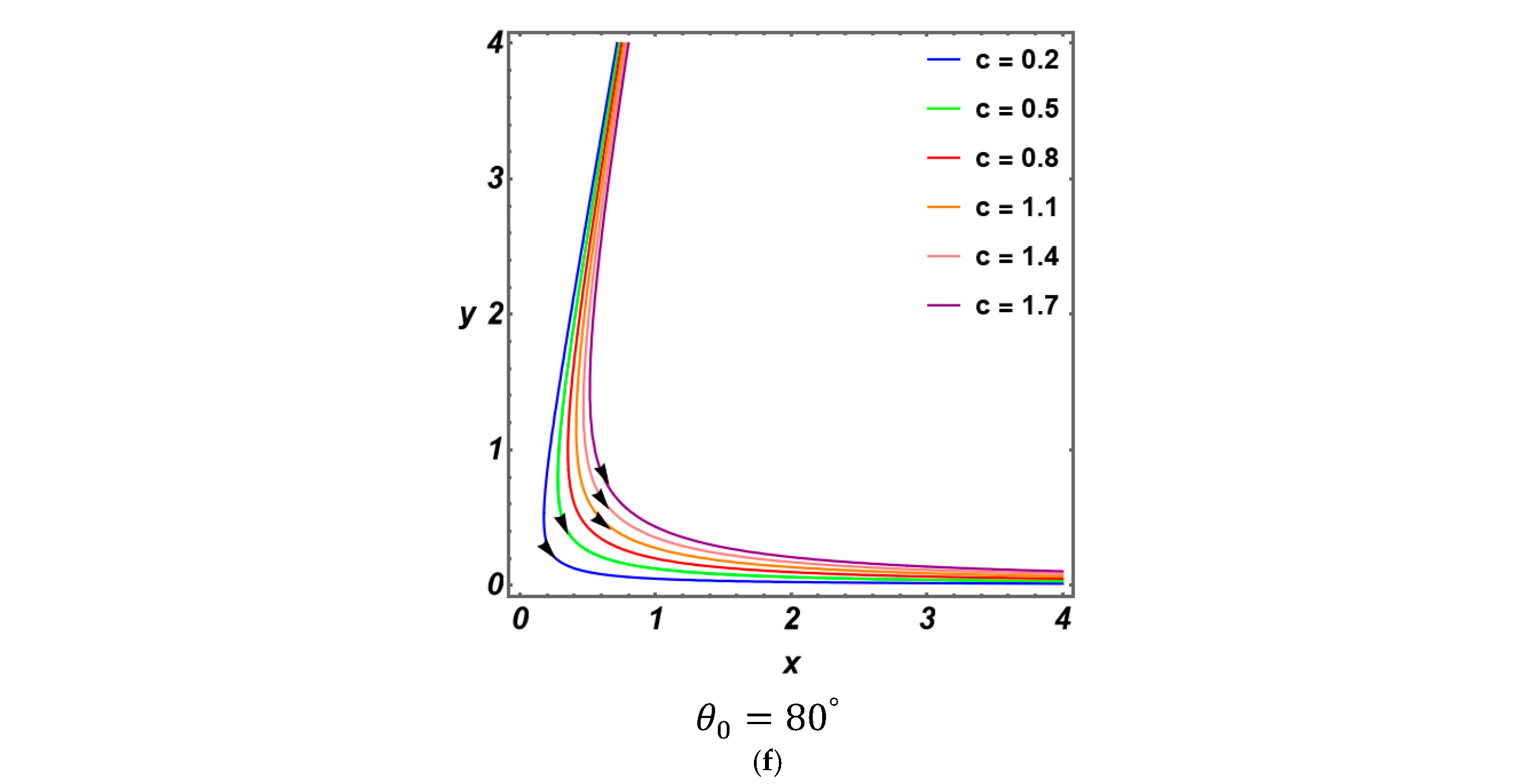
Figure 9 depicts the streamline patterns against the corresponding parameters related to the flow characteristics of a coating fluid. The introduction of a slip condition at the substrate allows limited tangential motion between the fluid and the substrate. The abrupt velocity discontinuity associated with the classical no-slip condition is eliminated. This relaxation of the boundary constraint prevents the buildup of excessive shear and effectively removes the singularity at the corner. As a result, the flow field becomes more physically realistic, exhibiting well-defined and regular streamline patterns that enhance coating uniformity and stability. Furthermore, as the curtain angle increases, this reduces local velocity gradients and stress buildup, promoting smoother streamline alignment and a more stable coating bead. This interaction defines the critical role of the slip condition and curtain angle in regularizing the flow dynamics at the corner.