You are currently viewing a new version of our website. To view the old version click .
Lubricants
  • Article
  • Open Access

13 December 2025

Effect of Scanning Speed on the Microstructure and Properties of Co-Cu-Ti Coatings by Laser Cladding


,
,
,
and
1
Wenzhou Key Laboratory of Advanced Metallic Materials, Zhejiang Industry &Trade Vocational College, Wenzhou 325000, China
2
School of Engineering + Technology, Western Carolina University, Cullowhee, NC 28723, USA
3
Zhejiang Changjiang Automobile Electronic System Co., Ltd., Wenzhou 325300, China
4
Xingji Electrical Appliance Group Co., Ltd., Wenzhou 325000, China

Abstract

Co-Cu-Ti composite coatings were fabricated on Ti6Al4V substrates by laser cladding. The Criteria Importance Through Intercriteria Correlation–Technique for Order Preference by Similarity to Ideal Solution methodology was employed to determine the optimal parameters. The effect of varying the scanning speed, a critical parameter, was investigated to evaluate its influence on the coating’s microstructure and performance. The phase composition of the coatings comprises Co-Ti phases and Cu-Ti phases. The microhardness and wear resistance of the coatings initially increase as the scanning speed rises, reaching a peak before subsequently declining. The predominant wear mechanisms of the coatings are abrasive wear, with minor contributions from adhesive wear and fatigue wear. The wear resistance of the coating is superior to that of the TC4 substrate, primarily due to the synergistic enhancement from the strengthening effect of the Co-Ti phase and the lubricating effect of the Cu-Ti phase. The composite coatings fabricated at a scanning speed of 3 mm/s exhibited superior properties. Specifically, the microhardness measures 788 HV0.2, the coefficient of friction is approximately 0.57, and the wear cross-sectional area is 3.57 × 10⁻⁹ mm2. At this speed, these two effects achieve an optimal balance, making it the best process parameter for wear resistance.

1. Introduction

Ti6Al4V (TC4) alloys are widely used in the aerospace, automotive, and valve manufacturing industries owing to their excellent strength-to-weight ratio, fatigue endurance, high-temperature stability, and corrosion resistance [1,2,3]. Despite its advantages, TC4 suffers from naturally low hardness and poor wear resistance. These limitations restrict its broader application in friction-intensive environments, such as bearings and gears [4]. The preparation of wear-resistant coatings on titanium alloy surfaces can effectively enhance their hardness and wear resistance, extending the service life of components. Recently, the surface modification techniques for titanium alloys primarily include plasma spraying [5], vapor deposition [6], carburizing [7], and laser cladding (LC) [8]. LC employs high-energy laser beams to achieve fusion between powders and substrates, resulting in dense coatings with exceptional metallurgical bonding. Compared with other methods, LC has several advantages, including a low dilution ratio, minimal thermal impact, high precision, and greater energy efficiency [9,10].
The wear resistance of laser-clad coatings is mainly determined by the powder chemical composition and the process parameters [11]. Ceramics, high-entropy alloys, rare earth oxides, and composite metal powder chemical compositions are commonly used to enhance wear resistance. Chen et al. successfully fabricated TC4 composites coatings reinforced by in situ synthesized TiC ceramics particles. The microhardness of the coating prepared by LC was measured at 552 HV, which is significantly higher than the 284 HV of the TC4 substrate. At the same time, the wear resistance of the coating has been significantly improved [12]. Ren et al. employed the NbMoTaWTi high-entropy alloy powder system to prepare the wear-resistant coating. Compared with the substrate, the microhardness of this coating increased by 72%, and the wear rate decreased by 121.9% [13]. Fu et al. investigated the effects of the addition of Y2O3 (0 vol–4.5 vol%) to the coatings produced by LC on the TC4 substrates. Their findings indicated that the addition of 3 vol% Y2O3 notably improved both the microstructure refinement and the tribological performance [14]. Despite significant progress in these powder chemical compositions, their industrial application still faces critical obstacles, including high raw material costs, difficulties in composition control and complex powder preparation processes [15,16,17]. Chemical composition composed of conventional powders exhibit higher cost-effectiveness due to stable supply chains and simplified powder preparation processes, which significantly enhancing their suitability in large-scale industrial production. In composite metal powder chemical compositions, Co-based powders are characterized by significantly enhanced substrate hardness and improved tribological performance, particularly in wear resistant applications [18]. Li et al. successfully fabricated Co-based coating on the titanium alloy substrate using LC with electrically assisted preheating. The maximum microhardness of the coating is approximately six times that of the substrate, while both the friction coefficient and wear volume are significantly reduced [19]. Chang et al. found that the graphene reinforced Co-based (Co-50) composite coatings reached approximately 2.7 times greater microhardness, 54.2% lower friction coefficients, and 28.0% reduced wear volume than the substrate [20]. Copper serves a dual role in enhancing coating performance through lubrication and microstructural optimization. Dong et al. reported that adding Cu can reduce the friction coefficient of the CoCrW coating, which is attributed to the lubrication provided by copper-containing wear particles formed during the wear [21]. Zhang et al. successfully fabricated Ti-based laser-clad composite coatings on TC4 substrates and found that an appropriate amount of Cu (5 wt.%) enhances coating formability, effectively refines the microstructure, improves the uniformity of microstructural distribution. The average microhardness of the coating increased by 1.99 times and wear rate was decreased by 27.7% [22]. Adding titanium can enhance the metallurgical bond between the coating and the substrate and refine the microstructure. Gong et al. found that the addition of Ti reduces the discrepancy in thermophysical properties between the powder system and the TC4 substrate, resulting in excellent metallurgical bonding [23]. Zhuang et al. proved that increasing the Ti content in the AlCoCrFeNiTi coating significantly enhanced grain refinement and microstructural homogenization, thereby improving the coating’s hardness and wear resistance [24]. In summary, the Co–Cu–Ti cladding powder system to employed to improve the wear resistance of the TC4 surface, thus effectively extending its service life.
The microhardness and wear resistance of the coating prepared by LC are primarily influenced by process parameters such as laser power, scanning speed and powder feeding rate [25]. To maximize the performance of coatings, advanced analytical techniques are increasingly applied to the optimization of LC parameters in recent research. By applying gray relational analysis (GRA) to conduct multi-objective optimization of laser cladding parameters, Yue et al. achieved well-bonded coatings characterized by the absence of cracking, holes, and a uniform distribution of elements [26]. Nezhad et al. employ response surface methodology (RSM) to establish a correlative model between LC parameters and the geometric characteristics of the coatings [27]. While these methods offer valuable insights, the challenges of cross-parameter interplay effects and weighting biases remain unaddressed. By combining objective indicator weighting with the ideal solution approximation strategy, integrated Criteria Importance Through Intercriteria Correlation (CRITIC)–Technique for Order Preference by Similarity to Ideal Solution (TOPSIS) efficiently mitigates the aforementioned limitations [28]. Its matrix-based computational architecture can effectively handle nonlinear optimization problems involving multidimensional LC process parameters, delivering quantitative decision support for process window selection [29].
Consequently, this study employs orthogonal design for experiments. By applying the CRITIC method to objectively weight multi-objective optimization targets, and TOPSIS to rank results according to these weights, this approach generates prioritized parameter configurations. These provide engineers with reliable guidance to choose the optimal settings. The primary objective of this research is to develop a cost-effective powder chemical composition for LC to improve the tribological performance of TC4 coatings. To achieve this goal, we will combine material innovation with scientific parameter optimization to identify industrially viable settings for large-scale production.

2. Materials and Methods

2.1. The Preparation of Coatings

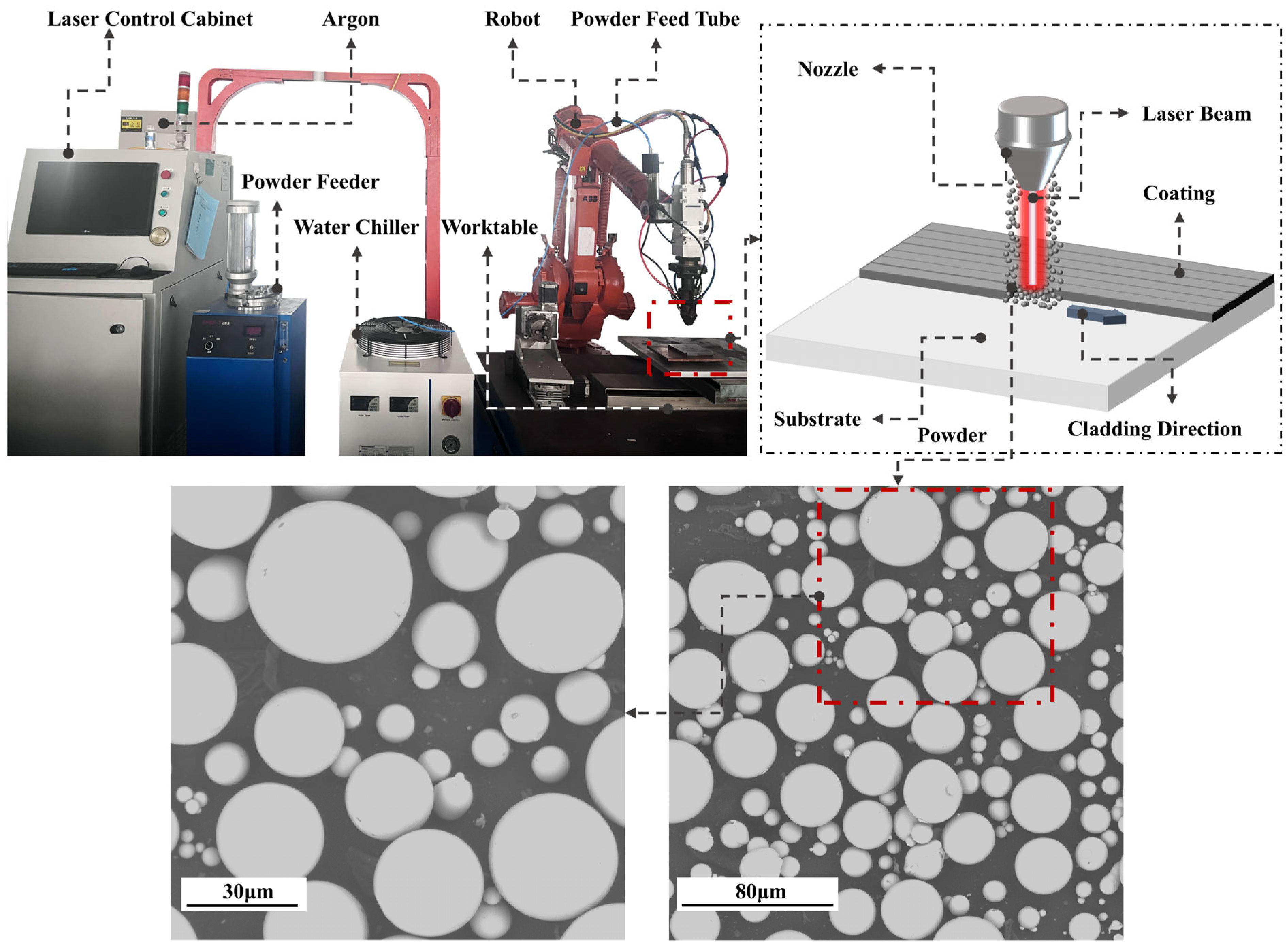
The Ti6Al4V alloy plate (10 mm × 10 mm × 5 mm) was used as the substrate material and the elemental composition is shown in Table 1. The Co-Cu-Ti powders (99.9 wt.% purity, spherical, particle size distribution: 15–53 μm, supplied by the new materials Shenzhen research institute) were thoroughly mixed and dried, then vacuum packed. The image of the powder is shown in Figure 1. According to interfacial bonding capacity and wear resistance requirements in laser cladding coatings, the ratio of Co-Cu-Ti powder was determined as 1:1:3.
Table 1. The chemical composition of Ti6Al4V (wt.%).
Figure 1. The laser cladding process.
Prior to the experiment, the substrate must be pretreated to achieve a flat surface free of impurities and oxide films, ensuring optimal cladding performance. The surface of substrate was ground using a rotary sander and emery paper (120–800 grit size), then cleaned with an acetone solution to remove surface oil, further cleaned with ethanol solution, and finally thoroughly dried. The schematic diagram of the laser cladding process was shown in Figure 1. The RFL-A1000 semiconductor laser (Wuhan Raycus Fiber Laser Technologies Co., Ltd.) was employed, which can output a peak power of 1000 W. A DPSF-3 single-hopper powder feeder (Jiangsu Zhufeng Laser Technology Co., Ltd.) was employed, and the maximum allowable particle size of the powder that the feeder can stably convey is regulated below 200 μm. The laser head was installed on the mechanical arm and integrated with the coaxial powder feeding nozzle to achieve synchronous material deposition during the LC process. The laser beam produced a circular spot with a fixed diameter of 1.25 mm. During the cladding process, argon gas was served as the protective medium to minimize the oxidation of the metal powder.
Laser power, powder feeding rate, and scanning speed are the critical process parameters that govern coating quality. To assess the effects of these parameters and identify the optimal process conditions, an orthogonal experimental design was adopted. Based on the previous experimental results, the orthogonal experimental design is shown in Table 2. Dilution ratio and microhardness were selected as evaluation indicators of the experiment.
Table 2. Orthogonal test table.
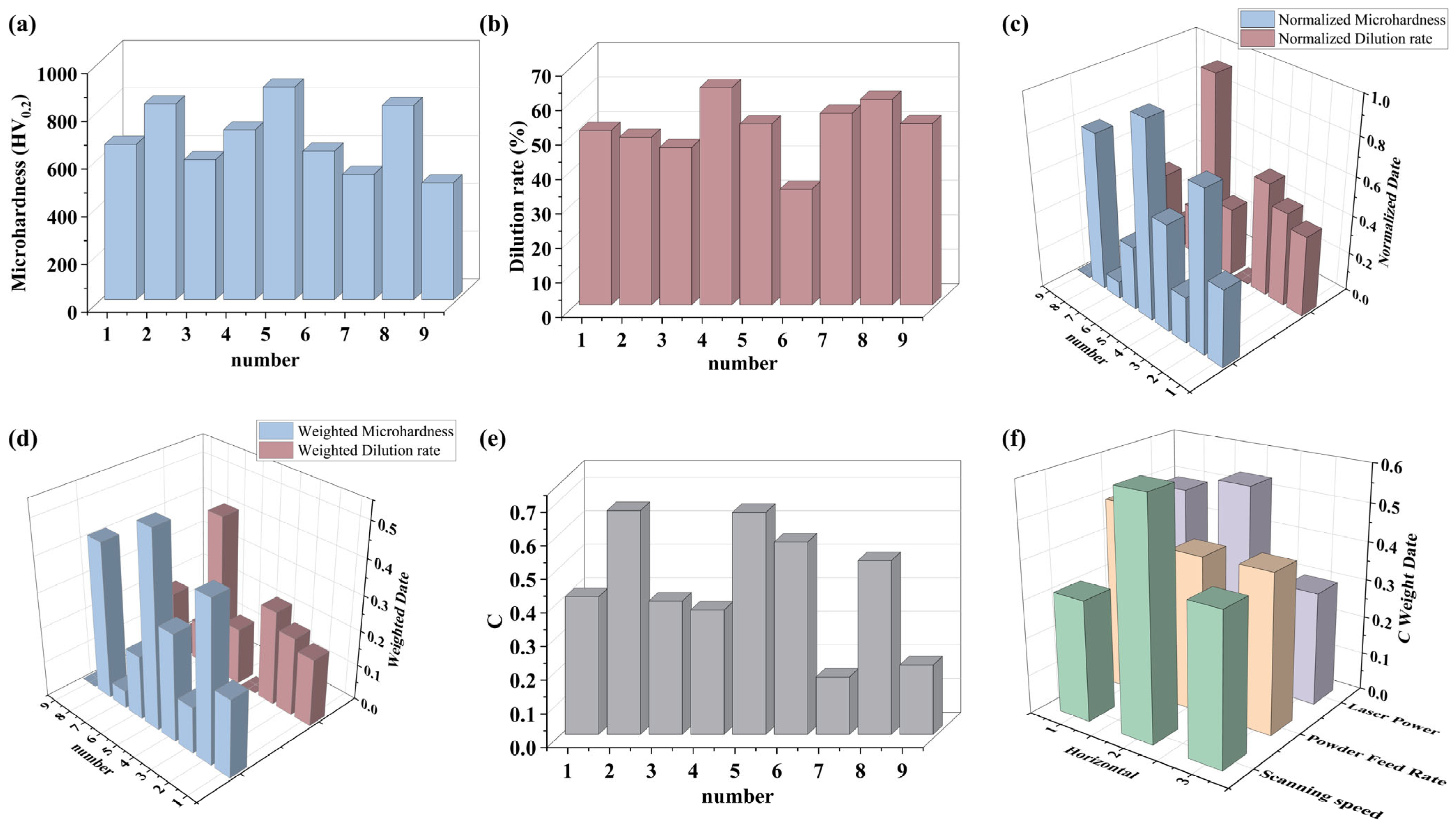
In this experiment, the CRITIC-TOPSIS method was employed to objectively analyze the weights of microhardness and dilution ratio. Additionally, the influence of process parameters on the performance of the coating was scientifically studied, as illustrated in Figure 2. The microhardness and dilution data are presented in Figure 2a and Figure 2b, respectively. Figure 2c shows the normalized data, which eliminates the influence of dimensional differences on analytical outcomes. The microhardness was considered a positive indicator (Equation (1)), while the dilution ratio was regarded as a negative indicator (Equation (2)). In the equation, ( x i j ) represents the normalized matrix, where ( i ) denotes the experimental serial number and ( j ) indicates the evaluation index.
x i j = x i j m i n   x j m a x   x j m i n   x j ,
x i j = m a x   x j x i j m a x   x j m i n   x j ,
Figure 2. The CRITIC-TOPSIS analysis process: (a) the microhardness of sample; (b) the dilution data of sample; (c) the normalized data; (d) the weighted matrix; (e) the closeness coefficient values; (f) the interrelationship between parameters and the closeness coefficient.
The weight coefficient of microhardness calculated by the CRITIC method is 54.58%, while the dilution ratio is 45.42%. The specific calculation method is detailed in Table 3. Subsequently, we conducted a TOPSIS analysis to derive the value of the closeness coefficient. First, we transformed the normalized data into a weighted matrix and identified the positive ideal solutions (PIS) and negative ideal solutions (NIS). The PIS corresponds to the optimal criteria values, where microhardness is maximized and the dilution ratio is minimized. Conversely, the NIS represents the anti-optimal scenario with minimum microhardness and maximum dilution ratio. Next, we evaluated the distances of each alternative to both the PIS and NIS (Equations (3) and (4)) and computed the closeness coefficient values (Equation (5)).
D i + = j = 1 2 ( n i j A j + ) 2 ,
D i = j = 1 2 ( n i j A j ) 2 ,
C i = D i D i + + D i ,
where D i + is the distance of the i -th experiment to PIS, D i is the distance of the i -th experiment to NIS, A j + is the j -th PIS, A j is the j -th NIS, n i j * represents the weighted normalized matrix and the C i is the closeness coefficient values. The weighted matrix and the ( C i ) are shown in Figure 2d,e. The interrelationship between parameters and the closeness coefficient was established, resulting in the matrix illustrated in Figure 2f. The range analysis indicated that scanning speed had the greatest influence, with a weight of 47.7% on overall performance, followed by laser power at 37.8% and powder feed rate at 14.4%. The optimal combination of parameters was determined to be a laser power of 600 W, a scanning speed of 3 mm/s, and a powder feed rate of 25 g/min. Based on the experimental results and the CRITIC-TOPSIS analysis, we established scanning speeds of 2 mm/s, 3 mm/s, 4 mm/s, 5 mm/s, and 6 mm/s for the preparation of the cladding, and focused on analyzing the impact of scanning speed on the wear resistance of the coating.
Table 3. The CRITIC analysis process table.

2.2. Characterization

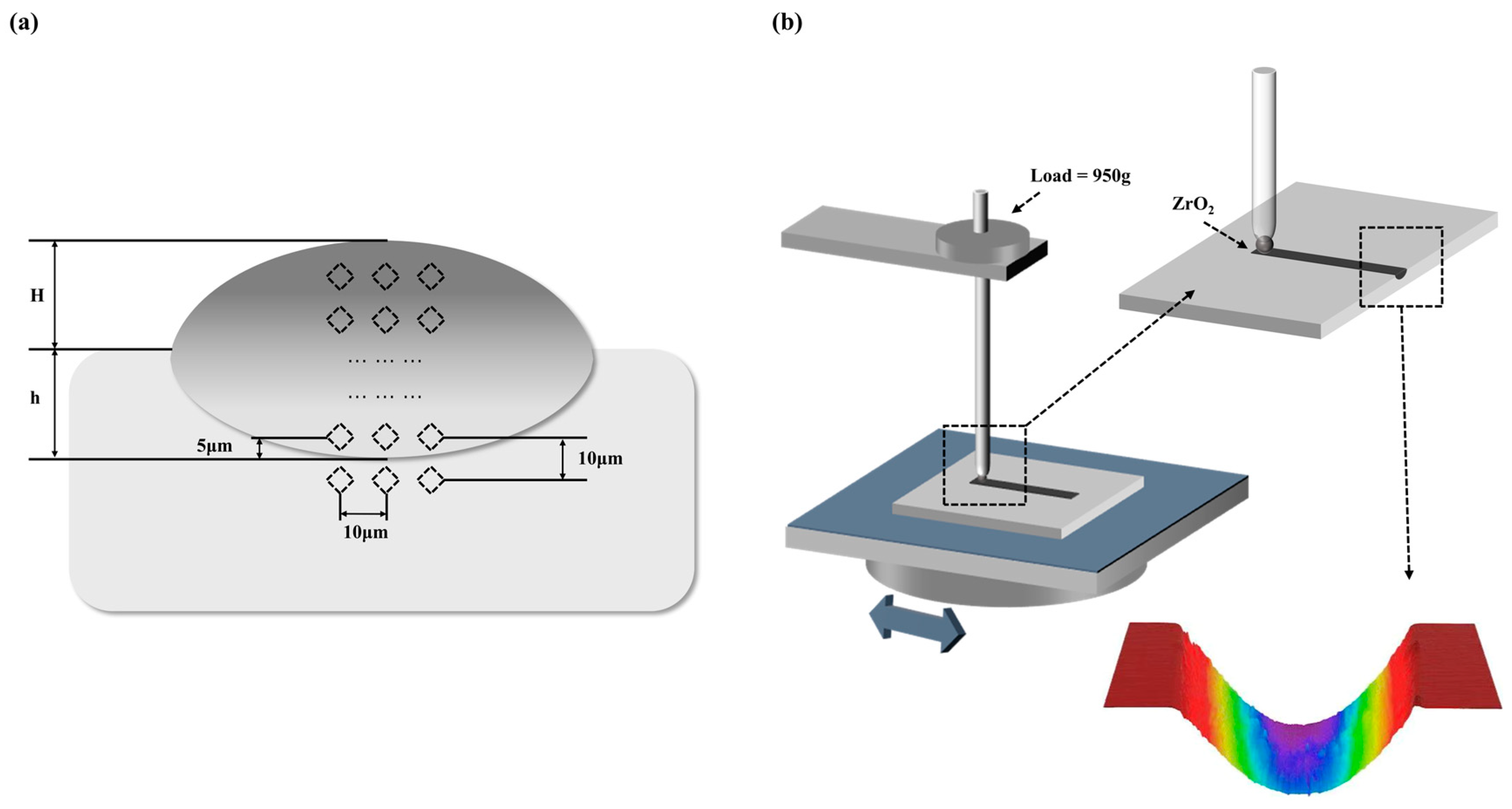
After the cladding was completed, the specimens were processed using wire cutting. After grinding and polishing, the cross-sections of specimens were etched by a self-made etchant (HF:HCl:HNO3:H2O = 1:1.5:2.5:295). The microhardness was measured using a Vickers microhardness machine (HV-1000A, Laizhou Yutong Test Instrument Co., Ltd., Laizhou, China), while the dilution ratio was analyzed by optical microscopy (OM, Zeiss Axio Scope A1, Zeiss, Oberkochen, Germany) as shown in Figure 3. Microhardness measurements were conducted with test points positioned 5 μm from the fusion line on both sides, spaced longitudinally at intervals of 10 μm, and three points were tested at the same horizontal level at 10 μm intervals. The microhardness test employs a test load of 200 g and a holding time under load of 10 s. The average horizontal value was recorded. The dilution ratio (D) was calculated as the ratio of cladding depth (h) to the sum of cladding height (H) and cladding depth (h), namely, D = h/(h + H). The cross-sectional microstructure and wear morphology of the coatings was observed by a scanning electron microscope (SEM, Phenom XL, Phenom, Eindhoven, Holland) coupled with an energy dispersive spectrometer (EDS). The phase composition of the coating was analyzed by X-ray diffraction (XRD, Bruker D2 phaser, Bruker AXS, Karlsruhe, Germany). XRD measurements were conducted using Cu Kα radiation (λ = 0.15406 Å) at an operating voltage of 40 kV and a current of 40 mA. Diffraction patterns were recorded over a 2θ scanning range of 20° to 90°. To simulate the reciprocating friction service environment of titanium alloy, the reciprocating friction and wear testing apparatus (MSR-2T, Lanzhou Zhongke Kaihua Technology Development Co., Ltd., Lanzhou, China) was employed to evaluate wear resistance, as shown in Figure 3b. The wear test was conducted using a ZrO2 counterbody with a diameter of 6 mm, a friction path length of 5 mm, a loading time of 30 min and a reciprocating frequency of 5 Hz. The wear tracks were subsequently analyzed via white-light interferometry (RTEC UP, Rtec instruments, San Jose, CA, USA). For each coating sample, three parallel tribological tests were conducted, and the average values of the coefficient of friction and wear area were calculated.
Figure 3. The Schematic diagram of specimens testing: (a) the microhardness and dilution ratio measurements; (b) the friction and wear testing.

3. Results and Discussion

3.1. Microstructure and XRD Analysis

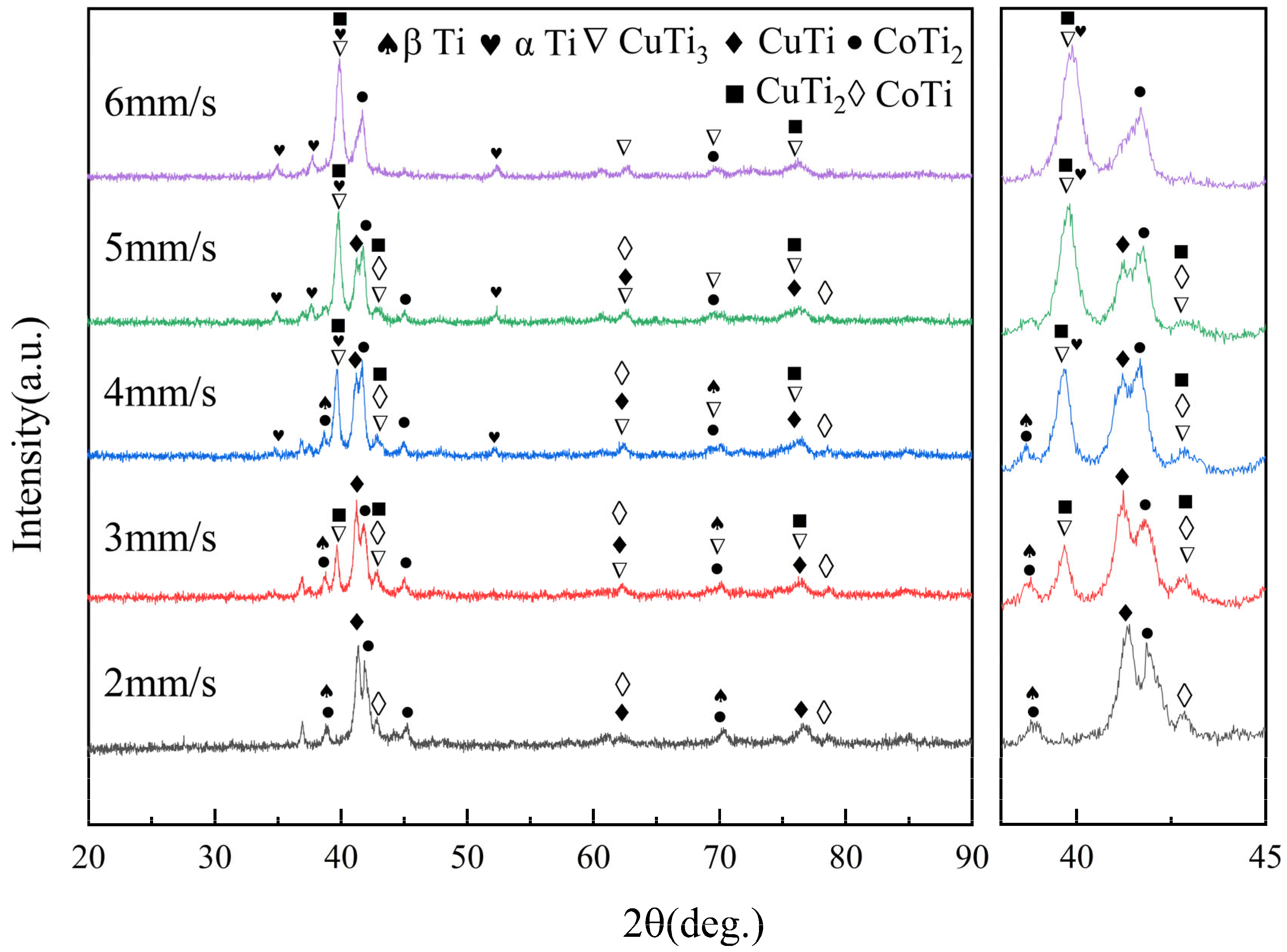
Figure 4 shows the XRD patterns of the coatings prepared at various scanning speeds. All coatings contained CoTi2 and CuTi phases. At 2 mm/s, β-Ti and CoTi was observed. When the scanning speed increased to 3 mm/s, CuTi2 and CuTi3 appeared. Further increasing the speed to 4 mm/s led to the formation of α-Ti, while at 5 mm/s, β-Ti completely disappeared. For the Co-Cu-Ti system, CoTi, CoTi2, CuTi, CuTi2 and CuTi3 can be formed by the following reactions (6)–(10).
C o + T i = C o T i ,
C o + 2 T i = C o T i 2 ,
C u + T i = C u T i ,
C u + 2 T i = C u T i 2 ,
C u + 3 T i = C u T i 3 ,
Figure 4. XRD patterns of the coatings (laser power: 600 W; powder feed rate: 25 g/min).
As the scanning speed increases, the cooling rate of the melt pool rises significantly, resulting in the inhibition of high-temperature β-Ti phase stabilization due to insufficient diffusion. Consequently, at higher scanning speeds of 4–6 mm/s, the β-Ti to α-Ti phase transformation is enhanced, and α-Ti gradually becomes the dominant phase. At the same time, the degree of undercooling increases, promoting the formation of Cu-rich phases. Because copper has a high diffusion rate, it tends to accumulate more readily during rapid solidification [30]. As a result, when the scanning speed reaches 3 mm/s, CuTi2 and CuTi3 phases appear.
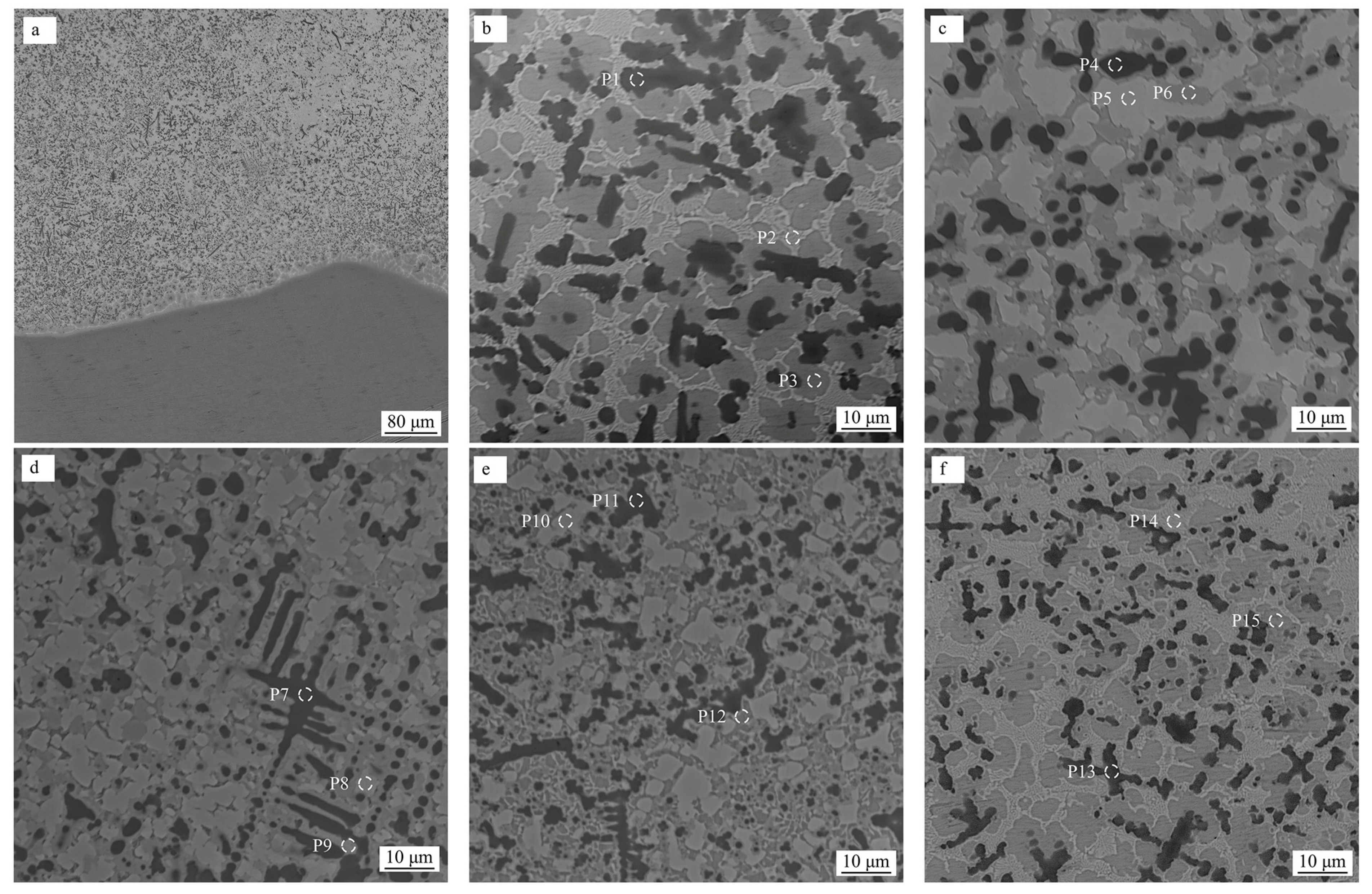
Figure 5a shows the interfacial microstructure between the Co-Cr-Ti coating and TC4 substrate. No obvious cracks are observed, indicating successful metallurgical bonding, which facilitates enhanced interdiffusion at the interface, thereby increasing the bonding strength. The microstructures at the middle cross-sectional regions of different coatings are shown in Figure 5b–f. The coating exhibits a predominantly hybrid microstructure composed of dendritic and cellular grains with random crystallographic orientations, accompanied by scattered equiaxed crystals. We can observe three different regions: the light gray region, the dark gray region, and the black region. With increasing scanning speeds, the reduced laser–material interaction time accelerates solidification rates, which limits grain growth and consequently results in grain size refinement, significantly changing the microstructures of coatings. At low scanning speed of 2 mm/s and high scanning speed of 5 and 6 mm/s, the light gray regions in the coating exhibit a network-like structure. At low scanning speeds, the prolonged residence time of the molten pool allows sufficient diffusion, promoting the segregation of Cu and Co in the interdendritic regions and forming a continuous network eutectic structure. Meanwhile, reduced cooling rates decrease undercooling, promoting coarse dendrites with wider secondary dendrite arm spacing [31,32]. During the solidification process, an interdendrite eutectic network will subsequently form. Under high scanning speed conditions, the accelerated cooling rate induces rapid solidification, which promotes undercooling of the components [33]. This can lead to elemental segregation of Cu and Co along the boundaries of primary dendrites, and eventually form an interdendritic eutectic network during solidification [34]. Under these two extreme conditions, Cu and Co elements are confined to the grain boundaries, forming Co-Ti and Cu-Ti eutectic networks. At a medium scanning speed, the cooling rate is optimized to ensure that the components have sufficient diffusion time without exceeding the critical value. Therefore, the element is evenly distributed rather than being limited to the grain boundaries. The light gray areas appear as uniform blocks, as shown in Figure 5c,d.
Figure 5. The microstructure of the coatings (laser power: 600 W; powder feed rate: 25 g/min): (a) cross-section; (bf) the middle region of the cross-section: (b) 2 mm/s; (c) 3 mm/s; (d) 4 mm/s; (e) 5 mm/s; (f) 6 mm/s.
To further determine the phase composition, elemental analysis was conducted on characteristic regions of the microstructure. The corresponding EDS results of the test points marked in Figure 5 are presented in Table 4. The composition of this black area confirms that it corresponds to β-Ti or α-Ti. The EDS results show that the Ti content is >95 wt.% and the total solute content is <5 wt.%, which conforms to the characteristics of titanium solid solutions [19]. According to the EDS data and XRD data, the light gray region in Figure 5 was identified as Co-Ti phase and Cu-Ti phase. The dark gray region is located between the light gray region and the black region, serving as a bridge connecting the matrix and the strengthening phase.
Table 4. EDS results of the tested points marked in Figure 5 (at.%).

3.2. Microhardness

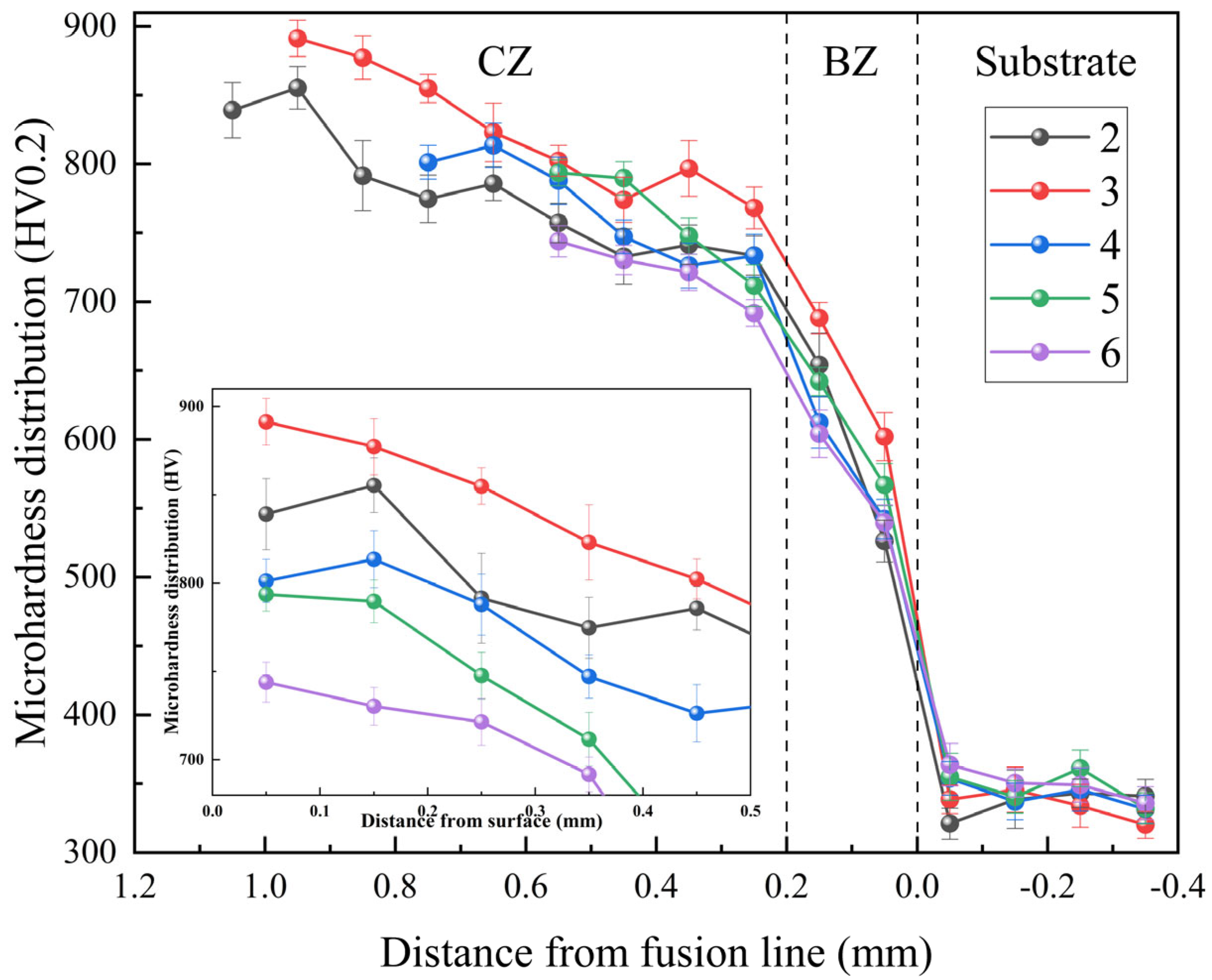
The microhardness distribution across the cross-sections of the Co-Cu-Ti coatings is shown in Figure 6. The average microhardness of the coatings are 745 HV0.2, 788 HV0.2, 721 HV0.2, 709 HV0.2 and 672 HV0.2 at scanning speeds of 2 mm/s, 3 mm/s, 4 mm/s, 5 mm/s, and 6 mm/s, which is 217.79%, 230.39%, 210.71%, 207.24% and 196.48% compared to the TC4 substrate hardness of 341.94 HV0.2. This improvement in microhardness can be attributed to fine grain strengthening and second phase strengthening. The extremely high solidification rate of laser cladding effectively refines the grain size, thereby enhancing microhardness. Additionally, the intermetallic compounds of Co-Ti and Cu-Ti, which are the key strengthening phases in the coating, further increase the microhardness by their high hardness and their ability to hinder substrate deformation [30,35]. Furthermore, the refined size and uniform distribution of these intermetallic compounds synergistically contribute to the overall strengthening effect of the coating. The peak microhardness observed in the coating prepared at a scanning speed of 3 mm/s is attributed to the synergistic effect of multiple mechanisms. The XRD results indicate that under this condition, the coating contains a various high-hardness intermetallic compounds such as CoTi, CoTi2 (Co-Ti phases), and CuTi, CuTi2, CuTi3 (Cu-Ti phases), with the most diverse phase types. The EDS data confirmed that the content of the strengthening phase was sufficient. The light gray phase containing 46.59% Co and Cu elements. This multi-phase coexistence phenomenon has led to a significant synergistic enhancement. When the scanning speed increases to 4 mm/s, the α-Ti phase begins to appear. Furthermore, as the scanning speed continues to increase, the content of the α-Ti phase increases further, thereby weakening the strengthening effect of the second phase and ultimately leading to an overall decrease in coating hardness. Meanwhile, a moderate cooling rate of 3 mm/s promotes the uniform distribution of the strengthening phase in block form. This not only preserves the strengthening effect of the high-hardness phase but also prevents the brittleness issues associated with the eutectic network. Moreover, the strengthening phase forces dislocations to bypass or shear through it, significantly increasing energy consumption. When the strengthening phase is uniformly distributed in block form, it significantly limits dislocation slip, greatly enhances the deformation resistance of the coating, and thereby increases the hardness of the coating [36].
Figure 6. Microhardness distributions across the cross-sections of the Co-Cu-Ti coatings (laser power: 600 W; powder feed rate: 25 g/min).

3.3. Wear Properties

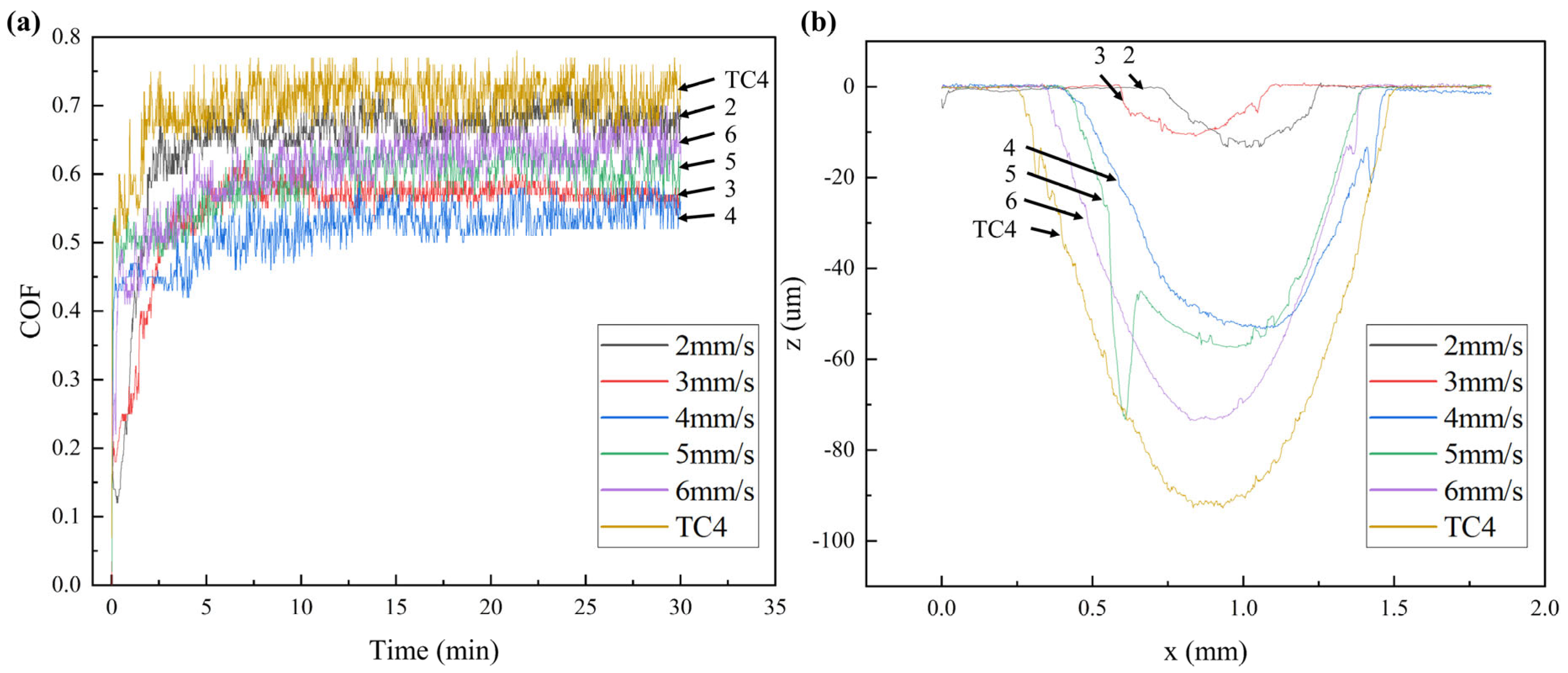
Figure 7 quantifies the tribological performance of Co-Cu-Ti coatings at ambient temperatures, including wear coefficient of friction, weight loss, and cross-sectional wear profile. As shown in Figure 7a, the coefficient of friction (COF) of the substrate and coating prepared at different scanning speeds typically exhibits two distinct stages, including an initial sharp increase followed by a stable plateau. As the scanning speed increased from 2 mm/s to 4 mm/s, the stable stage COF of the coating gradually decreased from 0.671 to 0.526, and then rebounded to 0.619 at 6 mm/s. The COF of all coatings was 5.8% to 26.1% lower than that of the substrate (0.712), demonstrating their effectiveness in reducing friction.
Figure 7. Tribological behavior at room temperature (laser power: 600 W; powder feed rate: 25 g/min): (a) coefficient of friction; (b) 2D cross-sectional profiles of the worn section.
The significant reduction in the COF of the coating is attributed to the strengthening effect of the Co-Ti phase, which reduces microscopic surface damage [37], and the lubricating effect of the Cu-Ti phase, which decreases frictional resistance [38]. As the scanning speed increased from 2 mm/s to 4 mm/s, the COF decreased from 0.671 to 0.526. The primary reasons are the stability of the strengthening effect and the enhancement of the lubrication effect. The Co-Ti phases prevent microscopic cutting and preserve the microstructural integrity of the contact surface [39], while also providing the necessary conditions for the formation of a continuous lubricating film. Meanwhile, when the Cu-Ti phase replaces the Cu-Ti eutectic network with a complete structure, the stability of the lubricating phase release is significantly enhanced [40]. When the scanning speed increased from 4 mm/s to 6 mm/s, the COF increased from 0.526 to 0.619. This change is primarily due to the weakening of the Co-Ti strengthening effect and the disruption of the continuity of the Cu-Ti lubricating film. After 4 mm/s, the Co-Ti phase gradually decreased and disappeared at 6 mm/s. The loss of this phase led to a decline in the coating surface’s resistance to plastic deformation. Meanwhile, the increased content of the α-Ti phase further compromises the load-bearing capacity of the coating surface, which in turn exacerbates deformation and spalling at the contact interface, increases surface roughness, intensifies abrasive wear, and ultimately raises frictional resistance. At the same time, the Cu-Ti phase exists in the form of a eutectic network, making it difficult to form a continuous lubricating film. Additionally, the lubricating film tends to be disrupted during its formation due to the instability of the surface structure, ultimately preventing the formation of a continuous and stable lubricating film.
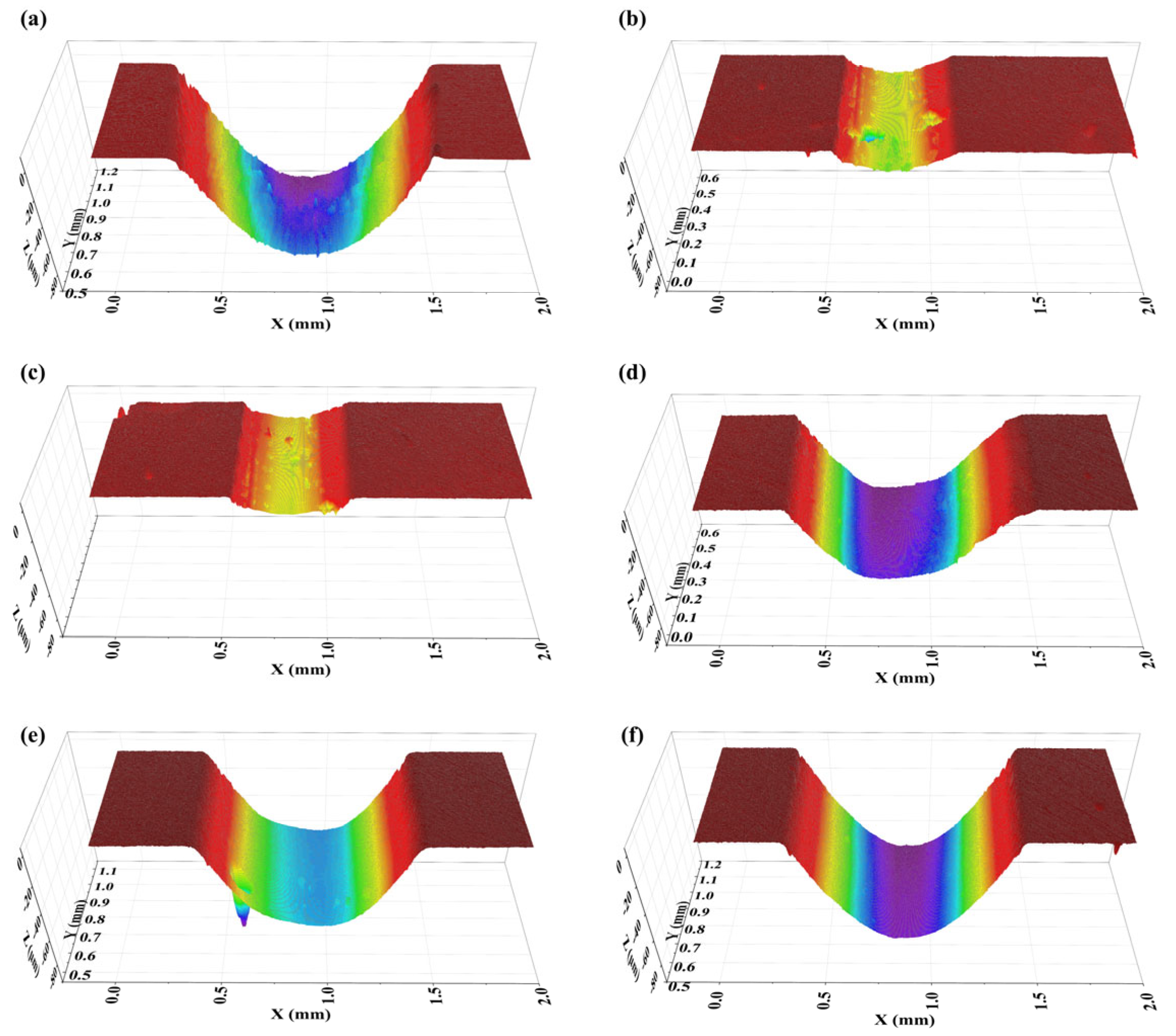
Figure 7b exhibits 2D cross-sectional profiles of the worn section. The width and depth of wear marks on TC4 were much greater than those on the coatings, with a cross-sectional area of 75.79 × 10⁻⁹ mm2. As the scanning speed increases, the width and depth of wear marks initially decreases and then increases, with values of approximately 4.53 × 10⁻⁹ mm2, 3.57 × 10⁻⁹ mm2, 36.74 × 10⁻⁹ mm2, 40.32 × 10⁻⁹ mm2 and 50.18 × 10⁻⁹ mm2, respectively. The wear track characteristics can be more intuitively observed in Figure 8. The coating prepared at a scanning speed of 3 mm/s exhibits significantly reduced wear width and depth compared to other coatings, demonstrating its superior wear resistance. This is mainly due to a lower COF which reduces friction [41], along with an optimal microhardness that helps the grinding ball resist friction [42].
Figure 8. Three-dimensional wear trace morphology (laser power: 600 W; powder feed rate: 25 g/min): (a) TC4; (b) 2 mm/s; (c) 3 mm/s; (d) 4 mm/s; (e) 5 mm/s; (f) 6 mm/s.

3.4. Wear Mechanism

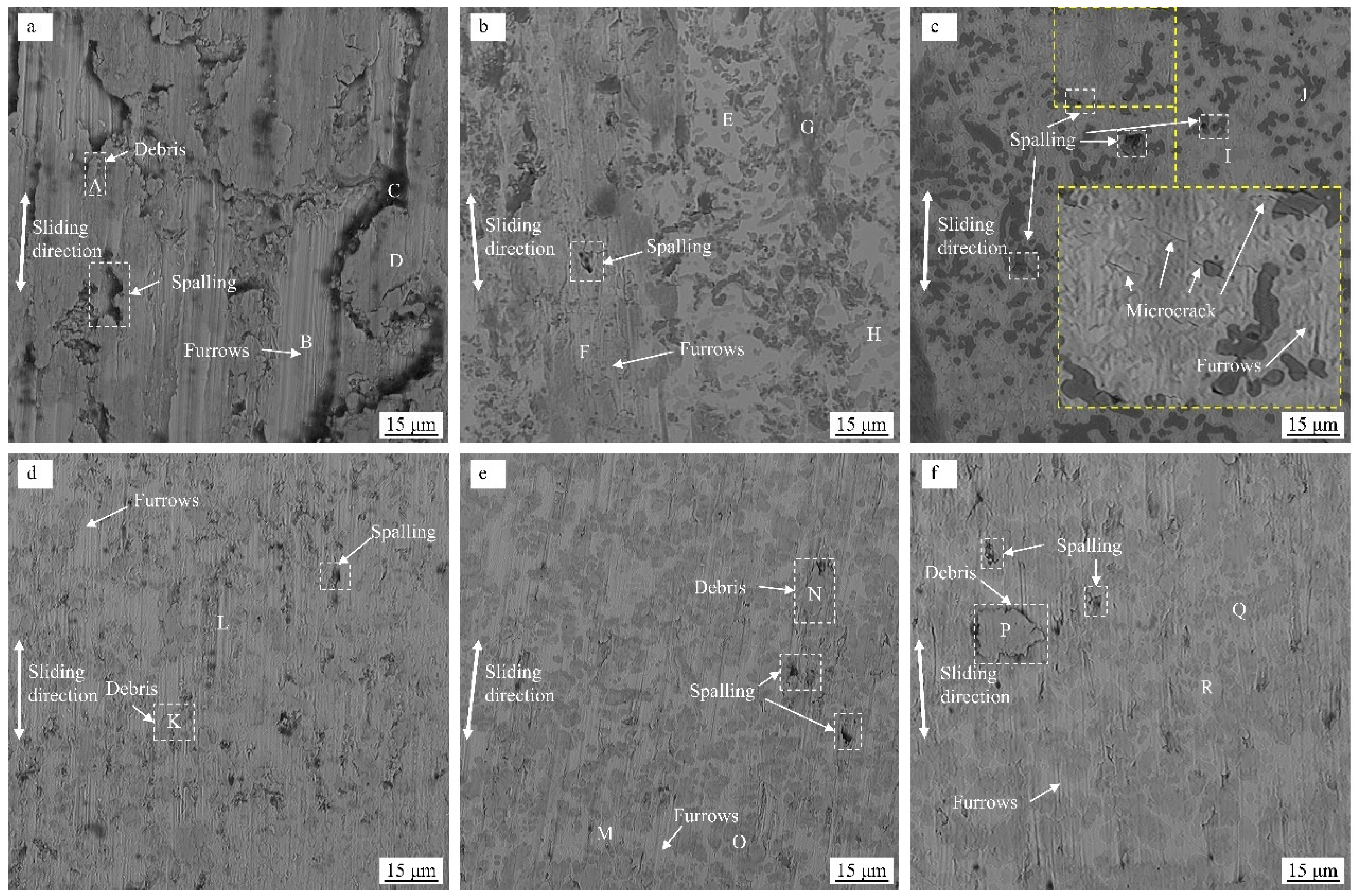
To reveal the wear mechanism, the wear surface morphologies of the coatings and the TC4 substrate are presented in Figure 9, along with EDS analysis in Table 5. Apparent deep furrows and large areas of spalling were observed on the TC4 substrate, accompanied by flaky bumps and debris along the direction of frictional sliding, as shown in Figure 9a. The TC4 substrate exhibits relatively low hardness, making it susceptible to damage under external loads during the friction process. As a result, micro-convex bodies and hard particles can easily penetrate the TC4 surface layer. Subsequent relative sliding motion then produces pronounced furrows aligned with the direction of friction. The oxygen content is lowest at the furrows (B) due to the fact that they appear at the final stage of the wear process, where oxidation conditions are insufficient. At the same time, the materials accumulated on both sides of the furrow are easily broken and peeled off during subsequent friction, becoming an important source of a large amount of wear debris (A). Frictional heat promotes oxidation on the surface of the substrate, forming an oxide film (D). However, under the action of abrasive wear and adhesive wear, the oxide film is prone to cracking, producing hard oxides pieces that combine with wear debris to form hard abrasive particles. This leads to three-body wear, which intensifies the wear of the substrate. The wear debris mixed with hard oxides forms abrasive particles, which intensify the degree of abrasive wear.
Figure 9. Wear surface morphology (laser power: 600 W; powder feed rate: 25 g/min): (a) TC4; (b) 2 mm/s; (c) 3 mm/s; (d) 4 mm/s; (e) 5 mm/s; (f) 6 mm/s.
Table 5. EDS results of the tested points marked in Figure 9 (at.%).
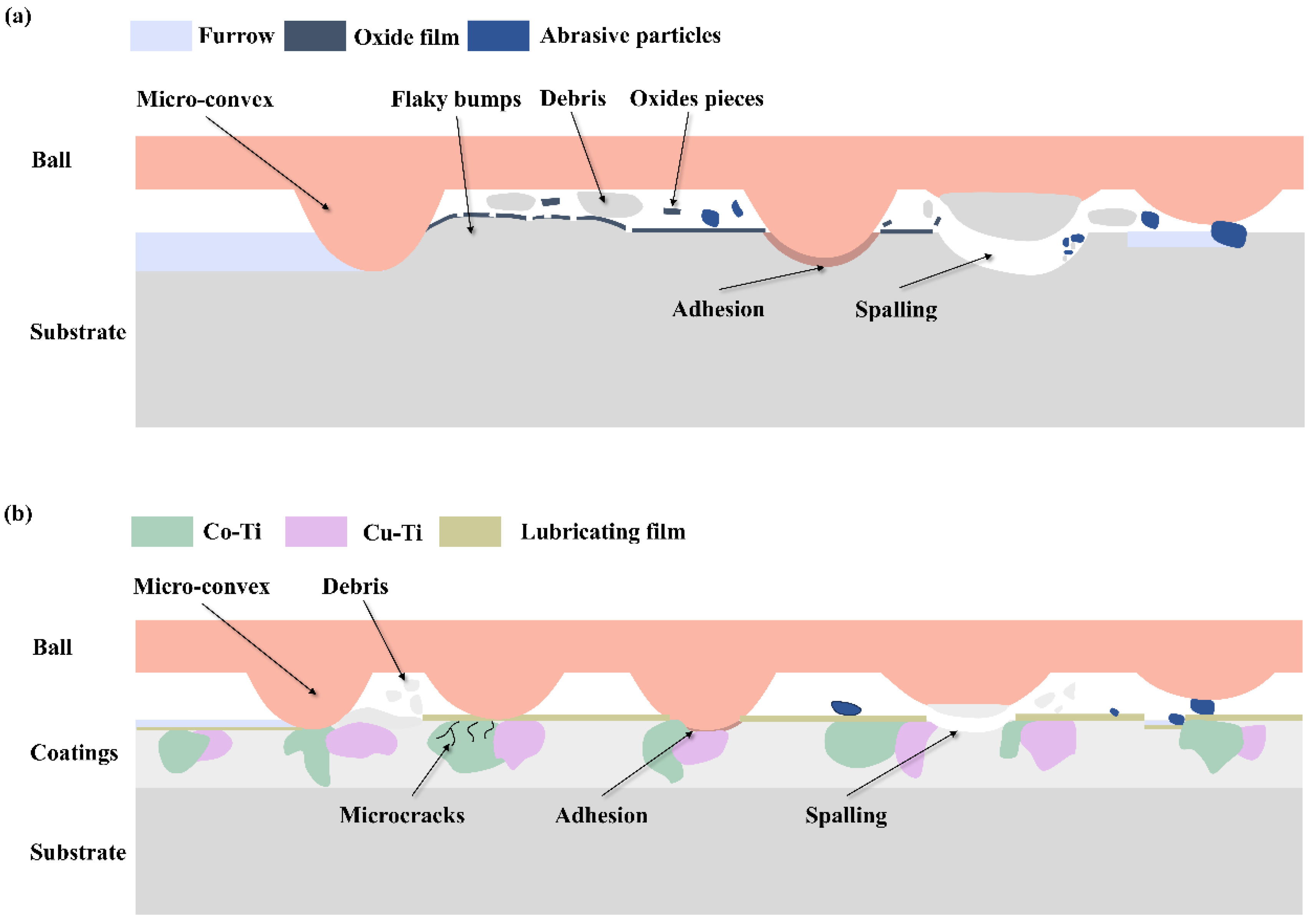
Under the combined effects of frictional heat and pressure, the oxide film on the surface of the TC4 substrate tends to rupture, resulting in large-area contact with the counterface material and causing adhesion. As the tangential force increases during sliding, the adhesive junctions undergo shear fracture. Some of the fracture locations are situated within the TC4 substrate, causing the surface material to be torn and peeled off, resulting in large areas of spalling. Under the plastic flow due to the continuous friction, the partially intact adhesive regions gradually accumulate in the same direction of the friction or sideways of the sliding direction, and the layers of protrusions are formed along the direction of friction. Under plastic flow due to the continuous friction, the partially intact adhesive regions gradually accumulate either in the direction of friction or sideways to the sliding direction, forming layers of protrusions aligned with the friction direction. The black areas (C) appeared on both sides of the furrows and in the region surrounding the spalling. An area where oxygen concentration reached as high as 72.26% was identified, indicating the accumulation of a hard abrasive particle. These particles are fragments of oxide film that become fully oxidized during the wear process, which explains the relatively high oxygen content in the area. In summary, the wear mechanism of TC4 titanium alloy is mainly abrasive wear with fairly intense adhesive and oxide wear, as shown in Figure 10a. The result is in line with the results reported by S. Zhao [43]. The substrate is softer and more plastic, hence it has greater wear than all the coatings.
Figure 10. Schematic diagram of the wear mechanism: (a) TC4; (b) coatings.
The worn surface is characterized by furrows and a small amount of spalling, debris, flake bumps. The oxygen concentration in the Ti-rich zones (J, Q, O) is significantly higher than in the Cu-Co-rich copper zones (I, M, R). This indicates that the Ti-rich zones are more prone to deformation and the formation of a thin, fragile oxide film. Then the layers crack under cyclic strain, and fresh TC4 is exposed again, which subsequently oxidizes [44]. Additionally, the debris composition reveals two key features: the Ti content is more than four times that of Co and Cu, and the oxygen content is higher than in the furrow regions (L, M, R). These findings indicate that the Ti-rich zone is more susceptible to removal during wear, the resulting debris is subsequently exposed to oxygen and undergoes further oxidation. This can be attributed to several mechanisms. The uniform distribution of Co-Ti hard phases as secondary phases in the coating can inhibit the movement of dislocations and thus improve the hardness of the coating significantly. The minimum hardness of the coating reaches 672 HV0.2, which is 1.96 times that of the substrate. The Co-Ti hard phase can work as the supporting skeleton in the coating during subsequent stages and is the primary load bearing phase during friction [45]. They come into direct contact with the micro-convex body on the grinding ball and effectively prevent surface abrasives from cutting. This reduces wear caused by abrasive action, suppresses plastic deformation and flow under external forces on the coating surface, and prevents excessive deformation and rupture of the oxide film. This also reduces the large-area contact between the Ti-rich regions and the balls, weakening the occurrence of adhesive wear [46]. In addition, the Cu-Ti phase (CuTi, CuTi2, CuTi3) provides lubrication functions [47]. Under the effect of frictional heat, they soften and transfer to the contact interface, forming a continuous lubricating film that fills the space between the micro-convex body on the grinding balls and the coating. The film reduces the direct contact area between the coating and its counterpart, thereby lowering shear friction resistance and adhesive effects.
Compared to other coatings, the wear surface of the coating prepared at a scanning speed of 3 mm/s exhibits relatively shallow grooves, consistent with the wear behavior shown in Figure 7 and Figure 8. After magnification, microcracks parallel to the direction of friction were observed, confirming the occurrence of fatigue wear. Additionally, minor localized spalling was detected in the Ti-rich zones. These observations indicate that the Co-Ti phase provides robust structural support during the wear process, effectively protecting the more vulnerable Ti-rich regions. Furthermore, when abrasive particles fail to remove material rapidly, sustained high-frequency friction induces fatigue-mode cracks within the coating. At a scanning speed of 3 mm/s, a moderate cooling rate promotes the complete formation and stable distribution of the Cu-Ti phases in bulk form. Compared to the eutectic networks obtained at scanning speeds of 2 mm/s, 4 mm/s, and 6 mm/s, this balanced distribution facilitates the release and formation of a continuous lubricating film during friction more effectively than the other distributions. It achieves significantly lower frictional resistance and avoids the large contact with the counterface of the Ti-rich areas. The high bearing strength of Co-Ti phase can limit high deformation in the surface of coating layer and keep the lubricating film of Cu-Ti intact. The lubricating film of Cu-Ti reduces the frictional stress on the Co-Ti phase, so the strengthening and lubrication exert a positive feedback effect on each other. Briefly, the coating fabricated at a scanning speed of 3 mm/s exhibited higher wear resistance due to the optimal synergistic effect of Co-Ti strengthening and Cu-Ti lubrication interactions, as shown in Figure 10b.

4. Conclusions

The Co-Cu-Ti composite coatings with enhanced wear resistance compared to the TC4 substrate’s surface were prepared using laser cladding. The objective was to optimize parameters and investigate the influence of scanning speed on the phase compositions, microstructure, hardness and wear resistance of Co-Cu-Ti composite coatings. The conclusions are as follows.
(1)
We used an orthogonal test combined with the CRITIC-TOPSIS method to systematically identify the best process parameters at laser power of 600 W, scanning speed of 3 m/s and powder feed rate of 25 g/min. The results demonstrated that scanning speed plays the most important role in overall process performance, accounting for 47.7% of the total influence. An excellent metallurgical bond between the coating and substrate was achieved.
(2)
The composition of the coating is dominated by Co-Ti and Cu-Ti phases. Variations in scanning speed lead to the disappearance of the β-Ti phase and the formation of the α-Ti phase, accompanied by changes in the CuTi2 and CuTi3 phases. Additionally, an increase in scanning speed results in grain size refinement within the coating. In particular, the coatings prepared at scanning speeds of 3 and 4 mm/s shows homogeneous block-like arrangement within the Co-Ti and Cu-Ti phases, while that prepared with other scanning speeds reveals a network-like eutectic morphology, owing to the variation in cooling rates.
(3)
The coatings, in contrast to the substrate, exhibited significantly increased microhardness and wear resistance due to the reinforcing effect of the Co-Ti phase and the lubricating effects provided by the Cu-Ti phase. With the increase in scanning speed, the microhardness of the coating shows a trend of first rising and then decreasing, and the wear resistance also shows a change pattern of first strengthening and then weakening. The coating obtained at a scanning speed of 3 mm/s exhibited the most favorable microhardness and wear resistance, which is attributed to an optimal balance of synergistic effects.

Author Contributions

Conceptualization, B.Z., Y.Z., H.Z. and H.Y.; data curation, B.Z. and H.Z.; formal analysis, B.Z., Y.Z. and G.H.; investigation, G.H. and H.Y.; methodology, B.Z. and H.Z.; visualization, B.Z. and H.Z.; writing—original draft, B.Z. and Y.Z. writing—review and editing B.Z. and Y.Z. All authors have read and agreed to the published version of the manuscript.

Funding

This research received no external funding.

Data Availability Statement

Data will be made available on request.

Conflicts of Interest

Author Guangliang Hu is employed by the Zhejiang Changjiang Automobile Electronic System Co., Ltd. Author Haicheng Yu is employed by the Xingji Electrical Appliance Group Co., Ltd. The remaining authors declare that the research was conducted in the absence of any commercial or financial relationships that could be construed as a potential conflict of interest.

References

  1. Chu, M.; Xiao, H.; Ren, L.; Mo, T.; Lin, B. Microstructure and Properties of Ti–Al–C Composite Coatings Prepared by Laser Cladding. Ceram. Int. 2024, 50, 12498–12509. [Google Scholar] [CrossRef]
  2. Chen, K.; Chen, B.; Zhang, S.; Wang, M.; Zhang, L.; Shan, A. Friction Spot Welding between Porous TC4 Titanium Alloy and Ultra High Molecular Weight Polyethylene. Mater. Des. 2017, 132, 178–187. [Google Scholar] [CrossRef]
  3. Saurabh, A.; Meghana, C.M.; Singh, P.K.; Verma, P.C. Titanium-Based Materials: Synthesis, Properties, and Applications. Mater. Today 2022, 56, 412–419. [Google Scholar] [CrossRef]
  4. Liu, D.; He, D.; Li, H.; Li, N.; Ma, L.; Li, H.; Xu, Y.; Yu, J. Multi-Ceramic Phases Synergistically Reinforced Titanium Matrix Composite Coating Deposited by Laser Cladding: Effect of B4C Content on the Microstructure and Wear Properties. Surf. Coat. Technol. 2025, 496, 131648. [Google Scholar] [CrossRef]
  5. Nair, A.M.; Kumar, R.; Maurya, S.S.; Gaur, A.; Keshri, A.K.; Sharma, S. Plasma Sprayed Titanium- Nanodiamond Composite Coatings with Enhanced Mechanical Properties. Mater. Today Commun. 2024, 41, 110238. [Google Scholar] [CrossRef]
  6. Koshuro, V.; Fomina, M.; Zakharevich, A.; Fomin, A. Superhard Ta–O–N Coatings Produced on Titanium Using Induction Physical Vapor Deposition. Ceram. Int. 2022, 48, 19467–19483. [Google Scholar] [CrossRef]
  7. Zhao, M.; Ma, Y.; Zhang, Y.; Liu, X.; Sun, H.; Liang, R.; Yin, H.; Wang, D. An Efficient Salt-Thermo-Carburizing Method to Prepare Titanium Carbide Coating. Surf. Coat. Technol. 2023, 465, 129546. [Google Scholar] [CrossRef]
  8. Gan, R.; Liu, Z.; Kong, Y.; Chang, Y.; Shen, Y.; Li, J.; Ning, H. Preparation and Properties of Cu/Cu-Sn Alloy Cladding Layers on Titanium Alloy by Laser Cladding. J. Alloys Compd. 2025, 1020, 179547. [Google Scholar] [CrossRef]
  9. Zhang, Y.; Liu, Z.; Yang, C.; Wang, X.; Sun, M.; Chen, S.; Xu, G. Microstructure and Wear Behavior of Laser-Cladded WC Matrix Composite Coatings with Different TiC/Ni Contents on Titanium Alloys. Ceram. Int. 2025, 51, 27229–27242. [Google Scholar] [CrossRef]
  10. Ding, H.; Zhang, Z.; Cao, Y.; Wu, H.; Hua, K.; Wang, H. Effect of Laser Remelting on Microstructure Evolution and High-Temperature Fretting Wear Resistance in a Laser-Cladding Self-Lubricating Composite Coating on Titanium Alloy Substrate. Surf. Coat. Technol. 2024, 494, 131435. [Google Scholar] [CrossRef]
  11. Xiang, D.; Liu, Y.; Yu, T.; Wang, D.; Leng, X.; Wang, K.; Liu, L.; Pan, J.; Yao, S.; Chen, Z. Review on Wear Resistance of Laser Cladding High-Entropy Alloy Coatings. J. Mater. Res. Technol. 2024, 28, 911–934. [Google Scholar] [CrossRef]
  12. Chen, H.; Yu, D.T.; Mao, J.T.; Wu, C.L.; Zhang, S.; Zhang, C.H.; Wang, Q.; Zhang, D. Microstructure and Tribo-Corrosion Behavior of TC4 Composites Reinforced by in Situ Synthesized TiC Ceramics Particles through Laser Cladding. Ceram. Int. 2025, 51, 31719–31733. [Google Scholar] [CrossRef]
  13. Ren, Z.Y.; Hu, Y.L.; Tong, Y.; Cai, Z.H.; Liu, J.; Wang, H.D.; Liao, J.Z.; Xu, S.; Li, L.K. Wear-Resistant NbMoTaWTi High Entropy Alloy Coating Prepared by Laser Cladding on TC4 Titanium Alloy. Tribol. Int. 2023, 182, 108366. [Google Scholar] [CrossRef]
  14. Fu, S.; Xu, Y.; Zhu, L.; Lu, H.; Li, W. Enhanced In-Situ Reinforcement Evolution and Superior Wear Resistance by Changing Y2O3 Addition in Ti6Al4V-Based WC Gradient Coatings through Laser Cladding. Tribol. Int. 2025, 205, 110524. [Google Scholar] [CrossRef]
  15. Zhou, L.; Ma, G.; Zhao, H.; Mou, H.; Xu, J.; Wang, W.; Xing, Z.; Li, Y.; Guo, W.; Wang, H. Research Status and Prospect of Extreme High-Speed Laser Cladding Technology. Opt. Laser Technol. 2024, 168, 109800. [Google Scholar] [CrossRef]
  16. Ren, P.; Ouyang, Y.; Mu, J.; Luo, S.; Tang, Z.; Wu, Y.; Leung, C.L.A.; Oliveira, J.P.; Zou, Y.; Wang, H.; et al. Metal Powder Atomization Preparation, Modification, and Reuse for Additive Manufacturing: A Review. Prog. Mater. Sci. 2025, 152, 101449. [Google Scholar] [CrossRef]
  17. Liu, Y.; Ding, Y.; Yang, L.; Sun, R.; Zhang, T.; Yang, X. Research and Progress of Laser Cladding on Engineering Alloys: A Review. J. Manuf. Process. 2021, 66, 341–363. [Google Scholar] [CrossRef]
  18. Lu, S.; Wang, L.; Zhou, J.; Liang, J. Microstructure and Tribological Properties of Laser-Cladded Co-Ti3SiC2 Coating with Ni-Based Interlayer on Copper Alloy. Tribol. Int. 2022, 171, 107549. [Google Scholar] [CrossRef]
  19. Li, X.; Peng, J.; Wang, F.; Liu, Z.; Feng, X. Effect of Electrically Assisted Preheating on Microstructure and Properties of Laser-Cladded Co-Based Coating on CP-Ti Alloy Substrate. Coatings 2023, 13, 1379. [Google Scholar] [CrossRef]
  20. Chang, W.; Xiao, G.; Zhang, H.; Chen, H.; Yi, M.; Zhang, J.; Chen, Z.; Xu, C. Microstructure and Properties of Graphene Reinforced Co-Based Composite Coating by Laser Cladding. Surf. Coat. Technol. 2023, 453, 129139. [Google Scholar] [CrossRef]
  21. Dong, Q.; Zheng, S.; An, Y.; Pu, J. Effect of Copper Addition on the Microstructure, Wear Resistance, Anti-Corrosion and Antibacterial Behavior of Laser Cladding CoCrW Coatings in Marine Environment. Surf. Coat. Technol. 2025, 502, 131966. [Google Scholar] [CrossRef]
  22. Zhang, T.; Yan, X.; Zhen, H.; Zhang, Q.; Zhang, Z. Influence of Cu Addition on the Microstructure and Tribological Properties of Ti-Based Laser Cladded Composite Coatings on TC4. Mater. Today Commun. 2024, 40, 110220. [Google Scholar] [CrossRef]
  23. Zhuang, D.-D.; Yao, W.-S.; Tao, W.-W.; Lian, X.-L.; Zhang, L.-S.; Li, X.-B. The Microstructure and Properties of Ti-Enhanced AlCoCrFeNiTix Coatings Prepared by Laser Cladding. Appl. Surf. Sci. 2025, 698, 163085. [Google Scholar] [CrossRef]
  24. Gong, Z.; Wen, D.; Kong, B.; Qiao, Y.; Xiao, Z.; Wang, Y.; Ding, Y.; Lv, Q.; Zhang, M.; Sun, Y.; et al. Microstructure and Fretting Wear Properties of Ti-Al Coatings Fabricated by Laser Cladding on a Ti-6Al-4V Alloy. Opt. Laser. Technol. 2025, 189, 113066. [Google Scholar] [CrossRef]
  25. Kumar, V.; Kumar, R.; Kumar Das, A. Comprehensive Study of Process Parameters and Their Effect on Tribological Properties of Laser Cladded Ti6Al4V Alloy: A Review. Mater. Today 2024, 98, 91–96. [Google Scholar] [CrossRef]
  26. Yue, H.; Lv, N.; Guo, C.; Zhai, J.; Dai, W.; Zhang, J.; Zhao, G. Multi-Objective Process Optimization of Laser Cladding Co-Based Alloy by Process Window and Grey Relational Analysis. Coatings 2023, 13, 1090. [Google Scholar] [CrossRef]
  27. Nezhad, M.N.; Aboutalebi, M.R.; Seyedein, S.H.; Barekat, M. Multi-Criteria Optimization of Processing Parameters in Laser Cladding of Al0.5CoCrFeNiNb0.5-Si0.1 High Entropy Alloy Coating. J. Mater. Res. Technol. 2025, 35, 6519–6536. [Google Scholar] [CrossRef]
  28. Singha, B.; Kamble, D.L.; Kumar Sahu, R.; Narendranath, S.; Badiger, R.I. Optimization of Measured Mechanical Characteristics of Selective Microwave Hybrid Heating Processed Inconel 625/ SS 304 Weldments Using Multi-Objective JAYA Algorithm Coupled with Multi-Attributes Decision Making R-Method. Measurement 2025, 240, 115553. [Google Scholar] [CrossRef]
  29. Zeng, Q.; Wang, K.; Lu, S.; Lu, C.; Li, X. Modeling and Optimization of Energy Consumption, Surface Quality and Relative Density in GH3625 Superalloy by Laser Powder Bed Melting via RSM MOPSO and CRITIC-TOPSIS. Opt. Laser Technol. 2025, 184, 112411. [Google Scholar] [CrossRef]
  30. Yang, Y.; Cao, S.; Zhang, S.; Xu, C.; Qin, G. Microstructure and Wear Resistance of Ti–Cu–N Composite Coating Prepared via Laser Cladding/Laser Nitriding Technology on Ti–6Al–4V Alloy. Appl. Phys. A 2017, 123, 474. [Google Scholar] [CrossRef]
  31. Adesina, O.S.; Popoola, A.P.; Farotade, G.A.; Obadele, B.A.; Sanyaolu, O.O.; Jeje, S.O.; Rominiyi, A.L. Effect of SiC Addition on Laser-Based CoNi Binary Alloy Coatings on Ti-6Al-4V Alloy. Emergent. Mater. 2024, 7, 2117–2128. [Google Scholar] [CrossRef]
  32. Kanyane, L.R.; Adesina, O.S.; Popoola, A.P.I.; Farotade, G.A.; Malatji, N. Microstructural Evolution and Corrosion Properties of Laser Clad Ti-Ni on Titanium Alloy (Ti6Al4V). Procedia Manuf. 2019, 35, 1267–1272. [Google Scholar] [CrossRef]
  33. Tian, X.; Cao, S.; Hou, K.; Hou, X.; Wang, H.; Zhang, Y. Preparation of Laser Cladding Coating Undercooling Cu-Based Alloy and Co on Non-Equilibrium Solidification Structure. J. Wuhan Univ. Technol.-Mat. Sci. Edit. 2024, 39, 463–472. [Google Scholar] [CrossRef]
  34. Qiao, Y.; Huang, J.; Huang, D.; Chen, J.; Liu, W.; Wang, Z.; Zhibin, Z. Effects of Laser Scanning Speed on Microstructure, Microhardness, and Corrosion Behavior of Laser Cladding Ni45 Coatings. J. Chem. 2020, 2020, 1438473. [Google Scholar] [CrossRef]
  35. Weng, F.; Yu, H.; Chen, C.; Dai, J. Microstructures and Wear Properties of Laser Cladding Co-Based Composite Coatings on Ti–6Al–4V. Mater. Des. 2015, 80, 174–181. [Google Scholar] [CrossRef]
  36. Szajewski, B.A.; Crone, J.C.; Knap, J. Analytic Model for the Orowan Dislocation-Precipitate Bypass Mechanism. Materialia 2020, 11, 100671. [Google Scholar] [CrossRef]
  37. Aissat, S.; Zaid, M.; Sadeddine, A. Correlation between Hardness and Abrasive Wear of Grinding Balls. Metall. Res. Technol. 2020, 117, 608. [Google Scholar] [CrossRef]
  38. Burkov, A.; Dvornik, M.; Kulik, M.; Bytsura, A. Wear Resistance and Corrosion Behavior of Cu-Ti Coatings in SBF Solution. Obrab. Met. 2024, 26, 234–249. [Google Scholar] [CrossRef]
  39. Günen, A.; Bölükbaşı, Ö.S.; Özgürlük, Y.; Özkan, D.; Odabaş, O.; Somunkıran, İ. Effect of Cr Addition on Properties and Tribological Behavior at Elevated Temperature of Boride Layers Grown on Borosintered Powder Metallurgy Alloys. Met. Mater. Int. 2022, 29, 748–766. [Google Scholar] [CrossRef]
  40. Ouyang, C.; Wang, R.; Zhao, C.; Wei, R.; Li, H.; Deng, R.; Bai, Q.; Liu, Y. Multi-Layer Laser Cladding Analysis and High-Temperature Oxidative Wear Behavior of Cast Iron with a Low Expansion Coefficient. Surf. Coat. Technol. 2023, 474, 130079. [Google Scholar] [CrossRef]
  41. De Sousa, J.M.S.; Ratusznei, F.; Pereira, M.; De Medeiros Castro, R.; Curi, E.I.M. Abrasion Resistance of Ni-Cr-B-Si Coating Deposited by Laser Cladding Process. Tribol. Int. 2020, 143, 106002. [Google Scholar] [CrossRef]
  42. Chen, N.; Xiao, H.; Ren, L.; Huang, F.; Chen, Y.; Cao, S.; Wu, H.; Zhu, L. Microstructure and Tribological Properties of Laser-Cladded TiC /TiAl Composite Coatings on TC4 Alloy. Tribol. Int. 2024, 192, 109236. [Google Scholar] [CrossRef]
  43. Zhao, S.; Meng, F.; Fan, B.; Dong, Y.; Wang, J.; Qi, X. Evaluation of Wear Mechanism between TC4 Titanium Alloys and Self-Lubricating Fabrics. Wear 2023, 512–513, 204532. [Google Scholar] [CrossRef]
  44. Deng, C.; Wang, C.; Chai, L.; Wang, T.; Luo, J. Mechanical and Chemical Properties of CoCrFeNiMo0.2 High Entropy Alloy Coating Fabricated on Ti6Al4V by Laser Cladding. Intermetallics 2022, 144, 107504. [Google Scholar] [CrossRef]
  45. Wang, H.; Wu, M.; Miao, X.; Jin, X.; Cui, C. TiC In-Situ Strengthening Mechanism and Crack Initiation Mechanism of SiC/TC4 Composite Coatings by Laser Cladding. Ceram. Int. 2024, 50, 52558–52571. [Google Scholar] [CrossRef]
  46. Meng, X.; Cui, Z.; Huang, L.; Xia, C.; Lei, Q. Effects of Loads and Speeds on Friction and Wear Properties of Cu–Ti Alloys Processed by Combination Aging Treatments. J. Mater. Res. Technol. 2023, 26, 948–960. [Google Scholar] [CrossRef]
  47. Guo, C.; Zhou, J.; Yu, Y.; Wang, L.; Zhou, H.; Chen, J. Microstructure and Tribological Properties of Ti–Cu Intermetallic Compound Coating. Mater. Des. (1980–2015) 2012, 36, 482–489. [Google Scholar] [CrossRef]
Disclaimer/Publisher’s Note: The statements, opinions and data contained in all publications are solely those of the individual author(s) and contributor(s) and not of MDPI and/or the editor(s). MDPI and/or the editor(s) disclaim responsibility for any injury to people or property resulting from any ideas, methods, instructions or products referred to in the content.

Article Metrics

Citations

Article Access Statistics

Multiple requests from the same IP address are counted as one view.