You are currently viewing a new version of our website. To view the old version click .
Lubricants
  • Article
  • Open Access

30 November 2025

Effect of Nb Contents on Microstructure and Tribological Properties of FeCoCrNiNbxN Films


,
,
,
,
,
,
and
School of Mechanical and Materials Engineering, North China University of Technology (NCUT), Beijing 100144, China
*
Author to whom correspondence should be addressed.
Lubricants2025, 13(12), 522;https://doi.org/10.3390/lubricants13120522 
(registering DOI)

Abstract

FeCoCrNiNbxN (x = 0, 0.25, 0.5, 0.75, 1 molar) high-entropy nitride (HEN) films were fabricated on 304 stainless steel and Si wafers using magnetron sputtering to investigate the influence of Nb content on the microstructure, mechanical properties, and tribological performance. X-ray diffraction (XRD) analysis reveals a face-centered cubic (FCC) structure with a preferred orientation in the (200) plane, which transfers to the (111) plane as the Nb content increases. The lattice distortion induced by Nb incorporation enhanced crystallinity, with the Nb0.5N film exhibiting the highest diffraction peak intensity and interplanar distance. Cross-sectional SEM images displayed columnar crystal structures, while the surface morphology evolved from “cauliflower-like” to smoother clusters with increasing Nb content, reducing average roughness from 7.54 nm (Nb0) to 4.89 nm (Nb1). The hardness and elastic modulus initially decrease, then peak at 25.56 GPa and 265.36 GPa, respectively, for the Nb1 film, attributed to solid solution strengthening and high-entropy effects. Tribological tests demonstrated that Nb1 achieved the lowest coefficient of friction (0.46), wear volume (1.23 × 10⁻³ mm3), and wear rate (5.11 × 10⁻⁸ mm3·N−1·m−1), owing to NbN phase formation, refined grains, and reduced surface roughness. The wear mechanisms are abrasive and oxidative wear.

1. Introduction

Friction and wear not only cause energy loss and material degradation but also exert a profound influence on the service life and operational reliability of mechanical systems []. In aerospace engines, for instance, components operate under extreme conditions of high temperature, elevated pressure, and rapid rotational speeds. Under such environments, excessive friction may induce overheating, diminish efficiency, and even lead to catastrophic failures []. Likewise, in high-speed rail systems, friction between the wheels and tracks results in severe component wear, necessitating frequent maintenance and replacement, thereby increasing operational costs and downtime []. Consequently, improving the tribological performance of mechanical components has been a central objective in materials science and mechanical engineering research.
High-entropy alloys (HEAs), first introduced in 2004 [,], have garnered significant attention in recent years. High-entropy nitrides (HENs) are formed by incorporating nitrogen into multi-principal element alloy systems []. High-entropy nitrides often exhibit unique microstructures and excellent properties such as high hardness, better tribological properties and better corrosion resistance due to the combined effects of a high mixing entropy, severe lattice distortion [], sluggish diffusion, and the cocktail effect [].
Some studies have found that changing the ratio of elements can effectively change the structure of high-entropy nitrides. For AlCrTiVZrNx films, changing the gas flow rate of nitrogen (0–20 sccm) causes the microstructure to continuously transform from an amorphous to a columnar crystal structure []. In addition, the element content has a significant effect on the lattice constant and tribological properties of high-entropy nitrides []. The literature reports that high-entropy nitride films generally have high hardness and good wear resistance. For example, (MoSiTiVZr)Nx films exhibit excellent wear resistance, and when the nitrogen content is optimized, their hardness can reach 45.6 GPa []. In addition to changing the gas flow rate during film deposition, some studies have optimized the microstructure and tribological properties of high-entropy alloy coatings by regulating the ratio of metal elements. Increasing the Ti content in CoCrFeNiMnTix (x = 0.8) coatings enhances microhardness (up to 823 HV), reduces the friction coefficient, and improves wear resistance []. In AlCr2FeCoNiNbx (x = 0–2.0) coatings prepared by laser cladding on Q345 steel, increasing the Nb content alters the microstructure from a single FCC solid solution to hypoeutectic and hypereutectic structures, with more Laves phase and less FCC phase. This phase evolution raises the hardness (up to ~820 HV) and greatly enhances wear resistance. When x ≈ 0.5, the wear rate decreases to 6.2 × 10⁻⁶ mm3·N−1·m−1, indicating that Nb addition effectively improves wear performance by optimizing phase structure and hardness []. Shu et al. investigated (TiZrTaMe)N1−x (Me = Hf, Nb, Mo, or Cr) high-entropy nitride films and found that metal substitution, particularly Nb, markedly influences the phase structure, residual stress, and mechanical properties. The Nb-containing system effectively regulates phase evolution and hardness, indicating that tuning Nb content is a viable approach to optimize the mechanical and wear performance of high-entropy nitride films [].
However, despite significant progress in high-entropy nitride research, there are still challenges to overcome []. The FeCoCrNi system, as a classic face-centered cubic (FCC) high-entropy matrix, possesses both excellent ductility and structural stability, providing a good foundation for constructing high-performance nitride films with both toughness and hardness [,]. Compared with refractory systems, the FeCoCrNi system not only has a wider adjustable range in composition control, but elements such as Fe and Co also help improve the film’s bonding and tribological interaction, thus showing potential advantages in wear resistance and oxidation resistance []. In addition, although existing studies have shown that the formation of the NbN phase helps improve the film’s hardness and wear resistance [], its synergistic strengthening mechanism in the FeCoCrNi matrix remains unclear. Systematic research on the effect of Nb content variation on tribological behavior in the FeCoCrNiNbxN system is still relatively lacking. Therefore, FeCoCrNiNbxN high-entropy nitride films were selected as the research object, and we systematically investigated the effects of different Nb contents on their microstructure, mechanical properties, and tribological characteristics. This study focuses on revealing the synergistic effect between the FeCoCrNi matrix and NbN, elucidating the wear mechanism under Nb content regulation and providing a theoretical and experimental basis for the composition design and engineering application of high-entropy nitride films.

2. Experimental Details

2.1. Film Fabrication

The FeCoCrNiNbxN films were deposited on 304 stainless-steel substrates and Si wafers using a magnetron sputtering system. The films prepared on Si wafers were employed for examining the surface morphology and cross-sectional microstructure, whereas those deposited on 304 stainless-steel substrates were used for mechanical and tribological testing. In the FeCoCrNiNbx targets, the Fe, Co, Cr, and Ni elements were equimolar, while the Nb molar fractions were adjusted to 0, 0.25, 0.5, 0.75, and 1. All targets had dimensions of Φ50.8 mm × 4 mm. Prior to deposition, the substrates were ultrasonically cleaned sequentially in acetone, ethanol, and deionized water.
The substrates were mounted on a rotating holder operating at 12 rpm. The chamber vacuum was evacuated to 3 × 10⁻³ Pa prior to deposition. Before initiating sputtering, Ar gas was introduced as the protective atmosphere, and the targets were pre-sputtered for 5 min to remove surface contaminants. With the shutters closed, the substrates were then etched by Ar+ ions for 10 min to eliminate residual impurities. Afterward, the shutters were opened, and N2 was introduced as the reactive gas, with a N2/Ar flow ratio of 1:4, maintaining a working pressure of 2 Pa. A Ti target was sputtered for 60 min to deposit a TiN transition layer, which improved the adhesion between the films and the substrates. Subsequently, the FeCoCrNiNbx targets were sputtered under a DC power of 200 W for 180 min to fabricate the FeCoCrNiNbxN films. The detailed deposition parameters are listed in Table 1. Based on the Nb molar content in the FeCoCrNiNbx targets, the resulting films were designated as Nb0.25, Nb0.5, Nb0.75, and Nb1, whereas the Nb-free FeCoCrNiN film was labeled as Nb0.
Table 1. Fabrication parameters of FeCoCrNiNbxN films.

2.2. Characterization of Film Properties

The surface and cross-sectional images of films and the surface images of wear tracks were observed by a Sigma-300 scanning electron microscopy (SEM, Carl Zeiss AG, Oberkochen, Germany). The elemental distribution of the deposited film and the wear track was investigated by an energy-dispersive spectrometer (EDS, Oxford Instrument, Oxford, UK). The microstructure of the films was investigated by Ultima IV X-ray diffraction (XRD, Rigaku Corporation, Tokyo, Japan) with a Cu-Ka target. The scanning speed was 2°·min−1; the scanning angle ranged from 20° to 90°. The hardness and elastic modulus were tested by an nano-indenter (Anton Paar Tec., Graz, Austria) with a Berkovich indenter (Anton Paar Tec., Graz, Austria). The maximum load was 20 mN, and the loading and unloading speeds were 60 mN·min−1. For every sample, 5 points were selected to test and the average of the values was calculated as the final value. The tribological properties of films were tested by a CFT-I surface tester (Zhongke Kaihua Co., Ltd., Lanzhou, China). The grinding ball was a GCr16 ball with a Φ6 mm diameter. The normal force was 100 g, the reciprocating frequency f was 200 r·min−1, the reciprocating sliding distance L was 5 mm, and the total time t was 15 min. The tribological tests were repeated 3 times and the average of values was calculated as the final value. The wear rate W was obtained by the formula as follows,
W = V F d
where V is the wear volume, F is the applied normal load, and d is the sliding distance. Because the tribological test was conducted under a reciprocating motion, the total sliding distance is twice the single-pass length in each cycle. Thus, the total sliding distance can be expressed as d = t × f × L × 2, where t is the total test duration, f is the reciprocating frequency, and L is the single-pass sliding length.

3. Results and Discuss

3.1. Phase Composition

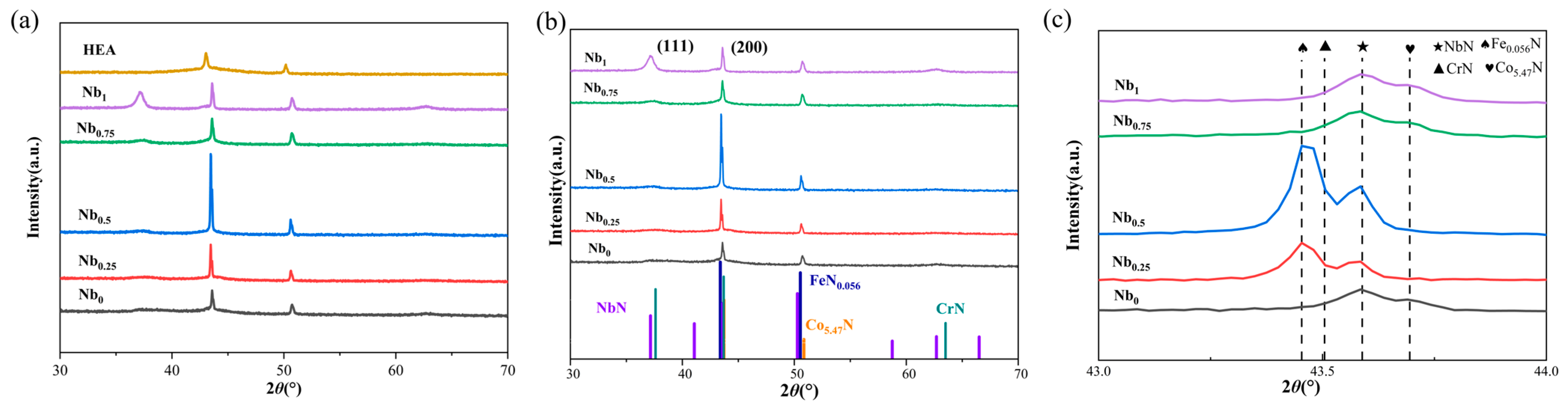
The XRD patterns of the FeCoCrNiNbxN films and FeCoCrNiNb film are shown in Figure 1, and the interplanar distance, full width at half maximum (FWHM), and grain size are listed in Table 2. The FeCoCrNiNb film exhibits a face-centered cubic (FCC) structure with a preferred (111) plane orientation. All FeCoCrNiNbxN films exhibit a face-centered cubic (FCC) structure with a preferred (200) plane orientation. The introduction of N2 forms nitride phases with the metal elements in the FeCoCrNiNbxN films during the deposition process. The nitride phases include Fe0.056N (PDF#75-2129), NbN (PDF#88-2404), CrN (PDF#76-2494), and Co5.47N (PDF#41-0943) in the FeCoCrNiNbxN films. As the Nb molar content increases from 0 to 0.5, the diffraction angle (2θ) and FWHM decrease, while the interplanar spacing, diffraction peak intensity, and grain size increase. These trends indicate improved crystallinity and enhanced grain growth, and the highest (200) diffraction peak intensity observed in the FeCoCrNiNb0.5N film corresponds to the best crystallinity. The enlargement of the lattice constant results from Nb atoms substituting other atomic sites, as the atomic radius of Nb is larger than that of the other constituent elements [,]. The enhanced crystallinity is further confirmed by the decreasing FWHM, which corresponds to grain growth, consistent with the increasing (200) peak intensity in Figure 1 []. However, when the Nb content is further increased to x = 0.75, the FWHM increases markedly and the grain size decreases, suggesting that excessive Nb leads to significant lattice distortion and stress accumulation, thereby inhibiting grain growth. At x = 1, a slight recovery in grain size indicates partial structural stabilization at higher Nb concentrations [].
Figure 1. (a) XRD patterns of FeCoCrNiNb and FeCoCrNiNbxN films; (b) XRD patterns of FeCoCrNiNbxN films; (c) a larger view in (200) plane of FeCoCrNiNbxN films.
Table 2. Interplanar distance, FWHM and grain size of FeCoCrNiNbxN films.
When the Nb molar contents increase from 0.5 to 1, the diffraction angle 2θ raises and the diffraction peak intensity and the interplanar distance declines, but the change in FWHM is not regular in the (200) plane. The irregular change in FWHM can be attributed to two competing reasons. Firstly, the introduction of Nb leads to increased lattice distortion and microstrain, which results in a broadening of the diffraction peak []. Secondly, a higher Nb content may promote phase stabilization or grain growth, which partially releases strain and causes a decrease in peak width []. With increasing Nb content, the preferred orientation of the FeCoCrNiNbxN films changes from the (200) to the (111) plane. This transition is primarily attributed to the formation and growth of NbN phases, which possess a face-centered cubic (FCC) structure with a close-packed (111) plane. As the NbN fraction increases, the (111) plane becomes energetically favorable and promotes the preferred orientation shift toward the (111) plane because it has lower surface energy. Meanwhile, the increasing Nb-induced lattice distortion and partial crystallographic realignment lead to a higher FWHM value. Consequently, the diffraction angle (2θ) of the (200) plane slightly increases, and the corresponding interplanar spacing decreases [].

3.2. Cross-Sectional and Surface Morphologies

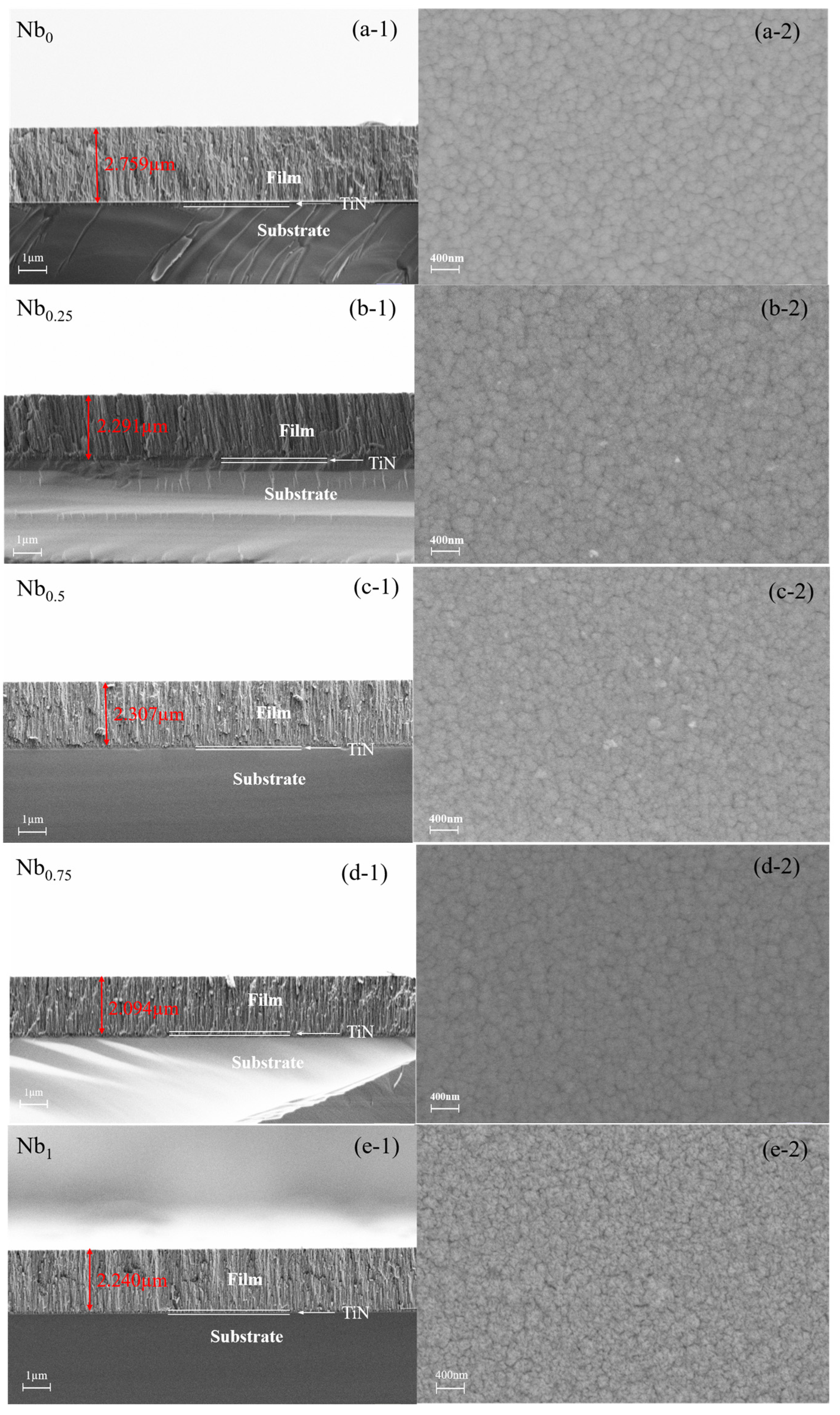
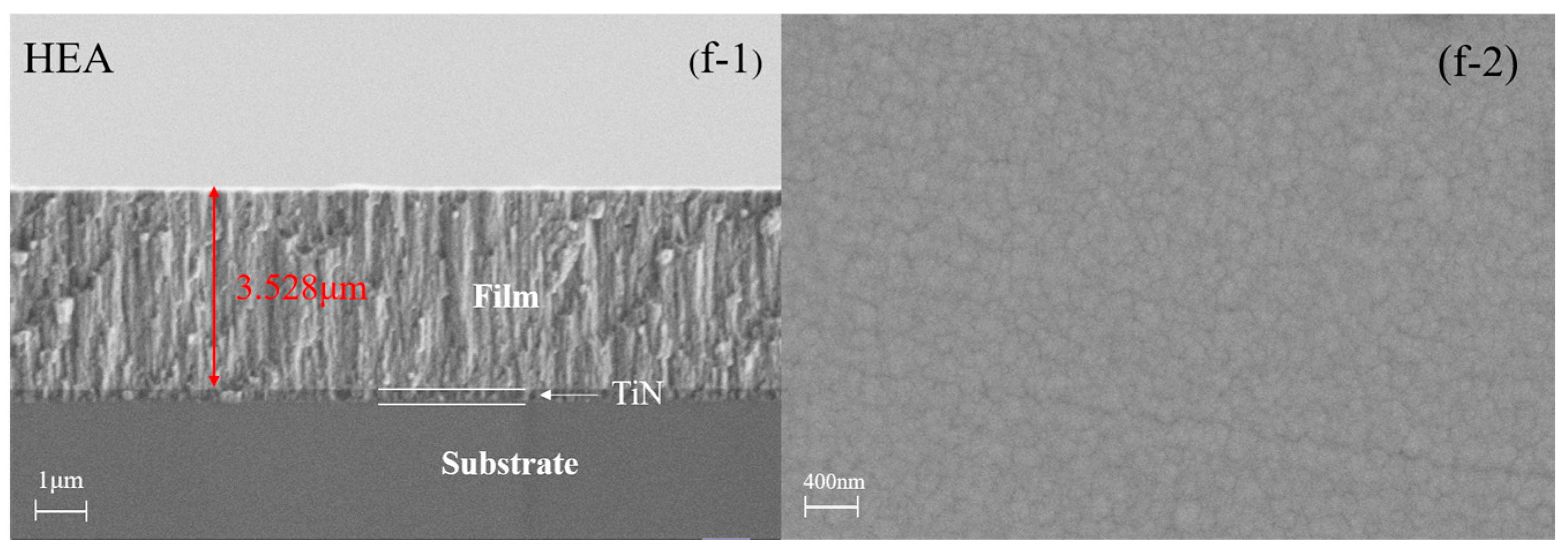
Figure 2 presents the cross-sectional and surface morphologies of the FeCoCrNiNb film and the FeCoCrNiNbxN films. All films exhibit a distinct columnar structure in the cross-section, consisting of the substrate, TiN transition layer, and HEAs or HENs films from bottom to top. The TiN transition layer has a thickness of approximately 200 nm. The thicknesses of the FeCoCrNiNbxN films are 2.759 µm, 2.291 µm, 2.307 µm, 2.094 µm, and 2.240 µm as the Nb molar content increases from 0 to 1. The thickness of FeCoCrNiNb film is 3.528 µm. The thickness of FeCoCrNiNbxN film is smaller than the one of the FeCoCrNiNb film because the deposition rate declines after the introduction of N2.
Figure 2. Cross-section and surface morphologies of FeCoCrNiNb and FeCoCrNiNbxN films: (a-1) Cross-section morphology of Nb0; (a-2) Surface morphology of Nb0; (b-1) Cross-section morphology of Nb0.25; (b-2) Surface morphology of Nb0.25; (c-1) Cross-section morphology of Nb0.5; (c-2) Surface morphology of Nb0.5; (d-1) Cross-section morphology of Nb0.75; (d-2) Surface morphology of Nb0.75; (e-1) Cross-section morphology of Nb1; (e-2) Surface morphology of Nb1; (f-1) Cross-section morphology of HEAs; (f-2) Surface morphology of HEAs.
The surface morphologies of the FeCoCrNiNb, Nb0, Nb0.25, Nb0.5, and Nb0.75 films exhibit a typical “cauliflower-like” structure without visible cracks. This morphology is characterized by the aggregation of nanosized nodular grains into irregular clusters, consistent with the columnar growth mode commonly observed in sputtered nitride coatings [,]. In contrast, the surface of the Nb1 film shows finer crystalline clusters rather than a cauliflower-like structure. As presented in Figure 2(e-2), the Nb1 film displays a dense, fine-grained morphology, indicating a significant deviation from the earlier growth pattern. This transformation is primarily attributed to the solubility and diffusion behavior of Nb in high-entropy systems. Owing to its large atomic radius and high melting point, excessive Nb content can easily induce compositional segregation and promote the formation of localized NbN phases. These phenomena suppress the original cauliflower-like, self-similar growth mode and drive the microstructure toward a denser, granular configuration [].
Agnivesh reported that in the high-entropy nitride (TiZrTaNb)N1−x system, when the Nb content exceeds a threshold of 7.2 at%, compositional segregation and structural evolution occur, resulting in noticeable changes in the film surface morphology []. This suggests that excessive Nb incorporation can induce microstructural instability and surface evolution. However, due to differences in the base alloy systems, the FeCoCrNiNbxN films in this study exhibit such morphological changes only when the Nb content approaches approximately 12 at%. This discrepancy arises because refractory-element-based high-entropy nitrides, such as (TiZrTaNb)N1−x, possess larger atomic size mismatches and exhibit stronger lattice distortion effects. In contrast, the FeCoCrNi-based system, primarily composed of 3d transition metals, offers better lattice compatibility and a higher solubility limit for Nb. As a result, Nb can remain in solid solution at higher concentrations before inducing segregation or altering the surface morphology [].
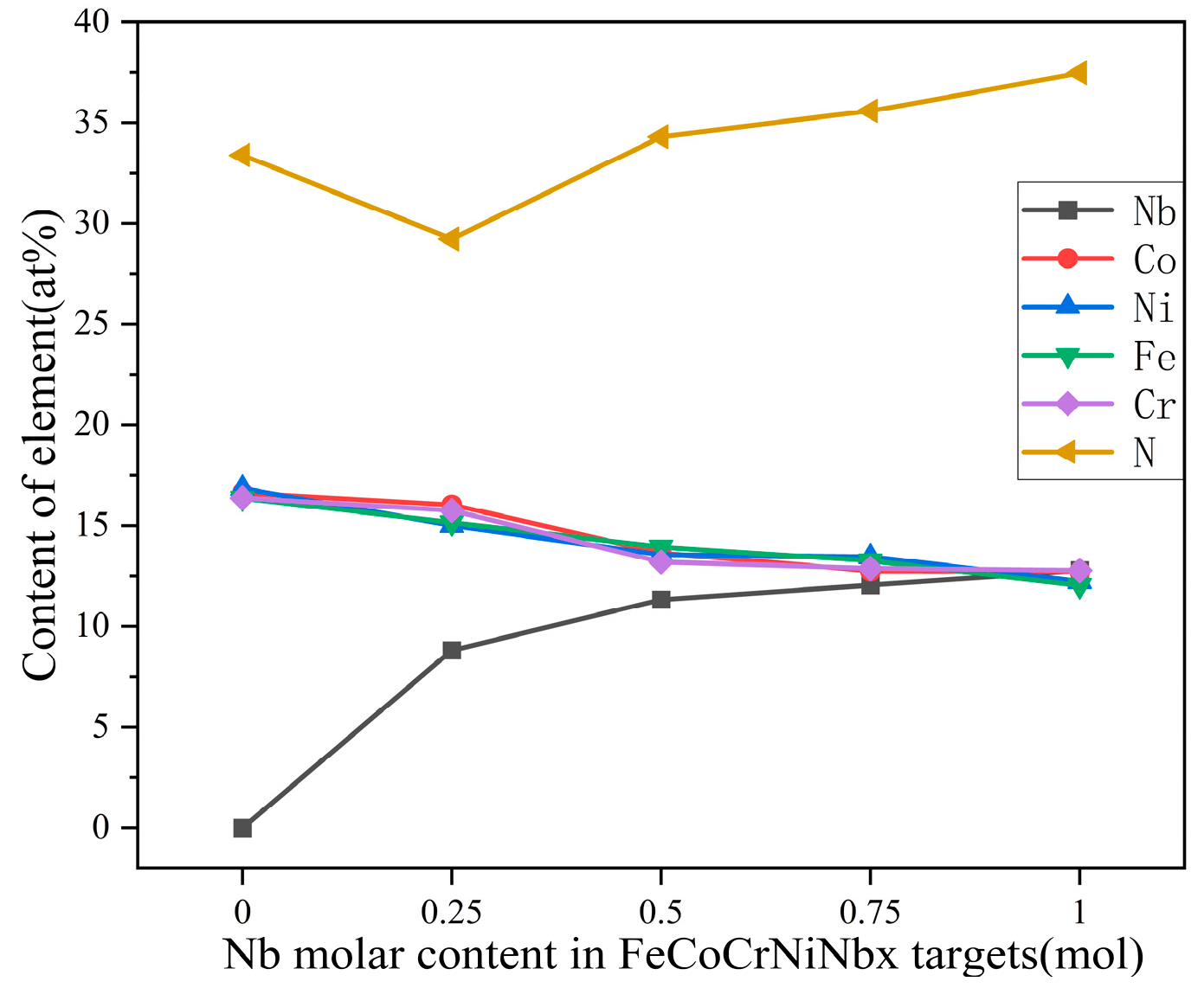
The elemental contents of the FeCoCrNiNbxN films are presented in Table 3 and Figure 3. As the Nb molar content in the FeCoCrNiNbx targets increases, the Fe, Co, Cr, and Ni contents show a slight decrease, while the Nb content increases from 0 to 12.77 at%, consistent with the definition of high-entropy alloys and the intended compositional design. Meanwhile, the nitrogen content increases from 33.39 to 37.47 at%, which is attributed to the strong affinity of Nb for nitrogen and its tendency to readily form NbN nitrides.
Table 3. Element contents data in FeCoCrNiNbxN films.
Figure 3. Element contents curve in FeCoCrNiNbxN films.
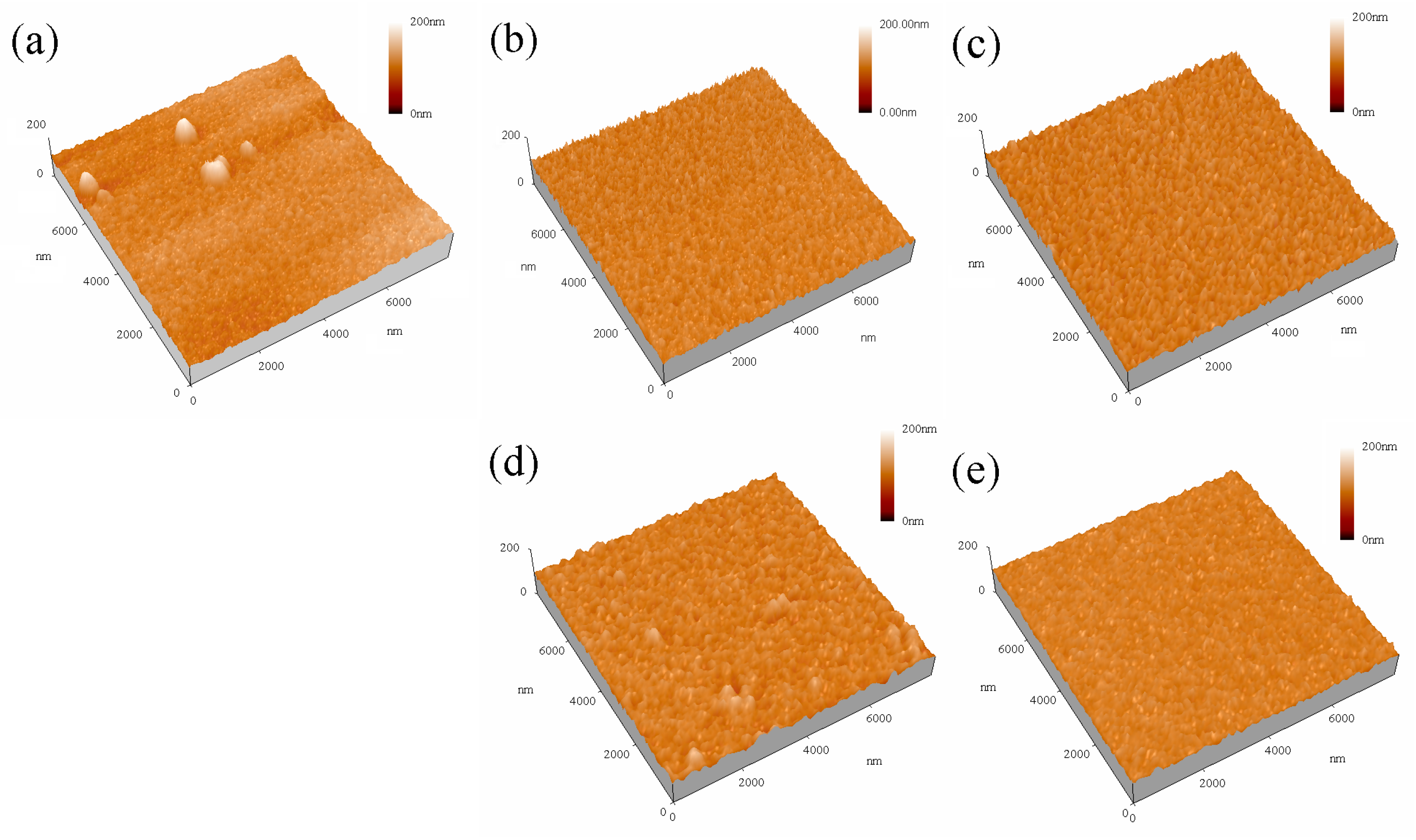
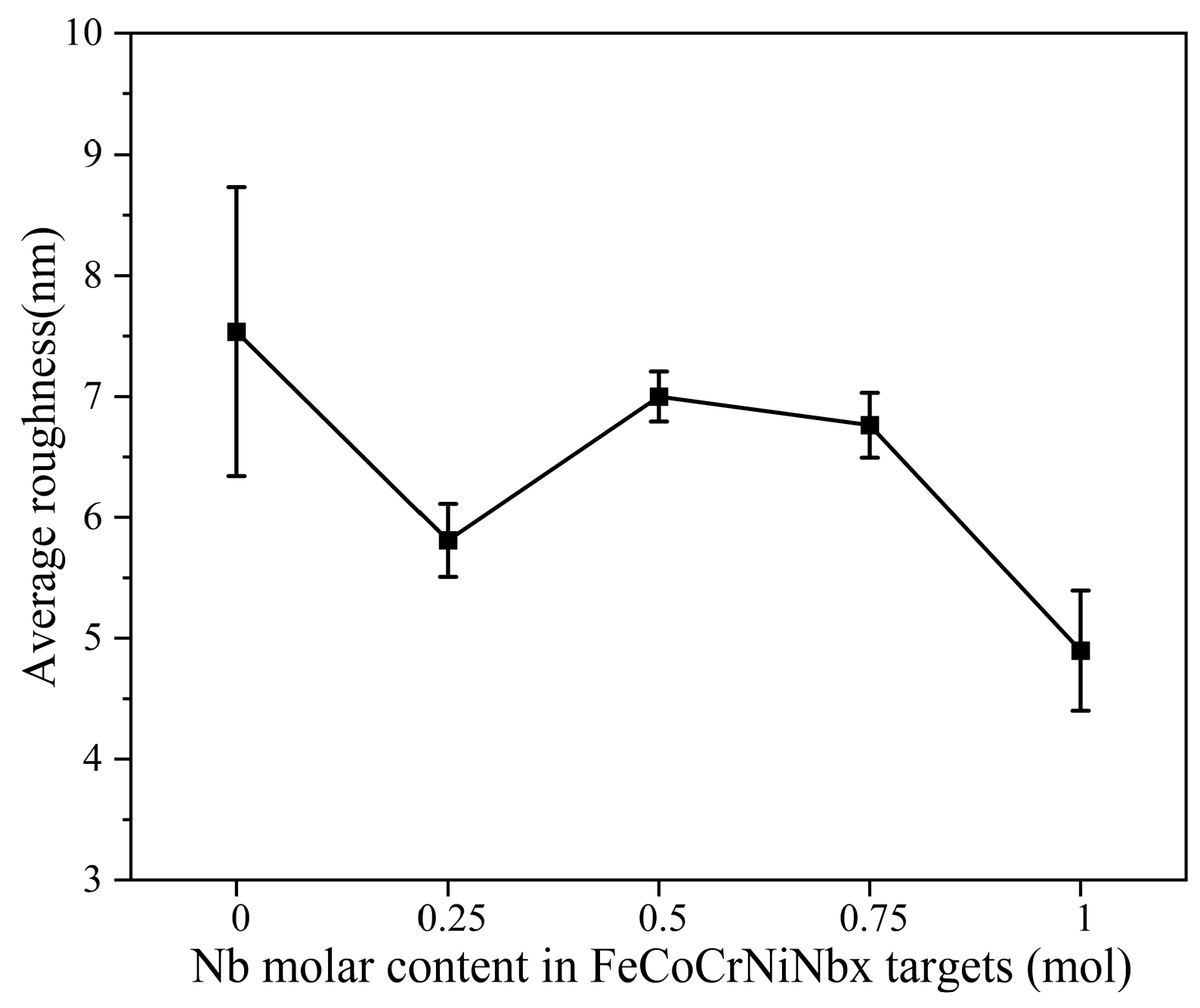
The surface morphologies and average surface roughness of the FeCoCrNiNbxN films are shown in Figure 4 and Figure 5. As the Nb content increases, surface particles gradually disappear, resulting in a smoother surface, and the average roughness decreases from 7.54 nm to 4.89 nm. This behavior is attributed to the high diffusion ability of Nb atoms, which promotes atomic rearrangement and facilitates phase-structure transitions during film deposition. These effects enhance crystal densification, stabilize the phase structure, and suppress the growth of grains and columnar crystals. Consequently, the surface uniformity and flatness of the films are significantly improved [,].
Figure 4. Surface morphologies for FeCoCrNiNbxN films: (a) Nb0; (b) Nb0.25; (c) Nb0.5; (d) Nb0.75; (e) Nb1.
Figure 5. Average surface roughness for FeCoCrNiNbxN films.

3.3. Mechanical Properties

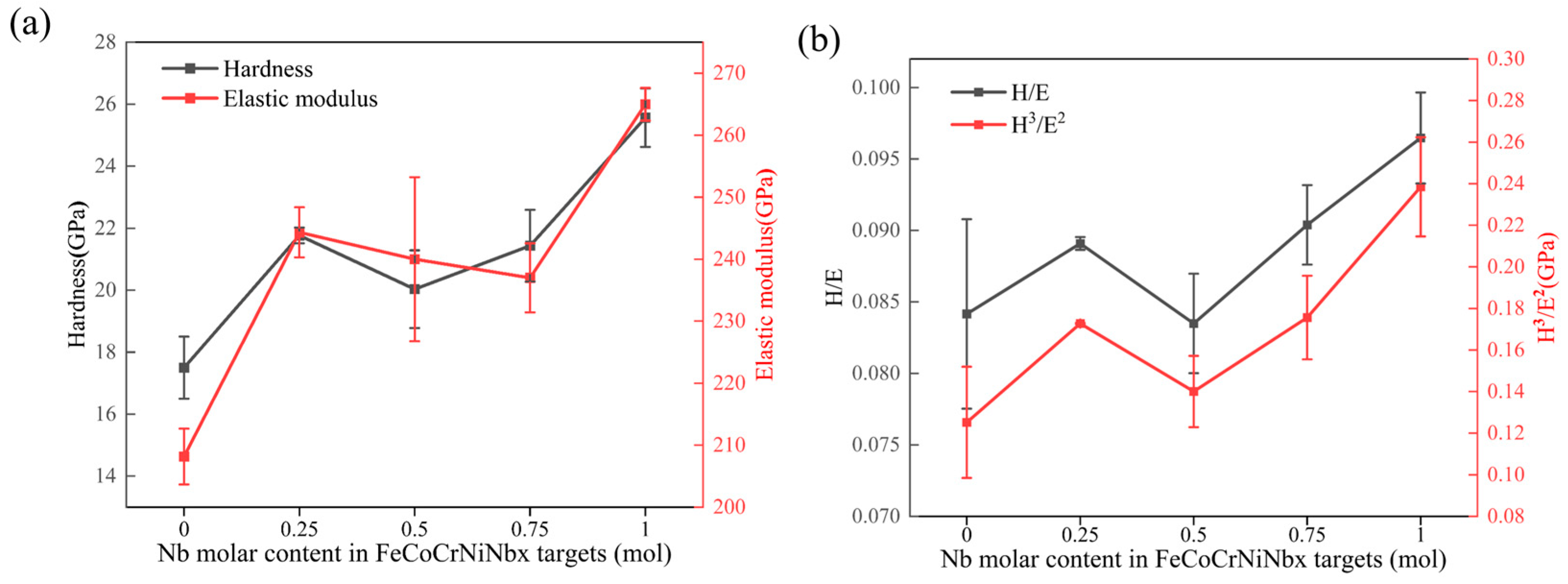
The mechanical properties such as hardness, elastic modulus, H/E and H3/E2 of the FeCoCrNiNbxN films are displayed in Figure 6. With the increasing Nb molar content, the hardness and elastic modulus firstly decline and then raise. The Nb1 film exhibits a maximum hardness of (25.56 ± 0.95) GPa and elastic modulus of (265.36 ± 2.64) GPa. There are three reasons for this. Firstly, the lattice constant of the FeCoCrNiNbxN films raises with increasing the Nb molar content from 0 to 0.5. Secondly, the crystallinity decreases due to the addition of a small amount of Nb. Thirdly, the high defect density generated during deposition also reduces the macroscopic hardness []. By increasing the Nb molar content from 0.5 to 1, the lattice constant of the FeCoCrNiNbxN films declines, but the Nb atomic radius is bigger than those of other elements. The Nb atom replaces the other elements to induce lattice distortion and a change in preferred orientation from the (200) plane to the (111) plane. Meanwhile, the Nb1 film with the equimolar content exhibits typical high-entropy effects, such as lattice distortion and solution strengthening, which helps to enhance the mechanical properties of the FeCoCrNiNbxN films.
Figure 6. Mechanical properties for FeCoCrNiNbxN films: (a) hardness and elastic modulus; (b) H/E and H3/E2.
The variations in H/E and H3/E2 for the FeCoCrNiNbxN films do not follow a distinct trend. Among all samples, the Nb1 film exhibits the highest H3/E2 value of (0.24 ± 0.02) GPa. The H/E and H3/E2 ratios correspond to the resistance to elastic and plastic deformation of the films, respectively. A higher H3/E2 ratio indicates better resistance to plastic deformation and thus improved tribological performance. Therefore, the Nb1 film demonstrates the best tribological properties [].

3.4. Tribological Properties

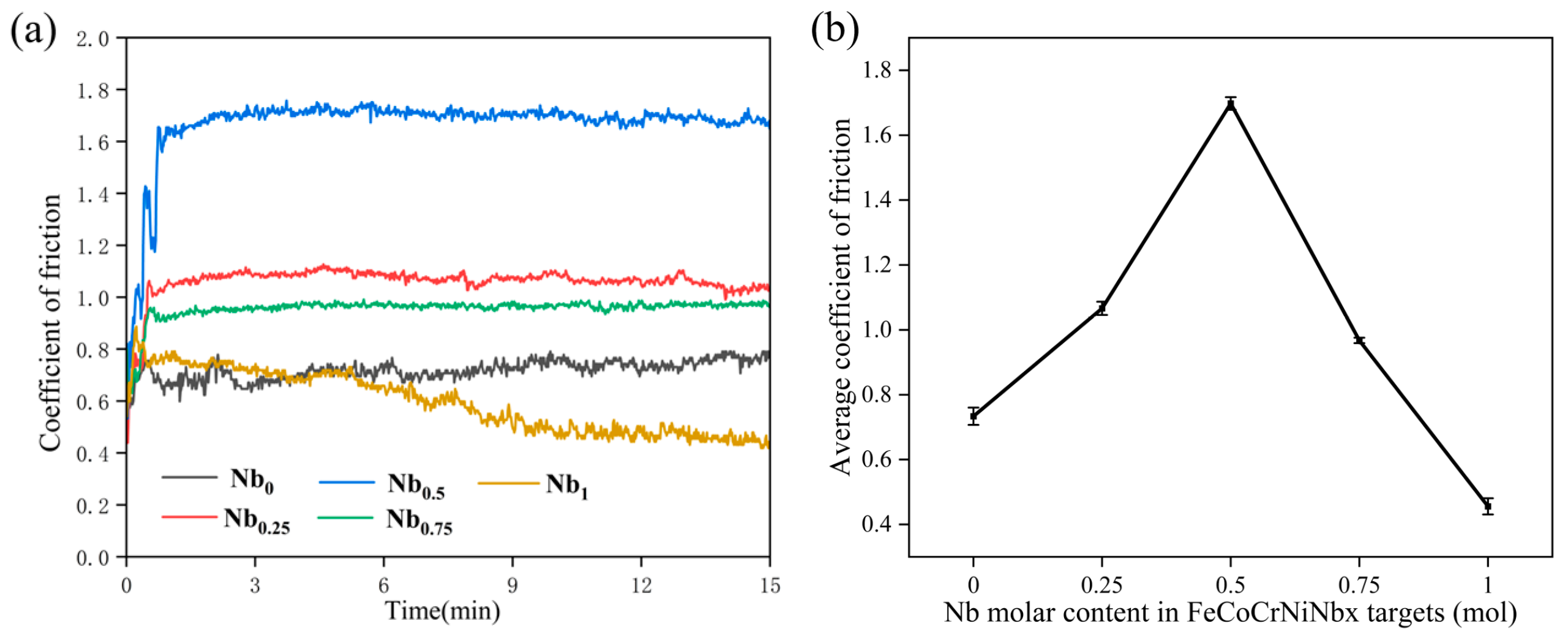
The friction curve and the average coefficient of friction (COF) of the FeCoCrNiNbxN films are displayed in Figure 7. After 1 min, the COFs of the Nb0, Nb0.25, Nb0.5 and Nb0.75 films are almost unchanged, Figure 7a, which means the fiction enters the stable wear stage. The COF of the Nb1 film becomes smaller as time passes. The average COFs of the FeCoCrNiNbxN films firstly raise and then decline with the increase in the Nb contents. The Nb1 film has a minimum COF of 0.46. There are three reasons for the improvement in COF. Firstly, the COF changing trend is same as the change trend of the lattice constant for the FeCoCrNiNbxN films. The increasing NbN phase and the crystal densification can enhance the bearing capacity and resistance to plastic deformation to improve the tribological properties of the films []. Secondly, the Nb1 film has the smallest average surface roughness, which helps to reduce the friction drag and delay film wear during the friction process []. Finally, the Nb1 film has the maximum values of hardness, elastic modulus and H3/E2 ratios, which indicates its superior resistance to elastic and plastic deformation. These mechanical characteristics are strongly correlated with enhanced wear resistance and improved tribological performance of hard nitride coatings [,].
Figure 7. (a) Friction curves and (b) average COF of FeCoCrNiNbxN films.
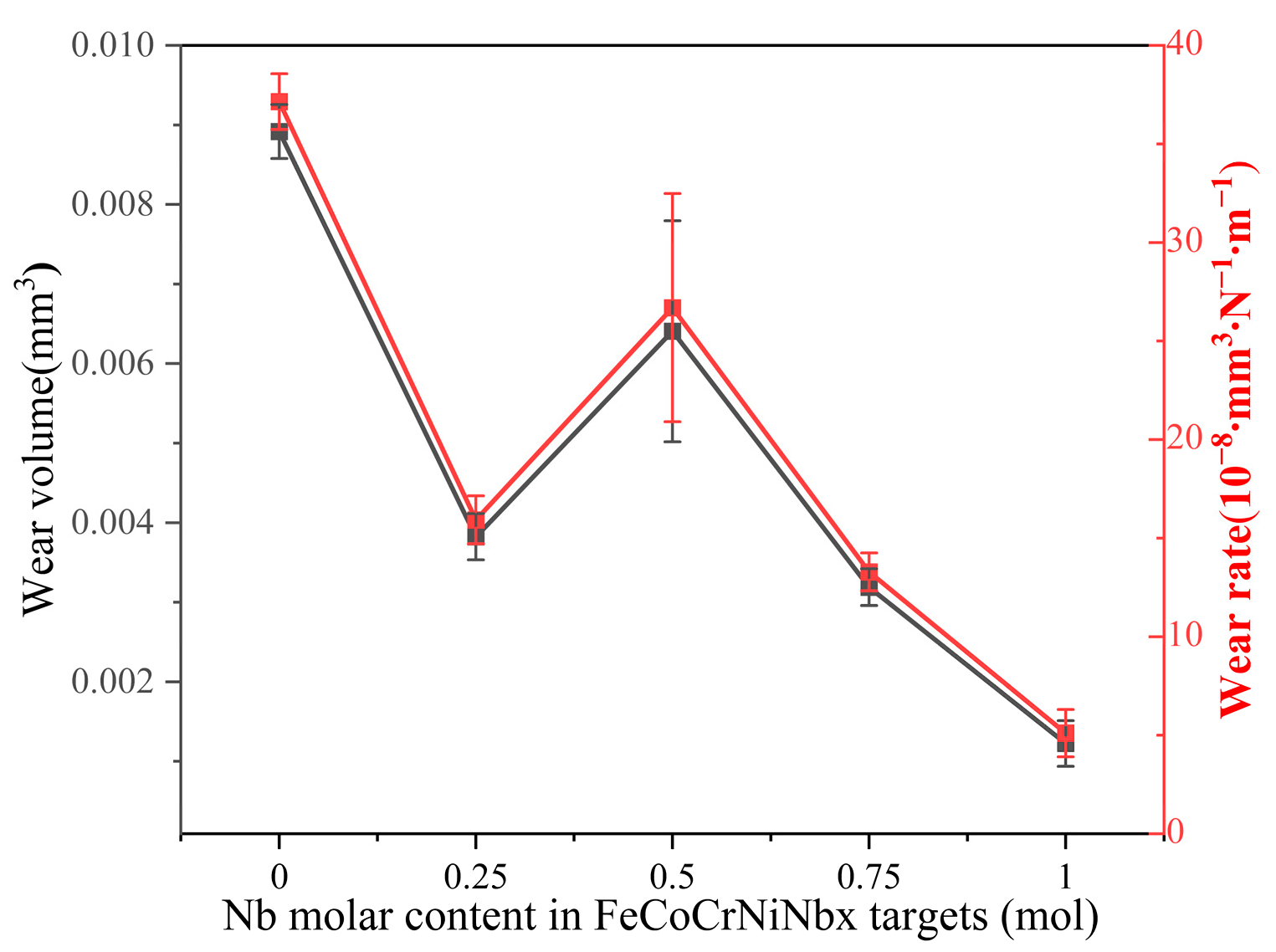
The wear volume and wear rate of the FeCoCrNiNbxN films are shown in Figure 8. Their variation trends with increasing Nb content are consistent with those of the average COF. The Nb0 film exhibits the highest wear volume, (8.92 ± 0.34) × 10−3 mm3, and wear rate, (3.71 ± 0.14) × 10−7 mm3·N−1·m−1. In contrast, the Nb1 film shows the lowest wear volume, (1.23 ± 0.28) × 10−3 mm3, and wear rate, (5.11 ± 0.12) × 10−8 mm3·N−1·m−1. The formation of NbN phases, along with grain refinement and structural densification, enhances the tribological properties of the films. These improvements facilitate the development of a more stable protective layer during sliding, thereby reducing wear throughout the friction process [,].
Figure 8. Wear volume and wear rate of FeCoCrNiNbxN films.
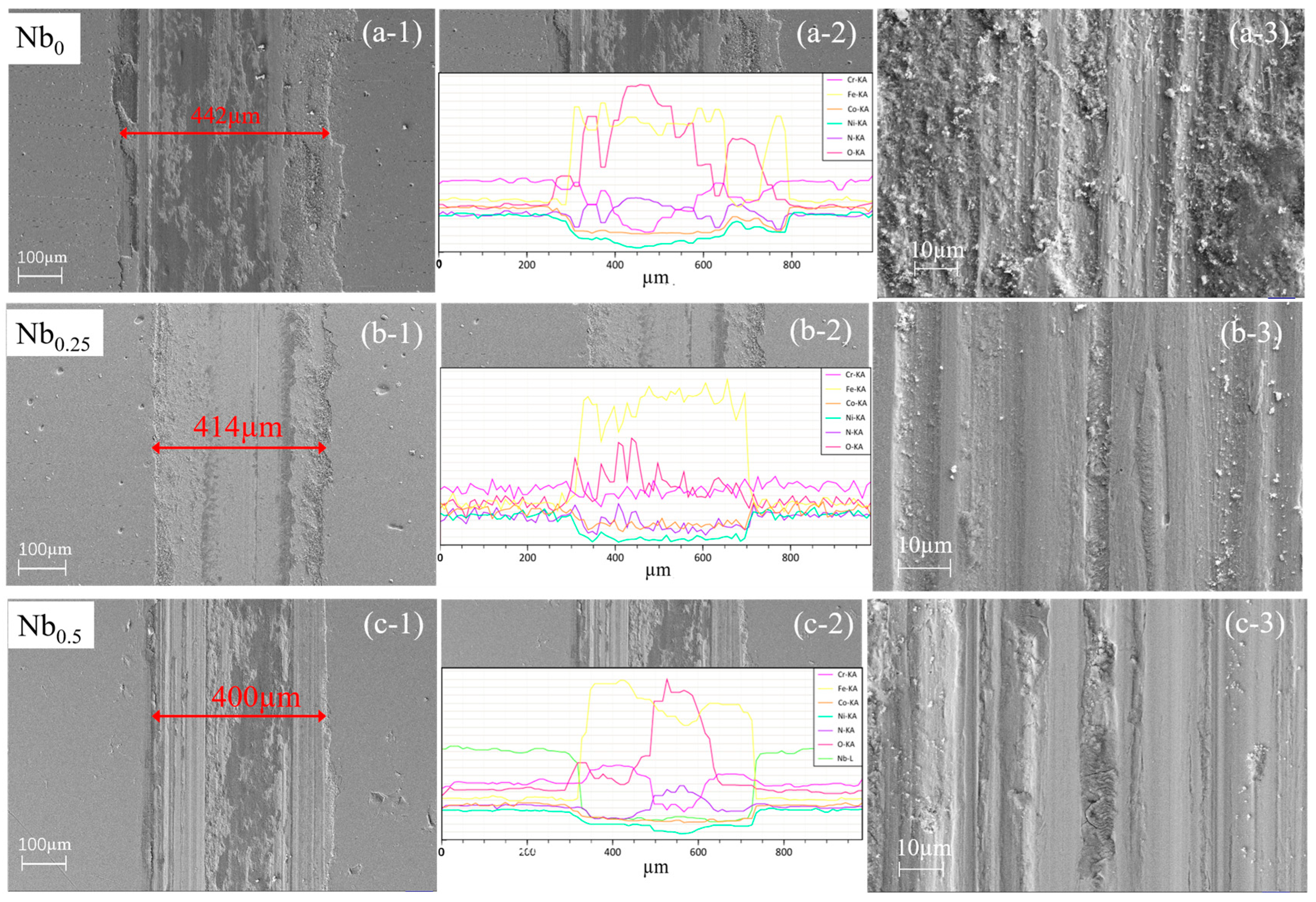
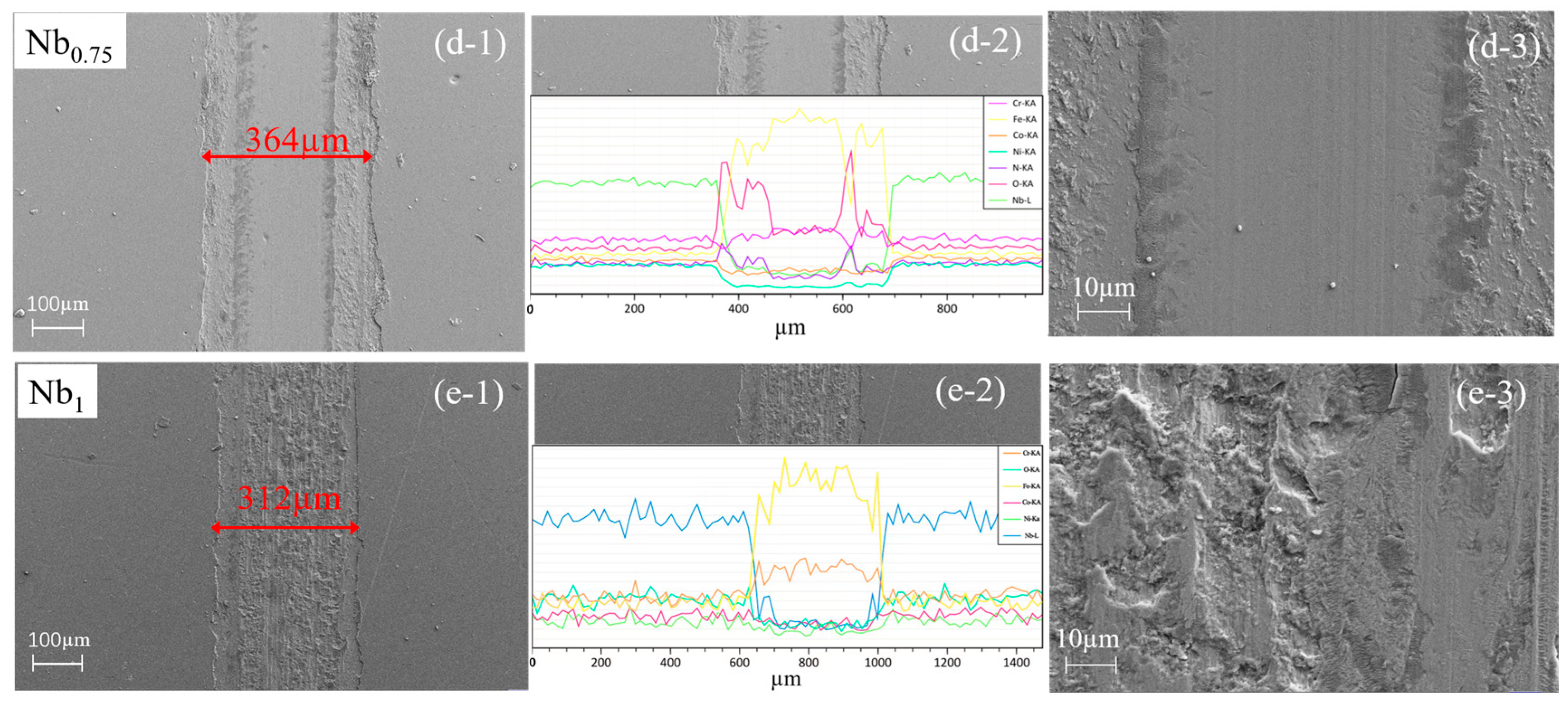
The wear track morphologies and elemental compositions of the FeCoCrNiNbxN films are shown in Figure 9. The widths of the wear tracks decrease from 442 µm, 414 µm, 400 µm, and 364 µm to 312 µm as the Nb content increases, which is consistent with the results in Figure 7b. Furrows are observed in the wear tracks of the Nb0, Nb0.25, and Nb0.5 films, and the amount of wear debris gradually decreases as the Nb molar content increases from 0 to 0.5 in the FeCoCrNiNbx targets. In the Nb0.75 film, the central region of the wear track is relatively flat and smooth, with wear debris mainly appearing along the edges. For the Nb1 film, the wear track edges are straighter, the surface displays pronounced shear marks, and no furrows are observed. These observations indicate that abrasive wear is one of the dominant wear mechanisms.
Figure 9. Wear tracks morphologies of FeCoCrNiNbxN films: (a-1) Wear track morphology in Nb0; (a-2) Line scanning map of wear track in Nb0; (a-3) A larger view of wear track in Nb0; (b-1) Wear track morphology of Nb0.25; (b-2) Line scanning map of wear track in Nb0.25; (b-3) A larger view of wear track in Nb0.25; (c-1) Wear track morphology of Nb0.5; (c-2) Line scanning map of wear track in Nb0.5; (c-3) A larger view of wear track in Nb0.5; (d-1) Wear track morphology of Nb0.75; (d-2) Line scanning map of wear track in Nb0.75; (d-3) A larger view of wear track in Nb0.75; (e-1) Wear track morphology of Nb1; (e-2) Line scanning map of wear track in Nb1; (e-3) A larger view of wear track in Nb1.
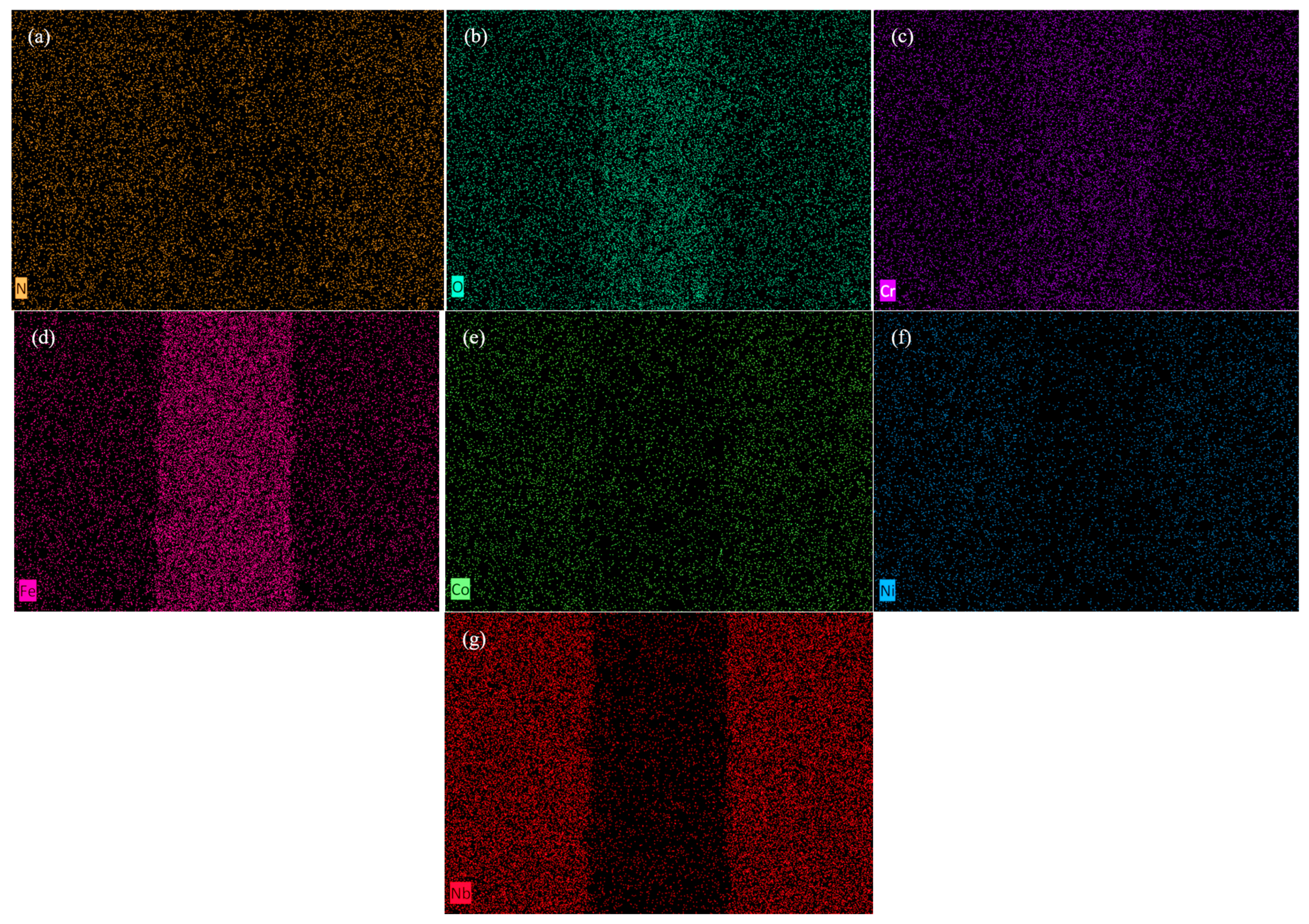
The contents of Fe and Cr in the wear tracks increase noticeably, whereas those of Co, Ni, and Nb decrease for all films. The elemental distributions along the wear tracks are shown in Figure 10. Nitrogen is evenly distributed across the tracks. In contrast, the contents of Co, Ni, and Nb decrease, while O, Fe, and Cr increase on the worn surfaces. The reduction in Co, Ni, and Nb indicates that the film has been worn through, exposing the substrate. The presence of oxygen suggests the formation of oxides, such as Cr2O3 and Fe2O3, on the wear tracks, indicating that oxidation wear is one of the active wear mechanisms []. The formation of Cr2O3, which has high hardness, contributes to increasing the hardness of the wear track and enhancing the tribological performance of the films.
Figure 10. Element distributions on wear tracks of Nb1 films: (a) N; (b) O; (c) Cr; (d) Fe; (e) Co; (g) Nb; (f) Ni.
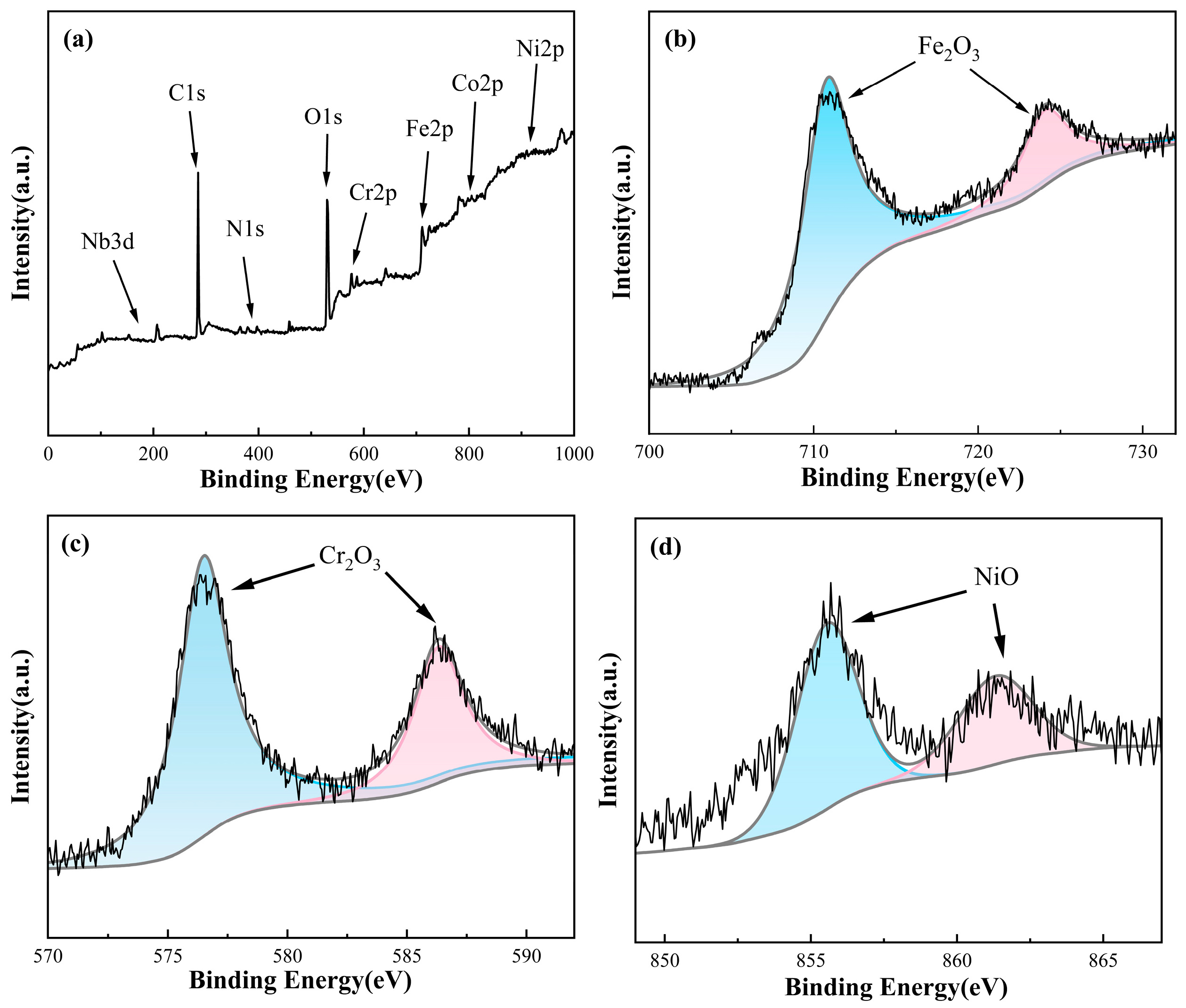
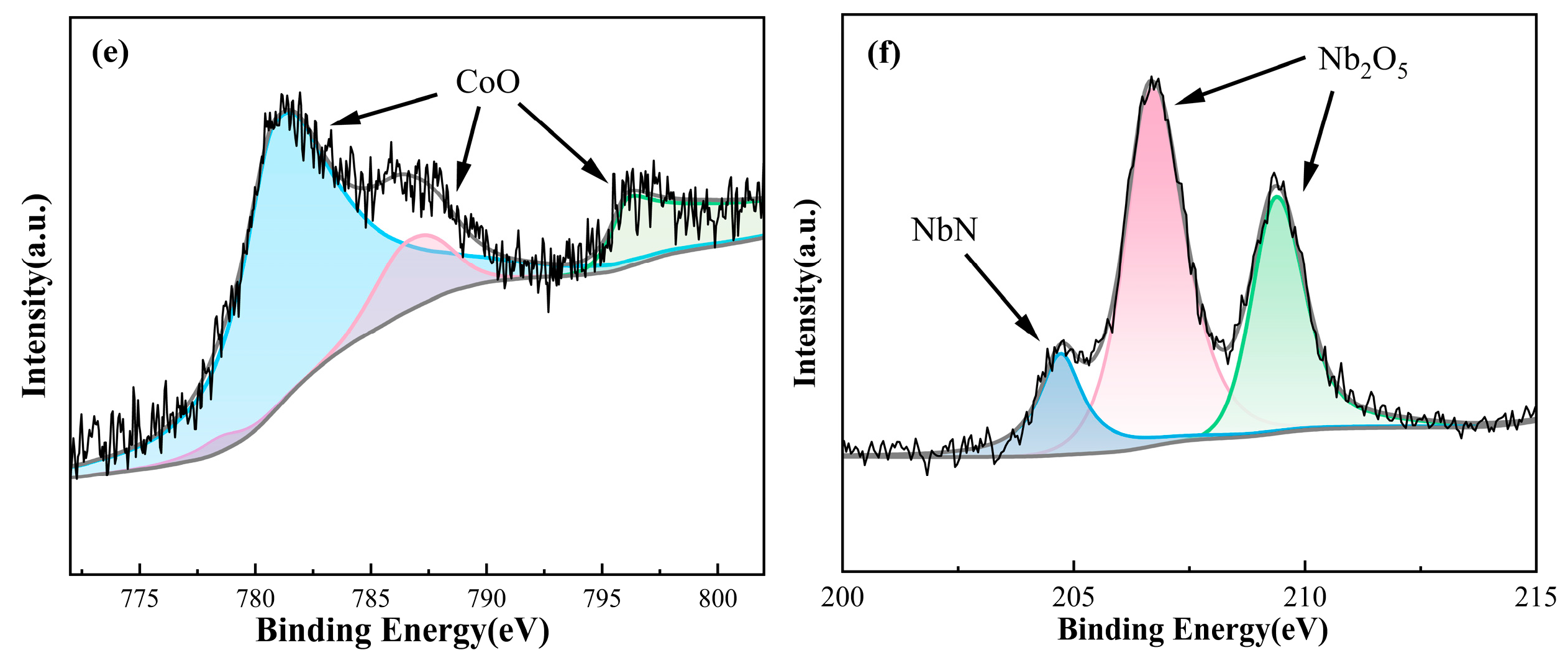
The oxygen content in the wear track of the film, shown in Figure 10b, increases significantly, indicating that oxidation reactions occur on the surface during the friction process. To further investigate the elemental changes in the wear track, XPS analysis was performed on the Nb1 film (Figure 11). As shown in Figure 11a, characteristic peaks of Nb3d, C1s, N1s, O1s, Cr2p, Fe2p, Co2p, and Ni2p were detected in the survey spectrum. Binding energy analysis reveals that the primary compounds present in the wear scar are Fe2O3, NiO, Nb2O5, NbN, Cr2O3, and CoO []. These results confirm that oxidation reactions occur for each metal element in the film during sliding. NiO and CoO mainly exist as dense protective phases, which effectively inhibit further oxidation and do not exhibit significant self-lubricating behavior []. In contrast, Cr2O3 and Nb2O5 form dense, stable oxide layers on the friction interface, which isolates direct contact with the substrate and reduces interfacial shear stress. These oxides act as solid lubricating films and protective layers, thereby decreasing the coefficient of friction and improving wear resistance [,]. Furthermore, as shown in Figure 11f, in addition to the Nb oxidation products, the low binding energy region (~204 eV) corresponds to Nb–N bonds, indicating that the NbN phase remains in the wear track and retains its high hardness and wear resistance [].
Figure 11. XPS analysis of wear tracks on Nb1 film; (a) full spectrum; (b) Fe2O3; (c) Cr2O3; (d) NiO; (e) CoO; (f) Nb2O5.

4. Conclusions

FeCoCrNiNbxN films were fabricated on 304 stainless steel and a Si wafer. The phase structure and properties of the films were investigated.
(1)
The FeCoCrNiNbxN films exhibit an FCC structure with a preferred orientation in the (200) planes. With an increasing Nb content, the preferred orientation plane changes from the (200) plane to the (111) plane and the interplanar distance firstly increases and then decreases in the (200) plane.
(2)
With an increasing Nb content, the hardness and elastic modulus of the films firstly decline and then raise. The Nb1 film exhibits the maximum hardness of (25.56 ± 0.95) GPa and elastic modulus of (265.36 ± 2.64) GPa. Typical high-entropy effects such as lattice distortion and solution strengthening contribute to improving the mechanical properties.
(3)
With an increasing Nb content, the friction coefficient, wear volume, and wear rate decrease significantly, with the Nb1 film showing the lowest values. The wear mechanisms are abrasive wear and oxidation wear. The increasing NbN phase, crystal densification, the smallest average surface roughness and highest H3/E2 help to improve the tribological properties.

Author Contributions

L.S., H.Y., H.W. and F.L. proposed the idea and the methods. H.W. and H.Y. investigated the literature. H.W. and X.L. carried out the experiments. H.W. and X.L. analyzed the data. L.S., H.W. and H.Y. wrote the original manuscript. P.O., F.L., Z.D. and C.Z. supervised, reviewed and edited the manuscript. All authors have read and agreed to the published version of the manuscript.

Funding

This research was funded by the Joint Funds of the National Natural Science Foundation of China (Grant No. U23A2025) and the National Natural Science Foundation of China (Grant Nos. 52305328, 52575193).

Data Availability Statement

Data are contained within the article.

Conflicts of Interest

The authors declare no conflicts of interest.

References

  1. Ciulli, E. Vastness of Tribology Research Fields and Their Contribution to Sustainable Development. Lubricants 2024, 12, 33. [Google Scholar] [CrossRef]
  2. Wu, B.; Zhang, Z.; Li, S. Advances in Tribology of Aero-Engine Materials. Tribology 2023, 43, 1099–1117. [Google Scholar] [CrossRef]
  3. Jin, X. Research Progress of High-Speed Wheel–Rail Relationship. Lubricants 2022, 10, 248. [Google Scholar] [CrossRef]
  4. Cantor, B.; Chang, I.T.H.; Knight, P.; Vincent, A.J.B. Microstructural Development in Equiatomic Multicomponent Alloys. Mater. Sci. Eng. A 2004, 375–377, 213–218. [Google Scholar] [CrossRef]
  5. Yeh, J.W.; Chen, S.K.; Lin, S.J.; Gan, J.Y.; Chin, T.S.; Shun, T.T.; Tsau, C.H.; Chang, S.Y. Nanostructured High-Entropy Alloys with Multiple Principal Elements: Novel Alloy Design Concepts and Outcomes. Adv. Eng. Mater. 2004, 6, 299–303. [Google Scholar] [CrossRef]
  6. Akrami, S.; Edalati, P.; Fuji, M.; Edalati, K. High-entropy ceramics: Review of principles, production and applications. Mater. Sci. Eng. R Rep. 2021, 146, 100644. [Google Scholar] [CrossRef]
  7. Li, W.; Xie, D.; Li, D.; Zhang, Y.; Gao, Y.; Liaw, P.K. Mechanical behavior of high-entropy alloys: A review. Prog. Mater. Sci. 2021, 118, 100777. [Google Scholar] [CrossRef]
  8. Bolar, S.; Ito, Y.; Fujita, T. Future prospects of high-entropy alloys as next-generation industrial electrode materials. Chem. Sci. 2024, 15, 8664–8722. [Google Scholar] [CrossRef]
  9. Zhang, X.; Li, P.; Wang, Y.; Chen, Q.; Liu, D. Synthesis and Characterization of Super-Hard AlCrTiVZr High-Entropy Alloy Nitride Films Deposited by HiPIMS. Surf. Coat. Technol. 2020, 394, 125836. [Google Scholar]
  10. Pshyk, A.V.; Vasylenko, A.; Bakhit, B.; Hultman, L.; Schweizer, P.; Edwards, T.E.J.; Michler, J.; Greczynski, G. High-Entropy Transition Metal Nitride Thin Films Alloyed with Al: Microstructure, Phase Composition and Mechanical Properties. Mater. Des. 2022, 219, 110798. [Google Scholar] [CrossRef]
  11. Li, Y.; Zhao, F.; Chen, G.; Wang, L.; Liu, Z. Super-Hard (MoSiTiVZr)Nx High-Entropy Nitride Coatings. J. Alloys Compd. 2022, 926, 166807. [Google Scholar] [CrossRef]
  12. Ma, S.; Zhang, C.; Li, L.; Yang, Y. Microstructure and Properties of CoCrFeNiMnTix High-Entropy Alloy Coated by Laser Cladding. Coatings 2024, 14, 620. [Google Scholar] [CrossRef]
  13. Ji, X.; Guan, K.; Bao, Y.; Mao, Z.; Wang, F.; Dai, H. Effect of Nb Addition on the Corrosion and Wear Resistance of Laser Clad AlCr2FeCoNi High-Entropy Alloy Coatings. Lubricants 2024, 12, 5. [Google Scholar] [CrossRef]
  14. Shu, R.; Lundin, D.; Xin, B.; Sortica, M.A.; Primetzhofer, D.; Magnuson, M.; Le Febvrier, A.; Eklund, P. Influence of Metal Substitution and Ion Energy on Microstructure Evolution of High-Entropy Nitride (TiZrTaMe)N1−x (Me = Hf, Nb, Mo, or Cr) Films. ACS Appl. Electron. Mater. 2021, 3, 2748–2756. [Google Scholar] [CrossRef]
  15. Yan, D.Y.; Xu, W.J.; Ji, L.; Zhang, H.; Li, Q.; Wang, S.; Chen, Y. Research Progress on High Entropy Ceramic Materials. Mater. Prot. 2023, 56, 35–49+96. [Google Scholar] [CrossRef]
  16. Miracle, D.B. High-entropy alloys as a bold step forward in alloy development. Nat. Commun. 2019, 10, 1805. [Google Scholar] [CrossRef] [PubMed]
  17. Xiao, J.K.; Li, T.T.; Wu, Y.Q.; Chen, J. Microstructure and Tribological Properties of Plasma-Sprayed CoCrFeNi-based High-Entropy Alloy Coatings Under Dry and Oil-Lubricated Sliding Conditions. J. Therm. Spray Technol. 2021, 30, 1339–1350. [Google Scholar] [CrossRef]
  18. Liao, Y.; Li, C.-L.; Hsueh, C.-H. Recent Progress on High-Entropy Films Deposited by Magnetron Sputtering. Crystals 2022, 12, 335. [Google Scholar] [CrossRef]
  19. Park, J.; Kim, J.-G.; Hong, S.J.; Yun, Y.; Ryu, J.-H.; Wang, F.; Kang, H.; Suh, D. Effect of Self-Incandescent Heating on Superconducting NbN Nanowire Yarn. Adv. Funct. Mater. 2024, 34, 2411076. [Google Scholar] [CrossRef]
  20. Dai, P.F.; Xu, C.; Wang, H.; Zhao, Y.; Liu, J. Effect of Nb-Content on the Corrosion Resistance of Co-Free High Entropy Alloys in Chloride Environment. Tungsten 2024, 4, 778–793. [Google Scholar] [CrossRef]
  21. Yu, X.; Chen, Q.; Cui, X.; Ouyang, D. Nb-Induced Lattice Changes to Enhance Corrosion Resistance of Al0.5Ti3Zr0.5NbxMo0.2 High-Entropy Alloys. Nat. Commun. 2025, 16, 2828. [Google Scholar] [CrossRef]
  22. Kashkarov, E.; Krotkevich, D.; Koptsev, M.; Ognev, S.; Svyatkin, L.; Travitzky, N.; Lider, A. Microstructure and Hydrogen Permeability of Nb–Ni–Ti–Zr–Co High-Entropy Alloys. Membranes 2022, 12, 1157. [Google Scholar] [CrossRef]
  23. Xie, X.; Yang, P.; Jia, Y.; Jia, Y. Lattice Distortion Effects on Mechanical Properties in Nb–Ti–V–Zr Refractory Medium-Entropy Alloys. Materials 2025, 18, 3356. [Google Scholar] [CrossRef]
  24. Malucelli, G. How to Reduce the Flammability of Plastics and Textiles through Surface Treatments: Recent Advances. Coatings 2022, 12, 1563. [Google Scholar] [CrossRef]
  25. Cardoso, G.C.; Almeida, G.S.; Corrêa, D.O.G.; Zambuzzi, W.F.; Buzalaf, M.A.R.; Correa, D.R.N.; Grandini, C.R. Preparation and characterization of novel as-cast Ti-Mo-Nb alloys for biomedical applications. Sci. Rep. 2022, 12, 11874. [Google Scholar] [CrossRef]
  26. Feng, M.; Yang, X.; Lian, G.; Chen, C. Microstructure and Properties of Laser Cladding CoCrNi-Based Medium-Entropy Alloy Enhanced by Nb. J. Mater. Res. Technol. 2025, 35, 5015–5033. [Google Scholar] [CrossRef]
  27. Avila, P.R.T.; Valeriano, L.C.; Gallo, C.F.; Piorino Neto, F.; de Lima, N.B.; Souza, R.M.; Souza, G.B.; Mello, A.; Trava-Airoldi, V.J.; Nascimento, V.F. On Manufacturing Multilayer-Like Nanostructures Using Misorientation Gradients in PVD Films. Sci. Rep. 2019, 9, 16277. [Google Scholar] [CrossRef] [PubMed]
  28. Panjan, P.; Kek-Merl, D.; Čekada, M.; Panjan, M.; Drnovšek, A. Review of Growth Defects in Thin Films Prepared by PVD Techniques. Coatings 2020, 10, 447. [Google Scholar] [CrossRef]
  29. Novikov, V.; Stepanov, N.; Zherebtsov, S.; Salishchev, G. Structure and Properties of High-Entropy Nitride Coatings. Metals 2022, 12, 847. [Google Scholar] [CrossRef]
  30. Sinha, A.K.; Soni, V.K.; Chandrakar, R.; Kumar, A. Influence of Refractory Elements on Mechanical Properties of High Entropy Alloys. Trans. Indian Inst. Met. 2021, 102, 2953–2966. [Google Scholar] [CrossRef]
  31. Zhang, X.; Jia, B.; Zeng, Z.; Zeng, X.; Wan, Q.; Pohrebniak, O.; Zhang, J.; Pelenovich, V.; Yang, B. Machine Learning-Based Design of Superhard High-Entropy Nitride Coatings. ACS Appl. Mater. Interfaces 2024, 16, 36911–36922. [Google Scholar] [CrossRef]
  32. Liang, Y.H. Effects of Nb Addition on Microstructures and Mechanical Properties of Nbx-CoCrFeMnNi High-Entropy Alloy Films. Coatings 2021, 11, 1539. [Google Scholar] [CrossRef]
  33. Wu, X.; Jiang, Y.; Wu, T.; Zuo, B.; Bian, S.; Lu, K.; Zhao, L.; Yu, L.; Xu, J. Insight into the Mechanisms of Nitride Films with Excellent Hardness and Lubricating Performance: A Review. Nanomaterials 2023, 13, 2205. [Google Scholar] [CrossRef] [PubMed]
  34. Yan, H.; Wang, H.; Li, X.; Dou, Z.; Liu, F. Effect of Modulation Period on the Microstructure and Tribological Properties of AlCrTiVNbN/TiSiN Nano Multilayer Films. Coatings 2025, 15, 839. [Google Scholar] [CrossRef]
  35. Wang, T.; Jin, Y.; Bai, L.; Zhang, Y.; Li, X. Structure and Properties of NbN/MoN Nano-Multilayer Coatings Deposited by Magnetron Sputtering. J. Alloys Compd. 2017, 729, 942–948. [Google Scholar] [CrossRef]
  36. Lashgari, H.R.; Yimnirun, R.; Limpijumnong, S. Surface Roughness and Its Effect on Adhesion and Tribological Performance of Magnetron Sputtered Nitride Coatings. Coatings 2024, 14, 1010. [Google Scholar] [CrossRef]
  37. Chen, X.; Musil, J.; Hamza, A.V. Commentary on Using H/E and H3/E2 as Proxies for Coating Toughness and Wear Resistance. Surf. Coat. Technol. 2020, 389, 125651. [Google Scholar]
  38. Zhang, Z.; Wang, Y.; Li, H.; Zhao, F.; Chen, L. Tribological Behaviors of Super-Hard TiAlN Coatings: Correlation of H/E and H3/E2 with Wear Performance. Materials 2022, 15, 4197. [Google Scholar]
  39. Smyrnova, K.; Čaplovicová, M.; Kusý, M.; Kozak, A.; Flock, D.; Kassymbaev, A.; Pogrebnjak, A.; Sahul, M.; Haršáni, M.; Beresnev, V.; et al. Composite Materials with Nanoscale Multilayer Architecture Based on Cathodic-Arc Evaporated WN/NbN Coatings. ACS Omega 2024, 9, 17247–17265. [Google Scholar] [CrossRef]
  40. Walunj, G.; Choudhari, A.; Digole, S.; Bearden, A.; Kolt, O.; Bari, P.; Borkar, T. Microstructure, Mechanical, and Tribological Behaviour of Spark Plasma Sintered TiN, TiC, TiCN, TaN, and NbN Ceramic Coatings on Titanium Substrate. Metals 2024, 14, 1437. [Google Scholar] [CrossRef]
  41. Jeyaprakash, N.; Yang, C.-H.; Prabu, G.; Balamurugan, K.G. Surface Alloying of FeCoCrNiMn Particles on Inconel-718 Using Plasma-Transferred Arc Technique: Microstructure and Wear Characteristics. RSC Adv. 2021, 11, 28271–28285. [Google Scholar] [CrossRef] [PubMed]
  42. Cheng, F.Y. Magnetron Sputtering Preparation of NiTiAlCrCoN Nanomultilayer Films and Their Cavitation Erosion Resistance. Master’s Thesis, North China University of Technology, Beijing, China, 2025. [Google Scholar] [CrossRef]
  43. Li, H.; Zhou, H.; Chen, J.; Wang, T.; Zhao, K. Tribological Behavior and Oxidation Mechanism of Ni-Based Coatings under High-Temperature Conditions. Tribol. Int. 2020, 146, 106222. [Google Scholar]
  44. Zhang, F.; Zhao, Y.; Zhao, K.; Wang, Q.; Li, S. Effect of Nb Content on Structure and Properties of (TiNbAl)N Coatings Deposited by Cathodic Arc Evaporation. Surf. Coat. Technol. 2021, 405, 126558. [Google Scholar]
  45. Wang, Y.; Guo, W.; Xu, Y.; Liu, Z.; Li, T. Microstructure and Tribological Behavior of Cr-Based Oxide Films Formed on Alloy Surfaces. Appl. Surf. Sci. 2019, 476, 271–280. [Google Scholar]
  46. Ren, P. Design of Strengthening and Toughening for Transition Metal Carbonitride-Based Films and Their Tribological Properties; Jilin University: Changchun, China, 2019. [Google Scholar]
Disclaimer/Publisher’s Note: The statements, opinions and data contained in all publications are solely those of the individual author(s) and contributor(s) and not of MDPI and/or the editor(s). MDPI and/or the editor(s) disclaim responsibility for any injury to people or property resulting from any ideas, methods, instructions or products referred to in the content.

Article Metrics

Citations

Article Access Statistics

Multiple requests from the same IP address are counted as one view.