You are currently viewing a new version of our website. To view the old version click .
Lubricants
  • Article
  • Open Access

29 November 2025

Optimizing Cutting Fluid Use via Machine Learning in Smart Manufacturing for Enhanced Sustainability


and
Mechanical Engineering Department, Kırıkkale University, Yahşihan, 71450 Kırıkkale, Türkiye
*
Author to whom correspondence should be addressed.
Lubricants2025, 13(12), 519;https://doi.org/10.3390/lubricants13120519 
(registering DOI)

Abstract

High temperatures generated during machining can lead to undesirable outcomes such as surface deterioration, subsurface damage, tool wear, and shortened tool life. Effective heat removal from the cutting zone is therefore essential for maintaining process stability and part quality. Conventional cooling systems typically apply a constant amount of cutting fluid without considering the actual temperature in the cutting zone, which may result in unnecessary coolant use and inefficient temperature control. This study introduces an innovative machining approach that integrates machine learning techniques to estimate the optimal lubrication interval and maintain the desired cutting temperature. The proposed system dynamically adjusts coolant application based on real-time temperature data and machining parameters, preventing excessive or insufficient cooling. Comparative analyses show that the new system reduces coolant consumption by 22.5 mL per minute compared with conventional cooling and by 2.5 mL per minute compared with minimum quantity lubrication (MQL). This improvement corresponds to an annual reduction of approximately 12.3 T of CO2e emissions. The results demonstrate that the developed system enables machining at the optimum temperature, enhancing tool life, surface quality, and energy efficiency while significantly lowering environmental and health impacts associated with cutting fluids. The integration of machine learning also supports automated decision-making in smart manufacturing environments, reducing operator dependency and contributing to sustainable and economically efficient production.

1. Introduction

The temperature generated in the cutting zone during machining has a significant impact on the machining variables. Variables such as cutting speed, feed rate, and depth of cut are outputs that affect the cutting force, the desired surface quality, tool wear, and temperature. When elevated temperatures are reached between the material and the tool during machining, tool wear increases and surface quality is negatively affected. To mitigate these adverse effects, it is imperative to remove the heat generated in the machining zone. Cutting fluids are employed to facilitate heat removal from the machining zone; however, their chemical composition can have detrimental environmental and health implications.
Concurrently, the reduction in cutting fluid consumption has been identified as a factor that increases production and waste costs. Numerous cooling methods have been developed to address the issue of heat generation during machining. In recent years, dry machining, cryogenic application to cutting tools, high-pressure cooling techniques, and especially MQL (Minimum Quantity Lubrication) and cryogenic cooling have become widespread in the field of sustainable production, with a focus on reducing or eliminating the use of cutting fluid. A comprehensive examination of the extant literature on these cooling methods has been undertaken, with a focus on their impact on machining processes.
In recent years, there has been a growing emphasis on research focusing on sustainability and efficiency in machining processes. These studies primarily aim to reduce the environmental impact of conventional methods. In particular, for turning operations involving the Ti-6Al-4V alloy, environmentally friendly approaches such as liquid CO2 and Minimum Quantity Lubrication (MQL) have shown superior performance compared to traditional techniques, along with reduced ecological impact []. To investigate the effects of MQL systems on machining processes, experiments were conducted by varying cutting speed, feed rate, and depth of cut. The findings demonstrated that MQL reduces tool wear and enhances surface quality []. During the nano-cutting process, the increased cutting force elevates the cutting temperature generated in the workpiece, which enhances the material’s plastic deformation and subsurface damage []. Therefore, techniques such as Minimum Quantity Lubrication (MQL) are becoming increasingly important for mitigating these thermal and mechanical effects.
During the machining of Inconel-800 alloy, parameter optimization and process capability analysis revealed that the MQL technique yielded better results than conventional cooling methods []. Moreover, significant reductions in surface roughness and cutting forces were achieved through the use of biodegradable oils []. Cutting fluids derived from microorganisms have also been shown to perform better than traditional fluids []. The use of lightweight materials in sustainable machine tool design has been reported to improve energy efficiency and minimize environmental impact []. Inconel 617 was machined on a CNC lathe using coated and uncoated tungsten carbide tools; surface roughness, tool wear, and hardness measurements were performed, revealing that AlTiN coatings doubled tool life and MQL improved surface finish by up to 47% while increasing work hardening compared to flood coolant []. In turning experiments conducted on a Cr-Ni-Mo alloyed hot work tool steel with a hardness of approximately 45 HRC using a universal lathe, surface roughness, cutting temperature, and tool wear were measured under dry, MQL, and Al2O3 nanoparticle-added MQL conditions, revealing that nano-MQL significantly improved machining performance by reducing surface roughness, cutting temperature, and tool wear [].
In experiments conducted on AISI 1045 steel, the MQL method provided better surface finish and lower tool wear compared to traditional coolants []. For AISI 4340 and AISI 52100 steels, optimizing machining parameters significantly improved both machinability and surface integrity []. The use of MQL in machining Al-Mg-Zr alloy proved more efficient than dry cutting, offering extended tool life and reduced machining time []. Studies examining the effects of different cutting fluids reported that boric acid and graphite additives, when applied through electrostatic MQL (EMQL) technology, reduced cutting forces and tool wear by 38% []. In milling operations with 300M steel, varying cooling and lubrication strategies were found to optimize machining performance []. For Inconel 625 superalloy, vegetable oil-based nano-cutting fluids outperformed traditional fluids while also supporting environmental sustainability []. Furthermore, the use of ultra-precision machining (UPM) with single-point diamond turning machines has demonstrated considerable benefits in terms of energy efficiency and environmental friendliness []. In machining AISI 4140 steel, a combination of neem oil and graphene-based coolants exhibited the most effective and eco-friendly performance []. For milling operations involving Nimonic 80A alloy, proposed approaches yielded highly accurate predictions of tool wear []. In the machining of titanium alloys, MQL, LN2, and hybrid systems were shown to reduce overall energy consumption []. Machine Learning (ML) algorithms have also been employed to evaluate cutting quality, temperature, and surface roughness in drilling, milling, and turning operations, showing significant success in process optimization []. In particular, ML models developed for turning under High-Pressure Cooling (HPC) and MQL conditions provided highly accurate predictive results []. Additionally, Artificial Neural Networks (ANN) have been used to measure processing efficiency and quality in various manufacturing processes. It was found that ANN showed over 95% efficiency []. The use of Citrullus lanatus (watermelon) extract as a biological cutting fluid provided temperature reduction and performed better than traditional cutting fluids []. Experiments to estimate energy demand in CNC machining processes revealed that machine learning-based models can accurately estimate energy consumption []. Examining processes performed with steel materials in various machines, it was determined that the application of sustainable processing methods significantly contributes to achieving net zero emission targets in manufacturing processes []. Studies on the prediction of surface roughness in MQL turning of AISI 304 steel using machine learning methods clearly demonstrated that nanoparticle size and cutting fluid concentration significantly affect surface roughness []. Vegetable oil-based cutting fluids outperformed mineral oil-based fluids [].
In the machining of Ti-6Al-4V titanium alloy, it has been determined that the optimization of cutting parameters using machine learning and design of experiments methods increases machining efficiency and improves surface integrity []. Moreover, it has been observed that the adoption of sustainable machining practices can lead to both environmental and economic benefits []. The influence of ball burnishing parameters on the surface roughness (Ra and Rz) of Commercially Pure Titanium Grade 2 was studied under dry and MQL conditions []. This research found that MQL, when coupled with optimized force, feed rate, and passes, provides a significant improvement in the surface finish. The employment of a deep learning-based data-driven genetic algorithm in conjunction with the TOPSIS method has been shown to achieve high levels of accuracy and cost-effectiveness in the optimization process []. This approach has enabled the identification of the most suitable machining parameters under a range of operating conditions. In machining operations involving minimum lubrication on Inconel 718 material, decision makers have found it more feasible to achieve sustainability goals by leveraging the optimal solutions within the determined sets []. A recent study has identified the machining process as the primary focus area in the realm of sustainable ultra-precision machining (UPM) research []. A study was conducted to examine the cutting forces and energy consumption in the turning process of AISI 420 martensitic stainless steel. The study’s objective was to demonstrate the applicability of various optimization methods. The results of the study indicated that the cryogenic cooling method in the cryogenic (cold) milling process of AISI D2 hardened steel provided lower surface roughness and longer tool life compared to traditional lubrication methods []. A study was conducted that revealed the efficacy of MQL applications in turning operations on Bohler steel in reducing flank wear when compared to dry conditions []. Another study determined the effectiveness of computer vision technologies and deep learning in evaluating the wear conditions of cutting tools []. In the machining of Inconel 718 with the MQL method, the optimization of processes has been achieved through the utilization of artificial intelligence-based modeling, leading to the conclusion that the MQL system enhances energy efficiency and mitigates environmental impacts []. Tool temperatures during continuous and interrupted turning were measured using embedded thermocouples, revealing that interrupted cutting with cutting fluid enhances cooling efficiency by allowing tool cooling during non-cutting phases []. A comprehensive review of cutting temperature measurements conducted across various machine setups, tool, and workpiece materials revealed that thermal properties of the materials and the specific measurement methodologies significantly influence the accuracy of the temperature results []. A custom-designed, 3D-printed, sensor-integrated probe was developed to perform real-time measurements of cutting fluid properties during various machining processes, with the aim of extending the fluid lifespan through monitoring and analysis [].
Recent developments in data-driven approaches have provided new opportunities for enhancing process efficiency in machining. A review of the relevant literature shows that various machine learning techniques have been applied to predict parameters such as surface roughness, tool temperature, and cutting forces in metal cutting operations. These studies consistently demonstrate that machine learning is an effective approach for estimating cutting parameters and optimizing machining performance.
However, most of the existing studies have focused mainly on parameter optimization or cutting condition prediction, without addressing the dynamic control of lubrication in relation to machining temperature. Unlike these earlier works, the present study integrates sustainability metrics and real-time decision-making within a machine learning framework. The proposed approach aims to predict the optimal lubrication interval required to maintain the work material at its ideal machining temperature.
To achieve this, datasets were obtained experimentally and used to train and validate several machine learning models. Comparative evaluations of the models were conducted to identify the most accurate predictive approach. The results provide a foundation for developing an intelligent cooling control system that enhances process stability, reduces coolant consumption, and supports sustainable manufacturing objectives.

2. Materials and Methods

In machining, heat is generated in the machining zone while the material is being machined. This heat must be removed from the area in order to prevent negative effects on the surface quality of the material, machining parameters and tool wear. The heat generated in the machining zone has been tried to be removed by many cooling methods over time. Although the use of cutting fluid has been reduced compared to traditional cooling methods, it is not known whether the material is machined at the appropriate temperature.
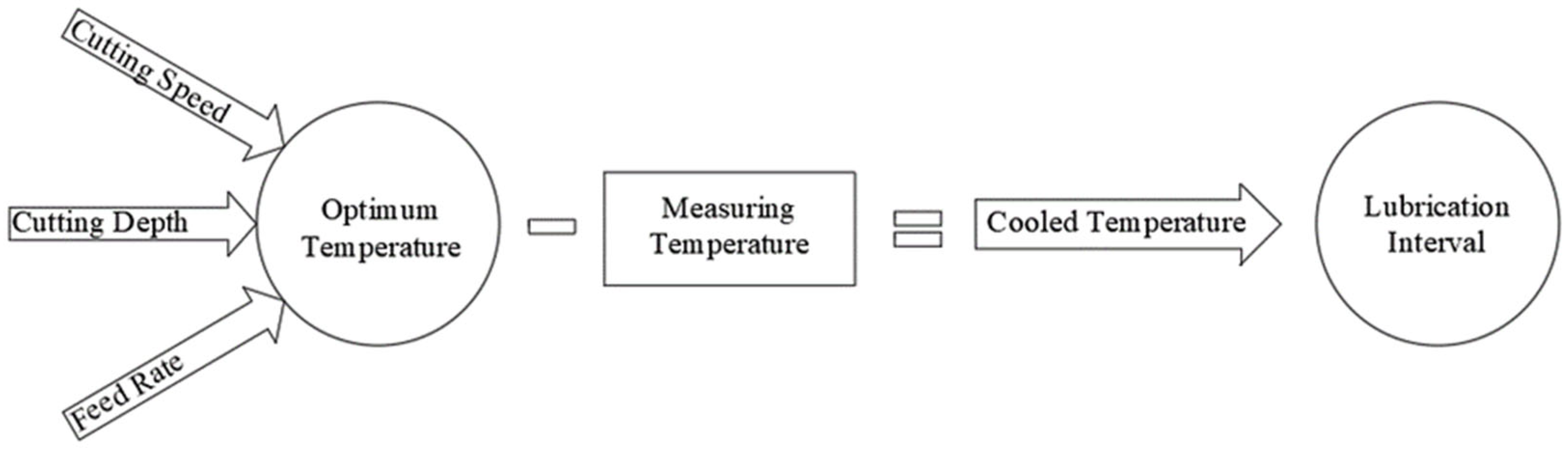
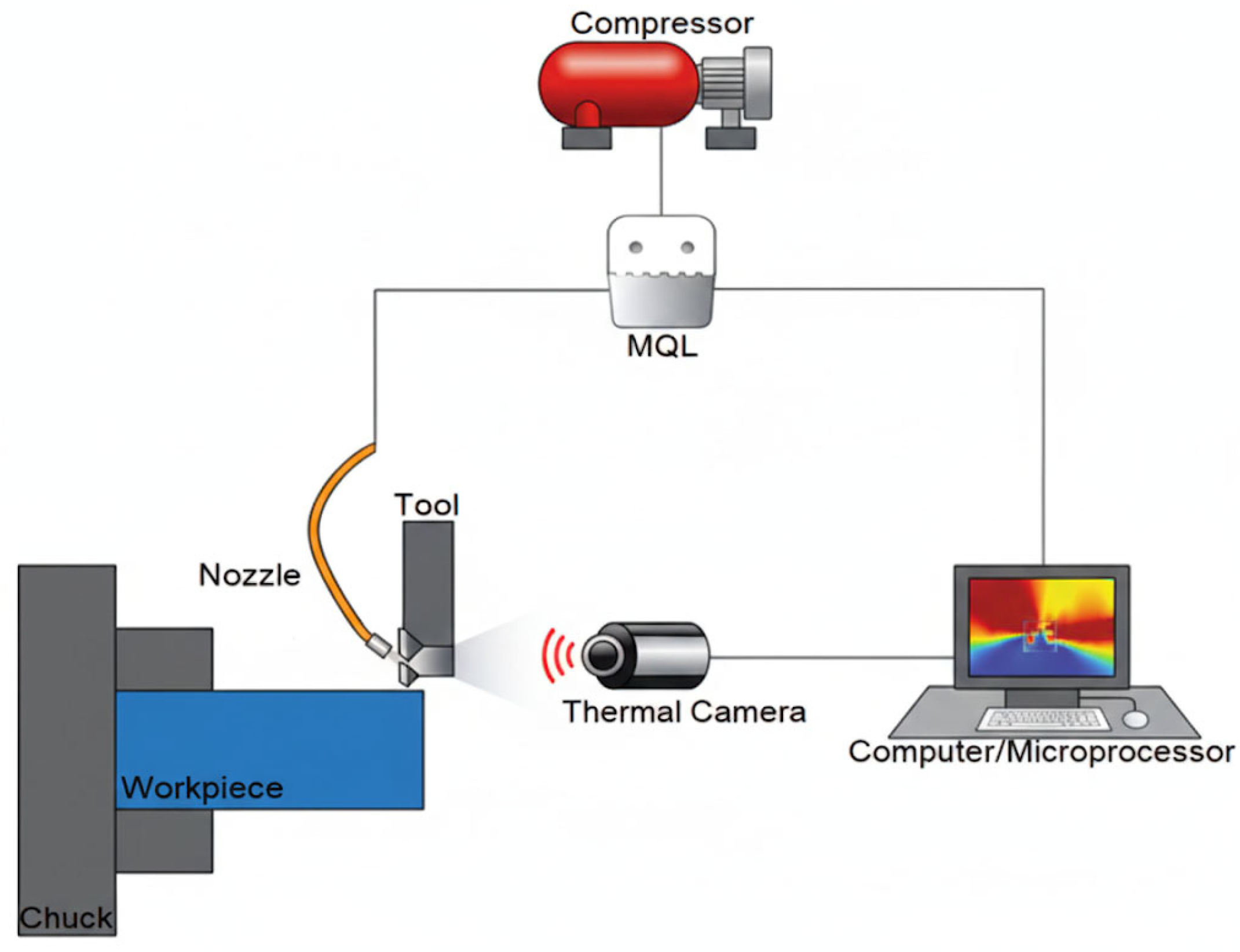
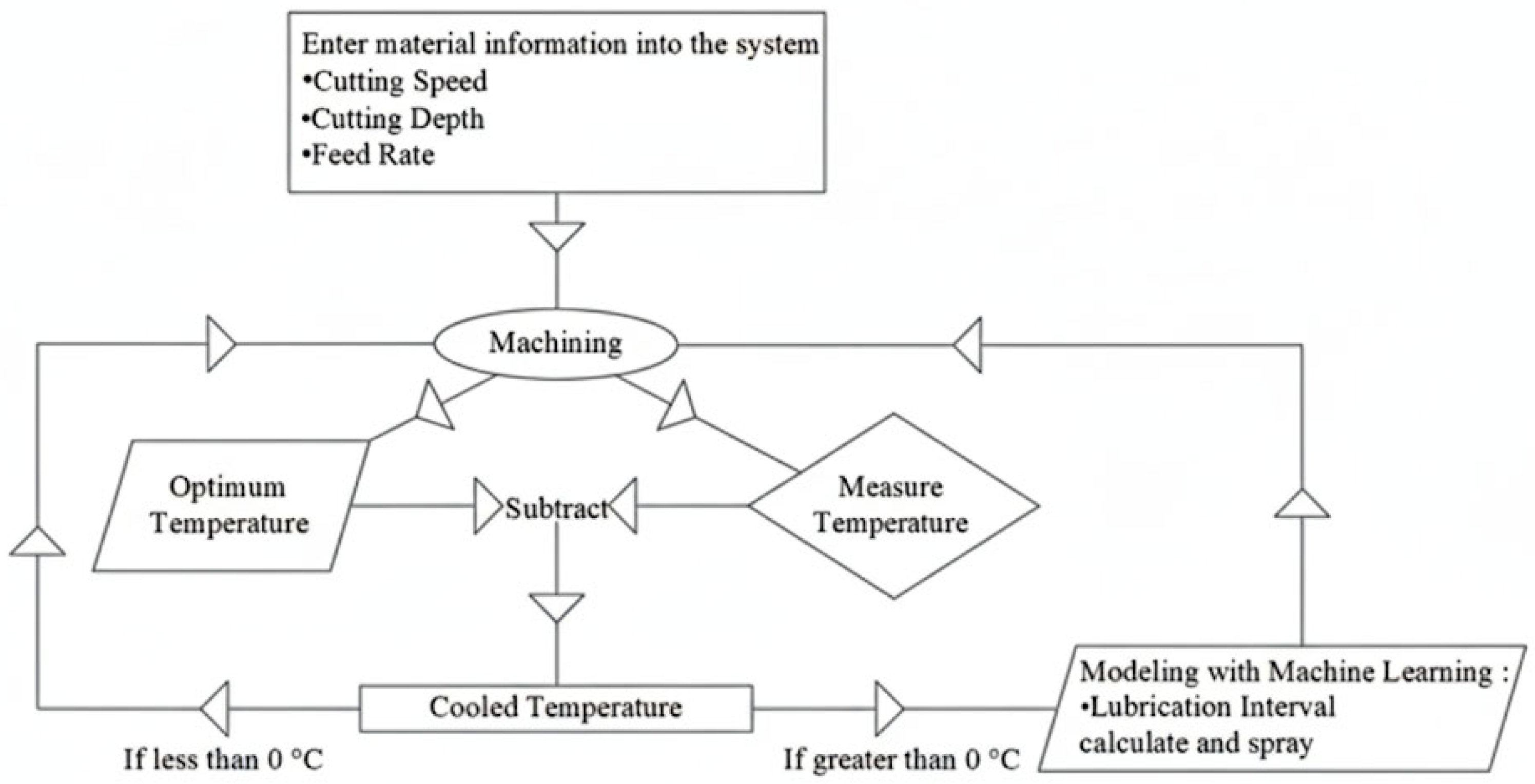
In this study, a smart minimum quantity lubrication (MQL) system has been designed as shown in Figure 1 in order to process the material at optimum temperature. Cutting speed, feed rate and depth of cut will be entered into the system from the machining parameters. While the material is being machined, the temperature of the material will be measured continuously from the machining zone using a temperature sensor. The difference between the temperature measured by the sensor and the appropriate machining temperature of the material will be calculated by the computer/microprocessor. This temperature amount will be used as input in the models to be used to find the lubrication interval to be cooled. When the temperature to be cooled is calculated to be below zero degrees Celsius, the system will not perform unnecessary cooling and the material will continue to be processed. When the temperature to be cooled is calculated above zero degrees, the cooling system will be activated and spraying will be performed at the lubrication interval calculated by modeling. When it is reduced to the desired temperature, unnecessary cooling will not be performed. The flow chart of the system is given in Figure 2.
Figure 1. Smart MQL system.
Figure 2. Flowchart.
An experimental study was carried out to obtain data on temperature and lubrication interval determination.

2.1. Experimental Design

The experiments were carried out at 4 different coolant usage rates, one of which was dry cutting condition, by selecting three different cutting speeds (150, 250, 350 m/min), three different feeds (0.1, 0.2, 0.3 mm/rev) and three different depths of cut (0.5, 0.75, 1 mm). The selected machining parameters are given in Table 1.
Table 1. Machining parameters.

2.2. Material

A 16MnCr5 steel with a diameter of 40 mm was turned for 100 mm with the specified parameters. Goodway GLS-150 brand 3 axis CNC turning center was used in the experiments. The properties of 16MnCr5 case hardening steel are given in Table 2 below.
Table 2. Properties of workpiece material.

2.3. Cutting Tool

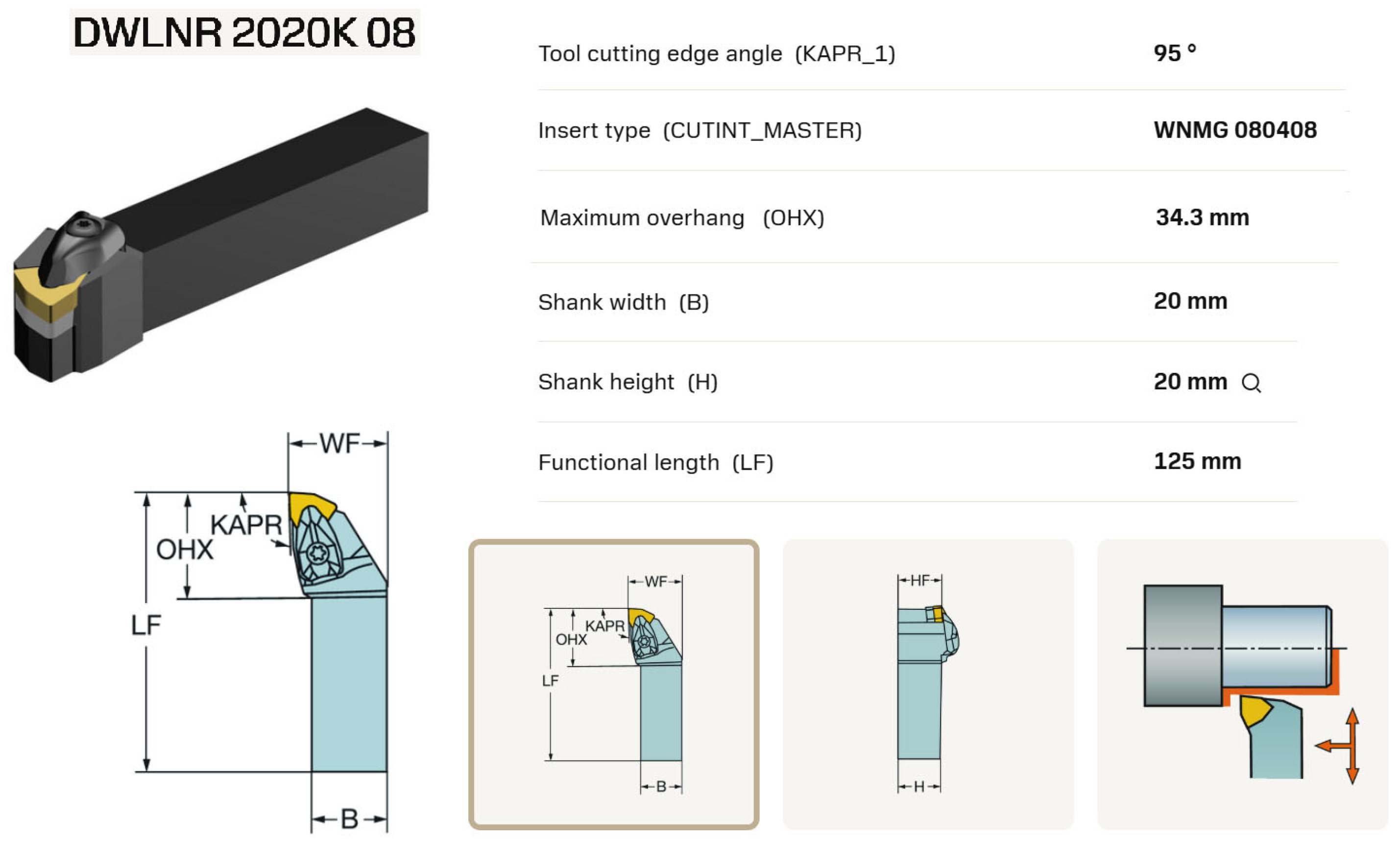
16MnCr5 steel work piece materials were turned using Sandvik brand DWLNR 2020K08 (Sandvik, Sweden) coded tool holder and PM 4325 quality WNMG080608 coded insert. The cutting tool is given in Figure 3.
Figure 3. Cutting tool.

2.4. Cutting Fluid

Master Fluid Solutions brand Trim E950 (Perrysburg, OH, USA) vegetable-based cutting fluid with a 10% concentration was preferred to reduce the risk of splashing during turning. The product excels in various heavy-duty machining operations, delivering superior surface finish and corrosion prevention while being free of harmful additives such as boron, chlorine, and sulfurized extreme pressure agents. TRIM E950 is widely used across aerospace, automotive, energy, and medical industries for its reliability and performance. The properties of the cutting fluid are given in Table 3.
Table 3. Properties of cutting fluid.
A thermal camera (Flir i50) was used to measure the temperatures in the cutting zone during the turning process. The experiments were carried out under dry cutting conditions and with Minimum Quantity Lubrication (MQL) using cutting fluid. Werte Mikro STN 15 (Istanbul, Turkey) brand MQL system was used. The lubrication intervals for MQL were 0.1 s, 1.5 s and 3 s.
In the processing of different materials, the cutting speed, feed rate, depth of cut and the processing temperatures of the materials applied to each material separately will be measured with a thermal camera and will be detected as the amount to be cooled by the system by subtracting the optimum temperature at which the material will be processed.

2.5. Machine Learning Procedures

The lubrication interval required to cool the amount of temperature to be cooled will be estimated by machine learning models. Figure 4 shows how system works.
Figure 4. How machine learning works.
Regression models were created to determine the lubrication interval required for cooling by using the appropriate machining temperature of the material processed according to the cutting speed, feed rate and depth of cut parameters and the temperature difference read from the machining zone with the optical temperature sensor. The experimental results obtained for these models were used as a dataset.
Using the dataset obtained from the experimental results, various machine learning models were developed to predict the lubrication interval using the processing temperatures as independent variables. These models are trained to perform lubrication interval prediction. The models were built using the Phyton program, the Python version being used is 3.12.12 (main, Oct 10 2025, 08:52:57) [GCC 11.4.0], which has become a popular choice for this type of analysis as it has a broad data science and machine learning background. These models include Random Forest Regression (RFR), K-Nearest Neighbors Regression (KNNR), Least Absolute Shrinkage and Selection Operator (LASSO).
Random Forest Regression is a machine learning algorithm based on decision trees. Random Forest Regression (RFR) operates as an ensemble learning method that combines multiple decision trees to generate predictions. Each tree is trained independently, and in regression tasks, the final prediction is obtained by averaging the outputs of all individual trees. K-Nearest Neighbors (KNN) Regression, on the other hand, is a non-parametric, instance-based approach that estimates the target value of a data point by averaging the target values of its k nearest neighbors in the feature space. The LASSO (Least Absolute Shrinkage and Selection Operator) regression technique is used for both feature selection and regularization in linear models. By penalizing the absolute size of the regression coefficients, LASSO can simplify the model by shrinking some coefficients entirely to zero, effectively eliminating non-contributory features.
The machine learning analysis was carried out using a dataset of 81 samples, obtained from 27 machining conditions with three repetitions each. The data were divided into 80% training and 20% testing through a random stratified split to preserve the distribution of cutting parameters. Model robustness was evaluated using 5-fold cross-validation, applied only to the training set, and all hyperparameters were tuned within this validation loop. The final parameter settings for the Random Forest, KNN, and LASSO models are summarized in Table 4. After preprocessing, the models were trained on the optimized parameters and their performance was assessed using R2, RMSE, and MAE metrics, allowing the comparatively best-performing model to be selected for integration into the cooling-control strategy. Model Hyperparameters are added to Table 4 below.
Table 4. Model Hyperparameters.
The overall model-development workflow used in this study is summarized in the following pseudocode block to support reproducibility and methodological transparency:
Step 1: Load experimental dataset (81 samples)
Step 2: Perform preprocessing (scaling and feature selection)
Step 3: Split dataset into train/test = 80/20 (random, stratified)
Step 4: Apply 5-fold cross-validation on training set
Step 5: Tune model hyperparameters within CV loop
Step 6: Train final models using tuned parameters
Step 7: Evaluate models on the test set (R2, RMSE)
Step 8: Select the comparatively best-performing model

3. Results

3.1. Experimental Observations

The experiments were carried out by turning 16MnCr5 steel with a diameter of 40 mm for 100 mm at three different cutting speeds (150, 250, 350 m/min), three different feed rates (0.1, 0.2, 0.3 mm/rev) and three different depths of cuts (0.5, 0.75, 1 mm). The temperature values measured by a thermal camera from the machining zone during turning were recorded. The experiments were repeated under dry machining, 0.1 s MQL machining, 1.5 s MQL machining and 3 s MQL machining conditions. The results obtained from the experiments are given in Table 5. Period between sprays stated as “Lubrication Interval” in Table 5 and Table 6. The difference in the temperature measurement results taken in the experiment with the appropriate temperature is shown in Table 5. While obtaining these results, the appropriate machining temperature of 16MnCr5 material was taken as 150 °C. Maintaining the cutting temperature during turning at 150 °C, which is the typical lower limit of the tempering temperature for carburizing steels like 16MnCr5, minimizes the workpiece’s thermal expansion and plastic deformation, thereby ensuring improved surface roughness, dimensional stability, and extended tool life.
Table 5. Experiment results from temperature measurement.
Table 6. Amount of temperature to be cooled.
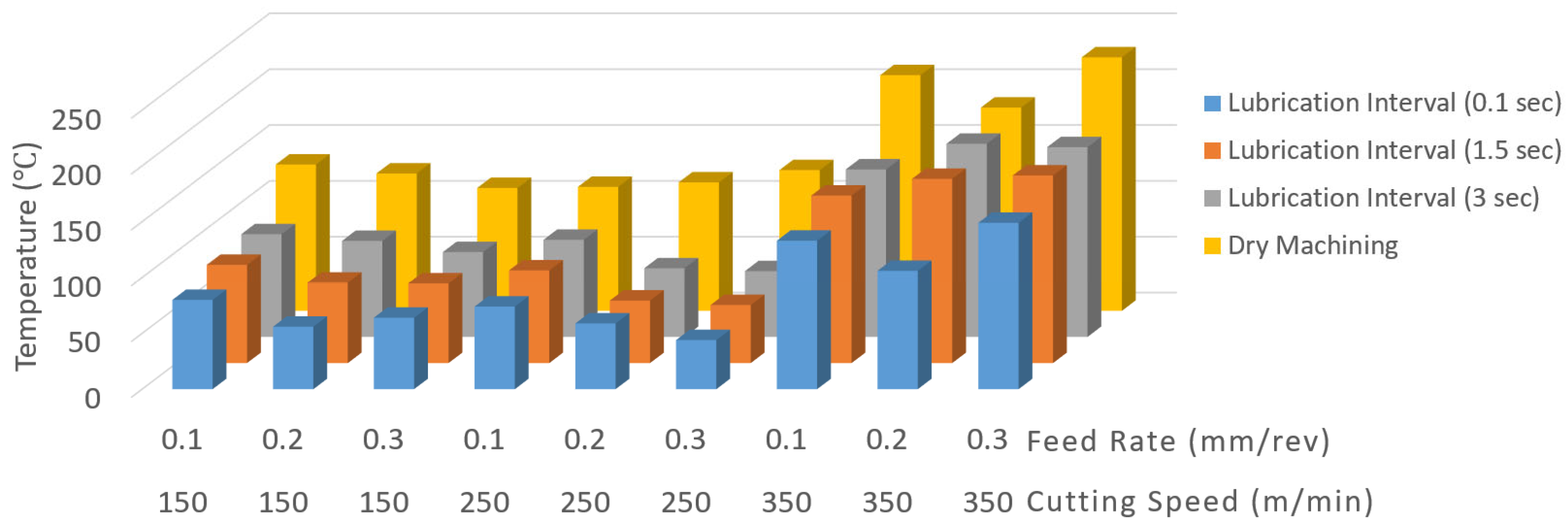
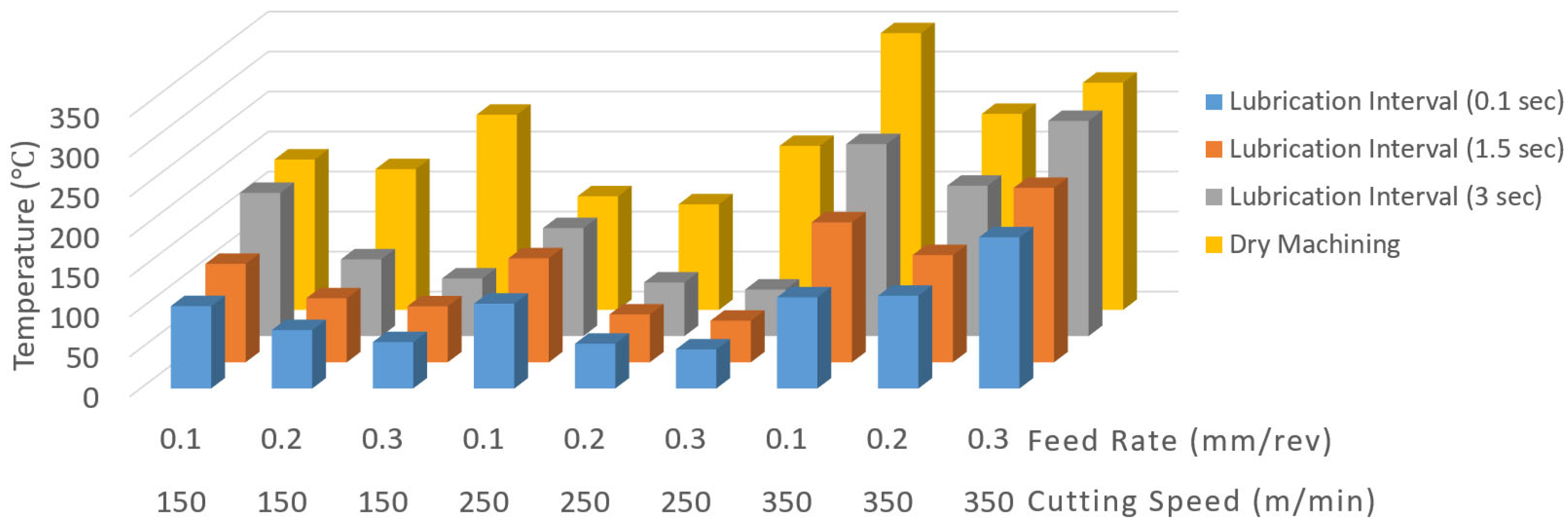
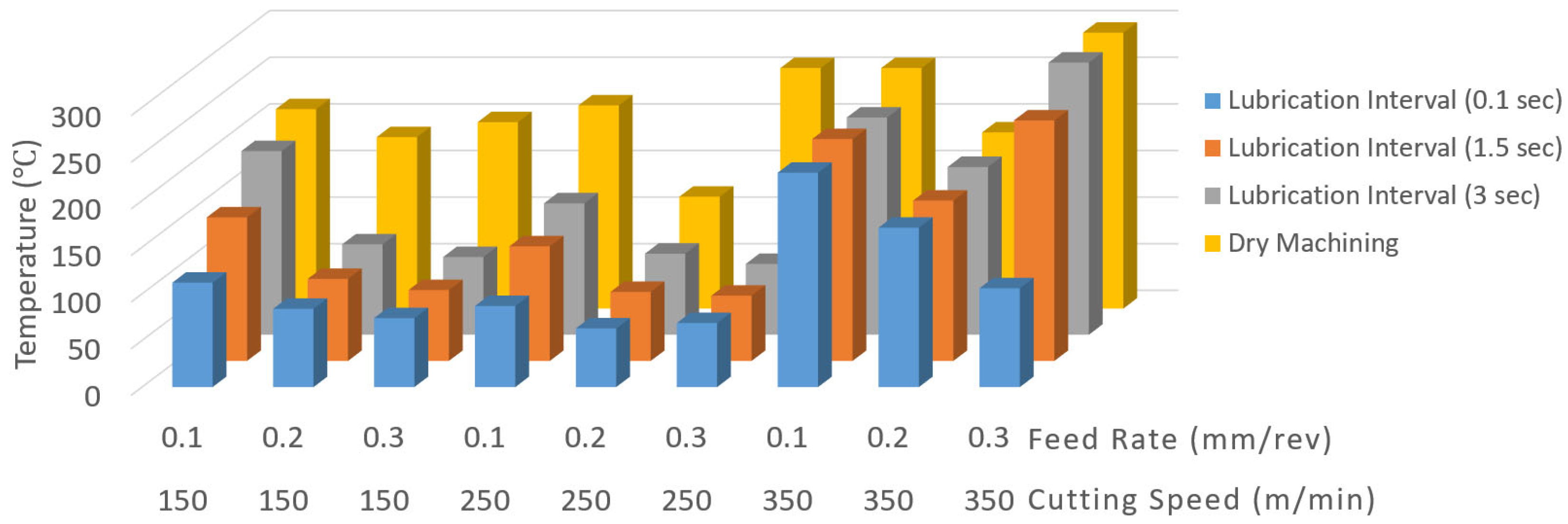
A series of graphs were developed to illustrate the effect of varying cutting conditions, including cutting speed, feed, cutting depth, and cooling frequency, on the temperature measured in the cutting zone. The results obtained from these graphs demonstrated that the temperature in the cutting zone was significantly influenced by parameters such as cutting speed, feed, and cutting depth. Furthermore, the graphs presented in Figure 5 and Figure 6 demonstrate that MQL cooling, when operated at a specific frequency, leads to a gradual reduction in the temperature in the cutting zone.
Figure 5. Temperature values measured at different machining parameters (ap = 0.5 mm).
Figure 6. Temperature values measured at different machining parameters (ap = 0.75 mm).
As demonstrated in Figure 5, the temperature increases in response to a decrease in the cooling frequency. At cutting speeds of 150 m/min and 250 m/min, the temperature in the cutting zone is measured below 150 °C, indicating that cooling is not required. At a cutting speed of 350 m/min, the temperature reaches approximately 200 °C, and the cooling duration can be reduced below the target temperature of 150 °C even with a 3 s cooling cycle. Furthermore, the cutting zone temperature can be optimized at a cutting speed of 250 m/min and a feed rate of 0.3 mm/rev through machining.
As illustrated in Figure 6, the temperature in the cutting zone rises with an increase in cutting depth. For a cutting depth of 0.5 mm, the temperature was measured in the range of 100–220 °C, while for 0.75 mm, it was measured in the range of 170–340 °C. In a similar trend, the graph demonstrates an increase in temperature with a decrease in cooling frequency. At a cutting speed of 250 m per minute, the temperature in the cutting area is measured below 150 degrees Celsius, indicating that cooling is not required at this cutting speed. Conversely, at a cutting speed of 150 m/min, the temperature rises to approximately 200 °C, and a cooling rate of 3 s can be reduced below the desired temperature of 150 °C. Conversely, at a cutting speed of 350 m/min, the temperature is recorded at approximately 250–300 °C, and only a cooling rate of 1.5 s can be reduced below the desired temperature of 150 °C. Conversely, at a cutting depth of 0.75 mm, optimal machining can be attained in regard to cutting zone temperature with a cutting speed of 250 m/min and a feed of 0.3 mm/rev.
As can be seen in Figure 7, with the increase in the cutting depth from 0.75 mm to 1 mm, there is not much change in the temperature in the cutting zone. In fact, the temperature measured in the cutting zone at a high speed of 350 m/min has dropped below 300 °C. Similarly, in this graph, the temperature increases as a result of the decrease in the cooling frequency. At a cutting speed of 250 m/min and a feed rate of 0.3 mm/rev, the temperature in the cutting zone is measured below 150 °C, which means that there is no need for cooling at this value. In most cutting parameters, the cooling rate at a frequency of 3 s can be reduced below the desired temperature of 150 °C. In a few cases, however, the cooling rate at a frequency of 1.5 s can be reduced below the desired temperature of 150 °C. Similarly, at a cutting depth of 0.75 mm, optimum machining can be achieved in terms of cutting zone temperature with a cutting speed of 250 m/min and a feed rate of 0.3 mm/rev. Here, as can be seen in Figure 4, Figure 5 and Figure 6, there is no direct linear increase. This shows us that it is not possible to determine the cooling frequency by deriving an equation and estimating the temperature accordingly. This is where the working logic of machine learning comes into play and attempts are made to converge to the most accurate value. As a result, determining the cooling frequency value to be used in the MQL system with the change in processing conditions is considered to be of critical importance, especially for CNC machines operating in smart manufacturing systems.
Figure 7. Temperature values measured at different machining parameters (ap = 1 mm).

3.2. Machine Learning Model Performance

In terms of performance, the RFR model achieved an R2 score of 0.81 on the training set, indicating that the model was able to capture a substantial portion of the variance present in the training data and suggesting a strong in-sample fit. However, the test set R2 value dropped sharply to 0.24, demonstrating that the model explained only a limited proportion of the variance in previously unseen data. This significant train–test discrepancy is a typical indication of overfitting, where the model learns patterns, fluctuations, or noise specific to the training dataset rather than capturing the fundamental relationships governing the machining process. Such noise can originate from numerous sources—including transient chip–tool interactions, thermal measurement uncertainty, and small variations in machining forces—which collectively introduce random fluctuations into the dataset. To improve the model’s ability to generalize, it would be necessary to increase both the number of samples and the diversity of the input variables. A larger dataset spanning a wider range of machining conditions would reduce sensitivity to noise and provide a more robust statistical foundation for the learning algorithms. Additional physical parameters, sensor inputs, or secondary process signals could also enhance feature richness and strengthen the model’s ability to detect consistent temperature–lubrication relationships. For a more reliable comparison of model performance, the root mean square error (RMSE) values were examined. The RFR model achieved an RMSE of 1.05391, whereas the KNNR and LASSO models produced RMSE values of 1.2592 and 1.2379, respectively. Since lower RMSE values indicate better predictive accuracy, the results suggest that RFR provides the most accurate predictions among the three models under the given dataset. The fact that the RFR’s RMSE is close to one further underscores its relative effectiveness. Nevertheless, the presence of overfitting indicated by the R2 disparity means that the RFR model remains limited by the size and variability of the current dataset and should be interpreted with caution when applied to broader operational ranges. While the RFR exhibited the lowest RMSE, the large train–test gap suggests the model may be capturing noise or idiosyncrasies of the training data rather than underlying physical relationships. Similar observations have been reported in machining and thermal-prediction studies, where tree-based models often deliver strong in-sample performance but require careful regularization, adequate data volume, and feature engineering to generalize reliably []. The comparatively close RMSE values for KNNR and LASSO imply that, for this dataset, simpler or more regularized models approach the performance of the ensemble method. KNNR’s local averaging makes it relatively robust in smoothly varying regions of the feature space but sensitive to noise and the choice of k, whereas LASSO can be beneficial when the number of predictors is large and many features are weakly informative. These trade-offs are consistent with broader comparative studies of machine learning methods applied to machining and lubrication problems []. To enhance predictive reliability and prevent overfitting, future work should focus on expanding the dataset, integrating additional sensor data, optimizing model parameters through advanced validation techniques, and incorporating uncertainty estimation to ensure robust and reliable industrial implementation [].
Values below 0 °C will not be included in the modeling and no cooling will be performed by the system. Values above 0 °C were estimated by RFR (Random Forest Regression), KNNR and LASSO models and the results are given in Table 7.
Table 7. Calculated results with RFR, KNNR and LASSO models.
According to the prediction results in the table, the automatic system adjusts the cooling process by determining the appropriate lubrication interval. Thus, instead of selecting lubrication intervals randomly or applying cooling in advance, the system provides data-driven intervals based on the predicted thermal behavior. In configurations employing a staggered spray range, the use of the KNNR-derived interval is recommended due to its smoother response between discrete cooling levels. Additionally, the Random Forest Regression model offers an important advantage over linear regression approaches by capturing nonlinear interactions and variable dependencies within the machining process, enabling more nuanced and physically meaningful predictions of the lubrication interval.
When we consider the 77 °C data measured in machining by applying cooling with 1.5 s lubrication interval in row 25 in Table 5, it is seen from Table 7 that the machine learning RFR model predicts the lubrication interval result as 1.45 s.

3.3. Comparative Analysis of Cooling Strategies

Accordingly, in conventional cooling, 60 s of continuous cooling for 60 s resulted in a total of 60 coolings; in cooling with MQL, a total of 40 coolings were realized when cooling was performed at 1.5 s intervals for 60 s; in cooling with the innovative cooling system, 37.5 cooling was realized when cooling was performed at 1.6 s intervals for 60 s.
As a result of the experiments, it was observed that 1 mL of coolant was consumed in each cooling. In this case, amount of coolant used in conventional cooling is 60 mL, amount of coolant used according to MQL system is 40 mL and amount of coolant used with the innovative cooling system is 37.5 mL.
With this innovative system, it is estimated that 22.5 mL of coolant per minute is saved compared to conventional cooling and 2.5 mL per minute compared to MQL. The cost calculation is as follows:
The current price of 0.5 L of coolant is 8.13 €. The gain of 22.5 mL compared to conventional cooling is equivalent to 0.36 € per minute and financial gain in 1 h of work is 22 €. The gain of 2.5 mL compared to the MQL system is equivalent to 0.04 € and financial gain in 1 h of machining is 2.35 €.

3.4. Environmental Evaluation

In this study, it was observed that the innovative cooling system used provided less coolant consumption. Reducing the amount of coolant used in machining processes offers not only economic advantages but also significant environmental benefits. The Life Cycle Assessment (LCA) methodology, commonly employed in environmental performance evaluations, provides a comprehensive analysis of a product’s or process’s environmental impacts from raw material extraction through to end-of-life disposal. In the context of cutting fluids, LCA considers factors such as the energy and water used during production, emissions generated during use, and the environmental effects of disposal methods []. The adoption of the innovative cooling system has demonstrated a reduction in cutting fluid consumption by 22.5 mL per minute. Considering the carbon footprint associated with both the production (0.469 kg CO2/L) and disposal (3.782 kg CO2/L) of the fluid [], this reduction translates to approximately 5.74 kg of CO2 emissions avoided for every hour of operation. Under standard operating conditions (8 h per day, 250 days per year), this corresponds to an annual reduction of approximately 11.5 metric tons of CO2 emissions.
The innovative cooling system offers environmental advantages not only in terms of the production and disposal of cutting fluid, but also in terms of the high water usage. Given that water-soluble cutting fluids consist of approximately 95% water, a saving of 22.5 mL per minute can be equated to a reduction in water-related emissions of approximately 0.485 tons of CO2 per year. The system thus offers a total reduction potential of approximately 12 tons of CO2 per year (including production, disposal and water).
The innovative cooling system also provides an environmental advantage, with reduced electricity consumption. Assuming that it consumes 0.4 kWh less electricity per hour than the conventional system, this results in a reduction of approximately 0.305 T of CO2 emissions per year. Consequently, the aggregate environmental impact of the system, when production, disposal, water consumption and electricity usage are collectively assessed, amounts to 12.5 T of CO2 per year. Environmental performance components against conventional cooling systems and annual CO2 savings are given in Table 8. This value indicates the substantial superiority of the innovative system in the multi-dimensional evaluation of environmental performance.
Table 8. Environmental Performance Components and Annual CO2 Savings against Conventional System.
This outcome demonstrates that the innovative system makes a substantial contribution, both economically and in terms of reducing the environmental impacts of production and waste management. The superiority of the innovative system in comparison to conventional cooling and MQL is outlined in Table 9.
Table 9. The superiority of the innovative system in comparison to conventional cooling and MQL.
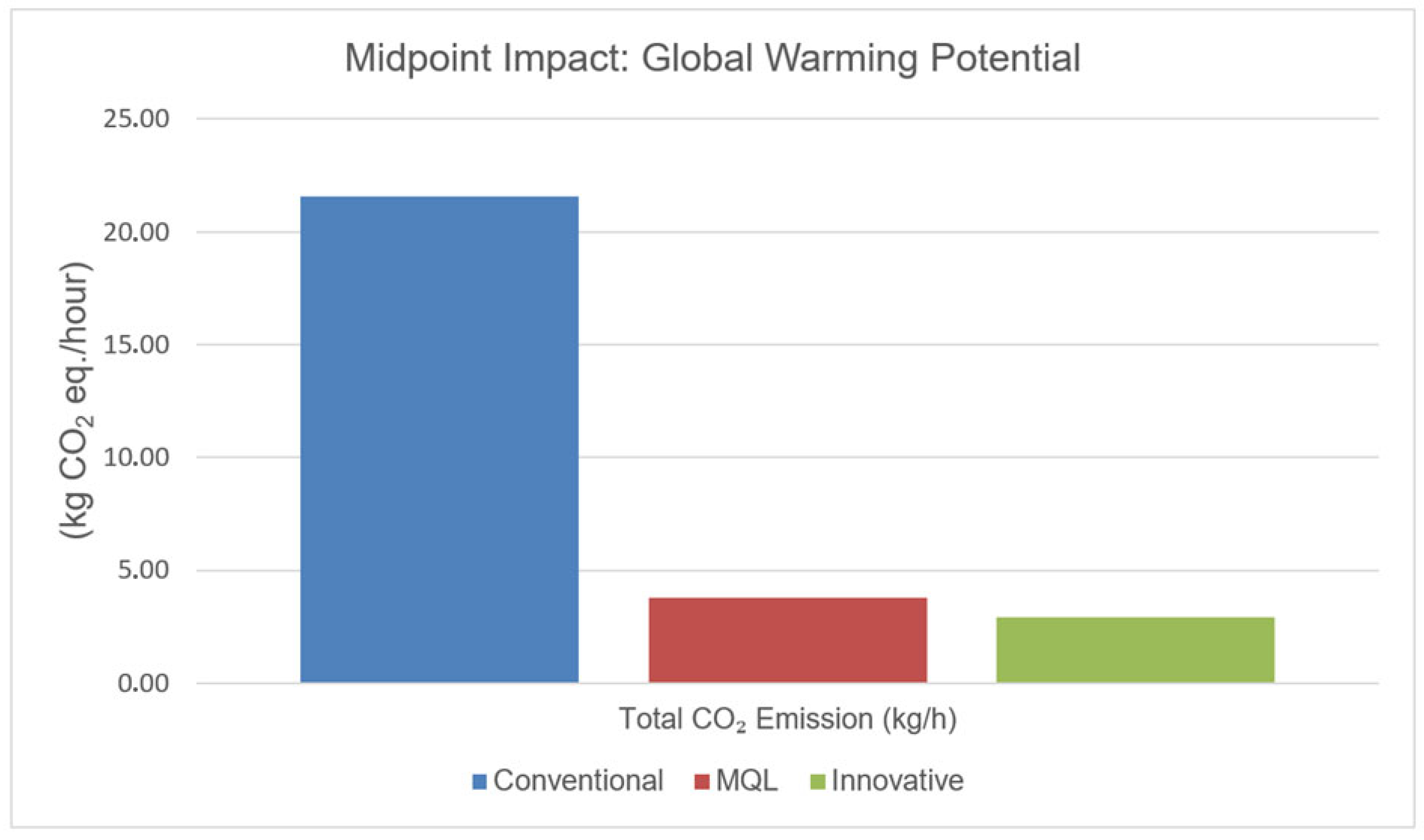
The environmental impacts of the cooling systems were evaluated using both midpoint (global warming potential) and endpoint (human health and ecosystem damage) impact categories. As illustrated in Figure 8, the conventional cooling system generated the highest greenhouse gas emissions, with 21.56 kg CO2-equivalent per hour, whereas the innovative system had the lowest impact, emitting only 2.94 kg CO2-equivalent per hour.
Figure 8. Global warming potential (kg CO2-eq/h) of different cooling systems.
These values highlight the significant differences in carbon footprint among the systems. The innovative system has been developed to reduce cutting fluid usage, water usage, electricity usage and CO2 emissions, thereby having a positive impact on endpoint categories (human health, ecosystem quality and resource scarcity), showing that the innovative system consistently results in the lowest environmental burden in both categories [,]. Overall, the findings indicate that the innovative cooling approach offers a more sustainable solution in machining operations.
It is stated that especially plant-based liquids have lower carbon footprints and higher biodegradability rates. The extent to which the innovative system provides advantages in terms of the environment and human health is demonstrated by the concrete values given above.

4. Conclusions

  • The proposed system enables machining at the optimum temperature, eliminating the need for high-temperature cutting. This reduces tool wear, extends tool life, and improves the surface quality of the workpiece.
  • The most important feature of the system is its ability to prevent both excessive and unnecessary cooling. When the temperature difference between the measured and optimum machining temperature is below 0 °C, the system automatically stops cooling, thereby avoiding energy loss and unnecessary coolant use.
  • Maintaining the optimum temperature also allows higher cutting speeds, feed rates, and depths of cut, increasing process efficiency without reducing tool life.
  • Although all three models exhibited comparable error levels, the Random Forest Regression model consistently delivered the lowest RMSE and the most reliable temperature-to-lubrication interval mapping, indicating that it offers the highest practical utility for the implementation of the automatic cooling system.
  • Comparative analysis shows that the developed system saves 22.5 mL of coolant per minute compared with conventional cooling and 2.5 mL per minute compared with MQL. These savings provide both environmental and economic advantages.
  • The system supports sustainable production by reducing coolant consumption, water use, and energy demand, achieving an estimated annual reduction of about 12.3 T of CO2 emissions.
  • By minimizing the amount of coolant used, the system helps limit the environmental and health effects commonly associated with cutting fluids.
  • The integration of machine learning enables automatic adjustment of lubrication intervals, reducing the need for operator intervention and contributing to more reliable manufacturing processes.
  • Future studies should expand the dataset and include a wider range of machining parameters such as tool geometry, material type, and cutting fluid composition to improve model accuracy.
  • Further experimental work and life-cycle assessment (LCA) studies are recommended to evaluate the environmental benefits of the system in greater detail.
  • Challenges encountered in this study included the limited amount of experimental data available for training and validating the machine learning models, fluctuations in temperature measurements due to sensor response time, and the difficulty of maintaining stable cutting conditions during long-duration tests. Additionally, balancing model complexity with interpretability and ensuring consistent coolant delivery under dynamic operating conditions posed practical difficulties. These challenges provided valuable insights for refining the system design and improving the robustness of the predictive models in future work.

Author Contributions

H.S.Ö.: Conceptualization, Methodology, Visualization, Investigation, Writing—Original Draft. A.O.E.: Conceptualization, Methodology, Validation, Writing—Reviewing and Editing, Supervision. All authors have read and agreed to the published version of the manuscript.

Funding

This research received no external funding.

Data Availability Statement

All relevant data are contained within the article.

Conflicts of Interest

The authors declare no conflicts of interest.

References

  1. Chetan, N.; Narasimhulu, A.; Ghosh, S.; Rao, P.V. Application of sustainable techniques in metal cutting for enhanced machinability: A review. J. Clean. Prod. 2015, 100, 17–34. [Google Scholar] [CrossRef]
  2. Junankar, A.A.; Purohit, J.K.; Sayed, A.R. Minimum Quantity Lubrication System for Metal-Cutting Process: Sustainable Manufacturing Process. Mater. Today Proc. 2019, 18, 5264–5269. [Google Scholar] [CrossRef]
  3. Wang, H.; Guo, X.; Dong, Z.; Yuan, S.; Bao, Y.; Kang, R. Effects of Cutting Force on Formation of Subsurface Damage During Nano-Cutting of Single-Crystal Tungsten. ASME. J. Manuf. Sci. Eng. Novemb. 2022, 144, 111008. [Google Scholar] [CrossRef]
  4. Gupta, M.K.; Mia, M.; Pruncu, C.I.; Kapłonek, W.; Nadolny, K.; Patra, K.; Mikolajczyk, T.; Pimenov, D.Y.; Sarikaya, M.; Sharma, V.S. Parametric optimization and process capability analysis for machining of nickel-based superalloy. Int. J. Adv. Manuf. Technol. 2019, 102, 3995–4009. [Google Scholar] [CrossRef]
  5. Krolczyk, G.M.; Maruda, R.W.; Krolczyk, J.B.; Wojciechowski, S.; Mia, M.; Nieslony, P.; Budzik, G. Ecological trends in machining as a key factor in sustainable production—A review. J. Clean. Prod. 2019, 218, 601–615. [Google Scholar] [CrossRef]
  6. D’Addona, D.M.; Di Nardo, A. Feasibility study of using microorganisms as lubricant component in cutting fluids. Procedia CIRP 2020, 88, 606–611. [Google Scholar] [CrossRef]
  7. Gbededo, M.A.; Liyanage, K.; Garza-Reyes, J.A. The analysis of key technologies for sustainable machine tools design. Appl. Sci. 2020, 10, 731. [Google Scholar] [CrossRef]
  8. Lai, R.; Hurtado Carreon, A.; DePaiva, J.M.; Veldhuis, S.C. Influence of Cutting Parameters and MQL on Surface Finish and Work Hardening of Inconel 617. Appl. Sci. 2025, 15, 5869. [Google Scholar] [CrossRef]
  9. Kara, F. Investigation of the effect of Al2O3 nanoparticle-added MQL lubricant on sustainable and clean manufacturing. Lubricants 2024, 12, 393. [Google Scholar] [CrossRef]
  10. Özbek, O. Tornalamada kriyojenik soğutma ve minimum miktarda yağlamanın kesici takım aşınması ve titreşimine etkilerinin araştırılması. Ph.D. Thesis, Düzce University, Düzce, Turkey, 2020. [Google Scholar]
  11. Machado, A.R.; Silva, L.R.R.; Pimenov, Y.D.; Souza, F.C.R.; Kuntoğlu, M.; Paiva, R.L. Comprehensive review of advanced methods for improving the parameters of machining steels. J. Manuf. Process. 2024, 125, 111–142. [Google Scholar] [CrossRef]
  12. Karim, M.R.; Tariq, J.B.; Morshed, S.M.; Shawon, S.H.; Hasan, A.; Prakash, C.; Singh, S.; Kumar, R.; Nirsanametla, Y.; Pruncu, C.I. Environmental, Economical and Technological Analysis of MQL-Assisted Machining of Al-Mg-Zr Alloy Using PCD Tool. Sustainability 2021, 13, 7321. [Google Scholar] [CrossRef]
  13. Singh, J.; Singh, R. A review on cutting fluids used in machining processes. Eng. Res. Express 2021, 3, 012002. [Google Scholar] [CrossRef]
  14. Wang, Y.; Liu, C. State-of-the-art on minimum quantity lubrication in green machining. J. Clean. Prod. 2023, 429, 139613. [Google Scholar] [CrossRef]
  15. Vardhanapu, M.; Chaganti, P.K.; Tarigopula, P. Characterization and machine learning-based parameter estimation in MQL machining of a superalloy for developed green nano-metalworking fluids. J. Braz. Soc. Mech. Sci. Eng. 2023, 45, 154. [Google Scholar] [CrossRef]
  16. Yip, W.S.; To, S. A review: Insight into smart and sustainable ultra-precision machining augmented by intelligent IoT. J. Manuf. Syst. 2024, 74, 233–251. [Google Scholar] [CrossRef]
  17. Jadhav, P.K.; Sahai, R.S.N. Sustainable machining of AISI4140 steel: A Taguchi-ANN perspective on eco-friendly metal cutting parameters. J. Mater. Sci. Mater. Eng. 2024, 19, 13. [Google Scholar] [CrossRef]
  18. Gupta, M.K.; Ross, N.S.; Sheeba, P.T.; Shibi, C.S.; Korkmaz, M.E.; Sharma, V.S. A novel approach of tool condition monitoring in sustainable machining of Ni alloy with transfer learning models. J. Intell. Manuf. 2024, 35, 757–775. [Google Scholar] [CrossRef]
  19. Jamil, M.; Królczyk, G.M.; Sharma, V.S.; Korkmaz, M.E.; Yılmaz, H.; Şirin, Ş. Real-time monitoring and measurement of energy characteristics in sustainable machining of titanium alloys. Measurement 2024, 224, 113937. [Google Scholar] [CrossRef]
  20. Preez, A.; Afonso, P. Machine learning in cutting processes as enabler for smart sustainable manufacturing. Procedia Manuf. 2019, 33, 810–817. [Google Scholar] [CrossRef]
  21. Mia, M.; Razi, M.H.; Ahmad, I.; Mostafa, R.; Rahman, S.M.S.; Dhar, N.R. Predictive modeling of turning operations under different cooling-lubricating conditions for sustainable manufacturing with machine learning techniques. J. Adv. Manuf. Technol. 2024, 20, 162–180. [Google Scholar] [CrossRef]
  22. Paturi, U.M.R.; Cheruku, S. Application and performance of machine learning techniques in manufacturing sector from the past two decades: A review. Mater. Today Proc. 2021, 38, 2392–2401. [Google Scholar] [CrossRef]
  23. Sankaranarayanan, R.; Hynes, N.R.J.; Kumar, J.S.; Sujana, J.A.J. Random decision forest based sustainable green machining using Citrullus lanatus extract as bio-cutting fluid. J. Manuf. Process. 2021, 68, 1814–1823. [Google Scholar] [CrossRef]
  24. Brillinger, M.; Diestel, O. Energy prediction for CNC machining with machine learning. CIRP J. Manuf. Sci. Technol. 2021, 35, 715–723. [Google Scholar] [CrossRef]
  25. Ishfaq, K.; Anjum, I.; Pruncu, C.I.; Amjad, M.; Kumar, M.S.; Maqsood, M.A. Progressing towards sustainable machining of steels: A detailed review. Materials 2021, 14, 5162. [Google Scholar] [CrossRef] [PubMed]
  26. Dubey, V.; Sharma, A.K.; Pimenov, D.Y. Prediction of surface roughness using machine learning approach in MQL turning of AISI 304 steel by varying nanoparticle size in the cutting fluid. Lubricants 2022, 10, 81. [Google Scholar] [CrossRef]
  27. Kazeem, R.A.; Fadare, D.A.; Ikumapayi, O.M.; Adediran, A.A.; Aliyu, S.J.; Akinlabi, S.A.; Jen, T.-C.; Akinlabi, E.T. Advances in the application of vegetable-oil-based cutting fluids to sustainable machining operations—A review. Lubricants 2022, 10, 69. [Google Scholar] [CrossRef]
  28. Outeiro, J.; Cheng, W.; Chinesta, F.; Ammar, A. Modelling and optimization of machining of Ti-6Al-4V titanium alloy using machine learning and design of experiments methods. J. Manuf. Mater. Process. 2022, 6, 58. [Google Scholar] [CrossRef]
  29. Sarıkaya, M.; Gupta, M.K.; Tomaz, I.; Krolczyk, G. Resource savings by sustainability assessment and energy modelling methods in mechanical machining process: A critical review. J. Clean. Prod. 2022, 370, 133403. [Google Scholar] [CrossRef]
  30. Cagan, S.C.; Leksycki, K. Analysis of surface roughness after ball burnishing of pure titanium under environmentally friendly conditions. Appl. Sci. 2025, 15, 1746. [Google Scholar] [CrossRef]
  31. Wu, P.; He, Y.; Li, Y.; He, J.; Liu, X.; Wang, Y. Multi-objective optimisation of machining process parameters using deep learning-based data-driven genetic algorithm and TOPSIS. J. Manuf. Syst. 2022, 64, 40–52. [Google Scholar] [CrossRef]
  32. Salem, A.; Hegab, H.; Rahnamayan, S.; Kishawy, H.A. Multi-objective optimization and innovization-based knowledge discovery of sustainable machining process. J. Manuf. Syst. 2022, 64, 636–647. [Google Scholar] [CrossRef]
  33. Zhou, H.; Di, Y. Thematic analysis of sustainable ultra-precision machining by using text mining and unsupervised learning method. J. Manuf. Syst. 2022, 62, 218–233. [Google Scholar] [CrossRef]
  34. Korkmaz, M.E.; Gupta, M.K.; Niesłony, P.; Sarikaya, M.; Kuntoğlu, M. Implementation of green cooling-lubrication strategies in metal cutting industries: A state of the art towards sustainable future and challenges. J. Clean. Prod. 2023, 123, 456–478. [Google Scholar] [CrossRef]
  35. Korkmaz, M.E.; Gupta, M.K.; Kuntoğlu, M.; Patange, A.D.; Ross, N.S.; Yılmaz, H.; Vashishtha, G. Prediction and classification of tool wear and its state in sustainable machining of Bohler steel with different machine learning models. Measurement 2023, 223, 113825. [Google Scholar] [CrossRef]
  36. Walk, J.; Kühl, N.; Saidani, M.; Schatte, J. Artificial intelligence for sustainability: Facilitating sustainable smart product-service systems with computer vision. J. Clean. Prod. 2023, 402, 136748. [Google Scholar] [CrossRef]
  37. Farooq, M.U.; Kumar, R.; Khan, A.; Singh, J.; Anwar, S.; Haber, R. Sustainable machining of Inconel 718 using minimum quantity lubrication: Artificial intelligence-based process modelling. J. Clean. Prod. 2024, 310, 127463. [Google Scholar] [CrossRef] [PubMed]
  38. Liu, H.; Meurer, M.; Bergs, T. Modeling and Monitoring of the Tool Temperature During Continuous and Interrupted Turning with Cutting Fluid. Metals 2024, 14, 1292. [Google Scholar] [CrossRef]
  39. Cichosz, P.; Karolczak, P.; Waszczuk, K. Review of cutting temperature measurement methods. Materials 2023, 16, 6365. [Google Scholar] [CrossRef]
  40. Jurina, F.; Peterka, J.; Vozar, M.; Patoprsty, B.; Vopat, T. Design of real-time monitoring system for cutting fluids. Designs 2023, 7, 43. [Google Scholar] [CrossRef]
  41. Mu, S.; Yu, C.; Lin, K.; Lu, C.; Wang, X.; Wang, T.; Fu, G. A review of machine learning-based thermal error modeling methods for CNC machine tools. Machines 2025, 13, 153. [Google Scholar] [CrossRef]
  42. Baghoolizadeh, M.; Nasajpour-Esfahani, N.; Pirmoradian, M.; Toghraie, D. Using different machine learning algorithms to predict the rheological behavior of oil SAE40-based nano-lubricant in the presence of MWCNT and MgO nanoparticles. Tribol. Int. 2023, 187, 108759. [Google Scholar] [CrossRef]
  43. Kumar, R.; Sharma, S.; Kumar, R.; Verma, S.; Rafighi, M. Review of lubrication and cooling in computer numerical control (CNC) machine tools: A content and visualization analysis, research hotspots and gaps. Sustainability 2023, 15, 4970. [Google Scholar] [CrossRef]
  44. Fernando, R.; Gamage, J.; Karunathilake, H. Sustainable machining: Environmental performance analysis of turning. Int. J. Sustain. Eng. 2022, 15, 15–34. [Google Scholar] [CrossRef]
  45. Narita, H.; Desmira, N.; Fujimoto, H. Environmental Burden Analysis for Machining Operation Using LCA Method. In Manufacturing Systems and Technologies for the New Frontier; Mitsuishi, M., Ueda, K., Kimura, F., Eds.; Springer: London, UK, 2008. [Google Scholar] [CrossRef]
  46. RIVM Report 2016-0104. ReCiPe 2016, A Harmonized Life Cycle Impact Assessment Method at Midpoint and Endpoint Level. Report I: Characterization. National Institute for Public Healthand the Environment of Netherlands. Available online: https://www.rivm.nl/bibliotheek/rapporten/2016-0104.pdf (accessed on 18 November 2025).
  47. Huijbregts, M.A.J.; Steinmann, Z.J.N.; Elshout, P.M.F.; Stam, G.; Verones, F.; Vieira, M.; Zijp, M.; Hollander, A.; Van Zelm, R. ReCiPe2016: A harmonized life cycle impact assessment method at midpoint and endpoint level. Int. J. Life Cycle Assess. 2016, 22, 138–147. [Google Scholar] [CrossRef]
Disclaimer/Publisher’s Note: The statements, opinions and data contained in all publications are solely those of the individual author(s) and contributor(s) and not of MDPI and/or the editor(s). MDPI and/or the editor(s) disclaim responsibility for any injury to people or property resulting from any ideas, methods, instructions or products referred to in the content.

Article Metrics

Citations

Article Access Statistics

Multiple requests from the same IP address are counted as one view.