Article

Unlocking the Potential of Soft Computing for Predicting Lubricant Elemental Spectroscopy


by
Mohammad-Reza Pourramezan
,
Abbas Rohani
* and
Mohammad Hossein Abbaspour-Fard
Department of Biosystems Engineering, Faculty of Agriculture, Ferdowsi University of Mashhad, Mashhad 9177948974, Iran
*
Author to whom correspondence should be addressed.
Lubricants 2023, 11(9), 382; https://doi.org/10.3390/lubricants11090382

Submission received: 28 June 2023 / Revised: 24 July 2023 / Accepted: 25 July 2023 / Published: 7 September 2023

Abstract

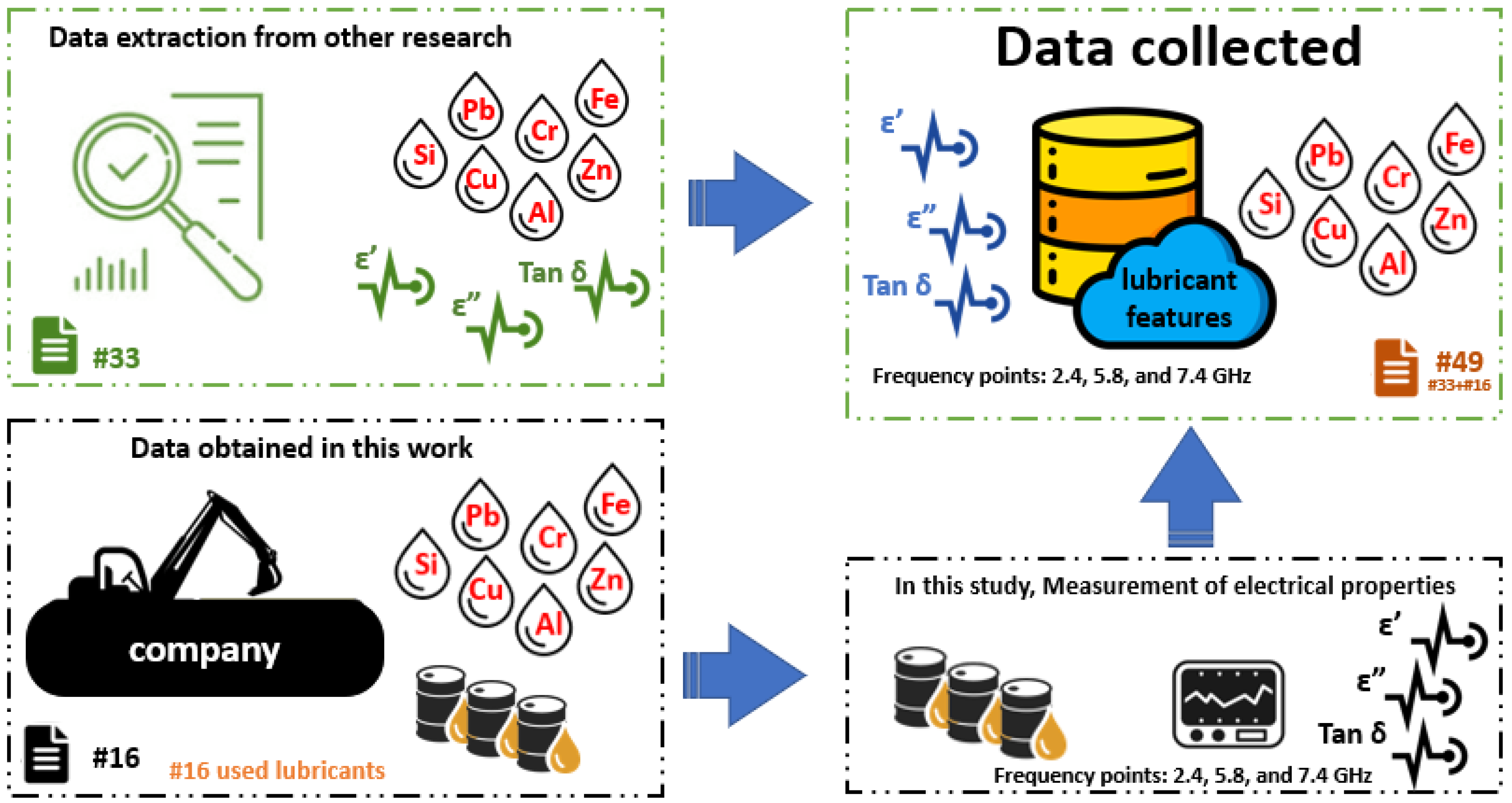
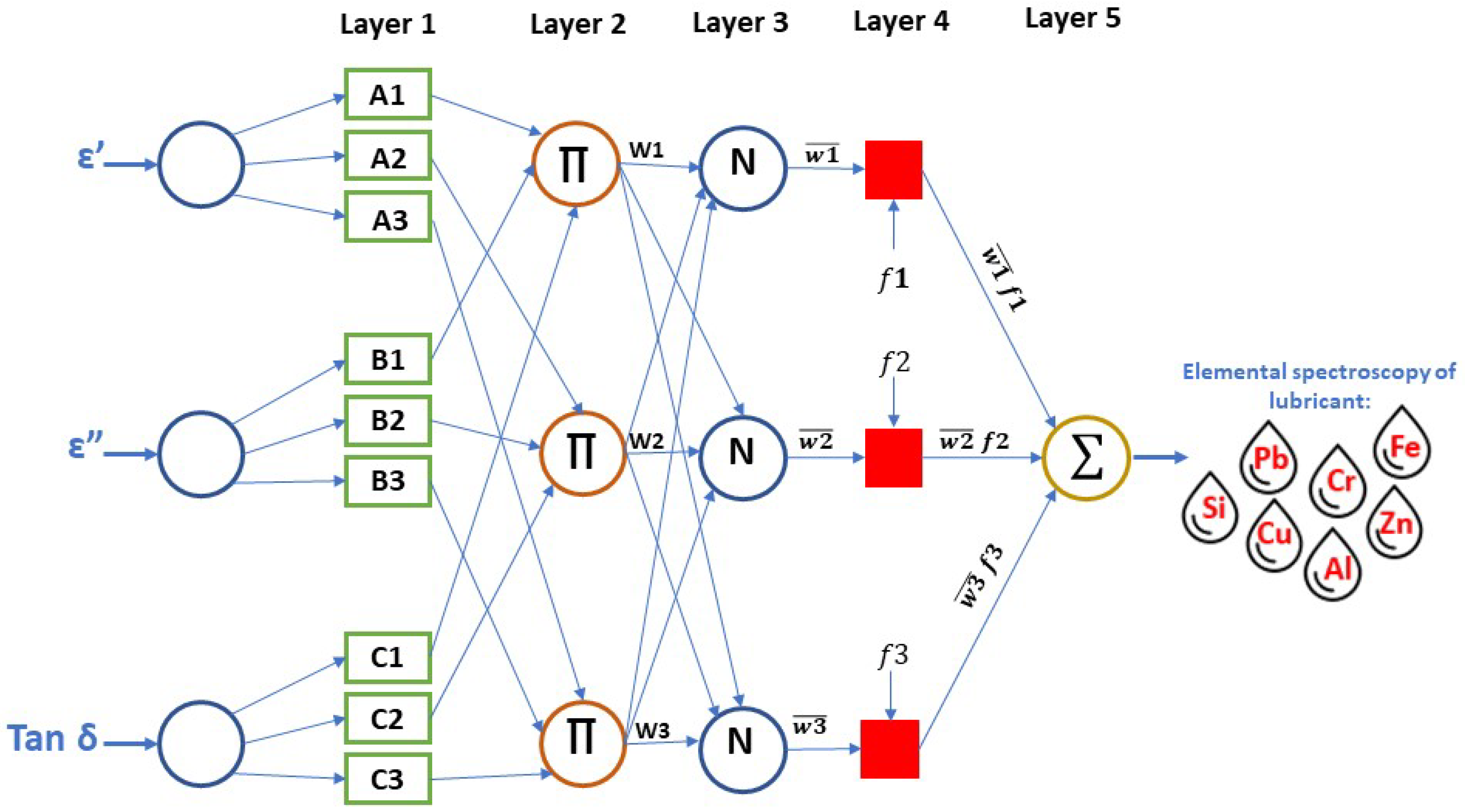
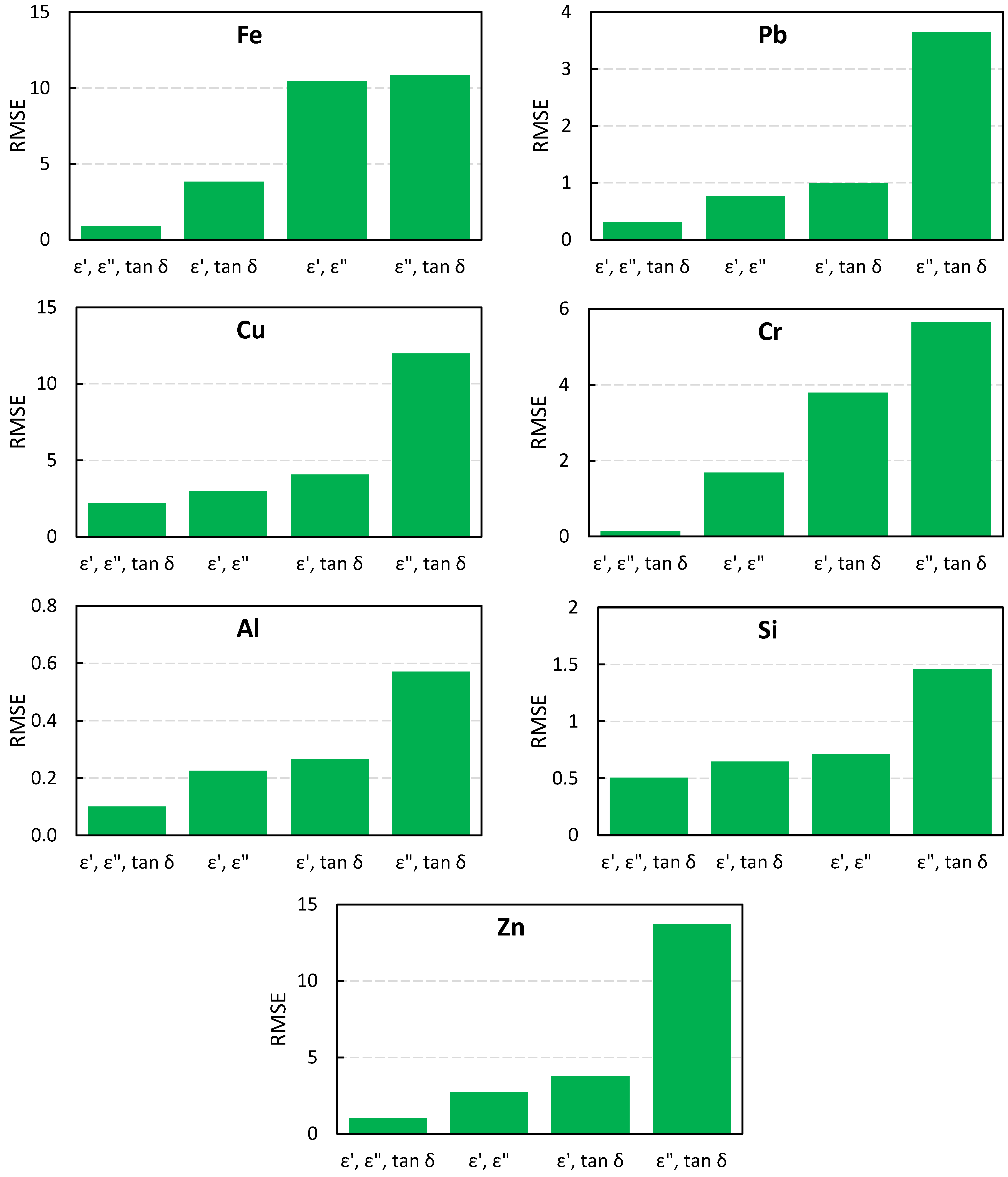
Predictive maintenance of mechanical systems relies on accurate condition monitoring of lubricants. This study assesses the performance of soft computing models in predicting the elemental spectroscopy (Fe, Pb, Cu, Cr, Al, Si, and Zn) of engine lubricants, based on the electrical properties (ε′, ε″, and tan δ) of oil samples. The study employed a dataset of 49 lubricant samples, comprising elemental spectroscopy and dielectric properties, to train and test several soft computing models (RBF, ANFIS, SVM, MLP, and GPR). Performance of the models was evaluated using error metrics such as MAPE, RMSE, and EF. The RBF model delivered the most accurate predictions for silicon at 7.4 GHz, with an RMSE of 0.4 and MAPE of 0.7. Performance was further improved by fine-tuning RBF parameters, such as the hidden size and training algorithm. The sensitivity analysis showed that utilizing all three input electrical properties (ε′, ε″, and tan δ) resulted in the lowest errors. Nevertheless, there are limitations to the study. In our country, measuring the electrical properties of engine lubricants and equipment is not a common practice, which leads to a limited number of samples studied. Despite these limitations, this study offers a proof-of-concept for predicting lubricant conditions based on readily measurable electrical properties. This paves the way for developing machine learning-based real-time lubricant monitoring systems.
Keywords: soft computing models; condition-based maintenance; lubricant condition monitoring; dielectric spectroscopy soft computing models; condition-based maintenance; lubricant condition monitoring; dielectric spectroscopy