


Abstract
Neutron capture reactions provide essential nuclear physics input for modeling the synthesis of heavy elements in stars. The growing precision of stellar spectroscopy and isotopic measurements in presolar SiC grains now demands cross sections with improved accuracy over the full energy range, and access to unstable nuclei relevant to slow (s-) process branchings and the intermediate (i-) process. This article reviews recent progress in direct neutron capture measurements, focusing on time-of-flight (TOF) experiments at CERN n_TOF and complementary activation techniques. Substantial advances have been achieved for stable s-only and bottleneck isotopes, significantly improving constraints on s-process models. In parallel, the combination of high instantaneous neutron fluxes and advanced detector systems has facilitated first-time neutron capture measurements on several radioactive branching-point nuclei. Feasibility studies, however, reveal current limitations related to sample availability, background conditions, and restricted energy coverage. In this context, the complementarity between TOF and activation emerges as a central strategy. Future developments, including high-flux facilities and novel inverse kinematics experiments in ion storage rings, are expected to extend the boundaries of neutron capture measurements, overcoming current limitations and helping unlock new frontiers in our understanding of stellar nucleosynthesis.
1. Introduction
One of the most active research areas in nuclear astrophysics is the study of the nucleosynthesis of heavy elements (A ≳ 60) in the universe. The production of these elements is primarily governed by neutron capture processes, which play a fundamental role in shaping the observed abundance distribution of nuclei heavier than iron. The involved mechanisms, first presented in detail in the works of Burbidge [1] and Cameron [2] almost 70 years ago, are characterized by different neutron densities in the astrophysical environment, which lead to different relative timescales for neutron capture and -decay.
The rapid neutron capture process (r-process) occurs in explosive astrophysical environments, characterized by extremely high neutron densities ( > ), such as supernovae or neutron star mergers. Under these conditions, successive neutron captures proceed much faster than -decay, producing highly neutron-rich nuclei located far from the valley of stability [3]. In contrast, the slow neutron capture process (s-process) operates in stellar environments with relatively low neutron densities (≈ – ), such as asymptotic giant branch (AGB) stars during the late stages of stellar evolution [4]. In this case, neutron capture occurs on timescales longer than or comparable to -decay, and nucleosynthesis proceeds along the valley of stability through a sequence of neutron captures and -decays, gradually producing heavier nuclei up to bismuth. This process is, together with the r-process, responsible for the production of the majority (≈99%) of the observed solar abundances of elements heavier than iron (see, e.g., Figure 1 of Ref. [5]). More recently, an intermediate neutron capture process (i-process), originally proposed by Cowan and Rose in 1977 [6], has been identified. This process occurs under neutron densities intermediate between those of the s- and r-processes (≈ – ) and involves nuclei located only a few mass units away from stability. The i-process has been shown to play an important role in explaining the abundance patterns observed in certain low-metallicity AGB stars and carbon-enhanced metal-poor stars [7].
From an experimental nuclear physics perspective, the key ingredient to improving nucleosynthesis models is the accurate determination of neutron capture cross sections at all relevant energies. In addition to neutron capture cross sections, the astrophysical interpretation also depends critically on the neutron-source reactions 13C(,n)16O and 22Ne(,n)25Mg, whose present status has been reviewed extensively elsewhere [8]. This article reviews recent developments and future perspectives in direct neutron capture measurements relevant to s-process nucleosynthesis in AGB and massive stars [4,9]. When direct measurements are not feasible, especially for very short-lived nuclei, indirect approaches such as surrogate reactions or the -Oslo method can provide valuable constraints on neutron capture rates. These techniques play an important complementary role, although a detailed discussion lies beyond the scope of the present review.
While previous reviews have focused on the impact of neutron capture measurements on s-process nucleosynthesis and stellar modeling [10], the present work emphasizes the experimental techniques, recent instrumental developments, and future strategies for direct neutron capture measurements on both stable and unstable isotopes. As described in Section 2, two different methodologies for neutron capture cross section measurements have been extensively applied so far in many laboratories worldwide: neutron time of flight (TOF) and neutron activation. Together, these approaches have provided data for more than 300 nuclei involved in the s-process, with most of them stable [5,10]. Despite the extensive experimental activities, there are still significant needs for new measurements, as discussed in Section 3. Section 4 discusses the recent efforts at CERN n_TOF to expand the experimental knowledge on direct neutron capture cross section. The main limitations of current state-of-the-art TOF experiments and the recent advances in both the TOF and activation techniques [4] at CERN n_TOF are then discussed in Section 5. Lastly, Section 6 presents future ideas to complement existing methodologies with new measuring stations and techniques.
2. Experimental Methods for Direct Neutron Capture Measurements
In an astrophysical environment where nucleosynthesis occurs, the stellar plasma is characterized by a temperature T at which particles are in thermodynamic equilibrium, and their energies follow a Maxwell–Boltzmann distribution. Consequently, the quantity of astrophysical relevance is the neutron-induced cross section averaged over this stellar neutron energy distribution, commonly referred to as the Maxwellian-averaged cross section (MACS) [11]. The latter has been compiled for s-process temperatures, = 5–100 keV, in the KADoNiS v0.3 database [12]. Figure 1 shows an example of the neutron capture cross section for 171Tm compared with the Maxwell–Boltzmann neutron energy distribution at the reference temperature keV (hereafter MACS30) to illustrate the contribution of different neutron energy ranges to the stellar capture rate.
Figure 1.
(Top) Maxwell–Boltzmann spectrum of neutrons at the reference stellar temperature keV (blue curve), an example of an evaluated cross section from JEFF-3.3 (black curve), and the convolution of the two (red curve), illustrating the contribution to the MACS. The units on the vertical axis are relevant only for the cross section. (Bottom) Energy range covered by the two most employed beams and techniques for stellar (n,) measurements (see text for details).
Neutron capture cross sections relevant to stellar nucleosynthesis are mainly determined with two direct experimental techniques: time of flight (TOF) and activation. In TOF experiments, the neutron energy is determined event by event from the time elapsed between neutron production and the interaction in the sample, which allows one to measure the energy-dependent cross section over a broad neutron energy range. The neutron flight path is the distance between the neutron production point and the sample position, and together with the timing resolution, it determines the neutron energy resolution of the TOF measurement. In activation experiments, the sample is irradiated in a neutron field, and the induced activity is measured offline or in a dedicated decay station, yielding the cross section averaged over the neutron spectrum of the irradiation. Thus, TOF measurements are particularly well suited since they provide energy differential information over a wide range of neutron energies, whereas activation measurements offer very high sensitivity for small or radioactive samples, typically at selected stellar temperatures, and are the method of choice when the signal-to-background ratio is too low for TOF measurements, or the latter do not cover the energy range of interest for astrophysics.
On the one hand, TOF facilities currently based on spallation neutron sources produce white neutron spectra, i.e., broad and nearly continuous neutron energy distributions, covering a wide neutron energy range, as illustrated in the bottom panel of Figure 1. Combined with precise neutron energy determination through the time-of-flight method, these facilities allow one to measure energy-dependent cross sections over a wide range of neutron energies, from which MACS values can be derived for astrophysically relevant temperatures. Neutron capture measurements for astrophysics are carried out in different white neutron beam facilities across the world, such as GELINA [13], LANSCE [14], ANNRI [15], Back-n [16] or n_TOF [17,18]. Section 4 focuses on the latter and reviews some of the recent highlights of astrophysical relevance.
On the other hand, in activation experiments, samples are irradiated with neutron spectra resembling stellar neutron distributions, allowing a direct determination of MACS values at specific temperatures. As indicated in the bottom panel of Figure 1, a quasi-stellar neutron spectrum at keV can be obtained using a low-energy proton accelerator and the 7Li(p,n) reaction [19]. An intense research program on direct (n,) activation measurements for astrophysics has been carried out in facilities like FZK [20], LiLiT-SARAF [21], HISPANoS-CNA [22] and LeNoS-LNL [23]. The activation technique in world-leading facilities, FZK [19,20] and LiLiT-SARAF [24], in terms of neutron flux, has shown an unsurpassed sensitivity for the measurement of sub-microgram samples (i.e., atoms) [20] and is the only direct method for cases where the high sample-decay-induced background would represent an important limitation for the TOF measurement (see Section 4). On the contrary, activation in quasi-stellar beams has been typically limited to a single accessible stellar temperature ( = 25 keV). Several facilities have studied methodologies to tune the outgoing neutron spectrum by modifying the proton energy and sample angle [23,25,26], using a ring-shaped sample to access lower s-process temperatures [27] or combining multiple proton energies to access higher temperatures ( = 90 keV) found in massive stars [28].
With the two-fold aim of covering a wider range and enabling direct measurement of low-mass samples, mainly of unstable species not accessible via TOF, a new generation of high-flux neutron activation stations with a tuneable energy range has been proposed at CERN [29,30], as discussed in Section 5 and Section 6.
3. Data Needs for Stable and Unstable Isotopes
Despite the extensive experimental activities over the last decades, there are still acute needs for new neutron capture cross section measurements, and for a large number of measured cross sections, improvements are required in terms of accuracy over the full neutron energy range relevant to astrophysical scenarios (1 eV–100 keV). Related to the latter, many previous measurements present cross section uncertainties that are significantly larger than the 5% attainable in the measured abundance ratios from meteorite grains [4]. Further improvements below this level could help disentangle residual uncertainties associated with stellar models and with other nuclear physics inputs. The most relevant data needs and particular examples are discussed in this section.
The values of the MACS30 for all the nuclei involved in the s-process pathway and their current uncertainties are depicted in Figure 2. Among all the isotopes plotted in this figure, several groups of key nuclei can be distinguished, which have a crucial impact on the nucleosynthesis process [5,10,31]. Accurate knowledge of their neutron capture rate is indispensable for a better understanding of the neutron economy in the s-process and the resulting calculated abundances. The present status and needs for these particularly relevant isotopes are summarized in Table 1.
Figure 2.
MACS30 in KADoNis v0.3 [12] (top) and their present accuracy (bottom). Nuclei acting as s-process bottlenecks, branching points and s-only nuclei are displayed in blue, red and green respectively. Figure adapted from Ref. [31].
The first family of key isotopes is the s-only isotopes, nuclei that are solely produced by the s-process since they are shielded from r-process contributions by other stable isobars. The s-only abundances serve as a benchmark for nucleosynthesis and galactic chemical evolution models because they are not contaminated by r-process contributions and therefore provide a direct normalization point for the s-process component. The MACS of the s-only nuclei are known with few exceptions within the required 5% or even down to 2% (see green points in Figure 2). A complete list of the 33 s-only isotopes and their current uncertainties can be found in Ref. [5].
Further, nuclei located at neutron shell closures, i.e., nuclei with closed neutron shells corresponding to enhanced nuclear stability, are characterized by relatively small MACS values (see blue points in Figure 2), thereby acting as s-process bottlenecks. The s-process flow gives rise to the three characteristic abundance peaks at the neutron shell closures. These elements—Sr, Y, Zr (N = 50), Ba, La, Ce, Nd, Sm (N = 82) and Pb, Bi (N = 126)—show up prominently in spectroscopic observations of stellar atmospheres, and thus, they represent a sensitive probe for stellar models [32]. However, as a consequence of their small cross sections, experimental uncertainties are still large (even higher than 10%) for some neutron magic nuclei [5,10].
Particular attention has also been given to unstable nuclei acting as branching points in the s-process, highlighted in red in Figure 2. At these nuclei, featuring relatively long half-lives (years), neutron capture and -decay compete, leading to a branching in the nucleosynthesis path [4]. The resulting isotopic abundance patterns are highly sensitive to the physical conditions of the stellar environment, such as temperature and neutron density. Therefore, precise measurements of neutron capture cross sections at branching points, combined with abundance observations and stellar models, provide valuable constraints on stellar evolution and nucleosynthesis conditions.
Despite their relevance, only a small fraction of the key s-process branching nuclei listed in [4] have been measured with high accuracy to date [31,33], and there is still a significant number of them that have not been accessed owing to several experimental limitations. These limitations include the difficulty of producing samples of these isotopes in sizable amounts with high enough enrichment. In practice, enriched samples ranging from a few percent to nearly isotopically pure material are often required, depending on the competing backgrounds from neighboring species. Furthermore, their activity implies a considerable radiation hazard and represents an intense source of background. A combined effort has been carried out during the last decade between Institut Laue-Langevin (ILL) in Grenoble (France) and Paul Scherrer Institute (PSI) in Villigen (Switzerland) to produce high-quality samples of these nuclei to measure the neutron capture cross section via TOF at CERN n_TOF [34], as discussed in Section 4.
Table 1.
Summary of data needs on direct (n,) measurements for key isotopes for stellar nucleosynthesis studies.
Lastly, neutron capture reactions on radioactive isotopes also play a crucial role in i-process nucleosynthesis. The reaction flow of the i-process travels through radioactive nuclei 2–6 units away from stability on the neutron-rich side, where no experimental neutron capture cross section data are available to date. Recent Monte Carlo sensitivity studies [35,36,37] have identified a number of neutron capture reactions on radioactive nuclei whose uncertainties have a significant impact on i-process abundance predictions. Representative examples include 66Ni (55 h), 72Zn (47 h), 135I (6.6 h), 153Sm (46 h), and 217Bi (98.5 s), all of which feature very short half-lives. Other relevant cases include i-process tracers such as 137Cs (30 y) and 144Ce (285 d) [38], which are closer to the experimental reach because their longer half-lives make sample preparation, transport, and counting substantially more realistic than for the much shorter-lived nuclei.
In the context of i-process relevant isotopes, future high-flux neutron sources and innovative experimental methods may make the direct measurement of such reactions feasible for the first time, as discussed in Section 6.
4. Highlights of Stellar Neutron Capture Measurements at CERN n_TOF
4.1. The n_TOF Facility for Neutron Capture Measurements
The n_TOF facility at CERN generates its neutron beams through spallation reactions of 20 GeV/c protons extracted in pulses from the CERN Proton Synchrotron and impinging onto a lead spallation target. The resulting high-energy (MeV-GeV) spallation neutrons are partially moderated in a surrounding water layer to produce a white-spectrum neutron beam, extending from thermal energies up to a few GeV. The neutrons travel along two beam lines towards two experimental areas: EAR1 at 185 m (horizontal) [17] and EAR2 at 19 m (vertical) [18,39]. A new experimental area, the so-called NEAR Station, has been installed during the latest upgrade next to the spallation target, as discussed in Section 5. It features an extremely high neutron flux that opens the door to (n,) activation measurements on short-lived radioactive isotopes or on very small mass samples [29]. A comprehensive description of the present status of the n_TOF facility can be found in Ref. [29].
In neutron TOF capture measurements at n_TOF, the sample of the isotope of interest is placed in the pulsed neutron beam, and the prompt capture -rays originating from the sample are registered by means of radiation detectors. Two different detection systems have been used for (n,) measurements at n_TOF so far: a 4 Total Absorption Calorimeter (TAC) [40]—a segmented detector array consisting of 40 BaF2 crystals—and low-efficiency C6D6 liquid scintillators [41] in conjunction with the pulse height weighting technique (PHWT) [42,43], which allows one to virtually mimic an ideal total energy detector (TED) [44]. The latter have been used for measurements of stellar MACSs due to their reduced neutron sensitivity and fast response. Thus, all the measurements presented in this work rely on the TED principle.
Since 2001, more than 60 neutron capture cross section measurements have been carried out at the first experimental area n_TOF EAR1 [17]. Thanks to its long flight path of 185 m, EAR1 has been a reference facility for high-resolution measurements on stable isotopes and samples with sufficient masses (≥100 mg), both in the resonance region (RRR) [45,46] and unresolved resonance region (URR), up to 1 MeV [47,48,49,50], covering the full energy range of importance for astrophysics experiments. In 2014, the n_TOF Collaboration built the vertical beam line n_TOF-EAR2 [18,39], featuring a flight path of only 20 m, which delivers a substantially higher neutron flux and is particularly advantageous for measurements on radioactive samples.
4.2. Stable Nuclei: S-Process Bottlenecks and S-Only Isotopes
A large fraction of the neutron capture program at CERN n_TOF over the past 25 years has focused on nuclear astrophysics [10,51,52], addressing several of the key stable isotopes mentioned in Section 3, namely s-process bottlenecks and s-only isotopes, and contributing to solving discrepancies between SiC grain observed abundances and model predictions.
Among other measurements, the capture cross section of the s-only 154Gd. provides a direct probe of stellar neutron exposures and the efficiency of neutron sources in AGB stars, particularly the structure and extent of the 13C pocket, which governs the main neutron production through the 13C(,n)16O reaction. Aiming at solving the observed underproduction of 154Gd relative to neighboring s-only isotopes such as 150Sm, a new measurement was carried out at n_TOF EAR1 [53] using low-neutron-sensitivity C6D6 detectors. The resulting MACS30 = 880(50) mb, significantly lower than the previously recommended value of 1080(12) mb [12], leads to an increase of about 10% in the predicted stellar abundance of 154Gd and reduces the discrepancy between theoretical nucleosynthesis models and an observed isotopic ratio of 154Gd/150Sm in the solar system from 30% down to 19%, consistent with the observational uncertainties [53].
Several recent experiments also cope with s-process bottlenecks, such as 140Ce and 209Bi. 140Ce lies in the second s-process peak (N = 82). The relatively low neutron capture cross section of isotopes in this region gives rise to the observed abundance peak around A ≈ 140. Precise neutron capture measurements on 140Ce were required to solve the 30% lower Ce abundance predicted in AGB models with respect to spectroscopic observations [54]. A new measurement of this cross section was carried out at n_TOF with a highly enriched 12.3 g (Ce-oxide) sample produced at PSI. The high-resolution measurement using the aforementioned C6D6 setup with low neutron sensitivity covered a large neutron energy range up to 65 keV. The relevant MACS for nucleosynthesis in AGB stars, at = 8 keV, was found to be 28.18(24) mb, 40% higher than expected [12]. The new result implies an even smaller predicted s-process abundance of Ce, thereby increasing the tension with the observational estimate.
At the termination of the s-process path, 209Bi represents the heaviest stable isotope and plays a key role in determining the final abundance distribution of heavy elements produced by neutron capture. The measurement of its MACS, featuring a very low value of only 2.9(5) mb at = 25 keV, together with the cross sections of the neighboring Pb isotopes (see, e.g., [55]), governs the s-process termination. In particular, rather accurate abundance constraints could be derived for the r-process contribution to 209Bi. With this motivation, a first neutron capture TOF measurement on 209Bi was carried out at EAR1 in 2001 [56]. However, it encountered many difficulties due to the in-beam -ray background and limited statistics. To overcome these limitations, a new measurement was successfully carried out in 2024 at n_TOF EAR2 [57]. The high flux at EAR2 allowed for improving the covered energy range and statistical accuracy using the same 6 mm thick sample used in EAR1. In the new experiment at EAR2, an additional thinner (1 mm thick) sample allowed a more controlled assessment of multiple-scattering and neutron sensitivity effects. Moreover, the total cross section has been measured by means of transmission at the JRC in Geel [58], thereby allowing a fully consistent R-matrix analysis of the two data sets.
Beyond s-only and bottleneck isotopes, an active program at n_TOF is also addressing present discrepancies between isotopic abundances measured in presolar SiC grains and the predictions of state-of-the-art s-process nucleosynthesis models. One of the recent cases is 146Nd. Persistent discrepancies are observed between the predicted and measured 146Nd/144Nd ratio, which is systematically overestimated by current models, when compared to SiC data [59]. Sensitivity studies carried out with the FUNS code [60,61] indicate that an increase of about 20% in the 146Nd neutron capture cross section only at low stellar temperatures (below = 20 keV) would improve the agreement with the grain data (see Figure 3). The available experimental information is largely based on activation and time-of-flight data covering only the URR above 3 keV [62]. In contrast, the capture cross section at lower energies in the RRR, which strongly impacts the MACS at low stellar temperatures ( ≈ 8 keV), has never been measured. To address this issue, a high-resolution TOF experiment was performed at n_TOF EAR2 using a 212 mg 146Nd oxide sample enriched to 97.4%, aiming at measuring both the RRR up to 5 keV and the URR up to 100 keV [63]. The TOF measurement at EAR2, for which preliminary results are shown in Figure 3, has been complemented with an activation experiment at HiSPANoS-CNA to determine the MACS at = 25 keV. Last, this measurement has become the first case at n_TOF exploiting the complementarity between a TOF measurement and activation measurements in the new high-flux n_TOF-NEAR facility [64], thereby establishing a benchmark for future experiments made with this combination of both approaches.
Figure 3.
(Left) -values (per mil deviations from solar system ratios) of 146Nd/ 144Nd relative to 150Nd/ 144Nd from AGB star calculations (solid lines) compared with SiC grain data (black dots) from Richter [65] and Liu [66], showing the impact of varying the 146Nd(n,) rate of ASTRAL [67] in ±20% in the full energy range and only below = 20 keV. Dots along the curves represent third dredge-ups (TDUs) in the C-rich phase, where SiC grains can form. (Right) Example of the counting rate measured at n_TOF EAR2 in a small range of neutron energies compared to the expected results based on JEFF-3.3.
4.3. Unstable Nuclei: S-Process Branching Points
Experimental efforts at CERN n_TOF have also focused on the more challenging measurement of unstable nuclei, which act as branchings of the s-process. The limited sample mass available and the high background induced by the sample activity represent the major challenges to experimentally accessing the (n,) cross sections of these isotopes. In practice, the accessible sample masses are often in the sub-mg range with an isotopic purity as low as 1%, while the activities of -rays can reach the 10 MBq level and become a dominant source of background. To cope with such demanding requisites, a big effort has been carried out to improve the neutron beam—enhanced luminosity and improved resolution—and to reduce the - and neutron-induced backgrounds [10,31,68]. In parallel, the collaboration has developed an active R&D program on innovative detection systems [69,70,71,72,73], leading to a progressive increase in detection sensitivity for the radiative neutron capture, which has allowed addressing several first-ever TOF measurements on key s-process branchings. The reader is referred to Ref. [10] for an extended discussion.
The early TOF measurements on unstable nuclei took place in n_TOF EAR1 between 2000 and 2015. In particular, the capture cross sections of 151Sm [74], 93Zr [75], 63Ni [76], 171Tm [24], and 204Tl [77] were measured. Despite major progress related to neutron beams and improvements in detection sensitivity over the years, these experiments in EAR1 showed some limitations. In particular, the 93Zr [75] and 63Ni [76] measurements suffered from a low signal-to-background ratio (SBR) due to the neutron-induced background, which limited the neutron energy range that could be measured to a few keV. More recently, the first-ever TOF measurements of 171Tm [24] and 204Tl [77] were carried out with samples containing only a few mg (≈ atoms) produced by a collaboration between ILL and PSI. The accuracy of the experimentally constrained MACS30 was limited by the very intense background arising from the sample activity, which restricted the upper energy for the analysis of resonances to 4 keV for 204Tl and only 700 eV for 171Tm. The latter is one of the relatively few cases where the TOF measurement could be complemented with an activation experiment at LiLiT-SARAF, which, in turn, is crucial for improving the experimental uncertainty of MACS30 to about 10%. In practice, the idea of complementing TOF and activation was among the motivations to build the n_TOF-NEAR station, as discussed in Section 5, and the project for the future n_ACT (see Section 6).
A major upgrade to address the challenging background arising from radioactive samples was the deployment of EAR2. Thanks to its ≈10-times shorter flightpath compared to EAR1, it features a 400-times higher instantaneous neutron flux (see Ref. [78]). This beamline is particularly well suited for neutron capture measurements on highly radioactive and/or very small-mass samples, such as s-process branching nuclei. Later, in 2021, the n_TOF facility installed its third-generation spallation target [79] during the CERN Long Shutdown 2 (LS2) (2019–2021). The optimized design of this new spallation target introduced a remarkable upgrade in the performance of EAR2, both on the energy resolution and the neutron flux [68]. Details on the upgraded facility performance can be found in Refs. [18,80].
Improving the characteristics of the neutron beam is not sufficient to overcome all the existing challenges for (n,) measurements on several unstable branching points. To this end, together with the unprecedentedly high luminosity of the EAR2 target, a new generation of C6D6 detectors with higher segmentation, so-called sTED [72], have been developed to cope with the high count rates associated with the flux of EAR2 [81]. The arrangement of the nine sTED cells in a compact ring configuration around the capture sample has enhanced the sensitivity [81,82]. In addition, for those cases where the neutron-induced background dominates [75,76], an innovative solution based on Total Energy Detection (TED) with -ray imaging capability, the so-called i-TED, was proposed [70]. i-TED exploits the Compton imaging technique with the aim of determining the direction of the incoming -rays. This allows the rejection of events not originating in the sample, thereby enhancing the signal-to-background ratio (SBR). i-TED has been developed [83,84,85] and successfully validated at n_TOF [71,86] in recent years.
The recent upgrades to detection systems and spallation targets have allowed for reaching an unprecedented sensitivity (see Figure 2 of Ref. [10]), as has been demonstrated by the first-ever capture measurements on the unstable 94Nb (half-life, = y) [82,87] and 79Se ( = y) [81] isotopes. Focusing on the latter, the branching at 79Se is particularly well suited for determining the thermal conditions of the stellar environment thanks to the strong thermal dependence of its -decay rate [4]. For this experiment, 2.7 mg of 79Se was produced by means of neutron irradiation of an enriched 208Pb78Se alloy sample in the high-flux reactor at ILL [81,88]. This measurement combined EAR1 using i-TED and EAR2 using the sTED array [81]. The data analysis has shown the relevance of having a high instantaneous flux of EAR2 to cope with the background arising from unavoidable activation in the sample (5 MBq and 1.4 MBq for 75Se and 60Co, respectively); see Figure 4. The quality of the TOF data has allowed analyzing for the first time 12–13 resonances up to ≈1.25 keV. To date, there are only theoretical predictions of the cross section, such as those adopted in JEFF-3.3. However, this prediction can never be reliable, as illustrated in Figure 4. The final analysis will provide the first experimental value for the MACS, leading to a constraint on the thermal conditions of the weak s-process in massive stars.
Figure 4.
(Left) Total counts and background components as a function of the neutron energy measured with the PbSe (78Se + 79Se) sample in n_TOF EAR2. The first resonances of 79Se are highlighted. (Right) Background-subtracted 79Se(n,) yield showing examples of observed resonances compared to the expected results based on JEFF-3.3.
5. Current Limits and Recent Advances
5.1. Pushing the Limits of TOF Measurements in EAR2
Neutron capture measurements on unstable isotopes have already been successfully measured at n_TOF using samples with masses of ≃1–50 mg [24,81,82,89,90]. Measurements of lower masses are still difficult; for instance, a 147Pm(n,) measurement at EAR2 on a sample of only 85 μg allowed for observing only the three first resonances due to the limited SBR [34,91].
Recent improvements in the performance of n_TOF neutron beams and detection systems have led to improved sensitivity in (n,) measurements. In this context, a systematic study of the current detection limit in the upgraded n_TOF EAR2 has been carried out [92] for TOF measurements on key s-process branching isotopes listed in Refs. [4,33]. Among the challenging key s-process points never measured before via TOF [4,33], we have selected 81Kr, 135Cs, 147Pm, 153Gd, 163Ho, and 179Ta, which present sufficiently long half-lives to prepare a target (≃1 y) combined with the emission of no -rays or only low-energy -rays, which could be efficiently shielded. The list of studied isotopes, their main properties, challenges in TOF measurements, and complementarity with activation are summarized in Table 2.
Table 2.
Summary of s-process branching points included in the feasibility study for TOF (n,) measurement in the upgraded n_TOF EAR2 [92].
To study the feasibility of such experiments with the current sensitivity of EAR2, we have carried out simulations of the anticipated experimental outcomes for different sample masses ranging from 5 × 10¹⁶ atoms to 5 × 10¹⁸ atoms. To realistically predict the statistical uncertainties, we have implemented a Monte Carlo (MC) resampling method and assigned a realistic number of protons to the sample (corresponding to 30 days of measurement) and the background characterization (20 days) measurements. The isotopes of this study do not present high-energy -ray activity, and thus, the major background source is expected to be neutron-beam-related, similar to the situation of the recent 94Nb and 79Se measurements. For this study, the neutron-induced background was taken from experimental measurements at EAR2. Figure 5 shows the expected capture yield for the potential 155Eu(n,) and 179Ta(n,) with samples of and atoms, respectively. Here, individual resonance parameters were taken from JEFF-3.3 and randomly generated based on average resonance parameters.
Figure 5.
Expected capture yield with 1250 bins per decade (bpd) after the background subtraction compared to the expected yield based on the simulated resonance parameters for a 155Eu sample of 5 × atoms (left) and a 179Ta sample of 1018 atoms (right).
Based on the simulated experiments, we have quantified the expected number of observable resonances and the maximum neutron energy range accessible for their identification. For each resonance, the probability of observation was evaluated using a statistical detection criterion following the methodology adopted in recent experiment preparation studies [93]. The results, shown in Figure 6 for the two representative isotopes, indicate that with the current signal-to-background ratio at n_TOF-EAR2, samples containing – atoms (depending on the isotope) would be required to observe a sufficient number of resonances to allow a reliable determination of the average resonance parameters, such as level spacings and average neutron and radiative widths, needed for the extrapolation of the MACS. In practice, at least 10–15 observed resonances are required for this purpose [24,77,87]. Nonetheless, such sample masses are often beyond currently attainable quantities or cannot be produced with sufficient isotopic purity, highlighting the need for improved radiochemical production methods [94]. The study also indicates that the signal-to-background ratio achievable in these TOF measurements would not allow a direct determination of the cross section in the unresolved resonance region (URR), which represents a large fraction of the neutron energy range of astrophysical interest. For several of the studied isotopes—135Cs, 147Pm, 155Eu, 163Ho, and 179Ta—a complementary activation measurement could therefore be envisaged (see Table 2). Activation measurements will now be possible at CERN after the deployment of the n_TOF-NEAR station and the proposal of the future n_ACT activation facility discussed in the following.
Figure 6.
Expected number of cumulative observed s-wave resonances in different neutron energy ranges for 155Eu and 179Ta (4 detection threshold). The cumulative fraction of observed resonances at the end of the energy range is provided (only for the thickest sample). Samples with different numbers of atoms are compared.
As discussed in this section, direct capture measurements for the full energy range of stellar interest via TOF still require further optimization of the sensitivity. In particular, an improved SBR to access smaller sample masses (≤ atoms) would be required. Starting from the state-of-the-art (n,) setup based on sTED detectors in a compact ring configuration [81], the n_TOF collaboration has launched a series of optimization campaigns of the signal-to-background ratio (SBR) at EAR2 [95,96]. The efforts are split into two directions: maximizing the detected (n,) events and reducing the beam-induced background.
The signal can be enhanced by increasing the fraction of the neutron beam impinging on the sample, the so-called Beam Interception Factor (BIF). Recent results demonstrate that, as a consequence of the spatial divergence of the beam in EAR2 [18], the BIF can be enhanced by shortening the flight path (L) in the experimental hall of EAR2 (see top-right panel of Figure 7). An improvement in the SBR by a factor of 1.6 was found for 10 mm diameter samples when bringing the sample and detectors 60 cm closer to the second collimator without any negative impact on the background. The (n,) sensitivity can be further enhanced by increasing the efficiency for detecting -rays emitted from the sample. This objective has motivated further R&D efforts toward larger segmented arrays of C6D6 detectors [97] or novel compact solid scintillators with higher intrinsic efficiency [73].
Figure 7.
(Left) Empty background in n_TOF EAR2 measured with the array of 9 sTED detectors. The reference level (black) is compared with improved shielding configurations that provided an absolute reduction in the background. (Right) Summary of the signal-to-background (SBR) gain obtained due to an increase in the flux intercepted by the sample (top) and due to the reduction in the empty sample background (bottom).
The remaining critical aspect for further improving the SBR is reducing the beam-induced background unrelated to the sample, the so-called empty background in the right panel of Figure 7. This background is intrinsic to the facility and depends largely on the effectiveness of the shielding against uncollimated neutrons. The facility’s unique combination of a short flight path and presence of high-energy neutrons up to 350 MeV complicates the design of a collimation system focused on reducing the background in (n,) experiments. The results of recent optimization campaigns showed that by adding additional layers of neutron-absorbing material to the shielding after the second collimator, the background could be reduced by a factor of 1.45 (see Figure 7). The combined increase in the (n,) signal and reduction in the background thus resulted in a 2.5-fold improvement in the SBR. Such an improvement in the SBR directly translates to increased sensitivity to smaller sample masses and to an extension of the neutron energy range over which statistically significant resonances can be observed. These promising results have motivated a more detailed design study of a new shielding system aimed at achieving further substantial gains in sensitivity after LS3 (2026–2028).
5.2. The n_TOF-NEAR: A High Flux Activation Facility
As introduced in Section 2, the activation technique shows unsurpassed sensitivity and represents an advantage for the measurement of very small sample masses, where the limited signal-to-background ratio would represent an important limitation for the TOF measurement. In practice, combining neutron TOF and activation measurements, when feasible, may deliver complementary and more accurate information on a specific cross section; see, e.g., [24,91].
As already mentioned above, following these premises, the n_TOF facility expanded its experimental capabilities in 2021 with the deployment of the NEAR station [29]. Located at a distance of only 2.5 m from the lead spallation target, it features two orders of magnitude higher neutron flux than EAR2. The high flux makes it well suited for activation measurements on extremely small-mass samples (≤1 μg) and on radioactive isotopes, which, as discussed in Section 5, are often not feasible via TOF.
Conceptual MC simulations [10,29] showed that moderating materials (e.g., Al-oxide, Be) followed by B4C filters could be used to produce quasi-Maxwellian neutron energy spectra over a broad range of temperatures between about 1 and 100 keV. This feature makes the facility unique with respect to conventional stellar neutron beams, which are typically limited to = 25 keV. After a few years of development and commissioning [98], the energy-tuning setup is now fully implemented after the recent installation of a 20 cm thick Al-oxide moderator [99], which smooths the flux and suppresses the undesired MeV neutron component [10]. The activated samples are then measured at the Gamma-ray spectroscopy Experimental ARea (GEAR) of n_TOF, which is at the moment based on a CANBERRA HPGe detector GR5522 (63% efficiency) supplemented with low-background shielding [29].
Besides the possibility of exploiting the complementarity between TOF and activation, as illustrated with the recent 146Nd measurement (see Section 4), NEAR aims to push the limits of direct capture measurements on radioactive nuclei not accessible by TOF. The first unstable isotope of astrophysical interest proposed for an activation MACS measurement at NEAR is 135Cs ( = 2 Myr) [100]. The stellar neutron capture rate of 135Cs is of particular relevance, as part of the temperature-dependent s-process branching at A = 134–135 [101], which fixes the branching ratio between the two s-only 136Ba and 134Ba, is well characterized from SiC in presolar grains [102]. The neutron capture of 135Cs at keV was previously measured at FZK [103], and therefore, the proposed activation at NEAR will provide a valuable benchmark case for the performance of the new facility. In addition, the new NEAR measurement will allow access to the MACS at lower neutron energies around keV, where no experimental information is currently available.
For the proposed experiment at NEAR, scheduled in 2026, a suitable sample of 135Cs of atoms, sketched in Figure 8, has been ion-implanted on a 3 μm thick aluminum backing in the Solid State Physics (SSP) chamber of ISOLDE [104]. The 135Cs beam was produced and mass-separated using a General Purpose Separator, using a commercial 137Cs liquid source of 9 MBq as an ion source, featuring an isotopic ratio of 135Cs/137Cs = 0.72. The sample backings were designed to fit in the B4C disks used for the aforementioned energy filtering at NEAR, where the beam dimensions are much larger than the 15 × 15 mm2 implanted area (see Figure 8). After irradiation, the decay of the activation product, 136Cs ( = 13 d), could be measured at the GEAR station. Other low-background HPGe-based setups of underground laboratories are also being considered [105]. This experiment would show the potential synergy of performing activation measurements at NEAR on small samples of highly isotopically enriched material produced in the nearby ISOLDE facility.
Figure 8.
(Left) Sample backing used for the 135Cs implantation in the ISOLDE SSP chamber; the implanted area corresponds to the red square at the center of the holder. (Right) Sketch of the implanted sample inserted in the filters and overlaid with the neutron beam profile at NEAR. The color scale represents the neutron flux in a.u.
6. New Ideas and Future Projects
While the recent upgrades at n_TOF have substantially improved present capabilities, fully addressing the remaining challenges requires the development of novel experimental concepts and facilities. This section outlines complementary experimental concepts that aim to overcome the limitations identified in Section 5 by either increasing neutron flux, extending energy coverage, or developing new methods of accessing short-lived nuclei.
6.1. New High-Flux Activation Facilities at CERN
6.1.1. The n_TOF-NEAR Facility with CYCLING
To date, activation measurements at NEAR consist of week-long irradiations followed by manual retrieval and transport to GEAR. In this single-activation scheme, the time required to cool down the NEAR bunker after the end of irradiation (6 h) and transport the sample to the offline detector imposes an intrinsic limit on the minimum half-life of the (n,) product. This limitation could be overcome with the installation of a CYCLIc activation station for (N,G) experiments (CYCLING) at NEAR [92,106], the repetition of short irradiation, rapid transfer to a detector located nearby, measurement of the decay and transport back to the irradiation position [107]. Such a remote-controlled sample transport system at NEAR would also allow the remote retrieval of any irradiated samples, thereby reducing the duration and frequency of beam stops to access NEAR.
Depending on the duration of the transport of the sample to the detector, half-lives of the order of seconds or minutes would become accessible. There are several isotopes of great interest for stellar nucleosynthesis studies that could be investigated with the proposed CYCLING station. Some of them are stable nuclei, such as 19F, which leads to the formation of 20F ( = 11 s) [106]. Among the s-process branching nuclei listed in Table 2, the activation measurements of 163Ho()164Ho ( = 30 min) and 179Ta()180Ta ( = 8 h) would also benefit from a cyclic scheme at NEAR. In addition to s-process cases, () measurements on isotopes of relevance to the i-process [6], such as 137Cs()138Cs ( = 33 min) or 144Ce()145Ce ( = 2.8 min) [31,92], could be accessible for the first time with CYCLING.
The feasibility of this station depends mainly on the capability to operate active detectors in the harsh radiation environment near the NEAR bunker, and thus, the design of the measuring station requires good knowledge of the expected neutron and -ray fields. With this goal, several campaigns have been carried out to assess the mixed neutron–gamma radiation field at several positions in NEAR and validate the first simulation results [92]. The sensitivity required to measure the decay of activated samples has been explored using a portable decay station consisting of a cylindrical LaBr3(Ce) Canberra detector with shielding for neutrons (borated polyethylene) and -rays (steel) that has been placed in various positions around the NEAR facility. Based on these campaigns, the preferred location, which provides a sufficiently low background, is 33 m away from the irradiation point in the downstream tunnel towards EAR1 and shielded from neutrons by a large concrete shielding; see Figure 9.
Figure 9.
Sketch of the CYCLING project showing the irradiation point for activations at NEAR (a-NEAR) and the measuring station, proposed to be at 33 m in the tunnel towards EAR1, which would be connected by a remote transport system.
Based on the signal-to-background ratio achieved in the experimental campaign, a systematic study of cases that would be measurable in CYCLING has been carried out. A numerical simulation of a cyclic activation scheme was performed assuming a fixed transport time of 15 s, irradiation and counting times of 1.5 and a time-averaged neutron flux of n/s, corresponding to the energy-filtered flux integrated over a sample of a 10 mm radius. The feasibility has been studied as a function of the (n,) product , the MACS30 and the areal density of the activated sample. From the results, we have evaluated the statistical significance of the observation of a photo-peak corresponding to the -ray decay of the product nucleus. Figure 10 shows the results for this baseline scenario based on the background level found in the exploratory campaigns of ≈100 c/s below the 412 keV photo-peak, i.e., the full-energy peak corresponding to complete -ray absorption of the 198Au decay. The results show that the of the (n,) product does not impact feasibility, except when it is comparable to the transport time. The study concluded that the assumed background level would allow one to measure the MACS30 in the range of 10–1000 mb with samples of – atoms per barn, corresponding to – atoms (see right panel of Figure 10). The final attainable sensitivity would depend on the level of background after an optimized design of the built measuring station.
Figure 10.
(Left) Simulated statistical significance (color scale in ) for the detection of a decay -ray in a cyclic activation scheme as a function of the MACS30 and the half-life of the (n,) product nucleus. These results correspond to the scenario for the background of ≃100 c/s in a HPGe. The red dashed line indicates the minimum MACS measurable (at the significance level of 4). (Right) Mass required as a function of the minimum detectable MACS30 (Min MACS) for different background levels in the final measuring station with an optimized shielding.
For unstable isotopes, the background will in most cases be dominated by the intrinsic activity of the sample itself, and the feasibility of such experiments will depend strongly on the decay energy spectrum and the detector counting rate capabilities, thus requiring a case-by-case optimization of the setup. Among the most challenging cases discussed above is 137Cs: a sample of ∼ atoms would correspond to an activity of about 70 MBq dominated by the 662 keV -ray line. In this scenario, a viable strategy could rely on high-count-rate detectors, such as LaBr3(Ce), combined with a relatively high energy threshold or the use of a lead absorber to suppress the intense 662 keV radiation, thereby enabling the detection of the higher-energy (≥1 MeV) -rays from the decay of 138Cs.
The implementation of CYCLING would require the installation of a remote transport system that is able to cover the 30 m distance in tens of seconds. The design phase of the project has been launched, and if a viable solution is found, it could be developed and installed at CERN before the end of LS3.
6.1.2. The n_ACT at BDF Facility
To expand further on the large potential of the activation technique and on its complementarity with TOF experiments, the n_ACT facility at the SPS Beam Dump Facility (BDF) has been proposed at CERN [30]. n_ACT will be a high-flux neutron activation station integrated into the BDF target, which can be operated parasitically to the Search for Hidden Particles (SHiP) experiment. The high-intensity neutron fields produced by spallation reactions of the 400 GeV/c, p/pulse proton beam from the SPS accelerator in the tungsten target can be exploited for accurate neutron activation measurements.
n_ACT will comprise three complementary activation stations integrated into the BDF target complex (see Figure 11), offering ultra-high-flux close-target neutron fields for long-term irradiations (BIAS), an automated sample transport system, connecting the irradiation position with an external radiochemistry and spectroscopy laboratory (BRIS), and a collimated external neutron beam (BEAS), thereby covering the full range of activation needs. As shown in Figure 11, BIAS and BRIS would provide neutron fluxes up to three orders of magnitude higher than that of a-NEAR. n_ACT would profit from the filtering method developed at NEAR to tailor the neutron spectra to different stellar values (2–60 keV). Being at CERN, this facility would profit from a unique threefold complementarity: ISOLDE can provide rare or short-lived isotopes in highly enriched form, n_ACT can exploit the very high neutron flux for activation measurements on tiny samples, and n_TOF can provide energy-resolved cross section information where TOF measurements remain feasible. Together, this combination substantially extends the range of isotopes accessible to direct experimental study. A staged deployment of this facility is foreseen, with BIAS/BEAS starting operations in 2032, and full BRIS operation post-LS4 (2035+).
Figure 11.
(Left): Layout of the proposed n_ACT activation stations and the main components of the BDF target station.(Right): Neutron spectra at BDF irradiation stations (BRIS, BIAS and BEAS) compared with n_TOF a-NEAR. Figure taken from Ref. [30].
6.2. TOF-DONES: A Time-of-Flight Facility at IFMIF-DONES
As discussed in Section 5, pushing the limits of TOF capture measurements requires developing new facilities that can substantially improve the performance of the existing ones. With this aim, a TOF facility at the IFMIF-DONES facility (Granada, Spain) is being designed [108]. At TOF-DONES, the extraction of 0.1% of the 40 MeV deuteron beam bunched in 5.3 ns pulses, with a maximum repetition rate of 175 kHz, would be used for driving one of the most intense neutron TOF facilities. The performance in terms of time-averaged neutron flux of two TOF-DONES beam lines when compared with existing leading neutron TOF facilities is shown in Figure 12.
Figure 12.
Average neutron flux at different TOF beamlines in TOF-DONES compared to other existing TOF facilities. Figure taken from Ref. [108].
The TOF-DONES facility is projected to have a graphite neutron production target and several flight paths with different moderation, which would provide similar or even higher neutron flux than the currently most intense TOF facilities above 10 keV (see Figure 12). The unmoderated neutron spectrum would enable world-leading intensity of fast neutrons, higher than that of the NFS facility at GANIL. In addition, one of the foreseen beamlines would have a moderated spectrum that would extend the neutron energies down to the astrophysical range of interest with an average flux larger than that of n_TOF EAR2.
6.3. Inverse Kinematics with Storage Rings and Neutron Targets
Direct capture measurements using neutron beams and targets of the isotope of interest will never allow for accessing short-lived nuclei ( days) of relevance for the s-, i- and r-processes. To tackle these cases, a promising approach for the long-term future consists of performing direct neutron capture reactions in inverse kinematics. In the latter, a heavy ion beam is circulated in a storage ring through a localized free-neutron target [109,110], rather than using a neutron beam impinging on a stationary sample. In this concept, ions repeatedly traverse a confined neutron field, dramatically enhancing the effective luminosity and enabling direct measurements on short-lived nuclei that cannot be prepared as conventional samples. With the inverse kinematics method, direct measurements of neutron capture cross sections at different stellar temperatures could be performed by changing the ion beam energy.
The first conceptual realization of this idea was based on the use of a nuclear reactor [109]. A more feasible approach was proposed later based on a spallation neutron source [110]. In the latter, high-energy protons impinge on a tungsten target surrounded by a heavy-water moderator, producing a high-intensity, moderated neutron field overlapping the ion beam pipe of a storage ring. Following this idea, the Neutron Target Demonstrator project at LANL has done the first tests to moderate keV–MeV neutrons within a 1 m graphite cube [111]. Lastly, a new initiative focuses on developing a compact cyclotron-driven neutron target, where neutrons are produced via low-energy 9Be(p,xn) reactions and subsequently moderated and confined around the storage ring beam pipe using an optimized moderator and reflector assembly [112]. This design enables a fully integrated and scalable neutron target system aimed at compatibility with existing or future storage rings.
Building on this concept, several radioactive ion beam facilities are actively developing projects in this direction. At TRIUMF-ISAC, the proposed TRISR storage ring aims at integrating a compact neutron source directly within the ring lattice, enabling circulating radioactive ions from the ISOL facility to interact with moderated neutrons [5]. Another neutron target project aims to validate the concept at CRYRING@ESR (GSI) (see Figure 10 of Ref. [112] for the proposed implementation). The overall performance would then be further boosted by several orders of magnitude [112] by integrating this neutron target in specially designed ion storage systems, such as TRISR at TRIUMF [5] or ISR at ISOLDE [113].
Examples for neutron capture measurements of astrophysical interest that could become accessible for a direct measurement with this concept are some of the s-process branching points thath remain unmeasured, e.g., 147Nd ( = 11 d), 148Pm ( = 5.4 d), 160Tb ( = 72 d) and 170Tm ( = 128 d), as well as shorter-lived isotopes with a high impact in the i-process abundances, such as 66Ni ( = 55 h), 72Zn ( = 47 h), 135I ( = 6.6 h), 141Ba ( = 18 min), 141La ( = 3.9 h) and 153Sm ( = 46 h).
This approach still faces major technical challenges, including the achievement of sufficiently high neutron target densities, the storage and circulation of intense radioactive ion beams, the control of beam-induced backgrounds, and the development of suitable detection schemes for the reaction products. For these reasons, the concept is still in a developmental stage, and realistic precision estimates for MACS values remain strongly dependent on the specific facility design and operating conditions.
7. Summary and Outlook
Neutron capture reactions remain one of the fundamental nuclear physics inputs governing the synthesis of heavy elements in stars. Despite more than five decades of experimental effort, significant challenges persist in achieving the level of accuracy and completeness now demanded by modern astrophysical observations. High-precision isotopic measurements from presolar SiC grains, improved spectroscopic stellar abundances, and increasingly sophisticated stellar models require neutron capture cross sections with uncertainties at or below the 5% level over the full stellar energy range. In addition, key branching-point isotopes and nuclei relevant for the intermediate (i-) process remain largely unexplored experimentally.
In this work, we have reviewed recent advances in direct neutron capture measurements at CERN n_TOF, highlighting both achievements and present limitations. Time-of-flight (TOF) experiments at n_TOF have significantly improved knowledge of cross sections for s-only isotopes and bottleneck nuclei, such as 154Gd, 140Ce and 209Bi, directly impacting stellar abundance predictions. In parallel, substantial progress has been made in the measurement of unstable branching-point nuclei, including first-time capture measurements of isotopes such as 94Nb and 79Se. These results have been driven by the high luminosity of EAR2, the development of advanced detection systems such as sTED and i-TED, and continuous optimization of the signal-to-background ratio.
At the same time, systematic feasibility studies show that even with state-of-the-art TOF facilities like n_TOF EAR2, measurements of s-process branching-point isotopes remain limited by sample availability, background conditions, and restricted energy coverage. In several cases, only the resolved resonance region can be accessed with realistic sample masses, leaving the Maxwellian-averaged cross sections at higher stellar temperatures insufficiently constrained. In this context, the complementarity between TOF and activation techniques emerges as a central strategy for the next generation of neutron capture experiments. The commissioning of the high-flux n_TOF-NEAR activation station opens new possibilities for measuring extremely small or radioactive samples and for tailoring quasi-Maxwellian neutron spectra over a wide range of stellar temperatures. The case of 146Nd illustrates this synergistic approach: a high-resolution TOF measurement in the resonance region, combined with activation data at different values, enables a consistent re-evaluation of the stellar rate and directly addresses discrepancies between s-process models and presolar grain data.
Looking ahead, further sensitivity gains are expected from future optimization of n_TOF setups during CERN LS3. The proposed CYCLING station at n_TOF NEAR would extend activation measurements to short-lived reaction products. In parallel, the n_ACT project at the CERN Beam Dump Facility and the development of TOF-DONES would provide substantially higher neutron fluxes and complementary energy coverage, opening access to new s- and i-process cases. In the even longer term, inverse kinematics approaches using storage rings in which unstable ion beams circulate through localized neutron targets offer a novel path toward direct measurements on short-lived nuclei ( days) that are inaccessible today. Continued progress along these lines will be essential for reducing the remaining nuclear physics uncertainties and for fully exploiting the precision of modern astrophysical observations in unraveling the origin of heavy elements.
Author Contributions
Conceptualization, J.L.-M.; methodology, J.L.-M.; formal analysis, J.L.-M.; investigation, n_TOF collaboration (All); resources, n_TOF collaboration (All); data curation, J.L.-M.; writing—original draft preparation, J.L.-M.; writing—review and editing, C.D.-P.; supervision, C.D.-P.; project administration, C.D.-P. and J.L.-M.; funding acquisition, C.D.-P. and J.L.-M. All authors have read and agreed to the published version of the manuscript.
Funding
Part of this work was supported by the European Research Council (ERC) under the European Union’s Horizon 2020 research and innovation programme ERC-COG No. 681740 and ERC-STG No. 677497, European H2020-847552 (SANDA) and EURO-LABS (grant agreement No. 101057511). The authors acknowledge the support of the Spanish MCIN/AEI 10.13039/501100011033 under grants Severo Ochoa CEX2023-001292-S, PID2022-138297NB-C21, and PID2019-104714GB-C21. J.L.-M. acknowledges the support of grant FJC2020-044688-I funded by MCIN/AEI/10.13039/501100011033 and European Union NextGenerationEU/PRTR, and grant CIAPOS/2022/020 funded by the Generalitat Valencia and the European Social Fund. The authors also acknowledge the funding agencies of the participating n_TOF institutions and Infrastructure Access Agreement N° 35543/1/2019-1-RD-EUFRAT-GELINA.
Data Availability Statement
The datasets generated and/or analyzed during the current study are available from the corresponding author upon reasonable request.
Conflicts of Interest
Authors declare no conflicts of interest.
References
- Burbidge, E.M.; Burbidge, G.R.; Fowler, W.A.; Hoyle, F. Synthesis of the Elements in Stars. Rev. Mod. Phys. 1957, 29, 547–650. [Google Scholar] [CrossRef] [Scilit]
- Cameron, A.G.W. On the origin of the heavy elements. Astron. J. 1957, 62, 9–10. [Google Scholar] [CrossRef] [Scilit]
- Cowan, J.J.; Thielemann, F.K.; Truran, J.W. The R-process and nucleochronology. Phys. Rep. 1991, 208, 267–394. [Google Scholar] [CrossRef] [Scilit]
- Käppeler, F.; Gallino, R.; Bisterzo, S.; Aoki, W. The s process: Nuclear physics, stellar models, and observations. Rev. Mod. Phys. 2011, 83, 157–194. [Google Scholar] [CrossRef] [Scilit]
- Dillmann, I.; Kester, O.; Baartman, R.; Chen, A.; Junginger, T.; Herwig, F.; Kaltchev, D.; Lennarz, A.; Planche, T.; Ruiz, C.; et al. Measuring neutron capture cross sections of radioactive nuclei. Eur. Phys. J. A 2023, 59, 105. [Google Scholar] [CrossRef] [Scilit]
- Cowan, J.J.; Rose, W.K. Production of 14C and neutrons in red giants. Astron. J. 1977, 212, 149–158. [Google Scholar] [CrossRef] [Scilit]
- Hampel, M.; Stancliffe, R.J.; Lugaro, M.; Meyer, B.S. The Intermediate Neutron-capture Process and Carbon-enhanced Metal-poor Stars. Astrophys. J. 2016, 831, 171. [Google Scholar] [CrossRef] [Scilit]
- Bisterzo, S.; Gallino, R.; Käppeler, F.; Wiescher, M.; Imbriani, G.; Straniero, O.; Cristallo, S.; Görres, J.; deBoer, R.J. The branchings of the main s-process: Their sensitivity to α-induced reactions on 13C and 22Ne and to the uncertainties of the nuclear network. Mon. Not. R. Astron. Soc. 2015, 449, 506–527. [Google Scholar] [CrossRef] [Scilit]
- Pignatari, M.; Gallino, R.; Heil, M.; Wiescher, M.; Käppeler, F.; Herwig, F.; Bisterzo, S. The Weak s-Process in Massive Stars and its Dependence on the Neutron Capture Cross Sections. Astrophys. J. 2010, 710, 1557–1577. [Google Scholar] [CrossRef] [Scilit]
- Domingo-Pardo, C.; Aberle, O.; Alcayne, V.; Alpar, G.; Halabi, M.A.; Amaducci, S.; Babiano, V.; Bacak, M.; Balibrea-Correa, J.; Bartolomé, J.; et al. Neutron capture measurements for s-process nucleosynthesis. Eur. Phys. J. A 2025, 61, 105. [Google Scholar] [CrossRef] [Scilit]
- Beer, H.; Voss, F.; Winters, R.R. On the Calculation of Maxwellian-averaged Capture Cross Sections. Astron. J. 1992, 80, 403. [Google Scholar] [CrossRef] [Scilit]
- Dillmann, I.; Szücs, T.; Plag, R.; Fülöp, Z.; Käppeler, F.; Mengoni, A.; Rauscher, T. The Karlsruhe Astrophysical Database of Nucleosynthesis in Stars Project—Status and Prospects. Nucl. Data Sheets 2014, 120, 171–174. [Google Scholar] [CrossRef] [Scilit]
- Ene, D.; Borcea, C.; Kopecky, S.; Mondelaers, W.; Negret, A.; Plompen, A.J.M. Global characterisation of the GELINA facility for high-resolution neutron time-of-flight measurements by Monte Carlo simulations. Nucl. Instrum. Methods Phys. Res. Sect. A Accel. Spectrometers Detect. Assoc. Equip. 2010, 618, 54–68. [Google Scholar] [CrossRef] [Scilit]
- Zavorka, L.; Mocko, M.J.; Koehler, P.E. Physics design of the next-generation spallation neutron target-moderator-reflector-shield assembly at LANSCE. Nucl. Instrum. Methods Phys. Res. Sect. A Accel. Spectrometers Detect. Assoc. Equip. 2018, 901, 189–197. [Google Scholar] [CrossRef] [Scilit]
- Kino, K.; Furusaka, M.; Hiraga, F.; Kamiyama, T.; Kiyanagi, Y.; Furutaka, K.; Goko, S.; Hara, K.Y.; Harad, H.; Harada, M.; et al. Energy resolution of pulsed neutron beam provided by the ANNRI beamline at the J-PARC/MLF. Nucl. Instrum. Methods Phys. Res. Sect. A Accel. Spectrometers Detect. Assoc. Equip. 2014, 736, 66–74. [Google Scholar] [CrossRef] [Scilit]
- Jiang, B.; Han, J.; Jiang, W.; Hu, J.; Wang, X.; Chen, J.; Cai, X. Monte-Carlo calculations of the energy resolution function with Geant4 for analyzing the neutron capture cross section of 232Th measured at CSNS Back-n. Nucl. Instrum. Methods Phys. Res. Sect. A Accel. Spectrometers Detect. Assoc. Equip. 2021, 1013, 165677. [Google Scholar] [CrossRef] [Scilit]
- Guerrero, C.; Tsinganis, A.; Berthoumieux, E.; Barbagallo, M.; Belloni, F.; Gunsing, F.; Weiß, C.; Chiaveri, E.; Calviani, M.; Vlachoudis, V.; et al. Performance of the neutron time-of-flight facility n_TOF at CERN. Eur. Phys. J. A 2013, 49, 27. [Google Scholar] [CrossRef] [Scilit]
- Pavon-Rodriguez, J.A. et al. [The n_TOF Collaboration] Characterisation of the neutron beam in the n_TOF-EAR2 experimental area at CERN following the spallation target upgrade. Eur. Phys. J. A 2025, 61, 277. [Google Scholar] [CrossRef] [Scilit]
- Wallner, A.; Bichler, M.; Buczak, K.; Dillmann, I.; Käppeler, F.; Karakas, A.; Lederer, C.; Lugaro, M.; Mair, K.; Mengoni, A.; et al. Accelerator mass spectrometry measurements of the 13C(n, γ)14C and 14N(n, p)14C cross sections. Phys. Rev. C 2016, 93, 045803. [Google Scholar] [CrossRef] [Scilit]
- Reifarth, R.; Arlandini, C.; Heil, M.; Käppeler, F.; Sedyshev, P.V.; Mengoni, A.; Herman, M.; Rauscher, T.; Gallino, R.; Travaglio, C. Stellar Neutron Capture on Promethium: Implications for the s-Process Neutron Density. Astrophys. J. 2003, 582, 1251. [Google Scholar] [CrossRef] [Scilit]
- Paul, M.; Tessler, M.; Friedman, M.; Halfon, S.; Palchan, T.; Weissman, L.; Arenshtam, A.; Berkovits, D.; Eisen, Y.; Eliahu, I.; et al. Reactions along the astrophysical s-process path and prospects for neutron radiotherapy with the Liquid-Lithium Target (LiLiT) at the Soreq Applied Research Accelerator Facility (SARAF). Eur. Phys. J. A 2019, 55, 44. [Google Scholar] [CrossRef] [Scilit]
- Millán-Callado, M.; Guerrero, C.; Fernández, B.; Gómez-Camacho, J.; Macías, M.; Quesada, J. Continuous and pulsed fast neutron beams at the CNA HiSPANoS facility. Radiat. Phys. Chem. 2024, 217, 111464. [Google Scholar] [CrossRef] [Scilit]
- Mastinu, P.; Praena, J.; Martìn-Hernàndez, G.; Dzysiuk, N.; Prete, G.; Capote, R.; Pignatari, M.; Ventura, A. Status of the LEgnaro NeutrOn Source facility (LENOS). Phys. Procedia 2012, 26, 261–273. [Google Scholar] [CrossRef] [Scilit]
- Guerrero, C.; Lerendegui-Marco, J.; Paul, M.; Tessler, M.; Heinitz, S.; Domingo-Pardo, C.; Cristallo, S.; Dressler, R.; Halfon, S.; Kivel, N.; et al. Neutron Capture on the s-Process Branching Point 171Tm via Time-of-Flight and Activation. Phys. Rev. Lett. 2020, 125, 142701. [Google Scholar] [CrossRef] [Scilit]
- Musacchio-González, E.; Mastinu, P.; Martín-Hernández, G.; Porras, I.; Centofante, L.; Arias de Saavedra, F.; Maran, L.; Ruzzon, A.; Lideo, D. Maxwell–Boltzmann-like neutron spectrum production for Maxwellian averaged cross sections measurements. Nucl. Instrum. Methods Phys. Res. Sect. A Accel. Spectrometers Detect. Assoc. Equip. 2024, 1063, 169255. [Google Scholar] [CrossRef] [Scilit]
- Praena, J.; Verdera, A.; López, J.G.; Martín-Hernández, G. Production and measurement of a stellar neutron spectrum at 30 keV. Eur. Phys. J. A 2024, 60, 199. [Google Scholar] [CrossRef] [Scilit]
- Heftrich, T.; Al-Khasawleh, K.; Borzek, S.; Brückner, B.; Dellmann, S.F.; Dogan, O.C.; El Mard, A.; Erbacher, P.; Gail, M.; Göbel, K.; et al. Neutron activations for lower s-process temperatures. EPJ Web Conf. 2023, 279, 06011. [Google Scholar] [CrossRef] [Scilit]
- Pérez-Maroto, P.; Guerrero, C.; Casanovas, A.; Fernández, B.; Aberle, O.; Alcayne, V.; Altieri, S.; Amaducci, S.; Andrzejewski, J.; Babiano-Suarez, V.; et al. Description and outlook of the 50,53Cr(n,γ) cross section measurement at n_TOF and HiSPANoS. EPJ Web Conf. 2024, 294, 01004. [Google Scholar] [CrossRef] [Scilit]
- Patronis, N.; Mengoni, A.; Colonna, N.; Cecchetto, M.; Lerendegui-Marco, J.; Aberle, O.; Domingo-Pardo, C.; Gervino, G.; Stamati, M.E.; Goula, S.; et al. The CERN n_TOF NEAR station for astrophysics- and application-related neutron activation measurements. Eur. Phys. J. A 2025, 61, 215. [Google Scholar] [CrossRef] [Scilit]
- Lederer, C.; Mengoni, A. n_ACT@BDF: A Neutron Activation Station at the SPS Beam Dump Facility (BDF); European Organization for Nuclear Research: Geneva, Switzerland, 2025; CERN-SPSC-2025-038; SPSC-P-375. [Google Scholar]
- Domingo-Pardo, C.; Babiano-Suarez, V.; Balibrea-Correa, J.; Caballero, L.; Ladarescu, I.; Lerendegui-Marco, J.; Tain, J.L.; Tarifeño-Saldivia, A.; Aberle, O.; Alcayne, V.; et al. Advances and new ideas for neutron-capture astrophysics experiments at CERN n_TOF. Eur. Phys. J. A 2023, 59, 8. [Google Scholar] [CrossRef] [Scilit]
- Arlandini, C.; Käppeler, F.; Wisshak, K.; Gallino, R.; Lugaro, M.; Busso, M.; Straniero, O. Neutron Capture in Low-Mass Asymptotic Giant Branch Stars: Cross Sections and Abundance Signatures. Astrophys. J. 1999, 525, 886. [Google Scholar] [CrossRef] [Scilit]
- Guerrero, C.; Domingo-Pardo, C.; Käppeler, F.; Lerendegui-Marco, J.; Palomo, F.R.; Quesada, J.M.; Reifarth, R. Prospects for direct neutron capture measurements on s-process branching point isotopes. Eur. Phys. J. A 2017, 53, 87. [Google Scholar] [CrossRef] [Scilit]
- Lerendegui-Marco, J.; Guerrero, C.; Domingo-Pardo, C.; Casanovas, A.; Dressler, R.; Halfon, S.; Heinitz, S.; Kivel, N.; Köster, U.; Paul, M.; et al. Measuring neutron capture rates on ILL-produced unstable isotopes (147Pm, 171Tm and 204Tl, and plans for 79Se and 163Ho) for nucleosynthesis studies. EPJ Web Conf. 2018, 193, 04007. [Google Scholar] [CrossRef] [Scilit]
- McKay, J.E.; Denissenkov, P.A.; Herwig, F.; Perdikakis, G.; Schatz, H. The impact of (n,γ) reaction rate uncertainties on the predicted abundances of i-process elements. Mon. Not. R. Astron. Soc. 2019, 491, 5179–5187. [Google Scholar] [CrossRef] [Scilit]
- Denissenkov, P.A.; Herwig, F.; Perdikakis, G.; Schatz, H. The impact of (n,γ) reaction rate uncertainties of unstable isotopes on the i-process nucleosynthesis of the elements from Ba to W. Mon. Not. R. Astron. Soc. 2021, 503, 3913–3925. [Google Scholar] [CrossRef] [Scilit]
- Martinet, S.; Choplin, A.; Goriely, S.; Siess, L. The intermediate neutron capture process—IV. Impact of nuclear model and parameter uncertainties. Astron. Astrophys. 2024, 684, A8. [Google Scholar] [CrossRef] [Scilit]
- Choplin, A.; Siess, L.; Goriely, S. The intermediate neutron capture process—I. Development of the i-process in low-metallicity low-mass AGB stars. Astron. Astrophys. 2021, 648, A119. [Google Scholar] [CrossRef] [Scilit]
- Weiß, C.; Chiaveri, E.; Girod, S.; Vlachoudis, V.; Aberle, O.; Barros, S.; Bergström, I.; Berthoumieux, E.; Calviani, M.; Guerrero, C.; et al. The new vertical neutron beam line at the CERN n_TOF facility design and outlook on the performance. Nucl. Instrum. Methods Phys. Res. Sect. A Accel. Spectrometers Detect. Assoc. Equip. 2015, 799, 90–98. [Google Scholar] [CrossRef] [Scilit]
- Guerrero, C.; Abbondanno, U.; Aerts, G.; Álvarez, H.; Álvarez Velarde, F.; Andriamonje, S.; Andrzejewski, J.; Assimakopoulos, P.; Audouin, L.; Badurek, G.; et al. The n_TOF Total Absorption Calorimeter for neutron capture measurements at CERN. Nucl. Instrum. Methods Phys. Res. Sect. A Accel. Spectrometers Detect. Assoc. Equip. 2009, 608, 424–433. [Google Scholar] [CrossRef] [Scilit]
- Plag, R. et al. [n_TOF Collaboration] An optimized C6D6 detector for studies of resonance-dominated (n,γ) cross-sections. Nucl. Instrum. Methods Phys. Res. A 2003, 496, 425–436. [Google Scholar] [CrossRef] [Scilit]
- Tain, J.; Gunsing, F.; Aniel-Cano, D.; Nicola, C.; Domingo, C.; Gonzalez, E.; Heil, M.; Käppeler, F.; Makrone, S.; Mastinu, P.; et al. Accuracy of the pulse height weighting technique for capture cross section measurements. J. Nucl. Sci. Technol. 2002, 39, 689–692. [Google Scholar] [CrossRef] [Scilit]
- Abbondanno, U.; Aerts, G.; Alvarez, H.; Andriamonje, S.; Angelopoulos, A.; Assimakopoulos, P.; Bacri, C.O.; Badurek, G.; Baumann, P.; Bečvář, F.; et al. New experimental validation of the pulse height weighting technique for capture cross-section measurements. Nucl. Instrum. Methods Phys. Res. A 2004, 521, 454–467. [Google Scholar] [CrossRef] [Scilit]
- Moxon, M.C.; Rae, E.R. A gamma-ray detector for neutron capture cross-section measurements. Nucl. Instrum. Methods 1963, 24, 445–455. [Google Scholar] [CrossRef] [Scilit]
- Lerendegui-Marco, J.; Guerrero, C.; Mendoza, E.; Quesada, J.M.; Eberhardt, K.; Junghans, A.R.; Krtička, M.; Aberle, O.; Andrzejewski, J.; Audouin, L.; et al. Radiative neutron capture on 242Pu in the resonance region at the CERN n_TOF-EAR1 facility. Phys. Rev. C 2018, 97, 024605. [Google Scholar] [CrossRef] [Scilit]
- Babiano, V.; Balibrea-Correa, J.; Caballero, L.; Domingo-Pardo, C. First high-resolution 80Se(n,γ) cross section measurement between 1 eV and 100 keV and its astrophysical implications for the s-process. Eur. Phys. J. Web Conf. 2022, 260, 11026. [Google Scholar] [CrossRef] [Scilit]
- Aerts, G.; Abbondanno, U.; Álvarez, H.; Alvarez-Velarde, F.; Andriamonje, S.; Andrzejewski, J.; Assimakopoulos, P.; Audouin, L.; Badurek, G.; Baumann, P.; et al. Neutron capture cross section of 232Th measured at the n_TOF facility at CERN in the unresolved resonance region up to 1 MeV. Phys. Rev. C 2006, 73, 054610. [Google Scholar] [CrossRef] [Scilit]
- Lederer, C.; Colonna, N.; Domingo-Pardo, C.; Gunsing, F.; Käppeler, F.; Massimi, C.; Mengoni, A.; Wallner, A.; Abbondanno, U.; Aerts, G.; et al. 197Au(n, γ) cross section in the unresolved resonance region. Phys. Rev. C 2011, 83, 034608. [Google Scholar] [CrossRef] [Scilit]
- Mingrone, F.; Massimi, C.; Vannini, G.; Colonna, N.; Gunsing, F.; Žugec, P.; Altstadt, S.; Andrzejewski, J.; Audouin, L.; Barbagallo, M.; et al. Neutron capture cross section measurement of 238U at the CERN n_TOF facility in the energy region from 1 eV to 700 keV. Phys. Rev. C 2017, 95, 034604. [Google Scholar] [CrossRef] [Scilit]
- Lerendegui-Marco, J. et al. [The n_TOF Collaboration] Radiative neutron capture cross section of 242Pu measured at n_TOF-EAR1 in the unresolved resonance region up to 600 keV. Eur. Phys. J. A 2026, 63, 50. [Google Scholar] [CrossRef] [Scilit]
- Massimi, C. et al. [The n_TOF Collaboration] Nuclear astrophysics activities at the n_TOF facility at CERN. EPJ Web Conf. 2023, 275, 01009. [Google Scholar] [CrossRef] [Scilit]
- Milazzo, P.M.; Lederer-Woods, C.; Mengoni, A. The Nuclear Astrophysics Program at the CERN n_TOF Facility: Results and Perspectives. Universe 2025, 11, 329. [Google Scholar] [CrossRef] [Scilit]
- Mazzone, A.; Cristallo, S.; Aberle, O.; Alaerts, G.; Alcayne, V.; Amaducci, S.; Andrzejewski, J.; Audouin, L.; Babiano-Suarez, V.; Bacak, M.; et al. Measurement of the 154Gd(n,γ) cross section and its astrophysical implications. Phys. Lett. B 2020, 804, 135405. [Google Scholar] [CrossRef] [Scilit]
- Straniero, O.; Cristallo, S.; Piersanti, L. Heavy Elements in Globular Clusters: The Role of Asymptotic Giant Branch Stars. Astrophys. J. 2014, 785, 77. [Google Scholar] [CrossRef] [Scilit]
- Domingo-Pardo, C.; Abbondanno, U.; Aerts, G.; Álvarez-Pol, H.; Alvarez-Velarde, F.; Andriamonje, S.; Andrzejewski, J.; Assimakopoulos, P.; Audouin, L.; Badurek, G.; et al. Resonance capture cross section of 207Pb. Phys. Rev. C 2006, 74, 055802. [Google Scholar] [CrossRef] [Scilit]
- Domingo-Pardo, C.; Abbondanno, U.; Aerts, G.; Álvarez-Pol, H.; Alvarez-Velarde, F.; Andriamonje, S.; Andrzejewski, J.; Assimakopoulos, P.; Audouin, L.; Badurek, G.; et al. New measurement of neutron capture resonances in Bi209. Phys. Rev. C 2006, 74, 025807. [Google Scholar] [CrossRef] [Scilit]
- Balibrea-Correa, J.; Domingo-Pardo, C.; de la Fuente, G.; Lerendegui-Marco, J.; Gameiro, B.; Tarifeno-Saldivia, A.; Babiano-Suarez, V.; Calvino, F.; Casanovas, A.; Cortes, G.; et al. High Precision 209Bi(n,γ) Cross Section Measurement at n TOF EAR2; European Organization for Nuclear Research: Geneva, Switzerland, 2023; CERN-INTC-2023-061/INTC-P-675. [Google Scholar]
- Romojaro, P.; Paradela Dobarro, C.; Alaerts, G.; Luca, F.; Heyse, J.; Kopecky, S.; Moscati, S.; Schillebeeckx, P.; Stankovskiy, A.; Van Den Eynde, G.; et al. Results of Time-of-Flight Transmission Measurements for 209Bi at a 50 m Station of GELINA; Publications Office of the European Union: Luxembourg, 2024. [Google Scholar] [CrossRef]
- Yin, Q.Z.; Lee, C.T.A.; Ott, U. Signatures of the s-Process in Presolar Silicon Carbide Grains: Barium through Hafnium. Astrophys. J. 2006, 647, 676–684. [Google Scholar]
- Cristallo, S.; Straniero, O.; Piersanti, L.; Gobrecht, D. Evolution, Nucleosynthesis, and Yields of AGB Stars at Different Metallicities. III. Intermediate-Mass Models, Revised Low-Mass Models, and the pH-Fruity Interface. Astrophys. J. Suppl. Ser. 2015, 219, 40. [Google Scholar] [CrossRef] [Scilit]
- Vescovi, D.; Cristallo, S.; Busso, M.; Liu, N. Magnetic-buoyancy-induced Mixing in AGB Stars: Presolar SiC Grains. Astrophys. J. Lett. 2020, 897, L25. [Google Scholar] [CrossRef] [Scilit]
- Wisshak, K.; Voss, F.; Käppeler, F.; Kazakov, L.; Reffo, G. Stellar neutron capture cross sections of the Nd isotopes. Phys. Rev. C 1998, 57, 391–408. [Google Scholar] [CrossRef] [Scilit]
- Lerendegui-Marco, J.; Domingo-Pardo, C.; Gameiro, B.; Babiano-Suarez, V.; Bacak, M.; Balibrea-Correa, J.; Calvino, F.; Casanovas, A.; Cortes, G.; Cristallo, S.; et al. New Measurement of the 146Nd(n,γ) Cross Section at n TOF-EAR2; European Organization for Nuclear Research: Geneva, Switzerland, 2023; CERN-INTC-2023-055/INTC-P-671. [Google Scholar]
- Gameiro, B.; Lerendegui-Marco, J.; Lerendegui-Marco, J.; Domingo-Pardo, C.; Babiano-Suarez, V.; Bacak, M.; Balibrea-Correa, J.; Bartolome, J.; Calvino, F.; Casanovas, A.; et al. Measurement of the 146Nd(n,γ) MACS at s-Process Stellar Temperatures at n TOF-NEAR; European Organization for Nuclear Research: Geneva, Switzerland, 2025; CERN-INTC-2025-044/INTC-P-671-ADD-1. [Google Scholar]
- Richter, S.; Ott, U.; Begemann, F. S-Process Isotope Anomalies: Neodymium, Samarium, and a Bit More of Strontium. In Proceedings of the Lunar and Planetary Science Conference; NASA: Washington, DC, USA, 1992; Volume 23, p. 1147. [Google Scholar]
- Liu, N. Isotopic Compositions of s-Process Elements in Acid-Cleaned Mainstream Presolar Silicon Carbide. Ph.D. Thesis, University of Chicago, Chicago, IL, USA, 2014. [Google Scholar]
- Vescovi, D.; Reifarth, R.; Lorenz, E.; Elbe, A. The ASTRAL database for neutron-capture nucleosynthesis studies. EPJ Web Conf. 2023, 279, 11011. [Google Scholar] [CrossRef] [Scilit]
- Lerendegui-Marco, J.; Casanovas, A.; Alcayne, V.; Aberle, O.; Altieri, S.; Amaducci, S.; Andrzejewski, J.; Babiano-Suarez, V.; Bacak, M.; Balibrea, J.; et al. New perspectives for neutron capture measurements in the upgraded CERN-n_TOF Facility. EPJ Web Conf. 2023, 284, 01028. [Google Scholar] [CrossRef] [Scilit]
- Mastinu, P.; Baccomi, R.; Berthoumieux, E.; Cano-Ott, D.; Gramegna, F.; Guerrero, C.; Massimi, C.; Milazzo, P.M.; Mingrone, F.; Praena, J.; et al. New C6D6 Detectors: Reduced Neutron Sensitivity and Improved Safety; European Organization for Nuclear Research: Geneva, Switzerland, 2013; n_TOF-PUB-2013-002 26/06/2013. [Google Scholar]
- Domingo-Pardo, C. i-TED: A novel concept for high-sensitivity (n,γ) cross-section measurements. Nucl. Instrum. Methods Phys. Res. A 2016, 825, 78–86. [Google Scholar] [CrossRef] [Scilit]
- Babiano, V.; Lerendegui-Marco, J.; Balibrea-Correa, J.; Caballero, L.; Calvo, D.; Ladarescu, I.; Real, D.; Domingo-Pardo, C.; Calviño, F.; Casanovas, A.; et al. Imaging neutron capture cross sections: i-TED proof-of-concept and future prospects based on Machine-Learning techniques. Eur. Phys. J. A 2021, 57, 197. [Google Scholar]
- Alcayne, V.; Cano-Ott, D.; Garcia, J.; González-Romero, E.; Martínez, T.; de Rada, A.P.; Plaza, J.; Sánchez-Caballero, A.; Balibrea-Correa, J.; Domingo-Pardo, C.; et al. A Segmented Total Energy Detector (sTED) optimized for (n, γ) cross-section measurements at n_TOF EAR2. Radiat. Phys. Chem. 2024, 217, 111525. [Google Scholar] [CrossRef] [Scilit]
- Balibrea-Correa, J.; Babiano-Suarez, V.; Lerendegui-Marco, J.; Domingo-Pardo, C.; Ladarescu, I.; Tarifeño-Saldivia, A.; Fuente-Rosales, G.d.; Gameiro, B.; Zaitseva, N.; Alcayne, V.; et al. Towards a new generation of solid total-energy detectors for neutron-capture time-of-flight experiments with intense neutron beams. Nucl. Instrum. Methods Phys. Res. Sect. A 2025, 1072, 170110. [Google Scholar] [CrossRef] [Scilit]
- Abbondanno, U.; Aerts, G.; Alvarez-Velarde, F.; Álvarez-Pol, H.; Andriamonje, S.; Andrzejewski, J.; Badurek, G.; Baumann, P.; Bečvář, F.; Benlliure, J.; et al. Neutron Capture Cross Section Measurement of 151Sm at the CERN Neutron Time of Flight Facility (n_TOF). Phys. Rev. Lett. 2004, 93, 161103. [Google Scholar] [CrossRef] [Scilit]
- Tagliente, G.; Milazzo, P.M.; Fujii, K.; Abbondanno, U.; Aerts, G.; Álvarez, H.; Alvarez-Velarde, F.; Andriamonje, S.; Andrzejewski, J.; Audouin, L.; et al. The 93Zr(n, γ) reaction up to 8 keV neutron energy. Phys. Rev. C 2013, 87, 014622. [Google Scholar] [CrossRef] [Scilit]
- Lederer, C.; Massimi, C.; Altstadt, S.; Andrzejewski, J.; Audouin, L.; Barbagallo, M.; Bécares, V.; Bečvář, F.; Belloni, F.; Berthoumieux, E.; et al. Neutron Capture Cross Section of Unstable 63Ni: Implications for Stellar Nucleosynthesis. Phys. Rev. Lett. 2013, 110, 022501. [Google Scholar] [CrossRef] [Scilit]
- Casanovas-Hoste, A.; Domingo-Pardo, C.; Lerendegui-Marco, J.; Guerrero, C.; Tarifeño Saldivia, A.; Krtička, M.; Pignatari, M.; Calvino, F.; Schumann, D.; Heinitz, S.; et al. Shedding Light on the Origin of 204Pb, the Heaviest s-Process–Only Isotope in the Solar System. Phys. Rev. Lett. 2024, 133, 052702. [Google Scholar] [CrossRef] [Scilit] [PubMed]
- Lerendegui-Marco, J.; Lo Meo, S.; Guerrero, C.; Cortés-Giraldo, M.A.; Massimi, C.; Quesada, J.M.; Barbagallo, M.; Colonna, N.; Mancusi, D.; Mingrone, F.; et al. Geant4 simulation of the n_TOF-EAR2 neutron beam: Characteristics and prospects. Eur. Phys. J. A 2016, 52, 100. [Google Scholar] [CrossRef] [Scilit]
- Esposito, R.; Calviani, M.; Aberle, O.; Barbagallo, M.; Cano-Ott, D.; Coiffet, T.; Colonna, N.; Domingo-Pardo, C.; Dragoni, F.; Franqueira Ximenes, R.; et al. Design of the third-generation lead-based neutron spallation target for the neutron time-of-flight facility at CERN. Phys. Rev. Accel. Beams 2021, 24, 093001. [Google Scholar] [CrossRef] [Scilit]
- Pavón, J.A.; Alcayne, V.; Amaducci, S.; Bacak, M.; Casanovas, A.; Cortes-Giraldo, M.A.; García-Infantes, F.; Lerendegui-Marco, J.; Manna, A.; Musacchio-Gonzalez, E.; et al. Characterisation of the n_TOF 20 m beam line at CERN with the new spallation target. Eur. Phys. J. Web Conf. 2022, 284, 06006. [Google Scholar] [CrossRef] [Scilit]
- Lerendegui-Marco, J.; Babiano-Suárez, V.; Balibrea-Correa, J.; Domingo-Pardo, C.; Ladarescu, I.; Tarifeño-Saldivia, A.; Alcayne, V.; Cano-Ott, D.; González-Romero, E.; Martínez, T.; et al. New detection systems for an enhanced sensitivity in key stellar (n,γ) measurements. EPJ Web Conf. 2023, 279, 13001. [Google Scholar] [CrossRef] [Scilit]
- Balibrea-Correa, J.; Babiano-Suárez, V.; Lerendegui-Marco, J.; Domingo-Pardo, C.; Ladarescu, I.; Tarifeño-Saldivia, A.; Alcayne, V.; Cano-Ott, D.; González-Romero, E.; Martínez, T.; et al. First measurement of the 94Nb(n,γ) cross section at the CERN n_TOF facility. EPJ Web Conf. 2023, 279, 06004. [Google Scholar] [CrossRef] [Scilit]
- Babiano, V.; Caballero, L.; Calvo, D.; Ladarescu, I.; Olleros, P.; Domingo-Pardo, C. γ-Ray position reconstruction in large monolithic LaCl3(Ce) crystals with SiPM readout. Nucl. Instrum. Methods Phys. Res. A 2019, 931, 1–22. [Google Scholar] [CrossRef] [Scilit]
- Babiano, V.; Balibrea, J.; Caballero, L.; Calvo, D.; Ladarescu, I.; Lerendegui, J.; Mira Prats, S.; Domingo-Pardo, C. First i-TED demonstrator: A Compton imager with Dynamic Electronic Collimation. Nucl. Instrum. Methods Phys. Res. A 2020, 953, 163228. [Google Scholar] [CrossRef] [Scilit]
- Balibrea-Correa, J.; Lerendegui-Marco, J.; Babiano-Suárez, V.; Caballero, L.; Calvo, D.; Ladarescu, I.; Olleros-Rodríguez, P.; Domingo-Pardo, C. Machine Learning aided 3D-position reconstruction in large LaCl3 crystals. Nucl. Instrum. Methods Phys. Res. Sect. A Accel. Spectrometers Detect. Assoc. Equip. 2021, 1001, 165249. [Google Scholar] [CrossRef] [Scilit]
- Lerendegui-Marco, J.; Babiano-Suárez, V.; Balibrea-Correa, J.; Babiano-Suárez, V.; Caballero, L.; Calvo, D.; Domingo-Pardo, C.; Ladarescu, I.; Real, D.; Calviño, F.; et al. Compton Imaging and Machine-Learning techniques for an enhanced sensitivity in key stellar (n,γ) measurements. EPJ Web Conf. 2022, 260, 10002. [Google Scholar] [CrossRef] [Scilit]
- Balibrea-Correa, J. First 94 Nb(n, γ) Branching Point Cross Section Measurement: Implications for AGB Presolar Grains. Phys. Rev. Lett. 2026. submitted. [Google Scholar]
- Chiera, N.M.; Maugeri, E.A.; Danilov, I.; Balibrea-Correa, J.; Domingo-Pardo, C.; Köster, U.; Lerendegui-Marco, J.; Veicht, M.; Zivadinovic, I.; Schumann, D. Preparation of PbSe targets for 79Se neutron capture cross section studies. Nucl. Instrum. Methods Phys. Res. Sect. A Accel. Spectrometers Detect. Assoc. Equip. 2022, 1029, 166443. [Google Scholar] [CrossRef] [Scilit]
- Casanovas, A.; Tarifeño-Saldivia, A.E.; Domingo-Pardo, C.; Calviño, F.; Maugeri, E.; Guerrero, C.; Lerendegui-Marco, J.; Dressler, R.; Heinitz, S.; Schumann, D.; et al. Neutron capture measurement at the n TOF facility of the 204Tl and 205Tl s-process branching points. J. Phys. Conf. Ser. 2020, 1668, 012005. [Google Scholar] [CrossRef] [Scilit]
- Alcayne, V.; Mendoza, E.; Cano-Ott, D.; Kimura, A.; Aberle, O.; Amaducci, S.; Andrzejewski, J.; Audouin, L.; Babiano-Suarez, V.; Bacak, M.; et al. Results of the 244Cm, 246Cm and 248Cm neutron-induced capture cross sections measurements at EAR1 and EAR2 of the n_TOF facility. Eur. Phys. J. Web Conf. 2022, 284, 01009. [Google Scholar] [CrossRef] [Scilit]
- Guerrero, C.; Tessler, M.; Paul, M.; Lerendegui-Marco, J.; Heinitz, S.; Maugeri, E.; Domingo-Pardo, C.; Dressler, R.; Halfon, S.; Kivel, N.; et al. The s-process in the Nd-Pm-Sm region: Neutron activation of 147Pm. Phys. Lett. B 2019, 797, 134809. [Google Scholar] [CrossRef] [Scilit]
- Lerendegui-Marco, J.; Alcayne, V.; Babiano-Suarez, V.; Bacak, M.; Balibrea-Correa, J.; Casanovas, A.; Domingo-Pardo, C.; de la Fuente, G.; Gameiro, B.; García-Infantes, F.; et al. Recent highlights and prospects on (n,γ) measurements at the CERN n_TOF facility. EPJ Web Conf. 2025, 329, 03003. [Google Scholar] [CrossRef] [Scilit]
- Lerendegui-Marco, J.; Domingo-Pardo, C. First Measurement of the s-Process Branching 79Se(n,γ); European Organization for Nuclear Research: Geneva, Switzerland, 2020; CERN-INTC-2020-065;INTC-P-580. [Google Scholar]
- Schumann, D.; Ayranov, M.; Dressler, R. Achievements and perspectives of ERAWAST. EPJ Web Conf. 2010, 8, 05003. [Google Scholar] [CrossRef] [Scilit]
- Lerendegui-Marco, J.; Bacak, M. Towards an Optimized Experimental Setup for Future Neutron Capture Measurements at n_TOF-EAR2; European Organization for Nuclear Research: Geneva, Switzerland, 2023; CERN-INTC-2023-036; INTC-P-587-ADD-1. [Google Scholar]
- Bacak, M.; Casanovas, A. Towards Reducing the Neutron Background for (n,g) Measurements at n TOF-EAR2; European Organization for Nuclear Research: Geneva, Switzerland, 2025; CERN-INTC-2025-042/INTC-P-587-ADD-2. [Google Scholar]
- Mendoza, E.; Alcayne, V.; Cano-Ott, D.; González-Romero, E.; Martínez, T.; Pérez de Rada, A.; Sánchez-Caballero, A.; Balibrea-Correa, J.; Domingo-Pardo, C.; Lerendegui-Marco, J.; et al. Neutron capture measurements with high efficiency detectors and the Pulse Height Weighting Technique. Nucl. Instrum. Methods Phys. Res. Sect. A Accel. Spectrometers Detect. Assoc. Equip. 2023, 1047, 167894. [Google Scholar] [CrossRef] [Scilit]
- Stamati, E.; Torres-Sánchez, P.; Pérez-Maroto, P.; Cecchetto, M.; Goula, S.; Mastromarco, M.; Chasapoglou, S.; Beltrami, C.; Chiesa, D.; Manna, A.; et al. The n_TOF NEAR Station: Physics case and commissioning. Eur. Phys. J. Web Conf. 2022, 284, 06009. [Google Scholar]
- Aberle, O. n_TOF Technical Report. In 81st Meeting of the INTC; CERN: Geneva, Switzerland, 2026. [Google Scholar]
- Lerendegui-Marco, J.; Carollo, S.; Domingo-Pardo, C.; Recchia, F.; Köster, U.; Balibrea-Correa, J.; Babiano-Suárez, V.; Aguilera, P.; Andreetta, G.; Angelini, F.; et al. Activation Measurements of the 135Cs(n,γ) Cross-Section at n_TOF-NEAR; European Organization for Nuclear Research: Geneva, Switzerland, 2024; CERN-INTC-2024-007/INTC-P-690. [Google Scholar]
- Taioli, S.; Vescovi, D.; Busso, M.; Palmerini, S.; Cristallo, S.; Mengoni, A.; Simonucci, S. Theoretical Estimate of the Half-life for the Radioactive 134Cs and 135Cs in Astrophysical Scenarios. Astrophys. J. 2022, 933, 158. [Google Scholar] [CrossRef] [Scilit]
- Palmerini, S.; Busso, M.; Vescovi, D.; Naselli, E.; Pidatella, A.; Mucciola, R.; Cristallo, S.; Mascali, D.; Mengoni, A.; Simonucci, S.; et al. Presolar Grain Isotopic Ratios as Constraints to Nuclear and Stellar Parameters of Asymptotic Giant Branch Star Nucleosynthesis. Astrophys. J. 2021, 921, 7. [Google Scholar] [CrossRef] [Scilit]
- Patronis, N.; Dababneh, S.; Assimakopoulos, P.A.; Gallino, R.; Heil, M.; Käppeler, F.; Karamanis, D.; Koehler, P.E.; Mengoni, A.; Plag, R. Neutron capture studies on unstable 135Cs for nucleosynthesis and transmutation. Phys. Rev. C 2004, 69, 025803. [Google Scholar] [CrossRef] [Scilit]
- Lerendegui-Marco, J.; Carollo, S. Production of a 135Cs sample at ISOLDE for (n,γ) activation measurements at n_TOF-NEAR; European Organization for Nuclear Research: Geneva, Switzerland, 2023; INTC-2023-036; INTC-P-587-ADD-1. [Google Scholar]
- Turkat, S.; Bemmerer, D.; Boeltzig, A.; Domula, A.; Koch, J.; Lossin, T.; Osswald, M.; Schmidt, K.; Zuber, K. A new ultra low-level HPGe activity counting setup in the Felsenkeller shallow-underground laboratory. Astropart. Phys. 2023, 148, 102816. [Google Scholar] [CrossRef] [Scilit]
- Lerendegui-Marco, J.; Bacak, M.; Alcayne, V.; Cano-Ott, D.; Casanovas, A.; Cortés, G.; Domingo-Pardo, C.; Guerrero, C.; Manna, A.; Massimi, C.; et al. Measurement of the Radiation Background at the n_TOF NEAR Facility to Study the Feasibility of Cyclic Activation Experiments; Technical Report; European Organization for Nuclear Research: Geneva, Switzerland, 2022; CERN-INTC-2022-018/INTC-I-241. [Google Scholar]
- Beer, H.; Rupp, G.; Walter, G.; Voss, F.; Käppeler, F. The fast cyclic neutron activation technique at the Karlsruhe 3.75 MV Van de Graaff accelerator and the measurement of the 107,109Ag(n, γ)108,110Ag cross sections at kT = 25 keV. Nucl. Instrum. Methods Phys. Res. Sect. A Accel. Spectrometers Detect. Assoc. Equip. 1994, 337, 492–503. [Google Scholar]
- Ibarra, A. et al. [The EUROfusion WPENS Team] DONES performance, experimental capabilities and perspectives. Nucl. Fusion 2025, 65, 122006. [Google Scholar] [CrossRef] [Scilit]
- Reifarth, R.; Litvinov, Y.A. Measurements of neutron-induced reactions in inverse kinematics. Phys. Rev. Accel. Beams 2014, 17, 014701. [Google Scholar] [CrossRef] [Scilit]
- Reifarth, R.; Göbel, K.; Heftrich, T.; Weigand, M.; Jurado, B.; Käppeler, F.; Litvinov, Y.A. Spallation-based neutron target for direct studies of neutron-induced reactions in inverse kinematics. Phys. Rev. Accel. Beams 2017, 20, 044701. [Google Scholar] [CrossRef] [Scilit]
- Dellmann, S.F.; Harrington, C.M.; Cantrell, O.R.; Cooper, A.L.; Couture, A.; Gorelov, D.V.; Knapová, I.; Mosby, S.M.; Reifarth, R.; Alvarez, A.; et al. Experiments towards a neutron target for measurements in inverse kinematics. Eur. Phys. J. A 2026, 62, 37. [Google Scholar] [CrossRef] [Scilit]
- Tarifeno-Saldivia, A.; Domingo-Pardo, C.; Dillmann, I.; Litvinov, Y.A. Direct neutron reactions in storage rings utilizing a supercompact cyclotron neutron target. Phys. Rev. Accel. Beams (accepted) 2026. [Google Scholar] [CrossRef] [Scilit]
- Grieser, M.; Litvinov, Y.A.; Raabe, R.; Blaum, K.; Blumenfeld, Y.; Butler, P.A.; Wenander, F.; Woods, P.J.; Aliotta, M.; Andreyev, A.; et al. Storage ring at HIE-ISOLDE. Eur. Phys. J. Spec. Top. 2012, 207, 1–117. [Google Scholar] [CrossRef] [Scilit]
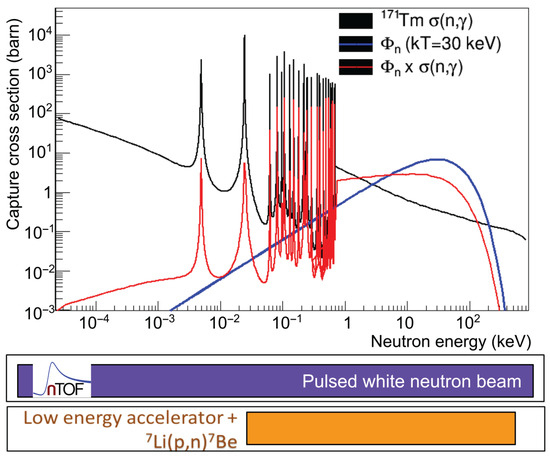
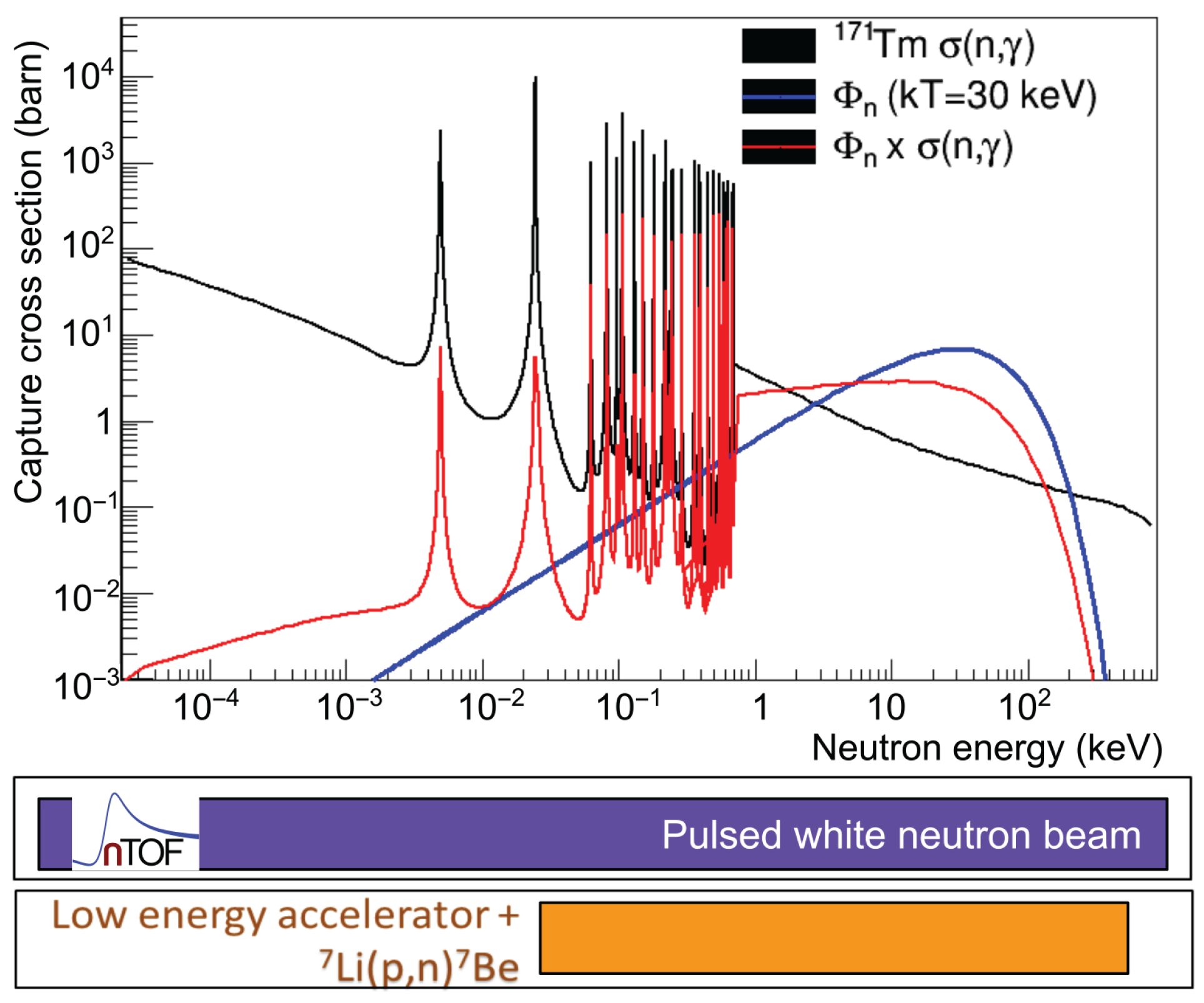
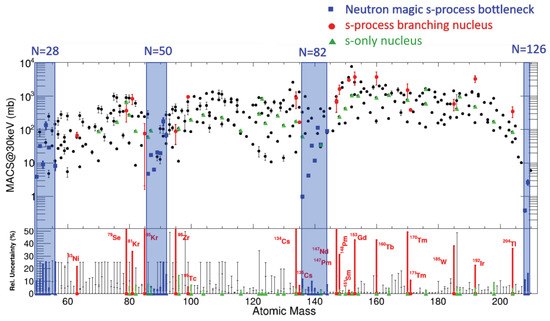
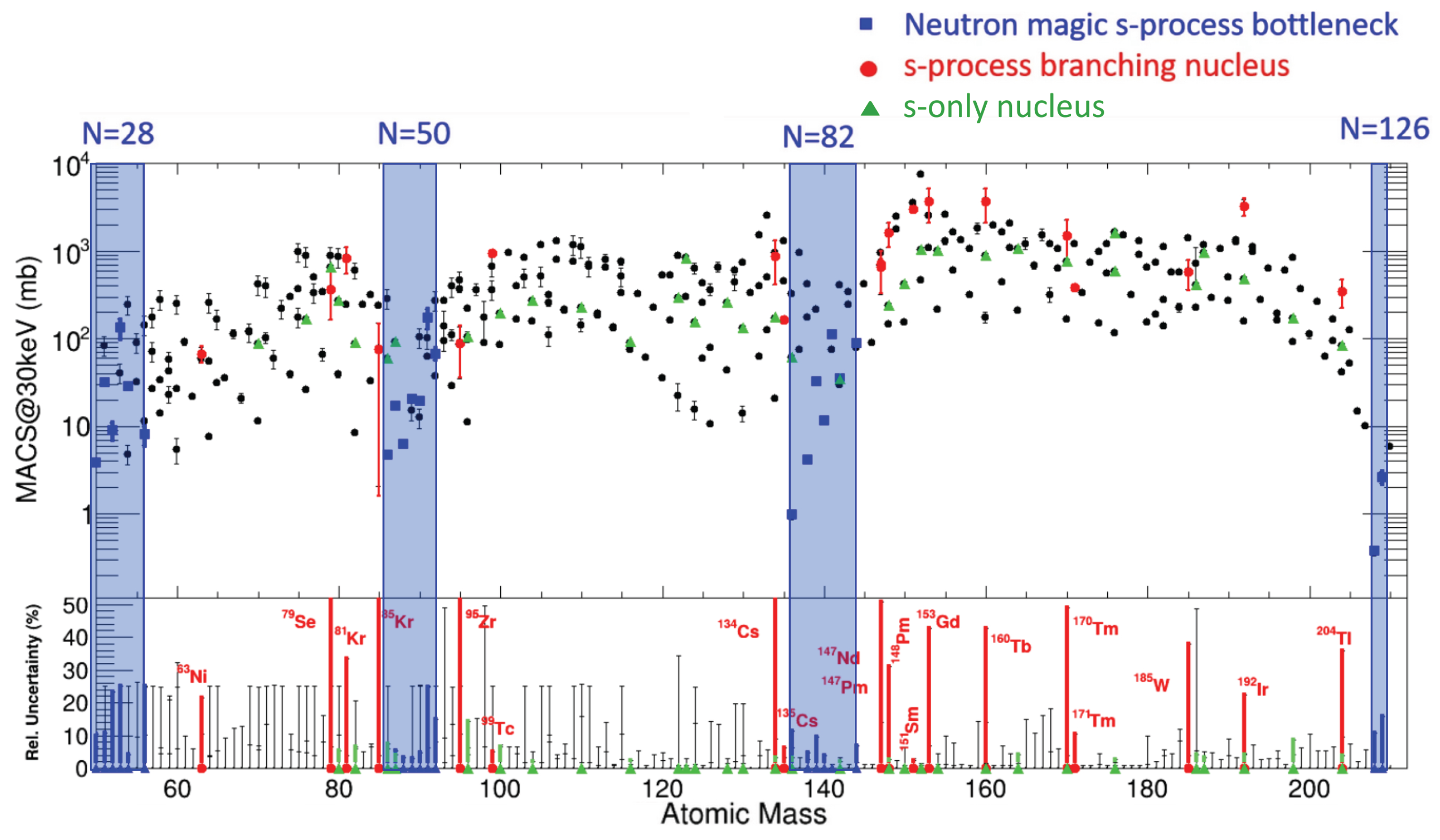
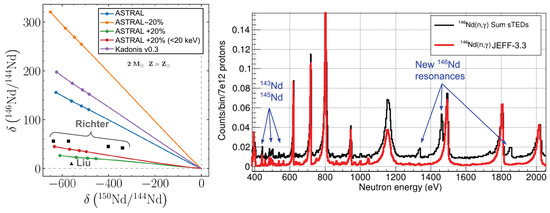
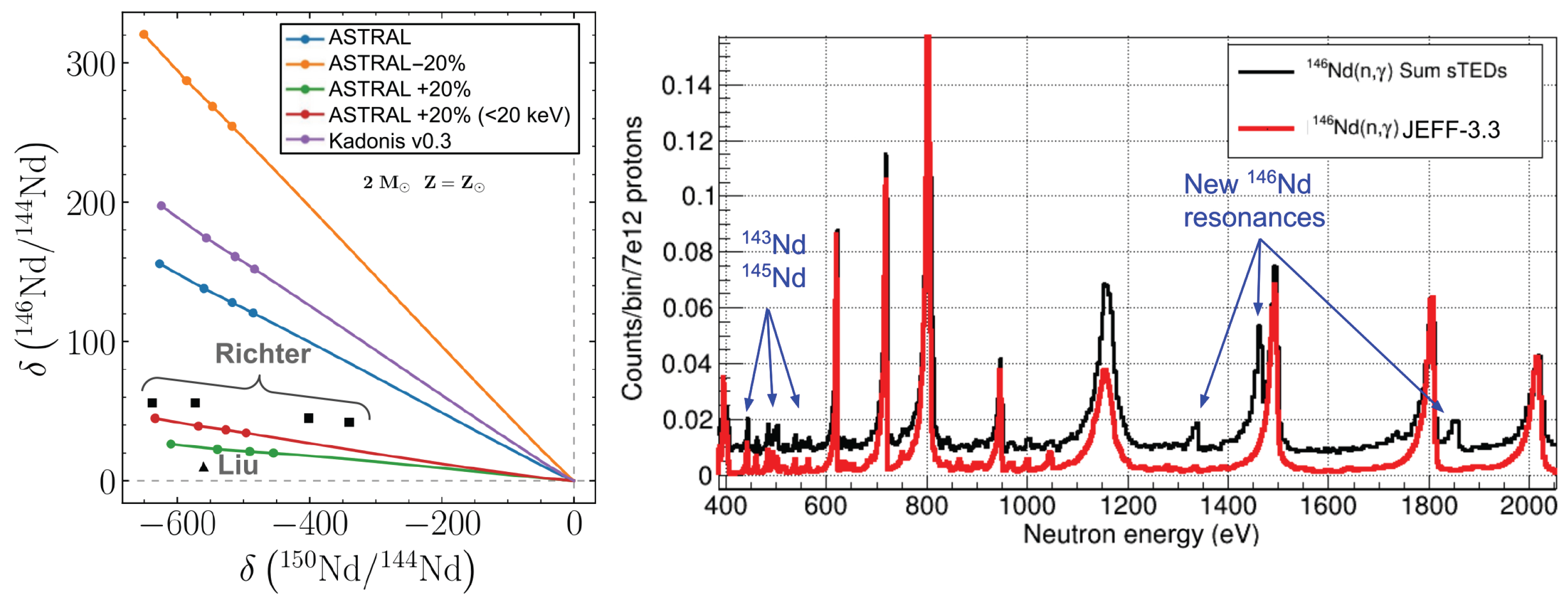
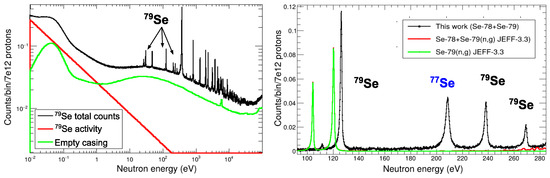
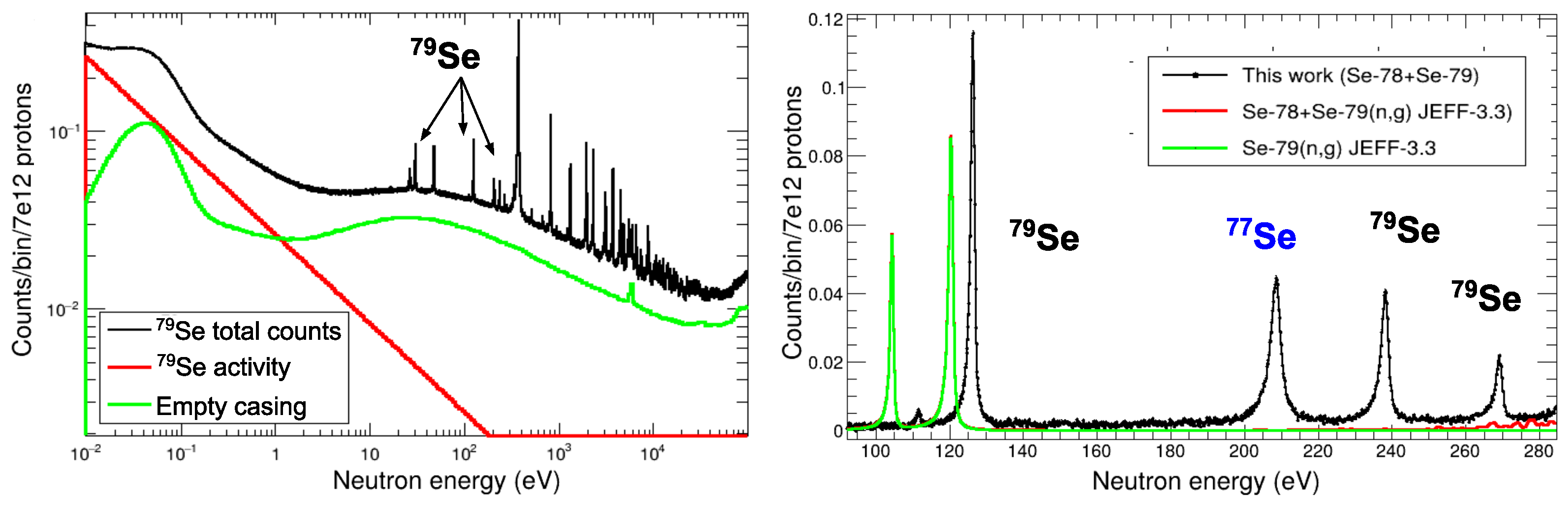
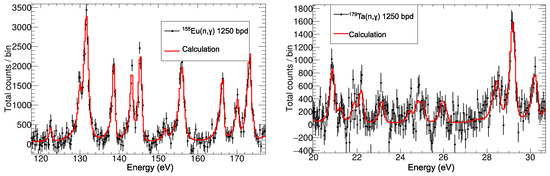
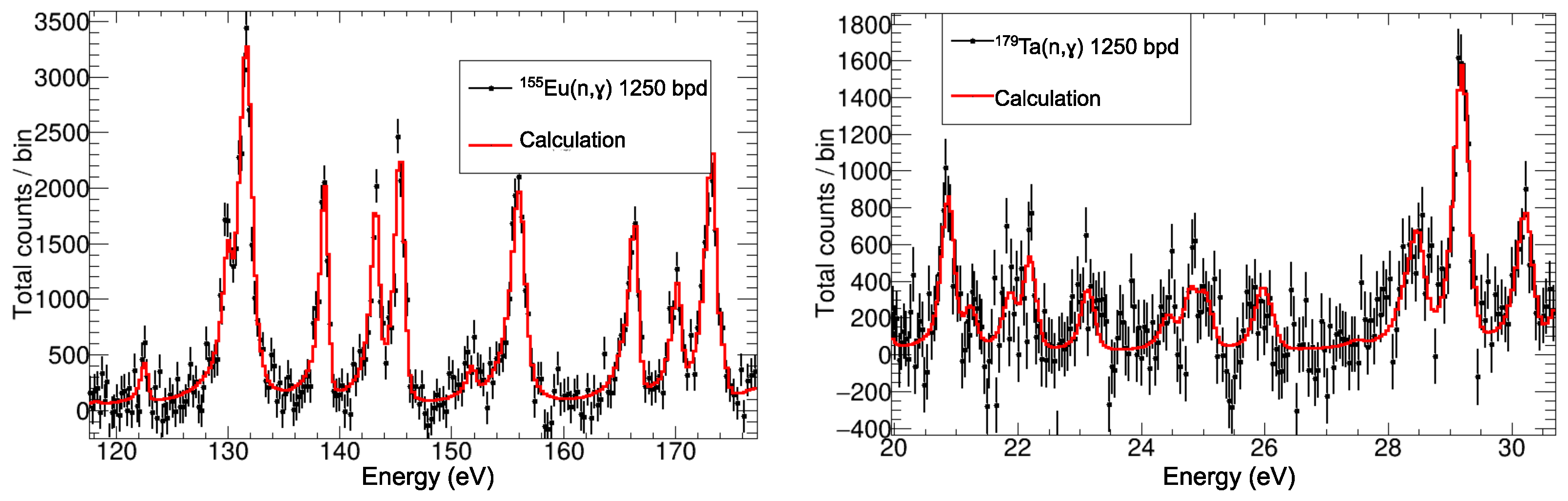
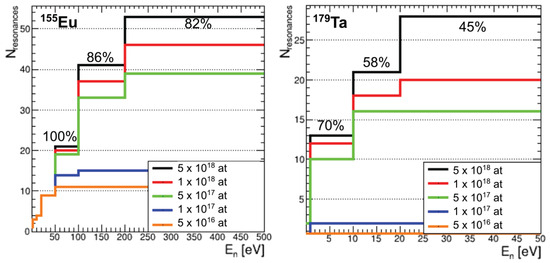
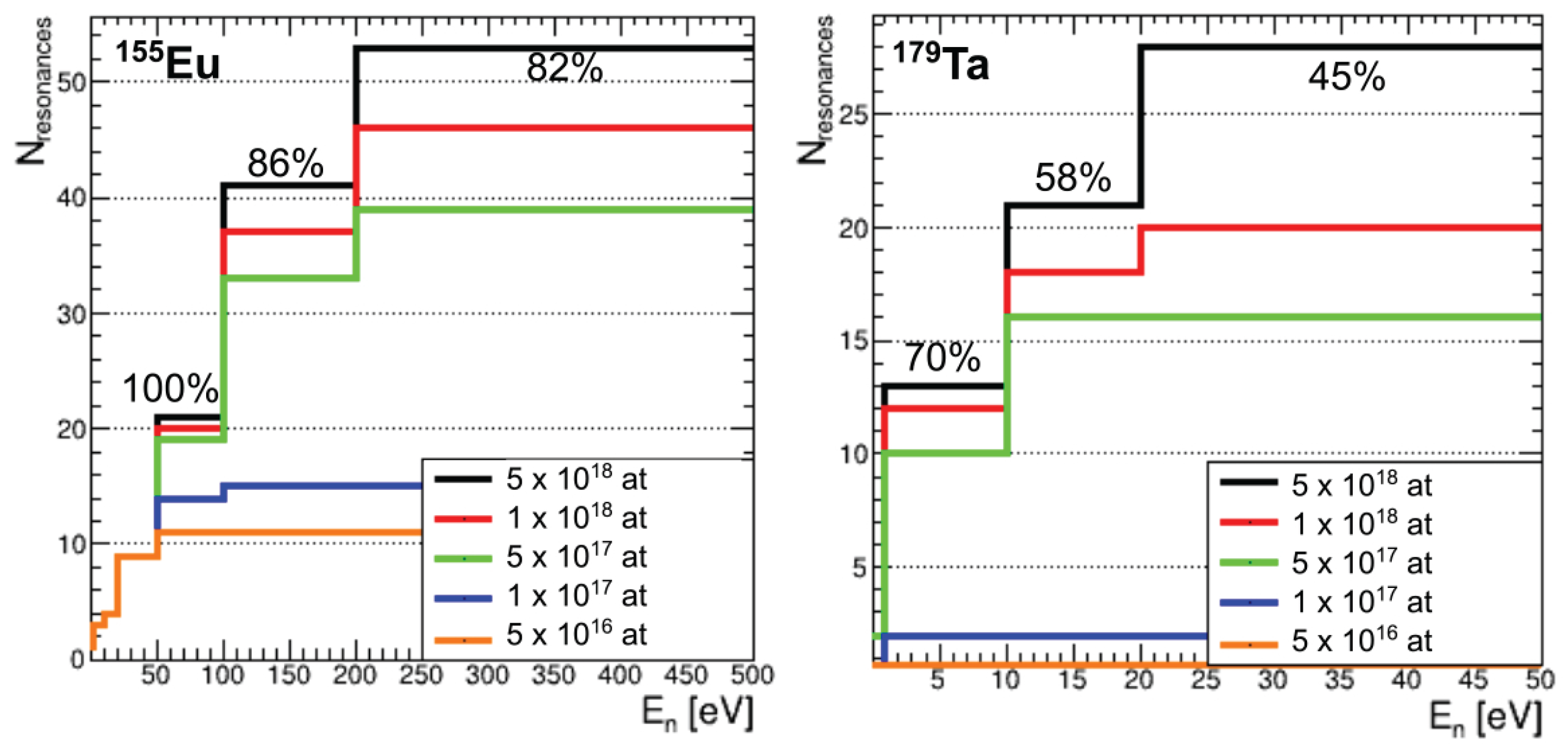
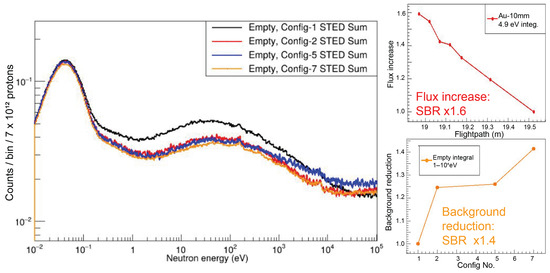
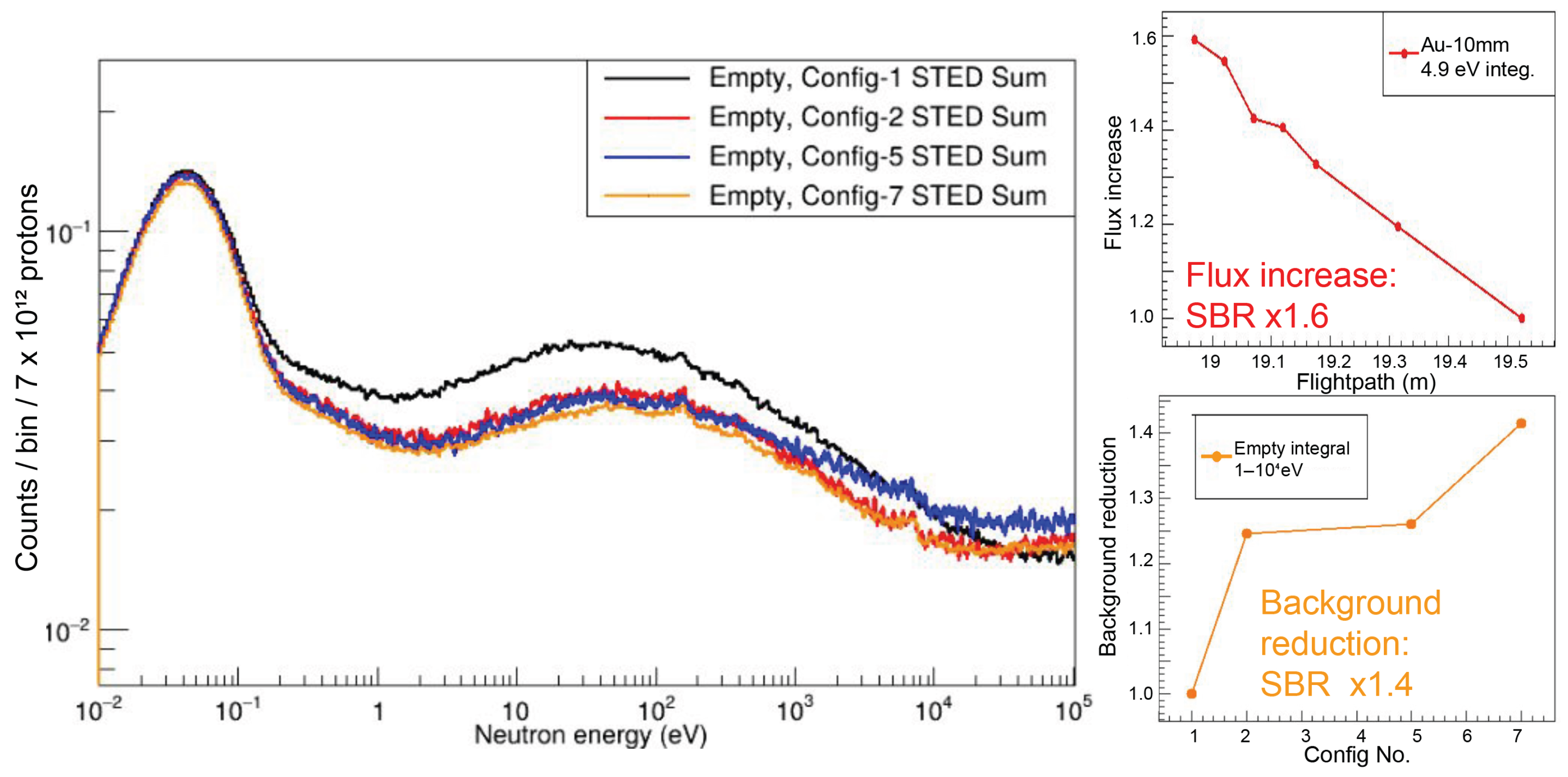
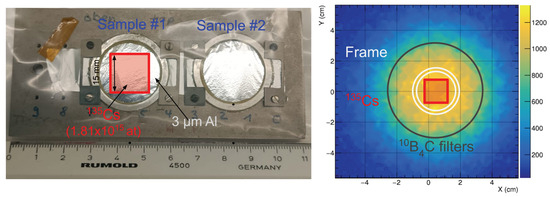
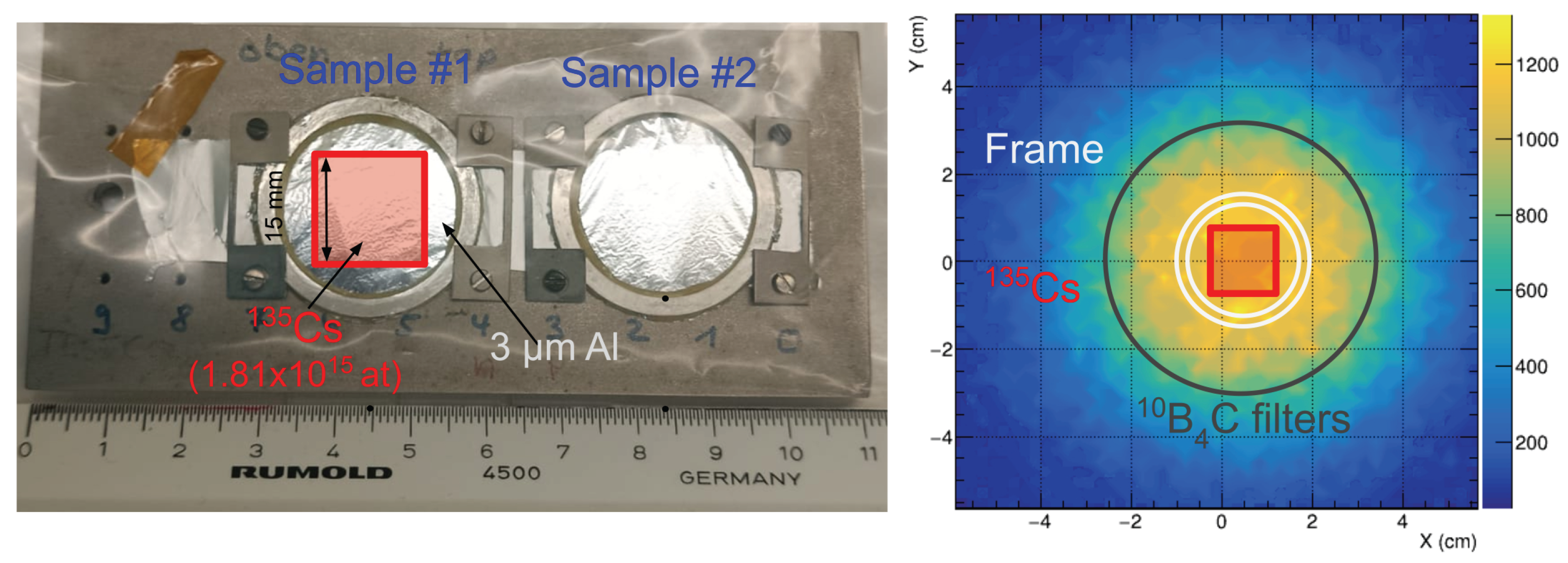
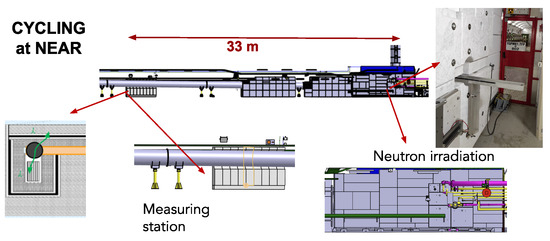
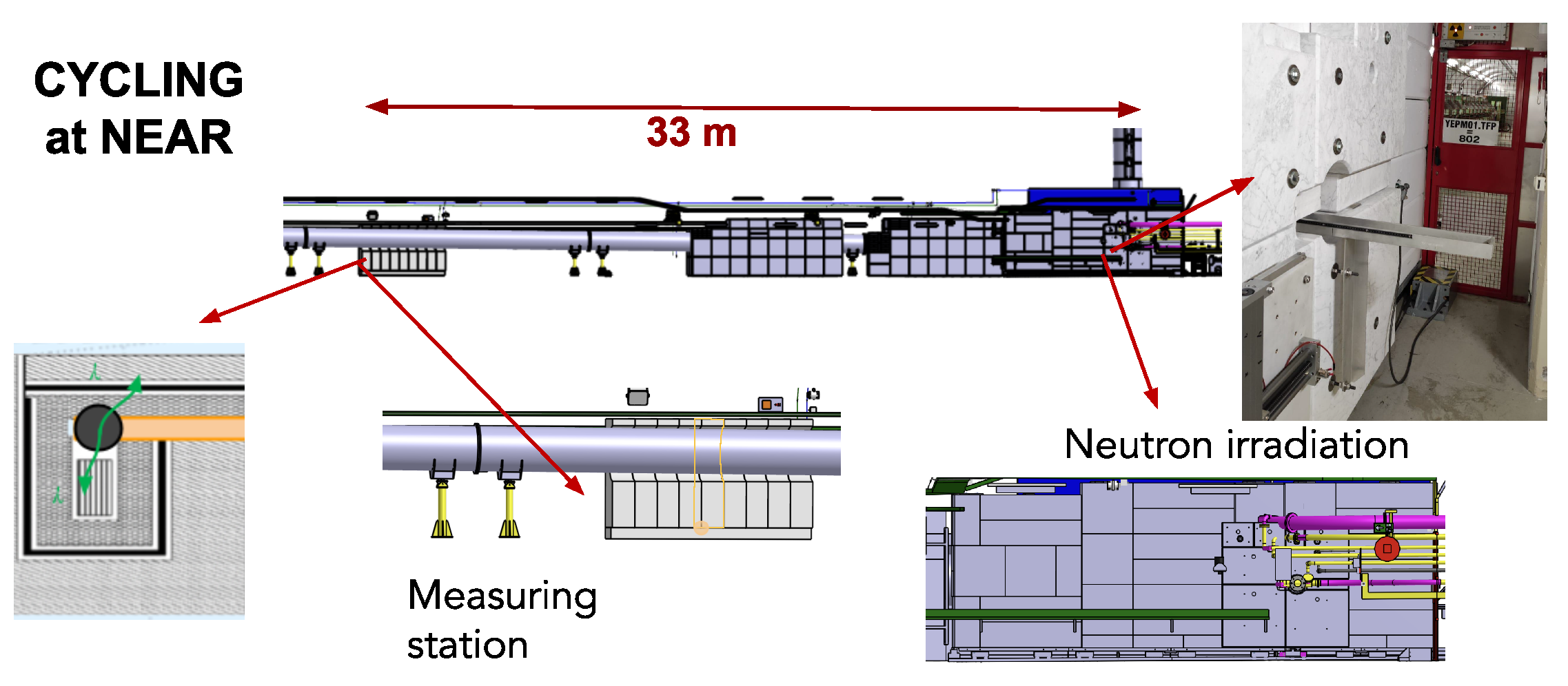
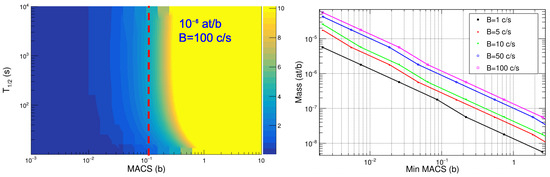
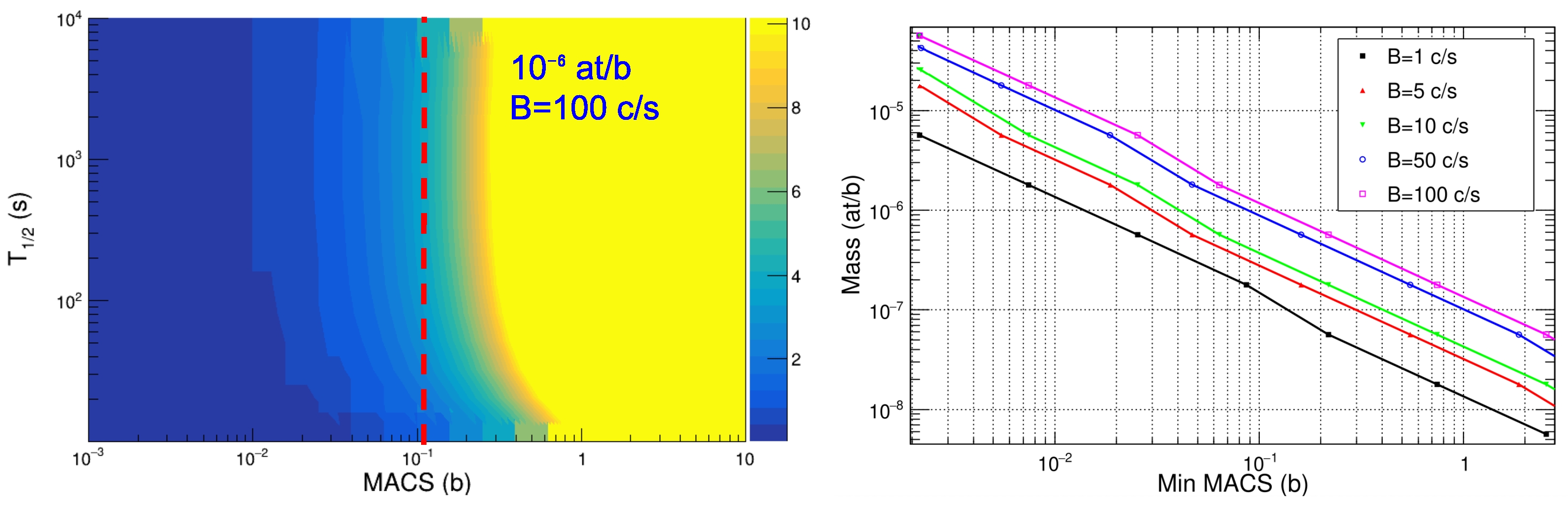
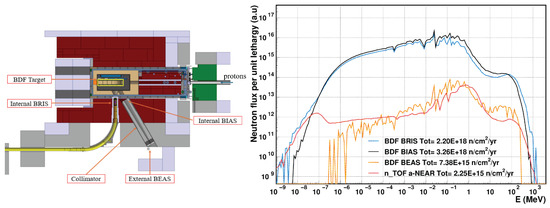
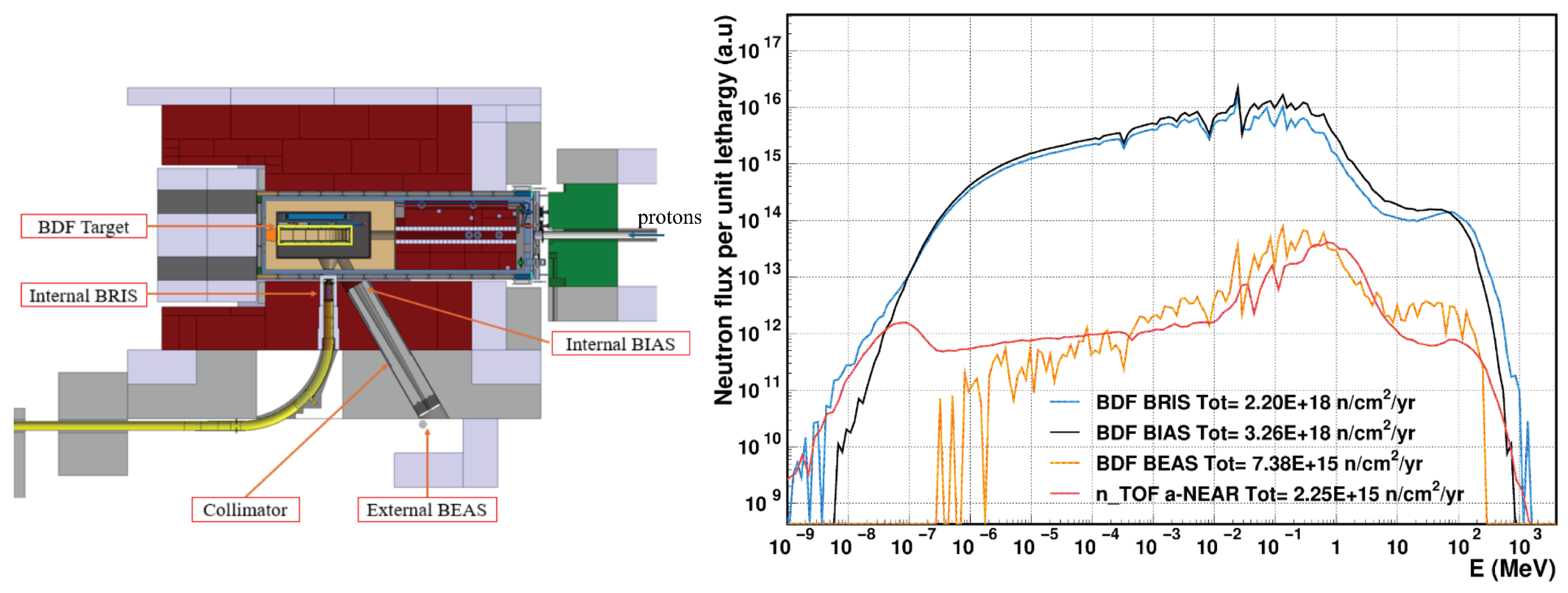
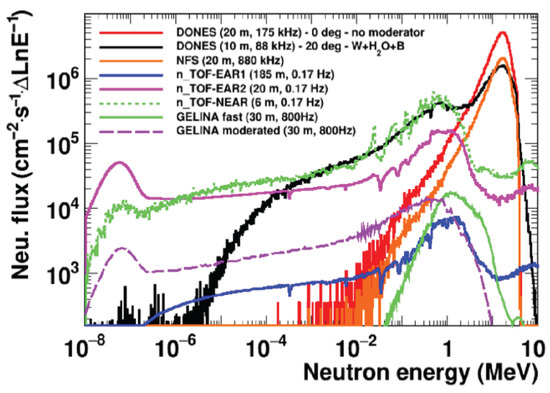
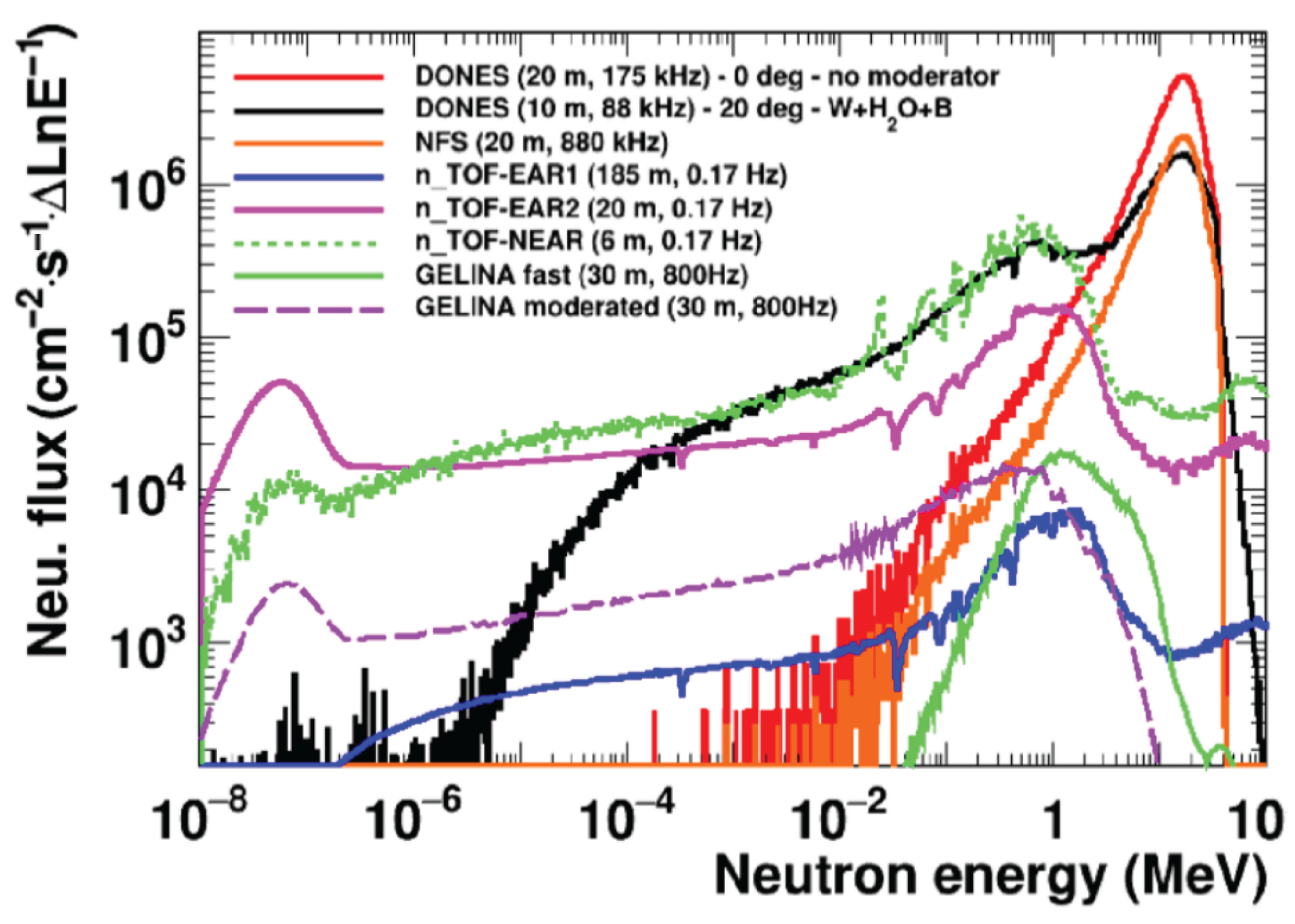

Disclaimer/Publisher’s Note: The statements, opinions and data contained in all publications are solely those of the individual author(s) and contributor(s) and not of MDPI and/or the editor(s). MDPI and/or the editor(s) disclaim responsibility for any injury to people or property resulting from any ideas, methods, instructions or products referred to in the content. |
© 2026 by the authors. Licensee MDPI, Basel, Switzerland. This article is an open access article distributed under the terms and conditions of the Creative Commons Attribution (CC BY) license.