
Review

Artificial Intelligence in Adult Cardiovascular Medicine and Surgery: Real-World Deployments and Outcomes


1
Department of Cardiac Surgery Research, Lankenau Institute for Medical Research, Wynnewood, PA 19096, USA
2
Department of Neuroscience, University of Pittsburgh, Pittsburgh, PA 15260, USA
3
Department of Cardiothoracic Surgery, University of Thessaly, Biopolis, 41110 Larissa, Greece
*
Author to whom correspondence should be addressed.
J. Pers. Med. 2026, 16(2), 69; https://doi.org/10.3390/jpm16020069
Submission received: 22 November 2025 / Revised: 16 December 2025 / Accepted: 31 December 2025 / Published: 30 January 2026

Abstract

Artificial intelligence (AI) is rapidly reshaping adult cardiac surgery, enabling more accurate diagnostics, personalized risk assessment, advanced surgical planning, and proactive postoperative care. Preoperatively, deep-learning interpretation of ECGs, automated CT/MRI segmentation, and video-based echocardiography improve early disease detection and refine risk stratification beyond conventional tools such as EuroSCORE II and the STS calculator. AI-driven 3D reconstruction, virtual simulation, and augmented-reality platforms enhance planning for structural heart and aortic procedures by optimizing device selection and anticipating complications. Intraoperatively, AI augments robotic precision, stabilizes instrument motion, identifies anatomy through computer vision, and predicts hemodynamic instability via real-time waveform analytics. Integration of the Hypotension Prediction Index into perioperative pathways has already demonstrated reductions in ventilation duration and improved hemodynamic control. Postoperatively, machine-learning early-warning systems and physiologic waveform models predict acute kidney injury, low-cardiac-output syndrome, respiratory failure, and sepsis hours before clinical deterioration, while emerging closed-loop control and remote monitoring tools extend individualized management into the recovery phase. Despite these advances, current evidence is limited by retrospective study designs, heterogeneous datasets, variable transparency, and regulatory and workflow barriers. Nonetheless, rapid progress in multimodal foundation models, digital twins, hybrid OR ecosystems, and semi-autonomous robotics signals a transition toward increasingly precise, predictive, and personalized cardiac surgical care. With rigorous validation and thoughtful implementation, AI has the potential to substantially improve safety, decision-making, and outcomes across the entire cardiac surgical continuum.

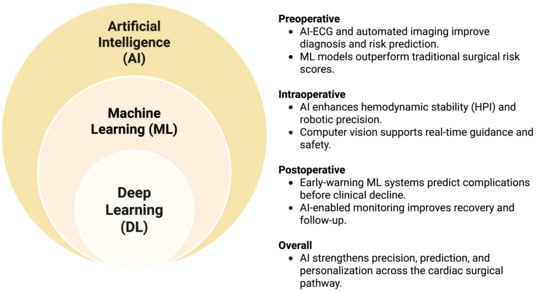
Graphical Abstract

1. Introduction

Artificial intelligence (AI) is rapidly reshaping the landscape of cardiovascular medicine, offering new tools to enhance diagnosis, prognostication, and clinical decision-making. In adult cardiac surgery, where perioperative risk is substantial and outcomes depend on complex, data-driven judgments, AI has emerged as a transformative force capable of augmenting surgeon performance and system efficiency. Traditional risk-prediction models such as EuroSCORE II and the STS risk calculators, although widely adopted, are constrained by linear assumptions and limited variable interactions, often underperforming in heterogeneous contemporary cohorts [1,2]. In contrast, machine learning (ML) and deep learning (DL) algorithms can process high-dimensional datasets, account for nonlinear relationships, and generate individualized risk estimates with superior accuracy [3].
Over the past decade, AI applications in cardiac surgery have transitioned from experimental modeling to real-world deployment. ML-based mortality and morbidity prediction tools have demonstrated improved calibration and discrimination across diverse populations, including patients undergoing coronary artery bypass grafting (CABG), aortic surgery, and complex valve interventions [4]. Natural language processing (NLP) systems are increasingly used to extract granular clinical variables from electronic health records (EHRs), automating data collection and enhancing quality improvement initiatives [5]. Similarly, computer vision algorithms have enabled automated assessment of operative videos, workflow recognition, and intraoperative technical performance, setting the foundation for future AI-assisted operating rooms [6].
Beyond prediction and automation, AI-driven optimization strategies have shown measurable improvements in perioperative outcomes. Real-world deployments include ML-powered early warning systems for hemodynamic instability, postoperative decompensation, and intensive care unit (ICU) deterioration, resulting in earlier intervention and reduced failure-to-rescue rates [7]. AI-based scheduling and resource-allocation platforms have increased operating room (OR) efficiency and reduced surgical delays in high-volume centers [8]. Importantly, several health systems have integrated these technologies on a large scale, demonstrating not only feasibility but also measurable reductions in mortality, complications, and length of stay, signaling that AI’s impact is no longer theoretical but demonstrably clinical [9].
Despite these advances, challenges remain related to model transparency, data quality, algorithmic bias, and regulatory acceptance. Nevertheless, the rapid adoption of AI across leading cardiovascular centers reflects a paradigm shift toward data-enriched surgical care. This review synthesizes real-world deployments of AI in adult cardiac surgery and evaluates their clinical impact, emphasizing opportunities for scalable, safe, and outcome-driven integration.

2. Literature Search Strategy and Study Selection

This narrative review was conducted to synthesize evidence on real-world applications of artificial intelligence in adult cardiovascular medicine and cardiac surgery, with an emphasis on clinically implemented or implementation-adjacent systems. A structured literature search was performed in PubMed/MEDLINE, Scopus, and Web of Science, covering studies published between January 2015 and October 2025, reflecting the modern era of machine learning and deep learning in clinical practice.
Although this review focuses on adult cardiac surgery, relevant evidence from adjacent domains (including general cardiology, thoracic surgery, and critical care) is discussed where direct cardiac-surgical data remain limited. In such cases, these examples are presented explicitly as extrapolative or translational evidence, intended to inform potential applicability rather than to imply established efficacy within cardiac surgery itself. Whenever possible, cardiac-surgery–specific studies are prioritized, and extrapolated findings are clearly framed as hypothesis-generating rather than definitive.
Search terms included combinations of “artificial intelligence,” “machine learning,” “deep learning,” “cardiac surgery,” “cardiovascular surgery,” “perioperative,” “intensive care,” “risk prediction,” “computer vision,” “robotic surgery,” and “real-world implementation.” Reference lists of key articles were manually screened to identify additional relevant studies.
We included original research, prospective and retrospective cohort studies, implementation studies, and high-quality systematic reviews reporting AI applications relevant to adult cardiac surgery or closely adjacent cardiovascular domains. Case reports, purely theoretical modeling studies without clinical data, and pediatric-only studies were excluded.
Given the heterogeneity of study designs and outcomes, a formal systematic review or meta-analysis was not performed. Instead, evidence was synthesized qualitatively, with explicit distinction between retrospective model development, prospective observational use, and deployed systems demonstrating measurable clinical or operational impact.

Definition of Real-World Deployment and Evidence Maturity

For the purposes of this review, real-world deployment is defined as the use of an AI system within an operational clinical environment, beyond isolated algorithm development, with direct interaction with clinicians or integration into clinical workflows. To clarify the maturity and translational relevance of the evidence, AI applications discussed in this manuscript are categorized into three levels:
(1) Retrospective model-development studies, in which algorithms are trained and validated using historical datasets without real-time clinical use;
(2) Prospective observational or silent-deployment studies, where AI tools generate predictions in real time but do not actively influence clinical decision-making; and
(3) Implemented clinical systems, in which AI outputs are integrated into care pathways and associated with measurable effects on clinical outcomes, workflow efficiency, or resource utilization.
Throughout the manuscript, this framework is used to distinguish proof-of-concept modeling from clinically deployed systems, allowing readers to assess the strength and maturity of evidence supporting each AI application.

3. Artificial Neural Networks (ANNs) as the Basis for AI Models

3.1. Conceptual Foundations of Clinical AI

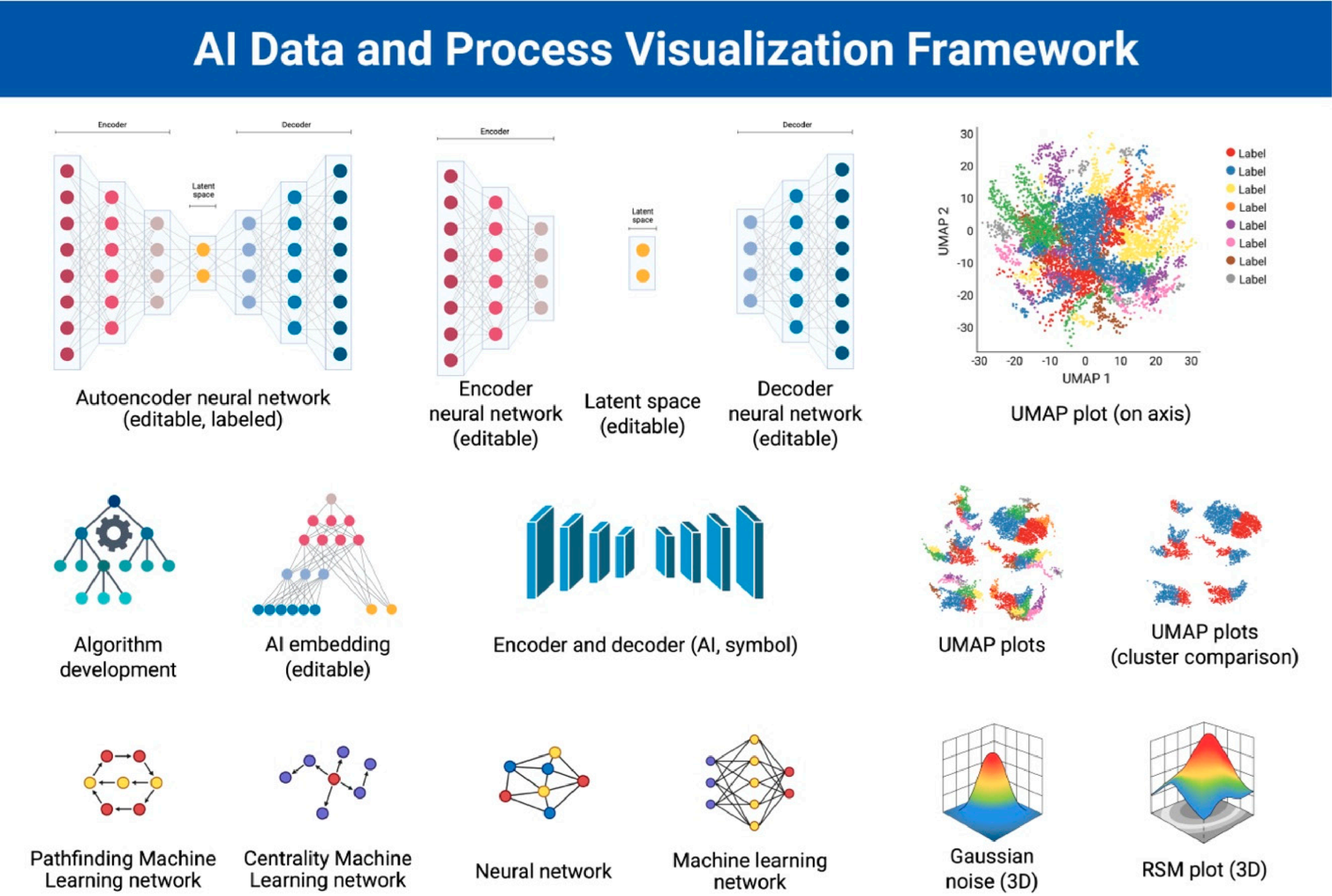
Understanding the clinical applications of AI in adult cardiac surgery requires a basic appreciation of how modern AI systems function. Figure 1 demonstrates the framework for AI data and processes. At the core of contemporary AI are artificial neural networks, computational structures inspired by the architecture of biological neurons. These networks are composed of layers of interconnected nodes that transmit information through weighted connections, analogous to synapses in the brain. As the network processes data, it iteratively adjusts these weights, thus strengthening some connections and diminishing others, to improve the accuracy of its predictions. This adaptive process underlies what is commonly described as “learning” in AI systems [10].
Central to this learning mechanism are loss functions and backpropagation. The loss function quantifies how far the model’s predicted output deviates from the ground-truth answer. Backpropagation then systematically adjusts the weights throughout the network to minimize this loss, allowing the model to gradually improve its performance on future predictions [11,12]. Through these cycles, neural networks become capable of recognizing patterns in large and complex datasets, whether those patterns involve imaging features, physiologic trends, or combinations of multimodal patient information.
AI training approaches are typically divided into supervised, unsupervised, and reinforcement learning paradigms. Supervised learning relies on labeled datasets in which the correct outputs are known in advance. The model learns to associate specific inputs with desired outputs, making this approach particularly useful for tasks such as predicting postoperative complications, classifying imaging abnormalities, or generating individualized risk scores [13].
Unsupervised learning operates without labels. Instead, the model identifies hidden patterns, clusters, or relationships embedded within the data. This approach is especially powerful in cardiology, where unsupervised models have uncovered novel disease phenotypes, subtle ECG signatures, and prognostic subgroups not captured by traditional risk scores [14]. In contrast, reinforcement learning enables an AI agent to learn optimal strategies through trial and error, receiving rewards for desirable actions and penalties for suboptimal ones. Although still in early development in cardiovascular medicine, reinforcement learning has significant potential for dynamic decision-making environments, such as optimizing real-time hemodynamic management or tailoring postoperative care pathways [15].
A key limitation of earlier AI systems was unimodality, defined as the ability to process only one type of input at a time. Cardiac surgery, by contrast, relies on the integration of imaging, physiology, surgical videos, laboratory values, and text-based clinical documentation. Recent advances in multimodal AI have allowed models to incorporate and synthesize information across these diverse data streams, generating richer, context-aware outputs. Such multimodal models are particularly promising for cardiac surgical applications, where decisions often hinge on the convergence of structural imaging, functional assessments, and intraoperative findings [16].
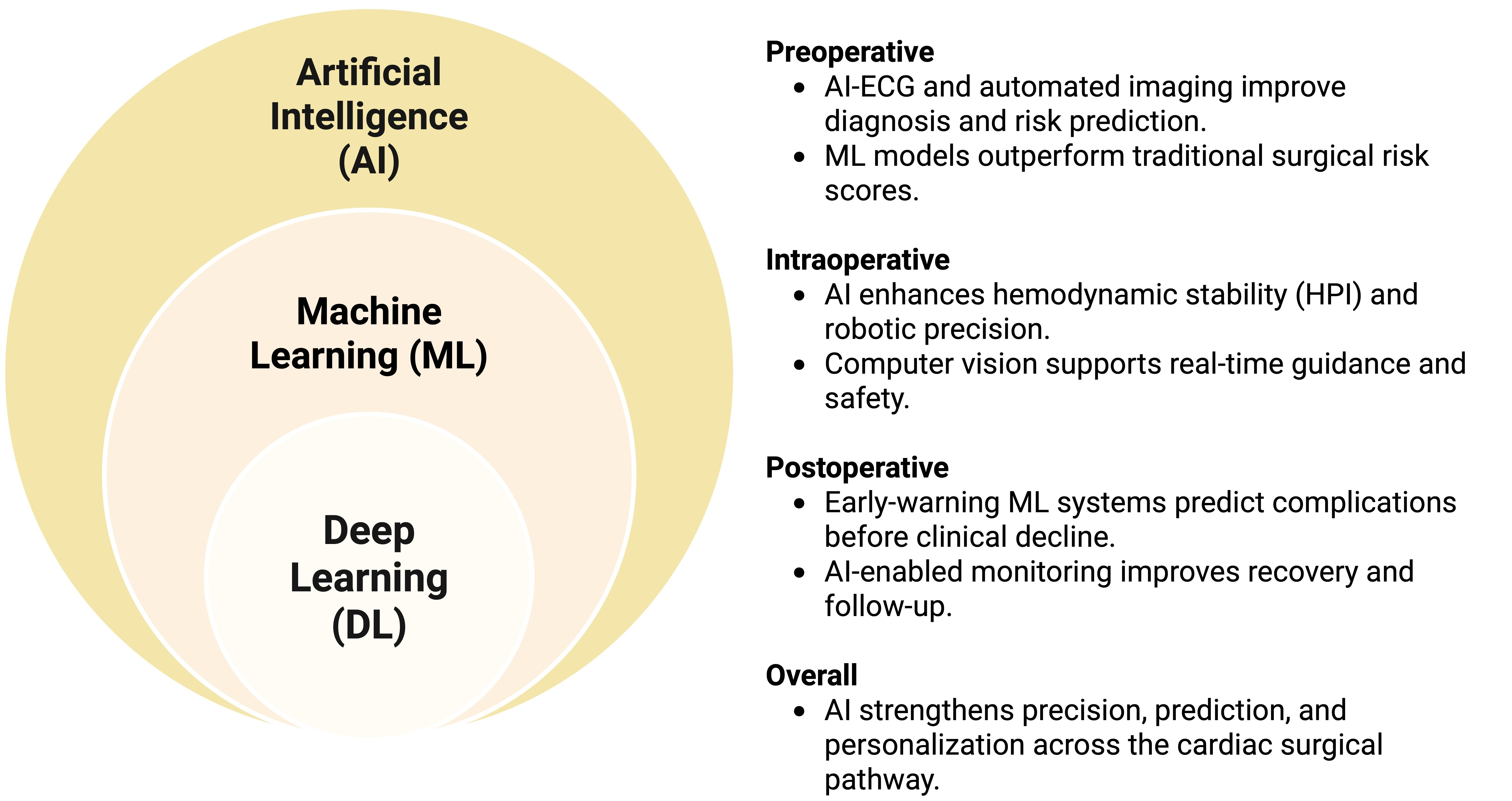
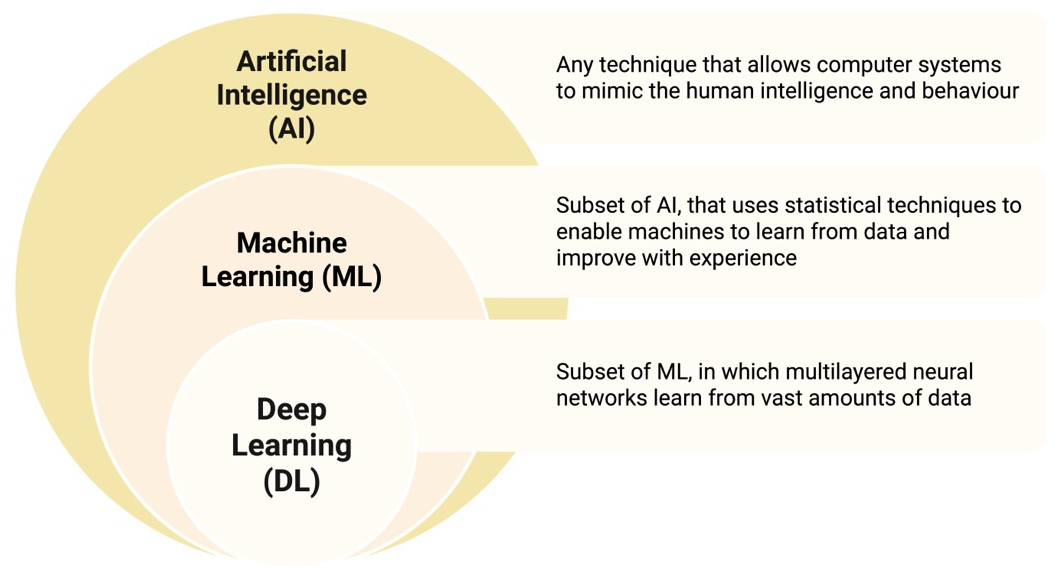
Together, these foundational concepts illustrate how modern AI systems learn, adapt, and integrate information through the different stages of deep learning (DL), machine learning (ML), and finally AI (Figure 2). They form the technical basis upon which contemporary cardiac surgical AI tools have been built, ranging from risk prediction algorithms to virtual simulators and intraoperative decision-support systems. This grounding is essential for understanding the clinical advances described in subsequent sections of this review.

3.2. Core AI Architectures Used in Cardiovascular Medicine and Surgery

While artificial neural networks form the conceptual foundation of modern AI, several specialized architectures have emerged as particularly relevant to cardiovascular medicine and cardiac surgery. Each architecture is suited to distinct data modalities and clinical tasks.
Convolutional neural networks (CNNs) are optimized for spatial data and are the dominant architecture for medical imaging and waveform interpretation. In cardiovascular medicine, CNNs underpin AI-enabled ECG analysis, echocardiographic video interpretation, and automated CT and MRI segmentation [10]. By applying convolutional filters across spatially or temporally structured inputs, CNNs can detect subtle patterns, such as latent ventricular dysfunction on ECGs or regional wall-motion abnormalities on echocardiography, that may be imperceptible to human observers [14]. These properties explain their widespread use in preoperative diagnostics, structural heart planning, and aortic imaging applications discussed in this review.
Transformer-based architectures, originally developed for natural language processing, have gained increasing prominence in healthcare due to their ability to model long-range dependencies and complex temporal relationships. Unlike CNNs, transformers use attention mechanisms to dynamically weight the importance of different input features over time [16]. This makes them particularly well suited for longitudinal electronic health record data, high-frequency physiologic waveforms, and multimodal integration of labs, vitals, imaging, and clinical notes. In perioperative and intensive care settings, transformer-based models have demonstrated strong performance in early-warning systems, postoperative complication prediction, and real-time deterioration forecasting.
Ensemble and tree-based methods, such as random forests and gradient-boosted decision trees (e.g., XGBoost), remain among the most commonly deployed AI models in cardiac surgery due to their robustness, interpretability, and strong performance on structured clinical data [14,16]. These models combine multiple weak learners to capture nonlinear interactions between variables while reducing overfitting. Ensemble approaches have been widely applied to mortality and morbidity prediction, acute kidney injury forecasting, and cost-outlier identification, often outperforming traditional regression-based risk models while offering greater transparency than deep neural networks.
Importantly, many contemporary AI systems in cardiac surgery employ hybrid or multimodal architectures, combining CNNs for imaging, transformers for time-series and longitudinal data, and ensemble models for structured variables. This architectural diversity reflects the inherently multimodal nature of cardiac surgical care and enables AI systems to generate more comprehensive, context-aware predictions across the perioperative continuum.

4. AI in Preoperative Diagnostics and Risk Stratification

The examples discussed below span the full spectrum of AI evidence maturity, from retrospective model-development studies to prospectively evaluated and clinically implemented systems, as defined in Section 2.

4.1. Enhanced Imaging Interpretation

AI has significantly advanced the interpretation of cardiovascular imaging and electrophysiologic data by detecting latent disease signatures that are often invisible to human observers. Deep learning applied to routine diagnostics, such as the standard 12-lead electrocardiogram (ECG), can uncover subclinical structural and functional abnormalities. One of the most notable examples comes from Mayo Clinic, where a convolutional neural network trained to identify left ventricular (LV) dysfunction (EF < 35%) demonstrated approximately 85% accuracy, even in individuals without overt cardiomyopathy [17]. Importantly, patients flagged as high-risk by this “AI-ECG” had a nearly four-fold higher likelihood of developing future LV dysfunction [17].
Building on this work, Attia and colleagues introduced the concept of an “AI-ECG age,” an algorithmic measure of biological cardiac aging. In a cohort of 13,808 patients undergoing CABG, those with an “older” AI-ECG age experienced higher operative complications and markedly worse long-term survival [18]. Five-year survival was 86.2% in patients with a normal AI-ECG vs. 71.4% in those with an abnormal AI-ECG; ten-year survival was 68.2% vs. 45.1%, respectively [18]. These results highlight the role of AI-enabled electrophysiologic biomarkers in refining preoperative cardiac risk assessment beyond conventional scoring systems.
AI has also expanded capabilities in echocardiography and cardiac MRI. At Stanford, Ouyang et al. developed a video-based deep learning model capable of analyzing dynamic echocardiographic clips to predict right ventricular failure after left ventricular assist device (LVAD) implantation [19]. In a 941-patient multicenter study, the AI model achieved an area under the curve (AUC) score, a performance metric used to assess effectiveness, of 0.73, surpassing both standard clinical risk scores (AUC ~0.60) and expert cardiologist assessment (AUC ~0.55) [19]. Early identification of high RV-failure risk allows surgeons to modify operative strategy, consider temporary RV support, or optimize timing of LVAD implantation.
Similarly, deep neural networks have demonstrated expert-level accuracy in distinguishing cardiac amyloidosis vs. hypertrophic cardiomyopathy on cardiac MRI [20], while AI-ECG models can detect previously unrecognized hypertrophic cardiomyopathy in asymptomatic individuals [21]. These diagnostic advances directly impact preoperative planning by influencing decisions regarding valve surgery, myectomy, transplant evaluation, or medical optimization. In parallel, natural language processing (NLP) systems are increasingly used to extract meaningful clinical variables from large volumes of unstructured imaging and electronic health record (EHR) data. Rumshisky et al. demonstrated that AI-based early-warning systems, trained using routine EHR inputs, can predict physiologic deterioration earlier than traditional alerts [5].

4.2. Personalized Risk Prediction

Traditional regression-based tools such as EuroSCORE II and the STS risk models remain foundational in surgical practice but are limited by linear assumptions and fixed variable interactions [1,2]. Machine learning methods, by contrast, integrate high-dimensional clinical, imaging, and physiologic data, enabling the discovery of nonlinear relationships and previously unrecognized risk patterns [3]. In fact, artificial neural networks were among the earliest ML tools applied in cardiac surgery. Nilsson et al. used an ANN to automatically select the 34 most predictive variables (from 72 candidates) for operative mortality, significantly outperforming EuroSCORE II [22]. In LVAD surgery, Kilic and colleagues compared logistic regression vs. ML survival models and demonstrated superior accuracy and calibration of ML predictors for 90-day and 1-year mortality [23].
In heart transplantation, Yoon et al. introduced a “tree-of-predictors” model that offered more precise, individualized survival prediction compared with traditional approaches [24]. Such models identify high-risk phenotypes that are not captured by linear risk scores, enabling better candidate selection and tailored perioperative strategies.
More recently, an XGBoost model trained on 4874 cardiac surgery patients from Mayo Clinic and Baylor outperformed STS calculators in predicting mortality, major morbidity, and high-cost outlier cases [25]. This model captured complex nonlinear interactions, including lab trajectories, physiologic instability, and subtle imaging patterns, associated with complications such as acute kidney injury (AKI), prolonged ventilation, sepsis, and postoperative delirium.
Complementing these predictive tools, machine learning–based early-warning systems have demonstrated measurable real-world impact. Shimabukuro et al. showed that an ML-driven severe sepsis prediction tool reduced ICU transfer delays and mortality [7]. Similar early-warning frameworks applied preoperatively can guide optimization, refine operative timing, and inform postoperative ICU resource allocation. Furthermore, as documented by Johnson and colleagues, many modern AI risk tools draw from existing EHR data or even a single ECG, enabling seamless integration into clinical workflows without increasing documentation burden [19]. Surgeons have reported using such AI-derived risk estimates during preoperative consultations to provide personalized complication profiles and support shared decision-making [25]. These tools, once validated, can complement existing calculators and help tailor surgical planning to each patient’s risk signature.

4.3. Surgical Planning and Virtual Simulation

AI-driven imaging reconstruction, augmented reality (AR), and virtual reality (VR) platforms are increasingly shaping preoperative planning in adult cardiac surgery by providing surgeons with deeper anatomic insight before entering the operating room. Advanced image-processing algorithms enable rapid, high-fidelity segmentation of cardiac structures from CT or MRI scans, producing patient-specific three-dimensional (3D) models for tactile review, procedural rehearsal, and operative strategy refinement. Machine learning and computer vision markedly improve the speed and accuracy of these reconstructions, allowing surgeons to interact with realistic simulations of complex anatomy [26,27,28].
Integration of AI-based segmentation with 3D printing has been particularly useful in complex cardiac and structural heart cases. Investigators at the University of Minnesota demonstrated that combining high-resolution imaging, computer vision, and 3D printing yields life-like cardiac models with precise replication of valvular, coronary, and chamber anatomy, enabling rehearsal of challenging operations and identification of unforeseen hazards [26]. Similar work in congenital and structural heart disease shows that hands-on preoperative manipulation of models improves surgeon confidence, enhances communication with the surgical team, and may reduce operative uncertainty [27,28].
Virtual reality systems further expand this precision by generating immersive, interactive environments in which surgeons can “enter” the patient’s anatomy. In a reported series using PulmoVR, a VR-based segmentectomy planning system, surgeons altered their operative plan in 4 of 10 cases after reviewing the 3D virtual reconstruction [29]. Analogous VR, AR, and mixed-reality approaches are increasingly being applied to cardiac tumors, anomalous coronary pathways, aortic root variants, and complex redo-valve cases where standard imaging may not adequately reveal adhesions or anatomic hazards [30,31,32].
Mixed-reality technologies, particularly holographic overlays, are entering the cardiac operating room as well. The Cleveland Clinic Heart & Vascular Institute piloted the use of Microsoft HoloLens projections derived from preoperative computed tomography (CT) scans to assist intraoperative navigation [33]. Surgeons viewed real-time holographic reconstructions of patient-specific cardiac structures overlaid onto the operative field, enhancing orientation during reoperative sternotomy, coronary reimplantation, and minimally invasive valve procedures. Early experience suggests that these tools may help anticipate anatomic pitfalls, shorten cognitive interpretation time, therefore reducing intraoperative variability [33,34].
The common thread linking these innovations is the role of AI in image segmentation, reconstruction, and simulation. Traditional manual segmentation can require hours of expert time, whereas AI-driven workflows can produce accurate cardiac 3D models within minutes, enabling same-day surgical planning [28,35]. These technologies are beginning to converge with intraoperative navigation systems, raising the possibility of real-time AI-assisted annotation of surgical anatomy to enhance operative precision and individualized surgical strategy (Table 1).

4.4. Comparative Performance of AI, Traditional Risk Models, and Clinician Assessment

A central question for real-world adoption of artificial intelligence in cardiovascular medicine is whether AI systems meaningfully outperform traditional methods or human expert assessment. Across multiple domains, growing evidence suggests that AI offers incremental value when applied to data-intensive tasks characterized by nonlinear interactions, high-dimensional inputs, or subtle pattern recognition.
In preoperative risk stratification, machine-learning and deep-learning models have consistently demonstrated superior discrimination and calibration compared with conventional regression-based tools such as EuroSCORE II and the STS risk calculators [22]. Meta-analytic data indicate that AI-based models improve prediction of mortality and major morbidity across diverse cardiac surgical populations, particularly in high-risk subgroups where traditional scores tend to underperform. Importantly, these gains arise not from replacement of clinical judgment, but from the ability of AI to integrate complex variable interactions and temporal trends that are difficult to model manually.
Comparisons between AI and clinician performance are most mature in diagnostic applications (Table 2). In electrocardiography and cardiac imaging, deep-learning models have matched or exceeded expert-level accuracy in detecting left ventricular dysfunction, hypertrophic cardiomyopathy, and infiltrative disease, while also identifying prognostically relevant signatures invisible to human interpretation. These findings, largely derived from cardiology cohorts, provide important translational insight for cardiac surgery, where preoperative diagnostics directly influence operative strategy, timing, and risk counseling. A recent review of AI deployment in cardiovascular medicine highlighted multiple real-world examples in which AI-assisted workflows improved diagnostic accuracy, efficiency, or clinical decision-making compared with conventional approaches, underscoring the broader relevance of these tools beyond isolated modeling studies [36].
In contrast, AI appears less advantageous in domains dominated by low-dimensional decision rules or well-established protocols, emphasizing the importance of targeted, task-specific deployment. Collectively, existing evidence supports a model of AI-augmented care, in which artificial intelligence complements rather than replaces clinician expertise, enhancing performance in areas where human cognition is intrinsically limited while preserving clinician oversight in high-stakes decision-making.

5. Intraoperative AI Assistance and Robotic Surgery

5.1. Robotics and Automation

Robotic surgery is now well established in adult cardiac procedures, including robotic-assisted CABG and mitral valve repair, but contemporary systems remain largely tele-operated, with surgeons controlling instruments at the console. The integration of AI into robotic platforms is expected to shift these systems from purely manual extensions of the surgeon toward smart, semi-autonomous assistants. Several technological breakthroughs illustrate this evolution.
One of the most prominent advances is the work from Johns Hopkins University, where investigators developed the Smart Tissue Autonomous Robot (STAR), a platform that uses computer vision, machine learning, and force-sensing algorithms to perform soft-tissue suturing [37]. In preclinical models, STAR autonomously executed intestinal anastomoses with greater precision and consistency than expert human surgeons, achieving superior spacing and tension uniformity of sutures [37,38]. Although fully autonomous cardiac anastomosis in humans remains distant, these foundational studies demonstrate that AI-enabled robotic systems can outperform conventional manual techniques in controlled environments.
Current-generation clinical platforms are also incorporating AI-driven features. Robotic systems now routinely include motion scaling, tremor suppression, and intelligent tool-path smoothing algorithms that enhance precision and minimize human error [39,40]. Advanced computer-vision modules are being tested for real-time identification of anatomical landmarks, such as coronary ostia, valve annuli, or atrioventricular conduction pathways, alerting the surgeon when instruments approach critical structures [41]. These guidance systems may reduce avoidable injuries, improve suture placement, and increase reproducibility during minimally invasive or robotic cardiac surgery.
AI is also transforming intraoperative perception. Enhanced vision systems using machine learning can automatically detect tissue planes, bleeding points, suture lines, and graft orientation, providing the surgeon with augmented situational awareness [42,43]. Experimental work in minimally invasive CAD (computer-assisted design) surgery shows that AI-based fluorescence analysis and perfusion mapping may soon assist with graft assessment, coronary flow evaluation, and valve inspection during live cases [44].
Another rapidly emerging category is intraoperative AI motion analysis, sometimes termed “OR Black Box” technology. These systems use overhead cameras and sensor-based tracking to capture surgical movements, instrument trajectories, and operative errors. Seminal studies by collaborators at the University of Toronto and other centers demonstrated that AI-driven analysis can identify inefficient or hazardous motions with high accuracy, correlating specific gesture patterns with technical errors or adverse events [45,46]. Feedback from such systems allows surgeons to adjust technique in real time or during postoperative debriefing, leading to measurable improvements in operative safety and consistency.
Importantly, experts emphasize that the purpose of intraoperative AI is not to replace the cardiac surgeon but to serve as a high-reliability co-pilots, by processing visual, kinematic, and physiologic data far faster than a human and surfacing key insights at the moment they matter most [39,47]. Although outcome-level evidence in cardiac surgery is still developing, early experiences show reductions in technical errors, improved standardization of complex maneuvers, and enhanced team situational awareness. As AI-enabled robotics continue to advance, from intelligent tool tracking to semi-autonomous suturing, the field is gradually progressing toward collaborative autonomy, in which surgeons maintain full control while AI augments precision, safety, and intraoperative decision-making.

5.2. AI-Enhanced Hemodynamic Management

One of the most tangible intraoperative benefits of AI in adult cardiac surgery has emerged in the field of hemodynamic optimization. Cardiac operations require meticulous control of perfusion and blood pressure, as even brief periods of intraoperative hypotension can contribute to myocardial injury, stroke, or AKI. Historically, anesthesiologists managed hemodynamics reactively, responding to drops in arterial pressure only after they occurred. AI has fundamentally shifted this paradigm by allowing clinicians to act before instability develops.
The best example is the Hypotension Prediction Index (HPI), a machine-learning algorithm that continuously analyzes the arterial waveform to forecast the onset of hypotension minutes before it occurs [48,49,50]. Originally validated in non-cardiac surgery, HPI has now entered the realm of cardiac Enhanced Recovery After Surgery (ERAS) protocols. A recent multi-center evaluation examined more than 600 cardiac surgery patients across three institutions and found that adding HPI-guided management produced meaningful improvements in recovery [51]. Patients managed with AI-augmented care experienced a reduction in total postoperative ventilation time of approximately 4.4 h (from 13.5 to 9.1 h, p = 0.03), and although the reduction in ICU stay, about 6.8 h, did not reach statistical significance, it suggested a trend toward faster stabilization [52]. The incidence of AKI remained unchanged in this early report, but the authors noted that improved perfusion stability could yield renal benefits in larger cohorts.
Clinicians who have integrated HPI into their practice often describe it as a new form of “anticipatory vital sign,” offering predictive information that complements traditional monitoring modalities [51]. By warning clinicians before a hemodynamic downturn, the algorithm allows earlier vasopressor adjustments, more controlled fluid administration, and smoother separation from cardiopulmonary bypass, changes that collectively contribute to more stable postoperative trajectories. Beyond arterial waveform prediction, research groups are beginning to explore AI-enabled perfusion systems that could automatically adjust cardiopulmonary bypass flow, cooling rates, and hematocrit targets within safe limits. Closed-loop systems already exist in critical care for anesthetic depth or glycemic control, and similar automated feedback models are now being adapted to cardiac perfusion management [53,54,55]. These developments reflect a broader trend: AI is gradually transforming intraoperative hemodynamic care from a reactive process into a predictive and potentially semi-autonomous system that supports the clinical team in maintaining optimal physiologic conditions.

5.3. Intraoperative Computer Vision

Another major frontier of intraoperative AI is the application of computer vision, a domain in which algorithms analyze live surgical video to extract quantitative data that go far beyond the limits of human perception. The most striking illustration of this comes from a thoracic surgery study in Beijing, where investigators trained a computer vision algorithm to identify and quantify blood pixels in the operative field during thoracoscopic lobectomies [56]. In a cohort of 275 patients, the proportion of blood pixels identified on a frame-by-frame basis strongly predicted key postoperative outcomes. Higher intraoperative bleeding signatures were associated with increased postoperative chest-tube drainage, longer drainage duration, and greater intraoperative blood loss. Even after multivariable adjustment, the computer vision-derived bleeding measure remained an independent predictor of prolonged drainage duration (odds ratio ~1.003 per unit, p = 0.017) [56]. This study was the first to demonstrate that intraoperative AI video analysis could meaningfully link real-time operative conditions with downstream patient outcomes.
While this early work was conducted in thoracic surgery, its implications for adult cardiac surgery are profound. Bleeding remains a central concern in procedures such as aortic operations, reoperative sternotomies, and minimally invasive valve repairs. A computer vision system capable of continuously quantifying subtle blood accumulation, either in the field or on surgical sponges, could alert the operative team to early signs of excessive blood loss, enabling timely correction before instability manifests. Moreover, because cardiac surgery often involves delicate dissection planes, computer vision-based tracking of instrument movements and tissue planes could identify when a trajectory is veering too close to a coronary artery, the conduction system, or a thin-walled cardiac chamber.
These capabilities align closely with the emerging discipline of surgical data science, which integrates computer vision, motion analysis, and multimodal intraoperative data to improve situational awareness and reduce intraoperative errors [43,45,57]. Early “OR Black Box” technologies already demonstrate that real-time AI analysis of surgical video and instrument motion can detect errors, deviations from ideal technique, and potentially unsafe patterns during laparoscopic or robotic procedures [45,46]. Translating these systems into cardiac surgery, where the margin for error is even smaller, could enhance safety by providing continuous, objective surveillance of the operative field.
Researchers have also begun adapting computer vision algorithms specifically for cardiovascular procedures, including tools that automatically identify coronary landmarks during robotic CABG, quantify myocardial perfusion using fluorescence imaging, or detect left ventricular distension during minimally invasive surgery [58,59,60]. These early efforts suggest that computer vision will likely evolve into a continuous, automated “set of eyes” in the operating room, providing the surgical team with real-time alerts, quality assurance, and actionable insights that augment their technical performance. As these systems mature, computer vision has the potential to redefine intraoperative decision-making by turning visual data, previously interpreted solely by humans, into quantitative, predictive information that enhances surgical safety and precision.

5.4. AI in Structural Heart Surgery

AI has played an increasingly influential role in the planning, execution, and optimization of structural heart interventions, where procedural success relies on a precise understanding of complex three-dimensional anatomy and dynamic physiology. Structural heart surgery, particularly transcatheter aortic valve replacement (TAVR), transcatheter mitral procedures including transcatheter mitral valve replacement (TMVR) and transcatheter edge-to-edge repair (TEER), and left atrial appendage occlusion (LAAO), requires accurate preoperative imaging, computational modeling, and device selection. AI has enabled major advances in each of these domains.
One of the most mature applications is AI-assisted CT analysis for TAVR planning, where deep learning algorithms automate annular sizing, leaflet calcification quantification, coronary ostial height assessment, and prediction of paravalvular leak (PVL). Traditional TAVR planning involves time-intensive manual segmentation; AI-based tools now perform these tasks within seconds and with expert-level reproducibility [61,62]. In multicenter evaluations, ML-driven annular measurement showed excellent agreement with expert readers and reduced interobserver variability, streamlining procedural workflows [62].
Beyond anatomic characterization, machine-learning models have been developed to predict TAVR complications, including conduction disturbances requiring permanent pacemaker implantation, valve embolization, and moderate-to-severe PVL. By integrating CT morphology, clinical variables, and valve selection parameters, these models outperform conventional logistic models and offer individualized risk prediction [63]. Early work has even shown that AI can recommend optimal valve size and type (balloon-expandable vs. self-expanding) based on patient-specific anatomy, achieving concordance levels comparable to multidisciplinary heart-team decisions [64].
In the mitral valve domain, AI has transformed TMVR planning, particularly in the prediction of left ventricular outflow tract (LVOT) obstruction—one of the most feared complications. Deep learning tools automatically identify anatomic markers associated with obstruction risk and simulate “neo-LVOT” geometry after virtual valve deployment [65]. Virtual implantation platforms allow teams to test multiple valve positions and device types preoperatively, making them invaluable in redo mitral cases, heavy annular calcification, and complex subvalvular anatomy where conventional CT assessment may underestimate obstruction risk [65,66].
AI-based segmentation and motion-tracking also enhance transcatheter tricuspid valve intervention planning, where anatomic heterogeneity and limited leaflet visualization have historically hindered reproducibility. ML algorithms provide automated assessment of annular shape, leaflet tethering, right-ventricular strain, and coaptation gaps, improving device selection and trajectory planning [67]. As dedicated tricuspid devices expand in use, AI-guided planning is likely to become standard.
Left atrial appendage occlusion has similarly benefited from AI tools that generate virtual LAAO simulations, offering device sizing recommendations and predicting landing-zone seal quality. Several groups have shown that AI-guided LAAO planning reduces device-related leaks and procedure time by producing more accurate preoperative sizing and implantation angles [68].
Finally, the integration of AI with intraoperative computer-vision platforms is beginning to influence structural interventions. Vision-based systems capable of recognizing catheters, guidewires, annular planes, leaflet grasping zones, and deployed valves are under development [69]. These systems are expected to provide real-time, image-based feedback during transseptal puncture, annular positioning, leaflet capture in TEER procedures, or valve deployment, acting as a procedural “co-pilot.”
Together, these innovations illustrate how AI is reshaping structural heart surgery by enhancing preoperative accuracy, improving device selection, and supporting real-time decision-making during complex transcatheter interventions. As structural heart programs continue to expand, AI will play an indispensable role in improving safety, reproducibility, and individualized procedural planning.

5.5. AI in Aortic Surgery

AI is increasingly being applied to aortic surgery, a field where outcomes depend on precise risk stratification, accurate measurement of aortic geometry, and prediction of catastrophic complications such as dissection and rupture. Traditional metrics such as maximal aortic diameter often fail to capture the complex biomechanical forces that determine wall instability. Machine-learning models have therefore been developed to integrate geometric parameters, wall stress distribution, genetic variants, biomarkers, and imaging-derived phenotypes to improve prediction of adverse events [70].
Several groups have demonstrated the value of AI-assisted aortic segmentation and biomechanical modeling using CT and magnetic resonance imaging (MRI). Deep learning tools can automatically measure aortic length, tortuosity, curvature, cross-sectional area, and regional wall thickness, features that correlate with dissection risk but are difficult to capture manually [71,72]. These AI-derived shape descriptors have outperformed diameter alone in predicting acute type A aortic dissection (ATAAD) and rapid aneurysm growth [71].
In patients undergoing open or endovascular aortic repair, AI is transforming operative planning by enabling virtual simulation of graft sizing, optimal clamp placement, and pathways for cannulation. For thoracic endovascular aortic repair (TEVAR), ML-driven analysis can predict endoleak risk, graft migration, and landing zone adequacy with higher accuracy than traditional rule-based criteria [73]. Similarly, AI-based hemodynamic simulations, using computational flow dynamics integrated with machine learning, allow surgeons to anticipate areas of high wall shear stress or flow stagnation, predictors of postoperative complications and reintervention [74].
AI is also emerging as a valuable tool in postoperative risk prediction. Models trained on large aortic surgery datasets have demonstrated improved accuracy in forecasting acute kidney injury, prolonged ventilation, stroke, and long-term mortality compared with EuroSCORE II or standard STS risk tools [75]. Early efforts using natural language processing (NLP) have shown promise in extracting aortic pathology descriptors from operative notes and radiology reports to automatically populate surveillance registries [76].
As more centers collect granular perioperative and imaging data, AI-driven insights are expected to refine patient selection, optimize timing of intervention, and support precision aortic surgery by leveraging multimodal data—including biomarkers, phenotypes, and molecular signatures associated with aneurysm degeneration.

5.6. Digital and Hybrid Operating Room Ecosystems

The emergence of AI-enabled digital operating rooms (D-ORs) and hybrid OR ecosystems is transforming the surgical environment into an interconnected, data-rich space. These ORs integrate imaging systems, robotic platforms, anesthesia monitors, perfusion consoles, and environmental sensors into a unified digital infrastructure capable of real-time data exchange and AI analysis [77]. Modern hybrid ORs, equipped with cone-beam CT, advanced fluoroscopy, 3D rotational angiography, and robotic C-arm systems, generate large streams of intraoperative imaging data. AI-driven reconstruction can then produce real-time 3D maps of the cardiac and aortic anatomy, guiding graft placement, valve deployment, or endovascular stent positioning without interrupting the workflow [78]. Computer-vision systems integrated with ceiling-mounted cameras can continuously monitor the OR environment, tracking instrument locations, handoffs, sterility boundaries, and team movement patterns. Early investigations show that AI can detect workflow deviations associated with prolonged bypass time, miscommunication events, or increased risk of intraoperative error [79]. In the anesthesia domain, smart ORs integrate physiologic monitoring with AI prediction models to guide vasopressor titration, depth-of-anesthesia control, and extubation readiness. Perfusion consoles are increasingly equipped with intelligent decision-support systems that evaluate hemodynamic trends, venous saturation, blood-gas data, and pump flow performance to support perfusionists during complex cardiopulmonary bypass (CPB) runs [80].
The ultimate vision is a fully integrated AI-orchestrated hybrid OR, in which imaging, robotics, perfusion, and anesthesia systems share data seamlessly. Such systems could provide moment-to-moment guidance—alerting teams about tissue tension during cannulation, showing holographic overlays during complex dissections, or predicting transitions toward hemodynamic instability. This ecosystem would support enhanced situational awareness, reduce human-factor error, and enable a level of procedural precision beyond human-only capabilities.

5.7. Cost-Effectiveness of AI Adoption in Cardiac Surgery

As AI systems transition from experimental tools to clinical deployment, their cost-effectiveness has become a central consideration for health systems [81]. Importantly, the current economic evidence base in cardiac surgery includes a limited number of empirically measured cost analyses, complemented by a broader body of modeled or extrapolated data from cardiology, critical care, and other surgical specialties [82]. Distinguishing between these evidence types is essential to accurately assess the present and future economic value of AI-enabled cardiac surgical care.

5.8. Empirically Demonstrated Economic Impact in Cardiac Surgery

Direct cost analyses specific to cardiac surgery remain limited but are beginning to emerge. AI-augmented perioperative strategies that reduce postoperative ventilation duration, ICU length of stay, or major complications offer the clearest pathways to measurable cost savings. For example, implementation of Hypotension Prediction Index–guided hemodynamic management within cardiac ERAS pathways has been associated with shorter ventilation times and trends toward reduced ICU utilization, outcomes that are consistently linked to lower hospitalization costs [83].
Similarly, machine-learning–based early-warning systems that reduce failure-to-rescue events or unplanned ICU transfers may generate downstream economic benefit by preventing high-cost complications, although formal cost-effectiveness analyses within cardiac surgery populations remain sparse. Where available, reported savings are largely indirect, inferred from reductions in length of stay, complication burden, or resource utilization rather than from prospective cost-accounting studies.
AI can also generate savings by improving resource allocation. For example:
  • OR scheduling algorithms can decrease turnover time and increase case throughput [84]
  • Predictive modeling for ICU bed demand helps prevent costly delays or cancellations [85]
  • Automated imaging and reporting reduce radiologist and surgeon workload, freeing personnel for higher-value tasks [86]
Although randomized trials evaluating cost-effectiveness in cardiac surgery remain limited, early economic analyses in cardiology and surgical specialties consistently show net cost savings when AI reduces complication burden, procedural variability, and workflow inefficiencies.
As adoption scales (Table 3), AI’s cost-effectiveness is expected to improve further due to economies of scale, cloud-based deployment, and integration into existing EHR systems, thus positioning AI not only as a clinical adjunct but also as a financially sustainable strategy for high-volume cardiac surgery programs.

6. Postoperative AI Monitoring and ICU Decision Support

Postoperative care in adult cardiac surgery is a data-dense and clinically volatile phase in which early deterioration can occur rapidly and unpredictably. Small physiologic deviations—subtle changes in heart rate variability, microcirculatory perfusion, ventilatory parameters, or inflammatory markers—frequently precede overt clinical decline by hours. Traditional monitoring systems rely on threshold-based alarms and intermittent clinician assessment, which may delay recognition of complications such as AKI, low-cardiac-output syndrome (LCOS), postoperative hemorrhage, or sepsis. Artificial intelligence (AI), particularly machine learning and deep learning models, has begun to address these limitations by enabling continuous, predictive analysis of postoperative physiology and electronic health record (EHR) data.

6.1. Predicting Postoperative Complications

AI models have demonstrated strong performance in predicting major postoperative complications earlier than standard monitoring tools. Several groups have trained supervised-learning algorithms to forecast AKI following cardiac surgery using preoperative labs, intraoperative hemodynamics, and early postoperative trends. Gradient-boosting and recurrent neural network models have consistently outperformed traditional logistic regression and clinical prediction tools in forecasting AKI within the first 48 h after surgery [87,88]. These models can incorporate thousands of data points, including time-series blood pressure variability, cardiopulmonary bypass parameters, and urine output dynamics, providing clinicians with actionable, real-time probability scores. Similar approaches have been developed to predict LCOS, prolonged ventilation, and new-onset atrial fibrillation. Deep learning networks analyzing minute-by-minute physiologic waveforms have shown strong early-warning accuracy for impending LCOS or need for mechanical circulatory support [89]. Machine-learning predictors for postoperative AF, integrating atrial strain, autonomic signatures, and biomarker profiles, have reduced AF incidence in prospective pilot studies by guiding prophylactic therapy in high-risk patients [90].

6.2. Early Warning Systems and Real-Time Deterioration Predictions

AI-based early-warning systems (EWS) have been among the most impactful postoperative innovations to date. Unlike rule-based systems (e.g., MEWS), ML-driven tools continuously update risk estimates using streaming vital signs, laboratory data, telemetry, and ventilator parameters.
The Sepsis Prediction Model (SPM) and Epic’s Deterioration Index, though not cardiac-specific, have been validated in cardiothoracic populations. They identify sepsis and hemodynamic collapse hours earlier than bedside evaluations, reducing progression to septic shock [91]. Similarly, the eCART algorithm, using vital signs, nursing assessments, and labs, has demonstrated significant improvement in predicting unplanned ICU transfers and cardiac arrest [92].
In cardiac surgery ICUs, real-time waveform analytics combined with ML can identify impending respiratory failure, prompting earlier extubation planning or avoidance of premature extubation [93]. Closed-loop ventilator systems using reinforcement learning have been tested experimentally and may soon offer automated weaning protocols based on predicted physiologic trajectories [94].

6.3. AI in ICU Hemodynamic and Perfusion Management

Postoperative hemodynamic instability remains a leading driver of morbidity. AI algorithms trained on arterial waveform morphology, cardiac output trends, and vasoactive medication profiles can forecast hypotension, vasoplegia, or volume responsiveness earlier than traditional metrics.
Building on intraoperative evidence, postoperative deployment of the Hypotension Prediction Index (HPI) has shown feasibility in pilot cardiac ICU settings, allowing clinicians to intervene before blood pressure declines [95]. Reinforcement-learning perfusion models trained on CPB data are also being adapted for postoperative care, identifying optimal MAP targets individualized to each patient’s physiology [96]. AI-driven microvascular monitoring, using tissue oximetry and perfusion imaging combined with ML, has demonstrated promise in detecting early organ malperfusion even when macrocirculatory parameters appear stable [97].

6.4. Computer Vision for Postoperative Surveillance

Computer-vision (CV) systems are emerging as tools for postoperative safety monitoring. Ceiling-mounted cameras integrated with CV algorithms can detect:
  • Patient agitation or delirium
  • Line dislodgement risk
  • Falls, unassisted bed exits
  • Chest-tube output saturation patterns
  • Early signs of tamponade such as increased respiratory effort or body-position changes
Studies in surgical ICUs show that CV-enabled delirium detection can outperform manual nursing assessments, identifying motor agitation and facial microexpressions associated with hyperactive delirium [98]. Although early in cardiac surgery, these systems could support earlier mobilization, reduce nighttime complications, and extend nursing situational awareness.

6.5. AI for Postoperative Workflow Optimization and Discharge Planning

Machine-learning tools have been deployed to streamline postoperative workflow, predict discharge readiness, and reduce length of stay. Models using perioperative variables, day-to-day lab dynamics, chest-tube output trajectories, and mobility data can predict the likelihood of discharge within 24–48 h with high discrimination [99].
Predictive tools have also been developed for readmission risk, integrating social determinants of health, symptom burden, arrhythmia telemetry, and laboratory signatures. These tools have demonstrated improved accuracy over the LACE index and can guide targeted follow-up strategies [100].
Remote-monitoring systems equipped with AI (for example, arrhythmia detection, heart-rate variability analysis, or digital biomarkers of fluid status) can continuously evaluate patients after discharge. Early studies indicate that AI-enabled remote monitoring reduces unplanned readmissions and improves detection of postoperative complications such as pleural effusion, arrhythmia recurrence, or wound infection [101].

7. Ethical, Regulatory, and Data-Governance Challenges in Cardiac AI

As artificial intelligence becomes increasingly embedded in cardiac surgical workflows, from preoperative diagnostics to postoperative ICU monitoring, its safe and responsible integration depends on resolving a series of ethical, regulatory, and data-governance challenges. Unlike traditional medical devices, AI algorithms evolve through continuous data ingestion, retraining, and model updating, raising important concerns about transparency, accountability, and patient autonomy. Addressing these issues is essential for ensuring that AI serves as a trustworthy adjunct to cardiac clinicians while avoiding unintended harm.

7.1. Transparency, Explainability, and Clinical Trust

Most high-performing AI models, particularly deep neural networks, operate as “black boxes” whose internal logic is opaque even to developers. This lack of explainability poses a significant barrier in cardiac surgery, where high-stakes decisions, such as proceeding with high-risk coronary bypass, aortic root replacement, or valve intervention, require clear justification. Explainable AI (XAI) tools, including saliency maps, feature-importance rankings, and counterfactual explanations, are being developed to provide interpretable insights from complex models [102].
Studies show that clinicians are more likely to adopt AI recommendations when the model offers interpretable rationales rather than outputting isolated risk scores [103]. Improving model transparency is therefore essential for fostering surgeon trust, promoting shared decision-making, and mitigating the risk of blind overreliance on algorithmic predictions.

7.2. Bias, Fairness, and Equity in Model Performance

AI algorithms inherit biases present in the datasets used to train them. For cardiac surgery, where outcomes differ across race, sex, socioeconomic status, and comorbidity burden, biased models risk perpetuating or worsening disparities. Analyses of cardiovascular AI tools have demonstrated inconsistent performance among minority groups, older patients, and women due to underrepresentation in training datasets [104]. For example, predictive models for postoperative complications may underestimate risk in populations rarely represented in large registries, leading to inappropriate triage or misguided perioperative strategies. Ensuring fairness requires implementing bias-detection frameworks, stratified performance reporting, and deliberate oversampling or reweighting techniques to achieve demographic balance [105]. International guidelines now recommend fairness audits as a prerequisite for deployment of clinical AI [106].

7.3. Data Privacy, Security, and Consent

Cardiac AI systems rely heavily on multimodal data, such as high-resolution imaging, continuous monitoring waveforms, operative video, and EHR-derived variables. These datasets carry sensitive patient information that must be protected against unauthorized access. The use of cloud-based AI services and data-sharing across institutions raises concerns regarding compliance with Health Insurance Portability and Accountability Act (HIPAA), General Data Protection Regulation (GDPR), and local privacy laws.
Advanced encryption, differential privacy, and federated learning strategies allow model training across multiple centers while minimizing the transfer of identifiable patient data [107]. However, current informed-consent frameworks often fail to capture the dynamic and ongoing nature of AI model improvement. Emerging proposals advocate for dynamic consent models, enabling patients to control how their data are used, updated, and shared across evolving AI applications [108].

7.4. Regulatory Pathways for AI in Cardiac Surgery

Regulatory agencies face the challenge of overseeing AI systems that do not behave like traditional, fixed medical devices. The FDA and European Medicines Agency (EMA) have adopted new frameworks for software as a medical device (SaMD), including mechanisms for monitoring adaptive algorithms that update after deployment. The FDA’s proposed Predetermined Change Control Plan provides a pathway for manufacturers to predefine the types of algorithmic updates allowed without requiring a full recertification [109]. However, validation requirements for high-risk surgical applications remain stringent. AI tools involved in diagnosis, risk prediction, or intraoperative guidance may require multicenter trials, prospective evaluation, and continuous postmarket surveillance. Regulatory experts emphasize that safety thresholds for cardiac surgery must be exceptionally high, given the narrow margin for error and potential for catastrophic outcomes [110].

7.5. Liability and Accountability

The integration of AI into surgical workflows raises fundamental questions about liability. If an AI recommendation contributes to postoperative harm, such as misclassification of risk, misidentification of anatomy, or incorrect hemodynamic guidance, who is responsible: the surgeon, the institution, the AI developer, or the device manufacturer? Current legal structures generally place responsibility on the clinician as the final decision-maker, but the increasing autonomy and influence of AI systems complicate this assumption [111]. In this context, scholars have proposed shared-liability models and clearer documentation of how AI outputs influence clinical decisions. Some centers are exploring audit trails that track model versions, training datasets, and decision-support outputs to enable retrospective review [112].

7.6. Data Drift, Model Decay, and Revalidation

AI models degrade over time due to data drift, where patient characteristics, treatment practices, or institutional workflows evolve beyond the conditions under which the model was trained. In cardiac surgery, where device technology, anesthetic strategies, perioperative protocols, and population demographics continually evolve, model decay can rapidly erode predictive performance [113]. Continuous monitoring, periodic retraining, and rigorous revalidation processes are necessary to ensure safe, sustained performance. Many experts advocate for lifecycle-based oversight, in which models undergo quality assurance checks analogous to maintenance of surgical equipment [114].

8. Limitations of Current Evidence

8.1. Methodological, Data, and Implementation Limitations of Cardiac Surgical AI

Despite rapid advancements in artificial intelligence across adult cardiac surgery, the present evidence base remains constrained by several important methodological and practical limitations. Most published studies originate from retrospective, single-center cohorts, limiting both generalizability and external validity. Because datasets vary widely in patient demographics, comorbidity burden, imaging protocols, surgical techniques, and perioperative workflows, AI models trained in one institution frequently perform less reliably when deployed elsewhere. This issue of limited heterogeneity is well recognized in AI research more broadly, where the challenge of ensuring robust generalization across diverse settings has been repeatedly emphasized [115,116].
In cardiac surgery, center-specific practice patterns introduce concrete sources of data heterogeneity that directly affect AI model performance and external validity. For example, perfusion strategies vary widely across institutions with respect to mean arterial pressure targets, hematocrit thresholds, temperature management, and use of pulsatile versus nonpulsatile flow during cardiopulmonary bypass [53]. Models trained to predict outcomes such as acute kidney injury or low-cardiac-output syndrome may therefore internalize institution-specific perfusion signatures rather than generalizable physiologic risk factors, leading to degraded performance when deployed elsewhere.
Electronic health record (EHR) structure and data granularity represent another major barrier. Differences in waveform sampling frequency, variable naming conventions, timing of laboratory measurements, and documentation practices can substantially alter feature availability and temporal resolution. For instance, arterial waveform–based models trained on high-frequency data may fail when applied to centers that store lower-resolution signals or intermittently captured values [115]. Similarly, natural language processing models trained on operative notes from one institution often perform poorly when applied to different documentation styles or templating systems.
Outcome definition variability further complicates model generalizability. Key postoperative endpoints such as vasoplegia, delirium, low-cardiac-output syndrome, or prolonged ventilation lack universally accepted definitions in cardiac surgery. As a result, AI models may learn surrogate or proxy signals that reflect local coding or clinical culture rather than true pathophysiology, limiting their reliability across centers.
Compounding this limitation is the relative scarcity of prospective evaluation. Only a handful of AI systems in perioperative medicine have undergone prospective assessment, and virtually none have been subjected to randomized controlled trials within cardiac surgery. Even sophisticated tools that have demonstrated strong retrospective performance (for example, models predicting acute kidney injury, low-cardiac-output syndrome, or postoperative sepsis) have not yet been convincingly shown to improve outcomes when implemented in real-world practice [117]. As a result, the true clinical impact of AI-driven decision support remains largely theoretical, and the extent to which these systems alter postoperative trajectories, reduce complications, or shorten hospitalization remains uncertain.
Variability in data quality further constrains the reliability of current models. Cardiac surgery involves complex perioperative data streams, ranging from perfusion strategies and anesthetic choices to imaging acquisition and postoperative monitoring, and these elements differ significantly between centers. Without standardized definitions for key outcomes such as vasoplegia, postoperative delirium, or low-cardiac-output syndrome, AI systems may internalize center-specific patterns rather than generalizable physiologic signatures [118]. The inconsistent frequency of data acquisition, missing time-series information, and variation in EHR architectures add additional layers of complexity, often reducing the fidelity of waveform- and trend-based predictions.
Transparency in model development and reporting also remains insufficient. Many studies lack adequate detail regarding dataset composition, model architecture, hyperparameter tuning, or external validation. Although new reporting guidelines such as TRIPOD-AI and MINIMAR have been proposed to standardize disclosure and improve interpretability, adherence remains inconsistent within the surgical literature [119]. This lack of uniformity complicates comparisons across studies and impedes the ability of clinicians to critically evaluate the readiness of AI tools for clinical deployment.
Model overfitting is another recurrent concern. Because many cardiac surgery datasets include only a few thousand patients, the deep learning models, that are capable of encoding millions of parameters, are at risk of memorizing noise rather than learning clinically meaningful patterns. Overfitting can produce deceptively high internal performance that collapses upon external validation, a phenomenon well documented in AI applications within imaging, cardiology, and critical care [120,121]. The absence of rigorous external testing in many studies raises valid questions regarding the stability and reliability of the reported results (Table 4).
Even when performance is adequate, real-world integration remains challenging. High-performing algorithms often fail to improve patient outcomes when deployed at the bedside due to limited workflow compatibility, suboptimal user interfaces, alert fatigue, and insufficient clinician training. Early-warning systems in ICUs provide an instructive example: despite strong predictive accuracy, many have struggled to demonstrate clinical benefit because alerts did not prompt timely action or because clinical teams lacked structured response pathways [122]. For cardiac surgery, where care is highly protocolized and time-sensitive, integration barriers may be even more consequential.
Lastly, long-term outcome data and economic analyses are still nascent. While AI holds promise for improving survival, reducing complications, and lowering costs, few studies have rigorously evaluated these endpoints. Most cost-effectiveness analyses remain theoretical or rely on extrapolation rather than prospective measurement, leaving open questions regarding sustainability, resource utilization, and the economic value of AI-driven care pathways [123].
Taking everything into consideration, although artificial intelligence has demonstrated substantial promise across diagnostic, intraoperative, and postoperative domains, the current evidence base is constrained by methodological limitations, variable data quality, incomplete validation, and limited clinical integration. Addressing these gaps will require multicenter collaboration, standardized reporting, prospective trials, and thoughtful implementation frameworks. Only through such coordinated efforts can AI transition from experimental innovation to a dependable, widely adopted tool in adult cardiac surgery.

8.2. Mixed and Negative Experiences with Real-World AI Deployment

Although much of the published literature emphasizes the promise of artificial intelligence in cardiovascular medicine and surgery, real-world experience has revealed several examples of mixed, neutral, or unsuccessful implementation. These experiences provide critical insight into the barriers that limit translation from algorithmic performance to clinical benefit.
One of the most frequently reported challenges involves early-warning systems with high predictive accuracy but limited clinical impact. Multiple ICU-based AI alerting tools have demonstrated strong discrimination for outcomes such as sepsis, hypotension, or clinical deterioration, yet failed to improve patient outcomes after deployment. Post-implementation analyses often revealed alert fatigue, poor alignment with clinical workflows, or lack of predefined response protocols, resulting in delayed or inconsistent clinician action despite accurate predictions [122].
External validation failures represent another common limitation. AI models trained on single-center or homogeneous datasets frequently experience substantial performance degradation when applied to new institutions with different patient populations, perfusion strategies, anesthetic practices, or electronic health record structures. In cardiac surgery, such variability can profoundly affect outcomes such as vasoplegia, low-cardiac-output syndrome, and acute kidney injury, leading to models that internalize center-specific practice patterns rather than generalizable physiologic signals [115,116,118].
Several AI tools have also encountered user-interface and trust barriers. Clinicians may disregard algorithmic recommendations when outputs are poorly explained, conflict with clinical intuition, or lack transparency regarding contributing variables. Studies evaluating explainable AI interfaces suggest that opaque “black-box” predictions, even when accurate, are less likely to influence decision-making than models offering interpretable rationales.
Importantly, negative or neutral experiences do not imply failure of AI as a concept, but rather underscore the complexity of deploying predictive tools in high-stakes surgical environments. These lessons highlight that successful AI implementation depends as much on workflow integration, governance, and clinician engagement as on model performance itself. Recognizing and learning from unsuccessful deployments is therefore essential to designing AI systems that achieve durable, real-world impact in cardiac surgery.

9. Future Directions in Cardiac Surgical Artificial Intelligence

Although artificial intelligence has already begun to influence diagnostic evaluation, surgical planning, intraoperative assistance, and postoperative care in adult cardiac surgery, the next decade promises far more transformative developments. These advances will be driven by multimodal data integration, autonomous systems, real-time digital modeling, and the evolution of fully connected operating-room ecosystems. Together, these innovations point toward a future in which cardiac surgery becomes increasingly precise, personalized, and anticipatory.
A major frontier involves the emergence of multimodal AI models that combine electrocardiography, imaging, hemodynamic waveforms, genomic and proteomic data, and unstructured clinical notes to create a unified patient representation. Such foundation models, analogous to large language models but trained on medical signals and imaging, are expected to dramatically improve risk prediction, early-detection capabilities, and automated interpretation of complex physiologic patterns [124]. Early prototypes in cardiology have shown impressive performance across diverse tasks, raising the possibility that a single multimodal architecture could support preoperative risk stratification, intraoperative guidance, and postoperative prognostication.
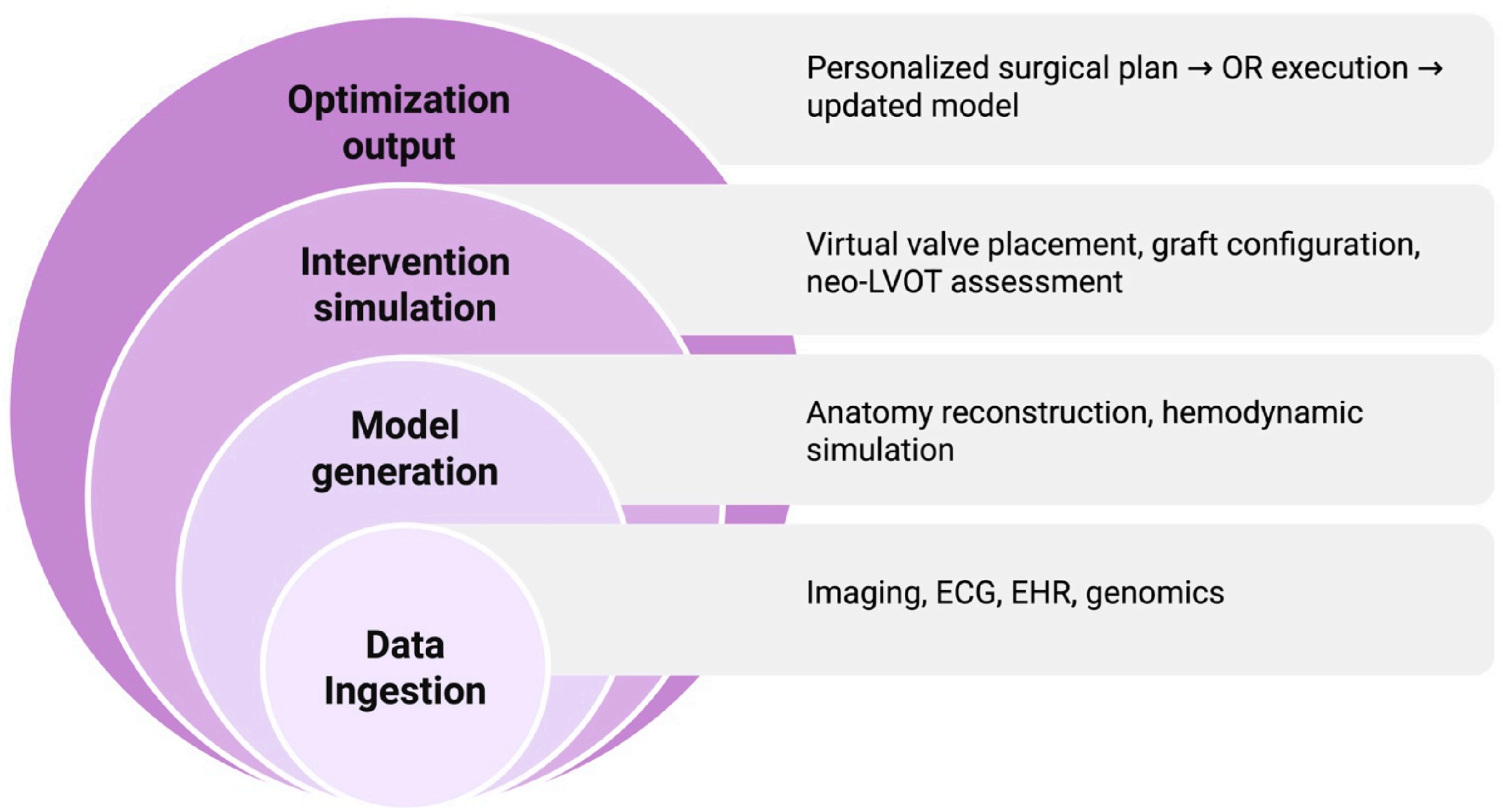
Another area of rapid development is the creation of digital twins, virtual replicas of individual patients that simulate cardiac anatomy, physiology, tissue properties, and hemodynamics (Figure 3). Digital twins integrate imaging, echocardiography, computational fluid dynamics, and machine learning to model potential outcomes of surgical or transcatheter interventions. In early feasibility studies, digital twins have been used to test valve deployment angles, assess graft flow distribution, and simulate the hemodynamic effects of complex aortic repairs [125,126]. As these models become more accurate and computationally efficient, they may allow surgeons to rehearse operations in a patient-specific virtual environment, select optimal conduit configurations, and predict complications before entering the operating room.
The evolution of semi-autonomous and autonomous robotic systems represents another promising trajectory. While current platforms remain largely teleoperated, advances in computer vision, force-sensing algorithms, and reinforcement learning suggest that autonomous performance of discrete surgical subtasks, such as suture placement, vessel probing, anastomotic alignment, or valve debridement, may become increasingly feasible [127]. The integration of real-time AI-driven anatomic recognition could enable robots to navigate tissue planes with minimal human adjustment, functioning as highly reliable procedural assistants. Although full autonomy remains distant in cardiac surgery due to its complexity and risk profile, meaningful partial autonomy may emerge first in structured, repetitive tasks within minimally invasive procedures.
AI is also poised to transform the hybrid operating room into a dynamic, learning environment. Next-generation OR platforms will likely feature continuous data exchange between imaging systems, perfusion consoles, anesthesia monitors, and robotic tools. These systems could generate real-time 3D reconstructions of operative anatomy, predict physiologic transitions minutes in advance, and provide proactive alerts regarding tissue stress, cannulation risk, or graft kinking [128]. Such developments may reduce human-factor error, enhance situational awareness, and allow for more standardized, reproducible performance of complex cardiac procedures.
Another important direction involves the expansion of real-time surgical video analytics. Computer-vision systems are rapidly advancing from detecting simple landmarks to segmenting tissue layers, quantifying bleeding, analyzing instrument trajectories, and identifying deviations from ideal technique. Within the next decade, AI is expected to provide continuous intraoperative skill assessment and automated coaching, helping surgeons refine their technique and maintain high performance throughout long or difficult procedures [129]. These tools may also serve as quality-assurance mechanisms, offering objective metrics for accreditation, training, and postoperative debriefing.
In parallel, significant progress is anticipated in precision postoperative care. Rich physiologic data streams from ICU monitors, imaging exams, lab results, and wearable sensors will increasingly be analyzed by predictive models capable of identifying early signs of deterioration well before clinical recognition. AI-enabled closed-loop systems for vasopressor titration, fluid management, ventilator control, and temperature regulation are already being tested and may eventually provide consistent, individualized hemodynamic optimization [130,131]. Remote monitoring systems equipped with AI-driven analytics will likely extend postoperative surveillance beyond hospital discharge, reducing readmissions and improving long-term outcomes.
Another promising domain is genomic, transcriptomic, and multi-omic integration. As large-scale biobank data grow, AI models may begin to link molecular signatures with surgical risk, graft durability, valve degeneration, and aortic aneurysm progression [132]. These insights could inform patient selection, guide operative strategy, and enable targeted perioperative therapies aimed at modulating mitochondrial dysfunction, inflammation, or extracellular-matrix remodeling.
The future also requires careful attention to ethical governance and regulatory frameworks. As AI models become more adaptive, continually learning from new data, regulatory agencies will need robust mechanisms for monitoring algorithmic drift, ensuring fairness, and protecting patient privacy. Advances in federated learning, differential privacy, and secure multiparty computation may enable large-scale model training across international centers without compromising data security [133,134].
Finally, achieving the full potential of AI in cardiac surgery will depend on the creation of global, harmonized data infrastructures. Collaborative networks that include diverse populations, standardized variable definitions, and high-frequency physiologic data are essential for building generalizable models that perform reliably across institutions. Several international initiatives have already called for multi-institutional surgical AI registries, which would enable continuous benchmarking, transparent model updating, and rigorous prospective validation [135,136,137].
Taken together, these innovations suggest that AI will fundamentally reshape nearly every phase of adult cardiac surgery. With the continued convergence of digital twins, multimodal learning, hybrid OR ecosystems, autonomous robotics, and precision perioperative care, the next decade may mark the transition from AI-enabled decision support to truly predictive, personalized, and simulation-driven surgical practice.

10. Conclusions

Artificial intelligence is rapidly reshaping the landscape of adult cardiac surgery, permeating each phase of the perioperative pathway—from diagnostic evaluation and risk stratification to surgical planning, intraoperative guidance, and postoperative critical care. What began as modest experiments in pattern recognition and image segmentation has evolved into a robust ecosystem of predictive analytics, computer-vision tools, multimodal learning systems, and AI-enabled robotic platforms. Together, these technologies are beginning to augment surgical precision, enhance situational awareness, and enable more personalized decision-making. Yet, the transformative potential of AI in cardiac surgery extends beyond technical innovation alone. By integrating continuously streamed physiologic data, rich imaging modalities, and longitudinal clinical information, AI offers a perspective that is more anticipatory than reactive—one capable of recognizing subtle physiologic signatures before deterioration becomes clinically apparent. Similarly, AI-driven simulations, digital twins, and hybrid operating-room ecosystems promise unprecedented opportunities for procedural rehearsal, real-time anatomic guidance, and individualized operative strategy. At the same time, significant challenges remain. The current evidence base is still dominated by retrospective analyses, with limited prospective or randomized evaluation. Issues of data quality, algorithmic bias, model transparency, regulatory oversight, and real-world workflow integration must be addressed before AI can reliably influence high-stakes surgical care. The field must move toward multicenter collaboration, standardized reporting frameworks, and robust governance structures to ensure safe and equitable adoption.
Looking ahead, the next decade is likely to mark a transition from discrete AI applications to fully integrated, learning-health-system architectures in which cardiac surgery is supported by continuous data exchange across the preoperative, intraoperative, and postoperative continuum. As multimodal foundation models, autonomous robotic functions, and precision perioperative pathways mature, AI will increasingly serve not as a tool but as a clinical partner, one that enhances, rather than replaces, the expertise of the cardiac surgical team. Ultimately, the promise of AI in adult cardiac surgery lies not only in improved efficiency or technical innovation, but in its potential to deliver more accurate diagnoses, safer operations, and better outcomes for patients. With thoughtful validation, ethical stewardship, and clinician-led implementation, artificial intelligence may become a cornerstone of next-generation cardiac surgical practice, ushering in an era of truly individualized, data-driven, and future-ready care.

Author Contributions

Conceptualization, D.E.M. and S.S.; methodology, D.E.M., N.S., L.R. and M.B.; validation, N.S., L.R., V.A. and S.S.; writing—original draft preparation, D.E.M., N.S., L.R. and V.A.; writing—review and editing, D.E.M., N.S., L.R., M.B., V.A. and S.S.; supervision, S.S.; project administration, D.E.M. and S.S. All authors have read and agreed to the published version of the manuscript.

Funding

This research received no external funding.

Institutional Review Board Statement

Not applicable.

Informed Consent Statement

Not applicable.

Data Availability Statement

No new data were created or analyzed in this study. Data sharing is not applicable to this article.

Conflicts of Interest

The authors declare no conflicts of interest.

References

  1. Nashef, S.A.; Roques, F.; Sharples, L.D.; Nilsson, J.; Smith, C.; Goldstone, A.R.; Lockowandt, U. EuroSCORE II. Eur. J. Cardio-Thorac. Surg. 2012, 41, 734–745. [Google Scholar] [CrossRef] [PubMed]
  2. Iribarne, A.; Zwischenberger, B.; Mehaffey, J.H.; Kaneko, T.; von Ballmoos, M.C.W.; Jacobs, J.P.; Krohn, C.; Habib, R.H.; Parsons, N.; Badhwar, V.; et al. The Society of Thoracic Surgeons Adult Cardiac Surgery Database: 2024 Update on National Trends and Outcomes. Ann. Thorac. Surg. 2025, 119, 1139–1150. [Google Scholar] [CrossRef] [PubMed]
  3. Topol, E.J. High-performance medicine: The convergence of human and artificial intelligence. Nat. Med. 2019, 25, 44–56. [Google Scholar] [CrossRef]
  4. Lee, A.H.; Chan, M.K.; Narayanan, D.; Staudenmayer, K.; Nassar, A.; Forrester, J.D.; Knowlton, L.M.; Hameed, S.M. Augmenting decision making in acute care surgery: A systematic review of machine learning–driven risk prediction models. J. Trauma Acute Care Surg. 2025. [Google Scholar] [CrossRef] [PubMed]
  5. Ruiz, V.M.; Goldsmith, M.P.; Shi, L.; Simpao, A.F.; Gálvez, J.A.; Naim, M.Y.; Nadkarni, V.; Gaynor, J.W.; Tsui, F. Early prediction of clinical deterioration using data-driven machine-learning modeling of electronic health records. J. Thorac. Cardiovasc. Surg. 2022, 164, 211–222.e3. [Google Scholar] [CrossRef]
  6. Hashimoto, D.A.; Rosman, G.; Rus, D.; Meireles, O.R.M. Artificial Intelligence in Surgery: Promises and Perils. Ann. Surg. 2018, 268, 70–76. [Google Scholar] [CrossRef]
  7. Shimabukuro, D.W.; Barton, C.W.; Feldman, M.D.; Mataraso, S.J.; Das, R. Effect of a machine learning-based severe sepsis prediction system on patient outcomes. Crit. Care. Med. 2017, 45, 1187–1194. [Google Scholar]
  8. Zhang, H.; Zhou, R.; Cheng, C.-Y.; Huang, S.-H.; Cheng, M.-H.; Yang, C.-T. Decision-making efficiency with aided information: The impact of automation reliability and task difficulty. Cogn. Res. Princ. Implic. 2025, 10, 44. [Google Scholar] [CrossRef]
  9. Patel, B.N.; Rosenberg, L.; Willcox, G.; Baltaxe, D.; Lyons, M.; Irvin, J.; Rajpurkar, P.; Amrhein, T.; Gupta, R.; Halabi, S.; et al. Human–machine partnership with artificial intelligence for chest radiograph diagnosis. npj Digit. Med. 2019, 2, 111. [Google Scholar] [CrossRef]
  10. LeCun, Y.; Bengio, Y.; Hinton, G. Deep learning. Nature 2015, 521, 436–444. [Google Scholar] [CrossRef]
  11. Bergmann, D.; Stryker, C. What is Loss Function? IBM. Available online: https://www.ibm.com/think/topics/loss-function (accessed on 15 January 2025).
  12. Bergmann, D.; Stryker, C. What is Backpropagation? IBM. Available online: https://www.ibm.com/think/topics/backpropagation (accessed on 30 June 2025).
  13. Brault, D. What Are the Different Types of AI Models? Mendix. Available online: https://www.mendix.com/blog/what-are-the-different-types-of-ai-models/ (accessed on 30 June 2025).
  14. Çelik, Ö. A Research on Machine Learning Methods and Its Applications. J. Educ. Technol. Online Learn. 2018, 1, 25–40. [Google Scholar] [CrossRef]
  15. Murel, J.; Kavlakoglu, E. What is Reinforcement Learning? IBM. Available online: https://www.ibm.com/think/topics/reinforcement-learning (accessed on 30 June 2025).
  16. AlSaad, R.; Abd-Alrazaq, A.; Boughorbel, S.; Ahmed, A.; Renault, M.-A.; Damseh, R.; Sheikh, J. Multimodal Large Language Models in Health Care: Applications, Challenges, and Future Outlook. J. Med. Internet Res. 2024, 26, e59505. [Google Scholar] [CrossRef]
  17. Attia, Z.I.; Friedman, P.A.; Noseworthy, P.A.; Lopez-Jimenez, F.; Ladewig, D.J.; Satam, G.; Pellikka, P.A.; Munger, T.M.; Asirvatham, S.J.; Scott, C.G.; et al. Age and Sex Estimation Using Artificial Intelligence from Standard 12-Lead ECGs. Circ. Arrhythmia Electrophysiol. 2019, 12, e007284. [Google Scholar] [CrossRef]
  18. Adedinsewo, D.; Carter, R.E.; Attia, Z.; Johnson, P.; Kashou, A.H.; Dugan, J.L.; Albus, M.; Sheele, J.M.; Bellolio, F.; Friedman, P.A.; et al. Artificial Intelligence-Enabled ECG Algorithm to Identify Patients with Left Ventricular Systolic Dysfunction Presenting to the Emergency Department with Dyspnea. Circ. Arrhythmia Electrophysiol. 2020, 13, e008437. [Google Scholar] [CrossRef]
  19. Balcioglu, O.; Ozgocmen, C.; Ozsahin, D.U.; Yagdi, T. The Role of Artificial Intelligence and Machine Learning in the Prediction of Right Heart Failure after Left Ventricular Assist Device Implantation: A Comprehensive Review. Diagnostics 2024, 14, 380. [Google Scholar] [CrossRef]
  20. Weberling, L.D.; Ochs, A.; Benovoy, M.; Siepen, F.A.D.; Salatzki, J.; Giannitsis, E.; Duan, C.; Maresca, K.; Zhang, Y.; Möller, J.; et al. Machine Learning to Automatically Differentiate Hypertrophic Cardiomyopathy, Cardiac Light Chain, and Cardiac Transthyretin Amyloidosis: A Multicenter CMR Study. Circ. Cardiovasc. Imaging 2025, 18, e017761. [Google Scholar] [CrossRef] [PubMed]
  21. Ko, W.-Y.; Siontis, K.C.; Attia, Z.I.; Carter, R.E.; Kapa, S.; Ommen, S.R.; Demuth, S.J.; Ackerman, M.J.; Gersh, B.J.; Arruda-Olson, A.M.; et al. Detection of Hypertrophic Cardiomyopathy Using a Convolutional Neural Network-Enabled Electrocardiogram. JACC 2020, 75, 722–733. [Google Scholar] [CrossRef]
  22. Naruka, V.; Rad, A.A.; Ponniah, H.S.; Francis, J.; Vardanyan, R.; Tasoudis, P.; Magouliotis, D.E.; Lazopoulos, G.L.; Salmasi, M.Y.; Athanasiou, T. Machine learning and artificial intelligence in cardiac transplantation: A systematic review. Artif. Organs 2022, 46, 1741–1753. [Google Scholar] [CrossRef] [PubMed]
  23. Loyaga-Rendon, R.Y.; Acharya, D.; Jani, M.; Lee, S.; Trachtenberg, B.; Manandhar-Shrestha, N.; Leacche, M.; Jovinge, S. Predicting Survival of End-Stage Heart Failure Patients Receiving HeartMate-3: Comparing Machine Learning Methods. Asaio J. 2023, 70, 22–30. [Google Scholar] [CrossRef]
  24. Allehyani, B.; Savo, M.T.; Khwaji, A.; Al Kholaif, N.; Galzerano, D.; Al Buraiki, J.; Alamro, B.; Al Sergani, H.; Di Salvo, G.; Cozac, D.A.; et al. Machine learning approach to predict 1-year mortality after heart transplantation: A single-centre study. Eur. Heart J.-Imaging Methods Pract. 2025, 3. [Google Scholar] [CrossRef] [PubMed]
  25. Benedetto, U.; Dimagli, A.; Sinha, S.; Cocomello, L.; Gibbison, B.; Caputo, M.; Gaunt, T.; Lyon, M.; Holmes, C.; Angelini, G.D. Machine learning improves mortality risk prediction after cardiac surgery: Systematic review and meta-analysis. J. Thorac. Cardiovasc. Surg. 2022, 163, 2075–2087.e9. [Google Scholar] [CrossRef] [PubMed]
  26. Gala, D.; Behl, H.; Shah, M.; Makaryus, A.N. The Role of Artificial Intelligence in Improving Patient Outcomes and Future of Healthcare Delivery in Cardiology: A Narrative Review of the Literature. Healthcare 2024, 12, 481. [Google Scholar] [CrossRef] [PubMed]
  27. Illi, J.; Bernhard, B.; Nguyen, C.; Pilgrim, T.; Praz, F.; Gloeckler, M.; Windecker, S.; Haeberlin, A.; Gräni, C. Translating Imaging Into 3D Printed Cardiovascular Phantoms. JACC Basic Transl. Sci. 2022, 7, 1050–1062. [Google Scholar] [CrossRef]
  28. Valverde, I.; Gomez-Ciriza, G.; Hussain, T.; Suarez-Mejias, C.; Velasco-Forte, M.N.; Byrne, N.; Ordoñez, A.; Gonzalez-Calle, A.; Anderson, D.; Hazekamp, M.G.; et al. Three-dimensional printed cardiac models for surgical planning in complex congenital heart disease. J. Thorac. Cardiovasc. Surg. 2015, 149, 699–706. [Google Scholar]
  29. Wang, X.; Li, Y.; Liang, Z.; Du, R.; Song, T. High-fidelity, personalized cardiac modeling via AI-driven 3D reconstruction and embedded silicone rubber printing. Exp. Biol. Med. 2025, 250, 10756. [Google Scholar] [CrossRef]
  30. Ujiie, H.; Yamaguchi, A.; Gregor, A.; Chan, H.; Kato, T.; Hida, Y.; Kaga, K.; Wakasa, S.; Eitel, C.; Clapp, T.R.; et al. Developing a virtual reality simulation system for preoperative planning of thoracoscopic thoracic surgery. J. Thorac. Dis. 2021, 13, 778–783. [Google Scholar] [CrossRef]
  31. Chevalier, O.; Dubey, G.; Benkabbou, A.; Majbar, M.A.; Souadka, A. Comprehensive overview of artificial intelligence in surgery: A systematic review and perspectives. Pflügers Arch.-Eur. J. Physiol. 2025, 477, 617–626. [Google Scholar] [CrossRef]
  32. Abjigitova, D.; Sadeghi, A.H.; Peek, J.J.; Bekkers, J.A.; Bogers, A.J.J.C.; Mahtab, E.A.F. Virtual Reality in the Preoperative Planning of Adult Aortic Surgery: A Feasibility Study. J. Cardiovasc. Dev. Dis. 2022, 9, 31. [Google Scholar] [CrossRef]
  33. Rad, A.A.; Vardanyan, R.; Lopuszko, A.; Alt, C.; Stoffels, I.; Schmack, B.; Ruhparwar, A.; Zhigalov, K.; Zubarevich, A.; Weymann, A. Virtual and Augmented Reality in Cardiac Surgery. J. Cardiovasc. Dev. Dis. 2022, 37, 123–127. [Google Scholar] [CrossRef]
  34. Aye, W.M.M.; Kiraly, L.; Kumar, S.S.; Kasivishvanaath, A.; Gao, Y.; Kofidis, T. Mixed Reality (Holography)-Guided Minimally Invasive Cardiac Surgery—A Novel Comparative Feasibility Study. J. Cardiovasc. Dev. Dis. 2025, 12, 49. [Google Scholar] [CrossRef] [PubMed]
  35. Ponzoni, M.; Bertelli, F.; Yoo, S.-J.; Peel, B.; Seatle, H.; Honjo, O.; Haller, C.; Barron, D.J.; Seed, M.; Lam, C.Z.; et al. Mixed reality for preoperative planning and intraoperative assistance of surgical correction of complex congenital heart defects. J. Thorac. Cardiovasc. Surg. 2025, 170, 327–335.e1. [Google Scholar] [CrossRef]
  36. Cersosimo, A.; Zito, E.; Pierucci, N.; Matteucci, A.; La Fazia, V.M. A Talk with ChatGPT: The Role of Artificial Intelligence in Shaping the Future of Cardiology and Electrophysiology. J. Pers. Med. 2025, 15, 205. [Google Scholar] [CrossRef]
  37. Baeßler, B.; Götz, M.; Antoniades, C.; Heidenreich, J.F.; Leiner, T.; Beer, M. Artificial intelligence in coronary computed tomography angiography: Demands and solutions from a clinical perspective. Front. Cardiovasc. Med. 2023, 10, 1120361. [Google Scholar] [CrossRef]
  38. Shademan, A.; Decker, R.S.; Opfermann, J.D.; Leonard, S.; Krieger, A.; Kim, P.C.W. Supervised autonomous robotic soft tissue surgery. Sci. Transl. Med. 2016, 8, 337ra64. [Google Scholar] [CrossRef]
  39. Burbano, J.C.R.; Ruiz, N.I.; Burbano, G.A.R.; Inca, J.S.G.; Lezama, C.A.A.; González, M.S. Robot-Assisted Surgery: Current Applications and Future Trends in General Surgery. Cureus 2025, 17, e82318. [Google Scholar] [CrossRef]
  40. Camarillo, D.B.; Krummel, T.M.; Salisbury, J. Robotic technology in surgery: Past, present, and future. Am. J. Surg. 2004, 188, 2–15. [Google Scholar] [CrossRef] [PubMed]
  41. Kassahun, Y.; Yu, B.; Tibebu, A.T.; Stoyanov, D.; Giannarou, S.; Metzen, J.H.; Vander Poorten, E. Surgical robotics beyond enhanced dexterity: A survey of machine learning techniques and intelligent features. Int. J. Comput. Assist. Radiol. Surg. 2016, 11, 553–568. [Google Scholar] [CrossRef] [PubMed]
  42. Vedula, S.S.; Gyulai, Z.; Ishii, M.; Hager, G.D. Surgical data science: The new knowledge domain. JAMA Surg. 2017, 152, 657–658. [Google Scholar] [CrossRef] [PubMed]
  43. Maier-Hein, L.; Vedula, S.S.; Speidel, S.; Navab, N.; Kikinis, R.; Park, A.; Eisenmann, M.; Feussner, H.; Forestier, G.; Giannarou, S.; et al. Surgical data science for next-generation interventions. Nat. Biomed. Eng. 2017, 1, 691–696. [Google Scholar] [CrossRef]
  44. Tanzi, L.; Piazzolla, P.; Porpiglia, F.; Vezzetti, E. Real-time deep learning semantic segmentation during intra-operative surgery for 3D augmented reality assistance. Int. J. Comput. Assist. Radiol. Surg. 2021, 16, 1435–1445. [Google Scholar] [CrossRef]
  45. Cizmic, A.; Mitra, A.T.; Preukschas, A.A.; Kemper, M.; Melling, N.T.; Mann, O.; Markar, S.; Hackert, T.; Nickel, F. Artificial intelligence for intraoperative video analysis in robotic-assisted esophagectomy. Surg. Endosc. 2025, 39, 2774–2783. [Google Scholar] [CrossRef] [PubMed]
  46. Cahill, R.A.; Duffourc, M.D.J.; Gerke, S.D.-J.U. The AI-enhanced surgeon—Integrating black-box artificial intelligence in the operating room. Int. J. Surg. 2025, 111, 2823–2826. [Google Scholar] [CrossRef] [PubMed]
  47. van Amsterdam, B.; Funke, I.; Edwards, E.; Speidel, S.; Collins, J.; Sridhar, A.; Kelly, J.; Clarkson, M.J.; Stoyanov, D. Gesture Recognition in Robotic Surgery with Multimodal Attention. IEEE Trans. Med. Imaging 2022, 41, 1677–1687. [Google Scholar] [CrossRef] [PubMed]
  48. Iftikhar, M.M.; Saqib, M.M.; Zareen, M.M.; Mumtaz, H.M. Artificial intelligence: Revolutionizing robotic surgery: Review. Ann. Med. Surg. 2024, 86, 5401–5409. [Google Scholar] [CrossRef]
  49. Jeong, H.; Kim, D.; Kim, D.W.; Baek, S.; Lee, H.-C.; Kim, Y.; Ahn, H.J. Prediction of intraoperative hypotension using deep learning models based on non-invasive monitoring devices. J. Clin. Monit. Comput. 2024, 38, 1357–1365. [Google Scholar] [CrossRef]
  50. Habicher, M.; Kleymann, R.; Shakkour, K.; Holstein, N.; Koch, C.; Markmann, M.; Schneck, E.; Sander, M. AI-supported non-invasive measurement for intraoperative hypotension reduction in major Orthopedic and trauma surgery—Study protocol for a randomized clinical trial. Trials 2025, 26, 455. [Google Scholar] [CrossRef]
  51. Reddy, V.S.; Stout, D.M.; Fletcher, R.; Barksdale, A.; Parikshak, M.; Johns, C.; Gerdisch, M. Advanced artificial intelligence–guided hemodynamic management within cardiac enhanced recovery after surgery pathways: A multi-institution review. JTCVS Open 2023, 16, 480–489. [Google Scholar] [CrossRef]
  52. Maheshwari, K.; Shimada, T.; Yang, D.; Khanna, S.; Cywinski, J.B.; Irefin, S.A.; Ayad, S.; Turan, A.; Ruetzler, K.; Qiu, Y.; et al. Hypotension Prediction Index for Prevention of Hypotension during Moderate- to High-risk Noncardiac Surgery. Anesthesiology 2020, 133, 1214–1222. [Google Scholar] [CrossRef]
  53. Michard, F.; Mulder, M.P.; Gonzalez, F.; Sanfilippo, F. AI for the hemodynamic assessment of critically ill and surgical patients: Focus on clinical applications. Ann. Intensiv. Care 2025, 15, 26. [Google Scholar] [CrossRef]
  54. Natarajan, M.; Li, Z.; Chen, L.; Wu, Z.; Ogara, P.; Borges, P.; Rance, G.; Srey, R.; Harari, R.; Mendu, S.; et al. AI-Based Decision Support for Perfusionists during Cardiopulmonary Bypass. Hamlyn Symp. Med. Robot. 2025, 2025, 171–172. [Google Scholar]
  55. Coeckelenbergh, S.; Boelefahr, S.; Alexander, B.; Perrin, L.; Rinehart, J.; Joosten, A.; Barvais, L. Closed-loop anesthesia: Foundations and applications in contemporary perioperative medicine. J. Clin. Monit. Comput. 2024, 38, 487–504. [Google Scholar] [CrossRef] [PubMed]
  56. Bequette, B.W. Fault Detection and Safety in Closed-Loop Artificial Pancreas Systems. J. Diabetes Sci. Technol. 2014, 8, 1204–1214. [Google Scholar] [CrossRef]
  57. Xu, H.; Han, T.; Wang, H.; Liu, S.; Hou, G.; Sun, L.; Jiang, G.; Yang, F.; Wang, J.; Deng, K.; et al. Detection of blood stains using computer vision-based algorithms and their association with postoperative outcomes in thoracoscopic lobectomies. Eur. J. Cardio-Thorac. Surg. 2022, 62. [Google Scholar] [CrossRef]
  58. Nakajima, K.; Kitaguchi, D.; Takenaka, S.; Tanaka, A.; Ryu, K.; Takeshita, N.; Kinugasa, Y.; Ito, M. Automated surgical skill assessment in colorectal surgery using a deep learning-based surgical phase recognition model. Surg. Endosc. 2024, 38, 6347–6355. [Google Scholar] [CrossRef] [PubMed]
  59. Peul, R.C.; Kharbanda, R.K.; Koning, S.; Kruiswijk, M.W.; Tange, F.P.; Hoven, P.v.D.; Vahrmeijer, A.L.; Klautz, R.J.; Hamming, J.F.; Hjortnaes, J.; et al. Intraoperative assessment of myocardial perfusion using near-infrared fluorescence and indocyanine green: A literature review. JTCVS Tech. 2025, 30, 81–93. [Google Scholar] [CrossRef] [PubMed]
  60. Yannakula, V.K.; Alluri, A.A.; Samuel, D.; A Popoola, S.; Barake, B.A.; Alabbasi, A.; Ahmed, A.S.; Bandy, D.A.C.; Jesi, N.J. The Role of Artificial Intelligence in Providing Real-Time Guidance During Interventional Cardiology Procedures: A Narrative Review. Cureus 2025, 17, e83464. [Google Scholar] [CrossRef]
  61. Lee, M.S.; Jang, J.-H.; Kang, S.; Han, G.I.; Yoo, A.-H.; Jo, Y.-Y.; Son, J.M.; Kwon, J.-M.; Lee, S.; Lee, J.S.; et al. Transparent and Robust Artificial Intelligence-Driven Electrocardiogram Model for Left Ventricular Systolic Dysfunction. Diagnostics 2025, 15, 1837. [Google Scholar] [CrossRef]
  62. Toggweiler, S.; von Ballmoos, M.C.W.; Moccetti, F.; Douverny, A.; Wolfrum, M.; Imamoglu, Z.; Mohler, A.; Gülan, U.; Kim, W.-K. A fully automated artificial intelligence-driven software for planning of transcatheter aortic valve replacement. Cardiovasc. Revascularization Med. 2024, 65, 25–31. [Google Scholar] [CrossRef]
  63. Wang, M.; Niu, G.; Chen, Y.; Zhou, Z.; Feng, D.; Zhang, Y.; Wu, Y.; Song, G.; Zhang, H.; Zhou, D.; et al. Development and validation of a deep learning-based fully automated algorithm for pre-TAVR CT assessment of the aortic valvular complex and detection of anatomical risk factors: A retrospective, multicentre study. eBioMedicine 2023, 96, 104794. [Google Scholar] [CrossRef]
  64. Russo, M.J.; Elmariah, S.; Kaneko, T.; Daniels, D.V.; Makkar, R.R.; Chikermane, S.G.; Thompson, C.; Benuzillo, J.; Clancy, S.; Pawlikowski, A.; et al. Machine Learning Identification of Modifiable Predictors of Patient Outcomes After Transcatheter Aortic Valve Replacement. JACC Adv. 2024, 3, 101116. [Google Scholar] [CrossRef]
  65. Shojaei, S.; Mousavi, A.; Kazemian, S.; Armani, S.; Maleki, S.; Fallahtafti, P.; Arashlow, F.T.; Daryabari, Y.; Naderian, M.; Alkhouli, M.; et al. Artificial Intelligence in Risk Stratification and Outcome Prediction for Transcatheter Aortic Valve Replacement: A Systematic Review and Meta-Analysis. J. Pers. Med. 2025, 15, 302. [Google Scholar] [CrossRef]
  66. Wang, D.D.; Eng, M.; Greenbaum, A.; Myers, E.; Forbes, M.; Pantelic, M.; Song, T.; Nelson, C.; Divine, G.; Taylor, A.; et al. Predicting LVOT Obstruction After TMVR. JACC Cardiovasc. Imaging 2016, 9, 1349–1352. [Google Scholar] [CrossRef]
  67. Agarwal, A.; Ranard, L.; Vahl, T.; Khalique, O. Advanced Computer Simulation Based on Cardiac Imaging in Planning of Structural Heart Disease Interventions. J. Clin. Med. 2025, 14, 6885. [Google Scholar] [CrossRef]
  68. Fatima, H.; Mahmood, F.; Sehgal, S.; Belani, K.; Sharkey, A.; Chaudhary, O.; Baribeau, Y.; Matyal, R.; Khabbaz, K.R. Artificial Intelligence for Dynamic Echocardiographic Tricuspid Valve Analysis: A New Tool in Echocardiography. J. Cardiothorac. Vasc. Anesth. 2020, 34, 2703–2706. [Google Scholar] [CrossRef] [PubMed]
  69. Kumar, S.; Suppah, M.; Niazi, O.; Pershad, A. Left atrial appendage occlusion optimized with artificial intelligence-guided CT pre-planning and intra-procedural intracardiac echocardiographic guidance. Cardiovasc. Revascularization Med. 2025, 80, 45–49. [Google Scholar] [CrossRef]
  70. Inomata, S.; Yoshimura, T.; Tang, M.; Ichikawa, S.; Sugimori, H. Automatic Aortic Valve Extraction Using Deep Learning with Contrast-Enhanced Cardiac CT Images. J. Cardiovasc. Dev. Dis. 2024, 12, 3. [Google Scholar] [CrossRef]
  71. Cheng, Z.; Zhao, L.; Yan, J.; Zhang, H.; Lin, S.; Yin, L.; Peng, C.; Ma, X.; Xie, G.; Sun, L. A deep learning algorithm for the detection of aortic dissection on non-contrast-enhanced computed tomography via the identification and segmentation of the true and false lumens of the aorta. Quant. Imaging Med. Surg. 2024, 14, 7365–7378. [Google Scholar] [CrossRef] [PubMed]
  72. Lo, E.M.K.; Chen, S.; Ng, K.H.L.; Wong, R.H.L. Artificial intelligence-powered solutions for automated aortic diameter measurement in computed tomography: A narrative review. Ann. Transl. Med. 2024, 12, 116. [Google Scholar] [CrossRef]
  73. Li, B.; Eisenberg, N.; Beaton, D.; Lee, D.S.; Aljabri, B.; Al-Omran, L.; Wijeysundera, D.N.; Rotstein, O.D.; Lindsay, T.F.; de Mestral, C.; et al. Using Machine Learning to Predict Outcomes Following Thoracic and Complex Endovascular Aortic Aneurysm Repair. J. Am. Heart Assoc. 2025, 14, e039221. [Google Scholar] [CrossRef] [PubMed]
  74. Du, P.; An, D.; Wang, C.; Wang, J.-X. AI-powered automated model construction for patient-specific CFD simulations of aortic flows. Sci. Adv. 2025, 11, eadw2825. [Google Scholar] [CrossRef]
  75. Zaka, A.; Mustafiz, C.; Mutahar, D.; Sinhal, S.; Gorcilov, J.; Muston, B.; Evans, S.; Gupta, A.; Stretton, B.; Kovoor, J.; et al. Machine-learning versus traditional methods for prediction of all-cause mortality after transcatheter aortic valve implantation: A systematic review and meta-analysis. Open Heart 2025, 12, e002779. [Google Scholar] [CrossRef]
  76. Thompson, D.C.; Mofidi, R. Natural Language Processing framework for identifying abdominal aortic aneurysm repairs using unstructured electronic health records. Sci. Rep. 2025, 15, 26388. [Google Scholar] [CrossRef]
  77. Wah, J.N.K. The rise of robotics and AI-assisted surgery in modern healthcare. J. Robot. Surg. 2025, 19, 311. [Google Scholar] [CrossRef]
  78. Lin, G.; Li, R.; Li, X.; Wang, D.; Chen, X. Advances in the Application of Three-Dimensional Reconstruction in Thoracic Surgery: A Comprehensive Review. Thorac. Cancer 2025, 16, e70159. [Google Scholar] [CrossRef]
  79. Hassan, A.M.; Rajesh, A.; Asaad, M.; Nelson, J.A.; Coert, J.H.; Mehrara, B.J.; Butler, C.E. Artificial Intelligence and Machine Learning in Prediction of Surgical Complications: Current State, Applications, and Implications. Am. Surg. 2022, 89, 25–30. [Google Scholar] [CrossRef] [PubMed]
  80. Sulague, R.M.; Beloy, F.J.; Medina, J.R.; Mortalla, E.D.; Cartojano, T.D.; Macapagal, S.; Kpodonu, J. Artificial intelligence in cardiac surgery: A systematic review. World J. Surg. 2024, 48, 2073–2089. [Google Scholar] [CrossRef]
  81. Tsiachristas, A.; Chan, K.; Wahome, E.; Ben Kearns, B.; Patel, P.; Lyasheva, M.; Syed, N.; Fry, S.; Halborg, T.; West, H.; et al. Cost-effectiveness of a novel AI technology to quantify coronary inflammation and cardiovascular risk in patients undergoing routine coronary computed tomography angiography. Eur. Heart J. Qual. Care Clin. Outcomes 2024, 11, 434–444. [Google Scholar] [CrossRef] [PubMed]
  82. von Gerich, H.; Helenius, M.; Hörhammer, I.; Moen, H.; Peltonen, L.-M. Scoping review on the economic aspects of machine learning applications in healthcare. Int. J. Med. Inform. 2025, 205, 106103. [Google Scholar] [CrossRef]
  83. Kenig, N.; Echeverria, J.M.; Vives, A.M. Artificial Intelligence in Surgery: A Systematic Review of Use and Validation. J. Clin. Med. 2024, 13, 7108. [Google Scholar] [CrossRef] [PubMed]
  84. Lex, J.R.; Abbas, A.; Mosseri, J.; Toor, J.S.; Simone, M.; Ravi, B.; Whyne, C.; Khalil, E.B. Using Machine Learning to Predict-Then-Optimize Elective Orthopedic Surgery Scheduling to Improve Operating Room Utilization: Retrospective Study. JMIR Med. Inform. 2025, 13, e70857. [Google Scholar] [CrossRef]
  85. Singh, A.; Farmer, P.E.; Tully, J.L.; Waterman, R.S.; Gabriel, R.A. Forecasting Surgical Bed Utilization: Architectural Design of a Machine Learning Pipeline Incorporating Predicted Length of Stay and Surgical Volume. J. Med. Syst. 2025, 49, 67. [Google Scholar] [CrossRef]
  86. Costantini, P.; Groenhoff, L.; Ostillio, E.; Coraducci, F.; Secchi, F.; Carriero, A.; Colarieti, A.; Stecco, A. Advancements in Cardiac CT Imaging: The Era of Artificial Intelligence. Echocardiography 2024, 41, e70042. [Google Scholar] [CrossRef]
  87. Ryan, C.T.; Zeng, Z.; Chatterjee, S.; Wall, M.J.; Moon, M.R.; Coselli, J.S.; Rosengart, T.K.; Li, M.; Ghanta, R.K. Machine learning for dynamic and early prediction of acute kidney injury after cardiac surgery. J. Thorac. Cardiovasc. Surg. 2022, 166, e551–e564. [Google Scholar] [CrossRef]
  88. Tomašev, N.; Glorot, X.; Rae, J.W.; Zielinski, M.; Askham, H.; Saraiva, A.; Mottram, A.; Meyer, C.; Ravuri, S.; Protsyuk, I.; et al. A clinically applicable approach to continuous AKI prediction using machine learning. Nature 2019, 572, 116–119. [Google Scholar] [CrossRef]
  89. Aslanidou, L.; Rovas, G.; Mohammadi, R.; Anagnostopoulos, S.; Orhon, C.Ç.; Stergiopulos, N. Machine learning-enabled estimation of cardiac output from peripheral waveforms is independent of blood pressure measurement location in an in silico population. Sci. Rep. 2025, 15, 25562. [Google Scholar] [CrossRef] [PubMed]
  90. Lu, Y.; Chen, Q.; Zhang, H.; Huang, M.; Yao, Y.; Ming, Y.; Yan, M.; Yu, Y.; Yu, L. Machine Learning Models of Postoperative Atrial Fibrillation Prediction After Cardiac Surgery. J. Cardiothorac. Vasc. Anesth. 2022, 37, 360–366. [Google Scholar] [CrossRef] [PubMed]
  91. Lin, T.-H.; Chung, H.-Y.; Jian, M.-J.; Chang, C.-K.; Lin, H.-H.; Yen, C.-T.; Tang, S.-H.; Pan, P.-C.; Perng, C.-L.; Chang, F.-Y.; et al. AI-Driven Innovations for Early Sepsis Detection by Combining Predictive Accuracy with Blood Count Analysis in an Emergency Setting: Retrospective Study. J. Med. Internet Res. 2025, 27, e56155. [Google Scholar] [CrossRef] [PubMed]
  92. A Kotula, C.; Martin, J.; A Carey, K.; Edelson, D.P.; Dligach, D.; Mayampurath, A.; Afshar, M.; Churpek, M.M. Comparison of Multimodal Deep Learning Approaches for Predicting Clinical Deterioration in Ward Patients: Observational Cohort Study. J. Med. Internet Res. 2025, 27, e75340. [Google Scholar] [CrossRef]
  93. Hames, D.L.; Sleeper, L.A.S.; Bullock, K.J.R.; Feins, E.N.; Mills, K.I.; Laussen, P.C.M.; Salvin, J.W. Associations with Extubation Failure and Predictive Value of Risk Analytics Algorithms with Extubation Readiness Tests Following Congenital Cardiac Surgery. Pediatr. Crit. Care Med. 2022, 23, e208–e218. [Google Scholar] [CrossRef]
  94. Liu, S.; Xu, Q.; Xu, Z.; Liu, Z.; Sun, X.; Xie, G.; Feng, M.; See, K.C. Reinforcement Learning to Optimize Ventilator Settings for Patients on Invasive Mechanical Ventilation: Retrospective Study. J. Med. Internet Res. 2024, 26, e44494. [Google Scholar] [CrossRef]
  95. Ripollés-Melchor, J.; Carrasco-Sánchez, L.; Tomé-Roca, J.L.; Aldecoa, C.; Zorrilla-Vaca, A.; Lorente-Olazábal, J.V.; Colomina, M.J.; Pérez, A.; Jiménez-López, J.I.; Navarro-Pérez, R.; et al. Hypotension prediction index guided goal-directed therapy to reduce postoperative acute kidney injury during major abdominal surgery: Study protocol for a multicenter randomized controlled clinical trial. Trials 2024, 25, 288. [Google Scholar] [CrossRef] [PubMed]
  96. Dias, R.D.; Zenati, M.A.; Rance, G.; Srey, R.; Arney, D.; Chen, L.; Paleja, R.; Kennedy-Metz, L.R.; Gombolay, M. Using machine learning to predict perfusionists’ critical decision-making during cardiac surgery. Comput. Methods Biomech. Biomed. Eng. Imaging Vis. 2021, 10, 308–312. [Google Scholar] [CrossRef]
  97. Kohnke, J.; Pattberg, K.; Nensa, F.; Kuhlmann, H.; Brenner, T.; Schmidt, K.; Hosch, R.; Espeter, F. A proof of concept for microcirculation monitoring using machine learning based hyperspectral imaging in critically ill patients: A monocentric observational study. Crit. Care 2024, 28, 230. [Google Scholar] [CrossRef] [PubMed]
  98. Raghu, R.; Nalaie, K.; Ayala, I.; Behaine, J.J.M.; Garcia-Mendez, J.P.; Friesen, H.; Leistikow, K.; Bhattacharyya, A.; Jayaraman, A.; Franco, P.M.; et al. Harnessing the Power of Technology to Transform Delirium Severity Measurement in the Intensive Care Unit: Protocol for a Prospective Cohort Study. JMIR Res. Protoc. 2025, 14, e62912. [Google Scholar] [CrossRef] [PubMed]
  99. Santos, R.; Ribeiro, B.; Sousa, I.; Santos, J.; Guede-Fernández, F.; Dias, P.; Carreiro, A.V.; Gamboa, H.; Coelho, P.; Fragata, J.; et al. Predicting post-discharge complications in cardiothoracic surgery: A clinical decision support system to optimize remote patient monitoring resources. Int. J. Med. Inform. 2023, 182, 105307. [Google Scholar] [CrossRef]
  100. Yu, M.-Y.; Son, Y.-J. Machine learning–based 30-day readmission prediction models for patients with heart failure: A systematic review. Eur. J. Cardiovasc. Nurs. 2024, 23, 711–719. [Google Scholar] [CrossRef]
  101. Po, H.-W.; Chu, Y.-C.; Tsai, H.-C.; Lin, C.-L.; Chen, C.-Y.; Ma, M.H.-M. Efficacy of Remote Health Monitoring in Reducing Hospital Readmissions Among High-Risk Postdischarge Patients: Prospective Cohort Study. JMIR Form. Res. 2024, 8, e53455. [Google Scholar] [CrossRef]
  102. Ghassemi, M.; Oakden-Rayner, L.; Beam, A.L. The false hope of current approaches to explainable artificial intelligence in health care. Lancet Digit. Health 2021, 3, e745–e750. [Google Scholar] [CrossRef]
  103. Xu, Q.; Xie, W.; Liao, B.; Hu, C.; Qin, L.; Yang, Z.; Xiong, H.; Lyu, Y.; Zhou, Y.; Luo, A. Interpretability of Clinical Decision Support Systems Based on Artificial Intelligence from Technological and Medical Perspective: A Systematic Review. J. Healthc. Eng. 2023, 2023, 9919269. [Google Scholar] [CrossRef]
  104. Straw, I.; Rees, G.; Nachev, P. Sex-Based Performance Disparities in Machine Learning Algorithms for Cardiac Disease Prediction: Exploratory Study. J. Med. Internet Res. 2024, 26, e46936. [Google Scholar] [CrossRef]
  105. Hasanzadeh, F.; Josephson, C.B.; Waters, G.; Adedinsewo, D.; Azizi, Z.; White, J.A. Bias recognition and mitigation strategies in artificial intelligence healthcare applications. npj Digit. Med. 2025, 8, 154. [Google Scholar] [CrossRef]
  106. European Commission. Ethics Guidelines for Trustworthy AI; European Commission: Brussels, Belgium, 2021.
  107. Kaissis, G.A.; Makowski, M.R.; Rückert, D.; Braren, R.F. Secure and privacy-preserving federated learning in medical imaging. Nat. Mach. Intell. 2021, 3, 473–484. [Google Scholar] [CrossRef]
  108. Muller, S.H.; van Thiel, G.J.; Mostert, M.; van Delden, J.J. Dynamic consent, communication and return of results in large-scale health data reuse: Survey of public preferences. Digit. Health 2023, 9. [Google Scholar] [CrossRef]
  109. U.S. Food and Drug Administration. Proposed Regulatory Framework for Modifications to AI/ML-Based SaMD; U.S. Food and Drug Administration: Silver Spring, MD, USA, 2021.
  110. Steerling, E.; Siira, E.; Nilsen, P.; Svedberg, P.; Nygren, J. Implementing AI in healthcare—The relevance of trust: A scoping review. Front. Health Serv. 2023, 3, 1211150. [Google Scholar] [CrossRef]
  111. Habli, I.; Lawton, T.; Porter, Z. Artificial intelligence in health care: Accountability and safety. Bull. World Health Organ. 2020, 98, 251–256. [Google Scholar] [CrossRef] [PubMed] [PubMed Central]
  112. Kulkarni, P.; Mahadevappa, M.; Chilakamarri, S. The Emergence of Artificial Intelligence in Cardiology: Current and Future Applications. Curr. Cardiol. Rev. 2022, 18, 46–52. [Google Scholar] [CrossRef] [PubMed]
  113. Otokiti, A.U.; Ozoude, M.M.; Williams, K.S.; A Sadiq-Onilenla, R.; Ojo, S.A.; Wasarme, L.B.; Walsh, S.; Edomwande, M. The Need to Prioritize Model-Updating Processes in Clinical Artificial Intelligence (AI) Models: Protocol for a Scoping Review. JMIR Res. Protoc. 2023, 12, e37685. [Google Scholar] [CrossRef] [PubMed]
  114. Wells, B.J.; Nguyen, H.M.; McWilliams, A.; Pallini, M.; Bovi, A.; Kuzma, A.; Kramer, J.; Chou, S.-H.; Hetherington, T.; Corn, P.; et al. A practical framework for appropriate implementation and review of artificial intelligence (FAIR-AI) in healthcare. npj Digit. Med. 2025, 8. [Google Scholar] [CrossRef] [PubMed]
  115. Norori, N.; Hu, Q.; Aellen, F.M.; Faraci, F.D.; Tzovara, A. Addressing bias in big data and AI for health care: A call for open science. Patterns 2021, 2, 100347. [Google Scholar] [CrossRef]
  116. Shung, D.L.; Sung, J.J.Y. Challenges of developing artificial intelligence-assisted tools for clinical medicine. J. Gastroenterol. Hepatol. 2021, 36, 295–298. [Google Scholar] [CrossRef]
  117. Wiens, J.; Shenoy, E.S. Machine Learning for Healthcare: On the Verge of a Major Shift in Healthcare Epidemiology. Clin. Infect. Dis. 2017, 66, 149–153. [Google Scholar] [CrossRef] [PubMed]
  118. An, D.; Lim, M.; Lee, S. Challenges for Data Quality in the Clinical Data Life Cycle: Systematic Review. J. Med. Internet Res. 2025, 27, e60709. [Google Scholar] [CrossRef]
  119. Cichosz, S.L. Enhancing Transparency and Reporting Standards in Diabetes Prediction Modeling: The Significance of the TRIPOD+AI 2024 Statement. J. Diabetes Sci. Technol. 2024, 18, 989–990. [Google Scholar] [CrossRef]
  120. Kocak, B. Key concepts, common pitfalls, and best practices in artificial intelligence and machine learning: Focus on radiomics. Diagn. Interv. Radiol. 2022, 28, 450–462. [Google Scholar] [CrossRef]
  121. Riley, R.D.; Archer, L.; I E Snell, K.; Ensor, J.; Dhiman, P.; Martin, G.P.; Bonnett, L.J.; Collins, G.S. Evaluation of clinical prediction models (part 2): How to undertake an external validation study. BMJ 2024, 384, e074820. [Google Scholar] [CrossRef]
  122. Zayas, C.E.; Whorton, J.M.; Sexton, K.W.; Mabry, C.D.; Dowland, S.C.; Brochhausen, M. Development and validation of the early warning system scores ontology. J. Biomed. Semant. 2023, 14, 14. [Google Scholar] [CrossRef]
  123. Chatzikou, M.; Latsou, D.; Apostolidis, G.; Billis, A.; Charisis, V.; Rigas, E.S.; Bamidis, P.D.; Hadjileontiadis, L. Economic Evaluation of Artificially Intelligent (AI) Diagnostic Systems: Cost Consequence Analysis of Clinician-Friendly Interpretable Computer-Aided Diagnosis (ICADX) Tested in Cardiology, Obstetrics, and Gastroenterology, from the HosmartAI Horizon 2020 Project. Healthcare 2025, 13, 1661. [Google Scholar] [CrossRef]
  124. Moor, M.; Banerjee, O.; Abad, Z.S.H.; Krumholz, H.M.; Leskovec, J.; Topol, E.J.; Rajpurkar, P. Foundation models for generalist medical artificial intelligence. Nature 2023, 616, 259–265. [Google Scholar] [CrossRef]
  125. Papachristou, K.; Katsakiori, P.F.; Papadimitroulas, P.; Strigari, L.; Kagadis, G.C. Digital Twins’ Advancements and Applications in Healthcare, Towards Precision Medicine. J. Pers. Med. 2024, 14, 1101. [Google Scholar] [CrossRef] [PubMed]
  126. Mekki, Y.M.; Luijten, G.; Hagert, E.; Belkhair, S.; Varghese, C.; Qadir, J.; Solaiman, B.; Bilal, M.; Dhanda, J.; Egger, J.; et al. Digital twins for the era of personalized surgery. npj Digit. Med. 2025, 8, 283. [Google Scholar] [CrossRef]
  127. Khanna, R.; Raison, N.; Martinez, A.G.; Ourselin, S.; Montorsi, F.; Briganti, A.; Dasgupta, P. At the cutting edge: The potential of autonomous surgery and challenges faced. BMJ Surg. Interv. Health Technol. 2025, 7, e000338. [Google Scholar] [CrossRef]
  128. Watson, J.B.; Quintero-Peña, C.; Moise, A.C.; Lumsden, A.B.; Corr, S.J. From Data to Decision: A Comprehensive Review of Real-Time Analytics and Smart Technologies in the Surgical Suite. Methodist DeBakey Cardiovasc. J. 2025, 21, 5–15. [Google Scholar] [CrossRef]
  129. Power, D.; Burke, C.; Madden, M.G.; Ullah, I. Automated assessment of simulated laparoscopic surgical skill performance using deep learning. Sci. Rep. 2025, 15, 13591. [Google Scholar] [CrossRef]
  130. Wingert, T.; Lee, C.; Cannesson, M. Machine Learning, Deep Learning, and Closed Loop Devices—Anesthesia Delivery. Anesthesiol. Clin. 2021, 39, 565–581. [Google Scholar] [CrossRef] [PubMed]
  131. Jayaraman, P.; Desman, J.; Sabounchi, M.; Nadkarni, G.N.; Sakhuja, A. A Primer on Reinforcement Learning in Medicine for Clinicians. npj Digit. Med. 2024, 7, 337. [Google Scholar] [CrossRef] [PubMed]
  132. Leon-Mimila, P.; Wang, J.; Huertas-Vazquez, A. Relevance of Multi-Omics Studies in Cardiovascular Diseases. Front. Cardiovasc. Med. 2019, 6, 91. [Google Scholar] [CrossRef] [PubMed]
  133. Rehman, M.H.U.; Pinaya, W.H.L.; Nachev, P.; Teo, J.T.; Ourselin, S.; Cardoso, M.J. Federated learning for medical imaging radiology. Br. J. Radiol. 2023, 96, 20220890. [Google Scholar] [CrossRef]
  134. Selvakumar, S.; Senthilkumar, B. A privacy preserving machine learning framework for medical image analysis using quantized fully connected neural networks with TFHE based inference. Sci. Rep. 2025, 15, 27880. [Google Scholar] [CrossRef]
  135. Vedula, S.S.; Hager, G.D. Surgical data science: The new knowledge domain. Innov. Surg. Sci. 2017, 2, 109–121. [Google Scholar] [CrossRef]
  136. Duci, M.; Bossi, A.; Uccheddu, F.; Fascetti-Leon, F. A roadmap of artificial intelligence applications in pediatric surgery: A comprehensive review of applications, challenges, and ethical considerations. Pediatr. Surg. Int. 2025, 41, 286. [Google Scholar] [CrossRef]
  137. Youssef, S.C.; Dasgupta, P.; Haram, M.; Hachach-Haram, N. Leveraging data science and AI to democratize global surgical expertise. BMJ Surg. Interv. Health Technol. 2024, 6, e000334. [Google Scholar] [CrossRef] [PubMed]
Figure 1. AI Data and Process Visualization Framework.
Jpm 16 00069 g001
Figure 2. Hierarchical Relationship Between Artificial Intelligence, Machine Learning, and Deep Learning.
Jpm 16 00069 g002
Figure 3. Digital Twin Workflow for Cardiac Surgery.
Jpm 16 00069 g003
Table 1. Present and Potential AI Applications Across the Cardiac Surgical Perioperative Pathway.
Perioperative PhaseAI ApplicationClinical PurposeRepresentative Examples
Preoperative DiagnosticsDeep-learning ECG analysisDetect subclinical LV dysfunction; predict long-term survival and operative riskAI-ECG for EF < 35%; AI-derived cardiac age
Automated CT/MRI segmentationRapid extraction of anatomy, calcification burden, chamber volumesTAVR annulus sizing; aortic morphology modeling
Echocardiographic video analysisPredict RV failure, identify cardiomyopathiesStanford LVAD RV-failure prediction model
NLP extraction of risk variablesAutomated identification of clinical features and comorbiditiesEHR-driven early-warning systems
Risk StratificationMachine-learning mortality/morbidity predictionImprove upon STS and EuroSCORE II performanceANN models; gradient-boosted trees; XGBoost risk scores
Multimodal prognostic modelsIntegrate imaging, labs, ECG, and clinical notes for individualized riskFoundation models using multimodal data
Surgical Planning/Structural HeartVirtual valve implantation & neo-LVOT simulationPrevent LVOT obstruction; optimize TMVRDeep-learning TMVR simulation tools
AI-driven TAVR planningValve sizing, PVL prediction, conduction disturbance riskAutomated CT analysis; ML-based sizing
3D printing + ML segmentationPreoperative rehearsal and hazard identificationMinnesota 3D cardiac models
Intraoperative AssistanceAI-guided hemodynamics (HPI)Predict hypotension; optimize perfusionHPI in cardiac ERAS pathways
Computer vision in live videoDetect bleeding, track instruments, identify tissue planesBlood-pixel CV models; OR Black Box
Intelligent robotic functionsTremor filtering, tool tracking, semi-autonomous suturingSTAR robot; AI-augmented robotics
Postoperative Care/ICUEarly-warning modelsPredict AKI, LCOS, respiratory failure, deliriumeCART, AI AKI models, waveform analytics
Closed-loop physiologic controlAutomated vasopressor, ventilation, temperature adjustmentsReinforcement-learning ventilator control
Remote AI monitoring-detected arrhythmias, effusions, hemodynamic instability post-dischargeAI-enabled wearables and home telemetry
AI: Artificial intelligence; ECG: electrocardiogram; LV: left ventricular; EF: ejection fraction; TAVR: transcatheter aortic valve replacement; RV: Right Ventricle; LVAD: left ventricular assist device; NLP: natural language processing; EHR: electronic health record; STS: The Society of Thoracic Surgeons; ANN: Artificial Neural Networks; LVOT: left ventricular outflow tract; TMVR: transcatheter mitral valve replacement; PVL: paravalvular leak; ML: machine learning; HPI: Hypotension Prediction Index; ERAS: Enhanced Recovery After Surgery; CV: Computer Vision; OR: Operating Room; AKI: acute kidney injury; LCOS: low-cardiac-output syndrome; eCART: electronic Cardiac Arrest Risk Triage.
Table 2. Real-World Evidence and Outcome Metrics of AI Applications in Adult Cardiac Surgery.
Perioperative PhaseAI ApplicationModel TypeStudy Design/Evidence LevelSample SizePerformance MetricsClinical Outcome ImpactComparatorDeployment Status
PreoperativeAI-enabled ECG for LV dysfunctionCNNRetrospective, external validation>40,000AUC ~0.85Prediction of future LV dysfunctionCardiologist ECG interpretationRetrospective
PreoperativeAI-ECG “cardiac age”Deep learningRetrospective cohort13,808 CABG ptsHR ↑ with age gapWorse 5- and 10-yr survivalChronologic ageRetrospective
PreoperativeEcho-based RV failure prediction (LVAD)CNNMulticenter retrospective941AUC 0.73Improved RV failure risk identificationClinical scores; expertsRetrospective
PreoperativeML mortality predictionXGBoost/ANNRegistry-based retrospective4874AUC > STSImproved mortality & morbidity predictionSTS risk calculatorRetrospective
IntraoperativeHypotension Prediction Index (HPI)ML waveform analysisProspective observational>600 cardiac ptsSens/Spec > 80%↓ ventilation time; improved stabilityStandard MAP monitoringImplemented
IntraoperativeAutonomous suturing (STAR)CV + MLPreclinicalN/ATechnical accuracy metricsSuperior suture consistencyExpert surgeonsExperimental
IntraoperativeOR Black Box motion analysisCV + MLProspective observationalHundredsError detection > 90%Identification of unsafe motionsHuman observationPilot deployment
PostoperativeAKI predictionML/RNNRetrospective1000–10,000AUC 0.75–0.85Earlier AKI risk identificationLogistic regressionRetrospective
PostoperativeICU early-warning systemsML ensembleProspective & implemented>50,000AUC ~0.80↓ ICU transfers; ↓ mortalityRule-based alertsImplemented
PostoperativeRemote AI monitoringMLProspective pilotHundredsDetection accuracy reported↓ readmissionsStandard follow-upPilot
Abbreviations: AI, artificial intelligence; ANN, artificial neural network; AUC, area under the curve; CABG, coronary artery bypass grafting; CNN, convolutional neural network; CV, computer vision; ECG, electrocardiogram; ICU, intensive care unit; LV, left ventricle; LVAD, left ventricular assist device; MAP, mean arterial pressure; ML, machine learning; RNN, recurrent neural network; STS, Society of Thoracic Surgeons; RV: Right Ventricle; XGBoost: extreme gradient boosting; OR: Operating Room; AKI: acute kidney injury.
Table 3. AI Modalities and Their Clinical Contributions in Adult Cardiac Surgery.
AI ModalityCore CapabilitiesClinical ContributionsKey Domains in Cardiac Surgery
Machine Learning (ML)Pattern recognition; structured data modelingImproved risk stratification; complication predictionSTS augmentation, mortality/morbidity models, AKI prediction
Deep Learning (DL)Image, waveform, and time-series analysisAutomated imaging interpretation; physiologic signature detectionEchocardiography, MRI, AI-ECG, perfusion waveforms
Computer Vision (CV)Real-time surgical video interpretationIntraoperative bleeding quantification; skill assessmentOR Black Box, robotic guidance, structural interventions
Natural Language Processing (NLP)Extraction of free-text clinical dataAutomated registry development; continuous monitoringOperative notes, radiology reports, EHR extraction
Reinforcement Learning (RL)Adaptive decision policies based on feedbackClosed-loop physiologic control; autonomous systemsVentilation control, perfusion optimization
Foundation/Multimodal ModelsCross-domain integration of images, signals, genomics, and textHolistic patient modeling; universal risk profilesDigital twins, comprehensive perioperative prediction
Simulation & Digital TwinsVirtual physiological modelingPreoperative rehearsal; device simulationTMVR, aortic repair, TEVAR computational planning
STS: Society of Thoracic Surgeons; AKI: acute kidney injury; MRI: magnetic resonance imaging; AI: Artificial intelligence; ECG: electrocardiogram; OR: Operating Room; EHR: electronic health record; TMVR: transcatheter mitral valve replacement; TEVAR: thoracic endovascular aortic repair.
Table 4. Challenges and Barriers to AI Adoption in Cardiac Surgery.
Challenge CategoryDescriptionImpact on Clinical AdoptionExamples
Data Quality & GeneralizabilitySingle-center, retrospective datasets; inconsistent variable definitionsReduced external validity; model degradationVariability in LCOS and vasoplegia definitions
Transparency & ExplainabilityBlack-box models with limited interpretabilityClinician distrust; regulatory resistanceLack of rationale for AI risk predictions
Bias & FairnessUnderrepresentation of minority groups, women, older adultsPerformance disparities; potential harmDifferential calibration of models by race/sex
Workflow IntegrationPoor interface design; alert fatigue; limited EHR integrationFailure to improve outcomes despite strong predictive performanceEarly-warning systems with low response rates
Regulatory & Liability IssuesUnclear oversight for adaptive algorithmsHesitancy to deploy AI in high-risk proceduresFDA SaMD change-control challenges
Model Drift & MaintenanceChanging patient populations, surgical techniquesPerformance decline without retrainingAortic and valve practice evolution
Economic & Resource ConstraintsCost of adoption, staff training, IT infrastructureSlower implementation; inequitable accessHybrid OR integration costs; cloud computing fees
LCOS: low-cardiac-output syndrome; AI: Artificial intelligence; EHR: electronic health record; FDA: Food and Drug Administration; SaMD: software as a medical device; OR: Operating Room.
Disclaimer/Publisher’s Note: The statements, opinions and data contained in all publications are solely those of the individual author(s) and contributor(s) and not of MDPI and/or the editor(s). MDPI and/or the editor(s) disclaim responsibility for any injury to people or property resulting from any ideas, methods, instructions or products referred to in the content.