Article

Integrative Analysis of DNA Methylation and microRNA Reveals GNPDA1 and SLC25A16 Related to Biopsychosocial Factors Among Taiwanese Women with a Family History of Breast Cancer


by
Sabiah Khairi
1,
Chih-Yang Wang
2,3,
Gangga Anuraga
4,
Fidelia Berenice Prayugo
5,6,
Muhamad Ansar
7,
Mohammad Hendra Setia Lesmana
8,
Lalu Muhammad Irham
9,
Chen-Yang Shen
10,11,12,* and
Min-Huey Chung
1,13,*
1
School of Nursing, College of Nursing, Taipei Medical University, Taipei City 11031, Taiwan
2
Ph.D. Program for Cancer Molecular Biology and Drug Discovery, College of Medical Science and Technology, Taipei Medical University, Taipei City 11031, Taiwan
3
Graduate Institute of Cancer Biology and Drug Discovery, College of Medical Science and Technology, Taipei Medical University, Taipei City 11031, Taiwan
4
Department of Statistics, Faculty of Science and Technology, Universitas PGRI Adi Buana, Surabaya 60234, Indonesia
5
Chang Gung Medical Education Research Centre (CG-MERC), Chang Gung Memorial Hospital, Taoyuan City 33302, Taiwan
6
School of Medicine, Chang Gung University, Taoyuan City 33302, Taiwan
7
Ph.D. Program in the Clinical Drug Development of Herbal Medicine, Taipei Medical University, Taipei City 110301, Taiwan
8
Department of Mental Health and Community, Faculty of Medicine, Public Health, and Nursing, Universitas Gadjah Mada, Yogyakarta 55281, Indonesia
9
Faculty of Pharmacy, Universitas Ahmad Dahlan, Yogyakarta 55164, Indonesia
10
Institute of Biomedical Sciences, Academia Sinica, Taipei City 11529, Taiwan
11
Master Program in Clinical Genomics and Proteomics, School of Pharmacy, Taipei Medical University, Taipei City 11031, Taiwan
12
College of Public Health, China Medical University, Taichung City 406040, Taiwan
13
Department of Nursing, Shuang Ho Hospital, Taipei Medical University, New Taipei City 23561, Taiwan
*
Authors to whom correspondence should be addressed.
J. Pers. Med. 2025, 15(4), 134; https://doi.org/10.3390/jpm15040134
Submission received: 24 January 2025 / Revised: 5 March 2025 / Accepted: 27 March 2025 / Published: 30 March 2025
(This article belongs to the Special Issue Epigenetics in Precision Medicine: From Mechanism to Therapy)

Abstract

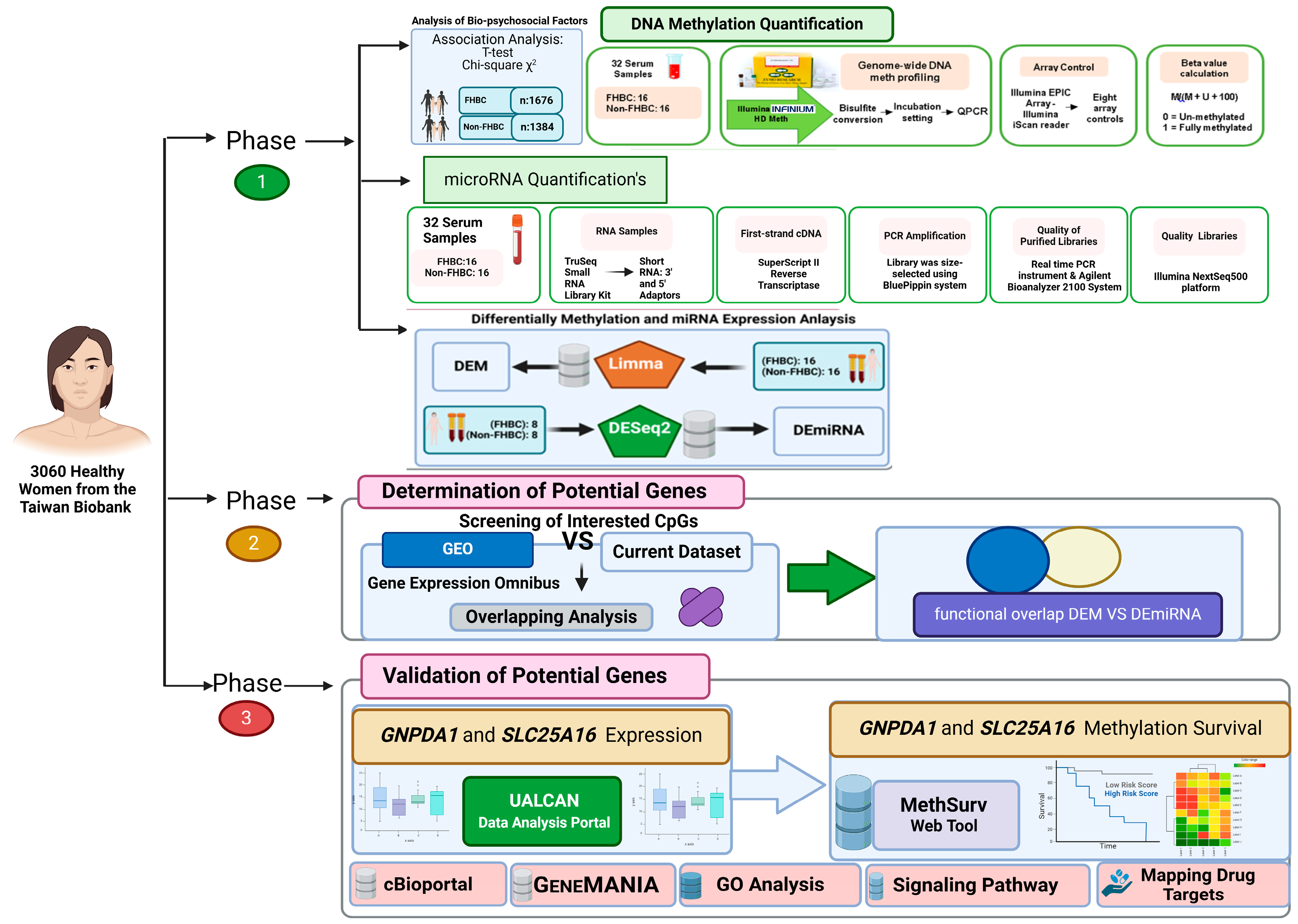
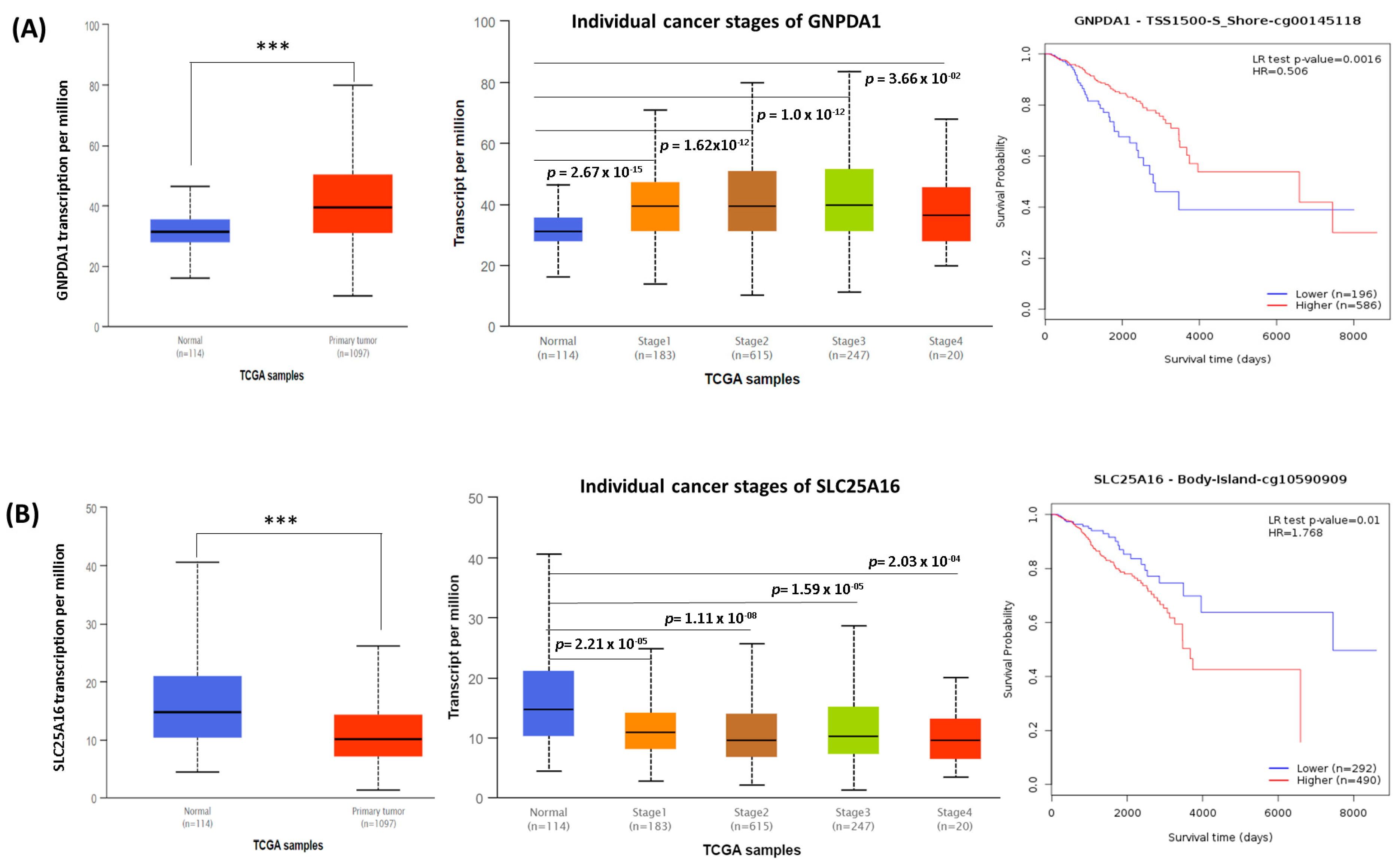
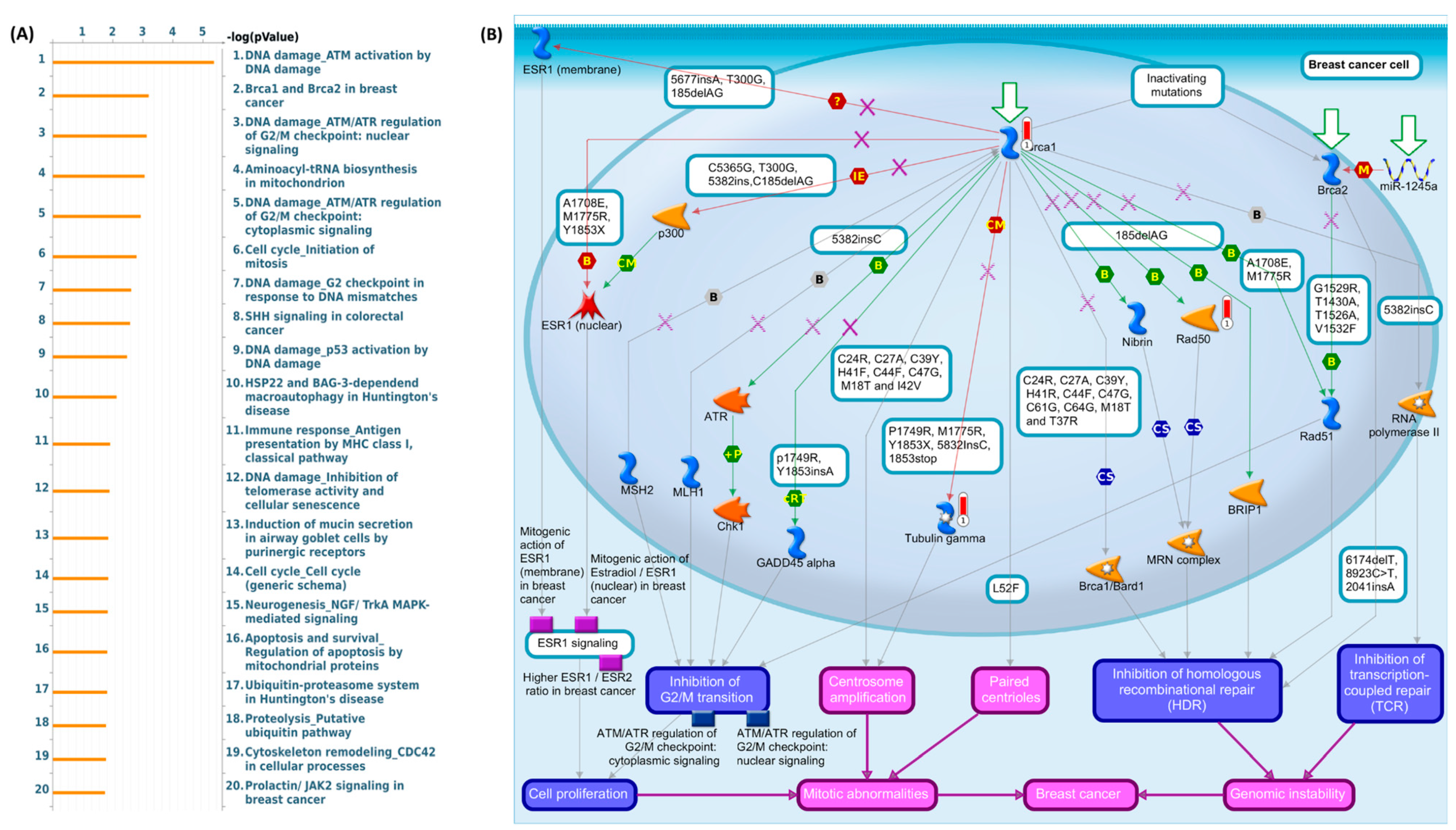
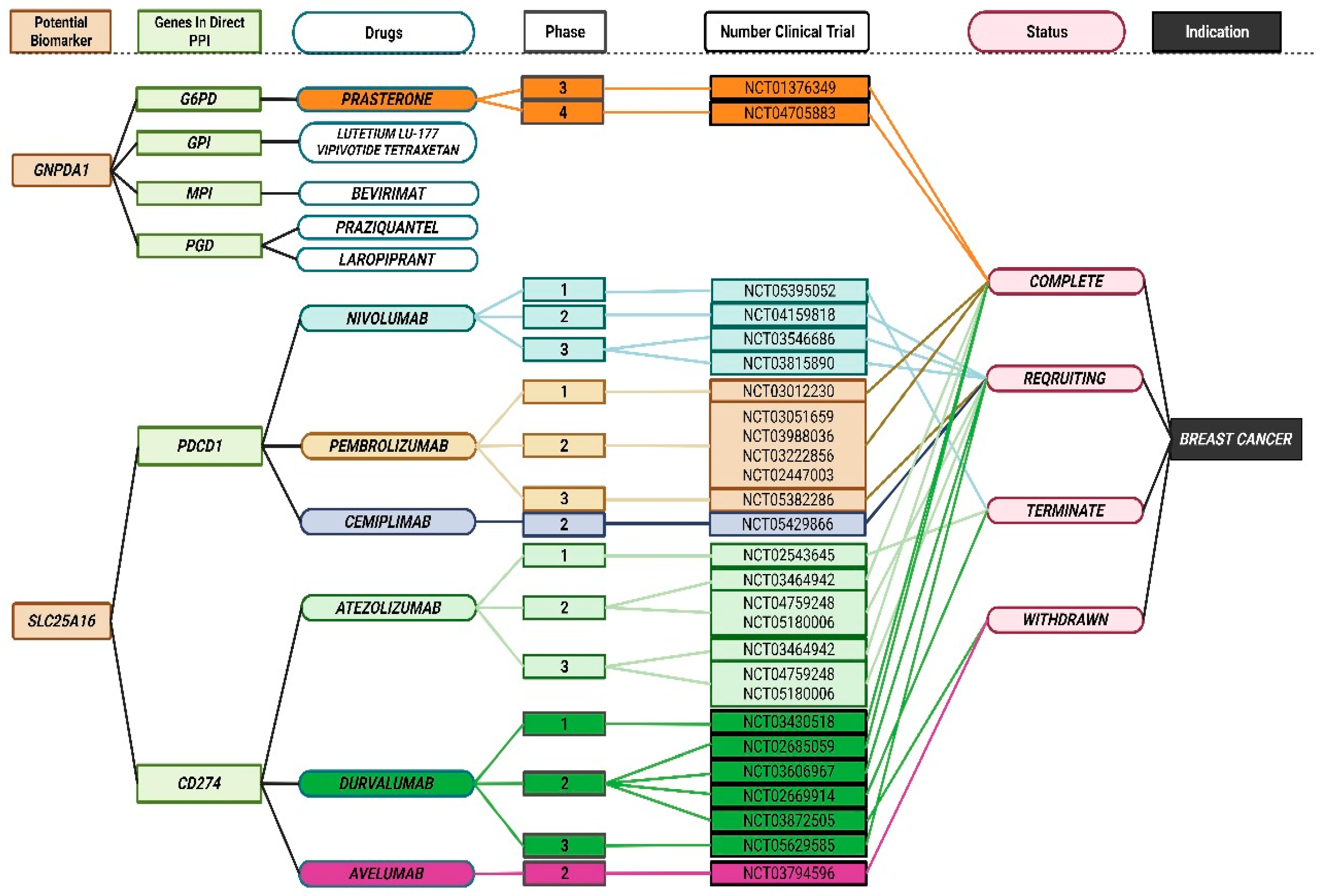
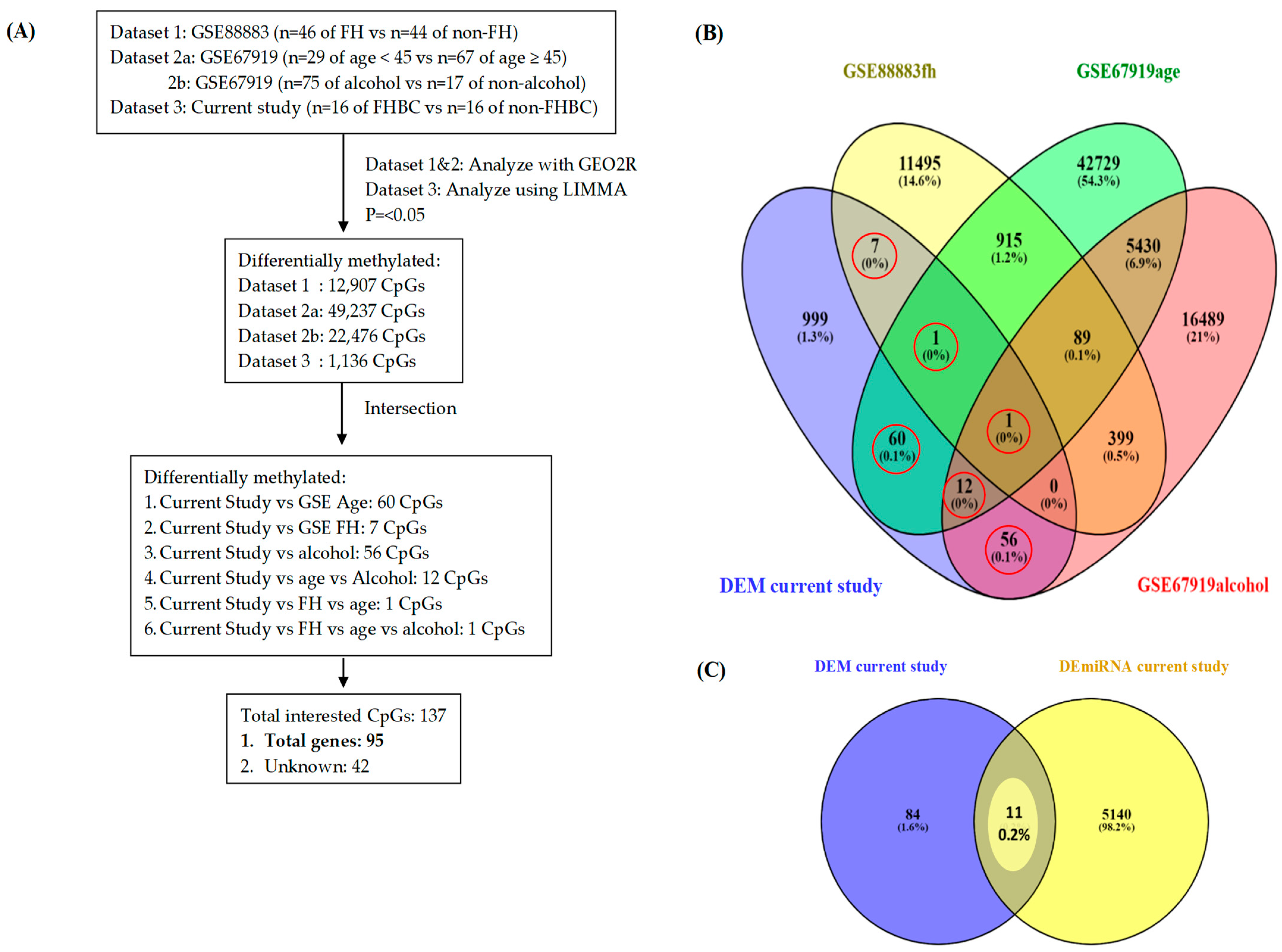
Biopsychosocial factors, including family history, influence the development of breast cancer. Malignancies in women with a family history of breast cancer may be detectable based on DNA methylation and microRNA. Objectives: The present study extended an integrative analysis of DNA methylation and microRNA to identify genes associated with biopsychosocial factors. Methods: We identified 3060 healthy women from the Taiwan Biobank and included 32 blood plasma samples for analysis of biopsychosocial factors and epigenetic changes. GEO databases and bioinformatics approaches were used for the identification and validation of potential genes. Results: Our integrative analysis revealed GNPDA1 and SLC25A16 as potential genes. Age, a family history of cancer, and alcohol consumption were associated with GNPDA1 and SLC25A16 based on the current data set and the GEO data set. GNPDA1 and SLC25A16 exhibited significant expression in breast cancer tissues based on UALCAN analysis, where they were overexpressed and underexpressed, respectively. Through a MethSurv analysis, GNPDA1 hypomethylation and SLC25A16 hypermethylation were associated with poor prognoses in terms of overall survival in breast cancer. Moreover, through a MetaCore functional enrichment analysis, GNPDA1 and SLC25A16 were associated with the BRCA1, BRCA2, and pro-oncogenic actions of the androgen receptor in breast cancer. Further, GNPDA1 and SLC25A16 were enriched in known targets of approved cancer drugs as potential genes associated with breast cancer. Conclusions: These two genes might serve as biomarkers for the early detection of breast cancer, especially for women with a family history of breast cancer.
Keywords: integrative analysis; DNA methylation; microRNA; biopsychosocial factors; family history of breast cancer integrative analysis; DNA methylation; microRNA; biopsychosocial factors; family history of breast cancer