
Article

Machine Learning for Prediction of Recurrence in Parasagittal and Parafalcine Meningiomas: Combined Clinical and MRI Texture Features

1
Department of Electrical Engineering, National Cheng Kung University, Tainan 70101, Taiwan
2
Department of Anesthesiology, Chi Mei Medical Center, Tainan City 71004, Taiwan
3
Department of Hospital and Health Care Administration, College of Recreation and Health Management, Chia Nan University of Pharmacy and Science, Tainan 71710, Taiwan
4
Department of Neurosurgery, Chi Mei Medical Center, Chiali, Tainan 722, Taiwan
5
Department of Nursing, Min-Hwei College of Health Care Management, Tainan 73658, Taiwan
6
Department of Medical Imaging, Chi Mei Medical Center, Tainan 71004, Taiwan
7
Graduate Institute of Medical Sciences, Chang Jung Christian University, Tainan 71101, Taiwan
8
Department of Health and Nutrition, Chia Nan University of Pharmacy and Science, Tainan 71710, Taiwan
9
Institute of Biomedical Sciences, National Sun Yat-Sen University, Kaohsiung 80424, Taiwan
*
Author to whom correspondence should be addressed.
These authors have contributed equally to this work.
J. Pers. Med. 2022, 12(4), 522; https://doi.org/10.3390/jpm12040522
Submission received: 14 February 2022 / Revised: 9 March 2022 / Accepted: 22 March 2022 / Published: 24 March 2022
(This article belongs to the Special Issue Radiomics in Precision Medicine)

Abstract

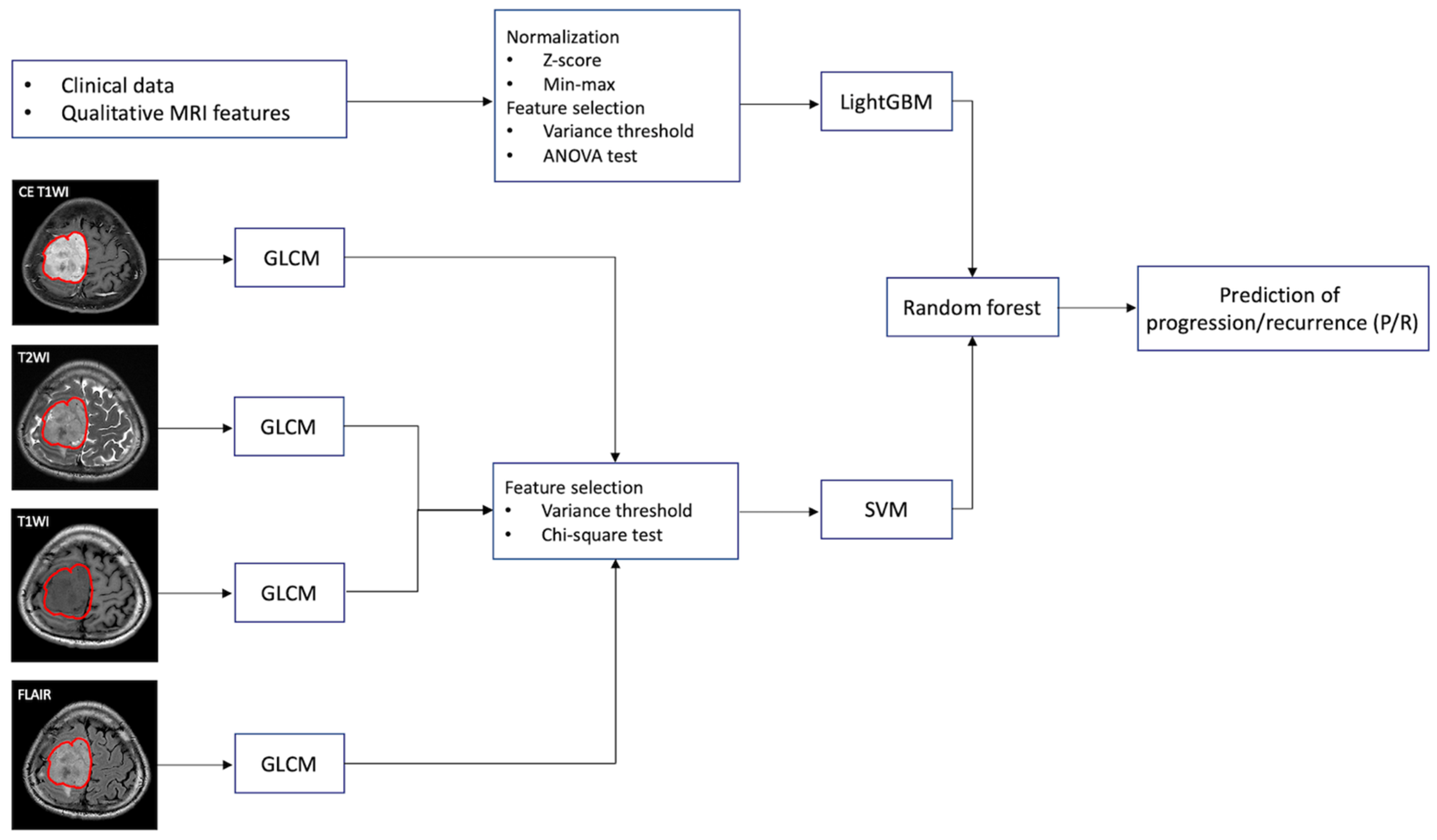
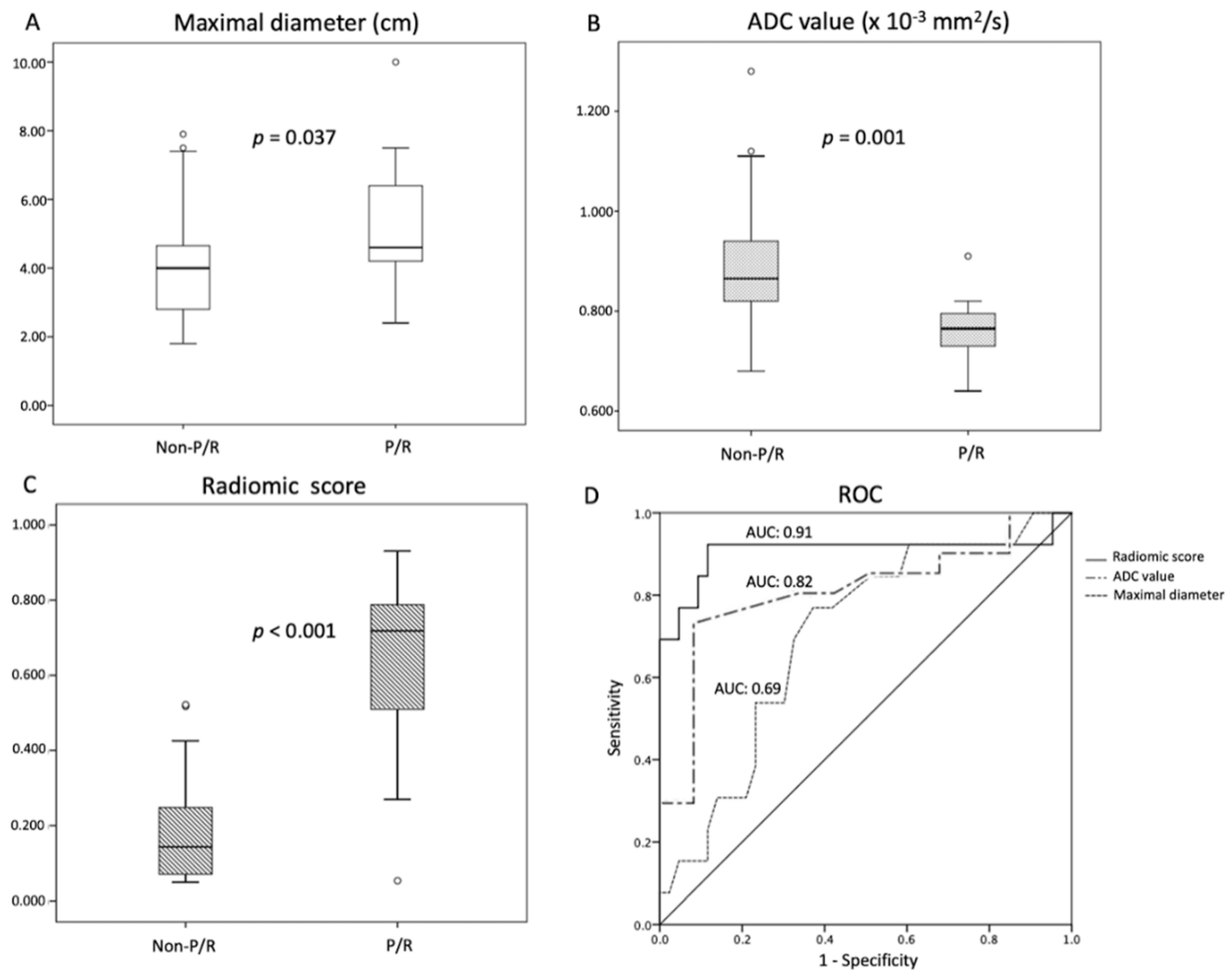
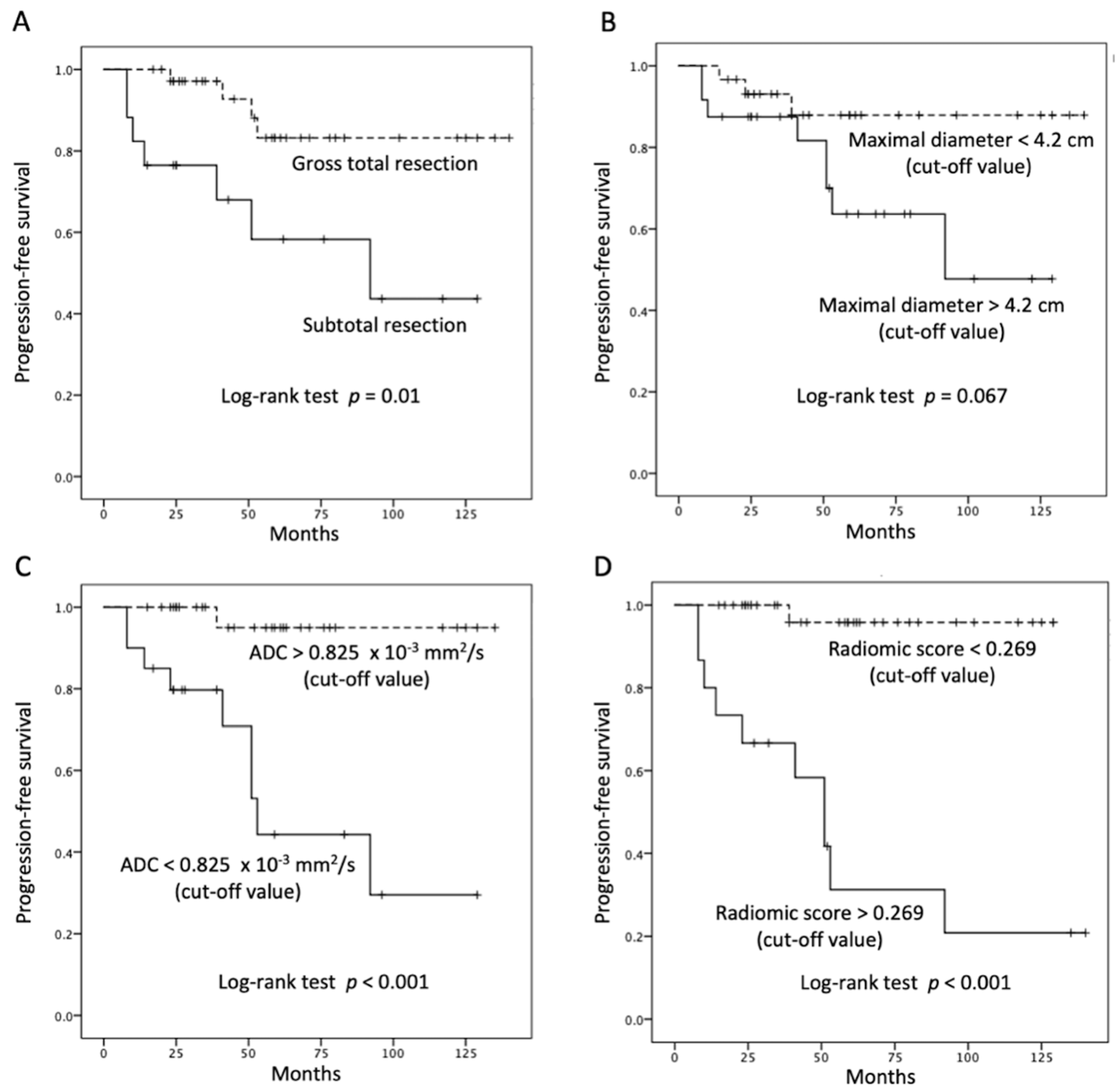
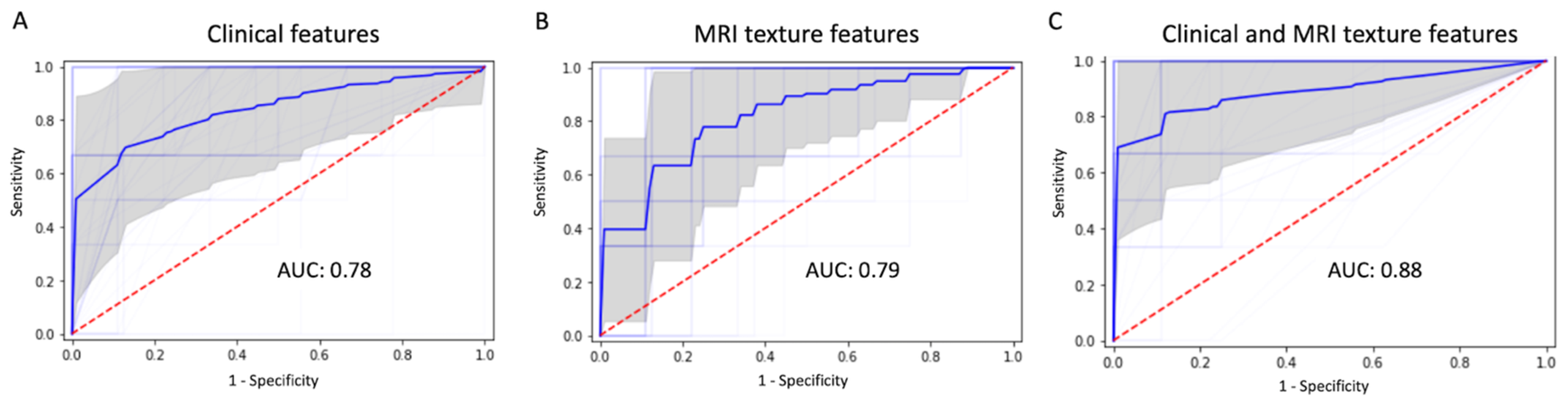
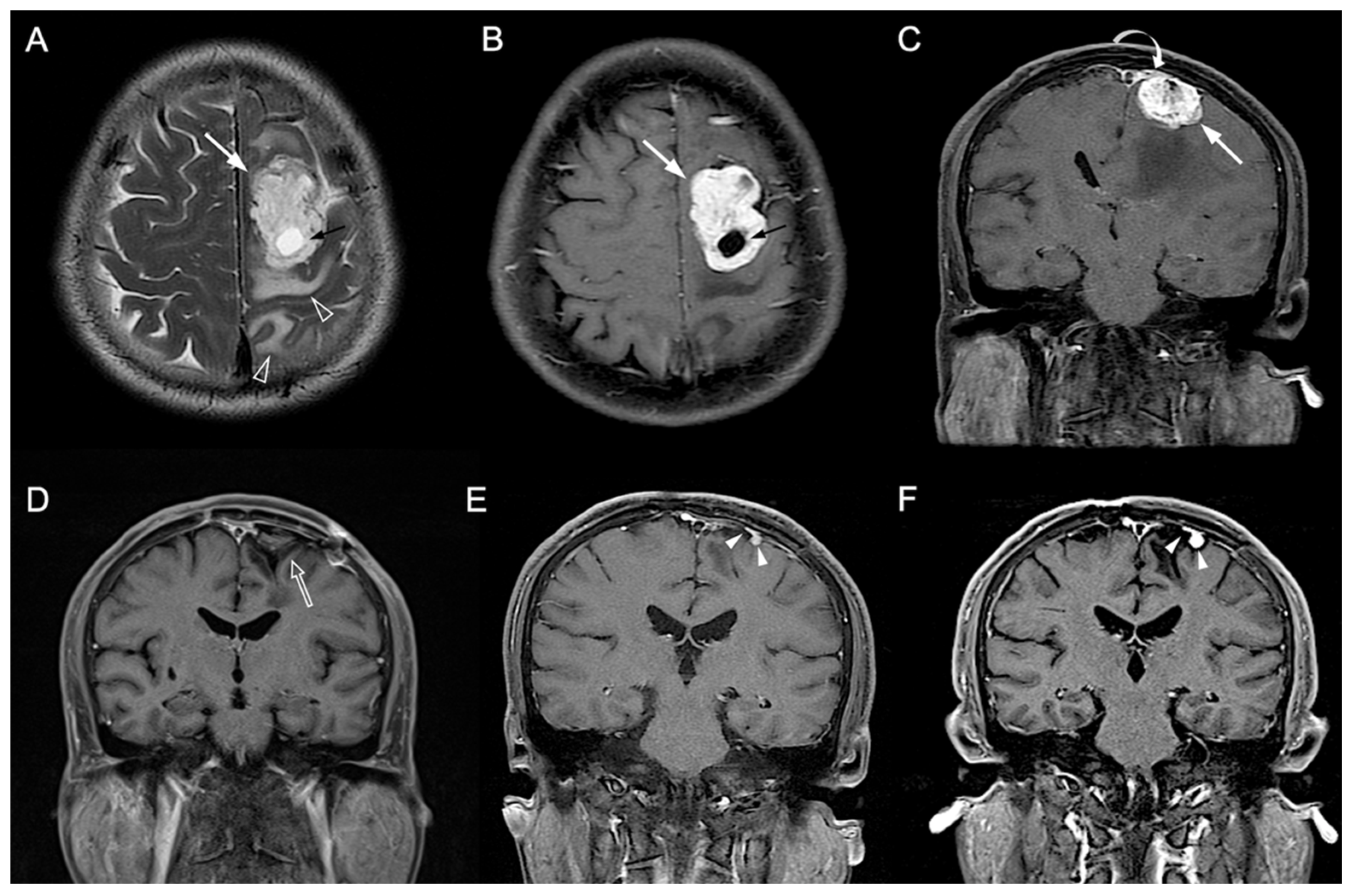
A subset of parasagittal and parafalcine (PSPF) meningiomas may show early progression/recurrence (P/R) after surgery. This study applied machine learning using combined clinical and texture features to predict P/R in PSPF meningiomas. A total of 57 consecutive patients with pathologically confirmed (WHO grade I) PSPF meningiomas treated in our institution between January 2007 to January 2019 were included. All included patients had complete preoperative magnetic resonance imaging (MRI) and more than one year MRI follow-up after surgery. Preoperative contrast-enhanced T1WI, T2WI, T1WI, and T2 fluid-attenuated inversion recovery (FLAIR) were analyzed retrospectively. The most significant 12 clinical features (extracted by LightGBM) and 73 texture features (extracted by SVM) were combined in random forest to predict P/R, and personalized radiomic scores were calculated. Thirteen patients (13/57, 22.8%) had P/R after surgery. The radiomic score was a high-risk factor for P/R with hazard ratio of 15.73 (p < 0.05) in multivariate hazards analysis. In receiver operating characteristic (ROC) analysis, an AUC of 0.91 with cut-off value of 0.269 was observed in radiomic scores for predicting P/R. Subtotal resection, low apparent diffusion coefficient (ADC) values, and high radiomic scores were associated with shorter progression-free survival (p < 0.05). Among different data input, machine learning using combined clinical and texture features showed the best predictive performance, with an accuracy of 91%, precision of 85%, and AUC of 0.88. Machine learning using combined clinical and texture features may have the potential to predict recurrence in PSPF meningiomas.
Keywords: machine learning; meningioma; parasagittal and parafalcine; recurrence; MRI; texture machine learning; meningioma; parasagittal and parafalcine; recurrence; MRI; texture