
Article

Non-Syndromic Dentinogenesis Imperfecta Caused by Mild Mutations in COL1A2
1
Department of Pediatric Dentistry, School of Dentistry & DRI, Seoul National University, Seoul 03080, Korea
2
Department of Molecular Genetics, School of Dentistry & DRI, Seoul National University, Seoul 03080, Korea
3
Seoul Chungdam Children’s Dental Center, Seoul 06072, Korea
4
Department of Cell and Developmental Biology, School of Dentistry & DRI, Seoul National University, Seoul 03080, Korea
*
Author to whom correspondence should be addressed.
J. Pers. Med. 2021, 11(6), 526; https://doi.org/10.3390/jpm11060526
Submission received: 18 May 2021 / Revised: 7 June 2021 / Accepted: 8 June 2021 / Published: 8 June 2021
(This article belongs to the Special Issue Molecular Diagnosis and New Therapeutic Approach of Oral Diseases)

Abstract

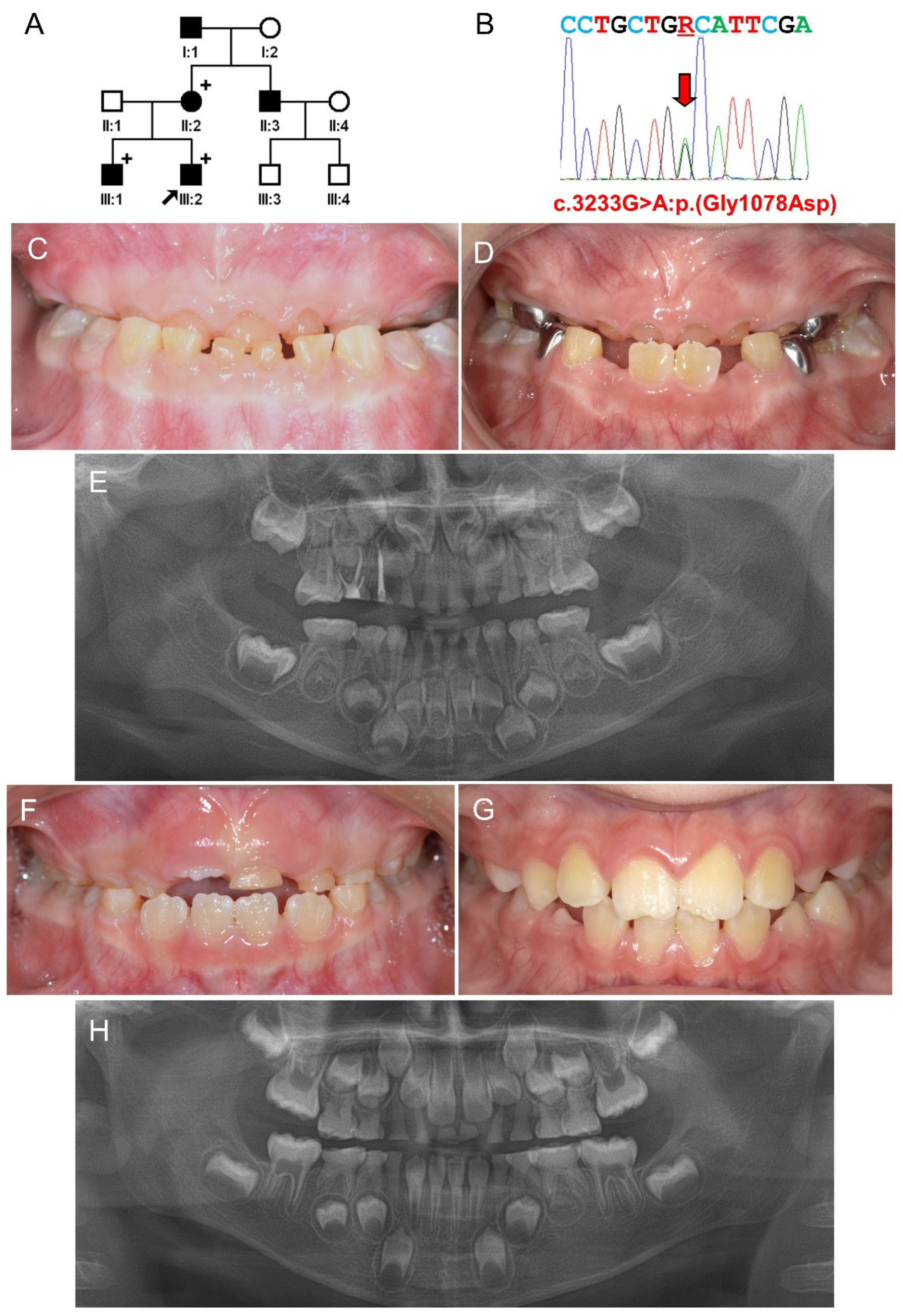
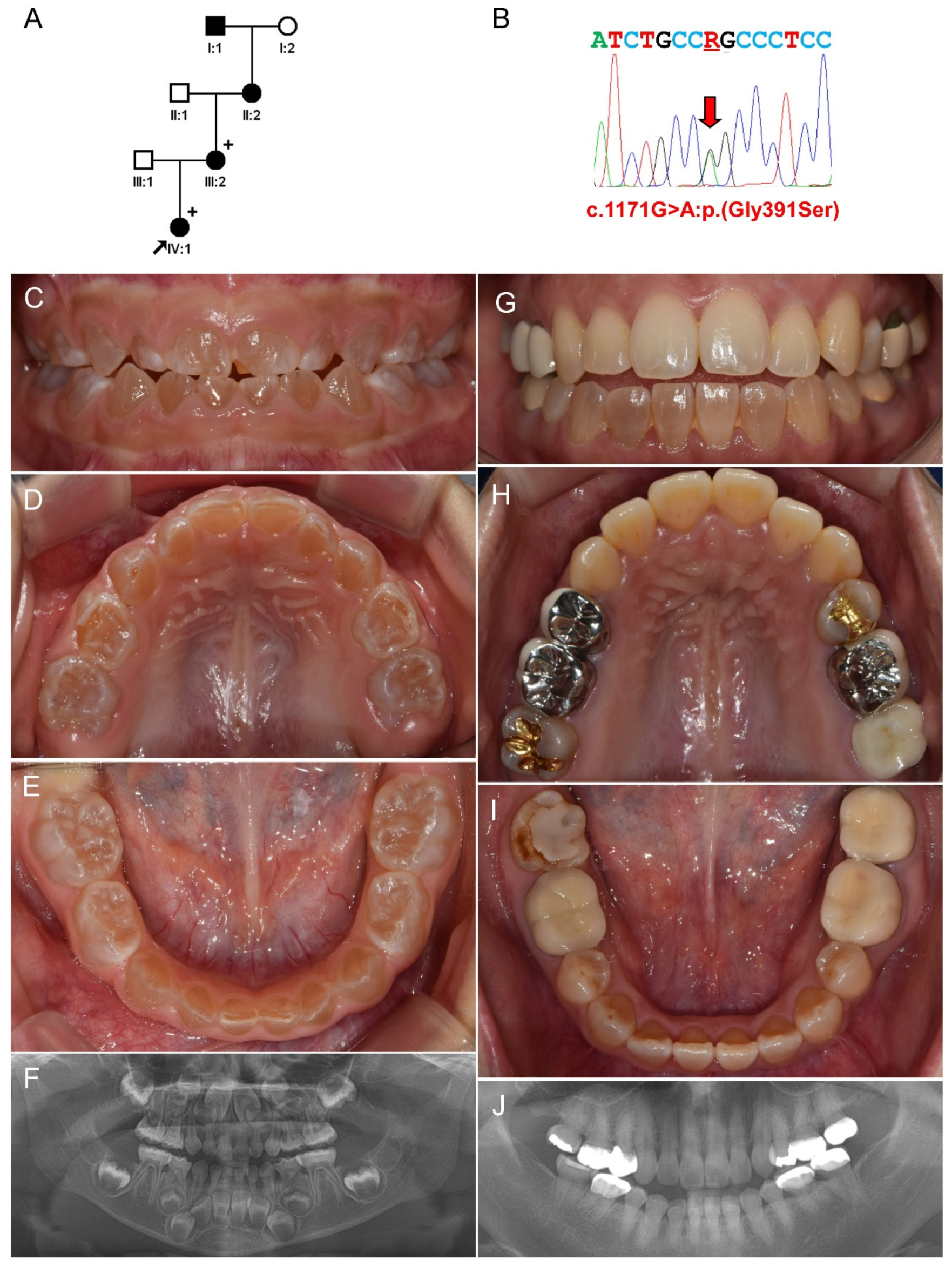
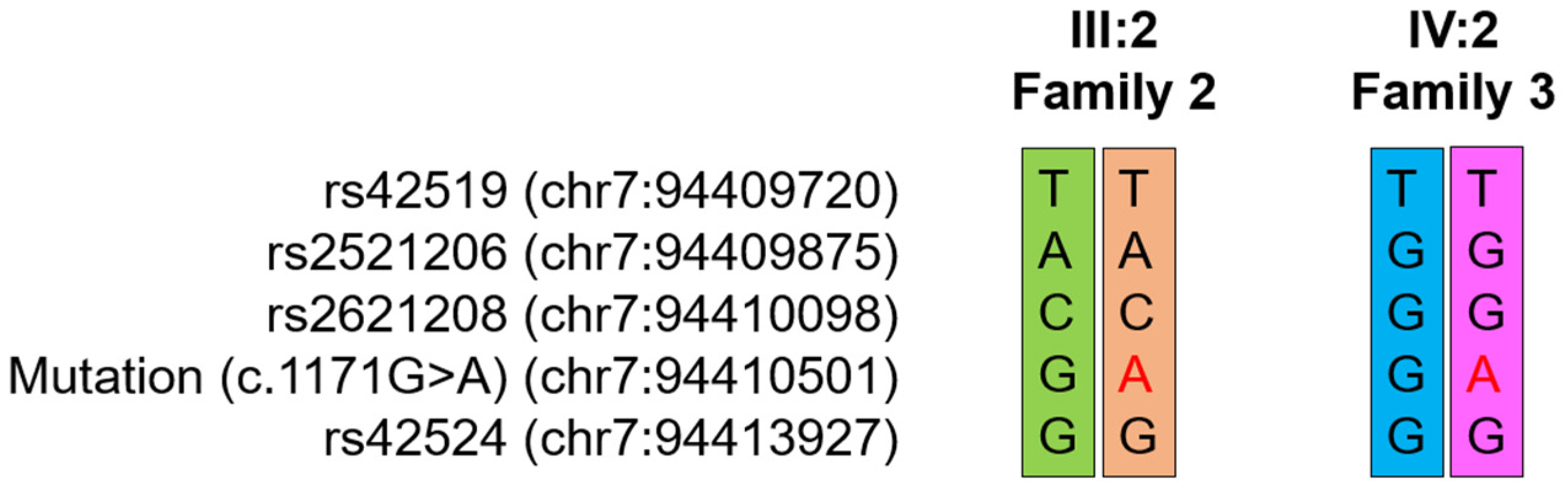
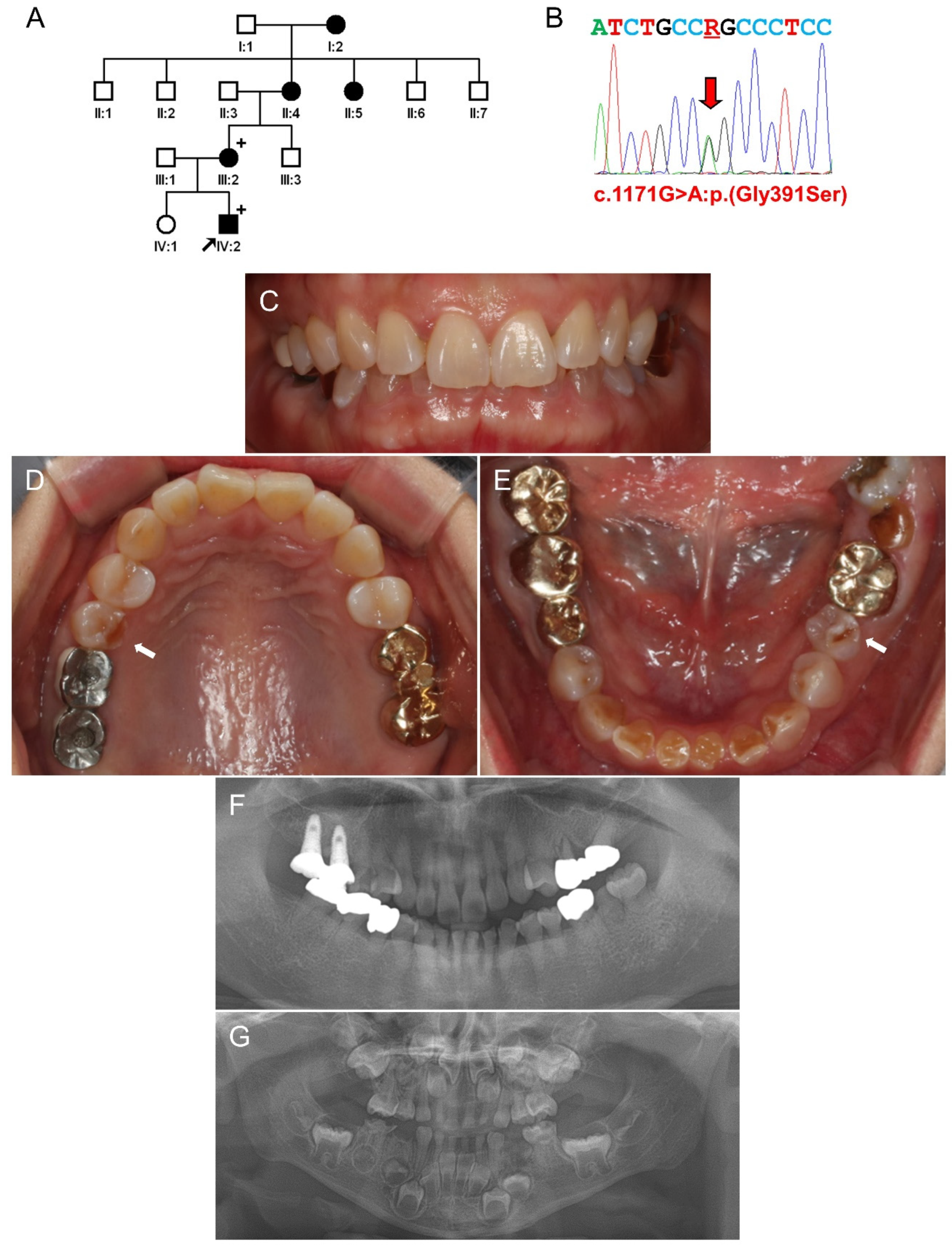
Hereditary dentin defects can be categorized as a syndromic form predominantly related to osteogenesis imperfecta (OI) or isolated forms without other non-oral phenotypes. Mutations in the gene encoding dentin sialophosphoprotein (DSPP) have been identified to cause dentinogenesis imperfecta (DGI) Types II and III and dentin dysplasia (DD) Type II. While DGI Type I is an OI-related syndromic phenotype caused mostly by monoallelic mutations in the genes encoding collagen type I alpha 1 chain (COL1A1) and collagen type I alpha 2 chain (COL1A2). In this study, we recruited families with non-syndromic dentin defects and performed candidate gene sequencing for DSPP exons and exon/intron boundaries. Three unrelated Korean families were further analyzed by whole-exome sequencing due to the lack of the DSPP mutation, and heterozygous COL1A2 mutations were identified: c.3233G>A, p.(Gly1078Asp) in Family 1 and c.1171G>A, p.(Gly391Ser) in Family 2 and 3. Haplotype analysis revealed different disease alleles in Families 2 and 3, suggesting a mutational hotspot. We suggest expanding the molecular genetic etiology to include COL1A2 for isolated dentin defects in addition to DSPP.
Keywords: hereditary; mutational hotspot; dentinogenesis imperfecta; isolated dentin defect; tooth; discoloration; COL1A2 hereditary; mutational hotspot; dentinogenesis imperfecta; isolated dentin defect; tooth; discoloration; COL1A2