Article

Differences in Oral Function, Masticatory Movement, and MRI-Based Structural Features of the Temporomandibular Joint Between the Deviated and Non-Deviated Sides in Patients with Facial Asymmetry

Department of Orthodontics, Tsurumi University School of Dental Medicine, Yokohama 230-8501, Japan
*
Author to whom correspondence should be addressed.
Diagnostics 2026, 16(9), 1274; https://doi.org/10.3390/diagnostics16091274

Submission received: 31 March 2026 / Revised: 16 April 2026 / Accepted: 21 April 2026 / Published: 23 April 2026
(This article belongs to the Special Issue Advances in Diagnosis and Management of Oral Disorders)

Abstract

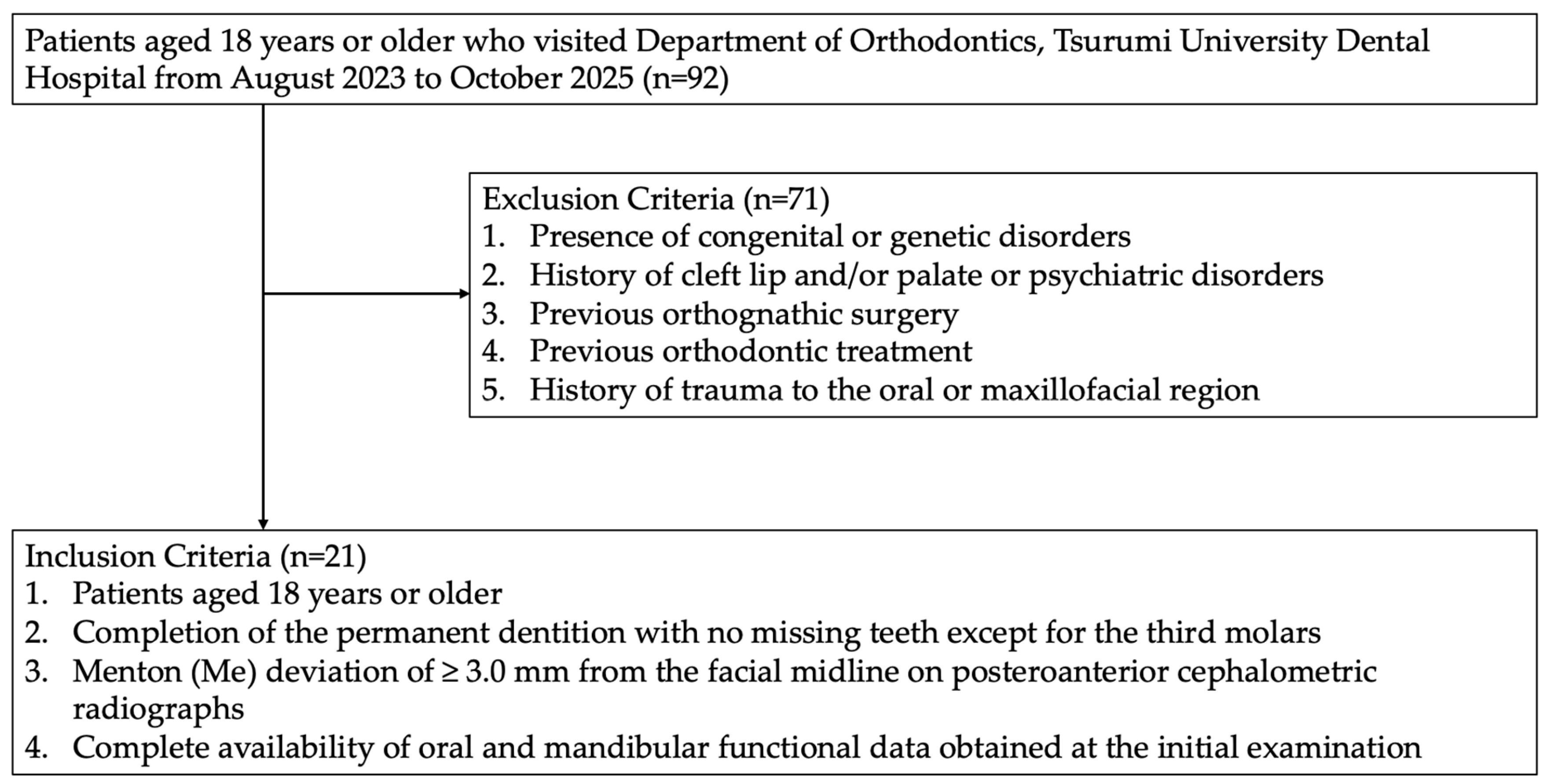
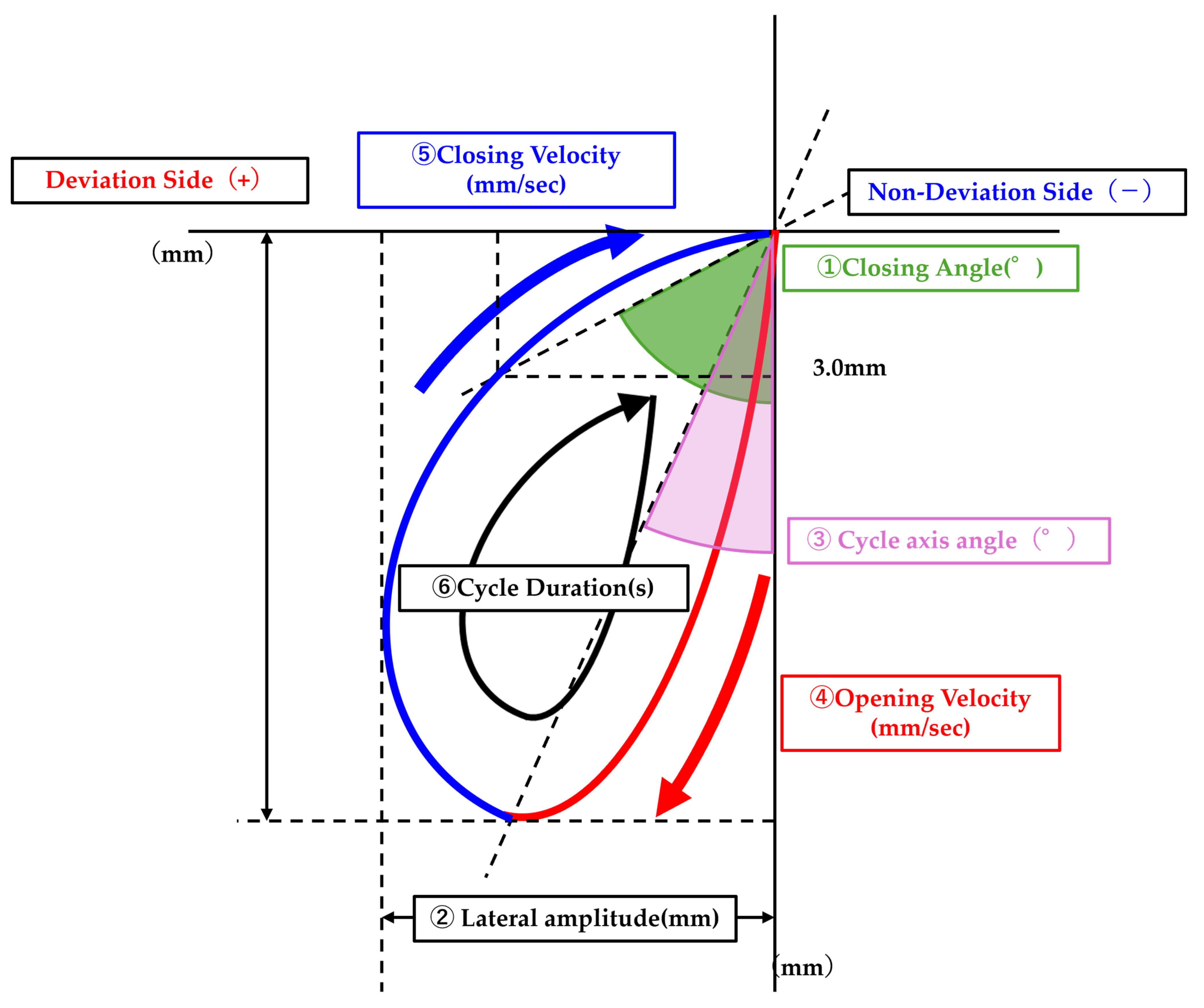
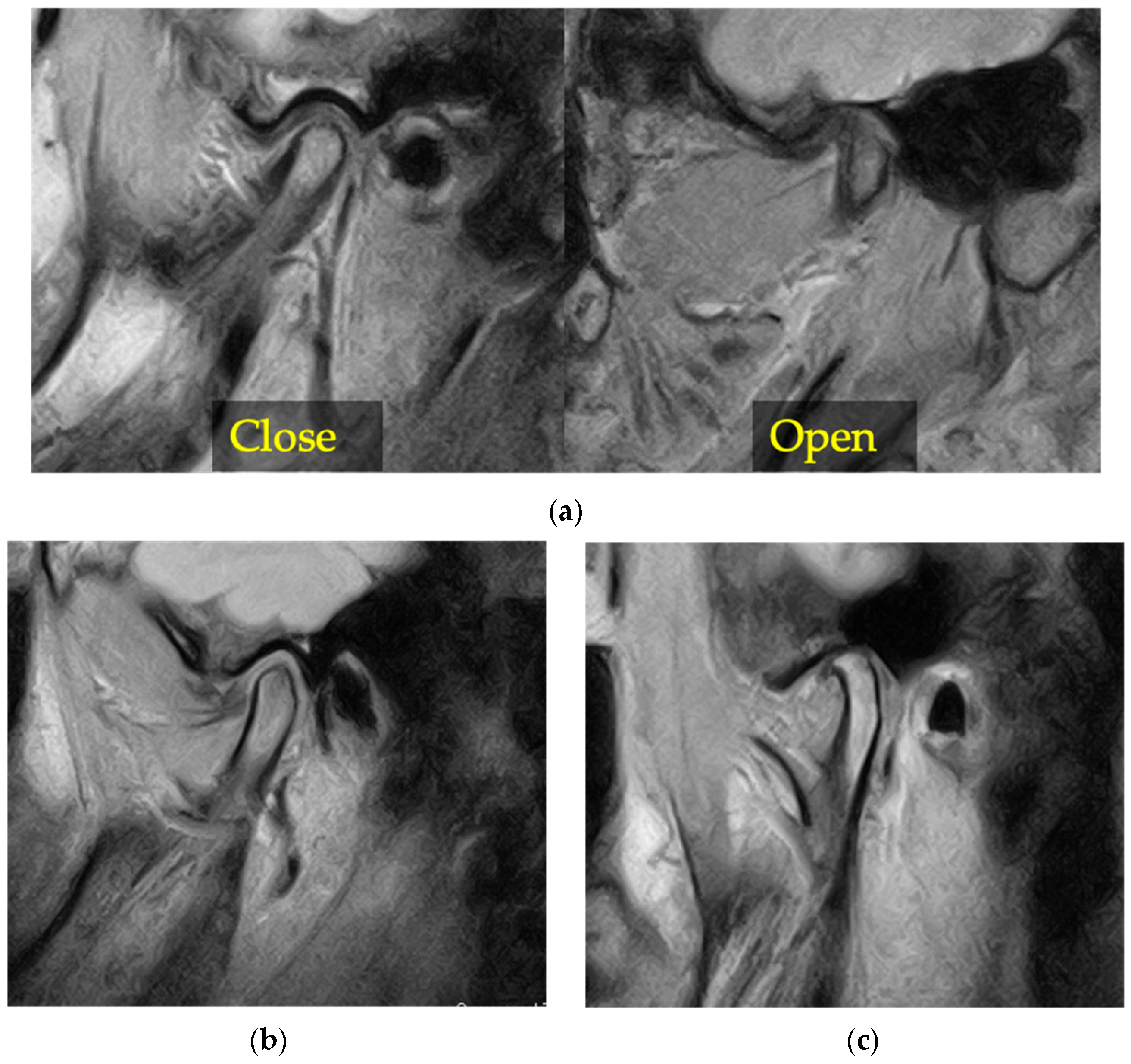
Background: Facial asymmetry in patients with dentofacial deformity is often associated with occlusal asymmetry, functional differences in mastication, and temporomandibular joint (TMJ) conditions. However, side-to-side differences in the stability of masticatory movement and their relationship with oral function have not been fully clarified. Therefore, this study aimed to investigate differences in masticatory movement, oral function, and the prevalence of MRI-based structural features of the temporomandibular joint between the deviated and non-deviated sides in patients with facial asymmetry. Methods: Twenty-one patients with dentofacial deformity and facial asymmetry were included in this study. Oral function was evaluated by measuring occlusal contact area, occlusal force, and masticatory performance. Masticatory movement was recorded using a mandibular movement recording system, and parameters related to the masticatory path and chewing speed were calculated. The stability of masticatory movement was evaluated using the variance of these parameters across chewing cycles. Temporomandibular joint structural features were assessed using CT and MRI. Comparisons between the deviated and non-deviated sides were performed using paired statistical tests. Results: Occlusal contact area and occlusal force were significantly greater on the deviated side than on the non-deviated side (p = 0.001 and p = 0.006, respectively), whereas no significant difference was observed in masticatory performance (p = 0.211). The deviated side showed a smaller closing angle (p = 0.005) and maximum lateral amplitude (p = 0.019), indicating a more vertical chewing pattern. The stability of masticatory movement, evaluated using the variance of masticatory path and velocity parameters, was significantly greater on the deviated side (e.g., variance of cycle axis angle, p = 0.002; variance of maximum closing velocity, p = 0.006). In addition, the prevalence of imaging-based structural features of the temporomandibular joint was significantly higher on the deviated side (p = 0.016). Conclusions: Patients with dentofacial deformity and facial asymmetry were associated with functional asymmetry between the deviated and non-deviated sides. The deviated side showed greater occlusal contact area, occlusal force, and stability of masticatory movement. These findings suggest that the deviated side may be functionally favorable for mastication and may be related to a tendency toward preferential chewing behavior. However, because the habitual chewing side was not directly evaluated in the present study, this interpretation should be considered cautiously and viewed as hypothesis-generating.
Keywords: facial asymmetry; dentofacial deformity; masticatory movement; oral function; temporomandibular joint; magnetic resonance imaging; chewing side; functional assessment facial asymmetry; dentofacial deformity; masticatory movement; oral function; temporomandibular joint; magnetic resonance imaging; chewing side; functional assessment