Deep Learning Identifies Abnormal Promyelocytes in Peripheral Blood Based on Morphological Analysis

Abstract
1. Introduction
2. Materials and Methods
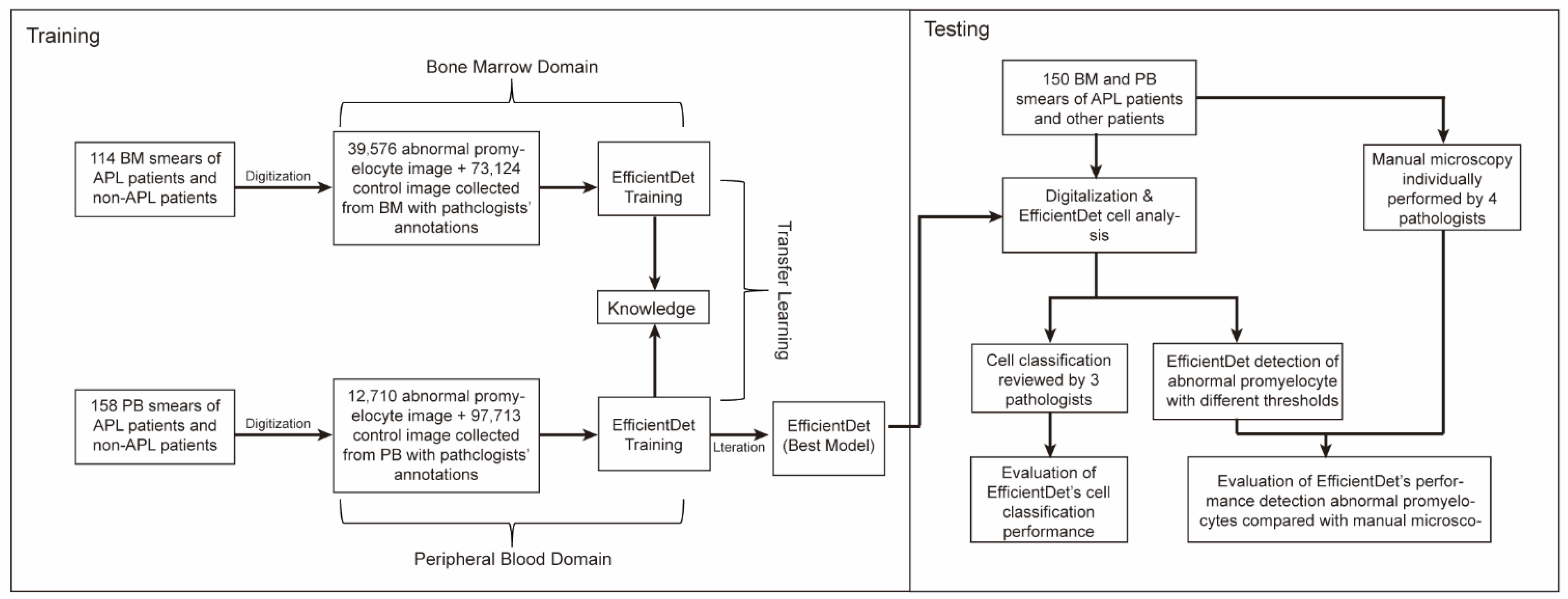
2.1. Patient and Sample Collection
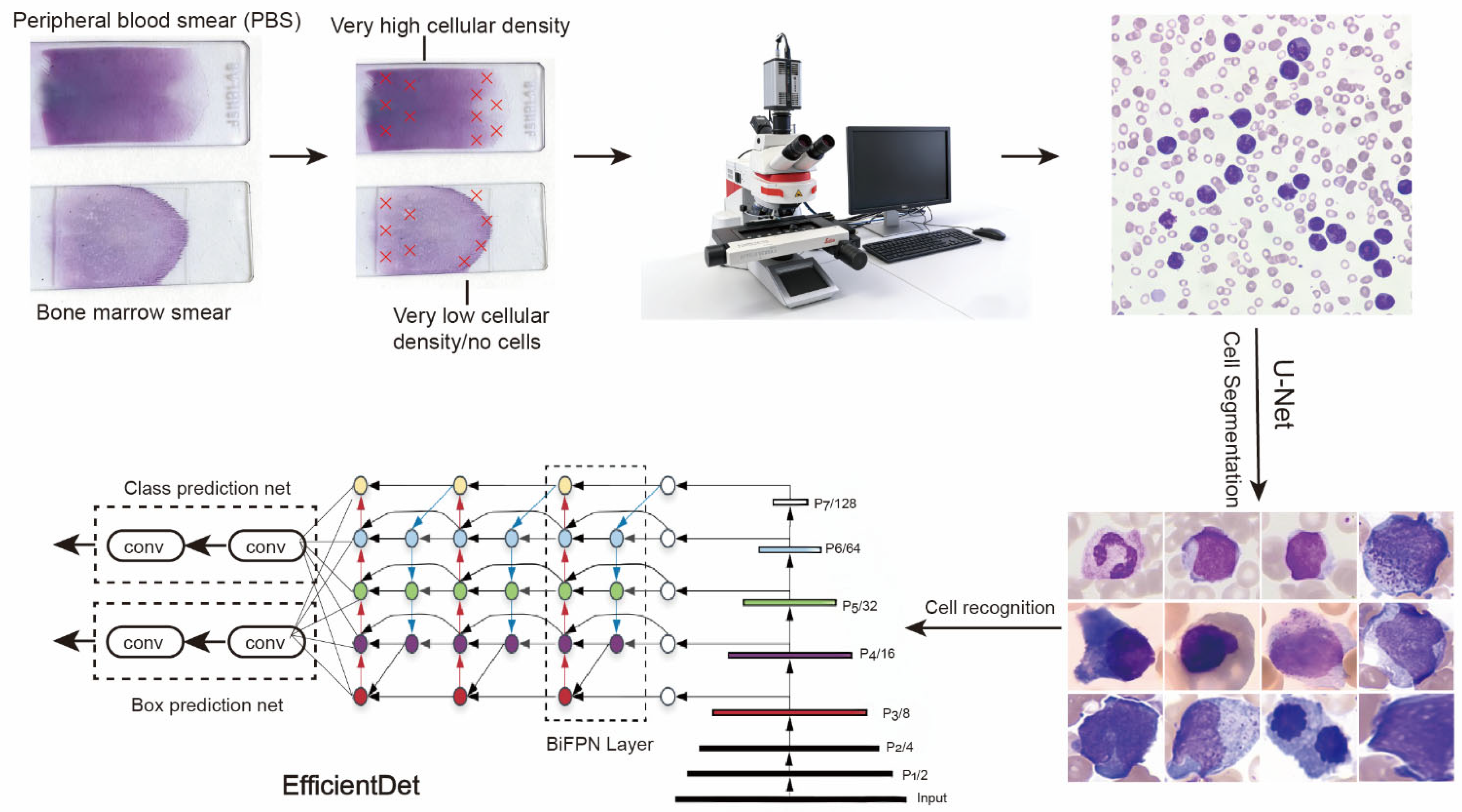
2.2. Digitization and Data Preparation
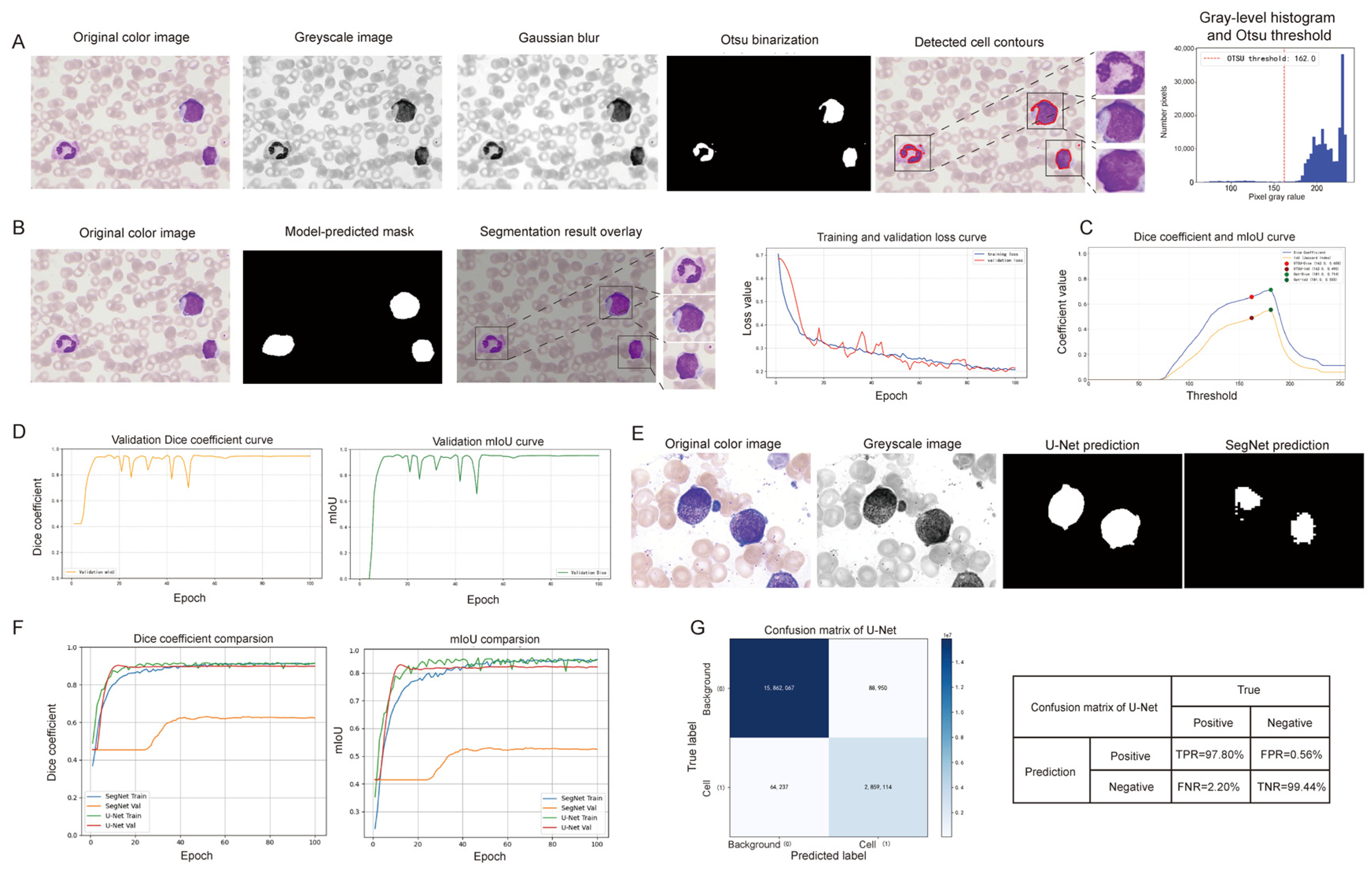
2.3. Image Segmentation and Recognition Model
2.4. Model Training and Implementation Details
2.5. Using the Strategy of Transfer Learning
2.6. Gradient-Weighted Class Activation Mapping (Grad-CAM)
2.7. Performance Evaluation
2.8. Statistical and Data Analysis
3. Results
3.1. Pretreatment and Identification of PBS and Bone Marrow Smear
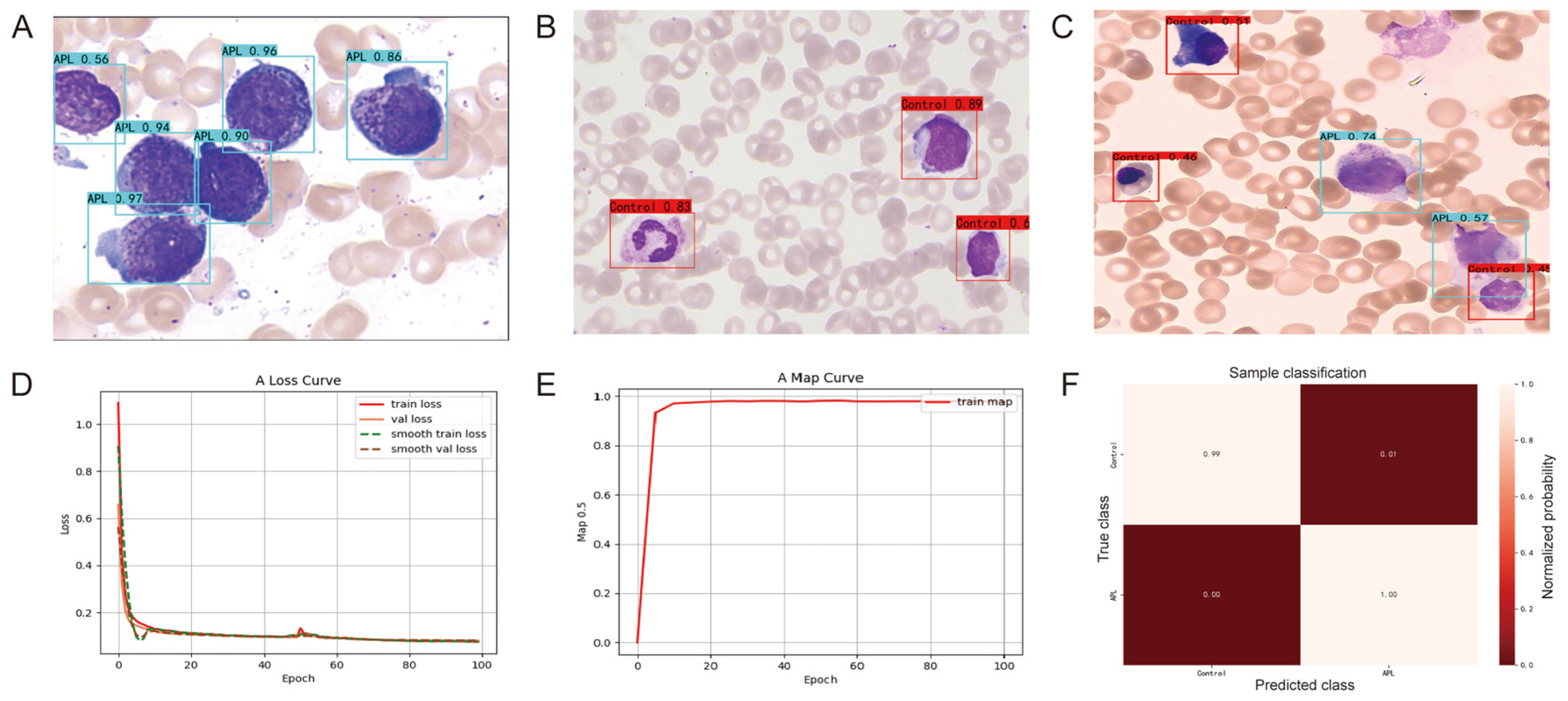
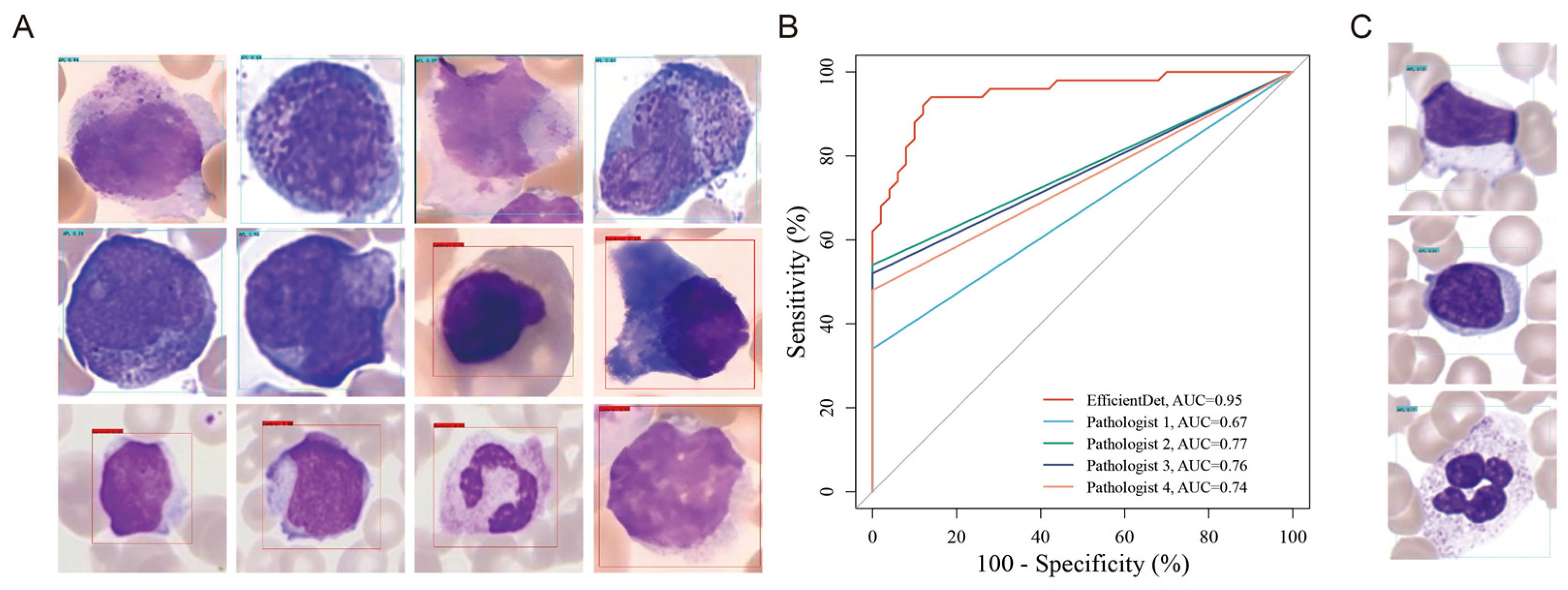
3.2. Identification of Control White Blood Cells and Abnormal Promyelocytes in Peripheral Blood
3.3. Evaluation of Segmentation Performance of U-Net Segmentation Model
3.4. Single-Cell Image Recognition and Assessment of Pathologists
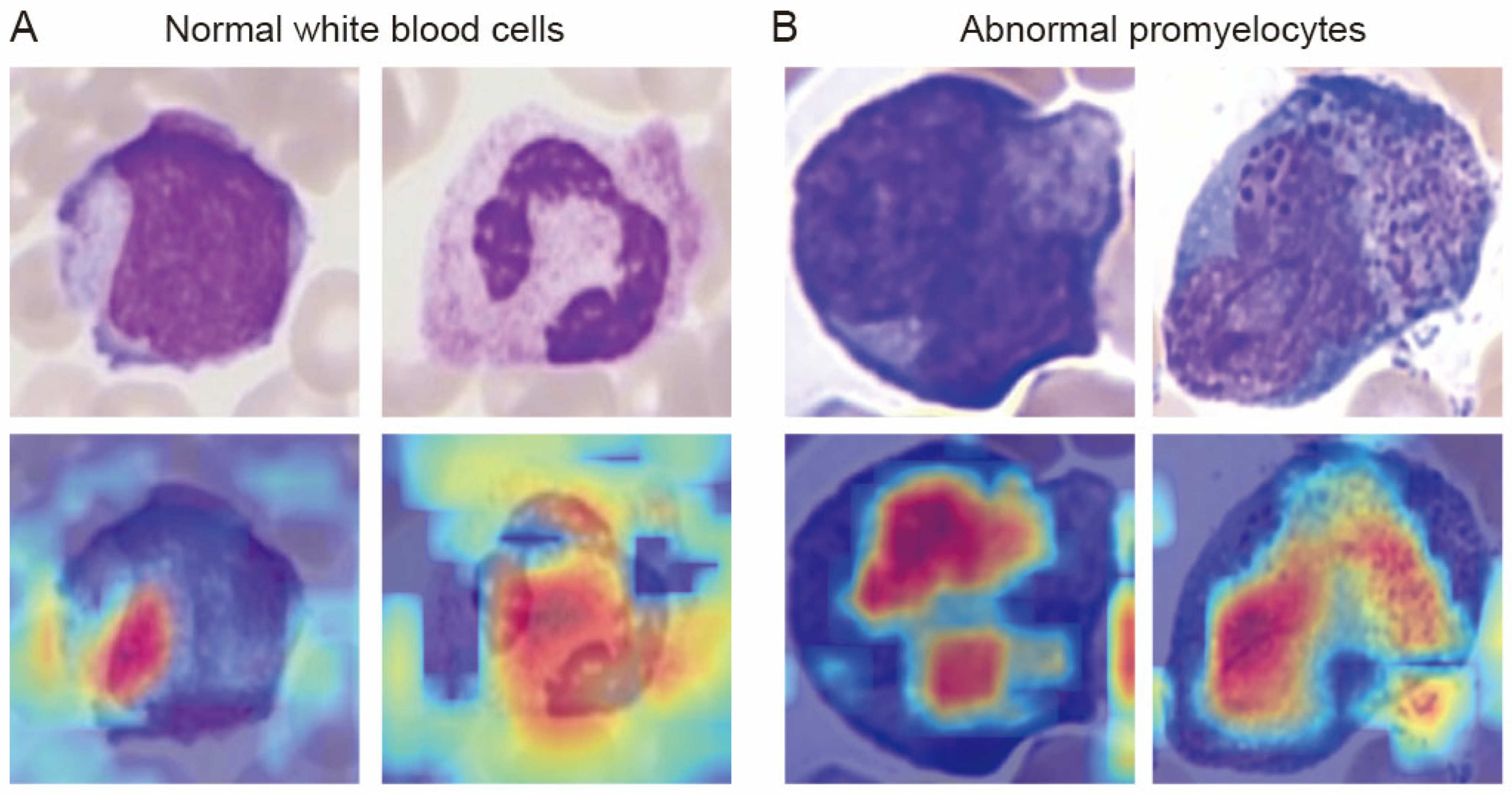
3.5. Grad-CAM Heatmaps of EfficientDet
4. Discussion
Limitations of the Study
Supplementary Materials
Author Contributions
Funding
Institutional Review Board Statement
Informed Consent Statement
Data Availability Statement
Conflicts of Interest
References
- Winkler, C. Acute Promyelocytic Leukemia. N. Engl. J. Med. 2024, 390, e42. [Google Scholar] [CrossRef]
- Yin, W.; Yan, X.; Cai, J.; Han, B.; Yin, P.; Lu, G.; Cheng, W.; Zhang, J.; Wu, H.; Ren, J.; et al. Incidence, mortality, and survival associated with acute leukaemia subtypes by age group in China: A population-based cancer registry analysis and cohort study. Lancet Haematol. 2025, 12, e808–e822. [Google Scholar] [CrossRef]
- Miura, Y.; Suyama, K.; Takano, T. Treatment of acute promyelocytic leukemia. N. Engl. J. Med. 2013, 369, 1471–1472. [Google Scholar]
- Lehmann, S.; Ravn, A.; Carlsson, L.; Antunovic, P.; Deneberg, S.; Möllgård, L.; Derolf, A.R.; Stockelberg, D.; Tidefelt, U.; Wahlin, A.; et al. Continuing high early death rate in acute promyelocytic leukemia: A population- based report from the Swedish Adult Acute Leukemia Registry. Leukemia 2011, 25, 1128–1134. [Google Scholar] [CrossRef]
- Österroos, A.; Maia, T.; Eriksson, A.; Jädersten, M.; Lazarevic, V.; Wennström, L.; Antunovic, P.; Cammenga, J.; Deneberg, S.; Lorenz, F.; et al. A risk score based on real-world data to predict early death in acute promyelocytic leukemia. Haematologica 2022, 107, 1528–1537. [Google Scholar] [CrossRef] [PubMed]
- Li, W. The 5th Edition of the World Health Organization Classification of Hematolymphoid Tumors. In Leukemia [Internet]; Li, W., Ed.; Exon Publications: Brisbane, Australia, 2022; Volume 1. [Google Scholar]
- Sanz, M.A.; Fenaux, P.; Tallman, M.S.; Estey, E.H.; Löwenberg, B.; Naoe, T.; Lengfelder, E.; Döhner, H.; Burnett, A.K.; Chen, S.J.; et al. Management of acute promyelocytic leukemia: Updated recommendations from an expert panel of the European LeukemiaNet. Blood 2019, 133, 1630–1643. [Google Scholar] [CrossRef] [PubMed]
- Rowley, J.D.; Golomb, H.M.; Dougherty, C. 15/17 translocation, a consistent chromosomal change in acute promyelocytic leukaemia. Lancet 1977, 1, 549–550. [Google Scholar] [CrossRef]
- Castoldi, G.L.; Liso, V.; Specchia, G.; Tomasi, P. Acute promyelocytic leukemia: Morphological aspects. Leukemia 1994, 8, S27–S32. [Google Scholar] [PubMed]
- Obeagu, E.I. Revolutionizing hematological disorder diagnosis: Unraveling the role of artificial intelligence. Ann. Med. Surg. 2025, 87, 3445–3457. [Google Scholar] [CrossRef]
- Pozdnyakova, O. Hematopathology Practice in the Digital Era: What has Changed? Int. J. Lab. Hematol. 2025. [Google Scholar] [CrossRef]
- LeCun, Y.; Bengio, Y.; Hinton, G. Deep learning. Nature 2015, 521, 436–444. [Google Scholar] [CrossRef]
- Zhang, Z.; Chen, P.; Shi, X.; Yang, L. Text-Guided Neural Network Training for Image Recognition in Natural Scenes and Medicine. IEEE Trans. Pattern Anal. Mach. Intell. 2021, 43, 1733–1745. [Google Scholar] [CrossRef]
- Wang, Q.; Bi, S.; Sun, M.; Wang, Y.; Wang, D.; Yang, S. Deep learning approach to peripheral leukocyte recognition. PLoS ONE 2019, 14, e0218808. [Google Scholar] [CrossRef]
- Horiuchi, Y.; Ravzanaadii, M.; Bai, J.; Matsuzaki, A.; Kaniyu, K.; Ando, J.; Ando, M.; Nojiri, S.; Iwasaki, Y.; Konishi, A.; et al. Application of Convolutional Neural Network Image Analysis and Machine Learning to Basic Blood Tests for Intelligent Diagnostic Assistance. Int. J. Lab. Hematol. 2025, 48, 26–38. [Google Scholar] [CrossRef] [PubMed]
- Qin, F.; Gao, N.; Peng, Y.; Wu, Z.; Shen, S.; Grudtsin, A. Fine-grained leukocyte classification with deep residual learning for microscopic images. Comput. Methods Programs Biomed. 2018, 162, 243–252. [Google Scholar] [CrossRef]
- Matek, C.; Krappe, S.; Münzenmayer, C.; Haferlach, T.; Marr, C. Highly accurate differentiation of bone marrow cell morphologies using deep neural networks on a large image data set. Blood 2021, 138, 1917–1927. [Google Scholar] [CrossRef] [PubMed]
- Kimura, K.; Tabe, Y.; Ai, T.; Takehara, I.; Fukuda, H.; Takahashi, H.; Naito, T.; Komatsu, N.; Uchihashi, K.; Ohsaka, A. A novel automated image analysis system using deep convolutional neural networks can assist to differentiate MDS and AA. Sci. Rep. 2019, 9, 13385. [Google Scholar] [CrossRef] [PubMed]
- Sahasrabudhe, M.; Sujobert, P.; Zacharaki, E.I.; Maurin, E.; Grange, B.; Jallades, L.; Paragios, N.; Vakalopoulou, M. Deep Multi-Instance Learning Using Multi-Modal Data for Diagnosis of Lymphocytosis. IEEE J. Biomed. Health Inform. 2021, 25, 2125–2136. [Google Scholar] [CrossRef] [PubMed]
- Selvaraju, R.R.; Das, A.; Vedantam, R.; Cogswell, M.; Parikh, D.; Batra, D. Grad-CAM: Visual Explanations from Deep Networks via Gradient-Based Localization. Int. J. Comput Vis. 2019, 128, 336–359. [Google Scholar] [CrossRef]
- de Thé, H.; Chen, Z. Acute promyelocytic leukaemia: Novel insights into the mechanisms of cure. Nat. Rev. Cancer 2010, 10, 775–783. [Google Scholar] [CrossRef]
- Koury, L.C.A.; Kim, H.T.; Undurraga, M.S.; Navarro-Cabrera, J.R.; Salinas, V.; Muxi, P.; Melo, R.A.M.; Glória, A.B.; Pagnano, K.; Nunes, E.C.; et al. Clinical networking results in continuous improvement of the outcome of patients with acute promyelocytic leukemia. Blood 2024, 144, 1257–1270. [Google Scholar] [CrossRef]
- San José-Enériz, E.; Gimenez-Camino, N.; Rabal, O.; Garate, L.; Miranda, E.; Gómez-Echarte, N.; García, F.; Charalampopoulou, S.; Sáez, E.; Vilas-Zornoza, A.; et al. Epigenetic-based differentiation therapy for Acute Myeloid Leukemia. Nat. Commun. 2024, 15, 5570. [Google Scholar] [CrossRef] [PubMed]
- Li, D.; DeSouza, N.; Nguyen, K.; Li, S. Leukaemia Stem Cells and Their Normal Stem Cell Counterparts Are Morphologically Distinguishable by Artificial Intelligence. J. Cell Mol. Med. 2025, 29, e70564. [Google Scholar] [CrossRef] [PubMed]
- Chen, H.; Liu, J.; Hua, C.; Feng, J.; Pang, B.; Cao, D.; Li, C. Accurate classification of white blood cells by coupling pre-trained ResNet and DenseNet with SCAM mechanism. BMC Bioinform. 2022, 23, 282. [Google Scholar] [CrossRef]
- Wang, Y.; Liu, H.; Wang, H.; Wu, Y.; Qiu, H.; Qiao, C.; Cao, L.; Zhang, J.; Li, J.; Fan, L.; et al. Enhancing morphological analysis of peripheral blood cells in chronic lymphocytic leukemia with an artificial intelligence-based tool. Leuk. Res. 2023, 130, 107310. [Google Scholar] [CrossRef]
- Lincz, L.F.; Makhija, K.; Attalla, K.; Scorgie, F.E.; Enjeti, A.K.; Prasad, R. A comparative evaluation of three consecutive artificial intelligence algorithms released by Techcyte for identification of blasts and white blood cells in abnormal peripheral blood films. Int. J. Lab. Hematol. 2024, 46, 92–98. [Google Scholar] [CrossRef]
- Makhija, K.; Lincz, L.F.; Attalla, K.; Scorgie, F.E.; Enjeti, A.K.; Prasad, R. White blood cell evaluation in haematological malignancies using a web-based digital microscopy platform. Int. J. Lab. Hematol. 2021, 43, 1379–1387. [Google Scholar] [CrossRef]
- Laboratory Diagnosis Group; Chinese Society of Hematology; Chinese Medical Association. Chinese expert consensus on the technical and clinical practice specifications of artificial intelligence assisted morphology examination of blood cells. Zhonghua Xue Ye Xue Za Zhi 2024, 45, 330–338. (In Chinese) [Google Scholar]
- Urakubo, H. A guide to CNN-based dense segmentation of neuronal EM images. Microscopy 2025, 74, 223–232. [Google Scholar] [CrossRef]
- Falk, T.; Mai, D.; Bensch, R.; Çiçek, Ö.; Abdulkadir, A.; Marrakchi, Y.; Böhm, A.; Deubner, J.; Jäckel, Z.; Seiwald, K.; et al. U-Net: Deep learning for cell counting, detection, and morphometry. Nat. Methods 2019, 16, 67–70. [Google Scholar] [CrossRef] [PubMed]
- Su, F.; Zhang, W.; Liu, Y.; Chen, S.; Lin, M.; Feng, M.; Yin, J.; Tan, L.; Shen, Y. The development and validation of pathological sections based U-Net deep learning segmentation model for the detection of esophageal mucosa and squamous cell neoplasm. J. Gastrointest. Oncol. 2023, 14, 1982–1992. [Google Scholar] [CrossRef]
- Punn, N.S.; Agarwal, S. Modality specific U-Net variants for biomedical image segmentation: A survey. Artif. Intell. Rev. 2022, 55, 5845–5889. [Google Scholar] [CrossRef] [PubMed]
- Deshpande, N.M.; Gite, S.; Pradhan, B.; Kotecha, K.; Alamri, A. Improved Otsu and Kapur approach for white blood cells segmentation based on LebTLBO optimization for the detection of Leukemia. Math. Biosci. Eng. 2022, 19, 1970–2001. [Google Scholar] [CrossRef] [PubMed]
- Karabağ, B.; Ayturan, K.; Hardalaç, F. Liver Tumor Segmentation with Deep Learning: A Comparative Analysis of CNN-, Transformer-, and YOLO-Based Models on the ATLAS MRI. Diagnostics 2026, 16, 649. [Google Scholar] [CrossRef] [PubMed]



| Parameter | Non-APL | APL |
|---|---|---|
| N | 300 | 122 |
| Age (year) | 60 ± 10 | 65 ± 10 |
| Male (%) | 47.3 | 46.8 |
| Female (%) | 52.7 | 53.2 |
| WBC (×109/L) | 30.1 ± 15.2 | 3.4 ± 1.5 |
| HGB (g/L) | 95.0 ± 15.2 | 100.2 ± 15.4 |
| PLT (×109/L) | 96.6 ± 30.3 | 35.0 ± 20.8 |
| PB abnormal promyelocytes | / | 40.2 ± 20.7 |
| BM abnormal promyelocytes | / | 60.9 ± 14.5 |
| Pathologists | Sensitivity | Specificity | Accuracy | F1 Score |
|---|---|---|---|---|
| Pathologist 1 | 0.4532 | 1.0000 | 0.9563 | 0.6237 |
| Pathologist 2 | 0.5267 | 1.0000 | 0.9673 | 0.6900 |
| Pathologist 3 | 0.5087 | 0.9956 | 0.9245 | 0.6630 |
| Pathologist 4 | 0.4853 | 0.9985 | 0.9468 | 0.6476 |
| Recognition Model EfficientDet | 0.9684 | 0.8506 | 0.9589 | 0.9775 |
Disclaimer/Publisher’s Note: The statements, opinions and data contained in all publications are solely those of the individual author(s) and contributor(s) and not of MDPI and/or the editor(s). MDPI and/or the editor(s) disclaim responsibility for any injury to people or property resulting from any ideas, methods, instructions or products referred to in the content. |
© 2026 by the authors. Licensee MDPI, Basel, Switzerland. This article is an open access article distributed under the terms and conditions of the Creative Commons Attribution (CC BY) license.
Share and Cite
Wang, G.; Xu, G.; An, Y.; Xu, M.; Li, Z.; Feng, Y.; Li, T.; Li, S.; Li, M.; Yang, Z.; et al. Deep Learning Identifies Abnormal Promyelocytes in Peripheral Blood Based on Morphological Analysis. Diagnostics 2026, 16, 1039. https://doi.org/10.3390/diagnostics16071039
Wang G, Xu G, An Y, Xu M, Li Z, Feng Y, Li T, Li S, Li M, Yang Z, et al. Deep Learning Identifies Abnormal Promyelocytes in Peripheral Blood Based on Morphological Analysis. Diagnostics. 2026; 16(7):1039. https://doi.org/10.3390/diagnostics16071039
Chicago/Turabian StyleWang, Gongchen, Guangyu Xu, Yao An, Minghui Xu, Zimeng Li, Yuanwei Feng, Tingting Li, Siqi Li, Mengxin Li, Zhijian Yang, and et al. 2026. "Deep Learning Identifies Abnormal Promyelocytes in Peripheral Blood Based on Morphological Analysis" Diagnostics 16, no. 7: 1039. https://doi.org/10.3390/diagnostics16071039
APA StyleWang, G., Xu, G., An, Y., Xu, M., Li, Z., Feng, Y., Li, T., Li, S., Li, M., Yang, Z., & Gao, C. (2026). Deep Learning Identifies Abnormal Promyelocytes in Peripheral Blood Based on Morphological Analysis. Diagnostics, 16(7), 1039. https://doi.org/10.3390/diagnostics16071039