Article

Assessment of Optimal Stent Implantation with the Use of Optical Coherence Tomography in Patients with Coronary Artery Disease

1
Department of Cardiology, University of Medicine and Pharmacy Carol Davila, 8, Eroii Sanitari, 050474 Bucharest, Romania
2
Department of Internal Medicine, General Hospital of Eastern Achaia—Unit of Aigio, Ano Voulomeno, 25100 Aigio, Greece
3
Emergency Clinical Hospital, 8, Calea Floreasca, 014461 Bucharest, Romania
*
Author to whom correspondence should be addressed.
Diagnostics 2026, 16(5), 813; https://doi.org/10.3390/diagnostics16050813

Submission received: 23 November 2025 / Revised: 15 February 2026 / Accepted: 27 February 2026 / Published: 9 March 2026
(This article belongs to the Special Issue Multimodal Cardiac Imaging: Diagnostic and Prognostic Advances)

Abstract

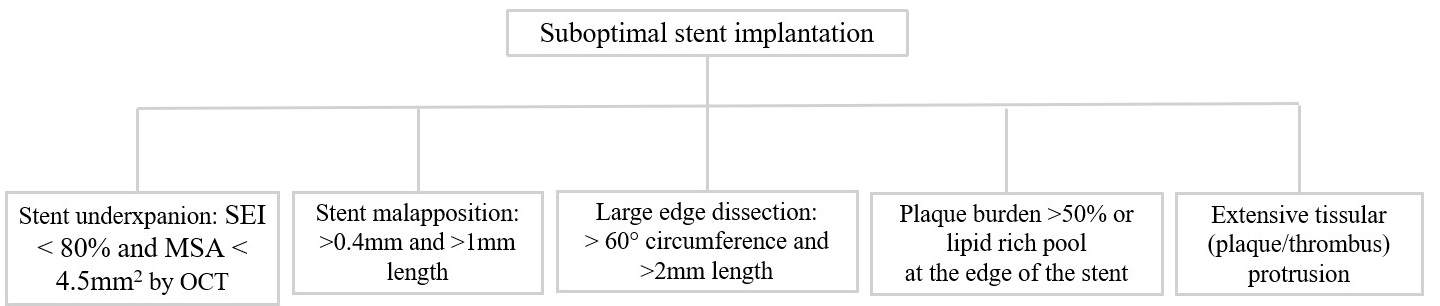
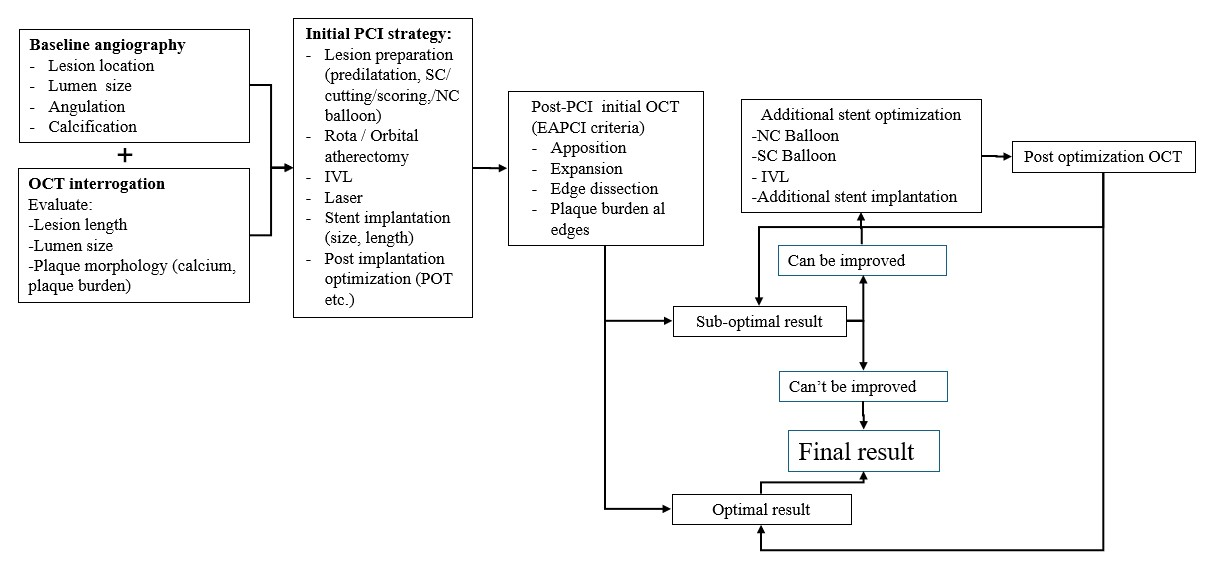
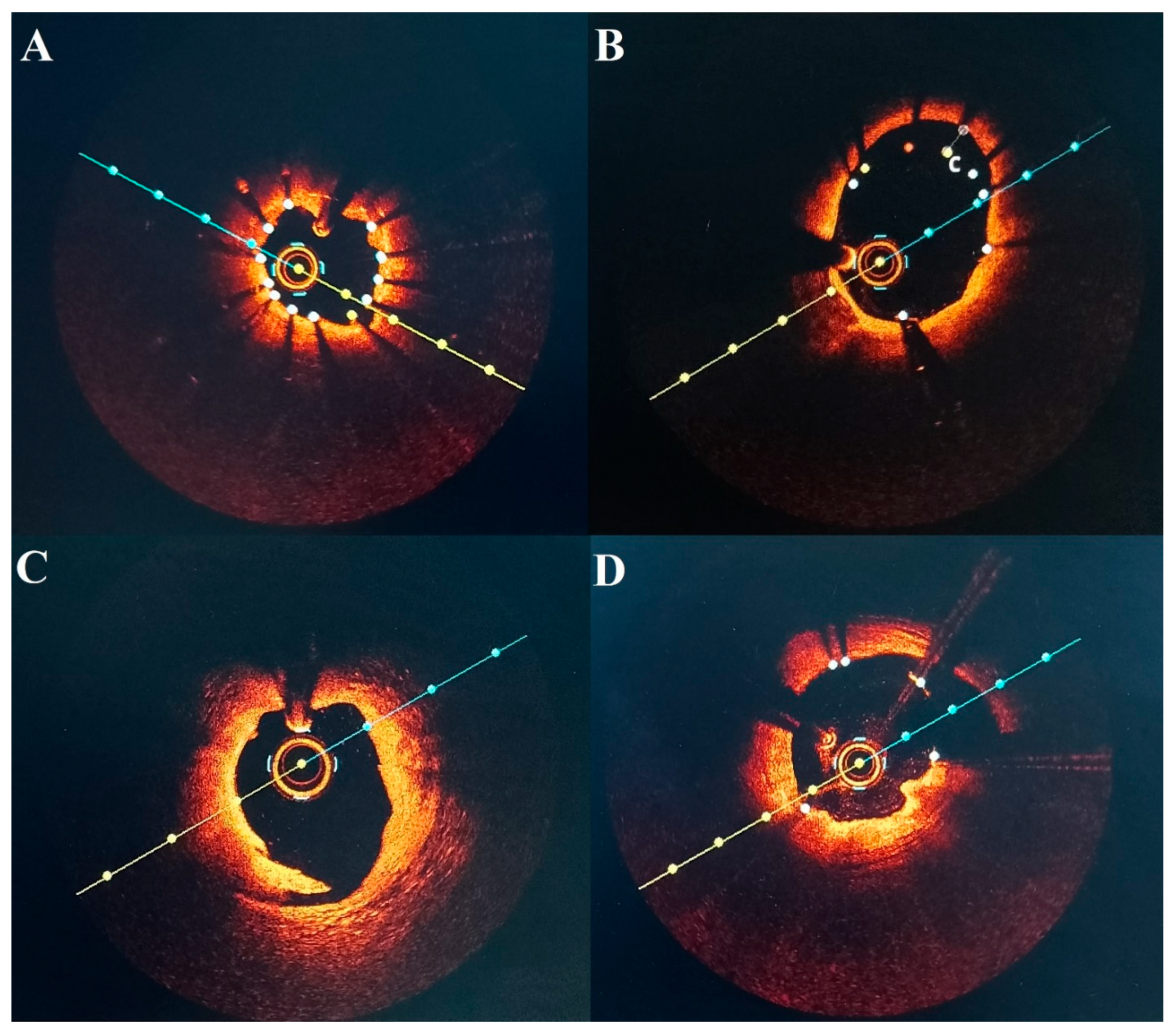
Background/Objective: Percutaneous coronary intervention (PCI) has a pivotal role in the treatment of coronary artery disease (CAD). Although PCI is generally guided only angiographically, advancements in intravascular imaging, particularly in optical coherence tomography (OCT), may offer significant advantages. OCT provides high-resolution cross-sectional images that allow for a more detailed assessment of lesion characteristics and procedural outcomes, which are not fully available with angiography. These findings are associated with or predictive of major adverse cardiovascular events (MACE), encouraging the use of OCT in PCI procedures. This study sought to characterize the role of post-PCI OCT imaging in PCI optimization in patients with CAD. Methods: This retrospective study includes patients who underwent OCT-guided PCI. A total of 64 patients with various types of CAD were included. The primary endpoint was the identification of suboptimal stent implantation as evaluated with OCT after stent implantation, and the secondary endpoint was the assessment of the possibility to achieve optimal stent implantation after further OCT-guided optimization based on standard definitions of optimal PCI. Results: In total, 73 vessels were studied, 42.46% (31) had a stent expansion index (SEI) of < 80%, 31.51% (23) had an SEI between 80–90%, and 26.03% (19) had an SEI of more than 90%. Minimum stent area (MSA) of more than 4.5 mm2 was found in 82.19% (60) of vessels, while 17.80% (13) had an MSA below the cut-off value. Suboptimal stent implantation was identified in 35.61% (26) of vessels, including underexpansion 9.58% (7), malapposition 15.06% (11), stent edge dissection 6.85% (5), plaque burden or lipid-rich pool in the stent edges 2.73% (2), and tissue protrusion 1.36% (1). Post-PCI OCT optimization resulted in significant improvements, with only 6.84% (5) of the vessels still not achieving all OCT criteria for optimal stent implantation. Conclusions: In patients with CAD, post-PCI OCT evaluation provided useful information, otherwise unavailable by angiography alone. We identified that 35.61% (26) of the targeted vessels, were suboptimally stented. OCT imaging was able to provide procedural and strategic guidance for optimization until the appropriate results, based on our criteria, were achieved in most of the lesions.
Keywords: optical coherence tomography (OCT); intravascular imaging; coronary artery disease (CAD); percutaneous coronary intervention; coronary artery disease optical coherence tomography (OCT); intravascular imaging; coronary artery disease (CAD); percutaneous coronary intervention; coronary artery disease