Abstract
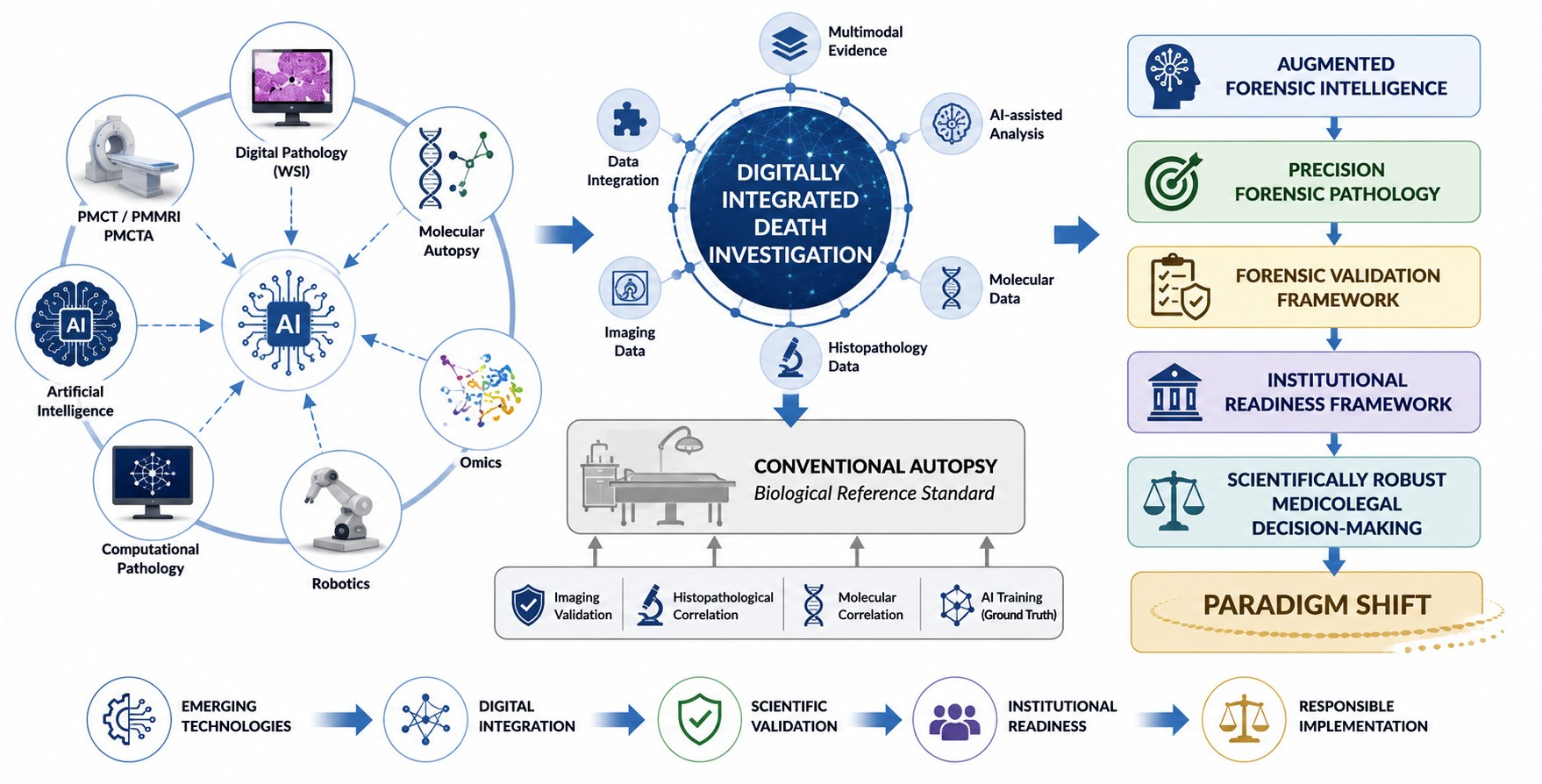
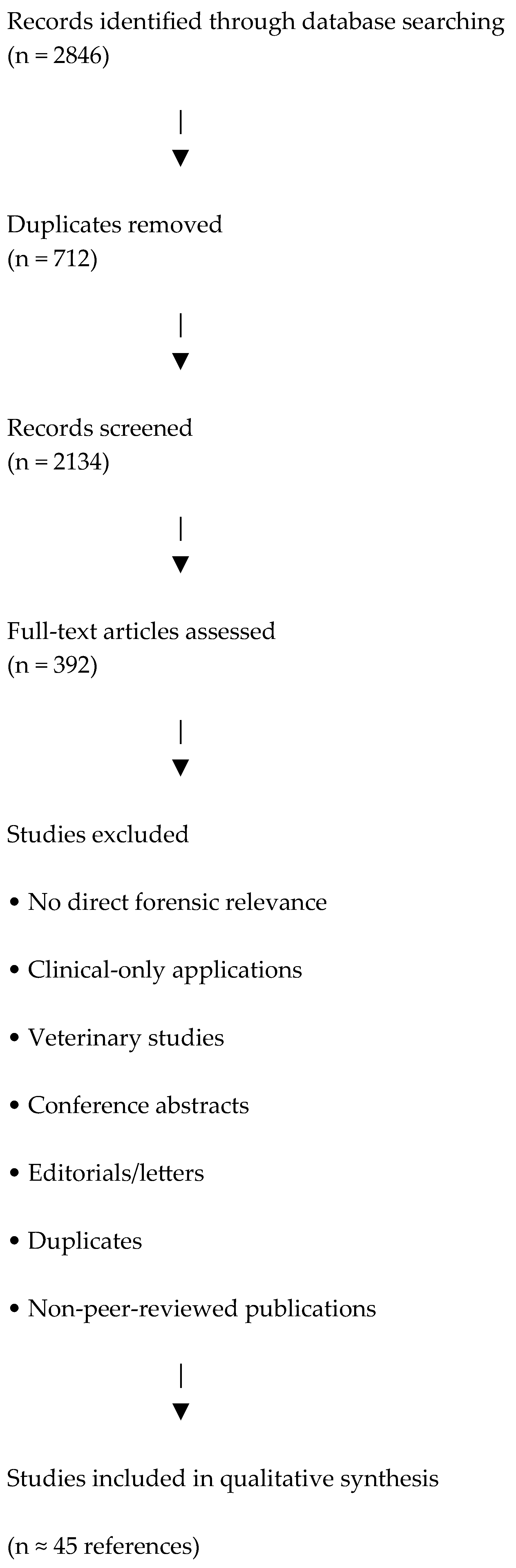
Background: Autopsy pathology remains the reference standard for determining the cause of death, reconstructing disease and injury mechanisms, ensuring diagnostic quality, and supporting medical education and forensic investigations. However, declining autopsy rates, workforce shortages, biosafety concerns, increasing diagnostic complexity, and the rapid evolution of digital technologies have stimulated the development of complementary investigative approaches. This review critically examines whether artificial intelligence (AI) and emerging technologies are driving a genuine paradigm shift toward digitally integrated death investigation. Methods: A structured narrative review informed by a systematic literature search was conducted in PubMed/MEDLINE, Embase, Scopus, and Web of Science, covering publications from January 2000 through June 2026. Evidence addressing postmortem imaging, virtopsy, digital pathology, computational pathology, molecular autopsy, robotics, artificial intelligence, machine learning, and emerging omics technologies was critically appraised. Owing to the methodological heterogeneity of the available literature, findings were synthesized qualitatively according to technological maturity, forensic applicability, validation status, and implementation readiness. Results: The reviewed evidence demonstrates substantial progress in postmortem computed tomography, postmortem CT angiography, postmortem magnetic resonance imaging, whole-slide imaging, molecular autopsy, robotic-assisted postmortem procedures, three-dimensional reconstruction, and AI-assisted forensic analysis. These technologies enhance trauma evaluation, vascular imaging, ballistic reconstruction, digital documentation, remote consultation, diagnostic reproducibility, and multimodal integration of forensic evidence. Nevertheless, the level of evidence varies considerably across technological domains. Postmortem imaging represents the most mature and extensively validated technology, whereas most AI applications remain supported predominantly by retrospective proof-of-concept studies with limited multicenter external validation. Current systematic evidence further indicates that AI should presently be regarded as an assistive technology that augments expert forensic interpretation rather than replacing conventional autopsy or autonomous medicolegal decision-making. Conclusions: Contemporary autopsy pathology is evolving toward a hybrid model of digitally integrated death investigation in which conventional autopsy, imaging, digital pathology, molecular diagnostics, robotics, and AI function as complementary components of a unified forensic workflow. Current evidence supports a conceptual paradigm shift characterized by transformation of evidence acquisition, preservation, interpretation, and integration, while reaffirming that conventional autopsy remains the indispensable biological reference standard for the development, validation, and medicolegal interpretation of all emerging technologies. Future implementation should prioritize multicenter validation, standardized forensic datasets, explainable AI, digital chain-of-custody procedures, and robust regulatory governance to ensure safe and scientifically reliable integration into forensic practice.