Review

Salivary Hyalinizing Clear Cell Carcinoma and Odontogenic Clear Cell Carcinoma: A Case Series and a Scoping Review Comparing Clinicopathological Presentations

by
Primali Rukmal Jayasooriya
1,
Sumedha Madhavie Range
1,2,
Ayodya Methmini Fernando
1,
Balapuwaduge Ranjit Rigobert Nihal Mendis
1 and
Tommaso Lombardi
3,*
1
Department of Oral Pathology, Faculty of Dental Sciences, University of Peradeniya, Peradeniya 20400, Sri Lanka
2
Postgraduate Institute of Medicine, No 160, Nandadasa Kodagoda Mawatha, Colombo 00700, Sri Lanka
3
Unit of Oral Medicine and Oral Maxillofacial Pathology, Division of Oral and Maxillofacial Surgery, Department of Surgery, Faculty of Medicine, University Hospitals of Geneva, University of Geneva, 1205 Geneva, Switzerland
*
Author to whom correspondence should be addressed.
Diagnostics 2026, 16(12), 1846; https://doi.org/10.3390/diagnostics16121846

Submission received: 11 May 2026 / Revised: 8 June 2026 / Accepted: 9 June 2026 / Published: 15 June 2026
(This article belongs to the Special Issue Advances in Oral Pathology of Basic and Clinical Cancer Research)

Abstract

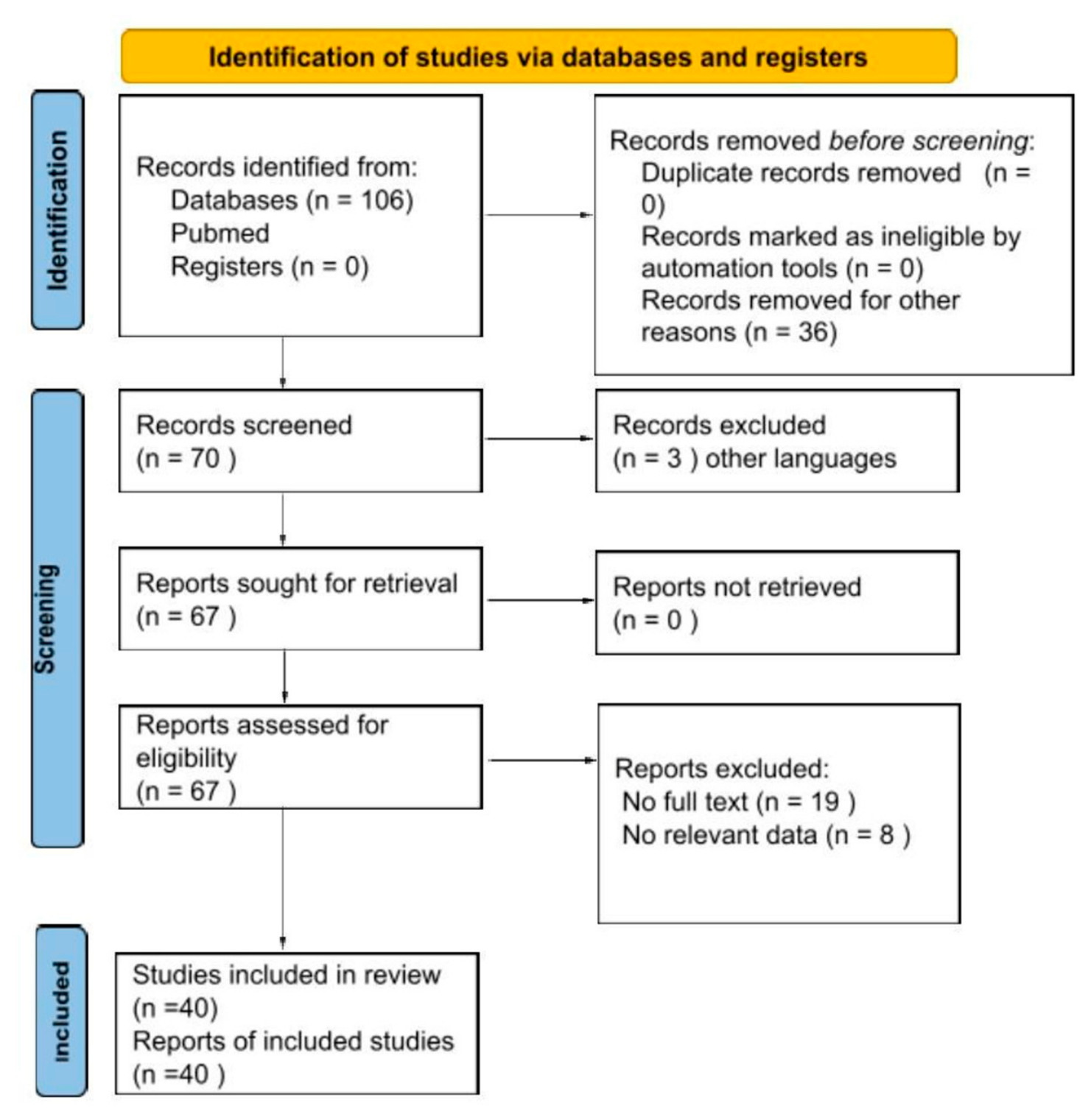
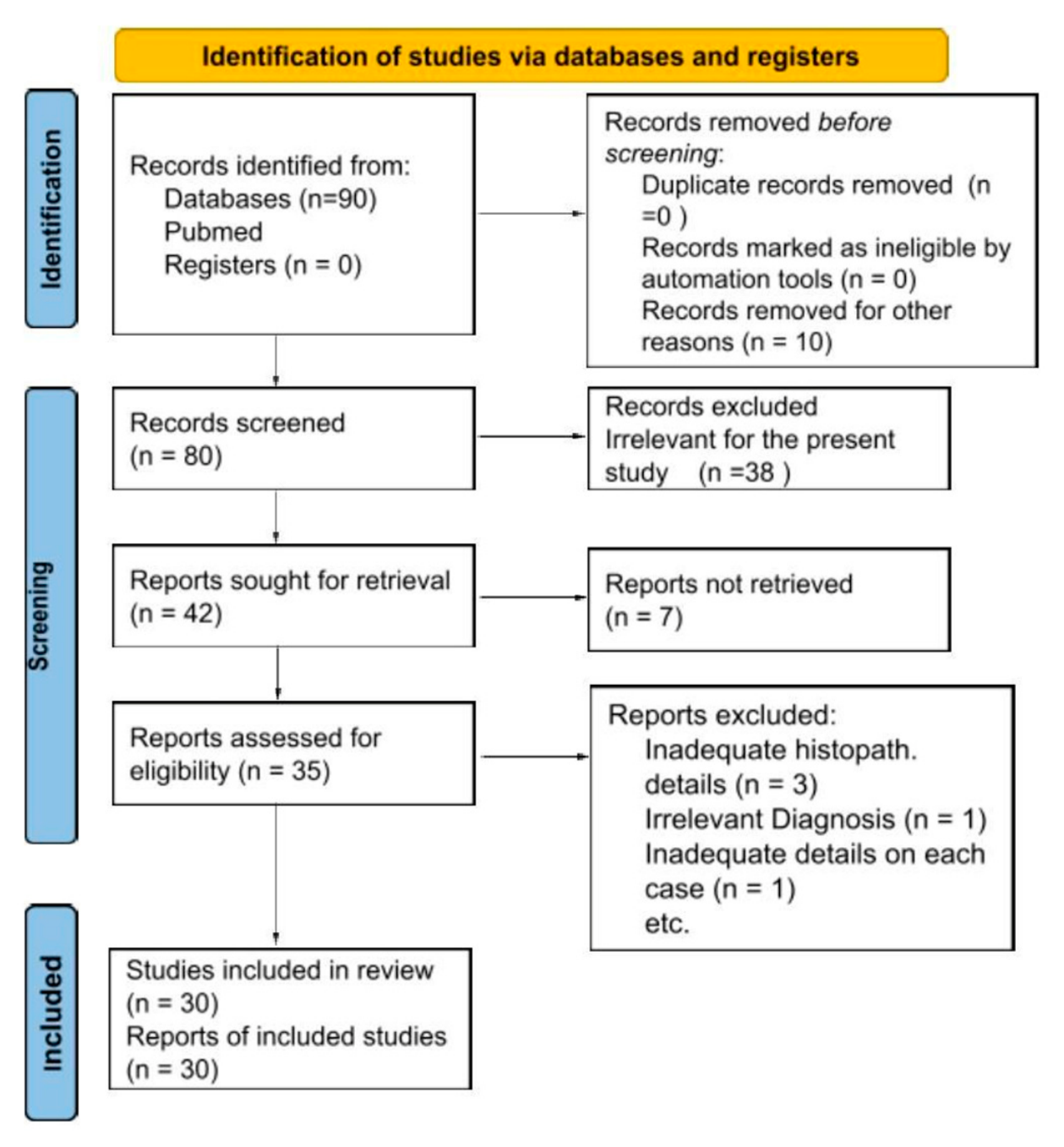
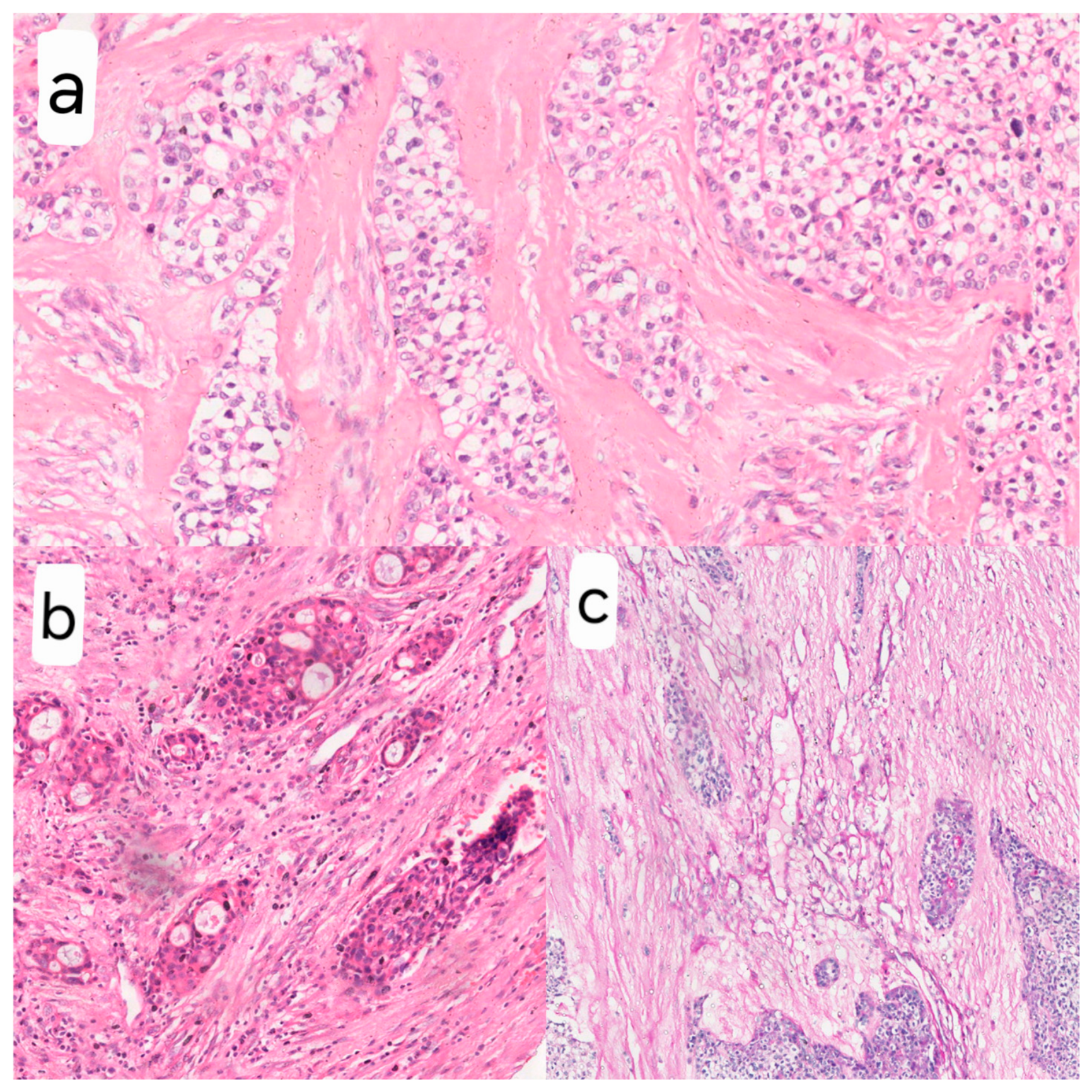
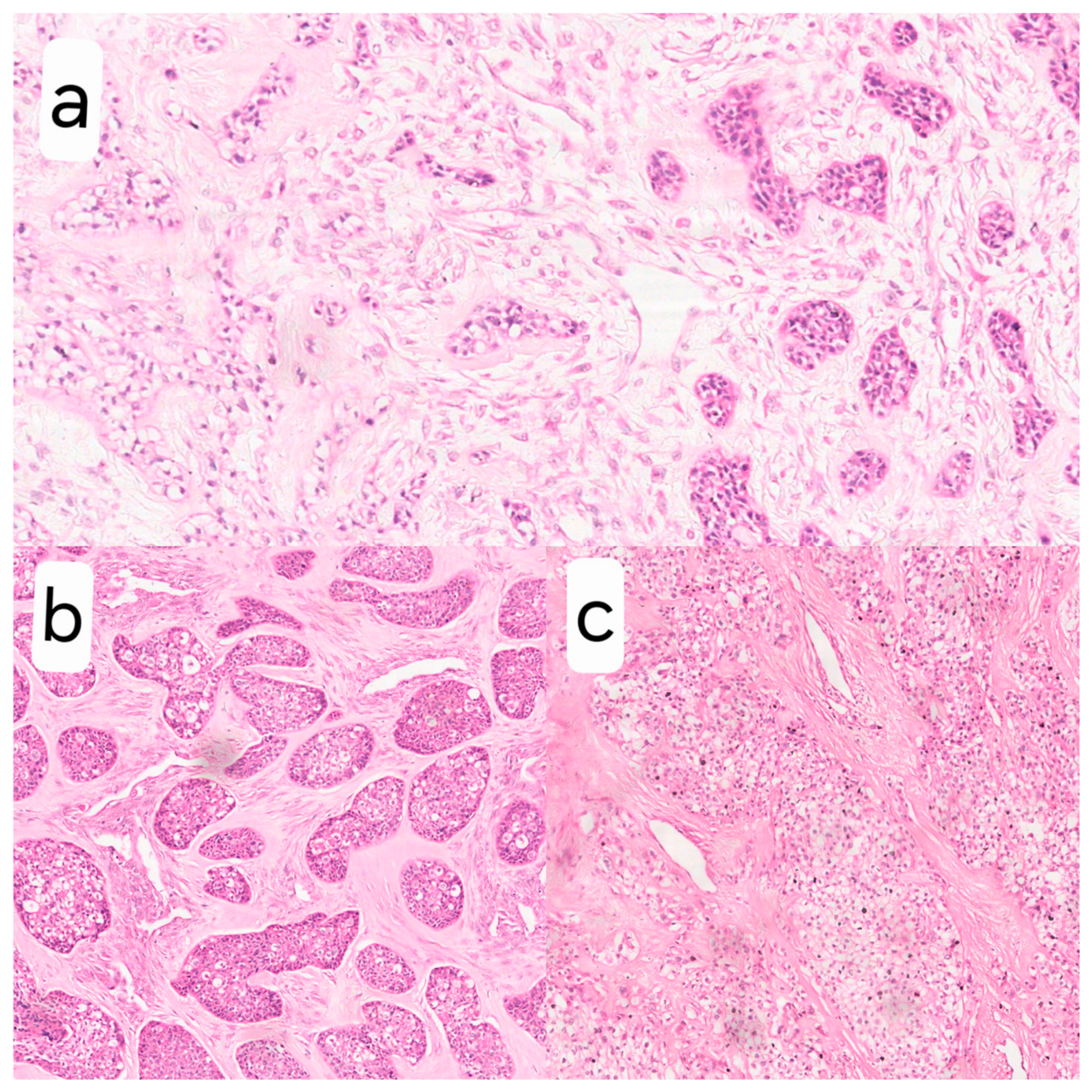
Background/Objectives: Hyalinizing clear cell carcinoma (HCCC) and clear cell odontogenic carcinoma (CCOC) are rare clear cell neoplasms with overlapping histopathological features. This study aimed to compare their clinicopathological characteristics, particularly in anatomically challenging sites such as the palate and maxilla. Methods: Three analyses were performed. First, an unpublished series of five HCCC and three CCOC cases was evaluated for diagnostic histopathological features. Second, a PRISMA-ScR-guided literature review of 58 HCCCs and 45 CCOCs restricted to tumours arising in intraoral minor salivary glands, major salivary glands and gnathic bones published between 2000 and 2025 was conducted using PubMed. Third, a sub-analysis compared palatal HCCC and maxillary CCOC (25 vs. 14 cases), integrating literature and unpublished cases. Results: The case series and overall literature review showed that HCCC and CCOC predominantly occurred in adults (mean age, case series: 50.8 years; literature: 56.33 years for HCCC and 61 vs. 54.11 years for CCOC) with a female predilection (case series: 60%; literature: 68%) and generally exhibited clinically indolent behaviour. The site of occurrence, soft tissue (HCCC) versus intraosseous location (CCOC), was the principal distinguishing feature. No marked differences were observed between the two tumours in either the overall literature analysis or the site-specific sub-analysis. However, CCOC at maxillary/palatal sites presented with a higher number of larger lesions and higher number of cases with nodal metastasis compared with HCCC, most probably indicating delayed clinical detection rather than intrinsic aggressiveness of CCOC. Histopathological overlap was considerable; however, diffuse dense hyalinization (4/5), focal glandular differentiation (2/5), mucous-secreting cells (4/5) and salivary gland association (5/5) favoured HCCC, whereas patchy hyalinization (3/3), larger tumour lobules (3/3) and peripheral palisading (2/3) favoured CCOC. Conclusions: HCCC and CCOC demonstrate clinicopathological similarities and shared EWSR1 rearrangement, supporting a close biological relationship. The considerable overlap between these tumours support the hypothesis that CCOC may represent the intraosseous counterpart of HCCC and highlight the importance of integrated clinicopathological assessment and further clarification in future WHO classifications.
Keywords: hyalinizing clear cell carcinoma; clear cell odontogenic carcinoma; minor and major salivary glands; gnathic bones; maxilla; palate; odontogenic tumour; salivary tumour hyalinizing clear cell carcinoma; clear cell odontogenic carcinoma; minor and major salivary glands; gnathic bones; maxilla; palate; odontogenic tumour; salivary tumour