Circulating Surfactant Protein-D for Risk Stratification in Paediatric Acute Lung Infections: A Systematic Review

 ,
,  ,
,
Abstract
1. Introduction
2. Materials and Methods
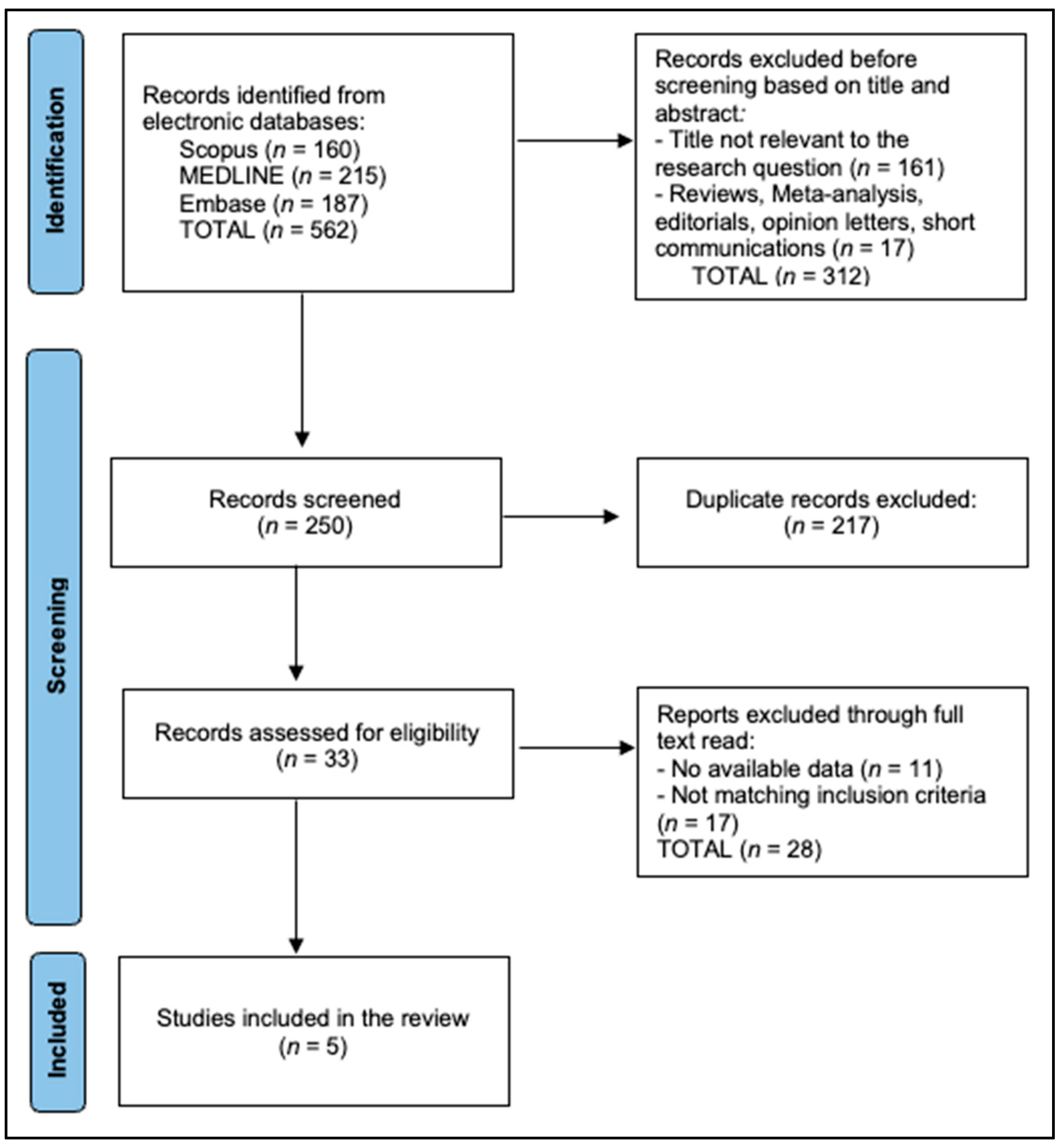
2.1. Protocol and Registration
2.2. Literature Search Strategy
2.3. Eligibility Criteria and Study Selection
2.4. Data Extraction and Risk-of-Bias Assessment
2.5. Synthesis Methods
3. Results

| Study | Year | Country | Design | n (Children) | Median Age (y) | Condition | SP-D Assay | ROBINS-I (Overall) |
|---|---|---|---|---|---|---|---|---|
| Saleh et al. [18] | 2022 | Egypt | Prospective cohort | 180 | 4.8 | CAP | Hycult ELISA | Moderate |
| Açıkgöz et al. [19] | 2016 | Turkey | ED cohort | 32 | 1.5 | CAP | BioVendor ELISA | Serious |
| Chakrabarti et al. [20] | 2021 | USA multicentre | Nested case–control | 94 | 8 | Influenza ARF | Genentech Luminex | Moderate |
| Dahmer et al. [21] | 2020 | USA + PALISI | Multicentre cohort | 350 | 7.3 | PARDS | BioVendor ELISA | Moderate |
| Konrad et al. [22] | 2023 | Uganda | Prospective cohort | 67 | 1.9 | Severe CAP | Hycult ELISA | Low/Moderate |
| Study (year) | Design/Setting | Bias Due to Confounding | Selection of Participants | Classification of Exposures (SP-D) | Deviations from Intended Exposures | Missing Data | Measurement of Outcomes | Selection of Reported Result | Overall ROBINS-I |
|---|---|---|---|---|---|---|---|---|---|
| Saleh et al., 2022 [18] | Prospective CAP cohort (hospital) | Moderate—partial adjustment (age, PRESS) | Low—consecutive CAP admissions | Low—validated ELISA, pre-specified timing | Low | Moderate—some incomplete assays | Low—WHO severe CAP criteria | Low | Moderate |
| Açıkgöz et al., 2016 [19] | ED cohort (CAP, severity stratified) | Serious—unadjusted analyses | Serious—convenience sampling | Low | Low | Moderate—small n with attrition | Moderate—local severity index | Moderate | Serious |
| Chakrabarti et al., 2022 [20] | Multicentre PICU (influenza ARF) | Moderate—nested design; limited covariate control for some outcomes | Low—clear PICU inclusion | Low—Luminex with internal standards | Low | Moderate | Low—PALICC ARDS, clinical end points | Low | Moderate |
| Dahmer et al., 2020 [21] | Multicentre ARF/PARDS cohort | Low—adjusted models (e.g., severity scores) | Low | Low | Low | Moderate | Low—standardised PARDS grading, mortality | Low | Moderate |
| Konrad et al., 2023 [22] | Prospective pneumonia (LMIC) | Moderate—limited covariate set | Low | Low | Low | Low | Low—SpO2, mortality, standardised CRFs | Low | Low |
| Outcome | Studies (n) | Participants (Total) | Effect/Association (Summary) | Overall Certainty (GRADE) | Reasons for Rating |
|---|---|---|---|---|---|
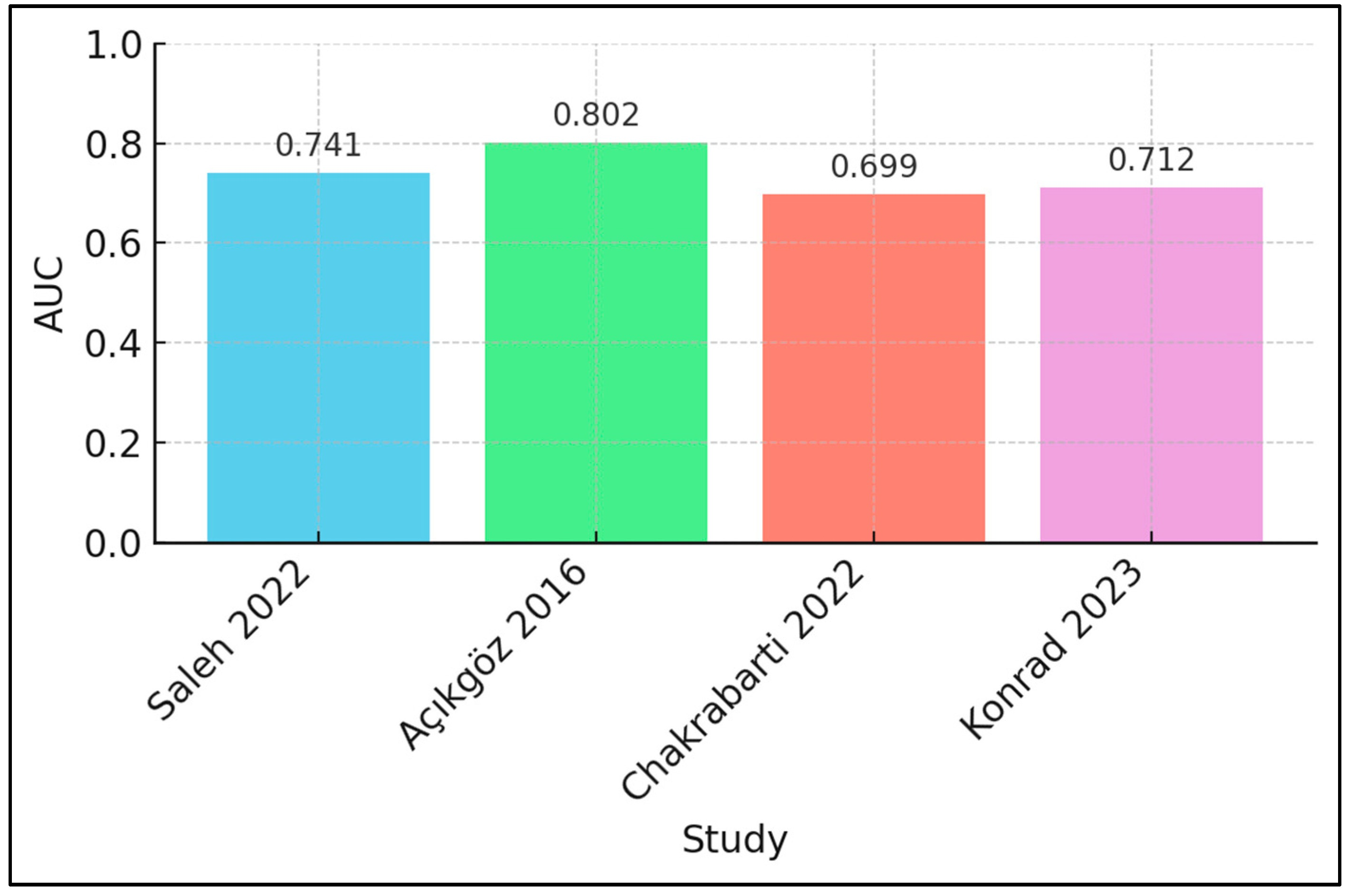
| Discrimination of severe disease (AUC) | 4 ([18,19,20,22]) | 373 | AUC range 0.699–0.802 across ED, inpatient and PICU cohorts | Moderate ⬤⬤⬤◯ | −1 inconsistency (assay platforms, thresholds); direction consistent |
| Mechanical ventilation requirement | 1 ([18]) | 180 | Adjusted OR 2.54 for MV when SP-D above study threshold | Low ⬤⬤◯◯ | −1 imprecision (single study), −1 inconsistency (no external replication) |
| Mortality (short-term) | 1 ([21]) | 350 | Adjusted OR 1.02 per 10 ng·mL−1 increase in SP-D | Low ⬤⬤◯◯ | −1 imprecision (small effect, CIs close to null), −1 inconsistency (no pooled estimate) |
| Ventilator days | 1 ([20]) | 94 | Moderate positive correlation r ≈ 0.45 | Low ⬤⬤◯◯ | −1 imprecision (single cohort), −1 risk of bias (residual confounding) |
| ICU length of stay | 1 ([20]) | 94 | Moderate positive correlation r ≈ 0.44 | Low ⬤⬤◯◯ | −1 imprecision (single cohort), −1 risk of bias |
| PARDS severity (dose–response) | 1 ([21]) | 350 | Continuous association: +10 ng·mL−1 → OR 1.02 for severe PARDS | Low ⬤⬤◯◯ | −1 imprecision, −1 inconsistency (heterogeneous reporting metrics) |
4. Discussion
4.1. Summary of Evidence
4.2. Limitations
5. Conclusions
Author Contributions
Funding
Institutional Review Board Statement
Informed Consent Statement
Data Availability Statement
Acknowledgments
Conflicts of Interest
References
- GBD 2021 Lower Respiratory Infections and Antimicrobial Resistance Collaborators. Global, regional, and national incidence and mortality burden of non-COVID-19 lower respiratory infections and aetiologies, 1990–2021: A systematic analysis from the Global Burden of Disease Study 2021. Lancet Infect. Dis. 2024, 24, 974–1002. [Google Scholar] [CrossRef] [Scilit] [PubMed] [PubMed Central]
- Wang, X.; Li, Y.; O’Brien, K.L.; Madhi, S.A.; Widdowson, M.A.; Byass, P.; Omer, S.B.; Abbas, Q.; Ali, A.; Amu, A.; et al. Global burden of respiratory infections associated with seasonal influenza in children under 5 years in 2018: A systematic review and modelling study. Lancet Glob. Health 2020, 8, e497–e510. [Google Scholar] [CrossRef] [Scilit] [PubMed] [PubMed Central]
- Ebeledike, C.; Ahmad, T. Pediatric Pneumonia. In StatPearls; StatPearls Publishing: Treasure Island, FL, USA, 2023. [Google Scholar] [PubMed]
- Hamill, G.S.; Remy, K.E.; Slain, K.N.; Sallee, C.J.; Khemani, R.; Smith, L.; Shein, S.L.; Pediatric Acute Respiratory Distress Syndrome Incidence and Epidemiology (PARDIE) Investigators and the Pediatric Acute Lung Injury and Sepsis Investigators (PALISI) Network. Association of Interventions With Outcomes in Children At-Risk for Pediatric Acute Respiratory Distress Syndrome: A Pediatric Acute Respiratory Distress Syndrome Incidence and Epidemiology Study. Pediatr. Crit. Care Med. 2023, 24, 574–583. [Google Scholar] [CrossRef] [Scilit] [PubMed]
- Emeriaud, G.; López-Fernández, Y.M.; Iyer, N.P.; Bembea, M.M.; Agulnik, A.; Barbaro, R.P.; Baudin, F.; Bhalla, A.; Brunow de Carvalho, W.; Carroll, C.L.; et al. Executive Summary of the Second International Guidelines for the Diagnosis and Management of Pediatric Acute Respiratory Distress Syndrome (PALICC-2). Pediatr Crit. Care Med. 2023, 24, 143–168. [Google Scholar] [CrossRef] [Scilit] [PubMed] [PubMed Central]
- Xie, W.; Ruan, J.; Jiang, Q.; Zheng, J.; Lin, W.; Lyu, G. Distinguishing types and severity of pediatric pneumonia using modified lung ultrasound score. Front Pediatr. 2024, 12, 1411365. [Google Scholar] [CrossRef] [Scilit] [PubMed] [PubMed Central]
- Williams, D.J.; Zhu, Y.; Grijalva, C.G.; Self, W.H.; Harrell, F.E., Jr.; Reed, C.; Stockmann, C.; Arnold, S.R.; Ampofo, K.K.; Anderson, E.J.; et al. Predicting Severe Pneumonia Outcomes in Children. Pediatrics 2016, 138, e20161019. [Google Scholar] [CrossRef] [Scilit] [PubMed] [PubMed Central]
- Yao, H.Y.; Wang, W.; Zhang, P.H.; Wang, X.X.; Liu, S.M.; Chen, X.H. Determination and clinical significance of serum surfactant proteins A and D in children with bronchiolitis. Zhongguo Dang Dai Er Ke Za Zhi 2013, 15, 987–989. (In Chinese) [Google Scholar] [PubMed]
- Lahti, M.; Lofgren, J.; Marttila, R.; Renko, M.; Klaavuniemi, T.; Haataja, R.; Ramet, M.; Hallman, M. Surfactant protein D gene polymorphism associated with severe respiratory syncytial virus infection. Pediatr. Res. 2002, 51, 696–699. [Google Scholar] [CrossRef] [PubMed]
- Park, J.; Pabon, M.; Choi, A.M.K.; Siempos, I.I.; Fredenburgh, L.E.; Baron, R.M.; Jeon, K.; Chung, C.R.; Yang, J.H.; Park, C.M.; et al. Plasma surfactant protein-D as a diagnostic biomarker for acute respiratory distress syndrome: Validation in US and Korean cohorts. BMC Pulm. Med. 2017, 17, 204. [Google Scholar] [CrossRef] [Scilit] [PubMed] [PubMed Central]
- Elmore, A.; Almuntashiri, A.; Wang, X.; Almuntashiri, S.; Zhang, D. Circulating Surfactant Protein D: A Biomarker for Acute Lung Injury? Biomedicines 2023, 11, 2517. [Google Scholar] [CrossRef] [Scilit]
- Arroyo, R.; Kingma, P.S. Surfactant protein D and bronchopulmonary dysplasia: A new way to approach an old problem. Respir. Res. 2021, 22, 141. [Google Scholar] [CrossRef] [Scilit] [PubMed] [PubMed Central]
- He, X.; Ji, J.; Zheng, D.; Luo, Z.; Luo, L.; Guo, L. Serum surfactant protein D as a significant biomarker for predicting occurrence, progression, acute exacerbation, and mortality in interstitial lung disease: A systematic review and meta-analysis. Front. Immunol. 2025, 16, 1450798. [Google Scholar] [CrossRef] [Scilit] [PubMed] [PubMed Central]
- Chang, S.H.; Park, Y.B.; McDermott, G.C.; Paudel, M.L.; Hayashi, K.; Ha, Y.J.; Lee, J.S.; Kim, M.U.; Park, C.H.; Kim, J.W.; et al. Serum Biomarkers of Pulmonary Damage and Risk for Progression of Rheumatoid Arthritis-Associated Interstitial Lung Disease. J. Rheumatol. 2025, 52, 323–333. [Google Scholar] [CrossRef] [Scilit] [PubMed] [PubMed Central]
- Shamim, A.; Abdul Aziz, M.; Saeed, F.; Kumari, R.; Mary Joseph, A.; Ponnachan, P.; Kishore, U.; Masmoudi, K. Revisiting surfactant protein D: An immune surveillance molecule bridging innate and adaptive immunity. Front Immunol. 2024, 15, 1491175. [Google Scholar] [CrossRef] [Scilit] [PubMed] [PubMed Central]
- Page, M.J.; McKenzie, J.E.; Bossuyt, P.M.; Boutron, I.; Hoffmann, T.C.; Mulrow, C.D.; Shamseer, L.; Tetzlaff, J.M.; Akl, E.A.; Brennan, S.E.; et al. The PRISMA 2020 statement: An updated guideline for reporting systematic reviews. Syst. Rev. 2021, 10, 89. [Google Scholar] [CrossRef] [Scilit] [PubMed] [PubMed Central]
- McCarthy, C.; Bonella, F.; O’Callaghan, M.; Dupin, C.; Alfaro, T.; Fally, M.; Borie, R.; Campo, I.; Cottin, V.; Fabre, A.; et al. European Respiratory Society guidelines for the diagnosis and management of pulmonary alveolar proteinosis. Eur. Respir. J. 2024, 64, 2400725. [Google Scholar] [CrossRef] [Scilit] [PubMed]
- Saleh, N.Y.; Ibrahem, R.A.L.; Saleh, A.A.H.; Soliman, S.E.S.; Mahmoud, A.A.S. Surfactant protein D: A predictor for severity of community-acquired pneumonia in children. Pediatr. Res. 2022, 91, 665–671. [Google Scholar] [CrossRef] [Scilit] [PubMed] [PubMed Central]
- Açıkgöz, M.; Güzel, A.; Şişman, B.; Karadağ, A.; Murat, N.; Paksu, Ş. Can Serum Surfactant Protein D Levels be used as an Effective Factor Instead of Clinical Severity Scores of Pneumonia in Pediatric Emergency Departments? Eurasian J. Emerg. Med. 2016, 15, 1–6. [Google Scholar] [CrossRef] [Scilit]
- Chakrabarti, A.; Nguyen, A.; Newhams, M.M.; Ohlson, M.B.; Yang, X.; Ulufatu, S.; Liu, S.; Park, S.; Xu, M.; Jiang, J.; et al. Surfactant protein D is a biomarker of influenza-related pediatric lung injury. Pediatr. Pulmonol. 2022, 57, 519–528. [Google Scholar] [CrossRef] [Scilit] [PubMed] [PubMed Central]
- Dahmer, M.K.; Flori, H.; Sapru, A.; Kohne, J.; Weeks, H.M.; Curley, M.A.Q.; Matthay, M.A.; Quasney, M.W.; BALI and RESTORE Study Investigators and Pediatric Acute Lung Injury and Sepsis Investigators (PALISI) Network. Surfactant Protein D Is Associated With Severe Pediatric ARDS, Prolonged Ventilation, and Death in Children with Acute Respiratory Failure. Chest 2020, 158, 1027–1035. [Google Scholar] [CrossRef] [Scilit] [PubMed] [PubMed Central]
- Konrad, E.R.; Soo, J.; Conroy, A.L.; Namasopo, S.; Opoka, R.O.; Hawkes, M.T. Circulating markers of neutrophil activation and lung injury in pediatric pneumonia in low-resource settings. Pathog. Glob. Health 2023, 117, 708–716. [Google Scholar] [CrossRef] [Scilit] [PubMed] [PubMed Central]
- Yehya, N.; Booth, T.J.; Ardhanari, G.D.; Thompson, J.M.; Lam, L.K.M.; Till, J.E.; Mai, M.V.; Keim, G.; McKeone, D.J.; Halstead, E.S.; et al. Inflammatory and tissue injury marker dynamics in pediatric acute respiratory distress syndrome. J. Clin. Investig. 2024, 134, e177896. [Google Scholar] [CrossRef] [Scilit] [PubMed] [PubMed Central]
- Goss, V.M.; Dushianthan, A.; McCorkell, J.; Morton, K.; Goss, K.C.W.; Marsh, M.J.; Pappachan, J.V.; Postle, A.D. Surfactant Phospholipid Kinetics in Ventilated Children after Therapeutic Surfactant Supplementation. Int. J. Mol. Sci. 2024, 25, 10480. [Google Scholar] [CrossRef] [Scilit]
- Dargaville, P.A.; South, M.; McDougall, P.N. Surfactant abnormalities in infants with severe viral bronchiolitis. Arch. Dis. Child. 1996, 75, 133–136. [Google Scholar] [CrossRef] [Scilit] [PubMed] [PubMed Central]
- Altuntaş, B.S.; Gül, A.; Takcı, Ş.; Ateş, H.O.; Yılmaz, R. Effect of Surfactant Protein B and D Genes Polymorphisms on Frequency and Severity of Acute Bronchiolitis. J. Contemp. Med. 2025, 15, 1–5. [Google Scholar] [CrossRef] [Scilit]
- Jat, K.R.; Chawla, D. Surfactant therapy for bronchiolitis in critically ill infants. Cochrane Database Syst. Rev. 2015, 2015, CD009194. [Google Scholar] [CrossRef] [Scilit] [PubMed] [PubMed Central]
- Tong, M.; Xiong, Y.; Zhu, C.; Xu, H.; Zheng, Q.; Jiang, Y.; Zou, L.; Xiao, X.; Chen, F.; Yan, X.; et al. Serum surfactant protein D in COVID-19 is elevated and correlated with disease severity. BMC Infect. Dis. 2021, 21, 737. [Google Scholar] [CrossRef] [Scilit] [PubMed] [PubMed Central]
- Hsieh, M.H.; Beirag, N.; Murugaiah, V.; Chou, Y.C.; Kuo, W.S.; Kao, H.F.; Madan, T.; Kishore, U.; Wang, J.Y. Human Surfactant Protein D Binds Spike Protein and Acts as an Entry Inhibitor of SARS-CoV-2 Pseudotyped Viral Particles. Front. Immunol. 2021, 12, 641360. [Google Scholar] [CrossRef] [Scilit] [PubMed] [PubMed Central]

| Study | SP-D Cut-Off (ng mL−1) | Sensitivity % | Specificity % | AUC | Reference Standard |
|---|---|---|---|---|---|
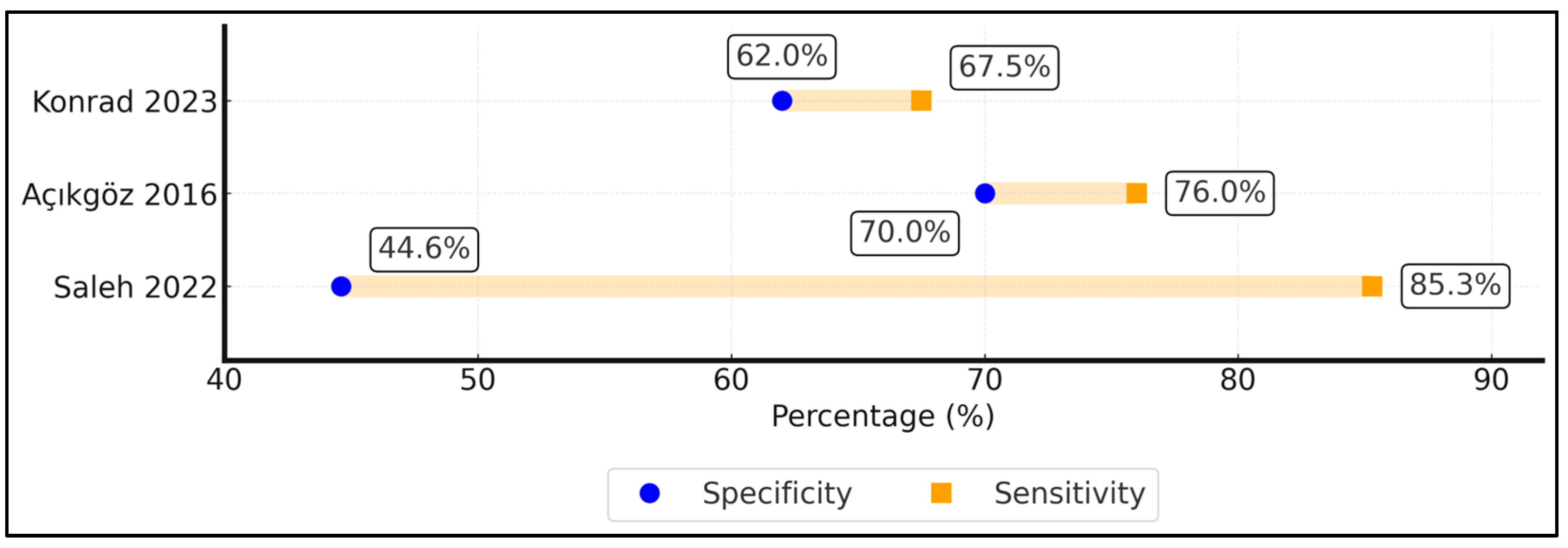
| Saleh et al. [18] | 145 | 85.3 | 44.6 | 0.741 | WHO-defined severe CAP |
| Açıkgöz et al. [19] | 180 | 76 | 70 | 0.802 | Pneumonia Clinical Severity Index ≥ 3 |
| Chakrabarti et al. [20] | >90th centile | — | — | 0.699 (ARDS) | PALICC-defined ARDS |
| Dahmer et al. [21] | Per 10 ng/mL | OR 1.02 (CI 1.01–1.04) | — | — | Continuous association with PARDS severity (per 10 ng/mL) |
| Konrad et al. [22] | 110 | 67.5 | 62 | 0.712 | Hypoxaemia (SpO2 < 90%) |
| Study | Outcome | Effect Estimate | 95% CI/p-Value | Direction |
|---|---|---|---|---|
| Saleh 2022 [18] | Mechanical ventilation | OR 2.54 | 1.30–4.96 | ↑ SP-D = ↑ risk |
| Açıkgöz 2016 [19] | Severe vs. mild pneumonia | Median 278 vs. 86 ng/mL | p < 0.001 | ↑ |
| Chakrabarti 2022 [20] | Ventilator days | r = 0.45 | p = 0.002 | Positive |
| ICU LOS | r = 0.44 | p = 0.002 | Positive | |
| Dahmer 2020 [21] | Mortality | OR 1.02 per 10 ng/mL | 1.01–1.04 | ↑ |
| Konrad 2023 [22] | 28-day mortality | HR 1.07 per 10 ng/mL | 0.99–1.16 | NS |
Disclaimer/Publisher’s Note: The statements, opinions and data contained in all publications are solely those of the individual author(s) and contributor(s) and not of MDPI and/or the editor(s). MDPI and/or the editor(s) disclaim responsibility for any injury to people or property resulting from any ideas, methods, instructions or products referred to in the content. |
© 2025 by the authors. Licensee MDPI, Basel, Switzerland. This article is an open access article distributed under the terms and conditions of the Creative Commons Attribution (CC BY) license (https://creativecommons.org/licenses/by/4.0/).
Share and Cite
Chelcea, R.; Ciuca, I.M.; Mudireddy, N.R.; Bratosin, F.; Stanga, L.; Cozma, G.V. Circulating Surfactant Protein-D for Risk Stratification in Paediatric Acute Lung Infections: A Systematic Review. Diagnostics 2025, 15, 2830. https://doi.org/10.3390/diagnostics15222830
Chelcea R, Ciuca IM, Mudireddy NR, Bratosin F, Stanga L, Cozma GV. Circulating Surfactant Protein-D for Risk Stratification in Paediatric Acute Lung Infections: A Systematic Review. Diagnostics. 2025; 15(22):2830. https://doi.org/10.3390/diagnostics15222830
Chicago/Turabian StyleChelcea, Ramona, Ioana Mihaiela Ciuca, Naresh Reddy Mudireddy, Felix Bratosin, Livia Stanga, and Gabriel Veniamin Cozma. 2025. "Circulating Surfactant Protein-D for Risk Stratification in Paediatric Acute Lung Infections: A Systematic Review" Diagnostics 15, no. 22: 2830. https://doi.org/10.3390/diagnostics15222830
APA StyleChelcea, R., Ciuca, I. M., Mudireddy, N. R., Bratosin, F., Stanga, L., & Cozma, G. V. (2025). Circulating Surfactant Protein-D for Risk Stratification in Paediatric Acute Lung Infections: A Systematic Review. Diagnostics, 15(22), 2830. https://doi.org/10.3390/diagnostics15222830