Guidelines

A Comprehensive Approach to the Diagnosis of Leigh Syndrome Spectrum

by
Manuela Schubert Baldo
1,2,*,
Luísa Azevedo
3,4,
Margarida Paiva Coelho
2,3,5,
Esmeralda Martins
2,3,5 and
Laura Vilarinho
1,6,*
1
Research and Development Unit, Human Genetics Department, National Institute of Health Doutor Ricardo Jorge, 4000-053 Porto, Portugal
2
School of Medicine and Biomedical Sciences (ICBAS), University of Porto, 4050-313 Porto, Portugal
3
UMIB—Unit for Multidisciplinary Research in Biomedicine, School of Medicine and Biomedical Sciences (ICBAS), University of Porto, 4050-346 Porto, Portugal
4
ITR—Laboratory for Integrative and Translational Research in Population Health, 4050-600 Porto, Portugal
5
Pediatrics Department, Northern Mother and Child Centre, Reference Centre for Metabolic Disorders, Santo António Hospital University Centre, 4050-651 Porto, Portugal
6
Neonatal Screening, Metabolism and Genetics Unit, Human Genetics Department, National Institute of Health Doutor Ricardo Jorge, 4000-053 Porto, Portugal
*
Authors to whom correspondence should be addressed.
Diagnostics 2024, 14(19), 2133; https://doi.org/10.3390/diagnostics14192133

Submission received: 31 August 2024 / Revised: 19 September 2024 / Accepted: 24 September 2024 / Published: 25 September 2024
(This article belongs to the Section Pathology and Molecular Diagnostics)

Abstract

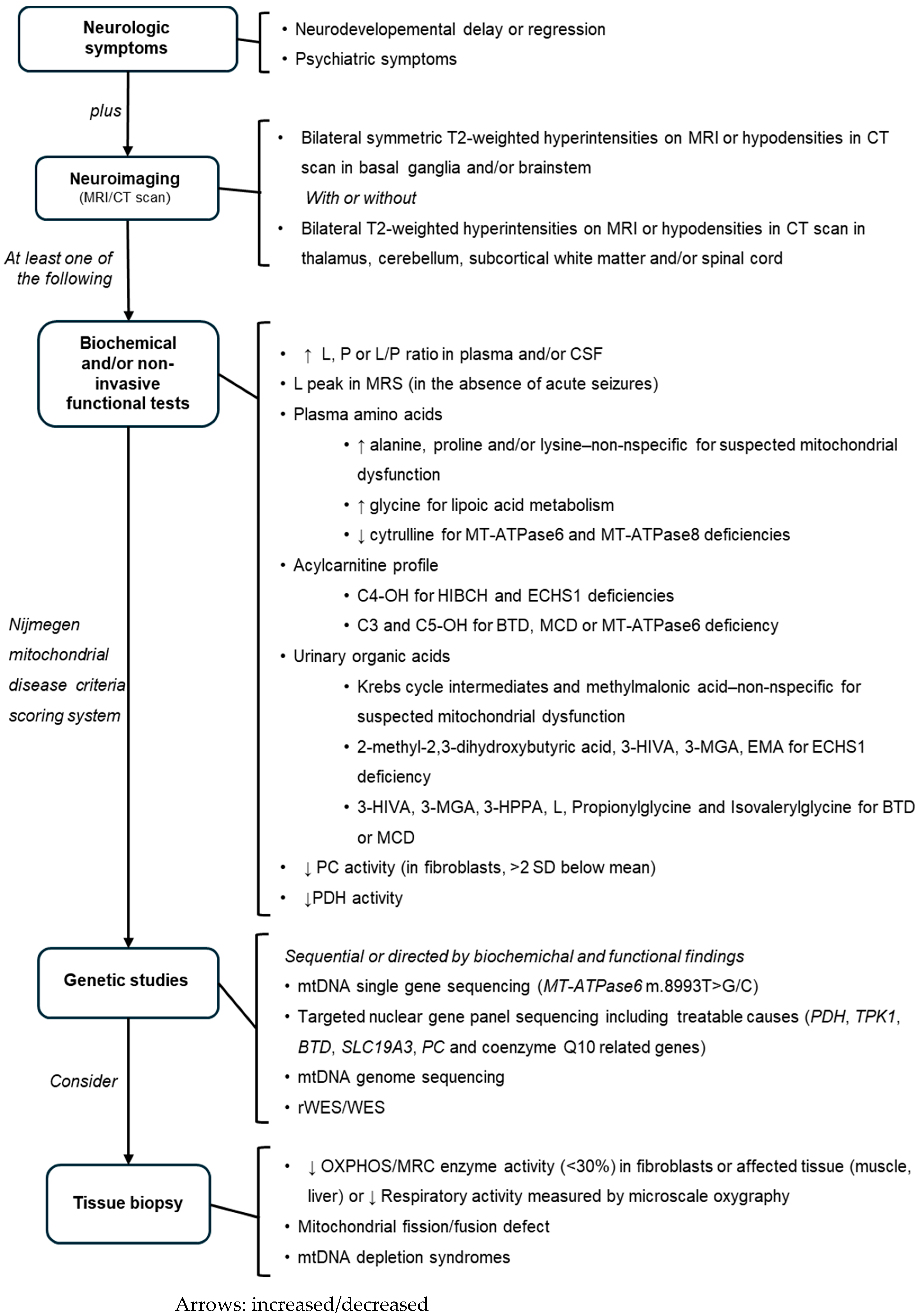
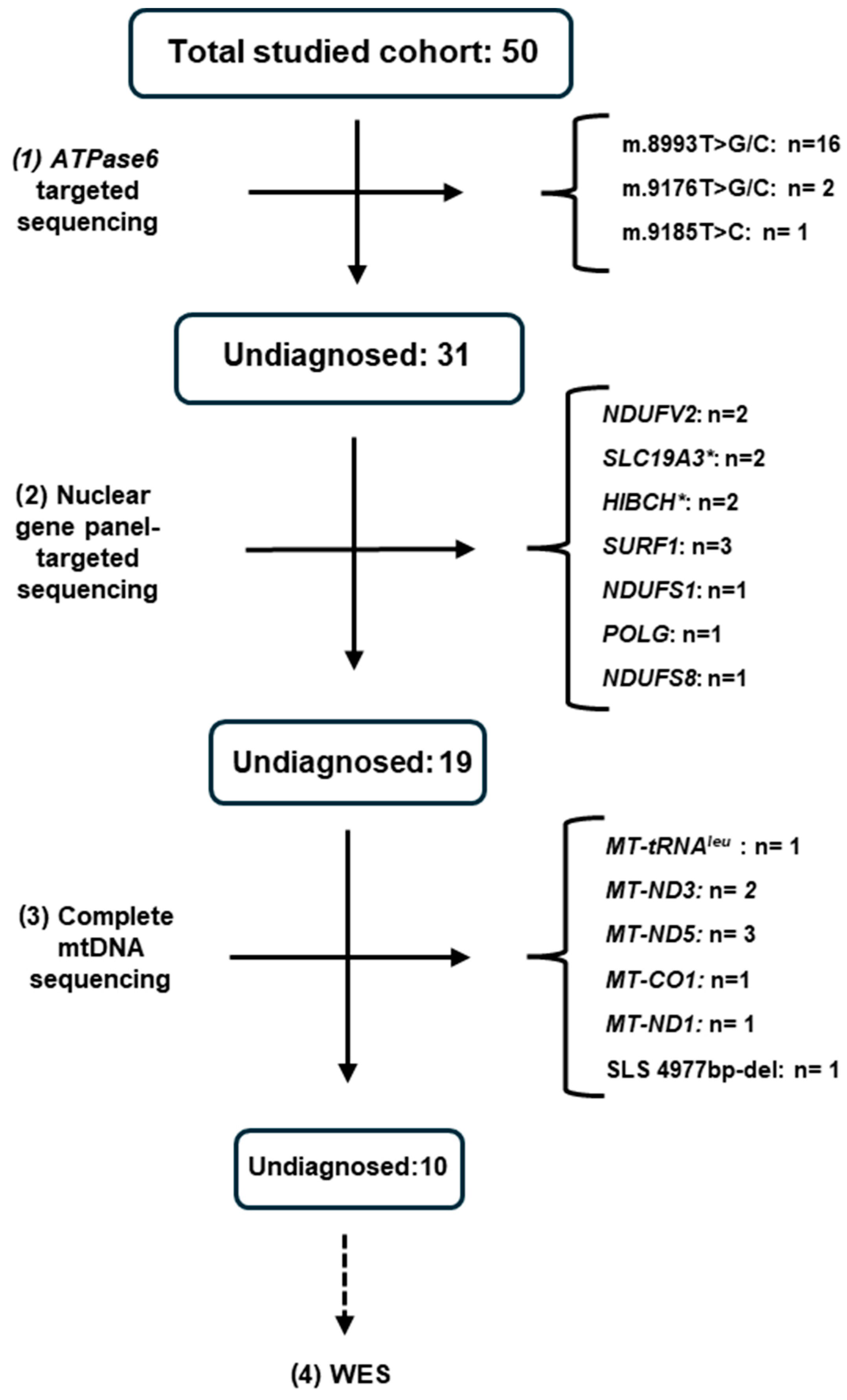
Background: Leigh syndrome spectrum (LSS) is a novel nomenclature that encompasses both classical Leigh syndrome and Leigh-like phenotypes. Given the heterogeneity of disease presentation, a new consensus published recently addressed the main issues and proposed general guidelines towards diagnosis. Based on these recommendations, we developed a simple pipeline that can be useful in the diagnosis of LSS. Methods: We combined previously published criteria with our own experience to achieve a diagnostic framework that can provide faster satisfactory results with fewer resources. Results: We suggest adding basic biochemical tests for amino acids, acylcarnitine, and urinary organic acids as parallel investigations, as these results can be obtained in a short time. This approach characterized 80% of our cohort and promoted specific intervention in 10% of confirmed cases. Conclusions: Genetic studies are crucial in the diagnosis of LSS, but they are time-consuming and might delay tailored interventions. Therefore, we suggest adding more affordable and less complex biochemical studies as primary tests when investigating treatable causes of LSS.
Keywords: Leigh syndrome spectrum; diagnosis; mitochondrial disorder; neurodegeneration Leigh syndrome spectrum; diagnosis; mitochondrial disorder; neurodegeneration