Article

[131I]6ß-Iodomethyl-19-norcholesterol SPECT/CT for the Lateralization of Mineralocorticoid Overproduction in Primary Aldosteronism


1
Scanomed Nuclear Medicine Center, 98 Nagyerdei krt, 4032 Debrecen, Hungary
2
Division of Nuclear Medicine and Translational Imaging, Department of Medical Imaging, Faculty of Medicine, University of Debrecen, 4032 Debrecen, Hungary
3
Division of Endocrinology, Department of Internal Medicine, Faculty of Medicine, University of Debrecen, 4032 Debrecen, Hungary
4
Department of Laboratory Medicine, Faculty of Medicine, University of Debrecen, 4032 Debrecen, Hungary
5
Department of Pathology, Faculty of Medicine, University of Debrecen, 4032 Debrecen, Hungary
6
Department of Internal Medicine, Jósa András Szabolcs Szatmár Bereg County Teaching Hospital, 4246 Nyiregyhaza, Hungary
7
Health Care Service Units, Department of Internal Medicine, Gróf Tisza Istvan Campus, University of Debrecen, 4032 Debrecen, Hungary
8
Division of Radiology, Department of Medical Imaging, Faculty of Medicine, University of Debrecen, 4032 Debrecen, Hungary
*
Author to whom correspondence should be addressed.
Diagnostics 2024, 14(17), 1997; https://doi.org/10.3390/diagnostics14171997

Submission received: 28 August 2024 / Revised: 5 September 2024 / Accepted: 6 September 2024 / Published: 9 September 2024
(This article belongs to the Section Medical Imaging and Theranostics)

Abstract

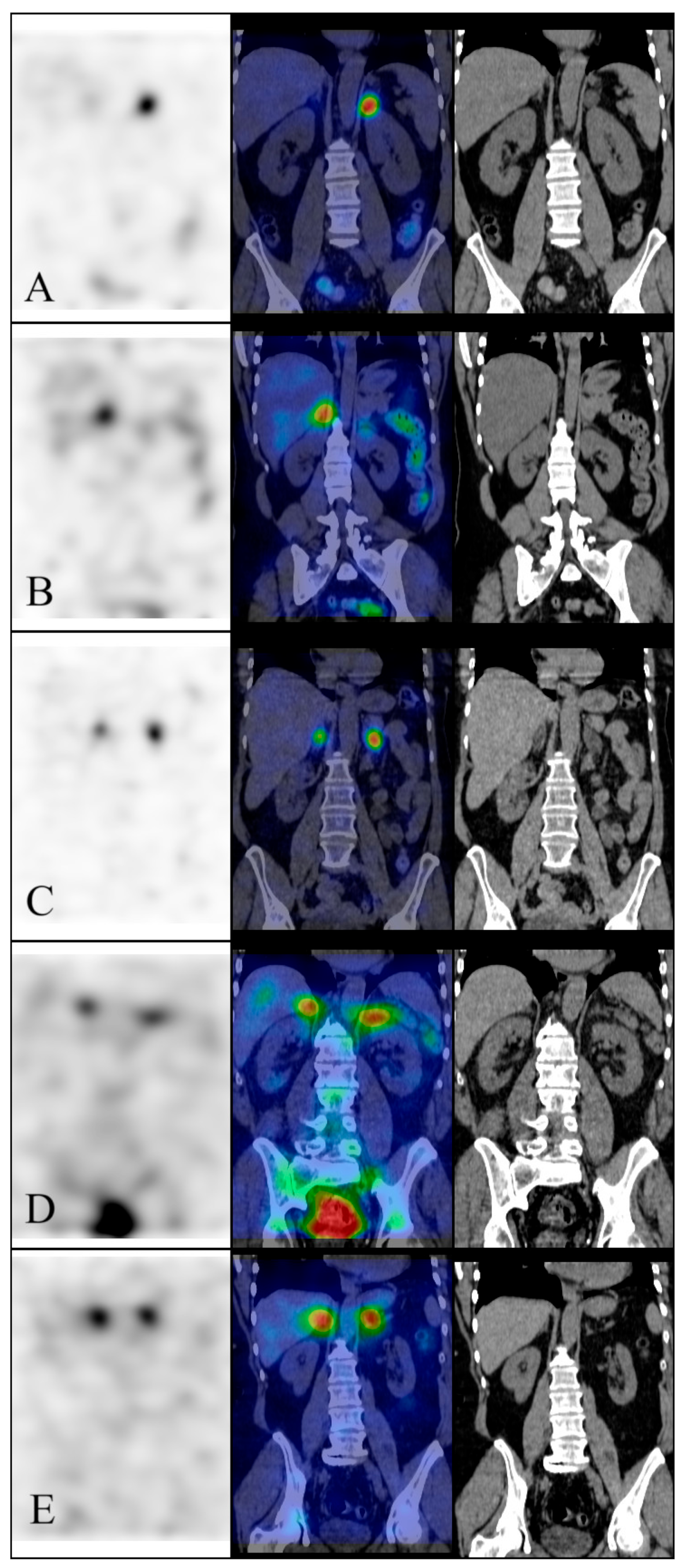
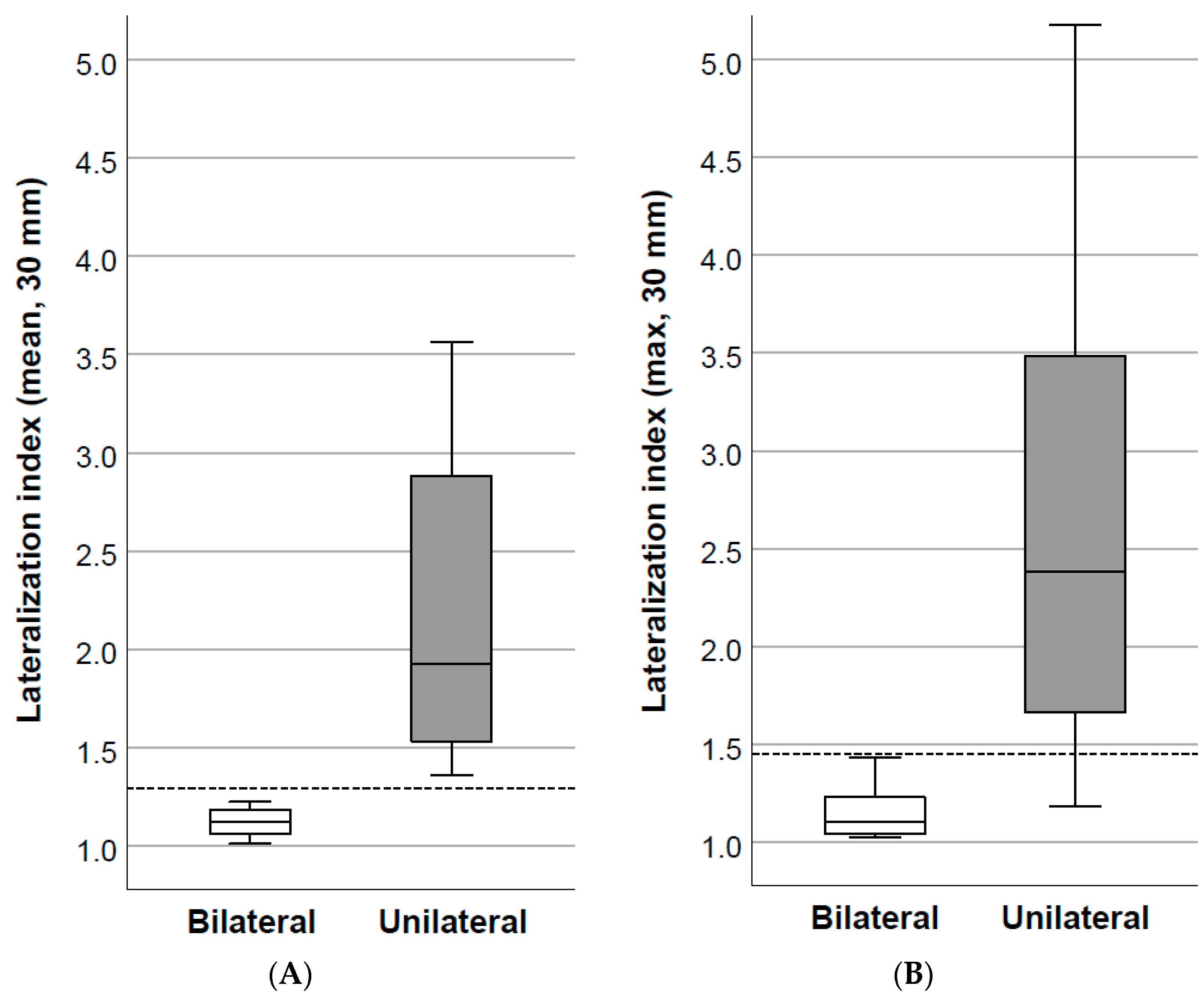
Primary: aldosteronism is a frequent cause of secondary hypertension. With access to specialized care, an increasing number of patients with aldosteronism are being identified. Primary aldosteronism is treatable by adrenal surgery if aldosterone excess originates from one of the two, and not from both, adrenals. Bilateral hyperplasia requires lifelong mineralocorticoid receptor antagonist treatment. Up till now, adrenal venous sampling (AVS) has been widely used to distinguish between one-sided and two-sided aldosterone overproduction and patient selection for surgery. AVS is an invasive technique, and the unsuccessful sampling of the right adrenal vein during AVS often prevents side comparison, making the AVS procedure useless. Molecular imaging using [131I]6ß-iodomethyl-19-norcholesterol with SPECT CT imaging (SPECT/CT) may be a potential alternative. Methods: In 42 consecutive patients with confirmed primary aldosteronism, molecular imaging has been performed. After dexamethasone suppression of the non-affected adrenal tissue, 37 MBq [131I]6ß-iodomethyl-19-norcholesterol was injected i.v., and SPECT/CT images were taken 7 days later. Based on the visual evaluation of the images by two nuclear medicine specialists, patients with one-sided tracer accumulation underwent adrenalectomy. To identify a SPECT/CT parameter that best characterizes the side difference, the maximum counts and the mean counts of spherical VOIs were analyzed. Results: Of the 42 patients, 24 had one-sided aldosterone overproduction by SPECT/CT. After surgical removal of the involved adrenal, all 24 patients with SPECT/CT-identified unilateral aldosteronism achieved biochemical cure, defined as a normalized potassium level combined with an aldosterone-to-renin ratio ≤ 30. To identify the best measurable parameter of SPECT/CT side difference, the mean counts and maximum counts of a series of spherical VOIs of different diameters were analyzed. The ratio of the mean counts of 3 cm spherical VOIs of the right and left adrenal regions (lateralization index) was the best discriminator; a ratio of ≥1.29 was characteristic of one-sided disease, without overlap between the one-sided and two-sided patient groups. Conclusions: [131I]6ß-iodomethyl-19-norcholesterol SPECT/CT with a count-based image interpretation and side-ratio calculation may be an equipollent non-invasive substitute for adrenal venous sampling in the lateralization of mineralocorticoid overproduction. It reliably identifies unilateral disease and facilitates patients’ selection for surgical intervention. If confirmed by others, this functional imaging may replace AVS when lateralization is required for management decisions in primary aldosteronism.
Keywords: hypertension; primary aldosteronism; [131I]6ß-iodomethyl-19-norcholesterol; SPECT/CT hypertension; primary aldosteronism; [131I]6ß-iodomethyl-19-norcholesterol; SPECT/CT