Article

Auto-Detection of Motion Artifacts on CT Pulmonary Angiograms with a Physician-Trained AI Algorithm


1
Massachusetts General Hospital, Harvard Medical School, Boston, MA 02114, USA
2
Mass General Brigham Data Science Office, Boston, MA 02114, USA
*
Author to whom correspondence should be addressed.
Diagnostics 2023, 13(4), 778; https://doi.org/10.3390/diagnostics13040778

Submission received: 19 December 2022 / Revised: 2 February 2023 / Accepted: 16 February 2023 / Published: 18 February 2023

Abstract

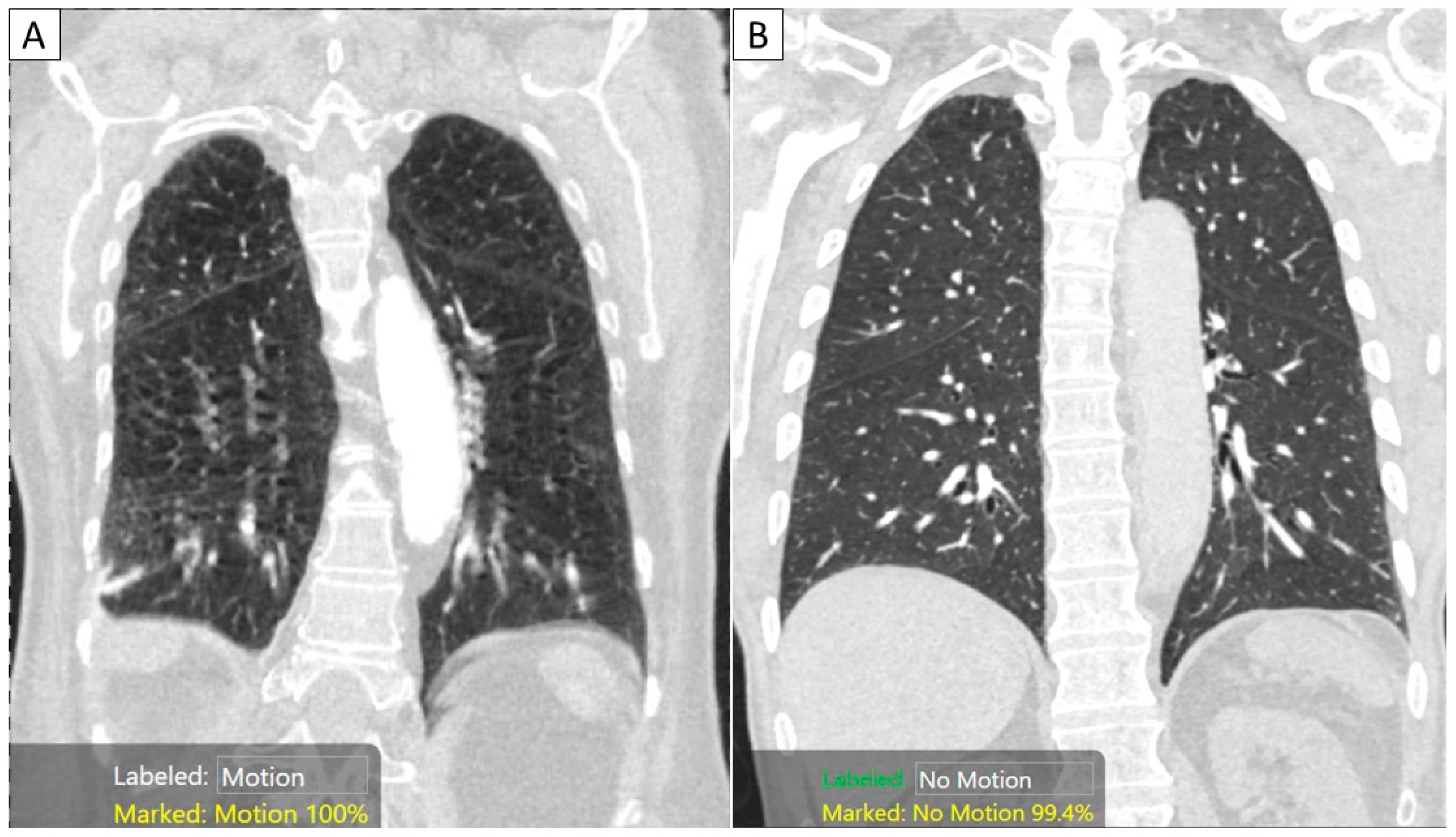
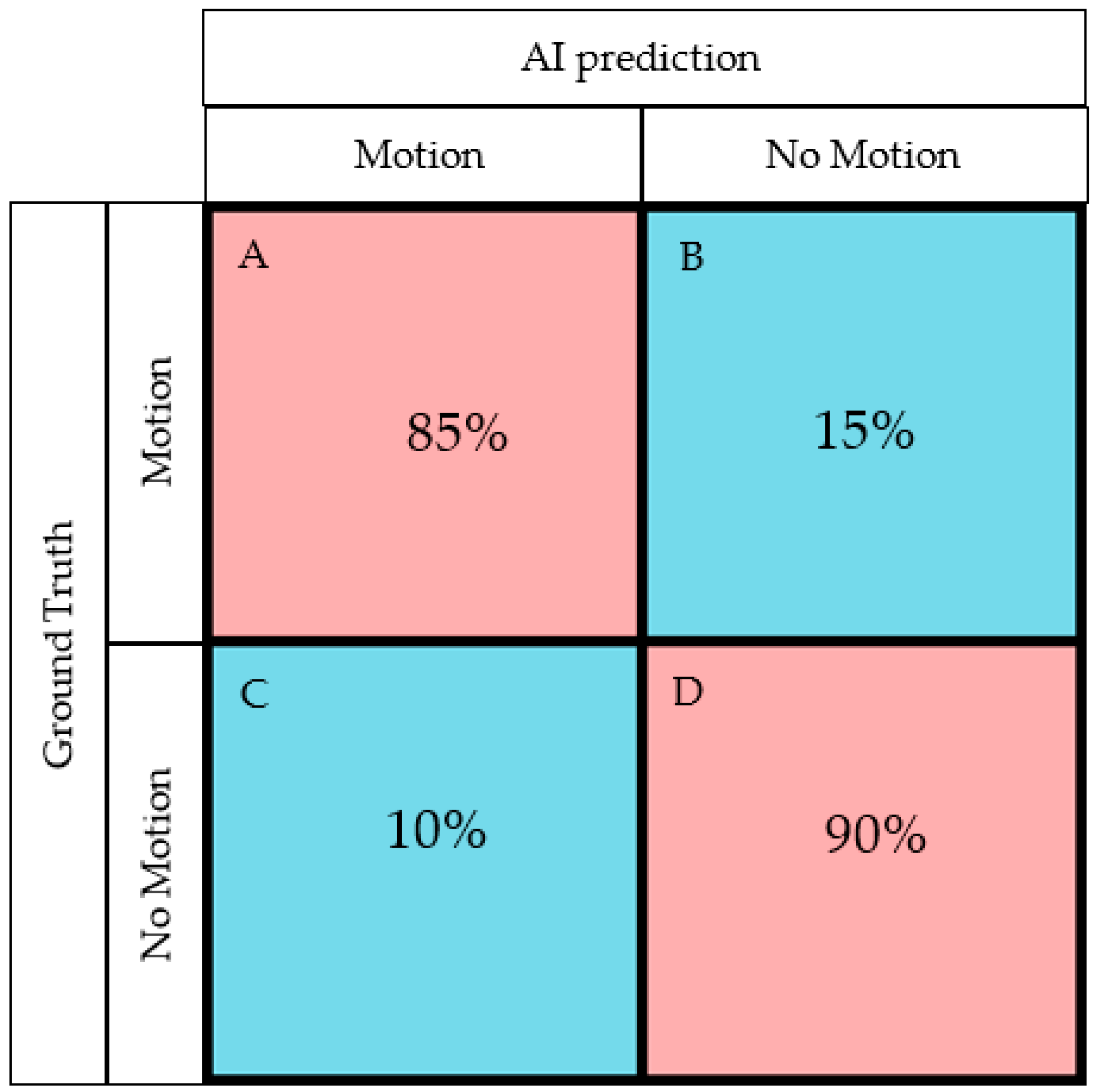
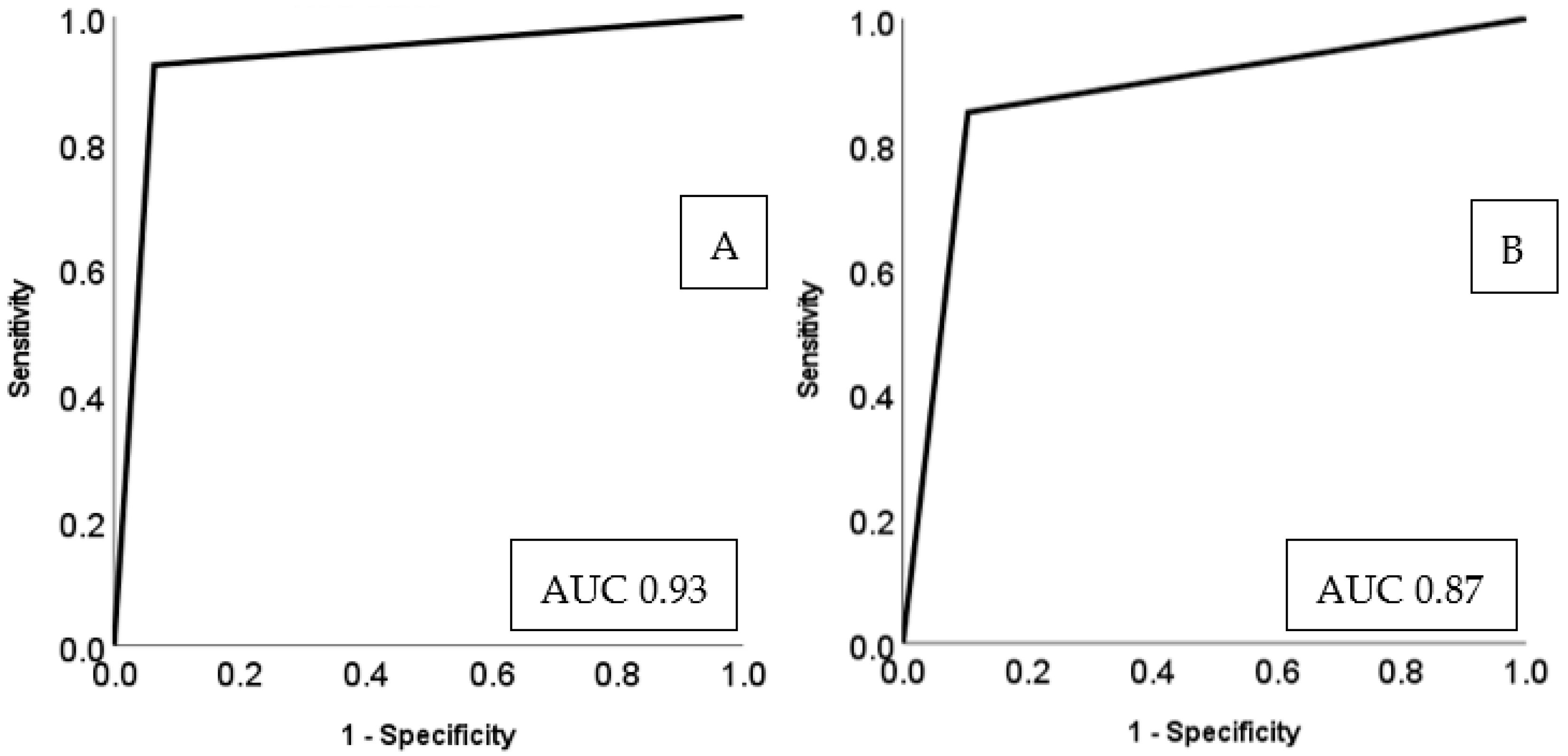
Purpose: Motion-impaired CT images can result in limited or suboptimal diagnostic interpretation (with missed or miscalled lesions) and patient recall. We trained and tested an artificial intelligence (AI) model for identifying substantial motion artifacts on CT pulmonary angiography (CTPA) that have a negative impact on diagnostic interpretation. Methods: With IRB approval and HIPAA compliance, we queried our multicenter radiology report database (mPower, Nuance) for CTPA reports between July 2015 and March 2022 for the following terms: “motion artifacts”, “respiratory motion”, “technically inadequate”, and “suboptimal” or “limited exam”. All CTPA reports were from two quaternary (Site A, n = 335; B, n = 259) and a community (C, n = 199) healthcare sites. A thoracic radiologist reviewed CT images of all positive hits for motion artifacts (present or absent) and their severity (no diagnostic effect or major diagnostic impairment). Coronal multiplanar images from 793 CTPA exams were de-identified and exported offline into an AI model building prototype (Cognex Vision Pro, Cognex Corporation) to train an AI model to perform two-class classification (“motion” or “no motion”) with data from the three sites (70% training dataset, n = 554; 30% validation dataset, n = 239). Separately, data from Site A and Site C were used for training and validating; testing was performed on the Site B CTPA exams. A five-fold repeated cross-validation was performed to evaluate the model performance with accuracy and receiver operating characteristics analysis (ROC). Results: Among the CTPA images from 793 patients (mean age 63 ± 17 years; 391 males, 402 females), 372 had no motion artifacts, and 421 had substantial motion artifacts. The statistics for the average performance of the AI model after five-fold repeated cross-validation for the two-class classification included 94% sensitivity, 91% specificity, 93% accuracy, and 0.93 area under the ROC curve (AUC: 95% CI 0.89–0.97). Conclusion: The AI model used in this study can successfully identify CTPA exams with diagnostic interpretation limiting motion artifacts in multicenter training and test datasets. Clinical relevance: The AI model used in the study can help alert technologists about the presence of substantial motion artifacts on CTPA, where a repeat image acquisition can help salvage diagnostic information.
Keywords: artificial intelligence; motion artifact; CT pulmonary angiography; quality improvement artificial intelligence; motion artifact; CT pulmonary angiography; quality improvement